Are you ready to stand out in your next interview? Understanding and preparing for Mechanical Tolerancing interview questions is a game-changer. In this blog, we’ve compiled key questions and expert advice to help you showcase your skills with confidence and precision. Let’s get started on your journey to acing the interview.
Questions Asked in Mechanical Tolerancing Interview
Q 1. Explain the difference between unilateral and bilateral tolerances.
Unilateral and bilateral tolerances both define the permissible variation of a dimension, but they differ in how that variation is allowed. Think of it like this: you’re aiming for a target.
- Bilateral Tolerance: This allows variation on both sides of the nominal (target) dimension. For example, a 10 ± 0.5 mm dimension means the acceptable range is from 9.5 mm to 10.5 mm. It’s like having a buffer zone on either side of your target.
- Unilateral Tolerance: This allows variation only on one side of the nominal dimension. For example, a 10 -0.5 mm dimension means the acceptable range is from 9.5 mm to 10 mm. You only have a buffer zone on one side of your target. This is useful when you need to ensure a minimum size for functional reasons (like ensuring a part fits into a hole), but a maximum size is less critical.
Choosing between unilateral and bilateral tolerances depends on the functional requirements of the part. If you need to maintain a minimum or maximum size, a unilateral tolerance is appropriate. If variation is acceptable on both sides, a bilateral tolerance is used. For instance, a shaft fitting into a hole might need a unilateral tolerance on the shaft’s diameter to guarantee it’s not too small, while the hole might have a bilateral tolerance to accommodate some variations in machining.
Q 2. Describe the purpose of Geometric Dimensioning and Tolerancing (GD&T).
Geometric Dimensioning and Tolerancing (GD&T) is a standardized symbolic language used on engineering drawings to define the size, shape, orientation, location, and runout of features on a part. Its primary purpose is to clearly communicate the functional requirements of a part to manufacturers, ensuring that the finished part will meet its intended purpose. Imagine trying to build a complex assembly without precise instructions on how each part should relate to the other—GD&T prevents that.
Instead of relying solely on numerical tolerances for linear dimensions, GD&T adds a layer of control over the geometric characteristics of the part. This is crucial because even if the dimensions are within tolerance, the part might not function correctly if its geometry is flawed (e.g., a hole that’s not perfectly round or not positioned correctly).
GD&T helps avoid ambiguities and misunderstandings between designers and manufacturers, reducing the risk of costly rework and improving product quality and assembly efficiency. It’s basically the GPS of manufacturing drawings, ensuring every part is ‘in the right place, at the right angle, and of the right shape’.
Q 3. What are the different types of GD&T symbols and their applications?
GD&T uses a set of standardized symbols to define various geometric characteristics. Here are some key ones:
- Form Tolerances:
①(Straightness): Controls the straightness of an axis or surface.②(Flatness): Controls the flatness of a surface.③(Circularity/Roundness): Controls the roundness of a circular feature.④(Cylindricity): Controls the roundness and straightness of a cylindrical feature.
- Orientation Tolerances:
⑤(Perpendicularity): Controls the perpendicularity of a feature to a datum.⑥(Angularity): Controls the angle of a feature to a datum.⑦(Parallelism): Controls the parallelism of a feature to a datum.
- Location Tolerances:
⑧(Position): Controls the location of a feature in relation to a datum reference frame.⑨(Concentricity): Controls the concentricity of a circular feature.⑩(Symmetry): Controls the symmetry of a feature about a datum plane.
- Runout Tolerances:
⑪(Circular Runout): Controls the variation in the circularity of a feature during a single revolution around a datum axis.⑫(Total Runout): Controls the total variation of a feature as it rotates 360 degrees around a datum axis.
The application of each symbol depends on the specific geometric requirements of the part. For example, a shaft requiring precise rotation might need circular runout control, while a hole requiring precise location relative to other features would use positional tolerance.
Q 4. Explain the concept of a datum feature and its importance in GD&T.
A datum feature is a physical feature on a part used as a reference point for locating other features. It’s essentially a starting point for all the geometric controls. Imagine building a house; you’d need a solid foundation – the datum features are like the foundation of your part’s geometry.
These features are usually surfaces (e.g., a machined plane, a cylindrical surface) and are indicated on the drawing using a datum identifier (e.g., A, B, C). Each datum is usually chosen for its stability and measurability.
The importance of datum features in GD&T cannot be overstated. They provide a stable and repeatable reference frame for controlling the location and orientation of other features. Without datum references, the geometric tolerances would be ambiguous and impossible to accurately verify. For instance, if you’re specifying the position of a hole, you need to define *where* that position is relative to other features, and datums give you that reference.
Q 5. How do you determine the appropriate tolerance for a given dimension?
Determining the appropriate tolerance for a given dimension requires a thorough understanding of the part’s function, manufacturing process, and assembly requirements. It’s a balance between achieving the required functionality and maintaining manufacturability. There’s no single formula; it’s an iterative process.
Here’s a step-by-step approach:
- Functional Requirements: What must the part do? What are the critical dimensions for its function? (e.g., A shaft diameter needs to be within tolerance to fit correctly into a hole.)
- Manufacturing Process: How will the part be manufactured? What are the capabilities and limitations of the manufacturing process? (e.g., A CNC machine can provide tighter tolerances than manual machining.)
- Assembly Requirements: How will the part be assembled? What clearances or interferences are needed? (e.g., The shaft might need a larger clearance to allow for easy assembly.)
- Statistical Analysis: If applicable, use statistical process control (SPC) methods to determine tolerances based on process capability. This will help identify potential sources of variation during manufacturing.
- Tolerance Stack-up Analysis: Analyze how tolerances accumulate during assembly. Ensure that the overall assembly tolerances are met even when considering individual part tolerances.
Often, experienced engineers use a combination of engineering judgment, experience, and industry standards to set tolerances. It’s a process that often involves discussions with manufacturing engineers to ensure manufacturability and cost-effectiveness.
Q 6. Explain the difference between form, orientation, location, and runout tolerances.
These GD&T controls address different aspects of a part’s geometry:
- Form Tolerances: These control the shape of individual features. Think of how ‘true’ a surface is to its ideal shape.
- Straightness: How straight a line or axis is.
- Flatness: How flat a surface is.
- Circularity: How round a circle is.
- Cylindricity: How cylindrical a cylinder is.
- Orientation Tolerances: These control the angular relationship between features.
- Perpendicularity: How perpendicular a feature is to a datum.
- Angularity: How precisely a feature is at a specified angle to a datum.
- Parallelism: How parallel a feature is to a datum.
- Location Tolerances: These control the position of features relative to a datum reference frame.
- Position: How accurately a feature is located relative to a datum.
- Concentricity: How concentric circular features are.
- Symmetry: How symmetrical a feature is about a datum.
- Runout Tolerances: These control variations in form and location during rotation.
- Circular Runout: Variation in the circularity of a feature as it rotates.
- Total Runout: Combined variation in both circularity and position during rotation.
Each type of tolerance addresses a distinct geometric characteristic, and the appropriate tolerance type is selected based on the functional requirements of the part. A perfectly positioned hole (location) might still be useless if it’s not round (form).
Q 7. How do you interpret a drawing with GD&T symbols?
Interpreting a drawing with GD&T symbols requires a systematic approach. You need to understand the meaning of each symbol, its associated tolerances, and the datum references.
- Identify Datum Features: Locate the datum features (A, B, C, etc.) on the drawing. These are the reference points for all geometric controls.
- Understand Feature Control Frames (FCFs): FCFs are rectangular boxes containing the GD&T symbol, tolerance value, and datum references. Carefully analyze each FCF to understand the specific geometric control being applied to each feature.
- Interpret GD&T Symbols: Understand the meaning of each GD&T symbol and the tolerance value associated with it. For example, a position tolerance of 0.1 mm indicates that the feature’s center must lie within a 0.1 mm diameter circle around the specified datum reference point.
- Refer to the Feature: The FCF will typically reference a specific feature on the drawing (e.g., a hole, a surface). Understand which feature each FCF is controlling.
- Consider Datums: The datums specify the reference points for the geometric tolerances. For example, a position tolerance might reference three datums (A, B, C), implying that the feature’s position is controlled relative to a three-dimensional coordinate system defined by these datums.
- Check for Material Conditions: Note whether the drawing specifies ‘Maximum Material Condition (MMC)’ or ‘Least Material Condition (LMC)’. This affects how the tolerances are interpreted.
The interpretation should lead to a comprehensive understanding of the allowed geometric variations for each feature. This understanding is essential for manufacturing and inspection to ensure the part meets the design intent. Remember, a drawing with GD&T is not just a picture; it’s a precise specification.
Q 8. What are the common methods used for tolerance analysis?
Tolerance analysis methods determine the impact of individual component tolerances on the overall assembly functionality. Common approaches include:
- Worst-Case Analysis (WCA): This method assumes all tolerances accumulate in the worst possible direction, leading to the most extreme deviation. It’s simple to understand and calculate but often overly conservative, leading to unnecessarily tight tolerances and higher costs. Imagine stacking several slightly misaligned coins – WCA assumes they all tilt in the same direction, resulting in a significantly higher stack than realistically expected.
- Root Sum Square (RSS) Analysis: Also known as statistical tolerance analysis (discussed in more detail below), this method assumes tolerance variations follow a normal distribution. It provides a more realistic assessment of the final assembly variation than WCA but requires statistical data about the manufacturing process.
- Monte Carlo Simulation: This is a probabilistic method that simulates the manufacturing process many times, using random values within the defined tolerances for each component. It provides a probability distribution of the final assembly variation, offering a comprehensive understanding of the risk associated with different tolerance combinations. Think of it as running a virtual factory thousands of times to observe the range of possible outcomes.
- Tolerance Charting: A graphical method to visualize tolerance stack-ups and identify critical components driving overall variation. It is simple, effective and provides a quick visual overview for design review.
Q 9. Explain the concept of statistical tolerance analysis.
Statistical tolerance analysis uses statistical methods to predict the distribution of the final assembly’s dimensions or characteristics based on the statistical distributions of individual component dimensions. Unlike worst-case analysis, it acknowledges that variations won’t always accumulate in the worst possible direction. It leverages statistical principles like the central limit theorem, which states that the average of a large number of independent random variables will tend toward a normal distribution, even if the individual variables aren’t normally distributed. This allows us to estimate the probability of assembly success considering the manufacturing variations.
For example, if we’re assembling a shaft and hole, RSS analysis considers the standard deviation of the shaft diameter and hole diameter to calculate the standard deviation of the clearance. This allows us to determine the probability that the clearance will fall within acceptable limits.
The most common statistical method employed is the Root Sum Square (RSS) method, where the combined standard deviation (σtotal) is calculated as: σtotal = √(σ1² + σ2² + ... + σn²), where σi represents the standard deviation of each contributing component. This requires knowledge of the standard deviations for each dimension, typically obtained from historical manufacturing data or process capability studies (Cp and Cpk).
Q 10. What are the potential consequences of incorrect tolerancing?
Incorrect tolerancing can lead to several serious consequences:
- Assembly failures: Parts may not fit together properly, leading to scrapped assemblies or costly rework.
- Reduced product performance: Tolerances affecting critical dimensions can significantly impact performance and functionality. Think of a car engine – if the piston-to-cylinder clearance is wrong, the engine won’t run efficiently, or at all.
- Increased manufacturing costs: Overly tight tolerances might require more expensive manufacturing processes or increased inspection effort, leading to higher unit costs.
- Safety hazards: In safety-critical applications, incorrect tolerancing can have severe implications, potentially leading to malfunctions and accidents.
- Warranty claims: Products failing due to tolerancing issues can result in warranty claims and damage to the company’s reputation.
A classic example is the space shuttle Challenger disaster, where O-ring tolerances played a significant role in the failure. A seemingly small tolerance issue ultimately had catastrophic consequences.
Q 11. How do manufacturing processes influence tolerance selection?
Manufacturing processes directly influence tolerance selection. Each process has inherent variations and capabilities. Selecting tolerances that are tighter than what a given process can consistently achieve is both costly and unrealistic. For example:
- Casting: Casting processes typically have larger tolerances compared to machining. Therefore, larger tolerances should be specified for cast parts.
- Machining: Machining offers much tighter tolerances, allowing for precise dimensions and finishes. Consequently, we can specify tighter tolerances for machined parts.
- Injection molding: Plastic injection molding processes provide better dimensional control than casting, but they still have limitations. Shrinkage can be a factor, requiring careful consideration of tolerances.
To ensure realistic tolerance selection, it’s crucial to understand the process capability of the selected manufacturing method. Process capability studies (Cp and Cpk) provide quantitative measures of process performance, helping determine the feasible range of tolerances.
Q 12. Describe the relationship between tolerance and cost.
There’s a strong inverse relationship between tolerance and cost. Tighter tolerances generally lead to higher costs because they require:
- More precise manufacturing processes: Processes like precision machining are more expensive than casting.
- Increased inspection and quality control: Tighter tolerances necessitate more stringent inspection methods to verify conformance.
- Higher scrap rates: If tolerances are too tight for the manufacturing process, the rate of parts outside the tolerance range increases, leading to waste and increased costs.
- Specialized tooling: Producing parts to extremely tight tolerances often requires specialized tooling and fixtures.
Finding the optimal balance between tolerance and cost is a key aspect of design for manufacturability (DFM). Overly tight tolerances increase costs unnecessarily without providing commensurate benefits, while overly loose tolerances could lead to assembly and performance issues.
Q 13. How do you manage tolerances during design changes?
Managing tolerances during design changes requires careful consideration to avoid costly rework or performance issues. The approach should include:
- Tolerance analysis: Perform a complete tolerance analysis before and after the design changes to assess the impact on the overall assembly. This helps identify potential issues early on.
- Impact assessment: Evaluate the effect of the changes on existing tolerances and identify components most affected. This determines which dimensions need re-evaluation.
- Documentation: Thoroughly document all design changes and the corresponding tolerance adjustments. This ensures traceability and helps manage future modifications.
- Communication: Communicate the changes clearly to the manufacturing team and ensure they understand the revised tolerances.
- Verification: After implementing the changes, verify the functionality and performance of the assembly. This usually includes physical prototyping and testing.
A structured change management process is essential to effectively handle tolerance updates and prevent unintended consequences.
Q 14. What software are you familiar with for performing tolerance analysis?
I’m familiar with several software packages for performing tolerance analysis, including:
- MATLAB: Offers powerful tools for statistical analysis and simulation, including Monte Carlo simulation for tolerance analysis.
- ANSYS: Includes capabilities for tolerance analysis within its broader simulation suite, allowing for integration with other aspects of product development.
- 3DCS Variation Analyst: This software is specifically designed for tolerance analysis and offers robust tools for various methods, including worst-case, RSS, and Monte Carlo simulation.
- Autodesk Inventor: Offers built-in tolerance analysis tools within its design environment.
- SolidWorks Tolerance Analysis: Similar to Inventor, SolidWorks provides integrated tolerance analysis features.
The choice of software depends on the complexity of the assembly, the required level of analysis detail, and the overall project requirements. For simple assemblies, built-in features within CAD software might suffice. For complex assemblies or in-depth analysis, specialized tolerance analysis software is typically preferred.
Q 15. Explain your experience with tolerance stack-up analysis.
Tolerance stack-up analysis is crucial for ensuring the proper functionality of an assembly. It’s essentially a systematic way of determining the cumulative effect of individual component tolerances on the overall assembly dimensions. Imagine building a house – each brick has slightly different dimensions, and these small variations accumulate. Tolerance stack-up analysis helps us predict the final variation of the house’s dimensions, ensuring it doesn’t become too big or too small.
My experience involves using both worst-case and statistical methods. Worst-case analysis assumes the maximum tolerance deviation of each component occurs in the same direction, resulting in the largest possible variation in the final assembly. This approach is conservative and ensures that the assembly will always function within specified limits, but it can lead to overly tight tolerances and increased costs. Statistical analysis, on the other hand, uses statistical distributions to predict the likely range of variations, considering that tolerances are rarely all at their extreme values simultaneously. This is more cost-effective but involves more sophisticated calculations, often leveraging software like Monte Carlo simulation.
I’m proficient in using various software tools to perform tolerance stack-up analyses, including specialized CAD software and spreadsheets. This includes interpreting the results and proposing design modifications to improve the tolerance budget, reduce the risk of assembly issues, and optimize manufacturing processes.
Career Expert Tips:
- Ace those interviews! Prepare effectively by reviewing the Top 50 Most Common Interview Questions on ResumeGemini.
- Navigate your job search with confidence! Explore a wide range of Career Tips on ResumeGemini. Learn about common challenges and recommendations to overcome them.
- Craft the perfect resume! Master the Art of Resume Writing with ResumeGemini’s guide. Showcase your unique qualifications and achievements effectively.
- Don’t miss out on holiday savings! Build your dream resume with ResumeGemini’s ATS optimized templates.
Q 16. Describe a situation where you had to solve a tolerancing problem.
During the design of a precision optical instrument, we encountered a significant challenge in the alignment of multiple lenses within a housing. Initial tolerance analysis indicated a high probability of exceeding the required axial alignment tolerance, threatening the instrument’s performance. This was especially problematic as the lenses were manufactured by different suppliers using different processes.
To solve this, I initiated a multi-step approach. First, we performed a detailed root-cause analysis of the contributing tolerances, identifying the most significant sources of variation. This involved reviewing the manufacturing processes of each component, collaborating with manufacturing engineers and suppliers. Second, we employed a combination of worst-case and statistical tolerance analysis using Monte Carlo simulation to refine our understanding of the assembly’s variability. This led to the identification of key design modifications. We redesigned the lens mounting system to include self-aligning features, thus reducing the impact of manufacturing variations on the final alignment. Finally, we implemented a more robust quality control system, employing advanced metrology techniques to monitor the dimensions of the components and the assembly itself.
This resulted in a more robust design that met the required alignment tolerances, without increasing manufacturing costs excessively. The project highlighted the importance of proactive tolerance analysis, close collaboration with manufacturing, and iterative design refinement.
Q 17. How do you communicate tolerancing requirements to manufacturing personnel?
Communicating tolerancing requirements clearly to manufacturing is critical for successful product realization. I use a multi-faceted approach that includes both graphical and textual methods. I always start by ensuring everyone understands the importance of meeting the tolerances and the potential consequences of not doing so.
- GD&T (Geometric Dimensioning and Tolerancing): I leverage GD&T symbols and annotations directly on the engineering drawings to unambiguously specify the permissible variations. I ensure these drawings are clear, concise, and easy to understand, and I provide training to manufacturing personnel on interpreting these annotations.
- Clear and Concise Documentation: Alongside the drawings, I provide detailed tolerance analysis reports that explain the rationale behind the specified tolerances. This includes explanations of the methodology used (worst-case, statistical), the results obtained, and the potential impact of exceeding the tolerances.
- Direct Communication and Collaboration: I regularly communicate with the manufacturing team, holding workshops and presentations to explain the requirements, answer questions, and proactively address concerns. This facilitates feedback and ensures everyone is on the same page.
- Measurement Plans: I work with quality control personnel to develop detailed measurement plans that ensure the specified tolerances are verifiable and measurable. This is critical for efficient process control.
Using a combination of these methods ensures that the tolerances are understood, achievable, and consistently met throughout the manufacturing process.
Q 18. What are the key considerations for selecting datum features?
Selecting datum features is crucial for defining the coordinate system for the tolerancing of a part. Datums are reference points, lines, or planes used to establish the location and orientation of other features. A poor choice of datums can lead to ambiguity, misinterpretation, and ultimately, manufacturing issues.
Key considerations for selecting datum features include:
- Stability: The datum feature should be the most stable and least likely to deform during manufacturing or operation. For example, a larger, more rigid feature is generally preferred over a smaller, more delicate one.
- Measurability: The datum feature should be easily and accurately measurable with standard metrology equipment. The feature should be accessible and suitable for the measurement methods used.
- Manufacturing Process: The choice of datum should consider the manufacturing process. Features directly controlled in the manufacturing process are usually preferred as datums.
- Functional Requirement: The most critical functional requirement of the part should drive the selection of the datum. This ensures that the tolerances are relevant and effective in maintaining the part’s intended function.
- Minimizing Stack-Up Effects: The datum features should be chosen in a way that minimizes the accumulation of tolerances in the assembly. This often requires careful consideration of the assembly process.
For example, in a part with a hole and a flat surface, the flat surface might be chosen as a primary datum (A) due to its stability and ease of measurement, while the hole’s position would be referenced to that datum.
Q 19. Explain the concept of a material condition symbol.
Material condition symbols in GD&T specify the state of the part’s material when the dimensions are measured. They indicate whether the dimensions are measured with the part in its free state (unconstrained) or in a specific controlled condition, such as after assembly or under specific load. This is essential for accurately reflecting the part’s functionality within an assembly.
Common material condition symbols include:
(S): Symbol for simulated condition, representing the part’s state when installed in the assembly and under expected operating conditions.(M): Symbol for material condition, representing the part’s state when measured with the material in its free state.(L): Symbol for least material condition, representing the smallest possible size of the part after machining or finishing. This is commonly used to ensure that mating parts will always fit.(E): Symbol for maximum material condition, representing the largest possible size of the part after machining or finishing. This is used to ensure the minimum clearance in the final assembly.
The appropriate material condition symbol must be chosen based on the function of the part and its interaction with other components. Misinterpreting these symbols can lead to incorrect assembly and malfunction.
Q 20. How do you handle tolerances for composite parts?
Tolerancing composite parts presents unique challenges due to their anisotropic nature (different properties in different directions) and susceptibility to variations in material properties, curing processes, and layup techniques. The tolerances are often broader than those for metallic parts.
To handle tolerances for composite parts effectively:
- Consider Material Anisotropy: Tolerances should account for the direction-dependent properties of the composite material. This means defining separate tolerances for different directions.
- Account for Manufacturing Variability: Tolerances must account for variations in fiber orientation, void content, resin distribution, and curing processes. This often requires more sophisticated statistical analysis than for simpler materials.
- Specify Tolerances for Relevant Dimensions: Focus on critical dimensions affecting the part’s function. For example, wall thickness variations might be more critical than minor surface irregularities. Design for manufacturability is paramount.
- Use Advanced Measurement Techniques: Measuring composite parts accurately may require advanced non-destructive testing (NDT) methods like ultrasound or X-ray inspection to assess internal properties.
- Collaboration with Composite Manufacturers: Close collaboration with composite manufacturers is crucial to understand the capabilities and limitations of the manufacturing process, leading to realistic and achievable tolerances.
Establishing rigorous quality control procedures throughout the manufacturing process is vital for controlling the variability of composite parts and meeting the defined tolerances. This includes careful monitoring of the material properties, the layup process, and the curing cycle.
Q 21. How do you ensure that tolerances are achievable in manufacturing?
Ensuring achievable tolerances requires a proactive approach involving close collaboration between designers, manufacturing engineers, and quality control personnel. Simply specifying tight tolerances without considering manufacturing capabilities is a recipe for disaster.
Here’s how to ensure achievable tolerances:
- Design for Manufacturability (DFM): The design itself should inherently be capable of being produced within the specified tolerances. This includes considering the chosen manufacturing processes, materials, and tooling.
- Process Capability Analysis (PCA): Conduct PCA to determine the inherent variability of the manufacturing processes. This involves collecting data on the process output to assess its ability to consistently meet the specified tolerances. The Cp and Cpk indices provide quantitative measures of process capability.
- Tolerance Analysis and Optimization: Perform detailed tolerance analyses to identify the critical dimensions and tolerances most affecting the assembly’s functionality. Then, optimize these tolerances to balance functionality, cost, and manufacturability.
- Iterative Design and Manufacturing Feedback: Regular feedback between design and manufacturing teams is crucial. Initial prototypes should be tested and evaluated to validate the design and identify potential issues in meeting the specified tolerances. Adjustments to the design or manufacturing process might be needed.
- Control Charts and Statistical Process Control (SPC): Implement statistical process control techniques during manufacturing to monitor process stability and prevent deviations from the desired tolerances.
Achievable tolerances are a result of a careful balance between design requirements, manufacturing capabilities, and cost considerations. By focusing on DFM, process capability analysis, and robust quality control, you can create designs and processes that consistently meet the required tolerances.
Q 22. What is your experience with measuring and verifying tolerances?
Measuring and verifying tolerances is a critical aspect of ensuring product quality and functionality. My experience encompasses a wide range of methods, from using traditional measuring tools like calipers, micrometers, and height gauges, to employing advanced Coordinate Measuring Machines (CMMs) and optical comparators. I’m proficient in selecting the appropriate measurement instrument based on the tolerance requirements and the part’s geometry. For example, when dealing with tight tolerances on a complex surface, a CMM with its high accuracy and repeatability would be preferred over a simpler caliper. Beyond the actual measurement, I also have extensive experience in analyzing the data collected, identifying potential sources of variation, and determining if the part falls within the specified tolerance range. This often includes statistical process control (SPC) techniques to monitor manufacturing processes and prevent future deviations.
In one project involving the manufacturing of precision gears, we used a CMM to measure the critical dimensions and tooth profile. By analyzing the data, we identified a minor tooling issue that was causing consistent deviations outside the tolerance range. Adjusting the tooling quickly resolved the problem, saving both time and resources. This highlights the importance of not only accurate measurement but also the subsequent analysis and corrective actions.
Q 23. Describe your experience with different types of tolerance specifications.
My experience spans various tolerance specifications, including bilateral, unilateral, and limit tolerances. I’m also well-versed in geometric dimensioning and tolerancing (GD&T), which uses symbols to define the allowable variation in form, orientation, location, and runout. Understanding these different types is key to proper part design and manufacturing.
- Bilateral Tolerances: Allowable variation above and below a nominal value. Example:
10 ± 0.5(meaning the acceptable range is 9.5 to 10.5). - Unilateral Tolerances: Allowable variation in one direction from a nominal value. Example:
10 +0.5 -0(meaning the acceptable range is 10 to 10.5). - Limit Tolerances: Specify the maximum and minimum allowable values directly. Example:
10 MAX 10.5 MIN 9.5. - GD&T: Uses symbols like position, perpendicularity, and flatness to define tolerances in a more comprehensive and unambiguous way than simple dimensional tolerances. This allows for a more functional design, focusing on the overall performance of the part rather than just individual dimensions.
The choice of tolerance specification depends heavily on the application and the criticality of the feature. For instance, GD&T is typically preferred for parts where the functional requirements are more important than simple dimensional accuracy.
Q 24. Explain the importance of proper documentation for tolerancing.
Proper documentation of tolerances is paramount for unambiguous communication and successful manufacturing. It prevents costly errors and misunderstandings between designers, manufacturers, and quality control personnel. Detailed drawings, including clear tolerance specifications using appropriate standards (like ASME Y14.5), are crucial. In addition to drawings, robust tolerance analysis reports showing the impact of tolerance stack-up on the overall assembly should be included. A poorly documented tolerance can lead to parts that don’t assemble properly, resulting in rework, scrap, and delays. I’ve seen firsthand how clear documentation, including detailed notes and explanatory diagrams, can streamline the manufacturing process and minimize issues.
For instance, on a recent project, a lack of detailed GD&T callouts on an initial design led to misinterpretations by the manufacturer, resulting in rejected parts. Adding clear GD&T symbols and detailed annotations in a revised design resolved this issue in subsequent manufacturing runs.
Q 25. How familiar are you with ASME Y14.5 standards?
I’m highly familiar with ASME Y14.5 standards for dimensioning and tolerancing. I understand the various geometric tolerances, their associated symbols, and how they are applied in drawings. I routinely utilize these standards in my work to create and interpret technical drawings, ensuring that the designs are manufacturable and meet the required functional specifications. My knowledge extends to the latest revisions of the standard, ensuring my approach to tolerancing remains up-to-date and best-practice compliant. I can apply these standards to a wide range of applications, from simple machined parts to complex assemblies with intricate GD&T requirements.
Q 26. How do you stay current with best practices in tolerancing?
Staying current with best practices in tolerancing involves a multi-pronged approach. I regularly attend industry conferences and workshops, read relevant publications and journals (like those published by ASME), and participate in online professional development courses. I also actively engage with online communities and forums dedicated to mechanical engineering and tolerancing. This ongoing learning helps me stay informed on new methodologies, software advancements, and evolving best practices. Membership in professional organizations like ASME also provides access to valuable resources and keeps me connected to the latest developments in the field. This continuous improvement is critical for remaining a skilled and effective practitioner in the field of mechanical tolerancing.
Q 27. Describe your experience with tolerance studies and their impact on design.
Tolerance studies are crucial for assessing the impact of individual component tolerances on the overall assembly. I use tolerance analysis software and manual methods to predict the variation in key characteristics of assemblies. This involves considering the stack-up of tolerances, meaning how individual component variations accumulate to affect final assembly performance. A tolerance study might reveal that a seemingly small tolerance on a single component will lead to unacceptable variability in the final assembly. The results of these studies directly inform design decisions. For example, if the analysis reveals excessive variability, we can tighten tolerances on critical components, modify the design for less sensitivity to tolerance variations, or implement alternative manufacturing processes.
In a project designing a complex robotic arm, a tolerance study revealed that the cumulative effect of slight variations in the lengths of multiple links resulted in significant inaccuracies in the arm’s positioning. This study helped us identify which components needed tighter tolerances and which could tolerate larger variations. This led to a more cost-effective and robust design.
Q 28. Explain your problem-solving approach when faced with conflicting tolerance requirements.
Conflicting tolerance requirements are a common challenge in engineering. My problem-solving approach involves a systematic investigation:
- Identify the Conflict: Clearly define the conflicting requirements and their sources. Are there different specifications from different stakeholders (design, manufacturing, customer)?
- Prioritize Requirements: Determine the criticality of each requirement based on its impact on functionality and performance. What’s the consequence of exceeding each tolerance? Which tolerances are most critical to the assembly’s functionality?
- Negotiate and Compromise: If possible, collaborate with stakeholders to find mutually acceptable compromises. This might involve justifying tighter tolerances for critical features and relaxing them for less critical ones.
- Design Modifications: Consider design changes to reduce the sensitivity of the assembly to tolerance variations. This could involve using features that are less susceptible to tolerance stack-up.
- Tolerance Analysis: Conduct a thorough tolerance analysis to evaluate the impact of proposed solutions. Simulation or mathematical modelling can help quantify the effects of tolerance variations.
- Documentation: Clearly document all decisions and compromises made to ensure everyone understands the final tolerance specifications.
Resolving tolerance conflicts requires effective communication and a deep understanding of both design and manufacturing constraints. A collaborative approach is key to finding optimal solutions.
Key Topics to Learn for Mechanical Tolerancing Interview
- Geometric Dimensioning and Tolerancing (GD&T): Understand the fundamental principles of GD&T, including symbols, datums, and tolerance zones. This is crucial for communicating design intent effectively.
- Types of Tolerances: Become familiar with various tolerance types like bilateral, unilateral, and limits of size, and when to apply each in different manufacturing contexts.
- Statistical Tolerance Analysis: Learn how to use statistical methods to predict the overall tolerance stack-up and assess the probability of assembly success.
- Tolerance Stack-up Analysis: Master techniques for calculating the cumulative effect of individual tolerances on overall assembly dimensions. This is essential for preventing costly assembly failures.
- Practical Application: Be prepared to discuss real-world examples where you’ve applied tolerance analysis to design or manufacturing problems. Consider examples involving specific components, assemblies, or manufacturing processes.
- Material Selection and its impact on Tolerances: Understand how the choice of material influences achievable tolerances and manufacturing methods.
- Manufacturing Processes and Tolerances: Relate different manufacturing processes (e.g., machining, casting, molding) to the achievable tolerances and surface finishes.
- Interpretation of Engineering Drawings: Demonstrate your ability to accurately interpret engineering drawings, specifically focusing on tolerance specifications.
- Problem-solving: Be ready to discuss how you approach and solve problems related to tolerance analysis and interpretation of technical drawings. Highlight your methodical approach and problem-solving skills.
- Advanced GD&T Concepts: Depending on the seniority of the role, familiarize yourself with more advanced concepts such as position tolerances, profile tolerances, and runout controls.
Next Steps
Mastering mechanical tolerancing is vital for a successful career in engineering, showcasing your ability to design manufacturable and reliable products. A strong understanding of this crucial area will significantly enhance your job prospects and open doors to more advanced roles. To further increase your chances of landing your dream job, create an ATS-friendly resume that highlights your skills and experience effectively. ResumeGemini is a trusted resource that can help you build a professional and impactful resume. Examples of resumes tailored to mechanical tolerancing are available to guide you in showcasing your expertise.
Director of Engineering Resume Sample
Engineering Manager Resume Sample
Principal Engineer Resume Sample

Project Engineer Resume Sample
Process Engineer Resume Sample
Automation Engineer Resume Sample
Test Engineer Resume Sample

Technical Specialist Resume Sample
Design Engineer Resume Sample
Quality Engineer Resume Sample
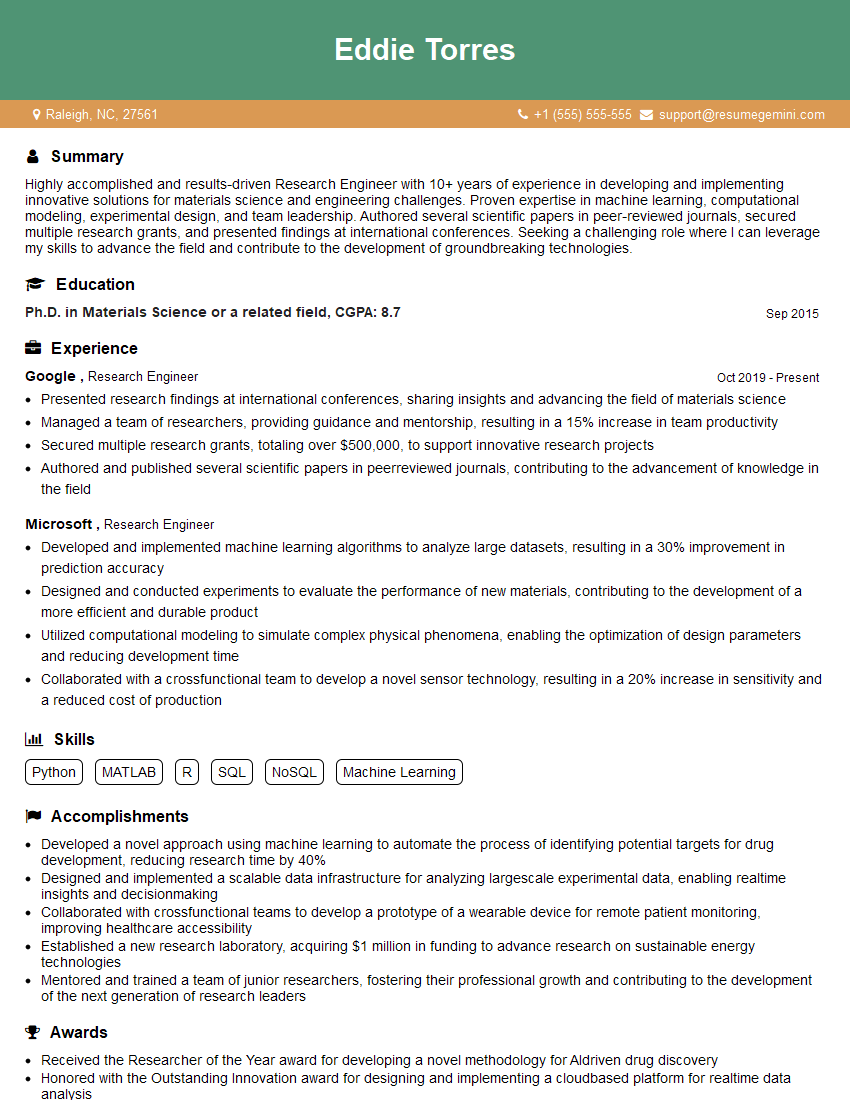
Research Engineer Resume Sample
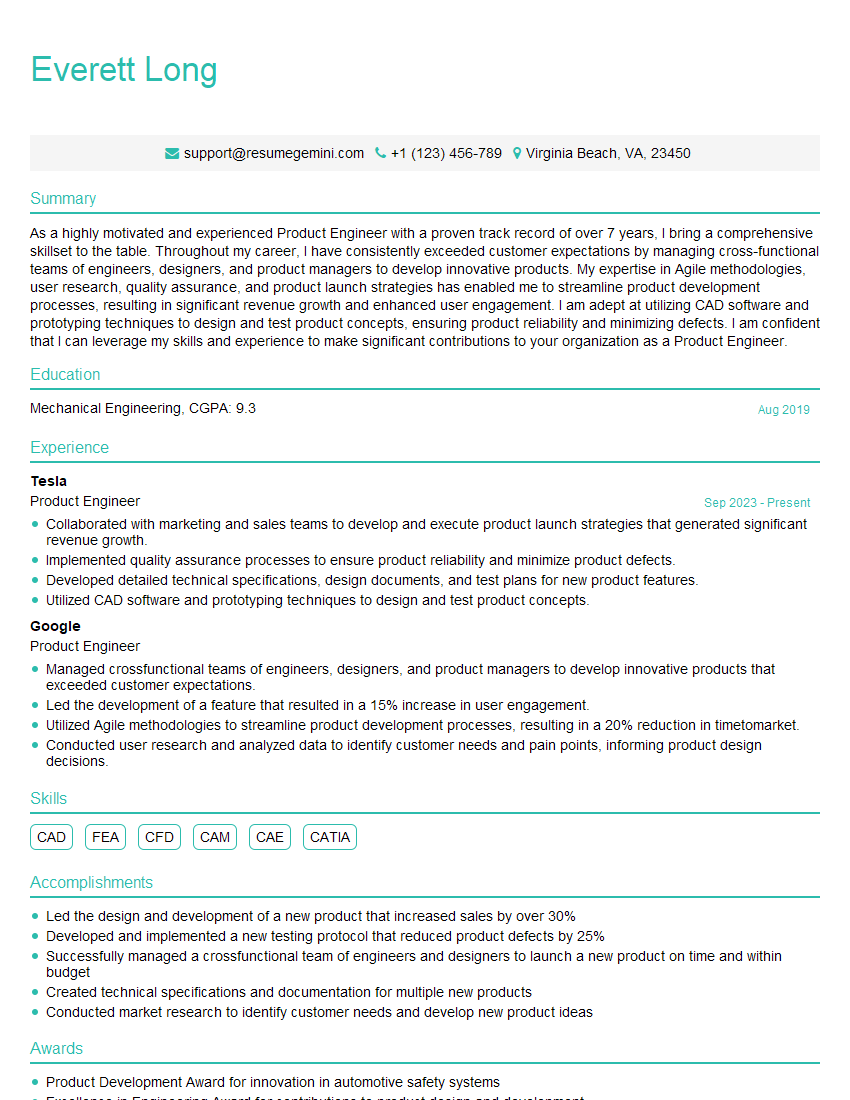
Product Engineer Resume Sample
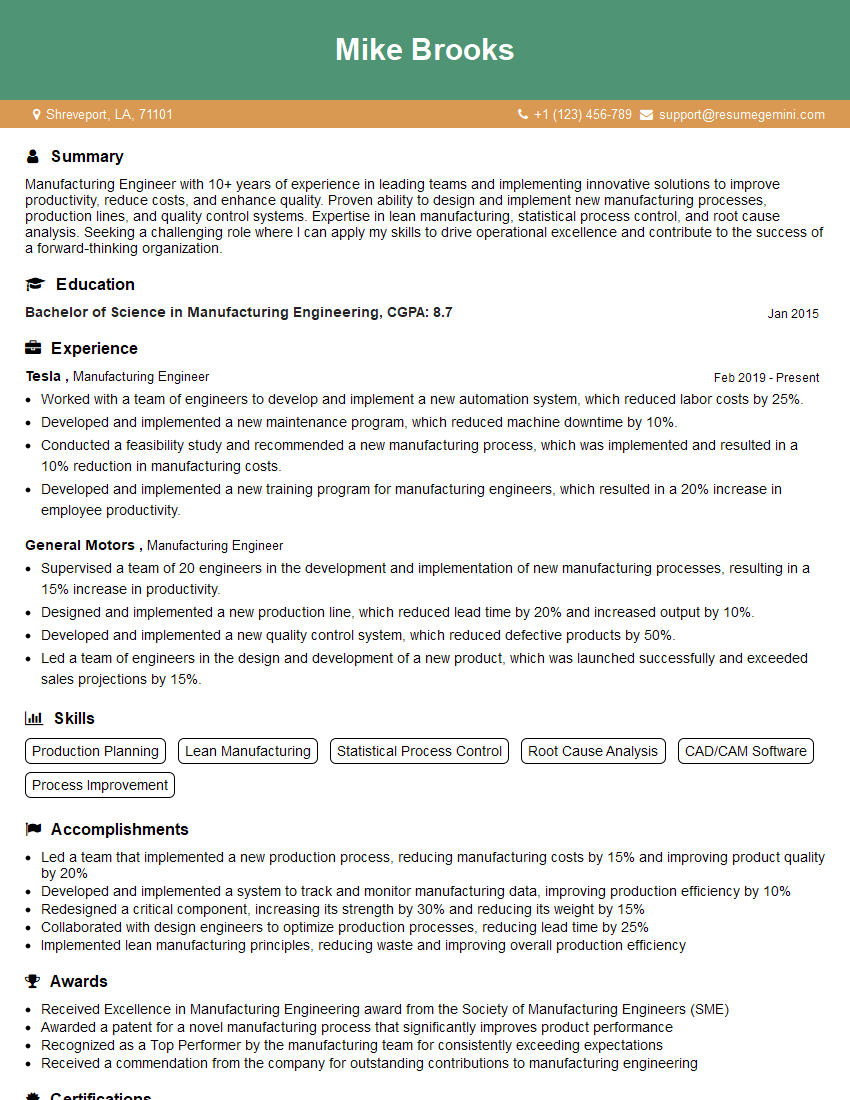
Manufacturing Engineer Resume Sample
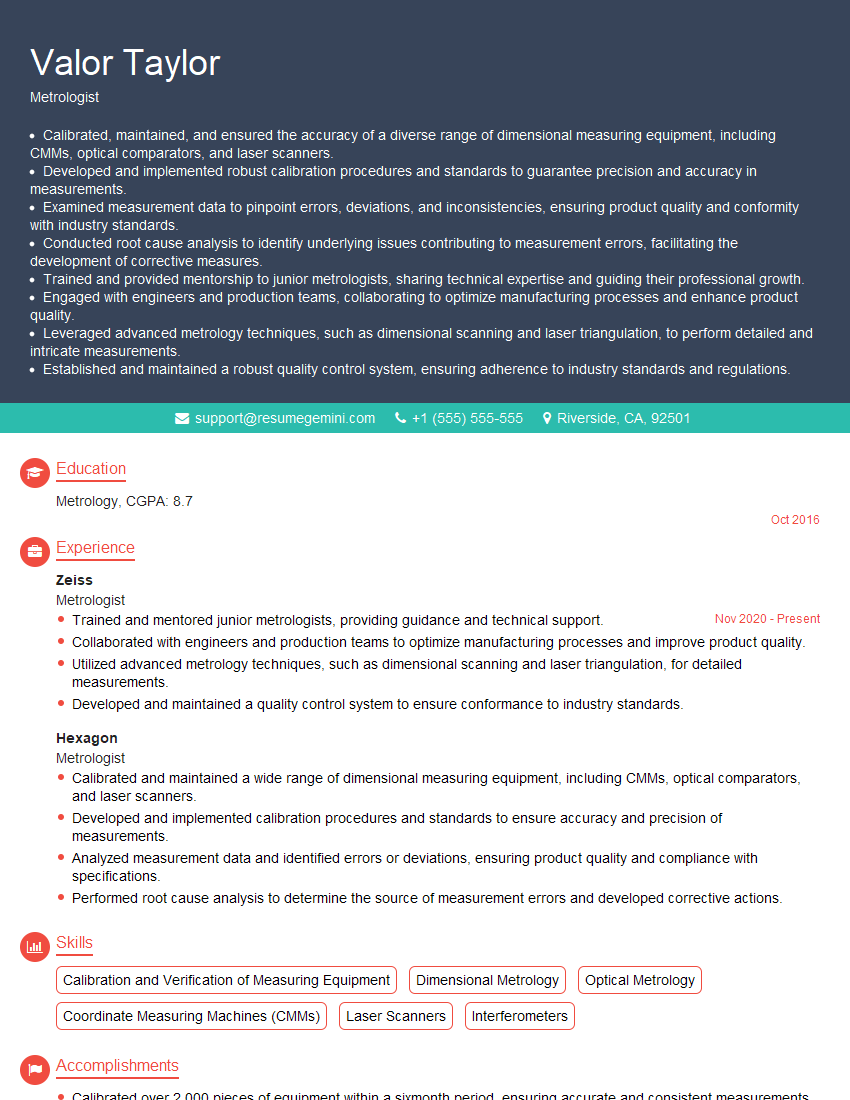
Metrologist Resume Sample
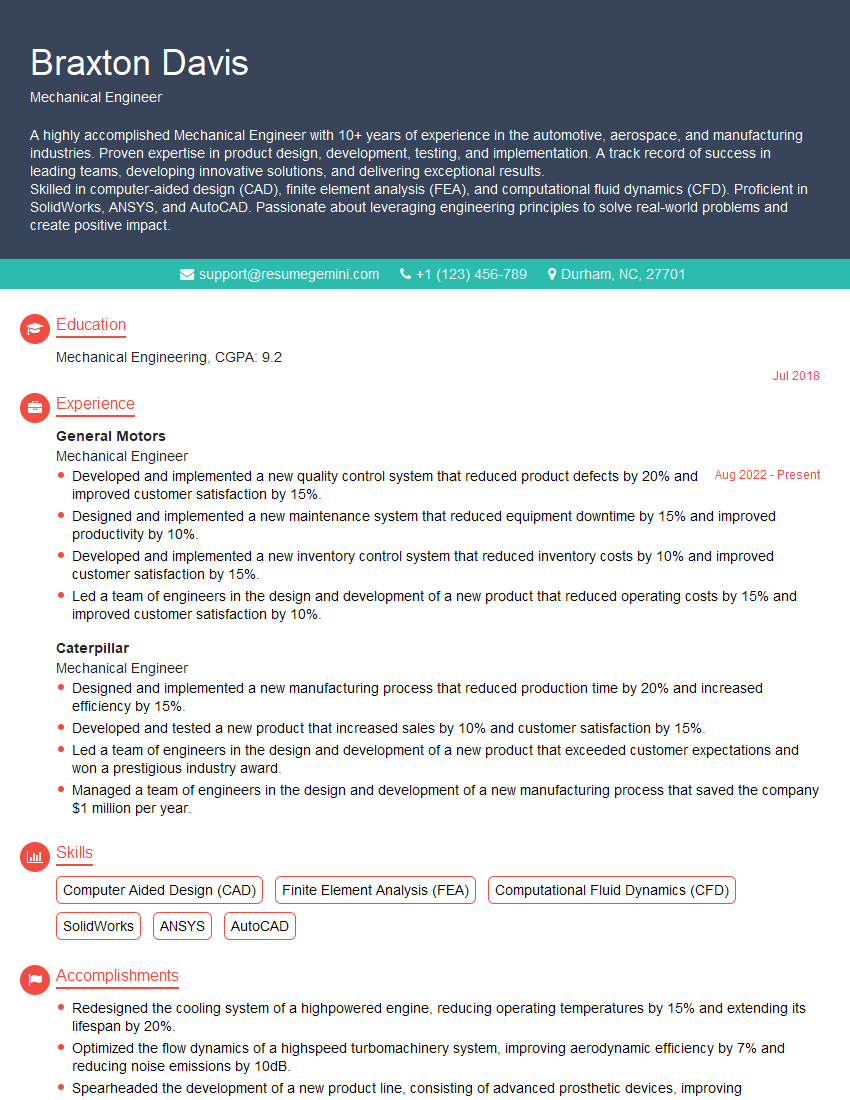
Mechanical Engineer Resume Sample

Tooling Engineer Resume Sample

Robotics Engineer Resume Sample
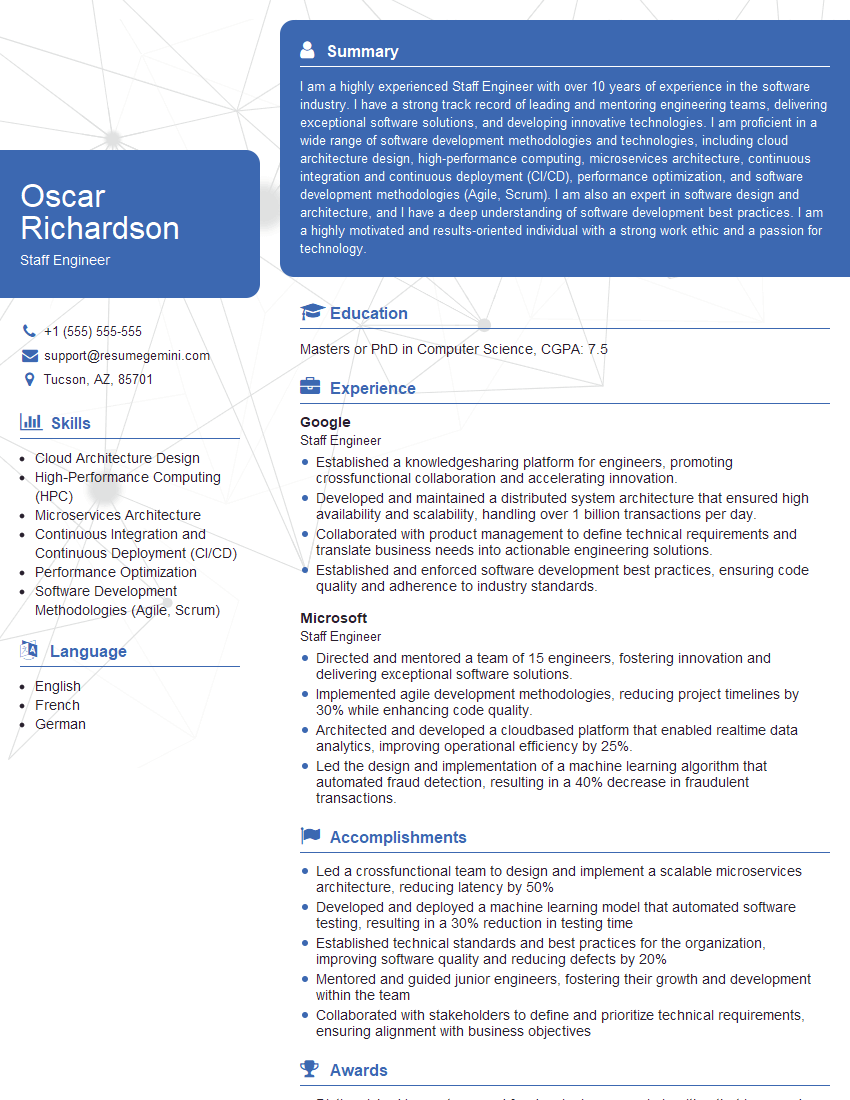
Staff Engineer Resume Sample

Quality Control Inspector Resume Sample
- Director of Engineering
- Engineering Manager
- Principal Engineer
- Project Engineer
- Process Engineer
- Automation Engineer
- Test Engineer
- Technical Specialist
- Design Engineer
- Quality Engineer
- Research Engineer
- Product Engineer
- Manufacturing Engineer
- Metrologist
- Mechanical Engineer
- Tooling Engineer
- Robotics Engineer
- Staff Engineer
- Quality Control Inspector
Explore more articles
Users Rating of Our Blogs
Share Your Experience
We value your feedback! Please rate our content and share your thoughts (optional).
What Readers Say About Our Blog
Very informative content, great job.
good