Feeling uncertain about what to expect in your upcoming interview? We’ve got you covered! This blog highlights the most important Media liaison interview questions and provides actionable advice to help you stand out as the ideal candidate. Let’s pave the way for your success.
Questions Asked in Media liaison Interview
Q 1. Describe your experience managing media relationships.
My experience in managing media relationships spans over ten years, encompassing roles in both large corporations and smaller startups. I’ve handled everything from proactive media outreach to reactive crisis communication. I’ve cultivated strong relationships with journalists across various media platforms – print, online, broadcast, and social media – tailoring my approach to each journalist’s specific beat and style. For instance, while working at Acme Corp, I successfully secured coverage in the Wall Street Journal for a new product launch by building a strong rapport with their technology reporter over several months of consistent communication and providing exclusive information. This involved understanding their editorial calendar and pitching stories relevant to their area of expertise. In another instance, at a smaller non-profit, I leveraged my network of local journalists to generate significant community awareness about a fundraising campaign.
Q 2. How do you build and maintain relationships with journalists?
Building and maintaining relationships with journalists is crucial for effective media relations. It’s less about transactional pitching and more about building trust and mutual respect. I approach this by:
- Providing value: I don’t just pitch stories; I offer exclusive insights, data, and expert commentary. I make sure the information I share is timely, relevant, and accurately sourced.
- Personalization: I tailor my communication to each journalist’s specific needs and interests. I research their past work to understand their style and areas of expertise.
- Building rapport: I nurture relationships through regular communication, even when I’m not pitching a story. This could be sharing an interesting article related to their beat or simply checking in on their well-being.
- Being responsive and transparent: I always respond promptly to inquiries, and I’m honest and upfront about any limitations or challenges.
- Respecting deadlines and editorial choices: I understand that journalists are under immense pressure, so I always respect their deadlines and editorial decisions. I don’t pressure them to publish something that doesn’t fit their publication.
Think of it like any relationship – it requires consistent effort, mutual respect, and understanding.
Q 3. Explain your strategy for crafting compelling press releases.
My strategy for crafting compelling press releases centers on clarity, conciseness, and newsworthiness. A well-written press release should immediately grab the reader’s attention and answer the five Ws and H (Who, What, When, Where, Why, and How). I follow this structure:
- Headline: A captivating headline that immediately conveys the key message.
- Subheadline: Expands on the headline, providing more context.
- Lead paragraph: Summarizes the most important information within the first paragraph.
- Body paragraphs: Provides further details, supporting evidence, and quotes.
- Boilerplate: A brief description of the organization.
- Contact information: Clear contact details for follow-up.
For example, instead of a generic headline like “Company X Launches New Product,” a more compelling headline might be “Company X Revolutionizes Industry with Innovative New Product.” I also use strong verbs and quantifiable results whenever possible to make the release more impactful. Finally, I always proofread carefully before distribution.
Q 4. How do you handle difficult or negative media inquiries?
Handling difficult or negative media inquiries requires a calm, proactive, and transparent approach. My strategy involves:
- Responding promptly: Address the inquiry as quickly as possible, acknowledging the concern and showing a willingness to engage.
- Gathering facts: Before responding, gather all the relevant facts to ensure accuracy and avoid making unsubstantiated claims.
- Acknowledging concerns: Even if the criticism is unfounded, acknowledging the concern demonstrates empathy and understanding.
- Offering a solution: If appropriate, offer a solution or plan of action to address the issue.
- Being honest and transparent: Don’t try to hide or downplay the issue. Transparency builds trust.
- Referring to appropriate spokespeople: If the inquiry requires specialized expertise, refer the journalist to the appropriate spokesperson.
For instance, if faced with a negative article, I’d first contact the journalist to understand their concerns and see if there’s any inaccurate information that needs correction. If appropriate, I’d offer a response or statement to counter the narrative. It’s crucial to be empathetic and avoid getting defensive.
Q 5. What metrics do you use to measure the success of your media outreach?
Measuring the success of media outreach requires a multi-faceted approach. I use a combination of quantitative and qualitative metrics, including:
- Media mentions: Tracking the number of times the organization or its initiatives are mentioned in media outlets.
- Reach: Estimating the total audience reached through media coverage (website traffic, social media engagement, etc.).
- Sentiment analysis: Assessing the overall tone of media coverage (positive, negative, or neutral).
- Website traffic from media mentions: Analyzing website traffic originating from media placements.
- Lead generation: Measuring the number of leads generated as a result of media coverage.
- Share of voice: Analyzing the organization’s share of voice within its industry.
Tools like media monitoring platforms can help automate the tracking of media mentions and sentiment analysis. Qualitative metrics, like feedback from stakeholders or changes in brand perception, provide valuable context.
Q 6. Describe your experience with crisis communication management.
My experience with crisis communication management involves developing and executing comprehensive crisis communication plans. This includes establishing clear communication channels, designating spokespeople, and creating a rapid response team. A key component is having pre-approved messaging and a process for disseminating information quickly and effectively. I’ve found that being proactive, transparent, and empathetic is crucial during a crisis. For example, when faced with a product recall, my approach prioritized immediate communication with affected customers, the media, and regulatory bodies. We acknowledged the issue, offered solutions, and demonstrated our commitment to rectifying the situation. Transparency built trust, mitigating potential negative impact on brand reputation.
Q 7. How do you utilize social media for media relations?
Social media plays a significant role in modern media relations. I utilize it to:
- Monitor media coverage: Track mentions of the organization and its initiatives across various social media platforms.
- Engage with journalists: Connect with and interact with journalists on platforms like Twitter and LinkedIn.
- Share news and updates: Disseminate press releases, blog posts, and other relevant information through social media channels.
- Build relationships with influencers: Collaborate with relevant influencers to extend reach and credibility.
- Humanize the brand: Showcase the organization’s culture and values, fostering a positive brand image.
- Respond to inquiries and feedback: Engage directly with followers, addressing concerns and feedback promptly.
However, it’s critical to maintain a consistent brand voice and avoid sharing sensitive information through social media. Strategic and responsible social media engagement can be a powerful tool for media relations.
Q 8. How do you identify and target key media outlets for your campaigns?
Identifying and targeting key media outlets requires a strategic approach. It’s not about blanket emailing everyone; it’s about finding the perfect fit for your message. I begin by defining my target audience and the key messages I want to convey. Then, I research media outlets that align with both. This involves analyzing:
- Audience demographics and interests: Does the publication’s readership match my target audience?
- Editorial focus and past coverage: Has the outlet covered similar stories in the past? What’s their tone and style?
- Journalist specializations: Who are the reporters covering my industry or beat? Their contact details are crucial.
- Outlet reach and influence: What’s the publication’s circulation or online readership? How influential is it within my industry?
I use a combination of online databases, media directories, and social media monitoring to build a targeted media list. Think of it like a dating profile – you wouldn’t approach everyone, you’d seek out compatible matches. This targeted approach increases the likelihood of a successful pitch.
Q 9. What is your process for pitching stories to journalists?
My pitching process focuses on personalization and relationship building. A generic email will land in the trash. I follow these steps:
- Research the journalist: Understand their writing style, past work, and areas of interest. This helps tailor my pitch to their specific preferences.
- Craft a compelling subject line: It needs to be concise, intriguing, and relevant to the journalist’s beat. Something like “Exclusive: [Company Name] Revolutionizes [Industry] with [Innovation]” is far more engaging than a generic “Press Release.”
- Write a personalized pitch: Highlight the ‘newsworthiness’ of my story – what makes it unique, timely, and relevant to their audience? Avoid jargon and keep it concise, ideally fitting within one page.
- Offer exclusive information or access: If possible, provide something the journalist wouldn’t easily find elsewhere, like an exclusive interview or data.
- Follow up strategically: I follow up once or twice, but avoid being overly persistent. If I don’t hear back, I move on.
Building relationships is key. Attending industry events, engaging with journalists on social media, and sending relevant information proactively can all improve pitch success.
Q 10. Describe a time you successfully secured positive media coverage.
I successfully secured positive media coverage for a client launching a new sustainable fashion line. The challenge was getting traction in a saturated market. My strategy focused on highlighting the brand’s ethical sourcing and eco-friendly production methods. I identified a journalist at a leading sustainable living magazine known for featuring brands with strong ethical commitments. I pitched a story focusing on the human aspect – the story of the artisans who created the clothing – rather than simply focusing on the product itself. The journalist was captivated by the human-interest angle and the brand’s commitment to fair labor practices. The result? A prominent feature article in the magazine, a significant increase in brand awareness, and a boost in sales.
Q 11. Explain your experience with media monitoring tools and techniques.
Media monitoring is crucial for understanding public perception and campaign effectiveness. I’m proficient in using several tools like Meltwater, Cision, and Google Alerts. These platforms allow me to track mentions of my clients across various media channels, including news articles, blogs, social media, and online forums. I use keyword tracking, sentiment analysis, and media share of voice reports. These tools help quantify the reach and impact of our campaigns. For example, Meltwater allows me to set up alerts for specific keywords related to my clients, instantly notifying me of any new mentions. Sentiment analysis helps me determine the overall tone of the coverage – is it positive, negative, or neutral?
Q 12. How do you track media coverage and analyze its impact?
Tracking and analyzing media coverage goes beyond simply counting mentions. I use a multi-faceted approach:
- Quantitative analysis: Tracking the number of mentions, reach (impressions and audience size), and sentiment (positive, negative, neutral) across various channels.
- Qualitative analysis: Analyzing the tone and context of the coverage. Is the message being conveyed accurately? What are the key themes emerging?
- Impact assessment: Measuring the impact of the media coverage on key metrics like website traffic, social media engagement, and sales.
I create reports that visualize this data to demonstrate the ROI of our media relations efforts. For example, I might show a correlation between positive media coverage and a spike in website traffic or sales. It’s about demonstrating the value of earned media.
Q 13. How do you manage multiple media inquiries simultaneously?
Managing multiple media inquiries simultaneously requires organization and prioritization. I use a project management system to track all incoming requests, deadlines, and assigned tasks. This involves:
- Centralized communication: Using a shared inbox or project management platform to ensure all team members are aware of ongoing inquiries.
- Prioritization: Focusing on high-impact requests from influential media outlets first.
- Time management: Allocating specific time slots for responding to inquiries and crafting media materials.
- Delegation: Assigning tasks to team members as needed, ensuring everyone understands their roles and responsibilities.
Think of it like air traffic control – managing multiple ‘flights’ (inquiries) simultaneously, ensuring each receives the necessary attention without causing collisions.
Q 14. How do you deal with conflicting information or misinformation?
Dealing with conflicting information or misinformation requires a calm, fact-based approach. My process involves:
- Verification: Cross-referencing information from multiple credible sources to confirm accuracy.
- Transparency: If a mistake has been made, acknowledging it promptly and correcting the information.
- Proactive communication: Reaching out to journalists and media outlets to provide accurate information and correct any misinformation.
- Preparedness: Having a detailed fact sheet or FAQ document readily available to address common questions and concerns.
It’s crucial to maintain credibility. Ignoring misinformation or attempting to cover it up will only damage your reputation. Proactive and transparent communication is key to mitigating damage and rebuilding trust.
Q 15. What are your strategies for creating and delivering effective media training?
Effective media training hinges on transforming individuals into confident and articulate communicators. My strategy involves a multi-faceted approach. First, I assess the client’s communication style and identify areas for improvement through mock interviews and role-playing exercises. This allows me to tailor the training to their specific needs. Then, I focus on message development, ensuring a clear and concise key message is established. We practice delivering that message in various scenarios, anticipating potential difficult questions. Finally, I emphasize non-verbal communication – body language, eye contact, and tone – to enhance impact. For instance, I recently trained a CEO on handling challenging questions about a recent company merger. Through simulated press conferences, we honed her ability to deflect negative press and highlight the positive aspects of the merger, resulting in a significantly more controlled and effective media appearance.
- Assessment & Feedback: Analyzing strengths and weaknesses through mock interviews.
- Message Crafting: Developing concise and compelling key messages.
- Scenario Training: Practicing responses to difficult or unexpected questions.
- Non-verbal Communication: Refining body language and tone for maximum impact.
Career Expert Tips:
- Ace those interviews! Prepare effectively by reviewing the Top 50 Most Common Interview Questions on ResumeGemini.
- Navigate your job search with confidence! Explore a wide range of Career Tips on ResumeGemini. Learn about common challenges and recommendations to overcome them.
- Craft the perfect resume! Master the Art of Resume Writing with ResumeGemini’s guide. Showcase your unique qualifications and achievements effectively.
- Don’t miss out on holiday savings! Build your dream resume with ResumeGemini’s ATS optimized templates.
Q 16. Explain your approach to developing a media relations strategy.
Developing a successful media relations strategy requires a thorough understanding of the organization’s objectives and target audiences. My approach begins with identifying key messages that align with those objectives. This involves understanding the organization’s narrative and what it wants to communicate to the public. Next, I identify key media outlets and journalists who are most relevant to the organization’s goals. This might involve researching journalists who cover specific industries or beats. A robust media list is essential. Following this, I develop a proactive communication plan, proactively pitching stories and building relationships with media contacts. Finally, I establish a system for monitoring media coverage and measuring the effectiveness of the strategy. For example, when launching a new product, I would target technology blogs and trade publications, crafting press releases and media pitches that showcase the product’s unique features and benefits. This proactive strategy helps control the narrative and ensures the message is disseminated effectively.
- Objective Setting: Defining clear communication goals aligned with organizational objectives.
- Target Audience Identification: Pinpointing relevant media outlets and journalists.
- Key Message Development: Crafting compelling narratives to communicate organizational goals.
- Proactive Communication Plan: Developing a calendar of media outreach and engagement.
- Monitoring & Evaluation: Tracking media coverage and assessing campaign effectiveness.
Q 17. How do you adapt your media relations strategy to different audiences?
Adapting to different audiences is critical for effective media relations. My approach involves tailoring the message, tone, and style to resonate with each specific audience. For example, a press release for a scientific breakthrough would be significantly different for a science journal compared to a general-interest newspaper. The scientific journal would require detailed technical information and data, while the newspaper would need a simplified, engaging narrative focused on the broader impact of the discovery. I ensure the language and the overall presentation match the expectations and understanding of the target audience. For instance, when communicating with a younger demographic, I might employ a more informal tone and utilize visual aids. Conversely, when dealing with a more formal, established media outlet, a more conservative and professional approach is warranted.
- Message Tailoring: Adjusting language, tone, and style to suit the audience’s knowledge and interests.
- Channel Selection: Choosing media outlets most effective for reaching the target audience.
- Visual Aids: Utilizing images, infographics, or videos to enhance communication impact.
- Language & Style: Ensuring appropriate vocabulary and communication style for each audience.
Q 18. How familiar are you with different media types (print, broadcast, online)?
My experience encompasses all major media types: print, broadcast, and online. I understand the nuances of each medium and tailor my communication accordingly. Print media demands concise, well-written press releases and fact sheets with clear quotes. Broadcast media requires soundbites, compelling visuals, and the ability to communicate complex information succinctly. Online media presents opportunities for interactive content, social media engagement, and targeted online advertising. I am familiar with various platforms such as Twitter, Facebook, LinkedIn, and other relevant channels, adapting my content strategy based on each platform’s specific audience and functionality. For instance, I recently secured a feature story on a client’s new sustainability initiative in a prominent national newspaper by understanding the editors’ preferences for long-form, in-depth reporting. Simultaneously, I developed short, impactful video clips for social media platforms to generate greater public engagement.
Q 19. What is your experience with media kits and press materials?
I have extensive experience in creating and distributing media kits and press materials. A well-crafted media kit is crucial for efficient media relations. It typically includes a press release, fact sheets, high-resolution images, bios of key personnel, and relevant background information. I ensure all materials are professionally designed, well-written, and easily accessible. For example, when preparing for a product launch, I create a digital media kit that includes interactive elements, videos, and downloadable assets. The digital format provides easy accessibility for journalists, enhancing the efficiency of information dissemination. I also prioritize quality control, ensuring all materials are error-free and consistent in messaging. This contributes to a professional and credible image, improving the chances of media coverage.
Q 20. Describe your experience with media accreditation and event logistics.
My experience with media accreditation and event logistics is comprehensive. I have managed media accreditation processes for large-scale events, ensuring smooth registration and access for journalists. This involves coordinating with venue staff, creating accreditation systems, and managing media registration databases. I also handle logistics such as media center setup, press conference arrangements, and providing support to journalists throughout the event. For instance, I organized media accreditation for a major international conference, processing hundreds of applications, allocating seating at press conferences, and establishing a fully equipped media center. Efficient event logistics ensure positive media engagement and reduce any potential disruptions to media operations.
Q 21. How do you handle interview requests from journalists?
Handling interview requests from journalists involves a strategic and professional approach. First, I assess the journalist’s publication, their target audience, and the context of the interview. This ensures that the interview aligns with the organization’s goals. Next, I coordinate the interview, confirming time, location, and interview format (phone, video, in-person). Before the interview, I brief the interviewee on the journalist’s background, potential questions, and key messages. Following the interview, I follow up with a thank-you note and seek to establish an ongoing relationship with the journalist. I also monitor any resulting coverage to ensure accuracy and alignment with the organization’s narrative. For example, when dealing with a critical journalist, I’d prepare the interviewee with carefully considered responses to address their potential concerns, while highlighting the positive aspects of the story. A proactive and well-prepared approach is essential for navigating challenging interview situations.
Q 22. What is your process for responding to media inquiries in a timely manner?
Responding swiftly and effectively to media inquiries is crucial for maintaining a positive public image. My process prioritizes speed and accuracy. It begins with a dedicated communication system – I typically use a monitored email inbox and a mobile phone specifically for media-related communications. Upon receiving an inquiry, I first assess its urgency and nature. Urgent requests, such as breaking news, are addressed immediately. Less urgent queries are prioritized based on their importance and potential impact.
Next, I gather the necessary information. This might involve consulting colleagues, reviewing internal documentation, or accessing relevant data. Accuracy is paramount; I always double-check facts before responding. Once the information is compiled, I craft a response that is clear, concise, and professional, tailored to the specific journalist and publication. Finally, I send the response promptly and follow up to ensure it’s received and understood. Think of it like a well-oiled machine: each step is meticulously executed to guarantee a quick, accurate, and informative response.
For example, if a journalist calls regarding a product recall, my immediate response involves acknowledging the situation, confirming the recall details, and offering to provide further information shortly. A follow-up email then provides a more detailed press release and contact information for further questions.
Q 23. How do you ensure consistent messaging across all media platforms?
Maintaining consistent messaging is paramount to building trust and credibility. Inconsistencies can damage an organization’s reputation. My approach starts with a central message repository, often a shared document or intranet page. This serves as the single source of truth for all key messages. We establish a core message framework, outlining key talking points and approved language for different scenarios. This framework ensures everyone speaks from the same script, avoiding conflicting information.
Before any public communication, we conduct a thorough review and approval process. All press releases, social media posts, and interviews are vetted to ensure alignment with the core message. I use media training for spokespeople, equipping them with the knowledge and skills to deliver consistent and compelling messages. Regular communication and feedback sessions with team members help identify and address any potential inconsistencies early on. It’s all about teamwork and meticulous planning. Imagine building a house – you wouldn’t use different materials without a blueprint; likewise, consistent messaging requires a clear plan and coordinated execution.
Q 24. Describe your experience working with diverse media personalities and styles.
I’ve had the pleasure of collaborating with a wide range of media personalities, each with their unique style and approach. From seasoned investigative journalists to young, enthusiastic bloggers, I’ve adapted my communication style to meet their individual needs and expectations. Understanding their publication’s target audience is crucial in tailoring my responses and building rapport.
For example, a seasoned journalist might appreciate a detailed, factual response with supporting evidence, while a blogger might prefer a more conversational and engaging style. I’ve learned to recognize different communication preferences: some journalists prefer concise answers, while others prefer more in-depth explanations. Building relationships is key to successfully navigating these differences; understanding their deadlines and preferred communication methods is crucial.
Adaptability is key in this field; it’s about recognizing and responding to each communication style respectfully and professionally.
Q 25. How do you navigate sensitive information during media interactions?
Handling sensitive information during media interactions requires a cautious and strategic approach. My first step is to identify the sensitive information and assess its potential impact. I carefully consider the legal and ethical implications before disclosing any details. Often, I’ll work closely with legal counsel to ensure compliance and to develop a communication strategy that protects confidential information.
When dealing with potentially sensitive information, I adopt a ‘need-to-know’ approach. I only share information that is relevant and necessary for the journalist’s inquiry, avoiding speculation or conjecture. Transparency is important, but so is responsible communication. I might offer an alternative angle that avoids the sensitive subject, or provide a carefully worded statement that acknowledges the situation without revealing confidential details.
For instance, if a journalist asks about an ongoing investigation, I might respond with a statement confirming the investigation is underway but avoid commenting on specifics to protect the integrity of the process and individuals involved.
Q 26. What is your understanding of media law and ethics?
A strong understanding of media law and ethics is essential for effective media relations. This includes familiarity with libel and defamation laws, copyright regulations, and privacy laws. I am aware of the importance of factual accuracy, ensuring information disseminated is truthful and verifiable. I also adhere to principles of fairness and impartiality, striving to provide balanced and objective information. Ethical considerations guide my decision-making process; I always prioritize responsible communication and avoid any actions that could compromise the integrity of my organization or the individuals involved.
For example, I understand that publishing false information can lead to legal repercussions; thus, fact-checking and verification are vital steps in my process. Likewise, I am mindful of privacy laws and ensure that any information shared with the media respects individuals’ rights to privacy and confidentiality.
Q 27. How do you measure the ROI of your media relations efforts?
Measuring the ROI of media relations efforts requires a multifaceted approach. It’s not just about counting media mentions; it’s about understanding the impact of those mentions on key business objectives. I use a combination of quantitative and qualitative metrics to assess the effectiveness of our campaigns.
Quantitative metrics might include media mentions, reach (impressions), website traffic from media coverage, and social media engagement related to the media coverage. Qualitative metrics, on the other hand, focus on the tone and context of media coverage, brand sentiment expressed in articles and social media, and ultimately, the impact on leads and sales. We analyze changes in brand perception, lead generation, and ultimately, revenue attributed to media coverage. For example, increased website traffic following a positive media article might indicate a successful campaign.
Using analytics tools, we track these metrics and correlate them with specific media activities to determine which strategies are most effective.
Q 28. Describe a time you had to manage a challenging media situation.
During a product launch, a competitor released a negative statement shortly before our press conference. This created a challenging situation, as we had to address the misinformation quickly and effectively without escalating the conflict. My team and I worked together to develop a response that acknowledged the competitor’s statement while emphasizing the accuracy and value of our product.
Our strategy involved: (1) Preparing a concise and factual counter-statement highlighting our product’s advantages and addressing specific inaccuracies in the competitor’s claims. (2) Proactively contacting key media outlets to provide them with our response before they published any pieces based solely on the competitor’s statement. (3) Emphasizing the positive aspects of our product launch in our press conference, shifting the focus back to our key messages. We also utilized social media to disseminate our counter-statement and engage positively with customers.
While we couldn’t completely negate the negative publicity, we successfully managed the situation by responding promptly, accurately, and strategically. The outcome was a minimal impact on our launch, demonstrating the importance of preparedness and a swift, decisive response to unexpected challenges.
Key Topics to Learn for Media Liaison Interview
- Media Relations Strategies: Understanding the nuances of building and maintaining positive relationships with journalists and media outlets. This includes identifying key media contacts and tailoring messaging for different platforms.
- Crisis Communication Management: Developing and implementing effective strategies to manage negative publicity and mitigate reputational damage. Practical application involves crafting compelling narratives and proactive communication plans.
- Media Pitching and Storytelling: Mastering the art of crafting compelling press releases, media pitches, and engaging narratives that resonate with journalists and their audiences. This includes understanding different media formats and tailoring your message accordingly.
- Social Media Management in Media Relations: Leveraging social media platforms to amplify messaging, engage with stakeholders, and monitor online conversations. This encompasses proactive engagement and reactive crisis management in the digital sphere.
- Media Monitoring and Analysis: Utilizing media monitoring tools to track media coverage, analyze sentiment, and identify opportunities for improvement. Problem-solving involves adapting strategies based on media analysis and feedback.
- Public Speaking and Media Training: Developing strong communication skills for interviews, press conferences, and other media engagements. This also involves preparing spokespersons and building confidence in public speaking.
- Ethical Considerations in Media Relations: Understanding and adhering to ethical guidelines in media communication, including transparency, accuracy, and fairness.
Next Steps
Mastering media liaison is crucial for career advancement in today’s communication-driven world. It opens doors to leadership roles and offers the opportunity to shape public perception and influence strategic narratives. To maximize your job prospects, create an ATS-friendly resume that highlights your skills and experience effectively. ResumeGemini is a trusted resource that can help you build a professional and impactful resume tailored to the demands of the media liaison field. Examples of resumes specifically tailored for Media Liaison roles are available to help guide you.

Communications Director Resume Sample

Communications Manager Resume Sample

Marketing Communications Manager Resume Sample
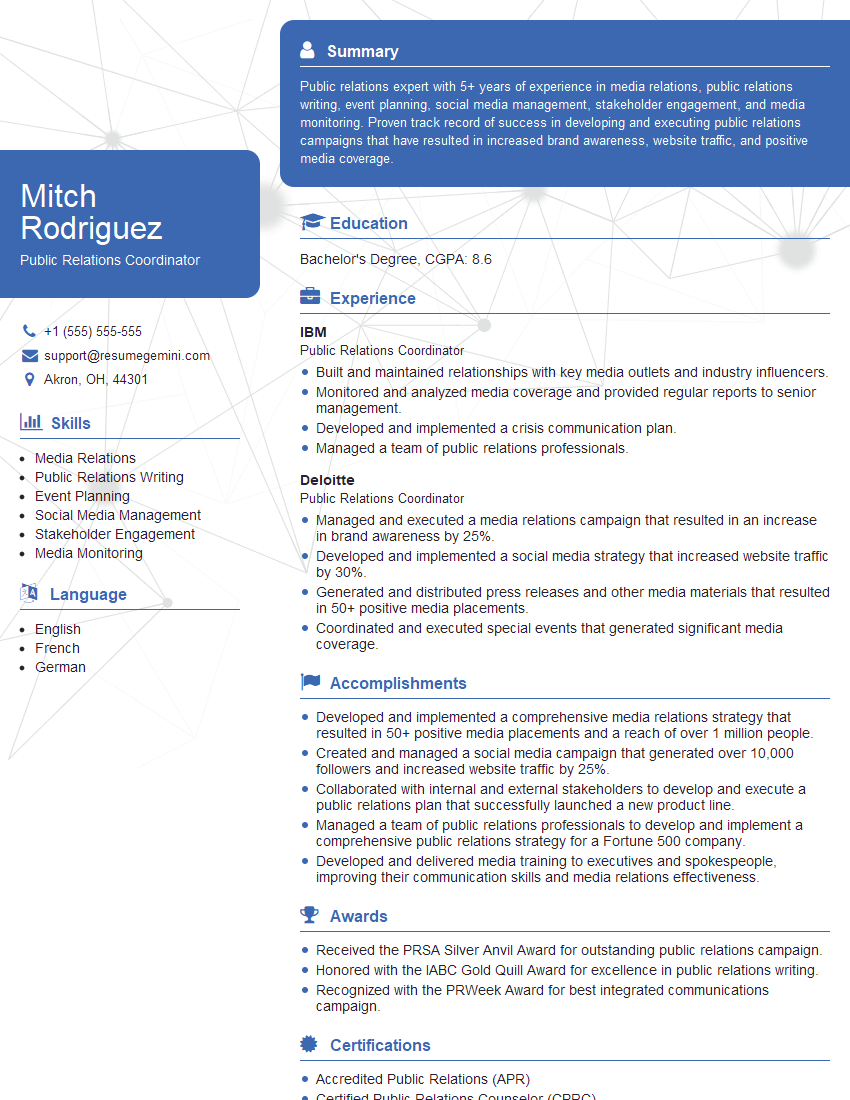
Public Relations Coordinator Resume Sample
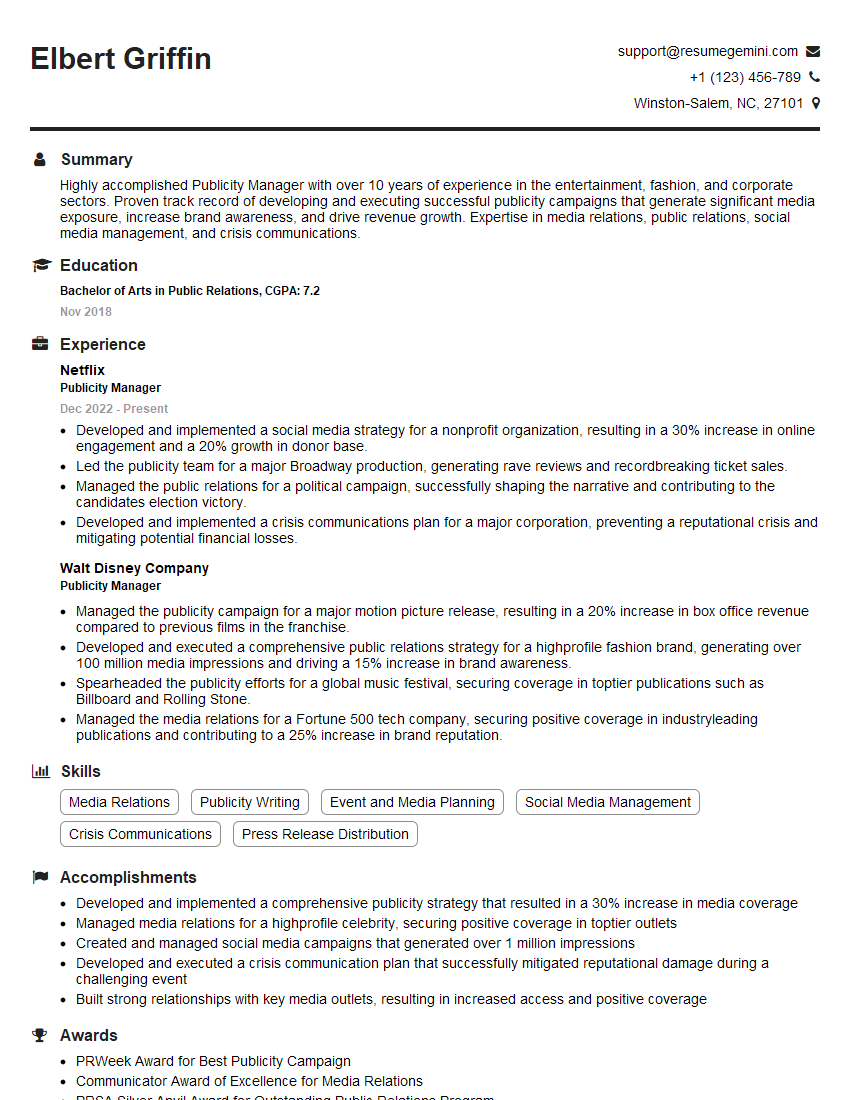
Publicity Manager Resume Sample
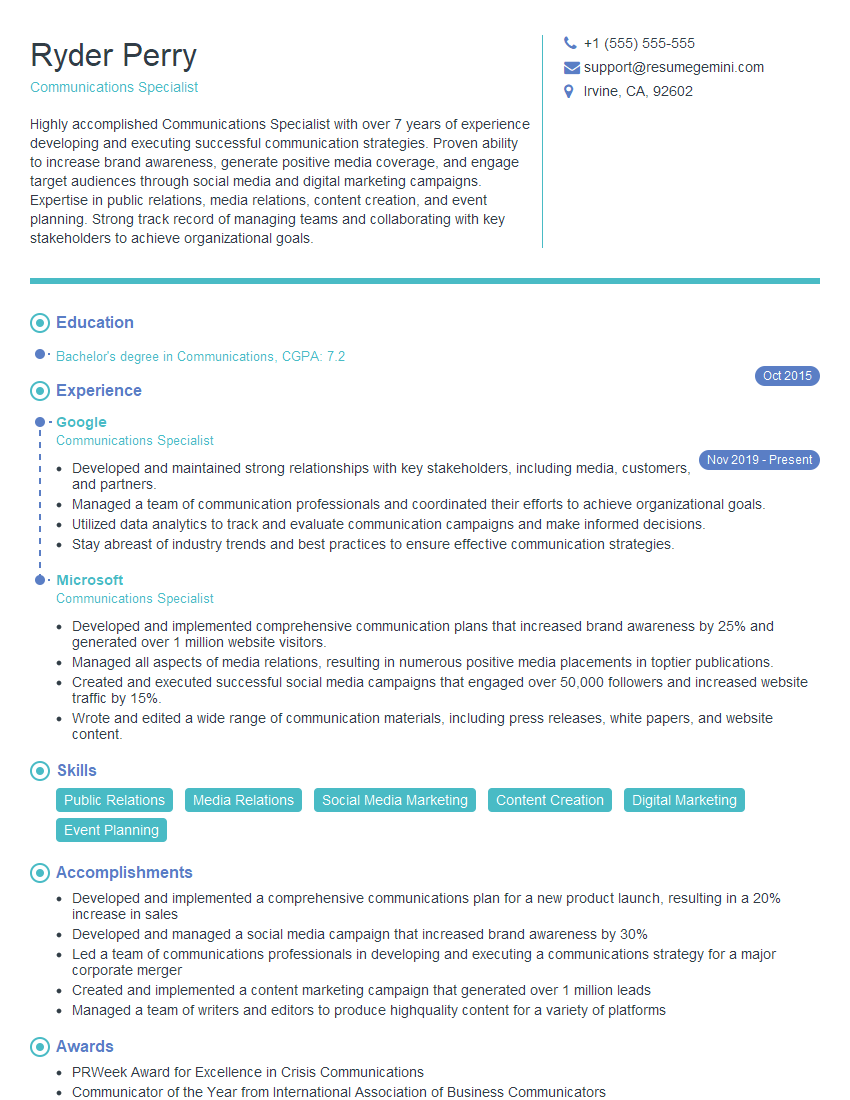
Communications Specialist Resume Sample
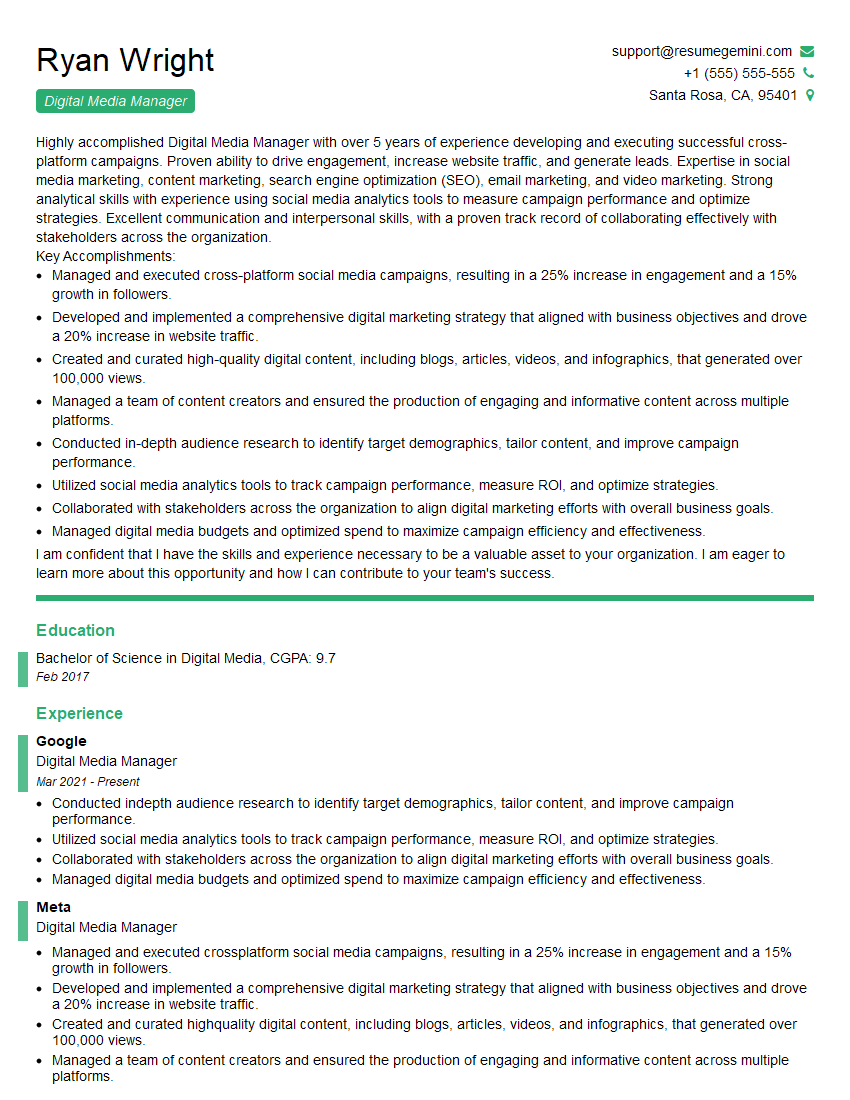
Digital Media Manager Resume Sample
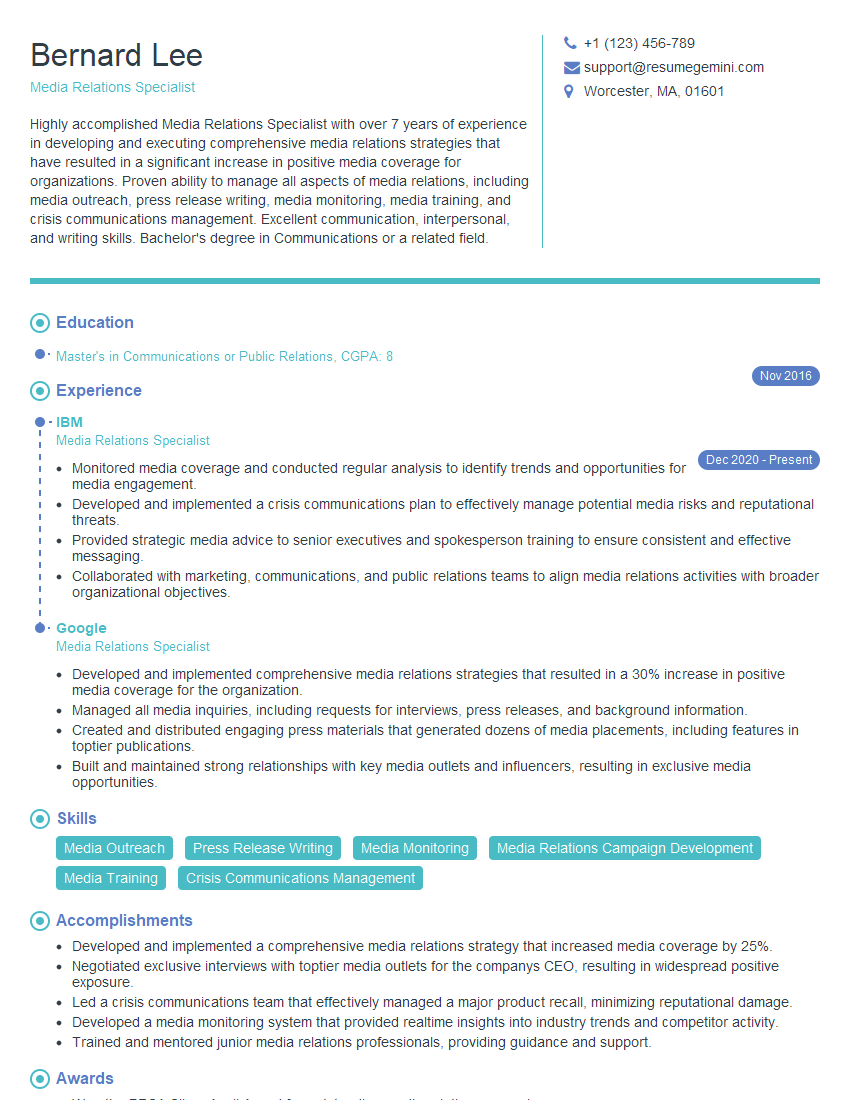
Media Relations Specialist Resume Sample
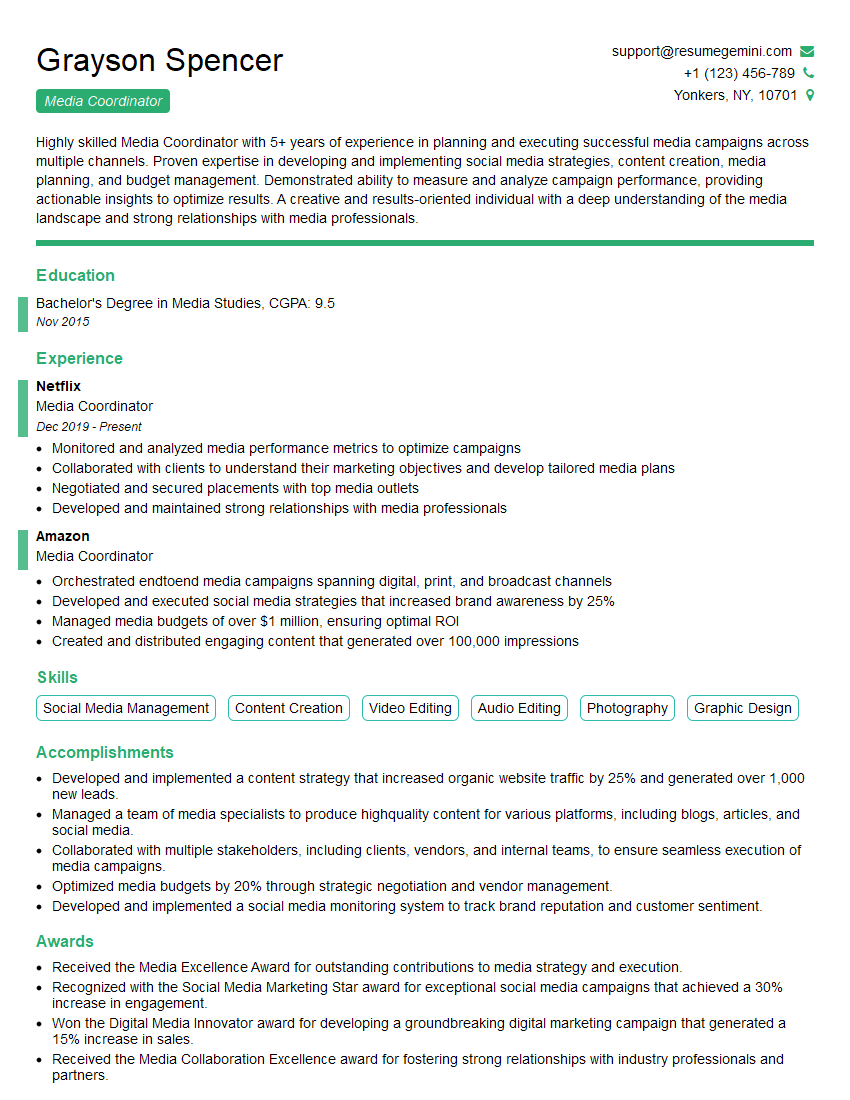
Media Coordinator Resume Sample
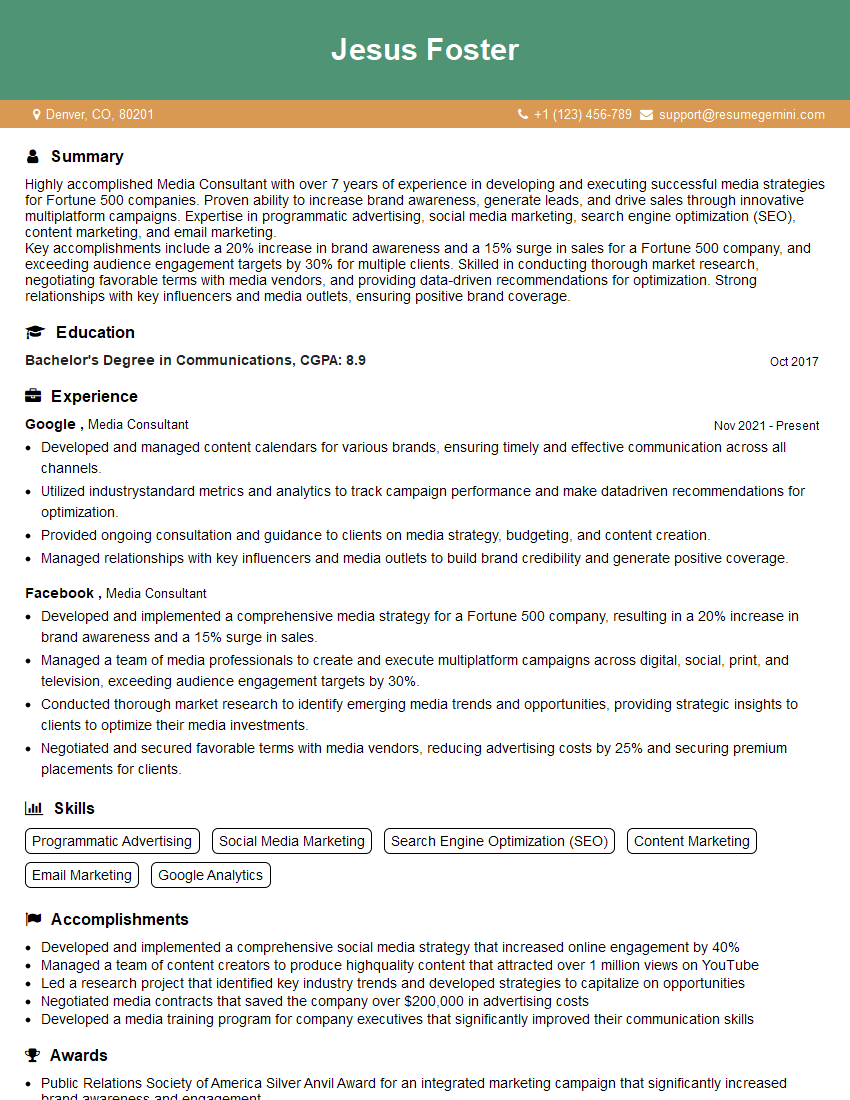
Media Consultant Resume Sample
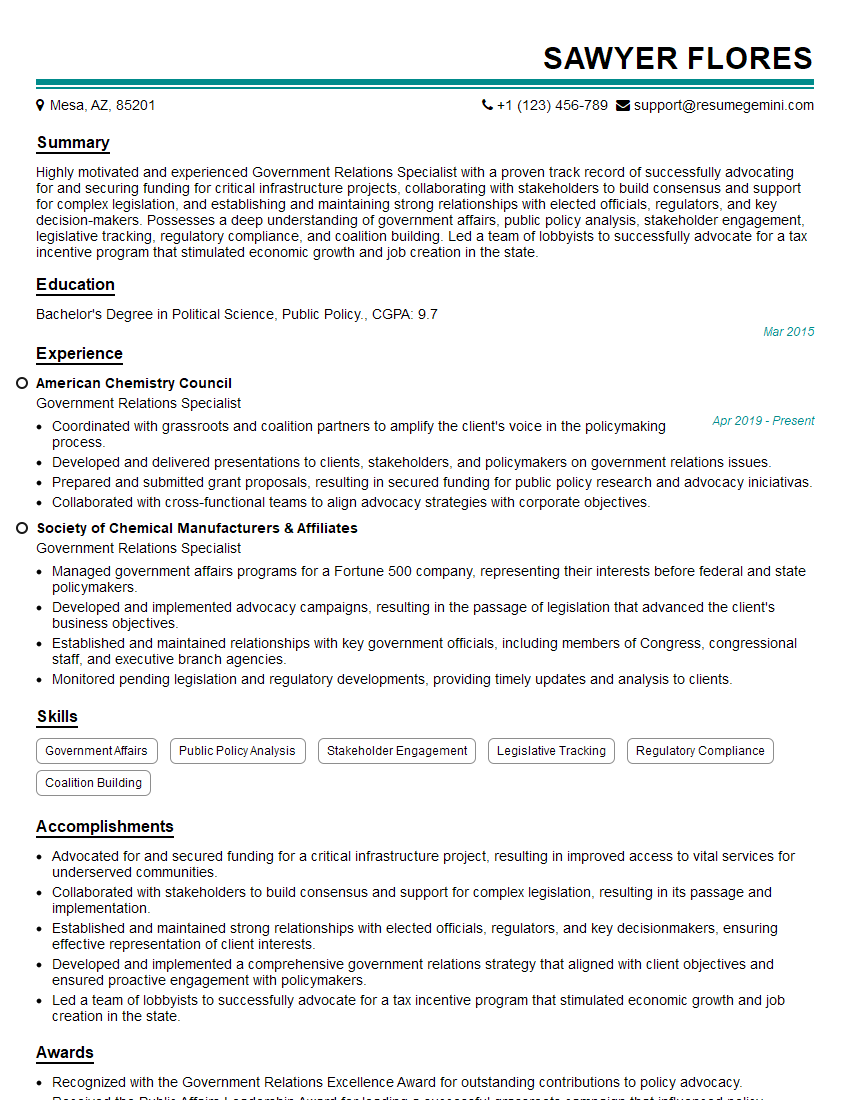
Government Relations Specialist Resume Sample
Explore more articles
Users Rating of Our Blogs
Share Your Experience
We value your feedback! Please rate our content and share your thoughts (optional).
What Readers Say About Our Blog
Very informative content, great job.
good