The right preparation can turn an interview into an opportunity to showcase your expertise. This guide to Media outreach skills interview questions is your ultimate resource, providing key insights and tips to help you ace your responses and stand out as a top candidate.
Questions Asked in Media outreach skills Interview
Q 1. Describe your experience building and maintaining relationships with journalists.
Building and maintaining relationships with journalists is the cornerstone of successful media outreach. It’s not about pitching; it’s about cultivating genuine connections based on mutual respect and trust. I approach this by focusing on providing value first. This means understanding their beats, their audiences, and their preferred communication styles.
- Personalized outreach: Instead of generic emails, I tailor my communication to each journalist, referencing their previous work or highlighting aspects of my client’s story that I know will resonate with their audience. For example, if a journalist frequently writes about sustainability initiatives, I would only pitch stories that align with that focus.
- Relationship nurturing: I don’t just reach out when I need something. I regularly share relevant industry news, insightful articles, or even simply offer congratulations on a recent publication. Think of it like building any strong relationship – it takes consistent effort and genuine care.
- Building a media list: I maintain a meticulously curated media list categorized by beat, publication, and contact details, including preferred communication methods and any past interactions. I regularly update this list and remove inactive or irrelevant contacts.
- Providing exclusivity: When possible, I offer exclusive access to information or interviews, demonstrating a commitment to providing journalists with value and showing that I respect their time and work.
This approach has yielded significant results, leading to numerous positive feature stories and successful campaigns. One example involved building a relationship with a tech journalist who initially seemed inaccessible. By consistently sharing relevant industry insights and offering exclusive interviews, I gained her trust, culminating in a major feature story that significantly boosted my client’s brand awareness.
Q 2. How do you identify and prioritize media outlets for a specific campaign?
Identifying and prioritizing media outlets is a strategic process. It begins with a deep understanding of the target audience for a specific campaign and the message we want to convey.
- Audience Alignment: The first step is determining which media outlets reach the desired audience demographic, lifestyle, and interests. For example, a campaign targeting young adults might prioritize social media influencers and online publications, while a B2B campaign might focus on trade publications and industry blogs.
- Media Kit Review: I review each publication’s media kit and editorial calendar to understand their content strategy, audience reach, and editorial guidelines. This helps in identifying outlets that are a good fit for the story.
- Journalists’ Past Work: Researching journalists’ previous articles and their beat helps in identifying reporters who have covered similar topics or have a demonstrated interest in the subject matter.
- Prioritization: After identifying potential outlets, I prioritize them based on factors like audience reach, relevance to the target audience, journalist’s influence, and past success with similar campaigns. I build a tiered approach – focusing on high-impact outlets first, while also targeting secondary and tertiary outlets that can still provide significant reach.
For instance, in a campaign for a new sustainable fashion brand, we prioritized fashion magazines, online influencers, and sustainability-focused blogs, prioritizing those with the highest engagement and relevance to our target market.
Q 3. What metrics do you use to measure the success of a media outreach campaign?
Measuring the success of a media outreach campaign goes beyond simply counting mentions. A holistic approach involves analyzing various quantitative and qualitative metrics.
- Media Mentions: Tracking the number of media placements – the total number of times the client or their message is featured in different media outlets.
- Reach and Impressions: Estimating the total number of people exposed to the media coverage. This considers the audience reach of each publication.
- Website Traffic: Monitoring increases in website traffic from media mentions using tools that track referral traffic. This indicates the effectiveness of the media coverage in driving audience engagement.
- Social Media Engagement: Tracking social media mentions, shares, and comments related to the campaign to gauge the public’s reaction and sentiment.
- Brand Sentiment Analysis: Utilizing sentiment analysis tools to gauge the overall positive, negative, or neutral sentiment surrounding media coverage.
- Lead Generation: Measuring the number of leads generated as a direct result of media coverage (e.g., increased inquiries, sales, sign-ups).
By tracking these metrics, we can gain a clear understanding of the campaign’s impact and make data-driven adjustments for future campaigns. For example, a low conversion rate from media mentions might indicate a need to refine the call to action in future press releases.
Q 4. Explain your process for crafting compelling press releases.
Crafting a compelling press release is an art and a science. It needs to be newsworthy, concise, and engaging while adhering to journalistic standards. My process involves:
- Identifying the News Angle: What makes this story newsworthy? What’s the unique angle that journalists would be interested in? It’s crucial to focus on the news value, not simply a product announcement.
- Writing a Concise Headline: The headline should be attention-grabbing and accurately reflect the content. Keep it under 10 words.
- Developing a Strong Lead Paragraph: The first paragraph must answer the 5Ws and 1H (Who, What, When, Where, Why, How). It’s the most crucial part, capturing the essence of the story.
- Incorporating Supporting Information: Include facts, figures, quotes, and additional details that support the core message, providing context and credibility.
- Adding a Call to Action (Optional): Depending on the purpose, a call to action can be included (e.g., visit a website, register for an event).
- Proofreading and Editing: Before sending, thorough proofreading and editing are crucial to ensure accuracy, clarity, and professionalism. A second pair of eyes is always beneficial.
For example, instead of simply announcing a new product launch, a press release might highlight the innovative technology behind it, its unique benefits to consumers, or its impact on a specific industry problem. This focus on newsworthiness will significantly increase the chances of media coverage.
Q 5. How do you handle negative media coverage?
Handling negative media coverage requires a swift, strategic, and transparent response. Panicking is not an option. My approach includes:
- Rapid Assessment: The first step is to assess the damage – how widespread is the negative coverage? What is the tone and sentiment? What is the impact on the client’s reputation?
- Gather Facts and Information: Before responding, we need to gather all the relevant facts and evidence. This will help to craft a well-informed response.
- Develop a Response Strategy: The response depends on the nature of the criticism. Sometimes a direct response addressing concerns and offering clarifications is sufficient. Other times, a more comprehensive plan involving proactive outreach to other media outlets might be needed.
- Craft a Public Statement (if necessary): If a public statement is needed, it should be factual, empathetic, and address the concerns directly without being defensive. It should show a commitment to addressing the issues.
- Proactive Media Outreach: We may proactively contact journalists to offer further clarification or share a different perspective. This is especially important when the initial coverage misrepresents facts.
- Long-term Reputation Management: Negative coverage is an opportunity for improvement. We would analyze what caused the negative sentiment and implement changes to prevent similar situations in the future.
For instance, if a client faced criticism regarding a product defect, we would issue a public statement acknowledging the problem, outlining the steps taken to address it, and reassuring customers of our commitment to quality and safety.
Q 6. How do you adapt your media outreach strategy for different target audiences?
Adapting the media outreach strategy for different target audiences is crucial for maximizing impact. It requires tailoring the message, selecting the right media outlets, and choosing the appropriate communication style.
- Audience Segmentation: Understanding the target audience’s demographics, psychographics, media consumption habits, and communication preferences is essential. This helps in segmenting the audience into distinct groups.
- Message Customization: The key message needs to be tailored to resonate with each target audience segment. What motivates one group might not interest another. The language and tone should also be adjusted accordingly.
- Media Outlet Selection: The choice of media outlets must align with the target audience’s media consumption patterns. A young audience might respond better to social media and online publications, while an older audience might prefer traditional print media.
- Communication Style Adjustment: The communication style should also be adjusted to match the target audience’s preferences. Formal language might be suitable for a professional audience, while a more informal and conversational tone might be preferred for a younger audience.
For example, a campaign for a financial product would use a different strategy for reaching young investors versus experienced investors. The message would be adjusted to resonate with their respective levels of financial literacy and risk tolerance, and different media outlets would be selected to reach each group effectively.
Q 7. What experience do you have with media monitoring tools?
I have extensive experience using various media monitoring tools to track media coverage, analyze brand sentiment, and measure campaign effectiveness. These tools are indispensable for gaining insights into media trends, identifying opportunities, and reacting swiftly to negative coverage.
- Meltwater: I have used Meltwater to track media mentions across various sources, including print, online, broadcast, and social media. It allows for detailed analysis of brand sentiment and provides comprehensive reporting.
- Cision: Cision’s capabilities in media monitoring, distribution, and analysis provide a holistic view of media coverage and facilitate effective campaign measurement. Its database of journalists and media outlets is invaluable.
- Google Alerts: While not a dedicated media monitoring tool, Google Alerts is useful for setting up customized alerts for specific keywords and phrases, providing real-time notifications of relevant media mentions.
These tools allow for detailed reporting and analysis, enabling data-driven decision-making and optimization of media outreach campaigns. For example, by tracking brand sentiment using Meltwater, we can identify potential issues and address them promptly, preventing further damage to the client’s reputation.
Q 8. Describe a time you successfully secured media coverage for a challenging client.
One of my most challenging clients was a small, sustainable fashion brand with limited marketing budget. Their unique selling proposition – ethically sourced, handcrafted clothing – was difficult to convey within the broader, fast-fashion dominated market. Securing media coverage required a nuanced strategy.
Instead of focusing on broad publications, I targeted niche lifestyle and ethical consumer magazines and blogs. I crafted personalized pitches that highlighted the brand’s unique story, focusing on the artisans and the environmental impact reduction. I also offered exclusive interviews with the founder, showcasing her passion and commitment. This tailored approach resulted in features in three relevant publications, generating significant website traffic and a notable boost in sales. The success hinged on understanding the client’s limitations and crafting a strategy that maximized their strengths rather than fighting against the odds.
Crucially, I tracked media mentions using a dedicated spreadsheet, monitoring website traffic referrals and social media engagement to demonstrate a clear return on investment. This allowed me to demonstrate the impact of my work and build trust with the client, securing further projects.
Q 9. How do you build relationships with influencers?
Building relationships with influencers is about genuine connection, not transactional interactions. It starts with identifying influencers whose audience aligns with your client’s target market and whose values resonate with the brand. Then, engage authentically; don’t just ask for favors.
- Engage with their content: Comment thoughtfully on their posts, showing you’ve genuinely considered their perspective.
- Share their work: Retweet, repost, or share their content on your own platforms, giving credit where it’s due.
- Offer value: Provide them with exclusive information, early access to products, or insights that are beneficial to them.
- Build a relationship: Participate in conversations, attend industry events, and network effectively.
- Be patient: Building trust takes time; avoid being pushy or demanding.
For instance, I once built a strong relationship with a fashion influencer by regularly engaging with her posts, offering constructive feedback, and eventually securing an exclusive interview for her blog about a client’s new sustainable collection. This led to significant media exposure and a thriving collaboration.
Q 10. How familiar are you with different types of media pitches (e.g., email, phone calls)?
I’m proficient in various media pitching methods, tailoring my approach based on the target journalist and publication.
- Email Pitches: These are common and should be concise, personalized, and include a compelling subject line, a brief introduction, the core message, and a strong call to action. I always ensure the email is free of grammatical errors and is tailored to the specific journalist and publication.
- Phone Calls: These offer a more personal touch and can be beneficial for building relationships and addressing immediate needs. I use phone calls strategically, primarily for follow-ups on emails or to establish rapport before a larger campaign.
- Social Media Pitches: Platforms like Twitter and LinkedIn allow for direct engagement with journalists. This involves crafting concise and engaging messages that highlight relevant stories, tagging appropriate journalists, and using relevant hashtags.
- Press Releases: I use these for significant announcements or when a wider media reach is needed. A press release needs to be well-written, newsworthy, and distributed via a newswire or directly to targeted media outlets.
The key is knowing when to use each approach effectively, which is informed by my understanding of the media landscape and individual journalists’ preferences.
Q 11. What is your experience with media databases and CRM systems?
I have extensive experience utilizing media databases like Cision, Meltwater, and Muck Rack for identifying key journalists, bloggers, and influencers. These platforms are indispensable for targeting media outlets relevant to a client’s needs, tracking media mentions, and analyzing media coverage.
In terms of CRM systems, I’m proficient with tools like HubSpot and Salesforce, using them to manage media contacts, track communications, schedule follow-ups, and analyze the overall effectiveness of outreach efforts. This ensures a well-organized and efficient media outreach strategy, allowing for personalized and timely interactions with journalists and media outlets.
For instance, I use the contact lists in my CRM to maintain detailed records of communication history, preferences, and potential collaboration opportunities. This ensures a consistent and highly efficient media outreach strategy.
Q 12. How do you track and report on media outreach results?
Tracking and reporting on media outreach results is crucial for demonstrating ROI. My approach involves a multi-faceted strategy:
- Media Mentions Tracking: I use media monitoring tools like Cision or Google Alerts to track all media mentions, noting the publication, date, reach, and sentiment of the coverage.
- Website Analytics: I track website traffic driven from media mentions to quantify the impact on website visits and lead generation.
- Social Media Engagement: I monitor social media mentions and engagement to assess the reach and impact of the coverage on different social platforms.
- Sales Data Analysis: Where applicable, I correlate media coverage with sales data to determine the direct impact of media mentions on sales conversions.
I compile this data into comprehensive reports, providing clients with clear insights into the effectiveness of their media outreach campaign. I use charts and graphs to visualize the results, making it easy for clients to understand the impact of their investments.
Q 13. Describe your experience using social media for media outreach.
Social media is an integral part of my media outreach strategy. It’s not just about posting press releases; it’s about engaging with journalists and influencers on their platforms. I use social media to:
- Identify journalists: I use Twitter, LinkedIn, and other platforms to find journalists covering relevant topics.
- Share relevant content: I share blog posts, articles, and other content that might be of interest to journalists.
- Engage in conversations: I participate in relevant discussions and engage with journalists’ tweets and posts.
- Build relationships: I follow relevant journalists and influencers, and engage with their content regularly.
- Promote media coverage: I use social media to promote positive media coverage.
For example, I recently used Twitter to connect with a journalist covering a specific niche topic related to a client’s new product launch. This led to an interview and resulted in a very positive media coverage.
Q 14. How do you manage multiple media outreach projects simultaneously?
Managing multiple media outreach projects concurrently requires meticulous organization and prioritization. I use a project management system (like Asana or Trello) to track each project’s progress, deadlines, and key milestones. I break down larger projects into smaller, manageable tasks, assigning deadlines and responsibilities to ensure everything stays on track.
I prioritize projects based on deadlines, client importance, and the potential impact of the coverage. I maintain a detailed calendar and regularly review my workload, adjusting priorities as needed. Effective communication with clients is essential; I keep them informed of my progress and any potential challenges.
Regularly reviewing my progress and adjusting my schedule accordingly is key to avoiding overwhelm and ensuring that all projects receive adequate attention.
Q 15. How do you prioritize your media outreach efforts when resources are limited?
Prioritizing media outreach with limited resources requires a strategic approach. It’s not about quantity, but quality and impact. I start by defining clear, measurable objectives. What are we trying to achieve? Increased brand awareness? Lead generation? Then, I identify the key media outlets and influencers most likely to reach our target audience. This involves thorough research – analyzing audience demographics, media outlet reach, and past successes.
Next, I create a tiered system: Tier 1 includes high-impact outlets with large audiences and strong alignment with our message. Tier 2 includes secondary outlets that still offer valuable reach. I allocate resources proportionately, focusing on Tier 1 initially. For example, I might dedicate more time and effort to crafting compelling pitches for top-tier publications, while employing more efficient strategies like press release distribution for Tier 2. Regular evaluation is crucial; I track results to see which efforts yield the best ROI, allowing for resource reallocation as needed.
For example, if a small-budget campaign aims to launch a new eco-friendly product, I wouldn’t waste resources pitching to every media outlet. Instead, I’d focus on publications known for covering sustainable living, targeting high-profile bloggers and journalists in that niche first. This targeted approach maximizes the impact of our limited resources.
Career Expert Tips:
- Ace those interviews! Prepare effectively by reviewing the Top 50 Most Common Interview Questions on ResumeGemini.
- Navigate your job search with confidence! Explore a wide range of Career Tips on ResumeGemini. Learn about common challenges and recommendations to overcome them.
- Craft the perfect resume! Master the Art of Resume Writing with ResumeGemini’s guide. Showcase your unique qualifications and achievements effectively.
- Don’t miss out on holiday savings! Build your dream resume with ResumeGemini’s ATS optimized templates.
Q 16. What is your understanding of media relations best practices?
Media relations best practices revolve around building strong, mutually beneficial relationships with journalists and influencers. It’s about understanding their needs and providing them with valuable information. Key aspects include:
- Building relationships: Regularly engaging with journalists through social media, attending industry events, and offering valuable insights even without a direct pitch.
- Targeting the right outlets: Thorough research to identify publications and journalists whose audience aligns with our target market.
- Crafting compelling pitches: Writing concise, newsworthy pitches tailored to the specific publication and journalist, offering exclusive angles and relevant data.
- Maintaining transparency and honesty: Always being truthful and upfront about the information provided. If there’s a conflict of interest, it needs to be disclosed.
- Respecting deadlines and responding promptly: Timely responses are crucial for maintaining credibility and securing media coverage.
- Measuring and analyzing results: Tracking the impact of media outreach to refine strategies and improve future campaigns.
For instance, instead of sending a generic press release, I’d personalize each pitch, highlighting how the story aligns with the journalist’s past work and their publication’s editorial focus. This personalized approach increases the chances of securing coverage.
Q 17. How do you handle media inquiries and deadlines?
Handling media inquiries and deadlines efficiently involves a well-organized system. First, I acknowledge the inquiry promptly, confirming receipt and providing a timeframe for a response. I then gather all necessary information, carefully reviewing the details of the request to ensure I’m equipped to provide accurate and relevant answers. Deadlines are paramount. If I cannot meet a deadline, I communicate proactively, explaining the situation and offering an alternative timeframe.
For instance, if a journalist requests an interview with a tight deadline, I first check the interviewee’s availability and coordinate the schedule. If the deadline is unachievable, I explain the situation transparently and suggest a revised timeline. I always prioritize delivering accurate and well-researched information, even if it means working outside of typical office hours.
Q 18. Describe your experience creating and managing media lists.
Creating and managing media lists is an ongoing process that requires attention to detail and continuous refinement. I utilize a combination of tools and strategies. I begin with identifying target audiences and relevant publications. This usually involves using online databases like Cision or Muck Rack, as well as manually researching journalists and influencers on platforms like Twitter and LinkedIn.
My process includes:
- Identifying key contacts: This goes beyond just finding names and email addresses; it involves researching journalists’ areas of expertise and past work to ensure accurate targeting.
- Organizing contact information: Using a CRM (Customer Relationship Management) system or spreadsheet to store and manage contact details efficiently, including journalist’s preferred communication channels.
- Segmenting lists: Dividing the lists into categories based on audience, niche, and publication type to facilitate targeted outreach.
- Regularly updating lists: Tracking which media contacts have responded positively, which ones have shown disinterest, and maintaining contact information accuracy.
For example, when launching a new health technology, I would segment my media list by health publications, tech blogs, and influential health experts on social media. This targeted approach increases the likelihood of successful outreach.
Q 19. How do you stay updated on current media trends and best practices?
Staying updated on media trends is critical for effective media outreach. My approach is multifaceted:
- Reading industry publications: Subscribing to relevant trade journals and newsletters (e.g., PR Week, MediaPost).
- Following industry influencers: Engaging with leading journalists, PR professionals, and media analysts on social media platforms.
- Attending industry events: Participating in conferences and workshops to network and learn from experts.
- Using media monitoring tools: Utilizing tools like Google Alerts and media monitoring platforms to track media coverage and identify emerging trends.
- Analyzing competitor strategies: Examining the media outreach approaches of successful companies in similar industries.
I actively analyze the types of stories receiving media attention, the preferred formats (videos, podcasts, articles), and the communication styles that resonate with audiences. This helps me adapt my strategies to align with current trends.
Q 20. What is your approach to building a strong media pitch?
Building a strong media pitch involves more than just a press release; it’s about crafting a compelling narrative tailored to the specific publication and journalist. My approach focuses on:
- Identifying a newsworthy angle: Highlighting the unique aspects of the story that will resonate with the target audience. This could be a compelling statistic, a human-interest story, or a significant trend.
- Personalizing the pitch: Tailoring the pitch to the specific publication and journalist, referencing their previous work and showcasing an understanding of their editorial preferences.
- Writing a concise and engaging narrative: Keeping the pitch brief and to the point, highlighting the key takeaways and providing relevant supporting details.
- Offering exclusive information: Providing journalists with exclusive data, access, or interviews to increase the appeal of the story.
- Including a clear call to action: Specifying what you want the journalist to do (e.g., interview a spokesperson, write an article).
For instance, rather than simply announcing a product launch, I might focus on the unique problem it solves and the positive impact it will have on consumers, creating a compelling narrative that resonates with the target media outlet.
Q 21. Explain your process for evaluating the success of a media pitch.
Evaluating the success of a media pitch involves a multi-faceted approach beyond simply counting media mentions. I track several key metrics:
- Media coverage: Monitoring the quantity and quality of earned media coverage, noting the publication’s reach and influence.
- Website traffic: Tracking website traffic originating from media mentions to assess the impact on website engagement.
- Social media engagement: Analyzing social media mentions and shares to gauge the public’s reaction to the story.
- Lead generation: Measuring the number of leads generated as a direct result of the media coverage.
- Brand sentiment: Monitoring the overall sentiment expressed in media coverage and social media to assess the brand’s reputation.
I use analytics platforms and social media monitoring tools to collect and analyze this data. Qualitative assessments are equally important. For example, I will review the tone and context of each article to understand how the message was conveyed and whether it aligned with our communication goals. This holistic approach ensures a complete understanding of the pitch’s success or areas for improvement in future campaigns.
Q 22. How do you measure the ROI of a media outreach campaign?
Measuring the ROI of a media outreach campaign requires a multi-faceted approach, going beyond simply counting mentions. It’s about understanding the impact on key business objectives. We need to define clear, measurable goals upfront, such as increased brand awareness, lead generation, or website traffic.
Here’s a breakdown of how I approach it:
- Setting SMART Goals: Before launching any campaign, I establish Specific, Measurable, Achievable, Relevant, and Time-bound goals. For example, instead of aiming for ‘more brand awareness,’ I’d aim for a ‘20% increase in website traffic from media mentions within three months’.
- Tracking Media Coverage: I use media monitoring tools to track mentions across various platforms (news websites, blogs, social media). This helps quantify the reach and impact of the campaign. I analyze the tone of coverage (positive, neutral, negative) and the context in which the brand is mentioned.
- Analyzing Website Traffic & Lead Generation: We can attribute website traffic and lead generation directly to specific media mentions using UTM parameters in our links. This allows for precise measurement of the campaign’s effectiveness in driving conversions.
- Brand Sentiment Analysis: Tools can gauge the overall sentiment surrounding the brand post-campaign. Positive sentiment suggests successful messaging and resonates well with the target audience.
- Sales Data Correlation: In some cases, we can even correlate media coverage with sales uplift. If the campaign focuses on a product launch, sales data would provide a direct measure of ROI.
Ultimately, a comprehensive ROI analysis requires combining quantitative data (website traffic, leads, sales) with qualitative analysis (brand sentiment, media reach). This holistic view provides a clearer picture of the campaign’s success.
Q 23. How do you deal with rejection from media outlets?
Rejection is an inevitable part of media outreach. Instead of viewing it as a setback, I see it as an opportunity for improvement and learning.
My approach to handling rejections involves:
- Respectful Follow-Up: If a pitch is rejected, I send a brief and polite follow-up email acknowledging their decision and thanking them for their time. I might subtly adapt the pitch based on their feedback (if provided).
- Relationship Building: I focus on building long-term relationships with journalists, even if a particular pitch is not a good fit. This means engaging with their work, offering relevant insights, and becoming a valuable source of information.
- Pitch Refinement: I analyze rejected pitches to identify areas for improvement. Was the angle weak? Was the timing off? Was the pitch too generic? I constantly refine my approach based on feedback and data.
- Diversifying Outlets: If one outlet repeatedly rejects pitches, I explore other relevant media outlets. I maintain a diverse media list to increase the likelihood of success.
- Persistence (with a strategy): Persistence is key, but it should be strategic. I avoid bombarding journalists with repetitive pitches. Instead, I try to tailor each pitch to the specific outlet and the journalist’s area of expertise.
Remember, a single rejection doesn’t define success. It’s about the cumulative effect of consistent, strategic outreach.
Q 24. What is your experience with media kits and press packages?
Media kits and press packages are essential tools for effective media outreach. They provide journalists with the information they need to write a compelling story quickly and efficiently.
My experience includes:
- Creating Compelling Media Kits: I’ve developed numerous media kits, incorporating high-quality press releases, fact sheets, images, videos, executive biographies, and relevant data. The goal is to make it easy for journalists to understand the story and access the necessary materials.
- Tailoring Kits to Outlets: I understand that a generic media kit isn’t always effective. I often customize the content and focus depending on the specific publication or journalist. This shows I understand their audience and priorities.
- Digital & Physical Kits: I’m comfortable creating both digital (shared via online platforms or email) and physical press kits, depending on the situation and the preference of the media outlet.
- Maintaining Up-to-Date Information: I ensure all information in the media kit is accurate, current, and easily accessible. This is crucial for credibility and efficiency.
- Tracking Kit Effectiveness: I track how often the media kit is downloaded or accessed to measure its success in supporting the media outreach campaign.
A well-crafted media kit is a powerful asset that significantly increases the chances of securing media coverage.
Q 25. How do you build credibility with media contacts?
Building credibility with media contacts is a long-term process that requires consistent effort and genuine engagement. It’s not about just pitching stories; it’s about building trust and becoming a reliable source of information.
My strategies include:
- Demonstrating Expertise: I showcase my knowledge and understanding of their beat by referencing their work, engaging in relevant conversations, and providing insightful commentary.
- Providing Value: I offer journalists exclusive information, data, or expert insights that are relevant to their work. This positions me as a helpful resource, not just someone seeking media coverage.
- Building Relationships: I actively engage with journalists on social media, attend industry events, and participate in relevant online discussions. This allows me to connect with them on a personal level.
- Providing High-Quality Materials: I always ensure that my pitches are well-written, concise, and accurately reflect the facts. This demonstrates professionalism and respect for their time.
- Honesty and Transparency: I’m always honest and transparent about my goals and intentions. Building trust requires mutual respect and open communication.
Credibility is not something you achieve overnight; it’s earned through consistent effort and genuine engagement.
Q 26. Describe a time you had to adapt your strategy due to unforeseen circumstances.
During a product launch campaign, we faced unforeseen circumstances when a competitor released a similar product unexpectedly. This jeopardized our carefully crafted messaging and timeline.
To adapt, we quickly:
- Re-evaluated our Messaging: We shifted our focus from simply highlighting our product’s features to emphasizing its unique differentiators compared to the competitor’s offering.
- Accelerated our Timeline: We prioritized getting our message out quickly to secure media coverage before the competitor dominated the narrative.
- Targeted Different Outlets: We shifted our focus to publications that were less likely to have already covered the competitor’s product.
- Developed a Comparative Analysis: We created a side-by-side comparison highlighting our product’s competitive advantages.
- Leveraged Social Media: We utilized social media to engage directly with consumers and address any concerns or questions.
By adapting quickly and strategically, we were able to navigate the unexpected competition and still achieve significant media coverage and positive brand sentiment. The situation highlighted the importance of flexibility and responsiveness in media outreach.
Q 27. How familiar are you with AP style guidelines?
I am very familiar with AP style guidelines. I understand their importance in ensuring consistency and clarity in writing for media outlets. My experience includes consistently applying AP style in press releases, pitches, and other media-related materials. I understand the nuances of capitalization, punctuation, number usage, and style preferences as outlined by the AP Stylebook.
For example, I know to use numerals for numbers 10 and above, and to spell out numbers one through nine. I also understand the style’s preferences for datelines, state abbreviations, and headline capitalization. I regularly use online resources and the AP Stylebook to ensure accuracy in my writing.
Q 28. What software or tools do you use for media outreach?
I utilize a range of software and tools for efficient media outreach. My toolkit includes:
- CRM (Customer Relationship Management) Software: I use a CRM like Salesforce or HubSpot to manage my media contacts, track interactions, and organize pitches. This helps in maintaining relationships and avoiding duplicate efforts.
- Media Monitoring Tools: Tools like Meltwater or Cision allow me to track media mentions, analyze brand sentiment, and identify key influencers and publications.
- Social Media Management Platforms: Platforms like Hootsuite or Buffer aid in scheduling social media posts, engaging with journalists, and monitoring conversations relevant to our campaigns.
- Email Marketing Platforms: Tools like Mailchimp or Constant Contact help in crafting and sending personalized email pitches and press releases.
- Spreadsheet Software: I use spreadsheets to track campaign performance, media coverage, and key metrics like website traffic and lead generation.
Choosing the right tools is crucial for effective media outreach. I select software based on the specific needs of each campaign and the overall communication strategy.
Key Topics to Learn for Media Outreach Skills Interview
- Media List Building & Segmentation: Understanding how to identify and categorize relevant journalists, bloggers, and influencers for targeted outreach. Practical application includes creating effective media lists using various online tools and databases.
- Crafting Compelling Pitches: Developing concise, persuasive, and personalized pitches tailored to each media outlet and journalist. This includes understanding the publication’s style, audience, and recent coverage.
- Relationship Building & Networking: Establishing and maintaining positive relationships with media contacts through consistent communication and demonstrating value. Practical application includes follow-up strategies and understanding the importance of building trust.
- Measuring Success & Reporting Results: Utilizing analytics to track media coverage and measure the effectiveness of outreach efforts. This includes understanding key performance indicators (KPIs) and reporting them clearly.
- Crisis Communication & Reputation Management: Understanding how to manage negative media coverage and protect the reputation of an organization or client. This involves proactive strategies and effective response planning.
- Understanding Different Media Channels: Knowing the nuances of working with print, broadcast, online, and social media outlets, adapting your approach accordingly. This includes understanding deadlines and editorial calendars.
- Ethical Considerations in Media Outreach: Understanding and adhering to journalistic ethics and best practices, including transparency and disclosure.
Next Steps
Mastering media outreach skills is crucial for career advancement in today’s competitive landscape. Strong media relations directly impact brand visibility, reputation, and ultimately, career success. To significantly boost your job prospects, creating an ATS-friendly resume is essential. This ensures your application gets noticed by recruiters and hiring managers. We strongly encourage you to leverage ResumeGemini, a trusted resource, to build a professional and impactful resume that highlights your media outreach expertise. Examples of resumes tailored to media outreach skills are available to help guide you.
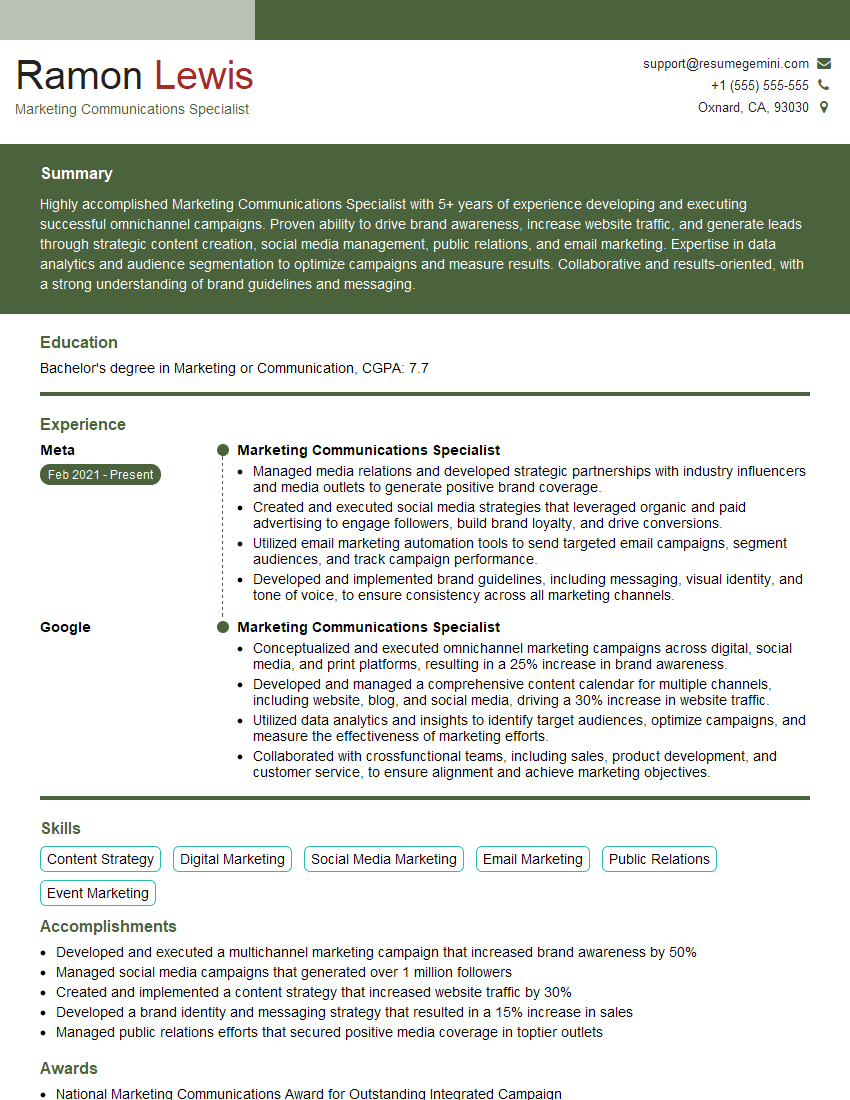
Marketing Communications Specialist Resume Sample

Media Planner Resume Sample
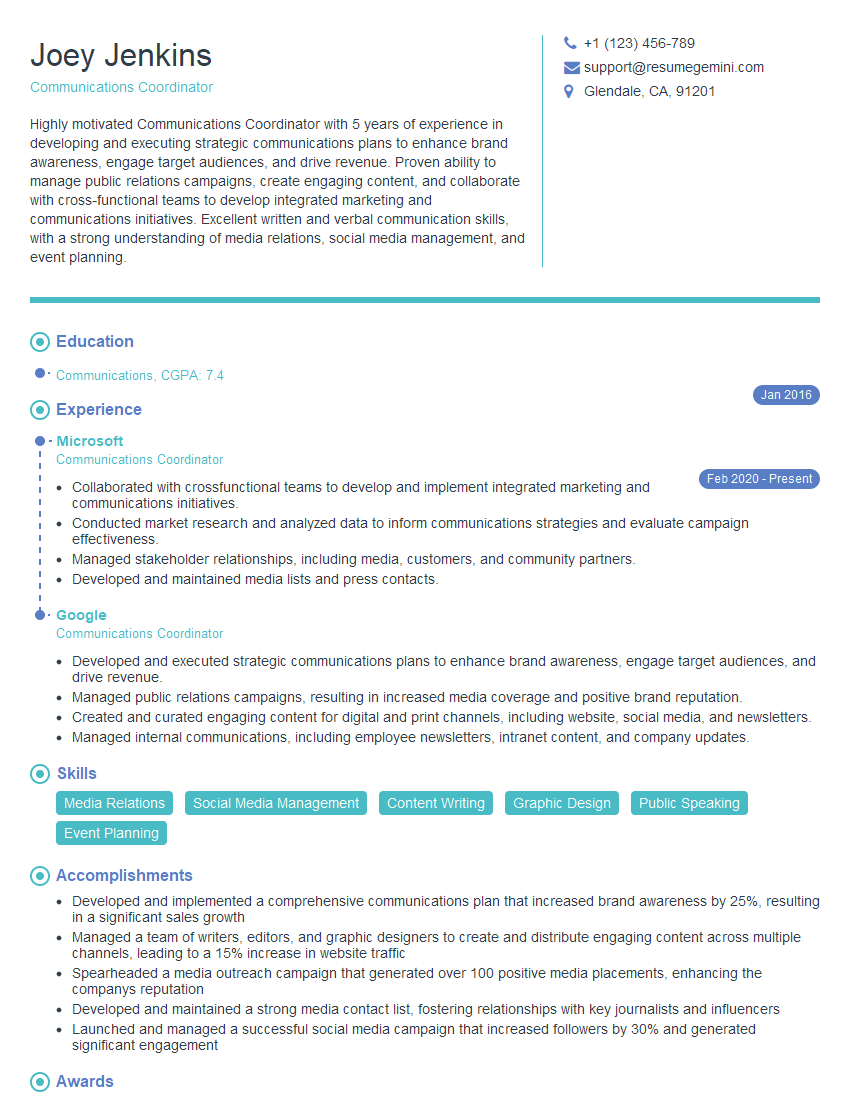
Communications Coordinator Resume Sample

Communications Manager Resume Sample
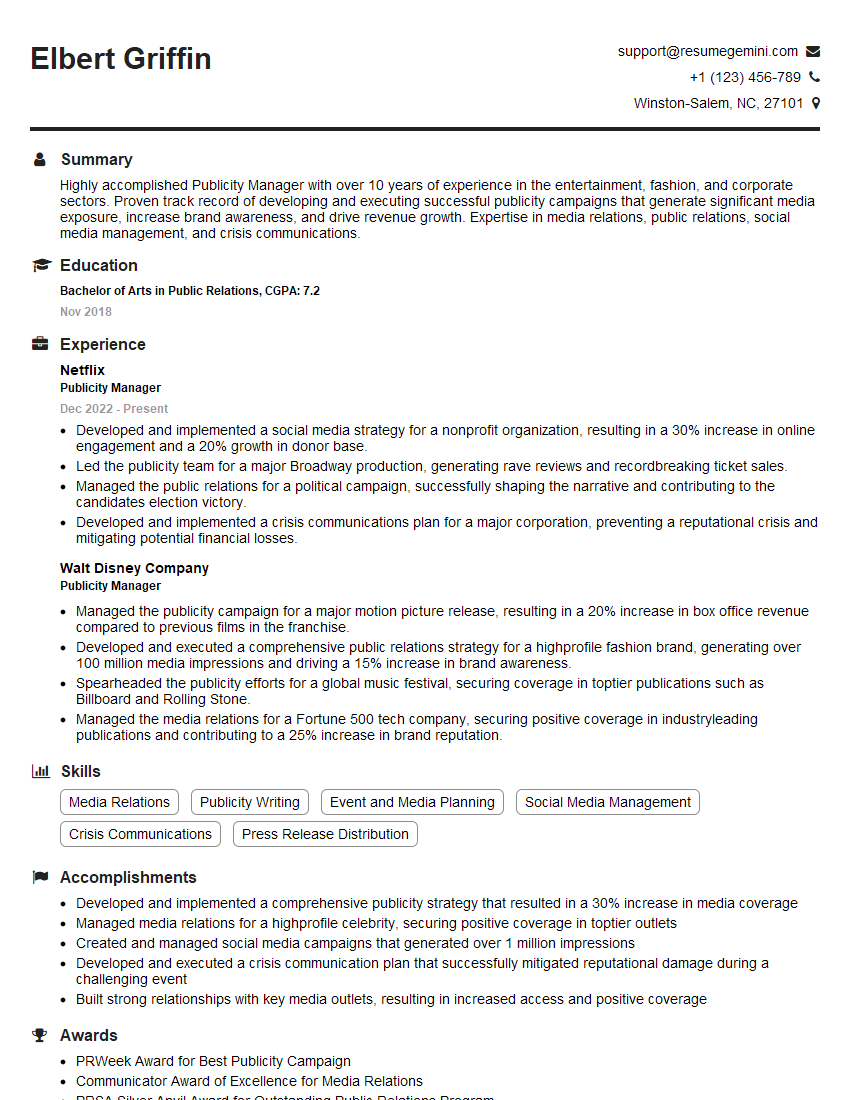
Publicity Manager Resume Sample
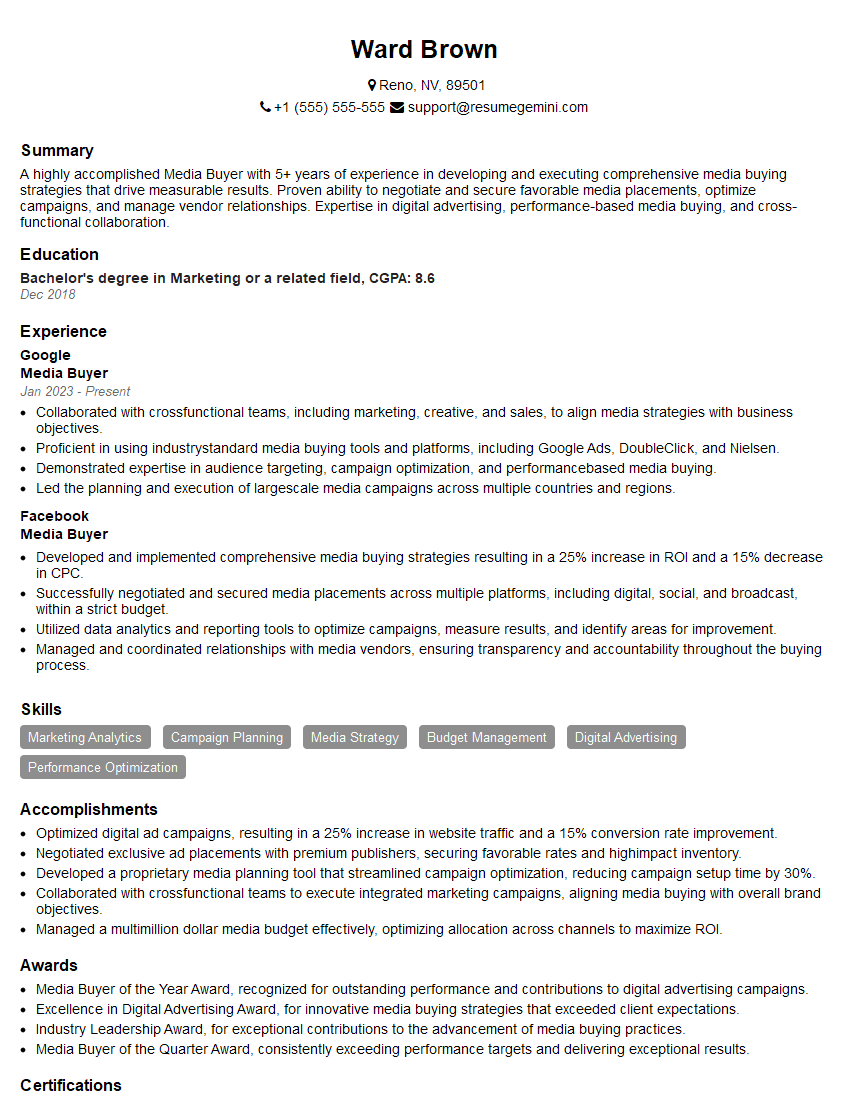
Media Buyer Resume Sample
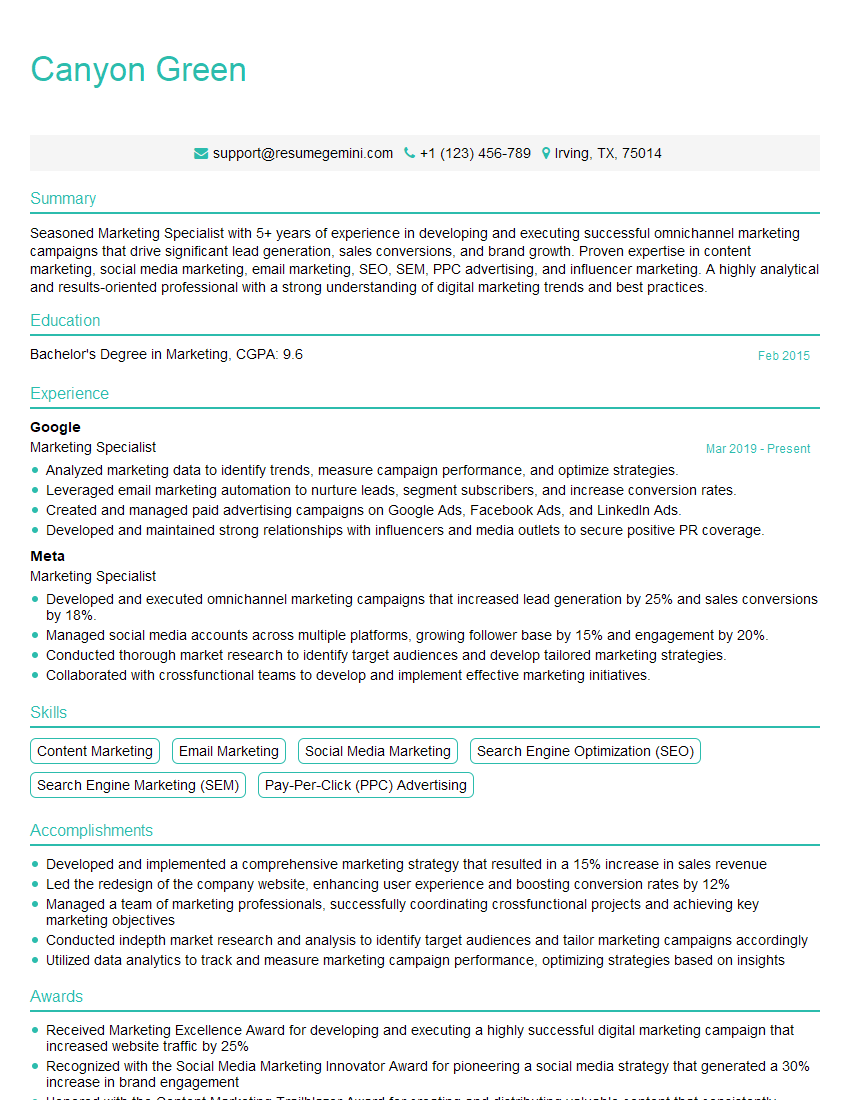
Marketing Specialist Resume Sample

Social Media Manager Resume Sample

Communications Consultant Resume Sample
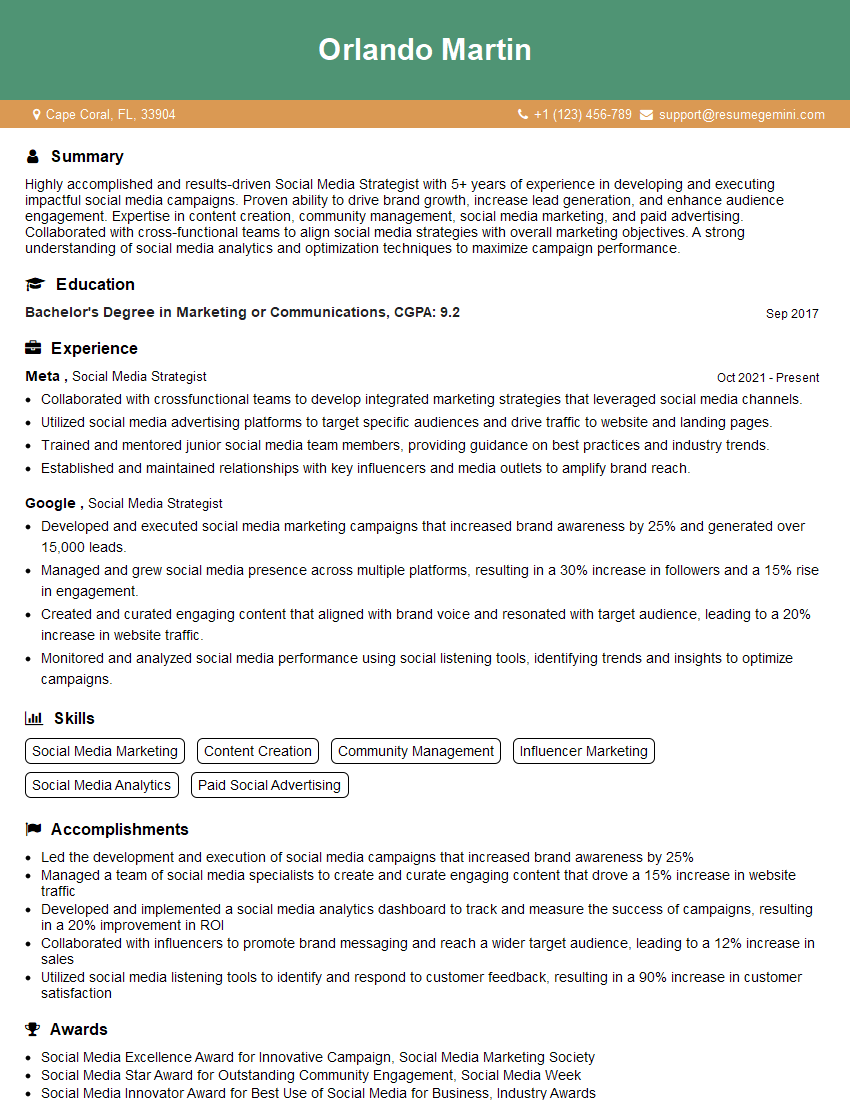
Social Media Strategist Resume Sample
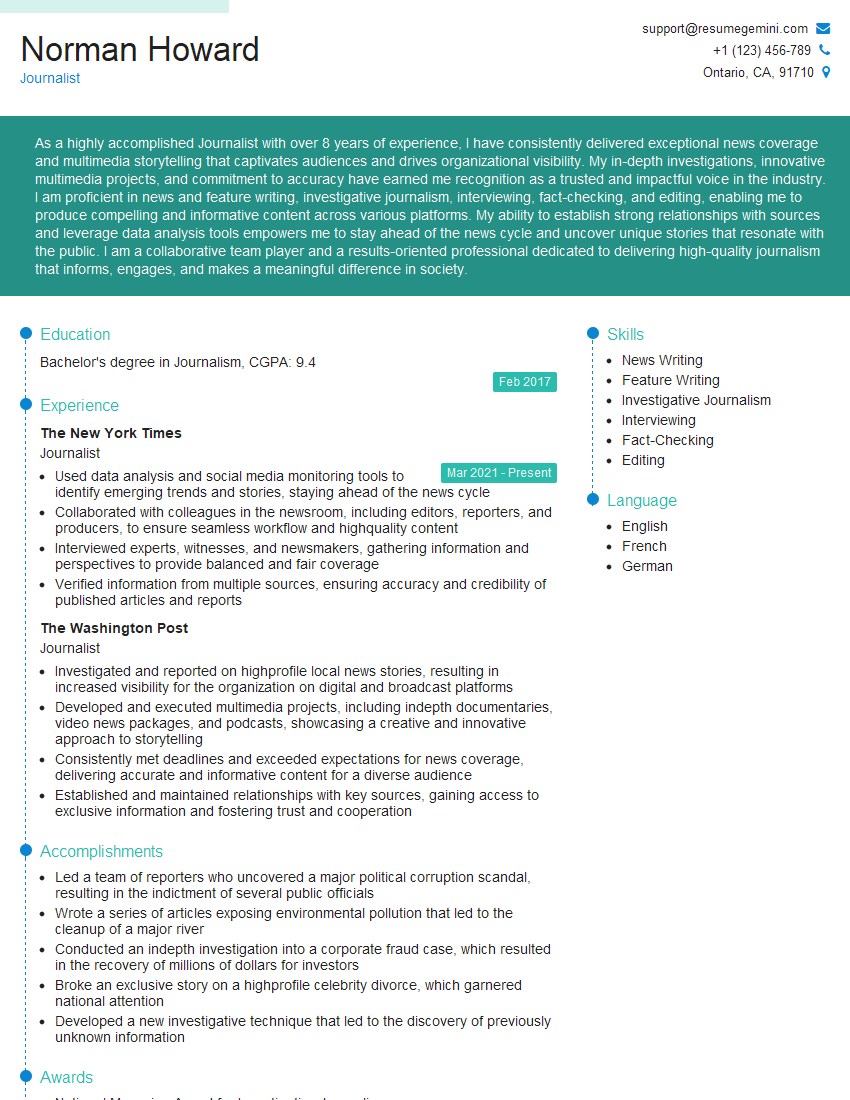
Journalist Resume Sample
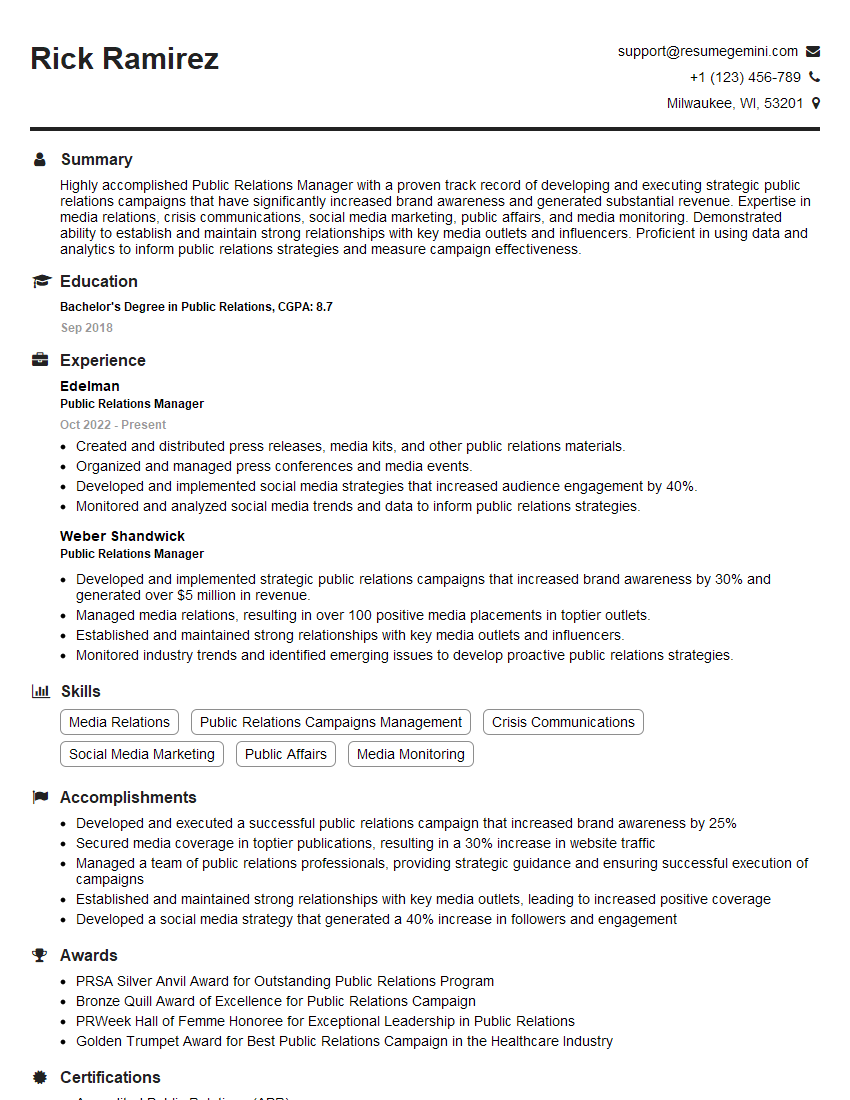
Public Relations Manager Resume Sample

Content Creator Resume Sample
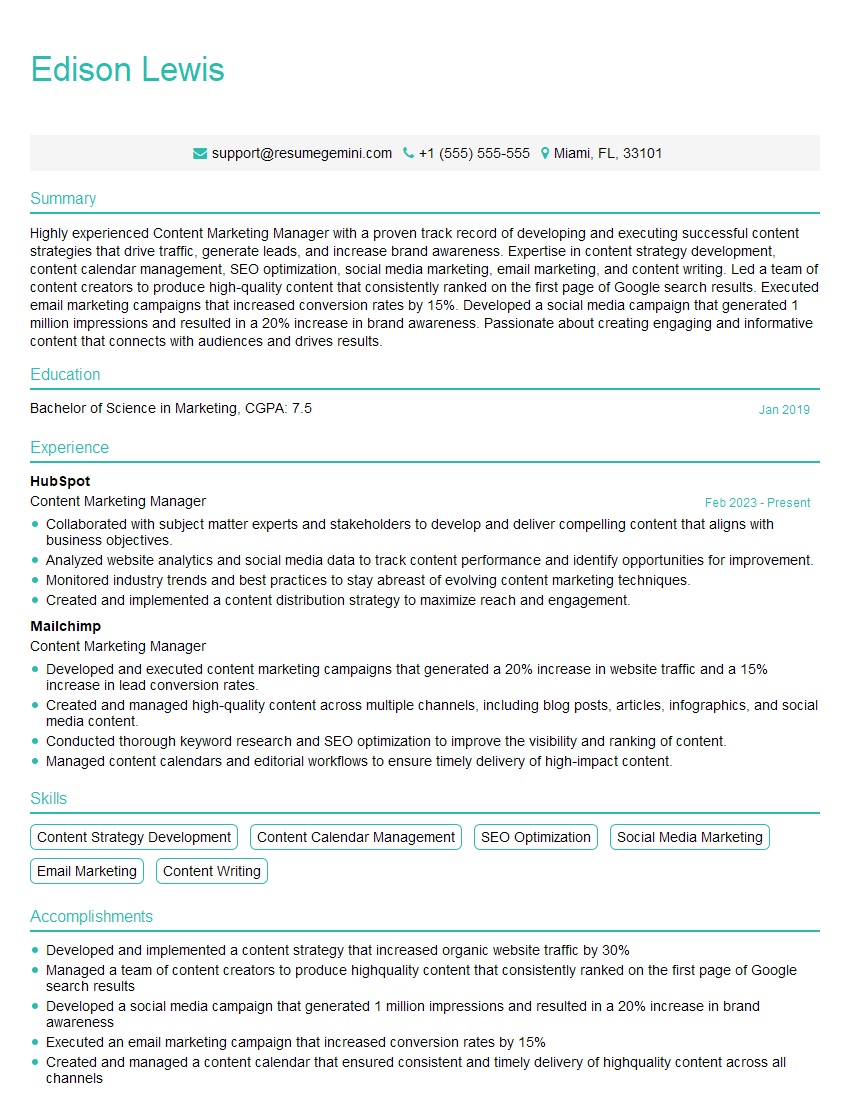
Content Marketing Manager Resume Sample
Explore more articles
Users Rating of Our Blogs
Share Your Experience
We value your feedback! Please rate our content and share your thoughts (optional).
What Readers Say About Our Blog
Very informative content, great job.
good