Are you ready to stand out in your next interview? Understanding and preparing for Media relations planning interview questions is a game-changer. In this blog, we’ve compiled key questions and expert advice to help you showcase your skills with confidence and precision. Let’s get started on your journey to acing the interview.
Questions Asked in Media relations planning Interview
Q 1. Explain your experience developing and executing media relations strategies.
Developing and executing successful media relations strategies involves a multifaceted approach. It starts with a deep understanding of the client’s objectives and target audience. Then, we craft a tailored plan that leverages the right channels to reach the desired media outlets and ultimately, the public. This includes identifying key messages, choosing appropriate media tactics (press releases, media kits, pitches, events, etc.), setting realistic goals and timelines, and establishing a robust budget. For example, I once worked with a tech startup launching a revolutionary AI product. We identified key technology journalists and bloggers as our target audience and built a campaign around exclusive product demos, followed by a targeted press release highlighting the product’s unique selling points. This resulted in significant coverage in leading tech publications, greatly boosting brand awareness and generating valuable leads.
The execution phase involves meticulous planning and consistent monitoring. We track media coverage, analyze results, and adapt the strategy as needed. It’s a continuous process of refinement and optimization, ensuring we maximize the impact of each media interaction.
Q 2. Describe your process for identifying and targeting key media outlets.
Identifying and targeting key media outlets is crucial for effective media relations. My process begins with thorough research. I use a combination of media databases (like Cision or Meltwater), online searches, and personal networks to identify journalists, bloggers, and influencers who cover the relevant industry or topic. I look beyond just the publication’s reach; I analyze their writing style, readership demographics, and past coverage to ensure alignment with our client’s message and target audience. For instance, when working with a sustainable fashion brand, we didn’t just target general fashion magazines. We specifically focused on publications known for their focus on ethical sourcing and environmental sustainability.
Once a list of target outlets is compiled, I prioritize them based on their influence and relevance. This allows us to focus our resources on the most impactful opportunities. I then craft highly personalized pitches tailored to each journalist’s interests and previous work, significantly increasing the chances of securing coverage.
Q 3. How do you measure the success of a media relations campaign?
Measuring the success of a media relations campaign goes beyond simply counting the number of mentions. We employ a multi-faceted approach that considers both quantitative and qualitative data. Quantitative measures include the number of media placements, reach (impressions, website traffic), share of voice, and sentiment analysis of coverage. Qualitative measures assess the tone and context of the coverage, its influence on brand perception, and its impact on key business goals (e.g., lead generation, sales).
For example, a successful campaign might result in numerous positive articles in influential publications, a significant increase in website traffic, and ultimately, a measurable boost in sales. We always compare pre-campaign and post-campaign metrics to assess the true impact of our efforts. This data-driven approach allows us to fine-tune future strategies and demonstrate the ROI of our work to clients.
Q 4. What metrics do you use to track media coverage and its impact?
Tracking media coverage and its impact involves utilizing various metrics. We use media monitoring tools to track mentions across various platforms (print, online, broadcast, social media). Key metrics include:
- Number of placements: Total number of articles, news segments, or social media mentions.
- Reach (impressions): Estimated audience size exposed to the coverage.
- Sentiment analysis: Measuring the overall tone of the coverage (positive, negative, neutral).
- Share of voice: Percentage of media coverage compared to competitors.
- Website traffic and lead generation: Assessing the impact on website visits and conversions attributed to media coverage.
- Brand mentions and social media engagement: Tracking mentions on social media and engagement levels.
We analyze these metrics to understand the campaign’s effectiveness, identify areas for improvement, and demonstrate its value to our clients. Regularly reviewing and analyzing these metrics allows us to make data-driven adjustments throughout the campaign’s lifecycle, ultimately optimizing its impact.
Q 5. How do you handle negative media coverage or crises?
Handling negative media coverage or crises requires a swift, transparent, and proactive approach. The first step is to assess the situation, identify the source and scope of the negative publicity, and understand its potential impact. Then, we develop a crisis communication plan. This usually involves crafting a clear and concise statement acknowledging the issue, taking responsibility where appropriate, and outlining the steps being taken to address the situation. Transparency and empathy are key. We engage directly with journalists and provide them with accurate information. We don’t shy away from difficult questions; instead, we address them openly and honestly.
For example, if a product recall is necessary, we would proactively contact media outlets with a prepared press release, outlining the issue, the solution, and steps customers should take. This proactive approach allows us to control the narrative and prevent the situation from escalating. Simultaneously, we monitor social media for further reactions and address concerns promptly and transparently.
Q 6. Describe your experience building and maintaining relationships with journalists.
Building and maintaining strong relationships with journalists is essential for long-term success in media relations. It’s not about transactional relationships; it’s about building trust and mutual respect. I nurture these relationships by consistently providing accurate, timely, and relevant information. I treat journalists as partners, understanding their deadlines and editorial needs. I personalize my communication, and make sure to always be responsive to inquiries.
This involves regular check-ins, even if there is no immediate news. I may share relevant industry insights or invite journalists to exclusive events. I also make an effort to build personal connections. Building relationships involves going beyond a simple pitch. It’s about demonstrating your reliability and understanding their needs. For example, I regularly connect with journalists in my network by sharing relevant articles, or offering insights on industry trends. This approach ensures that when I need to pitch a story, they’re more likely to consider my input.
Q 7. How do you craft compelling press releases and media pitches?
Crafting compelling press releases and media pitches requires a strong understanding of journalistic principles and audience expectations. A good press release should answer the five Ws and H – Who, What, When, Where, Why, and How – clearly and concisely within the first paragraph. It should be written in a journalistic style, with a strong headline that captures attention. The body should present the information in a logical and easy-to-understand manner, and always include a call to action.
Media pitches, on the other hand, are more personalized. They should be tailored to a specific journalist and their publication, highlighting the relevance of the story to their readers. Instead of simply announcing a news item, a strong pitch presents a compelling narrative, emphasizing the angle that would resonate most with the journalist’s audience. It is crucial to do thorough research to understand their beat and their preferences. A good pitch is concise, personalized, and showcases the unique value of the story. For instance, when pitching a story about a new eco-friendly product, I would highlight the environmental benefits and its potential impact on reducing waste. This approach demonstrates the story’s relevance and increases the probability of it being picked up.
Q 8. How familiar are you with different media types (print, broadcast, online)?
My understanding of media types is comprehensive, encompassing print, broadcast, and online platforms. Print media, like newspapers and magazines, offers a sense of permanence and credibility. Broadcast media, including television and radio, allows for immediate reach and emotional engagement. Online media, such as news websites, blogs, and social media platforms, provides unparalleled speed and interactivity. I’m proficient in tailoring messaging to the specific characteristics of each type. For instance, a press release for a print publication will prioritize concise, well-written text and compelling visuals, whereas a radio interview requires clear, concise speech and a strong narrative arc. An online campaign might incorporate multimedia elements like videos and infographics, leveraging SEO optimization for improved reach.
Q 9. How do you adapt your media relations strategy for different target audiences?
Adapting media relations strategies for diverse target audiences is crucial for effective communication. I begin by identifying the key demographics, psychographics, and media consumption habits of each target group. This involves understanding their preferred media channels, their information-seeking behaviors, and the language and tone that resonates most effectively. For example, a campaign targeting young adults might focus heavily on social media platforms like TikTok and Instagram, utilizing short-form video content and influencer marketing. Conversely, a campaign targeting senior citizens might prioritize print media and radio, using a more traditional and respectful communication style. The messaging itself must be adjusted; the same message framed differently can be incredibly powerful in communicating with vastly different groups. I utilize data analytics to continually measure and adjust my strategies to ensure maximum effectiveness.
Q 10. What experience do you have with media monitoring tools?
I’m highly experienced with various media monitoring tools, including Meltwater, Cision, and Brandwatch. These tools enable me to track media mentions, analyze sentiment, identify key influencers, and measure campaign effectiveness across different media platforms. I use these tools to gain a comprehensive understanding of the media landscape, track our campaigns’ performance, identify potential threats or opportunities, and provide data-driven insights for strategic decision-making. For example, during a crisis communication situation, media monitoring is crucial to quickly identify and respond to negative sentiment and misinformation. It allows for proactive crisis management and timely dissemination of accurate information.
Q 11. Describe a time you successfully secured positive media coverage for a client or organization.
During a product launch for a sustainable fashion brand, we faced the challenge of generating significant media attention in a crowded market. Our strategy focused on highlighting the brand’s unique commitment to ethical sourcing and environmentally friendly practices. We developed a compelling press kit containing high-quality visuals and a detailed narrative emphasizing the brand’s positive social and environmental impact. We targeted key environmental and fashion publications, as well as influential bloggers and social media personalities. This multi-pronged approach resulted in features in several major publications, including a prominent article in Vogue magazine, significantly boosting brand awareness and driving sales. The key to success was identifying the unique angle – the ethical and sustainable aspect – that resonated strongly with the target audience and the media.
Q 12. How do you prioritize media outreach when dealing with multiple projects?
Prioritizing media outreach across multiple projects requires a strategic approach. I use a project management system to track deadlines, identify key stakeholders, and allocate resources effectively. I assess each project based on factors such as urgency, potential impact, media interest, and available resources. A prioritization matrix, often using a combination of urgency and importance, helps to visualize this. Projects with immediate deadlines or high-impact potential are naturally given priority. I also build strong relationships with journalists and editors, allowing for more efficient and strategic communications across multiple projects. Transparency with clients regarding priorities and timelines is crucial for maintaining effective communication and managing expectations.
Q 13. Explain your experience with social media and its role in media relations.
Social media plays a vital role in modern media relations. It serves as a powerful tool for distributing press releases, engaging with journalists and influencers, monitoring public opinion, and fostering two-way communication. I utilize platforms like Twitter, LinkedIn, and Instagram to amplify media coverage, build brand reputation, and engage with target audiences directly. I understand the nuances of each platform, tailoring content and strategies accordingly. For instance, visual content works particularly well on Instagram, while LinkedIn is ideal for professional networking and reaching industry-specific audiences. Social listening is crucial; tracking brand mentions and relevant conversations helps identify potential crises or opportunities for proactive engagement.
Q 14. How do you manage media inquiries and deadlines effectively?
Effective management of media inquiries and deadlines relies on organization and proactive communication. I utilize a dedicated communication system, such as a CRM, to track all incoming inquiries, deadlines, and assigned tasks. Prompt responses are crucial. I strive to respond to all inquiries within a timely manner, providing accurate and relevant information. I prioritize requests based on urgency and importance, ensuring that time-sensitive requests are handled immediately. Collaboration with the client and internal teams is essential to ensure that all information is accurate and consistent. A well-defined communication plan outlines roles, responsibilities, and escalation procedures, facilitating efficient handling of all inquiries and adherence to deadlines.
Q 15. How do you use data and analytics to inform media relations decisions?
Data and analytics are crucial for making informed decisions in media relations. Instead of relying on gut feelings, we leverage data to understand what resonates with the media and the public. This allows for strategic targeting and message optimization.
- Audience Analysis: We use tools like Google Analytics, social media analytics, and media monitoring platforms to analyze audience demographics, interests, and media consumption habits. This helps us tailor our messages and pitch stories to the most receptive outlets.
- Media Monitoring: Tracking media mentions, sentiment analysis, and reach allows us to assess the effectiveness of our campaigns and identify areas for improvement. For instance, we can see which publications are most likely to cover our stories, and which messaging angles generate the most positive coverage.
- Campaign Performance Measurement: We use Key Performance Indicators (KPIs) such as media impressions, reach, engagement, and website traffic to measure the success of a media relations campaign. These metrics provide quantifiable evidence of our efforts’ impact.
For example, if we’re launching a new product, we might analyze the readership demographics of tech blogs and trade publications to identify the ideal outlets to target. Post-launch, we’ll monitor mentions to see if the message resonates and adjust our strategy if necessary.
Career Expert Tips:
- Ace those interviews! Prepare effectively by reviewing the Top 50 Most Common Interview Questions on ResumeGemini.
- Navigate your job search with confidence! Explore a wide range of Career Tips on ResumeGemini. Learn about common challenges and recommendations to overcome them.
- Craft the perfect resume! Master the Art of Resume Writing with ResumeGemini’s guide. Showcase your unique qualifications and achievements effectively.
- Don’t miss out on holiday savings! Build your dream resume with ResumeGemini’s ATS optimized templates.
Q 16. What is your experience with media training and spokesperson preparation?
Media training and spokesperson preparation are essential for ensuring consistent, impactful messaging. I have extensive experience conducting training sessions that equip spokespeople with the skills to handle interviews effectively, whether it’s a live TV appearance, a podcast interview, or a print article.
- Message Development: We collaborate to craft key messages that align with the organization’s goals and resonate with the target audience. These messages are concise, clear, and impactful.
- Scenario Planning: We prepare spokespeople for a range of potential questions, including difficult or challenging ones, ensuring they can handle unexpected situations with grace and professionalism.
- Delivery and Body Language: I help spokespeople refine their delivery, ensuring confidence and clarity. This includes practicing body language, tone, and vocal delivery to enhance communication.
- Crisis Communication Training: A crucial element of spokesperson preparation involves crisis communication training. This teaches how to react professionally and constructively during difficult situations, maintaining the credibility of both the individual and the organization.
In one instance, I prepared a CEO for a high-profile interview following a major product launch. By practicing challenging questions, he confidently delivered the key messages, resulting in a successful media appearance.
Q 17. Describe your understanding of media law and ethical considerations.
Understanding media law and ethical considerations is paramount in media relations. This encompasses respecting copyright laws, ensuring factual accuracy, protecting confidentiality, and avoiding conflicts of interest.
- Defamation and Libel: We are acutely aware of the legal ramifications of publishing false or misleading statements that harm an individual’s reputation. We always strive for accuracy and verify information from multiple sources.
- Copyright and Intellectual Property: We respect copyright laws and obtain necessary permissions before using any copyrighted material, avoiding any infringement.
- Privacy Rights: We prioritize the privacy of individuals and ensure any information shared is done responsibly and ethically, adhering to relevant privacy laws and regulations.
- Transparency and Disclosure: Transparency is key. We are upfront about our clients’ relationships with stakeholders and avoid any potential conflicts of interest.
For instance, before issuing a press release announcing a partnership, we ensure all parties involved have consented and that the content doesn’t violate any confidentiality agreements.
Q 18. How do you build a strong media list?
Building a strong media list is an ongoing process that requires continuous refinement. It’s not just about compiling a large list; it’s about creating a targeted list of relevant journalists, bloggers, and influencers who are receptive to your organization’s stories.
- Targeted Research: We use various tools such as Cision, Muck Rack, and PR Newswire to identify journalists and influencers covering relevant industry sectors. We also review relevant publications to identify key writers.
- Manual Outreach: Direct outreach to journalists allows for personalized connections. Reading their previous work demonstrates genuine interest and increases the likelihood of a positive response.
- Relationship Building: Nurturing relationships with journalists involves regular communication, even when you aren’t pitching a story. This can include sharing relevant articles or industry insights.
- List Segmentation: Organizing the list by publication, beat, and area of expertise ensures targeted pitches.
I once built a media list for a tech startup, focusing on journalists covering specific areas like artificial intelligence and cybersecurity. This targeted approach significantly increased the chances of securing relevant media coverage.
Q 19. What is your experience with different media distribution platforms?
My experience encompasses a wide range of media distribution platforms, tailored to optimize reach and impact. We don’t rely on a single approach; instead, we select platforms based on the target audience and story type.
- Press Releases: Traditional press releases, distributed through services like PR Newswire, remain a cornerstone of our strategy, particularly for announcing significant news or product launches.
- Social Media: Platforms like Twitter, LinkedIn, and Facebook are used to amplify messaging and engage directly with audiences and journalists.
- Email Marketing: Targeted email campaigns can be effective for building relationships with journalists and sending media alerts.
- Multimedia Content: We leverage different forms of multimedia, such as videos, infographics, and podcasts, to enhance engagement and reach a wider audience.
- Blog Posts & Articles: We utilize blogs and bylined articles to establish thought leadership and disseminate information through owned media channels.
For example, when launching a new software, we used a press release distributed through PR Newswire, complemented by targeted social media posts and blog articles explaining the technology in detail.
Q 20. Describe your experience with crisis communication planning.
Crisis communication planning is crucial for mitigating reputational damage during unexpected events. A well-defined plan ensures a swift, coordinated response that protects the organization’s interests and minimizes negative consequences.
- Crisis Communication Team: We establish a dedicated crisis communication team with pre-assigned roles and responsibilities. This team will manage communications during the crisis.
- Communication Protocols: Clear communication protocols are established, including designated spokespeople, communication channels, and message approval processes.
- Messaging Strategies: Pre-written templates and key messages are prepared to ensure consistent and accurate information is disseminated quickly.
- Media Monitoring: Real-time media monitoring is essential to track coverage and identify emerging issues.
- Regular Reviews: The crisis communication plan should be regularly reviewed and updated to address potential changes and evolving threats.
I’ve helped several organizations develop and implement crisis communication plans. One example involved developing a plan for a manufacturing company that addressed potential product recalls. The plan outlined procedures to minimize disruption and protect the brand’s reputation.
Q 21. How do you track your ROI in media relations?
Tracking ROI in media relations requires a multifaceted approach that goes beyond simple media mentions. We use a combination of quantitative and qualitative methods to assess the impact of our efforts.
- Website Traffic and Lead Generation: We track website traffic from media mentions and assess the number of leads generated as a result of media coverage.
- Social Media Engagement: Monitoring social media engagement provides insights into audience sentiment and the reach of our messaging.
- Sales Lift: Analyzing sales data helps assess if media coverage correlates with increased sales or market share.
- Brand Awareness: Measuring changes in brand perception and awareness through surveys and brand tracking studies helps to understand the impact of media relations campaigns.
- Media Impressions and Reach: While not a direct measure of ROI, tracking media impressions and reach helps to demonstrate the scale and reach of our media coverage.
For example, we tracked a campaign that generated a 20% increase in website traffic and a 15% increase in sales leads. This provided strong evidence of the campaign’s effectiveness in generating business value.
Q 22. How do you build relationships with influencers?
Building relationships with influencers is crucial for effective media relations. It’s not about a one-off ask; it’s about cultivating genuine connections. Think of it like building any strong relationship – it requires trust, mutual respect, and consistent engagement.
- Identify the right influencers: Don’t just chase follower counts. Find influencers whose audience aligns with your target market and whose values resonate with your brand. Analyze their content to understand their style and audience engagement.
- Engage authentically: Don’t just send generic pitches. Show genuine interest in their work. Comment on their posts, share their content, and participate in relevant conversations. This demonstrates you value their perspective and aren’t just using them for promotion.
- Offer value: Don’t expect something for nothing. Consider offering exclusive access, early product samples, or opportunities for collaboration that benefit them and their audience. This reciprocity is key.
- Build long-term relationships: Media relations isn’t a sprint; it’s a marathon. Consistent engagement over time will strengthen your relationship, leading to more meaningful partnerships and opportunities.
- Track and measure results: Monitor the performance of your influencer collaborations. Use analytics to track reach, engagement, and conversions to optimize your strategies.
For example, I once worked with a sustainable fashion brand. Instead of simply sending a product for review, we hosted a small, exclusive event for select fashion influencers. This allowed for personal interaction, a deeper understanding of the brand’s mission, and the creation of high-quality, authentic content.
Q 23. What is your experience with pitching stories to journalists?
Pitching stories to journalists requires a keen understanding of their audience and their publication’s editorial calendar. It’s about providing them with a compelling narrative that aligns with their interests and their readers’ needs. It’s not about selling; it’s about providing value.
- Research: Before pitching, thoroughly research the journalist and their previous work. Identify topics they’ve covered, their writing style, and their publication’s target audience.
- Personalize: Generic pitches rarely work. Tailor your pitch to the specific journalist and publication. Explain why this story is relevant to *their* audience and how it aligns with *their* editorial focus.
- Craft a compelling narrative: A strong pitch presents a clear, concise, and engaging story. Highlight the ‘what,’ ‘why,’ and ‘so what’ of your story. Lead with the most compelling aspect.
- Follow up: Don’t expect an immediate response. Follow up politely after a few days, but don’t be overly persistent.
- Build relationships: Just like with influencers, building ongoing relationships with journalists is crucial for securing future coverage.
For instance, I once secured coverage in a major tech publication by identifying a journalist who frequently wrote about AI ethics. I crafted a pitch highlighting the ethical implications of a new software development, directly addressing their area of expertise. The pitch resulted in a feature article.
Q 24. What is your understanding of media relations best practices?
Media relations best practices center on building trust, creating compelling narratives, and delivering value. It’s about strategic communication that fosters positive relationships with media outlets and influencers.
- Develop a strong media list: Identify key journalists, bloggers, and influencers relevant to your industry and target audience.
- Craft compelling press releases: Write concise, newsworthy press releases that clearly communicate your key message.
- Proactive outreach: Don’t wait for journalists to contact you. Actively pitch stories and build relationships.
- Monitor media coverage: Track media mentions to understand the impact of your efforts and identify areas for improvement.
- Manage crises effectively: Develop a crisis communication plan to address negative media coverage promptly and effectively.
- Utilize social media: Social media is a powerful tool for building relationships, amplifying your message, and engaging with your target audience.
Best practices are about consistently and ethically delivering value to both journalists and your own organization, building a foundation of mutual respect that leads to successful media relations.
Q 25. Describe your familiarity with different types of media kits.
Media kits are essential tools for providing journalists and influencers with comprehensive information about your organization, product, or service. Different types serve different purposes.
- Electronic Press Kit (EPK): A digital version, often a website or online folder, containing high-resolution images, videos, press releases, bios, and other relevant materials. It’s easily accessible and shareable.
- Print Media Kit: A physical kit, usually a folder containing printed materials. While less common now, it can still be effective for certain situations, like in-person events.
- One-sheet Media Kit: A single-page summary of key information, ideal for quick reference or initial introductions.
- Social Media Media Kit: Designed specifically for social media platforms, often including pre-written captions, social media graphics, and relevant hashtags.
The type of media kit you use depends on your target audience and the context. For example, an EPK is ideal for broad distribution, while a one-sheet might be more suitable for a quick introduction at a networking event. In all cases, a well-designed media kit should be visually appealing, easy to navigate, and contain only essential information.
Q 26. How do you use media relations to support larger marketing goals?
Media relations is a powerful tool to support broader marketing goals. It works synergistically with other marketing efforts, amplifying their impact and reach.
- Brand awareness: Securing media coverage increases brand visibility and strengthens brand recognition.
- Lead generation: Media coverage can drive traffic to your website or social media channels, generating leads and sales opportunities.
- Product launches: Media relations helps build excitement and anticipation for new product launches.
- Crisis management: Effective media relations can mitigate the negative impact of crises and safeguard brand reputation.
- Thought leadership: Positioning your company as an industry expert through media coverage enhances credibility and trust.
For example, a recent campaign involved leveraging media relations to generate leads for a new SaaS product. We targeted tech publications with compelling case studies showcasing the product’s impact. This resulted in substantial website traffic, significant lead generation, and boosted sales conversions.
Q 27. How have you used media relations to build brand awareness?
I’ve used media relations to build brand awareness in several ways. The key is always to identify the right media outlets and tailor your message to their audience.
- Strategic partnerships: Collaborating with complementary businesses to reach new audiences and cross-promote each other.
- Targeted pitching: Identifying publications and journalists whose readership aligns with your target demographic.
- Storytelling: Creating compelling narratives that highlight the unique aspects of the brand’s story and values.
- Social media amplification: Sharing media coverage on social media platforms to extend its reach.
- Monitoring and analysis: Tracking media mentions to assess the effectiveness of the strategy and make data-driven adjustments.
For instance, I helped a startup gain significant brand awareness by securing features in industry-leading blogs and podcasts. This led to an increase in website traffic, social media followers, and overall brand recognition within the target market. The key was to focus on the company’s unique story and to target publications that resonated with potential customers.
Q 28. Explain your experience with budget management in a media relations role.
Budget management in media relations involves a strategic allocation of resources to maximize the return on investment (ROI). It’s about prioritizing activities that deliver the greatest impact.
- Planning and forecasting: Develop a detailed budget that outlines anticipated expenses, including media monitoring tools, influencer marketing campaigns, and the potential costs of producing press materials like brochures and videos. This requires careful consideration of your overall marketing goals and objectives.
- Tracking expenses: Regularly monitor expenditures to ensure they align with the allocated budget. This involves keeping detailed records of all expenses and regularly reviewing them against the initial budget allocation.
- Evaluating ROI: Measuring the effectiveness of media relations initiatives, such as website traffic, lead generation, and brand awareness, helps justify investments and inform future budget allocations. Tools like media monitoring software can greatly assist here.
- Prioritizing activities: Focusing resources on the most impactful activities, such as securing coverage in key publications or partnering with influential figures.
- Contingency planning: Setting aside a portion of the budget for unexpected expenses or opportunities.
For example, when managing a media relations budget for a non-profit, I prioritized building relationships with journalists and influencers covering social issues. This resulted in significant earned media coverage, increasing awareness and garnering support for the cause, maximizing impact without breaking the budget.
Key Topics to Learn for Media Relations Planning Interview
- Media Landscape Analysis: Understanding the current media environment, identifying key influencers and target publications, and analyzing audience demographics to tailor messaging.
- Strategic Communication Planning: Developing comprehensive communication strategies aligned with organizational goals, including message development, key performance indicators (KPIs), and budget allocation.
- Media Pitching and Relationship Building: Crafting compelling pitches, establishing strong relationships with journalists and media outlets, and managing media inquiries effectively.
- Crisis Communication Management: Developing and implementing crisis communication plans, managing media relations during crises, and mitigating reputational damage.
- Content Creation and Distribution: Developing engaging press releases, media kits, and other content formats suitable for various media platforms, including social media.
- Measurement and Evaluation: Tracking media coverage, analyzing the effectiveness of communication campaigns, and reporting on key metrics to demonstrate ROI.
- Ethical Considerations: Understanding media ethics, maintaining transparency and accuracy in communication, and adhering to journalistic standards.
- Digital Media Relations: Leveraging digital platforms and social media for media outreach, engagement, and reputation management.
- Media Training: Preparing spokespeople for media interviews, coaching them on message delivery, and managing their interactions with the media.
- Budgeting and Resource Allocation: Effectively managing budgets, allocating resources to different media relations activities, and maximizing the impact of campaigns.
Next Steps
Mastering Media Relations Planning is crucial for career advancement in today’s competitive landscape. It demonstrates your ability to strategically communicate information, build relationships, and manage organizational reputation. To significantly enhance your job prospects, focus on building a strong, ATS-friendly resume that highlights your skills and experience. ResumeGemini is a trusted resource to help you create a professional and impactful resume tailored to the specific requirements of Media Relations Planning roles. Examples of resumes specifically designed for this field are available to guide you.
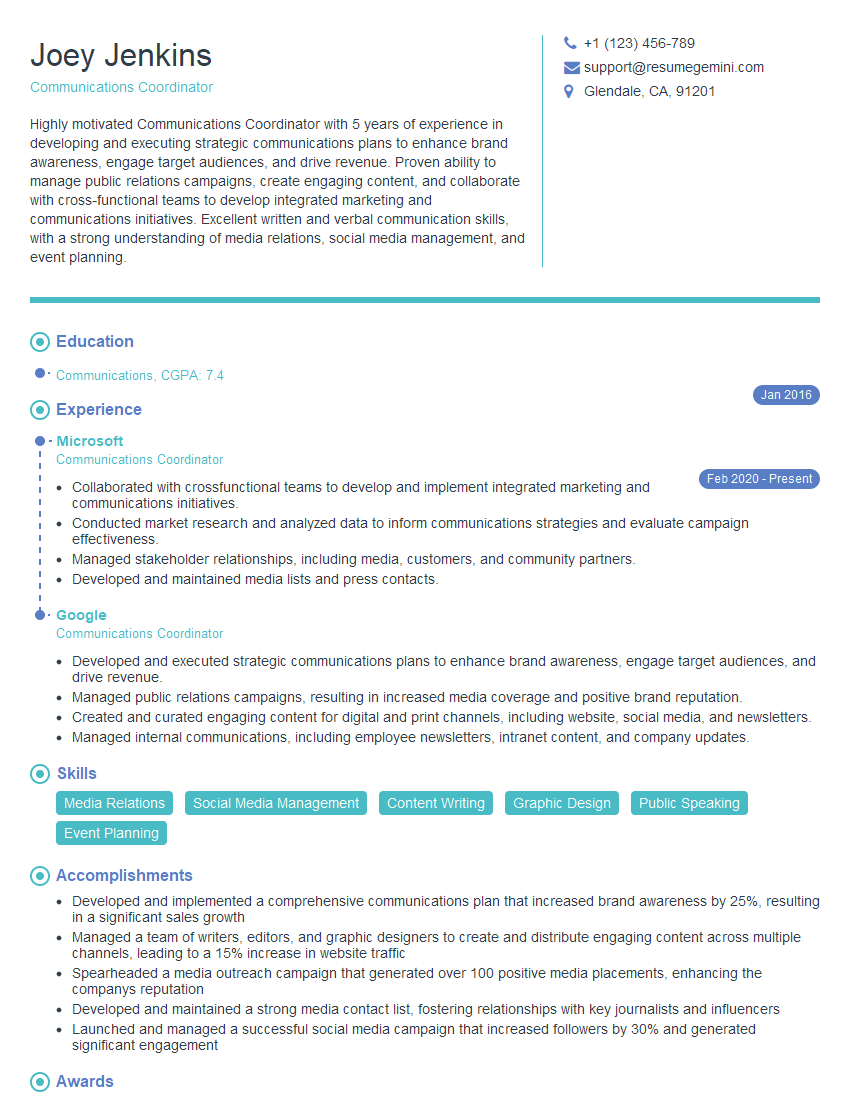
Communications Coordinator Resume Sample

Communications Director Resume Sample

Communications Manager Resume Sample

Marketing Communications Manager Resume Sample
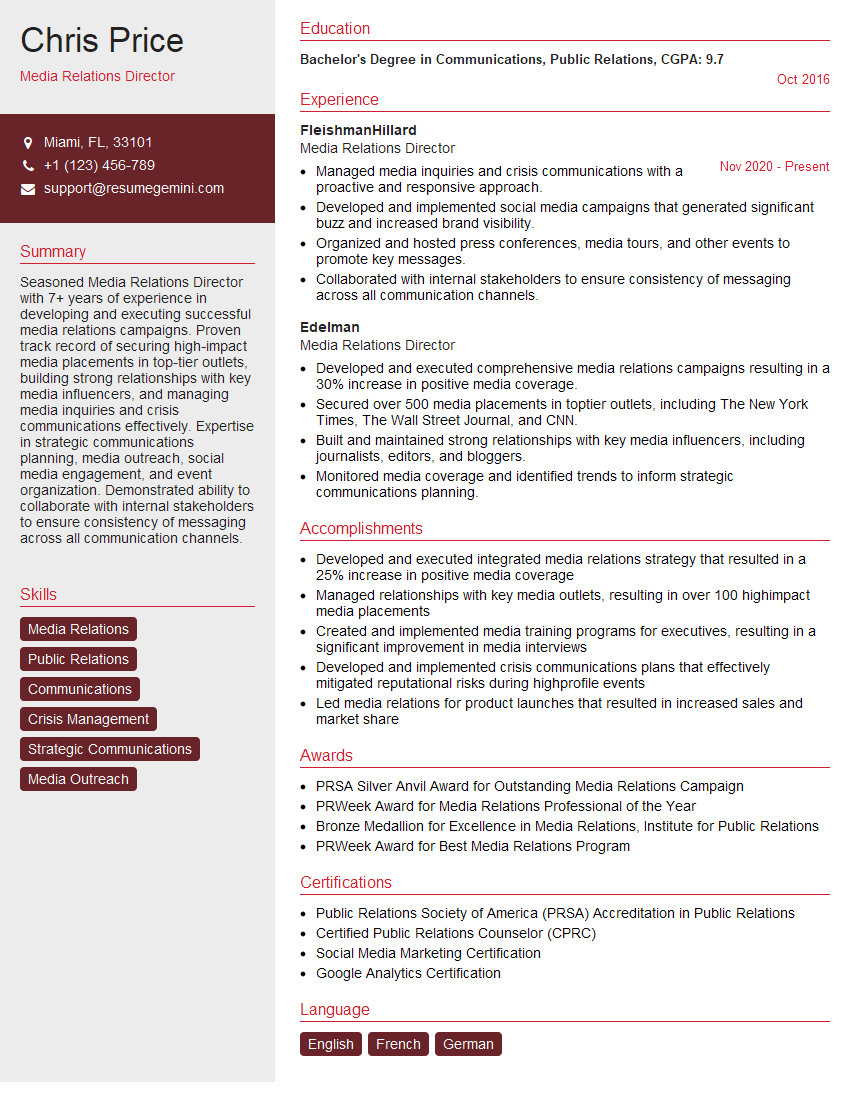
Media Relations Director Resume Sample
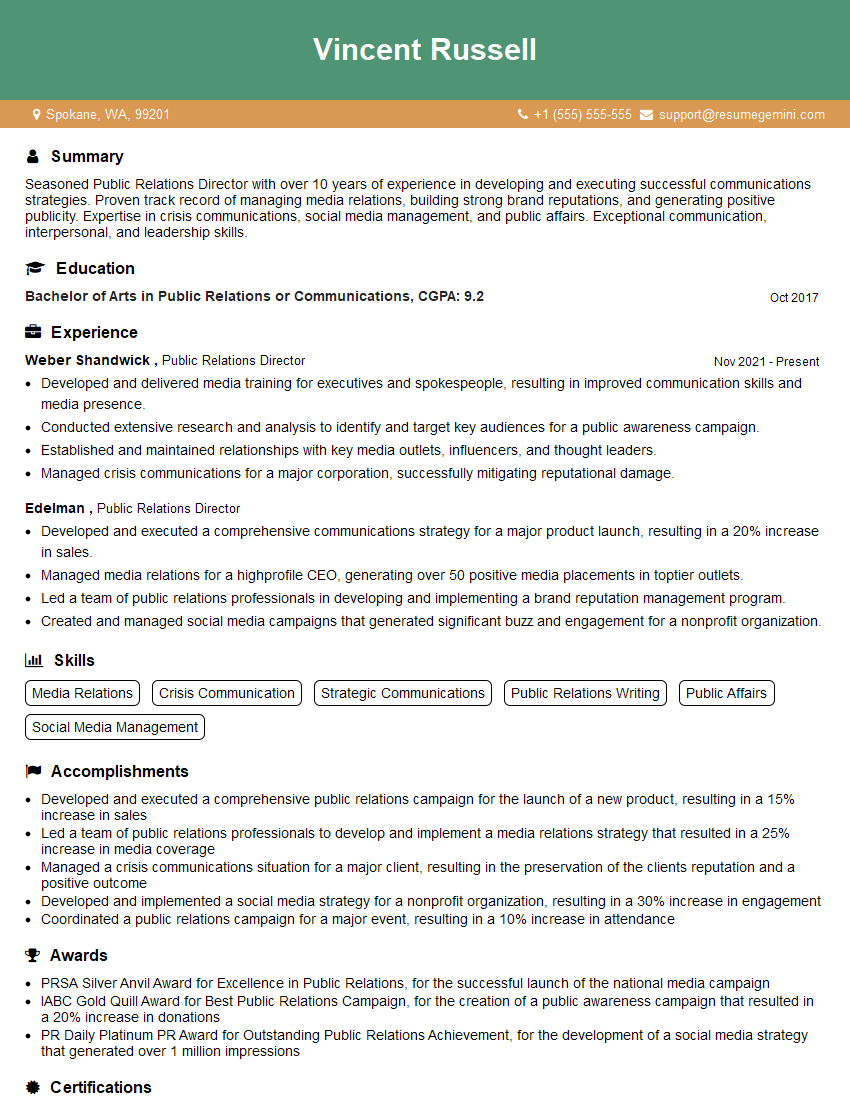
Public Relations Director Resume Sample
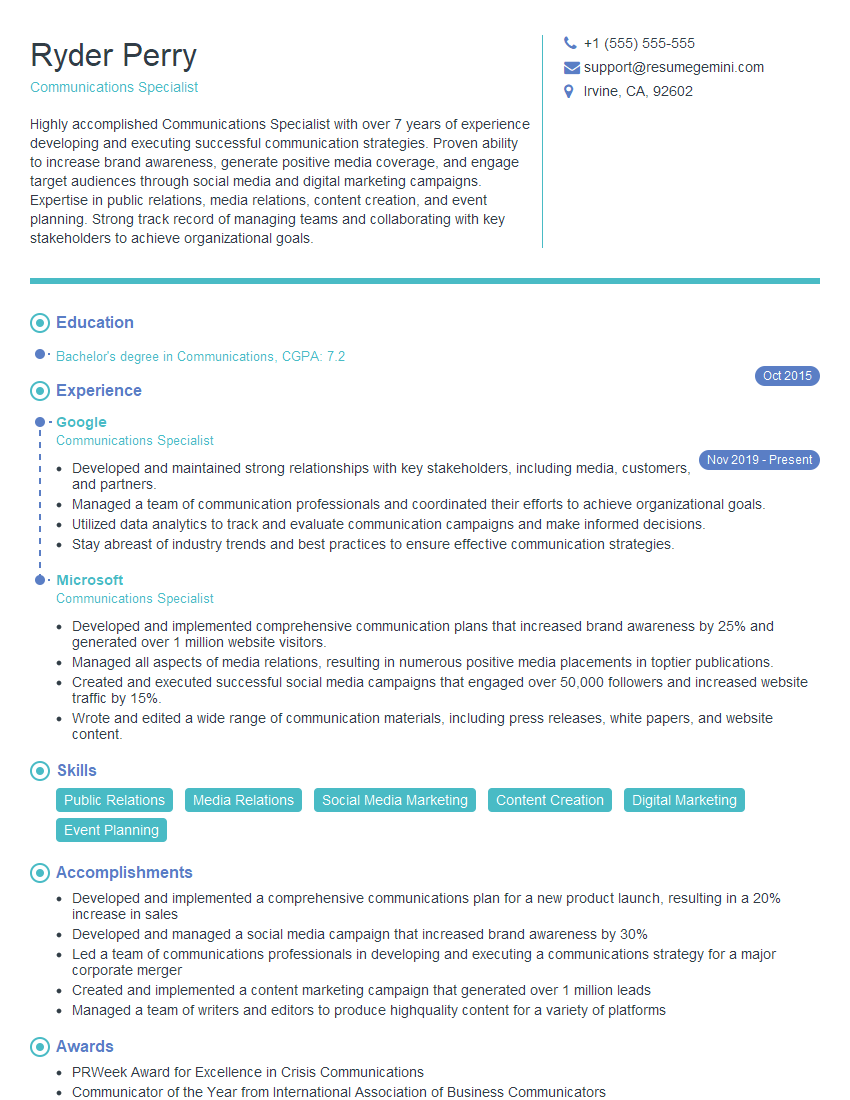
Communications Specialist Resume Sample

Communications Consultant Resume Sample
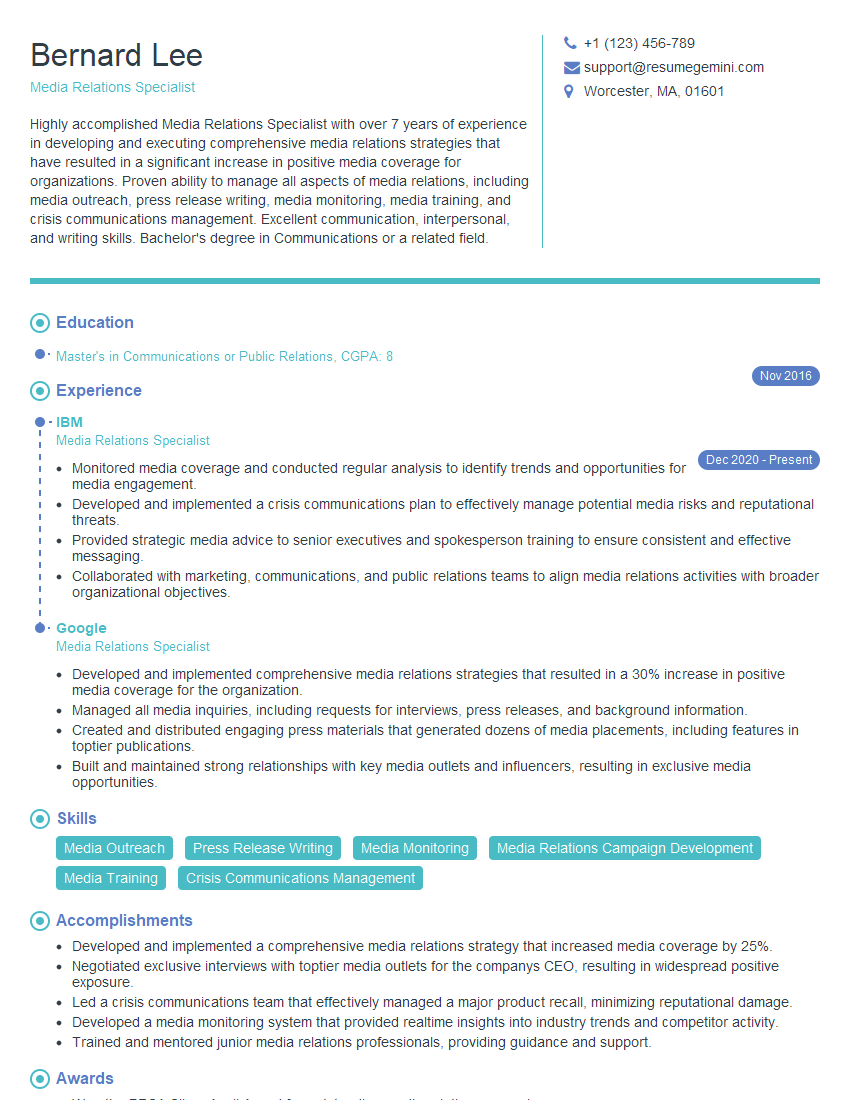
Media Relations Specialist Resume Sample
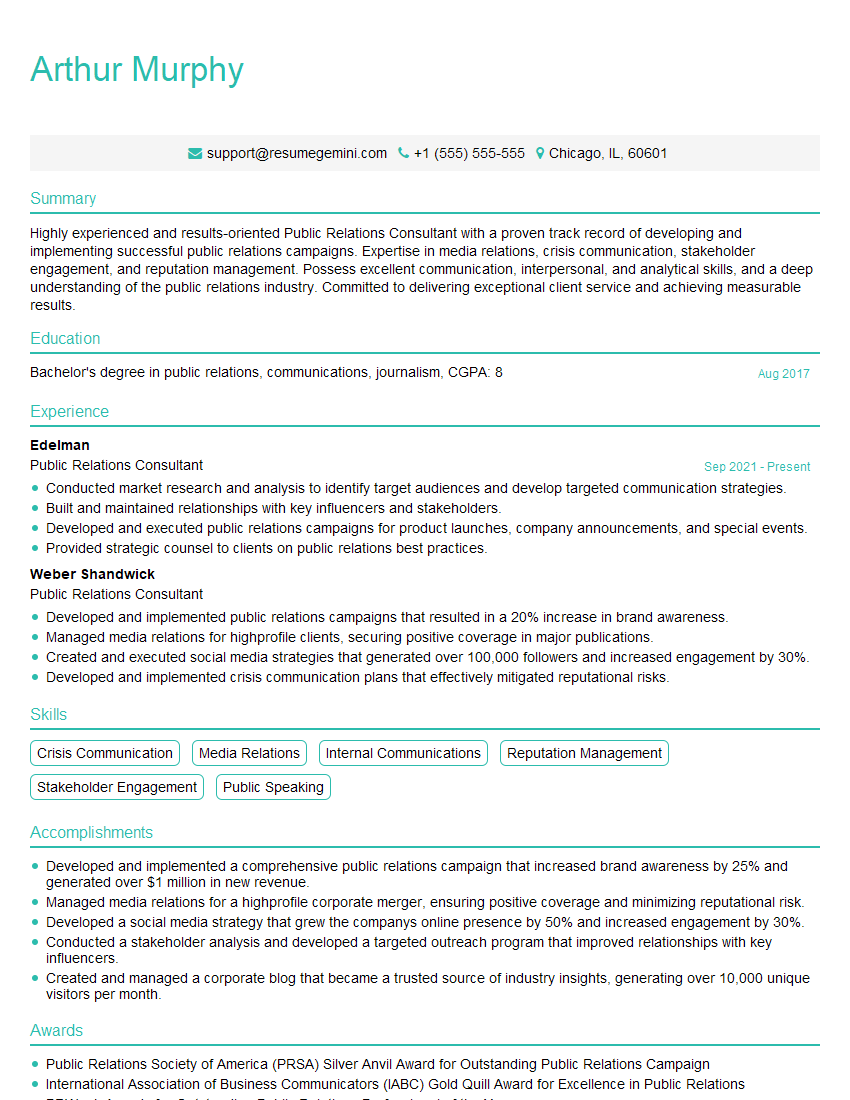
Public Relations Consultant Resume Sample
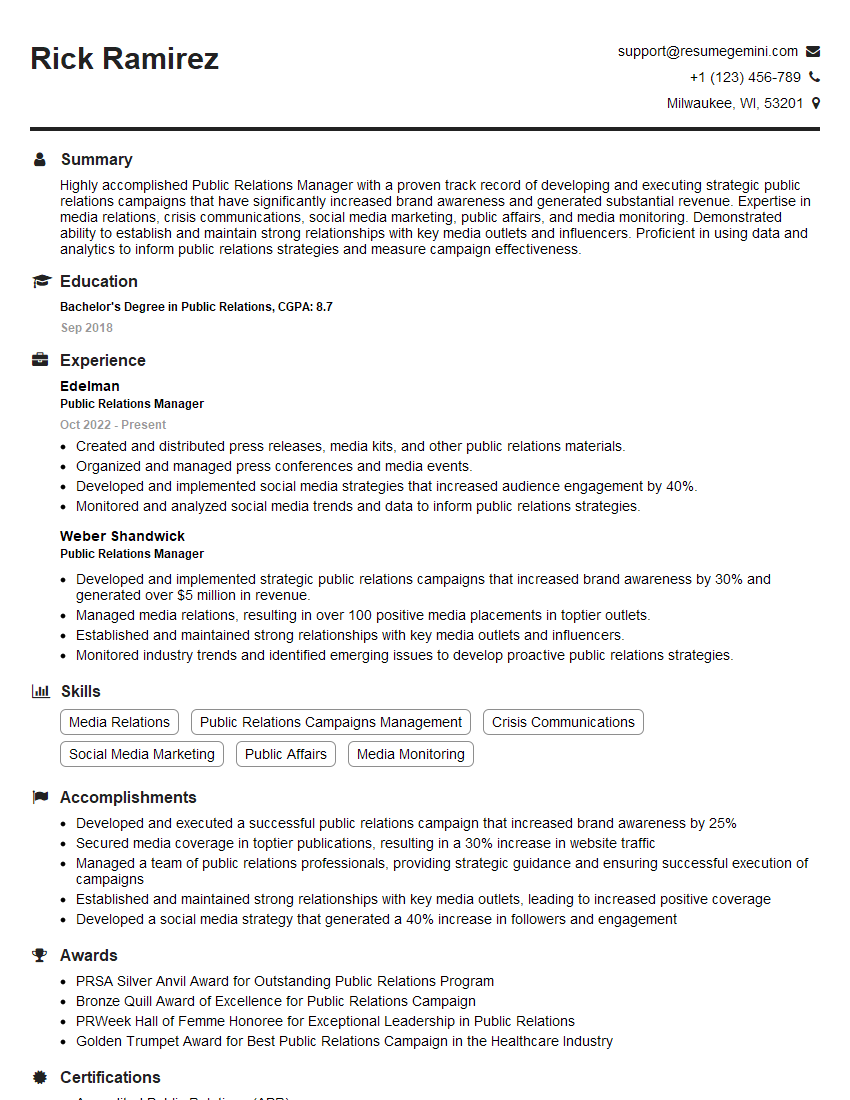
Public Relations Manager Resume Sample
Explore more articles
Users Rating of Our Blogs
Share Your Experience
We value your feedback! Please rate our content and share your thoughts (optional).
What Readers Say About Our Blog
Very informative content, great job.
good