Interviews are more than just a Q&A session—they’re a chance to prove your worth. This blog dives into essential Medical Electronics interview questions and expert tips to help you align your answers with what hiring managers are looking for. Start preparing to shine!
Questions Asked in Medical Electronics Interview
Q 1. Explain the difference between analog and digital signals in medical devices.
The core difference between analog and digital signals lies in how they represent information. Analog signals are continuous, varying smoothly over time, much like a vinyl record’s groove. Think of a heart’s electrical activity – the voltage changes continuously. Digital signals, on the other hand, are discrete; they represent information using distinct levels, typically 0 and 1 (binary). A digital thermometer displays a discrete temperature reading (e.g., 98.6°F), not a continuous range of values.
In medical devices, analog signals often originate from sensors, capturing physiological data directly. These analog signals often need to be converted to digital form (Analog-to-Digital Conversion or ADC) for processing and storage by a microcontroller or computer. Digital signals, by their nature, are more robust to noise and easier to process digitally. However, the process of converting from analog to digital involves a loss of information, so it’s critical to select an ADC with appropriate resolution and sampling rate to minimize this loss.
Example: An electrocardiogram (ECG) initially produces an analog signal reflecting the heart’s electrical activity. This signal is then digitized for storage, analysis, and display on a monitor. The precision of the ECG reading depends on the quality of the ADC used.
Q 2. Describe your experience with different types of medical sensors (e.g., temperature, pressure, ECG).
My experience encompasses a wide range of medical sensors. I’ve worked extensively with temperature sensors, including thermistors and thermocouples, for applications such as monitoring body temperature in infant incubators and surgical settings. For these applications, accuracy and stability over a wide temperature range are crucial. I’ve also worked with pressure sensors, both capacitive and resistive, used in blood pressure cuffs and intra-cranial pressure monitoring systems. Ensuring accurate and reliable readings in these critical applications requires careful calibration and signal processing to eliminate noise.
ECG sensors represent a particularly challenging area. I’ve worked with various electrode types and signal conditioning techniques to minimize motion artifacts and noise interference, which are significant issues when capturing such weak bio-electrical signals. Accuracy and precision are paramount because the ECG data directly informs diagnoses of heart conditions.
Beyond these, I’ve also had experience integrating other sensor modalities, including accelerometers (for motion detection in rehabilitation devices), and various optical sensors for pulse oximetry or blood glucose monitoring. Each sensor type presents unique challenges and opportunities regarding signal processing, calibration, and miniaturization.
Q 3. What are the key considerations for designing a low-power medical device?
Designing low-power medical devices is paramount, especially for implantable devices or those used in remote settings. Key considerations include:
- Component Selection: Choosing low-power microcontrollers, sensors, and other components is essential. This involves careful analysis of power consumption data sheets and considering the trade-offs between power consumption and performance.
- Power Management Techniques: Employing techniques such as power gating (turning off unused modules), sleep modes, and efficient clock management significantly reduce power consumption. Implementing a sophisticated power management unit (PMU) can be very beneficial.
- Efficient Algorithms: Optimizing software algorithms and data processing routines minimizes the energy spent on computation. Reducing unnecessary computations and data transfers is important.
- Energy Harvesting: Where feasible, incorporating energy harvesting techniques, such as piezoelectric or solar power, can extend the device’s operational lifetime, reducing or eliminating the need for frequent battery replacements. This is particularly useful for implantable sensors.
- Wireless Communication: Selecting low-power wireless communication protocols (like Bluetooth Low Energy) is important. This minimizes power drain while still allowing for data transmission.
Example: In a pacemaker design, the microcontroller would be programmed to enter a low-power sleep mode between heartbeats, only waking up to monitor the heart rate and deliver pacing pulses as needed. This significantly extends the battery life.
Q 4. How do you ensure the safety and reliability of medical electronics?
Ensuring the safety and reliability of medical electronics is paramount. This involves a multifaceted approach:
- Rigorous Testing: Extensive testing throughout the design cycle is crucial. This includes unit testing, integration testing, system testing, and finally, clinical testing. Testing should address various scenarios, including normal operation, fault conditions, and extreme environmental conditions (temperature, humidity, etc.).
- Fault Tolerance: Incorporating fault detection and recovery mechanisms is essential. This might involve redundant components or software checks to ensure the device continues to function safely even in case of component failure. For example, a watchdog timer could be employed.
- Quality Control: Strict adherence to manufacturing processes and quality control protocols ensures that devices meet the required specifications and are free from defects. This includes regular inspection, calibration, and testing of manufactured units.
- Material Selection: Choosing biocompatible materials, ensuring they are suitable for the intended application and pose minimal risk to the patient is crucial. This is especially critical for implantable devices.
- Design Reviews: Regular design reviews with engineers and clinicians provide independent assessments of the design and identify potential safety issues early on.
A thorough failure mode and effects analysis (FMEA) can help identify potential failure points and their impact on safety, allowing for proactive mitigation strategies.
Q 5. Explain your understanding of electromagnetic compatibility (EMC) in medical devices.
Electromagnetic compatibility (EMC) ensures that a medical device doesn’t emit electromagnetic interference (EMI) that could disrupt other devices or be susceptible to interference from external sources, potentially leading to malfunction or harm. In the medical context, this is critical as interference could affect the accuracy of diagnostic equipment or the function of life-supporting devices.
Achieving EMC requires careful attention to several aspects of the design:
- Shielding: Using conductive enclosures or shielding materials to isolate sensitive circuits from external electromagnetic fields.
- Filtering: Employing filters to attenuate unwanted frequencies in both input and output signals.
- Grounding: Establishing proper grounding to minimize ground loops and common-mode currents.
- Layout Design: Carefully arranging components on the PCB to minimize crosstalk and coupling between signals.
- Compliance Testing: Testing the device’s compliance with relevant EMC standards (e.g., IEC 60601-1-2) is essential before commercial release.
Example: In an MRI suite, medical devices nearby must be shielded and tested to ensure they are not disrupted by the strong magnetic fields generated by the MRI machine. Conversely, they must not generate EMI that could interfere with the MRI’s operation. This requires meticulous EMC design and testing.
Q 6. Describe your experience with different types of medical device communication protocols (e.g., I2C, SPI, USB).
My experience includes working with several medical device communication protocols. I2C (Inter-Integrated Circuit) is a simple, two-wire serial bus widely used for short-range communication between microcontrollers and peripherals like sensors. It’s low-cost and easy to implement but has limitations in terms of speed and distance. SPI (Serial Peripheral Interface) is another serial bus offering higher speeds than I2C but requires more wires. It’s a good choice when high data rates are needed, for example, in high-resolution imaging systems.
USB (Universal Serial Bus) is a more versatile and widely used standard, providing high bandwidth and supporting various data transfer modes. It’s often used for communication with external devices, such as computers or data loggers. For example, a patient monitoring system may use USB to transfer data to a central computer for analysis and storage. Other protocols such as CAN (Controller Area Network) are used where high reliability is required, especially in automotive or industrial control systems; their application in medical devices is growing.
The choice of communication protocol depends on several factors including data rate requirements, distance, power consumption, cost, and the complexity of the system.
Q 7. What are the regulatory requirements for medical devices (e.g., FDA, IEC 60601)?
Regulatory requirements for medical devices vary by region, but some common standards exist. In the United States, the Food and Drug Administration (FDA) regulates medical devices through a classification system based on risk. The higher the risk, the more stringent the regulatory requirements. This includes premarket notification (510(k)), premarket approval (PMA), or de novo classification.
Internationally, IEC 60601 is a key standard series addressing the safety and essential performance of medical electrical equipment. It covers aspects like electrical safety, electromagnetic compatibility, and mechanical safety. Compliance with IEC 60601 is often a prerequisite for gaining regulatory approvals in many countries. Other relevant standards address specific types of medical devices or aspects of design, like software validation and cybersecurity.
Meeting these regulatory requirements involves rigorous documentation, testing, and ongoing monitoring to ensure the device’s safety and efficacy throughout its lifecycle. Failure to comply can lead to significant penalties, product recalls, and even legal action.
Q 8. Explain your experience with PCB design and layout for medical devices.
My experience in PCB design and layout for medical devices spans over ten years, encompassing various projects from implantable sensors to external diagnostic equipment. I’m proficient in utilizing EDA software like Altium Designer and Eagle, focusing on creating robust and reliable designs that meet stringent medical regulations. This includes meticulous attention to detail regarding component placement for optimal signal integrity, minimizing EMI/EMC issues, and ensuring compliance with relevant standards like IPC-2221 and IEC 60601-1.
For example, in a recent project involving a wearable ECG monitor, I strategically placed sensitive analog components away from noisy digital circuitry to reduce interference and ensure accurate signal acquisition. I also implemented proper grounding and shielding techniques to further mitigate noise. The design successfully passed all EMC and safety testing, leading to its successful FDA submission.
Furthermore, I’m experienced in high-density PCB design, crucial for miniaturizing medical devices. This necessitates careful consideration of thermal management, signal routing, and manufacturing constraints. I consistently utilize design for manufacturing (DFM) best practices to ensure the manufacturability and cost-effectiveness of the final product.
Q 9. How do you perform testing and validation of medical electronics?
Testing and validation of medical electronics is a multi-stage process that ensures safety, efficacy, and reliability. It’s not just about functionality; it’s about meeting stringent regulatory requirements like those set by the FDA and IEC. My approach is systematic and follows a well-defined plan encompassing several critical phases.
- Unit Testing: Individual components and modules are tested to verify their functionality. This often involves automated testing using dedicated equipment and custom test fixtures.
- Integration Testing: Tested modules are integrated, and the complete system is tested to verify interactions and overall functionality. This phase typically involves both functional and performance testing.
- System Testing: The entire system is rigorously tested under various conditions, simulating real-world scenarios, to assess its overall performance and reliability. This often includes environmental testing (temperature, humidity, vibration) and electromagnetic compatibility (EMC) testing.
- Verification and Validation: This crucial phase compares the system’s performance against pre-defined requirements and specifications, ensuring that it meets the intended purpose and regulatory compliance. This often involves extensive documentation and reporting.
For instance, when validating a blood pressure monitor, we would perform accuracy testing against a gold standard device, using a range of blood pressures and patient demographics. We’d also conduct rigorous EMC testing to ensure the device wouldn’t be affected by or interfere with other medical equipment.
Q 10. Describe your experience with different microcontroller architectures used in medical devices.
My experience encompasses a range of microcontroller architectures commonly used in medical devices, including ARM Cortex-M series, AVR microcontrollers, and specialized DSPs (Digital Signal Processors). The choice of architecture is heavily dependent on the specific application requirements.
For instance, the energy-efficient nature of ARM Cortex-M microcontrollers makes them ideal for battery-powered implantable devices, where low power consumption is paramount. Their versatile instruction sets allow for sophisticated signal processing and data acquisition tasks. In contrast, DSPs are preferred when high-speed processing of complex signals, like ECG or EEG data, is required. Their specialized architecture makes them highly efficient for such applications.
I’ve worked extensively with both embedded C and C++ for programming these microcontrollers. My experience includes optimizing code for performance and power consumption, as well as integrating with various peripherals and communication interfaces, such as SPI, I2C, and USB.
Q 11. What are the challenges of miniaturizing medical electronics?
Miniaturizing medical electronics presents significant challenges. The primary challenges revolve around:
- Component Density: Packing increasingly powerful components into smaller spaces necessitates advanced PCB design techniques, including high-density interconnect (HDI) technologies.
- Power Consumption: Smaller devices often require lower power consumption, necessitating highly efficient power management techniques and the selection of low-power components.
- Thermal Management: Higher component density leads to increased heat generation, requiring advanced thermal management solutions to prevent overheating and maintain reliable operation.
- Signal Integrity: Miniaturization can impact signal integrity, requiring careful signal routing and impedance matching techniques to prevent signal degradation and noise interference.
- Manufacturing Complexity: Smaller devices can be more challenging and expensive to manufacture, requiring specialized assembly techniques and stringent quality control.
For example, designing a miniature implantable glucose sensor requires careful consideration of all these factors. We need to use tiny, low-power components, ensure efficient heat dissipation, and maintain signal integrity in a cramped space.
Q 12. Explain your experience with power management techniques in medical devices.
Power management is critical in medical devices, especially those that are battery-powered or implantable. My experience involves employing various techniques to maximize battery life and ensure reliable operation.
These techniques include:
- Low-Power Microcontrollers: Selecting microcontrollers with exceptionally low power consumption during both active and sleep modes.
- Switching Regulators: Using highly efficient switching regulators to convert battery voltage to the required voltage levels for various components.
- Power Gating: Powering down non-essential components when not in use to minimize overall power consumption.
- Energy Harvesting: Exploring opportunities to harvest energy from the environment, such as body heat or movement, to supplement or extend battery life (where applicable).
- Battery Management Systems (BMS): Utilizing BMS to monitor battery voltage, current, and temperature, ensuring safe and efficient operation and extending battery life.
In a recent project, we implemented a power management system in a wearable heart rate monitor that achieved a battery life of over 7 days on a single charge using a combination of low-power components, efficient switching regulators, and power gating techniques.
Q 13. How do you handle signal noise and interference in medical electronics?
Signal noise and interference are significant challenges in medical electronics, as they can lead to inaccurate measurements, malfunction, or even patient harm. My approach involves a multi-faceted strategy for mitigation:
- Shielding: Using conductive enclosures or shielding materials to isolate sensitive circuits from external electromagnetic fields.
- Grounding: Implementing proper grounding techniques to reduce ground loops and common-mode noise.
- Filtering: Employing analog and digital filters to remove unwanted frequencies and noise from signals.
- Signal Conditioning: Utilizing signal conditioning circuitry to amplify weak signals, reject noise, and ensure signal integrity.
- Differential Signaling: Using differential signaling techniques to improve noise immunity.
- EMC Design: Adhering to EMC design guidelines to minimize electromagnetic emissions and susceptibility.
For example, in a project involving an EEG device, we used a combination of shielding, grounding, and filtering techniques to minimize noise interference from power lines and other sources. This ensured accurate acquisition of brainwave signals.
Q 14. Describe your experience with data acquisition and processing in medical devices.
Data acquisition and processing in medical devices are critical for accurate diagnosis and treatment. My experience involves working with various sensors and signal processing techniques to acquire, process, and interpret medical data.
This includes:
- Sensor Interfacing: Connecting and configuring various sensors (e.g., temperature sensors, pressure sensors, ECG electrodes) using appropriate interfaces (e.g., SPI, I2C, analog inputs).
- Analog-to-Digital Conversion (ADC): Converting analog sensor signals to digital signals for processing by the microcontroller. Careful selection of ADC resolution and sampling rate is crucial for achieving desired accuracy.
- Signal Processing: Applying digital signal processing (DSP) algorithms (e.g., filtering, noise reduction, feature extraction) to clean, enhance, and extract meaningful information from the acquired data.
- Data Storage and Transmission: Storing acquired data in memory or transmitting it wirelessly (e.g., using Bluetooth or Wi-Fi) to a remote device or server for further analysis and visualization. Data security and privacy are critical considerations here.
- Algorithm Development: Developing and implementing signal processing algorithms tailored to the specific medical application. This often involves using mathematical modeling and statistical analysis techniques to extract clinically relevant features from the data.
In a project involving a respiratory monitoring device, I designed and implemented algorithms to analyze breath sounds and extract respiratory rate and other clinically relevant parameters. The system then transmitted this data wirelessly to a central monitoring station.
Q 15. Explain your familiarity with different types of medical imaging technologies.
Medical imaging technologies are crucial for diagnosis and treatment planning. My familiarity spans several modalities, each with unique strengths and weaknesses.
- X-ray imaging: Uses ionizing radiation to create images of internal structures. I’m experienced with both conventional X-ray and fluoroscopy, which allows real-time visualization. A key consideration is minimizing radiation exposure to the patient.
- Computed Tomography (CT): Uses X-rays and computer processing to create cross-sectional images. CT provides excellent detail of bone and soft tissue, making it invaluable for diagnosing trauma, tumors, and vascular disease. I understand the intricacies of CT reconstruction algorithms and image processing techniques.
- Magnetic Resonance Imaging (MRI): Uses powerful magnets and radio waves to produce detailed images of internal organs and tissues. MRI excels in visualizing soft tissues and is essential for neurological and musculoskeletal imaging. My expertise includes understanding MRI pulse sequences and their applications.
- Ultrasound: Employs high-frequency sound waves to create images of internal structures. Ultrasound is non-invasive, portable, and cost-effective, commonly used in obstetrics, cardiology, and vascular imaging. I have experience with various ultrasound transducers and image interpretation techniques.
- Nuclear Medicine Imaging (e.g., PET, SPECT): Uses radioactive tracers to visualize metabolic activity within the body. PET scans are particularly useful for detecting cancer and assessing its spread. My knowledge extends to the radiation safety protocols and image interpretation specific to these techniques.
In my work, I’ve frequently collaborated with radiologists and clinicians to select the most appropriate imaging modality based on the clinical question, patient characteristics, and available resources. For instance, in a suspected fracture, X-ray is the initial go-to, while a complex brain lesion might require MRI for detailed soft tissue visualization.
Career Expert Tips:
- Ace those interviews! Prepare effectively by reviewing the Top 50 Most Common Interview Questions on ResumeGemini.
- Navigate your job search with confidence! Explore a wide range of Career Tips on ResumeGemini. Learn about common challenges and recommendations to overcome them.
- Craft the perfect resume! Master the Art of Resume Writing with ResumeGemini’s guide. Showcase your unique qualifications and achievements effectively.
- Don’t miss out on holiday savings! Build your dream resume with ResumeGemini’s ATS optimized templates.
Q 16. What are the ethical considerations in designing and developing medical devices?
Ethical considerations are paramount in medical device design and development. The overarching principle is prioritizing patient safety and well-being above all else.
- Safety and efficacy: Rigorous testing and validation are essential to ensure devices function as intended and minimize risks. This includes conducting pre-clinical and clinical trials, adhering to regulatory standards (e.g., FDA, ISO), and employing robust quality control measures throughout the manufacturing process.
- Informed consent: Patients must be fully informed about the device’s purpose, risks, and benefits before using it. Clear and concise communication is critical, particularly for vulnerable populations.
- Privacy and data security: Medical devices often collect sensitive patient data, requiring robust measures to protect privacy and prevent data breaches. Compliance with HIPAA and other relevant regulations is non-negotiable.
- Equity and access: Devices should be designed and priced to ensure equitable access for all patients, regardless of socioeconomic status or geographic location. This requires careful consideration of affordability and distribution.
- Transparency and accountability: All aspects of the design, development, testing, and marketing of medical devices should be transparent and accountable. Open communication with regulators and the public fosters trust and ensures responsible innovation.
For example, during the development of a new cardiac implant, we meticulously conducted simulations and animal studies to ensure its safety and efficacy before initiating human clinical trials. We also implemented rigorous data encryption and access control to protect patient data.
Q 17. How do you troubleshoot and debug problems in medical electronics?
Troubleshooting and debugging in medical electronics requires a systematic and methodical approach, combining technical expertise with a deep understanding of the system’s function.
- Identify the problem: Clearly define the malfunction. Is it a hardware or software issue? Does it consistently occur, or is it intermittent? Collect detailed information from error logs, user reports, and device performance data.
- Isolate the fault: Use diagnostic tools such as oscilloscopes, logic analyzers, and multimeters to pinpoint the location of the problem. This might involve systematically checking circuits, components, and software modules.
- Analyze the cause: Investigate the root cause of the fault. This may involve analyzing circuit schematics, software code, and component specifications. Is there a component failure, a design flaw, or a software bug?
- Implement a solution: Develop and implement a solution to fix the problem. This might involve replacing faulty components, modifying the circuit design, or updating the software.
- Verify the fix: Thoroughly test the system to ensure the problem is resolved and that no new issues have been introduced. This often involves running extensive tests under various operating conditions.
For instance, during the development of a patient monitoring system, we encountered intermittent power supply glitches. Using an oscilloscope, we identified a noisy power line as the culprit. Implementing a robust power supply filtering system solved the issue. This process was then documented to avoid such problems in the future.
Q 18. Describe your experience with using simulation tools for medical device design.
Simulation tools are indispensable in modern medical device design, allowing us to test and optimize designs before building physical prototypes. This significantly reduces development time, cost, and risk.
I have extensive experience using various simulation software packages, including:
- SPICE (e.g., LTSpice, PSpice): For circuit-level simulation, analyzing the behavior of electrical circuits, verifying signal integrity, and predicting power consumption.
- Finite Element Analysis (FEA) software (e.g., ANSYS): For structural and thermal analysis, assessing the mechanical strength and thermal stability of devices, especially crucial for implantable devices.
- System-level simulation tools (e.g., MATLAB/Simulink): For modeling complex systems and algorithms, verifying control loops and signal processing functionalities.
For example, when designing a new neurostimulator, we used FEA software to simulate the stress and strain on the device during implantation, ensuring it could withstand the forces encountered in the body. MATLAB/Simulink was used to model the complex feedback control system that regulates the stimulation parameters.
Q 19. Explain your knowledge of different types of medical device packaging.
Medical device packaging is crucial for maintaining sterility, protecting the device from damage, and ensuring its safe transportation and storage. The choice of packaging depends heavily on the device’s characteristics and intended use.
- Sterile packaging: This includes materials like Tyvek pouches, blister packs, and peel-apart packages that maintain sterility until the device is used. Sterilization methods such as ethylene oxide (EtO) or gamma irradiation are commonly employed.
- Protective packaging: This protects the device from physical damage during shipping and handling. Materials like foam inserts, corrugated boxes, and specialized containers are used.
- Tamper-evident packaging: This prevents unauthorized access and tampering with the device, ensuring its authenticity and integrity. Features such as seals, labels, and serialization are often incorporated.
- Humidity and oxygen barriers: Some devices require protection from moisture and oxygen to maintain their stability and functionality. Specialized materials and packaging designs are used to achieve this.
- Specialized packaging for implantable devices: Implantable devices require particularly stringent packaging to maintain sterility and biocompatibility. These often involve multiple layers of packaging and rigorous quality control measures.
For instance, a disposable blood pressure cuff typically uses a simple blister pack for sterility, while a complex implantable cardiac pacemaker requires much more elaborate, multi-layered packaging to ensure sterility and protection from damage during transportation and storage.
Q 20. What are the key performance indicators (KPIs) for medical electronics?
Key Performance Indicators (KPIs) for medical electronics are critical for measuring the success and effectiveness of a device. They are usually categorized in three main areas: Performance, Safety and Reliability.
- Performance Metrics: Accuracy, precision, sensitivity, specificity, resolution, speed, power consumption, signal-to-noise ratio. For example, a blood glucose meter’s accuracy is a critical KPI.
- Safety Metrics: Failure rate, mean time between failures (MTBF), mean time to repair (MTTR), patient safety incidents. These are vital for assessing the risk associated with the device.
- Reliability Metrics: Device lifespan, long-term stability, robustness to environmental factors (temperature, humidity, etc.). High reliability is crucial for implantable devices where failure can have serious consequences.
- Cost Metrics: Manufacturing cost, operational cost, maintenance cost. Cost-effectiveness is often a critical factor in device adoption.
- Usability Metrics: Ease of use, user satisfaction, training time required. User-friendly design enhances patient compliance and reduces the risk of errors.
These KPIs are tracked throughout the entire product lifecycle, from design and development to manufacturing and post-market surveillance. Regular monitoring of these KPIs ensures quality and safety while providing valuable insights for continuous improvement.
Q 21. How do you ensure the biocompatibility of medical devices?
Biocompatibility is essential for medical devices that come into contact with biological tissues or fluids. It refers to a material’s ability to perform with an appropriate host response in a specific application. Ensuring biocompatibility involves a multi-faceted approach.
- Material selection: Choosing biocompatible materials is the first step. This involves considering factors such as toxicity, degradation, inflammation, and immune response. Common biocompatible materials include silicone, titanium, and certain polymers.
- Surface treatment: Modifying the surface properties of the device can improve biocompatibility. Techniques such as plasma treatment, coating, and surface texturing can reduce the risk of adverse reactions.
- In vitro testing: Laboratory tests using cell cultures or tissue samples are used to assess the material’s cytotoxicity and other biological effects. ISO 10993 is a widely used standard for biocompatibility testing.
- In vivo testing: Animal studies are used to evaluate the device’s biocompatibility in a living organism. This involves implanting the device and monitoring for any adverse reactions.
- Clinical trials: Human clinical trials are essential for evaluating the long-term biocompatibility and safety of the device in humans. This involves carefully monitoring patients for any adverse events.
For example, when developing a new vascular stent, we conducted extensive in vitro and in vivo testing to ensure its biocompatibility. The stent material was selected for its low cytotoxicity and its ability to promote endothelial cell growth, minimizing the risk of blood clots and inflammation.
Q 22. Explain your experience with different types of medical device sterilization techniques.
Medical device sterilization is crucial for ensuring patient safety and preventing infections. My experience encompasses various techniques, each with its own advantages and limitations. These include:
- Ethylene Oxide (EtO) Sterilization: This is a widely used method, particularly effective for heat-sensitive devices. It involves exposing the device to ethylene oxide gas, which kills microorganisms. However, EtO is a known carcinogen, requiring careful handling and specialized equipment. I’ve worked on projects where EtO was chosen due to the device’s sensitivity to heat and moisture, but we implemented rigorous safety protocols to minimize personnel exposure.
- Steam Sterilization (Autoclaving): The most common method, autoclaving uses high-pressure saturated steam to kill microorganisms. It’s effective, relatively inexpensive, and environmentally friendly. However, it’s unsuitable for heat-sensitive devices or those containing materials that degrade under high temperature and pressure. I’ve extensively used this method for sterilizing metallic surgical instruments and certain plastic components that could withstand the process.
- Gamma Irradiation: This method uses ionizing radiation to sterilize medical devices. It’s effective for a wide range of materials and penetrates packaging, making it suitable for pre-sterilized, sealed products. However, it can alter the properties of some materials, requiring careful selection of materials and validation testing. In past projects, I’ve overseen the gamma irradiation of single-use disposable medical devices.
- Electron Beam Sterilization: Similar to gamma irradiation, but uses accelerated electrons to sterilize. It’s faster and offers better control over the radiation dose but might not be suitable for all materials. I’ve evaluated this method for its potential application in sterilizing certain polymers used in implantable sensors.
- Dry Heat Sterilization: This method uses high temperatures in a dry environment. It’s suitable for materials resistant to high heat, but the process is slower than steam sterilization. I’ve encountered this method used for sterilizing glass components and some specialized metal alloys.
Choosing the appropriate sterilization technique requires a thorough understanding of the device’s materials, design, and intended use. A thorough risk assessment is always conducted to ensure patient safety and regulatory compliance.
Q 23. Describe your experience with working in a regulated environment for medical devices.
My experience in the regulated environment of medical device development has instilled in me a deep understanding of the importance of compliance. I’ve worked extensively with FDA regulations (21 CFR Part 820), ISO 13485, and other relevant standards. This includes:
- Quality System Regulations (QSR): I have firsthand experience in establishing and maintaining a compliant quality management system, from design controls to CAPA (Corrective and Preventive Action) processes. I understand the importance of documentation, traceability, and change control.
- Design Controls: I’ve participated in the full product development lifecycle, ensuring all design inputs, outputs, and verification & validation activities are meticulously documented and meet regulatory requirements. This involved risk analysis, design reviews, and testing protocols.
- Risk Management: Implementing risk management procedures, using tools like Failure Mode and Effects Analysis (FMEA) to identify and mitigate potential hazards.
- Regulatory Submissions: I have been involved in preparing and submitting documentation for regulatory approvals (e.g., 510(k) submissions to the FDA). This includes technical files, design documentation, and testing data.
Working in a regulated environment demands meticulous attention to detail and a commitment to patient safety. It’s not just about following regulations; it’s about building a culture of quality and compliance into every aspect of the development process. I’ve found that a proactive approach to compliance—anticipating potential issues and addressing them promptly—is crucial for success.
Q 24. Explain your experience with design for manufacturing (DFM) in medical devices.
Design for Manufacturing (DFM) is paramount in medical device development, impacting cost, manufacturability, and ultimately, patient safety. My experience encompasses various aspects of DFM, including:
- Material Selection: Choosing materials that are biocompatible, sterilizable, and readily available. For example, selecting a polymer suitable for both autoclaving and biocompatibility requirements.
- Component Simplification: Reducing the number of parts, simplifying assembly processes, and designing for ease of manufacturing. This often involves the use of 3D modeling and Finite Element Analysis (FEA).
- Tolerance Analysis: Understanding manufacturing tolerances and designing components that can accommodate variations without compromising functionality or safety. This usually involves simulations and testing.
- Manufacturing Process Optimization: Collaborating with manufacturing engineers to optimize manufacturing processes, reduce defects, and improve yield. This often necessitates a close interaction with the production line.
- Assembly Considerations: Designing for ease of assembly and minimizing the risk of errors. This might involve designing self-aligning features or using standardized components.
In one project, we redesigned a complex assembly of several small components into a single, injection-molded part. This greatly simplified manufacturing, reduced costs, and improved product quality. DFM isn’t just about cost savings; it’s about creating a robust and reliable device that can be consistently manufactured to the highest quality standards.
Q 25. Describe your experience with risk management in medical device development.
Risk management is an integral part of medical device development, focusing on identifying, analyzing, and mitigating potential hazards throughout the product lifecycle. My experience includes:
- Hazard Analysis: Identifying potential hazards associated with the device, including those related to design, materials, manufacturing, and use. I’ve used techniques like Hazard and Operability studies (HAZOP) and Failure Modes and Effects Analysis (FMEA).
- Risk Assessment: Evaluating the likelihood and severity of each identified hazard, determining the overall risk level. This often involves scoring systems and prioritization matrices.
- Risk Control: Developing and implementing controls to mitigate identified risks. This might involve design modifications, manufacturing process improvements, or user training. I regularly utilize a risk management matrix to track and prioritize risk mitigation efforts.
- Risk Communication: Clearly communicating risks to stakeholders, including regulatory bodies, design teams, and manufacturers. Comprehensive documentation is crucial in this process.
A successful risk management strategy involves a proactive approach, continuous monitoring, and a commitment to improving safety throughout the device’s lifecycle. For example, I once identified a potential electrical hazard during the design phase of a wearable biosensor. By implementing shielding measures and robust grounding, we significantly reduced the risk before the device went into production.
Q 26. What are your strategies for staying up-to-date with the latest advancements in medical electronics?
Staying current in the rapidly evolving field of medical electronics requires a multifaceted approach:
- Professional Organizations: Active membership in organizations like the IEEE Engineering in Medicine and Biology Society (EMBS) provides access to conferences, publications, and networking opportunities. I regularly attend conferences and workshops to stay abreast of the latest innovations.
- Publications and Journals: I subscribe to leading journals in biomedical engineering and regularly read research articles and review papers. This keeps me informed about breakthroughs in materials, sensors, and signal processing techniques.
- Online Resources: I utilize online platforms and databases, such as PubMed and IEEE Xplore, to access research articles and technical information. This allows me to track emerging technologies in various domains like implantable devices, diagnostic tools, and therapeutic applications.
- Industry Events and Webinars: Attending industry events, trade shows, and webinars helps me learn about new products, technologies, and regulatory updates. This provides a practical perspective on industry trends and challenges.
- Collaboration and Networking: Engaging with colleagues and experts in the field through conferences, online forums, and collaborative projects broadens my knowledge and exposes me to different perspectives.
Continuous learning is critical in this field. By combining these strategies, I can maintain a strong understanding of the latest advancements and adapt my expertise accordingly.
Q 27. Explain your understanding of different types of medical device software.
Medical device software plays a vital role in the functionality and safety of many modern devices. My understanding encompasses different types, including:
- Firmware: Low-level software embedded within the device, controlling hardware functions. It’s crucial for ensuring the device operates correctly and safely. For example, firmware might manage power consumption, sensor data acquisition, and data transmission protocols in a wearable heart monitor.
- Diagnostic Software: Software used to analyze data acquired from the device, providing insights for diagnosis and treatment. This is often used to interpret complex waveforms and physiological signals. Examples include image processing software for medical imaging and signal processing software for ECG analysis.
- Therapeutic Software: Software that controls or manages a therapeutic function. This type of software requires strict validation and verification to ensure safety and effectiveness. For example, software used to control the delivery of medication in an implantable drug-delivery system.
- Connectivity Software: Software that allows communication between the device and other systems. This enables remote monitoring, data logging, and data transfer. This might involve Bluetooth, Wi-Fi, or cellular communication protocols.
- User Interface (UI) Software: Software responsible for the user interaction with the device. It needs to be intuitive and user-friendly, especially for patients and caregivers. A clear and concise UI reduces the risk of user error and improves the patient experience.
The software within a medical device must meet strict regulatory requirements, and thorough validation and verification are essential to ensure safety and reliability. My experience involves working with software development teams and participating in software validation and verification activities according to relevant standards.
Q 28. Describe your experience with working on a cross-functional team in medical device development.
Effective cross-functional collaboration is crucial for successful medical device development. My experience in this area highlights the importance of communication, teamwork, and shared goals. I have worked with teams comprising:
- Engineers: Electrical, mechanical, software, and biomedical engineers work together to design and develop the device’s hardware and software components.
- Regulatory Affairs Specialists: Ensure compliance with regulatory requirements throughout the entire product development lifecycle.
- Quality Assurance Personnel: Maintain quality control and implement quality management systems.
- Clinical Scientists/Physicians: Provide clinical expertise and guidance on the device’s design, testing, and clinical use.
- Manufacturing Engineers: Optimize manufacturing processes to ensure efficient and high-quality production.
In a recent project involving a new implantable sensor, effective cross-functional collaboration was essential. Regular meetings, clear communication channels, and shared documentation enabled efficient problem-solving and alignment of our diverse perspectives. For example, feedback from clinicians on usability directly influenced design modifications, ultimately improving the device’s overall performance and patient comfort. Such teamwork ensured we successfully navigated the complexities of design, testing, manufacturing, and regulatory approval processes.
Key Topics to Learn for Medical Electronics Interview
- Biomedical Signal Processing: Understanding the acquisition, processing, and analysis of signals from the human body (ECG, EEG, EMG) – crucial for designing effective diagnostic tools.
- Medical Imaging Techniques: Familiarize yourself with the principles and applications of various imaging modalities like ultrasound, MRI, and X-ray, including image reconstruction and processing techniques.
- Biomedical Instrumentation: Grasp the design and operation of medical devices, including sensors, transducers, and actuators used in various applications, such as patient monitoring and therapeutic devices.
- Microcontrollers and Embedded Systems: Mastering the use of microcontrollers in medical devices, including programming, interfacing with sensors, and ensuring reliable and safe operation.
- Biocompatibility and Safety Standards: Understand the importance of biocompatibility testing and adherence to regulatory standards (e.g., FDA) for medical device design and development.
- Data Acquisition and Analysis: Learn methods for acquiring, storing, and analyzing large datasets from medical devices, including data visualization and statistical analysis techniques.
- Wireless Communication Technologies in Medical Devices: Understand the principles and applications of wireless communication protocols (e.g., Bluetooth, Wi-Fi) in medical devices, focusing on data transmission, security, and power efficiency.
Next Steps
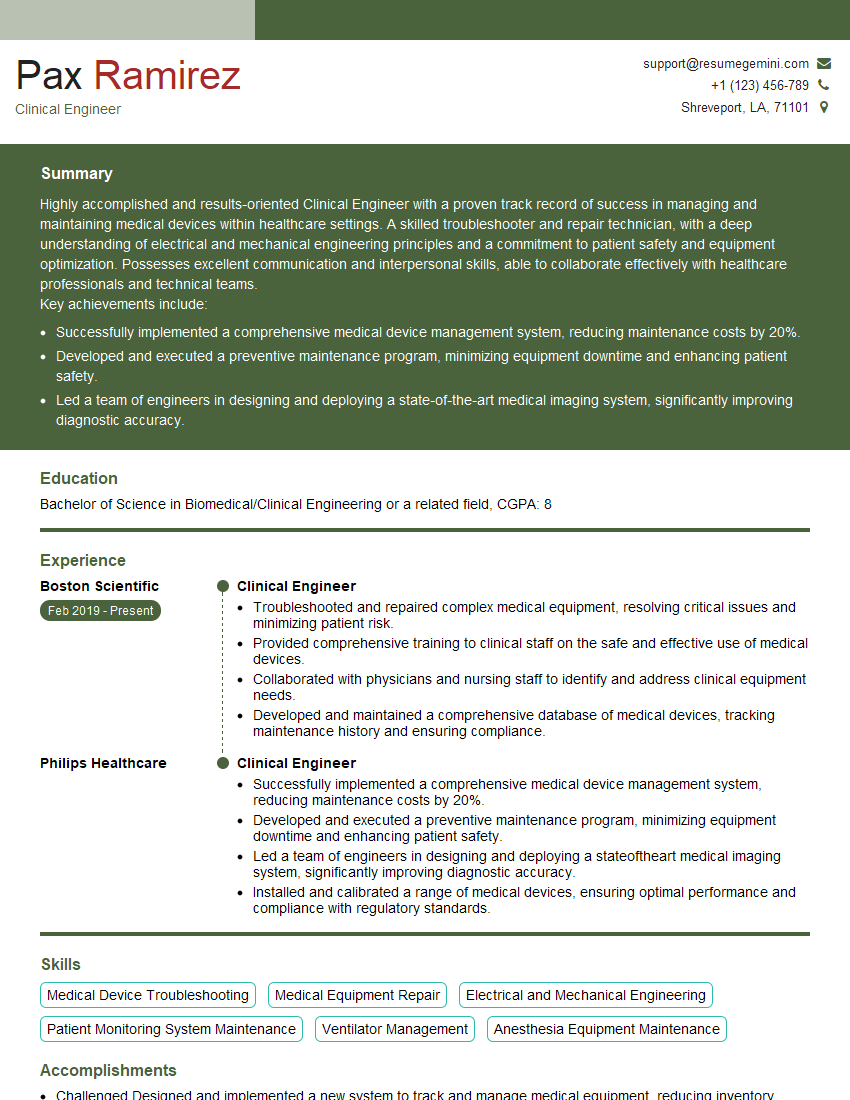
Mastering Medical Electronics opens doors to exciting and impactful careers, offering opportunities to innovate and improve healthcare delivery. A strong foundation in this field is highly sought after, leading to significant career advancement. To maximize your job prospects, crafting an ATS-friendly resume is crucial. This ensures your qualifications are effectively conveyed to potential employers. We recommend using ResumeGemini to build a professional and impactful resume that showcases your skills and experience. ResumeGemini provides examples of resumes tailored specifically to Medical Electronics roles, making your job search significantly easier.
Explore more articles
Users Rating of Our Blogs
Share Your Experience
We value your feedback! Please rate our content and share your thoughts (optional).
What Readers Say About Our Blog
Very informative content, great job.
good