Are you ready to stand out in your next interview? Understanding and preparing for Medication Control interview questions is a game-changer. In this blog, we’ve compiled key questions and expert advice to help you showcase your skills with confidence and precision. Let’s get started on your journey to acing the interview.
Questions Asked in Medication Control Interview
Q 1. Describe your experience with medication reconciliation processes.
Medication reconciliation is the process of creating the most accurate list possible of all medications a patient is taking—including drug name, dosage, frequency, and route of administration—and comparing that list against the physician’s orders, and then resolving any discrepancies. It’s a crucial step in ensuring patient safety and preventing adverse drug events.
In my experience, I’ve implemented and overseen medication reconciliation processes in both hospital and outpatient settings. This involved training staff on standardized procedures, utilizing electronic health records (EHRs) to streamline the process, and actively participating in the reconciliation process itself. For instance, I once identified a significant discrepancy during a patient admission where the patient was inadvertently taking a duplicate medication due to a missed update in their medication list. By proactively catching this error, we prevented a potential adverse drug reaction. We also established a system of double-checking each medication reconciliation, using a standardized checklist to ensure all aspects are covered. The reconciliation process isn’t just a one-time event; it’s a continuous process that requires vigilance and attention throughout the patient’s care journey.
Q 2. Explain the importance of maintaining accurate medication inventory.
Maintaining an accurate medication inventory is paramount for several reasons: patient safety, regulatory compliance, efficient operations, and cost control. Inaccurate counts can directly lead to medication shortages, potentially delaying or compromising patient care. It also increases the risk of medication errors—imagine administering the wrong dosage because of an incorrect inventory record.
From a regulatory standpoint, maintaining an accurate inventory is mandatory. Audits often focus on this area, and discrepancies can result in penalties or even license revocation. Finally, an accurate inventory enables efficient resource management. Knowing exactly what medications are available and their expiration dates helps optimize ordering, minimizing waste and controlling costs. Imagine the waste if we over-ordered medications that subsequently expired. We would be throwing away money and valuable resources.
Q 3. How do you ensure medication storage adheres to regulatory guidelines?
Ensuring medication storage adheres to regulatory guidelines is non-negotiable. This involves understanding and implementing requirements from agencies like the FDA and state boards of pharmacy. This includes maintaining appropriate temperature controls (refrigeration, room temperature, etc.), protecting medications from light and moisture, and ensuring proper security, particularly for controlled substances. We also implement a first-in, first-out (FIFO) system to prevent expiration and wastage.
For example, our facility utilizes specialized refrigerators with temperature monitoring systems and alarms to immediately alert us to any temperature deviations. We conduct regular inspections to check storage conditions and expiration dates. Our controlled substance storage is locked and only accessible to authorized personnel, with meticulous logs tracking access and dispensing. These procedures, combined with regular staff training on proper storage techniques, create a robust system for maintaining compliance.
Q 4. What are your methods for preventing medication errors?
Preventing medication errors requires a multi-faceted approach, incorporating technological solutions, procedural safeguards, and a strong emphasis on human factors. We use barcoding systems for medication administration, which helps to verify the right patient receives the right medication at the right dose. Double-checking is also critical—having a second person verify medication orders and dosages before administration. We emphasize clear, legible handwriting and use standardized abbreviations to minimize misinterpretations. The use of automated dispensing cabinets (ADCs) also minimizes errors by controlling access and recording every medication dispensed.
Beyond technology, a culture of safety is paramount. This includes regular staff training on medication administration protocols, emphasizing error reporting without fear of blame, and the implementation of robust incident reporting systems. We conduct regular medication safety audits to identify and address potential vulnerabilities in our processes and enhance our safety protocols further.
Q 5. Describe your experience with controlled substance management.
Managing controlled substances requires stringent adherence to both federal and state regulations. This involves maintaining meticulous records of all controlled substance transactions—receiving, dispensing, and waste disposal. Regular inventory counts are crucial, with discrepancies immediately investigated. We utilize secure storage systems with limited access, often utilizing automated dispensing cabinets specifically designed for controlled substances with integrated tracking and monitoring systems. Staff involved in handling controlled substances are rigorously trained on all relevant regulations and security procedures. We also conduct regular audits to ensure all procedures are followed meticulously.
For example, every single dose of a controlled substance is tracked from the moment it enters the facility to the moment it’s administered or disposed of. This involves using specific logs and documentation procedures that are frequently audited by regulatory bodies. Any discrepancy necessitates immediate investigation and documentation to identify and correct the cause.
Q 6. How do you handle discrepancies in medication counts?
Discrepancies in medication counts are addressed immediately and thoroughly. The first step involves a recount, often by a different individual, to rule out simple counting errors. If the discrepancy persists, a comprehensive investigation is launched to identify the source. This may involve reviewing dispensing records, checking for expired medications, examining storage areas for signs of theft or damage, and interviewing staff.
For instance, a missing bottle of medication triggers a full-scale investigation, potentially involving review of security footage and staff interviews. Documentation of the entire process, from the initial discovery to the resolution, is critical. If theft or diversion is suspected, external authorities may be involved. The goal is not just to resolve the immediate discrepancy but to identify and correct underlying issues that led to it, to prevent future incidents.
Q 7. Explain your knowledge of medication disposal procedures.
Medication disposal procedures are critical to prevent environmental contamination and medication diversion. We follow all applicable state and federal guidelines, often utilizing DEA-approved methods for controlled substances. This can involve using specialized drug take-back programs, or for certain medications, mixing them with undesirable substances like kitty litter before discarding them in sealed containers to render them unusable. Patient education on safe medication disposal is also a significant part of our approach, as many individuals are unaware of proper disposal methods.
For instance, we provide patients with disposal bags for unused medications and regularly promote the community drug take-back programs. We clearly label containers intended for medication disposal, and we train staff to handle the disposal of medications safely and in accordance with regulations. This ensures patient and community safety and regulatory compliance.
Q 8. What is your experience with automated dispensing cabinets (ADCs)?
Automated Dispensing Cabinets (ADCs) are a cornerstone of modern medication management, significantly enhancing safety and efficiency. My experience spans over seven years, encompassing both the implementation and daily operational use of various ADC models. I’ve been involved in everything from selecting appropriate systems based on facility needs and workflow analysis, to training staff on proper use and troubleshooting technical issues.
For example, in my previous role, we implemented a new ADC system in a high-volume oncology unit. This involved a detailed needs assessment, considering factors like medication storage capacity, user access controls, and integration with the electronic health record (EHR). Post-implementation, I oversaw the training of nurses and pharmacy technicians, focusing on efficient medication retrieval, proper inventory management within the ADC, and the importance of adhering to strict security protocols. We tracked key performance indicators (KPIs) such as medication dispensing time and error rates to continuously optimize the system’s effectiveness.
Beyond daily operations, I’ve participated in regular maintenance, software updates, and audits to ensure the ADC functions flawlessly and complies with regulatory standards. This includes regular reconciliation of medication inventory between the ADC and the main pharmacy stock. My understanding extends to the various security features available, including biometric access, drug-specific dispensing parameters, and automated alerts for low stock or potential discrepancies.
Q 9. Describe your experience with barcode medication administration (BCMA).
Barcode Medication Administration (BCMA) is a critical component of reducing medication errors. My extensive experience with BCMA involves both the practical application of scanning barcodes to verify the ‘five rights’ of medication administration (right patient, right drug, right dose, right route, right time) and the oversight of the system’s functionality. This includes ensuring that all medications are properly labeled with barcodes, that the scanning devices are functioning correctly, and that staff are adequately trained on the system.
In a past role, I noticed a pattern of BCMA scanning errors. By analyzing the error reports, I identified a problem with the lighting conditions in some patient rooms affecting the barcode scanner’s ability to accurately read the labels. This led to a simple but effective solution: upgrading to scanners with improved low-light capabilities, resulting in a significant decrease in scanning errors.
Beyond the technical aspects, I understand the crucial role BCMA plays in enhancing patient safety by providing a double-check against potential errors. I’ve actively promoted the adoption of BCMA across various departments, emphasizing its role in improving medication safety and regulatory compliance. This includes actively participating in the implementation of new BCMA systems and providing ongoing support to staff during its use.
Q 10. How do you identify and report medication errors?
Identifying and reporting medication errors requires a systematic approach. I utilize a multi-pronged strategy that starts with proactive measures to prevent errors, followed by a robust process for detection and reporting when errors do occur.
Proactive measures include double-checking medication orders, carefully reviewing patient allergies and medication histories, and utilizing technology like ADCs and BCMA. When errors are detected, regardless of severity, a structured reporting process is crucial. This includes documenting the error with precise details—the type of error, the patient involved, the medication, the cause if known, and the actions taken to mitigate any harm.
The reported medication error then undergoes a root cause analysis to identify systemic issues that contributed to the error, thus preventing future recurrence. The root cause analysis will then inform the development of corrective actions, which might include changes to processes, training programs, or technological improvements. These processes ensure continuous quality improvement and a commitment to patient safety.
For example, if a wrong dose was administered, the report would detail the prescribed dose, the administered dose, the nurse’s actions, and any patient impact. A root cause analysis might reveal a lack of clarity in the medication order or insufficient training on dosage calculations, leading to revisions in order writing practices or enhanced staff education.
Q 11. Explain your understanding of medication use policies and procedures.
Medication use policies and procedures are the backbone of a safe and effective medication management system. My understanding encompasses the development, implementation, and ongoing review of these policies and procedures to ensure compliance with all relevant regulations and best practices.
These policies cover various aspects, from medication ordering and dispensing to storage, administration, and waste management. They define clear guidelines for handling controlled substances, managing high-alert medications, and responding to medication errors. I have experience reviewing and updating policies to align with the latest evidence-based guidelines and technology advancements.
For instance, a crucial policy addresses the proper handling of opioids. This includes secure storage, strict documentation requirements for dispensing and administration, and clear procedures for managing waste to prevent diversion. Regular reviews and updates of these policies ensure they remain relevant and effective in minimizing risks and maintaining a high standard of patient care.
Q 12. What is your experience with pharmaceutical quality control?
Pharmaceutical quality control is paramount in ensuring the safety and efficacy of medications. My experience includes verifying the integrity of medications received, reviewing expiration dates, inspecting for damage or contamination, and ensuring proper storage conditions are maintained across the supply chain.
This involves collaboration with suppliers, actively participating in vendor audits, and maintaining detailed records of inspections and testing results. I’m familiar with various quality control methodologies, including visual inspection, temperature monitoring, and potentially more advanced analytical techniques. This is critical to prevent the use of expired or compromised medications.
For example, if a shipment of medication arrives with damaged packaging, I would initiate a thorough investigation to determine the extent of the damage and assess whether the medication’s integrity has been compromised. If necessary, I would initiate a return process and contact the supplier to report the issue. This highlights the continuous monitoring and quality checks required for medication safety.
Q 13. How do you manage medication waste?
Medication waste management is critical for patient safety and environmental protection. My experience encompasses establishing and maintaining procedures for safe disposal of expired, unused, or contaminated medications. This includes adhering to strict regulatory guidelines and employing appropriate methods to prevent diversion or accidental exposure.
Our procedures usually involve the use of designated medication return programs or secure disposal containers, in accordance with local regulations and environmental protection agencies. Documentation of waste disposal is carefully tracked, including the type of medication, the quantity, and the method of disposal. Regular audits are conducted to ensure adherence to the established protocols. Staff training on proper medication waste disposal procedures is vital.
For example, controlled substances require particularly stringent disposal procedures to prevent misuse. This might include witnessed disposal using a designated witness and detailed documentation to maintain a full audit trail. Proper training ensures that all staff understand the importance of these procedures and can implement them correctly.
Q 14. Describe your experience with inventory tracking software.
Inventory tracking software is essential for efficient medication management. My experience with such software involves utilizing its features for real-time inventory monitoring, automated ordering, and accurate stock reconciliation. I have worked with various systems, familiarizing myself with their unique functionalities and integrating them effectively with other medication management systems.
These systems offer significant improvements over manual tracking methods by providing up-to-date inventory levels, minimizing stockouts, and reducing the risk of medication shortages. The software also aids in generating reports for various purposes, such as cost analysis, expiry date tracking, and audit preparation. Data analysis from this software can be used to optimize ordering patterns and minimize waste.
For instance, a system might automatically generate an order when stock levels fall below a predetermined threshold, ensuring medications are consistently available. This automation prevents delays in treatment due to stockouts, contributing to improved patient care and minimizing the risk of treatment interruptions.
Q 15. How do you ensure the security of controlled substances?
Securing controlled substances requires a multi-layered approach encompassing physical, procedural, and technological safeguards. Think of it like Fort Knox for medication – multiple levels of protection are needed.
Physical Security: This involves restricting access to medication storage areas using locked cabinets, safes, and controlled access points. Only authorized personnel with appropriate credentials should have access. Regular inventory checks and audits are essential to detect discrepancies.
Procedural Security: Strict protocols must be followed for dispensing, administering, and documenting controlled substances. This includes using automated dispensing cabinets (ADCs) to track medication movement, implementing double-checking mechanisms for high-risk medications, and maintaining meticulous records. Discrepancies should be immediately investigated.
Technological Security: Software systems such as electronic medication administration records (eMARs) and inventory management systems enhance security by providing real-time tracking of controlled substances. These systems can generate alerts for discrepancies, near-expiration dates, and unauthorized access attempts. Regular software updates and cybersecurity measures are also vital.
For example, in a hospital setting, a nurse needing a controlled substance must obtain authorization through an eMAR system, and the medication’s dispensing and administration are recorded electronically. A second nurse would usually verify the action before administration.
Career Expert Tips:
- Ace those interviews! Prepare effectively by reviewing the Top 50 Most Common Interview Questions on ResumeGemini.
- Navigate your job search with confidence! Explore a wide range of Career Tips on ResumeGemini. Learn about common challenges and recommendations to overcome them.
- Craft the perfect resume! Master the Art of Resume Writing with ResumeGemini’s guide. Showcase your unique qualifications and achievements effectively.
- Don’t miss out on holiday savings! Build your dream resume with ResumeGemini’s ATS optimized templates.
Q 16. Describe a time you had to solve a medication-related problem.
During my time at a large hospital, we faced a significant issue with the inaccurate dispensing of a highly potent opioid. Several patients received incorrect dosages. We immediately initiated a root cause analysis using a Fishbone Diagram, identifying contributing factors like inadequate staff training on the new ADC system, poorly designed labeling, and lack of sufficient checks and balances in the dispensing process.
Our solutions were multi-faceted: We implemented mandatory retraining on the ADC and medication dispensing procedures, updated medication labels to improve clarity, and introduced a double-verification system by two authorized personnel for every dispensing event. We also reviewed and updated our medication policies and procedures to incorporate these changes. We actively monitored the system to identify any further issues that would arise. Within a month of implementing our solution, we eliminated errors completely.
Q 17. How do you stay current with changes in medication control regulations?
Staying current with medication control regulations requires a proactive and multifaceted approach. Think of it like staying up to date with the latest software releases – constant monitoring is key.
Professional Organizations: I actively participate in professional organizations like the ASHP (American Society of Health-System Pharmacists) and ISMP (Institute for Safe Medication Practices), attending conferences, webinars, and reviewing their publications for updates on regulations and best practices.
Regulatory Agencies: I closely monitor updates and guidance from the FDA (Food and Drug Administration), DEA (Drug Enforcement Administration), and relevant state boards of pharmacy. I subscribe to their newsletters and alerts.
Continuing Education: I actively participate in continuing education programs focused on medication safety and control. These courses often address recent changes in regulations and best practices.
Journals and Publications: I regularly review peer-reviewed journals and professional publications to stay abreast of the latest research, emerging issues, and regulatory changes related to medication management.
Q 18. Explain your understanding of the Joint Commission standards related to medication management.
The Joint Commission standards on medication management are crucial for ensuring patient safety and establishing a high-quality medication use system. They focus on several key areas, aiming for a holistic approach.
Medication Use Processes: The standards emphasize the importance of clear policies and procedures for medication ordering, dispensing, administering, and monitoring. This includes requirements for medication reconciliation, proper labeling, and safe handling practices.
Staff Competence: Standards emphasize the need for qualified and trained personnel to manage medication safely. This includes ongoing education and competency assessments.
Technology and Systems: The Joint Commission encourages the use of technology to enhance medication safety, such as electronic health records (EHRs), ADCs, and barcode medication administration (BCMA).
Risk Reduction: The standards encourage the implementation of processes to minimize medication errors, such as utilizing error-reduction tools and regularly reviewing medication-related events to identify and address system vulnerabilities.
Monitoring and Evaluation: Regular monitoring of medication use processes is vital to identify areas for improvement. This involves analyzing medication error reports and tracking key indicators related to medication safety.
Non-compliance with these standards can lead to serious consequences, including citations, fines, and even loss of accreditation.
Q 19. What is your familiarity with USP <797> and <800>?
USP <797> and <800> are crucial chapters in the United States Pharmacopeia (USP) that outline standards for compounding sterile preparations and handling hazardous drugs, respectively. They are designed to minimize risks to both patients and healthcare workers.
USP <797>: This chapter details the requirements for compounding sterile preparations, such as intravenous solutions. It covers environmental control (e.g., cleanrooms), personnel training, aseptic techniques, and quality control measures to ensure the sterility and safety of compounded medications.
USP <800>: This chapter focuses on the safe handling of hazardous drugs (HDs), aiming to protect both the environment and personnel who work with these drugs. It addresses storage, handling, and disposal processes to minimize exposure to HDs. This includes proper personal protective equipment (PPE), engineering controls (e.g., specialized compounding hoods), and waste disposal guidelines.
Familiarity with these chapters is vital for ensuring the safety and efficacy of compounded medications and protecting healthcare professionals from potential exposure to hazardous drugs.
Q 20. How do you ensure patient medication safety during transitions of care?
Patient medication safety during transitions of care, such as hospital discharge or transfer to a nursing home, is critical. A breakdown in communication can lead to medication errors and adverse events. The key is meticulous medication reconciliation and clear communication.
Medication Reconciliation: This is a process of comparing a patient’s current medication list with their new medication orders at each transition point. This is an essential step to identify discrepancies and prevent medication errors. The goal is a completely accurate and up-to-date list of the patient’s medications.
Clear Communication: Effective communication between healthcare providers is vital. Information should be readily available in a structured format, such as a discharge summary or transfer report, including a complete medication list with dosages, frequencies, and routes of administration. This needs to be both electronic and on paper when necessary.
Patient Education: Patients should be actively involved in their medication management. They need clear and concise instructions about their medications, including their purpose, dosage, frequency, and potential side effects. Providing patients with written instructions and medication reminders is essential.
For example, when a patient is discharged from a hospital, a detailed medication reconciliation is performed, and the information is clearly conveyed to the patient and their primary care provider.
Q 21. Describe your experience with medication reconciliation software.
Medication reconciliation software plays a critical role in improving medication safety and reducing errors during transitions of care. Think of it as a highly organized filing cabinet for medication information.
Automated Reconciliation: These systems automatically compare a patient’s medication history with new orders, flagging potential discrepancies for review by healthcare providers. This reduces the chance of manual errors in comparing large lists of medications.
Improved Accuracy: By automating the process, the software reduces the risk of human error in identifying and resolving medication discrepancies.
Enhanced Communication: The software facilitates communication between healthcare providers by providing a centralized and accessible record of a patient’s medication information. This helps ensure that all providers have access to the same information.
Reporting and Analytics: Many systems offer reporting and analytics capabilities that help identify trends and patterns in medication discrepancies, which can be valuable for improving medication safety initiatives.
I have extensive experience with several medication reconciliation software platforms, including [mention specific software if comfortable – otherwise omit this part]. My experience demonstrates a marked improvement in the accuracy and efficiency of medication reconciliation, ultimately leading to enhanced patient safety.
Q 22. How do you handle expired medications?
Expired medications pose a significant risk to patient safety and must be handled with utmost care. We never reuse or redistribute expired medications. Our process involves a multi-step approach to ensure safe disposal. First, we visually inspect the medication for any signs of degradation or tampering. Then, we segregate expired medications from current stock. Next, we follow our facility’s established protocol for disposal, which typically involves returning them to the pharmaceutical supplier for proper destruction (following their specific guidelines) or utilizing a licensed waste disposal company specializing in pharmaceutical waste. Detailed records are meticulously maintained to document each step of the disposal process, ensuring full compliance with regulatory requirements and internal policies. This ensures patient safety and adherence to all relevant legal standards.
For example, if we discover a batch of expired antibiotics, we immediately quarantine them and notify the pharmacy manager. We then prepare the return documentation and package the medications securely. Once the medications are picked up by the designated disposal company, we update our inventory records, retaining a copy of the disposal confirmation paperwork. This rigorous procedure helps maintain medication integrity and eliminates the potential for medication errors.
Q 23. What are the key performance indicators (KPIs) you use to monitor medication control?
Key Performance Indicators (KPIs) for medication control are crucial for evaluating effectiveness and identifying areas for improvement. We focus on several core metrics, including:
- Medication Error Rate: This measures the frequency of medication errors, including dispensing, administration, and documentation errors. A low error rate is our primary goal, continuously striving for zero errors.
- Inventory Turnover Rate: This tracks how quickly medications are used, helping us optimize stock levels and minimize waste. We aim for a healthy turnover, avoiding both stockouts and excessive accumulation of expired medications.
- Compliance Rate with Medication Policies and Procedures: This reflects adherence to established protocols and guidelines. Regular audits and staff training ensure high compliance.
- Timeliness of Medication Ordering and Dispensing: Prompt medication delivery prevents delays in patient treatment. We track order processing and dispensing times to ensure efficiency.
- Waste Rate: This KPI monitors the amount of medication wasted due to expiration, spoilage, or other factors. We constantly seek ways to minimize waste through effective inventory management.
By regularly monitoring these KPIs, we can identify trends, address weaknesses, and make data-driven improvements to our medication control system. For instance, a high error rate in a specific area might prompt targeted retraining or a process redesign.
Q 24. Explain your experience with medication ordering and procurement processes.
My experience encompasses all facets of medication ordering and procurement, from initial requisition to final delivery and verification. I’m proficient in utilizing electronic ordering systems and manual processes. I start by carefully reviewing medication needs, considering factors like patient demand, expected consumption, and lead times. We use a system of automated alerts for low stock, ensuring timely reordering to prevent shortages. I meticulously verify orders for accuracy, comparing them to physician prescriptions and patient charts. Upon arrival, I check for discrepancies, including expiration dates, damaged packaging, and proper labeling. We maintain detailed records throughout the entire process, guaranteeing a fully auditable trail. My experience includes navigating complex procurement procedures, including those for controlled substances. I always prioritize securing medications from reputable and licensed suppliers. For instance, in one scenario, a supplier experienced a delay, I proactively contacted alternatives, securing the necessary medications without impacting patient care.
Q 25. How do you verify medication orders for accuracy?
Verifying medication orders is a critical step in ensuring patient safety and preventing errors. We use a multi-layered approach involving:
- Physician Order Review: Thorough review of the prescription for completeness, clarity, and accuracy, checking for legible handwriting, appropriate dosage, frequency, and route of administration.
- Electronic Health Record (EHR) Verification: Cross-referencing the order with the patient’s EHR to ensure consistency with medical history and other medications.
- Drug Reference Check: Consulting reputable drug databases to confirm dosage, potential interactions, and contraindications.
- Six Rights of Medication Administration: Verifying the Right Patient, Right Drug, Right Dose, Right Route, Right Time, and Right Documentation.
- Independent Double-Check: Utilizing a second qualified individual to independently verify all aspects of the medication order before dispensing.
This meticulous approach minimizes the chances of errors and strengthens the medication control system. For instance, if an order seems unusual or there is an ambiguity, we initiate a further clarification process with the physician before proceeding.
Q 26. What is your approach to training staff on medication control procedures?
Staff training on medication control procedures is paramount. We employ a comprehensive approach, integrating various methods to ensure knowledge retention and competence. This includes:
- Initial Orientation: A thorough introduction to all medication handling procedures during new employee onboarding.
- Regular Refresher Training: Periodic sessions to update staff on new guidelines, changes in medication protocols, and best practices.
- Interactive Workshops: Hands-on sessions with simulations and case studies to reinforce learning and problem-solving skills.
- Online Modules: Utilizing digital resources for convenient and accessible learning.
- Performance Feedback and Evaluation: Regular evaluations based on observation and competency assessments to identify areas for improvement.
- Mandatory Reporting of Errors and Near Misses: Creating a culture of safety where errors are viewed as learning opportunities, not as blame-worthy events.
We maintain detailed training records for all staff, ensuring accountability and compliance. For example, we conduct regular mock medication dispensing exercises to simulate real-world scenarios and evaluate competency.
Q 27. Describe your experience with investigational drugs.
My experience with investigational drugs is limited to my current position as my previous roles focused primarily on established medications. However, I understand the stringent regulatory requirements and enhanced safety precautions involved in handling investigational drugs. This includes maintaining meticulous documentation, adhering to strict chain-of-custody protocols, and ensuring compliance with Good Clinical Practices (GCP). I am aware of the importance of rigorous monitoring, reporting, and record-keeping for all aspects of their handling, storage, and administration. While I haven’t personally managed investigational drug programs, I’m confident in my ability to quickly adapt and learn the specific procedures and regulations required for such a role.
Q 28. How familiar are you with different types of medication delivery systems?
I am familiar with a wide range of medication delivery systems. My knowledge encompasses:
- Oral Medications: Tablets, capsules, liquids, and suspensions.
- Parenteral Medications: Intravenous (IV), intramuscular (IM), subcutaneous (SC), and intradermal injections.
- Topical Medications: Creams, ointments, lotions, and transdermal patches.
- Inhalation Medications: Metered-dose inhalers (MDIs), dry powder inhalers (DPIs), and nebulizers.
- Ophthalmic Medications: Eye drops and ointments.
- Otic Medications: Ear drops.
- Rectal Medications: Suppositories and enemas.
- Transdermal Systems: Patches delivering medication through the skin.
Understanding the nuances of each system is critical for ensuring safe and effective medication administration. For example, I am well-versed in the appropriate techniques for preparing and administering IV medications, including aseptic technique and calculating infusion rates. I also understand the unique considerations for handling and storing different formulations, such as those requiring refrigeration.
Key Topics to Learn for Medication Control Interview
- Medication Reconciliation: Understanding the process, its importance in preventing medication errors, and strategies for accurate reconciliation in diverse healthcare settings.
- Inventory Management: Practical application of inventory control principles in a medication setting, including ordering, storage, tracking, and disposal procedures. Consider exploring different inventory management systems and their impact on efficiency and patient safety.
- Medication Dispensing and Administration: Familiarize yourself with safe medication dispensing practices, including the five rights of medication administration and techniques for error prevention. Explore different dispensing methods and their associated risks and benefits.
- Pharmaceutical Calculations: Mastering essential calculations for medication dosages, conversions, and dilutions. Practice problem-solving approaches to ensure accuracy and safety.
- Regulatory Compliance: Understanding relevant regulations and guidelines related to medication control, such as FDA regulations or state-specific laws. This includes knowledge of reporting procedures for medication errors and adverse events.
- Technology in Medication Control: Explore the role of technology in improving medication safety and efficiency, including electronic health records (EHRs), automated dispensing cabinets (ADCs), and barcode medication administration (BCMA).
- Patient Safety and Risk Management: Deepen your understanding of medication error prevention strategies, risk assessment techniques, and incident reporting procedures. Focus on proactive approaches to minimizing patient risk.
Next Steps
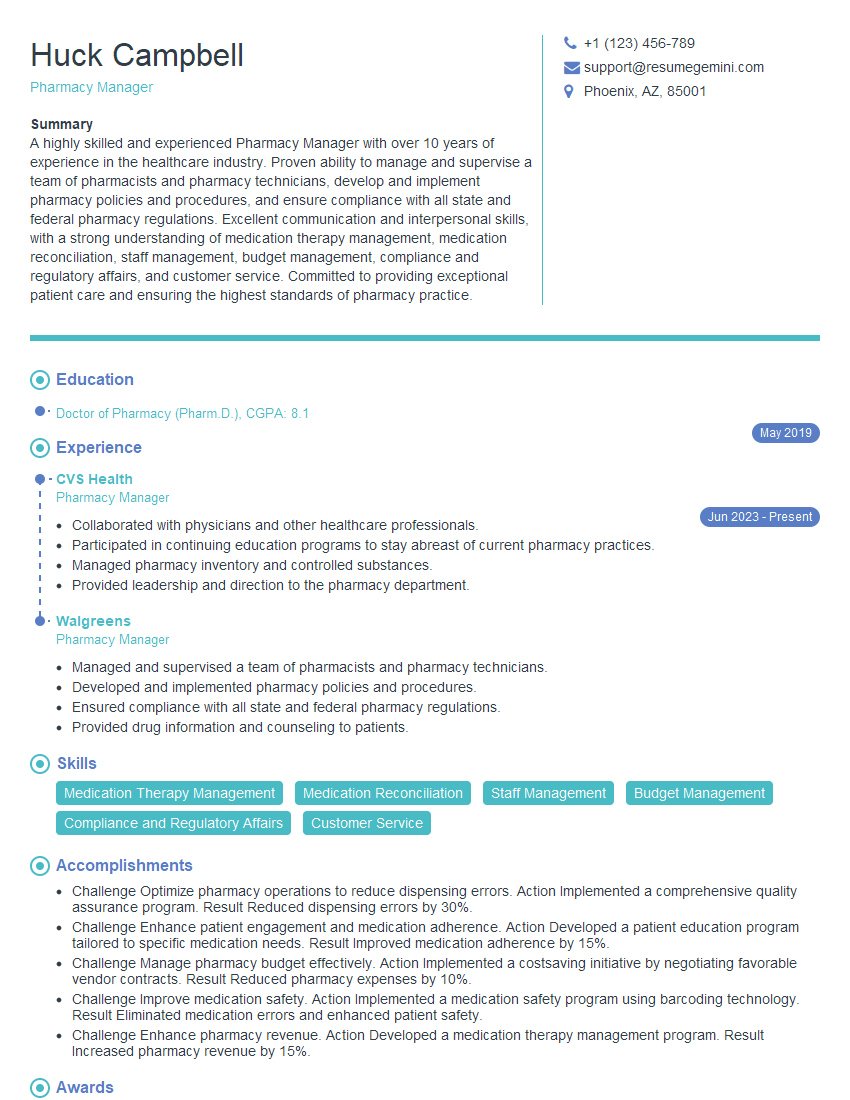
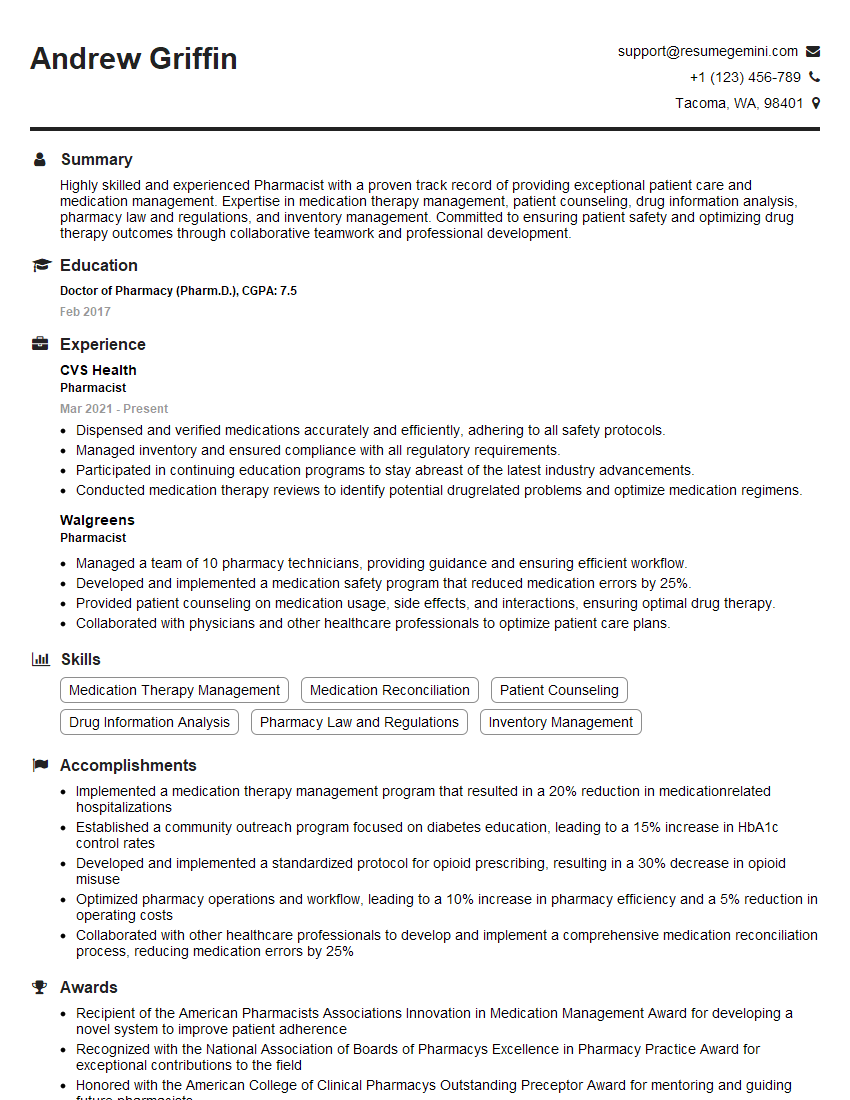
Mastering Medication Control opens doors to exciting career advancements and positions you as a valuable asset in healthcare. A strong understanding of these principles demonstrates your commitment to patient safety and operational excellence. To maximize your job prospects, create an ATS-friendly resume that highlights your skills and experience effectively. ResumeGemini is a trusted resource that can help you build a professional and impactful resume, tailored to showcase your expertise in Medication Control. Examples of resumes tailored to this field are provided to help guide your efforts.
Explore more articles
Users Rating of Our Blogs
Share Your Experience
We value your feedback! Please rate our content and share your thoughts (optional).
What Readers Say About Our Blog
Very informative content, great job.
good