Interviews are more than just a Q&A session—they’re a chance to prove your worth. This blog dives into essential Mentorship and Guidance interview questions and expert tips to help you align your answers with what hiring managers are looking for. Start preparing to shine!
Questions Asked in Mentorship and Guidance Interview
Q 1. Describe your approach to establishing rapport with a mentee.
Building rapport with a mentee is crucial for a successful mentoring relationship. It’s about creating a safe and trusting environment where open communication and mutual respect thrive. My approach involves a multi-faceted strategy focused on active listening, empathy, and genuine interest in the mentee’s journey.
- Active Listening: I start by truly listening to my mentee, understanding their aspirations, challenges, and perspectives without interruption. I ask clarifying questions to ensure I fully grasp their situation.
- Empathy and Validation: I strive to understand their feelings and experiences from their point of view. Acknowledging their emotions and validating their struggles fosters trust and encourages open dialogue.
- Shared Experiences (where appropriate): I might share relevant anecdotes from my own career, highlighting challenges overcome and lessons learned. This helps to establish a connection on a personal level and demonstrates relatability.
- Setting Clear Boundaries and Expectations: While building rapport involves creating a comfortable atmosphere, it’s equally important to establish clear boundaries regarding confidentiality, meeting frequency, and the overall scope of the mentorship.
For instance, with a junior developer struggling with imposter syndrome, I’d start by actively listening to their concerns, validating their feelings, and sharing my own experiences of self-doubt early in my career. This creates a safe space for them to open up and trust the mentoring process.
Q 2. How do you identify a mentee’s learning style and adapt your approach accordingly?
Understanding a mentee’s learning style is key to tailoring my approach for maximum effectiveness. I use a combination of observation and direct communication to identify their preferred learning methods.
- Observation: I pay close attention to how they absorb information during our sessions. Do they prefer visual aids, detailed explanations, hands-on activities, or group discussions?
- Direct Inquiry: I openly ask them about their preferred learning styles, what learning environments they find most conducive, and what methods have worked best for them in the past. I might use questionnaires or assessments to gain deeper insight.
- Adapting My Approach: Once I’ve identified their learning style, I adapt my methods accordingly. For a visual learner, I’d incorporate charts, diagrams, and presentations. For a kinesthetic learner, I’d emphasize hands-on exercises and practical application.
For example, if a mentee prefers a hands-on approach, I wouldn’t simply lecture them on project management but would instead involve them in a simulated project scenario, guiding them through the process and offering feedback along the way.
Q 3. Explain your process for setting realistic and achievable goals with mentees.
Setting realistic and achievable goals is paramount for a productive mentorship. This process is collaborative and involves open communication and mutual agreement.
- Brainstorming: I work with the mentee to identify their professional goals, both short-term and long-term. We brainstorm potential objectives and discuss their feasibility.
- SMART Goals: We refine the brainstormed ideas using the SMART criteria: Specific, Measurable, Achievable, Relevant, and Time-bound. This ensures that the goals are clear, attainable, and trackable.
- Action Planning: We create a detailed action plan outlining the steps needed to achieve each goal, including deadlines, resources, and potential roadblocks.
- Regular Review: We regularly review progress against the goals, making adjustments as needed. This ensures that we remain on track and address any challenges proactively.
For instance, instead of a vague goal like ‘improve communication skills,’ we might define a SMART goal such as, ‘deliver three impactful presentations to colleagues by the end of the quarter, incorporating feedback from practice sessions.’
Q 4. How do you provide constructive feedback that motivates growth?
Constructive feedback is crucial for growth, but it needs to be delivered effectively to be truly motivating. My approach focuses on being specific, balanced, and action-oriented.
- Specificity: I avoid vague statements and instead focus on concrete examples of the mentee’s performance. I clearly articulate both strengths and areas for improvement.
- Balance: I always emphasize both positive aspects and areas for improvement. Starting with positive feedback builds confidence and creates a receptive atmosphere for addressing shortcomings.
- Action-Oriented: My feedback always includes actionable suggestions for improvement. I propose specific steps the mentee can take to address identified weaknesses and build upon their strengths.
- Focus on Behavior, not Personality: Feedback is directed towards the mentee’s actions and behaviors, not their inherent characteristics. For example, instead of saying “You’re disorganized,” I would say, “The project timeline could benefit from a more structured approach, perhaps by using a Gantt chart.”
For example, rather than saying ‘Your presentation was boring,’ I might say, ‘Your data was strong, but the delivery could be improved by incorporating more visual aids and engaging storytelling techniques. Let’s work on structuring your next presentation using the narrative arc method.’
Q 5. Describe a situation where you had to address a conflict or disagreement with a mentee.
In one instance, a mentee felt frustrated by a perceived lack of opportunity for advancement within their team. Their frustration manifested as disengagement and reduced productivity.
To address this, I first listened empathetically to their concerns, validating their feelings. Then, I facilitated a discussion to explore the root cause of their frustration. We identified that their perception of limited opportunities stemmed from a lack of awareness about internal mobility programs and mentorship opportunities within the wider organization.
We collaboratively developed an action plan that involved researching available internal opportunities, attending relevant workshops, and networking with colleagues in different departments. I also helped them craft a compelling narrative to articulate their career aspirations to their manager. The outcome was a significant improvement in their engagement and a renewed sense of purpose. They subsequently secured a promotion within six months.
Q 6. How do you measure the success of your mentoring efforts?
Measuring the success of my mentoring efforts involves a multifaceted approach, combining quantitative and qualitative measures.
- Goal Attainment: I track the mentee’s progress toward the pre-defined SMART goals. This provides objective evidence of their development.
- Performance Metrics: Where appropriate, I review relevant performance metrics such as project completion rates, sales figures, or client satisfaction scores to assess tangible improvements.
- Feedback Surveys: I periodically solicit feedback from the mentee regarding their experience and the effectiveness of the mentorship. This offers valuable qualitative insights.
- Observation and Informal Check-ins: Regular informal conversations provide a nuanced understanding of the mentee’s growth, both professionally and personally.
- Long-Term Follow-Up: I maintain contact with mentees even after the formal mentorship concludes, to gauge their continued progress and ongoing success.
For example, tracking a mentee’s project completion rates, along with their self-reported confidence levels and career advancement, provide a holistic picture of their success.
Q 7. What strategies do you use to maintain consistent engagement with your mentees?
Maintaining consistent engagement requires proactive effort and strategic planning.
- Scheduled Meetings: Regularly scheduled meetings provide a structured framework for our interactions. The frequency varies depending on the mentee’s needs and the phase of the mentorship.
- Varied Meeting Formats: I use a mix of formal meetings, informal check-ins, and virtual communication (email, instant messaging) to maintain engagement and cater to the mentee’s preferences.
- Actionable Tasks: Between meetings, I assign actionable tasks or reading materials that build upon our discussions, ensuring the mentee remains actively involved.
- Open Communication: I encourage open communication, ensuring the mentee feels comfortable reaching out anytime with questions or concerns.
- Regular Feedback and Encouragement: Providing timely feedback and consistent encouragement keeps the mentee motivated and engaged in the process.
For instance, scheduling bi-weekly meetings with progress reports and relevant articles between sessions ensures continued momentum and meaningful engagement.
Q 8. How do you handle situations where a mentee is struggling to progress?
When a mentee struggles, my approach is multifaceted and begins with understanding the root cause. It’s rarely a simple lack of skill; often, it’s a combination of factors like lack of confidence, unclear goals, external pressures, or a mismatch between their skills and aspirations.
- Active Listening and Empathy: I start by actively listening to their concerns, validating their feelings, and creating a safe space for open communication. Empathy is key—understanding their perspective helps me tailor my support.
- Goal Reassessment: We collaboratively review their goals, ensuring they are realistic, measurable, and aligned with their values. Sometimes, minor adjustments are needed to make them more attainable.
- Identifying Roadblocks: We brainstorm potential obstacles hindering their progress. This might involve identifying skill gaps, resource limitations, or even personal challenges impacting their motivation.
- Action Planning & Support: Once we’ve identified roadblocks, we develop a concrete action plan with clear steps, deadlines, and strategies for overcoming each challenge. I offer ongoing support, regular check-ins, and resources to facilitate their progress.
- Celebrating Small Wins: Progress isn’t always linear. We celebrate every milestone achieved, no matter how small, to build confidence and maintain momentum.
For instance, I once mentored a junior developer struggling with a particularly challenging coding project. Through active listening, I discovered they were overwhelmed by the project’s scope. By breaking down the project into smaller, manageable tasks and celebrating each completed module, their confidence grew, and they successfully completed the project.
Q 9. How do you adapt your mentoring style to different personalities and learning styles?
Adapting my mentoring style is crucial for effective guidance. I recognize that individuals learn and process information differently. My approach involves understanding their personality and learning preferences, tailoring my communication and teaching methods accordingly.
- Personality Styles: I am familiar with different personality frameworks like Myers-Briggs or DISC, which helps me understand communication preferences (e.g., direct vs. indirect, visual vs. auditory learners). This influences how I present information and offer feedback.
- Learning Styles: I adapt my methods based on whether a mentee is a visual, auditory, or kinesthetic learner. For visual learners, I use diagrams and charts; for auditory learners, I focus on verbal explanations and discussions; and for kinesthetic learners, I encourage hands-on activities and practical application.
- Communication Preferences: I adjust my communication style to match the mentee’s comfort level – some prefer formal meetings, while others prefer informal chats. I always strive to foster a comfortable and trusting relationship.
- Feedback Mechanisms: I solicit regular feedback on my mentoring approach to ensure I am meeting their needs and adjusting my style accordingly. This fosters a collaborative learning environment.
For example, a highly introverted mentee might benefit from more written communication and time for reflection, while an extroverted mentee might thrive in group discussions and brainstorming sessions.
Q 10. Describe your experience in providing career guidance.
My experience in career guidance spans over [Number] years, encompassing diverse roles and industries. I’ve helped professionals at various career stages – from entry-level to senior leadership – navigate career transitions, identify their strengths and passions, and develop strategies for achieving their professional goals.
- Career Exploration and Goal Setting: I assist mentees in identifying their interests, values, and skills, helping them translate these into achievable career objectives.
- Skill Development and Training: I guide them in identifying skill gaps and recommend resources for upskilling or reskilling to enhance their career prospects.
- Networking and Job Search Strategies: I provide guidance on building professional networks, crafting compelling resumes and cover letters, and effective job search strategies.
- Performance Management and Leadership Development: For those in leadership roles, I provide guidance on performance management, team building, and strategic leadership skills.
- Work-Life Balance: I emphasize the importance of a holistic approach, ensuring career aspirations are balanced with personal well-being.
One successful example involved guiding a mid-career professional who felt stuck in their current role. Through self-assessment exercises and discussions, we identified their passion for data analysis. We developed a plan involving upskilling through online courses, networking within the data analytics community, and a targeted job search strategy. They secured a new role in less than six months, significantly exceeding their expectations.
Q 11. How do you encourage self-reflection and critical thinking in your mentees?
Encouraging self-reflection and critical thinking is fundamental to effective mentorship. It empowers mentees to become self-directed learners and problem-solvers. I utilize several strategies:
- Journaling Prompts: I provide structured journaling prompts focused on their experiences, challenges, and insights. This helps them process their thoughts and identify patterns.
- Socratic Questioning: I use open-ended questions that encourage them to explore their assumptions and critically examine their perspectives. It’s about guiding them to their own answers, not giving them mine.
- Case Studies and Simulations: Presenting real-world case studies or simulations allows them to analyze situations, apply their knowledge, and develop critical thinking skills.
- Feedback and Reflection Sessions: Regular feedback sessions are crucial. We discuss their progress, challenges, and areas for improvement, encouraging them to critically evaluate their performance.
- Mentorship Circles or Peer Feedback: In some cases, creating opportunities for peer feedback and learning from other mentees helps broaden their perspectives and enhances critical thinking.
For example, after a presentation, I might ask, “What aspects of your presentation were most effective? What could you improve next time? What did you learn from the audience’s response?” This encourages self-assessment and identification of areas for growth.
Q 12. What resources do you utilize to support your mentees’ development?
I utilize a range of resources to support my mentees’ development, catering to their individual needs and learning preferences.
- Online Learning Platforms: Platforms like Coursera, edX, Udemy, and LinkedIn Learning offer a vast library of courses and resources for upskilling and professional development.
- Industry-Specific Publications and Journals: Staying updated on industry trends and best practices is critical. I often recommend relevant publications and journals to my mentees.
- Networking Events and Conferences: Attending industry events allows for networking and exposure to new ideas and perspectives.
- Books and Podcasts: Many valuable resources on leadership, career development, and specific skill sets are available through books and podcasts.
- Mentorship Communities and Professional Organizations: Connecting with broader mentorship communities or relevant professional organizations provides access to a wider network of support and knowledge.
- Personality Assessments: Tools like Myers-Briggs or DISC can provide insights into personality preferences and communication styles, helping both mentee and mentor tailor their interactions.
The choice of resources depends heavily on the mentee’s goals and learning style. For example, a mentee aiming for a technical certification might benefit from online courses, while someone focusing on leadership might benefit from leadership books and attending industry conferences.
Q 13. How do you manage multiple mentees simultaneously?
Managing multiple mentees effectively requires organization, planning, and efficient communication. I employ several strategies:
- Structured Mentoring Plans: Each mentee has a personalized mentoring plan outlining goals, timelines, and milestones. This ensures focused engagement and progress tracking.
- Regular Scheduling: I establish regular meeting schedules with each mentee, ensuring consistent communication and support. The frequency and duration of meetings are tailored to the individual mentee’s needs.
- Effective Communication: Clear and concise communication, utilizing email, instant messaging, or project management tools, is vital to keep track of progress and address any concerns efficiently.
- Prioritization and Time Management: Effective time management skills are crucial. I prioritize tasks and allocate time strategically to ensure all mentees receive adequate attention.
- Documentation: Maintaining detailed records of meetings, progress, and action plans helps me track each mentee’s journey and adapt my approach as needed.
Using a project management tool or even a simple spreadsheet can help track deadlines, progress, and key discussion points for each mentee, ensuring a structured and organized approach to managing multiple relationships simultaneously.
Q 14. Describe a time you had to adjust your mentoring plan based on unforeseen circumstances.
In one instance, I was mentoring a high-potential employee who was unexpectedly laid off from their company midway through our mentoring program. This required a significant adjustment to our plan.
Initially, our focus was on career advancement within their existing company. Following the layoff, we immediately shifted gears. We focused on:
- Emotional Support: First, I provided emotional support and helped them navigate the emotional challenges of job loss.
- Resume and Job Search Strategies: We revamped their resume and LinkedIn profile to highlight their transferable skills and accomplishments.
- Networking and Job Search: We developed a new job search strategy, focusing on networking within their industry and applying to relevant roles.
- Upskilling and Reskilling: Given the changing job market, we explored opportunities for upskilling to enhance their competitiveness.
While the original plan was derailed, the flexibility and adaptability allowed us to navigate the unforeseen circumstances and ultimately resulted in them securing a new role within a few months, even better suited to their long-term career goals. This experience reinforced the importance of flexibility and responsiveness in mentorship.
Q 15. How do you ensure confidentiality and ethical conduct in your mentoring relationships?
Confidentiality and ethical conduct are paramount in any mentoring relationship. It’s built on trust, and that trust is broken without strict adherence to ethical guidelines. I begin by explicitly establishing these boundaries at the outset of the mentorship. This includes a clear agreement on what information will be shared and what will remain confidential. I’ll often use a written agreement outlining these parameters, especially in formal mentoring programs.
For example, I’ll never disclose a mentee’s personal struggles, career aspirations, or sensitive information shared during our sessions to anyone else, unless legally required to do so or in cases where there’s a direct risk of harm to the mentee or others. My own personal values and professional ethics guide my actions; I’m a strong believer in maintaining professional boundaries. This includes avoiding any conflicts of interest and always acting with integrity and fairness. I regularly reflect on my practice to ensure ethical conduct remains at the forefront of my work.
Career Expert Tips:
- Ace those interviews! Prepare effectively by reviewing the Top 50 Most Common Interview Questions on ResumeGemini.
- Navigate your job search with confidence! Explore a wide range of Career Tips on ResumeGemini. Learn about common challenges and recommendations to overcome them.
- Craft the perfect resume! Master the Art of Resume Writing with ResumeGemini’s guide. Showcase your unique qualifications and achievements effectively.
- Don’t miss out on holiday savings! Build your dream resume with ResumeGemini’s ATS optimized templates.
Q 16. How do you promote accountability among your mentees?
Promoting accountability involves a collaborative approach, focusing on setting clear, achievable goals and fostering a sense of ownership. We start by jointly defining SMART goals (Specific, Measurable, Achievable, Relevant, Time-bound). This ensures that both the mentee and I understand expectations and progress can be readily tracked. We use regular check-ins to monitor progress, discuss challenges, and celebrate successes. These aren’t just performance reviews; they’re opportunities for open dialogue and adjustments as needed.
For instance, I might ask my mentee to create a detailed action plan with timelines for each goal. We then revisit this plan at each meeting, tracking milestones and identifying potential roadblocks proactively. This process builds a sense of ownership and personal responsibility within the mentee. I also encourage self-reflection through journaling or other methods that help them assess their progress and identify areas for improvement independently.
Q 17. What are your strategies for dealing with mentees who are resistant to feedback?
Resistance to feedback is a common challenge. The key is to approach the situation with empathy and understanding. I first try to understand *why* the mentee is resistant. Is it a personality clash? Are they feeling defensive? Do they feel the feedback is unfair or irrelevant? I’ll often start by acknowledging their feelings and validating their perspective.
For example, I might say, “I understand that this feedback might be difficult to hear, and I appreciate you listening. Can you tell me more about your perspective on this?” From there, I focus on framing the feedback constructively, focusing on behavior rather than personality, and offering specific examples. I avoid generalizations and ensure the feedback is actionable and offers suggestions for improvement. If the resistance continues, I may suggest involving a third party, like a peer or HR professional, to offer a different perspective.
Q 18. How do you handle situations where a mentee’s goals conflict with organizational objectives?
Conflicts between a mentee’s goals and organizational objectives require careful navigation. Open communication is crucial. I’ll start by having a frank discussion with the mentee to understand their aspirations and the reasons behind them. I then explain the organizational context, outlining the relevant objectives and constraints. This is not about forcing compliance but about finding common ground.
Let’s say a mentee wants to pursue a completely different career path that’s outside the company’s scope. I wouldn’t discourage them; instead, we might explore how their current role could help them develop skills relevant to their future aspirations. We could also brainstorm alternative paths within the organization that might align more closely with their goals. Ultimately, the goal is to help them chart a course that benefits both them and the organization, even if that means supporting them as they transition to a new role or company.
Q 19. What is your experience with different mentoring models (e.g., formal, informal)?
I’ve worked within both formal and informal mentoring frameworks. Formal programs often involve structured pairings, defined goals, and regular check-ins. This provides a clear framework and support system, often including training for mentors and mentees. I’ve participated in such programs where there’s an organizational structure in place including regular reporting, and mentor training that helps one hone their skill set.
Informal mentoring, on the other hand, develops organically through professional relationships. This type of mentorship allows for greater flexibility and responsiveness to evolving needs. I’ve had many informal mentoring relationships where I’ve provided guidance and support to colleagues and junior professionals without a formal program structure. Both models are valuable; the best approach depends on the specific needs of the mentee and the organizational context.
Q 20. How do you facilitate the transfer of knowledge and skills to your mentees?
Facilitating knowledge transfer involves a multi-faceted approach. I believe in a blend of active learning and experiential development. This starts with identifying the specific skills and knowledge gaps the mentee needs to address. We then co-create a development plan focusing on learning objectives, methods, and timelines. This plan can include job shadowing, workshops, online courses, on-the-job projects, and one-on-one coaching.
For example, I might suggest that a mentee lead a specific project to develop their leadership skills, providing guidance and support throughout the process. Or, if the mentee needs technical skills, I’ll help them access relevant training materials and resources. It’s vital to provide constructive feedback throughout the learning process, using both observation and feedback from deliverables to adjust the process as needed. Regular reflective practice and discussing what is learned allows the knowledge to not only be acquired, but also applied and retained.
Q 21. Describe a time you had to advocate for a mentee.
I once had a mentee who was consistently overlooked for promotion opportunities despite exceeding expectations. She was highly talented but lacked confidence in advocating for herself. I noticed a pattern of her achievements being downplayed in performance reviews and she was not given the visibility she deserved within the organization. I decided to advocate for her by proactively highlighting her contributions to senior management, emphasizing her accomplishments and potential. I used data to support her case, providing concrete examples of her successes.
I also helped her practice presenting her achievements confidently to her supervisors. This involved mock interviews and presentations where we role-played scenarios and provided constructive criticism. Ultimately, she received a well-deserved promotion, demonstrating the power of effective advocacy. This experience reinforced the importance of being a strong advocate for my mentees, not just in terms of their professional development, but also in ensuring they have fair and equal opportunities.
Q 22. How do you foster a supportive and trusting relationship with your mentees?
Building a supportive and trusting mentoring relationship is paramount. It’s built on mutual respect, empathy, and consistent effort from both mentor and mentee. I begin by actively listening to understand my mentee’s aspirations, challenges, and working style. This initial phase establishes a foundation of trust. I then clearly define roles and expectations, ensuring transparency in our interactions. Regular check-ins, both formal and informal, provide opportunities to address concerns and celebrate successes. For example, I might schedule weekly 30-minute meetings, but also be available for quick questions via email or a short phone call. I also encourage open feedback, creating a safe space for both of us to share honest thoughts and perspectives.
Furthermore, I strive to be approachable and relatable, sharing relevant personal experiences (without oversharing) to build rapport. This human connection fosters a sense of understanding and comfort. I might share how I overcame similar challenges early in my career, demonstrating vulnerability and authenticity. Finally, I am always mindful of confidentiality, ensuring my mentee feels safe to openly discuss sensitive matters without fear of judgment.
Q 23. What strategies do you employ to create a safe space for open communication?
Creating a safe space for open communication hinges on establishing a culture of psychological safety. This means fostering an environment where mentees feel comfortable expressing themselves without fear of criticism or judgment. I achieve this by actively modeling respectful communication. This includes actively listening without interrupting, validating their feelings, and refraining from offering unsolicited advice unless explicitly asked for. I ensure that our interactions are non-judgmental, focusing on understanding their perspective rather than immediately offering solutions.
Structuring our sessions to prioritize active listening helps. I use techniques such as summarizing their points to ensure understanding and clarifying any ambiguities. I also proactively ask open-ended questions such as “What are your biggest challenges right now?” or “How are you feeling about your progress?” to encourage them to share their thoughts and concerns. I might also introduce activities like reflective journaling or use anonymous feedback forms if it feels appropriate to gather feedback on the environment. Finally, I consistently reiterate the confidentiality of our conversations, reinforcing their safety and trust in me.
Q 24. How do you help mentees identify and overcome limiting beliefs?
Helping mentees identify and overcome limiting beliefs is a crucial aspect of effective mentorship. It starts with recognizing that these beliefs are often deeply ingrained and subconscious. I begin by using reflective questioning to help them become aware of these beliefs. For example, I might ask: “What assumptions are you making about yourself or the situation?” or “What’s stopping you from pursuing this goal?” This helps them articulate their limiting beliefs explicitly. Then, we collaboratively explore the evidence supporting and contradicting these beliefs. Often, these beliefs are based on past experiences or misconceptions.
Once identified, we develop strategies to challenge and reframe these beliefs. We might use cognitive restructuring techniques to replace negative thoughts with more positive and realistic ones. This could involve identifying cognitive distortions, like all-or-nothing thinking or catastrophizing, and reframing the thought patterns. For instance, if a mentee believes “I’m not good enough,” we might explore their past successes and highlight their strengths. We also explore alternative interpretations and potential solutions. This process takes time and patience, and celebrating small victories along the way is important for maintaining momentum and building confidence.
Q 25. How do you stay updated on current trends and best practices in mentorship?
Staying updated on current trends and best practices is essential for effective mentorship. I utilize several strategies to achieve this. I regularly read industry publications, journals, and books related to leadership development, career coaching, and mentorship. I actively participate in professional development workshops and conferences focused on mentorship and guidance, networking with other professionals in the field.
I also leverage online resources such as reputable websites, podcasts, and webinars focusing on best practices in mentorship. Furthermore, I actively engage in professional networks and communities, exchanging insights and experiences with fellow mentors and professionals. This continuous learning allows me to adapt my mentoring approach to current best practices, ensuring my mentees receive the most relevant and effective support.
Q 26. How do you evaluate the effectiveness of your mentoring sessions?
Evaluating the effectiveness of my mentoring sessions involves a multifaceted approach. I utilize both quantitative and qualitative methods to gain a comprehensive understanding of the impact. Quantitative data might include tracking the mentee’s progress toward their stated goals, using metrics like project completion rates, skill acquisition, or performance evaluations. For example, I might track the number of presentations delivered, promotions achieved, or new skills mastered.
Qualitative evaluation is equally important, involving regular feedback sessions with the mentee. These sessions allow for open dialogue about their experiences, challenges, and growth. I also use informal observations and feedback from others (if appropriate and the mentee agrees) to gain a holistic picture of their progress. The combination of quantitative and qualitative data provides a richer and more accurate assessment of the mentoring program’s success. Regular reflection on the effectiveness of my approach informs ongoing improvements and refinements to my mentorship style.
Q 27. Describe your experience in developing and delivering mentoring programs.
My experience in developing and delivering mentoring programs encompasses a wide range of approaches. I’ve designed and implemented structured programs with predefined goals, learning objectives, and timelines. These programs often include workshops, group activities, and individual mentoring sessions. I’ve also created more flexible and individualized programs tailored to the specific needs and goals of each mentee. This involves a more organic approach, adapting the content and activities as the relationship progresses.
In developing programs, I carefully consider the learning objectives, identify suitable mentors, and create engaging activities. I also emphasize the importance of ongoing evaluation and feedback throughout the program. Delivery involves facilitating workshops, guiding individual sessions, providing resources, and offering ongoing support. I strive to foster a collaborative environment, where mentors and mentees actively participate in the learning process. For example, I’ve facilitated group mentoring sessions where mentees with similar career goals could benefit from peer support and shared experiences.
Q 28. How do you ensure the long-term success of your mentees beyond the formal mentoring relationship?
Ensuring the long-term success of my mentees beyond the formal mentoring relationship involves fostering their self-sufficiency and providing ongoing support. This means equipping them with the skills and resources they need to continue their growth and development independently. We discuss strategies for ongoing professional development, such as attending conferences, pursuing certifications, or joining relevant professional organizations.
I also encourage them to build their own networks, fostering relationships with colleagues and mentors beyond the formal program. Maintaining contact post-mentorship, even informally, is crucial. This could involve occasional check-in calls or emails, offering support and guidance when needed. Ultimately, my goal is to empower my mentees to become confident, self-directed professionals who can navigate their careers successfully and continue to grow and thrive long after our formal mentoring relationship concludes.
Key Topics to Learn for Mentorship and Guidance Interview
- Defining Mentorship and Guidance: Understanding the nuances between formal and informal mentorship, different mentorship styles (e.g., coaching, advising, sponsoring), and the ethical considerations involved.
- Building Rapport and Trust: Exploring effective communication techniques for establishing strong mentor-mentee relationships, active listening skills, and creating a safe and supportive environment.
- Goal Setting and Action Planning: Developing strategies for collaboratively setting achievable goals, creating actionable plans, and tracking progress effectively. This includes understanding SMART goals and their application in a mentorship context.
- Providing Constructive Feedback: Mastering the art of delivering both positive and critical feedback in a way that is motivating and promotes growth. This includes understanding different feedback delivery styles and adapting to individual needs.
- Addressing Challenges and Obstacles: Developing problem-solving strategies to navigate common challenges in mentoring relationships, such as conflict resolution, motivational setbacks, and adapting to changing circumstances.
- Measuring Success and Impact: Defining key performance indicators (KPIs) to assess the effectiveness of mentorship programs and individual mentoring relationships. Understanding how to collect and analyze data to demonstrate impact.
- Different Mentorship Models: Exploring various mentorship models (e.g., peer mentoring, reverse mentoring, group mentoring) and their respective strengths and weaknesses.
Next Steps
Mastering Mentorship and Guidance opens doors to impactful and rewarding career paths. To maximize your job prospects, creating a strong, ATS-friendly resume is crucial. ResumeGemini is a trusted resource that can help you build a professional resume tailored to highlight your skills and experience in this field. Examples of resumes specifically designed for Mentorship and Guidance roles are available to further enhance your application materials. Investing time in crafting a compelling resume will significantly increase your chances of securing your dream role.
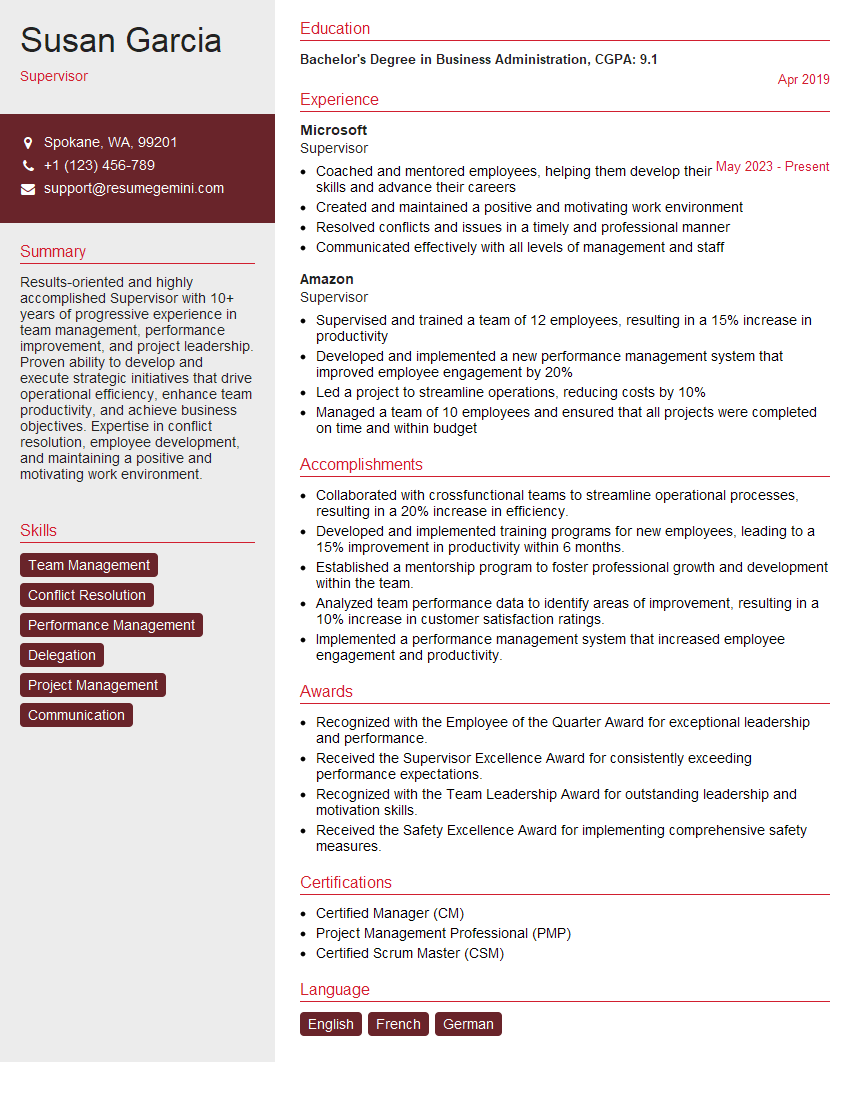
Supervisor Resume Sample
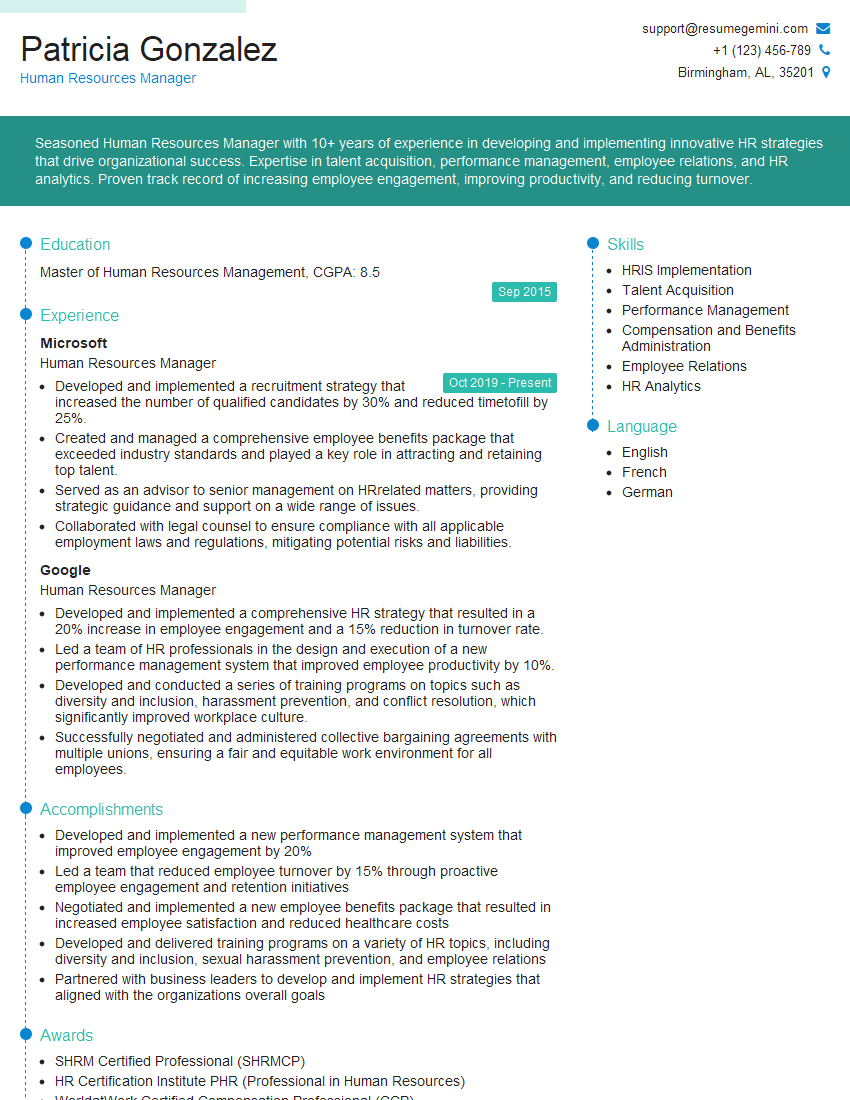
Human Resources Manager Resume Sample
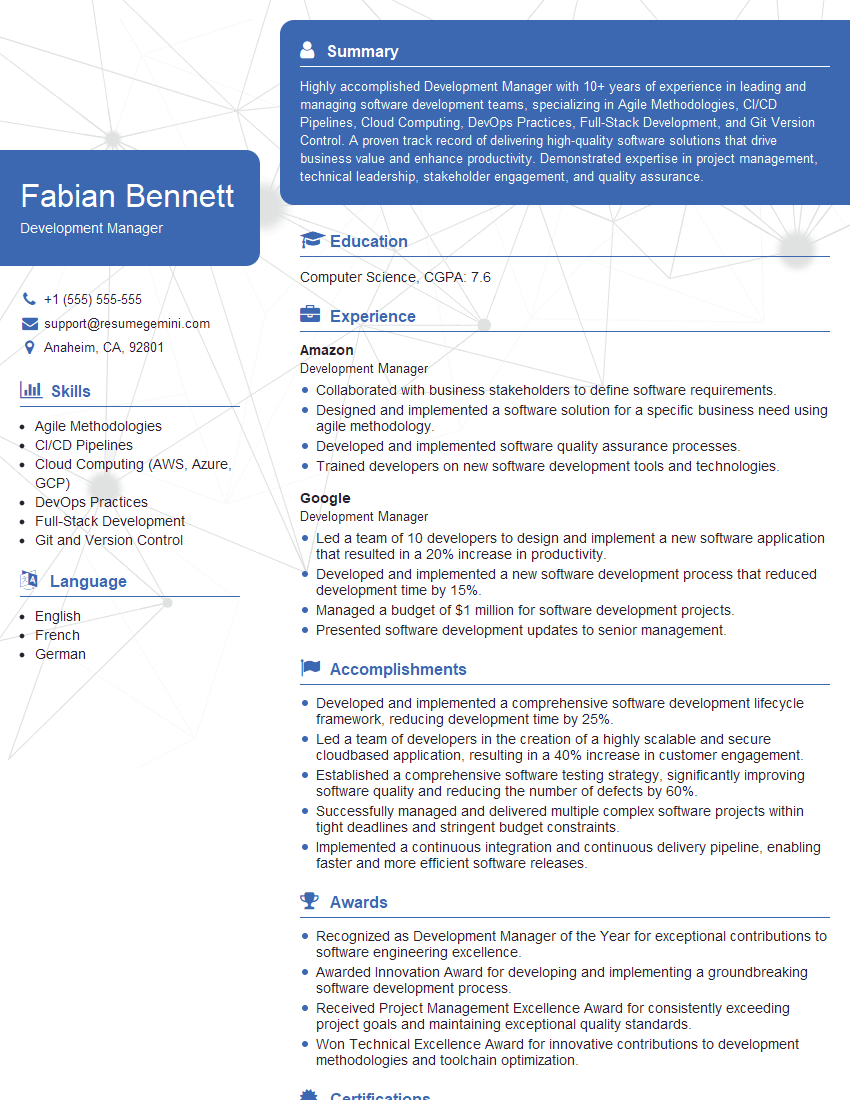
Development Manager Resume Sample
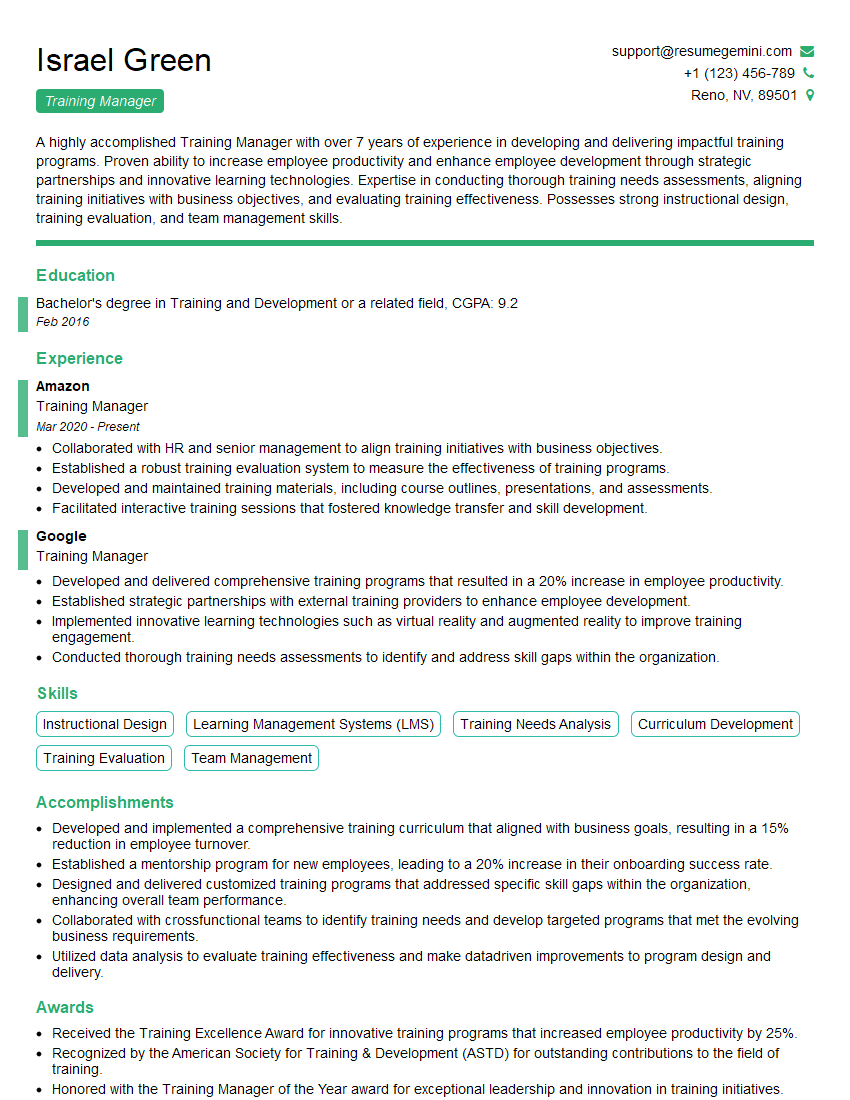
Training Manager Resume Sample

Instructor Resume Sample

Professor Resume Sample
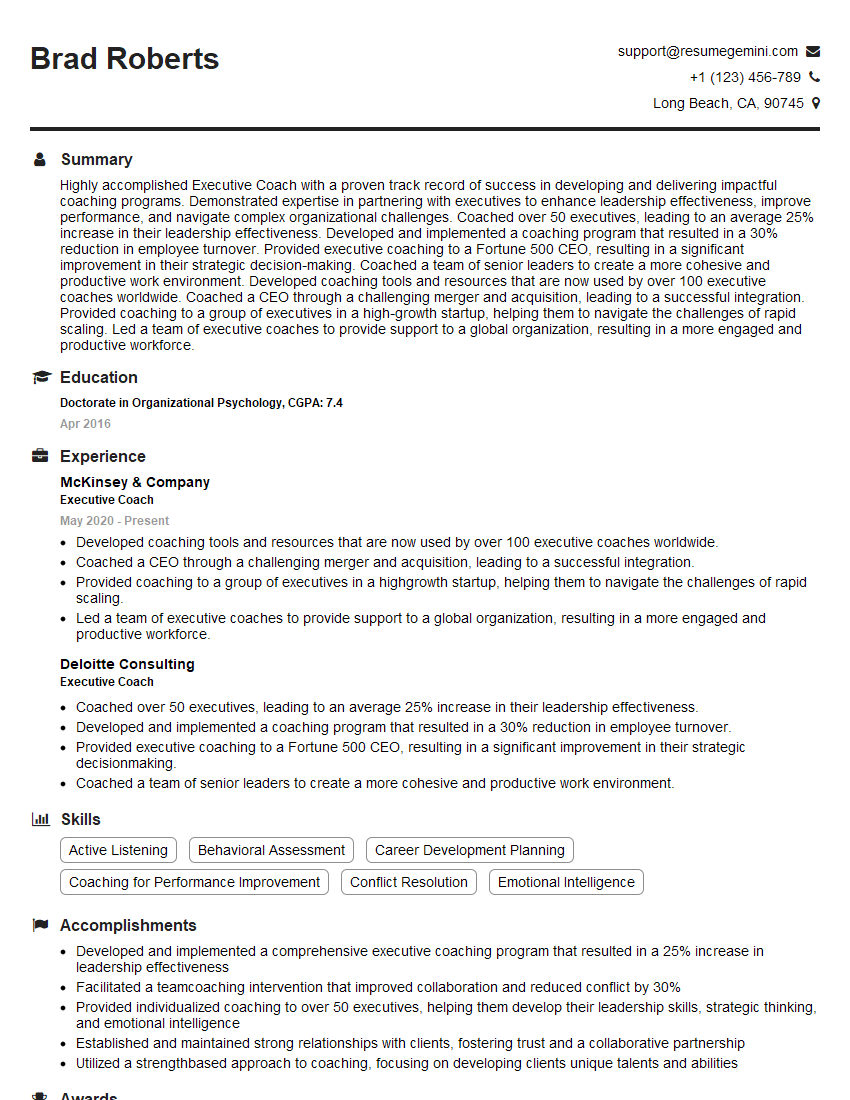
Executive Coach Resume Sample
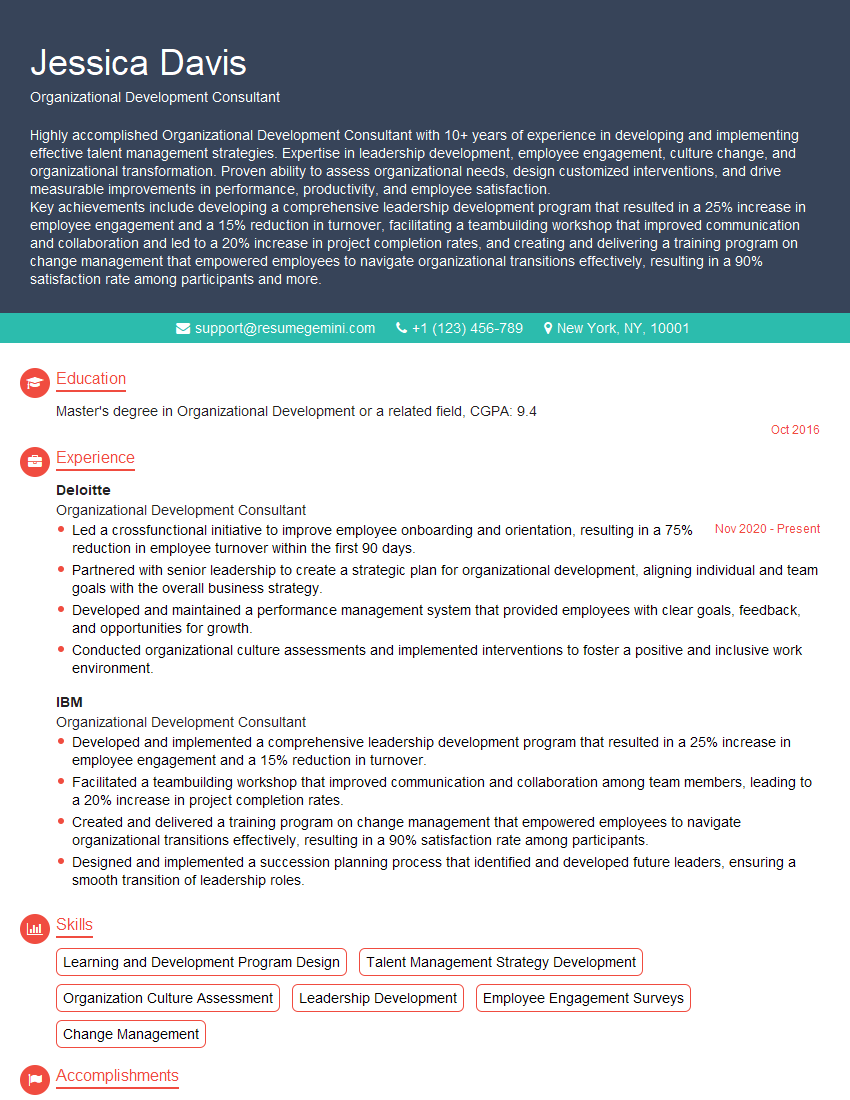
Organizational Development Consultant Resume Sample
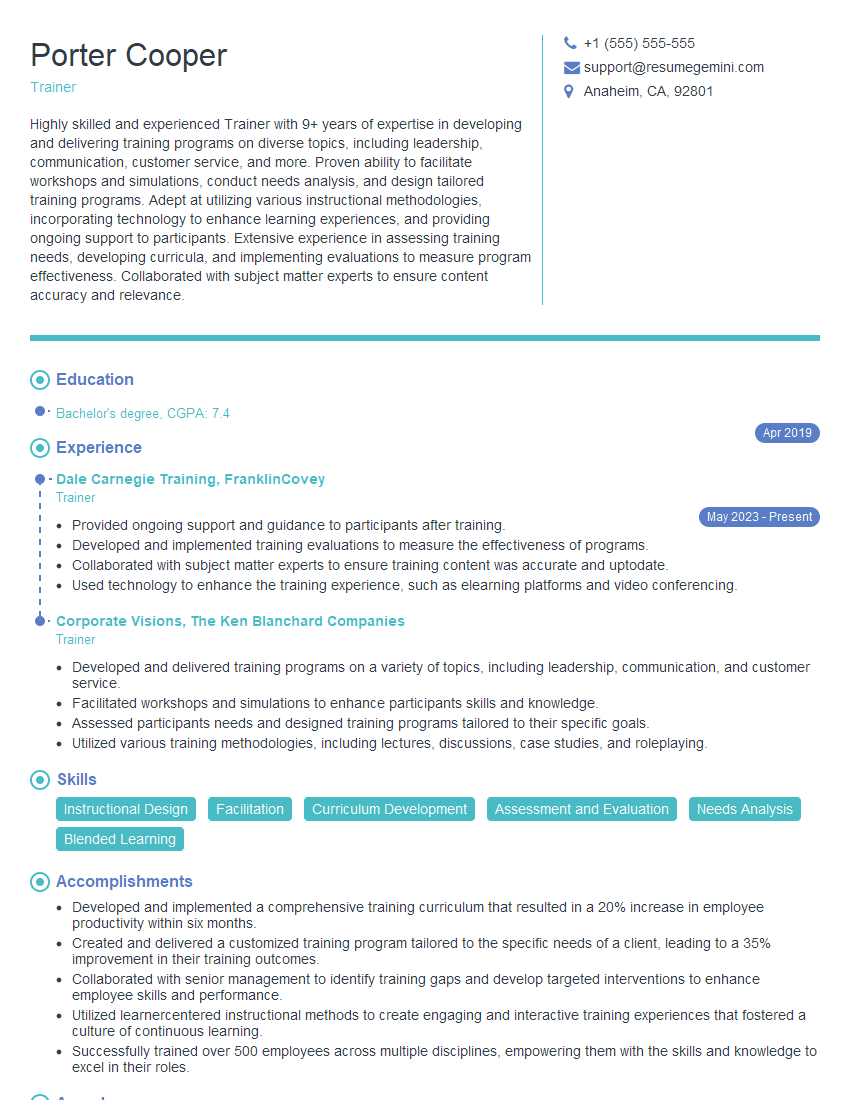
Trainer Resume Sample
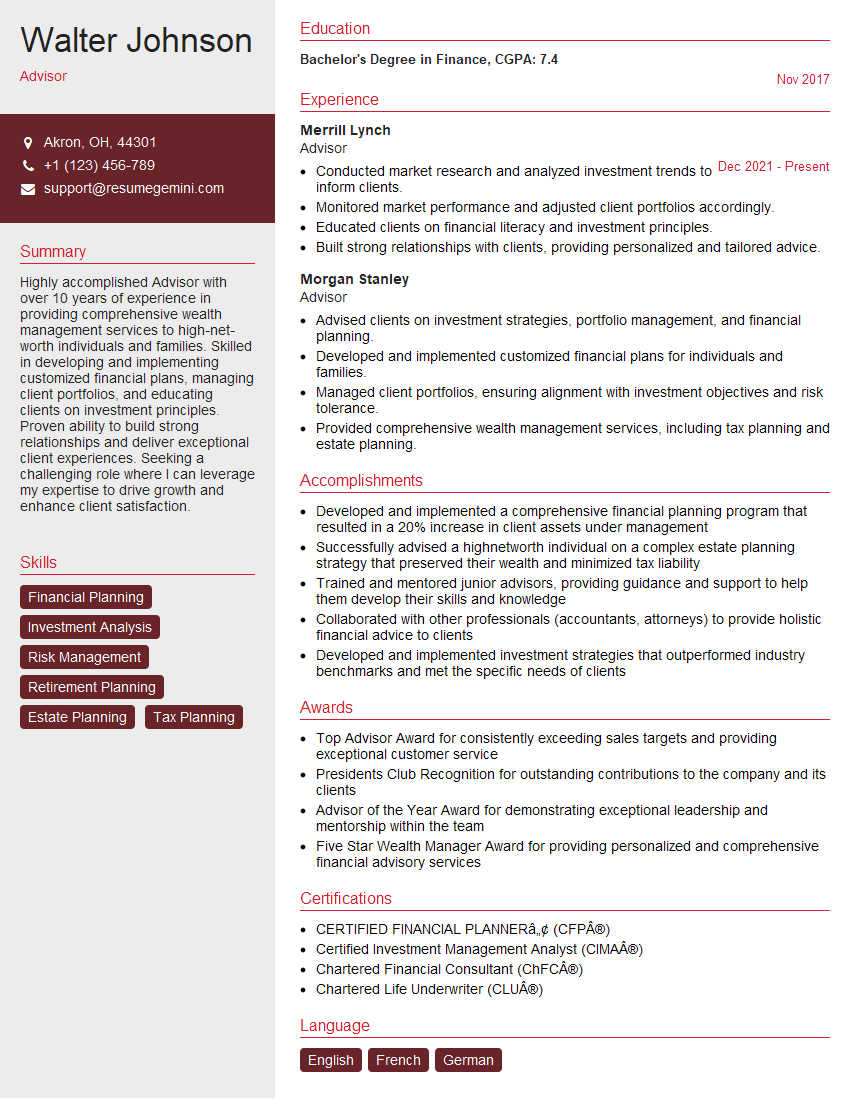
Advisor Resume Sample
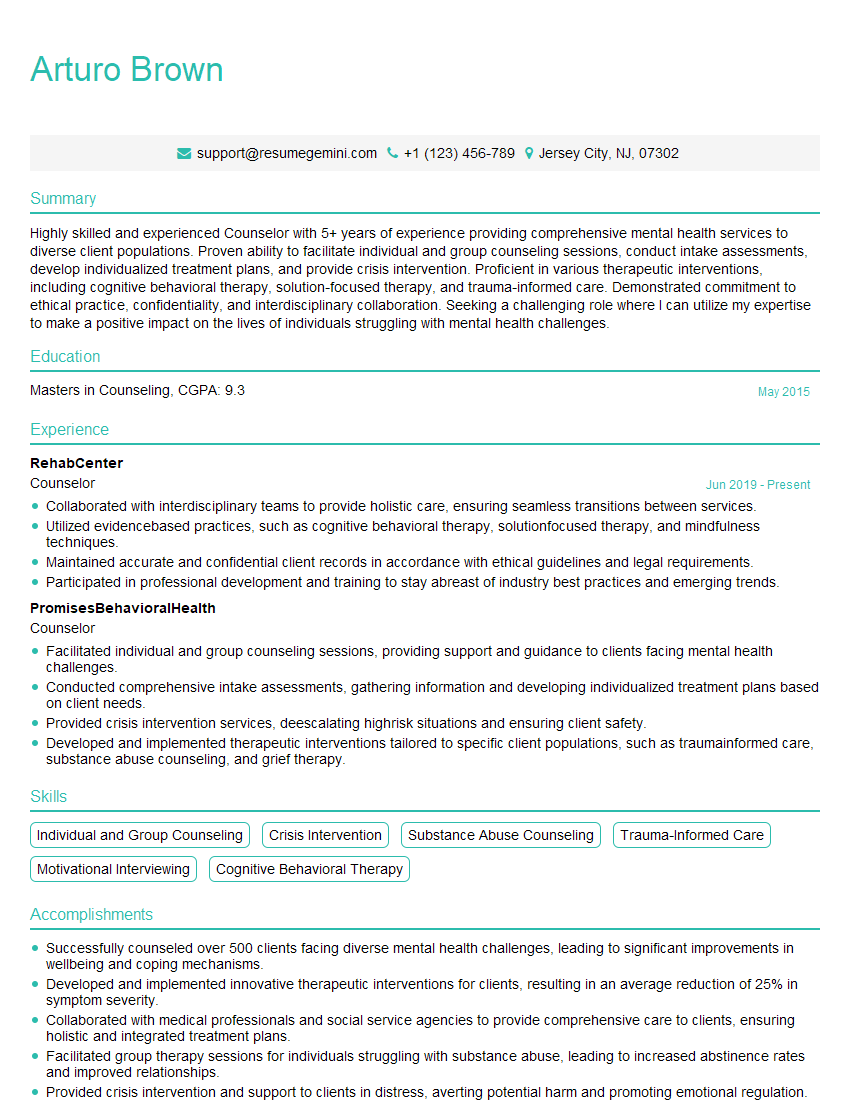
Counselor Resume Sample
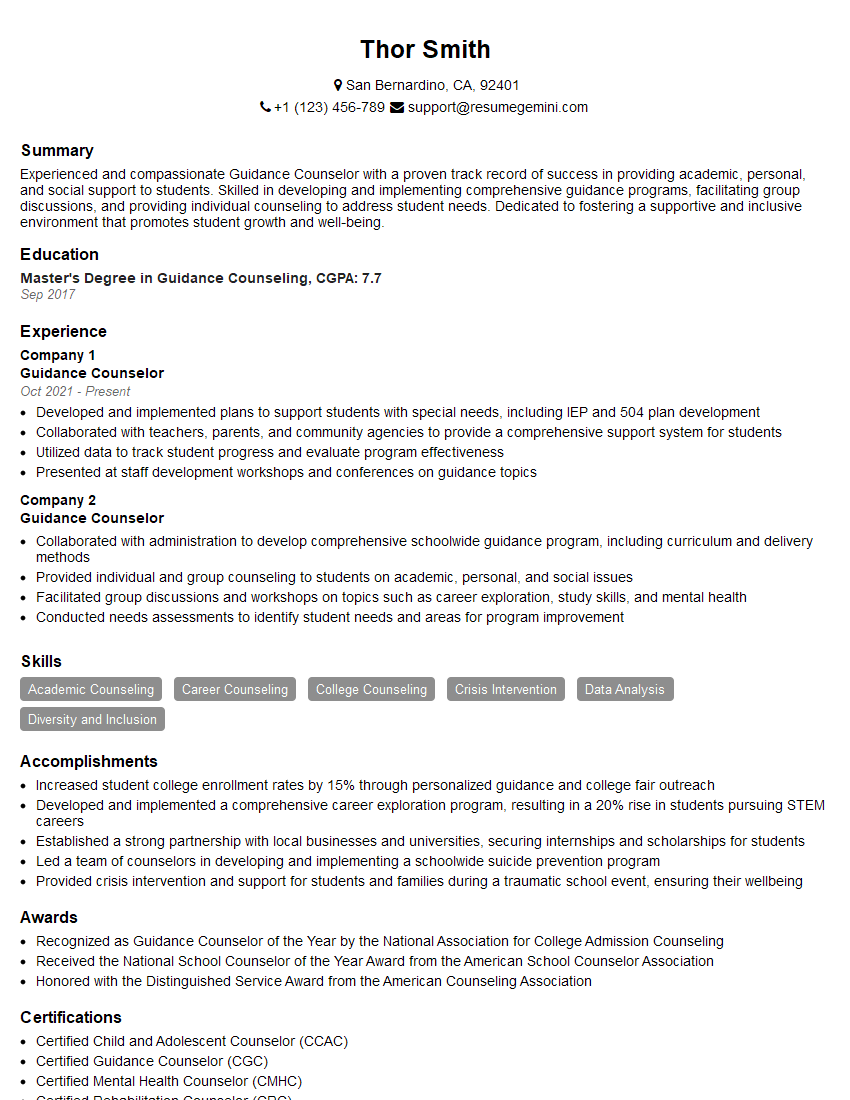
Guidance Counselor Resume Sample
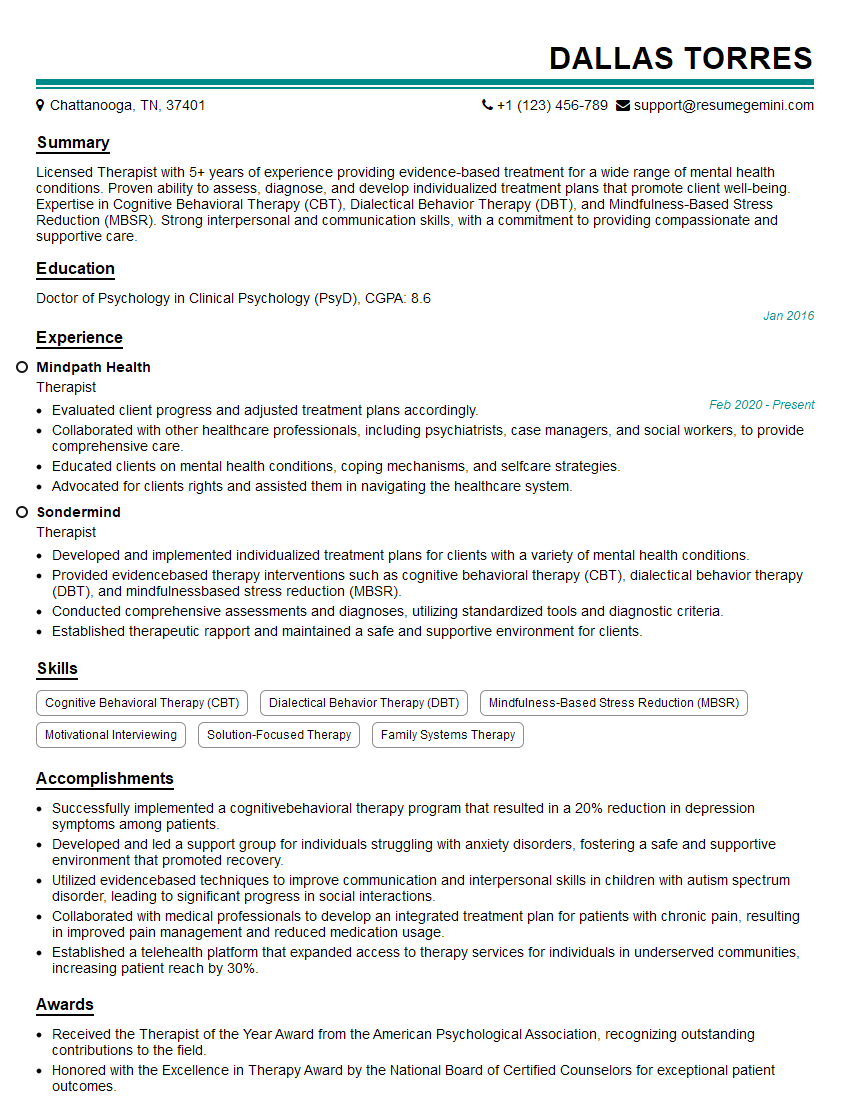
Therapist Resume Sample
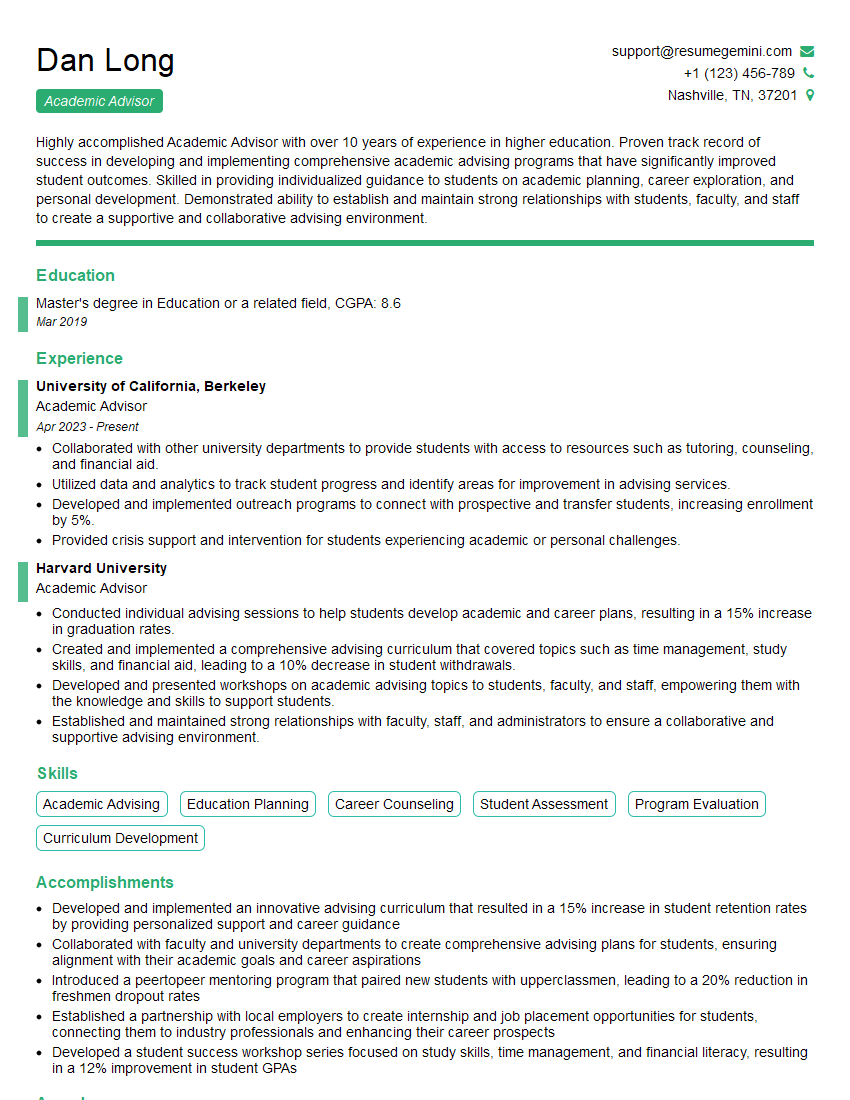
Academic Advisor Resume Sample
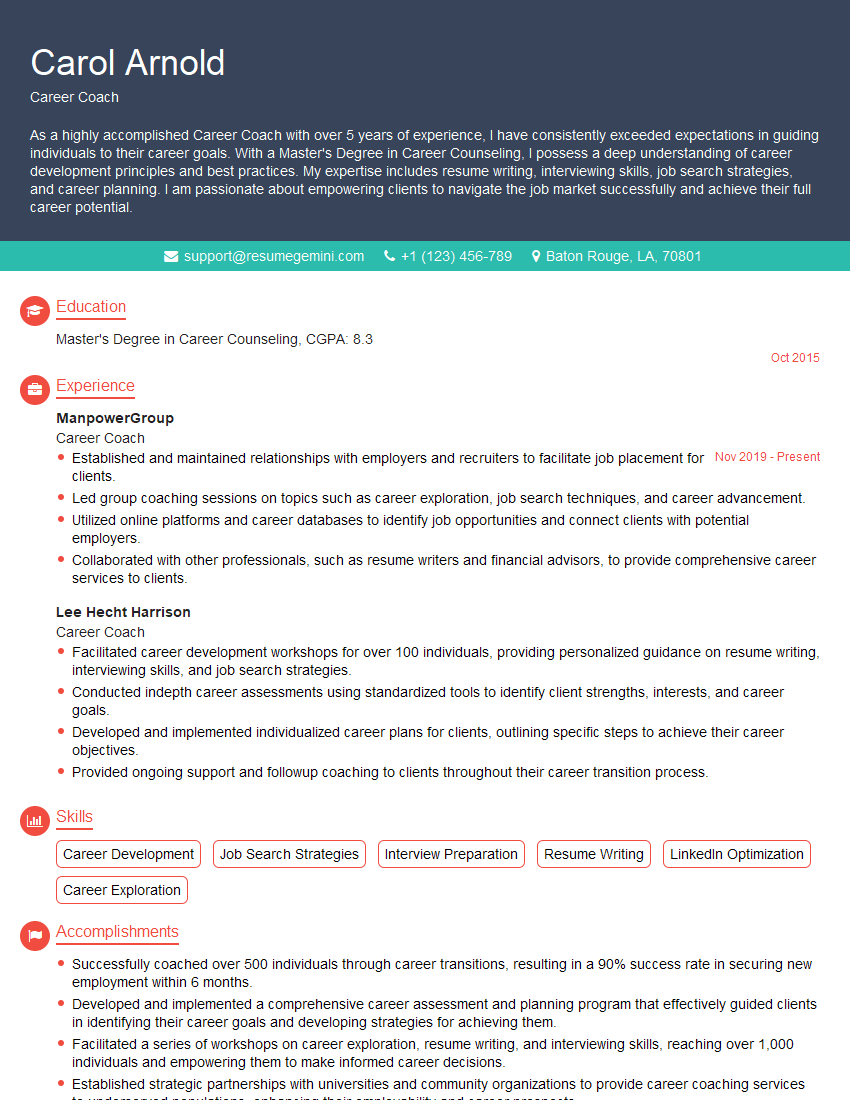
Career Coach Resume Sample
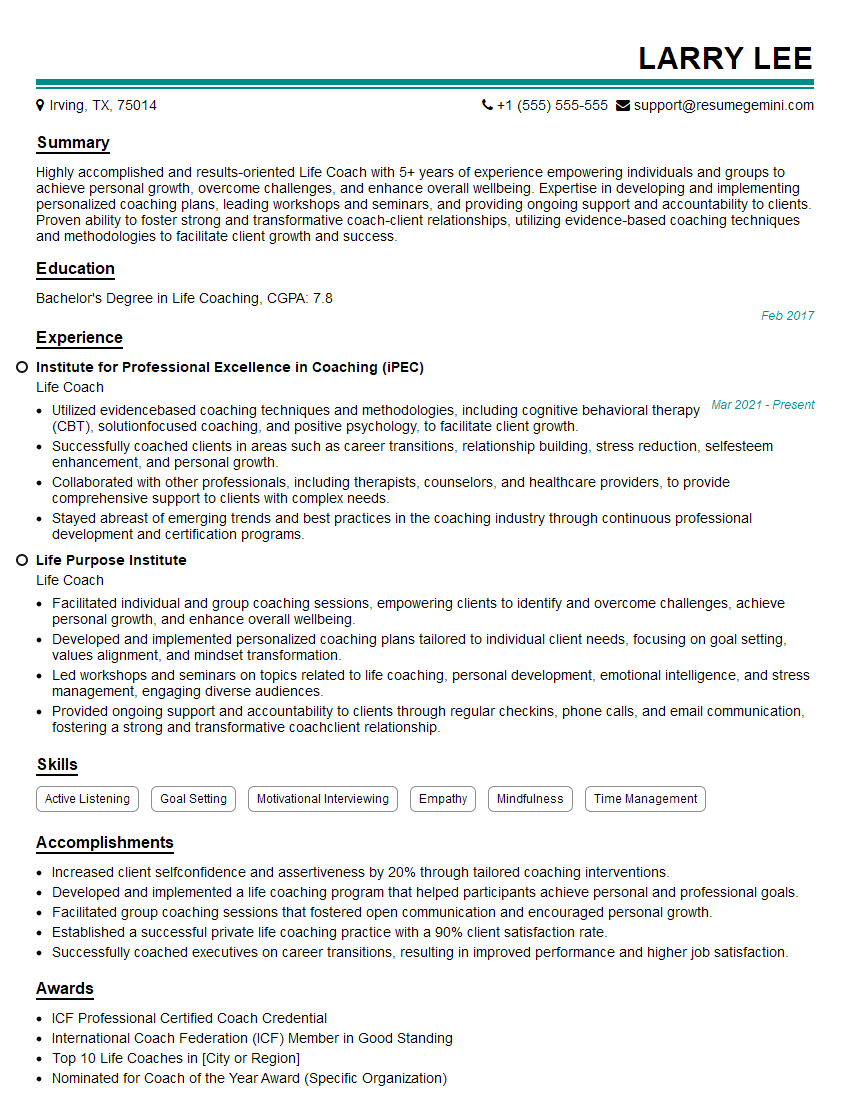
Life Coach Resume Sample
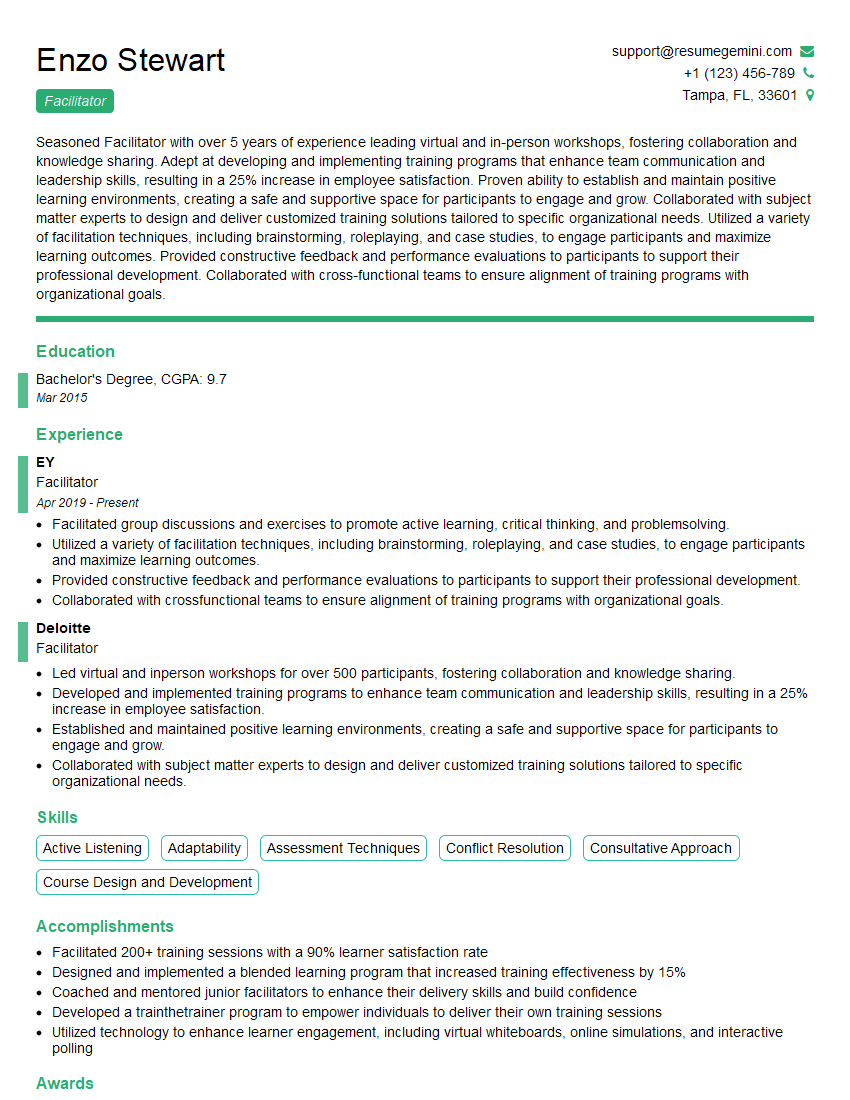
Facilitator Resume Sample
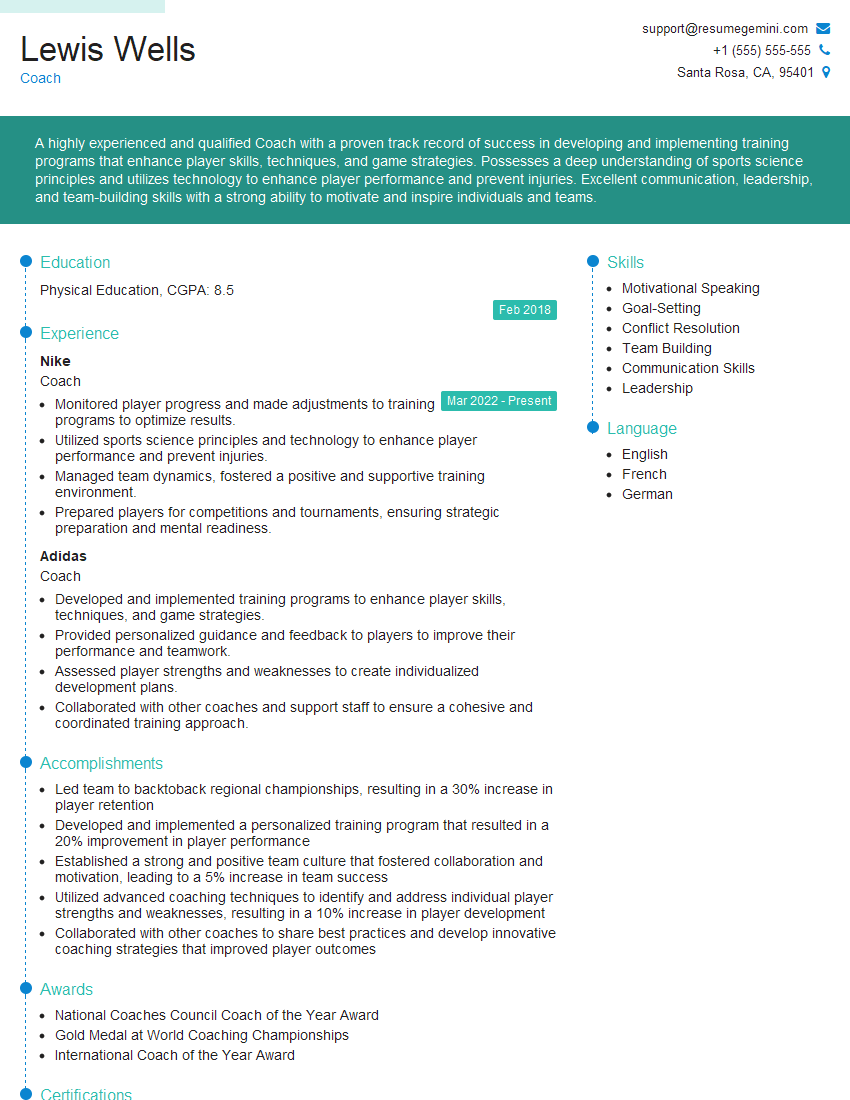
Coach Resume Sample

Tutor Resume Sample
Explore more articles
Users Rating of Our Blogs
Share Your Experience
We value your feedback! Please rate our content and share your thoughts (optional).
What Readers Say About Our Blog
Very informative content, great job.
good