Feeling uncertain about what to expect in your upcoming interview? We’ve got you covered! This blog highlights the most important Metrology and Quality Control Tools interview questions and provides actionable advice to help you stand out as the ideal candidate. Let’s pave the way for your success.
Questions Asked in Metrology and Quality Control Tools Interview
Q 1. Explain the concept of measurement uncertainty.
Measurement uncertainty quantifies the doubt associated with a measurement result. It acknowledges that no measurement is perfectly precise; there’s always some degree of error. Think of it like this: if you weigh yourself on a scale multiple times, you’ll likely get slightly different readings each time. Measurement uncertainty encompasses all these variations and expresses them as a range within which the true value is likely to lie.
It’s expressed mathematically, often as a plus-or-minus value (e.g., 10 ± 0.2 kg), indicating a 95% confidence interval. This means there’s a 95% probability the true weight falls between 9.8 kg and 10.2 kg. Factors contributing to uncertainty include instrument limitations, environmental conditions, operator skill, and the inherent variability of the measured object. Understanding and quantifying uncertainty is crucial for making informed decisions and ensuring reliable results in any measurement-based activity.
Q 2. Describe different types of calibration methods.
Calibration methods aim to ensure that measuring instruments provide accurate and traceable results. Several methods exist, differing in their complexity and the level of precision needed.
- Direct Comparison: The simplest method, where the instrument under test is compared directly against a known standard. Imagine checking your watch against an atomic clock; if it’s consistently off by five minutes, you’ve identified a calibration need.
- Substitution Calibration: A known standard is substituted for the instrument under test, and the difference is determined. This is often used for instruments that cannot be directly connected to the standard.
- Intercomparison Calibration: Multiple instruments are compared against each other to establish their relative accuracy. This is useful when a primary standard is unavailable or impractical to use.
- Functional Calibration: The instrument is tested by measuring a known quantity, and its performance is verified against the expected output. For example, a pressure gauge can be calibrated by applying a known pressure and observing the reading.
The choice of method depends on the instrument type, its intended use, and the desired level of accuracy. Rigorous procedures and documentation are crucial for all calibration methods to maintain traceability and ensure the validity of the results.
Q 3. What is a calibration certificate and its importance?
A calibration certificate is a formal document that proves an instrument has been calibrated to a known standard. It’s essentially a ‘report card’ for your measuring equipment. It contains critical information, including the instrument’s identification, calibration date, methods used, results obtained, and the measurement uncertainty associated with those results. Importantly, it usually also provides the traceability chain—demonstrating how the instrument’s calibration links back to national or international standards.
The importance of a calibration certificate cannot be overstated. It ensures the accuracy and reliability of your measurements, which directly impacts product quality, safety, and regulatory compliance. Without a valid certificate, the validity of your measurements is questionable, potentially leading to significant issues, from product recalls to legal problems.
Many industries require calibration certificates as part of their quality management systems, and their absence can be a significant impediment to regulatory compliance.
Q 4. How do you perform a gauge R&R study?
A Gauge Repeatability and Reproducibility (Gauge R&R) study assesses the variability of a measurement system, separating it into components representing repeatability (variation due to the gauge itself) and reproducibility (variation due to different operators using the gauge). The goal is to determine if the gauge is capable of consistently measuring the characteristic of interest with acceptable precision.
Here’s a step-by-step approach:
- Select Parts: Choose a representative sample of parts covering the expected range of variation.
- Select Operators: Choose operators who typically use the gauge.
- Measurements: Each operator measures each part multiple times (e.g., 2-3 times).
- Data Analysis: Statistical software is used to analyze the data, partitioning the variation into components (repeatability, reproducibility, and part variation).
- Interpret Results: Results are expressed using metrics like %Contribution to the total variation. The study determines if the gauge is appropriate for its intended use based on the acceptable level of variability.
For instance, a Gauge R&R study might reveal that a particular caliper produces significant variation between operators, indicating a need for improved operator training or a different, more robust measurement system. The study provides valuable insight into the overall quality of measurement data.
Q 5. Explain the principles of Statistical Process Control (SPC).
Statistical Process Control (SPC) is a collection of statistical methods used to monitor and control a process to ensure it operates within predetermined limits. It’s essentially a proactive approach to quality, using data to identify and address potential problems before they cause defects. Instead of just inspecting finished products, SPC monitors the process itself.
The core principle is to collect data from the process over time and plot it on control charts. These charts visually display process performance and identify when the process is stable (in control) or when it’s exhibiting unusual variation (out of control), signaling the need for investigation and corrective action. This proactive monitoring minimizes defects and improves efficiency.
Imagine a bottling plant. Instead of just checking the fill level of every bottle, they’d use SPC to continuously monitor the filling machine, adjusting it if the fill level starts drifting outside the acceptable range. This prevents producing thousands of under- or over-filled bottles.
Q 6. What are Control Charts and how are they used?
Control charts are graphical tools used in SPC to monitor the variation of a process over time. They display data points plotted against time, along with statistically determined control limits. These limits represent the expected variation of the process when it’s operating in a stable, predictable manner.
Several types of control charts exist, depending on the type of data being monitored (e.g., X-bar and R chart for continuous data, p-chart for attribute data). Points falling outside the control limits indicate potential process instability and signal the need for investigation. Patterns within the control limits, such as runs of points above or below the central line, can also suggest process issues needing attention.
By regularly monitoring control charts, one can detect shifts in process performance, identify assignable causes of variation (e.g., tool wear, material change), and implement corrective actions to maintain process stability and reduce defects. They are an essential tool for continuous improvement in any manufacturing or service setting.
Q 7. Define Six Sigma and its relevance to quality control.
Six Sigma is a data-driven methodology aimed at reducing defects and improving process capability to achieve near-perfection. It aims to reduce defects to a level of 3.4 defects per million opportunities (DPMO), representing a very high level of process control and quality.
The methodology uses various statistical and problem-solving tools, including DMAIC (Define, Measure, Analyze, Improve, Control) and DMADV (Define, Measure, Analyze, Design, Verify), to systematically improve processes. It emphasizes data analysis, process understanding, and continuous improvement. Six Sigma is relevant to quality control because it provides a structured and robust approach to identifying and eliminating sources of variation that lead to defects.
By implementing Six Sigma principles, organizations can reduce costs, improve customer satisfaction, and enhance their overall competitive advantage. It’s not just about minimizing defects; it’s about improving efficiency, predictability, and customer satisfaction.
Q 8. What are the different types of measurement errors?
Measurement errors are deviations from the true value of a measured quantity. They can be broadly classified into two categories: systematic errors and random errors.
- Systematic Errors: These errors are consistent and repeatable. They are caused by flaws in the measuring instrument, the measurement process, or the environment. Examples include instrument bias (a scale consistently reading 2 grams too high), environmental effects (temperature changes affecting the length of a metal rod), and operator bias (an individual consistently misreading a gauge).
- Random Errors: These errors are unpredictable and vary randomly around the true value. They arise from uncontrollable factors such as slight variations in the measurement process, environmental fluctuations, or limitations in the observer’s perception. Examples include minor vibrations affecting a precise weighing, slight variations in the pressure applied during a measurement, and natural fluctuations in the material being tested.
Understanding the types of errors is crucial for effective quality control because they influence the overall uncertainty of the measurement. By identifying and quantifying these errors, we can improve the accuracy and reliability of our measurements.
Q 9. Explain the difference between accuracy and precision.
Accuracy and precision are distinct but related concepts in metrology. Think of hitting a target with arrows:
- Accuracy refers to how close the measured values are to the true value. High accuracy means the arrows are clustered near the bullseye.
- Precision refers to how closely the measured values are to each other. High precision means the arrows are clustered tightly together, regardless of whether they’re near the bullseye.
It’s possible to have high precision but low accuracy (arrows clustered tightly but far from the bullseye), high accuracy but low precision (arrows scattered around the bullseye), or both high accuracy and high precision (arrows tightly clustered around the bullseye). This distinction is crucial for understanding the reliability of a measurement system; a precise but inaccurate system needs calibration, while an accurate but imprecise system may have other underlying issues that need investigation.
Q 10. How do you handle out-of-specification results?
Handling out-of-specification (OOS) results requires a systematic and documented approach to ensure data integrity and product safety. The process typically involves the following steps:
- Immediate investigation: Determine the root cause of the OOS result. This often involves reviewing the measurement process, equipment calibration, raw materials, and personnel training.
- Verification of the result: Repeat the measurement using the same or different methods and equipment. Analyze the data for any patterns or inconsistencies.
- Data evaluation: Assess the impact of the OOS result. Does it represent a single isolated incident or a broader problem?
- Corrective actions: Implement corrective actions to prevent recurrence. This might involve recalibrating equipment, revising procedures, improving training, or changing suppliers.
- Corrective action verification: Verify the effectiveness of the implemented corrective actions by repeating the measurement process.
- Documentation: Maintain meticulous records of the entire OOS investigation process, including the root cause analysis, corrective actions, and verification results. This documentation is vital for audits and continuous improvement.
In some cases, OOS results may lead to product recalls, depending on the severity and risk to consumers.
Q 11. Describe your experience with different types of measuring instruments.
My experience encompasses a wide range of measuring instruments, from basic tools to sophisticated automated systems. This includes:
- Vernier calipers and micrometers: For precise linear measurements of dimensions.
- Dial indicators and electronic comparators: For measuring deviations from a reference surface.
- Optical measuring instruments: Including microscopes and coordinate measuring machines (CMMs) for high-precision measurements.
- Electronic balances: For weighing with varying levels of accuracy.
- Temperature and pressure sensors: For monitoring environmental parameters and material properties.
- Data acquisition systems: For collecting and analyzing data from multiple sensors.
My proficiency extends to understanding the limitations and uncertainties associated with each instrument, including their calibration procedures and maintenance requirements. I’m adept at selecting the appropriate instrument for the specific task, ensuring both the accuracy and precision needed for the application.
Q 12. What are the key elements of a quality management system (QMS)?
A Quality Management System (QMS) is a collection of interconnected processes and procedures designed to ensure that an organization consistently meets the quality requirements of its products, services, and operations. Key elements include:
- Leadership commitment: Top management must be actively involved in defining and implementing the QMS.
- Customer focus: Understanding and meeting customer requirements is paramount.
- Process approach: Defining and managing processes to achieve objectives efficiently.
- Continual improvement: Regularly reviewing and improving the QMS to enhance its effectiveness.
- Data-driven decision making: Using data to monitor performance and make informed decisions.
- Employee involvement: Engaging employees at all levels in quality improvement initiatives.
- Supplier management: Selecting and managing suppliers to ensure consistent quality of inputs.
- Risk-based thinking: Identifying, assessing, and mitigating potential risks to quality.
A well-defined QMS provides a framework for achieving consistent quality, enhancing customer satisfaction, and improving operational efficiency.
Q 13. Explain your understanding of ISO 9001.
ISO 9001 is an internationally recognized standard that specifies requirements for a quality management system. It’s a framework that helps organizations demonstrate their ability to consistently provide products and services that meet customer and regulatory requirements. The standard focuses on:
- Meeting customer requirements: Understanding and fulfilling the needs of customers.
- Process management: Establishing, implementing, monitoring, and improving processes.
- Continual improvement: Regularly reviewing and enhancing the QMS to improve effectiveness.
- Risk-based thinking: Identifying, assessing, and mitigating risks to quality.
- Leadership commitment: Ensuring top management’s active involvement.
Certification to ISO 9001 demonstrates an organization’s commitment to quality, providing assurance to customers and stakeholders. It’s not just about meeting a set of requirements; it’s a journey of continual improvement and customer satisfaction.
Q 14. How do you identify and mitigate measurement system variation?
Measurement system variation (MSV) refers to the variability observed in measurements taken by the same instrument, operator, or method on the same item. Identifying and mitigating MSV is crucial for reliable measurements. Techniques include:
- Gauge R&R studies: These studies quantify the variation due to the gauge (instrument), the operator, and the interaction between the two. They determine the repeatability and reproducibility of a measurement system.
- Control charts: Monitoring measurements over time using control charts helps to identify patterns and detect shifts in the system’s performance, indicative of potential problems.
- Calibration verification: Regularly calibrating and verifying the accuracy of measuring instruments ensures that they are within acceptable tolerances.
- Operator training: Providing proper training and standardized procedures to operators minimizes measurement errors caused by individual variability.
- Environmental control: Maintaining stable environmental conditions during measurements reduces variability caused by external factors.
By addressing the sources of MSV, we can significantly improve the accuracy and reliability of our measurements, leading to better product quality and reduced waste.
Q 15. What is a Pareto chart and how is it used in quality control?
A Pareto chart, also known as the 80/20 rule chart, is a bar graph that ranks causes of problems or defects from most significant to least significant. It visually represents the Pareto principle, which suggests that roughly 80% of effects come from 20% of causes. In quality control, it helps prioritize improvement efforts by focusing on the vital few issues rather than the trivial many.
How it’s used: Imagine a manufacturing process producing faulty widgets. We collect data on the types of defects (e.g., scratches, cracks, misalignment). A Pareto chart would then visually represent the frequency of each defect type, arranged in descending order. This allows us to quickly see which defect is the most prevalent (e.g., scratches accounting for 60% of defects) and therefore the most impactful to address first. Addressing the top 20% of causes often resolves 80% of the problems, maximizing efficiency in quality improvement.
Example: In a customer service context, a Pareto chart could show that 80% of customer complaints stem from just two issues: long wait times and unclear billing statements. Focusing on improvements in those two areas would drastically improve overall customer satisfaction.
Career Expert Tips:
- Ace those interviews! Prepare effectively by reviewing the Top 50 Most Common Interview Questions on ResumeGemini.
- Navigate your job search with confidence! Explore a wide range of Career Tips on ResumeGemini. Learn about common challenges and recommendations to overcome them.
- Craft the perfect resume! Master the Art of Resume Writing with ResumeGemini’s guide. Showcase your unique qualifications and achievements effectively.
- Don’t miss out on holiday savings! Build your dream resume with ResumeGemini’s ATS optimized templates.
Q 16. Explain the concept of root cause analysis.
Root cause analysis (RCA) is a systematic process used to identify the underlying causes of problems or defects, going beyond simply treating the symptoms. It aims to prevent recurrence by addressing the root issue rather than just fixing the immediate problem.
The process typically involves:
- Defining the problem: Clearly stating the issue that needs investigation.
- Collecting data: Gathering relevant information through interviews, data analysis, process flow diagrams etc.
- Identifying potential causes: Brainstorming possible causes using techniques like the ‘5 Whys’ (repeatedly asking ‘why’ to drill down to the root cause).
- Verifying the root cause: Analyzing data to confirm the identified root causes are indeed the main contributors.
- Developing corrective actions: Implementing solutions to eliminate the root cause and prevent future occurrences.
- Monitoring effectiveness: Tracking the impact of corrective actions to ensure the problem is resolved.
Example: Imagine a machine constantly breaking down. A superficial solution might be to keep repairing it. However, RCA might reveal that the root cause is improper lubrication, leading to excessive wear and tear. Addressing the lubrication issue is a far more effective and sustainable solution.
Q 17. Describe your experience with different quality control tools (e.g., FMEA, 5S).
I have extensive experience with various quality control tools. FMEA (Failure Mode and Effects Analysis) is a proactive method used to identify potential failure modes in a system or process, assess their severity, and implement preventive actions. I’ve utilized FMEA in numerous projects, from designing new products to analyzing existing processes. The process involves identifying potential failure modes, assessing their severity, occurrence, and detection, and calculating a Risk Priority Number (RPN) to prioritize actions.
5S is a workplace organization method focusing on maintaining a clean, organized, and efficient workspace. The 5S’s are Sort, Set in Order, Shine, Standardize, and Sustain. I have implemented 5S in various settings to improve efficiency and reduce errors. It’s surprisingly effective in improving overall workplace organization and reducing waste. In one instance, implementing 5S in a warehouse led to a 20% reduction in search time for materials.
Other tools I’ve used include control charts (X-bar and R charts, p-charts), scatter diagrams, histograms, and fishbone diagrams (Ishikawa diagrams). My expertise lies in selecting the appropriate tool depending on the specific needs of the project.
Q 18. How do you ensure traceability in your measurements?
Traceability in measurements ensures that the origin and history of a measurement can be clearly tracked. This is crucial for ensuring accuracy, accountability, and compliance with standards. It involves documenting the entire chain of custody from the initial calibration of instruments to the final measurement report.
Methods to ensure traceability:
- Calibration Certificates: All measuring instruments must be regularly calibrated against traceable standards. These calibration certificates form the cornerstone of traceability.
- Unique Identification: Each instrument and measurement should have a unique identifier to track its use and history.
- Detailed Records: Maintaining comprehensive records of calibrations, measurements, instrument maintenance, and operator information.
- Standard Operating Procedures (SOPs): Implementing SOPs for measurement processes guarantees consistency and minimizes errors.
- Software and Databases: Using software to manage instrument calibrations, measurements, and data logs improves traceability efficiency.
Example: In a laboratory setting, a balance used to weigh samples must be regularly calibrated against a national standard. The calibration certificate provides a link to the national standard, ensuring that the measurements made on the balance are traceable.
Q 19. What is the difference between preventative and corrective actions?
Preventative actions aim to prevent problems before they occur. They are proactive measures implemented to reduce the likelihood of defects or errors. Corrective actions, on the other hand, are implemented after a problem has occurred to fix the immediate issue. They are reactive measures.
Example:
- Preventative: Regularly maintaining equipment to prevent breakdowns; implementing training programs to improve employee skills; conducting regular audits to identify potential risks.
- Corrective: Repairing a faulty machine after it breaks down; implementing a rework process for defective products; addressing customer complaints after they have been received.
The ideal approach emphasizes prevention over correction. Focusing on preventative actions is significantly more cost-effective and results in higher quality output.
Q 20. How do you document and report quality control findings?
Documenting and reporting quality control findings is critical for continuous improvement and accountability. The format and detail of documentation will vary depending on the industry and specific requirements.
Typical documentation methods include:
- Measurement reports: Detailed reports of measurements taken, including instrument identification, calibration dates, and measurement results.
- Non-conformance reports (NCRs): Reports documenting any deviations from specifications or standards.
- Audit reports: Reports summarizing findings from regular audits of processes and systems.
- Corrective and preventative action reports (CAPAs): Documenting the actions taken to address identified problems and prevent recurrence.
- Data analysis reports: Presenting statistical analysis of data to identify trends and patterns.
Reporting methods: Reports can be generated in various formats such as spreadsheets, databases, or specialized quality management software. Regular reporting to relevant stakeholders ensures transparency and allows for prompt action to be taken.
Example: In a pharmaceutical company, meticulous documentation is critical for regulatory compliance and patient safety. All measurements, deviations, and corrective actions are recorded and audited.
Q 21. Describe your experience with data analysis techniques in quality control.
Data analysis is fundamental to effective quality control. I am proficient in various techniques, including descriptive statistics (mean, median, standard deviation), hypothesis testing, regression analysis, and control charting. I use statistical software like Minitab and R for advanced analyses.
Specific applications:
- Process Capability Analysis: Assessing the ability of a process to meet specifications, often using Cp and Cpk indices.
- Control Charts: Monitoring process stability and identifying shifts or trends in data. I’m comfortable using various chart types like X-bar and R charts, p-charts, and c-charts, selecting the appropriate one depending on the data type.
- Regression Analysis: Identifying relationships between variables to understand how process parameters affect quality characteristics.
- Design of Experiments (DOE): Planning and conducting experiments to optimize processes and minimize variability. I’ve used both full factorial and fractional factorial designs.
Example: I used regression analysis to determine the relationship between temperature and the yield of a chemical reaction. This analysis allowed us to identify the optimal temperature setting to maximize yield and minimize waste.
Q 22. How familiar are you with different sampling techniques?
Sampling techniques are crucial in metrology and quality control because inspecting every item is often impractical or impossible. The choice of technique depends heavily on the context – the size of the population, the acceptable level of risk, and the cost of sampling.
- Simple Random Sampling: Every item has an equal chance of being selected. Think of drawing names from a hat. This is easy to understand but might not be representative if the population isn’t homogenous.
- Stratified Sampling: The population is divided into subgroups (strata), and a random sample is taken from each stratum. For example, if inspecting bolts from different machines, you’d sample from each machine’s output to ensure representation from all sources of variation.
- Systematic Sampling: Items are selected at regular intervals. For example, every tenth item on a production line. This is efficient but can be problematic if there’s a pattern in the production process that aligns with the sampling interval.
- Cluster Sampling: The population is divided into clusters, and a random sample of clusters is selected. All items within the selected clusters are then inspected. This is useful for geographically dispersed populations but might lead to less precise results than other methods.
- Acceptance Sampling: This involves inspecting a sample to decide whether to accept or reject a whole batch of items. This relies heavily on statistical tables and calculations to determine acceptable defect rates.
Choosing the right sampling method is paramount to obtaining reliable and cost-effective results. Misapplying a technique can lead to inaccurate conclusions and potentially costly mistakes.
Q 23. Explain your understanding of the concept of tolerance.
Tolerance defines the permissible variation in a dimension or characteristic of a product. It’s the allowable range of values around a target or nominal value. Think of it as the acceptable ‘wiggle room’. It’s defined by upper and lower limits.
For example, if a bolt is specified to have a diameter of 10mm ± 0.1mm, the tolerance is 0.2mm (from 9.9mm to 10.1mm). Any bolt outside this range is considered non-conforming.
Tolerance is crucial for ensuring interchangeability and functionality of parts. Too tight tolerances increase manufacturing costs and complexity, while too loose tolerances can compromise performance and reliability.
Q 24. How do you validate a measurement method?
Measurement method validation ensures that the method used to obtain measurements is accurate, precise, and reliable. It’s a systematic process involving several steps:
- Define the Measurement Objectives: Clearly specify what you’re measuring and why.
- Traceability: Ensure the measuring instrument is calibrated against traceable standards to national or international standards.
- Linearity: Check if the instrument’s response is linear across the measurement range.
- Repeatability and Reproducibility: Assess how consistent the measurements are when repeated by the same operator (repeatability) and different operators (reproducibility).
- Accuracy: Determine how close the measurements are to the true value using reference standards or certified materials.
- Uncertainty Analysis: Quantify the uncertainty associated with the measurement results. This takes into account all sources of error.
- Stability: Evaluate the stability of the method over time.
A properly validated method gives you confidence that your measurements are trustworthy and can be used for decision-making. Failure to validate a method can lead to costly errors and flawed conclusions.
Q 25. What are the key performance indicators (KPIs) you use in quality control?
Key Performance Indicators (KPIs) in quality control are metrics that track the effectiveness of quality management systems. The specific KPIs used vary depending on the industry and context, but some common examples include:
- Defect Rate: The number of defective items compared to the total number of items produced.
- First Pass Yield: The percentage of items that pass inspection on the first try.
- Customer Complaints: The number of customer complaints related to product quality.
- Process Capability Indices (Cpk, Ppk): These indices measure how well a process is capable of meeting specified tolerances. A Cpk of 1.33 or higher usually signifies good process capability.
- Mean Time Between Failures (MTBF): This is particularly relevant in manufacturing processes involving complex equipment.
- On-Time Delivery: Although not purely a quality metric, it reflects the efficiency of the entire production chain.
Tracking these KPIs allows you to identify areas for improvement and monitor the effectiveness of corrective actions. Data visualization using control charts is crucial for interpreting KPI trends and taking proactive steps.
Q 26. Describe a situation where you had to solve a quality control problem.
In a previous role, we experienced a sudden increase in customer complaints regarding the dimensional accuracy of a key component. Initial investigations pointed towards a potential problem with the CNC machine used in its production.
My approach was systematic:
- Data Collection: I gathered data on defective parts, including the exact deviations from specifications.
- Root Cause Analysis: Using statistical process control (SPC) tools like control charts and Pareto analysis, we identified that tool wear on the CNC machine was the most significant contributing factor.
- Corrective Actions: We implemented a more rigorous tool maintenance and replacement schedule and refined the machining process parameters.
- Verification: Post-implementation, we monitored the defect rate using control charts to ensure the corrective actions were effective.
This systematic approach effectively resolved the issue, reducing the defect rate significantly and improving customer satisfaction. This situation highlighted the importance of using data-driven decision-making and the value of continuous monitoring and improvement in quality control.
Q 27. How do you stay current with the latest metrology and quality control techniques?
Staying current in metrology and quality control requires continuous learning and engagement with the field. My strategies include:
- Professional Organizations: Active membership in organizations such as ASQ (American Society for Quality) and ISO provides access to publications, conferences, and networking opportunities.
- Conferences and Workshops: Attending industry conferences and workshops keeps me abreast of the latest advancements and best practices.
- Industry Publications: Regularly reading journals, magazines, and online resources focused on metrology and quality control provides insights into emerging trends and technologies.
- Online Courses and Certifications: Continuous professional development through online courses and certifications allows me to deepen my knowledge in specific areas.
- Networking: Engaging with colleagues and experts in the field through conferences, online forums, and professional networks helps to share best practices and insights.
Continuous learning is essential in this rapidly evolving field to remain competitive and deliver cutting-edge solutions.
Q 28. What are your salary expectations?
My salary expectations are commensurate with my experience, skills, and the responsibilities of the role. I’m open to discussing a competitive compensation package that reflects my value to your organization. I’m more interested in a position that offers significant growth opportunities and a challenging work environment than in a specific salary figure. Let’s discuss this further once we’ve explored the role in more detail.
Key Topics to Learn for Metrology and Quality Control Tools Interview
- Measurement Uncertainty and Error Analysis: Understanding the sources of error in measurement systems, and how to quantify and minimize them. This includes exploring concepts like precision, accuracy, and bias.
- Calibration and Traceability: Learn the principles of instrument calibration, the importance of traceability to national standards, and how to interpret calibration certificates. Practical application includes understanding the calibration process for specific measuring devices.
- Statistical Process Control (SPC): Mastering the use of control charts (e.g., X-bar and R charts, p-charts, c-charts) to monitor and improve processes. Understand how to interpret control chart patterns and identify assignable causes of variation.
- Gauge R&R Studies: Understand the purpose and execution of Gauge Repeatability and Reproducibility studies to assess the variability of measurement systems. Know how to interpret the results and determine the acceptability of measurement systems.
- Dimensional Metrology: Explore various dimensional measurement techniques, such as coordinate measuring machines (CMMs), optical comparators, and laser scanners. Understand the applications and limitations of each technique.
- Quality Control Tools and Techniques: Familiarize yourself with various quality control tools like Pareto charts, fishbone diagrams (Ishikawa diagrams), and flowcharts. Understand how to apply these tools to problem-solving in manufacturing and other industries.
- Root Cause Analysis: Develop your skills in identifying and resolving the root causes of quality issues using methods like 5 Whys, fault tree analysis, and the 8D process.
- ISO 9001 and other relevant standards: Gain a foundational understanding of quality management systems and relevant international standards.
Next Steps
Mastering Metrology and Quality Control Tools is crucial for career advancement in various manufacturing, engineering, and quality assurance roles. A strong understanding of these concepts demonstrates your capability to ensure product quality, optimize processes, and contribute to continuous improvement initiatives. To stand out, create an ATS-friendly resume that effectively highlights your skills and experience. ResumeGemini is a trusted resource to help you build a professional and impactful resume. Examples of resumes tailored to Metrology and Quality Control Tools are available to further guide your resume development. Take the initiative to showcase your expertise and unlock your career potential!

Quality Assurance Manager Resume Sample
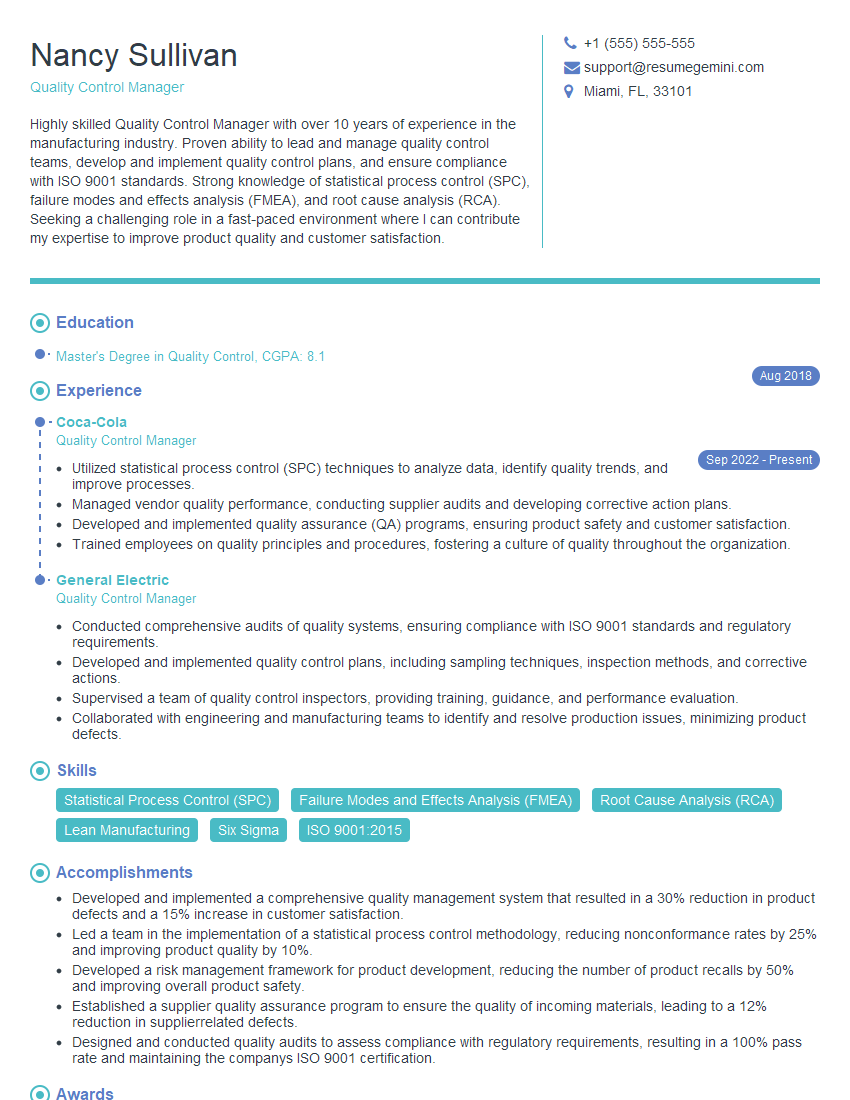
Quality Control Manager Resume Sample
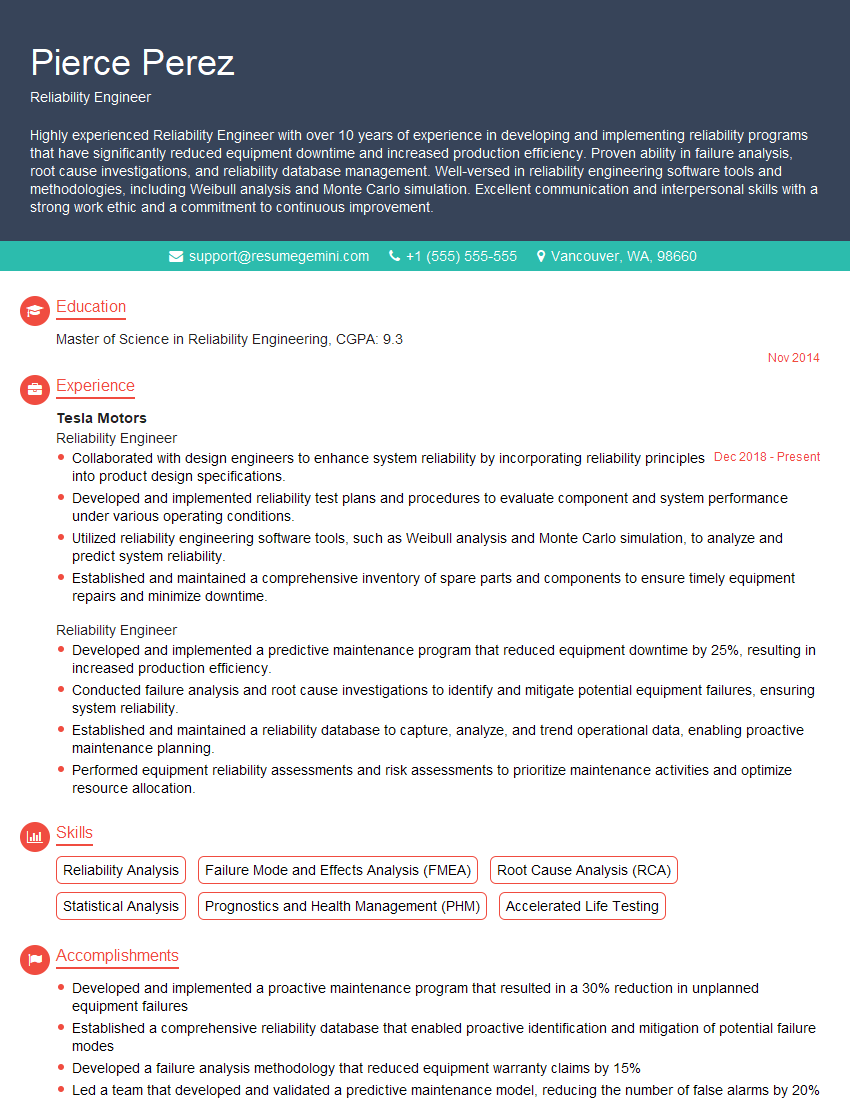
Reliability Engineer Resume Sample
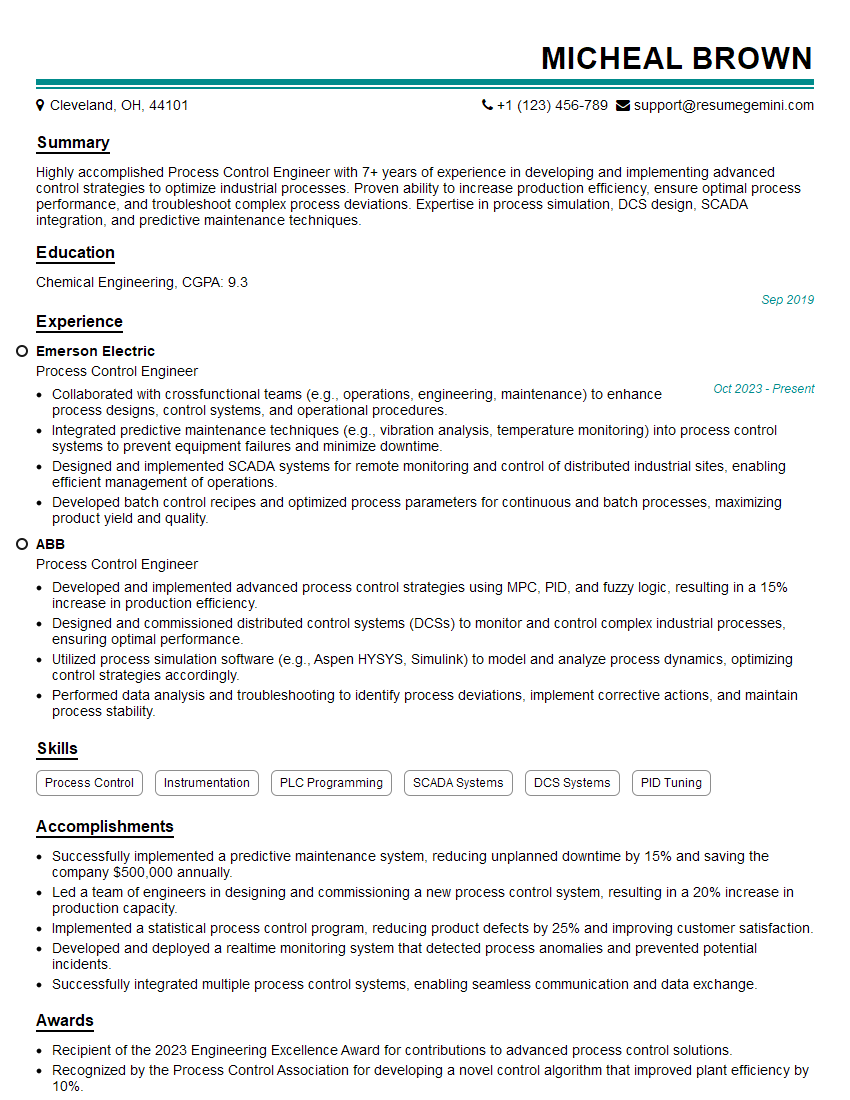
Process Control Engineer Resume Sample
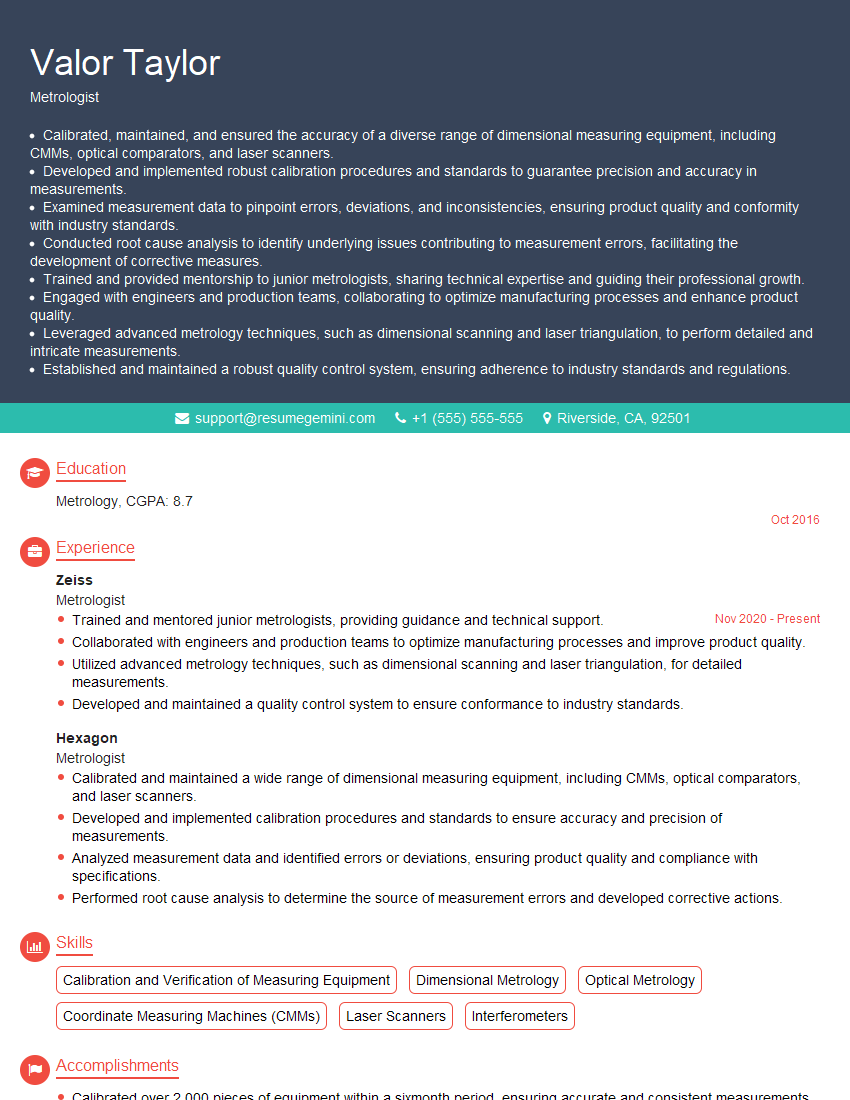
Metrologist Resume Sample
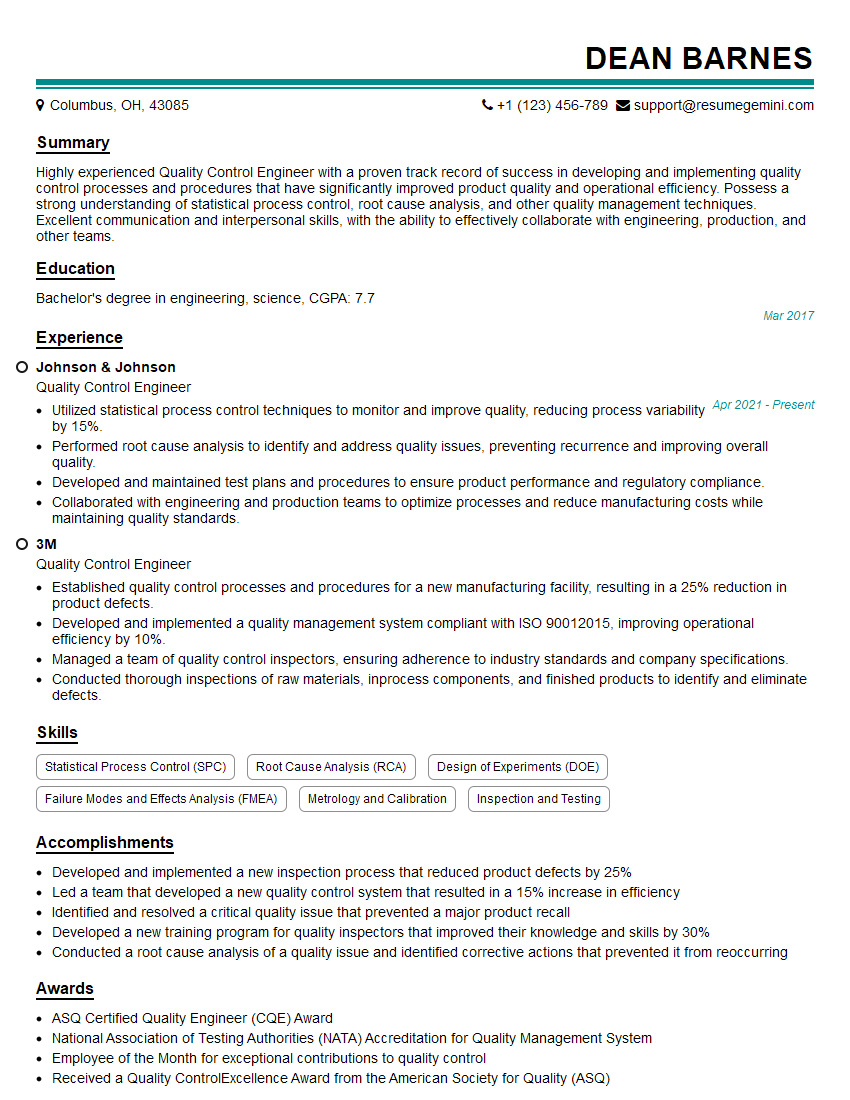
Quality Control Engineer Resume Sample
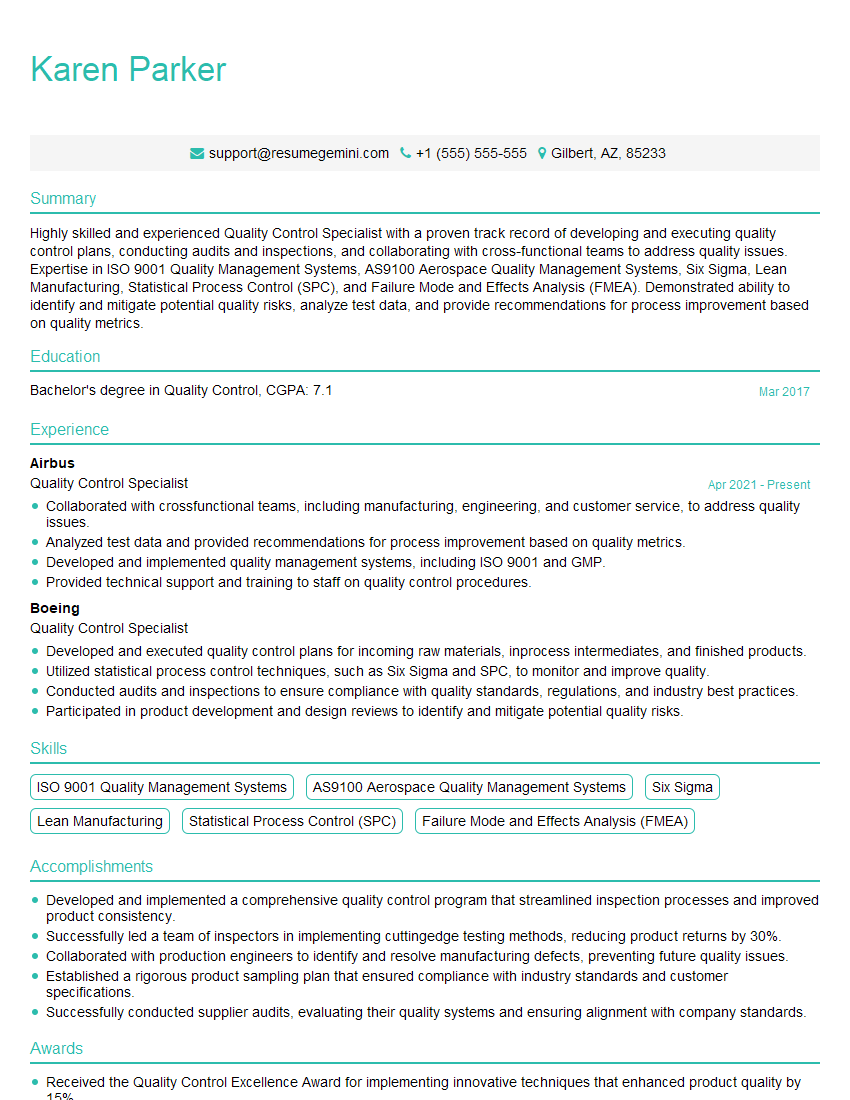
Quality Control Specialist Resume Sample

Quality Assurance Engineer Resume Sample
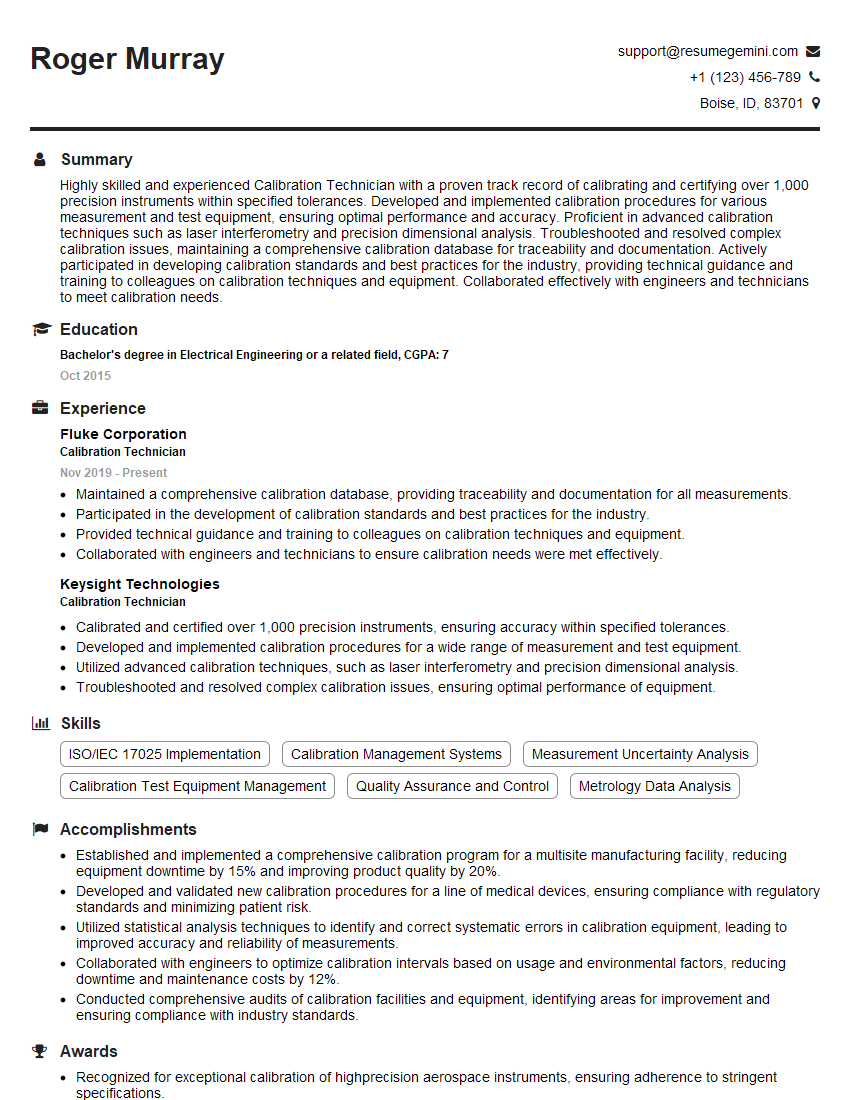
Calibration Technician Resume Sample

Metrology Technician Resume Sample

Quality Control Inspector Resume Sample
Explore more articles
Users Rating of Our Blogs
Share Your Experience
We value your feedback! Please rate our content and share your thoughts (optional).
What Readers Say About Our Blog
Very informative content, great job.
good