Are you ready to stand out in your next interview? Understanding and preparing for Microbial Testing interview questions is a game-changer. In this blog, we’ve compiled key questions and expert advice to help you showcase your skills with confidence and precision. Let’s get started on your journey to acing the interview.
Questions Asked in Microbial Testing Interview
Q 1. Describe the different methods used for microbial identification.
Microbial identification relies on a combination of phenotypic and genotypic methods. Phenotypic methods analyze observable characteristics, while genotypic methods analyze the organism’s genetic material.
Phenotypic methods: These include traditional techniques like Gram staining (differentiating bacteria based on cell wall composition), microscopic examination (observing morphology and arrangement), biochemical tests (assessing metabolic capabilities using various substrates), and growth characteristic analysis (observing colony morphology, growth rate, and oxygen requirements). For example, a positive oxidase test indicates the presence of cytochrome c oxidase, a crucial enzyme in the electron transport chain of certain bacteria, helping identify Pseudomonas species.
Genotypic methods: These are more advanced and provide definitive identification. They include:
16S rRNA gene sequencing: This is a gold standard for bacterial identification, targeting a highly conserved gene that varies enough between species to allow for differentiation. The sequence is compared to databases to pinpoint the species.
DNA-DNA hybridization: Measures the degree of similarity between the DNA of an unknown organism and a known one.
Polymerase Chain Reaction (PCR): Amplifies specific DNA sequences for detection and identification of microbes, often coupled with sequencing for precise identification. Real-time PCR provides quantitative results.
Matrix-Assisted Laser Desorption/Ionization Time-of-Flight Mass Spectrometry (MALDI-TOF MS): A rapid and accurate method that analyzes the protein profile of a microorganism, providing a species identification within minutes.
Choosing the right method depends on the resources available, the required level of detail, and the urgency of identification. For example, a quick preliminary identification might use Gram staining and biochemical tests, while confirming the identification would involve 16S rRNA sequencing.
Q 2. Explain the principle of sterility testing.
Sterility testing aims to demonstrate the absence of viable microorganisms in a product or environment. It’s a critical quality control step, particularly in pharmaceutical and medical device manufacturing. The principle is based on inoculating a sample of the product into a growth medium under conditions that allow for the growth of any viable microorganisms present. If no growth is observed after a specific incubation period, the product is considered sterile.
Different methods are employed depending on the product type and its intended use. Membrane filtration is common for products that cannot be directly inoculated into a broth (e.g., parenteral solutions) due to potential interference with growth. Direct inoculation is used for products that can be easily added to a broth. The incubation period varies depending on the product and the types of microorganisms expected.
It’s important to note that sterility testing is not a 100% guarantee of sterility; it only provides a high level of assurance. A negative result indicates the absence of detectable microorganisms at the level of sensitivity of the test, whereas a positive result confirms contamination.
Q 3. What are the key indicators of microbial contamination in a pharmaceutical product?
Several key indicators point to microbial contamination in pharmaceutical products. These indicators often trigger further investigations and corrective actions.
Visual inspection: Turbidity, discoloration, particulate matter, gas production, or mold growth in a product are immediate red flags.
Organoleptic changes: Changes in odor, taste, or appearance (e.g., off-color) could indicate microbial activity and spoilage.
Positive microbial testing: Any growth of microorganisms detected in sterility or bioburden testing is definitive evidence of contamination. The identity and quantity of the contaminant are crucial.
Increased pH or changes in other physical/chemical properties: Microbial metabolism can alter the chemical composition of the product. For example, acid production by microorganisms can lower the pH of a product.
Increased endotoxin levels: Endotoxins, lipopolysaccharides found in the outer membrane of Gram-negative bacteria, are potent pyrogens (fever-inducing agents). Their presence, even in the absence of viable bacteria, indicates contamination and presents a serious risk.
Finding any of these indicators necessitates thorough investigation to identify the source of contamination, implement corrective actions, and prevent future occurrences. The root cause analysis is crucial to prevent recurrence.
Q 4. How do you validate a microbial testing method?
Validation of a microbial testing method ensures its reliability and accuracy in detecting and quantifying microorganisms. The process involves demonstrating that the method consistently produces accurate and repeatable results. This is achieved through several steps:
Method qualification: This involves selecting and defining the testing method, including the media, reagents, equipment, and procedures. The method should be suitable for the intended purpose and be scientifically sound.
Precision and accuracy studies: These evaluate the method’s ability to produce consistent results (precision) and provide results that are true to the actual microbial load (accuracy). This typically involves performing multiple tests on the same sample or using reference standards.
Specificity studies: These assess the method’s ability to detect the intended microorganisms while minimizing false positives from other microorganisms. The method should accurately identify the microbes of interest and exclude others.
Limit of detection (LOD) and limit of quantification (LOQ): These are determined to assess the method’s sensitivity in detecting small amounts of microorganisms. The LOD is the lowest concentration of microorganisms that can be reliably detected, while the LOQ represents the lowest concentration that can be quantified with acceptable accuracy.
Recovery studies: These evaluate the method’s efficiency in recovering microorganisms from the product or sample matrix. This ensures the method is not losing or underestimating the number of microorganisms present.
Documentation of all these steps is essential for demonstrating the validated status of the microbial testing method. This documentation, along with the results of the studies, forms the basis for demonstrating compliance with regulatory requirements.
Q 5. What are the common sources of microbial contamination in a laboratory?
Microbial contamination in a laboratory can stem from various sources, making aseptic techniques vital. Understanding these sources helps implement effective preventative measures.
Personnel: Skin flora (bacteria naturally residing on the skin) is a major source of contamination. Shedding of skin cells and improper hand hygiene can introduce microorganisms.
Equipment and surfaces: Laboratory equipment, work surfaces, and incubators can harbor microbes if not properly cleaned and disinfected. Contamination can persist from previous experiments or be introduced by aerosols.
Airborne contaminants: Microorganisms can be present in the air and settle on surfaces. Air filtration systems can mitigate this, but it’s not a complete solution.
Water sources: If not properly purified, water used for media preparation or rinsing can introduce contaminants.
Reagents and media: Contamination of culture media or reagents during preparation or storage can lead to false-positive results or compromise experiments.
Sample contamination: Improper sample collection or transport can introduce contaminating microbes, especially if the sample is from an environment with a high microbial load.
Implementing good laboratory practices (GLPs), such as regular cleaning and disinfection, using sterile techniques, and monitoring environmental conditions, helps to minimize the risk of contamination. Proper training of personnel on aseptic techniques is also critical.
Q 6. What are the limitations of traditional microbiological methods?
Traditional microbiological methods, while fundamental, have limitations:
Time-consuming: Many traditional techniques, such as culturing and biochemical tests, can take days or even weeks to produce results. This delays analysis and decision-making.
Labor-intensive: These methods often require significant manual effort, increasing the risk of human error and potentially compromising the accuracy of the results.
Low sensitivity: Some traditional methods may not detect low levels of microorganisms present, especially if they are not easily culturable (VBNC – viable but non-culturable).
Limited specificity: Some biochemical tests may not be entirely specific, leading to ambiguous results.
Inability to detect non-culturable organisms: Many microorganisms cannot be grown in laboratory cultures, limiting the scope of traditional methods.
These limitations have driven the development of more rapid and advanced methods like PCR, MALDI-TOF MS, and flow cytometry to overcome these drawbacks. However, traditional methods remain essential for specific applications and provide a foundation for understanding microbial behavior.
Q 7. Describe different types of microbial media and their uses.
Various types of microbial media are used depending on the microorganisms being cultured and the purpose of the study. They are generally classified based on their physical state, chemical composition, and intended use.
Based on physical state:
Solid media: Contains agar, a solidifying agent, allowing for the isolation of individual colonies. Examples include nutrient agar and blood agar.
Liquid media (broth): Does not contain agar, allowing for the growth of microorganisms in suspension. Examples include nutrient broth and thioglycollate broth.
Semi-solid media: Contains a lower concentration of agar than solid media, allowing for motility studies. Semi-solid media can show if microorganisms are motile.
Based on chemical composition:
Defined media: The exact chemical composition is known. Used for specific research purposes and requires precisely controlled conditions.
Complex media: The exact composition is not fully known. They contain ingredients like extracts from yeast, meat, or plants. Nutrient agar is an example.
Selective media: Contains substances that inhibit the growth of certain microorganisms while allowing others to grow. This is useful for isolating specific types of microbes from a mixed culture. MacConkey agar, for example, selectively isolates Gram-negative bacteria.
Differential media: Allows for the differentiation of microorganisms based on their metabolic characteristics. Blood agar, used to differentiate hemolytic patterns, is a good example.
Enrichment media: Provides specific nutrients to enhance the growth of particular microorganisms that may be present in small numbers in a sample. Selenite broth used for enriching Salmonella species from stool samples is an example.
The choice of media depends on the specific application. For instance, a selective and differential media like MacConkey agar is used in the analysis of stool samples to identify and isolate pathogenic Gram-negative bacteria.
Q 8. Explain the importance of environmental monitoring in a cleanroom.
Environmental monitoring in a cleanroom is crucial for ensuring the sterility and safety of the products manufactured within. It’s like regularly cleaning your home to prevent the spread of germs; we monitor the cleanroom environment to prevent microbial contamination of sensitive materials or products. This involves systematically sampling surfaces, air, and personnel to detect the presence of microorganisms. The frequency and scope of monitoring depend on the cleanroom classification (e.g., ISO Class 5, ISO Class 8) and the type of product manufactured.
Regular environmental monitoring helps us:
- Identify contamination sources: A spike in microbial counts from a specific location might pinpoint a faulty HEPA filter or a cleaning procedure deficiency.
- Validate cleaning and disinfection protocols: Consistent low microbial counts demonstrate the effectiveness of cleaning and disinfection procedures.
- Prevent product contamination: Early detection of contamination prevents product recalls and protects patient safety, especially in pharmaceutical manufacturing.
- Maintain compliance: Environmental monitoring data are essential for regulatory compliance audits (e.g., FDA, GMP).
For example, in a pharmaceutical cleanroom, we might use contact plates to sample surfaces, settle plates for air sampling, and swabs for equipment surfaces. The results are then analyzed to assess the bioburden and identify any potential issues.
Q 9. How do you interpret microbial limit test results?
Interpreting microbial limit test results involves comparing the number of colony-forming units (CFUs) found in a sample to the established acceptance criteria. These criteria are specific to the product, its intended use, and the relevant regulatory guidelines. Think of it like a traffic light system: green means acceptable, yellow means investigate further, and red means unacceptable.
The process generally includes:
- Counting CFUs: We count the number of colonies that grow on the agar plates after incubation. Each colony represents a single microorganism or a colony of microorganisms originating from a single cell.
- Identifying microorganisms (sometimes): Depending on the test and regulatory requirements, we might identify the species of microorganisms present. This helps determine the source and nature of the contamination.
- Comparing to acceptance criteria: We compare the CFU count to the predetermined limits. If the count exceeds the limit, it indicates a potential problem.
Example: If the acceptance criterion for a specific product is < 0 CFU/g, and our test shows 2 CFU/g, it's a failure. Further investigation is necessary to identify the source of contamination and corrective actions.
It is essential to document all observations, including the date, time, location of the sample, and the number and types of microorganisms observed.
Q 10. What are the regulatory requirements for microbial testing in the pharmaceutical industry?
Regulatory requirements for microbial testing in the pharmaceutical industry are stringent and vary depending on the product type (e.g., sterile injectables, non-sterile products) and the regulatory body (e.g., FDA, EMA). These regulations aim to ensure product quality, safety, and efficacy.
Key regulatory aspects include:
- Good Manufacturing Practices (GMP): These guidelines dictate the standards for manufacturing, including environmental monitoring, testing methods, and documentation.
- Specific pharmacopoeias (USP, EP): These provide detailed methods and acceptance criteria for various microbial tests.
- Limit tests: These tests define acceptable microbial limits for different products. Exceeding these limits can lead to product rejection.
- Sterility testing: For sterile products, sterility testing is mandatory, ensuring the absence of viable microorganisms.
- Endotoxin testing: Testing for bacterial endotoxins (lipopolysaccharides) is vital, especially for injectable products, as endotoxins can cause serious adverse reactions.
- Documentation and record-keeping: Meticulous documentation of all testing procedures, results, and deviations is essential.
Non-compliance with these regulations can result in significant penalties, product recalls, and reputational damage.
Q 11. Explain the difference between endotoxin testing and sterility testing.
Endotoxin testing and sterility testing are both critical aspects of microbial testing in the pharmaceutical industry, but they focus on different aspects of microbial contamination.
Sterility testing determines the presence or absence of viable microorganisms (bacteria, fungi, and yeasts) in a product. It aims to confirm that a product is completely free from living organisms. Think of it as checking if there are any living microbes that could grow and cause problems.
Endotoxin testing focuses on detecting bacterial endotoxins, which are lipopolysaccharides (LPS) found in the outer membrane of Gram-negative bacteria. Even if a product is sterile (no viable bacteria present), it could still contain endotoxins from dead bacteria. These endotoxins can cause severe reactions (fever, sepsis) in patients, even at low concentrations. This test checks for the remnants of dead bacteria that can still cause harm.
In short: Sterility testing looks for living bacteria; endotoxin testing looks for the potentially harmful components of dead bacteria.
Q 12. How do you investigate a microbial contamination incident?
Investigating a microbial contamination incident requires a systematic and thorough approach to identify the root cause and implement corrective actions. It’s like solving a detective case, following clues to track down the culprit.
The investigation should involve:
- Immediate containment: Isolate the contaminated product and prevent further spread.
- Detailed review of batch records and environmental monitoring data: Examine records to identify any deviations from standard operating procedures (SOPs) that might have contributed to the contamination.
- Sampling and testing: Collect samples from the suspected source of contamination (equipment, raw materials, personnel, environment) for microbial testing.
- Microorganism identification: Identify the contaminating microorganism to determine the source and potential pathways of contamination.
- Root cause analysis: Use tools like fishbone diagrams or 5 Whys to identify the underlying causes of the contamination.
- Corrective and preventive actions (CAPA): Implement changes to prevent recurrence, such as improved cleaning procedures, equipment maintenance, or operator training.
- Documentation: Thoroughly document all findings, analyses, and actions taken.
Example: If a batch of sterile solution is contaminated with Pseudomonas aeruginosa, the investigation might focus on the water system, sterilization equipment, or personnel practices to identify the source of the contamination.
Q 13. Describe your experience with different types of microbial assays (e.g., ATP bioluminescence, PCR).
I have extensive experience with various microbial assays, including traditional culture-based methods and modern rapid methods. Each has its strengths and weaknesses, and the choice depends on the specific application and regulatory requirements.
Traditional culture-based methods: These are time-consuming but provide detailed information about the types and numbers of microorganisms present. Examples include plate counts, pour plates, and spread plates.
Rapid methods: These methods are faster than culture-based methods but may provide less detailed information. Examples include:
- ATP bioluminescence: This method measures adenosine triphosphate (ATP), which is present in all living cells. A higher ATP level indicates a higher level of microbial contamination. It’s a quick screening tool to assess cleanliness but doesn’t identify specific microorganisms.
- Polymerase Chain Reaction (PCR): This is a molecular technique that detects specific DNA or RNA sequences of microorganisms. It’s highly sensitive and specific but can be expensive and requires specialized equipment. It can identify microorganisms even if they are not culturable.
Experience example: In a previous role, I used ATP bioluminescence to rapidly screen cleanroom surfaces for contamination before commencing aseptic manufacturing. PCR was employed for specific microorganism identification in cases of environmental or product contamination events to aid in root cause analysis.
Q 14. What are the different types of microbial preservation methods?
Microbial preservation methods are crucial for maintaining the viability and integrity of microorganisms during storage and transport. The best method depends on the type of microorganism and the intended use. It’s like preserving food: you wouldn’t preserve fruit the same way you would meat.
Common methods include:
- Freeze-drying (lyophilization): This method removes water from the sample, preventing microbial growth. It’s excellent for long-term storage.
- Freezing: Samples are frozen at very low temperatures (-80°C or lower) to slow down or stop microbial growth. It’s convenient but requires specialized equipment.
- Cryopreservation: Similar to freezing, but often includes cryoprotective agents to prevent ice crystal formation and damage to the microorganisms.
- Use of preservatives: Chemical preservatives (e.g., glycerol, DMSO) are added to samples to inhibit microbial growth. The choice of preservative depends on the microorganism.
- Storage in nutrient-poor media: Reducing the availability of nutrients can slow down microbial growth.
Proper preservation methods ensure that microbial cultures remain viable and representative of the original sample for future use in research, quality control, or other applications.
Q 15. Describe your experience with aseptic techniques.
Aseptic technique is paramount in microbial testing, ensuring we work with pure cultures and prevent contamination. Think of it like a surgeon operating – every step must be meticulously clean to avoid introducing unwanted microorganisms. My experience encompasses years of working in Grade A and B cleanrooms, employing strict protocols. This includes:
- Proper hand hygiene and gowning procedures, including the use of sterile gloves, masks, and gowns.
- Working in laminar flow hoods or biosafety cabinets to create a sterile workspace, minimizing airborne contamination.
- Sterilizing equipment and media through autoclaving or filtration.
- Using sterile techniques for sample collection, preparation, and inoculation to maintain the integrity of the sample.
- Regularly disinfecting work surfaces with appropriate disinfectants.
For instance, while working on a pharmaceutical sterility test, a single lapse in aseptic technique could lead to a false positive, halting an entire production run and causing significant financial losses and potential harm to patients.
Career Expert Tips:
- Ace those interviews! Prepare effectively by reviewing the Top 50 Most Common Interview Questions on ResumeGemini.
- Navigate your job search with confidence! Explore a wide range of Career Tips on ResumeGemini. Learn about common challenges and recommendations to overcome them.
- Craft the perfect resume! Master the Art of Resume Writing with ResumeGemini’s guide. Showcase your unique qualifications and achievements effectively.
- Don’t miss out on holiday savings! Build your dream resume with ResumeGemini’s ATS optimized templates.
Q 16. How do you ensure the accuracy and reliability of microbial test results?
Accuracy and reliability in microbial testing hinge on multiple factors. We follow a robust Quality Control (QC) program to ensure that:
- Media and reagents are properly prepared and sterilized: We regularly test the sterility of media batches before use and monitor the performance of reagents to ensure their suitability. A failed sterility check on media would invalidate any test performed with it.
- Equipment is calibrated and maintained: Incubators, autoclaves, and other equipment undergo regular calibration checks to ensure accuracy. A malfunctioning incubator could lead to inaccurate growth counts.
- Positive and negative controls are included in each test: Positive controls verify the test is functioning correctly, while negative controls demonstrate the absence of contamination in the testing environment. Unexpected positive results from negative controls necessitate a full investigation into the source of contamination.
- Proper statistical analysis is applied: Results are analyzed using appropriate statistical methods to ensure that any observed microbial growth is significant and not due to random variation. This includes calculating confidence intervals and performing statistical tests like t-tests or ANOVA to compare results across different samples.
- Personnel are adequately trained and experienced: Regular training on best practices ensures that staff proficiency remains at the highest level, minimizing errors in technique and data interpretation.
Q 17. Explain your understanding of Good Microbiological Practices (GMP).
Good Microbiological Practices (GMP) is a set of guidelines aimed at minimizing the risks of contamination and ensuring the quality and consistency of microbial testing. It’s a holistic approach, impacting every aspect of the laboratory, from facility design to data management. Key elements include:
- Facility design and maintenance: Cleanrooms, controlled environments, and proper ventilation systems are critical to minimize contamination risks.
- Equipment qualification and validation: Demonstrating that equipment is fit for its intended purpose and consistently performs as expected is vital.
- Personnel training and competency: Regular training and competency assessments are essential to ensure staff proficiency in aseptic techniques and laboratory procedures.
- Standard operating procedures (SOPs): Detailed written procedures outlining each step of the testing process ensure consistency and traceability.
- Quality control and quality assurance programs: Regular audits and reviews of processes and data ensure accuracy and adherence to GMP principles.
- Documentation and record-keeping: Meticulous record-keeping is essential for traceability and regulatory compliance. This includes raw data, instrument calibrations, and any deviations from SOPs.
GMP is not merely a set of rules; it’s a mindset emphasizing a commitment to excellence throughout the testing process. Think of it as a comprehensive quality management system specific to microbiology.
Q 18. What are the common challenges encountered in microbial testing?
Microbial testing presents several challenges. Some of the most common include:
- Contamination: Environmental contamination, from airborne particles or surfaces, can lead to inaccurate results. This requires stringent aseptic techniques and meticulous environmental monitoring.
- Slow-growing microorganisms: Detecting slow-growing organisms requires extended incubation periods, increasing the risk of contamination and potentially delaying results.
- Difficult-to-culture organisms: Some microorganisms are challenging to cultivate in standard laboratory media, making their detection more difficult.
- Interpretation of results: Distinguishing between significant microbial growth and background levels requires careful consideration of various factors, including sample type and testing method.
- Validation of new methods: Introducing new testing methods often requires extensive validation to ensure accuracy and reliability.
- Regulatory compliance: Meeting the stringent regulatory requirements for various industries can be complex and resource-intensive.
Overcoming these challenges demands a combination of robust protocols, skilled personnel, and advanced techniques.
Q 19. How do you troubleshoot issues in microbial testing?
Troubleshooting in microbial testing is a systematic process. I typically follow these steps:
- Identify the problem: Carefully review the test results and identify any discrepancies or unexpected findings. For example, an unexpectedly high count in a sterility test would trigger an investigation.
- Review the procedure: Check if the testing procedure was followed correctly, considering all aspects from sample collection to data analysis. Did we follow SOPs meticulously?
- Check controls: Evaluate positive and negative controls to ensure they yielded expected results. Did our controls confirm the test was working correctly? If not, the problem is with the test itself.
- Investigate potential sources of contamination: Examine the laboratory environment, equipment, and materials for possible contamination sources. Did a cracked vial contaminate a sample? Were work surfaces properly disinfected?
- Repeat the test: After identifying and correcting the source of error, repeat the test to confirm the accuracy of the results.
- Document findings: Thoroughly document the troubleshooting steps and any corrective actions taken. This ensures traceability and prevents recurrence of errors.
A systematic approach and thorough documentation are crucial for effective troubleshooting and continuous improvement.
Q 20. Explain your experience with data analysis and interpretation in microbiology.
Data analysis and interpretation in microbiology are critical for drawing meaningful conclusions. My experience involves using various statistical methods, including:
- Descriptive statistics: Calculating mean, median, standard deviation, and other descriptive statistics to summarize data. This gives a basic understanding of the microbial load.
- Inferential statistics: Employing t-tests, ANOVA, and other inferential tests to compare different samples or groups and determine statistically significant differences.
- Microbial growth curve analysis: Analyzing microbial growth curves to determine growth rates, lag phases, and other kinetic parameters.
- Data visualization: Using graphs, charts, and other visualizations to present data clearly and effectively. This often involves using software like GraphPad Prism or similar.
For example, I’ve analyzed data from a series of sterility tests for a new medical device, using statistical analysis to determine whether the device met sterility requirements. The results, presented with supporting graphs, were crucial in ensuring regulatory compliance and product release.
Q 21. How do you maintain the quality and integrity of microbial testing data?
Maintaining the quality and integrity of microbial testing data is crucial for accurate and reliable results. This involves:
- Proper documentation: Meticulous record-keeping is essential, including raw data, instrument calibrations, SOP adherence, and any deviations or corrective actions. Electronic data management systems (EDMS) are frequently used to enhance data security and traceability.
- Data validation: Data should be validated to ensure accuracy and reliability before reporting. This includes double-checking calculations, reviewing graphs, and comparing results to expected outcomes.
- Data security: Data should be securely stored and protected from unauthorized access, alteration, or deletion. Access control measures and data backup systems are essential.
- Regular audits: Regular internal and external audits ensure compliance with GMP and other relevant regulations and identify areas for improvement.
- Use of LIMS (Laboratory Information Management System): Many laboratories employ LIMS to streamline workflows, track samples, manage data, and improve overall quality control. LIMS systems help automate aspects of data management, reducing errors and enhancing data integrity.
Data integrity is not merely a procedural issue; it’s fundamental to ensuring the reliability and credibility of our work, impacting patient safety and regulatory compliance.
Q 22. Describe your experience with different types of microbial inhibitors.
My experience with microbial inhibitors spans a wide range, encompassing both chemical and physical methods. Chemical inhibitors, such as antibiotics (e.g., penicillin, streptomycin) and antiseptics (e.g., ethanol, chlorhexidine), target specific metabolic pathways or cellular structures within microorganisms, leading to their inactivation or death. I’m familiar with the mechanisms of action for various classes of antibiotics and their effectiveness against different microbial species. For example, I know that Gram-positive bacteria are more susceptible to penicillin than Gram-negative bacteria due to differences in their cell wall structure.
Physical methods, conversely, don’t directly target microbial processes. These include techniques like heat sterilization (autoclaving, dry heat), filtration (using membranes with specific pore sizes to remove microbes), and radiation (UV, gamma). I’ve extensively worked with autoclaves, ensuring proper sterilization cycles are followed to eliminate bacterial spores and vegetative cells. Choosing the appropriate inhibitor depends heavily on the application; a sterile surgical instrument requires a different approach than inhibiting bacterial growth in a food product. My experience includes optimizing inhibitor selection based on factors such as the target organism, the material being treated, and the required level of sterility.
- Antibiotics: Penicillin, Streptomycin, Tetracycline
- Antiseptics: Ethanol, Chlorhexidine, Iodine
- Physical Methods: Autoclaving, Filtration, UV Radiation
Q 23. What are the safety precautions you take when handling microbial samples?
Safety is paramount in microbial testing. Handling microbial samples requires rigorous adherence to biosafety protocols. This begins with proper personal protective equipment (PPE), including lab coats, gloves, safety glasses, and sometimes even respirators, depending on the potential risk associated with the sample. I always work within a biosafety cabinet (BSC) – a Class II BSC is my standard, providing operator, product, and environmental protection. Before starting any procedure, I carefully review the safety data sheets (SDS) for all reagents and samples to understand potential hazards and appropriate handling procedures.
Proper aseptic techniques are critical to prevent contamination. This involves sterilizing work surfaces, using sterile equipment, and employing meticulous handwashing and glove-changing practices. Specific procedures like working with potentially infectious agents necessitate additional precautions, including specialized containment equipment and specific waste disposal protocols. My experience includes working with various risk groups of microorganisms, each requiring a tailored approach to ensure both personal safety and the integrity of the test results.
Q 24. How do you manage and dispose of microbial waste?
Microbial waste management is crucial for maintaining a safe and compliant laboratory environment. All microbial cultures, contaminated materials, and used PPE are treated as biohazardous waste. We segregate waste meticulously, placing it in designated autoclavable containers (typically red bags or containers). Before disposal, all waste undergoes autoclaving at 121°C for 20 minutes to ensure complete sterilization, killing all viable microorganisms. This inactivation step is critical to prevent the accidental release of pathogenic organisms into the environment.
Following autoclaving, the waste is disposed of according to our institution’s guidelines and local regulations, which often involves contracting with a specialized waste disposal service. All procedures are meticulously documented to ensure compliance with relevant safety standards and regulatory requirements. Accurate record-keeping is paramount, allowing for tracing of waste from generation to final disposal, thereby guaranteeing a safe and responsible disposal process.
Q 25. Explain your experience with different types of microbial testing equipment.
My experience encompasses a range of microbial testing equipment. I’m proficient in using various types of microscopes, including bright-field, phase-contrast, and fluorescence microscopes, for both qualitative and quantitative assessment of microbial populations. I’m also adept at operating and maintaining automated systems for bacterial identification and antimicrobial susceptibility testing (AST). This often includes using automated systems like VITEK 2 or similar technologies for faster and more reliable identification and susceptibility profiling.
Beyond these, I’m familiar with spectrophotometers for measuring microbial growth (OD600), incubators for controlled growth conditions, and various types of plating equipment for isolating and counting colonies. Furthermore, my experience extends to utilizing advanced techniques such as flow cytometry and PCR-based methods for more sensitive and specific detection of microorganisms. I’m always comfortable learning and adapting to new technologies as they emerge in this rapidly evolving field.
Q 26. How do you stay updated with the latest advancements in microbial testing?
Staying current in the dynamic field of microbial testing is essential. I actively engage in continuous professional development through several avenues. I regularly attend conferences and workshops, both national and international, to learn about the latest advancements in methodologies, technologies, and regulatory updates. I also subscribe to several peer-reviewed journals, such as Journal of Clinical Microbiology and Applied and Environmental Microbiology, to stay abreast of new research findings and innovations.
Professional memberships, such as with the American Society for Microbiology (ASM), are invaluable sources of information, offering access to webinars, online resources, and networking opportunities. I find that engaging in online communities and forums dedicated to microbial testing further enhances my knowledge base. This multi-faceted approach ensures I remain at the forefront of this ever-evolving field and employ best practices in my work.
Q 27. Describe a time you had to troubleshoot a microbial testing issue. What was the outcome?
During a water quality analysis project, we experienced unexpectedly high levels of bacterial growth in our control samples. Initially, we suspected contamination of the samples themselves, however, repeated testing yielded the same inconsistent results. This prompted a comprehensive troubleshooting process.
We systematically investigated all potential sources of error. This included examining the sterilization procedures for our media and equipment, rigorously checking the integrity of our autoclaves and filters, and carefully reviewing the aseptic techniques employed throughout the process. After thorough investigation, we identified that a slight malfunction in our incubator’s temperature control system had resulted in higher than intended temperatures during incubation leading to increased background growth in all samples. By recalibrating the incubator and repeating the tests, we obtained consistent and reliable results. This experience highlighted the importance of methodical troubleshooting, attention to detail, and the critical role of equipment maintenance in ensuring accurate and reliable results in microbial testing.
Q 28. What are your salary expectations?
My salary expectations are commensurate with my experience and expertise in microbial testing, aligning with industry standards for a professional with my skillset and qualifications. I’m open to discussing a specific salary range after learning more about the details of the position and the overall compensation package.
Key Topics to Learn for Microbial Testing Interview
- Microbiological Techniques: Understand and be prepared to discuss various methods like pour plate, spread plate, and membrane filtration techniques. Be ready to explain their applications and limitations.
- Sterility Testing: Know the principles and procedures involved in sterility testing, including media selection, incubation conditions, and interpretation of results. Discuss different types of sterility tests and their suitability for various products.
- Environmental Monitoring: Be familiar with environmental monitoring programs in pharmaceutical or related industries. This includes understanding sampling methods, analysis techniques, and interpretation of data to assess microbial contamination risks.
- Water Testing: Discuss the methods used for testing water quality for microbial contamination, including total plate count and detection of specific pathogens. Understand regulatory requirements for water quality in different industries.
- Aseptic Techniques: Demonstrate a clear understanding of aseptic techniques and their importance in preventing contamination during microbial testing and other lab procedures. Be ready to explain various aseptic techniques and their practical implementation.
- Data Analysis and Interpretation: Showcase your ability to analyze microbial testing data, including statistical analysis and interpretation of results. Discuss how you would identify trends, anomalies, and potential sources of contamination.
- Regulatory Compliance (e.g., GMP, GLP): Familiarize yourself with Good Manufacturing Practices (GMP) and Good Laboratory Practices (GLP) guidelines related to microbial testing. Understand the importance of documentation, quality control, and adherence to regulations.
- Microbial Identification: Be prepared to discuss methods used for identifying microorganisms, including Gram staining, biochemical tests, and molecular techniques like PCR. Explain the importance of accurate identification in quality control and contamination investigations.
- Problem-Solving & Troubleshooting: Be ready to discuss examples where you had to troubleshoot issues in microbial testing, such as unexpected results or equipment malfunctions. Highlight your analytical and problem-solving skills.
Next Steps
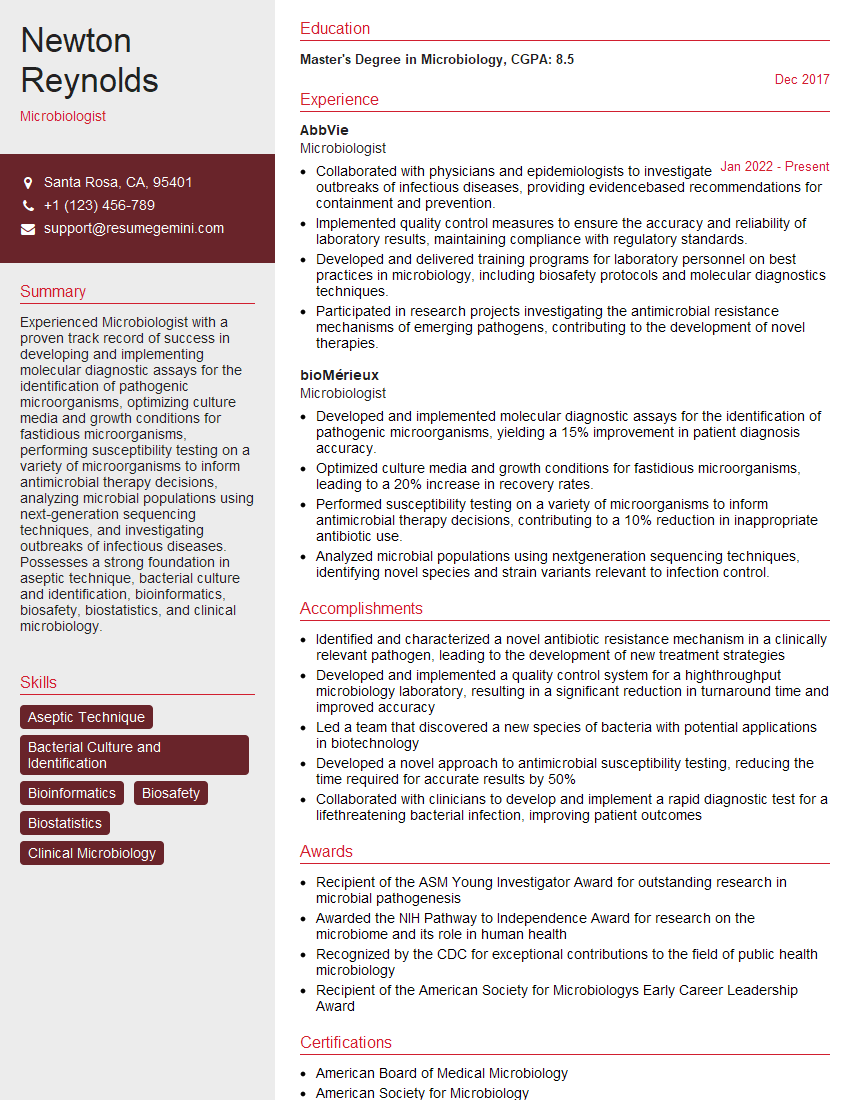
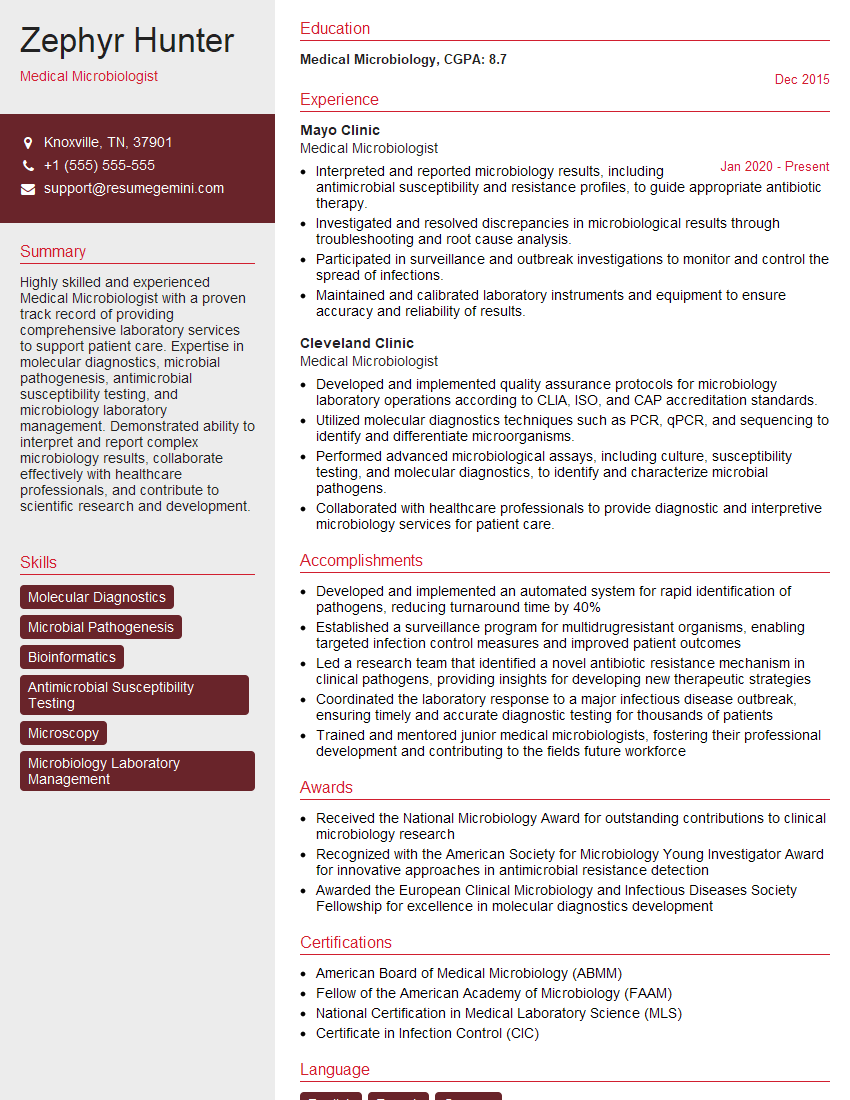
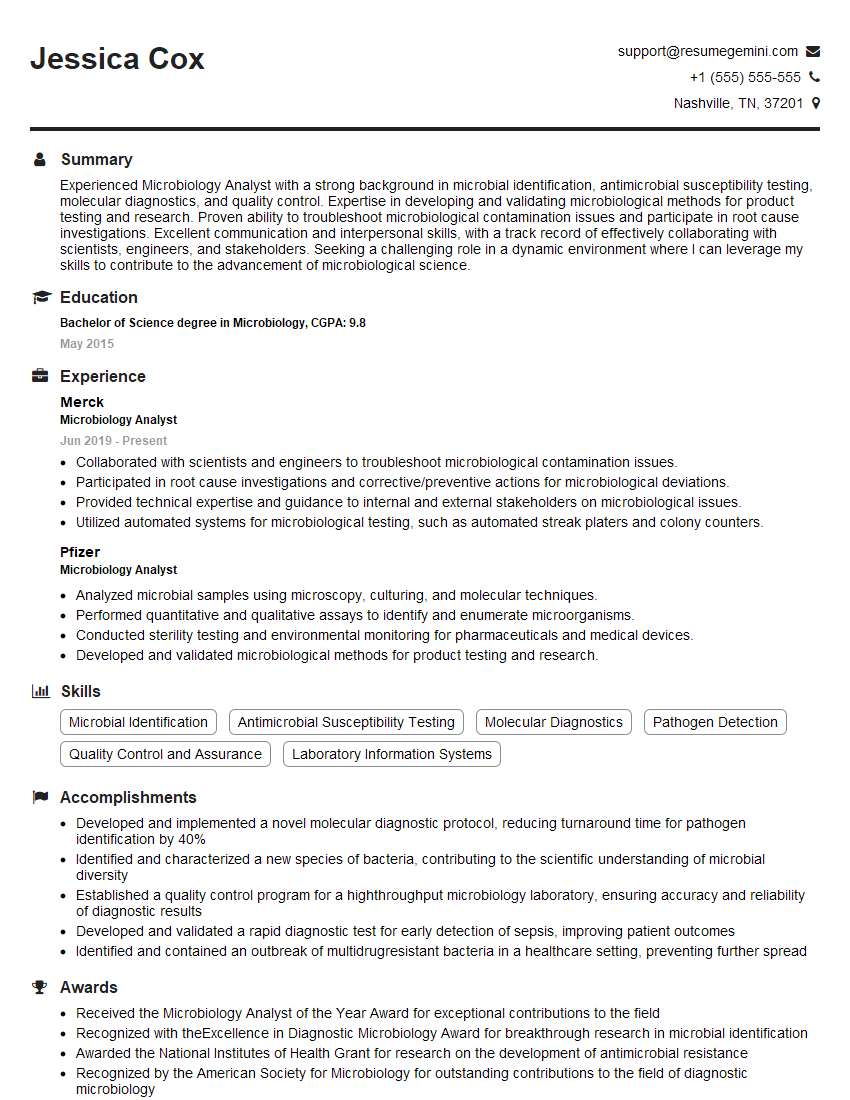
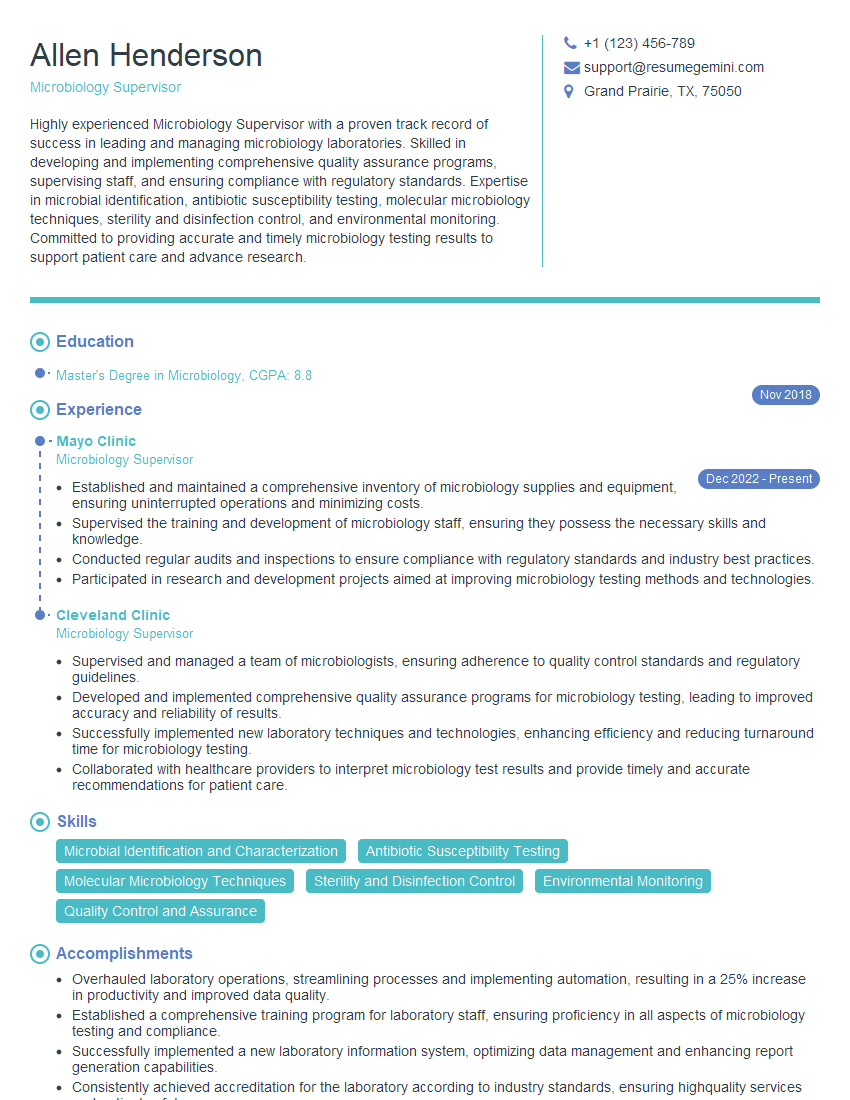
Mastering microbial testing opens doors to exciting career opportunities in diverse fields like pharmaceuticals, food safety, and environmental science. A strong foundation in this area significantly boosts your employability and allows for career advancement. To maximize your chances of securing your dream role, create an ATS-friendly resume that highlights your skills and experience effectively. ResumeGemini is a trusted resource that can help you build a professional and impactful resume. Examples of resumes tailored to Microbial Testing are available to guide you. Invest in your future – build a resume that stands out!

Explore more articles
Users Rating of Our Blogs
Share Your Experience
We value your feedback! Please rate our content and share your thoughts (optional).
What Readers Say About Our Blog
Very informative content, great job.
good