Unlock your full potential by mastering the most common Microscope Design interview questions. This blog offers a deep dive into the critical topics, ensuring you’re not only prepared to answer but to excel. With these insights, you’ll approach your interview with clarity and confidence.
Questions Asked in Microscope Design Interview
Q 1. Explain the principles of Abbe’s diffraction limit and its implications on microscope design.
Abbe’s diffraction limit describes the fundamental resolution limit of a light microscope. It states that the smallest distance between two points that can be distinguished as separate entities is roughly half the wavelength of light used. This limitation arises because light, as a wave, diffracts (spreads out) as it passes through a small aperture, such as the objective lens of a microscope. This diffraction blurs the image, preventing us from resolving finer details.
Mathematically, the resolution (d) is given by the Rayleigh criterion: d = 0.61λ / NA, where λ is the wavelength of light and NA is the numerical aperture of the objective lens. A smaller d indicates better resolution. The formula highlights the importance of using shorter wavelengths (e.g., blue light instead of red light) and high numerical aperture lenses to overcome the diffraction limit.
Implications for microscope design include the development of techniques like super-resolution microscopy (e.g., PALM, STORM) that bypass Abbe’s diffraction limit by clever manipulation of light emission, allowing us to visualize structures far smaller than traditionally possible. Another implication is the constant pursuit of higher NA objective lenses through advanced lens designs and manufacturing techniques.
Q 2. Describe different types of microscope illumination techniques (e.g., Köhler, dark-field, fluorescence).
Microscope illumination techniques determine how light interacts with the specimen and influences the final image. Several common techniques exist:
- Köhler Illumination: This is a standard technique that provides even illumination across the entire field of view. It involves aligning the light source, condenser, and field diaphragm to create a parallel beam of light illuminating the specimen. Improper Köhler illumination leads to uneven brightness and poor contrast.
- Dark-field Illumination: This technique illuminates the specimen from the side, preventing direct light from entering the objective lens. Only light scattered by the specimen reaches the objective, making the specimen appear bright against a dark background. This is particularly useful for visualizing transparent specimens or unstained samples.
- Fluorescence Illumination: In fluorescence microscopy, a specific wavelength of light (excitation light) excites fluorophores (fluorescent molecules) in the sample. These fluorophores then emit light at a longer wavelength (emission light), which is collected by the objective lens. This method is essential for visualizing specific structures within cells or tissues by using fluorophore-labeled antibodies or other probes.
Q 3. Compare and contrast brightfield, darkfield, phase contrast, and fluorescence microscopy.
Let’s compare four common microscopy techniques:
- Brightfield Microscopy: This is the simplest technique, where light passes directly through the specimen. It’s suitable for stained samples but offers limited contrast for transparent specimens.
- Darkfield Microscopy: As described earlier, it uses scattered light, providing high contrast for transparent samples. However, it’s less sensitive than some other techniques and requires careful alignment.
- Phase Contrast Microscopy: This technique enhances contrast in transparent specimens by exploiting differences in refractive index. It converts these differences into brightness variations, making details visible without staining. It is widely used in cell biology.
- Fluorescence Microscopy: It uses fluorescence to visualize specific structures or molecules. It offers high specificity but requires fluorescent labeling and can be susceptible to photobleaching (loss of fluorescence over time).
Essentially, the choice of technique depends on the nature of the sample and the information sought. Brightfield is simple and versatile, while darkfield, phase contrast, and fluorescence excel in visualizing specific features or enhancing contrast in different ways.
Q 4. Explain the role of different optical components in a microscope (e.g., objectives, eyepieces, condensers).
A microscope’s optical components work together to produce a magnified image. Key components include:
- Objectives: These are the most crucial lenses, located closest to the specimen. They collect light from the specimen and form the initial magnified image. Different objectives provide varying magnification and numerical aperture.
- Eyepieces (oculars): These lenses magnify the intermediate image formed by the objective, providing the final magnified view to the observer. They are typically 10x magnification.
- Condensers: These lenses focus the light source onto the specimen, controlling the illumination’s intensity and distribution. Proper condenser adjustment is essential for optimal image quality using Köhler illumination.
- Light Source: Provides the illumination for the sample; this can be a halogen lamp, LED, laser, or other sources depending on the application.
These components interact in a precise optical path, determined by the microscope design. Each component’s quality significantly impacts the final image resolution, contrast, and overall performance. For example, a high-quality objective lens with a high NA is crucial for achieving high resolution.
Q 5. How does numerical aperture (NA) affect image resolution and depth of field?
Numerical aperture (NA) is a crucial parameter that determines the light-gathering ability of the objective lens. It directly impacts image resolution and depth of field:
- Resolution: A higher NA allows for better resolution, meaning the ability to distinguish fine details. As seen in Abbe’s diffraction limit formula (
d = 0.61λ / NA), a higher NA leads to a smaller minimum resolvable distance (d). - Depth of Field: A higher NA results in a shallower depth of field. This means that only a thin slice of the specimen will be in sharp focus at a time. A lower NA provides a larger depth of field, meaning more of the specimen is in focus, though at the expense of resolution.
In practice, a compromise is often necessary. High-resolution imaging requires a high NA objective, resulting in a shallower depth of field, potentially requiring z-stacking (taking images at different focal planes) to capture the entire sample in focus. Low NA objectives have a large depth of field, but lower resolution.
Q 6. Describe the working principle of confocal microscopy and its advantages over conventional microscopy.
Confocal microscopy uses a pinhole aperture in front of the detector to eliminate out-of-focus light. A laser scans across the sample, and only light originating from the focal plane passes through the pinhole. This results in a significantly improved image resolution and contrast compared to conventional wide-field microscopy.
The process involves focusing a laser beam on a single point within the sample. The emitted light (either fluorescence or reflected light) is then passed through a pinhole, rejecting the out-of-focus light. By scanning the laser across the sample point by point, a highly detailed image is built up. The advantages of confocal microscopy are:
- Improved Resolution: Eliminating out-of-focus light results in sharper images with significantly better resolution, especially in thick samples.
- Optical Sectioning: Creates detailed optical sections of the specimen, enabling 3D reconstruction of complex structures.
- Reduced Background Noise: Less out-of-focus light results in a cleaner image with reduced background noise.
However, confocal microscopy is generally more expensive and slower than conventional microscopy, as image acquisition involves point-by-point scanning.
Q 7. Explain different types of microscope objectives (e.g., plan achromatic, apochromatic).
Microscope objectives are categorized based on their optical correction for aberrations (distortions in the image). Common types include:
- Plan Achromatic Objectives: These objectives correct chromatic aberration (color fringing) for two wavelengths of light and field curvature (image being curved rather than flat) across a larger area of the field of view. They provide a good balance between correction and cost, making them commonly used.
- Apochromatic Objectives: These offer superior correction for chromatic aberration, correcting it for three or more wavelengths of light and minimizing spherical aberration (blurring caused by different parts of the lens focusing at slightly different points). They provide the highest level of correction and are ideal for high-resolution imaging, but are more expensive.
- Plan Fluorite Objectives: These objectives offer a compromise between plan achromatic and apochromatic objectives; they provide good correction for chromatic and spherical aberrations, at a moderate cost.
The choice of objective depends on the application and budget. For routine work, plan achromatic objectives are sufficient. For critical high-resolution imaging, apochromatic objectives are necessary. Fluorite objectives are a good middle ground.
Q 8. What are the key considerations in designing a microscope for a specific application (e.g., live cell imaging, materials science)?
Designing a microscope for a specific application requires careful consideration of several key factors. The application dictates the necessary resolution, magnification, imaging speed, and type of illumination. For instance, live cell imaging demands a gentle illumination source to avoid phototoxicity, high temporal resolution for capturing dynamic processes, and potentially specialized environmental control (temperature, humidity, CO2). In contrast, a materials science microscope might prioritize high resolution for examining nanoscale structures, potentially utilizing techniques like electron microscopy, and robustness to withstand vibrations from sample manipulation.
- Resolution and Magnification: The required resolution determines the numerical aperture (NA) of the objective lens. Higher NA means better resolution but shallower depth of field. Magnification is chosen to provide a suitable image size for analysis.
- Illumination: The choice of illumination (brightfield, darkfield, fluorescence, confocal, etc.) is crucial. Fluorescence microscopy, for example, needs specific excitation and emission filters to isolate the signal from the background.
- Sample Preparation: The nature of the sample influences the choice of mounting, staining, and potentially, environmental control. Live cells require a controlled environment, while materials may need specialized sample holders.
- Detector: The detector type (CCD, CMOS, PMT) impacts sensitivity, speed, and dynamic range. Different detectors are better suited to different applications.
- Automation and Software: Automated stage control, focus, and image acquisition are critical for high-throughput experiments. Suitable software for image processing and analysis is also vital.
For example, designing a microscope for high-speed live cell imaging would prioritize a high-speed CMOS camera, a low-phototoxicity light source (e.g., LED), and a fast, precise motorized stage for automated image acquisition across a large field of view. Conversely, a materials science microscope focused on nano-scale resolution might use a high-NA objective lens with a specialized electron detector.
Q 9. Describe your experience with optical design software (e.g., Zemax, Code V).
I have extensive experience using optical design software, primarily Zemax and Code V. I’ve used these tools for everything from designing custom objective lenses to simulating the performance of entire microscope systems. In Zemax, I frequently utilize its non-sequential ray tracing capabilities to model complex illumination paths and light scattering within the microscope. For example, I once used Zemax to optimize the design of a multi-photon microscope, modelling the precise focusing of femtosecond laser pulses and minimizing aberrations for deep tissue imaging. Code V, with its strengths in tolerancing and manufacturing considerations, has been invaluable in translating theoretical designs into manufacturable components. My proficiency extends to optimizing for various performance metrics such as spot size, modulation transfer function (MTF), and Strehl ratio.
Example Zemax macro: ;This is a simplified example, real macros are much more complex....Zemax commands to optimize lens design...Q 10. How would you approach optimizing the optical performance of a microscope?
Optimizing the optical performance of a microscope is an iterative process involving both software simulation and experimental validation. It’s akin to fine-tuning a musical instrument – each component plays a role, and their interplay determines the overall quality.
- Define Performance Metrics: Start by clearly defining the key performance indicators (KPIs). This might include resolution, field of view, depth of field, signal-to-noise ratio (SNR), and chromatic aberration correction.
- Software Simulation: Use optical design software (Zemax, Code V) to model the optical system and predict its performance based on design parameters. This allows for exploring different lens designs and materials without the expense of building prototypes.
- Iterative Optimization: Optimize the design parameters (lens curvatures, thicknesses, spacing, etc.) to meet the defined KPIs. This typically involves using optimization algorithms within the software.
- Tolerance Analysis: Assess the sensitivity of the design to manufacturing variations. Identify critical parameters that need tight tolerances.
- Prototype and Testing: Build a physical prototype and experimentally validate the performance using appropriate measurement techniques (e.g., MTF measurement, spot diagram analysis).
- Refinement: Compare the experimental results with the simulation predictions and refine the design based on the discrepancies.
For example, in optimizing a fluorescence microscope, I might focus on maximizing the excitation light throughput while minimizing background noise and chromatic aberrations. This would involve careful selection of lenses, filters, and the detector, followed by iterative optimization using Zemax and rigorous experimental validation.
Q 11. Explain the concepts of chromatic and spherical aberration and how they are corrected in microscope design.
Chromatic aberration and spherical aberration are two major types of optical aberrations that degrade image quality in microscopes. Chromatic aberration arises because different wavelengths of light refract differently, leading to colored fringes around the image. Spherical aberration occurs when light rays passing through the outer zones of a lens focus at a different point than those passing through the center, resulting in blurry images.
Chromatic Aberration Correction: This is typically addressed by using achromatic lenses, which consist of two or more lenses made of glasses with different refractive indices. The dispersive properties of these glasses are chosen to counteract each other, minimizing the wavelength-dependent focusing differences. Apochromatic lenses offer even better correction over a wider spectral range.
Spherical Aberration Correction: This can be corrected using various techniques, including:
- Aspherical lenses: Lenses with non-spherical surfaces are designed to focus light more uniformly.
- Lens combinations: Carefully combining lenses with different curvatures and refractive indices can minimize spherical aberration.
- Aperture stops: Restricting the size of the aperture can reduce the impact of spherical aberration, though at the cost of reduced light throughput.
In practice, modern microscope objectives employ sophisticated combinations of these correction methods to achieve high-quality imaging across a wide field of view and spectral range. For example, high-end objectives use aspherical lens elements and multiple lens groups to correct both chromatic and spherical aberration simultaneously.
Q 12. What are the different types of detectors used in microscopy and their relative advantages and disadvantages?
Several types of detectors are used in microscopy, each with its own strengths and weaknesses. The choice depends on the specific application and the requirements for sensitivity, speed, and resolution.
- Charge-Coupled Devices (CCDs): Offer high sensitivity, excellent dynamic range, and low noise. They are suitable for low-light applications but can be slower than other options.
- Complementary Metal-Oxide-Semiconductor (CMOS) sensors: Faster readout speeds compared to CCDs, making them ideal for high-speed imaging. They are becoming increasingly popular in microscopy due to their improved sensitivity and reduced cost. However, they can have higher noise levels than CCDs.
- Photomultiplier Tubes (PMTs): Extremely sensitive detectors widely used in fluorescence microscopy. They excel in low-light conditions but have a limited field of view and are not suitable for high-speed imaging.
- Electron Multiplying Charge-Coupled Devices (EMCCDs): Combine the advantages of CCDs and PMTs, offering high sensitivity and low noise with improved speed.
For example, live cell imaging often benefits from the high-speed capabilities of CMOS cameras. However, for single-molecule fluorescence detection, the high sensitivity of EMCCDs or PMTs might be necessary. The selection process always involves a trade-off between speed, sensitivity, and cost.
Q 13. Describe your experience with image processing and analysis techniques.
My experience with image processing and analysis techniques is extensive. I’m proficient in using various software packages such as ImageJ/Fiji, MATLAB, and Python libraries (scikit-image, OpenCV) for tasks ranging from basic image adjustments to sophisticated quantitative analysis.
I’ve worked with various image processing techniques, including:
- Image filtering: Noise reduction, deconvolution, and sharpening.
- Image segmentation: Identifying and separating different regions of interest within the image.
- Image registration: Aligning multiple images taken at different times or with different settings.
- Quantitative analysis: Measuring object size, shape, intensity, and other relevant parameters.
For example, I’ve used ImageJ to process confocal microscopy images of cells, performing background subtraction, deconvolution to enhance resolution, and quantifying the fluorescence intensity within specific organelles. In MATLAB, I’ve developed custom algorithms for automated cell counting and tracking in time-lapse sequences. Python’s flexibility has allowed me to integrate image analysis with machine learning techniques for automated feature extraction and classification.
Q 14. How do you ensure the mechanical stability and precision of a microscope design?
Ensuring the mechanical stability and precision of a microscope is crucial for obtaining high-quality images. This involves careful design and selection of materials, components, and manufacturing processes.
- Rigid Frame: The microscope’s frame needs to be highly rigid to minimize vibrations and thermal drift. Materials like aluminum or specialized cast iron are often chosen for their stability.
- Precise Stage Movement: The stage mechanism needs to provide smooth and precise movement in the X, Y, and Z directions. High-precision linear bearings and stepping motors are commonly employed.
- Vibration Isolation: The microscope should be isolated from external vibrations. This can be achieved using passive vibration isolation systems (e.g., damping materials, air suspension) or active vibration cancellation systems.
- Thermal Stability: Temperature variations can affect the optical performance of the microscope. The design should minimize thermal drift and potentially incorporate temperature control mechanisms.
- Component Alignment: Precise alignment of optical components is crucial. This often involves adjustable mounts and precise alignment procedures.
For example, in a high-resolution microscopy system, I’d focus on minimizing vibrations by using a very stiff frame, high-quality linear bearings, and potentially incorporating active vibration isolation. I’d also pay close attention to the thermal stability of the optical system to prevent drift and image degradation over time. In addition, finite element analysis (FEA) might be employed to simulate the mechanical response to external forces and vibrations, helping to identify potential weak points in the design.
Q 15. Explain the importance of ergonomics in microscope design.
Ergonomics in microscope design is crucial for ensuring user comfort, reducing fatigue, and preventing repetitive strain injuries (RSIs). A poorly designed microscope can lead to discomfort, inefficiency, and even long-term health problems for researchers who spend hours peering through the eyepieces.
Consider the placement of controls: Intuitive knob placement, easily accessible focus adjustments, and appropriately positioned stage controls minimize the need for awkward posture. The eyepieces should be adjustable for interpupillary distance and diopter correction, catering to individual user needs. The microscope body should be lightweight yet sturdy and the overall design should facilitate a neutral posture. For instance, a low-positioned stage allows for a more natural posture compared to a high one. Proper illumination control prevents eyestrain. In my experience designing microscopes for various clients, focusing on ergonomic principles has resulted in significantly positive feedback regarding ease of use and comfort.
- Adjustable eyepieces: allowing for personalized viewing distances and diopter corrections.
- Comfortable hand rests: reducing hand fatigue during extended use.
- Low-profile design: minimizing strain on neck and back.
- Integrated lighting control: reducing unnecessary adjustments.
Career Expert Tips:
- Ace those interviews! Prepare effectively by reviewing the Top 50 Most Common Interview Questions on ResumeGemini.
- Navigate your job search with confidence! Explore a wide range of Career Tips on ResumeGemini. Learn about common challenges and recommendations to overcome them.
- Craft the perfect resume! Master the Art of Resume Writing with ResumeGemini’s guide. Showcase your unique qualifications and achievements effectively.
- Don’t miss out on holiday savings! Build your dream resume with ResumeGemini’s ATS optimized templates.
Q 16. Describe the process of designing and testing a new microscope.
Designing and testing a new microscope is a multi-stage process involving extensive research, prototyping, and rigorous evaluation. It starts with defining the specifications, considering the target application and user needs. This includes aspects such as magnification range, resolution requirements, types of samples to be imaged, and the intended environment for use. For example, a microscope for fieldwork would have different requirements (e.g., ruggedness, portability) than one for a laboratory setting.
Next is the design phase using computer-aided design (CAD) software to create 3D models, simulating the optical and mechanical functions. Prototyping follows, allowing for hands-on evaluation and adjustments. We then move to rigorous testing, including optical performance testing (resolution, contrast, aberration correction), mechanical stability (drift, vibration), and ergonomic testing. This often includes user feedback from target users, allowing us to iterate and refine the design. Quality control procedures are integrated throughout the process to ensure consistent manufacturing.
For instance, in a recent project, we prototyped three variations of a new fluorescence microscope, each incorporating subtle differences in the light path design. Rigorous testing allowed us to identify the optimal design with superior signal-to-noise ratio and minimal chromatic aberration.
Q 17. How would you troubleshoot common problems encountered in microscopy, such as poor image quality or drift?
Troubleshooting microscopy problems requires a systematic approach. Poor image quality can stem from several issues. First, check the cleanliness of lenses and optical components—dust or smudges significantly degrade image quality. Then, evaluate the illumination – incorrect Kohler illumination setup is a frequent culprit. Ensure that the light source is properly aligned and that the condenser is correctly adjusted for the objective in use.
Drift, on the other hand, usually indicates problems with the microscope’s mechanical stability. It can be due to vibrations (external or internal), thermal instability causing expansion/contraction, or mechanical looseness in the stage or objective mount. A systematic approach involves checking for vibrations, ensuring proper temperature control, tightening screws, and confirming the stage is securely fastened. Here is a step-by-step guide:
- Clean all optical surfaces: Use lens cleaning paper and lens cleaner.
- Check Kohler illumination: Ensure proper alignment of light source and condenser.
- Assess focus: Verify that the sample is correctly focused.
- Check for drift: Observe for any movement over time.
- Inspect mechanical components: Look for looseness or instability.
- Investigate environmental factors: Check for vibrations or temperature fluctuations.
For example, while working on a research project involving live cell imaging, we encountered significant drift. Through systematic elimination, we pinpointed the issue to a slight imbalance in the microscope’s vibration damping system. After calibration, the drift was completely eliminated.
Q 18. What are the latest advancements in microscope technology?
Microscopy is constantly evolving. Some significant advancements include:
- Super-resolution microscopy: Techniques like PALM (Photoactivated Localization Microscopy) and STORM (Stochastic Optical Reconstruction Microscopy) surpass the diffraction limit of light, enabling visualization of structures at the nanoscale.
- Light sheet microscopy: This technique illuminates the sample with a thin sheet of light, minimizing photodamage and enabling high-speed 3D imaging of living specimens.
- Multiphoton microscopy: Using longer wavelengths, this method allows for deeper tissue penetration with less photodamage, important for in vivo studies.
- Advanced image processing and analysis: Software tools for image deconvolution, segmentation, and 3D reconstruction are continuously improving, enabling more detailed analysis of microscopy data.
- Integrated automation: Many modern microscopes incorporate automated functions for stage movement, focus, and image acquisition, increasing efficiency and reproducibility.
These advancements open up new frontiers in biological and materials research, enabling the visualization of cellular processes and structures with unprecedented detail.
Q 19. Discuss your experience with different types of sample preparation techniques for microscopy.
My experience encompasses a wide range of sample preparation techniques, tailored to the specific needs of the microscopy modality employed. For example, tissue samples for light microscopy often require fixation (using formalin or other fixatives), embedding in paraffin wax, sectioning using a microtome, and staining to enhance contrast (e.g., Hematoxylin and Eosin staining). Electron microscopy necessitates more elaborate preparation, including fixation, dehydration, embedding in resin, ultrathin sectioning, and staining with heavy metals for contrast.
For live cell imaging, maintaining sample viability is paramount. Specialized culture chambers and media are crucial, and we may need to incorporate temperature control and CO2 supply for optimal conditions. Immunofluorescence microscopy necessitates specific steps like antigen retrieval, blocking non-specific binding, and the use of fluorescently labeled antibodies. The choice of fixation and staining methods must be considered carefully to prevent artifacts and preserve the integrity of the sample.
For instance, in a recent collaborative project involving the imaging of neuronal networks, we employed a combination of immunofluorescence and confocal microscopy, requiring a multi-step protocol for optimal staining and image acquisition. The successful visualization of neuronal processes and synapses was dependent on this carefully chosen preparation process.
Q 20. How do you ensure the quality and reliability of microscope components and assemblies?
Ensuring quality and reliability of microscope components and assemblies requires a multi-faceted approach encompassing stringent quality control measures throughout the manufacturing process. This starts with the selection of high-quality materials and precision manufacturing techniques. Optical components, such as lenses and prisms, are subjected to rigorous testing for optical aberrations, surface quality, and transmission properties. Mechanical components are examined for tolerance, durability, and stability. The assembly process is carefully controlled, and each unit undergoes thorough testing before release.
Statistical process control (SPC) methods are employed to monitor manufacturing parameters and identify any deviations from specifications. We utilize environmental testing to evaluate resistance to temperature fluctuations, humidity, and vibration. Regular calibration procedures are carried out to maintain accuracy and precision. Documentation and traceability are meticulously maintained, allowing for full accountability throughout the manufacturing process. This approach ensures that the microscopes meet stringent performance requirements and deliver reliable performance over their operational lifespan. For example, we regularly test our assembled microscopes for thermal stability using controlled environmental chambers, helping us fine-tune the design and materials to minimize thermal drift.
Q 21. Explain your familiarity with relevant standards and regulations for microscope design and manufacturing.
My familiarity with relevant standards and regulations is extensive, particularly concerning safety, performance, and electromagnetic compatibility (EMC). I have direct experience working within the guidelines of ISO 9001 (Quality Management Systems), ISO 13485 (Medical Devices), and IEC 61010 (Safety of Electrical Equipment for Measurement, Control, and Laboratory Use). These standards guide the design, manufacturing, and testing processes to ensure the microscope meets the required safety, performance, and regulatory requirements for its intended use.
Understanding these standards is crucial in mitigating risks and ensuring compliance. For example, safety standards address issues such as electrical safety, laser safety (for laser scanning microscopes), and the prevention of mechanical hazards. EMC standards ensure that the microscope doesn’t interfere with or is not affected by other electrical equipment. Proper documentation of the design and testing process is critical for demonstrating compliance with these regulations. In every project, we ensure all aspects of the design meet the relevant standards before initiating production and distribution.
Q 22. Describe your experience with CAD software for mechanical design.
My experience with CAD software for mechanical design spans over 10 years, primarily using SolidWorks and Autodesk Inventor. I’m proficient in all aspects, from initial conceptual sketching and 3D modeling to detailed part design, assembly creation, and generating manufacturing drawings. For microscope design, this expertise is critical. For example, I’ve used CAD to design intricate lens mounts ensuring precise alignment and minimal vibrations, crucial for high-resolution imaging. I also utilize simulation tools within the CAD software to analyze stress and strain on components under various operating conditions, ensuring the structural integrity of the microscope. This is especially important for motorized stages and moving parts where durability and precision are paramount.
I’ve also used CAD to design custom housings that optimize ergonomics and minimize stray light, maximizing user comfort and image quality. A recent project involved designing a compact, portable fluorescence microscope which required careful consideration of space constraints and efficient component placement, successfully achieved through iterative design processes in the CAD environment.
Q 23. How would you approach the design of a cost-effective microscope without compromising performance?
Designing a cost-effective microscope without compromising performance requires a strategic approach focusing on component selection, manufacturing processes, and design optimization. The key is to identify areas where cost savings can be achieved without sacrificing crucial performance parameters like resolution, magnification, or stability.
- Component Selection: Choosing readily available, off-the-shelf components wherever possible reduces custom fabrication costs. For example, using standard lens elements instead of custom-designed ones. However, careful consideration needs to be applied to ensure the specifications of the chosen components meet the performance requirements.
- Manufacturing Processes: Opting for simpler manufacturing processes like injection molding over more complex techniques like precision machining reduces fabrication costs, especially for high-volume production. This can be balanced with the selection of high-quality materials to ensure longevity and performance.
- Design Optimization: Simulations and Finite Element Analysis (FEA) can be used to optimize the design, minimizing the use of expensive materials while ensuring structural integrity. This approach allows for lightweighting of the design, reducing material costs without compromising stability.
- Modular Design: A modular design facilitates easy upgrades and repairs, reducing long-term costs by simply replacing individual components rather than the entire system.
For instance, in a recent project, we successfully reduced the cost of a fluorescence microscope by 30% by using a more efficient LED illumination system, optimizing the design for 3D printing of the housing, and selecting standard lens assemblies. The performance remained comparable to more expensive models thanks to careful component selection and design optimization.
Q 24. Describe your experience with thermal management in optical systems.
Thermal management is paramount in optical systems, especially those involving high-power light sources like lasers or high-intensity LEDs. Excess heat can lead to performance degradation, component damage, and even system failure. My experience encompasses various thermal management techniques.
- Heat Sinks: Strategically placed heat sinks are fundamental for dissipating heat from heat-generating components. The design and material selection of the heat sink, including its surface area and thermal conductivity, are crucial factors impacting its efficiency.
- Forced Air Cooling: Using fans to circulate air around heat-generating components improves heat dissipation. Careful design is necessary to ensure proper airflow and prevent the introduction of vibrations.
- Liquid Cooling: For high-power systems, liquid cooling offers more effective heat removal. This involves designing appropriate channels for coolant circulation and selecting a suitable coolant.
- Thermal Simulation: Using software like ANSYS or COMSOL to simulate temperature distribution within the optical system helps in optimizing the thermal management design before physical prototyping, saving time and resources.
In one project, we utilized a combination of heat sinks and forced air cooling to maintain the operating temperature of a high-power laser within acceptable limits, crucial for the stability and longevity of the laser and the overall performance of the microscope.
Q 25. How do you balance the need for high resolution with speed and ease of use in microscope design?
Balancing high resolution, speed, and ease of use in microscope design is a constant challenge. It often involves making trade-offs, but careful design can mitigate these compromises.
- Objective Lens Selection: High-resolution imaging requires high numerical aperture (NA) objective lenses, but these often have a shallower depth of field and may require longer exposure times, reducing speed. Careful selection of objectives is key, balancing resolution with the specific application needs.
- Detector Selection: Fast detectors like CMOS sensors offer high speed but may have lower sensitivity compared to CCD sensors which excel in low light conditions, affecting resolution in certain applications. The choice depends on the application’s priorities: speed or sensitivity.
- Software and Automation: User-friendly software with automated image acquisition and processing features significantly enhances ease of use. Automated stage control and focus mechanisms increase speed and throughput.
- Optical Design: Careful optimization of optical components minimizes aberrations and maximizes light throughput, leading to both higher resolution and faster image acquisition. This involves techniques like aberration correction and efficient illumination systems.
For example, in designing a live-cell imaging system, we prioritized speed by selecting a high-speed CMOS camera and a highly efficient illumination system. We minimized the compromise on resolution by careful selection of high NA objectives and software algorithms for noise reduction and image processing.
Q 26. Explain your understanding of different types of polarization microscopy.
Polarization microscopy utilizes polarized light to enhance the contrast of samples based on their birefringence – the property of a material to exhibit different refractive indices depending on the polarization of light. Several types exist:
- Simple Polarized Light Microscopy: Uses two polarizers, one before and one after the sample. This setup reveals birefringent structures based on their ability to rotate the plane of polarization of light.
- Cross-Polarized Microscopy: The polarizers are oriented at 90 degrees to each other. Only birefringent materials exhibiting a significant change in polarization will transmit light, thus enhancing contrast and revealing fine details within anisotropic materials like crystals or certain biological structures.
- Differential Interference Contrast (DIC) Microscopy: Uses a polarizing prism (Wollaston prism) to split a polarized light beam into two slightly offset beams that interfere upon recombination, producing a three-dimensional-like image based on refractive index gradients.
- Phase Contrast Microscopy: While not strictly a polarization technique, it’s often used in conjunction with polarization microscopy to enhance contrast of transparent samples, often employed in biological studies.
The choice of polarization technique depends on the sample and the information sought. For example, cross-polarized microscopy is excellent for studying crystal structures, while DIC is preferred for visualizing living cells and their internal structures without staining.
Q 27. Discuss your experience with integrating different imaging modalities into a single microscope system.
Integrating multiple imaging modalities into a single microscope system is a complex undertaking requiring careful consideration of optical path design, detector compatibility, and software integration. My experience includes the integration of fluorescence microscopy, brightfield microscopy, and confocal microscopy into a single platform.
The key challenges include:
- Optical Path Design: Designing an optical path that efficiently routes light from different illumination sources to the sample and then to the appropriate detectors while minimizing crosstalk and aberrations is crucial.
- Detector Selection and Synchronization: Choosing detectors compatible with various modalities (e.g., high-speed CMOS for fluorescence and slower, high-sensitivity CCD for low-light applications) and synchronizing their acquisition is necessary.
- Software Integration: Developing user-friendly software that controls all aspects of the system, including illumination, stage movement, and data acquisition, is vital for seamless operation.
- Calibration and Alignment: Precise calibration and alignment of the optical components is necessary for accurate and reliable imaging across different modalities.
For instance, in a recent project, we successfully integrated fluorescence, brightfield, and confocal microscopy into a single platform for advanced live-cell imaging. This involved designing a custom filter wheel for spectral separation, employing multiple detectors, and developing sophisticated software for controlling the system and processing the acquired data. This resulted in a powerful, versatile system capable of acquiring high-quality images from various perspectives.
Q 28. How would you design a microscope for a specific research application, given limited resources?
Designing a microscope for a specific research application with limited resources necessitates a focused and iterative approach. The key is to prioritize essential features and make informed compromises.
- Define Essential Requirements: Clearly define the specific research needs, focusing on the crucial imaging parameters (resolution, magnification, speed, etc.) required for the application. This helps in identifying the absolute necessities and eliminating non-essential features.
- Component Selection: Use readily available, cost-effective components while ensuring they meet the minimal performance requirements. Consider repurposing existing components or utilizing open-source designs where appropriate.
- Simplified Design: Adopt a simplified design that minimizes complexity, reducing manufacturing costs and assembly time. This might involve sacrificing some features, but only those that are not critical to the core research objective.
- 3D Printing and Open-Source Solutions: Utilizing 3D printing for prototyping and even for creating some microscope components significantly reduces fabrication costs. Explore open-source designs and modify them to suit the specific application.
- Iterative Design and Testing: Follow an iterative design process, creating prototypes and testing them to identify areas for improvement and cost reduction. This iterative approach allows for continuous optimization without significant resource expenditure.
For example, when designing a microscope for a field study with a limited budget, I prioritized simplicity and portability. We used a simple optical design and 3D-printed the housing, reducing costs significantly. The resulting microscope, while less sophisticated than commercial models, fulfilled the research needs effectively.
Key Topics to Learn for Microscope Design Interview
- Optical Systems: Understanding lens design, aberration correction, and the principles of image formation in microscopes. Explore different types of lenses and their applications (e.g., objective lenses, eyepieces).
- Illumination Techniques: Mastering various illumination methods like Köhler illumination, fluorescence microscopy, and confocal microscopy. Understand the advantages and limitations of each technique and their suitability for different applications.
- Mechanical Design: Familiarize yourself with the mechanical components of a microscope, including the stage, focusing mechanisms, and sample holders. Consider the importance of stability, precision, and ergonomics in design.
- Image Processing and Analysis: Gain a working knowledge of image acquisition, processing, and analysis techniques relevant to microscopy. This includes understanding resolution, contrast, and noise reduction strategies.
- Digital Microscopy and Automation: Explore the integration of digital cameras and software for image capture and analysis. Understand the principles of automated microscopy systems and their applications in high-throughput screening and imaging.
- Material Selection and Manufacturing: Learn about the selection of appropriate materials for microscope components based on their optical, mechanical, and chemical properties. Understand different manufacturing techniques used in microscope production.
- Emerging Trends: Stay updated on advancements in microscope technology, such as super-resolution microscopy, light-sheet microscopy, and other cutting-edge techniques. Understanding the theoretical and practical implications of these advances is crucial.
Next Steps
Mastering microscope design opens doors to exciting career opportunities in research, development, and manufacturing within the biomedical, materials science, and nanotechnology sectors. A strong understanding of these principles is highly sought after by leading companies in the field.
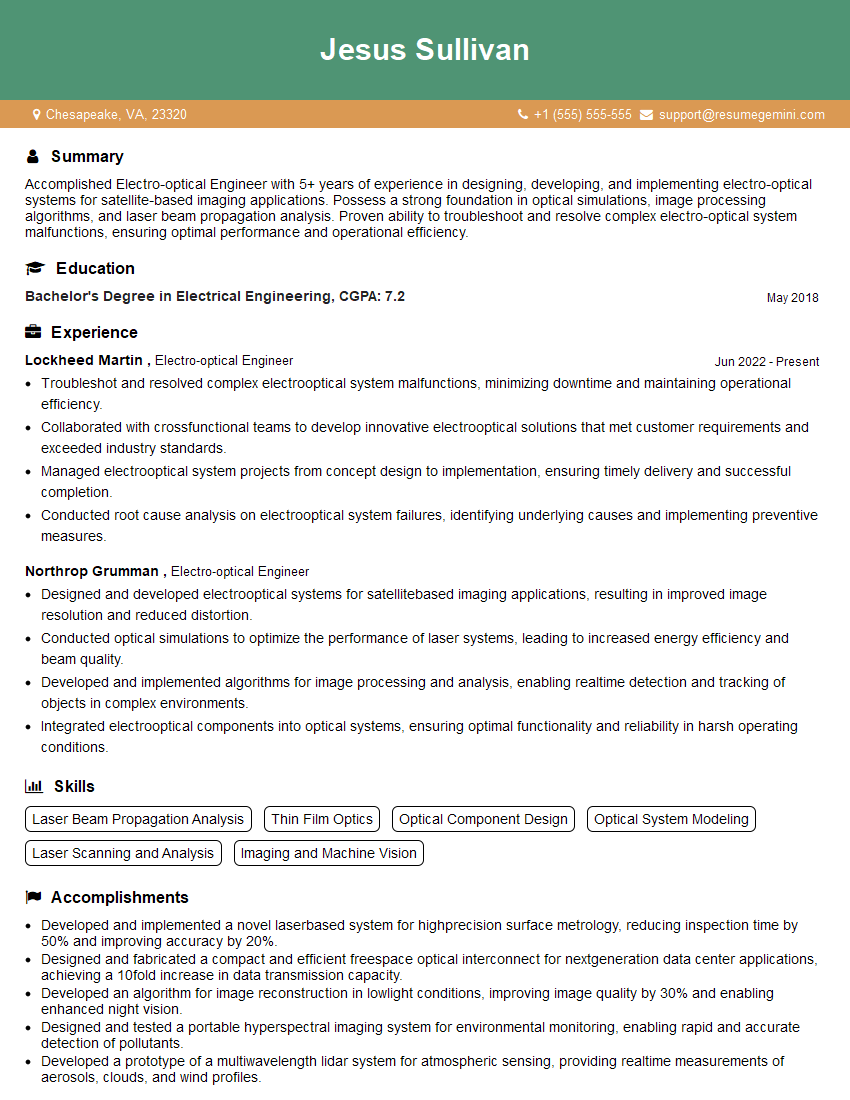
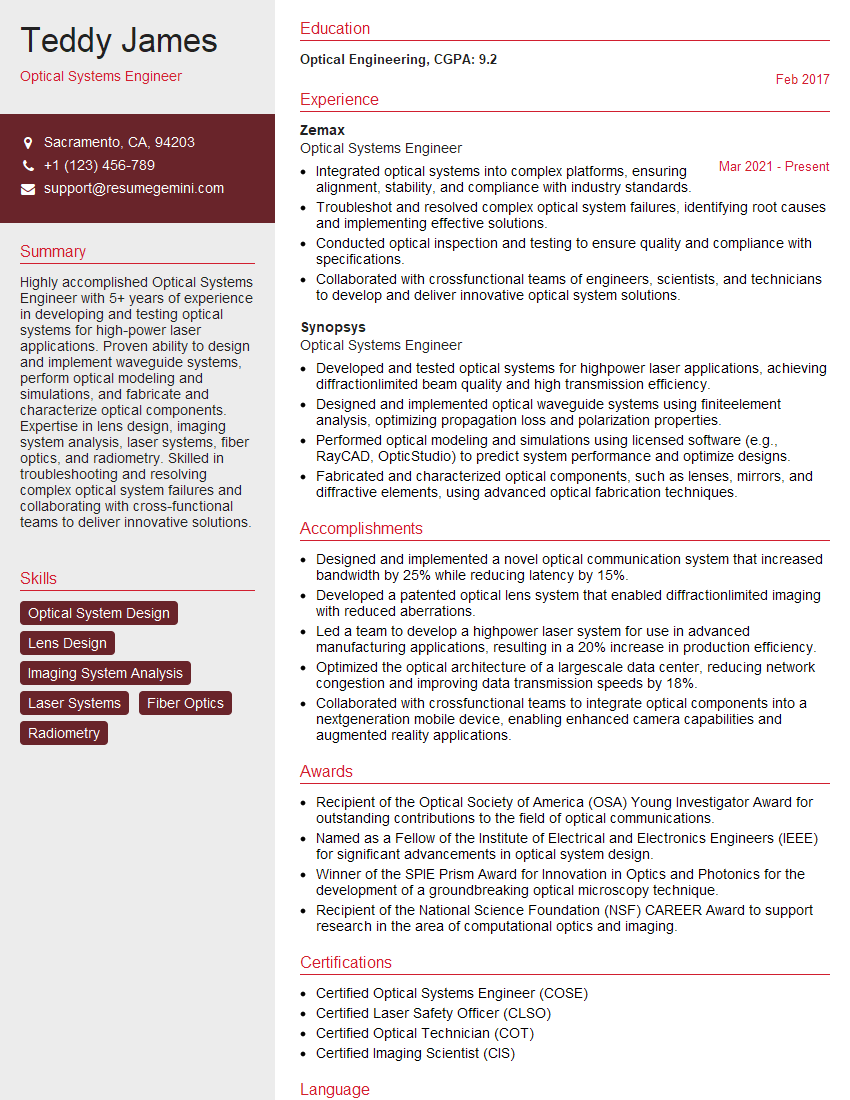
To maximize your job prospects, creating a compelling and ATS-friendly resume is essential. A well-structured resume highlights your skills and experience effectively, increasing your chances of landing an interview. We recommend using ResumeGemini, a trusted resource for building professional resumes tailored to your specific career goals. Examples of resumes tailored to Microscope Design are available to guide you.

Explore more articles
Users Rating of Our Blogs
Share Your Experience
We value your feedback! Please rate our content and share your thoughts (optional).
What Readers Say About Our Blog
Very informative content, great job.
good