Preparation is the key to success in any interview. In this post, we’ll explore crucial Military Intelligence Analysis interview questions and equip you with strategies to craft impactful answers. Whether you’re a beginner or a pro, these tips will elevate your preparation.
Questions Asked in Military Intelligence Analysis Interview
Q 1. Explain the difference between HUMINT, SIGINT, and OSINT.
The intelligence community utilizes various methods for collecting information, and HUMINT, SIGINT, and OSINT represent three key disciplines. Each focuses on a different source of information and employs distinct methodologies.
- HUMINT (Human Intelligence): This involves collecting information from human sources, such as spies, informants, defectors, or even casual conversations. Think of it as the ‘boots on the ground’ approach. It relies heavily on cultivating relationships and assessing the reliability of human sources. For example, a HUMINT operation might involve recruiting a disgruntled employee of a target company to provide inside information.
- SIGINT (Signals Intelligence): SIGINT focuses on intercepting and analyzing electronically transmitted signals. This includes communications (like phone calls, emails, and radio transmissions), radar emissions, and electronic warfare signals. Think of it as eavesdropping on a vast scale, requiring advanced technological capabilities. An example would be intercepting and decoding enemy radio communications to understand their planned movements.
- OSINT (Open-Source Intelligence): OSINT involves gathering information from publicly available sources. This includes newspapers, websites, social media, academic journals, commercial databases, and even satellite imagery that is freely accessible. It’s a cost-effective way to get a broad overview of a situation. For example, analyzing news reports from a specific region could reveal valuable insights into political instability or upcoming military exercises.
In short, HUMINT is people-centric, SIGINT is technology-centric, and OSINT is publicly-available-information-centric. Each plays a crucial role in building a comprehensive intelligence picture.
Q 2. Describe your experience with all-source intelligence analysis.
My experience with all-source intelligence analysis spans over ten years, encompassing various roles within the military intelligence community. I’ve consistently worked on projects requiring the integration of HUMINT, SIGINT, OSINT, GEOINT (Geospatial Intelligence), and MASINT (Measurement and Signature Intelligence). For instance, during my time analyzing potential threats in the Middle East, I integrated data from intercepted communications (SIGINT) with satellite imagery showing troop movements (GEOINT), social media posts detailing local sentiment (OSINT), and reports from human sources on the ground (HUMINT). This allowed me to paint a more complete and accurate picture than any single source could offer, enabling more effective strategic planning and risk mitigation.
A significant project involved predicting an insurgent group’s next attack. We fused various intelligence streams: intercepted radio chatter revealed potential targets (SIGINT), open-source data showed the group’s recent activities and propaganda (OSINT), and human sources indicated heightened activity and movement (HUMINT). By corroborating this information with GEOINT, we successfully identified the likely target and prevented the attack. This demonstrated the crucial role of all-source analysis in preemptive counter-terrorism efforts.
Q 3. How do you assess the credibility of intelligence sources?
Assessing source credibility is paramount in intelligence analysis. It’s not a simple yes or no; it’s a nuanced process requiring critical thinking and a methodical approach. I employ a multi-faceted approach, considering several key factors:
- Source Motivation: What does the source hope to gain by providing information? Are they seeking reward, revenge, or something else? Understanding their motivation helps gauge the potential for bias or manipulation.
- Source Track Record: Has the source provided accurate information in the past? Has their information been corroborated by other sources? A history of reliable reporting lends more credibility.
- Method of Acquisition: How did the source obtain the information? Did they witness the event firsthand, or is it hearsay? Direct observation is generally more reliable than secondhand accounts.
- Corroboration: Does the information align with intelligence from other sources? Independent confirmation significantly strengthens the credibility of a report.
- Bias and Context: Is the source likely to be biased due to their background, beliefs, or affiliations? Understanding the contextual factors surrounding the information is crucial for objective assessment.
In practice, I often create a source assessment matrix, documenting all these factors and assigning a confidence level to the information provided. This allows me to weigh the value of the intelligence accordingly and avoid relying solely on a single, potentially unreliable source.
Q 4. Explain the process of intelligence fusion and its importance.
Intelligence fusion is the process of integrating information from multiple sources – HUMINT, SIGINT, OSINT, GEOINT, and MASINT – to create a unified and comprehensive intelligence picture. This is not simply aggregation; it’s a synergistic process where the whole becomes greater than the sum of its parts. Different intelligence sources often provide partial or incomplete information; fusion aims to identify patterns, resolve inconsistencies, and fill gaps to paint a more accurate and detailed image.
The importance of intelligence fusion lies in its ability to provide a more complete and accurate understanding of complex situations. By combining different perspectives and data types, analysts can avoid bias, reduce uncertainty, and enhance the overall reliability of intelligence assessments. This leads to better decision-making, whether it involves predicting enemy actions, understanding geopolitical shifts, or assessing potential threats.
The fusion process often involves using specialized software and analytical techniques to manage large datasets and identify correlations. Visual tools like link charts and timelines can be particularly useful in visualizing the relationships between different pieces of information.
Q 5. What are the key challenges in analyzing geospatial intelligence (GEOINT)?
Analyzing geospatial intelligence (GEOINT) presents unique challenges due to the sheer volume of data and the complexities of interpreting imagery and geographic information. Some key challenges include:
- Data Volume and Velocity: Satellite imagery, aerial photography, and other GEOINT sources generate massive amounts of data. Managing and analyzing this data efficiently requires sophisticated software and analytical skills.
- Image Interpretation: Interpreting imagery can be subjective and prone to error. Analysts need specialized training to accurately identify objects, assess their significance, and avoid misinterpretations.
- Data Fusion with other INTs: Integrating GEOINT with other intelligence types (e.g., HUMINT, SIGINT) can be complex, requiring sophisticated analytical techniques to correlate data from different sources and draw meaningful conclusions.
- Technological Limitations: Weather conditions, cloud cover, and technological limitations can affect the quality and availability of GEOINT data.
- Contextual Understanding: Understanding the geographic and cultural context of the area depicted in GEOINT is crucial for accurate interpretation. This requires deep knowledge of the region’s history, politics, and demographics.
Overcoming these challenges involves leveraging advanced analytical techniques, employing robust quality control measures, and fostering collaboration between analysts with diverse skill sets and expertise.
Q 6. How do you handle conflicting intelligence reports?
Conflicting intelligence reports are a common occurrence in intelligence analysis. Handling them requires a methodical and objective approach. I employ a process that involves:
- Source Evaluation: Carefully reassess the credibility of the sources providing conflicting information. Consider their motivation, track record, and methodology of information gathering. Prioritize information from more reliable sources.
- Data Triangulation: Look for corroborating evidence from other sources. If multiple independent sources support one report over another, this strengthens its credibility.
- Bias Identification: Consider potential biases that might influence the accuracy of the reports. Understand the perspectives and agendas of the sources.
- Gap Analysis: Identify any missing information or data points that could help resolve the conflict. Further investigation may be required to fill these gaps.
- Hypothesis Testing: Develop hypotheses based on each report and assess their plausibility based on available evidence. Consider the potential consequences of accepting one report over the other.
- Qualitative Assessment: In cases where quantitative analysis is insufficient, rely on expert judgment and experience to weigh the evidence and arrive at the most likely scenario.
Often, the resolution of conflicting reports lies not in choosing one as definitively correct but in recognizing that uncertainty is inherent in intelligence analysis. The ultimate goal is to produce an assessment that reflects the range of possibilities and the associated uncertainty, allowing decision-makers to make informed choices.
Q 7. Describe your experience with intelligence reporting and writing.
My experience in intelligence reporting and writing is extensive, encompassing the creation of various intelligence products, from briefings for senior commanders to detailed analytical reports for policymakers. I’m proficient in tailoring my writing style to the specific audience and purpose. For example, a briefing for a general officer requires concise, action-oriented language, while a detailed analytical report needs to be comprehensive and meticulously documented.
I adhere to strict standards of clarity, objectivity, and accuracy in all my writing. I understand the importance of using precise language to avoid ambiguity and misinterpretations. I’m adept at structuring my reports logically, incorporating visuals such as charts and maps when appropriate to enhance clarity and comprehension. Furthermore, I am experienced in using secure communication channels to disseminate sensitive intelligence information and maintain appropriate classification levels. A recent project involved authoring a report on the evolving capabilities of a foreign military, which required synthesizing data from multiple sources and presenting it in a clear, concise, and easily digestible format for high-level decision-makers.
Throughout my career, I have continuously strived to improve my writing skills through both formal training and practical experience. I prioritize accuracy and rigor in my analyses, ensuring that my reports are not only well-written but also contribute to effective decision-making within the intelligence community.
Q 8. Explain the concept of ‘chain of custody’ in handling intelligence evidence.
Chain of custody refers to the chronological documentation of everyone who has handled a piece of evidence, from its discovery to its presentation in court or in a briefing. It’s crucial in intelligence because it ensures the integrity and admissibility of evidence. A broken chain of custody raises serious questions about the authenticity and reliability of the intelligence gathered.
Imagine finding a USB drive believed to contain enemy plans. The chain of custody would begin with the individual who discovered it, noting the date, time, location, and any initial observations. This person would then hand it to a designated handler, who would record the transfer, maintaining a secure log. Every subsequent person who handles the drive – technicians analyzing its contents, analysts reviewing the data, and finally the presenting officer – would document the transfer, ensuring an unbroken chain. Any gaps or inconsistencies severely weaken the evidence’s credibility.
- Detailed logs: These logs must include names, dates, times, locations, and descriptions of any actions taken.
- Secure handling: Evidence must be secured appropriately, using tamper-evident seals and secure storage.
- Controlled access: Only authorized personnel should handle the evidence.
Q 9. How do you prioritize intelligence requirements in a time-sensitive environment?
Prioritizing intelligence requirements in a fast-paced environment requires a structured approach. I typically use a combination of methods, including the prioritization matrix and stakeholder consultation.
A prioritization matrix considers factors such as urgency (how quickly we need the information), impact (how significantly the information will affect operations), and feasibility (how realistic it is to obtain the information). High-urgency, high-impact, and feasible requirements get top priority. I might visualize this using a simple matrix: high/medium/low for each factor, creating nine priority levels.
Stakeholder consultation is vital; I work closely with operational commanders and decision-makers to understand their immediate needs and how intelligence can support their actions. This collaborative approach helps ensure that the most critical intelligence gaps are addressed promptly. For instance, if a planned operation hinges on confirming the enemy’s troop strength, this requirement would understandably overshadow other, less time-sensitive needs.
It’s also important to employ efficient tasking and resource allocation; prioritization informs how we assign analysts and technical resources. Timeboxing specific tasks and regular progress checks are crucial in managing a large workload, particularly under pressure.
Q 10. What are the ethical considerations in military intelligence analysis?
Ethical considerations in military intelligence analysis are paramount. Our actions directly impact lives and national security, necessitating a rigorous ethical framework. Key considerations include:
- Legality: All intelligence activities must comply with national and international laws, including the laws of war and human rights.
- Privacy: We must respect the privacy of individuals, minimizing the collection and dissemination of personal information unless absolutely necessary and legally justifiable.
- Objectivity: Analysts must strive for objectivity, avoiding bias and manipulation of information to support preconceived notions. This involves critically evaluating all sources and acknowledging uncertainties.
- Accountability: Intelligence analysts are accountable for their work, and this accountability extends to the ethical implications of their actions and the potential consequences of inaccurate or incomplete assessments.
- Transparency: We must be transparent about our methods and findings, wherever possible, within the constraints of security.
For example, if I uncover information that suggests potential civilian casualties from an upcoming military operation, I have an ethical duty to raise this concern to the appropriate authorities, even if it means challenging a pre-determined course of action.
Q 11. Describe your experience with using intelligence analysis software and tools.
I have extensive experience with various intelligence analysis software and tools, including Palantir, Analyst’s Notebook, and various GIS applications. Palantir, for instance, allows for the visualization and analysis of complex datasets, facilitating the identification of patterns and relationships that might otherwise be missed. Analyst’s Notebook is invaluable for creating link charts and visualizing connections between individuals, organizations, and events.
My experience extends to using GIS software for geospatial analysis, integrating map data with intelligence reports to provide a more comprehensive understanding of the operational environment. I am proficient in using these tools to analyze various data types – from text and imagery to geospatial and signals intelligence. I am also adept at integrating data from diverse sources to build a holistic picture of the threat.
Beyond the technical skills, my expertise lies in effectively utilizing these tools to support the strategic objectives. I use the tools to not simply *process* information but also to *analyze* it, looking for patterns and making informed judgments based on the available data.
Q 12. How do you ensure the accuracy and reliability of intelligence assessments?
Ensuring the accuracy and reliability of intelligence assessments is crucial. I employ a multi-layered approach:
- Source Validation: I rigorously validate the credibility and reliability of all sources, considering their track record, potential biases, and motivations. Multiple independent sources are preferred to corroborate information.
- Data Triangulation: This technique involves comparing and contrasting information from different sources to identify inconsistencies and areas of agreement. This helps filter out misinformation and noise.
- Analytic Rigor: I adhere to rigorous analytical methods, including structured analytical techniques such as analysis of competing hypotheses (ACH) to challenge assumptions and develop well-supported conclusions.
- Peer Review: Before disseminating assessments, they are reviewed by colleagues to identify any biases, flaws in logic, or potential errors.
- Continuous Monitoring: Intelligence is dynamic. I continuously monitor the situation and update assessments as new information becomes available.
For instance, if I receive conflicting reports on the enemy’s troop movements, I wouldn’t simply choose one report; instead, I would critically examine each report for potential biases, look for corroborating evidence from other sources, and perhaps even use open-source data to resolve the discrepancies. The goal is to arrive at an assessment that is as complete, accurate, and reliable as possible, acknowledging uncertainties where they exist.
Q 13. Explain your understanding of the intelligence cycle.
The intelligence cycle is a cyclical process used to produce intelligence. It comprises several key phases:
- Planning and Direction: This involves identifying intelligence needs and tasking collectors to gather specific information.
- Collection: This is the gathering of raw intelligence data from various sources, such as human intelligence (HUMINT), signals intelligence (SIGINT), imagery intelligence (IMINT), and open-source intelligence (OSINT).
- Processing: Raw data is processed and refined, making it suitable for analysis.
- Analysis: Analysts interpret the processed information, developing insights and assessments.
- Production: The analysis is transformed into finished intelligence products, such as briefings, reports, or assessments, tailored to the specific needs of the consumers.
- Dissemination: The finished intelligence products are disseminated to relevant consumers (decision-makers and operational units).
- Feedback: Consumers provide feedback on the usefulness and accuracy of the intelligence products, improving the overall cycle.
These phases are not always linear; there’s often iteration and feedback between phases. For example, feedback from dissemination might lead to a refinement of the analytical process or even adjustments to the collection plan.
Q 14. How do you identify and mitigate biases in intelligence analysis?
Identifying and mitigating biases in intelligence analysis is critical for objective and reliable assessments. I employ several strategies:
- Self-Awareness: Recognizing my own potential biases – cultural, political, or personal – is the first step. This includes acknowledging any preconceived notions I may have about certain actors or events.
- Structured Analytical Techniques: Methods such as ACH, red teaming, and devil’s advocacy help challenge assumptions and consider alternative explanations. Red teaming, for instance, involves a dedicated team critically examining the prevailing analysis from a dissenting perspective.
- Diverse Teams: Working in diverse teams with individuals from different backgrounds and perspectives can help identify and mitigate biases that might otherwise go unnoticed.
- Data Provenance Tracking: Carefully documenting the source and handling of all information helps identify potential biases introduced during the collection or processing stages.
- Transparency and Peer Review: Openly discussing potential biases during peer review sessions ensures a more comprehensive and objective assessment.
For example, if I’m analyzing information about a particular country, I’d be aware of my own potential biases towards that country. I would use structured methods to challenge my assumptions, consult diverse sources, and critically examine the information for any signs of propaganda or manipulation.
Q 15. Describe your experience working with classified information.
Throughout my career, I’ve consistently handled classified information, adhering strictly to security protocols and regulations. This includes working with material at the Top Secret level, requiring meticulous handling and adherence to strict compartmentalization. For example, during my time at [Previous Agency/Organization – Redacted for Security], I was involved in the analysis of highly sensitive intelligence concerning [Redacted for Security], requiring me to undergo rigorous background checks and maintain a strict need-to-know basis for all information accessed. My experience extends to the secure storage, transmission, and destruction of classified documents, and I am proficient in using secure communication systems and databases.
Beyond the technical aspects, I understand the critical importance of operational security (OPSEC) in protecting classified data. This includes actively avoiding compromising situations, being mindful of my communications, and ensuring that all classified materials are handled with the utmost care. I’ve participated in regular security briefings and training to stay abreast of evolving threats and best practices.
Career Expert Tips:
- Ace those interviews! Prepare effectively by reviewing the Top 50 Most Common Interview Questions on ResumeGemini.
- Navigate your job search with confidence! Explore a wide range of Career Tips on ResumeGemini. Learn about common challenges and recommendations to overcome them.
- Craft the perfect resume! Master the Art of Resume Writing with ResumeGemini’s guide. Showcase your unique qualifications and achievements effectively.
- Don’t miss out on holiday savings! Build your dream resume with ResumeGemini’s ATS optimized templates.
Q 16. How familiar are you with different intelligence collection platforms?
My familiarity with intelligence collection platforms is extensive. I’m experienced in working with data from a variety of sources, including SIGINT (signals intelligence), HUMINT (human intelligence), IMINT (imagery intelligence), GEOINT (geospatial intelligence), MASINT (measurement and signature intelligence), and OSINT (open-source intelligence).
- SIGINT: I’ve worked with data from intercepted communications, such as radio transmissions and satellite communications, to analyze patterns and extract actionable intelligence.
- HUMINT: I understand the complexities of human intelligence gathering, including the challenges of source validation and operational security, as well as the ethical considerations involved.
- IMINT: I’m proficient in interpreting satellite imagery, aerial photography, and other visual data, using image analysis software to detect patterns and anomalies.
- GEOINT: I’ve incorporated geospatial data from maps, GPS coordinates, and other sources to provide context to intelligence reports and create geographically accurate visualizations of situations.
- MASINT: I have familiarity with analyzing data from various scientific and technical sensors, such as radar and acoustic sensors, to identify threats and patterns.
- OSINT: I’m skilled at collecting and verifying open-source information from publicly available sources like news articles, social media, and government websites, emphasizing the importance of corroboration and source validation.
This broad exposure allows me to integrate data from multiple platforms to form a holistic understanding of the situation.
Q 17. How do you present complex intelligence information to a non-technical audience?
Presenting complex intelligence information to a non-technical audience requires careful planning and a clear understanding of the audience’s knowledge base. My approach focuses on translating technical jargon into plain language, using clear and concise language, visuals, and analogies.
For example, when explaining complex technical data, I often use analogies to relate it to concepts that are more familiar to the audience. If presenting to a group of senior executives, I might focus on the high-level implications and strategic impact, avoiding excessive detail. Conversely, when presenting to a team of field operatives, I would focus on actionable information and the implications for their tasks.
Visual aids such as charts, graphs, and maps are invaluable for simplifying complex data. I create compelling presentations using storytelling to engage the audience and highlight key findings. I always ensure that the key takeaways are clearly communicated and that the audience has the opportunity to ask questions and clarify any uncertainties.
Q 18. Explain your understanding of counterintelligence measures.
Counterintelligence measures are critical for protecting sensitive information and operations from adversaries. My understanding encompasses a range of defensive and offensive tactics aimed at detecting, preventing, and neutralizing espionage, sabotage, and other hostile activities.
Defensive measures include strong physical security, personnel security (background checks, counter-recruiting measures), information security (encryption, access control, data loss prevention), and robust communication security. For example, I understand the importance of implementing strong password policies, regularly updating software and systems, and being vigilant against phishing and social engineering attempts.
Offensive counterintelligence involves actively identifying and thwarting enemy intelligence efforts. This might include identifying and monitoring hostile agents, tracking disinformation campaigns, and developing deception plans to mislead adversaries. A key element is analyzing adversary tactics, techniques, and procedures (TTPs) to anticipate their actions and develop appropriate countermeasures.
Continuous training and vigilance are crucial to adapting to evolving threats and ensuring the effectiveness of counterintelligence measures.
Q 19. Describe your experience with threat assessment and risk management.
Threat assessment and risk management are integral to intelligence analysis. My experience involves evaluating potential threats, assessing their likelihood and potential impact, and recommending mitigating strategies. This includes considering a wide spectrum of threats, from traditional military threats to cyberattacks and terrorist activities.
The process starts by identifying potential threats through intelligence gathering and analysis. Next, I assess the likelihood and potential impact of each threat. This involves considering factors such as the adversary’s capabilities, intentions, and opportunities. I then use this information to develop a risk matrix, prioritizing threats based on their severity and probability. Finally, I recommend mitigation strategies, which could include improving security measures, enhancing intelligence gathering, or implementing contingency plans.
For example, during a previous assessment of [Redacted for Security], I identified a specific threat of [Redacted for Security]. By analyzing various intelligence streams and risk factors, I determined a high likelihood and a severe potential impact. This led to recommending specific mitigations, which were successfully implemented, resulting in [Positive outcome – Redacted for Security].
Q 20. How do you validate open-source intelligence (OSINT)?
Validating OSINT is crucial due to the inherent uncertainty and potential for bias in open-source information. My approach involves a multi-step process of corroboration and verification.
- Source Assessment: I first assess the credibility of the source. Is it a reputable news organization, a government agency, an academic institution, or a blog with unknown authorship? The reputation and potential biases of the source are critically important.
- Cross-Referencing: I corroborate information from multiple independent sources to determine consistency and accuracy. If several credible sources report the same information, it increases the likelihood of its validity.
- Fact-Checking: I verify factual details using multiple independent sources and, where possible, primary sources (original documents or eyewitness accounts). This might involve checking dates, locations, and names against reliable databases.
- Contextual Analysis: I analyze the information within its broader context. Does it fit with known facts and patterns? Are there any inconsistencies or contradictions?
- Bias Detection: I am aware of potential biases in the information and attempt to identify and account for them. Many open sources have inherent biases, be it political, social, or economic.
This methodical approach helps filter unreliable information, increasing the confidence in the validity of the OSINT used in analysis.
Q 21. How familiar are you with different intelligence methodologies?
My familiarity with intelligence methodologies is comprehensive. I’m proficient in various analytical techniques, including:
- All-Source Intelligence: Integrating information from various intelligence disciplines to gain a holistic view.
- Link Analysis: Identifying relationships and connections between people, organizations, and events.
- Network Analysis: Mapping complex relationships and identifying key players within a network.
- Predictive Policing: Utilizing data analysis to forecast future criminal activity or security threats (with careful consideration of ethical implications).
- Red Teaming/Blue Teaming: Simulating adversarial activities to test vulnerabilities and develop countermeasures.
- Structured Analytic Techniques (SATs): Using tools and methods like Analysis of Competing Hypotheses (ACH) to overcome cognitive biases and improve analytical rigor.
I adapt my approach based on the specific intelligence problem and available resources. The key is to maintain objectivity, rigor, and a critical perspective throughout the analytical process.
Q 22. Explain your understanding of the limitations of intelligence analysis.
Intelligence analysis, while crucial, is inherently limited. These limitations stem from several key factors:
- Incomplete or Inaccurate Data: Intelligence relies on information gathered from various sources, which may be incomplete, biased, or deliberately misleading. Think of it like assembling a jigsaw puzzle with missing pieces and some pieces painted the wrong color. The final picture will be flawed.
- Time Sensitivity: The world changes rapidly. By the time analysis is complete and disseminated, the situation on the ground might have evolved significantly, rendering some conclusions obsolete. This is especially true in rapidly developing conflicts.
- Analytical Biases: Analysts, like everyone, are susceptible to cognitive biases – confirmation bias (seeking only information confirming pre-existing beliefs), anchoring bias (over-reliance on initial information), and others. These can skew interpretation and lead to flawed conclusions.
- Technological Limitations: Our ability to collect, process, and analyze data is constantly evolving, but limitations remain. We may lack the technology to intercept certain communications or effectively analyze complex data sets.
- Ethical and Legal Constraints: The acquisition and use of intelligence are governed by strict legal and ethical guidelines, which can restrict access to certain types of information or methods of analysis. This is crucial to uphold human rights and maintain democratic accountability.
Effectively managing these limitations requires rigorous methodologies, employing multiple sources, cross-checking information, and acknowledging uncertainty in conclusions. A crucial part of presenting intelligence is clearly communicating not just the findings but also the limitations of the analysis and the level of confidence in the conclusions.
Q 23. How do you handle pressure and deadlines in a high-stakes environment?
High-stakes environments demand efficient and calm handling of pressure and deadlines. My approach centers around:
- Prioritization and Planning: I begin by prioritizing tasks based on their importance and urgency. This involves breaking down large tasks into smaller, manageable components. I utilize project management tools to track progress and ensure deadlines are met.
- Effective Time Management: I employ time management techniques like the Pomodoro Technique to maintain focus and avoid burnout. Regular breaks are crucial for maintaining productivity and preventing errors.
- Teamwork and Collaboration: In high-pressure situations, teamwork is critical. I openly communicate challenges, delegate tasks effectively, and collaborate with colleagues to share the workload and ensure everyone understands the priorities.
- Stress Management: High-stakes work necessitates strategies for managing stress. These include regular exercise, mindfulness practices, and prioritizing sleep. Maintaining a healthy work-life balance is essential for sustained performance.
- Contingency Planning: I always anticipate potential delays or unforeseen challenges. Having backup plans in place allows for swift adaptation and minimizes disruption to the overall project timeline.
In my previous role, we faced a rapidly evolving situation requiring an urgent intelligence assessment. By effectively prioritizing tasks, delegating responsibilities, and maintaining clear communication, we managed to deliver the crucial intelligence report well within the tight deadline.
Q 24. Describe your experience with data visualization and presentation.
Data visualization is integral to effective intelligence analysis and communication. My experience encompasses several key aspects:
- Choosing Appropriate Visuals: I select the most effective visualization methods based on the nature of the data and the intended audience. For instance, maps are ideal for geographic data, while charts and graphs are suitable for temporal trends or statistical comparisons.
- Data Cleaning and Preparation: Before visualization, I meticulously clean and prepare data to ensure accuracy and consistency. This includes handling missing values, identifying outliers, and transforming data into suitable formats.
- Software Proficiency: I’m proficient in various data visualization tools, including ArcGIS, Tableau, and Power BI. I can effectively leverage these tools to create clear, concise, and insightful visualizations.
- Presentation Skills: Visualizations are only effective if they’re presented clearly and persuasively. I’m skilled at tailoring presentations to different audiences, ensuring the information is understood and readily grasped.
For example, in one project, I utilized ArcGIS to map the movement of insurgent forces, revealing patterns and informing strategic decisions. Clear and concise visualizations enabled quicker comprehension of complex data by senior leadership and field commanders.
Q 25. Explain your understanding of the legal and regulatory framework governing intelligence activities.
The legal and regulatory framework governing intelligence activities is complex and varies across nations. However, some common principles apply:
- Privacy Protection: Intelligence gathering and analysis must respect individual privacy rights. This includes adhering to laws concerning data collection, surveillance, and the protection of sensitive personal information. This often involves obtaining warrants or complying with strict oversight processes.
- Due Process and Accountability: Intelligence activities must be conducted lawfully and subject to appropriate oversight and accountability mechanisms. This might involve internal reviews, audits, and external oversight bodies to ensure compliance with laws and regulations.
- International Law: Many countries adhere to international treaties and agreements that regulate intelligence activities, particularly concerning espionage, cyber warfare, and the use of force. These laws prevent unlawful intervention in other countries’ affairs and uphold global peace and security.
- National Security vs. Civil Liberties: There’s a constant tension between maintaining national security and upholding civil liberties. Balancing these competing concerns is crucial and requires a nuanced understanding of the legal framework and its practical implications. Often, strict procedures and oversight are put in place to ensure this balance.
Understanding this framework is essential for ensuring lawful intelligence operations and mitigating legal risks. Compliance is not merely a legal requirement but also critical for maintaining public trust and legitimacy.
Q 26. How do you stay current with emerging threats and technologies?
Staying current with emerging threats and technologies requires a multi-faceted approach:
- Open-Source Intelligence (OSINT): I regularly monitor open-source news, academic publications, and online forums to identify emerging threats and technological advancements. This provides a broad overview of trends and potential future developments.
- Professional Development: I actively participate in professional development activities, including conferences, workshops, and training courses, to deepen my knowledge of new technologies and threat landscapes. This enables me to stay ahead of the curve.
- Networking: Building relationships with colleagues, experts, and academics in related fields facilitates the exchange of information and ideas, exposing me to cutting-edge insights and perspectives.
- Subscription to Relevant Publications and Databases: Access to specialized journals, databases, and intelligence reports provides in-depth information on current threats and technological innovations.
- Scenario Planning and War Gaming: Participating in scenario planning exercises and war games enables me to anticipate how emerging threats and technologies might impact future conflicts and operational environments. This fosters proactive risk assessment.
For example, I recently participated in a workshop focusing on the implications of artificial intelligence in military operations, enhancing my understanding of this rapidly evolving domain and its potential impacts on intelligence gathering and analysis.
Q 27. Describe your experience with collaborative intelligence analysis.
Collaborative intelligence analysis is paramount for effective decision-making. My experience includes:
- Effective Communication: I prioritize clear and concise communication, ensuring all team members understand the objectives, methods, and findings of the analysis.
- Information Sharing: I readily share information and insights with team members, fostering a collaborative environment that leverages diverse perspectives and expertise.
- Conflict Resolution: I’m skilled at resolving conflicts and disagreements that may arise during the analysis process, ensuring productive collaboration.
- Utilizing Collaboration Tools: I utilize collaboration platforms, such as secure messaging systems and shared workspaces, to facilitate efficient teamwork.
- Knowledge Management: I contribute to the development and maintenance of knowledge repositories to enhance information sharing and future analysis efforts.
In a recent project, we used a collaborative platform to integrate information from diverse sources – satellite imagery, human intelligence, and signals intelligence – leading to a more comprehensive and accurate assessment of a complex geopolitical situation.
Q 28. How would you approach analyzing a complex, ambiguous intelligence problem?
Analyzing complex and ambiguous intelligence problems requires a systematic approach:
- Define the Problem: Begin by clearly defining the specific intelligence question. What do we need to know? What is the objective of the analysis?
- Data Collection: Gather all relevant data from diverse sources, ensuring the data’s credibility and reliability. Triangulate information from multiple, independent sources whenever possible.
- Hypothesis Generation: Develop several competing hypotheses to explain the available data. Avoid anchoring on a single explanation, even if it seems intuitively obvious.
- Data Analysis: Analyze the data using various analytical techniques, including statistical methods, trend analysis, and pattern recognition. Look for corroborating or contradictory evidence to refine hypotheses.
- Assessment and Refinement: Evaluate the plausibility of each hypothesis based on the available evidence. Refine hypotheses as new data emerge or as inconsistencies are identified.
- Uncertainty Management: Acknowledge and communicate the uncertainties inherent in the analysis. Highlight any gaps in knowledge or limitations in the data.
- Dissemination: Communicate the findings clearly and concisely, providing context, caveats, and potential implications.
Consider this analogy: Imagine you are investigating a crime. You start with the facts (data), develop multiple scenarios of how it might have happened (hypotheses), and then systematically gather more evidence to eliminate some and refine others, ultimately leading to the most probable solution (conclusion) while always admitting that there may be elements you are still uncertain about. This methodical approach is vital for navigating ambiguous situations and arriving at well-supported, evidence-based conclusions, even in the absence of complete certainty.
Key Topics to Learn for Military Intelligence Analysis Interview
- Intelligence Cycle: Understand the phases (planning & direction, collection, processing & exploitation, analysis & production, dissemination & integration) and how they interact. Consider practical scenarios where the cycle might be disrupted or optimized.
- All-Source Intelligence Analysis: Master the art of integrating information from diverse sources (HUMINT, SIGINT, OSINT, IMINT, MASINT) to form a comprehensive picture. Practice analyzing conflicting or incomplete data.
- Geopolitical Analysis: Develop a strong understanding of regional conflicts, political dynamics, and international relations. Be prepared to discuss current events and their implications for national security.
- Threat Assessment & Risk Management: Learn to identify, assess, and prioritize threats. Practice applying analytical frameworks to evaluate potential risks and propose mitigation strategies.
- Data Analysis & Visualization: Demonstrate proficiency in analyzing large datasets, identifying trends, and visualizing your findings effectively using charts, graphs, and maps. Showcase your skills with relevant software.
- Report Writing & Briefing: Practice constructing clear, concise, and persuasive intelligence reports and delivering effective briefings to diverse audiences. Focus on accuracy, objectivity, and the appropriate level of detail.
- Ethical Considerations in Intelligence: Understand the ethical implications of intelligence gathering and analysis, including privacy concerns and the responsible use of information.
- Analytical Tools & Techniques: Familiarize yourself with various analytical tools and methods, such as SWOT analysis, competitor analysis, and predictive modeling.
Next Steps
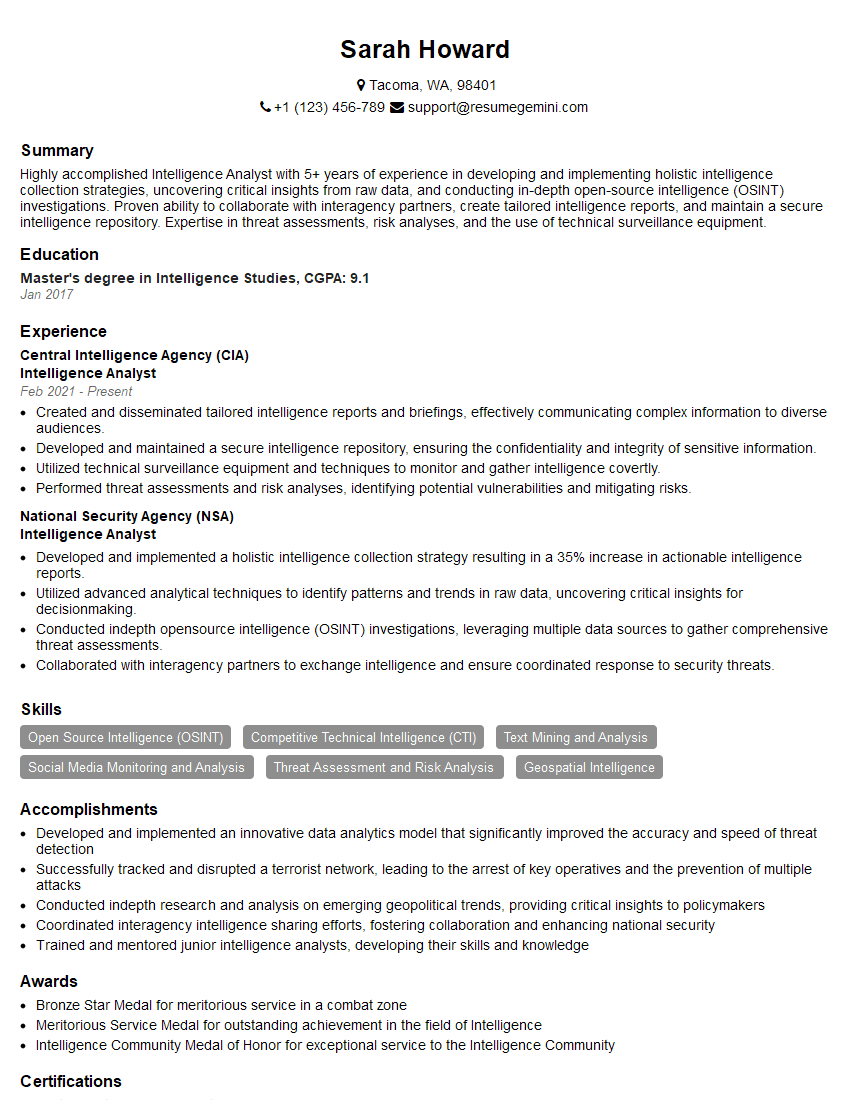
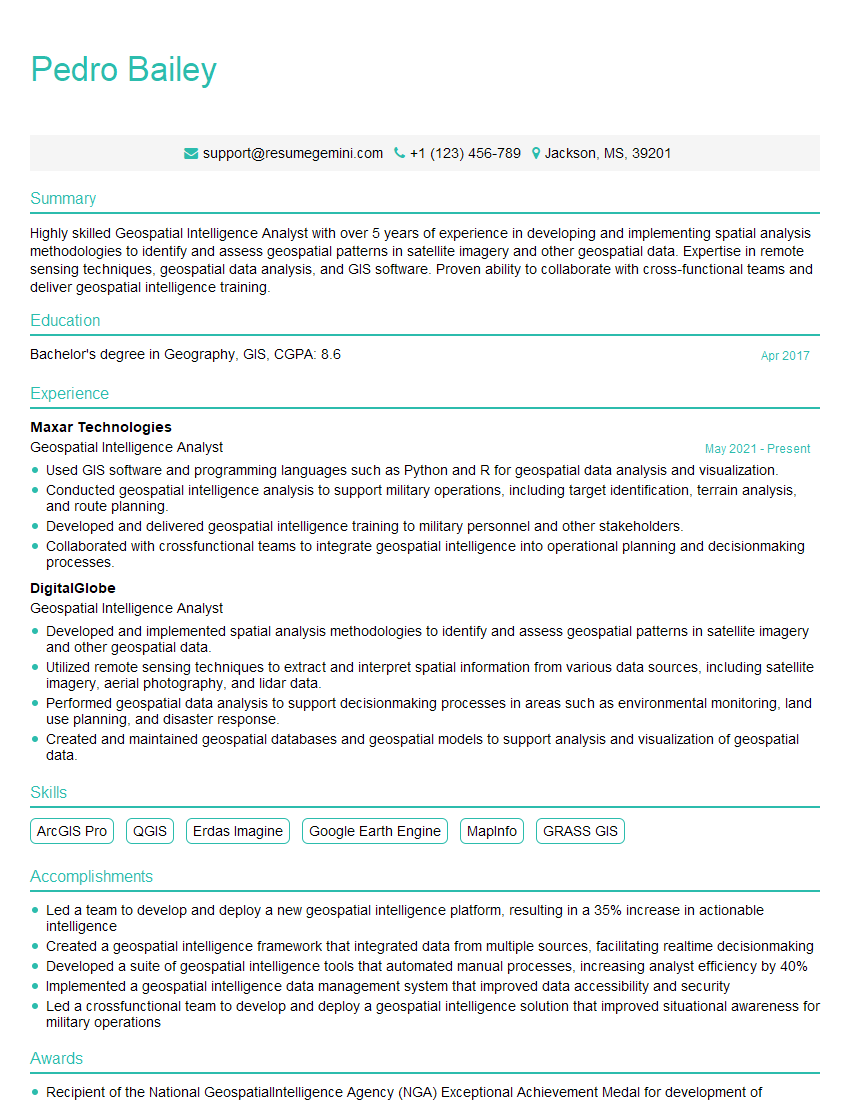
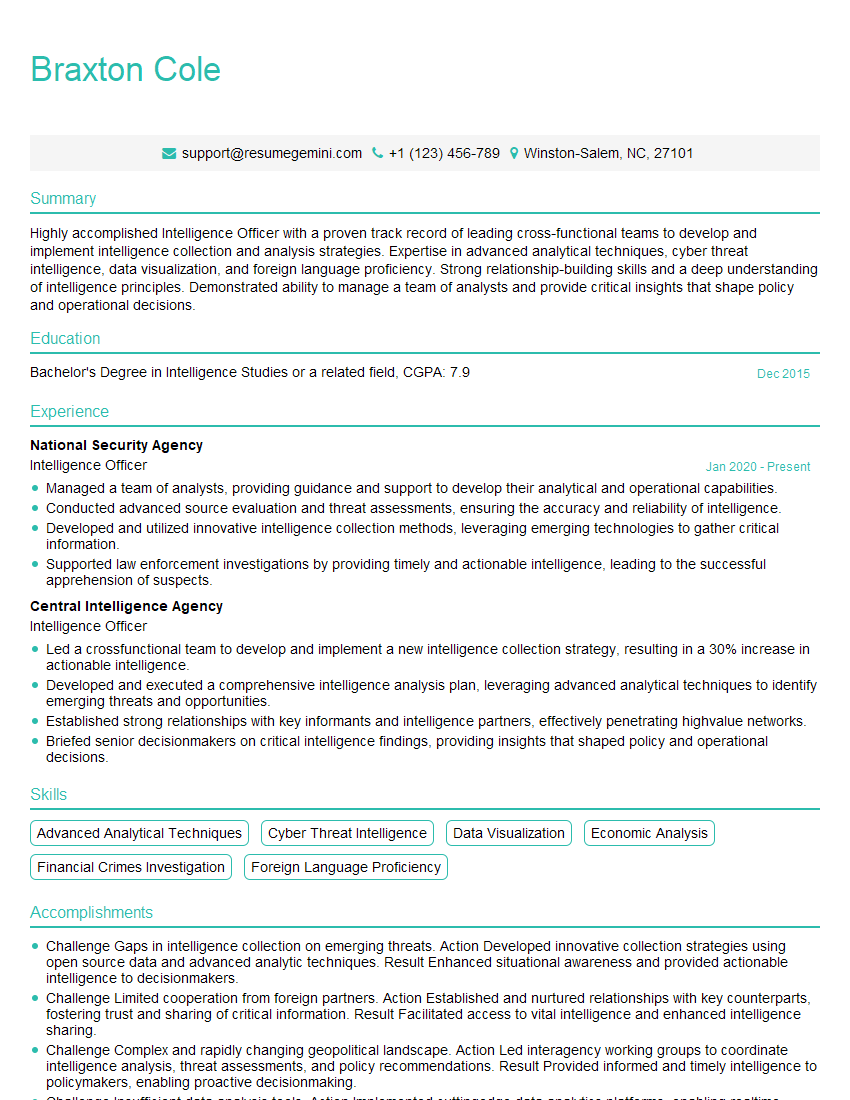
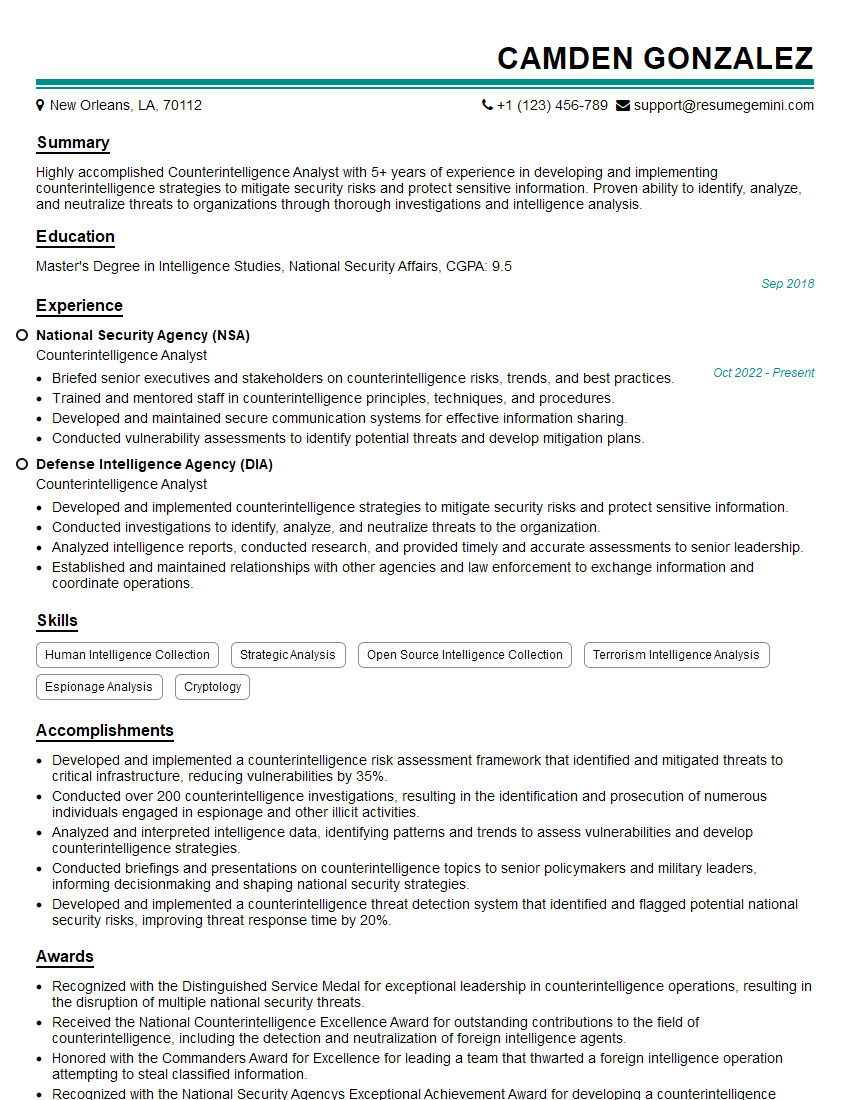
Mastering Military Intelligence Analysis opens doors to a rewarding and impactful career, offering opportunities for professional growth and significant contributions to national security. To maximize your job prospects, creating a strong, ATS-friendly resume is crucial. ResumeGemini is a trusted resource that can help you build a professional resume that highlights your skills and experience effectively. We provide examples of resumes tailored to Military Intelligence Analysis to help guide you. Invest time in crafting a compelling resume – it’s your first impression on potential employers.
Explore more articles
Users Rating of Our Blogs
Share Your Experience
We value your feedback! Please rate our content and share your thoughts (optional).
What Readers Say About Our Blog
Very informative content, great job.
good