Feeling uncertain about what to expect in your upcoming interview? We’ve got you covered! This blog highlights the most important Milking Parlor Maintenance interview questions and provides actionable advice to help you stand out as the ideal candidate. Let’s pave the way for your success.
Questions Asked in Milking Parlor Maintenance Interview
Q 1. Describe your experience maintaining milking parlor rotary systems.
My experience with maintaining rotary milking parlor systems spans over 10 years. I’ve worked on various brands and models, from small-scale operations to large-capacity dairies. My responsibilities have included everything from routine lubrication and inspection to major repairs and troubleshooting. For example, I recently resolved a significant issue with a malfunctioning rotary platform drive system by identifying a worn gear and replacing it, preventing costly downtime.
I understand the intricate workings of these systems, including the crucial interplay between the platform’s rotation, the cow stalls, the milking units, and the overall vacuum system. My expertise extends to identifying potential failure points early on through proactive inspections, thereby minimizing unexpected breakdowns. I’m proficient in hydraulic and electrical diagnostics, and familiar with various safety protocols associated with these complex machines.
Q 2. What are the common causes of milking machine malfunctions?
Milking machine malfunctions stem from several sources. Common causes include issues with the vacuum system (leaks, pump failures, inadequate vacuum levels), problems with the milking unit components (liners, claw, pulsators – think of them like tiny heart pumps for the cow!), and electrical faults (wiring issues, controller malfunctions). Poor hygiene practices leading to clogged lines or faulty milk filters are frequently overlooked but equally significant causes. Mechanical issues such as worn bearings, damaged gears, or failing motors are also responsible for malfunctions.
- Vacuum Leaks: Often caused by cracked tubing, loose connections, or worn seals. These can significantly reduce milking efficiency and potentially harm the udder.
- Pulsator Problems: These regulate the vacuum and air pressure, creating the milking action. Malfunctioning pulsators can lead to uneven milking or udder injury.
- Clogged Milk Lines: Milk residue and bacteria can build up, reducing flow and potentially contaminating milk.
Q 3. How do you troubleshoot issues with milk flow and vacuum pumps?
Troubleshooting milk flow and vacuum pump issues requires a systematic approach. For milk flow problems, I start by visually inspecting the entire milk line for blockages, checking all the connections for leaks, and ensuring the pulsators are functioning correctly. I’ll then test vacuum levels and the milk filter for clogs.
For vacuum pump issues, I first assess the vacuum gauge readings. Low readings indicate a problem. I then check for leaks in the vacuum lines using a vacuum leak detector. If the pump itself is the issue, I’ll check its oil level, listen for unusual noises, and inspect the belts and motor for wear. Often, a simple belt adjustment or oil change solves the problem. If not, I investigate the possibility of more serious mechanical damage requiring specialized repair or replacement.
Think of it like this: if your sink is clogged, you first check the drain, then the pipes. Similarly, with milking machines, you start with the simplest, most accessible checks before moving to more complex systems.
Q 4. Explain your experience with cleaning and sanitizing milking equipment.
Cleaning and sanitizing milking equipment is critical for maintaining hygiene and preventing mastitis (udder infection) in cows. My cleaning process typically involves a three-step approach: pre-cleaning, cleaning, and sanitizing.
- Pre-cleaning: This involves flushing the system with cold water to remove most of the milk residue. Think of it as rinsing your dishes before putting them in the dishwasher.
- Cleaning: This uses a detergent solution to remove fat and protein deposits. This step requires careful attention to detail to ensure all components are thoroughly cleaned. I usually employ a CIP (Clean-In-Place) system for efficient cleaning.
- Sanitizing: This uses a chemical sanitizer to kill bacteria and prevent contamination. Accurate concentration and contact time are crucial for effective sanitization.
After cleaning and sanitizing, all equipment is thoroughly inspected for any remaining residue, and the system is thoroughly rinsed with fresh, potable water. Proper drying also plays a key role in preventing bacterial growth. We meticulously maintain detailed cleaning logs to comply with sanitary regulations.
Q 5. What preventative maintenance procedures do you perform on milking machines?
Preventative maintenance is crucial for maximizing efficiency and longevity of the milking system. My routine includes regular inspections of all components, lubrication of moving parts, and prompt replacement of worn-out parts like seals, gaskets, and pulsators. We check vacuum lines for leaks, inspect and clean milk filters, and test the functionality of all electrical components, performing routine voltage checks and circuit tests. A carefully planned schedule, often with checklists and record-keeping, helps keep the equipment running smoothly.
Think of it like regular car maintenance: changing oil, checking tires. Regular checks prevent minor problems from turning into costly repairs.
I also pay close attention to the condition of the milking cluster and teat cups, as their integrity directly impacts cow health and milk quality.
Q 6. How do you identify and address issues with milk cooling systems?
Milk cooling systems are vital for maintaining milk quality and preventing bacterial growth. Troubleshooting involves checking the temperature of the milk, the refrigerant levels in the cooling unit, and the cleanliness of the heat exchangers. I look for signs of leaks in the refrigeration lines, inspect the compressor’s operation and ensure proper airflow around the cooling unit. If the milk isn’t cooling down efficiently, it could be due to a faulty thermostat, compressor malfunction, or a problem with the cooling tank’s insulation. Accurate temperature monitoring is paramount and we use data loggers to ensure that the milk is consistently kept at the required temperatures.
Often, a simple issue like a dirty condenser coil can severely impact cooling efficiency. Therefore, regular cleaning and inspection are crucial.
Q 7. Describe your experience with the installation and maintenance of milking parlor automation systems.
I have extensive experience with the installation and maintenance of automated milking parlor systems, including those incorporating robotic milking units and advanced data management systems. My responsibilities encompass the entire lifecycle, from initial planning and system integration to ongoing maintenance and troubleshooting. This involves working with various automation components such as robotic arms, sensors, control systems, and data acquisition software. Troubleshooting such systems often requires a deep understanding of both hardware and software aspects. I am familiar with troubleshooting network communication errors, programming logic, and integrating data into management systems. I’m comfortable with both electrical and mechanical aspects, and have familiarity with various automation protocols and control systems.
For example, I recently resolved a communication issue between a robotic milking arm and the central control system by identifying a faulty cable connection. My strong understanding of both mechanical and electrical engineering coupled with my automation expertise allows me to handle a wide range of challenges in this area.
Q 8. What are the safety procedures you follow when working with milking parlor equipment?
Safety is paramount in a milking parlor. Before starting any maintenance, I always ensure the power is completely disconnected to the milking system. This prevents electrical shocks and accidental starts. I also wear appropriate personal protective equipment (PPE), including safety glasses, gloves, and sturdy closed-toe shoes to protect against potential hazards like sharp edges, spills, or electrical malfunctions. Furthermore, I’m meticulous about checking for any leaks of milk or water before beginning any work. Spills can create a slipping hazard, while milk can spoil quickly, creating unsanitary conditions. I always follow the manufacturer’s instructions for specific equipment and if I’m unsure about any procedure, I consult the manual or seek guidance from a qualified technician before proceeding. Think of it like this: we’re not just maintaining equipment, we’re ensuring the safety of both ourselves and the animals.
- Lockout/Tagout Procedures: I always use lockout/tagout procedures to prevent accidental energization of equipment during maintenance.
- Regular Inspections: Daily visual inspections identify potential hazards before they become significant problems.
Q 9. How do you maintain the hygiene standards required in a milking parlor?
Maintaining hygiene is crucial for milk quality and animal health. My routine starts with a thorough cleaning of the milking parlor after each milking session. This involves rinsing all surfaces with warm water, followed by a wash with an approved dairy detergent. We then sanitize with an approved solution, ensuring that all contact surfaces—like the milking clusters, teat cups, and pipelines—are completely disinfected. I regularly check the effectiveness of our sanitizing solutions, verifying that we’re meeting the necessary standards. We also meticulously clean and sanitize the milking parlor floor, removing any manure or other debris. We pay special attention to areas that tend to accumulate dirt, such as corners and crevices. Regular maintenance of the entire system is crucial, from cleaning filters to checking for leaks. We keep detailed records of all cleaning and sanitizing procedures for traceability and quality control. It’s like a well-oiled machine – consistent cleaning is essential for optimal functioning and milk quality.
Q 10. Describe your experience with different types of milking systems (e.g., parallel, herringbone, rotary).
I’ve worked extensively with parallel, herringbone, and rotary milking systems. Parallel parlors are efficient for smaller herds; their linear design makes for easy cleaning. Herringbone parlors are suitable for larger herds and offer a good balance between efficiency and space. Rotary parlors are ideal for very large herds, offering high throughput, but demand more space and specialized maintenance. Each system has its unique characteristics and requires specific maintenance procedures. For instance, a rotary system requires attention to the rotating platform’s mechanical components, ensuring smooth and safe operation. In parallel systems, focus is usually on the ease of access to each milking unit for thorough cleaning and inspection. My experience includes troubleshooting and repair of all three system types, covering everything from minor adjustments to major repairs. I’m confident in my ability to adapt to any milking system’s demands.
Q 11. How familiar are you with different milking machine components (e.g., claw, pulsator, vacuum pump)?
I possess an in-depth understanding of milking machine components. The claw, for instance, is a crucial part, responsible for collecting milk from the teat cups. Regular inspection for cracks or damage is necessary. The pulsator controls the vacuum cycle within the teat cups, crucial for preventing teat damage; I know how to adjust pulsation rates and troubleshoot malfunctions. The vacuum pump is the heart of the system, maintaining the necessary vacuum level. I’m experienced in identifying leaks and diagnosing pump issues, such as bearing wear or motor failure. Beyond these core components, I’m proficient in maintaining milk meters, air lines, and other parts of the system. I see the milking machine as a system of interconnected parts, each requiring attention and care for optimal performance.
Q 12. How do you diagnose and fix electrical problems in a milking parlor?
Diagnosing electrical problems involves a systematic approach. I begin by checking circuit breakers and fuses, ensuring power is adequately supplied. Using a multimeter, I test voltage levels at different points in the system, isolating the faulty component. I’m experienced in tracing wiring diagrams to pinpoint problems in the system. I understand the importance of safe electrical practices, adhering to all safety regulations before working on any electrical components. For example, a problem with the pulsator could point to a faulty motor or a wiring fault. I can replace faulty components and rewire circuits as needed. Remember, working with electricity requires great care and attention to detail.
Q 13. How do you handle plumbing issues within a milking parlor?
Plumbing issues in a milking parlor are common, ranging from leaks to blockages. My approach involves systematically checking all pipelines, valves, and connections. I’m proficient in identifying and repairing leaks using various techniques depending on the location and severity of the damage. I use specialized tools and techniques to address blockages, ensuring smooth flow of milk and water. I am knowledgeable about different types of pipe materials and their properties. For example, detecting a leak involves listening carefully for unusual sounds, checking for signs of moisture, and visually inspecting the pipelines. I also understand how to safely isolate sections of the plumbing system for repair.
Q 14. What experience do you have with HVAC systems in dairy farms?
HVAC (Heating, Ventilation, and Air Conditioning) systems are critical in maintaining the proper environment for both animal comfort and milk quality. My experience includes routine maintenance tasks, such as filter replacement, cleaning coils, and inspecting ductwork. I understand the importance of proper ventilation to control moisture levels, preventing mold growth and ensuring optimal air quality within the milking parlor. I can diagnose and repair HVAC system issues, ranging from refrigerant leaks to malfunctioning components. I’m familiar with various HVAC system types, and I understand how to optimize their performance to suit the specific needs of the milking parlor environment. Think of the HVAC system like the lungs of the building – a well-maintained system is essential for a healthy and productive environment.
Q 15. Explain your experience with troubleshooting air compressor issues in a milking system.
Troubleshooting air compressor issues in a milking parlor is critical for maintaining the vacuum system, essential for the proper function of the milking units. Air compressors are the heart of the system, providing the suction necessary to draw milk from the cow’s udder. Problems range from minor leaks to major component failures. My approach involves a systematic process.
- Listen and Observe: I start by carefully listening for unusual noises – hissing sounds indicate leaks, while unusual rattling might point to internal component problems. I visually inspect the compressor, air tank, and associated piping for leaks, corrosion, or damage.
- Check Air Pressure: Using a pressure gauge, I verify the air pressure is within the manufacturer’s specified range. Low pressure could signify a leak or a failing compressor.
- Inspect the Air Filter: A clogged air filter restricts airflow and can overheat the compressor. Replacing it is often a simple fix.
- Examine the Pressure Switch: This switch controls the compressor’s on/off cycle. A faulty switch can lead to cycling problems or continuous running, damaging the motor.
- Check Oil Levels and Quality: Low oil levels or contaminated oil lead to overheating and premature wear. I inspect oil levels and ensure the oil is clean and meets the manufacturer’s specifications.
- Check for Leaks: Using soapy water, I carefully check all connections and fittings for air leaks. A small leak can significantly reduce efficiency over time.
- Advanced Troubleshooting: If the problem persists, I might need to check valves, check the motor’s windings for continuity (using a multimeter), or check the compressor’s internal components, potentially requiring professional repair or replacement.
For example, at one farm, a persistent low vacuum was traced to a tiny leak in a seemingly insignificant hose connection. A simple replacement of the hose restored the system to full functionality. In another instance, a failing pressure switch was causing the compressor to run continuously, leading to motor burnout. Early identification through regular maintenance and prompt attention to unusual sounds prevented costly repairs.
Career Expert Tips:
- Ace those interviews! Prepare effectively by reviewing the Top 50 Most Common Interview Questions on ResumeGemini.
- Navigate your job search with confidence! Explore a wide range of Career Tips on ResumeGemini. Learn about common challenges and recommendations to overcome them.
- Craft the perfect resume! Master the Art of Resume Writing with ResumeGemini’s guide. Showcase your unique qualifications and achievements effectively.
- Don’t miss out on holiday savings! Build your dream resume with ResumeGemini’s ATS optimized templates.
Q 16. How do you maintain the cleanliness and functionality of milk lines and transfer systems?
Maintaining the cleanliness and functionality of milk lines and transfer systems is paramount for food safety and optimal milk quality. Any contamination can lead to spoiled milk and potentially harmful bacteria. My routine incorporates several key steps:
- CIP (Clean-in-Place) Systems: I thoroughly understand and utilize the farm’s CIP system, ensuring correct chemical concentrations, temperatures, and cycle times. Regular checks for proper pump operation and chemical dispenser accuracy are essential.
- Manual Cleaning: While CIP systems handle much of the cleaning, manual inspection and cleaning of hard-to-reach areas are vital. This includes inspecting for cracks, blockages, or build-up.
- Sanitization: Following cleaning, I ensure proper sanitation using approved chemicals and procedures to kill any remaining bacteria. I meticulously follow manufacturer’s instructions to ensure effective sanitation without damaging the system.
- Regular Testing: We routinely test the system for bacterial contamination, using appropriate methods to ensure everything is within legal limits and meets quality standards.
- Visual Inspection: Daily visual inspections of the milk lines for cracks, leaks, or other damage are crucial for preventing contamination and downtime.
- Leak Detection: I utilize pressure testing methods to detect and repair small leaks before they become significant problems. Regular pressure checks can help avoid major problems.
Properly maintained milk lines are essential for delivering high-quality, safe milk. I’ve witnessed firsthand the impact of neglecting cleanliness – a single contaminated line can easily spoil an entire batch of milk and require extensive cleaning.
Q 17. Describe your experience with robotic milking systems and their maintenance.
Robotic milking systems offer significant advantages in terms of efficiency and flexibility, but they demand a higher level of technical expertise for maintenance. My experience includes working with several different robotic milking systems from various manufacturers. Maintenance focuses on several key areas:
- Regular Cleaning: Robotic systems require frequent cleaning cycles to prevent bacterial contamination and ensure accurate milk measurement. This includes cleaning the robot’s arms, cups, and internal components.
- Calibration and Adjustment: The robots’ sensors and mechanisms require regular calibration and adjustment to ensure accurate milk extraction and cow identification. Precision is key here.
- Software Maintenance: Modern robotic systems use sophisticated software for controlling operations and data management. I am proficient in troubleshooting software issues, updating software, and managing data backups.
- Preventive Maintenance: I perform scheduled preventive maintenance tasks according to the manufacturer’s recommendations, including lubrication, component inspections, and replacement of wear parts. This minimizes unexpected downtime.
- Troubleshooting: Troubleshooting robotic systems involves analyzing error messages, checking sensors, and using diagnostic tools to identify and resolve issues quickly. Knowledge of the system’s electrical and mechanical components is crucial.
- Robot Arm and Cup Maintenance: The robot’s arms and milking cups are subject to wear and tear. Regular inspections, cleaning, and replacements are essential to ensure the system’s effectiveness and gentle handling of the cows.
For instance, I once resolved a robotic system malfunction by identifying a faulty sensor that was misinterpreting cow position. Replacing the sensor restored the system’s full functionality. In another case, regular preventative maintenance prevented a major breakdown by identifying and replacing a worn-out component before it failed completely. Proactive maintenance is crucial in minimizing downtime and maximizing the lifespan of these expensive and complex systems.
Q 18. How do you manage parts inventory for milking parlor equipment?
Effective parts inventory management is vital for minimizing downtime and ensuring the milking parlor operates efficiently. My approach involves a combination of strategies:
- Categorization: I categorize parts by equipment type, criticality, and frequency of use. This allows for efficient stock tracking and easy identification.
- Software: I use inventory management software to track parts levels, order new parts automatically when low stock is detected, and manage supplier relationships.
- Critical Parts: I maintain a higher stock of critical parts that could cause significant downtime if they fail. These include essential components with limited availability.
- Regular Audits: I conduct regular audits of the parts inventory to check for expired parts, damaged items, and discrepancies in the stock levels.
- Supplier Relationships: I maintain strong relationships with reliable suppliers to ensure timely delivery of needed parts.
- Usage Tracking: I track the usage of each part to better predict future needs and optimize order quantities. This helps prevent overstocking and waste.
For example, I use a software system that automatically generates purchase orders when stock levels of critical parts fall below a pre-determined threshold. This proactive approach ensures minimal downtime due to parts shortages. Regular audits help identify and remove outdated or damaged parts, ensuring that only functional components are available.
Q 19. What software or systems are you familiar with for managing milking parlor maintenance?
I am familiar with several software systems for managing milking parlor maintenance, both cloud-based and on-premise solutions. These systems typically offer features such as:
- Work Order Management: Creating, assigning, and tracking work orders for maintenance tasks.
- Parts Inventory Tracking: Managing stock levels, ordering parts, and tracking usage.
- Preventive Maintenance Scheduling: Scheduling and managing routine maintenance tasks.
- Reporting and Analytics: Generating reports on maintenance costs, downtime, and equipment performance.
- Equipment History: Maintaining a detailed history of all equipment, repairs, and maintenance activities.
Examples of systems I’ve used include [mention specific software names if comfortable doing so; otherwise, replace this sentence with a general description of the type of software used. For instance, you could say]: Several specialized CMMS (Computerized Maintenance Management System) platforms and farm management software packages with integrated maintenance modules. These tools provide a centralized system for all maintenance records, creating a seamless flow of information and efficient management of the parlor’s upkeep. They are indispensable for streamlining operations and tracking costs.
Q 20. How do you prioritize maintenance tasks to minimize downtime?
Prioritizing maintenance tasks effectively is critical for minimizing downtime and ensuring the milking parlor’s efficient operation. My approach uses a combination of techniques:
- Criticality Assessment: I assess the criticality of each task based on its potential impact on milk production, food safety, and overall system functionality. Tasks that pose the greatest risk of major downtime are prioritized.
- Preventive vs. Corrective: I emphasize preventive maintenance to proactively address potential issues before they cause downtime. This involves scheduled inspections and lubrication to prevent failures.
- Urgency Assessment: I consider the urgency of each task based on its potential to cause immediate problems, such as a leak in the milk line or a malfunctioning component.
- Scheduled Maintenance: I use a scheduled maintenance plan based on manufacturer’s recommendations and historical data to plan for routine tasks. This plan helps to proactively avoid future breakdowns.
- Downtime Cost Analysis: I factor in the cost of downtime when prioritizing tasks. A task with the potential for significant downtime will take precedence.
For example, I might prioritize repairing a leaking milk line immediately to avoid milk spoilage, while a less critical task like cleaning the exterior of the equipment can be scheduled for a less busy time.
Q 21. How do you document maintenance procedures and repairs?
Comprehensive documentation of maintenance procedures and repairs is crucial for ensuring consistency, tracking costs, and facilitating future troubleshooting. My documentation process includes:
- Work Orders: I use detailed work orders to record all maintenance activities, including the task performed, parts used, time spent, and any relevant observations.
- Photographs and Videos: I take photographs or videos of problems before and after repairs to document the issue and the solution. This is particularly useful for complex repairs.
- Maintenance Logs: I maintain comprehensive maintenance logs that track all maintenance activities, including preventive maintenance, repairs, and parts replacements. These logs are essential for identifying patterns, predicting future issues, and managing inventory.
- Software Integration: I integrate documentation into the farm management software or CMMS to ensure all information is centralized and easily accessible.
- Standard Operating Procedures (SOPs): I develop and maintain SOPs for routine maintenance tasks to ensure consistency and efficiency.
This detailed documentation ensures that all maintenance history is readily available, allowing for quick troubleshooting if problems recur and making it easier to identify potential issues early on. It is also valuable for tracking costs and justifying maintenance investments.
Q 22. Describe your experience with working under pressure and meeting deadlines in a dairy environment.
Dairy farming demands unwavering reliability. Meeting deadlines, especially during peak milking seasons, requires meticulous planning and proactive problem-solving. For instance, I once had a major pump failure just before the morning milking. Instead of panicking, I immediately assessed the situation, prioritized the repair based on available parts, and delegated tasks to the team. We managed to get the system back online within two hours, minimizing disruption and preventing significant milk loss. This involved coordinating with our supplier for expedited part delivery and guiding less experienced team members in alternative milking procedures while the main system was down. Working under pressure in this environment has taught me the importance of efficient communication, resourcefulness, and prioritizing tasks to ensure minimal downtime.
Q 23. How do you ensure the efficiency and longevity of milking equipment?
Efficiency and longevity of milking equipment hinge on a comprehensive preventative maintenance program. This includes a daily checklist covering visual inspections for leaks, worn parts, and cleanliness, followed by more in-depth weekly and monthly checks. For example, I regularly inspect the vacuum lines for leaks using a vacuum gauge, ensuring optimal vacuum levels are maintained. This prevents teat damage and improves milk flow. We also meticulously clean and sanitize all equipment after each milking session to prevent bacterial growth. Lubrication of moving parts, like claw and pump components, is crucial to prolong equipment life and reduce wear and tear. Regular calibration of the milking unit ensures accuracy in milk measurement and reduces potential for equipment failure. A scheduled preventative maintenance plan, coupled with proper cleaning and lubrication, is vital for maximizing equipment lifespan and minimizing costly repairs.
Q 24. What is your understanding of relevant safety regulations and standards for dairy equipment?
My understanding of safety regulations and standards for dairy equipment encompasses various aspects, including OSHA standards for workplace safety, FDA regulations concerning sanitation and milk quality, and local building codes pertaining to electrical safety and equipment installation. This includes ensuring all electrical components are properly grounded and protected against moisture, implementing lock-out/tag-out procedures during maintenance to prevent accidental activation of machinery, and using appropriate personal protective equipment (PPE) such as gloves and eye protection during all maintenance tasks. Regular inspections for electrical hazards, proper ventilation to prevent buildup of harmful gases, and adherence to safe lifting techniques for heavy components are all paramount. I’m also familiar with specific safety guidelines for handling and disposing of cleaning chemicals. Strict adherence to these regulations guarantees a safe working environment and protects both personnel and the quality of the produced milk.
Q 25. How do you adapt your maintenance techniques to different milking system technologies?
Milking systems vary significantly, from traditional herringbone parlors to robotic systems. My approach adapts to each technology. With traditional systems, maintenance focuses on routine cleaning, lubrication, and replacement of worn parts, like pulsators and claw units. Troubleshooting involves familiarity with the system’s specific components and flow paths. With robotic systems, the maintenance emphasis shifts toward software updates, sensor calibrations, and the prevention of robotic arm malfunctions. Diagnostics become more software-centric, involving error codes and computer-aided troubleshooting. In both cases, understanding the system’s operational principles is key. For example, in a rotary parlor, the focus is on lubrication of the rotating platform’s components and ensuring smooth rotational operation. This adaptable approach ensures I can effectively maintain diverse milking technologies.
Q 26. How do you work effectively with other farm staff to ensure smooth operation of the milking parlor?
Effective teamwork is essential for smooth parlor operation. I foster collaboration by regularly communicating maintenance schedules, highlighting potential issues, and training farm staff on basic maintenance procedures, such as cleaning and lubrication. I conduct regular meetings to discuss potential problems, upcoming maintenance needs, and any necessary improvements to processes. Open communication helps prevent misunderstandings and ensures everyone is aware of their roles. For instance, before major maintenance tasks, I will coordinate with the milking staff to schedule down time that minimizes impact on milk production. By clearly assigning responsibilities, delegating tasks effectively, and encouraging team participation, we ensure the milking process runs smoothly and efficiently.
Q 27. Describe your experience with troubleshooting and resolving major malfunctions in a milking parlor.
Troubleshooting major malfunctions requires a systematic approach. I start by identifying the problem, utilizing diagnostics tools where available. This might involve checking vacuum levels, flow rates, or electrical currents depending on the issue. Once the problem is identified, I’ll consult manuals, diagrams, and contact manufacturers or technicians for support if needed. For example, when facing a complete vacuum pump failure, I systematically checked each component of the system to pinpoint the exact cause of the failure. Once identified, I either repaired it myself or contacted a specialist to replace the defective part, coordinating with the team to find temporary solutions while waiting for the part. Documenting each step ensures repeatability and allows others to resolve similar issues in the future. This systematic approach minimizes downtime and maximizes the efficiency of the milking process.
Q 28. How do you stay updated on the latest advancements in milking parlor technology and maintenance practices?
Staying current requires a multi-pronged approach. I subscribe to industry publications, attend workshops and conferences focused on dairy technology and milking parlor maintenance, and actively participate in online forums and professional networks. Manufacturers often provide training on their specific equipment, and I make sure to take advantage of those opportunities. I also regularly review the latest research papers and case studies published on improving milking parlor efficiency and maintenance strategies. Keeping abreast of these developments allows me to anticipate emerging challenges and adopt best practices in maintenance, ensuring that I’m always using the most effective and efficient methods.
Key Topics to Learn for Milking Parlor Maintenance Interview
- Equipment Operation & Troubleshooting: Understanding the mechanics of milking machines (e.g., vacuum pumps, pulsators, milk claws), common malfunctions, and preventative maintenance procedures.
- Cleaning and Sanitation Protocols: Mastering proper cleaning and sanitizing techniques to maintain hygiene standards and prevent bacterial contamination, including understanding relevant regulations and best practices.
- Preventative Maintenance Schedules: Developing and implementing effective preventative maintenance schedules to minimize downtime and extend equipment lifespan, including lubrication, inspections, and component replacements.
- Safety Procedures and Regulations: Familiarity with all relevant safety protocols, including lockout/tagout procedures, personal protective equipment (PPE) usage, and hazard identification.
- Dairy Farm Technology: Understanding the integration of technology in modern milking parlors, such as automated systems, data monitoring, and software applications for record-keeping and efficiency.
- Troubleshooting and Repair: Developing problem-solving skills to diagnose and repair common milking parlor equipment issues, including identifying root causes and implementing effective solutions.
- Record Keeping and Documentation: Maintaining accurate and organized records of maintenance activities, repairs, and equipment performance for compliance and efficiency.
- Budgeting and Cost Management: Understanding the financial aspects of milking parlor maintenance, including budgeting for repairs, replacements, and preventative maintenance.
Next Steps
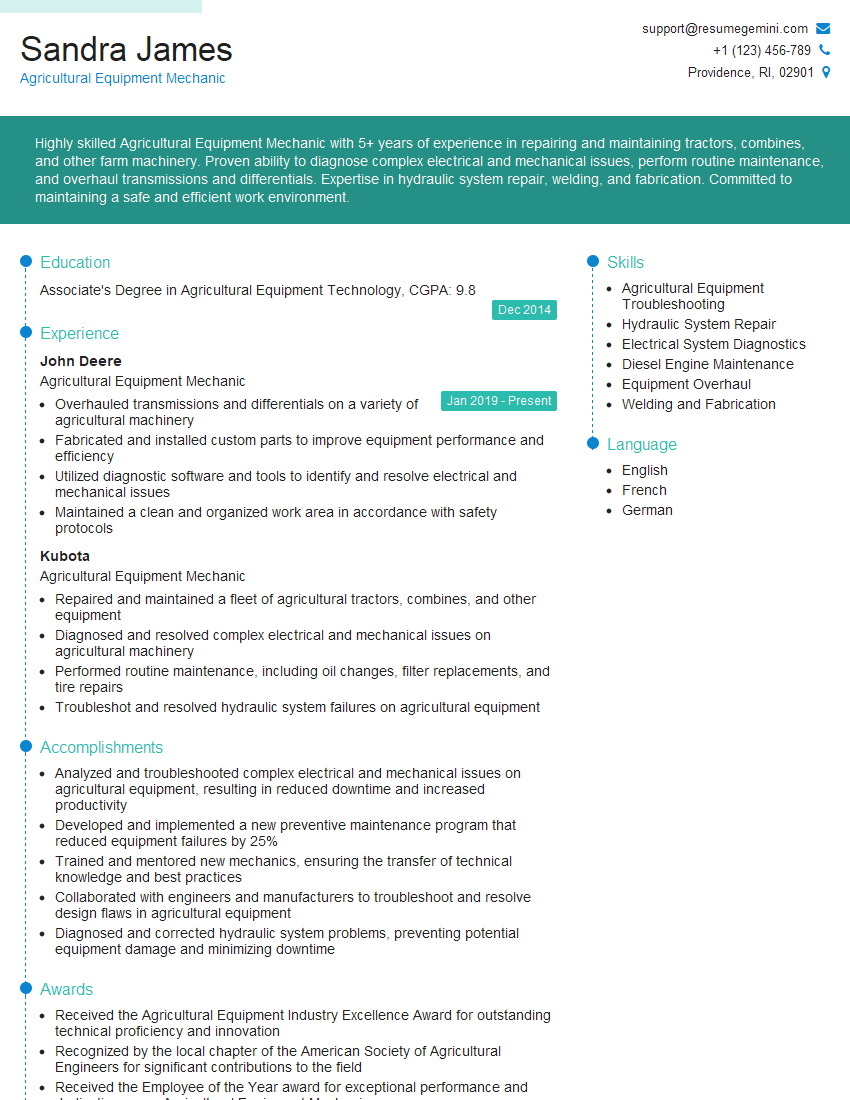
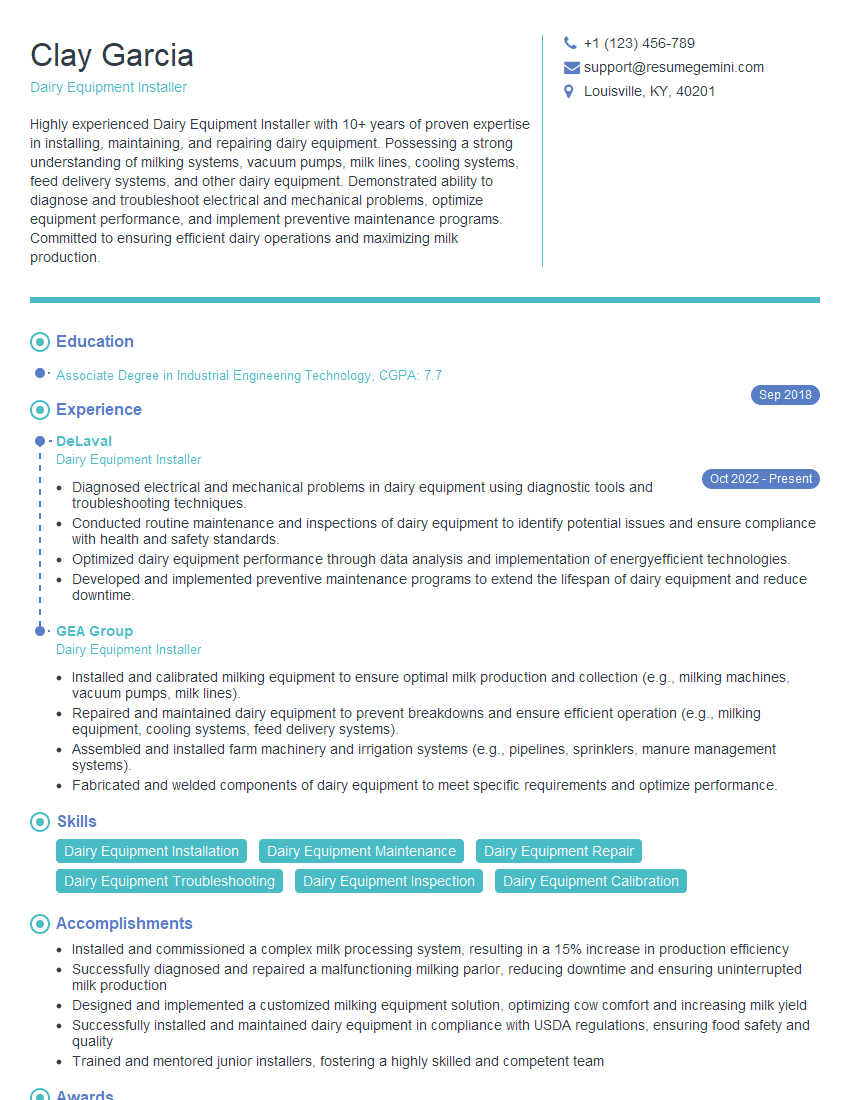
Mastering Milking Parlor Maintenance is crucial for career advancement in the dairy industry. A strong understanding of these principles demonstrates valuable skills and commitment to efficient and safe dairy operations, leading to greater responsibility and higher earning potential. To significantly enhance your job prospects, create an ATS-friendly resume that highlights your relevant skills and experience. ResumeGemini is a trusted resource to help you build a professional and effective resume. Examples of resumes tailored to Milking Parlor Maintenance positions are available to guide you through this process.
Explore more articles
Users Rating of Our Blogs
Share Your Experience
We value your feedback! Please rate our content and share your thoughts (optional).
What Readers Say About Our Blog
Very informative content, great job.
good