Interviews are more than just a Q&A session—they’re a chance to prove your worth. This blog dives into essential Mine Management and Leadership interview questions and expert tips to help you align your answers with what hiring managers are looking for. Start preparing to shine!
Questions Asked in Mine Management and Leadership Interview
Q 1. Describe your experience in mine production optimization.
Mine production optimization is a multifaceted process focused on maximizing output while minimizing costs and risks. It involves strategically managing all aspects of the mining operation, from resource extraction to processing and transportation. My experience encompasses leveraging data analytics, process improvement methodologies like Lean and Six Sigma, and advanced technologies such as automated haulage systems and predictive maintenance to achieve significant gains in productivity.
For example, in a previous role, we implemented a real-time monitoring system for our crushing and grinding circuit. This allowed us to identify and address bottlenecks in the process, leading to a 15% increase in throughput within six months. We also utilized mine scheduling software to optimize blasting patterns and haulage routes, resulting in a reduction in cycle times and improved overall efficiency.
Another key aspect is workforce optimization. By implementing training programs focused on best practices and providing employees with the right tools and technologies, we achieved significant improvements in both safety and productivity. This holistic approach, combining technological advancements with a focus on human capital, is crucial for effective mine production optimization.
Q 2. Explain your approach to managing mine safety regulations.
Managing mine safety regulations requires a proactive, multi-layered approach. It begins with a deep understanding of all applicable laws and regulations, which vary significantly by jurisdiction. This includes regular review and updates to ensure compliance with evolving standards. Beyond compliance, I believe in fostering a strong safety culture within the organization.
This involves clear communication of safety protocols, regular safety training for all personnel, and rigorous enforcement of safety rules. I employ a system of regular safety audits and inspections to identify potential hazards and address them proactively. Incident investigation is crucial; we conduct thorough root-cause analyses of any incidents, implementing corrective actions to prevent recurrence. This is further complemented by robust risk management processes and the use of safety management systems (SMS) to systematically identify, assess, and control risks.
For example, in a past project, we implemented a new system of near-miss reporting, which significantly increased our awareness of potential hazards and allowed us to address them before they escalated into accidents. This resulted in a noticeable reduction in lost-time injuries.
Q 3. How do you handle conflicts between different departments within a mine?
Conflicts between departments are inevitable in any large organization, including a mine. My approach focuses on open communication, collaboration, and a clear understanding of each department’s goals and priorities. I encourage regular cross-departmental meetings to foster communication and identify areas of potential conflict early on. This facilitates a proactive approach rather than reacting to issues after they arise.
When conflicts do occur, I encourage the involved parties to engage in collaborative problem-solving. Mediation may be necessary in some cases to facilitate a fair and constructive resolution. It’s crucial to listen to all perspectives and ensure that everyone feels heard and understood. The goal is not to assign blame, but to identify the root cause of the conflict and develop solutions that address the underlying issues. A clear and well-defined decision-making process, involving all relevant stakeholders, is essential for ensuring fair and effective outcomes.
For instance, I once resolved a dispute between the engineering and operations departments regarding the implementation of a new drilling system by facilitating a series of joint workshops where both teams worked together to identify and address their concerns. This collaborative approach resulted in a smoother implementation and improved relationships between the departments.
Q 4. What are your strategies for improving mine efficiency and reducing costs?
Improving mine efficiency and reducing costs requires a holistic approach encompassing various strategies. Firstly, data-driven decision-making is paramount. This involves collecting and analyzing operational data to identify areas for improvement. This could include optimizing equipment utilization, streamlining workflows, and improving resource allocation. Technologies such as process simulation and predictive maintenance play a vital role here.
Secondly, continuous improvement methodologies, such as Lean and Six Sigma, are incredibly effective in identifying and eliminating waste within the mining process. This includes waste of time, materials, energy, and effort. Implementing best practices across all aspects of the operation, from extraction to processing and transportation, is crucial. Thirdly, investing in advanced technologies can significantly enhance efficiency. This could include autonomous haulage systems, remote-operated equipment, and advanced drilling techniques.
Finally, optimizing the supply chain and negotiating favorable contracts with suppliers can also generate significant cost savings. By implementing a combination of these strategies, we can achieve a considerable improvement in mine efficiency and cost reduction. For example, in a previous role, we implemented a new maintenance schedule based on predictive maintenance techniques, resulting in a 20% reduction in equipment downtime and a significant decrease in maintenance costs.
Q 5. How would you address a sudden equipment failure impacting mine production?
Addressing a sudden equipment failure requires a swift and organized response. My approach involves a multi-step process, beginning with immediate safety protocols to ensure the safety of personnel. The affected area would be immediately secured and personnel evacuated if necessary. Then, a rapid assessment of the situation is conducted to determine the extent of the damage and the impact on production.
Next, a dedicated team is assembled to address the issue, involving maintenance personnel, engineers, and operations managers. A decision is made on whether to attempt on-site repair, utilize a backup system, or contract external specialists. The decision is based on the severity of the failure, the availability of spare parts, and the time required for repair. Open communication with all stakeholders is essential during this process to keep everyone informed and manage expectations.
Meanwhile, a plan is developed to minimize production losses. This may involve re-allocating resources, adjusting production schedules, or utilizing alternative methods of operation. Following the resolution, a post-incident analysis is carried out to identify the root cause of the failure and prevent similar occurrences in the future. This ensures continuous improvement and enhances the resilience of the mining operation.
Q 6. Explain your understanding of mine ventilation and its importance.
Mine ventilation is the controlled process of supplying fresh air to underground workings and removing harmful gases and dust. It’s crucial for maintaining a safe and productive working environment. Inadequate ventilation can lead to a build-up of harmful gases such as methane and carbon monoxide, posing serious health risks to mineworkers and potentially leading to explosions. Dust build-up can also create respiratory hazards and contribute to the risk of explosions.
My understanding encompasses designing and maintaining ventilation systems that meet regulatory requirements and ensure the health and safety of mineworkers. This includes understanding airflow dynamics, ventilation network design, and the use of specialized equipment such as fans, ventilation shafts, and monitoring systems. Regular monitoring of air quality is essential to ensure compliance and detect any potential hazards. I have extensive experience in designing, implementing, and maintaining ventilation systems for various underground mining operations, optimizing airflow to minimize energy consumption while maintaining safe levels of gas and dust.
For instance, I was involved in a project where we redesigned the ventilation system in a deep underground mine to improve airflow and reduce energy costs. This involved using computational fluid dynamics (CFD) modeling to optimize the ventilation network, leading to a 10% reduction in energy consumption while significantly improving air quality.
Q 7. Describe your experience with mine geological modeling and resource estimation.
Mine geological modeling and resource estimation are critical for planning and optimizing mining operations. Geological modeling involves creating a three-dimensional representation of the orebody, incorporating data from geological surveys, drilling, and other exploration activities. This model provides a detailed understanding of the orebody’s geometry, grade distribution, and geological characteristics. Resource estimation utilizes this model to quantify the amount and grade of ore that can be economically extracted.
My experience includes using various geological modeling software and statistical techniques to generate accurate and reliable resource estimates. I’m proficient in techniques such as kriging, inverse distance weighting, and geostatistical simulation. The quality of the geological model and resource estimation directly impacts the feasibility and profitability of a mining project, influencing critical decisions related to mine planning, capital investment, and production scheduling.
For example, in a previous project, I used geostatistical simulation to generate multiple plausible models of an orebody, reflecting the inherent uncertainty in the geological data. This allowed us to develop a more robust mine plan that accounted for the variability in ore grade and geometry, minimizing the risk of economic losses and enhancing the long-term sustainability of the project. This holistic approach ensures both accuracy and acknowledges inherent uncertainties.
Q 8. How do you ensure compliance with environmental regulations in mining operations?
Ensuring environmental compliance in mining is paramount, not just for legal reasons but for the long-term sustainability of our operations and the well-being of surrounding communities. It’s a multifaceted process that begins even before extraction.
Pre-Mining Assessment: Thorough environmental impact assessments (EIAs) are crucial. These studies identify potential risks and outline mitigation strategies, which are then incorporated into our operation plans. We consult with regulatory bodies throughout this process.
Implementation of Best Practices: We meticulously follow all relevant environmental regulations, such as those pertaining to water management, air quality, and waste disposal. This includes employing dust suppression techniques, utilizing water recycling systems, and implementing rigorous monitoring programs. For example, we might implement a closed-loop water system to minimize water usage and prevent contamination.
Continuous Monitoring and Reporting: Regular environmental monitoring is essential to identify and address potential issues proactively. This includes analyzing water and air samples, conducting biodiversity surveys, and assessing the impact on surrounding ecosystems. All data is meticulously documented and reported to the relevant authorities, demonstrating our commitment to transparency and compliance.
Rehabilitation and Reclamation: We prioritize mine site rehabilitation and reclamation plans, aiming to restore the land to a productive state or even a better state than before mining activities began. This involves re-vegetation, soil remediation, and careful management of tailings ponds.
Employee Training: Environmental compliance isn’t just a management responsibility; it’s integrated into our employee training programs. Every employee understands their role in protecting the environment and the procedures to follow.
For instance, in a previous role, we successfully implemented a new tailings management system that reduced water consumption by 30% and significantly improved the quality of discharged water, exceeding regulatory requirements.
Q 9. What are your strategies for developing and motivating your team in a mine environment?
Motivating a team in the challenging mine environment requires a multi-pronged approach focusing on safety, recognition, and development. It’s about fostering a culture of collaboration and respect.
Safety First Culture: A safe workplace is a motivated workplace. We prioritize safety training, invest in advanced safety equipment, and consistently reinforce safety protocols. This creates a sense of trust and security among the team.
Open Communication and Feedback: Regular team meetings, open-door policies, and actively soliciting feedback are vital. We encourage employees to share their concerns and ideas freely, fostering a sense of ownership and involvement.
Recognition and Rewards: Celebrating successes, both big and small, is crucial. This could involve acknowledging individual achievements through performance bonuses, public recognition, or simply a heartfelt ‘thank you’.
Training and Development: Investing in employees’ growth shows commitment. We provide opportunities for skill enhancement, leadership training, and career advancement, enabling employees to develop professionally and personally.
Mentorship and Teamwork: Pairing experienced workers with newer employees helps build a strong team dynamic and provides valuable learning opportunities. Encouraging collaboration and problem-solving fosters team spirit and a sense of shared purpose.
In my experience, a team that feels valued, empowered, and safe consistently outperforms, even in the face of challenging circumstances. For example, at a previous mine, we implemented a peer-to-peer recognition program, which boosted morale and led to a significant decrease in safety incidents.
Q 10. How do you manage risk in a mine operation?
Risk management in mining is critical due to the inherent dangers associated with the industry. We employ a proactive and layered approach that includes:
Hazard Identification and Risk Assessment: Regularly identifying potential hazards through risk assessments using techniques such as HAZOP (Hazard and Operability Study) and bow-tie analysis is paramount. This involves analyzing potential incidents, their causes, and consequences.
Risk Mitigation Strategies: Based on the risk assessment, we implement control measures to reduce or eliminate the identified risks. These measures can include engineering controls (e.g., improved ventilation systems), administrative controls (e.g., stricter work procedures), and personal protective equipment (PPE).
Emergency Response Planning: Developing comprehensive emergency response plans that cover various scenarios, such as ground control failures, equipment malfunctions, and medical emergencies, is crucial. These plans include detailed evacuation procedures and communication protocols.
Monitoring and Review: Regular monitoring of the effectiveness of risk mitigation measures and ongoing review of the risk assessment are essential to ensure the continued effectiveness of the overall risk management system. Data is analyzed to identify trends and areas for improvement.
Incident Investigation: Thorough investigation of all incidents, near misses, and accidents helps identify root causes and implement preventative measures, preventing recurrence.
A strong safety culture underpinned by robust risk management systems is essential to create a safe working environment and protect both personnel and the environment. A previous project involved implementing a new rock mechanics monitoring system that significantly improved our ability to predict and mitigate ground control hazards.
Q 11. Describe your experience with mine planning and scheduling software.
I have extensive experience with various mine planning and scheduling software packages, including industry-standard tools such as MineSight, Deswik, and Vulcan. My proficiency extends beyond basic data input and report generation; I’m skilled in optimizing mine designs, generating realistic production schedules, and integrating data from various sources.
For instance, I’ve used MineSight to optimize pit designs for maximum profitability, considering factors like ore grade, stripping ratios, and infrastructure constraints. With Deswik, I’ve developed detailed underground mine plans, including stope designs and haulage networks. I understand the importance of data integration, ensuring consistent information flow between different software packages and departments. I can also use these tools for reporting and analyzing key performance indicators (KPIs) like production rates, costs, and ore grades. My experience allows me to leverage the power of these tools to make data-driven decisions leading to increased efficiency and reduced costs.
Q 12. What is your approach to dealing with employee grievances or disciplinary actions?
Addressing employee grievances and disciplinary actions requires a fair, consistent, and transparent approach. My approach centers on open communication, due process, and a focus on resolution rather than retribution.
Open Communication and Mediation: I encourage open communication and attempt to resolve grievances informally through dialogue and mediation wherever possible. This often involves actively listening to the employee’s concerns and working collaboratively to find a mutually agreeable solution.
Formal Grievance Procedure: If informal attempts fail, a formal grievance procedure is followed, ensuring due process and the employee’s rights are protected. This typically involves written documentation, investigations, and opportunities for the employee to present their case.
Disciplinary Actions: Disciplinary actions are taken only as a last resort, following a clear and documented process. These actions are always proportional to the offense, consistent with company policy, and communicated clearly to the employee.
Fairness and Consistency: It’s critical to treat all employees fairly and consistently, regardless of their position or seniority. This builds trust and ensures that the disciplinary process is perceived as impartial.
Focus on Corrective Actions: Rather than focusing solely on punishment, the emphasis is on corrective actions that help the employee learn from their mistakes and avoid future issues. This could include additional training, mentoring, or performance improvement plans.
My aim is to maintain a positive and respectful work environment while upholding company policies and ensuring fairness for all employees. I’ve successfully resolved numerous employee grievances through a combination of effective communication, mediation, and a fair disciplinary process.
Q 13. How would you implement a new mining technology or process?
Implementing a new mining technology or process requires a systematic and phased approach that minimizes disruption and maximizes the chances of success.
Needs Assessment and Feasibility Study: Begins with a thorough needs assessment to justify the need for the new technology or process. This includes a cost-benefit analysis and evaluation of potential risks and benefits.
Pilot Program: Conducting a small-scale pilot program to test the technology or process in a controlled environment allows for data collection and fine-tuning before full-scale implementation.
Training and Education: Adequate training for all personnel involved in the implementation is critical to ensure proper usage and safety. This could involve simulations, on-the-job training, and hands-on experience.
Phased Rollout: Implement the new technology or process in phases rather than all at once. This approach minimizes disruption and allows for continuous monitoring and adjustment.
Data Monitoring and Evaluation: Continuously monitor the performance of the new technology or process and evaluate its impact on productivity, safety, and costs. Regular performance reviews will inform any further adjustments.
Integration with Existing Systems: Ensure seamless integration with existing systems, such as enterprise resource planning (ERP) and safety management systems.
For example, in a previous role, we successfully implemented a new automated drilling system, following a phased rollout and rigorous training program. This resulted in a significant increase in drilling efficiency and a reduction in operational costs.
Q 14. Explain your understanding of different mining methods (e.g., open-pit, underground).
Different mining methods are chosen based on various factors including ore body geometry, depth, grade, and environmental considerations. Each has its own advantages and disadvantages.
Open-Pit Mining: This method is used for large, near-surface deposits. It involves excavating the ore using heavy machinery such as excavators and haul trucks. It’s relatively low cost per ton but can have significant environmental impacts, particularly related to land disturbance and water management.
Underground Mining: Used for deposits located deep underground, this method involves creating underground workings to access the ore. Several variations exist, including room and pillar, sublevel stoping, and block caving, each suited to different geological conditions and ore body shapes. This method is generally more expensive and complex than open-pit mining but can be employed with less surface disturbance.
Other methods: Other mining methods exist, such as in-situ leaching (ISL), which involves dissolving and extracting valuable minerals without physical excavation; and solution mining, which involves dissolving the ore using a chemical solution.
The selection of a suitable mining method is a crucial decision that requires detailed geological and engineering studies to optimize cost-effectiveness, safety, and environmental impact. In my career, I’ve been involved in projects using both open-pit and underground mining techniques, adapting our strategies to the unique geological and operational challenges of each project.
Q 15. Describe your experience in managing mine budgets and financial performance.
Managing mine budgets and financial performance requires a multifaceted approach combining strategic planning, cost control, and performance monitoring. It’s not just about sticking to a budget; it’s about optimizing resource allocation to maximize profitability while ensuring safety and environmental compliance.
In my previous role at [Previous Company Name], I was responsible for a $50 million annual operating budget. I implemented a zero-based budgeting system, forcing each department to justify every expense from scratch. This led to a 15% reduction in operational costs without compromising safety or production targets. We also leveraged advanced analytics to forecast commodity prices and adjust our spending accordingly, mitigating the impact of market fluctuations. For example, during periods of low metal prices, we prioritized cost-saving initiatives such as optimizing haul road routes and implementing energy-efficient equipment. Regular performance reviews against key performance indicators (KPIs), such as cost per tonne produced and return on investment (ROI), allowed us to identify areas needing improvement and make data-driven decisions.
Career Expert Tips:
- Ace those interviews! Prepare effectively by reviewing the Top 50 Most Common Interview Questions on ResumeGemini.
- Navigate your job search with confidence! Explore a wide range of Career Tips on ResumeGemini. Learn about common challenges and recommendations to overcome them.
- Craft the perfect resume! Master the Art of Resume Writing with ResumeGemini’s guide. Showcase your unique qualifications and achievements effectively.
- Don’t miss out on holiday savings! Build your dream resume with ResumeGemini’s ATS optimized templates.
Q 16. How do you ensure the long-term sustainability of a mine operation?
Ensuring the long-term sustainability of a mine operation involves a holistic strategy encompassing environmental, social, and economic factors. It’s about leaving a positive legacy rather than simply extracting resources.
- Environmental Sustainability: This involves minimizing our environmental footprint through responsible water management, efficient energy use, greenhouse gas emission reduction, and effective waste management. We must adhere to strict regulatory standards and implement robust environmental monitoring programs.
- Social Sustainability: Building strong relationships with local communities is crucial. This includes creating employment opportunities, supporting local businesses, and engaging in transparent communication regarding our operations and their impact. Addressing social concerns and contributing to the well-being of the communities around the mine are vital for long-term acceptance and support.
- Economic Sustainability: Long-term economic viability requires careful planning for mine closure and rehabilitation. This involves setting aside funds for post-mining land reclamation, ensuring the mine site is safely and responsibly restored to its pre-mining state or a better one, and creating opportunities for economic diversification in the area after the mine closes.
For instance, at [Previous Company Name], we implemented a comprehensive biodiversity offsetting program to mitigate the impact of our operations on local ecosystems. We also invested in community development projects, creating a lasting positive impact on the surrounding communities.
Q 17. How would you handle a serious mine accident or incident?
Handling a serious mine accident or incident requires a swift, coordinated, and decisive response focused on safety, investigation, and communication. My approach follows a structured framework:
- Immediate Response: Activate emergency response protocols, ensuring the safety of personnel and containing the incident. This includes contacting emergency services and implementing first aid and rescue procedures.
- Investigation: A thorough investigation is essential to determine the root cause of the accident, identify contributing factors, and implement corrective actions to prevent recurrence. This involves assembling a team of experts to examine all aspects of the incident, including equipment, procedures, and human factors.
- Communication: Transparent and timely communication with affected employees, families, regulatory agencies, and the public is paramount. It’s crucial to be open and honest about what happened, what actions are being taken, and what measures are in place to prevent future incidents.
- Corrective Actions: Based on the investigation findings, implement corrective actions to eliminate hazards and prevent similar incidents. This may involve changes to equipment, procedures, or training programs.
- Learning and Improvement: Thoroughly document the incident, analyze its causes and effects, and share lessons learned across the company and the wider industry to promote continuous improvement in safety and operational practices.
For example, in a hypothetical scenario involving a ground collapse, I would prioritize the immediate rescue of any trapped personnel, secure the affected area, and then initiate a comprehensive investigation involving geotechnical engineers and safety experts to determine the cause of the collapse and what preventative measures we need to take to prevent similar events.
Q 18. Explain your experience with mine closure planning and rehabilitation.
Mine closure planning and rehabilitation is not an afterthought; it’s an integral part of the mine lifecycle that requires early and comprehensive planning. It involves restoring the mine site to a safe and environmentally sound condition, often exceeding regulatory requirements.
My experience includes developing and implementing closure plans for [Previous Company Name]. This involved:
- Financial Planning: Establishing a dedicated reclamation fund to ensure sufficient resources are available for post-mining activities. This includes calculating the present value of future closure costs and securing adequate funding mechanisms.
- Environmental Assessment: Conducting comprehensive environmental assessments to identify potential environmental impacts and develop appropriate mitigation strategies. This includes planning for water management, soil remediation, and revegetation.
- Engineering Design: Designing the engineering aspects of closure, such as tailings dam decommissioning, waste rock management, and surface water control.
- Regulatory Compliance: Ensuring full compliance with all relevant environmental regulations and obtaining necessary permits for closure activities.
- Community Engagement: Involving local communities in the planning and implementation of closure activities. This ensures that the closure plan aligns with community expectations and fosters a positive legacy for the mine.
We developed a phased approach to mine closure, focusing on progressive rehabilitation as mining operations ceased in different areas of the mine. This helped us manage risks and costs more effectively while maintaining a commitment to environmentally sustainable practices.
Q 19. What are your strategies for improving mine communication and collaboration?
Improving mine communication and collaboration is critical for safety, efficiency, and productivity. It’s about fostering a culture of open communication and teamwork.
My strategies include:
- Establishing clear communication channels: Implementing various communication methods such as daily huddles, toolbox talks, regular meetings, and digital communication platforms. These ensure effective information flow between different levels of the organization.
- Promoting open dialogue: Creating a safe and inclusive environment where everyone feels comfortable sharing ideas, concerns, and suggestions without fear of retribution. This can be achieved through regular feedback sessions, suggestion boxes, and open-door policies.
- Utilizing technology: Leveraging technology to improve communication and information sharing. For example, using digital platforms for document management, project collaboration, and real-time data sharing.
- Cross-functional teamwork: Encouraging collaboration between different departments such as engineering, operations, and safety. This can be achieved through joint projects, shared goals, and cross-training initiatives.
- Leadership training: Equipping leaders with the necessary skills to communicate effectively, build strong teams, and foster a collaborative culture.
For instance, we implemented a company-wide communication platform at [Previous Company Name], allowing all employees to access important information, share updates, and collaborate on projects regardless of their location. This significantly improved the speed and effectiveness of communication across the organization.
Q 20. How do you monitor and improve mine operational performance indicators (KPIs)?
Monitoring and improving mine operational performance indicators (KPIs) is essential for ensuring operational efficiency and profitability. KPIs provide a quantitative measure of performance against targets, enabling data-driven decision-making.
My approach involves:
- Identifying Key KPIs: Establishing a comprehensive set of KPIs relevant to the specific mine operation, covering areas such as production, safety, cost, and environmental performance. These could include tonnes mined per hour, cost per tonne, lost-time injury frequency rate (LTIFR), and water consumption per tonne.
- Data Collection and Analysis: Implementing robust data collection systems and utilizing data analytics tools to track KPIs regularly. This allows for a clear understanding of performance trends and areas needing improvement.
- Performance Benchmarking: Comparing performance against industry best practices and other similar mines to identify opportunities for improvement.
- Regular Reporting and Review: Presenting regular performance reports to management, highlighting key trends, and discussing strategies for achieving targets.
- Continuous Improvement: Utilizing the data to identify areas for improvement and implementing corrective actions to address performance shortfalls. This might involve process optimization, technology upgrades, or employee training programs.
At [Previous Company Name], we used a dashboard system that provided real-time updates on key KPIs, allowing us to quickly identify and address any performance issues. This resulted in a 10% improvement in overall operational efficiency within six months.
Q 21. Describe your experience with mine permitting and regulatory approvals.
Mine permitting and regulatory approvals are crucial for ensuring legal compliance and operational stability. It is a complex process that requires meticulous planning, documentation, and stakeholder engagement.
My experience includes navigating complex permitting processes for several mine projects. This involved:
- Regulatory Research: Thoroughly understanding all relevant environmental, safety, and land-use regulations at the federal, state, and local levels.
- Permit Application Preparation: Preparing comprehensive permit applications, including detailed environmental impact assessments (EIAs), mine plans, and risk assessments.
- Stakeholder Engagement: Engaging with relevant stakeholders, such as government agencies, local communities, and indigenous groups, to ensure transparency and build consensus.
- Permitting Strategy: Developing a robust permitting strategy that identifies potential challenges and anticipates regulatory requirements.
- Permit Monitoring and Compliance: Ensuring ongoing compliance with permit conditions and addressing any regulatory requirements.
For example, during the permitting process for [Previous Company Name]’s expansion project, I anticipated potential issues with water rights and worked closely with local communities to address their concerns proactively. This resulted in a smoother permitting process and minimized potential delays.
Q 22. How do you ensure the health and safety of your team in a mine environment?
Ensuring the health and safety of my team in a mine is paramount. It’s not just a policy; it’s a core value ingrained in every operational decision. My approach is multifaceted and relies on a strong safety culture built on proactive measures and rigorous adherence to regulations.
Proactive Risk Management: We conduct thorough risk assessments at every stage of the mining process, identifying potential hazards and implementing preventative measures. This involves regular inspections, hazard identification training, and the use of advanced safety technologies like proximity detection systems and gas monitoring equipment.
Comprehensive Training Programs: Our training programs aren’t one-size-fits-all. They are tailored to each role and updated regularly to reflect best practices and evolving technologies. This includes emergency response training, equipment operation training, and comprehensive health and safety awareness programs. For example, we recently introduced virtual reality training modules to simulate emergency scenarios, allowing workers to practice their responses in a safe environment.
Robust Communication and Reporting: Open and transparent communication is vital. We encourage workers to report near misses and hazards without fear of retribution. This information fuels continuous improvement efforts and helps us prevent future incidents. We utilize a robust reporting system that allows for immediate feedback and timely corrective action.
Regular Audits and Inspections: Regular safety audits and inspections, conducted by both internal and external experts, ensure that our safety standards are consistently met. These audits aren’t just about finding violations; they are about identifying areas for improvement and reinforcing best practices.
Data-Driven Decision Making: We meticulously track safety data, analyzing trends and identifying areas needing immediate attention. This data-driven approach allows us to proactively address emerging risks and fine-tune our safety programs.
In essence, creating a safety-conscious work environment involves fostering a culture where safety is everyone’s responsibility, not just management’s. It’s about constant vigilance, proactive measures, and a commitment to continuous improvement.
Q 23. What is your experience with mine surveying techniques and data analysis?
Mine surveying is fundamental to efficient and safe mining operations. My experience encompasses a wide range of techniques, from traditional methods to advanced technologies. I’m proficient in:
Traditional Surveying: I have extensive experience in using Total Stations, levels, and theodolites for accurate data acquisition, including underground surveying and surface control.
GPS and GNSS Surveying: I’m skilled in utilizing GPS and GNSS technologies for high-precision positioning and mapping, especially in challenging terrain.
3D Laser Scanning: I’ve utilized 3D laser scanning technology for rapid data acquisition, creating detailed 3D models of the mine environment for planning and analysis. This allows for better visualization of the mine’s geometry and potential hazards.
Data Analysis and Processing: My skills extend to processing and analyzing survey data using specialized software like AutoCAD, MineSight, and Leapfrog Geo. I’m capable of generating accurate maps, sections, and 3D models which are crucial for mine planning, production monitoring and resource estimation.
For example, during a recent project, we used 3D laser scanning to create a highly accurate model of an underground mine. This allowed us to optimize the extraction plan, minimize waste rock handling, and enhance safety by accurately identifying potential hazards like unstable ground conditions. The precise data enabled us to increase efficiency and reduce operational costs.
Q 24. How do you manage stakeholder relations in a mining project?
Managing stakeholder relations in mining requires a delicate balance of transparency, communication, and understanding diverse perspectives. My approach involves actively engaging with all stakeholders – from local communities and government agencies to investors and employees – to foster trust and collaboration.
Community Engagement: I believe in proactive community engagement. This involves establishing open communication channels, addressing concerns promptly and transparently, and ensuring that the community’s needs are considered throughout the project lifecycle. This might include hosting community meetings, establishing community liaison committees, and supporting local initiatives.
Government Relations: Navigating regulatory requirements is crucial. I maintain strong relationships with relevant government agencies, ensuring compliance with all environmental and safety regulations and proactively engaging in any consultations or permitting processes.
Investor Relations: Keeping investors informed about project progress, challenges, and financial performance is essential. This involves regular reporting, transparent communication, and maintaining strong relationships with investors.
Internal Stakeholder Engagement: Employee engagement is equally important. By fostering a culture of open communication, providing training and development opportunities, and recognizing achievements, I create a motivated and productive workforce.
In practice, this translates into consistent and clear communication across all channels, actively seeking feedback and incorporating it into decision-making processes. For instance, during a recent project, we successfully mitigated community concerns about potential environmental impacts by implementing advanced environmental monitoring techniques and engaging in collaborative solutions.
Q 25. Explain your understanding of geotechnical engineering principles in mining.
Geotechnical engineering principles are fundamental to safe and efficient mine design and operation. My understanding encompasses various aspects, including:
Rock Mass Characterization: This involves assessing the physical and mechanical properties of the rock mass, using techniques such as rock mass classifications (e.g., RMR, Q-system) and laboratory testing. This information is critical for designing stable slopes and underground excavations.
Slope Stability Analysis: I’m proficient in performing slope stability analyses, using both limit equilibrium methods and numerical modelling techniques (e.g., finite element analysis). This helps in predicting the risk of slope failures and designing appropriate mitigation measures.
Ground Control: Understanding and implementing appropriate ground control measures is crucial for preventing ground instability and ensuring worker safety in underground mines. This includes techniques such as rock bolting, ground support systems, and controlled blasting.
Subsidence Management: In surface mining, I understand the importance of managing subsidence, including predicting and mitigating its impact on surface infrastructure and the environment.
For example, in a recent project, we used geotechnical analysis to determine the optimal slope angle for an open-pit mine, minimizing the risk of slope failures while maximizing ore extraction. This involved detailed site investigation, laboratory testing, and sophisticated numerical modelling to assess the stability of the rock mass under various scenarios.
Q 26. What is your approach to continuous improvement in mine operations?
Continuous improvement is not just a buzzword in mine operations; it’s a necessity for sustained success and profitability. My approach focuses on data-driven decision-making, employee empowerment, and a commitment to best practices.
Data-Driven Analysis: Regularly monitoring key performance indicators (KPIs) – production rates, cost per tonne, safety performance, equipment utilization – allows for identifying areas for improvement. We use data analytics to understand trends and root causes of inefficiencies.
Lean Principles: Implementing lean manufacturing principles, such as value stream mapping and kaizen events, helps streamline processes, eliminate waste, and improve efficiency. This includes focusing on removing unnecessary steps, reducing delays, and enhancing workflow.
Employee Involvement: Encouraging employees to identify and propose improvements is critical. We use tools like suggestion boxes and regular team meetings to foster a culture of continuous improvement. Employees are empowered to participate in problem-solving and implementing solutions.
Benchmarking: Regularly benchmarking our performance against industry best practices helps identify areas where we can further improve. We participate in industry conferences and share best practices to stay ahead of the curve.
Technology Adoption: Embracing new technologies, such as advanced automation and data analytics tools, can significantly enhance efficiency and safety. This involves researching and implementing new solutions to solve ongoing challenges and enhance operations.
For example, by implementing a new scheduling system and utilizing data analytics to optimize equipment utilization, we were able to increase production by 15% and reduce costs by 10% in a previous project. Continuous improvement is an ongoing journey, not a destination.
Q 27. Describe your experience with developing and implementing mine emergency response plans.
Developing and implementing effective mine emergency response plans is critical for ensuring the safety and well-being of personnel and minimizing environmental damage. My experience encompasses all aspects of this process:
Hazard Identification and Risk Assessment: The process begins with a comprehensive hazard identification and risk assessment, identifying potential emergencies such as ground control failures, fires, floods, and equipment malfunctions.
Plan Development: Based on the risk assessment, we develop detailed emergency response plans that outline procedures for evacuation, rescue, emergency medical services, and communication. These plans are tailored to the specific hazards and risks at each mine site.
Emergency Response Training: Regular training exercises are crucial. We conduct drills and simulations to test the effectiveness of the emergency response plan and ensure that all personnel are familiar with their roles and responsibilities.
Communication Systems: Establishing robust communication systems is paramount. This includes communication protocols, emergency warning systems, and backup communication systems in case of primary system failure.
Post-Incident Analysis: Following any emergency, we conduct a thorough post-incident analysis to identify areas for improvement in the emergency response plan and procedures.
For instance, in a previous role, we developed and implemented a comprehensive emergency response plan that included a detailed evacuation procedure, designated assembly points, and a comprehensive communication plan. Regular drills ensured that the plan was effective and personnel were well-prepared to respond to any emergency situation.
Key Topics to Learn for Mine Management and Leadership Interview
- Mine Safety and Health Management: Understanding and implementing safety protocols, risk assessments, and emergency response plans. Practical application: Describe your experience in managing safety programs and improving safety performance metrics.
- Production Planning and Optimization: Developing and executing efficient mine production plans, resource allocation, and cost management. Practical application: Explain how you’ve optimized production processes to increase efficiency and reduce costs in a previous role.
- Operational Efficiency and Technology Integration: Leveraging technology for improved efficiency, data analysis, and decision-making in mining operations. Practical application: Discuss your experience with implementing new technologies or data-driven decision making to improve operational efficiency.
- Team Leadership and Communication: Effective communication, conflict resolution, and motivational strategies for leading and managing diverse teams in challenging environments. Practical application: Describe a situation where you successfully led a team to overcome a significant challenge.
- Project Management and Execution: Planning, executing, and monitoring mining projects within budget and schedule constraints. Practical application: Detail your experience managing a complex mining project from inception to completion.
- Environmental Regulations and Sustainability: Understanding and complying with environmental regulations, implementing sustainable mining practices, and minimizing environmental impact. Practical application: Explain your understanding of environmental regulations and how you ensure compliance in a mining environment.
- Financial Management and Budgeting: Developing and managing budgets, cost control, and financial reporting for mining operations. Practical application: Describe your experience in developing and managing budgets for mining projects.
- Strategic Planning and Decision Making: Developing long-term strategic plans for mine operations, evaluating risks and opportunities, and making informed decisions. Practical application: Explain your approach to strategic planning in a dynamic mining environment.
Next Steps
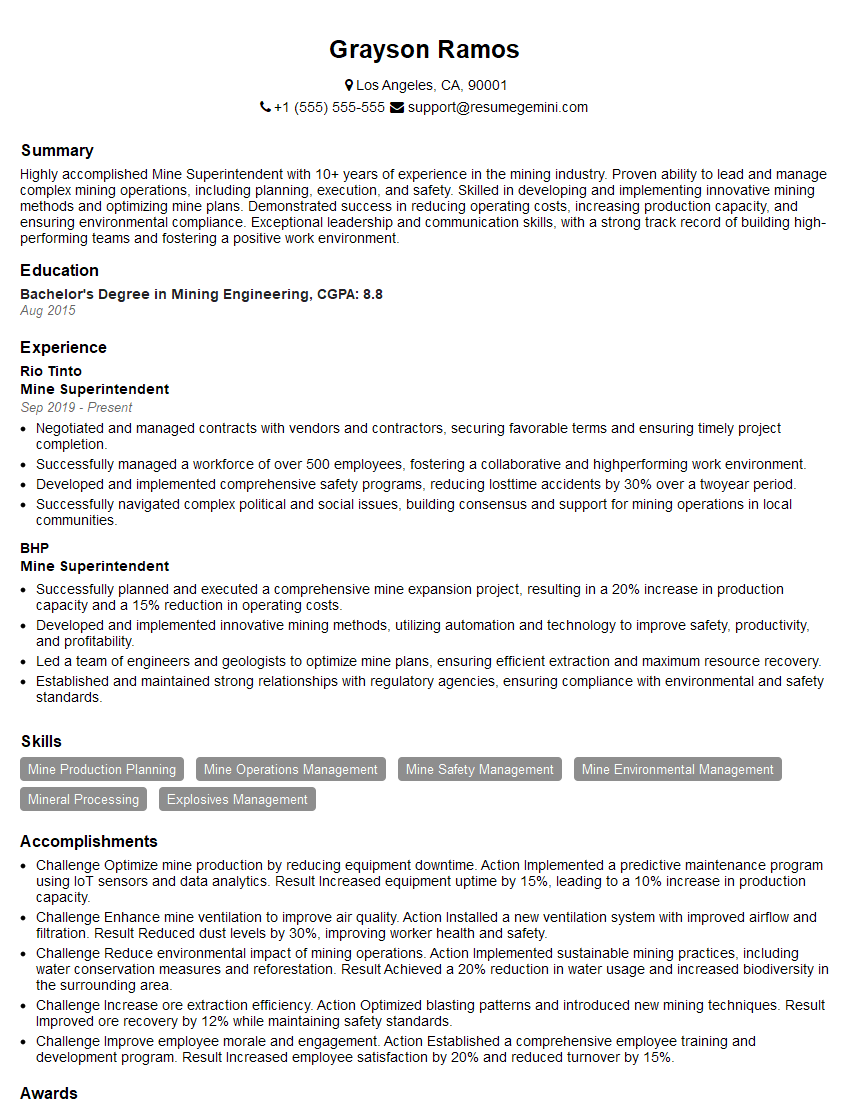
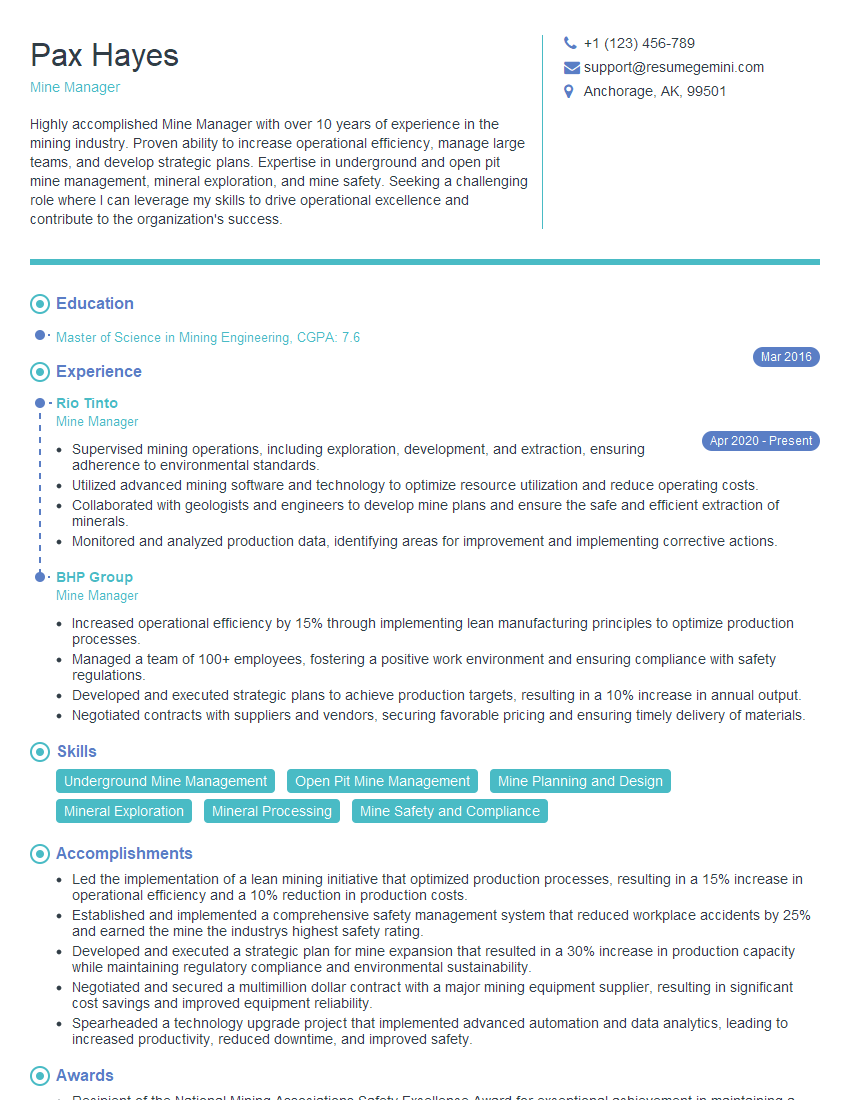
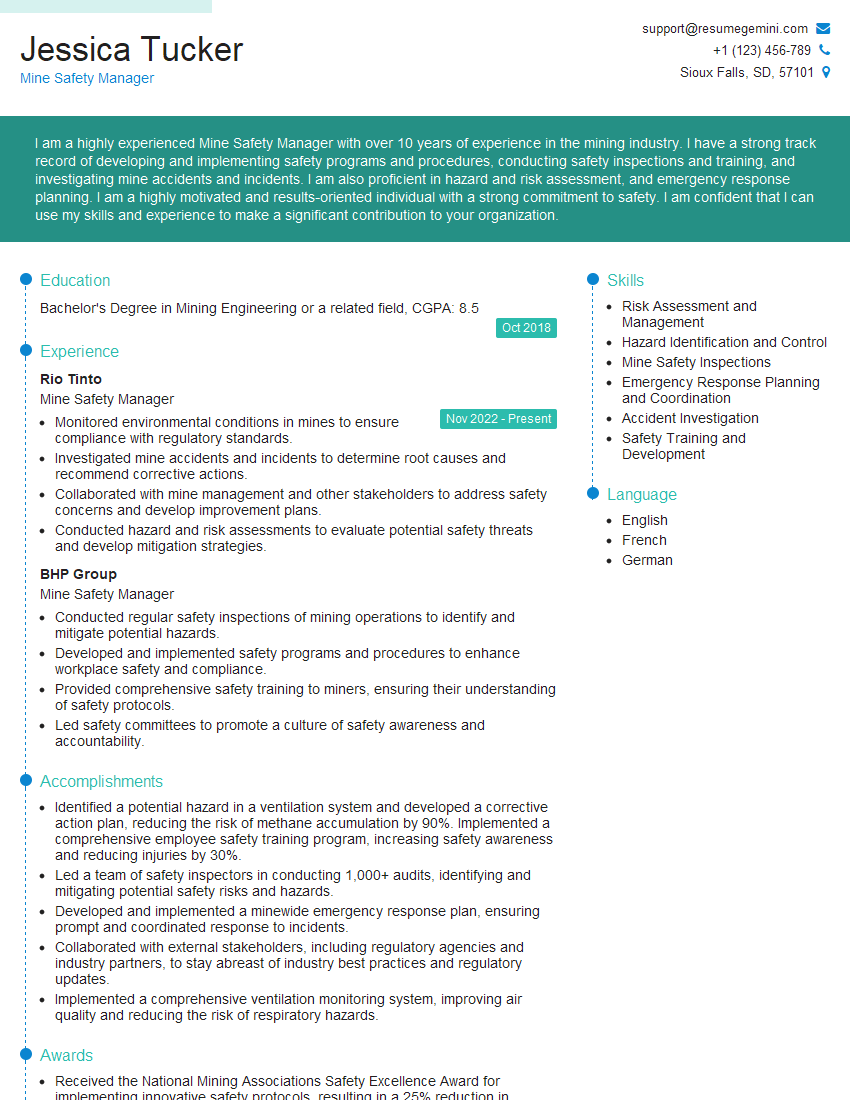
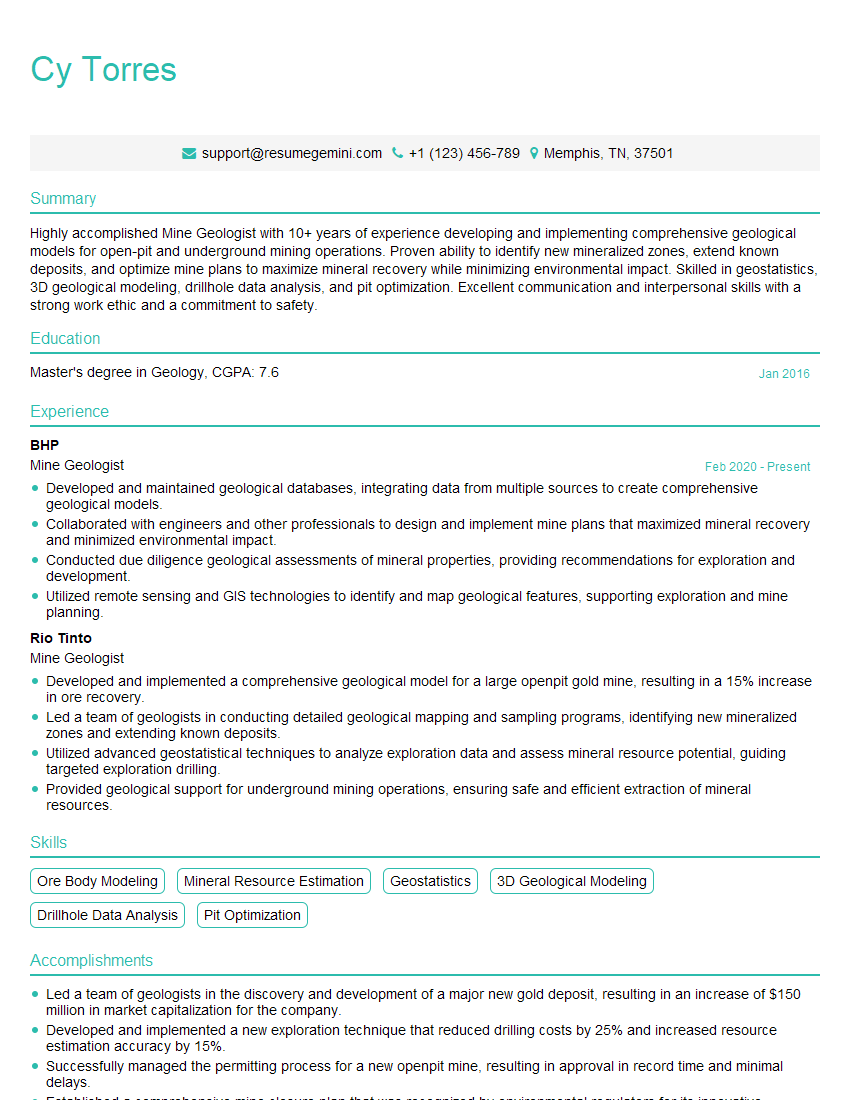
Mastering Mine Management and Leadership is crucial for advancing your career in this dynamic and demanding industry. It opens doors to senior roles with increased responsibility and significantly higher earning potential. To maximize your job prospects, it’s vital to craft an ATS-friendly resume that highlights your skills and experience effectively. ResumeGemini is a trusted resource that can help you build a professional resume that showcases your qualifications in the best possible light. We provide examples of resumes tailored to Mine Management and Leadership to help you get started. Invest time in creating a compelling resume—it’s your first impression on potential employers.
Explore more articles
Users Rating of Our Blogs
Share Your Experience
We value your feedback! Please rate our content and share your thoughts (optional).
What Readers Say About Our Blog
Very informative content, great job.
good