Cracking a skill-specific interview, like one for Mission Analysis and Planning, requires understanding the nuances of the role. In this blog, we present the questions you’re most likely to encounter, along with insights into how to answer them effectively. Let’s ensure you’re ready to make a strong impression.
Questions Asked in Mission Analysis and Planning Interview
Q 1. Describe your experience with different mission analysis methodologies.
My experience encompasses a range of mission analysis methodologies, from classic military planning frameworks like the Joint Operational Planning Process (JOPP) to more agile and iterative approaches common in commercial space operations and disaster response. I’ve worked extensively with:
- JOPP/MDMP (Military Decision Making Process): This structured, phased approach is excellent for complex, large-scale missions requiring detailed planning and coordination. I’ve used it in simulations involving large-scale humanitarian aid deployments, meticulously mapping out resource allocation, timelines, and risk mitigation strategies.
- Agile Mission Planning: For rapidly evolving situations, such as search and rescue operations or responding to unforeseen crises, I leverage agile methodologies. This involves iterative planning cycles, frequent feedback loops, and the ability to adapt to changing circumstances in real-time. I’ve applied this in simulated cybersecurity response scenarios, where the evolving nature of threats demanded flexibility and rapid adaptation.
- Probabilistic Risk Assessment (PRA): This quantitative technique involves assessing the likelihood and impact of various risks. I’ve used PRA to evaluate the potential impact of various weather scenarios on a drone delivery mission, allowing for the development of contingency plans and optimized flight schedules.
My experience spans different domains, ensuring I can tailor my approach to the specific requirements and constraints of each mission.
Q 2. Explain the process of defining mission objectives and success criteria.
Defining mission objectives and success criteria is crucial for effective mission planning. It’s like setting the destination and determining what constitutes arrival. The process typically involves:
- Understanding the overall goal: What is the mission trying to achieve? For example, a humanitarian aid mission might aim to deliver essential supplies to a disaster-stricken area.
- Specificity and Measurability: Objectives must be Specific, Measurable, Achievable, Relevant, and Time-bound (SMART). For the humanitarian aid example, a SMART objective could be: "Deliver 1000 tons of supplies to the affected region within 72 hours."
- Defining Success Criteria: What indicators will confirm success? This could be the number of people reached, the amount of supplies delivered, the level of damage mitigated, or a combination thereof. It’s essential to establish clear benchmarks for each objective.
- Stakeholder Alignment: Ensuring that all involved parties agree on the objectives and success criteria is paramount. This requires collaboration and clear communication.
Failing to clearly define objectives and success criteria can lead to wasted resources, missed opportunities, and ultimately, mission failure.
Q 3. How do you identify and assess risks in mission planning?
Risk identification and assessment is an iterative process, critical for robust mission planning. I employ both qualitative and quantitative techniques:
- Brainstorming and SWOT Analysis: Initial risk identification often starts with collaborative brainstorming sessions. A SWOT (Strengths, Weaknesses, Opportunities, Threats) analysis helps systematically categorize potential risks.
- Risk Breakdown Structure (RBS): This hierarchical structure breaks down broad risks into more specific categories, making it easier to identify potential vulnerabilities.
- Fault Tree Analysis (FTA): A top-down approach to identify potential causes of failure. FTA helps determine the root causes of potential problems and their likelihood. For example, in a satellite launch, FTA could be used to analyze the various factors leading to a potential launch failure.
- Probability and Impact Matrix: This matrix evaluates risks based on their likelihood and potential impact. This helps prioritize risks for mitigation efforts.
After identification, each risk is assessed based on its likelihood, potential impact, and the availability of mitigation strategies. This information is used to develop contingency plans and allocate resources effectively.
Q 4. What are some common tools and techniques used in mission analysis?
Mission analysis relies on a variety of tools and techniques. Some of the most common include:
- Modeling and Simulation Software: Tools like AnyLogic, MATLAB, or specialized military simulation software allow for the creation of virtual environments to test different scenarios and assess the effectiveness of various strategies.
- Geographic Information Systems (GIS): GIS software is invaluable for visualizing and analyzing geographical data, particularly for missions with a strong spatial component, such as search and rescue operations or environmental monitoring.
- Spreadsheets and Databases: For managing large amounts of data, spreadsheets and databases are essential for tracking resources, timelines, and risk assessments.
- Decision Support Systems (DSS): DSS provide tools for analyzing complex situations and assisting in decision-making. These systems often incorporate multiple data sources and analytical models.
- Project Management Software: Tools like MS Project or Jira help manage tasks, timelines, and resources throughout the mission lifecycle.
The specific tools and techniques employed depend on the complexity of the mission and the available resources.
Q 5. Describe your experience with developing and evaluating mission alternatives.
Developing and evaluating mission alternatives is a core aspect of my work. This often involves:
- Generating Alternatives: This involves brainstorming various approaches to achieve the mission objectives. Techniques like lateral thinking and design thinking are employed to explore unconventional solutions. For example, in a logistics mission, different transport methods (air, sea, land) could be considered.
- Criteria Definition: Establishing clear criteria for evaluating each alternative. These criteria might include cost, time, risk, feasibility, and impact.
- Comparative Analysis: Each alternative is analyzed based on the defined criteria. This often involves using decision matrices, cost-benefit analyses, or other comparative techniques. For instance, a weighted scoring system can be used to compare different transportation methods based on factors like speed, cost, and risk.
- Sensitivity Analysis: (Covered in more detail in the next answer) To test the robustness of each alternative, sensitivity analysis is performed.
- Recommendation and Justification: Based on the analysis, a recommendation is made, justifying the selection of the preferred alternative.
The selection process is transparent and documented, ensuring that the chosen approach is well-supported and understood by all stakeholders.
Q 6. How do you incorporate uncertainty and risk into your mission planning?
Incorporating uncertainty and risk is crucial for realistic mission planning. Ignoring these factors can lead to catastrophic consequences. I use several approaches:
- Scenario Planning: Developing multiple scenarios that consider different levels of uncertainty. This allows for the development of flexible plans that can adapt to changing circumstances. For example, in a space mission, scenarios might include equipment malfunction, weather delays, or unexpected orbital debris.
- Monte Carlo Simulations: These simulations use random sampling to model uncertain variables and assess the probability of different outcomes. This technique can help determine the likelihood of mission success under different conditions.
- Contingency Planning: Developing backup plans for various scenarios. This ensures that the mission can continue even if unforeseen events occur. Contingency plans should include clear triggers and actions.
- Decision Trees: These visual tools help to map out different decision points and their associated probabilities and outcomes, allowing for a systematic evaluation of different options under uncertainty.
By proactively considering uncertainty and developing robust contingency plans, I ensure that the mission remains resilient to unforeseen challenges.
Q 7. Explain your experience with sensitivity analysis in mission planning.
Sensitivity analysis is a vital component of mission planning, helping to understand how changes in input parameters affect the overall outcome. It’s like testing the robustness of a bridge design by applying various stresses to see where it might fail. I employ it to:
- Identify Critical Parameters: Sensitivity analysis helps determine which input variables have the most significant impact on mission success or failure. This allows for focused risk mitigation efforts on the most critical factors.
- Assess Robustness: It helps determine how sensitive the mission plan is to variations in different parameters. A robust plan will be less affected by small changes in the inputs.
- Improve Decision-Making: By understanding the sensitivity of the mission to various factors, better informed decisions can be made regarding resource allocation and risk mitigation strategies.
For example, in a supply chain mission, sensitivity analysis could assess the impact of fuel price fluctuations, transportation delays, or changes in demand on the overall cost and effectiveness of the mission. This insight allows for the development of more resilient and cost-effective plans.
Q 8. How do you utilize data analysis in supporting your mission planning?
Data analysis is the backbone of effective mission planning. It allows us to move beyond gut feelings and subjective assessments to make data-driven decisions. I utilize various analytical techniques to inform every stage, from initial concept development to post-mission evaluation.
- Situational Awareness: I use geospatial analysis (GIS) to understand the operational environment, identifying potential risks, bottlenecks, and optimal routes. For example, analyzing terrain data to determine the best approach for a ground operation or using weather data to predict potential delays or disruptions.
- Resource Optimization: Statistical modeling helps allocate resources effectively. For instance, I might use linear programming to optimize fuel consumption based on aircraft range and payload or simulate different deployment scenarios to find the most efficient use of personnel.
- Risk Assessment: Probability and statistical methods are crucial for identifying and mitigating risks. We might use Failure Mode and Effects Analysis (FMEA) to identify potential failures and their impact, then prioritize mitigation strategies based on likelihood and severity.
- Performance Evaluation: Post-mission analysis leverages statistical tools to assess mission success. Metrics such as timeliness, resource expenditure, and objective achievement are analyzed to inform future planning.
For example, in a humanitarian aid mission, data analysis helps determine the optimal distribution routes based on road conditions, population density, and access points. This minimizes delays and ensures efficient delivery of aid.
Q 9. How do you balance competing priorities in mission planning?
Balancing competing priorities is a constant challenge in mission planning. It often involves trade-offs between speed, cost, risk, and mission objectives. I use a structured approach involving prioritization matrices and stakeholder engagement to ensure a well-balanced plan.
- Prioritization Matrix: I often use a matrix that weighs criteria like mission criticality, risk level, and resource requirements. This allows for a visual representation of competing priorities, facilitating informed decision-making.
- Stakeholder Engagement: Open communication with stakeholders (clients, team members, etc.) is vital. We conduct workshops or meetings to clearly define objectives, identify constraints, and reach a consensus on priorities.
- Negotiation and Compromise: Sometimes, compromises are necessary. For instance, we may have to accept a slightly higher risk to meet a tighter deadline or allocate fewer resources to a less critical objective to achieve a primary goal.
- Iterative Planning: Mission planning is not a linear process. We regularly review and refine the plan as new information emerges or priorities change. This iterative approach helps adapt to changing circumstances and maintains balance.
For instance, in a search and rescue operation, speed is paramount but may compromise safety. The matrix helps weigh the risks of faster but potentially more dangerous actions against the benefits of quicker rescue times.
Q 10. Describe your experience with resource allocation in mission planning.
Resource allocation is a core element of mission planning. It requires careful consideration of personnel, equipment, budget, and time constraints. Effective allocation ensures mission success while optimizing resource utilization.
- Resource Modeling: I utilize various models to simulate resource allocation under different scenarios. This could include linear programming to optimize fuel distribution or Monte Carlo simulations to account for uncertainties.
- Budgetary Constraints: Detailed budgeting ensures sufficient funds for all aspects of the mission. We track expenses meticulously to avoid overruns and ensure accountability.
- Personnel Management: Assigning the right personnel to the right tasks is critical. We consider skills, experience, and availability when making personnel assignments. Teamwork and communication are critical here.
- Equipment Selection: The choice of equipment is critical to success. We must weigh cost, availability, reliability, and suitability for the mission environment when making these choices.
For example, in a military operation, resource allocation may involve determining the optimal number of troops, vehicles, and weaponry required, ensuring appropriate equipment maintenance and logistics, and accounting for potential casualties or equipment loss.
Q 11. How do you ensure effective communication and collaboration in a mission planning team?
Effective communication and collaboration are paramount in mission planning. A well-functioning team requires clear communication channels, defined roles, and a collaborative environment.
- Regular Meetings: We hold regular meetings to share information, address concerns, and track progress. These meetings should have a defined agenda and clear outcomes.
- Communication Tools: We utilize various communication tools, including project management software (e.g., Jira, Asana), shared document repositories, and video conferencing to ensure everyone stays informed.
- Defined Roles and Responsibilities: Each team member should have clearly defined roles and responsibilities to avoid confusion and overlap.
- Conflict Resolution: Effective conflict resolution mechanisms are needed to address disagreements and maintain a positive team dynamic. Open and honest communication is key.
In a complex mission, such as a space exploration mission, seamless collaboration between engineering, scientific, and operational teams is vital, requiring clear communication protocols and regularly scheduled briefings across diverse teams and specializations.
Q 12. Describe your experience with developing contingency plans.
Developing robust contingency plans is essential for mission success. Contingency planning involves identifying potential problems, assessing their likelihood and impact, and developing strategies to mitigate or respond to them.
- Risk Identification: We use brainstorming sessions, checklists, and historical data to identify potential risks and challenges.
- Risk Assessment: Each identified risk is assessed based on its likelihood and potential impact. This helps prioritize mitigation efforts.
- Mitigation Strategies: For each high-priority risk, we develop specific mitigation strategies that outline actions to reduce the likelihood or impact of the risk. This might include alternative approaches, backup systems, or emergency procedures.
- Contingency Plan Documentation: Contingency plans are documented clearly and concisely, and they should be readily accessible to all team members.
For example, in a disaster relief operation, contingency plans would cover scenarios such as severe weather, logistical failures, or civil unrest, detailing alternative supply routes, emergency shelters, and communication procedures in the event of a disruption to the primary plan.
Q 13. How do you handle unexpected events during mission execution?
Handling unexpected events during mission execution requires a calm, decisive approach. Effective response relies on well-defined procedures, clear communication, and adaptability.
- Emergency Response Plan: We have a detailed emergency response plan that outlines procedures for handling various unforeseen circumstances. This plan is regularly reviewed and updated.
- Decision-Making Process: A clear decision-making process is essential for rapid response. Authority and responsibility should be well-defined.
- Communication Protocols: Effective communication is crucial during emergencies. We utilize pre-determined communication channels and protocols to ensure timely dissemination of information.
- Adaptability: The ability to adapt and adjust the mission plan in response to unexpected events is crucial. This may involve re-prioritizing tasks, reallocating resources, or implementing contingency plans.
Imagine a medical evacuation mission where the weather suddenly deteriorates. The team needs to quickly assess the situation, perhaps delaying takeoff, seeking alternate landing sites, or rerouting entirely—all while keeping all stakeholders informed.
Q 14. How do you measure the effectiveness of a mission?
Measuring mission effectiveness requires a clear understanding of the mission objectives and the establishment of relevant Key Performance Indicators (KPIs). The evaluation process should be both quantitative and qualitative.
- Define Success Metrics: Before the mission begins, we clearly define measurable success criteria aligned with the mission objectives. These could include completion rates, cost efficiency, timeliness, or reduction in specific risks.
- Data Collection: Throughout the mission, we collect data relevant to the KPIs. This data might include operational logs, reports from field personnel, and post-mission surveys.
- Quantitative Analysis: We perform quantitative analysis of the collected data to assess the degree to which the mission achieved its objectives. This could involve statistical analysis, cost-benefit analysis, or other relevant metrics.
- Qualitative Assessment: We also conduct qualitative assessments, such as feedback from stakeholders, lessons learned reviews, and after-action reports to gain a more complete picture of mission effectiveness.
For a conservation project, success might be measured by the number of endangered species successfully relocated, the area of habitat restored, or the community engagement achieved. A comprehensive evaluation would combine quantitative data on these metrics with qualitative assessments of project impacts and community feedback.
Q 15. Explain your experience with post-mission analysis and lessons learned.
Post-mission analysis is crucial for continuous improvement in mission planning. It’s not just about identifying what went wrong, but also understanding what went right and why. My approach involves a structured process, beginning with data collection. This includes reviewing mission logs, sensor data, communication records, and conducting debriefings with all team members. We use a combination of qualitative and quantitative methods. Qualitative data comes from interviews and observations, helping us understand the ‘why’ behind events. Quantitative data, like mission timelines and resource consumption, provides objective measurements.
For example, in a recent search and rescue operation, post-mission analysis revealed a communication bottleneck during the initial phase. While the rescue itself was successful, the delay in coordinating resources almost compromised the operation’s timeliness. This led to improvements in our communication protocols, including pre-mission testing of all communication channels and clearer role definitions during emergencies. Lessons learned are documented in a formal report, which includes recommendations to avoid similar issues in future missions, and distributed to all relevant stakeholders.
The key to effective post-mission analysis lies in objectivity and a commitment to continuous improvement. We avoid placing blame and instead focus on identifying systemic issues that need attention. This learning culture ensures that each mission improves our operational capabilities.
Career Expert Tips:
- Ace those interviews! Prepare effectively by reviewing the Top 50 Most Common Interview Questions on ResumeGemini.
- Navigate your job search with confidence! Explore a wide range of Career Tips on ResumeGemini. Learn about common challenges and recommendations to overcome them.
- Craft the perfect resume! Master the Art of Resume Writing with ResumeGemini’s guide. Showcase your unique qualifications and achievements effectively.
- Don’t miss out on holiday savings! Build your dream resume with ResumeGemini’s ATS optimized templates.
Q 16. Describe your experience using simulation and modeling in mission planning.
Simulation and modeling are indispensable tools in mission planning. They allow us to test different scenarios, assess risks, and optimize resource allocation without incurring the costs and risks of real-world deployments. I’ve extensively used various simulation tools, including discrete event simulation software and agent-based modeling platforms. These tools help visualize the complex interplay of various factors—weather conditions, terrain, enemy actions (if applicable), and equipment failures—to predict mission outcomes.
For instance, in planning a complex logistics mission, we used a discrete event simulation to model the movement of vehicles and personnel across different routes. By adjusting parameters like vehicle speed, road conditions, and refueling stops, we identified the most efficient route minimizing the overall travel time and maximizing the delivery of critical supplies. This drastically improved the efficiency of the mission compared to relying solely on estimates.
Moreover, the use of simulation allows for ‘what-if’ scenarios, enabling us to explore the impact of unforeseen circumstances. For example, simulating equipment failures or unexpected delays in the logistics mission allowed us to identify fallback plans and contingency measures, thus ensuring mission success even in adverse situations.
Q 17. What are the key differences between strategic and tactical mission planning?
Strategic and tactical mission planning differ significantly in their scope and timeframe. Strategic planning focuses on the ‘big picture,’ encompassing long-term goals, resource allocation, and overall objectives. It’s about setting the stage for success. Tactical planning, on the other hand, deals with the specifics of how the mission will be executed on the ground. It’s concerned with the detailed actions required to achieve the strategic goals.
- Strategic Planning: Defines the overall mission objectives, sets priorities, allocates resources (personnel, equipment, budget), and considers long-term implications. It’s often high-level, involving decision-making at senior leadership levels. Example: deciding on the overall strategy for a humanitarian aid operation spanning several months and multiple locations.
- Tactical Planning: Focuses on the immediate actions required to achieve specific goals within the broader strategic plan. This involves detailed scheduling, risk assessment, contingency planning, and coordination of actions on the ground. Example: planning the route and logistics for a single convoy delivering aid to a specific village within the larger humanitarian operation.
Think of it like building a house: strategic planning is like designing the blueprint, defining the overall layout and features, while tactical planning involves the day-to-day construction, handling the specific details of each step.
Q 18. How do you integrate technology into mission analysis and planning?
Technology plays a vital role in modern mission analysis and planning, enhancing efficiency, accuracy, and decision-making. We leverage Geographic Information Systems (GIS) for spatial analysis, creating detailed maps integrating terrain, weather, and other relevant data. We use specialized software for mission planning, simulation, and communication management. Data analytics tools help us analyze large datasets from various sources, uncovering patterns and insights that may not be readily apparent. Cloud computing enables collaboration and data sharing among team members, regardless of their physical location.
For example, in a disaster response mission, GIS helps us identify the most vulnerable areas based on population density, infrastructure damage, and accessibility. Simulation software lets us test different deployment strategies to optimize the allocation of resources and personnel. Data analytics helps us understand patterns of resource consumption and identify areas for improvement.
The integration of these technologies necessitates a strong understanding of cybersecurity and data protection. We adhere to strict protocols to ensure data integrity and prevent unauthorized access.
Q 19. How do you ensure compliance with regulations and standards in mission planning?
Compliance with regulations and standards is paramount in mission planning. We adhere to both internal organizational policies and external legal and regulatory requirements. This includes following safety regulations, environmental protection guidelines, and any specific rules governing the mission’s area of operation. We develop detailed compliance checklists and integrate them into our planning process. Regular audits and reviews ensure we maintain compliance throughout the mission lifecycle.
For example, before deploying a team to an international location, we meticulously check for any visa requirements, security protocols of the host country, and relevant environmental regulations. We have specific procedures for handling sensitive data, ensuring compliance with data privacy laws. Documentation of all compliance efforts forms an integral part of the mission planning process.
Any deviation from established standards is carefully documented, reviewed, and addressed to prevent future non-compliance. This proactive approach reduces legal risks and ensures the responsible conduct of our missions.
Q 20. Describe your experience working with different stakeholders in mission planning.
Mission planning is inherently a collaborative process, involving diverse stakeholders with varying perspectives and expertise. My experience includes working with subject matter experts, technical specialists, operational personnel, and senior leadership. Effective communication and collaboration are crucial to ensure all voices are heard and integrated into the plan. I utilize structured communication channels, regular meetings, and collaborative platforms to facilitate seamless interaction.
For example, in a recent project, we had to coordinate with local authorities, NGOs, and international organizations. Regular meetings with all stakeholders allowed for the incorporation of local knowledge and the alignment of our efforts with the broader response. Clear communication channels ensured timely information sharing and efficient decision-making.
Building trust and rapport with stakeholders is crucial. Active listening, clear communication, and a demonstrated respect for diverse perspectives fosters successful collaboration and ensures buy-in from all participating parties. This collaborative approach leads to a more robust and effective mission plan.
Q 21. How do you prioritize tasks and manage your time effectively during mission planning?
Effective time management and task prioritization are essential skills in mission planning, particularly when dealing with multiple deadlines and complex tasks. I use a combination of techniques to manage my workload, including:
- Prioritization Matrices: Employing methods such as Eisenhower Matrix (urgent/important), to categorize and prioritize tasks based on their urgency and impact on the mission’s success.
- Work Breakdown Structures (WBS): Decomposing large tasks into smaller, more manageable subtasks, making it easier to track progress and allocate resources effectively.
- Gantt Charts: Visualizing task dependencies and deadlines, allowing for better scheduling and identification of potential bottlenecks.
- Regular Review and Adjustment: Consistent monitoring of progress and adaptation of the schedule as needed, accounting for unforeseen circumstances and emerging priorities.
By combining these techniques, I ensure that critical tasks receive appropriate attention, preventing delays and optimizing resource allocation. This helps manage the inherent complexities of mission planning and ensures timely execution of tasks, ultimately contributing to mission success.
Q 22. Describe a challenging mission analysis project you worked on and how you overcame obstacles.
One particularly challenging mission analysis project involved planning a humanitarian aid delivery mission to a remote, conflict-affected region. The primary obstacle was the volatile security situation, coupled with unreliable infrastructure and limited real-time data. We overcame this by employing a multi-phased approach. First, we conducted a thorough risk assessment, using a combination of publicly available intelligence, reports from NGOs operating in the area, and consultations with local experts. This allowed us to identify high-risk areas and potential threats (e.g., ambush points, minefields). Second, we developed multiple contingency plans, accounting for various scenarios, from logistical delays to escalating violence. We leveraged scenario planning techniques to simulate potential disruptions and test our operational flexibility. Finally, we implemented a robust communication and coordination plan, relying on satellite communication and a decentralized decision-making structure to enhance adaptability to changing circumstances. This involved regular briefings with stakeholders and daily updates on the mission’s progress, factoring in evolving ground realities. The success of this mission demonstrated the importance of proactive risk mitigation, flexible planning, and constant communication in complex operational environments.
Q 23. What are some of the ethical considerations in mission planning?
Ethical considerations in mission planning are paramount and often involve navigating complex moral dilemmas. Key concerns include:
- Minimizing civilian harm: Mission plans must prioritize the protection of innocent civilians, even when operating in hostile environments. This requires meticulous targeting procedures, thorough collateral damage assessments, and the implementation of strict rules of engagement.
- Respect for cultural norms and local laws: Missions should be sensitive to the cultural context and local laws of the operating area. This might involve modifying operational procedures or timelines to align with local customs or restrictions.
- Data privacy and security: The collection and use of personal data should be conducted responsibly, adhering to ethical guidelines and relevant privacy regulations. Data security measures must be in place to prevent unauthorized access or misuse of sensitive information.
- Transparency and accountability: Mission plans and execution should be transparent and accountable. This fosters trust and enables scrutiny of the mission’s ethical implications.
- Environmental impact: Missions should minimize their environmental footprint. This involves considerations such as waste management, fuel efficiency, and avoidance of damage to ecosystems.
Ethical considerations are not merely ‘nice-to-haves’ – they are integral to mission success and maintaining public trust. Neglecting them can have serious consequences, ranging from reputational damage to legal repercussions.
Q 24. Explain your experience with different types of decision-making frameworks.
My experience encompasses various decision-making frameworks, including:
- Cost-Benefit Analysis (CBA): This involves quantifying the costs and benefits of different courses of action. For instance, in choosing between two different transportation methods for a supply delivery, a CBA might compare the cost of fuel, time, and risk for each option.
- Decision Trees: These are visual tools that map out possible outcomes and associated probabilities. They’re particularly useful in scenarios with multiple branching pathways, allowing for a structured evaluation of each potential choice.
- Analytic Hierarchy Process (AHP): AHP helps to prioritize multiple criteria by assigning weights based on their relative importance. For example, in planning a search and rescue mission, AHP can help weigh factors such as time sensitivity, location accessibility, and resource availability.
- Multi-Criteria Decision Analysis (MCDA): This is a broader category that encompasses techniques like AHP, allowing for the simultaneous consideration of multiple, often conflicting, criteria.
The choice of framework depends heavily on the context of the mission, the available data, and the complexity of the decision to be made. I always strive to select the framework best suited for the specific challenge at hand.
Q 25. How do you ensure the accuracy and reliability of data used in mission planning?
Ensuring data accuracy and reliability is crucial in mission planning. This involves a multi-layered approach:
- Source validation: We critically assess the credibility and reliability of all data sources, verifying information from multiple independent channels wherever possible. This includes cross-referencing data with other sources and checking for consistency and plausibility.
- Data quality control: We implement rigorous quality control procedures to identify and correct errors or inconsistencies in the data. This can involve using statistical analysis, data cleansing techniques, and visual inspections.
- Data fusion: Combining data from various sources can enhance accuracy and completeness. Techniques such as sensor fusion or data integration are employed to create a more comprehensive picture of the operational environment.
- Uncertainty management: We acknowledge and quantify the uncertainty associated with any data. This involves using probabilistic methods to model uncertainty and incorporate it into the decision-making process. For example, we might use Monte Carlo simulations to model the impact of data uncertainty on mission outcomes.
- Regular updates: Data is not static; we ensure that our information remains current by continuously monitoring and updating our data sets.
Ultimately, rigorous data handling is fundamental to minimizing risks and maximizing the likelihood of mission success.
Q 26. How do you adapt your mission planning approach to different contexts and environments?
Adapting mission planning to different contexts and environments requires flexibility and a deep understanding of the specific challenges each setting presents. This involves tailoring the planning process to account for factors such as:
- Geographic conditions: Terrain, climate, and weather patterns greatly influence mission feasibility and execution. For example, a mission in an arctic environment requires different equipment, logistical considerations, and safety protocols compared to one in a desert.
- Political and social context: The political climate, local laws, and societal norms significantly impact mission design and execution. Operating in a politically unstable region requires a more cautious approach, potentially involving greater security measures and risk mitigation strategies.
- Technological constraints: Availability of technology and communication infrastructure can drastically affect mission planning. Operating in areas with limited communication infrastructure necessitates alternative communication strategies and redundancy plans.
- Resource limitations: Budgetary constraints, personnel availability, and equipment limitations all shape the scope and feasibility of a mission. We constantly balance mission objectives with available resources.
A modular and adaptable planning framework is essential, allowing for modifications based on the context. This often involves a flexible structure that can accommodate diverse requirements, rather than a rigid, ‘one-size-fits-all’ approach.
Q 27. Describe your experience with developing and using mission support plans.
My experience with developing and using mission support plans is extensive. These plans encompass all aspects of support required for a successful mission, including:
- Logistics: This includes planning for the transportation of personnel, equipment, and supplies. This involves detailed scheduling, route planning, and resource allocation.
- Communications: Establishing reliable communication channels is crucial. This could involve utilizing various communication systems, from satellite phones to secure radio networks, to ensure continuous connectivity.
- Intelligence: Gathering and analyzing intelligence to inform the mission’s design and execution is essential. This involves utilizing various intelligence sources and employing appropriate analysis techniques.
- Medical support: Planning for medical emergencies is critical. This includes having trained medical personnel, sufficient medical supplies, and evacuation procedures in place.
- Security: Developing robust security measures is crucial, encompassing threat assessment, risk mitigation strategies, and protection of personnel and assets.
The development of a comprehensive mission support plan requires careful coordination and collaboration among various stakeholders. The plan should be regularly reviewed and updated to ensure it remains relevant and effective throughout the mission lifecycle. The effectiveness of a support plan directly correlates with the mission’s overall success, preventing mission failures due to logistical or support shortfalls.
Q 28. What are some emerging trends in mission analysis and planning?
Several emerging trends are shaping the future of mission analysis and planning:
- Artificial Intelligence (AI) and Machine Learning (ML): AI and ML are increasingly used for tasks such as predictive modeling, risk assessment, and optimization of mission parameters. This can lead to more efficient and effective planning processes.
- Big Data analytics: The availability of vast amounts of data is transforming mission planning. Analyzing this data allows for a deeper understanding of the operational environment and improved decision-making.
- Autonomous systems: The increased use of autonomous vehicles and drones is changing mission execution. This requires new planning approaches that account for the capabilities and limitations of these systems.
- Human-machine teaming: Effective collaboration between humans and autonomous systems is essential for successful missions. This requires development of intuitive interfaces and strategies for effective human-machine interaction.
- Virtual and augmented reality (VR/AR): VR/AR technologies offer immersive training and mission rehearsal capabilities. This enhances preparedness and reduces risks by allowing for simulated practice in realistic scenarios.
These trends are not isolated developments; they are interconnected and collectively transforming how missions are analyzed and planned, improving efficiency, reducing risks, and ultimately leading to more successful mission outcomes.
Key Topics to Learn for Mission Analysis and Planning Interview
- Defining Mission and Objectives: Understanding the core purpose of the mission, translating high-level goals into specific, measurable, achievable, relevant, and time-bound (SMART) objectives.
- Environmental Analysis: Assessing the operational environment, identifying potential threats and opportunities, and understanding the impact of various factors (political, economic, social, technological, legal, environmental) on mission success.
- Course of Action Development (COA): Generating multiple viable courses of action, evaluating their feasibility and potential outcomes using decision matrices and risk assessment tools.
- COA Analysis & Selection: Utilizing analytical frameworks (e.g., decision trees, cost-benefit analysis) to compare and contrast COAs, objectively selecting the most effective and efficient approach.
- Plan Development & Implementation: Translating the chosen COA into a detailed plan, including timelines, resource allocation, contingency planning, and communication strategies.
- Risk Management: Identifying, assessing, mitigating, and monitoring risks throughout the mission lifecycle.
- Communication and Collaboration: Effectively communicating the mission plan to stakeholders, fostering collaboration and coordination among team members.
- Mission Execution & Assessment: Monitoring mission progress, adapting to unexpected challenges, and conducting post-mission analysis to identify lessons learned and improve future performance.
- Practical Application: Applying these concepts to case studies or real-world scenarios to demonstrate your problem-solving abilities and critical thinking skills.
Next Steps
Mastering Mission Analysis and Planning is crucial for career advancement in numerous fields, demonstrating your ability to strategize, problem-solve, and lead effectively. A strong resume is your first step to showcasing these skills to potential employers. Creating an ATS-friendly resume is essential for maximizing your job prospects. We highly recommend using ResumeGemini to build a professional and impactful resume that highlights your expertise in Mission Analysis and Planning. ResumeGemini provides examples of resumes tailored specifically to this field, helping you craft a document that truly stands out. Take control of your career journey – start building your winning resume today!
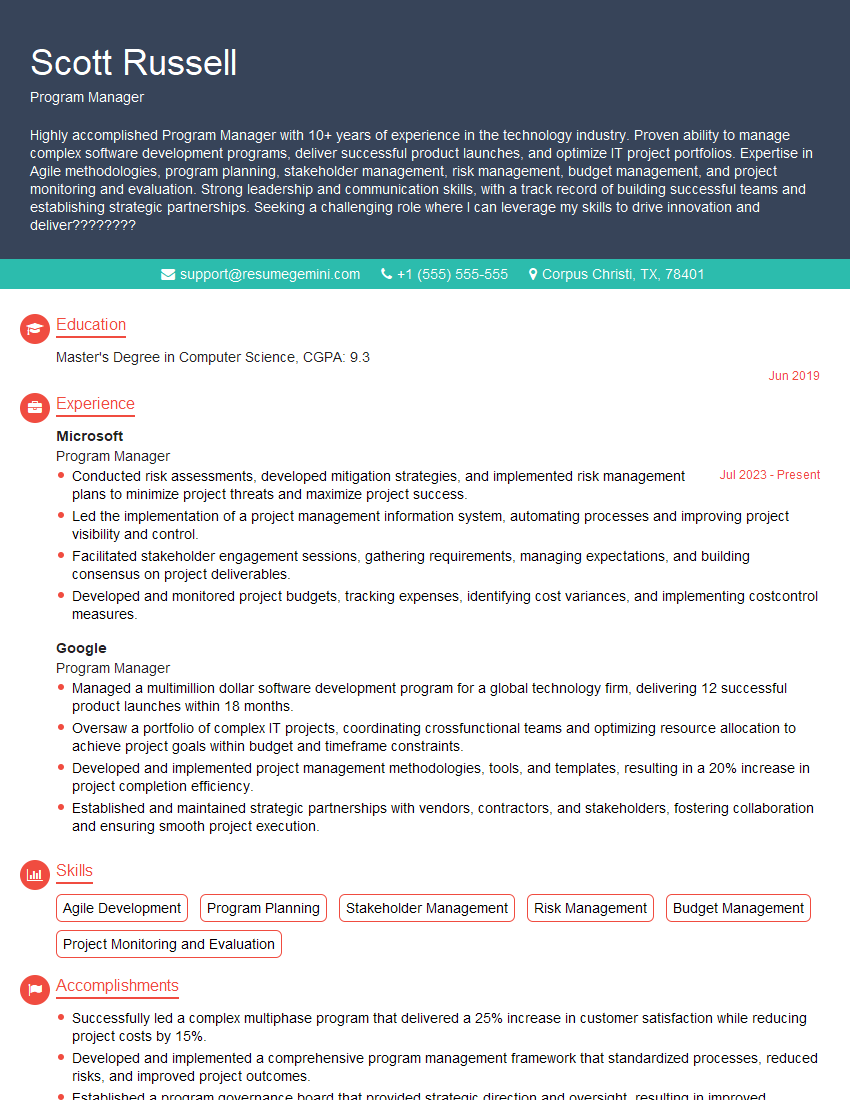
Program Manager Resume Sample
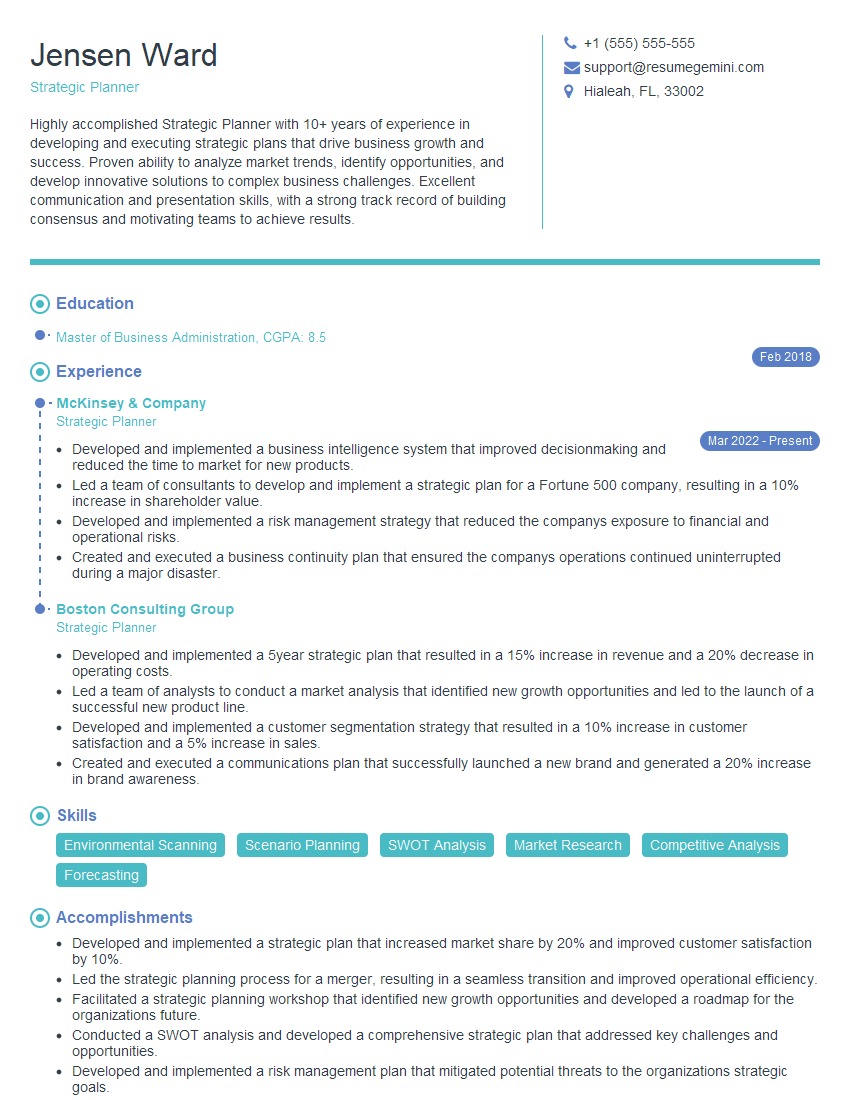
Strategic Planner Resume Sample
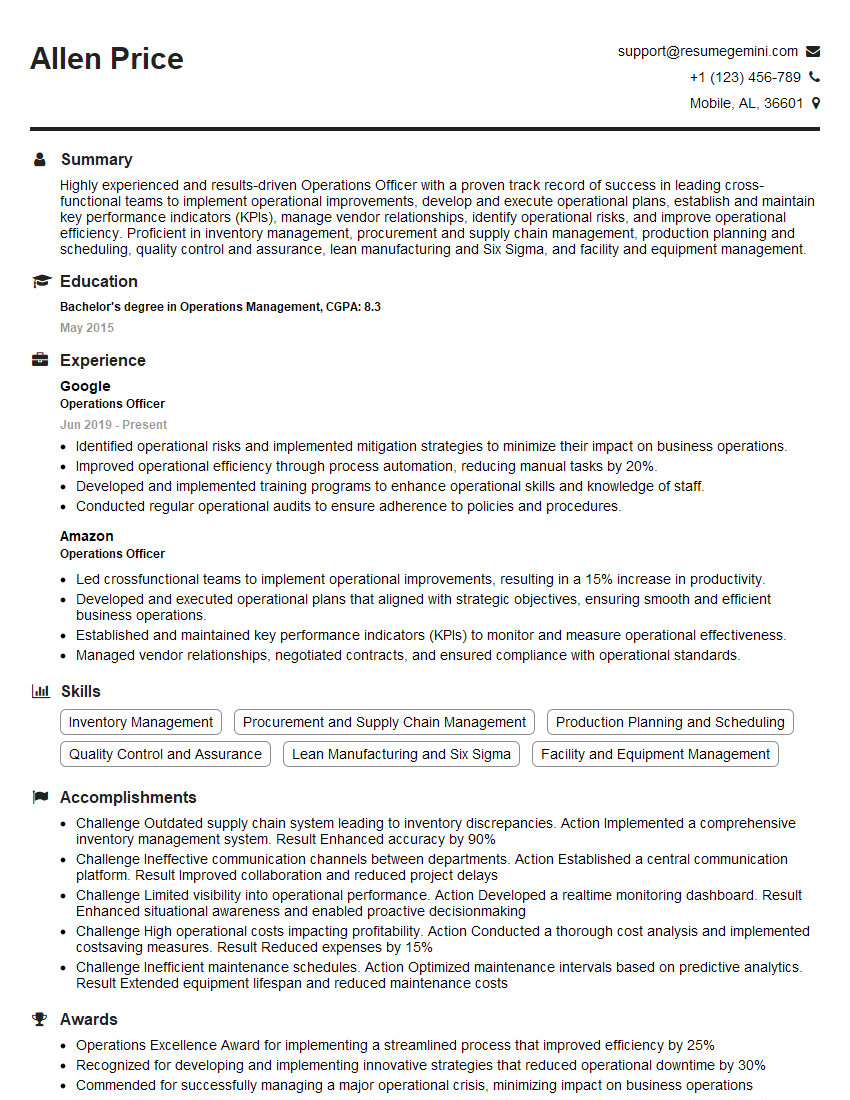
Operations Officer Resume Sample

Project Manager Resume Sample
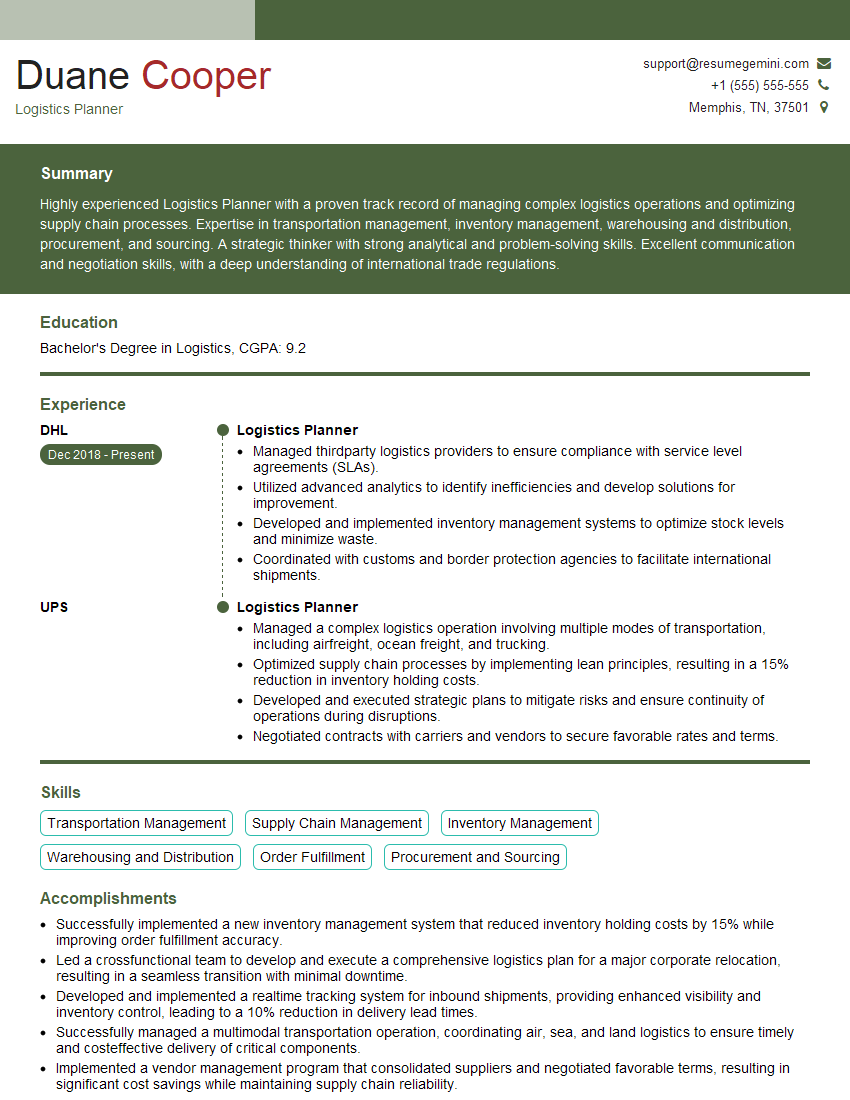
Logistics Planner Resume Sample
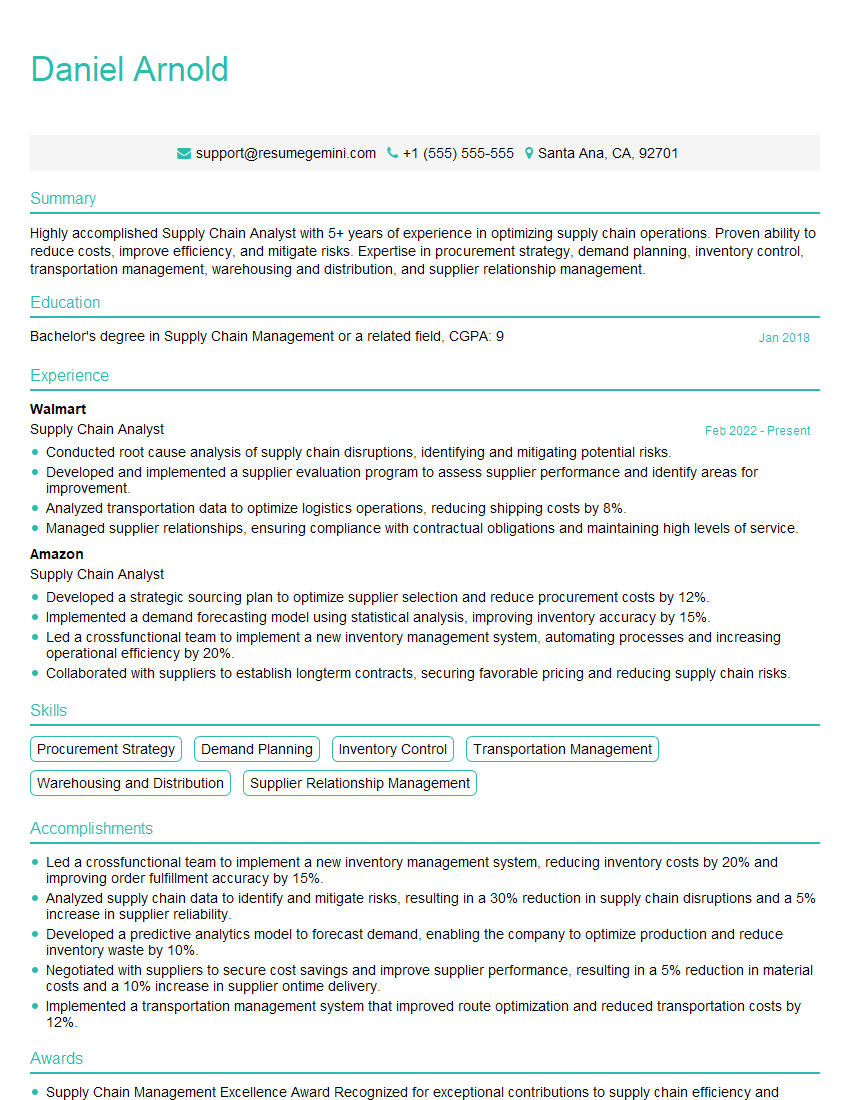
Supply Chain Analyst Resume Sample
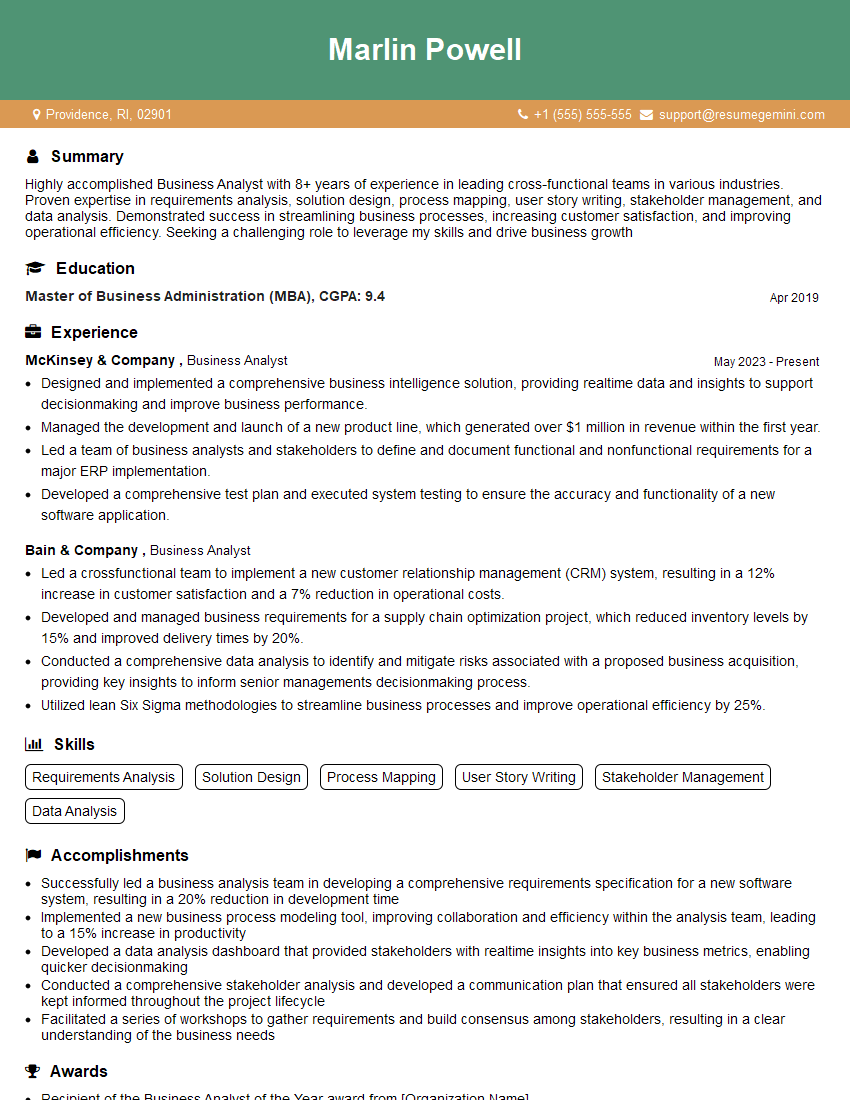
Business Analyst Resume Sample
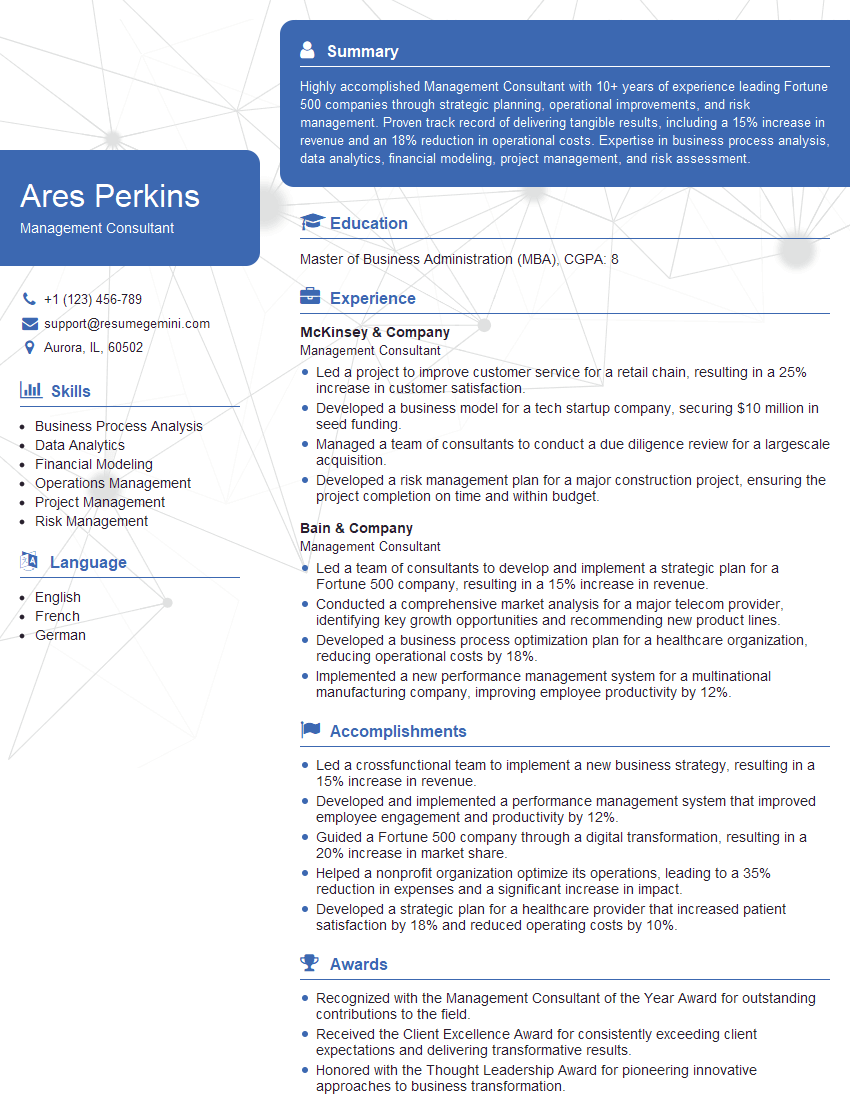
Management Consultant Resume Sample
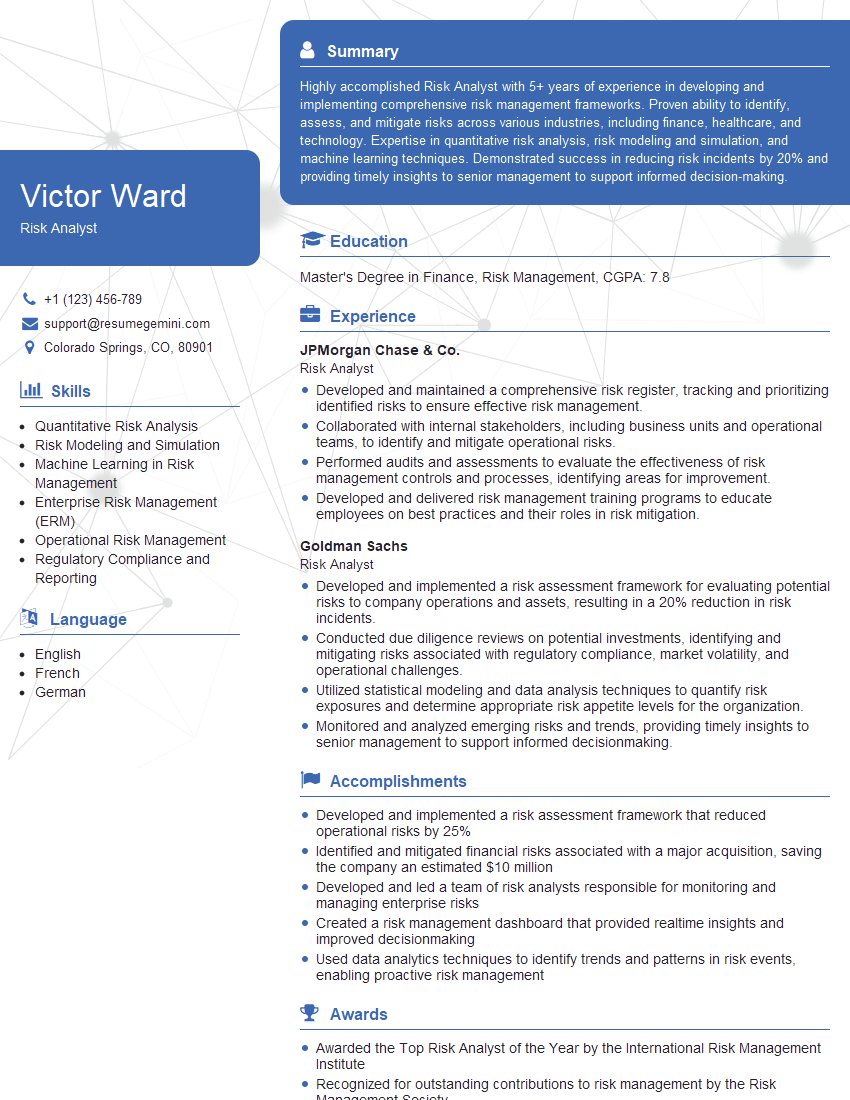
Risk Analyst Resume Sample
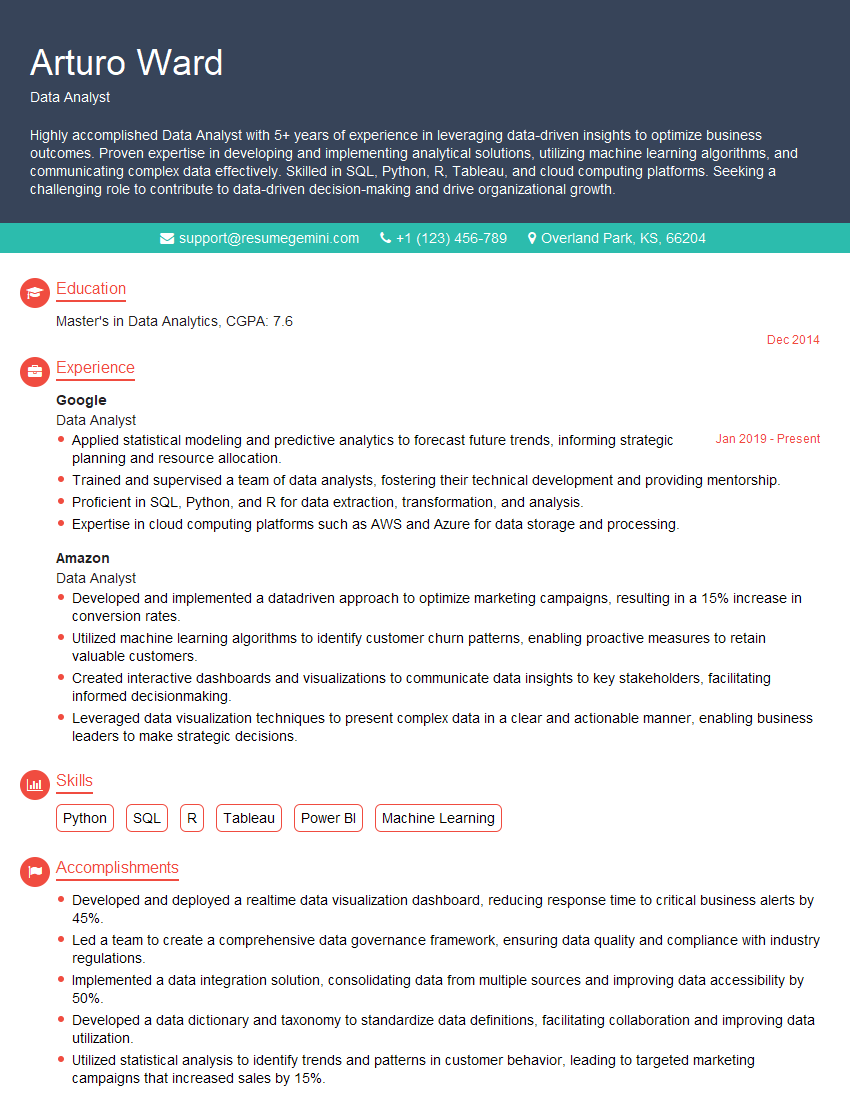
Data Analyst Resume Sample
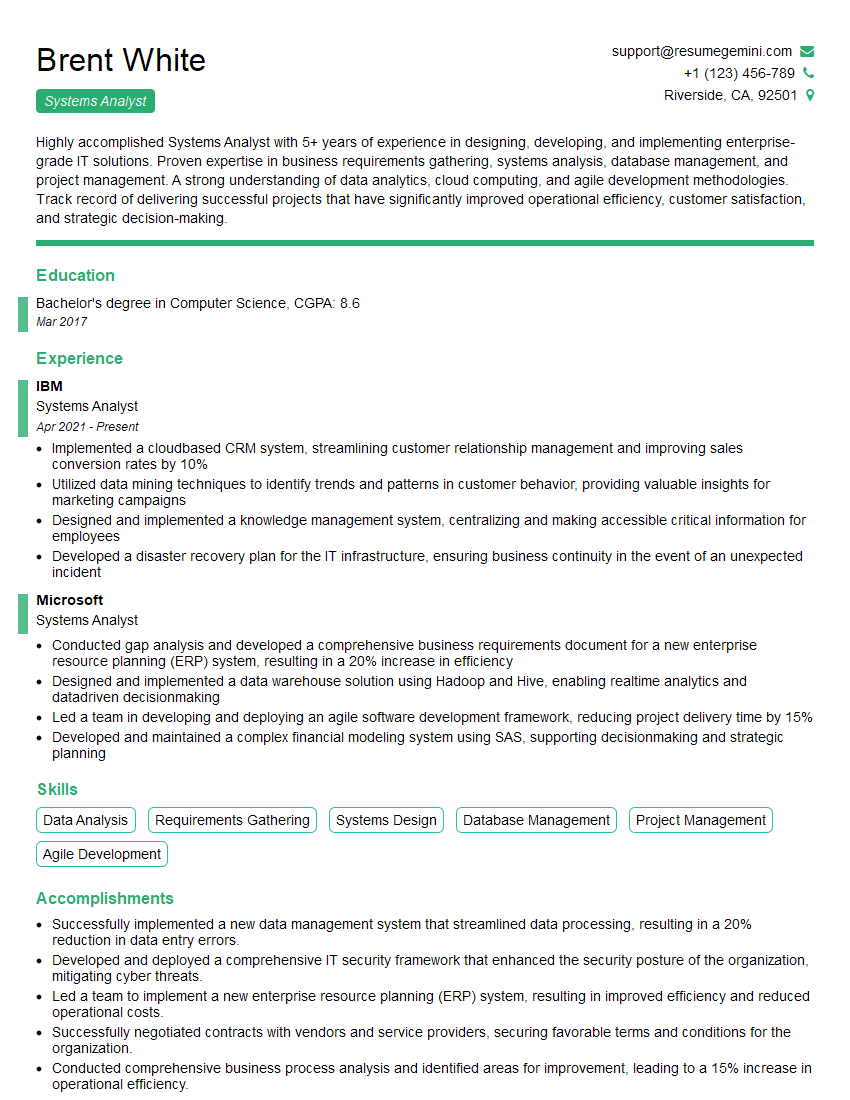
Systems Analyst Resume Sample
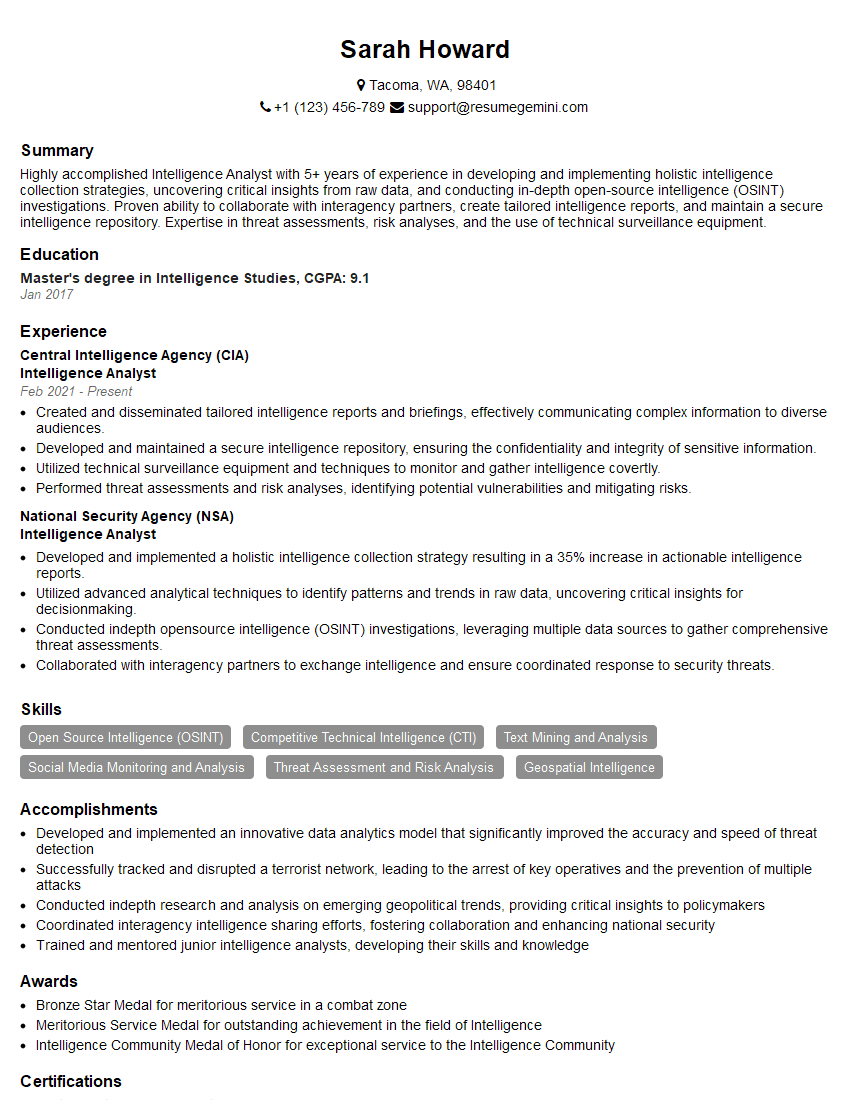
Intelligence Analyst Resume Sample

Operations Research Analyst Resume Sample
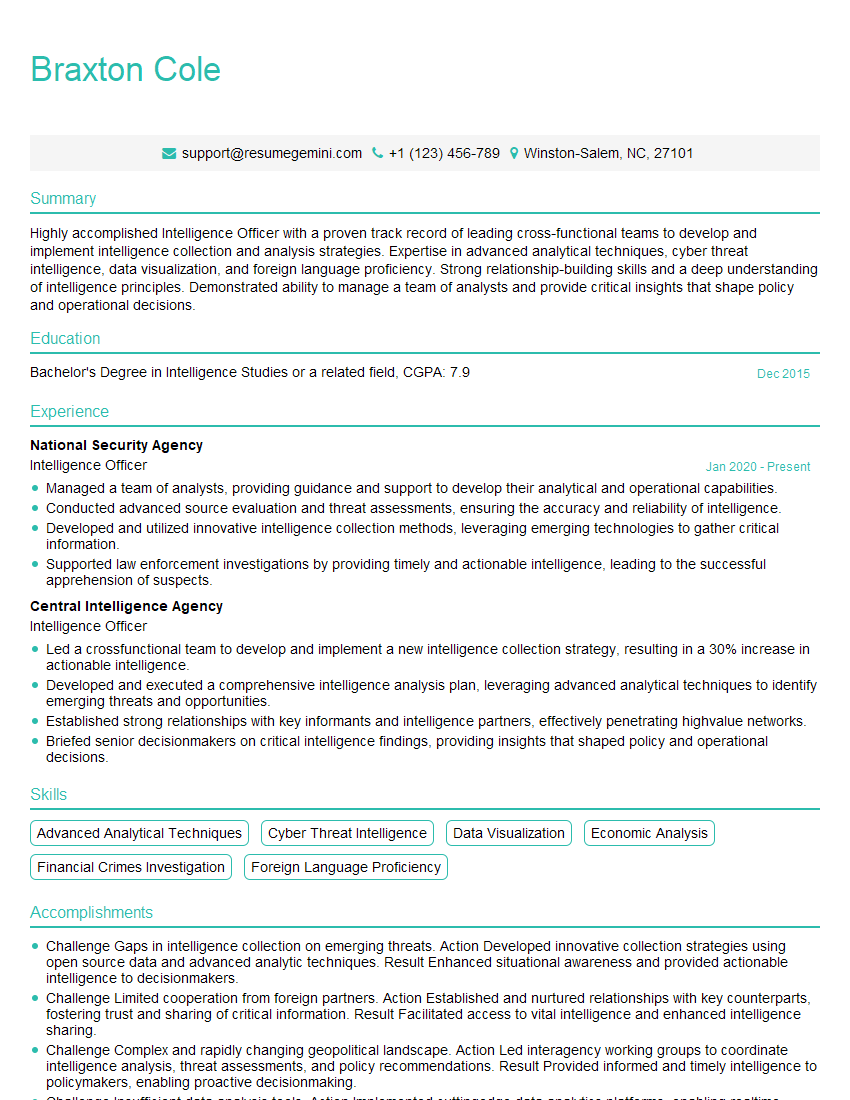
Intelligence Officer Resume Sample
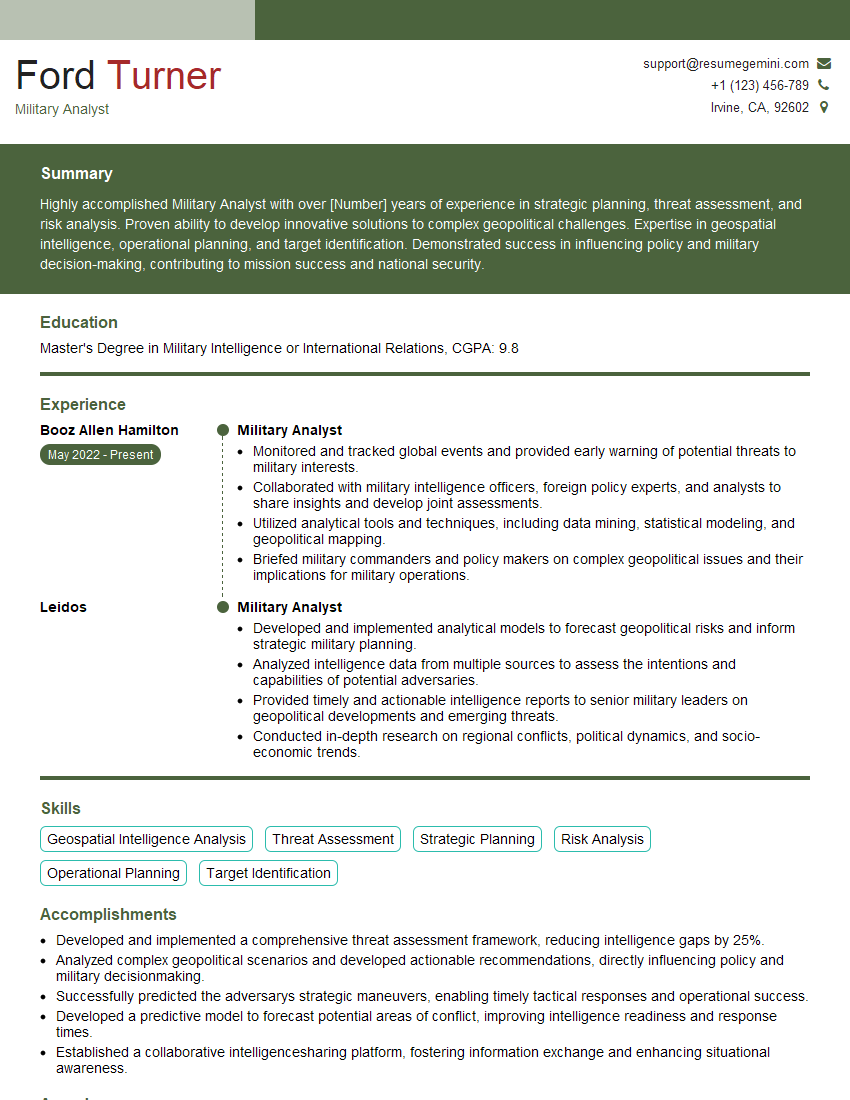
Military Analyst Resume Sample
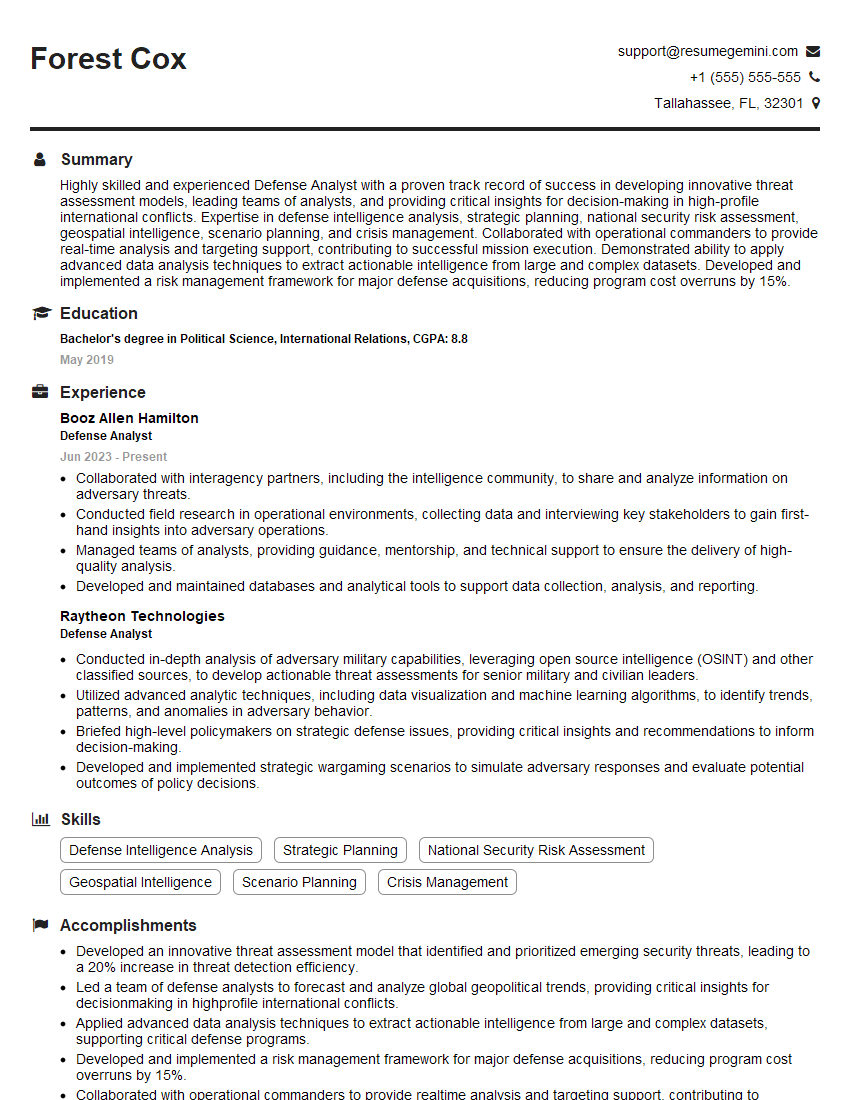
Defense Analyst Resume Sample
Explore more articles
Users Rating of Our Blogs
Share Your Experience
We value your feedback! Please rate our content and share your thoughts (optional).
What Readers Say About Our Blog
Very informative content, great job.
good