Cracking a skill-specific interview, like one for Mixing Drinks, requires understanding the nuances of the role. In this blog, we present the questions you’re most likely to encounter, along with insights into how to answer them effectively. Let’s ensure you’re ready to make a strong impression.
Questions Asked in Mixing Drinks Interview
Q 1. What are the key differences between shaking and stirring cocktails?
The key difference between shaking and stirring cocktails lies in the desired texture and dilution. Shaking, typically using an ice-filled shaker, creates a colder, more diluted, and frothier drink due to the rapid melting and agitation of the ice. This is ideal for cocktails with dairy products (like cream or egg white), fruit juices, or ingredients that benefit from emulsification. Stirring, usually in a mixing glass with ice, produces a less diluted, smoother drink with a more refined texture. This method is preferred for cocktails focusing on the nuanced flavors of spirits, liqueurs, and bitters, avoiding excessive dilution and clouding.
Example: A Daiquiri (rum, lime, sugar) is shaken for a frosty, refreshing texture, while an Old Fashioned (whiskey, sugar, bitters) is stirred for a smooth, less diluted experience highlighting the whiskey’s character.
Q 2. Explain the importance of proper glassware selection in cocktail preparation.
Proper glassware selection is crucial for both the aesthetic presentation and the functional enjoyment of a cocktail. The shape, size, and material of the glass influence the drink’s temperature, aroma, and overall drinking experience. A poorly chosen glass can detract from even the best cocktail.
- Example 1: A tall, slender highball glass best showcases the layering and color of a Tequila Sunrise. A short, wide rocks glass is ideal for the Old Fashioned, allowing for proper ice-to-drink ratio and aroma appreciation.
- Example 2: Using a coupe for a Martini enhances its elegance and allows for easy sipping, while a rocks glass would feel cumbersome and less sophisticated. The temperature retention properties of different glassware also matter; a chilled coupe will keep a Martini colder longer than a room-temperature rocks glass.
Q 3. Describe your experience with various cocktail techniques (e.g., muddling, layering).
My experience encompasses a wide range of cocktail techniques. Muddling, the gentle crushing of herbs or fruits to release their flavors and aromas, is crucial for cocktails like Mojitos (muddling mint and lime) and Caipirinhas (muddling limes and sugar). The technique requires care; excessive force results in bitterness. Layering involves carefully pouring liquids of differing densities to create visually striking drinks. This demands precision and understanding of the specific gravities of each ingredient. I’ve mastered the art of layering through careful practice and attention to detail, often creating visually stunning cocktails with multiple colors. For example, the Tequila Sunrise’s layers depend on the careful pouring of grenadine.
Beyond these, I’m proficient in various other techniques: dry shaking (shaking without ice to emulsify ingredients), double straining (using both a Hawthorne strainer and a fine-mesh strainer for a crystal-clear drink), and using a jigger for precise measurements ensuring consistency and preventing waste.
Q 4. How do you maintain proper inventory control of bar supplies?
Maintaining proper inventory control is paramount for efficient bar operations and profitability. I utilize a combination of methods:
- Regular stocktaking: A weekly physical count of all bar supplies, comparing it to the theoretical inventory to identify discrepancies and potential theft or spoilage.
- Point-of-sale (POS) system: Implementing a POS system tracks each drink made and its ingredients, providing a real-time view of consumption and assisting in forecasting needs.
- Par stock system: Defining a target level of each ingredient and regularly replenishing to maintain a consistent supply, minimizing stockouts.
- FIFO (First In, First Out): Organizing stock to ensure older items are used before newer ones, reducing spoilage and waste.
Regular inventory checks allow me to identify slow-moving items and adjust purchasing accordingly, ensuring efficient use of resources and minimizing losses.
Q 5. What are your strategies for managing a busy bar during peak hours?
Managing a busy bar during peak hours requires proactive planning and efficient teamwork. My strategies include:
- Pre-batching high-volume cocktails: Preparing components or entire cocktails ahead of time to reduce wait times during rushes. This requires anticipating popular orders and having a skilled team.
- Efficient workflow: Optimizing the bar’s layout and bartender stations for smooth transitions between tasks, avoiding bottlenecks.
- Effective communication: Clear communication with the entire bar team—bartenders, servers, and support staff—is key to handling orders accurately and quickly.
- Prioritization: Focusing on quick and efficient service for high-volume drinks, while ensuring all customers receive timely attention.
Regular training and cross-training of staff ensures everyone is proficient in various tasks and can support each other during high-pressure situations. This creates a sense of teamwork and allows for efficient scaling of operations to meet demand.
Q 6. How do you handle customer requests for modifications to standard cocktails?
Handling customer modifications requires a balance of professionalism and creativity. I always politely inquire about the reason for the change, ensuring I understand their preferences.
- Reasonable requests: I happily accommodate reasonable requests, like replacing one spirit with another (within the same spirit family), substituting sweeteners, or adjusting the strength. I’ll explain the potential impact of the change on the overall balance of the cocktail.
- Unreasonable requests: If a request significantly alters the cocktail’s character or is impractical (e.g., adding an ingredient not stocked), I’ll explain why and offer alternative suggestions. The goal is to satisfy the customer while upholding the integrity of the cocktail.
This approach demonstrates respect for the customer while maintaining professional standards. It’s about finding a balance between guest satisfaction and maintaining consistency in the quality of the cocktails being served.
Q 7. Describe your knowledge of different types of spirits (e.g., vodka, gin, rum).
My knowledge of spirits is extensive, encompassing their production methods, flavor profiles, and their role in various cocktails.
- Vodka: A neutral spirit, typically made from grains or potatoes, offering a blank canvas for cocktails, allowing other ingredients to shine. I understand the nuances between different vodkas based on their origin, grain, and production methods.
- Gin: Juniper-forward spirit, produced by distilling neutral grain alcohol with botanicals. The botanicals used greatly impact the gin’s flavor profile (citrusy, floral, spicy), influencing which cocktails it pairs well with.
- Rum: Produced from sugarcane byproducts, its vast diversity includes light, dark, spiced, and flavored rums, each with unique characteristics and appropriate cocktail applications. I can readily discuss the styles based on their aging process and origin.
I have a deep understanding of other spirits like tequila, whiskey (Scotch, Bourbon, Rye, Irish), mezcal, and cognac, and am well-versed in identifying their key characteristics, appropriate serving methods, and complementary mixers, resulting in a well-rounded expertise in mixology.
Q 8. What are some classic cocktails and their recipes?
Classic cocktails are the foundation of any good bar program. They represent timeless combinations of flavors and techniques that have stood the test of time. Here are a few examples with their recipes:
- Old Fashioned:
Ingredients: 2 oz Bourbon or Rye Whiskey, 1 sugar cube, 2 dashes Angostura bitters, Orange peel for garnish.
Method: Muddle the sugar cube with bitters and a splash of water. Add whiskey and ice, stir until well-chilled. Strain into a rocks glass filled with ice and garnish with an orange peel. - Margarita:
Ingredients: 2 oz Tequila, 1 oz Cointreau or Triple Sec, 1 oz Fresh Lime Juice, Salt for rimming the glass.
Method: Salt the rim of a margarita glass. Combine tequila, Cointreau, and lime juice in a shaker with ice. Shake well until chilled. Strain into the prepared glass. - Manhattan:
Ingredients: 2 oz Rye Whiskey, 1 oz Sweet Vermouth, 2 dashes Angostura bitters, Maraschino cherry for garnish.
Method: Combine whiskey, vermouth, and bitters in a mixing glass with ice. Stir until well-chilled. Strain into a chilled coupe or martini glass. Garnish with a cherry. - Daiquiri:
Ingredients: 2 oz White Rum, 1 oz Fresh Lime Juice, ¾ oz Simple Syrup
Method: Combine all ingredients in a shaker with ice. Shake until well-chilled. Strain into a chilled coupe glass.
These recipes provide a starting point; feel free to adjust sweetness or tartness to your liking. The key is using fresh, high-quality ingredients.
Q 9. How do you ensure the quality and consistency of your cocktails?
Consistency and quality are paramount. I achieve this through several key methods:
- Precise Measurement: I always use jiggers or measuring spoons to ensure accurate proportions. A small difference in measurement can significantly impact the final taste.
- High-Quality Ingredients: I source fresh juices, premium spirits, and top-shelf mixers. The quality of the ingredients directly translates to the quality of the cocktail.
- Proper Technique: Correct shaking, stirring, and muddling techniques are crucial. Over-shaking can dilute the drink, while under-shaking can leave it unbalanced. Stirring ensures a smooth, well-integrated cocktail without excessive dilution.
- Standard Operating Procedures (SOPs): Having detailed recipes and procedures ensures all bartenders prepare drinks consistently, regardless of who’s on shift.
- Regular Taste Tests: Periodically, I taste-test my cocktails to ensure they meet my standards and adjust recipes as needed.
By following these steps, I maintain a high level of quality and consistency across all our cocktails.
Q 10. Explain your approach to garnishing cocktails.
Garnishing is more than just decoration; it’s an art form that enhances the sensory experience. My approach is guided by several principles:
- Relevance: The garnish should complement the flavors of the cocktail. A lime wedge in a Margarita is classic, while an orange peel in an Old Fashioned enhances the citrus notes.
- Freshness: I use only the freshest ingredients for garnishes. A wilted herb or a bruised fruit detracts from the overall presentation.
- Simplicity: Elegant simplicity is key. Overly elaborate garnishes can be distracting. A single, well-placed element is often more effective than a complex arrangement.
- Presentation: The garnish should be neatly presented. A carefully cut citrus twist or a precisely placed herb sprig shows attention to detail.
Ultimately, the goal is to create a visually appealing and flavorful addition that elevates the drinking experience. I often experiment with different garnishes to find the perfect complement for each cocktail.
Q 11. How do you handle customer complaints or conflicts?
Handling customer complaints requires a calm and professional approach. My strategy involves:
- Active Listening: I patiently listen to the customer’s concerns without interruption, ensuring they feel heard and understood.
- Empathy: I show empathy and acknowledge their feelings, even if I don’t fully agree with their perspective.
- Problem-Solving: I work to identify the root cause of the issue. Was the drink made incorrectly? Were the ingredients subpar? Once identified, I offer a solution, such as remaking the drink or offering an alternative.
- Apology: If a mistake was made, I offer a sincere apology, taking ownership of the situation.
- Follow-up: In serious cases, I follow up with the customer to ensure their satisfaction. A handwritten note or a complimentary drink on their next visit can go a long way.
Conflicts are rare, but when they arise, I de-escalate the situation by remaining calm and professional, focusing on finding a mutually acceptable resolution. My primary goal is to ensure customer satisfaction and maintain a positive atmosphere.
Q 12. Describe your experience with different types of mixers (e.g., juices, syrups).
My experience with mixers is extensive. The quality and freshness of mixers significantly impact a cocktail’s flavor profile. I prioritize using fresh juices whenever possible – freshly squeezed citrus juices, for example, provide superior flavor and brightness compared to bottled versions. However, I also utilize quality bottled juices and syrups when appropriate.
- Citrus Juices: Freshly squeezed lime, lemon, and orange juices are staples. I know how to properly store them to maintain freshness and prevent oxidation. I also understand the importance of adjusting the amount based on the sweetness and acidity of the fruit.
- Syrups: Simple syrup (equal parts sugar and water) is a foundation, but I also use flavored syrups like grenadine, orgeat, and various house-made infusions to add complexity.
- Other Mixers: I work with a variety of sodas, tonics, and bitters to complement different cocktail styles. The choice of mixer can greatly influence the overall taste and balance.
I regularly assess and compare different mixer brands to ensure I am using the highest quality available to me. Understanding the subtle nuances of various mixers is crucial to building well-balanced and delicious cocktails.
Q 13. How do you maintain a clean and organized bar area?
Maintaining a clean and organized bar area is essential for efficiency, safety, and customer satisfaction. My approach is systematic:
- Regular Cleaning: I wipe down the bar top regularly, clean and sanitize glassware, and maintain cleanliness throughout the service area. This prevents the spread of germs and enhances the overall aesthetic.
- Organized Stock: Spirits, mixers, and garnishes are stored in designated areas, making it easy to locate items quickly and efficiently. This prevents wasted time during busy service periods.
- Mise en Place: Before service, I prepare all necessary ingredients – juices, syrups, garnishes – ensuring a smooth and efficient workflow. This is essential for quick and consistent cocktail preparation.
- Waste Management: I follow proper waste disposal procedures to maintain a clean and sanitary workspace.
- Regular Deep Cleaning: At the end of each service, or as needed, I perform a thorough cleaning of the entire bar area, including equipment such as ice wells and cocktail shakers.
A well-organized bar not only ensures efficiency but also creates a professional and inviting atmosphere for both staff and customers.
Q 14. What are some common cocktail-making mistakes and how to avoid them?
Several common cocktail-making mistakes can significantly impact the quality of a drink. Here are a few, along with how to avoid them:
- Inaccurate Measurements: Using inaccurate measurements leads to unbalanced cocktails. Solution: Always use jiggers or measuring spoons for consistent results.
- Using Low-Quality Ingredients: Cheap or stale ingredients dramatically affect the taste. Solution: Invest in high-quality spirits, fresh juices, and premium mixers.
- Improper Technique: Incorrect shaking, stirring, or muddling results in poorly mixed or diluted drinks. Solution: Practice the correct techniques. Shaking should be vigorous, stirring should be gentle, and muddling shouldn’t crush the ingredients.
- Neglecting Temperature: Serving drinks at the wrong temperature negatively impacts the flavor profile. Solution: Ensure all ingredients and glassware are properly chilled. Stirred cocktails should be well-chilled, shaken cocktails should be icy cold.
- Over-Garnishing: Overly elaborate garnishes can distract from the drink itself. Solution: Keep garnishes simple and relevant to the cocktail.
By paying attention to detail and mastering the basic techniques, you can avoid these common pitfalls and create delicious, consistent cocktails every time.
Q 15. Explain your understanding of responsible alcohol service practices.
Responsible alcohol service is paramount in the bar industry. It’s about preventing intoxication and ensuring the safety and well-being of patrons. This involves refusing service to visibly intoxicated individuals, checking IDs diligently, and promoting responsible drinking habits. We’re trained to recognize signs of intoxication – slurred speech, unsteady gait, aggressive behavior – and to politely but firmly refuse further service. We also encourage alternative beverages like water or soft drinks, and actively discourage excessive consumption. It’s not just about following legal regulations; it’s about fostering a responsible and enjoyable environment for everyone. For example, I’ve had to refuse service to a regular customer who was clearly too intoxicated to drive home, and instead I called a cab for him and ensured his safety. This is often challenging, as you have to manage customer expectations and potentially face confrontation, but customer safety always comes first.
Career Expert Tips:
- Ace those interviews! Prepare effectively by reviewing the Top 50 Most Common Interview Questions on ResumeGemini.
- Navigate your job search with confidence! Explore a wide range of Career Tips on ResumeGemini. Learn about common challenges and recommendations to overcome them.
- Craft the perfect resume! Master the Art of Resume Writing with ResumeGemini’s guide. Showcase your unique qualifications and achievements effectively.
- Don’t miss out on holiday savings! Build your dream resume with ResumeGemini’s ATS optimized templates.
Q 16. Describe your knowledge of different ice types and their uses in cocktails.
Ice is far more crucial to a cocktail than many realize. The type of ice directly impacts the dilution rate and the overall drinking experience. There are several key types:
- Kold-Draft Ice: Large, clear cubes, ideal for slow dilution in spirits-forward cocktails, minimizing watering down. The larger surface area melts slower than smaller ice, maintaining the drink’s integrity.
- Crushed Ice: Perfect for highball drinks and those requiring rapid dilution. The increased surface area speeds up the melting process, creating a more refreshing drink. I often use this for Mojitos or Daiquiris.
- Spherical Ice: These melt slower than standard cubes, maintaining temperature and diluting consistently. They’re a great choice for cocktails that are meant to be enjoyed slowly.
- Nugget Ice (also called pellet ice): While not always suitable for sophisticated cocktails, its smaller size allows for rapid chilling without excessive dilution, perfect for high-volume service.
Choosing the right ice is about understanding the drink’s profile. For example, a finely crafted Old Fashioned would be ruined by crushed ice, whereas a refreshing Gin and Tonic would benefit from the rapid chill and dilution of crushed ice.
Q 17. How do you stay up-to-date on current cocktail trends and techniques?
Staying current in the cocktail world requires constant learning. I regularly subscribe to industry magazines like Imbibe and Drinks International, attend industry conferences and workshops, and follow influential bartenders and mixologists on social media (Instagram, particularly, is a fantastic resource). I also frequently visit other bars to experience different approaches to crafting drinks and customer service. Furthermore, participating in online communities and forums helps me connect with fellow bartenders and learn about new trends and techniques. Experimentation is key – I’m always trying out new flavor combinations and techniques in my home bar to refine my skills.
Q 18. What is your experience with POS (Point of Sale) systems in a bar setting?
I have extensive experience using POS systems in a bar setting. I’m proficient in using systems like Toast, Micros, and Aloha, handling everything from taking orders and processing payments to managing inventory and generating reports. I understand the importance of accurate order entry, efficient cash handling, and maintaining detailed records for inventory control. My experience extends to troubleshooting minor technical issues and understanding the importance of data accuracy for sales tracking and cost analysis. I’m also familiar with integrating POS systems with other aspects of bar management, such as employee scheduling and customer loyalty programs. For example, during peak hours, the quick and accurate inputting of orders is essential to maintain fast and efficient service.
Q 19. How do you calculate the cost of goods sold for cocktails?
Calculating the cost of goods sold (COGS) for cocktails is crucial for profitability. It involves determining the cost of all ingredients used in a specific cocktail over a period of time. First, I determine the cost of each ingredient per unit (e.g., cost per ounce of liquor, cost per lime). Then, I measure the exact amount of each ingredient used in a single cocktail. By multiplying the cost per unit by the amount used and summing up for all ingredients in a cocktail, I calculate the total cost per cocktail. Finally, I multiply this cost per cocktail by the number of cocktails sold to obtain the total COGS. This data helps in pricing cocktails competitively, managing inventory efficiently, and assessing the profitability of individual drinks and the overall bar operation. For example, if a Margarita uses 2 oz Tequila at $10/bottle (25 oz), 1 oz Lime juice at $0.20/oz, and 0.5 oz Agave at $0.10/oz, the COGS per margarita is roughly ($10/25)*2 + 0.20 + 0.10 = $0.80 + $0.20 + $0.10 = $1.10
Q 20. What are your skills in creating unique and innovative cocktails?
Creating unique cocktails is a passion of mine. My approach involves understanding flavor profiles and experimenting with unexpected combinations. I draw inspiration from various sources: seasonal ingredients, travel experiences, and even artistic expressions. For example, I recently created a cocktail called ‘Forest Whisper’ which features gin infused with pine needles, elderflower liqueur, and a splash of lemon, garnished with a sprig of rosemary. The unique combination of earthy and floral notes creates a refreshing and memorable taste. I also believe in balancing flavors carefully, creating a cohesive and pleasant experience for the palate. I’m always refining my techniques, using molecular gastronomy methods where applicable to create unique textures and presentations.
Q 21. Describe your experience with working under pressure.
Working under pressure is an inherent part of being a bartender, particularly during peak hours or special events. I thrive in fast-paced environments, and my experience has equipped me with the skills to prioritize tasks, multitask efficiently, and remain calm and collected under pressure. I’ve learned to anticipate busy periods, prepare in advance by pre-batching certain components of cocktails and effectively managing inventory, and delegate effectively when possible. I maintain a positive attitude, even when things get hectic. For instance, during a busy Friday night, I was able to manage a large influx of customers, ensuring quick service and high-quality drinks while maintaining a pleasant demeanor. This efficiency minimizes wait times, reduces customer frustration and contributes to a positive overall experience.
Q 22. How do you handle a shortage of a particular ingredient?
Ingredient shortages are a common challenge in the bar industry. My approach is multi-faceted, focusing on proactive planning and creative solutions. First, I meticulously track inventory levels, using a system that alerts me to low stock before it becomes a problem. This allows for timely reordering. Second, I maintain strong relationships with suppliers to ensure reliable delivery. If a specific ingredient is unavailable, I immediately explore substitutes. This requires a deep understanding of flavour profiles and cocktail construction. For example, if I’m out of fresh lime juice, I might substitute with a high-quality lime cordial, adjusting the sweetness accordingly, or even using a different citrus fruit depending on the cocktail.
Finally, I communicate the shortage transparently to the bar manager and customers, offering alternative drink options that utilize available ingredients. This prevents customer dissatisfaction and allows for menu adjustments if necessary. This proactive and flexible approach ensures smooth service, even when faced with unexpected challenges.
Q 23. What safety measures do you follow when handling bar equipment?
Safety is paramount in a bar environment. My safety procedures start with proper training and adherence to all workplace safety regulations. I always handle glassware with care, ensuring it’s clean and free from chips or cracks. I use appropriate tools for tasks like opening bottles, avoiding manual force that could lead to injuries. When using sharp objects like ice picks or knives, I employ caution and focus on safe handling techniques. I thoroughly clean and sanitize all equipment and work surfaces regularly to prevent the spread of bacteria and viruses. I am also trained to respond to spills quickly and efficiently, preventing slips and falls. This includes immediate cleanup and appropriate warning signage. Furthermore, I’m proficient in the safe use and storage of all bar equipment, including the proper disposal of hazardous materials.
Q 24. How do you manage teamwork and communication within a bar staff?
Effective teamwork and communication are crucial for a successful bar operation. I believe in open and clear communication, actively listening to my colleagues and contributing positively to the team dynamic. We use a combination of verbal communication during peak service hours and a written system for less urgent matters like inventory updates or special requests. During busy periods, nonverbal cues, such as eye contact and a shared understanding of service priorities, become essential. I actively participate in team briefings to discuss daily operations, identify potential issues, and coordinate roles effectively. I also ensure that everyone understands their roles and responsibilities. Solving problems together and supporting each other ensures a smooth and efficient workflow, ultimately resulting in enhanced customer service and staff morale.
Q 25. Explain your knowledge of different wine and beer styles.
My knowledge of wine and beer encompasses a broad range of styles and production methods. In wine, I’m familiar with the major grape varietals, their flavour profiles (e.g., the fruity notes of Pinot Noir, the boldness of Cabernet Sauvignon), and regional characteristics (e.g., the minerality of Sancerre, the oak influence of Napa Valley Cabernet). I understand the different winemaking techniques and the impact they have on the final product. This extends to various wine types, from light-bodied whites like Sauvignon Blanc to full-bodied reds like Merlot.
With beer, I’m equally versed in various styles including lagers (crisp pilsners, robust bocks), ales (hoppy IPAs, malty stouts), and specialty beers (sour beers, Belgian ales). I understand the role of ingredients such as hops, malt, and yeast in shaping a beer’s flavour and aroma. I can readily discuss the differences between top-fermented and bottom-fermented beers and advise patrons on pairing beer with various foods.
Q 26. Describe your experience with high-volume cocktail service.
I’ve worked in high-volume cocktail service environments, managing up to 100+ drinks per hour during peak service. This involved mastering efficient bar techniques like prepping ingredients in advance (mise en place), optimizing bar layout to minimize movement, and utilizing speed-pouring techniques without compromising quality. My experience includes working during large events and festivals, coordinating with multiple bartenders to ensure seamless service, and adapting quickly to fluctuating demand. I can maintain composure under pressure, remaining efficient and friendly, even during busy periods. This high-pressure experience has significantly improved my time management, multitasking abilities, and stress tolerance.
Q 27. How do you deal with intoxicated patrons?
Dealing with intoxicated patrons requires a responsible and measured approach. My priority is always the safety and well-being of the patron and other guests. I start by observing their behaviour and interacting with them calmly and politely. If their intoxication is impacting their behaviour, I offer non-alcoholic beverages to help them sober up gradually. I also avoid serving them more alcohol. In cases of severe intoxication or disruptive behaviour, I’ll subtly contact my manager or security personnel, and follow established protocols to ensure the patron is safely escorted out of the premises while maintaining their dignity. Our establishment has clear policies to manage such situations while ensuring compliance with all legal and ethical considerations.
Q 28. What are your salary expectations?
My salary expectations are in line with the industry standards for a bartender with my experience and skills, considering the location and the specific demands of the role. I am open to discussing a competitive compensation package that reflects my contributions to the establishment.
Key Topics to Learn for a Mixing Drinks Interview
- Ingredient Knowledge: Understanding spirits, liqueurs, mixers, garnishes, and their flavor profiles. This includes knowing common substitutions and alternatives.
- Recipe Mastery: Demonstrating proficiency in preparing classic and contemporary cocktails. This extends to understanding the balance of flavors and the techniques used to create each drink.
- Cocktail Construction Techniques: Mastering shaking, stirring, muddling, layering, and other methods. Knowing when to use each technique for optimal results is crucial.
- Bar Equipment & Tools: Familiarity with various bar tools (jiggers, shakers, strainers, etc.) and their proper usage. Understanding the maintenance and sanitation of equipment is essential.
- Customer Service & Communication: Demonstrating excellent communication and interpersonal skills. This includes taking orders accurately, offering suggestions, and providing exceptional customer service.
- Inventory Management & Cost Control: Understanding the importance of managing stock levels, minimizing waste, and contributing to the profitability of the bar.
- Hygiene & Safety: Adhering to strict hygiene and safety protocols to maintain a clean and safe work environment.
- Creativity & Innovation: Demonstrating the ability to adapt recipes, create new cocktails, and respond to customer preferences.
- Troubleshooting & Problem Solving: Ability to handle unexpected situations, resolve issues quickly and efficiently, and maintain a calm demeanor under pressure.
Next Steps
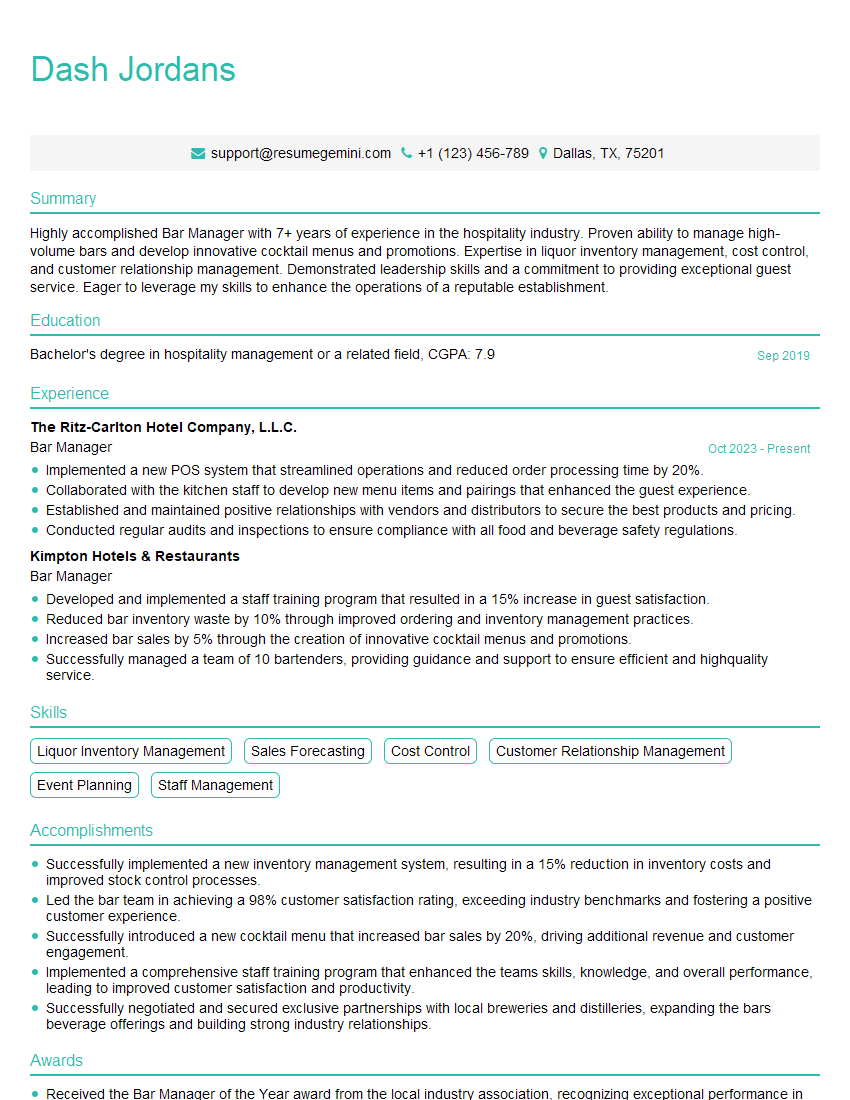
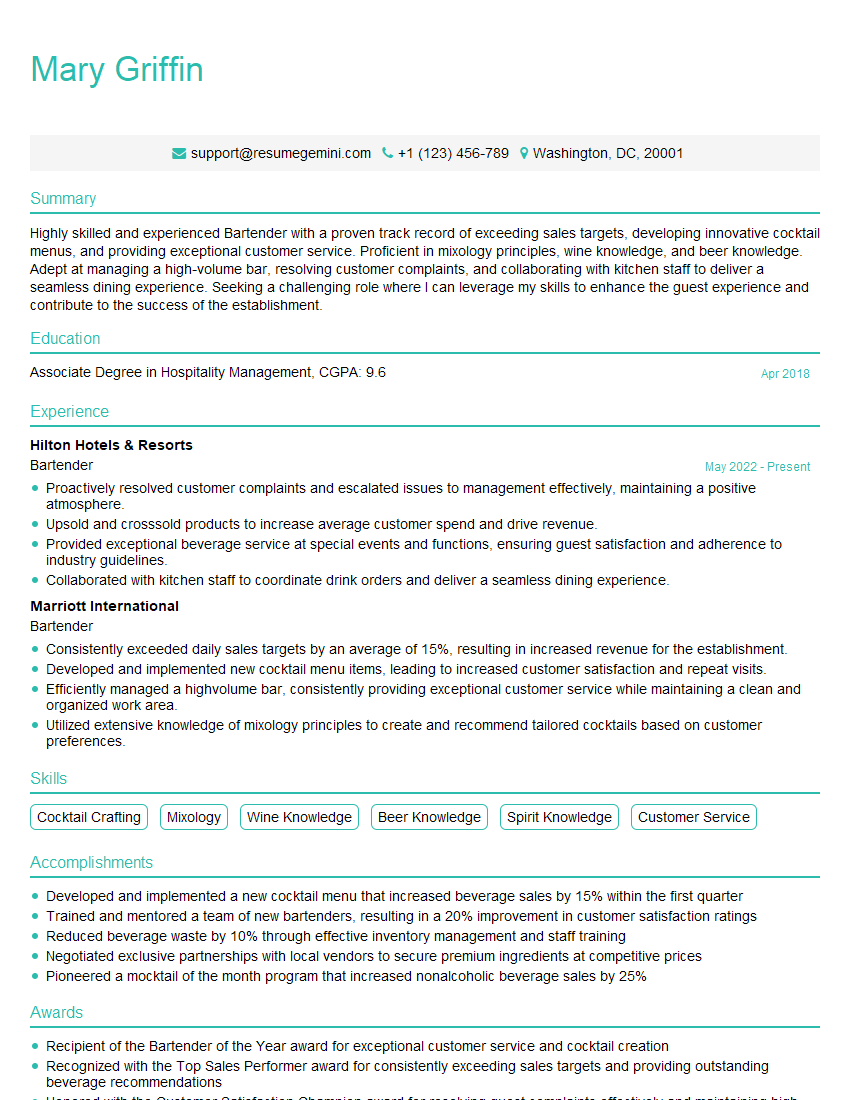
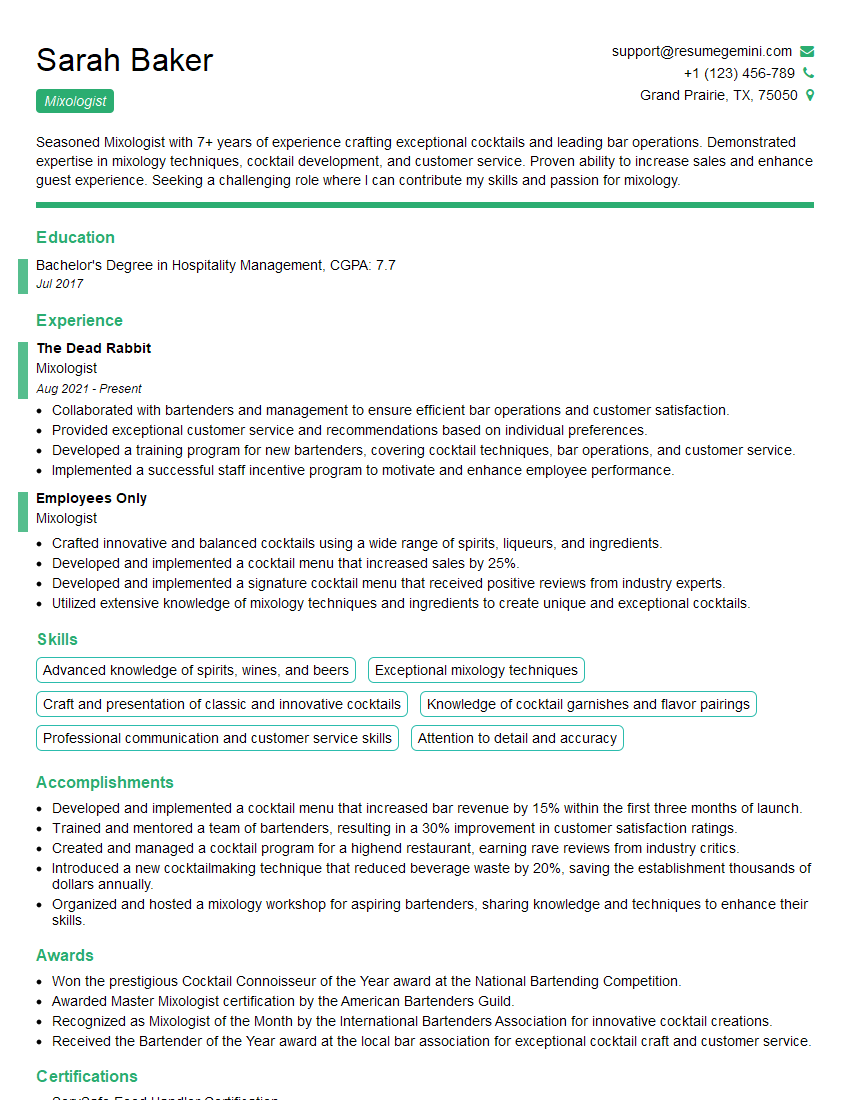
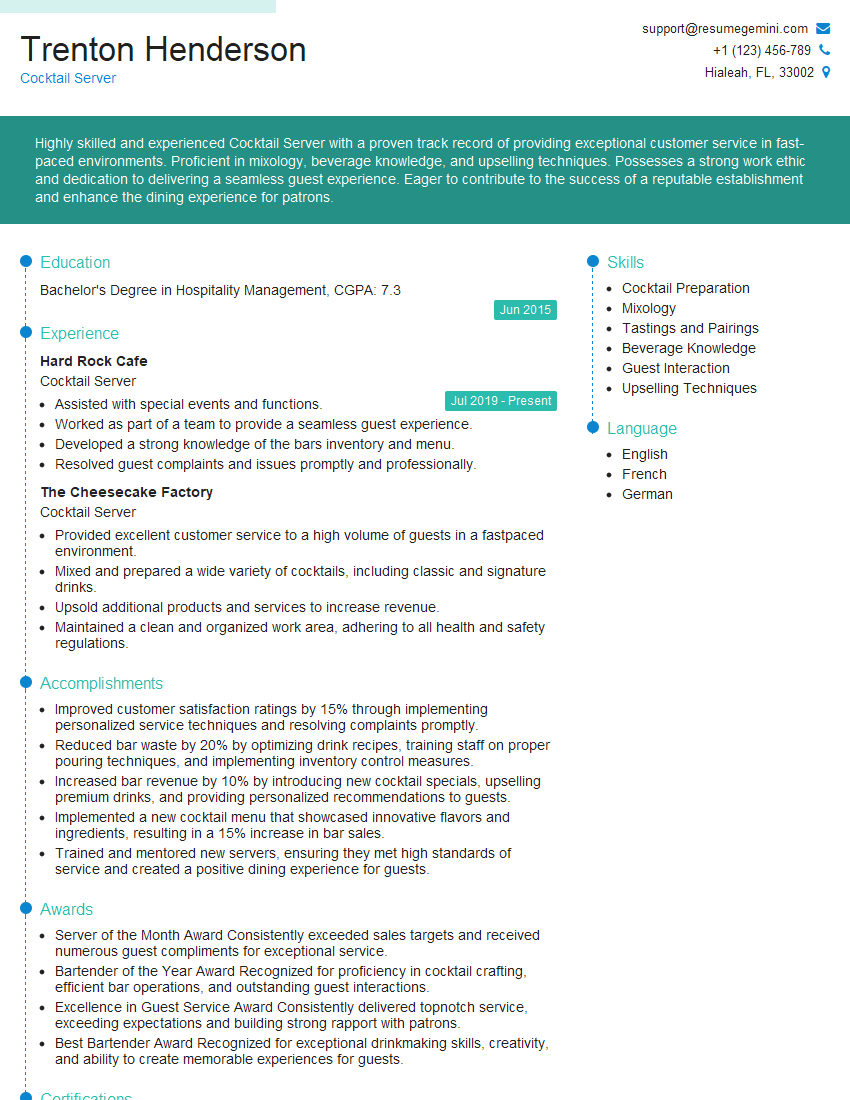
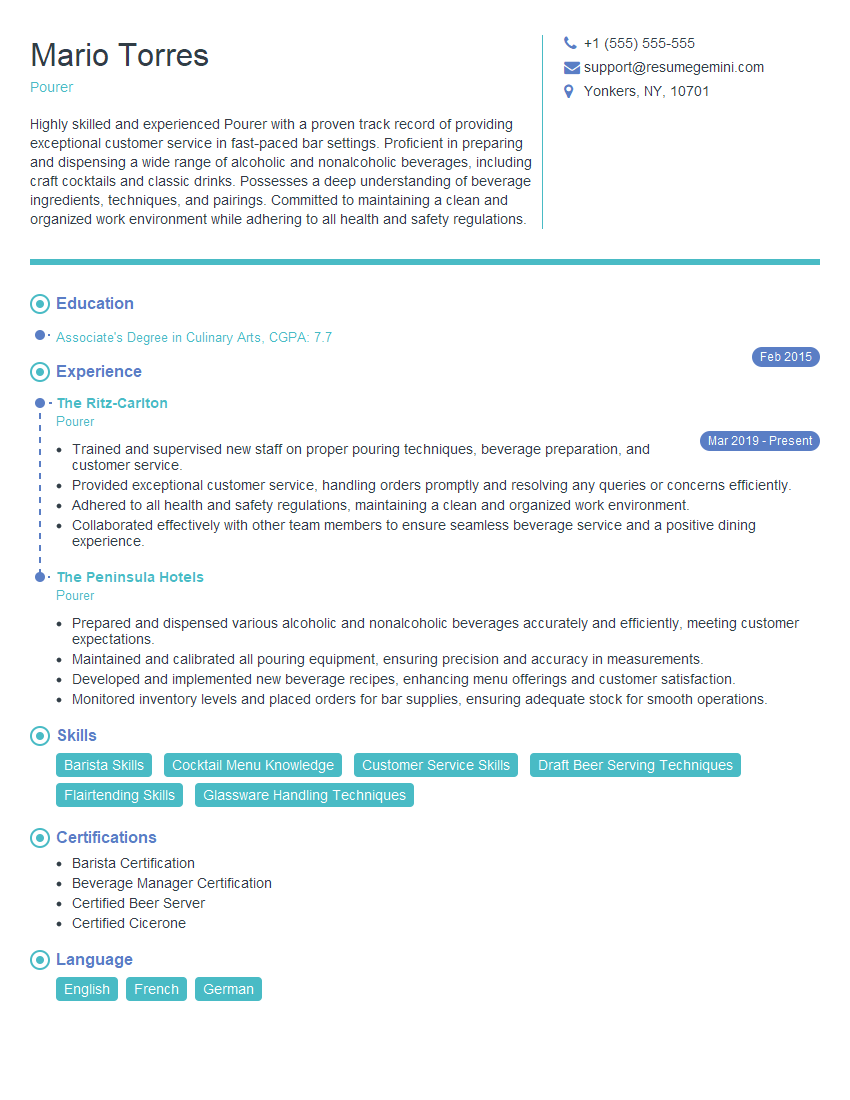
Mastering the art of mixing drinks opens doors to exciting career opportunities in the hospitality industry, offering potential for growth and advancement. A well-crafted resume is your key to unlocking these opportunities. An ATS-friendly resume increases your chances of getting noticed by employers and landing interviews. Use ResumeGemini to build a professional and impactful resume that highlights your skills and experience. ResumeGemini provides examples of resumes tailored to the Mixing Drinks industry, ensuring your resume stands out from the competition.
Explore more articles
Users Rating of Our Blogs
Share Your Experience
We value your feedback! Please rate our content and share your thoughts (optional).
What Readers Say About Our Blog
Very informative content, great job.
good