Are you ready to stand out in your next interview? Understanding and preparing for Motion Control (Servo, Stepper Motors) interview questions is a game-changer. In this blog, we’ve compiled key questions and expert advice to help you showcase your skills with confidence and precision. Let’s get started on your journey to acing the interview.
Questions Asked in Motion Control (Servo, Stepper Motors) Interview
Q 1. Explain the difference between open-loop and closed-loop control systems in motion control.
Open-loop and closed-loop control systems differ fundamentally in how they manage motor position and speed. Imagine driving a car: open-loop is like setting the cruise control and hoping for the best – you’re giving a command, but there’s no feedback to ensure you’re actually reaching the desired speed. Closed-loop, on the other hand, is like using a GPS; it constantly monitors your speed and position, making adjustments to keep you on course.
In open-loop control, the motor receives a command (e.g., rotate 10 degrees), and it executes it without any verification of whether the instruction was successfully completed. Stepper motors are commonly used in open-loop systems because their movement is inherently tied to the number of pulses received. While simple and cost-effective, open-loop systems are susceptible to errors from external factors like friction or load variations.
Closed-loop control incorporates feedback. A sensor (like an encoder) measures the actual position or speed of the motor, and a controller compares this to the desired value. The controller then generates an error signal, which is used to adjust the motor’s drive signal to minimize the difference between the actual and desired values. Servo motors are almost always used in closed-loop systems because of their precise position and speed control. They provide greater accuracy and robustness against external disturbances.
In short: Open-loop is command-based, simple, and less precise; closed-loop is feedback-based, more complex, and more accurate.
Q 2. Describe the operating principles of a servo motor.
A servo motor is a closed-loop electromechanical system designed for precise control of angular position, velocity, and acceleration. At its heart lies a rotary actuator—a motor capable of rotating a shaft—often a DC motor. This motor is coupled with a position sensor (typically a potentiometer, resolver, or encoder) that feeds back information on the motor’s current position to a control unit.
The operating principle is as follows:
- A control signal (representing the desired position/speed) is sent to the servo motor’s controller.
- The controller compares this command signal with the feedback signal from the position sensor.
- The difference (error signal) between the desired and actual position is processed by a control algorithm (often a PID controller – we’ll discuss this later).
- The controller adjusts the motor’s drive voltage/current to minimize the error signal, driving the motor towards the desired position/speed.
- This process is continuous, creating a closed-loop system that ensures accurate and responsive positioning.
Think of it like a self-correcting system; the servo motor constantly monitors its position and adjusts its actions to meet the target, making it ideal for applications requiring high precision, such as robotics and CNC machining.
Q 3. Describe the operating principles of a stepper motor.
Stepper motors are digital motors that rotate in discrete steps rather than continuously. Instead of a continuous rotation, they move in precise angular increments per step command. This unique characteristic enables precise positioning without feedback sensors, making them often suitable for open-loop control.
Their operating principle involves:
- A sequence of pulses is sent to the stepper motor driver.
- Each pulse causes the motor rotor to rotate by a specific step angle (e.g., 1.8 degrees for a 200-step motor).
- The motor contains electromagnets that are sequentially energized to attract the rotor’s permanent magnets, causing stepwise rotation.
- The rotor’s position is determined by the number of pulses received.
Imagine a clock: Each pulse moves the hand to the next number. It’s simple and deterministic—if you send 10 pulses, the motor will rotate 10 steps. However, accuracy can be affected by external loads and friction.
Q 4. What are the advantages and disadvantages of servo motors compared to stepper motors?
Servo motors and stepper motors each have their strengths and weaknesses:
Servo Motors:
- Advantages: High precision, high speed, smooth movement, excellent dynamic response, high torque at low speeds.
- Disadvantages: Higher cost, more complex control system, typically require closed-loop control (feedback sensors).
Stepper Motors:
- Advantages: Simple control, low cost, open-loop operation possible, high holding torque, precise positioning in open-loop applications (within limitations).
- Disadvantages: Limited speed, resonance issues at higher speeds, lower precision than servo motors, can be noisy, lower torque than servo motors at higher speeds.
The choice between a servo motor and a stepper motor depends heavily on the specific application requirements. For instance, a high-precision robotic arm would benefit from the accuracy and responsiveness of a servo motor, while a simple printer might adequately use a stepper motor for its relatively low-precision movements.
Q 5. Explain the concept of PID control and its application in motion control.
PID control is a widely used feedback control algorithm that is crucial in motion control systems for achieving desired performance. It stands for Proportional, Integral, and Derivative control. It aims to minimize the error between the desired setpoint (target position or speed) and the actual value (measured by a sensor).
The three components work together:
- Proportional (P): The proportional term is directly proportional to the current error. A larger error results in a stronger corrective action. Think of it as a simple “error correction” – if you’re far from your target, you correct aggressively.
- Integral (I): The integral term considers the accumulated error over time. This helps to eliminate steady-state errors, preventing the system from settling at a value slightly off from the target (the ‘drift’ effect). Imagine it like accumulating ‘frustration’ if the error persists.
- Derivative (D): The derivative term considers the rate of change of the error. It anticipates future error and helps to dampen oscillations and improve stability. It’s like predicting the future based on the current trend.
The PID controller combines these three terms (P + I + D) to produce a control signal that continuously adjusts the motor’s drive to reduce the error to zero. The weights given to each term (Kp, Ki, Kd) are tuning parameters that are adjusted to optimize the system’s response.
Q 6. How do you tune a PID controller for optimal performance?
Tuning a PID controller is a crucial step in achieving optimal performance. There is no single ‘best’ method; however, a common approach involves a systematic process of adjusting the proportional (Kp), integral (Ki), and derivative (Kd) gains. One popular method is the Ziegler-Nichols method, which involves finding the ultimate gain and ultimate period. Other methods include trial and error, manual tuning, or using automated tuning tools.
A general strategy:
- Start with P: Begin with a small value of Kp, gradually increasing it until the system starts to oscillate. Observe how quickly the system responds and how much it overshoots.
- Add I: Introduce the integral term (Ki) to eliminate steady-state errors. A small Ki value is usually enough to start with; increase it slowly to reduce steady-state error, carefully observing for any oscillations or instability.
- Add D: Finally, add the derivative term (Kd) to reduce overshoot and oscillations. A small Kd is added and gradually increased to damp any oscillations, without making the system sluggish.
- Iterative Refinement: Continue adjusting the gains iteratively until the desired response is obtained. Monitor the system’s response, paying attention to settling time, overshoot, and steady-state error. Consider using visual tools, such as graphs of the system’s response to aid in this process.
This process involves careful observation and iterative adjustments. Remember to proceed carefully, making small changes to the gains at each step to avoid destabilizing the system. Simulation tools can be extremely helpful during the tuning phase.
Q 7. What are the different types of stepper motor drivers?
Stepper motor drivers are essential for controlling the operation of stepper motors. They convert low-voltage digital pulses from a microcontroller into the high-current pulses required to drive the stepper motor’s coils. There are several types:
- Unipolar Drivers: These drivers use a single power supply and switch each coil individually. They are simpler to design but generally offer lower torque and efficiency.
- Bipolar Drivers: These drivers use two power supplies (or a single dual-rail supply) and switch the coils in a more sophisticated manner. They generally offer higher torque, better efficiency, and faster stepping rates.
- Microstepping Drivers: These drivers further refine the step resolution by using pulse-width modulation (PWM) to energize the motor windings in a non-integer number of steps. They improve smoothness and reduce noise but can be more complex and costly.
- Chopper Drivers: These drivers use a sophisticated current control algorithm that dynamically adjusts the current to optimize torque and minimize noise. They’re commonly used in high-performance applications.
The choice of driver depends on the requirements of the application. For example, a simple hobby project might suffice with a unipolar driver, while a high-precision industrial application would likely utilize a chopper driver for optimal performance.
Q 8. Explain the concept of resonance in motion control systems and how to mitigate it.
Resonance in a motion control system occurs when the frequency of an external force (like vibration or a repetitive load) matches the natural frequency of the mechanical system. This leads to a dramatic amplification of vibrations, resulting in instability, inaccurate positioning, and potentially damage to the motor or other components. Imagine pushing a child on a swing – if you push at the right frequency (resonant frequency), the swing goes much higher than if you push randomly. The same applies to a motor; if a recurring load excites its resonant frequency, the system can become unstable.
Mitigating resonance involves several strategies:
- Stiffening the mechanical structure: A stiffer system has a higher natural frequency, reducing the likelihood of resonance within the operating range. This can be achieved through the use of stronger materials or better structural design.
- Adding damping: Dampers (like viscous dampers or tuned mass dampers) absorb vibrational energy, reducing the amplitude of resonant oscillations. Think of a shock absorber in a car – it dampens the vibrations caused by bumps in the road.
- Modifying the control system: Using advanced control algorithms like adaptive control or notch filters can effectively reduce or eliminate the effects of resonance. A notch filter, for example, can specifically attenuate the frequency causing resonance.
- Changing the motor’s operating frequency: Sometimes, simply avoiding operation near the resonant frequency is sufficient. This often requires careful analysis to determine the system’s resonant frequencies through modal analysis.
For instance, in a robotic arm application, resonance might be observed during high-speed movements. Adding damping to the joints or modifying the control system’s gain scheduling can effectively suppress these vibrations.
Q 9. How do you select the appropriate motor and driver for a specific application?
Selecting the right motor and driver is crucial for optimal performance and longevity. The process begins with a thorough understanding of the application’s requirements. Key factors include:
- Torque requirements: Determine the maximum torque needed to overcome inertia and external loads. This depends on factors like the mass being moved, acceleration profiles, and frictional forces. You need a motor with sufficient torque to handle the load.
- Speed requirements: What’s the maximum and minimum speed needed? This dictates the motor’s speed rating and potentially the gearing required.
- Precision and accuracy: How accurate does the positioning need to be? Servo motors generally offer better accuracy than stepper motors.
- Operating environment: Consider factors like temperature, humidity, and the presence of contaminants. Some motors are more robust than others in harsh environments.
- Power supply constraints: The available voltage and current influence the choice of both motor and driver.
- Budget and space limitations: These are practical considerations that can influence the selection.
For example, a high-precision pick-and-place application in a clean room would require a high-accuracy servo motor with a suitable driver designed for clean environments, while a simple conveyor belt might utilize a robust stepper motor and driver with lower precision requirements.
Q 10. What are the common causes of motor overheating?
Motor overheating is a common problem that can lead to reduced lifespan and even catastrophic failure. The most frequent causes are:
- Excessive load: The motor is being asked to produce more torque than it’s designed for. This is akin to repeatedly overloading a car engine.
- High operating temperature: Ambient temperature, insufficient ventilation, or inadequate heat dissipation can all cause excessive heat buildup.
- Insufficient lubrication: In some motors, inadequate lubrication increases friction and heat generation.
- Winding resistance: High winding resistance leads to increased heat dissipation in the motor windings, especially under high current loads.
- Blocked ventilation: Obstructions preventing airflow around the motor can lead to overheating.
- Faulty driver: A malfunctioning driver can draw excessive current, leading to motor overheating.
Proper thermal management strategies, like adding heat sinks or fans, are crucial. Regular inspection and maintenance are vital to ensure early detection and mitigation of problems.
Q 11. How do you troubleshoot a faulty servo motor?
Troubleshooting a faulty servo motor involves a systematic approach:
- Check for obvious physical damage: Look for broken wires, damaged connectors, or visible signs of overheating.
- Verify power supply: Ensure the correct voltage and current are supplied to the motor and driver. Use a multimeter to measure the voltage and current.
- Inspect the driver: A faulty driver can cause a wide range of servo motor problems. Check for error codes reported by the driver.
- Test the motor’s feedback system: Servo motors rely on feedback (e.g., from an encoder) to control position and speed. Check the feedback signal integrity.
- Check for mechanical binding: If the motor shaft is binding or experiencing excessive friction, this can lead to overheating and malfunction.
- Examine the control system: Issues in the control algorithm or communication between the controller and the motor can cause problems. Verify the control commands are correct.
- Use diagnostic tools: Servo motor drivers often provide diagnostic capabilities, allowing you to read error codes and other diagnostic information.
A systematic approach ensures that you isolate the problem efficiently, saving time and resources.
Q 12. How do you troubleshoot a faulty stepper motor?
Troubleshooting a faulty stepper motor is similar to servo motor troubleshooting, but with some key differences:
- Check for power supply issues: Verify that the correct voltage is applied. Stepper motors are more sensitive to voltage fluctuations than some servo motors.
- Inspect the driver: The driver circuitry is crucial. Check for error codes or indications of overheating.
- Examine for physical damage: Look for any visible damage to the motor or its connections.
- Check for mechanical binding: Similar to servo motors, a binding shaft or excessive load can cause problems. Try to move the shaft manually to check for binding.
- Test the motor’s step response: Manually activate the motor’s steps using a controller to see if it’s responding correctly.
- Verify the control signals: Check the signals sent to the motor driver to ensure they are correct and consistent.
- Check for loose connections: These are a frequent source of problems in stepper motor systems.
If the motor is making unusual noises or not stepping smoothly, it likely indicates a mechanical or driver issue requiring further investigation.
Q 13. Explain the concept of motor torque and how it relates to load capacity.
Motor torque is the rotational force a motor can produce. Think of it as the ‘twisting power’ of the motor. It’s measured in Newton-meters (Nm) or pound-feet (lb-ft). Load capacity refers to the maximum amount of torque a motor can continuously supply without overheating or damage. The relationship is straightforward: the motor’s torque rating must exceed the required torque of the load for proper operation. If the load requires more torque than the motor can provide, the motor will stall or overheat. A motor with a higher torque rating has a greater load capacity.
For example, a small motor might have a torque rating of 0.1 Nm and be suitable for operating a small robotic arm, while a larger industrial motor may have a torque rating of 10 Nm, making it capable of driving heavier machinery. It’s crucial to select a motor with a torque rating significantly higher than the expected load to ensure reliable performance and avoid damage.
Q 14. What are the different types of motion profiles (e.g., trapezoidal, S-curve)?
Motion profiles define how the motor’s velocity and acceleration change over time. Different profiles offer tradeoffs between speed, smoothness, and accuracy. Some common profiles are:
- Trapezoidal profile: This profile consists of three segments: constant acceleration, constant velocity, and constant deceleration. It’s simple to implement but can cause jerky movements due to the abrupt changes in acceleration.
- S-curve profile: This is a smoother version of the trapezoidal profile. The acceleration is gradually increased and decreased using a smooth curve, eliminating the abrupt changes and reducing jerk. This profile results in more precise and less vibration-prone movements.
- Triangular profile: This profile features a constant acceleration phase followed by a constant deceleration phase, with no constant velocity segment. This is suitable for short movements where high speed isn’t necessary.
- Exponential profile: This profile uses an exponential curve for both acceleration and deceleration phases, offering a smooth transition. It’s commonly used in scenarios requiring very smooth movement.
The choice of motion profile depends on the application requirements. For applications requiring high precision and smooth movement (like robotics or 3D printing), an S-curve profile is generally preferred. For simpler applications where speed is paramount, a trapezoidal profile might suffice.
Q 15. Explain the importance of encoder feedback in closed-loop control systems.
Encoder feedback is absolutely crucial in closed-loop motion control systems. Imagine trying to drive a car without looking at the road or your speedometer – you’d likely end up somewhere unexpected! Similarly, without feedback, a motor might not reach its desired position or speed accurately.
In a closed-loop system, an encoder measures the actual position or speed of the motor shaft. This measured value is then compared to the desired (commanded) value. The difference, known as the error signal, is used by a controller (like a PID controller) to adjust the motor’s drive signal, ensuring the motor accurately follows the desired trajectory. This feedback loop continually corrects for discrepancies, leading to precise and repeatable motion.
For instance, consider a robotic arm needing to pick up an object at a precise location. Without encoder feedback, the arm might overshoot or undershoot the target, resulting in failure. Encoder feedback allows the system to compensate for variations in load, friction, or external disturbances, leading to superior accuracy and repeatability.
Career Expert Tips:
- Ace those interviews! Prepare effectively by reviewing the Top 50 Most Common Interview Questions on ResumeGemini.
- Navigate your job search with confidence! Explore a wide range of Career Tips on ResumeGemini. Learn about common challenges and recommendations to overcome them.
- Craft the perfect resume! Master the Art of Resume Writing with ResumeGemini’s guide. Showcase your unique qualifications and achievements effectively.
- Don’t miss out on holiday savings! Build your dream resume with ResumeGemini’s ATS optimized templates.
Q 16. What are different types of encoders used in motion control?
Several types of encoders are used in motion control, each with its strengths and weaknesses:
- Incremental Encoders: These encoders provide pulses that indicate the direction and number of incremental movements. They don’t provide absolute position information; a reference position needs to be established (homing). They’re cost-effective and reliable, making them widely used in many applications.
- Absolute Encoders: These encoders provide a unique digital code for each shaft position, regardless of power loss. They directly indicate the absolute position, eliminating the need for homing. They’re more expensive than incremental encoders but offer increased precision and robustness.
- Magnetic Encoders: These use a magnetic sensor to detect changes in a rotating magnetic field generated by a magnetic ring on the motor shaft. They are generally robust, non-contact and less susceptible to wear.
- Optical Encoders: These are based on the interruption of light beams by a rotating disc or code wheel. They offer high resolution and accuracy, but can be sensitive to dirt and environmental factors.
The choice of encoder depends on factors like required accuracy, cost, environmental conditions, and the application’s specific needs. For instance, high-precision applications may necessitate an absolute encoder, while less demanding applications might benefit from the cost-effectiveness of an incremental encoder.
Q 17. Describe different types of feedback mechanisms used in servo systems.
Servo systems utilize various feedback mechanisms to control motor position and speed:
- Position Feedback: This is commonly achieved using encoders (as discussed above) to measure the motor’s angular position. This allows the control system to accurately compare the actual position to the desired position.
- Velocity Feedback: Tachometers, either analog or digital, are used to directly measure the motor’s speed. This feedback signal improves the system’s responsiveness to speed changes and helps to reduce overshoot.
- Load Feedback: Load cells or strain gauges can measure the force or torque applied to the motor shaft. This feedback is particularly important in applications where precise control of force is required, like robotics or material handling.
Often, a combination of these feedback mechanisms is employed to create a robust and accurate control system. The choice of feedback depends on the specific application’s requirements and performance criteria.
Q 18. How do you handle errors and faults in a motion control system?
Error and fault handling in motion control is paramount for safety and reliability. Strategies involve:
- Error Detection: Using sensors and monitoring system parameters (current, voltage, temperature) to identify potential errors or faults.
- Fault Diagnosis: Employing diagnostic routines to identify the root cause of the error.
- Error Recovery: Implementing strategies to recover from errors, such as automatically attempting to re-establish communication or performing a safe shutdown procedure.
- Safety Mechanisms: Implementing emergency stops, limits switches, and other safety devices to protect personnel and equipment in case of critical faults.
- Logging and Reporting: Recording error messages and system data for later analysis and improvement.
A real-world example would be a robotic arm detecting an unexpected collision. It would immediately stop the motion, report the error, and potentially attempt a safe reset procedure. Detailed logs would then aid in understanding the event and preventing it in the future.
Q 19. Explain the concept of homing in motion control systems.
Homing is a process that establishes a known reference point for the motion system. It’s akin to setting the ‘zero’ point on a ruler. Without homing, the system wouldn’t know its precise starting position.
The homing procedure usually involves:
- Seeking a Home Switch: The motor moves until it encounters a physical limit switch, indicating the home position.
- Zeroing the Encoder: The encoder’s counter is reset to zero at the home position.
- Verification: The system verifies that the home position is successfully established before commencing normal operation.
Homing is essential for absolute positioning tasks, ensuring that the system always starts from a precisely known location, regardless of power cycles or unexpected movements.
Q 20. What are the safety considerations when working with motion control systems?
Safety is critical when working with motion control systems. The risks include:
- Pinch Points: Moving parts can cause serious injury if a person is caught in them. Safety guards, light curtains, and emergency stops are crucial to mitigate this.
- High-Speed Operation: High-speed motions pose a risk of collisions and injuries. Speed limits, interlocks, and fail-safe mechanisms are needed to protect against these.
- Electrical Hazards: Working with high voltage and power systems requires proper training and safety measures, including isolation and lockout procedures.
- Unintended Movement: Systems must be designed to prevent unexpected or uncontrolled movement, usually via robust software, emergency stops, and limit switches.
Risk assessments are vital before commissioning a motion control system and adequate safety training should be provided to all personnel working with these systems. Regular maintenance and inspection are also necessary to ensure that safety mechanisms function correctly.
Q 21. Explain how to implement a speed control loop for a servo motor.
Implementing a speed control loop for a servo motor involves a feedback control system, typically using a PID (Proportional-Integral-Derivative) controller. The process:
- Measure Actual Speed: A tachometer or encoder provides the actual motor speed.
- Compare to Desired Speed: The actual speed is compared to the desired (reference) speed. The difference is the speed error.
- PID Controller Calculation: The PID controller calculates a control signal based on the error:
- Proportional (P): A signal proportional to the current error. Provides immediate response.
- Integral (I): Accumulates the error over time. Eliminates steady-state error.
- Derivative (D): Responds to the rate of change of the error. Reduces overshoot and improves stability.
- Drive Signal Adjustment: The control signal adjusts the motor’s drive signal (voltage or current), driving the motor towards the desired speed.
- Continuous Feedback: The entire loop continuously repeats, ensuring the motor’s speed remains close to the reference.
//Simplified PID controller code snippet (pseudo-code) speedError = desiredSpeed - actualSpeed; proportionalTerm = Kp * speedError; integralTerm = Ki * integral(speedError); //Accumulate error derivativeTerm = Kd * derivative(speedError); //Rate of change controlSignal = proportionalTerm + integralTerm + derivativeTerm; //Adjust motor drive based on controlSignal
Proper tuning of the PID gains (Kp, Ki, Kd) is crucial for optimal performance and stability. This often involves iterative adjustments to achieve the desired speed accuracy, response time, and stability.
Q 22. Explain how to implement a position control loop for a stepper motor.
Implementing a position control loop for a stepper motor involves a closed-loop system that continuously compares the desired position with the actual position and adjusts the motor accordingly. Think of it like aiming for a target: you adjust your aim (motor steps) based on how far off you are.
Here’s a breakdown of the process:
- Position Sensor: A sensor, such as a rotary encoder or a limit switch, provides feedback on the motor’s current position.
- Controller: A microcontroller or PLC processes this feedback and calculates the error (difference between desired and actual position).
- Control Algorithm: A control algorithm, often a Proportional-Integral-Derivative (PID) controller, determines the necessary correction. The PID controller calculates the number of steps to take to reduce the error. Proportional adjusts based on the current error, Integral accounts for accumulated error, and Derivative accounts for the rate of change of the error.
- Stepper Motor Driver: This translates the control signal from the controller into a series of pulses that drive the stepper motor to the desired position. Each pulse moves the motor one step.
- Feedback Loop: The system continuously monitors the position, calculates the error, and adjusts the motor until the desired position is reached within a certain tolerance.
Example: Imagine a CNC machine needing to move the cutting head to a specific coordinate (x,y). The controller sends the desired coordinates to the stepper motor drivers. Encoders on the motors provide feedback. The PID controller adjusts the step pulses to correct for any deviations, ensuring accurate positioning.
Code Snippet (Conceptual): While the specific code varies greatly depending on the hardware and software, the core logic remains similar:
while(error > tolerance){
  error = desired_position - actual_position;
  correction = PID_controller(error);
  send_steps(correction);
  actual_position = get_actual_position();
}
Q 23. What are the common communication protocols used in motion control (e.g., CANopen, EtherCAT)?
Several communication protocols are common in motion control, each with its own strengths and weaknesses. The choice depends on factors like speed, distance, cost, and network complexity.
- CANopen: A robust, real-time protocol based on the Controller Area Network (CAN) bus. It’s known for its reliability and suitability for distributed control systems, often used in industrial automation where reliability is paramount. It’s also relatively inexpensive.
- EtherCAT: A high-speed Ethernet-based protocol offering extremely fast data transfer rates. Ideal for applications requiring high precision and synchronization, like robotics and high-speed manufacturing. It’s more complex to implement than CANopen but provides superior performance.
- Profibus: A fieldbus system widely used in industrial automation, particularly in Europe. Offers good performance and reliability, supporting various communication modes.
- Profinet: Another Ethernet-based industrial communication protocol, similar to EtherCAT in speed and capabilities, also commonly used in industrial automation settings.
- Modbus: A simpler, widely-used protocol, particularly for smaller systems or those with less demanding requirements. It’s simpler to implement, making it popular for smaller-scale motion control applications.
In practice, I’ve worked extensively with both CANopen and EtherCAT, appreciating the reliability of CANopen for demanding systems and the speed of EtherCAT for high-performance robotic applications.
Q 24. Describe your experience with motion control programming languages (e.g., PLC, MATLAB)?
My motion control programming experience spans several languages, each tailored for specific tasks:
- PLCs (Programmable Logic Controllers): I’m proficient in programming PLCs using languages like ladder logic and structured text, primarily for industrial control applications. PLCs excel at real-time control and offer robust error handling, essential in industrial environments.
- MATLAB: I’ve extensively utilized MATLAB for motion control algorithm development, simulation, and data analysis. Its powerful mathematical capabilities are crucial for modelling systems, designing control algorithms (like PID), and analysing system performance. I’ve used its toolboxes for simulating complex dynamic systems and verifying control strategies before implementation.
- C/C++: For low-level control and high-performance applications, C/C++ offers the fine-grained control needed to optimize performance and interact directly with hardware. I’ve utilized these languages for real-time control of servo and stepper motors.
In a recent project, I used MATLAB to model the dynamics of a robotic arm, designed a PID controller, and then implemented it on a PLC for real-time control of the arm’s movements.
Q 25. Explain the concept of kinematic and dynamic modeling in motion control.
Kinematic and dynamic modeling are crucial in motion control for understanding and predicting the behavior of a system.
- Kinematic Modeling: Focuses on the geometry of motion, describing the relationship between joint angles and the end-effector position and orientation. It ignores forces and torques, focusing solely on position and velocity. Think of it as describing the *path* of motion.
- Dynamic Modeling: Considers forces, torques, and inertia, describing how forces affect the motion of the system. It’s more complex than kinematic modeling but necessary for designing accurate and robust control systems. It helps predict how the system will respond to various inputs and disturbances, including factors like friction and gravity. This is predicting the *behavior* along the path.
Example: Consider a robotic arm. Kinematic modeling would define the relationship between joint angles and the position of the arm’s end-effector. Dynamic modeling would incorporate factors like the mass of each link, inertia, friction in the joints, and external forces (e.g., gravity) to determine the torques required at each joint to achieve the desired motion.
Q 26. How would you design a motion control system for a pick-and-place robot?
Designing a motion control system for a pick-and-place robot involves several key considerations:
- Mechanical Design: Determining the robot’s degrees of freedom, reach, and payload capacity.
- Actuator Selection: Choosing appropriate motors (servo or stepper) based on speed, accuracy, and torque requirements. Servo motors are generally preferred for their precision and controllability.
- Sensor Integration: Incorporating sensors like encoders for position feedback, proximity sensors for detecting parts, and vision systems for object recognition and localization.
- Motion Planning: Developing algorithms to plan efficient trajectories, avoiding collisions and ensuring smooth movements. This often involves path planning algorithms to generate optimal trajectories.
- Control System Design: Implementing a control system, typically using a PLC or a microcontroller, to manage motor commands, sensor feedback, and overall robot coordination. PID controllers are commonly used.
- Software Development: Programming the system to execute the motion plan, handle sensor data, and interact with external systems (e.g., conveyor belts).
Specifics: For instance, a high-speed pick-and-place system might use EtherCAT for fast communication and servo motors with high-resolution encoders for accurate positioning. The control system would need to handle real-time adjustments based on sensor feedback to ensure accurate placement even with varying part sizes and locations. Vision systems would be crucial for part recognition and positioning.
Q 27. Describe your experience with different types of motion control hardware (e.g., PLCs, servo drives, motor controllers)?
My experience with motion control hardware is extensive, covering a range of technologies:
- PLCs (Programmable Logic Controllers): I’ve worked with various PLC brands (Siemens, Allen-Bradley, etc.), configuring them for motion control applications, including programming ladder logic and structured text for coordinated motion of multiple axes.
- Servo Drives: I have experience with various servo drive manufacturers (e.g., Bosch Rexroth, Yaskawa), configuring them for different control modes (position, velocity, torque), and tuning their parameters for optimal performance. This includes troubleshooting issues with drive communication and parameter settings.
- Motor Controllers: Experience with both dedicated stepper motor controllers and those integrated into servo drives. This includes setting up microstepping, configuring current limits, and handling fault conditions.
- Encoders: I’m familiar with different encoder types (incremental, absolute), their interfaces (digital, analog), and their integration into control systems for precise position feedback.
For example, in one project involving a complex robotic system, I selected and integrated servo drives with integrated motor controllers, configured them for precise motion control, and used encoders for accurate feedback, all while programming the system on a PLC.
Q 28. Explain your experience with troubleshooting and debugging motion control systems in real-world applications.
Troubleshooting motion control systems demands a systematic approach. My experience covers a wide range of issues:
- Hardware Diagnostics: I start with thorough checks of wiring, connections, and the physical condition of the hardware (motors, drives, sensors). I use multimeters and oscilloscopes to check for voltage, current, and signal integrity.
- Software Debugging: I utilize debugging tools to identify errors in the control program, using breakpoints, step-by-step execution, and logging to track variables and system behavior. This includes analysis of control algorithms and parameter settings.
- Sensor Calibration and Validation: I verify the accuracy and consistency of sensor readings, recalibrating them if necessary. Incorrect sensor readings can lead to significant control problems.
- Communication Issues: I diagnose network problems, checking communication protocols and signal quality. Issues like cable faults, bus conflicts, or incorrect communication settings can significantly impact motion control systems.
- Control Algorithm Tuning: I fine-tune PID parameters and other control algorithms to optimize system performance and address issues such as oscillations, overshoot, or poor tracking.
A memorable challenge involved a robotic arm exhibiting erratic movements. Through systematic investigation, I identified a faulty encoder causing intermittent position feedback errors. Replacing the encoder resolved the issue.
Key Topics to Learn for Motion Control (Servo, Stepper Motors) Interview
- Fundamentals of Motion Control: Understanding the basic principles of open-loop and closed-loop control systems, feedback mechanisms, and the role of controllers in precision movement.
- Servo Motors: Explore different types (AC, DC brushless, etc.), their operating principles, advantages and disadvantages, and applications in robotics, industrial automation, and precision machinery.
- Stepper Motors: Learn about the various types (permanent magnet, variable reluctance, hybrid), their step angle, resolution, holding torque, and applications in 3D printing, CNC machining, and other precise positioning systems.
- Motor Drivers and Controllers: Gain a solid understanding of how motor drivers interface with microcontrollers or PLCs, and the role of different control algorithms (PID control, etc.) in achieving accurate and responsive motion.
- Practical Applications: Analyze real-world examples of motion control systems in diverse industries, understanding the challenges and solutions involved in implementing these systems.
- Troubleshooting and Diagnostics: Develop your problem-solving skills by learning how to diagnose common issues in motion control systems, such as loss of control, erratic movement, or mechanical failures.
- Sensor Integration: Understand the integration of various sensors (encoders, resolvers, hall-effect sensors) for position feedback and closed-loop control. Explore different sensor technologies and their impact on system accuracy and reliability.
- Power Systems and Electrical Considerations: Understand the power requirements, efficiency considerations, and potential electrical safety hazards associated with servo and stepper motor systems.
Next Steps
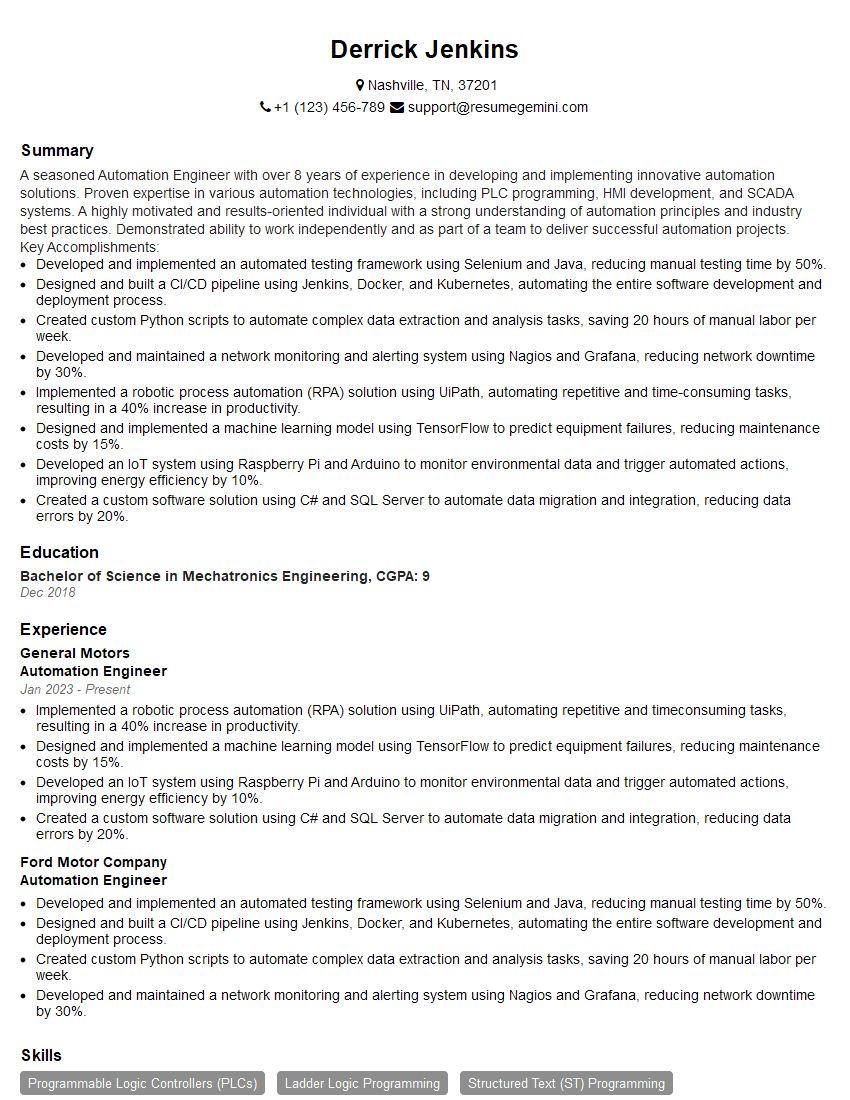
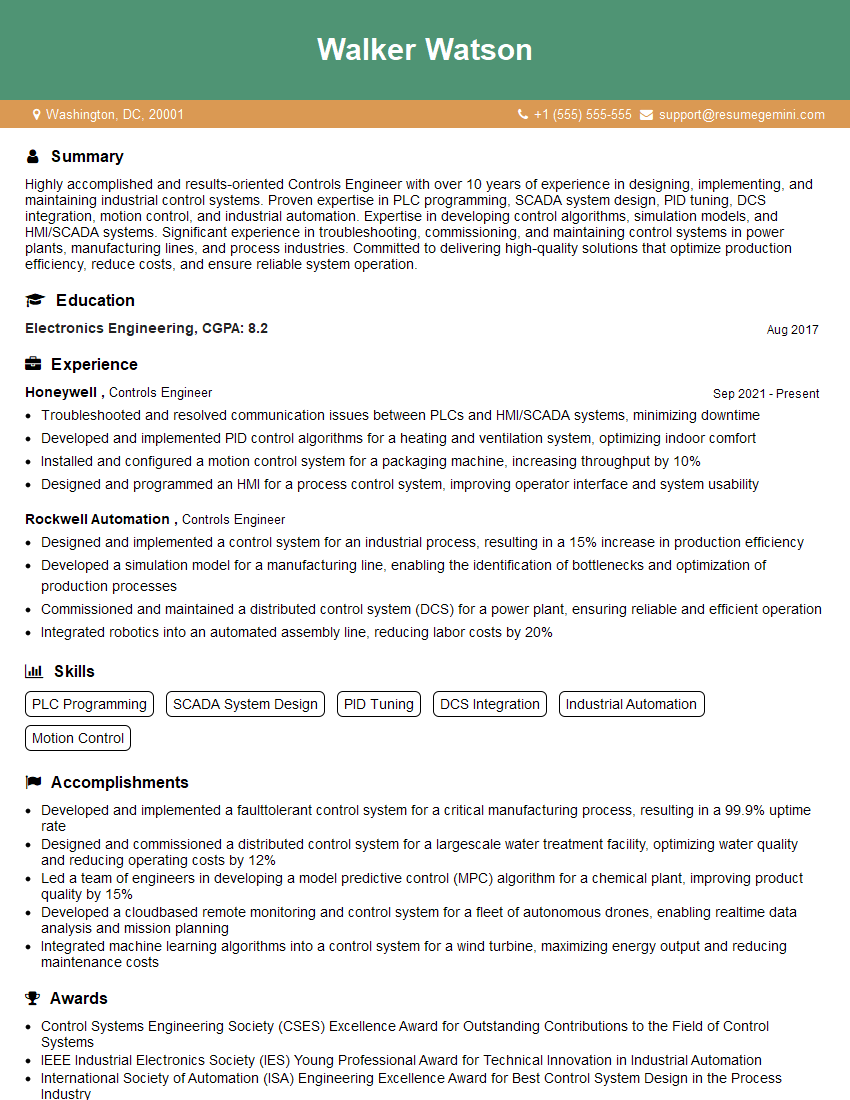
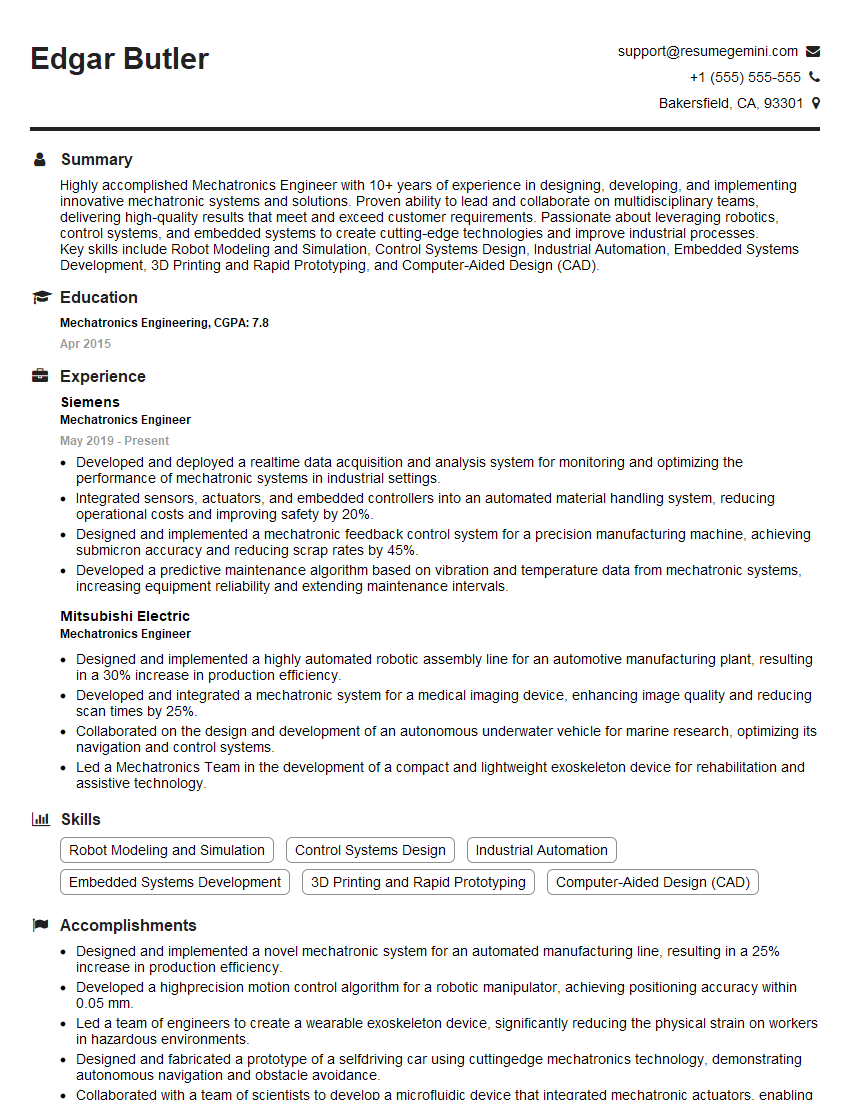
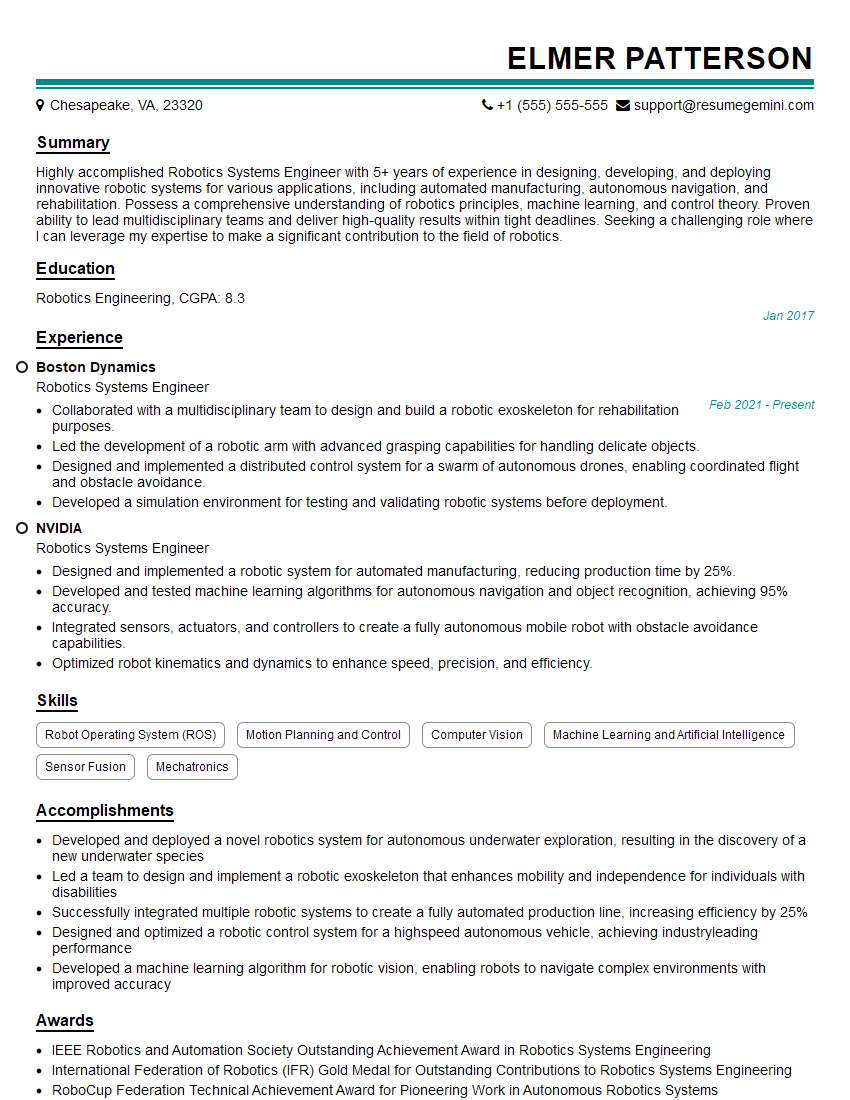
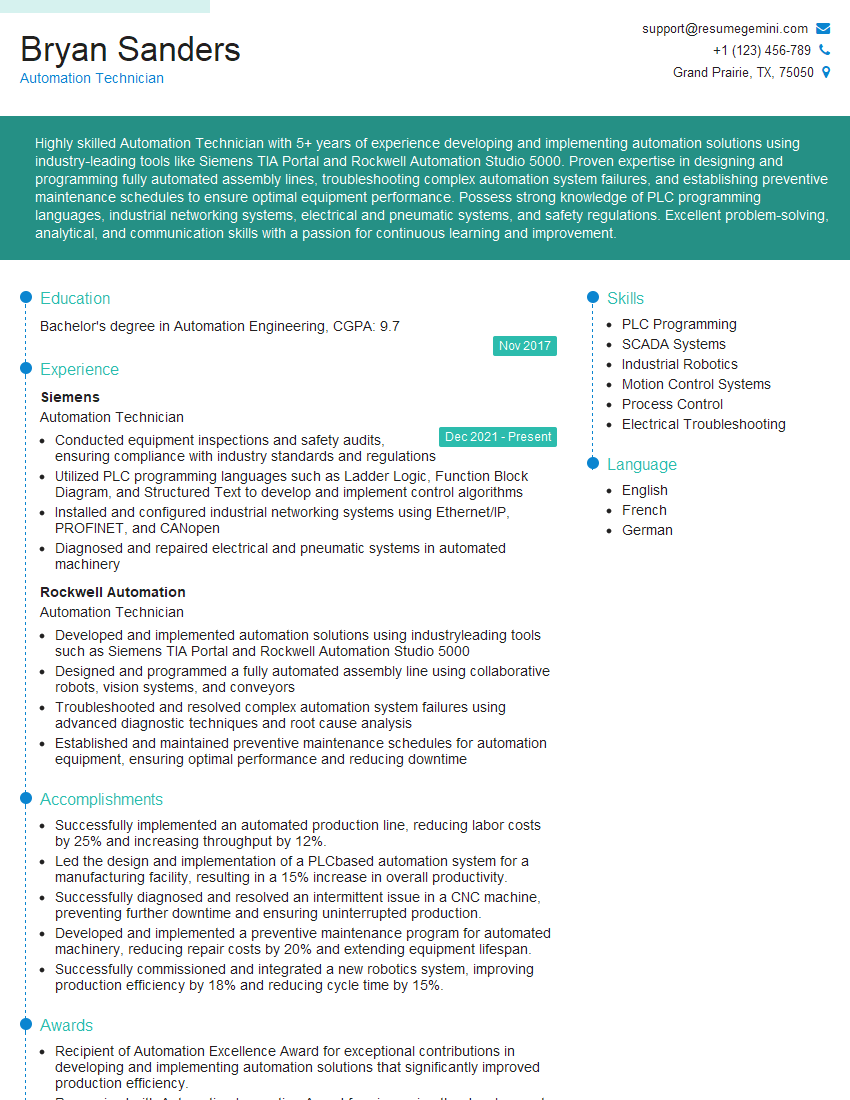
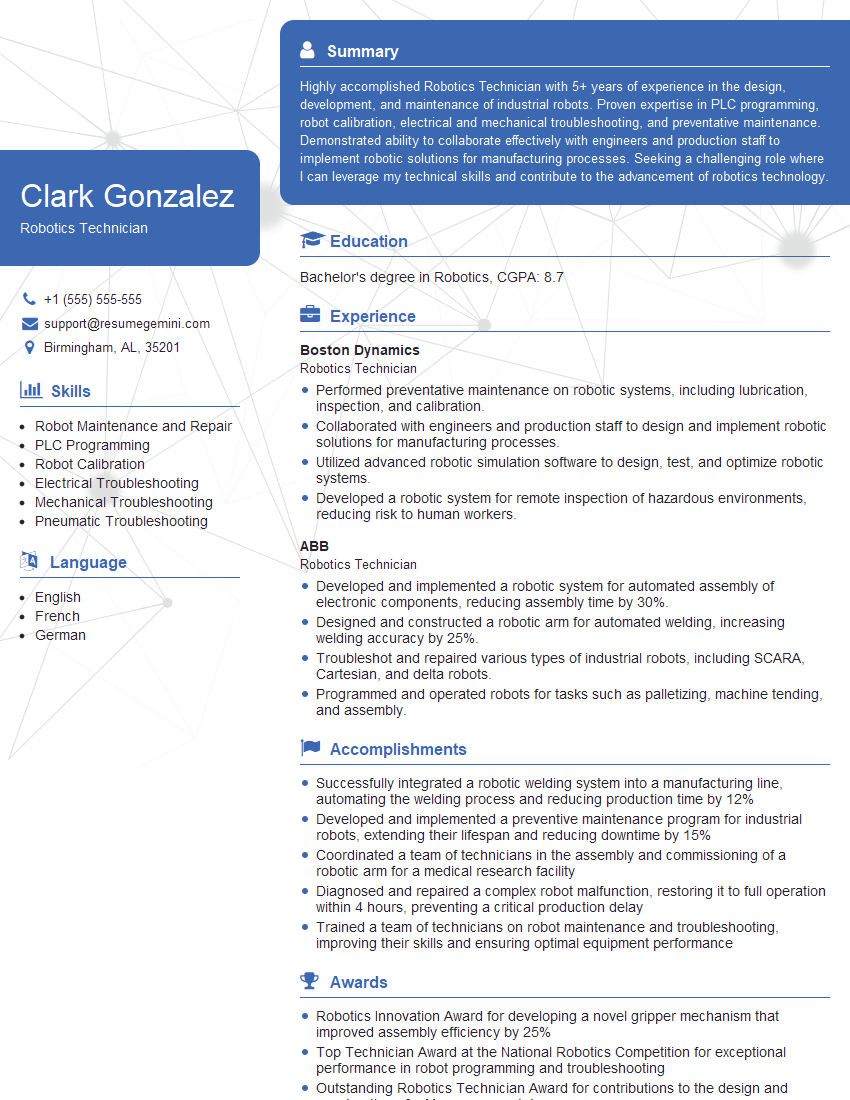
Mastering Motion Control, specifically with Servo and Stepper Motors, is crucial for a successful career in automation, robotics, and many other high-tech fields. A strong understanding of these technologies will significantly enhance your job prospects and open doors to exciting opportunities. To increase your chances of landing your dream job, it’s essential to present your skills effectively. Building an ATS-friendly resume is key. ResumeGemini is a trusted resource that can help you create a compelling resume tailored to your experience and the specific requirements of Motion Control roles. We provide examples of resumes specifically designed for candidates with expertise in Motion Control (Servo, Stepper Motors) to give you a head start. Take the next step towards your career goals – invest time in crafting a professional resume that showcases your abilities.

Explore more articles
Users Rating of Our Blogs
Share Your Experience
We value your feedback! Please rate our content and share your thoughts (optional).
What Readers Say About Our Blog
Very informative content, great job.
good