Interviews are more than just a Q&A session—they’re a chance to prove your worth. This blog dives into essential Motion Control Systems Programming interview questions and expert tips to help you align your answers with what hiring managers are looking for. Start preparing to shine!
Questions Asked in Motion Control Systems Programming Interview
Q 1. Explain the difference between open-loop and closed-loop control systems.
The core difference between open-loop and closed-loop control systems lies in their feedback mechanisms. An open-loop system operates without feedback; it simply sends a command and hopes for the best. Think of a simple light switch: you flip the switch (command), and the light either turns on or off (result). There’s no way for the switch to know if the light actually turned on—it doesn’t have feedback. This is fine for simple systems, but inaccuracies can accumulate.
In contrast, a closed-loop system uses feedback to compare the actual output to the desired output. This feedback allows for corrections, ensuring the system reaches its target accurately. Imagine a cruise control system in a car: the system gets a desired speed (command), monitors the actual speed (feedback) using sensors, and adjusts the throttle (correction) to maintain the set speed. If the car starts going uphill, the feedback mechanism detects the speed drop, and the system adjusts the throttle to compensate.
Open-loop systems are simpler and cheaper, but less accurate. Closed-loop systems are more complex and expensive but significantly more accurate and robust to disturbances.
Q 2. Describe various motion control profiles (e.g., trapezoidal, S-curve).
Motion control profiles define how a motor accelerates, maintains speed, and decelerates. Several common profiles exist, each with its own advantages and disadvantages.
- Trapezoidal Profile: This is the simplest profile. It consists of three phases: constant acceleration, constant velocity, and constant deceleration. Think of a car accelerating to a cruising speed, maintaining that speed, then decelerating to a stop. It’s easy to implement but can cause vibrations at the transitions between phases.
- S-curve Profile (or S-shaped profile): This profile adds a smooth transition between acceleration and constant velocity phases using a jerk-limited approach (jerk is the rate of change of acceleration). This smoother transition significantly reduces vibrations and wear on the mechanical system. Imagine a slow gradual acceleration and deceleration, rather than a sudden change in speed. It’s more complex to implement, but the smoother motion leads to enhanced accuracy and extended equipment lifespan.
- Triangular Profile: Similar to trapezoidal but without a constant velocity phase; it’s purely acceleration and deceleration. It is generally used for short movements.
The choice of profile depends on the application. High-speed applications often use trapezoidal profiles for their simplicity, whereas precision applications requiring smooth movements prefer S-curve profiles.
Q 3. What are the advantages and disadvantages of using stepper motors vs. servo motors?
Stepper motors and servo motors are both used in motion control, but they differ significantly in their operating principles and applications.
- Stepper Motors: These motors move in discrete steps, controlled by pulses sent to the motor driver. They are simple, relatively inexpensive, and require minimal control circuitry. They are well-suited for applications requiring precise positioning in relatively low-speed, high-torque scenarios like 3D printers or CNC milling machines.
- Servo Motors: Servo motors use feedback from a position sensor (typically an encoder) to precisely control position, velocity, and torque. They are more complex, more expensive, and require more sophisticated control algorithms (like PID control). They offer superior accuracy, higher speed capabilities, and smoother motion, making them ideal for applications requiring high precision and dynamic response, such as robotics or high-speed assembly lines.
Advantages of Stepper Motors: Simple, cost-effective, open-loop control possible (though closed-loop control is preferred for better accuracy).
Disadvantages of Stepper Motors: Limited speed, potential for resonance at higher speeds, less accurate than servo motors.
Advantages of Servo Motors: High accuracy, high speed, smooth operation, high torque at low speeds.
Disadvantages of Servo Motors: More complex, more expensive, requires closed-loop control.
Q 4. Explain the concept of PID control and its tuning parameters.
PID control is a widely used feedback control algorithm that adjusts a control variable (e.g., motor speed) to minimize the error between a desired setpoint and the actual measured value. PID stands for Proportional, Integral, and Derivative.
- Proportional (P): The proportional term responds to the current error. A larger error results in a larger corrective action. It’s like adjusting the thermostat; the further the temperature is from the setpoint, the harder the heater works.
- Integral (I): The integral term accounts for past errors. It helps eliminate steady-state errors (where the output never quite reaches the setpoint). It’s like adding up all the past temperature errors to ensure eventual reaching the target.
- Derivative (D): The derivative term predicts future errors based on the rate of change of the error. It helps dampen oscillations and prevent overshooting. It’s like anticipating the change in temperature based on the current trend.
The tuning parameters (Kp, Ki, Kd) determine the contribution of each term. Incorrect tuning can lead to oscillations, slow response, or failure to reach the setpoint. Many tuning methods exist, including Ziegler-Nichols and trial-and-error methods.
// Example PID control code (pseudocode) error = setpoint - measuredValue; proportionalTerm = Kp * error; integralTerm = integralTerm + Ki * error; derivativeTerm = Kd * (error - previousError); output = proportionalTerm + integralTerm + derivativeTerm; previousError = error;
Q 5. How do you handle encoder feedback in a motion control system?
Encoder feedback is crucial in closed-loop motion control. Encoders (incremental or absolute) provide position information which is compared to the desired position to calculate the error. This error signal is then fed into the control algorithm (e.g., PID controller) to generate a corrective signal for the motor.
Incremental encoders count pulses to measure relative movement. They need a home or reference position to determine absolute position. They are commonly used because of their lower cost and smaller size.
Absolute encoders provide an absolute position reading regardless of the machine’s starting point. They are more expensive and larger but eliminate the need for homing.
In the control system, the encoder signals are typically read via an interface (e.g., counter input module) and processed by the controller. The controller then uses this information to calculate the error, adjust the motor control signal, and ensure the system’s accurate positioning. A common issue is dealing with encoder noise or inaccuracies, often addressed via filtering techniques.
Q 6. Describe your experience with different motion control programming languages (e.g., ladder logic, C++, Python).
I have extensive experience programming motion control systems using several languages. My proficiency includes:
- Ladder Logic (IEC 61131-3): I’ve used ladder logic extensively in programmable logic controllers (PLCs) for controlling simpler motion applications, especially where safety and reliability are paramount. Ladder logic is highly visual and easy to understand for technicians familiar with relay logic, making it excellent for factory floor applications.
- C++: For complex motion control systems requiring high performance and real-time capabilities, C++ is my preferred choice. I have used it for developing advanced control algorithms, low-level motor driver interfacing, and integrating with sensor networks. The performance advantage is critical in demanding scenarios.
- Python: Python offers a more rapid prototyping environment with readily available libraries for tasks such as data analysis, visualization, and simulation. I often use Python for offline analysis and tuning of motion control algorithms, leveraging its powerful numerical computing libraries. It’s less suitable for direct real-time control, but is excellent for algorithm development and testing.
I am comfortable working with various hardware platforms, including PLCs from various manufacturers, embedded systems, and real-time operating systems (RTOS).
Q 7. Explain how to implement coordinated motion control for multiple axes.
Coordinated motion control involves controlling multiple axes simultaneously to achieve a desired motion. This is common in robotics and CNC machining, where multiple axes need to move in a synchronized manner. Implementing coordinated motion requires careful consideration of several aspects:
- Trajectory Planning: This involves calculating the path for each axis based on the desired overall motion. Algorithms like linear interpolation, circular interpolation, or spline interpolation are used. This ensures the coordinated movement is smooth and accurate.
- Synchronization: The axes must be synchronized to maintain the desired spatial relationships between them. This often involves using a master-slave architecture where one axis leads and others follow. Alternatively, independent control with communication between axes to coordinate movement can be implemented.
- Motion Control Algorithm: Individual axes usually employ closed-loop control (e.g., PID control) to accurately track their assigned trajectories. However, the controller must also ensure that the axes move together correctly.
- Communication: Effective communication between the different axes and their controllers is essential for coordination. Common communication methods include fieldbuses (e.g., EtherCAT, CANopen) and industrial Ethernet.
Example: In a robotic arm, the control system needs to coordinate the movement of the shoulder, elbow, and wrist joints to accurately position the end effector. If one joint lags or leads, the overall accuracy of the movement is compromised. This is often addressed through advanced interpolation techniques.
Q 8. What are the common sources of errors in motion control systems and how do you troubleshoot them?
Errors in motion control systems can stem from various sources, broadly categorized into hardware and software issues. Hardware problems include faulty motors, damaged encoders providing inaccurate position feedback, failing drives unable to deliver sufficient power, or loose connections leading to intermittent signals. Software errors can range from incorrect programming logic causing unexpected movements, to improperly configured parameters resulting in instability or oscillations, or even communication protocol issues between the controller and other devices.
Troubleshooting involves a systematic approach. I begin by carefully examining error messages and logs generated by the system. Then, I proceed with a series of checks: visually inspecting wiring and connections, checking power supply voltages, testing individual components using multimeters and oscilloscopes, and examining the code for logical errors or parameter misconfigurations. For instance, if a motor isn’t responding, I would first check the power supply, then the motor itself, followed by the connections to the drive and controller. If everything seems fine on the hardware side, then I shift my focus to the software, using debugging tools to step through the code and isolate the problem.
Simpler systems can be debugged with direct signal tracing. More complex systems necessitate specialized testing and calibration equipment. For example, I’ve used spectrum analyzers to identify noise-related issues that led to erratic behavior in a high-speed robotic arm application.
Q 9. Describe your experience with different motion control hardware components (e.g., drives, controllers, encoders).
My experience encompasses a wide range of motion control hardware. I’ve worked extensively with servo drives from various manufacturers like Bosch Rexroth, Siemens, and Yaskawa, ranging from small, low-power drives for simple positioning tasks to high-power drives used for industrial robots and heavy machinery. My experience with controllers includes PLC-based systems, dedicated motion controllers like those from Beckhoff and Allen-Bradley, and even custom-designed microcontroller-based solutions. I’m proficient in working with a variety of encoder technologies – incremental encoders (both quadrature and single-pulse), absolute encoders (both magnetic and optical), and resolver feedback systems. I’ve encountered situations where encoder resolution and accuracy were critical, such as in precision machining applications, where I carefully selected encoders to meet the stringent position accuracy demands. In one project, replacing a faulty absolute encoder with a higher-resolution model significantly improved the overall accuracy of the pick-and-place system.
Q 10. How do you ensure the safety of a motion control system?
Safety is paramount in motion control systems. My approach involves implementing several layers of safety measures, starting with proper risk assessment and hazard analysis to identify potential hazards. This analysis informs the selection of appropriate safety components and control strategies. Hardware safety features include emergency stop circuits (E-stops), safety relays, light curtains, and interlocks. Software safety mechanisms involve implementing PLCs with robust safety functions, using watchdog timers to detect system failures, and incorporating software limits and interlocks to prevent unintended movements. For instance, I’ve used safety-rated PLCs (with functional safety certifications like SIL3 or PLe) and programmed them with safety-related routines to ensure that the system reacts quickly and safely to emergencies. Regular safety audits and thorough testing are also crucial to ensure the continued effectiveness of these safety measures, and I always adhere to relevant industry safety standards.
Q 11. Explain the concept of homing in a motion control system.
Homing is the process of establishing a known reference point or origin for a motion control system. It’s like finding the “zero” point on a ruler. This is crucial for accurate positioning and repeatable movements. The homing process typically involves using a home sensor or switch that signals the controller when the actuator (e.g., motor) reaches a predefined physical location. The controller then records this position as the system’s zero reference point. Different homing strategies exist depending on the system’s requirements. For example, a simple limit switch can be used for a basic homing sequence, while a more sophisticated approach might involve using an encoder and a search algorithm to locate the home position. The choice of strategy depends on factors such as speed requirements, the precision needed, and the availability of sensors.
In a practical setting, homing is often part of the system initialization sequence. Consider a robotic arm: before it can perform any task, it needs to know its exact position. Homing ensures that all subsequent movements are relative to a known and consistent reference point, leading to improved accuracy and repeatability of the robotic actions.
Q 12. How do you handle system emergencies and faults?
Handling system emergencies and faults requires a structured approach. I prioritize safety first, immediately activating emergency stop mechanisms if necessary. Then, I diagnose the problem by analyzing error logs and reviewing system status. Diagnostics might involve checking sensor readings, motor currents, and drive statuses. My responses are tailored to the specific nature of the fault: a software error might require code modifications and re-testing, while a hardware failure might involve component replacement. Implementing proper fault handling in the software is critical. This includes incorporating error detection mechanisms, and procedures to manage the consequences of errors such as safe shutdown sequences, emergency stops, and error reporting.
In one instance, a critical fault led to a system shutdown to prevent further damage. A thorough investigation revealed a failing encoder that was intermittently providing erroneous feedback, causing unexpected motor movements. Replacing the encoder and testing the system rigorously solved the issue. A key part of my approach is documenting all corrective actions, and performing post-incident reviews to identify and learn from the root causes of failures to prevent similar incidents in the future.
Q 13. What are the different types of motion control algorithms?
Motion control algorithms are the mathematical procedures that dictate how a machine moves. They range from simple to highly sophisticated. Common types include:
- Point-to-Point Control: Moves the actuator from one position to another without regard to the path taken (e.g., moving a robotic arm from one location to another without controlling the trajectory).
- Linear Control: Maintains a constant velocity between two points (e.g., a conveyor belt moving at a steady speed).
- Trajectory Control: Controls the path, velocity, and acceleration of the actuator over time, often employing complex algorithms to generate smooth, precise movements (e.g., controlling the movement of a robotic arm to draw a specific curve).
- PID Control (Proportional-Integral-Derivative): A widely used feedback control algorithm that corrects errors in position, velocity, or acceleration. It adjusts the control signal based on the error, its accumulation over time (integral), and the rate of change of the error (derivative).
- Feedforward Control: Anticipates future errors based on a model of the system dynamics, reducing the reliance on feedback control, resulting in faster and more responsive control.
The choice of algorithm depends entirely on the application. A simple point-to-point controller suffices for basic positioning tasks, while advanced trajectory control algorithms are necessary for complex robotic applications requiring high precision and speed.
Q 14. Explain your experience with different communication protocols used in motion control (e.g., CANopen, EtherCAT, Modbus).
My experience with communication protocols in motion control includes CANopen, EtherCAT, and Modbus. CANopen is a widely used protocol offering deterministic communication and is excellent for distributed control systems in industrial automation. I’ve used CANopen in projects involving multiple servo drives communicating with a PLC. EtherCAT excels in high-speed, real-time applications; its high bandwidth and low latency make it ideal for coordinating complex movements in robotics and machine vision systems. I’ve worked with EtherCAT in applications needing precise synchronization of multiple actuators. Modbus is a simpler, more widely adopted protocol, often used in less demanding applications, particularly for integrating legacy equipment into newer systems. I have used Modbus in several projects for its ease of implementation and compatibility with various devices.
Choosing the right protocol is crucial. The selection depends on factors such as speed requirements, the complexity of the system, network topology, and the devices being used. In one instance, the need for high-speed data transfer in a high-precision laser cutting system led us to select EtherCAT over CANopen. My understanding of these protocols and their limitations makes me capable of effectively selecting the best option for different projects.
Q 15. Describe your experience with real-time operating systems (RTOS) in the context of motion control.
Real-Time Operating Systems (RTOS) are crucial for motion control because they guarantee predictable and timely execution of control algorithms. Unlike general-purpose operating systems, RTOSes prioritize deterministic behavior, ensuring that control loops operate within strict time constraints. In motion control, this means precise timing for position updates, velocity adjustments, and other critical functions. I’ve extensively used RTOSes like VxWorks and FreeRTOS in various projects. For instance, in a recent project involving a high-speed pick-and-place robotic arm, using FreeRTOS allowed me to precisely schedule tasks related to motor control, sensor readings, and communication protocols, guaranteeing smooth and accurate movement. The task scheduler in FreeRTOS, with its priority-based preemptive multitasking, was key in managing the real-time demands of the application. Without an RTOS, jitter in the control loops could lead to inaccurate positioning and instability.
A key aspect of RTOS implementation involves task prioritization. Critical tasks like closed-loop control are assigned higher priorities to ensure they meet their deadlines. Furthermore, inter-process communication (IPC) mechanisms within the RTOS enable efficient data exchange between tasks, facilitating coordinated control of multiple axes.
Career Expert Tips:
- Ace those interviews! Prepare effectively by reviewing the Top 50 Most Common Interview Questions on ResumeGemini.
- Navigate your job search with confidence! Explore a wide range of Career Tips on ResumeGemini. Learn about common challenges and recommendations to overcome them.
- Craft the perfect resume! Master the Art of Resume Writing with ResumeGemini’s guide. Showcase your unique qualifications and achievements effectively.
- Don’t miss out on holiday savings! Build your dream resume with ResumeGemini’s ATS optimized templates.
Q 16. How do you perform system calibration and verification?
System calibration and verification are paramount in motion control to ensure accuracy and reliability. Calibration involves determining the relationship between the commanded values and the actual response of the system. This typically involves procedures like:
- Encoder Calibration: Determining the number of encoder counts per revolution of the motor and compensating for any offset.
- Load Calibration: Measuring the system’s response under different loads to compensate for variations in performance.
- Gain Tuning: Adjusting the control loop gains (proportional, integral, derivative) to optimize performance in terms of speed, accuracy, and stability. This often involves iterative adjustments and real-time analysis of system response.
Verification involves testing the calibrated system to ensure it meets the specified requirements. This could include:
- Accuracy Tests: Measuring the positional accuracy of the system under various operating conditions.
- Repeatability Tests: Assessing the system’s ability to consistently achieve the same position multiple times.
- Stability Tests: Evaluating the system’s resistance to disturbances and its ability to return to the desired state.
For example, in a CNC milling application, we’d conduct rigorous calibration to ensure the cutting tool accurately follows the programmed path. Verification would then involve machining a test part and comparing its dimensions to the CAD model. Deviations would highlight areas needing further calibration or adjustments to the control algorithms.
Q 17. Explain the concept of feedforward control.
Feedforward control anticipates the system’s response to a command and adjusts the control signal accordingly. Unlike feedback control, which reacts to errors, feedforward control proactively compensates for known disturbances. Imagine driving a car uphill – you naturally press the accelerator more before you even start to slow down, anticipating the effect of the incline. This anticipation is similar to feedforward control.
In motion control, feedforward is used to compensate for known dynamics, such as inertia and friction. By predicting the necessary force or torque based on the desired motion profile (acceleration, velocity, position), the controller can reduce the error that feedback control must correct. This often leads to faster and smoother motion, particularly in high-speed applications.
For example, consider a robotic arm moving a heavy payload. A feedforward component can estimate the torque needed to overcome the payload’s inertia and gravity, leading to quicker and more accurate movements. The implementation often involves models of the system’s dynamics, often derived through system identification techniques.
Q 18. Describe your experience with motion control simulation software.
I have extensive experience with various motion control simulation software packages, including MATLAB/Simulink and TwinCAT. These tools allow for the design, testing, and verification of motion control systems in a virtual environment before physical implementation. Simulation offers several key advantages:
- Reduced Development Time: Testing and optimization can be performed rapidly without the need for physical hardware.
- Cost Savings: Errors can be identified and rectified during simulation, minimizing costly hardware failures.
- Enhanced Safety: Testing potentially hazardous scenarios, such as system failures, can be performed safely in a virtual environment.
In a recent project using Simulink, I created a detailed model of a six-axis robotic arm, incorporating motor dynamics, sensor models, and the control algorithm. This allowed me to fine-tune the control parameters and thoroughly test the system’s performance under various conditions before deploying it on the physical robot. The ability to visualize system behavior and analyze key performance indicators (KPIs) during the simulation was invaluable.
Q 19. How do you select appropriate motors and drives for a specific application?
Selecting appropriate motors and drives is critical for successful motion control system design. The selection process hinges on understanding the application requirements, specifically considering factors such as:
- Torque and Speed Requirements: Determine the necessary torque and speed to meet the application’s demands (e.g., acceleration, payload, maximum velocity).
- Operating Environment: Account for factors such as temperature, humidity, and potential contamination.
- Accuracy and Resolution: Select motors with appropriate encoder resolution for precise positioning.
- Cost and Size Constraints: Balance performance needs with budgetary and space limitations.
For instance, a high-speed pick-and-place application might necessitate a servo motor with high torque-to-inertia ratio and quick response time. In contrast, a low-speed positioning system may benefit from a stepper motor for precise positioning at lower speeds. The drive selection depends on the motor type, and considerations include power capacity, control capabilities (e.g., current limiting, speed regulation), and communication interfaces.
Q 20. Explain how to design a motion control system for a given application.
Designing a motion control system is an iterative process. A systematic approach involves:
- Defining Requirements: Clearly specify the application’s requirements, including accuracy, speed, payload, workspace, and other critical parameters.
- Mechanical Design: Design the mechanical system, including the structure, linkages, and actuators (motors).
- Control Algorithm Selection: Choose an appropriate control algorithm (e.g., PID, feedforward, trajectory planning). This is heavily influenced by the performance requirements and the complexity of the mechanical system.
- Hardware Selection: Select suitable motors, drives, encoders, and a motion controller.
- Software Development: Develop the software that implements the control algorithm, interfaces with the hardware, and manages communication.
- System Integration and Testing: Assemble the system, calibrate it, and rigorously test its performance.
- Optimization and Refinement: Based on testing results, refine the control algorithm and hardware configuration.
Consider a robotic arm picking and placing components on a circuit board. The design process would begin by defining the required accuracy, speed, and payload. The mechanical design would involve selecting appropriate joints and linkages. The control algorithm would likely involve trajectory planning to ensure smooth and accurate movement, with feedback control for precision. Testing would include evaluating accuracy, repeatability, and cycle time.
Q 21. What is the role of a motion controller in a robotic system?
In a robotic system, the motion controller is the brain, orchestrating the movement of the robot’s various joints. It receives commands from a higher-level control system (e.g., a Programmable Logic Controller (PLC) or a robot control software) and translates these commands into precise control signals for individual motors. This involves several critical functions:
- Trajectory Generation: Planning the path for each joint to follow.
- Interpolation: Generating intermediate points along the path to ensure smooth movement.
- Motor Control: Precisely controlling the speed and position of each motor using feedback from sensors.
- Error Compensation: Adjusting the motor control signals to account for errors and disturbances.
- Communication: Exchanging data with other components in the robotic system, such as sensors and higher-level control systems.
The motion controller essentially acts as a real-time interpreter of commands, ensuring that the robot’s physical movements match the intended actions. The type of motion controller—whether it’s a dedicated motion control board or a software solution running on a general-purpose computer—depends on the complexity and demands of the robotic application.
Q 22. Describe your experience with different types of encoders (e.g., incremental, absolute).
Encoders are fundamental to motion control, providing feedback on the position and/or speed of a motor. I have extensive experience with both incremental and absolute encoders. Incremental encoders generate pulses for each incremental movement, requiring an initial position reference. Think of it like an odometer – it tells you how far you’ve traveled since the last reset, but not your absolute location. Absolute encoders, on the other hand, directly output the absolute position regardless of power cycles. This is like a GPS – you always know your precise location.
- Incremental Encoders: These are generally less expensive and simpler to implement. They’re ideal for applications where a known starting point is established, and only relative position changes are important. I’ve used these extensively in conveyor belt systems, where precise absolute position isn’t critical, but maintaining consistent speed and relative distance between items is paramount.
- Absolute Encoders: These are more robust against power failures as they don’t lose position information. They’re crucial for applications demanding high precision and repeatability, like robotic arms in a pick-and-place operation. A loss of position in such systems could lead to damage or inaccurate placement. I’ve incorporated absolute encoders in CNC machine applications where precise positioning is non-negotiable.
- Other Encoder Types: Beyond these two main types, I’m also familiar with optical, magnetic, and resolver encoders, each with its own strengths and weaknesses regarding resolution, robustness, and cost. The selection depends heavily on the specific application requirements.
Q 23. How do you ensure the accuracy and precision of a motion control system?
Ensuring accuracy and precision in motion control systems is a multifaceted process. It starts with careful selection of components, including high-resolution encoders, powerful and accurate motors, and a robust control algorithm. Beyond hardware, software plays a critical role.
- Calibration: Regular calibration is essential to compensate for drift and maintain accuracy. This often involves comparing the encoder readings to a known reference point and adjusting the system accordingly. I routinely use laser interferometers for highly precise calibration in critical applications.
- Loop Tuning: Proper tuning of the motion control loop (PID control, for instance) is critical for optimal performance. An improperly tuned loop can lead to oscillations, overshoot, and poor tracking. I use techniques like Ziegler-Nichols and auto-tuning algorithms to optimize the loop parameters based on system characteristics.
- Error Compensation: Motion control systems are susceptible to various errors, including mechanical backlash, friction, and load variations. Implementing advanced algorithms to compensate for these errors significantly improves accuracy. For example, I’ve utilized feedforward control to predict and counteract load variations, resulting in smoother and more precise movements.
- Regular Maintenance: Regular maintenance, including cleaning and lubrication of mechanical components, is crucial for maintaining system accuracy over time. Neglecting this can lead to significant errors and system failure.
Q 24. Explain your experience with different types of motion control applications (e.g., pick-and-place, conveyor systems, CNC machines).
My experience encompasses a wide range of motion control applications. I’ve worked on everything from simple pick-and-place robots to complex, multi-axis CNC machining centers.
- Pick-and-Place: I’ve designed and implemented control systems for high-speed pick-and-place robots used in electronics assembly. Here, precision and speed are paramount, and I’ve utilized advanced trajectory planning algorithms to optimize the robot’s movements.
- Conveyor Systems: I’ve worked on sophisticated conveyor systems requiring precise synchronization of multiple motors to maintain product spacing and prevent collisions. This involved careful selection of encoders, motor drivers, and communication protocols.
- CNC Machines: I’ve been involved in projects using CNC machines for milling, turning, and routing operations. These applications demand exceptional accuracy and repeatability, and I’ve leveraged advanced techniques like adaptive control to compensate for tool wear and material variations.
Each application presented unique challenges and required adapting the control strategies and hardware selections accordingly. For instance, the high-speed requirements of a pick-and-place robot necessitated a different approach compared to the high-precision demands of a CNC machine.
Q 25. What are the challenges of implementing motion control in high-speed applications?
High-speed motion control applications introduce several significant challenges.
- Inertia and Dynamics: At higher speeds, the inertia of the moving parts becomes a significant factor. Accurate modeling of the system dynamics is crucial for precise control. Ignoring inertia can lead to significant overshoot and instability.
- Sampling Rate and Bandwidth: The control system must have a sufficiently high sampling rate and bandwidth to accurately track the desired trajectory at high speeds. A low sampling rate can result in poor tracking and missed movements.
- Mechanical Resonances: High-speed movements can excite mechanical resonances in the system, leading to vibrations and instability. Careful design of the mechanical structure and implementation of vibration damping techniques are crucial.
- Power Requirements: High-speed applications often require significant power, and efficient motor drivers and power supplies are necessary. I’ve used advanced motor control techniques like field-oriented control (FOC) for optimal torque and efficiency in high-speed drives.
Addressing these challenges requires a combination of careful mechanical design, advanced control algorithms, and high-performance hardware components.
Q 26. How do you handle synchronization issues in a multi-axis motion control system?
Synchronization in multi-axis motion control systems is critical for coordinated movement. Losing synchronization can lead to collisions, inaccuracies, and even damage.
- Hardware Synchronization: Hardware-based synchronization methods, such as using a shared clock signal or a dedicated synchronization bus, provide precise timing and are less susceptible to software delays. I’ve implemented this using techniques like using a shared PLC (Programmable Logic Controller) or a real-time operating system (RTOS).
- Software Synchronization: Software-based synchronization relies on communication protocols and timing mechanisms within the control software. This approach requires careful consideration of communication latency and potential timing inaccuracies. Techniques include implementing message queues and carefully managing task scheduling within the RTOS.
- Motion Coordinators: Many advanced motion controllers include built-in motion coordination functionalities. These functionalities often provide advanced tools for synchronizing multiple axes, including interpolation, camming, and electronic gearing.
The choice between hardware and software synchronization often depends on the required precision, speed, and complexity of the application. For demanding applications, a combination of both approaches often provides the best results.
Q 27. Describe your experience with troubleshooting and resolving motion control system issues in a production environment.
Troubleshooting motion control systems in a production environment requires a systematic and methodical approach. My experience involves a combination of analytical skills, diagnostic tools, and practical know-how.
- Systematic Diagnosis: I start by isolating the problem, carefully analyzing the error messages, and checking for obvious hardware issues (loose connections, damaged cables, etc.).
- Data Acquisition: I utilize data acquisition tools to collect real-time data from the system, including encoder readings, motor currents, and control signals. This data provides valuable insights into the system’s behavior and helps pinpoint the source of the problem.
- Simulation and Modeling: In complex cases, I often use simulation software to recreate the system’s behavior and investigate potential causes of the malfunction. This allows for testing different scenarios without affecting the production system.
- Collaboration: I believe in strong collaboration with other team members (electrical engineers, mechanical engineers, etc.) to leverage diverse expertise and efficiently resolve the problem.
One specific example was troubleshooting a recurring issue in a high-speed pick-and-place system. After thorough data analysis and simulation, we discovered a resonance issue in the robot arm. By adding a carefully designed damper, we eliminated the resonance and resolved the production issue, ensuring consistent and reliable operation.
Key Topics to Learn for Motion Control Systems Programming Interview
- Fundamentals of Motion Control: Understanding different types of motion control systems (e.g., open-loop, closed-loop, servo, stepper), their architectures, and their applications in various industries.
- Programming Languages and Environments: Proficiency in relevant programming languages (e.g., C, C++, Python) and experience with motion control software platforms and IDEs.
- Motion Algorithms and Control Techniques: Deep understanding of PID control, trajectory planning (e.g., trapezoidal, S-curve), and other advanced control algorithms used to achieve precise and efficient motion.
- Hardware Interfacing and Communication Protocols: Familiarity with interfacing with various hardware components (e.g., motors, encoders, sensors) and communication protocols (e.g., CAN bus, Ethernet/IP).
- Troubleshooting and Debugging: Practical experience in identifying and resolving issues within motion control systems, including systematic approaches to debugging and fault diagnosis.
- Safety and Standards Compliance: Knowledge of relevant safety standards and regulations related to motion control systems and the implementation of safety measures in your code.
- Real-world Applications: Ability to discuss specific projects or applications where you’ve used motion control programming, highlighting your problem-solving skills and practical experience.
- Advanced Topics (Optional): Explore topics such as real-time operating systems (RTOS), motion synchronization, and advanced control techniques like model predictive control (MPC) to showcase deeper expertise.
Next Steps
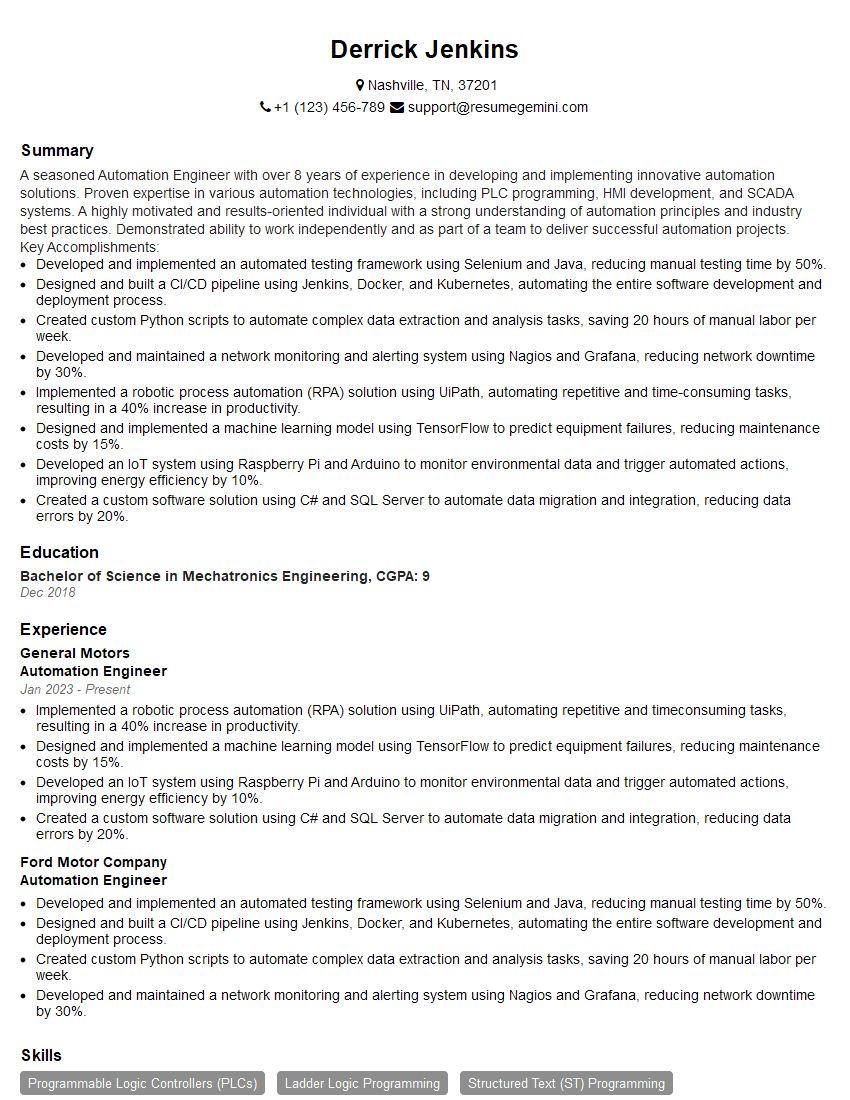
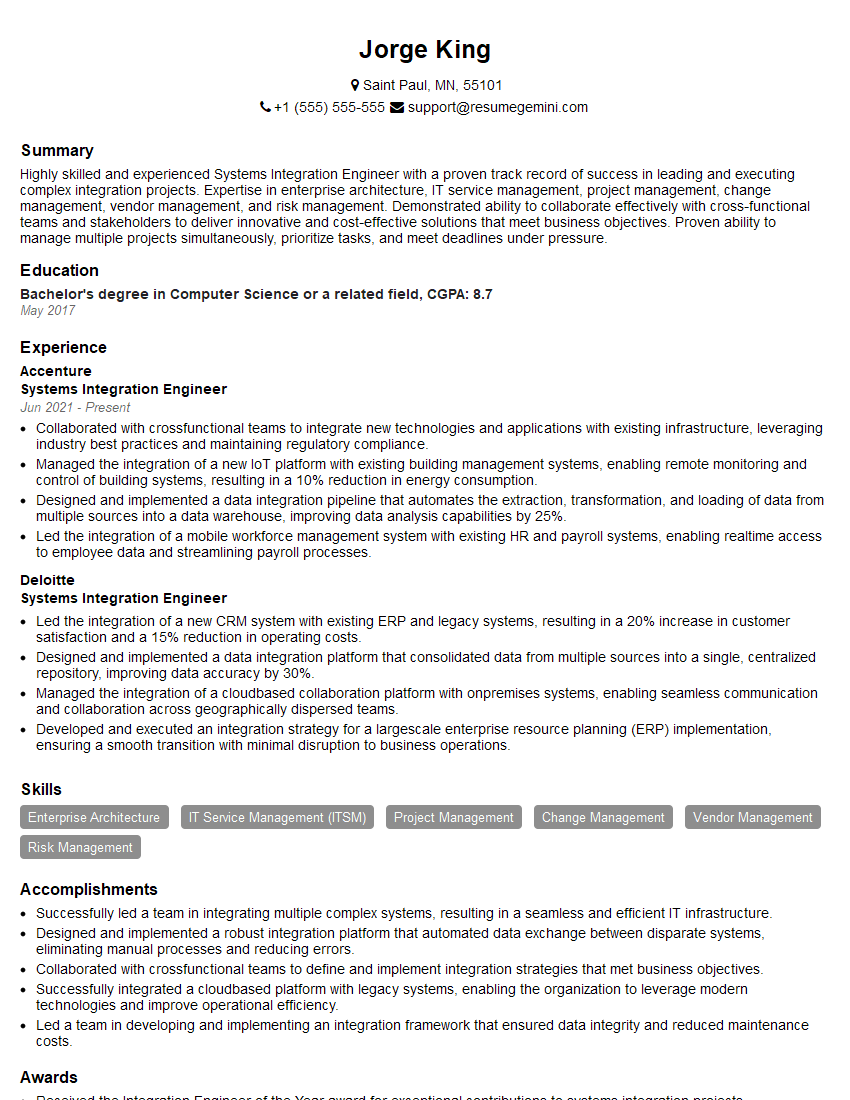
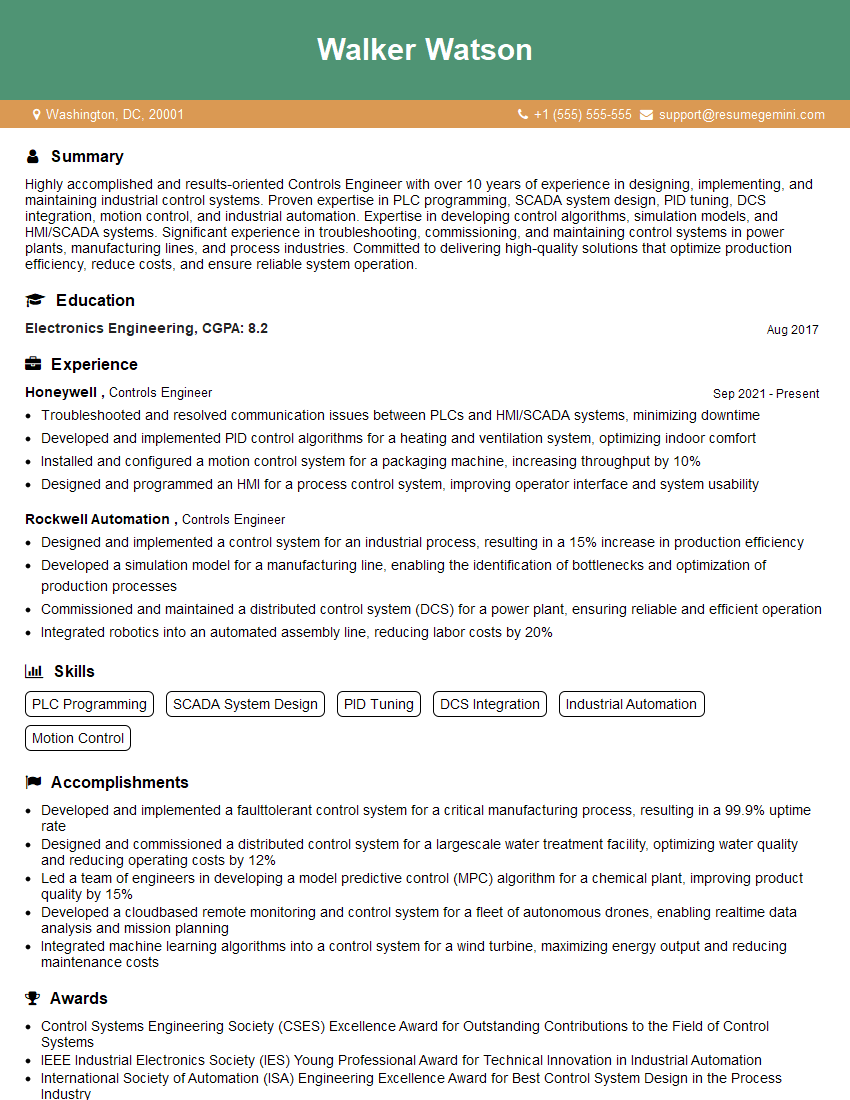
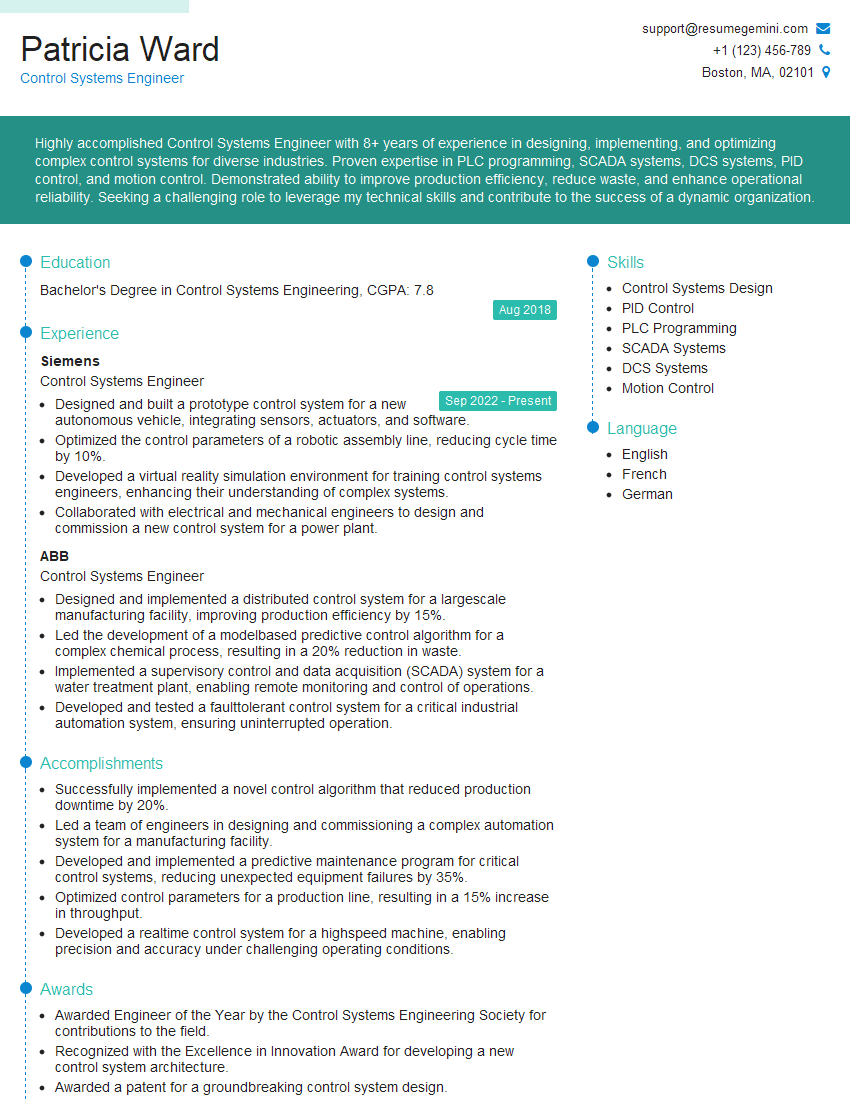
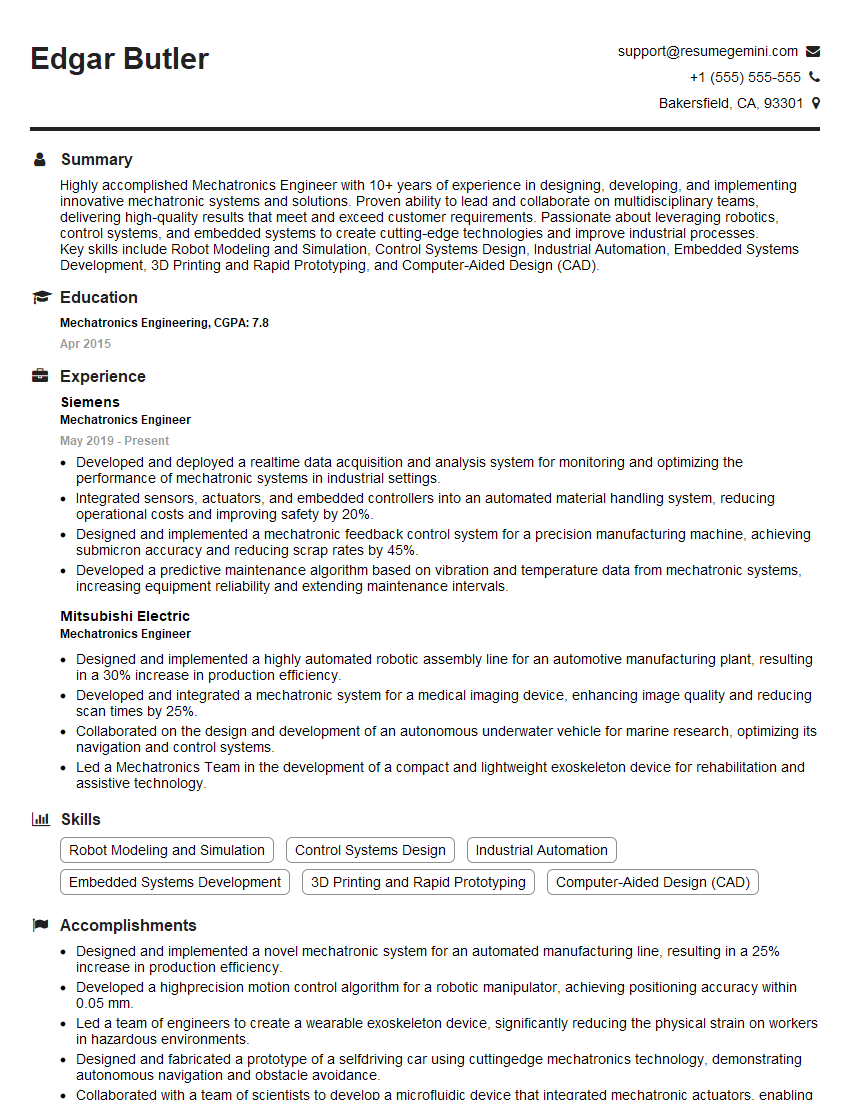
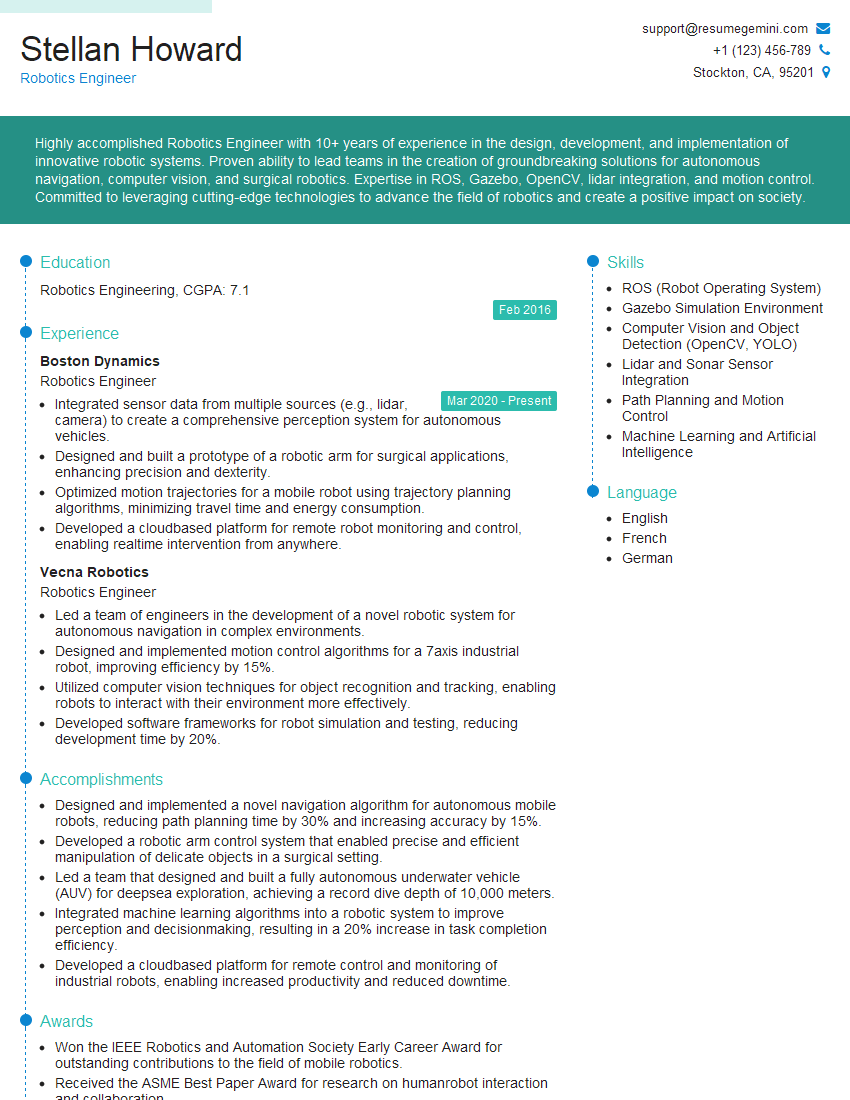
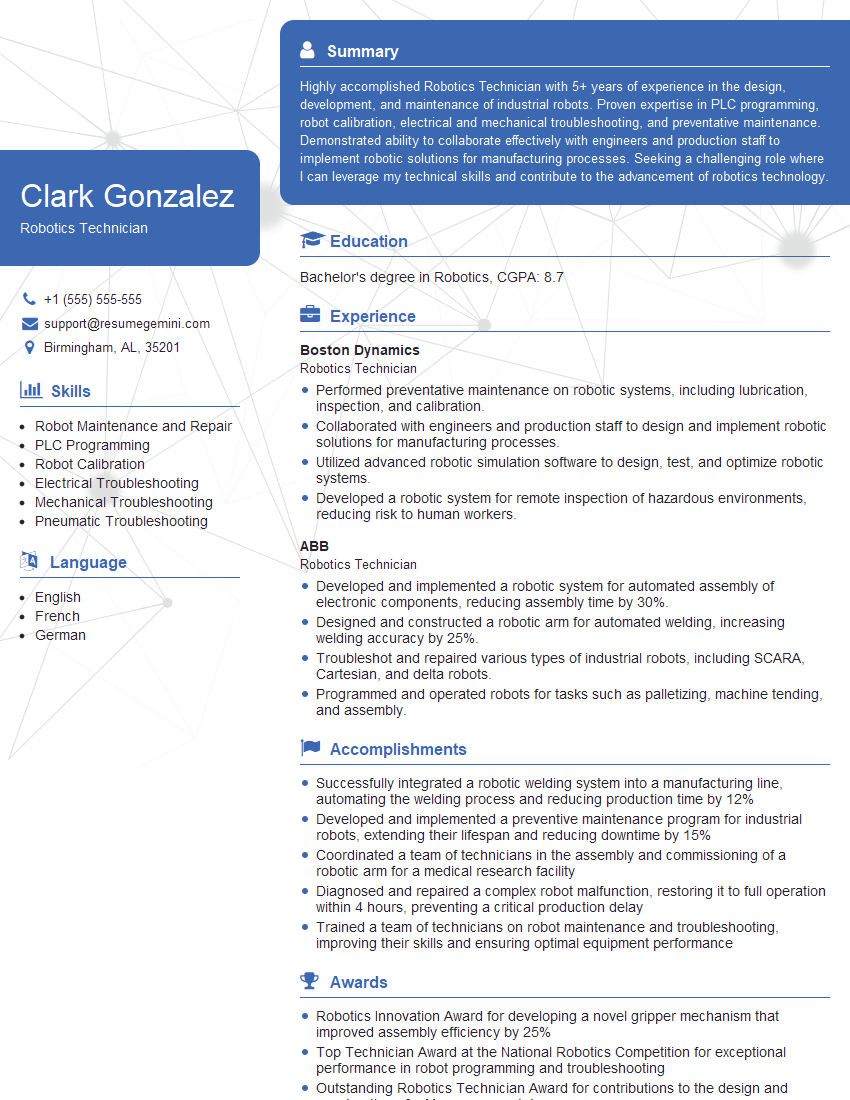
Mastering Motion Control Systems Programming opens doors to exciting and rewarding career opportunities in automation, robotics, and manufacturing. To maximize your chances of landing your dream job, a well-crafted resume is crucial. Focus on creating an ATS-friendly resume that highlights your skills and experience effectively. ResumeGemini is a trusted resource that can help you build a professional and impactful resume. They provide examples of resumes tailored to Motion Control Systems Programming to guide you in showcasing your qualifications. Invest time in crafting a compelling resume – it’s your first impression with potential employers.
Explore more articles
Users Rating of Our Blogs
Share Your Experience
We value your feedback! Please rate our content and share your thoughts (optional).
What Readers Say About Our Blog
Very informative content, great job.
good