Interviews are opportunities to demonstrate your expertise, and this guide is here to help you shine. Explore the essential Motion Study interview questions that employers frequently ask, paired with strategies for crafting responses that set you apart from the competition.
Questions Asked in Motion Study Interview
Q 1. Define motion study and its key principles.
Motion study is a systematic analysis of the human body’s movements to improve efficiency and reduce waste in manual work. It’s about identifying and eliminating unnecessary motions, optimizing the sequence of actions, and designing workspaces to support effective movement. Key principles include:
- Elimination of Unnecessary Movements: Identifying and removing any movements that don’t contribute to the final product or task.
- Simplification of Movements: Streamlining movements to make them shorter, smoother, and less fatiguing.
- Improvement of Work Layout: Arranging tools, materials, and equipment to minimize wasted movement and maximize efficiency.
- Use of the Human Body’s Natural Capabilities: Designing work methods that take advantage of the body’s strengths and avoid straining or awkward positions.
- Standardization of Work Methods: Establishing consistent and effective work methods for all workers performing the same task.
Imagine a factory worker assembling a product. A motion study might reveal they’re reaching too far for a part, causing wasted time and potential strain. By repositioning the part closer, the motion study optimizes the process.
Q 2. Explain the difference between time study and motion study.
While both time study and motion study aim to improve efficiency, they focus on different aspects of work. Time study focuses on how long a task takes, measuring the time spent on each element of a process. It aims to set standard times for completing tasks and identify bottlenecks. Motion study focuses on how a task is performed, analyzing the movements involved to eliminate unnecessary or inefficient motions. It emphasizes improving the method itself. Think of it this way: time study measures the duration, while motion study analyzes the quality and efficiency of the movements.
For instance, a time study might reveal a worker takes 10 seconds to pick up a component. A motion study would investigate how they are picking it up – maybe they’re bending awkwardly, reaching too far, or not using both hands efficiently. The motion study could suggest a more efficient method, potentially reducing the time to 5 seconds, an improvement not just in time but also in ergonomics.
Q 3. Describe various techniques used in motion study (e.g., micromotion study, chronocyclegraph).
Motion study employs several techniques to analyze movements:
- Micromotion Study: This involves filming a task at high speed (often using a specialized camera) and then analyzing the film frame-by-frame. It allows for a very detailed examination of individual movements. This can identify very small inefficiencies that might be missed with the naked eye.
- Chronocyclegraph: This technique uses a small light attached to the worker’s hand or tool. The light is photographed with a long exposure, creating a trail that shows the path and speed of the movement. It visually depicts the flow and rhythm of the movements, highlighting inefficiencies or delays.
- Cyclograms: Similar to chronocyclegraphs, but simpler. They show the overall movement pattern using symbols or lines to represent different activities within a work cycle. Less detailed than chronocyclegraphs but easier to generate.
- Simo Chart (Simultaneous Motion-Cycle Chart): This chart visually represents the left and right hands’ movements simultaneously, providing a detailed overview of the coordination and efficiency of both hands during a task. It helps identify instances of idle time for either hand.
For example, a micromotion study might show that a worker pauses slightly while picking up a tool, even if it’s just a fraction of a second. Over many repetitions, these small pauses add up to significant wasted time.
Q 4. How do you identify and eliminate unnecessary movements in a process?
Identifying and eliminating unnecessary movements requires a systematic approach:
- Observe the task: Carefully watch the worker performing the task, noting all movements involved.
- Record the movements: Use a suitable technique (e.g., film, charts) to document the movements.
- Analyze the movements: Examine the recordings and identify unnecessary or inefficient movements. Ask questions like: Is there a simpler way to do this? Can this movement be eliminated? Can two movements be combined? Are tools and materials optimally placed?
- Develop improved methods: Based on the analysis, propose alternative methods that eliminate or reduce the identified problems.
- Implement and test the improvements: Put the new methods into practice and evaluate their effectiveness.
- Refine the methods: Based on the evaluation, further refine the methods until optimal efficiency is achieved.
For example, if a worker reaches across their body to grab a tool, a better layout might place the tool closer, directly in front of them. Or, if a worker makes a series of small movements to accomplish a single task, those movements might be streamlined into one larger, more effective motion.
Q 5. What is the purpose of a therblig chart?
A therblig chart is a visual representation of the basic elemental motions involved in a task. Therbligs are standardized categories of fundamental hand movements, such as reach, grasp, move, assemble, disassemble, inspect, etc. A therblig chart lists each therblig, its duration, and any associated information (like distance moved, or whether the movement was efficient). Its purpose is to provide a detailed breakdown of a task into its smallest, most fundamental movements, which makes it easy to identify and eliminate unnecessary or inefficient motions. This facilitates the creation of improved work methods and better workflow designs.
For example, a therblig chart of assembling a simple product might show that the ‘reach’ motion is taking too long because of poor work layout. The chart clearly highlights this inefficiency allowing for the easy implementation of solutions, like placing tools closer to the assembly point.
Q 6. Explain the concept of operator fatigue and its impact on efficiency.
Operator fatigue is a state of physical or mental tiredness that reduces a worker’s efficiency and increases error rates. It’s a major concern in motion study because prolonged or improperly performed movements contribute significantly to fatigue. Fatigue can manifest in various ways, such as slower movements, reduced accuracy, increased error rates, and even increased risk of injury. The impact on efficiency is substantial: fatigued workers take longer to complete tasks, produce lower-quality work, and may require more frequent breaks.
Fatigue can stem from various factors including repetitive motions, awkward postures, prolonged standing, heavy lifting, insufficient breaks, poor lighting or ventilation, and high stress levels. A motion study can help mitigate fatigue by identifying and correcting these factors; for example, designing workstations with adjustable heights to accommodate varying postures or suggesting the use of power tools to reduce physical strain.
Q 7. How do you measure the effectiveness of a motion study improvement?
Measuring the effectiveness of motion study improvements involves comparing performance before and after the implementation of changes. Key metrics include:
- Time saved: Comparing the time taken to complete a task before and after the improvements.
- Reduction in motions: Quantifying the decrease in the number of therbligs or total movements.
- Improved quality: Evaluating whether the changes have led to fewer errors or improved product quality.
- Reduced fatigue: Assessing whether worker fatigue has decreased, perhaps through surveys or observing reduced break frequency.
- Increased output: Measuring the increase in the number of units produced per unit of time.
- Cost savings: Calculating the reduction in labor costs, material waste, or other relevant expenses.
These metrics should be tracked before and after the implemented changes, showing a clear difference in efficiency and quality to quantitatively demonstrate improvement. For instance, if a motion study reduces the time taken for a specific task from 10 seconds to 7 seconds per unit, and output increases from 100 units/hour to 142 units/hour, the effectiveness of the motion study is demonstrably clear.
Q 8. What are some common tools and technologies used in motion study?
Motion study employs a variety of tools and technologies, ranging from simple observation methods to sophisticated software. Basic tools include stopwatches for timing, video cameras for recording movements, and observation checklists for systematic data collection. More advanced techniques leverage technologies like motion capture systems, which provide precise three-dimensional tracking of body movements. These systems can generate detailed data visualizations, allowing for granular analysis of worker movements. Software packages are then used to analyze this data, often incorporating ergonomic evaluation tools to identify potential risk factors. For example, software might analyze the reach distances involved in a task to identify potential strain injuries. Furthermore, some software integrates simulations that allow for the ‘virtual’ testing of process improvements before implementation, minimizing disruption and maximizing efficiency.
- Stopwatches & Checklists: Basic but essential for time and motion measurements.
- Video Cameras: Allow for detailed review and analysis of movement patterns.
- Motion Capture Systems: Provide highly accurate 3D data on body movement.
- Ergonomic Evaluation Software: Analyzes data for potential risk factors, such as awkward postures or repetitive motions.
- Simulation Software: Enables the testing of changes in a virtual environment before physical implementation.
Q 9. Describe your experience with workplace ergonomic assessments.
My experience with workplace ergonomic assessments is extensive. I’ve conducted numerous assessments across diverse industries, from manufacturing plants to office environments. My approach always begins with a thorough observation of the worker’s workspace and tasks, paying close attention to posture, movement patterns, and the layout of the equipment. I utilize various tools, including standardized questionnaires to gather subjective data on discomfort or pain experienced by workers. This subjective data is then combined with the objective data collected through observation and motion capture (where applicable). For instance, in one assessment for a packaging company, we used video analysis to identify repetitive twisting movements leading to back pain among workers. This led to the redesign of their workstations to minimize these movements and incorporate better lifting techniques, resulting in a significant reduction in reported back injuries.
Beyond simple observation, I’m proficient in using ergonomic assessment software to quantify risk factors, such as the assessment of reach distances, lifting loads, and force requirements. The results of these assessments are used to develop tailored recommendations, which may involve adjustments to workstation design, process redesign, or the introduction of assistive devices.
Q 10. How do you handle resistance to change when implementing motion study improvements?
Resistance to change is a common hurdle in implementing motion study improvements. To address this, I employ a multi-pronged approach focused on communication, collaboration, and demonstrating value. First, I ensure that workers are thoroughly involved in the process from the outset. This involves explaining the goals of the study, emphasizing how improvements will benefit them (e.g., reduced strain, increased efficiency, improved safety), and actively soliciting their input and feedback throughout. I find that involving workers in the problem-solving process greatly increases buy-in.
Second, I focus on demonstrating the tangible benefits of the proposed changes. This may involve pilot studies to showcase improvements in efficiency or ergonomic conditions. For example, if a proposed change reduces the time to complete a task, it’s imperative to highlight this time saving and its impact on the overall production. Visual aids, such as before-and-after videos or data visualizations, can also be effective in communicating the value of the changes. Finally, I’m prepared to address concerns and implement iterative changes based on worker feedback, demonstrating a commitment to collaboration and continuous improvement.
Q 11. Explain the concept of cycle time and how it relates to motion study.
Cycle time is the total time taken to complete one cycle of a process or task. In motion study, it’s a crucial metric because it directly relates to efficiency. A shorter cycle time generally indicates a more efficient process. By analyzing individual movements within a cycle, motion study helps identify opportunities to reduce cycle time. For example, if a worker takes 10 seconds to pick up a part, another 5 seconds to position it, and 15 seconds to attach it, the cycle time is 30 seconds. Motion study techniques, such as eliminating unnecessary movements or improving the workstation layout, might reduce this time to, say, 25 seconds, representing a 16.7% improvement in efficiency.
Understanding cycle time is critical for optimizing processes and determining the overall production capacity. By reducing cycle times, companies can increase output, reduce costs, and improve productivity. Analyzing the individual elements within the cycle provides insights into bottlenecks or inefficiencies that need to be addressed.
Q 12. How do you analyze and interpret motion study data?
Analyzing and interpreting motion study data involves a systematic approach. First, the raw data—which might include time measurements, video recordings, and motion capture data—needs to be organized and structured. Then, using appropriate software, this data is processed and analyzed to identify patterns and trends. For example, we can use statistical techniques to quantify the time spent on different elements of a task. A common technique is to create a therblig chart, which breaks down each movement into basic elemental motions, showing where time is spent and where inefficiencies exist.
Interpretation involves identifying bottlenecks, unnecessary movements, and ergonomic risk factors. This interpretation should be done considering both objective (quantitative) data and subjective (qualitative) feedback from workers. By integrating these perspectives, a complete picture of the process emerges, leading to data-driven recommendations for improvement. Visualizations like flow charts, diagrams, and charts play a crucial role in effectively communicating these findings to stakeholders.
Q 13. What are some common limitations of motion study?
While motion study is a powerful tool, it does have limitations. One significant limitation is the potential for Hawthorne effect, where workers’ performance changes due to the observation itself. To mitigate this, techniques like time-lapse photography or unobtrusive observation methods can be employed. Another limitation is the assumption of consistency in worker performance. Individual variations in skill, fatigue, or motivation can influence cycle times and make accurate predictions challenging. Additionally, motion study, as traditionally practiced, primarily focuses on physical movements and may not adequately capture cognitive aspects of the task.
Furthermore, applying motion study findings can be costly and time-consuming. Implementing changes requires investment in equipment, training, and potential process redesign. Finally, the model can become overly simplistic, failing to capture the complexities of real-world work environments and neglecting potential external factors affecting performance. For example, equipment malfunctions or interruptions from other employees might significantly skew the data gathered during the study.
Q 14. How can motion study be integrated with lean manufacturing principles?
Motion study aligns seamlessly with lean manufacturing principles. Both aim to eliminate waste and optimize processes. Lean principles, such as reducing waste (muda), focus on improving efficiency and eliminating unnecessary steps. Motion study directly supports this by identifying and removing unnecessary movements, streamlining workflows, and reducing cycle times. In essence, motion study provides a systematic methodology for implementing lean concepts within a given task or process.
For example, the lean principle of ‘value stream mapping’ can be enhanced by motion study data. By analyzing the movements involved in each step of the value stream, motion study can pinpoint areas of inefficiency and suggest improvements that directly support the lean objective of minimizing waste. The concept of ‘5S’ (sort, set in order, shine, standardize, sustain) also benefits from motion study. Motion study can help optimize the layout of workstations, ensuring that frequently used items are easily accessible, which is aligned with the ‘set in order’ principle of 5S. The integration of motion study and lean principles leads to more efficient, streamlined, and cost-effective production processes.
Q 15. Describe your experience using different software for motion study analysis.
My experience with motion study analysis software spans several leading platforms. I’m proficient in using both 2D and 3D motion capture systems. For instance, I’ve extensively used software like MotionBuilder for capturing and analyzing complex human movements, often in the context of ergonomics assessments. This software allows for detailed kinematic analysis, providing data on joint angles, velocities, and accelerations. I’ve also worked with more specialized software like RapidMiner to process large datasets from multiple motion capture sessions, identifying patterns and trends related to worker efficiency and potential risks.
In addition to these professional tools, I’m familiar with simpler, more readily accessible options like video analysis software combined with manual time-motion studies. This approach proves particularly useful in smaller-scale projects or when budgets are limited. The key, regardless of the software used, is ensuring accurate data collection and rigorous analysis to draw meaningful conclusions.
Career Expert Tips:
- Ace those interviews! Prepare effectively by reviewing the Top 50 Most Common Interview Questions on ResumeGemini.
- Navigate your job search with confidence! Explore a wide range of Career Tips on ResumeGemini. Learn about common challenges and recommendations to overcome them.
- Craft the perfect resume! Master the Art of Resume Writing with ResumeGemini’s guide. Showcase your unique qualifications and achievements effectively.
- Don’t miss out on holiday savings! Build your dream resume with ResumeGemini’s ATS optimized templates.
Q 16. How do you ensure the safety and well-being of workers during a motion study?
Worker safety is paramount in any motion study. My approach begins with a thorough risk assessment, identifying potential hazards associated with the tasks being analyzed. This includes physical hazards like repetitive strain injuries, awkward postures, and slips/trips, as well as psychosocial factors such as fatigue and stress. Before any data collection starts, I work closely with workers and safety officers to implement control measures to mitigate identified risks. This might include providing appropriate personal protective equipment (PPE), adjusting workstations to be more ergonomic, or modifying work procedures to minimize strain.
During data collection, regular breaks are incorporated to prevent fatigue and allow workers to rest. I emphasize proper lifting techniques and other safe work practices throughout the study. Post-study, recommendations for improving worker safety are carefully reviewed with workers and management, ensuring that any changes implemented enhance both efficiency and well-being. For example, during a study of warehouse workers, we identified a high risk of back injuries. By implementing changes to lifting procedures and providing adjustable-height workstations, we significantly reduced the number of reported injuries.
Q 17. Explain your approach to conducting a work sampling study.
My approach to conducting a work sampling study is systematic and data-driven. It starts with clearly defining the objectives of the study – what aspects of the work process are we trying to understand and improve? Next, I define the relevant work elements that will be observed. For example, in a manufacturing setting, this might include ‘machine operation,’ ‘material handling,’ ‘inspection,’ and ‘downtime.’
The next critical step is determining the sample size needed to achieve a desired level of accuracy (discussed further in question 5). Random observations are then scheduled throughout the work period to capture a representative sample of the worker’s activities. I utilize both digital tools and physical observation, noting the duration spent on each work element and recording any anomalies or deviations from standard operating procedures. The collected data is then analyzed to determine the proportion of time spent on each work element, providing a clear picture of time allocation and identifying areas for potential improvement. For instance, high downtime could indicate issues with equipment maintenance or workflow bottlenecks.
Following analysis, recommendations are made based on the data, taking into account practical considerations and the potential impact on productivity and safety. Regular follow-up is crucial to ensure that implemented changes are effective and sustainable.
Q 18. What are some key performance indicators (KPIs) for a motion study project?
Key Performance Indicators (KPIs) for a motion study project vary depending on the specific objectives. However, some common KPIs include:
- Cycle Time: The total time required to complete a task or a series of tasks.
- Number of Motions: The total number of movements required to complete a task, indicating efficiency.
- Distance Moved: The total distance traveled by the worker during the task, relating to fatigue and efficiency.
- Percentage of Idle Time: The proportion of time spent idle, indicating potential bottlenecks or inefficiencies.
- Error Rate: The frequency of errors during the task, relating to quality and worker skills.
- Injury Rate: The number of injuries related to a specific task, a critical safety indicator.
- Productivity Increase: A key measure of the impact of improvements made based on the motion study.
Tracking these KPIs allows for objective assessment of the effectiveness of interventions and provides data for continuous improvement.
Q 19. How do you determine the appropriate sample size for a motion study?
Determining the appropriate sample size for a motion study involves a balance between accuracy and practicality. Larger sample sizes lead to greater accuracy but require more time and resources. I typically use statistical methods to determine the required sample size. This often involves considering the desired level of confidence and the acceptable margin of error. The formula used depends on the type of motion study (e.g., time study, work sampling). For instance, in a work sampling study, I might employ formulas that account for the proportion of time spent on each element and the desired precision.
Factors influencing sample size also include the variability of the data (higher variability requires a larger sample), the number of elements being observed, and the available resources. Pilot studies can be extremely helpful in refining estimations and ensuring sufficient data for accurate results. For example, a pilot study might help fine-tune the observation categories and identify the level of variability before committing to a larger study.
Q 20. Describe your experience with different types of motion study analysis software.
This question is a duplicate of question 1.
Q 21. How do you use motion study to improve workplace safety?
Motion study is a powerful tool for improving workplace safety by identifying and eliminating hazards associated with specific tasks. By meticulously analyzing worker movements, we can pinpoint potential risks such as awkward postures, excessive force exertion, repetitive movements, and contact stress. This systematic process identifies vulnerabilities before accidents occur.
For instance, a motion study might reveal that a specific assembly task requires workers to maintain an awkward reaching posture for extended periods. This finding leads to the development of ergonomic interventions such as tool repositioning or workstation redesign, effectively reducing the risk of musculoskeletal disorders. Similarly, by analyzing the forces involved in lifting tasks, motion studies can highlight the need for mechanical aids or improved lifting techniques, thereby mitigating the risk of back injuries. In essence, motion study provides objective data to support evidence-based safety interventions, leading to a more secure work environment.
Q 22. What is the role of technology in modern motion study?
Technology plays a transformative role in modern motion study, enhancing efficiency and accuracy significantly. Traditionally, motion studies relied heavily on manual observation and time-and-motion studies, using stopwatches and filming. Now, we leverage sophisticated tools like 3D motion capture systems, video analysis software, and wearable sensors. These technologies provide precise, quantitative data on worker movements, allowing for more objective and detailed analysis.
For example, 3D motion capture allows us to record and analyze the full range of human movement in three dimensions, identifying subtle inefficiencies invisible to the naked eye. This detailed data allows for more precise recommendations for improvement. Software tools automate data processing, identifying repetitive movements, bottlenecks, and areas for ergonomic improvement. Wearable sensors provide real-time feedback on posture, exertion, and movement patterns, aiding in immediate adjustments and preventing musculoskeletal disorders.
The integration of these technologies streamlines the process, reduces subjectivity, and provides a clearer understanding of the task and worker performance. It enables predictive modeling, allowing us to simulate changes and assess their impact before implementing them in the real world.
Q 23. How do you address variations in worker performance during a motion study?
Addressing variations in worker performance is crucial for a successful motion study. It’s unrealistic to expect perfect consistency; individual differences in skill, experience, and physical attributes will always exist. To account for this, we employ several strategies:
- Statistical Analysis: We collect data from multiple workers performing the same task. This allows us to calculate averages, standard deviations, and identify outliers. We focus on identifying the average performance and best practices, rather than focusing solely on the fastest worker.
- Worker Training and Standardization: Standardizing the work process helps reduce variations. Providing proper training ensures all workers understand the most efficient methods and follow established procedures. This reduces variability caused by differing skill levels.
- Task Decomposition: Breaking the task into smaller, more manageable elements allows us to analyze individual steps and identify specific areas where variations are most pronounced. This helps pinpoint training needs or areas for process improvement.
- Control Groups and Experimental Designs: In some cases, we might use a control group to compare different methods or interventions. A well-designed experimental setup helps isolate the effects of specific factors on performance and understand the variability.
Ultimately, the goal isn’t to make every worker perform identically, but to establish efficient and safe working practices that can be adapted to individual needs and capabilities while achieving optimal overall performance.
Q 24. Explain how motion study can improve product design.
Motion study significantly improves product design by focusing on the interaction between the product and the user. By analyzing the movements involved in using a product, designers can identify potential areas for improvement in terms of ergonomics, efficiency, and user-friendliness. This involves observing how people interact with a product, and using this information to optimize its design.
For example, if we’re designing a new kitchen appliance, a motion study might reveal awkward reaches or uncomfortable hand positions during operation. This information allows us to redesign the appliance to make it more intuitive and ergonomic. Perhaps repositioning buttons, changing the handle design, or optimizing the placement of controls would drastically improve usability and reduce strain on the user. Similarly, in manufacturing, a motion study can reveal how the design of a product affects assembly time and worker movements. A well-designed product will have components readily accessible and easily assembled, minimizing wasted motion and improving productivity.
Essentially, motion study provides design engineers with valuable feedback from the user’s perspective, helping to create products that are not only functional but also efficient and comfortable to use.
Q 25. Describe a situation where you had to overcome a challenge in a motion study project.
In a recent project analyzing the workflow of a packing line in a food processing plant, we encountered unexpected challenges related to worker safety. Initial observations suggested a straightforward process, but deeper analysis using video recording and wearable sensors revealed hidden risks, like repetitive twisting motions and awkward reaching that could lead to musculoskeletal injuries over time.
The initial solution, streamlining the packing process, proved insufficient to address the safety concerns. Our team worked closely with the safety officer and the workers to redesign the work area, including adjustments to workstation height and the placement of packaging materials. We also suggested the implementation of rotating tasks and frequent breaks to reduce the strain on workers.
Successfully addressing this challenge involved going beyond simple efficiency gains and focusing on the well-being of the workers. This highlighted the importance of a holistic approach to motion study, considering both efficiency and safety as equally critical factors.
Q 26. How do you stay updated with the latest trends and technologies in motion study?
Staying updated in the rapidly evolving field of motion study requires a multifaceted approach. I regularly attend conferences and workshops, such as those organized by the Human Factors and Ergonomics Society (HFES) and similar organizations. This allows me to network with other professionals and learn about the latest research and technologies.
I also actively subscribe to relevant journals and publications focusing on ergonomics, human factors, and industrial engineering. Furthermore, I utilize online resources, such as reputable academic databases and industry websites, to stay informed on emerging trends. Participation in online forums and communities dedicated to motion study and ergonomics allows for continuous learning and knowledge exchange.
Finally, I engage in continuous professional development by pursuing relevant certifications and attending specialized training courses on new technologies and methodologies used in motion study.
Q 27. What are the ethical considerations in conducting motion studies?
Ethical considerations are paramount in conducting motion studies. The primary concern revolves around the well-being and privacy of the workers involved. It is crucial to obtain informed consent from all participants before commencing the study, ensuring they understand the purpose, procedures, and potential risks associated with the process.
Maintaining worker confidentiality is crucial, especially when dealing with sensitive data related to performance or potential health issues. Anonymization techniques should be used to protect individual identities. The results of the study should be used to improve working conditions and worker well-being, not to create a system of worker surveillance or performance monitoring that could lead to undue pressure or unfair treatment.
Moreover, any recommendations arising from the study must be implemented in a way that safeguards worker safety and health. A collaborative approach, involving workers in the implementation process, ensures buy-in and facilitates smoother transitions. Open communication and transparency are key to establishing trust and building a positive relationship with the workers involved.
Key Topics to Learn for Motion Study Interview
- Work Measurement Techniques: Understand different methods like time study, predetermined motion time systems (PMTS), and work sampling. Be prepared to discuss their applications and limitations.
- Motion Economy Principles: Know Gilbreth’s principles and how they apply to improving efficiency and reducing fatigue in manual tasks. Practice applying these principles to hypothetical scenarios.
- Process Analysis and Improvement: Master techniques like flow charting, process mapping, and value stream mapping to identify bottlenecks and areas for optimization in manufacturing or service processes. Be ready to discuss real-world examples.
- Ergonomics and Workplace Design: Familiarize yourself with ergonomic principles and their role in preventing workplace injuries and improving worker comfort and productivity. Consider discussing the impact of workstation design on efficiency.
- Data Analysis and Interpretation: Develop skills in analyzing motion study data to identify trends, make informed decisions, and present your findings clearly and concisely. Practice visualizing data using charts and graphs.
- Software and Tools: Depending on the role, familiarity with specific software used for motion study analysis (e.g., specific time study software) could be beneficial. Research industry-standard tools.
- Lean Manufacturing Principles: Understand how motion study contributes to lean manufacturing principles, such as eliminating waste and improving flow.
Next Steps
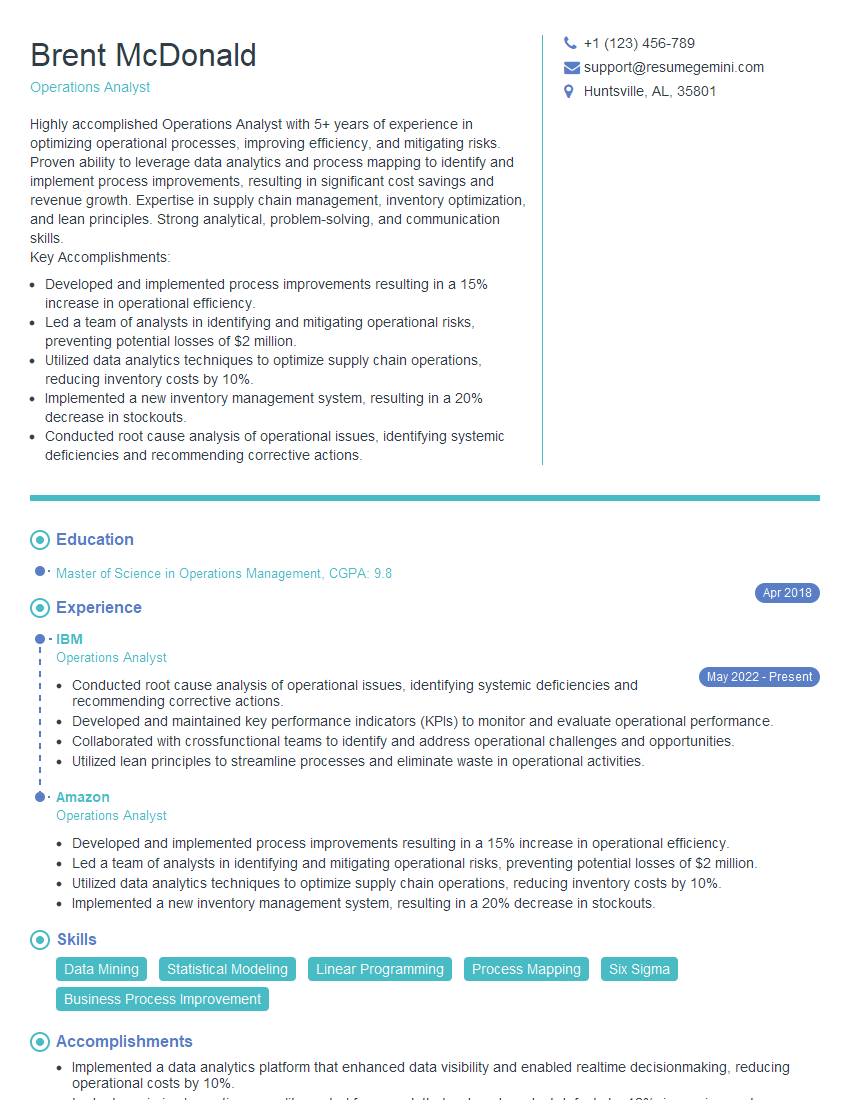
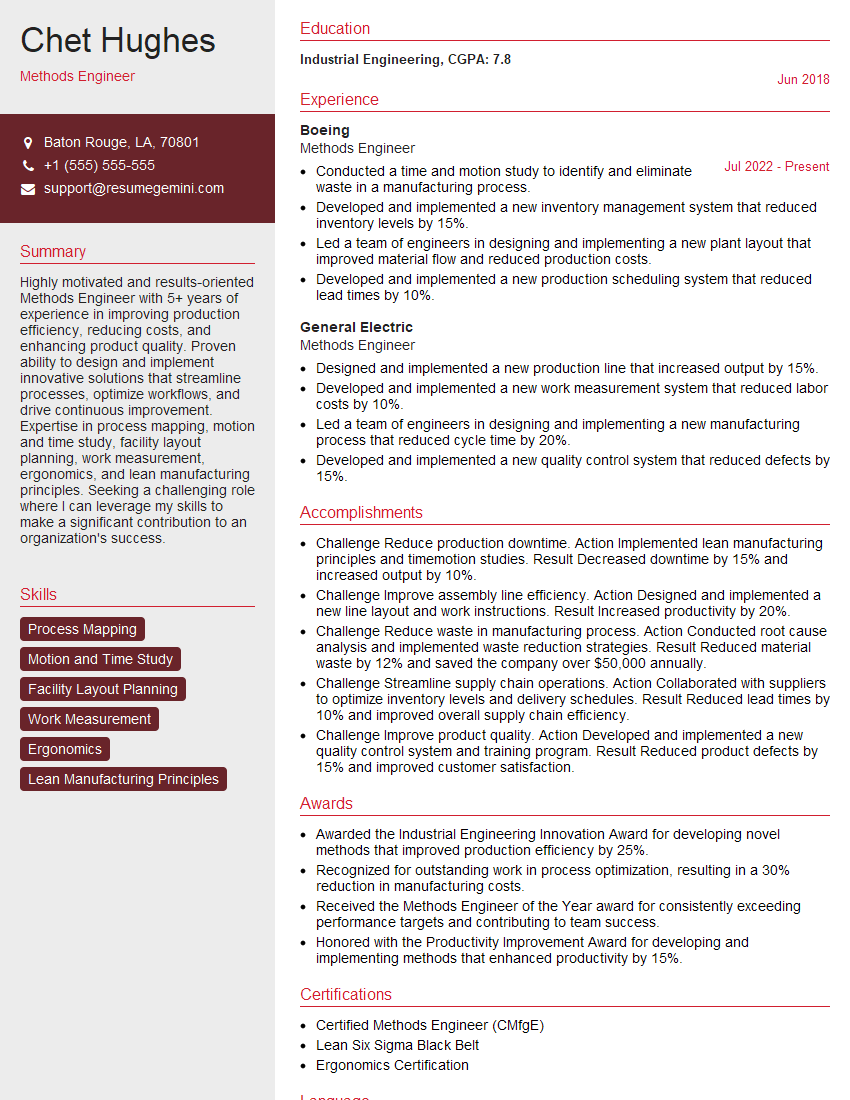
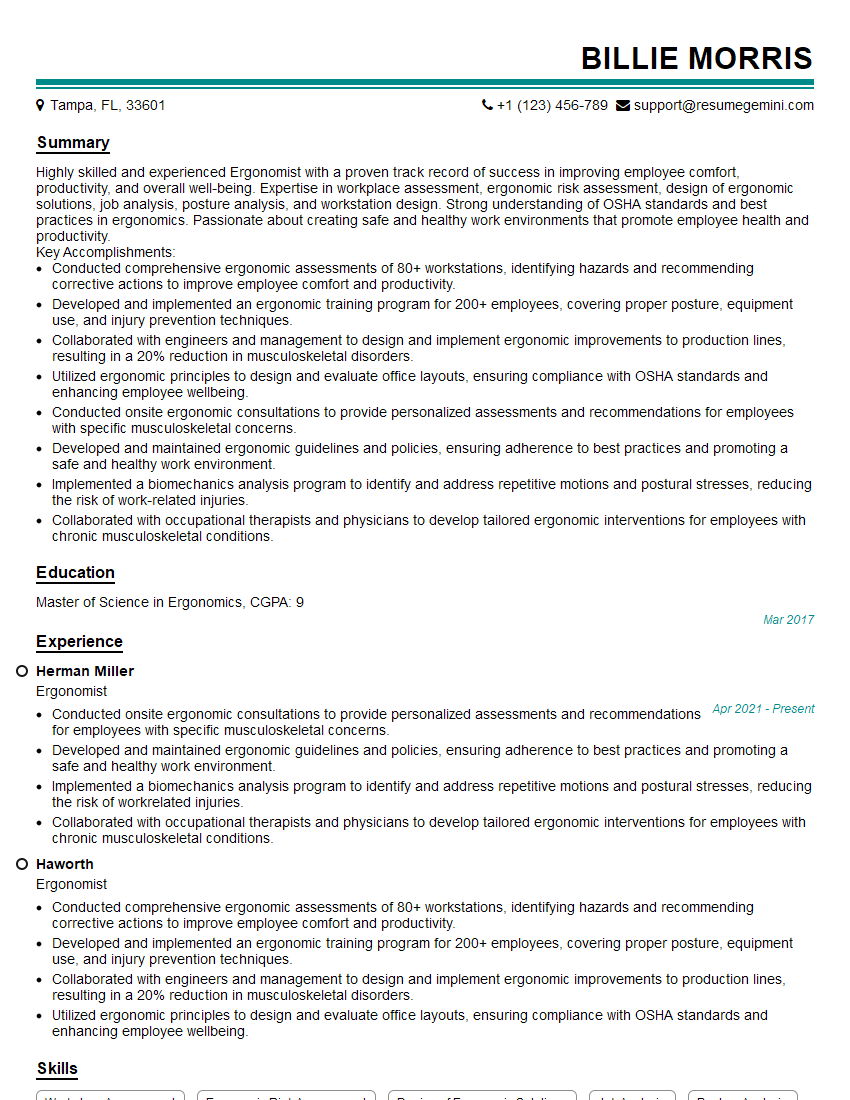
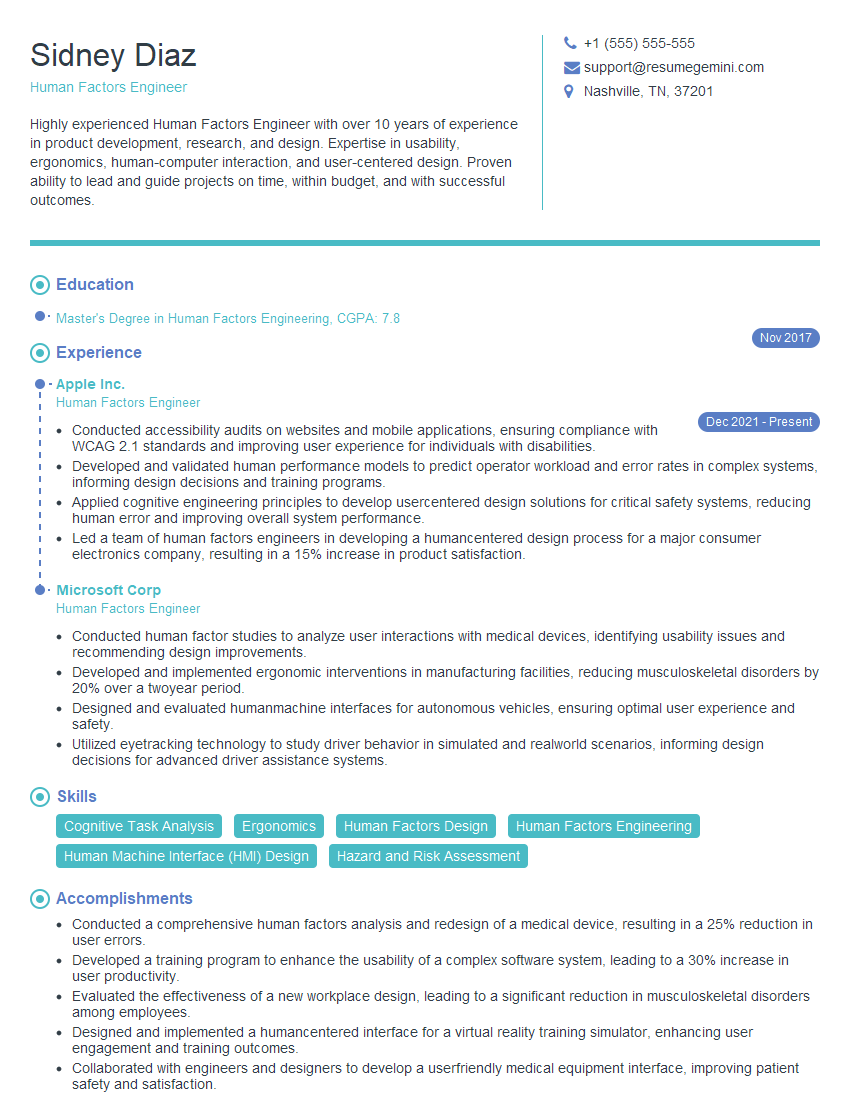
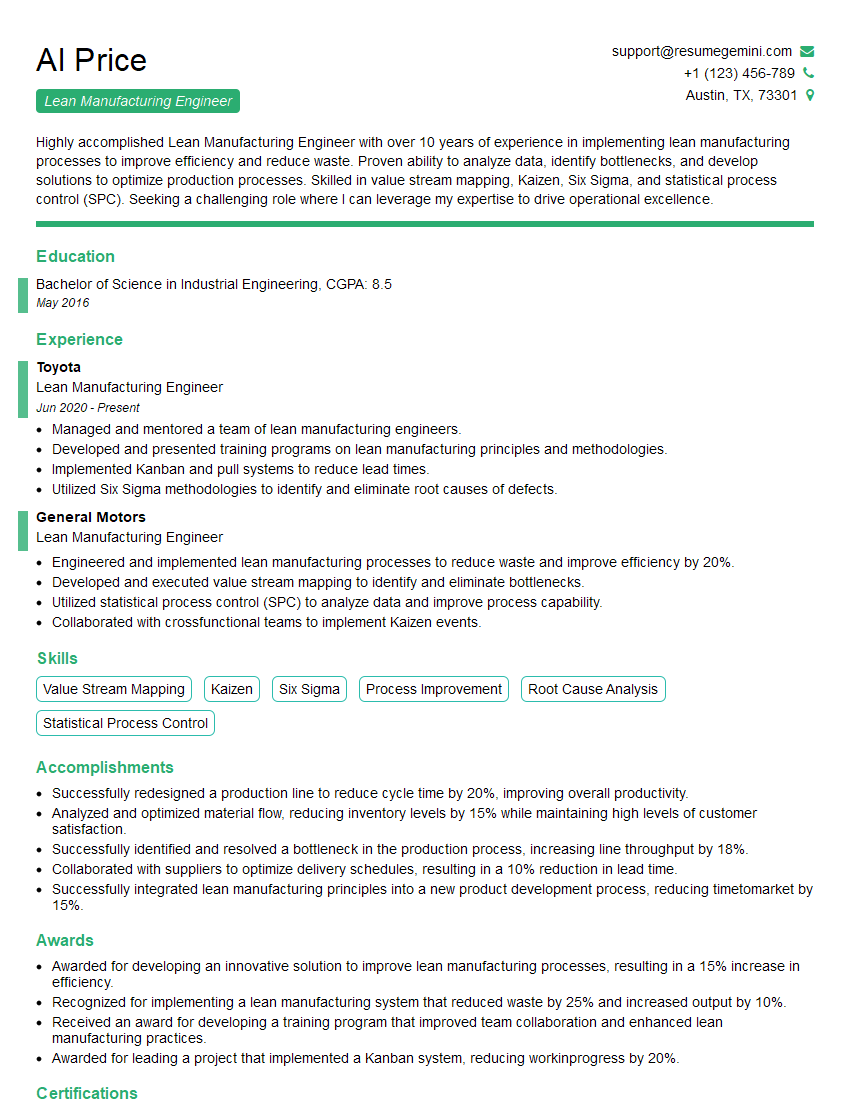
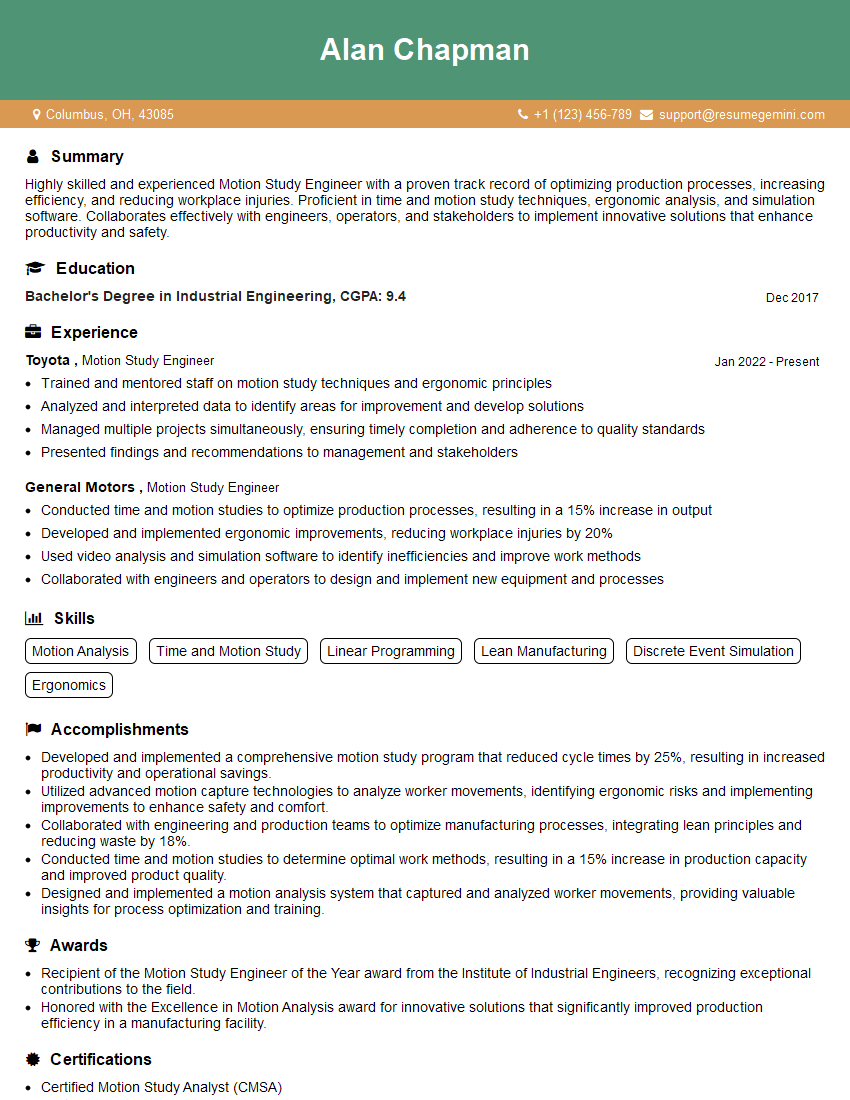
Mastering Motion Study opens doors to exciting career opportunities in manufacturing, engineering, and operations management. A strong understanding of these principles is highly valued by employers seeking to optimize efficiency and productivity. To significantly boost your job prospects, creating an ATS-friendly resume is crucial. ResumeGemini can help you build a professional and impactful resume that highlights your skills and experience effectively. Examples of resumes tailored to Motion Study are available to guide you through the process.

Explore more articles
Users Rating of Our Blogs
Share Your Experience
We value your feedback! Please rate our content and share your thoughts (optional).
What Readers Say About Our Blog
Very informative content, great job.
good