Cracking a skill-specific interview, like one for Motor Control Theory, requires understanding the nuances of the role. In this blog, we present the questions you’re most likely to encounter, along with insights into how to answer them effectively. Let’s ensure you’re ready to make a strong impression.
Questions Asked in Motor Control Theory Interview
Q 1. Explain the difference between open-loop and closed-loop control systems.
Open-loop and closed-loop control systems differ fundamentally in how they achieve control. Imagine you’re baking a cake: An open-loop system is like following a recipe without checking the oven temperature. You input the instructions (recipe), and the system executes them (baking). The final result depends entirely on the accuracy of the initial instructions and the consistency of the oven, with no adjustment along the way. If your oven is off by 25 degrees, your cake will be under or overcooked, regardless of the recipe’s perfection.
A closed-loop system, on the other hand, is like using a thermometer to monitor the oven’s temperature. You still have a recipe (your setpoint), but now you constantly measure the actual temperature (feedback) and adjust the oven’s heat accordingly to maintain the desired temperature. This feedback loop ensures the cake is baked perfectly, even if the oven isn’t perfectly calibrated.
In motor control, an open-loop system might involve sending a fixed voltage to a motor, resulting in an unpredictable speed due to factors like load variations. A closed-loop system, however, uses sensors (e.g., encoders, tachometers) to measure the motor’s actual speed and position, comparing it to the desired values and adjusting the motor’s input to minimize the error.
Q 2. Describe the role of feedback in closed-loop control.
Feedback is the cornerstone of closed-loop control, providing crucial information about the system’s actual state. In motor control, feedback sensors measure the motor’s output (e.g., speed, position, current). This measured value is then compared to the desired or reference value (setpoint). The difference, known as the error, is used by the controller to adjust the motor’s input signal to minimize the error and bring the actual value closer to the setpoint.
Think of a thermostat controlling room temperature. The thermostat acts as the controller, sensing the current temperature (feedback) and comparing it to the desired temperature (setpoint). If the room is too cold, it turns the heater on; if it’s too hot, it turns it off. This continuous feedback loop ensures the room maintains a comfortable temperature. Without feedback, the heater would either run continuously or not at all, resulting in an uncomfortable room temperature.
Q 3. What are the advantages and disadvantages of PID controllers?
PID (Proportional-Integral-Derivative) controllers are ubiquitous in motor control due to their ability to provide robust and accurate control. They achieve this by using three control terms:
- Proportional (P): Responds to the current error. A larger error results in a larger corrective action. Think of it as immediate, reactive control.
- Integral (I): Addresses persistent errors. It accumulates the error over time, effectively eliminating steady-state errors (e.g., the motor never quite reaches the desired speed).
- Derivative (D): Anticipates future errors based on the rate of change of the error. It helps to dampen oscillations and prevent overshoot.
Advantages: Relatively simple to implement, widely understood, effective in many applications.
Disadvantages: Tuning can be challenging to achieve optimal performance; susceptible to noise (especially the derivative term); might exhibit overshoot or oscillation if not properly tuned.
Q 4. How do you tune a PID controller for optimal performance?
PID controller tuning is a crucial step for optimal performance. It involves adjusting the three gain parameters (Kp, Ki, Kd) to balance responsiveness, stability, and accuracy. There are several methods, including:
- Ziegler-Nichols method: An empirical method involving pushing the system to the point of instability to determine parameters.
- Trial and error: A time-consuming but effective method involving iteratively adjusting the parameters and observing the system’s response.
- Auto-tuning algorithms: Sophisticated algorithms automatically tune the PID parameters based on the system’s characteristics.
The best approach often depends on the application’s complexity and available resources. A systematic approach involves starting with a conservative setting and iteratively adjusting each parameter while observing the system’s response to changes in setpoint and disturbances. Tools like Bode plots and Nyquist plots can help assess stability and tune for optimal performance. Software tools and simulators are also invaluable in facilitating tuning and minimizing the risk of damage to the equipment.
Q 5. Explain the concept of system stability in motor control.
System stability in motor control refers to the system’s ability to maintain a desired state (e.g., speed, position) despite disturbances or changes in the setpoint. An unstable system will oscillate uncontrollably, leading to poor performance or even damage to the motor or other components. Stability is ensured by proper controller design and tuning. The system’s response to disturbances can be analyzed using various methods, including:
- Bode plots: graphical representations of the system’s frequency response; help determine gain and phase margins.
- Nyquist plots: graphical representation of the system’s frequency response in the complex plane; used to assess stability via encirclements of critical points.
- Root locus plots: graphical representation of the system’s poles as a function of a gain parameter; used to determine the range of gains which ensure stability.
The goal is to ensure that the system’s poles (roots of the characteristic equation) lie in the left-half of the complex plane. If any poles are in the right half-plane, the system is unstable.
Q 6. Describe different types of motor drives (e.g., VFD, servo drive).
Motor drives are power electronic devices that control the speed and torque of electric motors. Different types cater to various application needs:
- Variable Frequency Drives (VFDs): Control AC motors by varying the frequency and voltage of the power supply. Widely used for general-purpose applications like fans, pumps, and conveyors, prioritizing cost-effectiveness over precise control.
- Servo Drives: Precisely control the speed and position of servo motors, often used in applications requiring high accuracy and responsiveness, such as robotics, CNC machines, and industrial automation. They usually incorporate closed-loop control with feedback sensors for precise positioning.
- Stepper Motor Drives: Control stepper motors by providing a sequence of pulses, resulting in precise rotational steps. Used in applications requiring precise step-by-step movement, such as 3D printers and some robotics applications.
The choice of motor drive depends on factors such as the required precision, speed range, load characteristics, and cost considerations.
Q 7. What are the common methods for motor speed control?
Several methods are used for controlling motor speed, depending on the type of motor and the desired level of control:
- Voltage control: Simplest method for DC motors; varying the input voltage directly changes the motor speed. Limited accuracy due to variations in load and back EMF.
- Pulse Width Modulation (PWM): Widely used technique for controlling DC and AC motors; varies the average voltage by switching the voltage on and off rapidly. Offers better efficiency and accuracy than simple voltage control.
- Variable Frequency Drive (VFD) control: For AC motors; altering the frequency of the AC power supply changes the motor’s speed. Allows for precise speed control over a wide range.
- Closed-loop speed control with feedback: Uses sensors (e.g., tachometers, encoders) to monitor the actual speed and implement feedback control, which leads to more precise control than open-loop methods.
The choice of method depends on the type of motor, application requirements (precision, speed range, efficiency), and cost constraints.
Q 8. Explain the principles of torque control in motor systems.
Torque control in motor systems is all about precisely managing the rotational force (torque) produced by the motor. Think of it like controlling the power of an engine in a car – you want smooth acceleration and the ability to stop and reverse precisely. This is achieved by manipulating the motor’s input current or voltage. The fundamental principle relies on the motor’s inherent relationship between current and torque. In DC motors, for example, torque is directly proportional to armature current (within the motor’s operational limits). For AC motors, the relationship is more complex and depends on factors like the motor’s phase currents and their relative timing. Sophisticated control algorithms, such as PI (Proportional-Integral) or PID (Proportional-Integral-Derivative) controllers, are used to accurately regulate the motor’s torque by comparing the desired torque with the actual torque sensed through feedback mechanisms, often using current sensors.
For instance, imagine an industrial robotic arm needing to delicately place a small component. Precise torque control is crucial to avoid damaging the component. The controller adjusts the motor’s current in real-time to match the desired torque profile, ensuring the arm moves with the needed precision.
Another example would be an electric vehicle’s motor, where precise torque control manages acceleration, deceleration, and regenerative braking – smoothly matching driver input to optimal motor performance and efficiency.
Q 9. How do you handle sensor noise in a motor control system?
Sensor noise is a major hurdle in motor control systems. It introduces inaccuracies into the feedback signal, leading to instability or poor performance. Several techniques are employed to mitigate this:
- Filtering: Low-pass filters are frequently used to smooth out high-frequency noise. Moving averages or Kalman filters provide more sophisticated filtering techniques, effectively estimating the true signal amidst noise. The choice of filter depends on the characteristics of the noise and the system’s dynamic response.
- Sensor Calibration: Regular calibration ensures that the sensor readings are accurately reflecting the true values. This involves comparing the sensor readings to known reference values and adjusting the sensor output accordingly.
- Sensor Fusion: Employing multiple sensors and combining their readings through algorithms like Kalman filtering or weighted averaging can help to reduce the impact of noise in any single sensor.
- Robust Control Techniques: Control algorithms designed to be robust to disturbances and uncertainties, such as H-infinity control or sliding mode control, can reduce the sensitivity of the system to noise. These techniques explicitly consider the uncertainties in the system model and the sensor measurements.
Imagine a drone’s position sensor being affected by wind gusts – this would introduce noise into the control system. Filtering helps to remove the transient noise caused by the gusts while maintaining accurate information about the drone’s position. Properly addressed, sensor noise can be minimized for better accuracy and stability.
Q 10. Describe different types of motor encoders and their applications.
Motor encoders are vital components in motor control, providing feedback on the motor’s position and speed. Different types exist, each suited to specific applications:
- Incremental Encoders: These encoders provide pulses for each increment of movement. They don’t give absolute position but only relative movement from a starting point. They are cost-effective and widely used in applications where absolute position isn’t critical, like simple robotic arms or conveyor belts. They typically consist of a rotating disc with slots that interrupt a light beam.
- Absolute Encoders: These encoders provide a unique digital code for each position, offering direct absolute position information. This is useful in applications requiring precise positioning, like industrial robotics or CNC machines, where knowing the exact position at power-up is essential. They might employ magnetic or optical techniques for position detection.
- Resolver Encoders: These encoders use a rotary transformer to provide sinusoidal signals representing position and speed information. They’re known for their robustness and high resolution but require more complex signal processing. They are often found in high-precision applications like aerospace and industrial automation.
- Magnetic Encoders: These encoders use magnetic sensors to detect the position of a rotating magnet. They are non-contact, making them highly reliable and durable for harsh environments.
Choosing the right encoder depends on the application’s requirements for accuracy, cost, and environmental conditions. For example, a simple robotic arm might use an incremental encoder, while a highly precise CNC machine would require an absolute encoder.
Q 11. What are the challenges of controlling high-inertia loads?
Controlling high-inertia loads presents several challenges. High inertia means the load resists changes in its rotational speed. This requires significant torque to accelerate or decelerate, leading to slower response times and potential instability. Here are some key challenges:
- Slow Response: High inertia loads require more time to accelerate and decelerate, making it challenging to achieve precise, rapid movements. The controller needs to be carefully tuned to avoid overshoot and oscillations.
- Increased Torque Demand: Significant torque is needed to overcome the inertia, potentially pushing the motor to its limits. This requires a motor with sufficient power and robust control strategies to prevent overloading.
- Stability Issues: The system’s natural response can be sluggish, leading to instability if not carefully controlled. Precise tuning of the control parameters and the use of advanced control techniques like adaptive control are often necessary.
- Mechanical Stress: The high forces involved can put significant stress on mechanical components, potentially leading to premature wear and tear.
Consider a large industrial robot arm manipulating heavy parts. The high inertia of the arm requires careful control to ensure smooth and controlled movements, preventing jerky motions or oscillations. The motor controller needs to deliver sufficient torque to overcome the inertia while avoiding damage to the mechanical components.
Q 12. Explain the concept of motor commutation.
Motor commutation is the process of switching the current flow in the motor windings to produce continuous rotation. Think of it as the coordination needed to keep a bicycle’s pedals moving continuously – you need to switch which pedal is being pushed at the right time. In DC motors, this is fairly straightforward, but AC motors require more sophisticated commutation techniques. The goal is to optimize torque production and minimize energy loss.
The process involves sensing the rotor’s position (often using an encoder) and switching the current in the appropriate windings to maintain the magnetic field interaction that generates torque. Without commutation, the motor would stall as the magnetic fields become misaligned.
Q 13. What are the different types of motor commutation techniques?
Several commutation techniques exist, varying in complexity and suitability for different motor types:
- Brush Commutation (DC Motors): In DC brushed motors, physical brushes make contact with the commutator segments, reversing the current flow in the armature windings as the rotor rotates. This is a simple but mechanically limiting method susceptible to wear and tear.
- Sensorless Commutation: This technique determines the rotor position using only the motor’s electrical signals, eliminating the need for external sensors. It is commonly used for brushless DC motors (BLDC) and induction motors. Algorithms estimate rotor position based on back EMF or other electrical signals. It’s cost effective but may be less accurate than sensor-based methods.
- Trapezoidal Commutation (BLDC Motors): This is a simplified method used for BLDC motors, employing a regular switching pattern based on estimated or sensed rotor position. While relatively straightforward, it results in less efficient torque production compared to sinusoidal commutation.
- Sinusoidal Commutation (BLDC Motors): This technique utilizes sinusoidal current waveforms in the motor windings, leading to smoother torque production and higher efficiency. It requires more sophisticated control algorithms and sensor feedback to accurately track the rotor position and shape the current accordingly.
- Hall Effect Sensors Commutation (BLDC Motors): Hall effect sensors detect the position of magnets in the motor. These sensors signal the controller to switch currents appropriately. It is a simple and robust technique, but the sensors add cost and complexity.
The choice of commutation technique is driven by factors like motor type, performance requirements (torque ripple, efficiency), cost, and complexity.
Q 14. How do you model a motor’s dynamics?
Modeling a motor’s dynamics is crucial for designing and tuning the control system. The model captures the motor’s behavior, allowing the controller to predict and compensate for disturbances. Several approaches exist, ranging from simplified to highly detailed models:
- Simplified Models: These models use a simplified representation, often neglecting some dynamics. For example, a first-order model might only consider the motor’s inertia and damping. This is useful for initial design and analysis but may lack accuracy for precise control.
- Detailed Models: These models incorporate more complex elements like magnetic saturation, winding resistance variation, and back EMF effects. This leads to a more accurate representation of motor behavior and improves control performance. They usually involve differential equations.
- Transfer Function Models: These models represent the motor’s input-output relationship using transfer functions in the Laplace domain. They are convenient for frequency-domain analysis and controller design using techniques like Bode plots.
- State-Space Models: These models represent the motor’s dynamics as a set of first-order differential equations. They are versatile and well-suited for designing state-feedback controllers.
The choice of model depends on the application’s complexity and the desired level of accuracy. A simplified model might suffice for a basic application, while a detailed model is necessary for high-performance control systems.
For instance, a simplified model might be appropriate for a simple fan motor, while a detailed model including magnetic saturation effects is crucial for a high-precision robotic arm. Accurate modeling is essential to avoid instability and poor control performance.
Q 15. Describe different motor control algorithms (e.g., field-oriented control, vector control).
Motor control algorithms aim to precisely manage the speed, torque, and position of electric motors. Two prominent examples are Field-Oriented Control (FOC) and Vector Control, often used interchangeably but with subtle differences. Both techniques decouple the motor’s control into independent control of torque and flux (or speed).
- Field-Oriented Control (FOC): FOC uses a mathematical transformation (usually Park’s transformation) to represent the motor’s stator currents in a rotating reference frame aligned with the rotor’s magnetic flux. This allows independent control of the flux-producing current (which determines the magnetic field strength) and the torque-producing current (which determines the motor’s output torque). Think of it like controlling the engine’s power and fuel separately in a car, optimizing for both performance and efficiency. FOC is widely used in high-performance applications demanding precise control.
- Vector Control: Vector control is a similar approach that focuses on controlling the motor’s torque and flux vectors directly. It’s essentially a more general term that can encompass FOC and other similar techniques. Often, the terms are used interchangeably, especially in the industry. The key difference might lie in the specific transformation and control strategies used.
In essence, both FOC and vector control improve motor performance by enabling rapid and accurate response to control signals, leading to enhanced efficiency and precise positioning. They are particularly useful in applications like robotics, electric vehicles, and industrial automation where precise motion control is crucial.
Career Expert Tips:
- Ace those interviews! Prepare effectively by reviewing the Top 50 Most Common Interview Questions on ResumeGemini.
- Navigate your job search with confidence! Explore a wide range of Career Tips on ResumeGemini. Learn about common challenges and recommendations to overcome them.
- Craft the perfect resume! Master the Art of Resume Writing with ResumeGemini’s guide. Showcase your unique qualifications and achievements effectively.
- Don’t miss out on holiday savings! Build your dream resume with ResumeGemini’s ATS optimized templates.
Q 16. Explain the concept of dead time compensation in motor control.
Dead time compensation addresses the delay between issuing a control command and the motor’s actual response. This delay, or dead time, is inherent in the control system, stemming from factors like signal processing, power electronics switching, and mechanical inertia. Ignoring dead time can lead to instability and poor performance, particularly at higher speeds or with rapid changes in the desired motor state.
Compensation strategies typically involve predicting the future motor state based on the current control command and the known dead time. Common techniques include:
- Smith Predictor: A model-based approach that estimates the system’s delayed response and adjusts the control signal accordingly.
- Internal Model Control (IMC): This method explicitly accounts for the system’s dynamics, including the dead time, in the controller design.
For example, imagine you’re driving a car. There’s a delay between turning the steering wheel and the car actually responding. Dead time compensation in motor control is analogous to anticipating this delay and adjusting your steering input proactively to reach your desired turning point accurately and smoothly.
Q 17. How do you handle system disturbances in a motor control system?
System disturbances in motor control can arise from various sources such as load variations, friction changes, and supply voltage fluctuations. Robust control strategies are essential to mitigate these disturbances and maintain accurate motor performance. Several approaches exist:
- Feedback Control: Using sensors (e.g., encoders, current sensors) to monitor the actual motor state and compare it to the desired state. The difference (error) is then used to adjust the control signal, effectively counteracting disturbances. This is the most common approach and forms the basis of many advanced control techniques. Proportional-Integral-Derivative (PID) controllers are frequently used.
- Feedforward Control: Predicting disturbances and preemptively adjusting the control signal to compensate. This is often combined with feedback control to achieve even better performance.
- Adaptive Control: Continuously identifying and adapting to changing system parameters and disturbances. This is particularly useful in scenarios with significant variations in operating conditions.
- Robust Control: Designing controllers that are insensitive to uncertainties and disturbances within a specific range. This approach might utilize techniques like H-infinity control or sliding mode control.
For instance, if a robot arm encounters an unexpected load, a well-designed control system should automatically adjust the motor torque to maintain the desired position or trajectory.
Q 18. What are the safety considerations in motor control applications?
Safety is paramount in motor control applications. Potential hazards include mechanical injuries from moving parts, electrical shocks, and fire. Key safety considerations involve:
- Emergency Stops: Implementing reliable emergency stop mechanisms that can quickly shut down the motor in case of hazardous situations. These should meet relevant safety standards like IEC 60204.
- Overcurrent Protection: Protecting the motor and power electronics from excessive currents that can cause overheating or damage. Circuit breakers, fuses, and electronic overcurrent protection are crucial.
- Overvoltage and Undervoltage Protection: Ensuring the motor operates within its safe voltage range to avoid damage or malfunction.
- Overtemperature Protection: Monitoring motor temperature to prevent overheating, which can lead to insulation failure and fire hazards. Thermal sensors and appropriate control logic are needed.
- Mechanical Safety Interlocks: Preventing access to hazardous moving parts during operation. Safety guards, light curtains, and other interlocks are commonly used.
- Functional Safety Standards: Adhering to relevant safety standards (like ISO 13849 for machinery safety) and implementing safety-related control systems to achieve the necessary safety integrity levels.
A well-designed system integrates these elements to minimize risks and ensure safe operation.
Q 19. Describe your experience with different motor types (e.g., AC, DC, stepper, servo).
My experience encompasses various motor types, each with its unique characteristics and control requirements:
- DC Motors: I have extensive experience with both brushed and brushless DC motors. Brushed DC motors are relatively simple to control using basic techniques like PWM (Pulse Width Modulation), but they suffer from brush wear. Brushless DC motors offer higher efficiency and longer lifespan, and their control often involves sophisticated techniques like FOC.
- AC Motors: I’ve worked extensively with induction motors (asynchronous motors) and synchronous motors (permanent magnet synchronous motors and others). Induction motors are widely used for their robustness and low cost but require advanced control methods like FOC or vector control for precise speed and torque regulation. Synchronous motors often provide better efficiency and controllability.
- Stepper Motors: I have experience controlling stepper motors for precise positioning applications. These motors move in discrete steps and are ideal for applications requiring high accuracy and repeatability, like 3D printers or CNC machines. Open-loop and closed-loop control strategies can be employed.
- Servo Motors: Servo motors, often high-performance DC or AC motors with integrated position feedback, are frequently used in robotics and industrial automation. Their precise positioning capabilities are well-suited for tasks demanding high accuracy and speed.
My experience spans applications ranging from simple speed control to complex motion profiles, allowing me to select the appropriate motor and control strategy for each application.
Q 20. Explain your experience with motor control hardware and software.
My experience with motor control hardware and software is comprehensive. On the hardware side, I’m proficient with various power electronic components, including inverters, drivers, and motor controllers. I have hands-on experience with microcontrollers (like ARM Cortex-M series and DSPs), FPGAs (Field-Programmable Gate Arrays), and various sensor interfaces (encoders, current sensors, temperature sensors). I’m familiar with designing and implementing circuits for motor protection and power conditioning.
In software development, I’m adept at using real-time operating systems (RTOS), programming in languages such as C, C++, and Python, and utilizing control system design tools like MATLAB/Simulink. My expertise extends to implementing sophisticated control algorithms, developing user interfaces, and integrating with other system components. I’ve worked with both embedded systems and PC-based control systems.
For example, in one project, I designed and implemented a real-time control system for a robotic arm using an ARM Cortex-M4 microcontroller and a custom motor driver, utilizing a PID controller implemented in C for precise trajectory control. The system incorporated safety features such as emergency stops and overcurrent protection.
Q 21. How do you troubleshoot motor control system failures?
Troubleshooting motor control system failures requires a systematic approach. I typically follow these steps:
- Safety First: Ensure the system is safely powered down before attempting any troubleshooting.
- Gather Information: Collect information about the nature of the failure, when it occurred, any preceding events, and any error messages. Observe the motor’s behavior (e.g., no movement, excessive noise, unusual heating).
- Check Inputs and Outputs: Verify the control signals, sensor readings (e.g., encoder, current), and power supply voltages. Use oscilloscopes and multimeters to examine signals and identify anomalies.
- Inspect Hardware: Visually inspect the motor, motor driver, power electronics, and wiring for any physical damage (e.g., burnt components, loose connections). Listen for unusual noises from the motor or driver.
- Test Software: Check the control algorithm implementation, communication protocols, and data integrity. Use debugging tools (e.g., logic analyzers, debuggers) to trace the execution flow and identify potential bugs or software errors.
- Isolate the Problem: Systematically isolate the problem by testing components individually and eliminating possibilities.
- Repair or Replace: Once the faulty component or the root cause is identified, repair or replace it. Ensure all connections are secure and that the system complies with safety standards.
- Verification and Testing: Thoroughly test the system after repairs to ensure proper functionality and stability before resuming normal operation.
Troubleshooting often involves a combination of practical skills and theoretical understanding of motor control principles. Experience with various motor types, hardware components, and software tools is crucial for efficient and effective troubleshooting.
Q 22. Describe your experience with simulation tools for motor control systems.
Simulation tools are indispensable for designing and testing motor control systems before deploying them in real-world applications. They allow for rapid prototyping, cost-effective experimentation, and the identification of potential issues early in the development cycle. My experience encompasses a range of tools, including MATLAB/Simulink, which I’ve extensively used for modeling various motor types (DC, AC induction, BLDC), designing control algorithms (PID, FOC), and simulating their performance under different operating conditions. I’ve also worked with specialized motor control simulation packages offering detailed motor models and hardware-in-the-loop (HIL) capabilities, allowing for realistic testing with real hardware components. For example, in one project involving a robotic arm, Simulink enabled me to accurately predict the arm’s dynamics and fine-tune the motor control algorithms to achieve precise trajectory tracking before integrating the system on the physical robot. Another project involved using a dedicated HIL simulator to test the robustness of a motor control system against unexpected voltage fluctuations and load disturbances.
Q 23. What are your experiences with different programming languages for motor control (e.g., C++, MATLAB, Python)?
Proficiency in multiple programming languages is crucial for effective motor control development. My primary language is C++, given its real-time capabilities and performance efficiency, which are paramount in embedded systems. I frequently use C++ for developing low-level code directly interacting with the motor hardware, implementing control algorithms, and handling real-time interrupts. For example, I used C++ to implement a Field-Oriented Control (FOC) algorithm for a BLDC motor in a high-performance application where precise torque control and fast response times were critical. MATLAB is my go-to tool for algorithm design, simulation, and data analysis. Its extensive toolboxes offer powerful functions for control system design, signal processing, and data visualization. I’ve used MATLAB to prototype and test different control strategies before implementing them in C++. Python, on the other hand, provides a versatile environment for data logging, post-processing, and higher-level system integration. I leverage Python’s rich libraries (like NumPy and SciPy) for tasks like analyzing motor performance data from real-world experiments or creating sophisticated data visualization tools.
Q 24. Explain your experience with real-time operating systems (RTOS) in the context of motor control.
Real-Time Operating Systems (RTOS) are fundamental in motor control applications demanding precise timing and deterministic behavior. I have significant experience working with several RTOS, including FreeRTOS and VxWorks. These systems allow for precise scheduling of control tasks, ensuring that critical control loops are executed within their required deadlines, which is essential for maintaining stability and performance. For example, in a project involving a high-speed precision motion control application, the selection of FreeRTOS, with its priority-based scheduling and preemptive multitasking capabilities, allowed us to meet stringent timing requirements and guarantee the system’s stability even under heavy load conditions. The design and implementation considerations of RTOS are crucial. Issues such as task synchronization, interrupt handling, and resource management require careful planning and implementation to avoid race conditions or timing conflicts, jeopardizing system stability. Proper design and selection of the RTOS are critical to ensure system reliability and performance. Understanding concepts like priority inversion and resource sharing is also key.
Q 25. Describe your knowledge of different communication protocols used in motor control (e.g., CAN, Modbus).
Motor control systems often require communication with other devices, and I’m familiar with various protocols used for this purpose. CAN (Controller Area Network) is widely used in automotive and industrial applications for its robustness and real-time capabilities. I have used CAN to integrate motor controllers with other components in a distributed control system. Modbus is a popular serial communication protocol well-suited for industrial automation; I’ve used it for connecting motor controllers with Programmable Logic Controllers (PLCs) and Human-Machine Interfaces (HMIs). Other protocols such as EtherCAT (Ethernet for Control Automation Technology) and ProfiBus are also in my experience, chosen based on the specific application requirements, including bandwidth, real-time performance, and cost constraints. For instance, in a project involving multiple motors coordinated for a complex motion profile, EtherCAT was preferred for its high speed and deterministic communication, allowing for seamless synchronization.
Q 26. How do you ensure the robustness and reliability of a motor control system?
Robustness and reliability are paramount in motor control. Several strategies ensure these qualities. First, robust control algorithms are crucial; PID controllers with appropriate tuning and adaptive control strategies can mitigate disturbances and uncertainties. Secondly, thorough testing is vital; simulations, hardware-in-the-loop testing, and extensive real-world testing in various conditions (temperature, load variations) are crucial for identifying and addressing weaknesses. Thirdly, fault detection and tolerance mechanisms are implemented. These might involve sensor redundancy, plausibility checks on sensor data, and safe shutdown procedures in case of failures. Lastly, proper hardware selection plays a critical role; choosing components with appropriate specifications (e.g., temperature range, overcurrent protection) and applying protection mechanisms like fuses and circuit breakers enhances reliability. For instance, in a project involving a critical motor in a manufacturing process, we implemented a dual-sensor system for position feedback, along with a plausibility check to detect and handle sensor failures, preventing system crashes and ensuring continuous operation.
Q 27. Explain your experience with different types of motor control architectures.
Motor control architectures vary depending on factors like motor type, performance requirements, and cost considerations. I have experience with several architectures. For example, decentralized architectures where each motor is controlled by its own dedicated controller offer flexibility and scalability, particularly in complex systems with multiple motors. In centralized architectures, a single controller manages multiple motors, reducing costs and simplifying coordination but potentially creating a single point of failure. Hierarchical architectures, which combine aspects of both, offer a good balance. The choice of architecture also impacts communication protocols, with decentralized systems often using communication networks like CAN bus, and centralized systems relying on more direct communication paths. Furthermore, I have experience with different control methods like scalar control, vector control (FOC), and direct torque control (DTC), selected based on the motor type and the desired control performance. For instance, in a high-performance robotic application, a decentralized architecture with vector control for each joint motor provides the accuracy and responsiveness required.
Q 28. Describe your understanding of the impact of motor control on energy efficiency.
Energy efficiency is a critical aspect of motor control. Optimized control algorithms can significantly reduce energy consumption. For instance, implementing techniques like field-oriented control (FOC) for AC motors achieves higher efficiency compared to simpler scalar control methods. FOC enables precise control of the motor’s torque and flux, reducing losses. Other techniques include predictive control strategies that anticipate load changes and adjust the motor’s operation accordingly, minimizing energy waste. Regular motor maintenance, including lubrication and proper alignment, also plays a crucial role in maximizing efficiency. Sensor data acquisition and analysis provide insights into motor performance, allowing for optimization of control parameters and detection of energy-wasting inefficiencies. For example, in one industrial setting, by implementing advanced motor control techniques and optimizing motor parameters based on real-time data analysis, we managed to reduce overall energy consumption by approximately 15%, resulting in significant cost savings and reduced environmental impact.
Key Topics to Learn for Motor Control Theory Interview
- Degrees of Freedom Problem: Understand the challenges in controlling multiple joints and muscles simultaneously and the strategies employed to simplify control (e.g., synergies, hierarchical control).
- Muscle Activation and Coordination: Explore electromyography (EMG) data analysis, muscle force production, and the neural mechanisms underlying muscle activation patterns during movement.
- Sensory Feedback and Motor Adaptation: Learn about the role of proprioception, vision, and other sensory systems in motor control, and how the motor system adapts to changing environmental conditions or injury.
- Internal Models and Motor Learning: Discuss the concept of internal models (forward and inverse) used for motor planning and prediction, and how these models are refined through motor learning processes.
- Motor Control in Health and Disease: Analyze the implications of motor control theory for understanding and treating neurological disorders such as Parkinson’s disease, stroke, and cerebral palsy.
- Practical Application: Explore applications in robotics, prosthetics, human-computer interaction, and rehabilitation engineering.
- Advanced Topics: Consider exploring areas like optimal control theory, computational motor control models, and neural network approaches to motor control.
Next Steps
Mastering Motor Control Theory opens doors to exciting and impactful careers in research, engineering, and healthcare. A strong understanding of these principles demonstrates a high level of technical expertise and problem-solving skills, highly valued by employers. To maximize your job prospects, it’s crucial to present your skills effectively. Creating an ATS-friendly resume is paramount in today’s competitive job market. ResumeGemini is a trusted resource that can help you build a compelling and effective resume tailored to your specific experience and the demands of the Motor Control Theory field. Examples of resumes tailored to this area are available to guide you. Invest time in crafting a professional resume that highlights your knowledge and skills – it’s an essential step in launching your career.

Automation Engineer Resume Sample
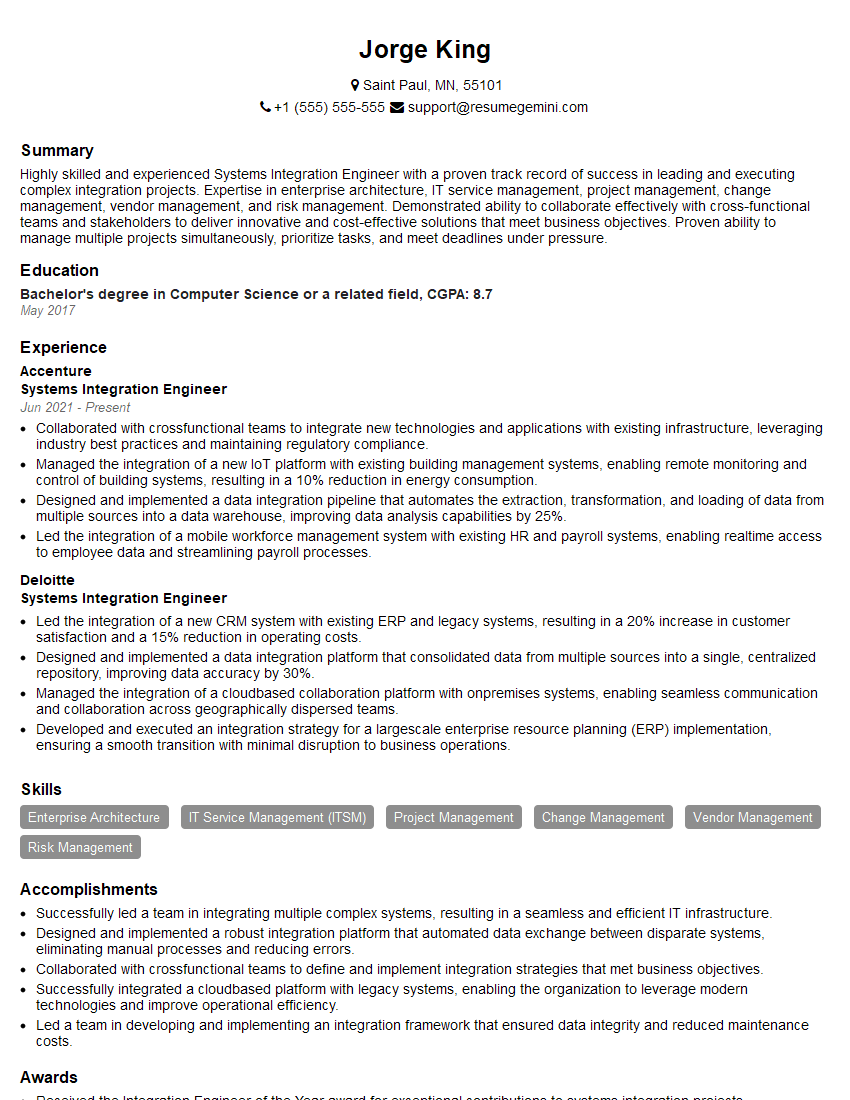
Systems Integration Engineer Resume Sample
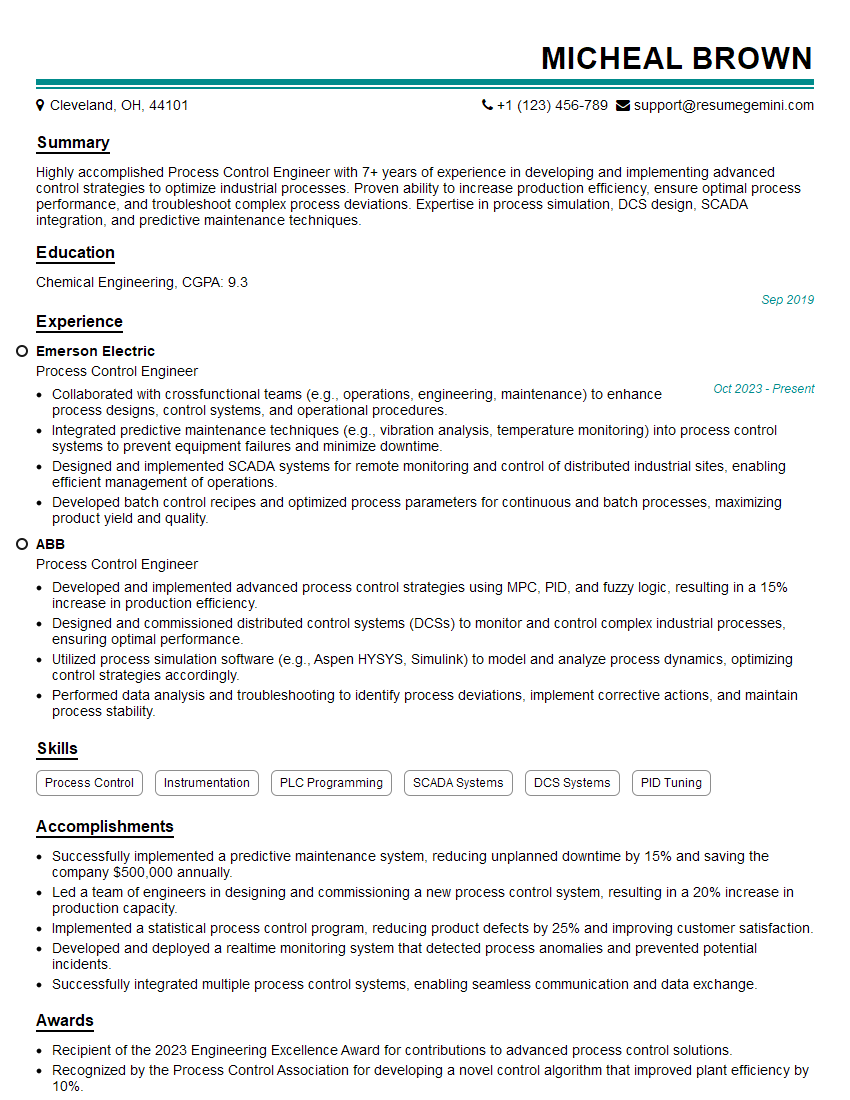
Process Control Engineer Resume Sample
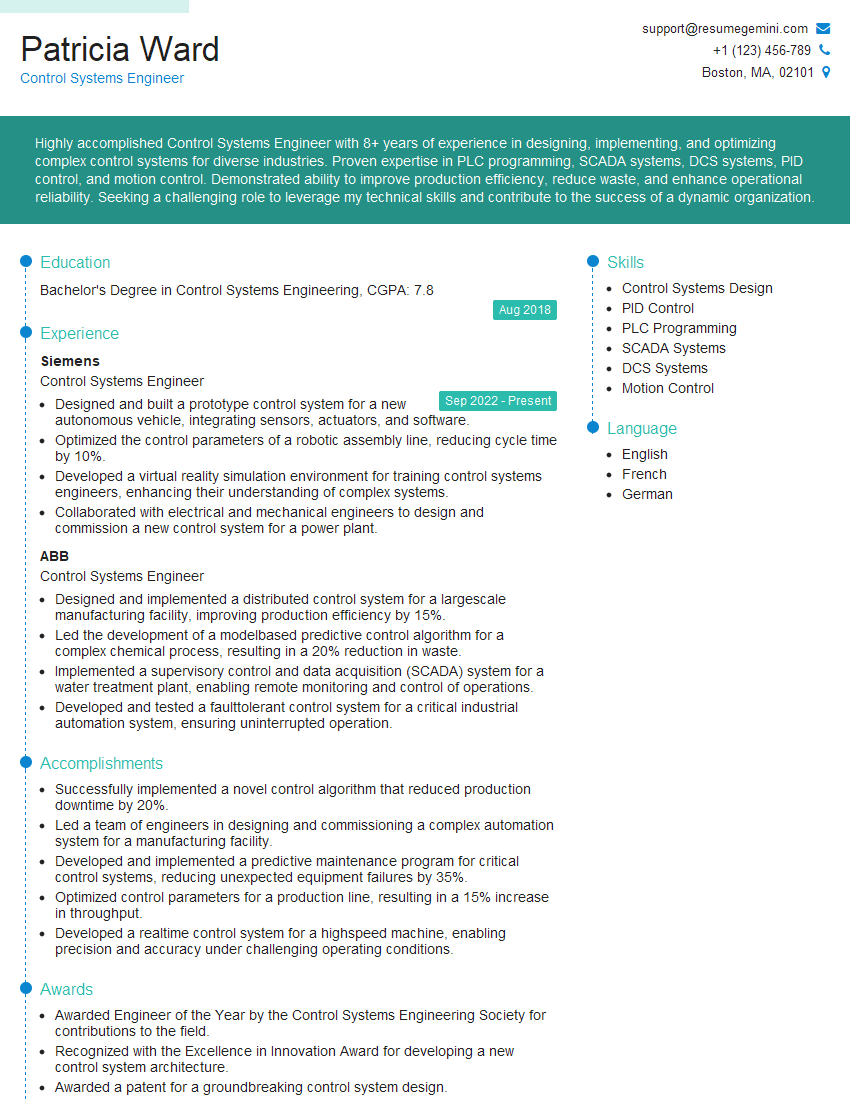
Control Systems Engineer Resume Sample
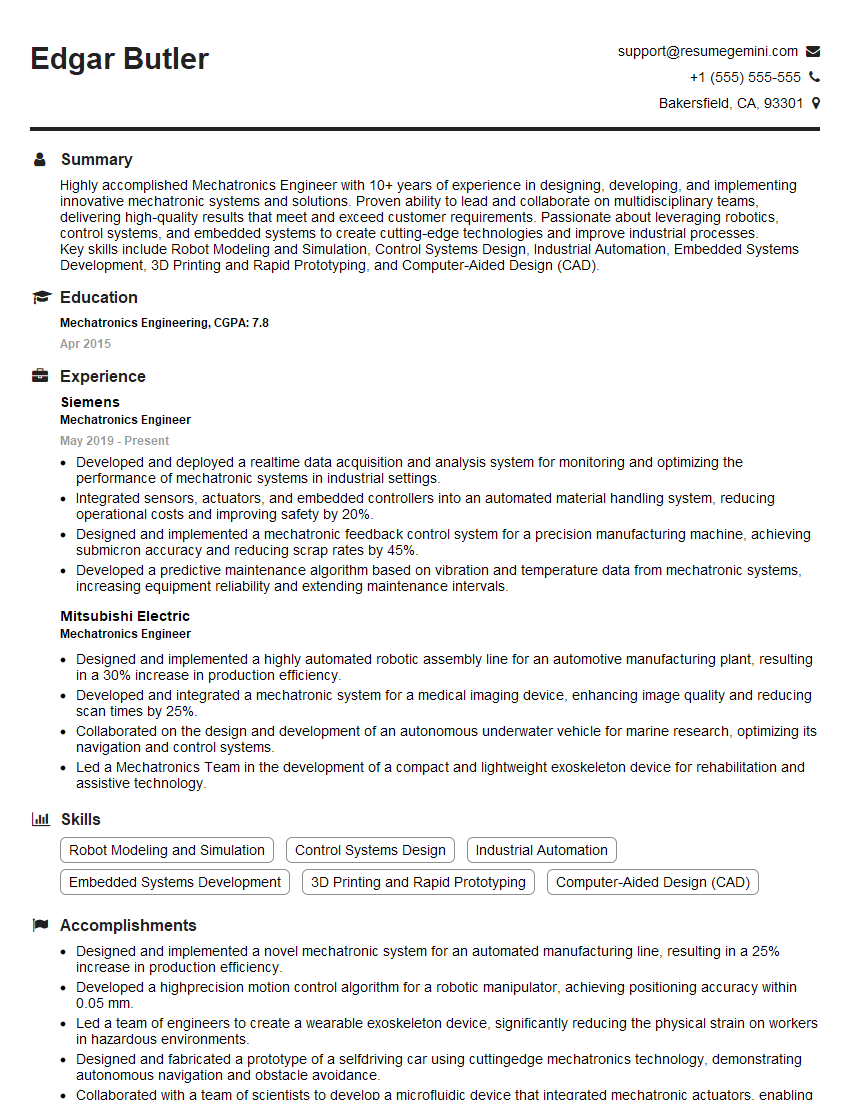
Mechatronics Engineer Resume Sample

Robotics Engineer Resume Sample
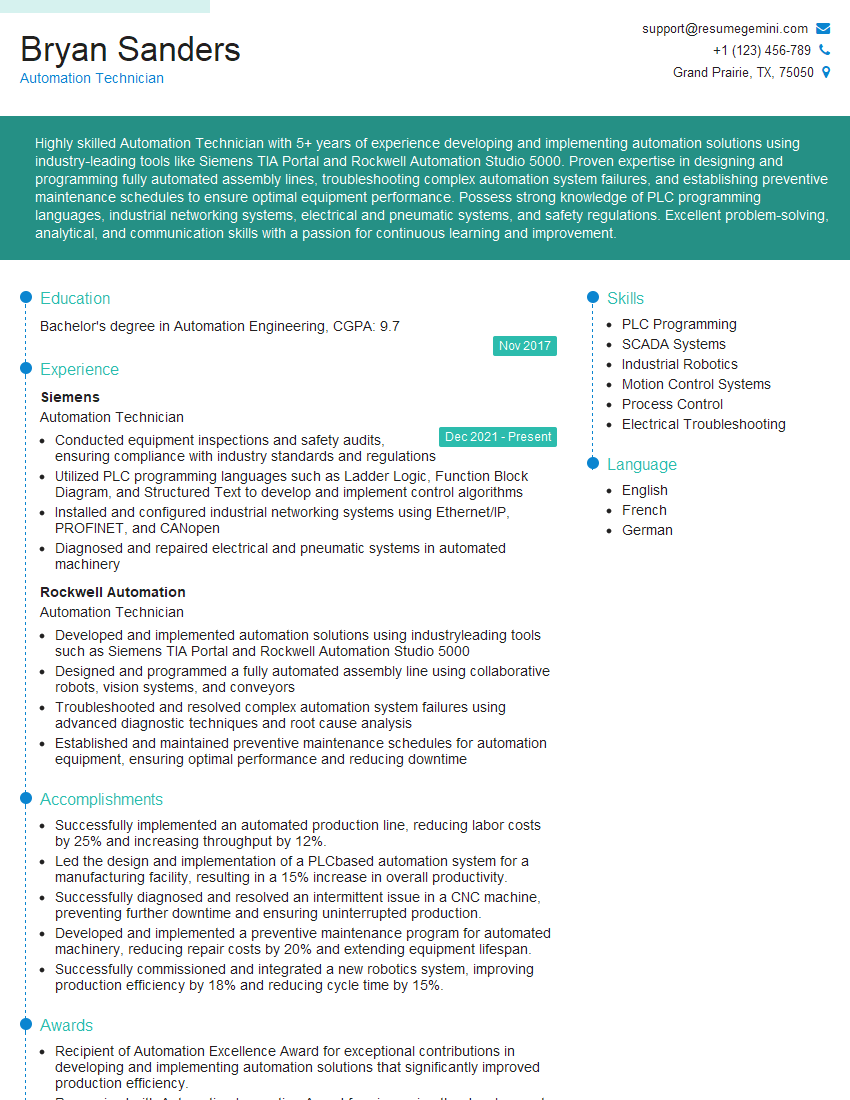
Automation Technician Resume Sample
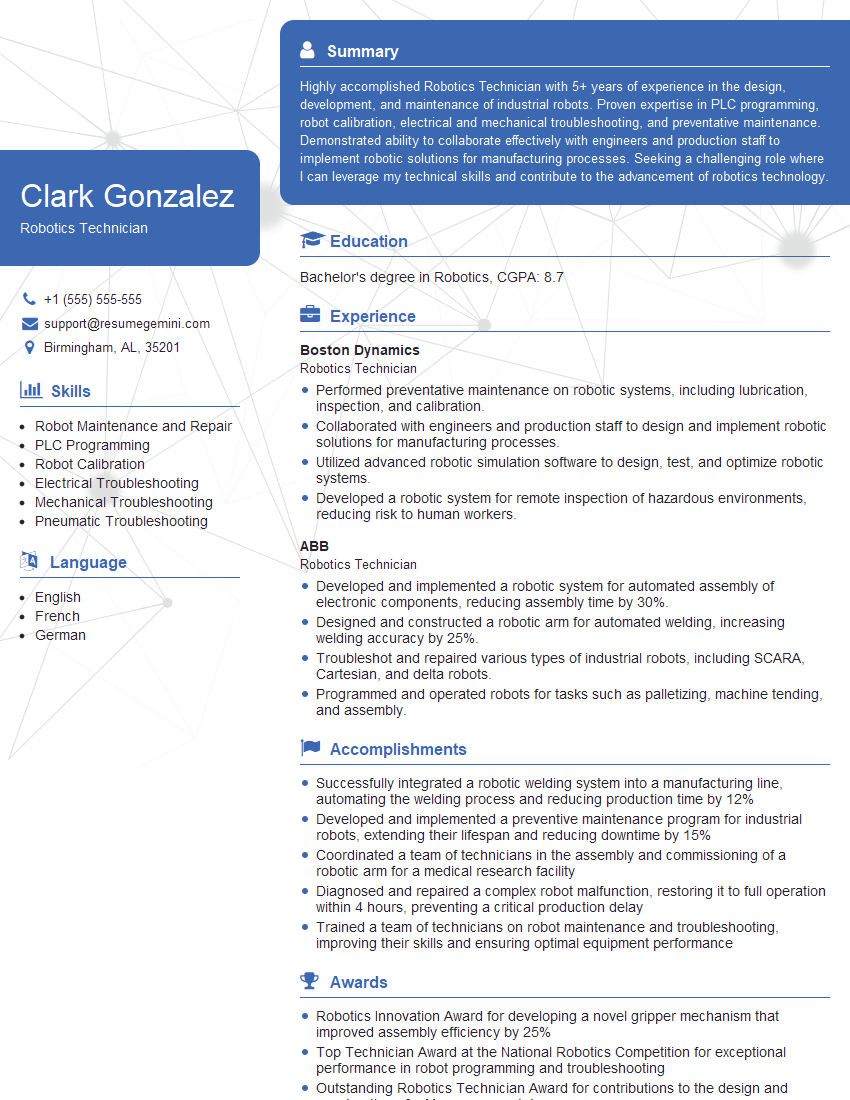
Robotics Technician Resume Sample
Explore more articles
Users Rating of Our Blogs
Share Your Experience
We value your feedback! Please rate our content and share your thoughts (optional).
What Readers Say About Our Blog
Very informative content, great job.
good