Preparation is the key to success in any interview. In this post, we’ll explore crucial Multi-Platform Campaign Execution interview questions and equip you with strategies to craft impactful answers. Whether you’re a beginner or a pro, these tips will elevate your preparation.
Questions Asked in Multi-Platform Campaign Execution Interview
Q 1. Describe your experience managing campaigns across multiple platforms (e.g., social media, email, paid search).
Managing multi-platform campaigns involves orchestrating marketing efforts across various channels like social media (Facebook, Instagram, Twitter, LinkedIn), email marketing, paid search (Google Ads, Bing Ads), and potentially others such as display advertising or podcast sponsorships. My experience centers around developing integrated strategies, ensuring a cohesive brand message across all platforms while tailoring the content and approach to each channel’s unique audience and characteristics. For example, I’ve led campaigns where we used LinkedIn for B2B lead generation, Facebook and Instagram for brand awareness and audience engagement, and email marketing for nurturing leads and driving conversions. This requires meticulous planning, careful coordination of teams (if applicable), and a robust tracking system to monitor performance across all channels.
In a recent campaign for a SaaS company, I oversaw the development of tailored content for each platform. LinkedIn featured white papers and professional networking, while Instagram used visually appealing graphics and short videos to build brand recognition. Email marketing served as a crucial channel for lead nurturing, sending targeted emails based on engagement data from other platforms. This integrated approach maximized reach and impact, delivering significantly better results than a siloed approach.
Q 2. How do you measure the success of a multi-platform campaign?
Measuring the success of a multi-platform campaign requires a holistic approach, going beyond individual channel metrics. We need to define key performance indicators (KPIs) aligned with overall campaign goals. This includes analyzing website traffic from different channels, conversion rates (e.g., purchases, sign-ups), customer acquisition cost (CAC), brand awareness metrics (e.g., social media engagement, reach), and return on ad spend (ROAS). We often use dashboards to visualize this data across platforms, identifying which channels are performing well and which need optimization. Attributing conversions across platforms can be complex, so we rely on multi-touch attribution models to understand the contribution of each channel to the overall success. For example, a simple last-click attribution model might only credit the last channel a user interacted with before converting, while a multi-touch model would more accurately distribute credit among all channels involved in the user journey.
Q 3. What key performance indicators (KPIs) do you prioritize when executing a multi-platform campaign?
The KPIs prioritized depend on the campaign’s specific objectives. However, some consistently important KPIs include:
- Website Traffic and Engagement: Website visits, bounce rate, time on site, pages per visit, indicating overall campaign reach and audience interest.
- Conversion Rate: Percentage of visitors completing a desired action (e.g., purchase, signup). This reflects the effectiveness of the campaign in driving desired outcomes.
- Customer Acquisition Cost (CAC): The cost of acquiring a new customer, a crucial metric for budget allocation and ROI analysis.
- Return on Ad Spend (ROAS): The revenue generated for every dollar spent on advertising. Essential for evaluating the efficiency of paid campaigns.
- Brand Awareness Metrics: Social media engagement (likes, shares, comments), reach, brand mentions, sentiment analysis, demonstrating how effectively the campaign builds brand presence and positive perception.
By tracking these KPIs, we can monitor campaign performance, make data-driven decisions, and optimize strategies for better results.
Q 4. Explain your process for setting campaign goals and objectives.
Setting campaign goals and objectives starts with a clear understanding of business needs. We use the SMART framework – Specific, Measurable, Achievable, Relevant, and Time-bound. For instance, instead of a vague goal like “increase brand awareness,” we might set a SMART goal such as “increase brand awareness by 25% among the target demographic (18-35 year old females) in the next quarter, as measured by social media engagement and website visits.” This structured approach helps ensure everyone understands the campaign’s direction and allows us to accurately track progress. We often employ a collaborative process involving stakeholders across different departments to ensure alignment with overall business strategy and realistic expectations. This collaborative process typically includes brainstorming sessions, data analysis, and the development of a detailed campaign plan with specific targets for each channel.
Q 5. How do you allocate budget across different marketing channels in a multi-platform campaign?
Budget allocation across different channels requires a data-driven approach. We analyze historical performance data, conduct competitive analysis, and consider the unique characteristics of each platform. For example, channels with a proven higher conversion rate might receive a larger share of the budget. We also consider factors like the cost per click (CPC) or cost per thousand impressions (CPM) on different platforms. A/B testing helps determine the optimal budget allocation for each channel. For a new campaign, we might start with a more evenly distributed budget and then adjust based on early performance data. We often use a phased approach, initially allocating a smaller budget to test performance before scaling up successful strategies. This agile approach allows us to adapt quickly to changing market conditions and optimize the overall ROI of the campaign.
Q 6. Describe a time you had to adapt a multi-platform campaign strategy due to unforeseen circumstances.
In one campaign for a retail client, we launched a multi-platform campaign promoting a new product line. A major competitor unexpectedly launched a very similar product line with a significant marketing push shortly after our campaign began. This drastically impacted our initial projections. To adapt, we quickly analyzed the competitor’s strategy and re-evaluated our KPIs. We shifted our focus to emphasize unique selling propositions (USPs) of our product line through targeted social media advertising and email marketing. We also increased the budget for performance-based ads to improve visibility and competitiveness. We also developed a promotional offer— a limited-time discount— to incentivize purchases. This agile adaptation prevented a significant drop in sales, mitigating the impact of the competitor’s launch.
Q 7. How do you ensure brand consistency across different marketing platforms?
Maintaining brand consistency across multiple platforms is paramount. We achieve this by establishing clear brand guidelines that specify the brand’s voice, tone, visual style (logo, colors, fonts), and messaging. These guidelines are shared with all team members involved in content creation across different channels. We use a centralized brand asset library to ensure everyone uses the correct logos, images, and other branding elements. We carefully review all content before it’s published to ensure it aligns with the brand guidelines. We also employ style guides for writing and ensure consistent messaging across platforms. Finally, using marketing automation tools can help automate and streamline content creation and distribution, reducing the risk of inconsistencies. This rigorous approach builds a strong and recognizable brand identity regardless of the platform.
Q 8. What tools and technologies do you use for multi-platform campaign management?
Multi-platform campaign management requires a robust technology stack. My toolkit typically includes a combination of tools depending on the specific campaign goals and client needs. For example, I frequently use marketing automation platforms like Marketo or HubSpot for campaign orchestration, email marketing, and lead nurturing. These platforms allow me to segment audiences, personalize messaging, and automate workflows across multiple channels. For social media advertising, I rely on native ad platforms like Facebook Ads Manager, Twitter Ads, and LinkedIn Campaign Manager, leveraging their robust targeting and analytics capabilities. For programmatic advertising, I utilize Demand-Side Platforms (DSPs) such as The Trade Desk or DV360 to manage display and video advertising across various websites and apps. Finally, I often integrate analytics platforms like Google Analytics and Adobe Analytics to track campaign performance across all touchpoints. This integrated approach provides a comprehensive view of campaign effectiveness.
- Marketing Automation Platforms: Marketo, HubSpot, Pardot
- Social Media Ad Platforms: Facebook Ads Manager, Twitter Ads, LinkedIn Campaign Manager
- Programmatic Advertising Platforms: The Trade Desk, DV360
- Analytics Platforms: Google Analytics, Adobe Analytics
Q 9. How do you track and analyze campaign performance data?
Tracking and analyzing campaign performance is crucial for optimization. My approach involves setting up clear Key Performance Indicators (KPIs) aligned with campaign objectives before launching any campaign. These KPIs are then tracked using the built-in analytics features of the various platforms mentioned earlier. For instance, I might track website traffic, conversion rates, cost per acquisition (CPA), return on ad spend (ROAS), engagement metrics (likes, shares, comments), and brand mentions on social media. I use custom dashboards in Google Data Studio or similar tools to visualize this data and identify trends. Furthermore, I perform regular data analysis to understand which channels and messaging are performing best, and identify areas for improvement. For example, if social media engagement is low, but website traffic from paid search is high, I might adjust the social media strategy, potentially testing different content formats or targeting parameters.
Example KPI dashboard might include: Website Conversions, Cost Per Acquisition (CPA), Social Media Engagement Rate, Return on Ad Spend (ROAS)Q 10. What strategies do you use to optimize campaign performance?
Optimizing campaign performance is an iterative process. It begins with a thorough understanding of the data and the identification of bottlenecks or areas for improvement. My strategies typically involve A/B testing (discussed in the next question), audience segmentation refinement, creative optimization, and channel allocation adjustments. For instance, if we discover that a specific audience segment isn’t converting well, we might refine our targeting parameters or adjust the messaging to better resonate with that audience. Similarly, if a particular channel isn’t delivering a good ROAS, we might reallocate budget to better-performing channels. Continuously monitoring and adjusting the campaign based on real-time data ensures the highest possible performance and return on investment.
- A/B Testing: Testing different variations of creative assets and messaging
- Audience Segmentation: Refining targeting parameters for better reach
- Creative Optimization: Improving ad copy and visuals
- Channel Allocation: Shifting budget towards high-performing channels
Q 11. Explain your experience with A/B testing in a multi-platform campaign.
A/B testing is indispensable in multi-platform campaigns. It allows us to test different hypotheses and identify what resonates best with the target audience. For example, in a recent campaign, we were testing two different ad creatives for a social media campaign. One creative used a primarily image-based approach, while the other used a video format. We split the target audience into two groups and ran each creative to a segment. By analyzing the results, we found that the video creative had a significantly higher click-through rate and conversion rate compared to the image-based creative. This informed our subsequent creative strategy, allowing us to focus our efforts and budget on the more effective approach. This process is usually done across different channels such as social media, email marketing, and even landing pages, ensuring a holistic optimization strategy.
The process involves defining a clear hypothesis, creating variations of the elements being tested (e.g., headlines, images, calls to action), splitting the audience into control and experimental groups, running the test for a statistically significant period, and carefully analyzing the results. I frequently use statistical significance calculators to ensure the results are meaningful and not just due to random chance. This systematic approach helps to validate our strategies and improve campaign effectiveness across all platforms.
Q 12. How do you handle campaign reporting and stakeholder communication?
Effective reporting and communication are critical for success. I generate regular campaign performance reports, typically weekly or bi-weekly, using data visualization tools like Google Data Studio or Tableau. These reports highlight key KPIs, progress towards goals, and any notable trends or insights. I tailor these reports to the specific needs of different stakeholders. For instance, a C-suite executive might only need a high-level summary of key metrics, while a marketing team member might require a more detailed breakdown of specific channel performance. I also use regular meetings and presentations to communicate findings and discuss optimization strategies. Transparency and proactive communication are key to building trust and ensuring that everyone is aligned on campaign goals and performance.
For instance, I might present a dashboard showing overall campaign performance, with separate sections for each channel, including social media, email, and paid search. This allows stakeholders to quickly grasp the overall success of the campaign while diving deeper into the specific performance of each channel if needed.
Q 13. What’s your experience with marketing automation tools?
My experience with marketing automation tools is extensive. I’ve worked extensively with platforms like Marketo, HubSpot, and Pardot to automate various marketing processes, including lead nurturing, email marketing, and campaign management. These tools allow me to segment audiences based on various criteria (demographics, behavior, engagement), personalize messaging at scale, and trigger automated workflows based on specific events or user actions. For example, I might set up a workflow to automatically send a welcome email to new subscribers, followed by a series of targeted emails based on their engagement and behavior on the website. This personalized approach enhances customer engagement and boosts conversion rates. Furthermore, marketing automation streamlines campaign execution, freeing up time to focus on strategic initiatives and analysis. I regularly leverage the reporting and analytics capabilities of these platforms to monitor campaign performance and identify areas for improvement.
Q 14. How do you integrate data from different marketing platforms for a holistic view of campaign performance?
Integrating data from different marketing platforms is essential for a holistic view of campaign performance. I achieve this by utilizing data integration tools and APIs. For example, I often use Google Analytics to track website traffic and conversions across multiple channels, then integrate this data with social media ad platform data and marketing automation platform data. This allows me to understand the complete customer journey and identify the most effective touchpoints. I also utilize custom dashboards and reporting tools (like Google Data Studio) to visualize and analyze this integrated data, providing a unified picture of campaign performance. This integrated view enables data-driven decisions, leading to more effective campaign optimization and better allocation of resources.
For instance, I might use a data integration tool to pull data from Google Ads, Facebook Ads, and HubSpot into a single data warehouse. This allows me to track the entire customer journey, from initial ad impression to final conversion, across all platforms. By analyzing this data, I can identify which channels are most effective in driving conversions, and optimize the campaign accordingly.
Q 15. Describe your experience working with different marketing teams (e.g., creative, content, social media).
Throughout my career, I’ve collaborated extensively with diverse marketing teams, including creative, content, social media, and analytics. Effective multi-platform campaigns require seamless integration across these departments. For example, in a recent campaign for a sustainable fashion brand, I worked closely with the creative team to develop visually compelling assets aligned with the brand’s eco-conscious messaging. The content team then crafted blog posts, articles, and infographics to support the campaign’s narrative. Simultaneously, the social media team developed engaging content for various platforms, tailored to each audience’s preferences. This collaborative approach ensured a unified brand voice and consistent messaging across all channels.
My role involved facilitating communication, resolving conflicts, and ensuring everyone understood their responsibilities and deadlines. Regular team meetings, shared project management tools, and clear communication channels were crucial to maintain alignment and efficiency.
Career Expert Tips:
- Ace those interviews! Prepare effectively by reviewing the Top 50 Most Common Interview Questions on ResumeGemini.
- Navigate your job search with confidence! Explore a wide range of Career Tips on ResumeGemini. Learn about common challenges and recommendations to overcome them.
- Craft the perfect resume! Master the Art of Resume Writing with ResumeGemini’s guide. Showcase your unique qualifications and achievements effectively.
- Don’t miss out on holiday savings! Build your dream resume with ResumeGemini’s ATS optimized templates.
Q 16. How do you manage the timelines and deadlines for a multi-platform campaign?
Managing timelines and deadlines for multi-platform campaigns requires a structured approach. I typically begin by creating a detailed project plan with clearly defined milestones and deliverables. This plan is developed collaboratively with all relevant teams and incorporates buffer time to account for unexpected delays. Tools like Gantt charts are indispensable for visualizing the project timeline and identifying potential bottlenecks.
We use agile methodologies, breaking down the campaign into smaller, manageable sprints. This allows for flexibility and adaptation as needed. Regular progress meetings help us track performance against the timeline and make necessary adjustments. Communication is key; I utilize project management software to keep all team members informed of progress, roadblocks, and any necessary changes to the schedule. For instance, in a recent campaign, we used a Kanban board to track the progress of each task, allowing for easy visualization and prioritization.
Q 17. What is your approach to identifying target audiences for multi-platform campaigns?
Identifying target audiences is paramount for a successful multi-platform campaign. My approach is multifaceted and data-driven. We begin by conducting thorough market research using various sources, including existing customer data, market reports, and competitor analysis. We then segment the target audience based on demographics, psychographics, behavior, and online activity.
For example, for a campaign promoting a new fitness app, we segmented the target audience into age groups (18-35, 35-50, 50+), fitness levels (beginner, intermediate, advanced), and interests (yoga, weightlifting, running). This allowed us to tailor the messaging and content for each segment on different platforms. We used tools like Google Analytics and social media analytics to gain a deeper understanding of audience behavior, preferences, and engagement levels.
Q 18. How do you measure the ROI of a multi-platform campaign?
Measuring the ROI of a multi-platform campaign involves a combination of quantitative and qualitative metrics. We start by defining key performance indicators (KPIs) aligned with the campaign objectives. These KPIs may include website traffic, lead generation, sales conversion rates, brand awareness (measured through social listening and surveys), and customer lifetime value.
We track these metrics using analytics platforms like Google Analytics, social media analytics tools, and CRM systems. Attribution modeling helps us understand which channels contribute most effectively to conversions. For example, we might use a multi-touch attribution model to assign credit to multiple touchpoints in the customer journey. Finally, we analyze the data to calculate the return on investment and identify areas for improvement in future campaigns.
Q 19. Describe your experience with different campaign types (e.g., brand awareness, lead generation, sales).
My experience encompasses a broad range of campaign types, including brand awareness, lead generation, and sales-focused campaigns. Each type requires a distinct strategy and set of KPIs.
For brand awareness campaigns, the focus is on increasing visibility and brand recall. We utilize strategies like influencer marketing, public relations, and engaging social media content. For lead generation campaigns, the goal is to capture qualified leads. We use tactics such as targeted advertising, content marketing (e.g., ebooks, webinars), and landing pages. Sales-focused campaigns aim to drive direct sales. These might involve promotions, discounts, email marketing, and retargeting ads. I adapt my approach based on the specific objectives and resources available for each campaign type.
Q 20. What is your experience with campaign budgeting and forecasting?
Campaign budgeting and forecasting require careful planning and financial acumen. I start by defining the campaign objectives and KPIs, which directly inform the budget allocation. I then break down the budget into various categories, such as media buying, creative development, content production, technology, and team resources.
I use historical data, market research, and industry benchmarks to develop realistic budget projections. Throughout the campaign, I closely monitor spending and make necessary adjustments to ensure we stay on track. I regularly provide budget reports to stakeholders, highlighting performance against projections and any potential risks or opportunities.
Q 21. How do you deal with challenges related to data privacy and compliance in multi-platform campaigns?
Data privacy and compliance are paramount in multi-platform campaigns. I ensure that all campaign activities adhere to relevant regulations like GDPR, CCPA, and other applicable laws. This involves obtaining explicit consent for data collection, implementing robust data security measures, and providing users with transparency about how their data is used.
We use privacy-compliant tools and technologies for data collection and analysis. We work closely with legal counsel to ensure our practices are compliant and we regularly review our policies and procedures to adapt to evolving regulations. For instance, we utilize anonymization techniques and employ data minimization principles to reduce the risk of data breaches and ensure user privacy.
Q 22. Explain your understanding of different attribution models for multi-platform campaigns.
Attribution models determine how credit for conversions is allocated across different marketing touchpoints within a multi-platform campaign. Choosing the right model is crucial for understanding which channels are most effective. Different models offer varying levels of complexity and accuracy.
- Last-Click Attribution: This simple model assigns 100% of the credit to the last interaction a customer had before converting. While easy to understand, it overlooks the influence of earlier touchpoints.
- First-Click Attribution: This model attributes all credit to the very first interaction a customer had with your brand. It can be useful for understanding initial awareness but ignores subsequent engagements.
- Linear Attribution: This model distributes credit equally across all touchpoints involved in the conversion path. It provides a balanced view but might not accurately reflect the relative importance of different interactions.
- Time Decay Attribution: This model gives more weight to interactions that occurred closer to the conversion, acknowledging the recency effect. It’s a good compromise between simplicity and accuracy.
- Position-Based Attribution: This model assigns a higher percentage of credit to both the first and last interactions, recognizing their importance in the customer journey.
- Algorithmic Attribution (e.g., Data-Driven Attribution): This sophisticated model uses machine learning to analyze vast amounts of data and assign credit based on complex patterns and relationships between touchpoints. It provides the most accurate picture but requires advanced analytics capabilities.
For example, imagine a customer who first saw an ad on Instagram, then clicked a link on a Facebook post, and finally made a purchase on your website. A last-click model would only credit the website, while a linear model would split the credit equally among all three platforms. A data-driven model might weigh the Instagram ad higher if it consistently shows a strong correlation with conversions.
Q 23. How do you ensure a seamless customer experience across multiple touchpoints?
Ensuring a seamless customer experience across multiple platforms requires a customer-centric approach, focusing on consistency and personalization. This involves careful planning and execution across all touchpoints.
- Consistent Branding: Maintaining a consistent brand voice, visual identity, and messaging across all platforms is paramount. This builds brand recognition and reinforces trust.
- Personalized Messaging: Leverage data to deliver tailored messages and offers based on customer preferences and behavior. This enhances relevance and engagement.
- Omnichannel Integration: Integrate different platforms to create a unified experience. For example, allow customers to seamlessly switch between your website, mobile app, and social media channels without losing context.
- Unified Customer Profile: Create a single view of the customer across all platforms, allowing for personalized interactions and relevant recommendations.
- Seamless Data Flow: Ensure smooth data exchange between different platforms and systems, enabling accurate tracking and analysis of customer journeys.
For instance, if a customer starts a purchase on your mobile app, they should be able to seamlessly continue and complete it on your website using the same account and information. This seamless transition enhances customer satisfaction and reduces friction.
Q 24. What are your preferred methods for monitoring campaign performance in real-time?
Real-time monitoring of campaign performance is crucial for making timely adjustments and maximizing ROI. I rely on a combination of methods:
- Real-time dashboards: Marketing analytics platforms (like Google Analytics, Adobe Analytics, etc.) provide real-time dashboards that track key metrics such as website traffic, conversions, and engagement across different channels.
- Automated alerts: Setting up automated alerts for significant deviations from expected performance (e.g., sudden drop in conversion rates) allows for immediate intervention.
- A/B testing platforms: These tools allow for continuous testing of different campaign elements (e.g., ad creatives, landing pages) in real-time, enabling rapid optimization based on performance data.
- Social media analytics: Monitoring social media platforms using their built-in analytics tools provides real-time insights into audience engagement, sentiment, and reach.
For example, if a real-time dashboard shows a significant drop in conversion rates from a specific platform, I can immediately investigate the cause – perhaps a technical issue on the landing page or a change in ad copy that is negatively impacting conversions.
Q 25. Describe your experience working with different marketing technologies (e.g., CRM, analytics platforms).
My experience encompasses a broad range of marketing technologies, including CRMs, analytics platforms, and marketing automation tools. This expertise is essential for orchestrating effective multi-platform campaigns.
- CRM (Customer Relationship Management): I’m proficient in using CRMs (Salesforce, HubSpot, etc.) to manage customer data, personalize communication, and track customer interactions across different channels. This facilitates a holistic understanding of the customer journey.
- Analytics Platforms: I have extensive experience with leading analytics platforms (Google Analytics, Adobe Analytics, etc.) for measuring campaign performance, analyzing user behavior, and identifying areas for improvement. I’m adept at extracting meaningful insights from large datasets.
- Marketing Automation Tools: I’m skilled in using marketing automation platforms (Marketo, Pardot, etc.) to automate repetitive tasks, personalize email campaigns, and improve campaign efficiency. This helps in streamlining workflows and maximizing reach.
- Data Visualization Tools: I leverage tools like Tableau and Power BI to create interactive dashboards and reports that effectively communicate campaign performance and key insights to stakeholders.
In a recent campaign, I used Salesforce to segment our audience based on past purchase behavior, then used Marketo to automate personalized email sequences targeting each segment. Google Analytics provided real-time performance data, which informed ongoing optimizations.
Q 26. How do you leverage data analytics to inform your multi-platform campaign strategy?
Data analytics is fundamental to my approach to multi-platform campaigns. It allows for data-driven decision-making, leading to more effective strategies and improved ROI.
- Audience Segmentation: I use data to segment audiences based on demographics, behavior, and preferences. This allows for targeted messaging and personalized experiences, improving campaign effectiveness.
- Channel Performance Analysis: I analyze data to understand the performance of different marketing channels, allowing me to optimize resource allocation and maximize ROI. Underperforming channels can be identified and improved or even dropped.
- Conversion Path Optimization: I analyze conversion paths to identify bottlenecks and areas for improvement. This involves reviewing customer journeys across various touchpoints and making adjustments to enhance conversion rates.
- Attribution Modeling: I employ appropriate attribution models to accurately assess the contribution of each channel to conversions, guiding strategic resource allocation.
- Predictive Modeling: I leverage advanced analytics techniques like predictive modeling to forecast future campaign performance and make proactive adjustments.
For example, analyzing website data revealed that customers who engaged with our blog posts before making a purchase had a significantly higher average order value. This insight led us to invest more in content marketing and promote blog content across different platforms to drive higher-value conversions.
Q 27. Explain your approach to identifying and addressing campaign performance bottlenecks.
Identifying and addressing campaign performance bottlenecks requires a systematic approach that involves data analysis, collaboration, and iterative optimization.
- Data Analysis: I start by thoroughly analyzing campaign data to identify areas where performance is lagging. This involves looking at key metrics such as conversion rates, click-through rates, and engagement rates across different platforms.
- Root Cause Analysis: Once bottlenecks are identified, I conduct a root cause analysis to determine the underlying reasons for the underperformance. This might involve analyzing technical issues, messaging inconsistencies, targeting inefficiencies, or other factors.
- Testing and Iteration: I design and implement A/B tests or other experiments to test different hypotheses and identify solutions. This iterative approach allows for continuous improvement and refinement of the campaign.
- Collaboration and Communication: I work closely with cross-functional teams (e.g., marketing, technology, sales) to ensure everyone is aligned on the solutions and can contribute to the implementation.
- Monitoring and Evaluation: After implementing solutions, I closely monitor the campaign performance to ensure the implemented changes have a positive impact. This involves continuous monitoring and ongoing adjustments.
For instance, a slow website loading speed was identified as a bottleneck affecting conversion rates. After optimizing website performance, the conversion rates improved significantly. This demonstrates the importance of a systematic approach to identifying and addressing bottlenecks.
Q 28. How do you stay updated on the latest trends and best practices in multi-platform campaign execution?
Staying updated on the latest trends and best practices in multi-platform campaign execution is crucial for maintaining a competitive edge. I employ several strategies:
- Industry Publications and Blogs: I regularly read industry publications, blogs, and websites focusing on marketing, advertising, and digital strategy. This keeps me abreast of new technologies, tactics, and best practices.
- Industry Conferences and Webinars: Attending industry conferences and webinars allows me to learn from leading experts, network with peers, and gain insights into emerging trends.
- Professional Development Courses: I participate in professional development courses and workshops to enhance my skills and knowledge in relevant areas.
- Networking with Peers: I actively network with colleagues and industry professionals to share experiences, best practices, and insights.
- Following Key Influencers: Following thought leaders and influencers on social media and other platforms allows me to stay informed about the latest developments in the field.
For example, attending a recent marketing conference provided valuable insights into the use of AI-powered tools for campaign optimization, leading to the adoption of new strategies in my own work.
Key Topics to Learn for Multi-Platform Campaign Execution Interview
- Campaign Strategy & Planning: Understanding the entire campaign lifecycle, from initial brief and target audience definition to setting measurable KPIs and success metrics. Consider how different platforms influence strategy.
- Platform Selection & Optimization: Justifying the choice of specific platforms (e.g., social media, email, search, display) based on campaign goals and target audience behavior. Discuss platform-specific best practices and optimization techniques.
- Content Creation & Adaptation: Developing compelling and consistent messaging across multiple platforms, adapting content formats (video, image, text) to suit each platform’s strengths.
- Budget Allocation & Management: Efficiently allocating budget across different platforms based on performance data and ROI projections. Discuss methods for tracking and reporting on campaign spending.
- Tracking, Measurement & Reporting: Implementing robust tracking mechanisms to monitor key performance indicators (KPIs) across all platforms. Analyzing data to identify areas for improvement and demonstrate campaign effectiveness.
- A/B Testing & Optimization: Utilizing A/B testing methodologies to optimize campaign elements (e.g., ad copy, visuals, targeting) for improved performance. Discuss iterative optimization strategies.
- Data Analysis & Interpretation: Extracting actionable insights from campaign data to inform future strategies. Demonstrate proficiency in analyzing various metrics and drawing meaningful conclusions.
- Collaboration & Communication: Effectively collaborating with cross-functional teams (design, development, marketing) to ensure seamless campaign execution. Discuss strategies for clear and concise communication.
- Legal & Ethical Considerations: Understanding and adhering to relevant advertising guidelines and regulations across different platforms. Discuss privacy and data security concerns.
Next Steps
Mastering multi-platform campaign execution is crucial for career advancement in today’s dynamic marketing landscape. It demonstrates a comprehensive understanding of digital marketing principles and a valuable skillset highly sought after by employers. To increase your job prospects, creating a strong, ATS-friendly resume is essential. ResumeGemini is a trusted resource that can help you build a professional and impactful resume, tailored to highlight your skills in multi-platform campaign execution. Examples of resumes specifically designed for this field are available to guide you.
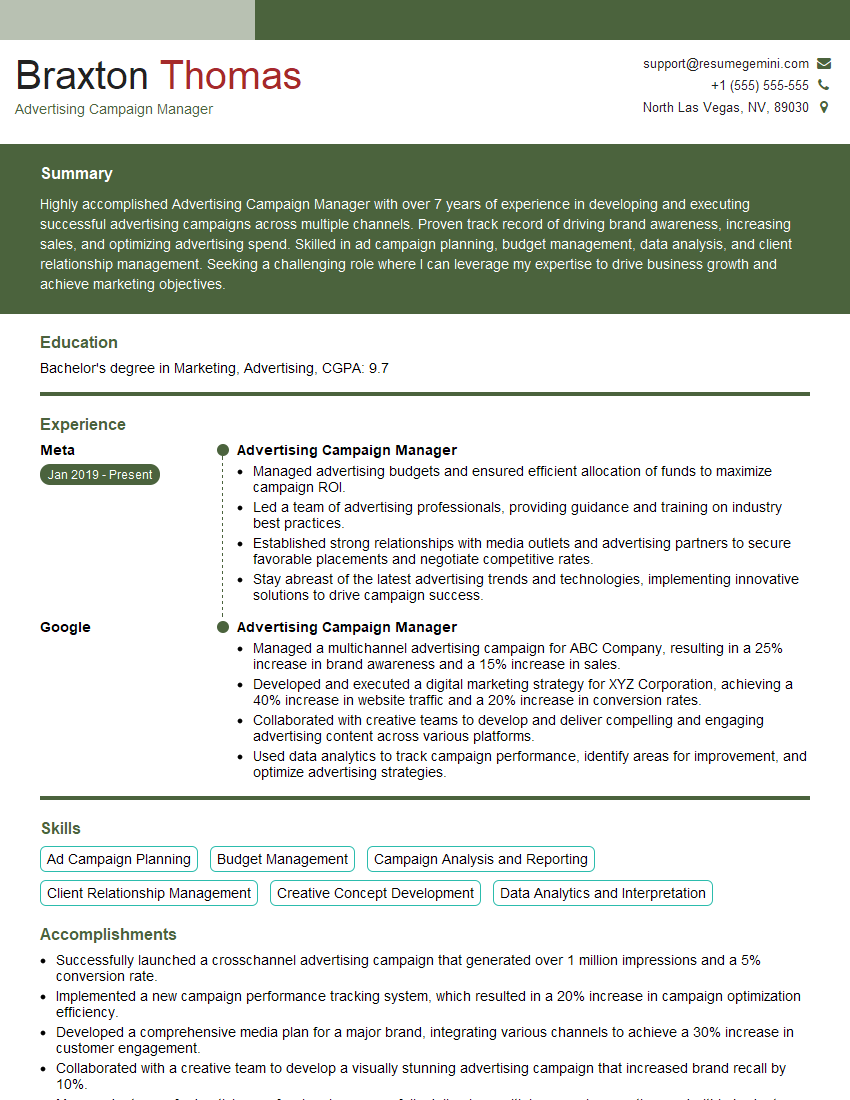
Advertising Campaign Manager Resume Sample
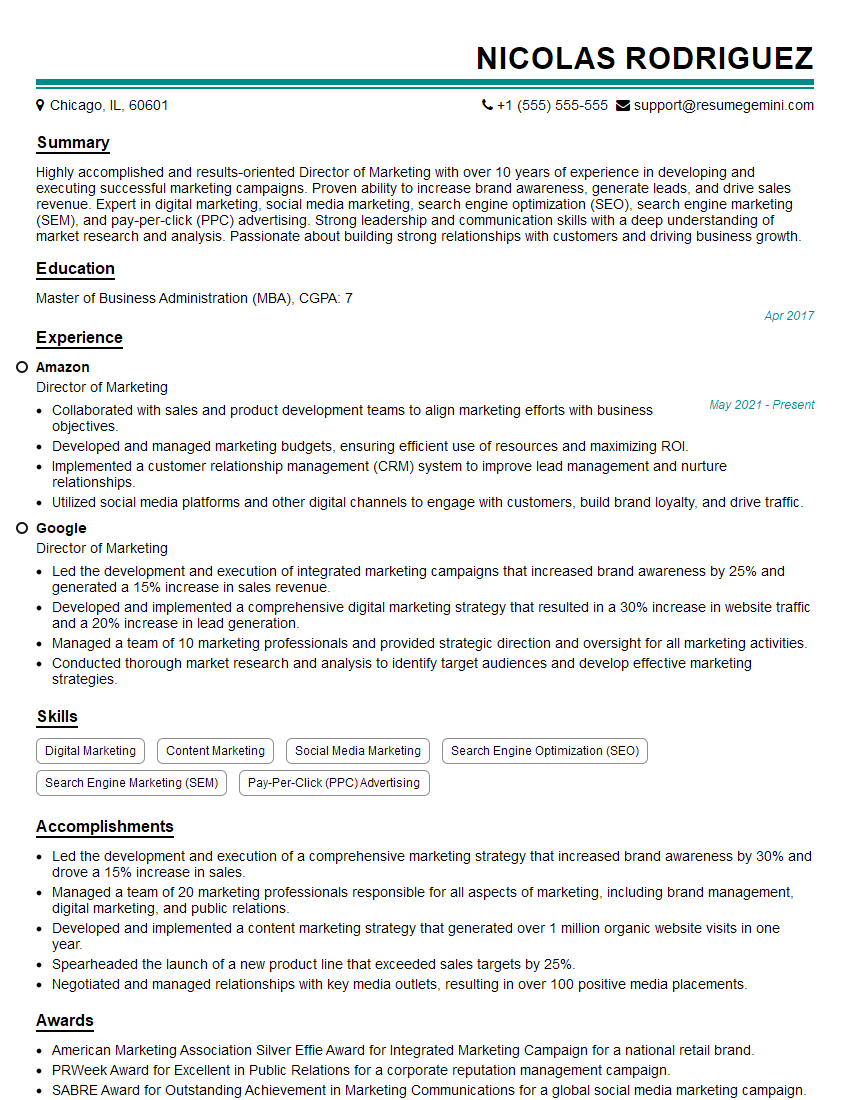
Director of Marketing Resume Sample
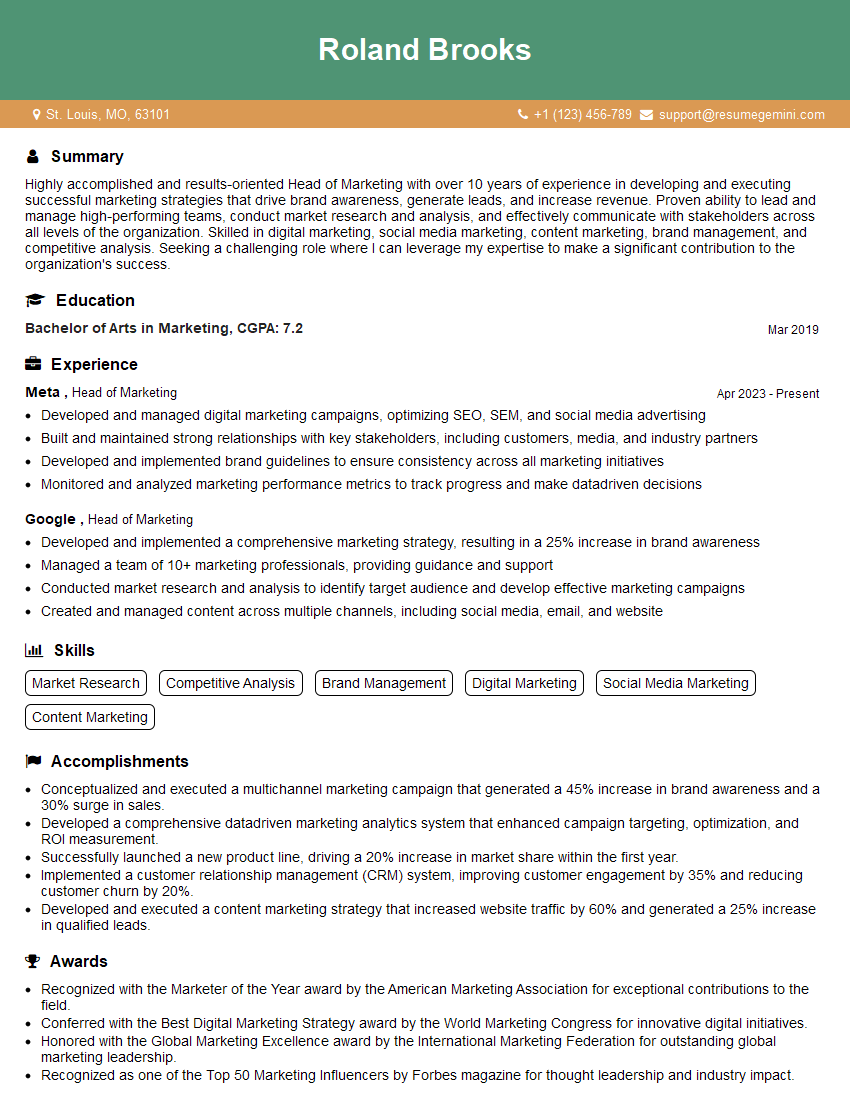
Head of Marketing Resume Sample
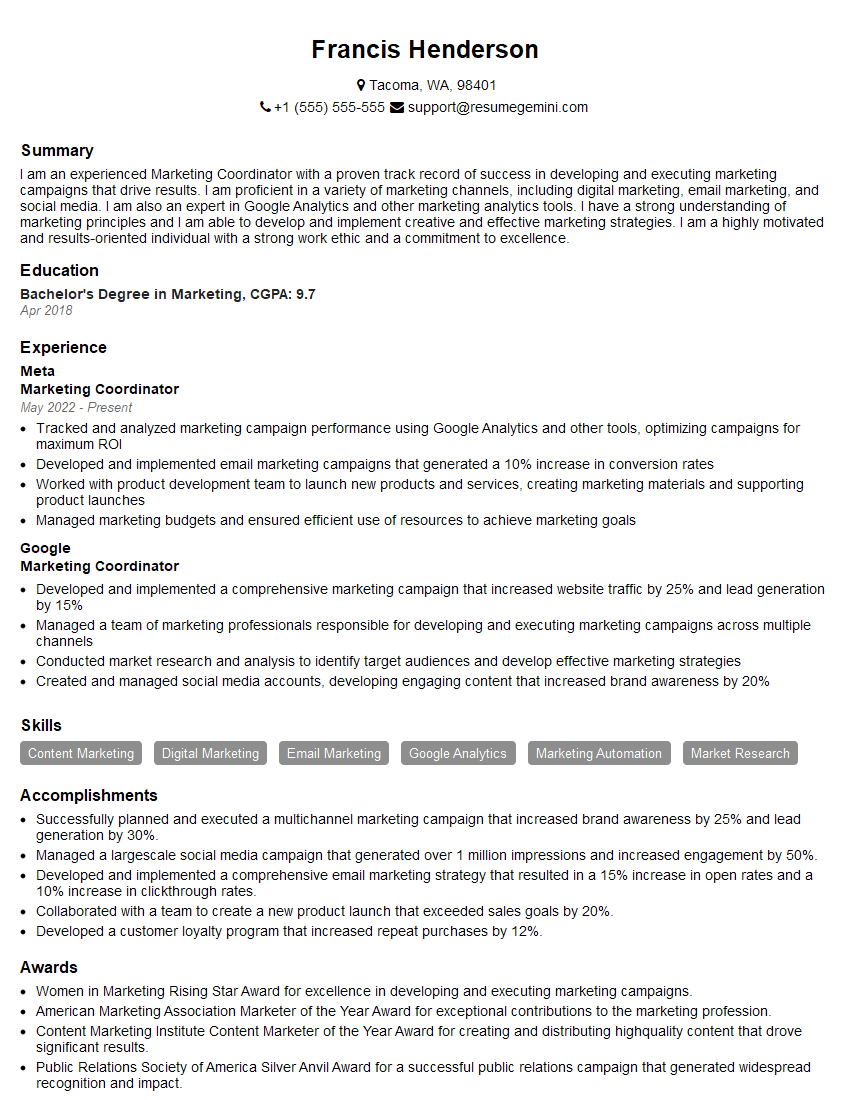
Marketing Coordinator Resume Sample
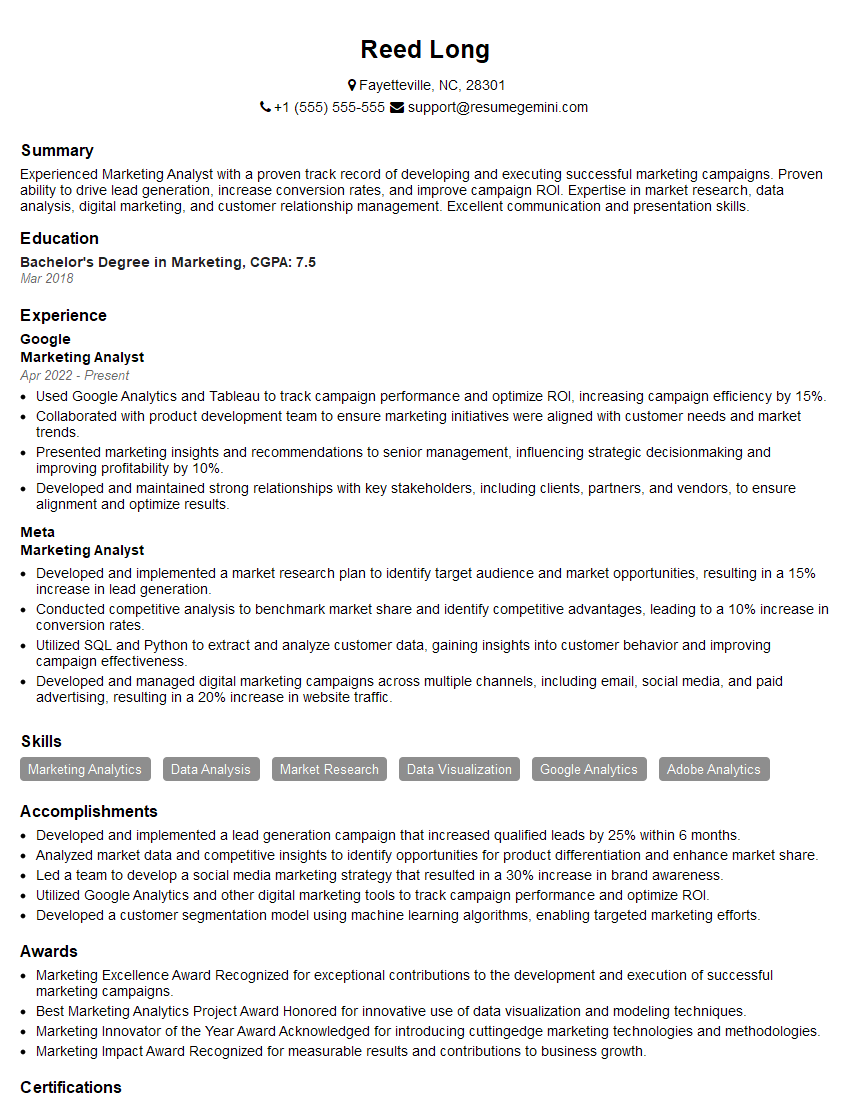
Marketing Analyst Resume Sample
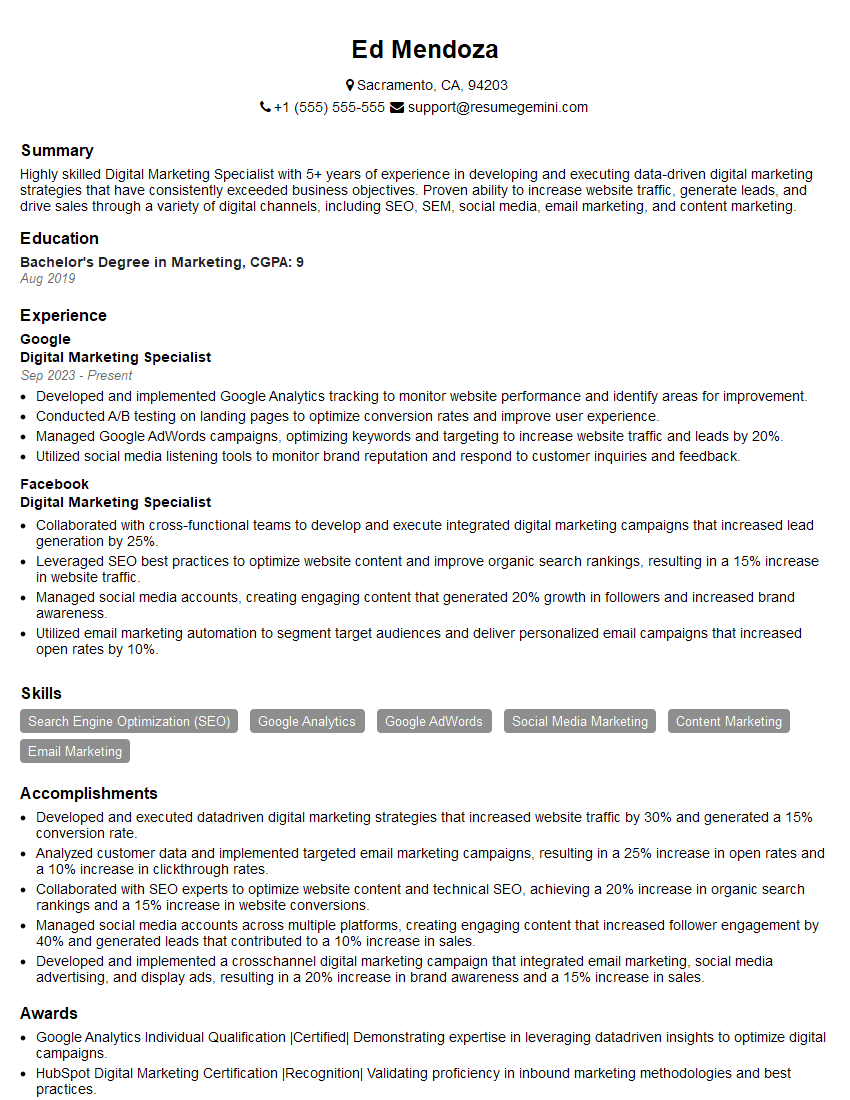
Digital Marketing Specialist Resume Sample
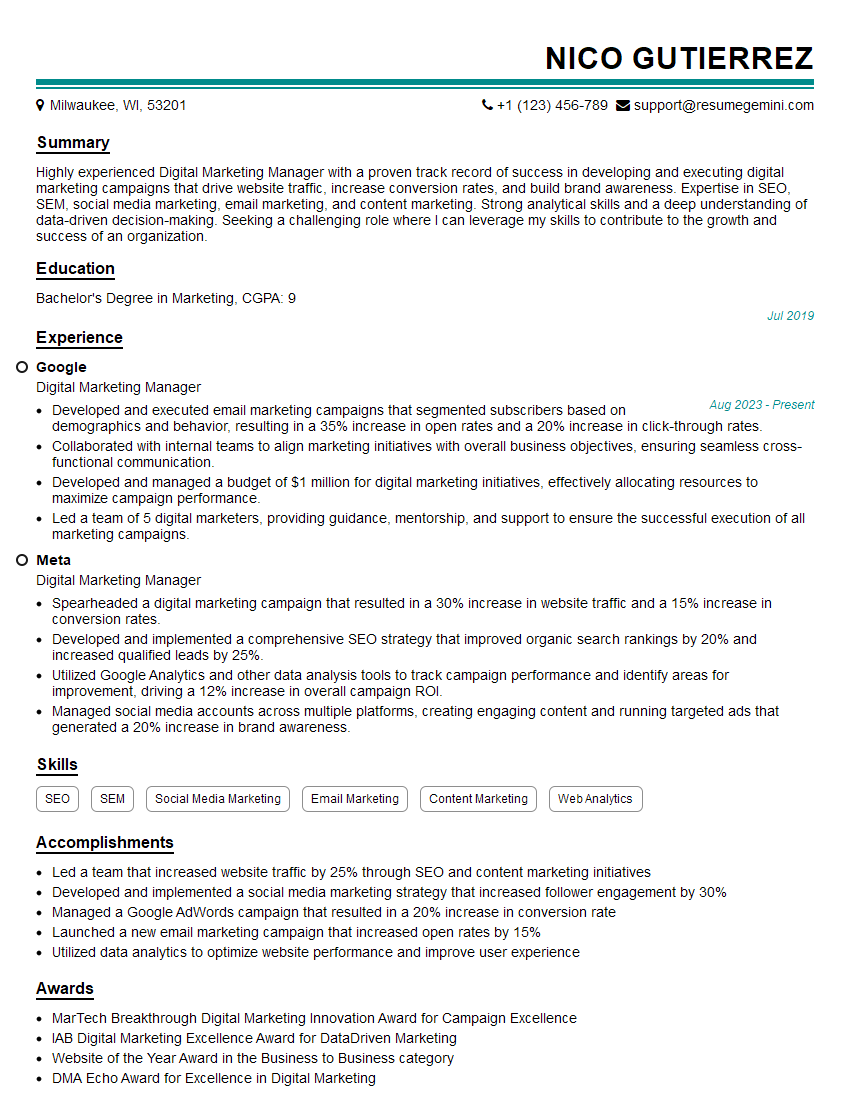
Digital Marketing Manager Resume Sample
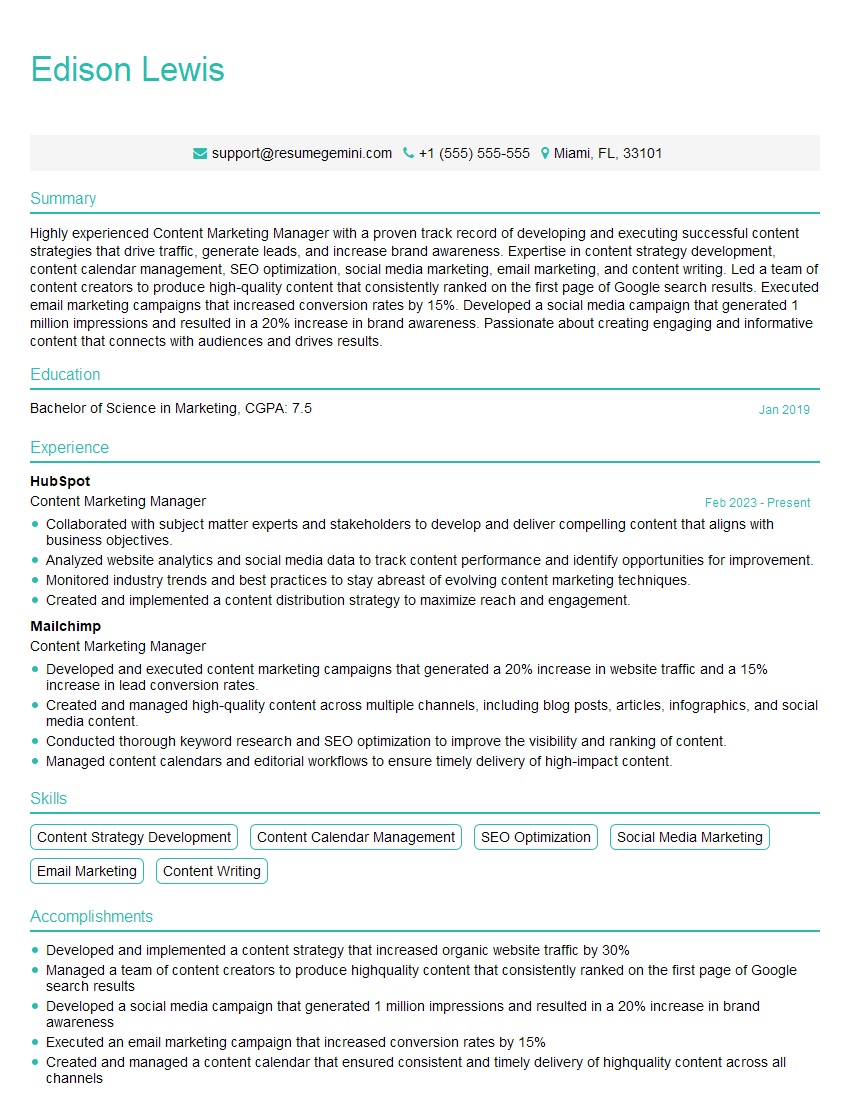
Content Marketing Manager Resume Sample

Social Media Marketing Manager Resume Sample
Explore more articles
Users Rating of Our Blogs
Share Your Experience
We value your feedback! Please rate our content and share your thoughts (optional).
What Readers Say About Our Blog
Very informative content, great job.
good