Interviews are opportunities to demonstrate your expertise, and this guide is here to help you shine. Explore the essential Mushroom Cultivation Technology interview questions that employers frequently ask, paired with strategies for crafting responses that set you apart from the competition.
Questions Asked in Mushroom Cultivation Technology Interview
Q 1. Describe the ideal environmental conditions (temperature, humidity, light, and CO2) for cultivating button mushrooms.
Button mushrooms thrive in a specific environment. Think of it like creating a cozy cave for them! Temperature is crucial; the ideal range for growth is between 12-17°C (54-63°F). Fluctuations outside this range can significantly impact yield and quality. High humidity, around 90-95%, is essential to prevent the mushrooms from drying out. This is similar to the humid conditions found in natural mushroom habitats. Light is a bit trickier – they don’t need much, and direct sunlight is detrimental. Low light levels, similar to a dimly lit room or cave, are preferred. Finally, carbon dioxide (CO2) levels need careful management. A slightly elevated level of CO2, around 1000-1500 ppm, can actually promote better growth and fruit body formation. Too much CO2, however, can lead to distorted mushrooms and reduced yield.
Q 2. Explain the process of mushroom substrate preparation, including different types of substrates and their properties.
Substrate preparation is the foundation of successful mushroom cultivation. It’s like preparing the perfect soil for a garden! The substrate provides the nutrients the mushroom mycelium (the vegetative part of the fungus) needs to grow and produce mushrooms. Common substrates include wheat straw, horse manure, and a mix of both. Wheat straw offers a good balance of nutrients and structure, while horse manure adds valuable nitrogen and other essential elements. Other materials like cottonseed hulls or spent grain from brewing can also be used. The process typically involves a series of steps: mixing the ingredients to create a homogenous composition, ensuring proper moisture content (typically around 60-70%), pasteurization (or sterilization) to kill competing organisms and pathogens and then allowing it to cool before spawning.
- Wheat Straw: Cost-effective, readily available, good water retention.
- Horse Manure: Rich in nitrogen, provides essential micronutrients.
- Compost Mixtures: A carefully balanced blend of various materials for optimal results.
The properties of the substrate are crucial; factors such as the C:N ratio (carbon to nitrogen ratio) and particle size significantly affect mycelial growth and fruiting.
Q 3. What are the common pests and diseases affecting mushroom cultivation, and how are they managed?
Pests and diseases can devastate a mushroom crop quickly. Think of it as battling unwanted guests in your mushroom ‘garden’. Common pests include mites, sciarid flies, and other insects that feed on the mycelium or developing mushrooms. Diseases are typically caused by bacteria or fungi. Verticillium and Trichoderma are common fungal pathogens that can aggressively outcompete the mushroom mycelium. Management strategies involve preventative measures, such as using clean and pasteurized substrates, proper sanitation practices in the growing environment, and implementing good hygiene practices. Biological control agents, like predatory mites, can help control certain pests. Chemical control is generally avoided because many chemicals will harm mushroom mycelia. Early detection and removal of infected areas are vital to prevent widespread infestation.
Q 4. Describe the different stages of mushroom cultivation, from spawning to harvesting.
Mushroom cultivation is a multi-stage process. Imagine it as guiding a plant from seed to harvest. It starts with spawning, where mushroom spawn (mycelium grown on a grain substrate) is introduced into the prepared substrate. The substrate is then incubated in a dark, humid environment allowing the mycelium to colonize the substrate. This colonization takes several weeks, during which the mycelium spreads throughout the substrate, extracting nutrients and establishing a robust network. The next phase is pinning or primordia formation, where small mushroom ‘pins’ appear on the surface of the substrate. This process is triggered by changes in environmental conditions (light, temperature, CO2 levels). Once pinning has occurred, the mushrooms enter their fruiting stage. This stage involves careful environmental management to ensure optimal mushroom growth and development. Finally, harvesting involves gently picking mature mushrooms, leaving behind the substrate for a potential second or third flush (depending on substrate). The process is usually repeated for each subsequent flush.
Q 5. What are the key indicators of a healthy mushroom crop?
Several key indicators signal a healthy mushroom crop. Think of them as vital signs for your mushroom ‘patients’. A healthy crop displays vigorous mycelial growth, evident by the dense, white mycelium throughout the substrate. Mushrooms should be firm, uniformly shaped, with no signs of discoloration or damage. The substrate should retain adequate moisture content but not be overly wet or soggy. A lack of pests or diseases, and high yield, and consistent fruiting are excellent signs of a flourishing mushroom farm. Regular monitoring of these indicators allows for prompt intervention should any problems arise.
Q 6. How do you monitor and control the environmental parameters within a mushroom cultivation facility?
Environmental control is paramount in mushroom cultivation. Imagine being a climate controller for a delicate ecosystem. It requires using various technologies to precisely manage temperature, humidity, and CO2 levels. This usually involves sophisticated environmental control systems that include sensors to measure environmental parameters, controllers to maintain set points and automated systems for ventilation and humidification. Temperature is controlled through heating and cooling systems, humidity through humidifiers and ventilation, and CO2 levels through ventilation and CO2 enrichment if needed. Regular monitoring and adjustments are vital to ensure optimal conditions throughout the cultivation process.
Q 7. Explain the process of mushroom pasteurization and sterilization.
Pasteurization and sterilization are crucial steps in substrate preparation. It’s like sterilizing surgical equipment for a mushroom ‘operation’! Pasteurization involves heating the substrate to a temperature sufficient to kill most competing microorganisms but not so high that it damages the substrate’s nutritional value. Typical pasteurization involves heating the substrate to approximately 60°C (140°F) for a few hours. Sterilization uses higher temperatures, typically 100°C (212°F) or higher under pressure, for extended durations, which eliminates virtually all microorganisms, including bacterial spores. The choice between pasteurization and sterilization depends on various factors, including the type of substrate, available equipment, and the level of contamination risk. The goal is to create a clean environment for the mushroom mycelium to thrive.
Q 8. What are the various methods of mushroom harvesting, and what factors influence the choice of method?
Mushroom harvesting methods depend largely on the cultivation system and the mushroom species. Generally, we employ either manual harvesting or mechanical harvesting. Manual harvesting, the most common method, involves carefully picking individual mushrooms by hand, ensuring minimal damage to the fruiting bodies and the substrate. This method is best suited for delicate mushrooms and smaller-scale operations where quality is paramount. Think of it like carefully picking strawberries – gentle and precise. Mechanical harvesting, on the other hand, employs automated tools for larger-scale operations. This is often used for sturdier mushroom varieties grown in more uniform conditions, such as button mushrooms in tray systems. The choice depends on several factors: the type of mushroom, scale of production, labor costs, desired quality level, and the fragility of the mushroom. For example, delicate oyster mushrooms would almost always require manual harvesting, while button mushrooms cultivated in large-scale tray systems may benefit from mechanical harvesting to enhance efficiency.
Q 9. How do you ensure the quality and safety of harvested mushrooms?
Ensuring quality and safety starts from the beginning – maintaining a sterile environment throughout the cultivation process. We meticulously inspect harvested mushrooms for any signs of damage, disease, or pest infestation. Proper cleaning is crucial; this often involves gently brushing off any adhering substrate or debris. Temperature control is vital; mushrooms should be cooled rapidly after harvesting to prevent deterioration. We also employ strict sanitation protocols in our handling and processing facilities, including regular cleaning and disinfection to prevent contamination with harmful bacteria or fungi. The entire process, from cultivation to packaging, is strictly monitored to meet food safety standards. Traceability is also important; we maintain detailed records of our growing processes to ensure that we can track any potential problems to their source. Think of it as akin to a well-oiled food production line, with each stage carefully scrutinized to ensure only the highest quality, safe product reaches the consumer.
Q 10. Describe different types of mushroom cultivation systems (e.g., tray, bag, underground).
Mushroom cultivation systems vary significantly based on the species and scale of production. Tray systems are widely used, especially for button mushrooms. These involve growing mushrooms in trays filled with compost, offering excellent control over environmental factors. Bag cultivation, a common technique for oyster mushrooms and other species, utilizes plastic bags filled with substrate, offering ease of handling and reduced space requirements. Underground cultivation is less common but involves creating underground chambers to exploit natural temperature and humidity control. This technique, often used for certain specialty mushrooms, mimics their natural growing environments more closely. Each system has its own unique characteristics and is suited for different species and scales of operation.
Q 11. What are the advantages and disadvantages of each cultivation system?
Each system presents its own advantages and disadvantages. Tray systems offer excellent environmental control but require more space and can be labor-intensive. Bag systems are more space-efficient and easier to manage, making them ideal for smaller operations, but environmental control might be slightly less precise. Underground cultivation offers a unique environment naturally mimicking the mushroom’s ideal conditions, but the initial setup is complex and costly. For example, tray systems are ideal for large-scale button mushroom production, while bag systems are suited to home growers and smaller businesses cultivating oyster mushrooms. The best choice always depends on the specific needs of the producer, the mushroom species, and the scale of the operation.
Q 12. How do you manage air exchange and ventilation in a mushroom growing facility?
Air exchange and ventilation are critical for maintaining optimal growing conditions and preventing contamination. This involves managing temperature, humidity, and carbon dioxide levels. We typically use fans and ventilation systems to control airflow within the growing facility, ensuring fresh air is introduced while stale, carbon dioxide-rich air is removed. The system should be designed to provide sufficient airflow to maintain optimal conditions while preventing drafts that could damage delicate mushrooms. Monitoring CO2 levels is crucial, as excessive CO2 can inhibit growth. Careful regulation of temperature and humidity is also key; different mushroom species have optimal ranges, and deviating from those parameters can cause slow growth or even disease. Think of it as carefully orchestrating a symphony: every instrument (fan, humidifier, etc.) plays its part to create the perfect environment for the mushrooms to thrive.
Q 13. Explain the importance of proper hygiene and sanitation in mushroom cultivation.
Hygiene and sanitation are fundamental to successful mushroom cultivation. Contamination by bacteria, molds, or other fungi can decimate a crop. This starts with sterilizing the growing medium before inoculation. Regular cleaning and disinfection of equipment, tools, and the growing environment are also critical. Personnel should follow strict hygiene protocols, including wearing clean clothing and using appropriate sanitizers. We employ rigorous cleaning schedules, using appropriate disinfectants and following strict protocols. Think of it as maintaining a surgical operating room – absolute cleanliness is paramount. Maintaining high hygiene standards minimizes the risk of contamination and ensures the production of high-quality, safe mushrooms.
Q 14. How do you identify and address common problems in mushroom cultivation (e.g., contamination, slow growth)?
Identifying and addressing problems requires keen observation and knowledge. Contamination is often manifested as unusual discoloration, mold growth, or unusual odors. We address this by isolating contaminated areas and removing affected material. Proper sanitation practices can help prevent future occurrences. Slow growth may be due to various factors including incorrect temperature, humidity, or nutrient deficiencies in the growing medium. We address this by adjusting environmental parameters and supplementing nutrients as needed. Regular monitoring of environmental conditions and careful observation of mushroom growth patterns are essential to detect problems early and implement timely corrective actions. Diagnosing the problem is the first step; effective solutions then depend on accurately identifying the root cause.
Q 15. What are the different types of mushrooms that can be cultivated commercially?
Commercially cultivated mushrooms span a diverse range, categorized broadly by species and even specific strains. The most common include button mushrooms (Agaricus bisporus), which dominate the market due to their ease of cultivation and widespread appeal. Oyster mushrooms (Pleurotus spp.) are gaining popularity for their robust growth and delicious flavour, requiring less intensive cultivation methods. Shiitake (Lentinula edodes) mushrooms are prized for their umami flavour and medicinal properties, and their cultivation requires more specialized techniques. Other commercially important mushrooms include portobellos (mature Agaricus bisporus), cremini (brown Agaricus bisporus), king oyster mushrooms (Pleurotus eryngii), and various gourmet species like lion’s mane (Hericium erinaceus) and maitake (Grifola frondosa), though these command higher prices due to greater difficulty in cultivation.
- Button Mushrooms (Agaricus bisporus): The workhorse of the industry, readily available and easy to grow.
- Oyster Mushrooms (Pleurotus spp.): Fast-growing and adaptable to various substrates, making them a sustainable option.
- Shiitake Mushrooms (Lentinula edodes): High value, requiring more precise environmental control.
The choice of species depends on market demand, available resources, and the grower’s expertise and infrastructure. Some growers specialize in a single species, while others diversify to mitigate risk and capitalize on different market niches.
Career Expert Tips:
- Ace those interviews! Prepare effectively by reviewing the Top 50 Most Common Interview Questions on ResumeGemini.
- Navigate your job search with confidence! Explore a wide range of Career Tips on ResumeGemini. Learn about common challenges and recommendations to overcome them.
- Craft the perfect resume! Master the Art of Resume Writing with ResumeGemini’s guide. Showcase your unique qualifications and achievements effectively.
- Don’t miss out on holiday savings! Build your dream resume with ResumeGemini’s ATS optimized templates.
Q 16. What are the economic factors influencing mushroom cultivation profitability?
Mushroom cultivation profitability hinges on several key economic factors. First, the price of the substrate (the material the mushrooms grow on, often compost) is crucial; fluctuations can significantly impact costs. Secondly, energy costs, particularly for climate control in indoor facilities, are substantial. Labor costs form another significant component, especially for tasks such as harvesting and cleaning. Market demand and pricing dictate the profitability potential; high demand for specific varieties ensures higher prices and better returns. Competition within the market also plays a role; highly competitive markets can drive prices down. Transportation and storage costs can also impact the bottom line; efficient logistics are essential to minimize losses due to spoilage. Finally, the yield and efficiency of the operation are paramount; maximizing yield while minimizing inputs maximizes profit margins. A well-managed farm can optimize these factors to achieve strong profitability.
For example, a farm using locally sourced compost and employing energy-efficient technologies will likely have a cost advantage compared to a farm relying on imported compost and outdated equipment. Similarly, a farm with excellent yield and efficient post-harvest handling will have a substantial profit advantage over a less efficient operation, even if initial investment costs are higher.
Q 17. What are the post-harvest handling and storage techniques for mushrooms?
Post-harvest handling and storage are critical for maintaining mushroom quality and extending shelf life. Mushrooms are highly perishable; they continue to respire after harvest, leading to rapid deterioration. Immediate cooling is essential after harvesting; this slows down respiration and enzymatic activity. Mushrooms are usually cooled to temperatures between 0°C and 4°C. Careful handling is crucial to avoid bruising, which promotes decay. Mushrooms should be gently cleaned and sorted to remove debris and damaged specimens. Appropriate packaging is vital; this should maintain humidity and minimize physical damage during transport and storage. Modified atmosphere packaging (MAP), which alters the gaseous composition within the package, can significantly extend shelf life. Storage conditions should maintain optimal temperature and humidity to slow down deterioration. Regular monitoring of temperature and humidity is essential to maintain quality. For longer-term storage, freezing can be employed, although this may affect texture.
For instance, oyster mushrooms are often packed in perforated plastic bags to maintain air circulation and prevent condensation. Button mushrooms are frequently stored in refrigerated rooms with controlled humidity to maintain firmness and texture. Effective post-harvest techniques minimize losses and maintain market value.
Q 18. Discuss the role of automation and technology in modern mushroom farming.
Automation and technology are revolutionizing modern mushroom farming. Automated climate control systems precisely regulate temperature, humidity, and CO2 levels, optimizing growing conditions and reducing labor costs. Automated watering systems provide precise hydration, minimizing water waste and ensuring consistent substrate moisture. Robotics are increasingly being used for tasks like harvesting and sorting, improving efficiency and reducing labor needs. Data analytics and sensors provide real-time monitoring of environmental parameters, allowing for prompt adjustments and predictive maintenance. AI-powered systems can analyze vast datasets to optimize growing strategies, predict yields, and identify potential problems early on. Precision farming techniques, such as using targeted nutrient delivery systems, improve resource utilization and reduce environmental impact.
For example, some farms are using robotic arms to harvest mushrooms, significantly increasing harvesting speed and reducing labor costs. Sophisticated sensors monitor temperature and humidity throughout the growing facility, ensuring optimal conditions are maintained consistently. The adoption of these technologies increases efficiency, reduces operating costs, and improves product quality.
Q 19. How do you calculate the yield and efficiency of a mushroom farm?
Yield and efficiency calculations in mushroom farming involve quantifying the amount of mushrooms produced relative to the inputs used. Yield is typically expressed as kilograms of mushrooms produced per square meter of growing area or per unit of substrate. The formula might be: Yield (kg/m²) = Total mushroom yield (kg) / Growing area (m²). Efficiency is a more complex metric, considering various inputs and outputs. It often incorporates factors such as substrate utilization rate, energy consumption, water usage, labor costs, and yield. A common approach is to calculate the biological efficiency, which is the ratio of mushroom yield to the weight of the substrate used. The formula might be: Biological Efficiency (%) = (Mushroom yield / Substrate weight) x 100. Further, economic efficiency considers the profit generated per unit of input, factoring in all costs and revenue.
For instance, a farm producing 1000 kg of mushrooms from a 100 m² growing area would have a yield of 10 kg/m². If the substrate used weighed 2000 kg, the biological efficiency would be 50% (1000 kg / 2000 kg x 100). A thorough analysis would also factor in operating costs to calculate the overall economic efficiency.
Q 20. What are the sustainable practices that can be incorporated into mushroom cultivation?
Sustainable practices are crucial for the long-term viability and environmental responsibility of mushroom cultivation. Using locally sourced substrates, such as agricultural waste materials (e.g., straw, coffee grounds), reduces transportation costs and promotes circular economy principles. Implementing efficient water management systems minimizes water consumption and prevents water pollution. Employing renewable energy sources, like solar or wind power, reduces carbon emissions and operational costs. Composting and recycling spent substrate converts waste into valuable fertilizer, reducing reliance on synthetic fertilizers. Biological pest control methods, such as using beneficial insects or microorganisms, minimizes the need for harmful pesticides. Reducing packaging waste through the use of biodegradable materials minimizes environmental impact. Adopting integrated pest management (IPM) strategies minimizes chemical inputs and environmental impact.
For example, a farm using spent coffee grounds from local cafes as a substrate not only reduces waste but also lowers costs. Implementing a closed-loop system for water recycling minimizes freshwater consumption and pollution. The overall objective is to create a circular and low-impact mushroom production system.
Q 21. What are the challenges faced by mushroom growers in your region?
Challenges faced by mushroom growers vary regionally, but some common issues include: Climate variability, especially extreme temperatures and humidity fluctuations, can impact yield and quality. Pest and disease outbreaks can cause significant losses if not managed effectively. Competition from large-scale producers can put pressure on smaller farms. Access to affordable and high-quality substrates can be limited in some areas. Labor shortages can make operations challenging, particularly during peak seasons. Market volatility and price fluctuations can affect profitability. Maintaining appropriate storage and transportation infrastructure can be costly and problematic. Regulatory hurdles and compliance requirements can add to operational complexity.
Specific solutions require region-specific analysis, but strategies such as investing in climate-control technologies, implementing robust pest management protocols, and exploring alternative markets can help address these challenges. Collaboration among growers, research institutions, and government agencies can facilitate the development of sustainable and resilient mushroom farming practices.
Q 22. Explain the different mushroom life cycles and their stages.
Mushroom life cycles, broadly speaking, consist of two main phases: the vegetative phase and the reproductive phase. Think of it like the life cycle of a plant; there’s a growth period before fruiting.
- Vegetative Phase (Spawn Run): This is the period of growth and development of the mycelium, the vegetative part of the fungus. It starts with the inoculation of a substrate with mushroom spawn (containing mycelium). The mycelium colonizes the substrate, consuming nutrients and expanding its network. This phase is crucial for establishing a strong, healthy fungal base for fruiting. Key stages here include:
- Spawn Preparation: Producing high-quality spawn through sterile techniques is paramount.
- Inoculation: Carefully introducing the spawn into the prepared substrate.
- Colonization: The spread of mycelium throughout the substrate, often monitored for speed and extent.
- Reproductive Phase (Fruiting): Once the mycelium has fully colonized the substrate and environmental conditions are optimal, it begins to form primordia – the tiny beginnings of mushrooms. These develop into mature fruiting bodies (mushrooms) that release spores, completing the cycle. Stages include:
- Primordia Initiation: Environmental cues (light, humidity, temperature changes) trigger primordia formation.
- Pinning: The appearance of visible mushroom pins.
- Fruit Body Development: Growth of the mushroom from pin to maturity.
- Harvesting: Gathering the mature mushrooms.
- Spore Release: Mature mushrooms release spores to potentially begin the cycle anew.
Different mushroom species have varying durations for each phase; some might take weeks, while others might take months. Understanding these phases is essential for optimizing your cultivation practices.
Q 23. How does substrate composition affect mushroom yield and quality?
Substrate composition is paramount; it’s the foundation on which your mushroom crop is built. The right mix ensures sufficient nutrients, appropriate moisture retention, and optimal aeration for healthy mycelium growth and high-quality fruiting.
Factors such as carbon-to-nitrogen ratio (C:N ratio), moisture content, pH level, and the presence of certain nutrients and supplements critically influence yield and quality. For example, a high C:N ratio (like in straw) is beneficial initially for mycelium growth, but it needs to be balanced to avoid nutrient deficiency later. Too much nitrogen can lead to excessive vegetative growth at the expense of fruiting.
Moisture content is vital; too dry, and the mycelium struggles; too wet, and it can lead to anaerobic conditions and bacterial contamination. Similarly, pH needs to be within the optimal range for the specific mushroom species. Adding supplements like gypsum (calcium sulfate) can help improve substrate structure and improve the water-holding capacity.
Different mushrooms have different substrate preferences. Oyster mushrooms are known for their ability to grow on a variety of substrates, including hardwood sawdust. Shiitake mushrooms, on the other hand, traditionally utilize oak logs, showing the species-specific requirements for optimal growth.
Q 24. Describe your experience with different mushroom spawn types.
My experience encompasses several spawn types, each with its own advantages and disadvantages. The choice depends on several factors like species, scale of cultivation, and budget.
- Grain spawn: This is a popular choice, commonly using wheat, rye, or rice. It’s relatively easy to produce, cost-effective, and offers good colonization rates. However, it’s more prone to contamination if not properly sterilized.
- Liquid spawn: This involves inoculating a liquid medium with mycelium, and then injecting it directly into the substrate. This method offers speed and a higher potential for uniformity of colonization, minimizing the risk of contamination but requires specialized equipment.
- Plug spawn: This consists of wooden dowels inoculated with mycelium. This is commonly used for log cultivation, particularly Shiitake mushrooms, providing a slow but reliable colonization method.
In my practice, I’ve found that selecting the right spawn type is crucial. Using grain spawn for button mushrooms on a smaller scale is cost-effective. However, for large-scale oyster mushroom cultivation, liquid spawn can result in faster and more uniform growth. Contamination is always a risk, regardless of the method, and robust sterile techniques are paramount.
Q 25. What are the key regulatory requirements for mushroom cultivation in your area?
(Note: Regulatory requirements vary significantly by location. The following is a generalized example, and you must research the specific regulations for your area.)
In my area, mushroom cultivation is subject to several key regulations, primarily focused on food safety and environmental protection. These commonly include:
- Food safety regulations: These often involve adhering to Good Agricultural Practices (GAPs), ensuring proper hygiene during cultivation, handling, and packaging to prevent contamination and ensure the safety of the final product. This might include regular inspections and adherence to specific standards for handling waste.
- Environmental regulations: These regulations are related to waste management (compost disposal), water usage, and potential environmental impact. This might include permits for wastewater discharge or handling of mushroom byproducts.
- Labor regulations: Compliance with local labor laws and regulations related to worker safety and fair labor practices is essential.
- Licensing and permits: Obtaining the necessary licenses and permits to operate a mushroom farm is often a requirement in most jurisdictions.
It’s crucial to stay updated on the ever-evolving regulations to maintain compliance and avoid penalties.
Q 26. Describe your experience with mushroom composting techniques and troubleshooting.
Mushroom composting is a critical step, especially for species like button mushrooms. It involves creating a nutrient-rich substrate from a mixture of agricultural materials like straw, chicken manure, and gypsum.
The process generally involves:
- Phase 1 (Pre-composting): Mixing the raw materials in a precise ratio and ensuring proper aeration. This involves turning the mixture regularly to maintain oxygen levels and initiate microbial decomposition.
- Phase 2 (Pasteurization): Raising the temperature of the compost pile to kill unwanted pathogens and weed seeds. This usually involves carefully managing the temperature and moisture level.
- Phase 3 (Curing): Allowing the compost to cool and stabilize, promoting beneficial microorganisms and refining the nutrient profile for optimal mycelium growth.
Troubleshooting is an essential aspect. Common issues include:
- High ammonia levels: This can be addressed by careful control of C:N ratio and aeration.
- Low temperature: Insufficient insulation or inadequate mixing can result in low temperatures during pasteurization.
- Contamination: This necessitates careful sterilization of the composting materials and appropriate environmental controls to prevent molds and bacteria growth.
I’ve found that precise monitoring of temperature, moisture, and pH throughout the composting process is essential to obtain a high-quality substrate. Consistent turning and meticulous attention to detail are key to successful composting. Regular analysis of the compost samples and adjustments based on the results is a proactive approach to avoid problems.
Q 27. How do you maintain accurate records and track key performance indicators (KPIs) in mushroom cultivation?
Accurate record-keeping is fundamental to successful mushroom cultivation. I utilize a combination of digital and physical records to track all aspects of the process.
Key KPIs I track include:
- Spawn run time: The time it takes for the mycelium to colonize the substrate.
- Yield per batch: The total weight of mushrooms harvested per unit of substrate.
- Fruiting cycle length: The time from pinning to the end of the harvest.
- Contamination rates: The percentage of contaminated substrate or harvested mushrooms.
- Cost per pound (or kg) of mushrooms produced: This incorporates all costs, from substrate preparation to labor and packaging.
- Environmental parameters: Temperature, humidity, CO2 levels, and air exchange rates are meticulously documented for each phase.
I maintain detailed spreadsheets and use specialized software to input and analyze this data. This allows me to identify trends, pinpoint areas for improvement, and optimize my operations. Regular reports help to visualize progress and identify potential problems early.
Q 28. How do you manage labor and resources effectively in a mushroom farm?
Effective labor and resource management is crucial for profitability and sustainability in mushroom farming. This involves a multi-pronged approach:
- Workforce planning: Accurate forecasting of labor needs based on projected production is critical. This includes scheduling workers based on the different phases of mushroom growth and harvest cycles.
- Training and development: Investing in training programs for workers enhances their efficiency and competence. This translates into a higher quality product and reduced waste.
- Resource optimization: Efficient utilization of substrate, water, and energy reduces operational costs. This includes strategies like implementing water recycling systems and optimizing energy consumption through automation and environmental controls.
- Automation and technology: Employing technology like automated climate control systems and harvesting equipment can significantly improve efficiency and reduce labor requirements.
- Waste management: Implementing strategies to minimize waste and recycle byproducts like spent mushroom substrate (SMS), which can be used as a soil amendment or in other applications, is crucial for environmental responsibility.
By meticulously planning and coordinating labor and resources, I’ve managed to minimize costs and maximize productivity. This includes a focus on continuous improvement and adopting best practices in the industry.
Key Topics to Learn for Mushroom Cultivation Technology Interview
- Substrate Preparation: Understanding different substrate formulations (e.g., compost, grain spawn), sterilization techniques, and their impact on yield and mushroom quality. Practical application: Troubleshooting substrate issues like contamination or insufficient nutrient levels.
- Spawn Running and Fruiting Management: Mastering the process of inoculating substrates with spawn, controlling environmental factors (temperature, humidity, light, airflow) during the fruiting stage, and optimizing for optimal yield and mushroom morphology. Practical application: Diagnosing and resolving problems related to slow growth, abnormal fruiting bodies, or pest/disease infestations.
- Mushroom Biology and Genetics: Understanding the life cycle of different mushroom species, genetic variations affecting yield and quality, and principles of mushroom breeding and strain selection. Practical application: Evaluating the suitability of different mushroom strains for specific growing conditions and market demands.
- Post-Harvest Handling and Processing: Proper techniques for harvesting, cleaning, sorting, and packaging mushrooms to maintain quality and extend shelf life. Practical application: Implementing quality control measures to minimize post-harvest losses and meet market standards.
- Facility Design and Management: Knowledge of designing and managing mushroom cultivation facilities, including climate control systems, sanitation protocols, and waste management strategies. Practical application: Optimizing facility layout and operations for efficiency and sustainability.
- Pest and Disease Management: Identifying common pests and diseases affecting mushroom cultivation, implementing preventative measures, and employing appropriate control strategies. Practical application: Developing integrated pest management plans to minimize chemical usage and environmental impact.
- Automation and Technology in Mushroom Cultivation: Familiarity with emerging technologies like automated climate control, robotic harvesting, and data analytics for optimizing mushroom production. Practical application: Evaluating and implementing new technologies to enhance efficiency and productivity.
Next Steps
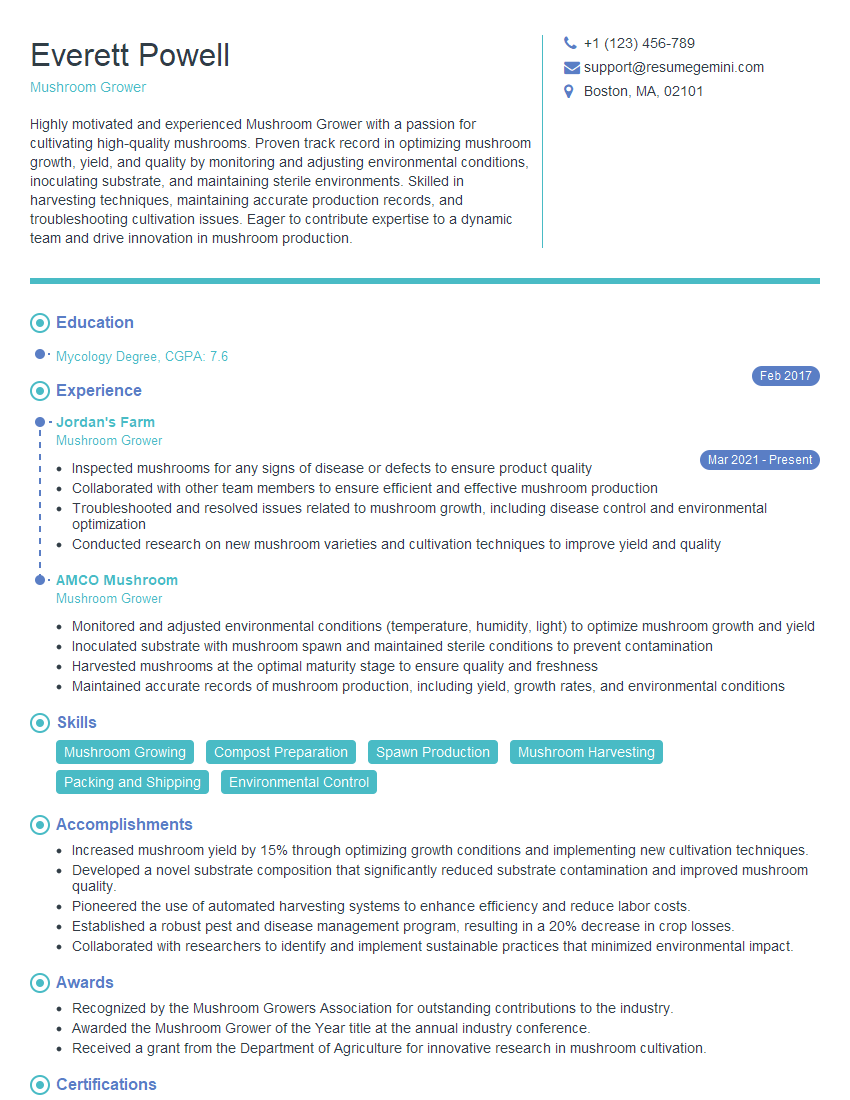
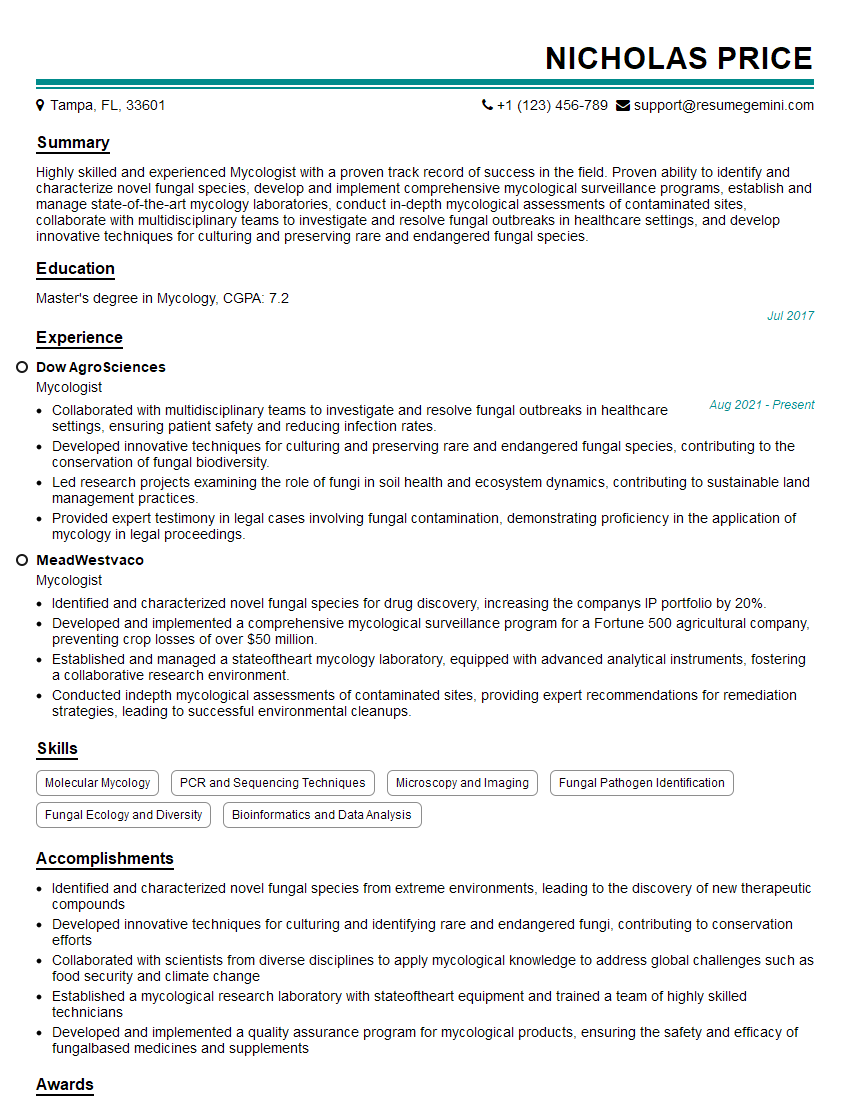
Mastering Mushroom Cultivation Technology opens doors to exciting career opportunities in a growing industry. Demonstrating your expertise through a strong resume is crucial. An ATS-friendly resume is essential for getting your application noticed by recruiters. To build a compelling and effective resume, we highly recommend using ResumeGemini. ResumeGemini provides a powerful platform for creating professional resumes, and we offer examples of resumes tailored specifically to the Mushroom Cultivation Technology field to help you get started.
Explore more articles
Users Rating of Our Blogs
Share Your Experience
We value your feedback! Please rate our content and share your thoughts (optional).
What Readers Say About Our Blog
Very informative content, great job.
good