Interviews are opportunities to demonstrate your expertise, and this guide is here to help you shine. Explore the essential Musical Instrument Knowledge interview questions that employers frequently ask, paired with strategies for crafting responses that set you apart from the competition.
Questions Asked in Musical Instrument Knowledge Interview
Q 1. Describe the different types of wood used in violin construction and their acoustic properties.
The choice of wood in violin construction significantly impacts its sound. Different woods possess unique acoustic properties related to density, stiffness, and resonance. The most common woods are spruce for the top (soundboard) and maple for the back, ribs, and neck.
Spruce: Typically Sitka spruce or European spruce is used for the top. Its relatively low density and high stiffness allow for excellent vibrational response, contributing to the violin’s bright, clear tone. The grain’s evenness is crucial; inconsistent grain can negatively affect sound projection.
Maple: Used for the back, ribs, and neck, maple offers strength and contributes to the violin’s overall richness and warmth. Curly maple (with its distinctive figure) is particularly prized for its aesthetic appeal and sometimes its perceived acoustic benefits, though the acoustic difference is subtle and debated among luthiers.
Other Woods: While less common, other woods like ebony (for the fingerboard and pegs) and rosewood (for the bridge) are also important for their durability, hardness and tonal influence. Ebony’s density helps with precise finger placement, and rosewood contributes to the vibrational characteristics of the bridge.
The interaction between the spruce top and the maple back is key. The top vibrates readily, producing the sound, while the back supports the vibrations and contributes to the overall resonance. The wood selection and its quality directly affect the instrument’s tonal character, projection, and response.
Q 2. Explain the process of setting up a guitar, including intonation and action.
Setting up a guitar involves adjusting several factors to optimize playability and tone. Intonation refers to the accuracy of the notes along the fretboard, while action refers to the height of the strings above the frets.
Intonation: If a guitar is out of intonation, notes played higher up the neck will be sharp or flat relative to the open strings. This is usually adjusted by shifting the position of the saddle (on acoustic guitars) or adjusting the intonation screws on the bridge (on electric guitars). A skilled luthier uses a digital tuner or electronic device to measure the accuracy of each fretted note. The process often involves iterative adjustments until all the frets are perfectly in tune.
Action: Action that’s too high makes the guitar difficult to play; too low causes buzzing. It’s adjusted by altering the height of the bridge (acoustic) or adjusting the truss rod (both acoustic and electric). The truss rod controls the neck’s relief – a slight curve needed for optimal string height. Too much relief leads to high action and buzzing, while too little leads to fretting out (strings hitting the frets).
Other setup elements: Setting up a guitar also involves checking and adjusting the nut height (the slot where the strings pass over at the headstock), ensuring the strings are properly aligned, and that the bridge is properly positioned.
Setting up a guitar is a balance between playability, comfort and sound. A properly set up guitar is a joy to play; a poorly set up one is frustrating.
Q 3. What are the common problems encountered in repairing brass instruments?
Brass instrument repair presents unique challenges due to the materials involved (brass alloys) and their intricate construction. Common problems include:
Dents and Dings: These are common and can affect both the instrument’s appearance and its acoustics. Repair often involves careful hammering and shaping to restore the original form.
Valve Problems: Valves can become sticky, leak, or malfunction due to wear, corrosion, or misalignment. Repair may involve cleaning, lubrication, valve-alignment adjustments or replacement of valves.
Leaks: Leaks in the tubing or joints can significantly reduce the instrument’s sound and intonation. Detecting and sealing these leaks requires careful examination and use of specialized soldering techniques or sealants.
Lacquer Damage: Scratches and chips in the lacquer can affect the appearance and potentially the instrument’s sound. Repair requires careful refinishing to maintain the instrument’s quality.
Corrosion: Brass is susceptible to corrosion, particularly in humid climates. This can affect the valves, tubing, and other components. Cleaning and possibly specialized treatments are necessary to remove corrosion.
Proper cleaning and maintenance is crucial in preventing many of these problems. Regular inspections are also key to early detection and timely repair.
Q 4. How do you diagnose and fix a buzzing sound in a string instrument?
A buzzing sound in a string instrument is usually caused by the strings vibrating against some part of the instrument. Diagnosing the source involves systematic investigation:
String Buzzing at the Frets: This indicates that the string is too close to the frets due to low action. Adjusting the bridge height or truss rod (depending on the instrument) will address this.
Buzzing near the Bridge: The bridge might be improperly seated or the bridge feet might be too high. Lowering or adjusting the bridge is the solution here.
Buzzing near the Nut: This suggests the nut slots are too low or the strings are improperly seated. Careful nut filing might be necessary or replacing the nut if it’s severely worn.
Buzzing from a Loose Part: A loose tuning peg, bridge or other accessory can vibrate and cause a buzz. Tightening the part usually resolves this.
Buzzing from Loose Strings: The wound strings might be vibrating against each other or the unwound strings might be loose around their tuning pegs. Proper winding and securing of the strings can fix this.
Sometimes, the cause might be more complex and would require the expertise of a professional luthier to identify. The approach is to eliminate potential sources one by one until the buzz is resolved.
Q 5. What are the key differences between a clarinet and a saxophone?
Clarinets and saxophones are both single-reed woodwind instruments, but they differ significantly in several aspects:
Construction Material: Clarinets are traditionally made of wood (grenadilla wood is preferred), though plastic and other materials are now common. Saxophones are almost always made of brass.
Bore: Clarinets have a cylindrical bore (except at the very end), contributing to their focused, clear sound. Saxophones have a conical bore, giving them a richer, fuller tone.
Key System: While both have complex key systems, the fingerings differ, due to the difference in bore and range.
Range and Tone Color: Clarinets generally have a higher register and a more penetrating, bright tone, while saxophones have a lower register and warmer, more mellow sound.
Embouchure: The way the mouthpiece is held and the reed is manipulated differs due to the different mouthpiece designs and instrument shapes.
These differences contribute to their distinct roles in musical ensembles and diverse applications in various genres.
Q 6. Explain the principles of acoustics related to musical instrument design.
The acoustics of musical instrument design are based on the principles of sound generation, resonance, and propagation. Key factors include:
Resonance: Instruments are designed to resonate at specific frequencies, amplifying certain tones. The shape, size, and material of the instrument’s body play a crucial role in determining the resonant frequencies. For instance, the shape of a violin’s body affects the various resonant modes contributing to its rich tone.
Soundboard/Sounding Board: Many instruments use a specialized surface to efficiently radiate sound into the air. In violins, the top plate (soundboard) acts as a primary sound radiator, while a guitar’s top plate does the same.
Sound Holes/F-holes: Features like f-holes in violins and sound holes in guitars help to control sound radiation. Their size and placement affect the instrument’s tonal character and projection.
Material Properties: The material’s density, stiffness, and internal damping significantly influence how the instrument vibrates and produces sound. Wood is favored for many string and wind instruments because of its resonance properties and unique acoustic characteristics.
Wave Propagation: Understanding how sound waves travel and interact within the instrument and with the surrounding environment is essential. The design impacts how effectively the sound is projected.
Instrument makers carefully consider these principles to create instruments with the desired tonal characteristics, volume, and projection.
Q 7. How would you troubleshoot a malfunctioning piano action?
Troubleshooting a malfunctioning piano action involves systematically checking various components. The piano action is a complex system that translates key depression into hammer striking the strings.
Key Dip and Weight: Keys should have a consistent dip and weight. Unevenness indicates issues with key regulation, requiring adjustments.
Hammer Alignment and Regulation: Hammers should strike the strings correctly. Misalignment can result in uneven tone and possibly damage to strings or hammers; this is resolved by regulating the hammers.
Repeat Action: The repeat action should allow for rapid repetition of notes. Problems here suggest issues with the repeat lever or other components within the action mechanism.
Let-off and Escapement: The let-off is the point where the hammer releases the string, allowing the key to return to its resting position. Escapement is the mechanism that prevents the hammer from re-striking the string too early. Problems with these functions lead to uneven playing or missed notes.
Dampers: The dampers should silence the strings when a key is released. Issues here may involve faulty damper wires, felts, or the damper mechanism itself.
Diagnosing and fixing a piano action problem is a specialized task, typically handled by a professional piano technician because it involves detailed knowledge of the mechanism, specialized tools, and experience.
Q 8. What are the common issues with drum maintenance and repair?
Drum maintenance is crucial for longevity and optimal sound. Common issues include head replacement (worn-out drumheads produce a dull, muffled sound, requiring replacement with new heads of appropriate thickness), tuning issues (loose or uneven lugs lead to inconsistent sound; a drum key is used for precise tuning), and hardware problems (loose or damaged hardware like cymbal stands, stands, and pedals needs tightening or replacement). Furthermore, regular cleaning is essential to prevent the buildup of dust and debris which can affect the sound and appearance of the drums. Finally, shell damage, such as cracks or dents, may require professional repair or replacement.
- Head Replacement: Identifying when a drumhead needs changing involves checking for significant wear, tears, or a noticeably dull sound. Replacing it is a straightforward process but needs the correct size and type of head.
- Tuning: Proper tuning involves systematically tightening or loosening lugs to achieve the desired pitch and balance across the entire drum set.
- Hardware Maintenance: Regular lubrication of moving parts in pedals and stands improves their function and lifespan. Tightening loose bolts prevents accidental damage during use.
Q 9. Describe different types of guitar pickups and their tonal characteristics.
Guitar pickups are transducers that convert the string vibrations into electrical signals, which are then amplified. Different types offer distinct tonal characteristics.
- Single-coil pickups: Known for their bright, clear, and articulate tone, they’re often described as having a ‘twang’. They are susceptible to hum due to their design. Think of the classic Fender Stratocaster sound.
- Humbucker pickups: Designed to reduce hum, they offer a thicker, warmer, and more powerful tone than single coils. They are often favoured in rock and metal genres. Think of Gibson Les Paul tones.
- P-90 pickups: These are similar to single coils but slightly warmer and with a bit more output. They are known for a sound that is in between the single coil twang and the thicker humbucker sound.
The choice of pickup significantly influences the overall sound of the guitar. For instance, a guitar with single-coil pickups will sound brighter and more articulate than one with humbuckers, which will provide a warmer and fuller tone.
Q 10. What are some common methods for restoring antique musical instruments?
Restoring antique musical instruments is a delicate process requiring specialized knowledge and skills. It often involves a multi-step approach:
- Assessment and Documentation: Carefully examine the instrument to assess its condition, identify damage, and document its features. This is critical for informing any repairs.
- Cleaning: Gentle cleaning removes dirt and grime using appropriate methods specific to the instrument’s material (e.g., wood, metal, ivory). Avoid harsh chemicals.
- Repair of structural damage: This may involve repairing cracks, gluing loose parts, or stabilizing weakened areas. Special glues and techniques are often required.
- Refurbishment: This could involve refinishing the instrument’s surface, replacing worn parts with period-correct materials, or re-stringing the instrument.
The process often requires collaboration with conservators and specialized luthiers skilled in working with antique instruments. It’s vital to prioritize historical accuracy in any restoration work.
Q 11. Explain the importance of proper instrument maintenance for optimal performance.
Proper instrument maintenance is paramount for optimal performance, longevity, and preserving its value. Neglect can lead to irreparable damage, compromised sound quality, and reduced playability.
- Regular Cleaning: Removes dust, sweat, and grime, preventing build-up that can damage the instrument’s finish.
- Proper Storage: Protects the instrument from extreme temperatures, humidity, and physical damage.
- Consistent Tuning: Ensures consistent pitch and prevents excessive stress on the instrument’s components.
- Preventative Maintenance: Regular inspections and timely repairs prevent minor issues from escalating into significant problems.
For instance, a poorly maintained guitar may develop buzzing strings due to high action, while a neglected piano may develop tuning problems or mechanical failures.
Q 12. How do you identify a counterfeit musical instrument?
Identifying counterfeit musical instruments requires careful examination and knowledge. Key indicators include:
- Poor craftsmanship: Look for inconsistencies in finish, materials, or assembly. Counterfeits often lack the precision and attention to detail found in authentic instruments.
- Substandard materials: Counterfeits may use inferior woods, metals, or other components.
- Inconsistent branding and markings: Misspellings, incorrect logos, or poorly executed inlays are red flags.
- Unrealistic pricing: A significantly lower price than the market value may indicate a counterfeit.
- Lack of documentation: Authentic instruments usually come with certificates of authenticity or other documentation.
If you suspect a counterfeit, consult with an expert or reputable dealer. Comparison with authentic instruments and detailed examination can usually confirm authenticity.
Q 13. What is the role of a music teacher in fostering a student’s musical development?
A music teacher’s role extends beyond simply teaching technical skills. They act as a mentor and guide, fostering a student’s holistic musical development.
- Technical Skill Development: Teaching proper posture, hand position, breathing techniques, and other fundamental skills essential for playing an instrument.
- Musicality and Expression: Cultivating musicality, including phrasing, dynamics, and articulation, and developing the student’s ability to convey emotion through music.
- Theory and Music Literacy: Teaching music theory, reading and writing music, helping students to understand the structure and language of music.
- Performance Skills: Helping students to develop confidence, stage presence, and performance techniques.
- Enthusiasm and Engagement: Instilling a lifelong love for music through encouragement, support, and creating a positive learning environment.
A good teacher motivates and inspires, enabling students to reach their full potential and develop a deep appreciation for music.
Q 14. Describe your experience teaching different instrumental techniques.
My experience encompasses teaching various instrumental techniques across a range of ages and skill levels. I’ve worked with students on:
- Classical Guitar: Focusing on proper finger placement, accurate intonation, and developing a strong foundation in classical technique.
- Piano: Teaching both beginner and advanced students, covering topics ranging from basic scales and chords to more complex pieces and musical analysis.
- Percussion: Working on rhythmic coordination, dynamics, and technique on various percussion instruments like drums, xylophones, and marimbas.
- Vocal Techniques: Guiding students in proper breathing, vocal placement, and exploring different vocal styles.
My teaching philosophy emphasizes building a strong technical foundation while fostering creativity and musical expression. I adapt my teaching methods to cater to individual student needs and learning styles.
Q 15. How do you adapt your teaching style to different learning styles and abilities?
Adapting my teaching style is crucial for effective music education. I believe in a multifaceted approach that caters to various learning styles – visual, auditory, kinesthetic, and reading/writing. For visual learners, I use diagrams, charts, and videos demonstrating techniques. Auditory learners benefit from listening exercises, demonstrations, and discussions. Kinesthetic learners learn best through hands-on practice and physical demonstrations, so I incorporate plenty of individual practice time. For reading/writing learners, I provide detailed written materials, including sheet music and supplemental exercises. Furthermore, I adapt to different abilities by offering individualized support. A student struggling with rhythm might receive extra practice with a metronome and rhythmic games, while a more advanced student might be challenged with improvisation exercises. Regular assessments and feedback loops help me continuously adjust my teaching to meet each student’s specific needs and progress.
Career Expert Tips:
- Ace those interviews! Prepare effectively by reviewing the Top 50 Most Common Interview Questions on ResumeGemini.
- Navigate your job search with confidence! Explore a wide range of Career Tips on ResumeGemini. Learn about common challenges and recommendations to overcome them.
- Craft the perfect resume! Master the Art of Resume Writing with ResumeGemini’s guide. Showcase your unique qualifications and achievements effectively.
- Don’t miss out on holiday savings! Build your dream resume with ResumeGemini’s ATS optimized templates.
Q 16. What software and technology are you familiar with in the context of music production or instrument repair?
My experience encompasses a range of software and technologies relevant to music production and instrument repair. In music production, I’m proficient in Digital Audio Workstations (DAWs) like Logic Pro X, Ableton Live, and Pro Tools. These platforms allow for recording, editing, mixing, and mastering audio. I’m also familiar with various virtual instruments and effects plugins. For instrument repair, I utilize specialized tools and software. This includes diagnostic software for electronic instruments and CAD software for designing custom parts. I am also skilled in using various hand tools and precision measuring instruments essential for intricate repair work on acoustic instruments.
Q 17. Explain the principles of digital audio workstations (DAWs) related to musical instrument recording.
Digital Audio Workstations (DAWs) are the cornerstone of modern music recording. They act as a central hub for recording, editing, and manipulating audio. When recording musical instruments, the DAW captures the audio signal from microphones or direct inputs (e.g., using a DI box for electric guitar). This signal is then digitized, allowing for manipulation. The DAW provides tools for editing audio, such as cutting, pasting, and applying effects like reverb, delay, and equalization. For example, Logic Pro X allows for precise editing using its powerful MIDI editor and numerous audio plugins. The DAW also allows for multi-track recording, enabling the layering of different instruments and vocals. This is crucial for building complex musical arrangements. Finally, the DAW facilitates the mixing and mastering process, which involves adjusting levels, panning, and applying final processing to achieve a polished sound.
Q 18. How do you ensure the accurate reproduction of sound during musical instrument recording?
Accurate sound reproduction during musical instrument recording is paramount. It requires attention to detail at every stage, starting with microphone selection and placement. Different microphones are better suited for different instruments and recording environments. For instance, a condenser microphone might be ideal for capturing the delicate nuances of an acoustic guitar, while a dynamic microphone would be more suitable for capturing the powerful sound of a drum kit. Careful placement minimizes unwanted noise and maximizes the desired sound. The recording environment also plays a critical role. A well-treated room with minimal reflections helps to achieve a clean, clear recording. Acoustic treatment includes using sound-absorbing materials like bass traps and diffusers. The quality of the pre-amplifiers and analog-to-digital converters (ADCs) used also significantly impacts sound quality. High-quality components minimize distortion and preserve the original signal’s fidelity. Regular calibration and maintenance of the recording equipment are essential for maintaining accuracy.
Q 19. What are the health considerations for musicians playing wind and brass instruments?
Musicians playing wind and brass instruments face several health considerations. One major concern is embouchure-related injuries, such as muscle strains or tendonitis. These can result from improper playing techniques or excessive practice. Another issue is the potential for respiratory problems, such as asthma or bronchitis, due to the forceful airflow required. Postural issues and back problems are also common among wind and brass players. Additionally, the potential for mouth injuries like sores and cuts from mouthpieces is a concern, especially for beginners. To mitigate these risks, musicians should practice proper posture, breathing techniques, and embouchure formation. Regular breaks during practice sessions are essential to prevent fatigue and injuries. Consulting with a qualified physician or music therapist can help address specific health concerns and provide guidance on preventative measures.
Q 20. How would you handle a situation where a student is struggling to learn a particular technique?
When a student struggles with a particular technique, I employ a systematic approach focusing on identifying the root cause. This involves observing their technique, listening carefully to their playing, and asking them about their challenges. Often, the problem stems from a fundamental misunderstanding of the technique itself. In such cases, I break down the technique into smaller, manageable steps. I might use visual aids, analogies, and physical demonstrations to help them grasp the concept. For example, if they’re struggling with vibrato, I might use a visual analogy like the swaying of a tree to illustrate the smooth, controlled movement required. If the problem persists, I assess their physical capabilities and adjust the exercises accordingly. Sometimes, adjusting posture or hand position can significantly improve their performance. Positive reinforcement and encouragement are essential to build their confidence and motivation. Providing opportunities for gradual progression and celebrating small successes contribute to maintaining morale and ensuring that the learning process remains engaging.
Q 21. Describe your experience with different musical instrument brands and models.
My experience encompasses a wide range of musical instrument brands and models. I’ve worked extensively with various acoustic guitars, including models from Martin, Taylor, Gibson, and Yamaha, appreciating the tonal differences and construction techniques associated with each brand. I’ve also worked on a broad spectrum of brass instruments, from beginner-level student models to professional instruments by Yamaha, Bach, and Getzen. Each brand offers unique characteristics in terms of intonation, tone quality, and key mechanisms. In the realm of woodwinds, I have experience with instruments from brands such as Buffet Crampon, Yamaha, and Selmer, each with unique construction features and playing characteristics. This broad experience allows me to advise students on instrument selection based on their individual needs and skill level. Furthermore, understanding the nuances of various brands enables effective repairs and maintenance, ensuring the instrument’s optimal performance.
Q 22. What are the key considerations when advising customers on purchasing a musical instrument?
Advising customers on musical instrument purchases requires a holistic approach, considering their skill level, musical goals, budget, and physical capabilities. It’s not just about selling an instrument; it’s about finding the right instrument for the individual.
- Skill Level: Beginners need instruments that are easy to play and maintain, while advanced players might require instruments with more nuanced features and responsiveness. For example, a beginner guitarist might start with a nylon-string classical guitar, while a seasoned player might prefer a high-end steel-string acoustic or electric guitar.
- Musical Goals: What style of music do they play or want to learn? Different instruments excel in different genres. A trumpet is ideal for jazz and classical music, while a ukulele is well-suited for folk and Hawaiian music.
- Budget: Setting a realistic budget is crucial. Instruments range widely in price, from affordable student models to high-end professional instruments. Understanding their budget allows me to present appropriate options without overwhelming them.
- Physical Capabilities: The size and weight of an instrument can significantly impact playability. For example, a smaller violin might be more comfortable for a child than a full-size one. For wind instruments, embouchure (mouth position) and lung capacity are key factors.
By asking the right questions and carefully listening to the customer’s needs, I can guide them towards the best instrument choice, ensuring a positive and rewarding musical journey.
Q 23. How do you maintain an organized and efficient inventory system for musical instruments?
Maintaining an efficient inventory system for musical instruments requires a combination of physical organization and digital record-keeping. This ensures accurate tracking of stock, simplifies sales processes, and minimizes loss or damage.
- Physical Organization: Instruments are categorized by type (strings, woodwinds, brass, percussion, keyboards), then further organized by brand, model, and condition (new, used, vintage). Proper storage is critical, with climate-controlled environments protecting against temperature and humidity fluctuations, which can damage instruments. Instruments are often stored in protective cases within designated areas.
- Digital Record-Keeping: I utilize a database system to track each instrument’s serial number, model, condition, purchase date, cost, selling price (if applicable), and any repairs or maintenance history. This database is integrated with a point-of-sale system for efficient inventory management and sales tracking. High-quality photographs of each instrument are also stored in the database to aid in identification and online sales.
- Regular Audits: Periodic physical inventory checks are conducted to verify the database accuracy and identify any discrepancies. This helps prevent stock loss and ensures inventory numbers accurately reflect reality.
This combined approach ensures an organized and accurate inventory, facilitating efficient stock management and streamlining the sales process.
Q 24. What are the legal and ethical considerations in dealing with antique and rare instruments?
Dealing with antique and rare instruments involves significant legal and ethical responsibilities. Provenance (history of ownership) is paramount, as is ensuring authenticity and legality.
- Provenance Documentation: Thorough documentation of ownership history is essential. This might include sales records, certificates of authenticity, and any other relevant historical information. Lack of proper provenance can raise concerns about the instrument’s legitimacy.
- Authenticity Verification: Expertise is needed to verify an instrument’s authenticity. This often requires consulting with experts, examining maker’s marks and construction techniques, and potentially using scientific methods for authentication. Misrepresenting an instrument’s authenticity is unethical and potentially illegal.
- Legal Compliance: Depending on the instrument’s age and origin, there might be export/import regulations and cultural heritage laws to adhere to. Ensuring compliance prevents legal issues and protects cultural artifacts.
- Ethical Sourcing: It’s crucial to ensure instruments are obtained through ethical channels, avoiding stolen or illegally acquired instruments. Working only with reputable dealers and collectors is critical.
Handling antique and rare instruments requires diligence, expertise, and a strong ethical compass to ensure legal compliance and responsible stewardship of valuable cultural artifacts.
Q 25. Describe your experience with different types of instrument cases and their protective features.
My experience encompasses a wide range of instrument cases, each designed with specific protective features. The choice of case depends heavily on the instrument’s type, value, and intended use.
- Lightweight Cases: These are often made of fiberglass or ABS plastic, providing basic protection against minor bumps and scratches. They are suitable for less expensive instruments or those used primarily for practice.
- Hard-Shell Cases: Made of wood or molded plastic, these offer superior protection against impacts and harsh weather. Many include plush interiors to further cushion the instrument and protect the finish. High-end instruments typically require this level of protection.
- Flight Cases: These are exceptionally robust, often used for transporting valuable or delicate instruments during travel. They feature reinforced corners, heavy-duty latches, and are designed to withstand rough handling. Plywood construction is common.
- Custom Cases: These are tailored to a specific instrument, providing a perfect fit and maximizing protection. They often incorporate extra padding, specialized compartments for accessories, and superior materials.
Beyond the case material, features like internal padding, waterproof seals, and sturdy latches significantly enhance protection. The choice of case is a critical factor in preserving the condition and value of the instrument.
Q 26. Explain the principles of resonance and vibration as they relate to musical instrument design and sound production.
Resonance and vibration are fundamental principles governing musical instrument design and sound production. They are intrinsically linked, with vibration being the cause and resonance the effect that amplifies the sound.
- Vibration: The initial sound is produced by vibration. This can be the vibration of a string (guitar, violin), air column (flute, trumpet), or a membrane (drum). The frequency of this vibration determines the pitch of the note.
- Resonance: The vibrating object sets the surrounding air molecules into motion, creating sound waves. The instrument’s body acts as a resonator, amplifying specific frequencies of vibration. For example, the hollow body of a violin resonates with the vibrations of its strings, making the sound much louder than it would be without the body. The shape and material of the instrument’s body significantly influence its resonant frequencies.
- Soundboard: Many instruments feature a soundboard designed to enhance resonance. The soundboard efficiently transfers vibrations from the vibrating source to the air, resulting in louder and richer sound.
The interplay between vibration and resonance determines the instrument’s timbre (characteristic quality of sound), volume, and overall tone. Instrument makers meticulously design the size, shape, and material of instruments to achieve the desired resonance characteristics.
Q 27. How do you assess the overall condition and value of a used musical instrument?
Assessing the condition and value of a used musical instrument requires a detailed inspection and consideration of several factors.
- Visual Inspection: Examine the instrument for any signs of damage, including scratches, dents, cracks, or warping. Check the finish for any blemishes or repairs.
- Playability Test: Play the instrument to assess its functionality. Check for any issues with intonation, action (string height), or overall responsiveness. For wind instruments, check for leaks or inconsistencies in airflow.
- Structural Integrity: Assess the structural integrity of the instrument. Check for any loose parts, cracks in the wood, or signs of past repairs that might compromise its structural soundness.
- Market Research: Research the instrument’s market value by comparing it to similar models sold recently. Online marketplaces and auction sites provide valuable data. Factors like brand, model, age, condition, and any included accessories affect value.
- Expert Appraisal: For valuable or rare instruments, obtaining a professional appraisal from a qualified luthier or appraiser is recommended. This provides an objective assessment of the instrument’s value and condition.
A combination of thorough inspection, functional testing, and market research is essential for accurately determining the overall condition and value of a used instrument.
Q 28. What are the different types of finishes used on musical instruments and their benefits?
Musical instruments utilize various finishes, each offering unique benefits in terms of protection, aesthetics, and tonal properties.
- Lacquer: A thin, transparent finish that protects the wood from moisture and scratches while allowing the natural beauty of the wood grain to show through. It’s a popular choice for guitars and other stringed instruments, offering good durability and a warm, resonant tone.
- Shellac: A natural resin finish known for its warm tone and ability to enhance the instrument’s resonance. It’s less durable than lacquer and requires more careful maintenance. It’s often preferred by luthiers specializing in high-end instruments.
- Varnish: A more durable finish than shellac, offering better protection against wear and tear. It can come in various colors and levels of gloss. It’s used on a wide range of instruments.
- Polyurethane: A very durable, hard-wearing finish that provides excellent protection against scratches and impacts. It’s often used on less expensive instruments where durability is a priority. It can sometimes have a slightly less resonant tone compared to other finishes.
The choice of finish often depends on the instrument’s type, intended use, and desired aesthetic and tonal qualities. Each finish offers a balance between protection, appearance, and sound, with the best choice depending on the specific needs and preferences.
Key Topics to Learn for Musical Instrument Knowledge Interview
- Instrument Families & Classifications: Understanding the different families (strings, woodwinds, brass, percussion, keyboards) and their sub-categories. This includes recognizing characteristic timbres and playing techniques.
- Acoustic Principles: Knowledge of basic acoustics, including sound production, resonance, and timbre. Be prepared to discuss how these principles relate to specific instruments.
- Instrument Construction & Materials: Familiarize yourself with the materials used in instrument construction and their impact on sound quality and playability. Consider the evolution of instrument design.
- Maintenance & Repair: Demonstrate understanding of basic instrument maintenance, including cleaning, tuning, and recognizing common repair needs. This shows practical, hands-on experience.
- Music History & Instrument Evolution: Knowing the historical development of various instruments and their role in different musical genres demonstrates a broader musical understanding.
- Musical Notation & Theory: A solid foundation in music theory, including scales, chords, and rhythm, is crucial for understanding how instruments are used within a musical context.
- Performance Techniques & Styles: Discuss various playing techniques and styles associated with different instruments and genres. Be prepared to articulate the nuances of different approaches.
- Troubleshooting & Problem Solving: Demonstrate your ability to identify and address potential issues related to instrument performance, maintenance, or repair.
Next Steps
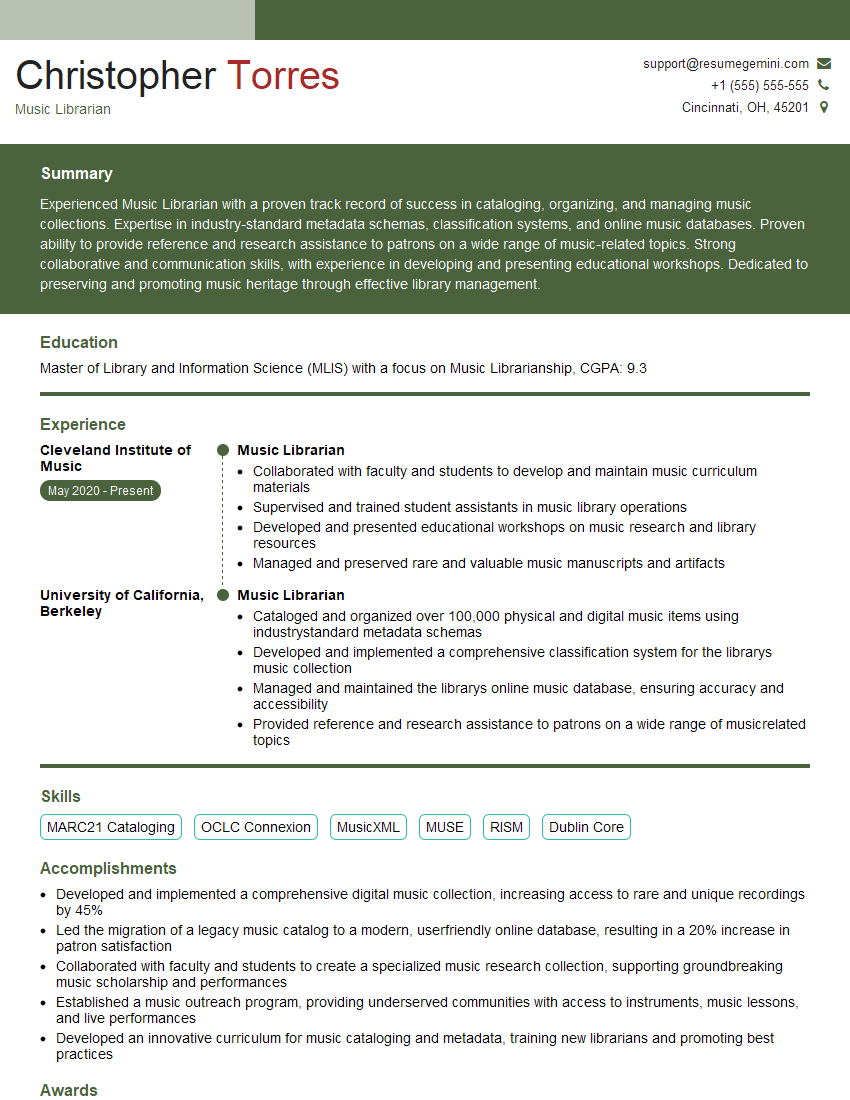
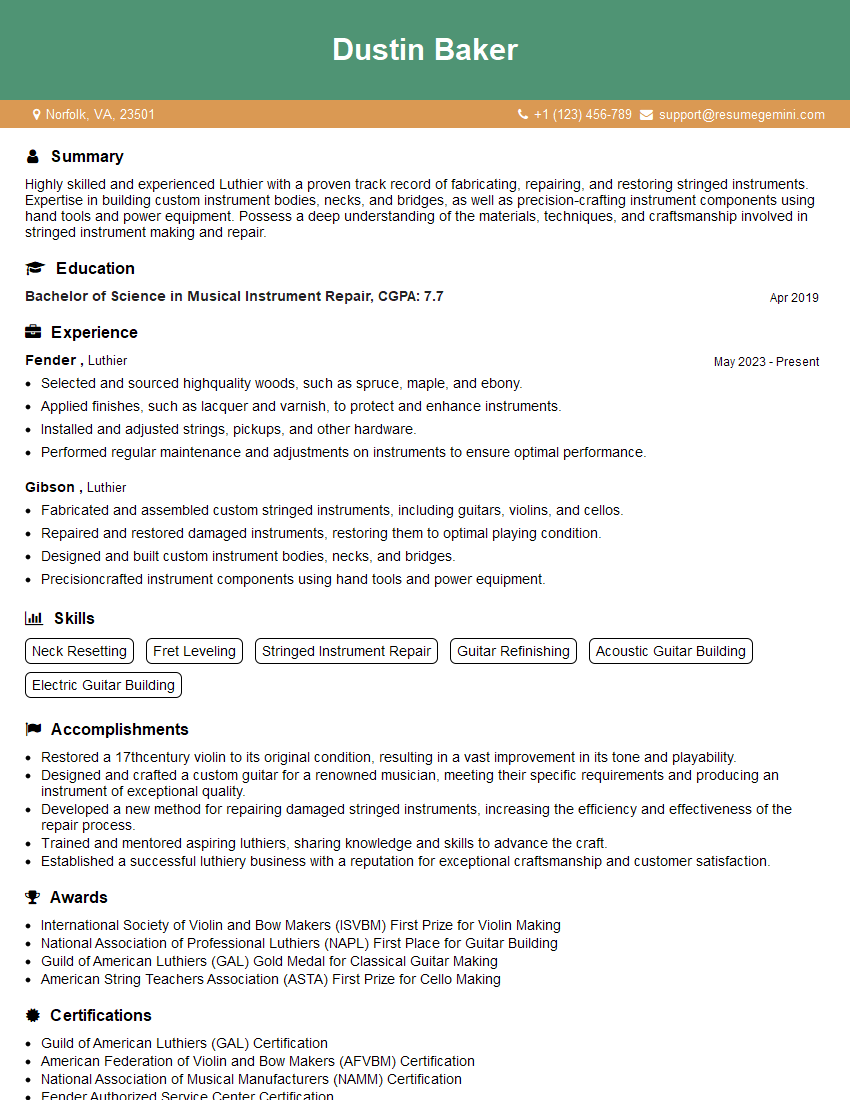
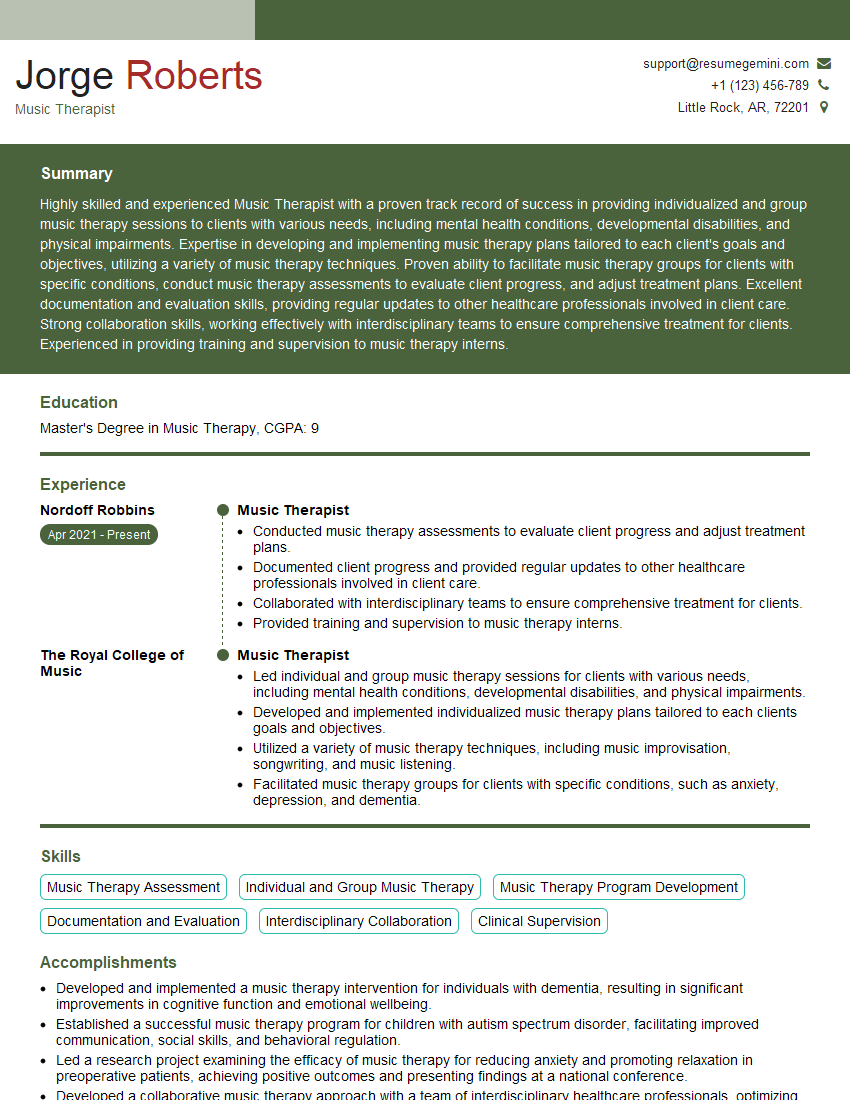
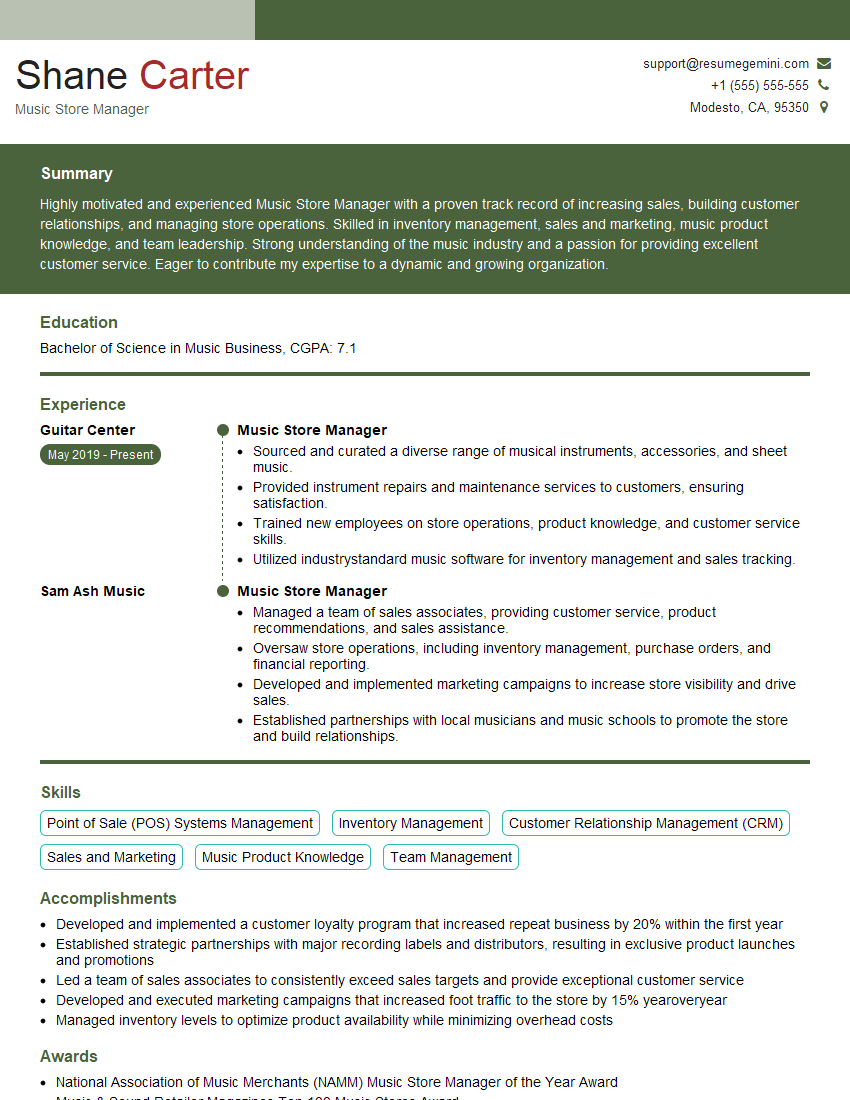
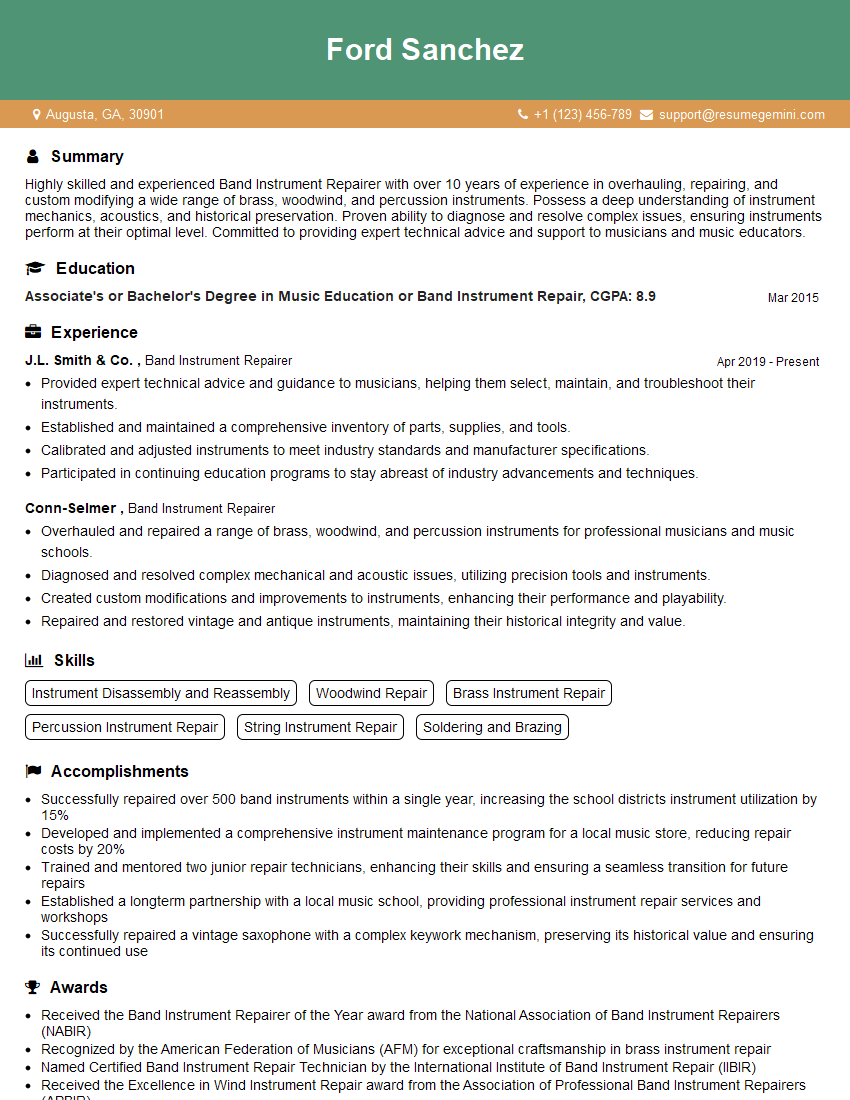
Mastering musical instrument knowledge is vital for career advancement in the music industry, opening doors to diverse opportunities in performance, education, repair, and more. A strong resume is your key to unlocking these possibilities. Make sure your resume is ATS-friendly to maximize its visibility to potential employers. ResumeGemini is a trusted resource to help you build a professional and impactful resume that highlights your expertise. Examples of resumes tailored to musical instrument knowledge are available, showcasing how to best present your skills and experience.

Explore more articles
Users Rating of Our Blogs
Share Your Experience
We value your feedback! Please rate our content and share your thoughts (optional).
What Readers Say About Our Blog
Attention music lovers!
Wow, All the best Sax Summer music !!!
Spotify: https://open.spotify.com/artist/6ShcdIT7rPVVaFEpgZQbUk
Apple Music: https://music.apple.com/fr/artist/jimmy-sax-black/1530501936
YouTube: https://music.youtube.com/browse/VLOLAK5uy_noClmC7abM6YpZsnySxRqt3LoalPf88No
Other Platforms and Free Downloads : https://fanlink.tv/jimmysaxblack
on google : https://www.google.com/search?q=22+AND+22+AND+22
on ChatGPT : https://chat.openai.com?q=who20jlJimmy20Black20Sax20Producer
Get back into the groove with Jimmy sax Black
Best regards,
Jimmy sax Black
www.jimmysaxblack.com
Hi I am a troller at The aquatic interview center and I suddenly went so fast in Roblox and it was gone when I reset.
Hi,
Business owners spend hours every week worrying about their website—or avoiding it because it feels overwhelming.
We’d like to take that off your plate:
$69/month. Everything handled.
Our team will:
Design a custom website—or completely overhaul your current one
Take care of hosting as an option
Handle edits and improvements—up to 60 minutes of work included every month
No setup fees, no annual commitments. Just a site that makes a strong first impression.
Find out if it’s right for you:
https://websolutionsgenius.com/awardwinningwebsites
Hello,
we currently offer a complimentary backlink and URL indexing test for search engine optimization professionals.
You can get complimentary indexing credits to test how link discovery works in practice.
No credit card is required and there is no recurring fee.
You can find details here:
https://wikipedia-backlinks.com/indexing/
Regards
NICE RESPONSE TO Q & A
hi
The aim of this message is regarding an unclaimed deposit of a deceased nationale that bears the same name as you. You are not relate to him as there are millions of people answering the names across around the world. But i will use my position to influence the release of the deposit to you for our mutual benefit.
Respond for full details and how to claim the deposit. This is 100% risk free. Send hello to my email id: lukachachibaialuka@gmail.com
Luka Chachibaialuka
Hey interviewgemini.com, just wanted to follow up on my last email.
We just launched Call the Monster, an parenting app that lets you summon friendly ‘monsters’ kids actually listen to.
We’re also running a giveaway for everyone who downloads the app. Since it’s brand new, there aren’t many users yet, which means you’ve got a much better chance of winning some great prizes.
You can check it out here: https://bit.ly/callamonsterapp
Or follow us on Instagram: https://www.instagram.com/callamonsterapp
Thanks,
Ryan
CEO – Call the Monster App
Hey interviewgemini.com, I saw your website and love your approach.
I just want this to look like spam email, but want to share something important to you. We just launched Call the Monster, a parenting app that lets you summon friendly ‘monsters’ kids actually listen to.
Parents are loving it for calming chaos before bedtime. Thought you might want to try it: https://bit.ly/callamonsterapp or just follow our fun monster lore on Instagram: https://www.instagram.com/callamonsterapp
Thanks,
Ryan
CEO – Call A Monster APP
To the interviewgemini.com Owner.
Dear interviewgemini.com Webmaster!
Hi interviewgemini.com Webmaster!
Dear interviewgemini.com Webmaster!
excellent
Hello,
We found issues with your domain’s email setup that may be sending your messages to spam or blocking them completely. InboxShield Mini shows you how to fix it in minutes — no tech skills required.
Scan your domain now for details: https://inboxshield-mini.com/
— Adam @ InboxShield Mini
support@inboxshield-mini.com
Reply STOP to unsubscribe
Hi, are you owner of interviewgemini.com? What if I told you I could help you find extra time in your schedule, reconnect with leads you didn’t even realize you missed, and bring in more “I want to work with you” conversations, without increasing your ad spend or hiring a full-time employee?
All with a flexible, budget-friendly service that could easily pay for itself. Sounds good?
Would it be nice to jump on a quick 10-minute call so I can show you exactly how we make this work?
Best,
Hapei
Marketing Director
Hey, I know you’re the owner of interviewgemini.com. I’ll be quick.
Fundraising for your business is tough and time-consuming. We make it easier by guaranteeing two private investor meetings each month, for six months. No demos, no pitch events – just direct introductions to active investors matched to your startup.
If youR17;re raising, this could help you build real momentum. Want me to send more info?
Hi, I represent an SEO company that specialises in getting you AI citations and higher rankings on Google. I’d like to offer you a 100% free SEO audit for your website. Would you be interested?
Hi, I represent an SEO company that specialises in getting you AI citations and higher rankings on Google. I’d like to offer you a 100% free SEO audit for your website. Would you be interested?