Cracking a skill-specific interview, like one for Musician Development, requires understanding the nuances of the role. In this blog, we present the questions you’re most likely to encounter, along with insights into how to answer them effectively. Let’s ensure you’re ready to make a strong impression.
Questions Asked in Musician Development Interview
Q 1. Describe your experience in artist development strategies.
My artist development strategies are built on a holistic approach, focusing on the artist’s unique strengths and aspirations. It’s not a one-size-fits-all solution; I tailor strategies based on individual needs, whether it’s refining their musical skill, crafting a compelling brand identity, or mastering the business side of the music industry.
This involves a deep dive into their musical style, target audience, and long-term career goals. We meticulously plan each step, from songwriting and recording to live performance, marketing, and social media engagement. For example, I worked with a singer-songwriter who was technically proficient but lacked stage presence. We focused on performance coaching, incorporating movement and vocal dynamics into their sets, resulting in a noticeably enhanced connection with their audience and a significant boost in their bookings.
Another example involved a band struggling with branding. We developed a unique visual identity, refined their online presence, and crafted a focused marketing campaign targeting specific music festivals and blogs. This strategy helped them secure several festival gigs and exponentially increase their online following.
Q 2. What are the key performance indicators (KPIs) you use to measure the success of a musician’s development?
Key Performance Indicators (KPIs) for musician development are multifaceted and should be aligned with the artist’s specific goals. While streaming numbers and album sales are important, they are not the sole measures of success. A holistic approach considers several KPIs, including:
- Streaming/Sales Data: Spotify streams, album sales, downloads, etc. This gives quantitative data on audience reach and engagement.
- Social Media Engagement: Follower growth, engagement rate (likes, comments, shares), reach, and website traffic. This tracks the effectiveness of online presence.
- Live Performance Metrics: Attendance at shows, ticket sales, merchandise sales, and audience feedback (surveys, reviews). This gauges live performance appeal and fan connection.
- Brand Awareness: Mentions in media (blogs, press, podcasts), brand partnerships, and overall public recognition. This measures brand growth and reach.
- Artist Development Goals: Progress towards specific goals laid out in the development plan, such as improved vocal technique, songwriting proficiency, or stage presence. This assesses the effectiveness of specific development strategies.
Regularly tracking these KPIs allows for data-driven decision-making and adjustments to the development plan as needed.
Q 3. How do you identify and nurture emerging musical talent?
Identifying and nurturing emerging talent requires a keen ear, a discerning eye, and a genuine passion for music. I actively attend live shows, music festivals, and open mic nights to discover new artists. I also closely follow online platforms, such as Soundcloud, Bandcamp, and YouTube, for promising unsigned talent. I look for artists with a unique sound, strong stage presence (if applicable), a compelling songwriting style, and a genuine passion for their music.
Nurturing this talent involves providing constructive criticism, connecting them with industry professionals (managers, producers, publicists), and offering mentorship. This could include workshops on songwriting, performance technique, or music business. I also emphasize the importance of building a strong online presence and networking within the industry.
For example, I discovered a young guitarist through an online competition. After mentoring him and helping him refine his material, we were able to secure him a record deal with an independent label.
Q 4. Explain your approach to creating a comprehensive development plan for a musician.
Creating a comprehensive development plan is crucial for sustainable growth. It should be a collaborative effort, involving the musician, management team, and other relevant stakeholders. The process begins with defining clear, measurable, achievable, relevant, and time-bound (SMART) goals. These goals could include increasing social media followers, releasing an album, securing a tour, or improving songwriting skills.
The plan outlines specific strategies and action steps to achieve these goals. This might involve:
- Skill Development: Vocal coaching, instrument lessons, songwriting workshops.
- Branding and Marketing: Social media strategy, public relations, website development.
- Recording and Production: Studio time, album production, mastering.
- Live Performance: Gig bookings, performance coaching, stage production.
- Legal and Business: Contract negotiation, copyright registration, royalty collection.
Regular progress reviews are essential. The plan needs to be flexible enough to adapt to changing circumstances and feedback. We constantly monitor the KPIs to assess progress and make necessary adjustments.
Q 5. How do you manage the budget for a musician’s development?
Budget management for a musician’s development requires careful planning and transparency. We create a detailed budget outlining projected expenses and revenue streams. Expenses can include studio time, marketing and promotion costs, travel expenses, artist fees, and professional services (managers, publicists, lawyers).
Revenue streams may come from album sales, streaming royalties, merchandise sales, live performance income, grants, or funding from investors or labels. It’s crucial to track income and expenditure meticulously using accounting software. This ensures accountability, facilitates informed decision-making, and allows for efficient allocation of resources. We also explore various funding options, such as grants or crowdfunding, to supplement the budget when necessary.
Transparency is key; regular budget reports are shared with the artist, keeping them informed about the financial health of their development.
Q 6. How do you handle conflict between a musician and their management team?
Conflict resolution between a musician and their management team is critical. It requires open communication, active listening, and a focus on finding mutually beneficial solutions. The first step is to identify the root cause of the conflict – this could range from creative differences to financial disagreements or communication breakdowns.
My approach involves facilitating a calm and respectful discussion among all involved parties. This is a collaborative effort – each party has a chance to express their perspective and concerns without interruption. We then work together to brainstorm solutions that address the concerns of everyone involved, keeping the artist’s long-term career goals in mind. Mediation may be necessary in some cases. The goal is to find a resolution that maintains a healthy working relationship, fosters trust, and allows the artist to focus on their creative work.
Q 7. Describe your experience in marketing and promotion strategies for musicians.
My marketing and promotion strategies are data-driven and tailored to each artist’s unique brand. We develop a comprehensive marketing plan that leverages a multi-channel approach, encompassing social media marketing, public relations, email marketing, content marketing, and live performance promotion.
Social media is crucial; we curate engaging content, run targeted advertising campaigns, and actively interact with the fanbase. Public relations involves securing media coverage in relevant publications, blogs, and podcasts. Content marketing focuses on creating valuable, engaging content (blog posts, videos, podcasts) that resonates with the target audience. Live performance promotion involves securing high-quality gigs and effectively promoting them using various channels.
For example, for one artist, we built a strong social media presence focusing on Instagram and TikTok, using short engaging video clips of their music and behind-the-scenes content. For another, we prioritized securing press coverage in music blogs and magazines, aligning their music with the publication’s target audience. The key is to identify the most effective channels for each artist and strategically allocate resources accordingly.
Q 8. What are your strategies for building a musician’s online presence?
Building a strong online presence is crucial for modern musicians. It’s about more than just having social media accounts; it’s about creating a cohesive brand and engaging with fans effectively. My strategy involves a multi-pronged approach:
- Professional Website: A well-designed website serves as the central hub, showcasing music, biography, upcoming shows, and contact information. Think of it as the musician’s digital storefront.
- Targeted Social Media: Instead of being everywhere, I focus on platforms where the musician’s target audience is most active. For example, a classical musician might prioritize YouTube and Instagram, while a punk band might lean towards TikTok and Bandcamp. Content should be varied – behind-the-scenes glimpses, snippets of new music, engaging visuals, and interactive polls.
- Content Marketing: This goes beyond simple posts. I work with musicians to develop high-quality content – blog posts about their creative process, engaging videos, and even short documentaries – to attract and retain fans. This builds authority and fosters a connection.
- Search Engine Optimization (SEO): Making sure the musician’s website and online presence are easily discoverable through search engines is essential. This involves using relevant keywords and optimizing content for search.
- Email Marketing: Building an email list allows direct communication with fans, announcing new releases, tour dates, and exclusive content. This fosters a loyal following that is less dependent on algorithm changes.
- Collaborations: Partnering with other musicians, influencers, or brands can significantly expand reach and introduce the musician to new audiences.
For example, I helped a young singer-songwriter build her online presence by creating a visually stunning website, focusing her social media on Instagram and TikTok (with a strong emphasis on short, engaging video content), and launching an email list to connect directly with her growing fanbase. Her engagement skyrocketed, and she secured a record deal within a year.
Q 9. How do you assess a musician’s potential for commercial success?
Assessing a musician’s potential for commercial success is a multifaceted process. It’s not just about talent; it’s about a combination of factors:
- Musical Talent and Uniqueness: This is the foundation. Does the musician possess exceptional skills? Is their style unique and memorable? Do they have a distinctive sound?
- Market Appeal: Who is their target audience? Is there a demand for their music genre? Is their style currently trending, or does it have the potential to become a trend?
- Performance Ability: Can they deliver a captivating live performance? A strong stage presence is critical for success beyond just recordings.
- Business Acumen: Are they organized, proactive, and capable of managing their career? Do they understand the importance of branding and marketing themselves?
- Networking Skills: Can they build relationships with industry professionals, other musicians, and potential collaborators? The music industry is heavily reliant on networking.
- Adaptability: The music industry is constantly evolving. A musician’s ability to adapt to new trends and technologies is crucial for long-term success.
I use a scoring system to analyze these aspects, assigning weights based on the specific genre and market conditions. For instance, a musician with exceptional songwriting talent but poor stage presence might require additional coaching and development before being considered for a major label deal.
Q 10. What are your thoughts on the use of social media in musician development?
Social media is an indispensable tool in musician development, but it’s crucial to use it strategically. It’s not just about posting; it’s about building a community and fostering engagement.
- Building a Community: Social media allows for direct interaction with fans, creating a sense of community around the musician’s work. This fosters loyalty and helps build a strong fanbase.
- Targeted Advertising: Platforms like Facebook and Instagram allow for targeted advertising campaigns, reaching specific demographics interested in the musician’s genre.
- Data Analytics: Social media provides valuable data about audience engagement, helping to refine marketing strategies and content creation.
- Content Distribution: Social media is a powerful tool for distributing new releases, tour dates, and other news directly to fans.
- Collaboration Opportunities: Social media can facilitate collaborations with other musicians and industry professionals.
- Brand Building: A consistent and well-crafted social media presence helps establish a strong brand identity for the musician.
However, it’s important to avoid over-saturation and focus on quality over quantity. A carefully curated feed with high-quality content is far more effective than spamming fans with irrelevant posts.
Q 11. How do you approach the negotiation of contracts on behalf of a musician?
Negotiating contracts for musicians requires a deep understanding of the music industry and legal frameworks. My approach focuses on:
- Thorough Review: I meticulously review each contract clause, ensuring it protects the musician’s interests and rights. This includes royalty rates, publishing rights, touring agreements, and merchandise deals.
- Understanding the Terms: I explain every aspect of the contract to the musician in clear, accessible language, ensuring they understand their obligations and entitlements.
- Advocacy: I advocate fiercely for the musician, negotiating favorable terms and protecting their long-term career prospects.
- Legal Counsel: I work closely with legal professionals when necessary, ensuring all contractual agreements are legally sound and comply with industry standards.
- Long-term Vision: I advise the musician on the long-term implications of contract terms, considering potential future opportunities and career growth.
For example, I recently negotiated a recording contract for a band that secured them significantly higher royalty rates than initially offered, along with greater control over their creative output.
Q 12. Explain your understanding of copyright and intellectual property rights in the music industry.
Copyright and intellectual property rights are fundamental in the music industry. Copyright protects the original works of musicians, including musical compositions, lyrics, and sound recordings. Intellectual property rights encompass a broader range, including trademarks (e.g., band name, logo) and patents (for inventions related to musical technology).
- Copyright Registration: I advise musicians to register their copyrights with relevant organizations (e.g., the Copyright Office) to establish legal ownership and protect their work against infringement.
- Licensing and Royalties: I help musicians understand how licensing works, ensuring they receive appropriate royalties for the use of their music in various contexts (e.g., film, television, advertising).
- Contractual Protection: Contract negotiations must clearly define copyright ownership and licensing agreements, protecting the musician’s rights.
- Infringement Prevention: I help musicians monitor for instances of copyright infringement and take appropriate action when necessary.
Understanding copyright and intellectual property is not only crucial for protecting a musician’s work but also for leveraging its value for financial gain. It’s a complex field, and it is important to seek legal advice when navigating complex licensing and ownership issues.
Q 13. Describe your experience working with diverse musical genres.
My experience spans a wide range of musical genres, from classical and jazz to pop, rock, and electronic music. This breadth of experience allows me to adapt my strategies to the specific needs and challenges of each genre.
- Understanding Genre Conventions: I understand the unique characteristics and conventions of each genre, which informs my marketing and promotional strategies.
- Identifying Target Audiences: Different genres attract different audiences, requiring tailored approaches to reach the right listeners.
- Adapting Strategies: My strategies adapt based on the genre’s typical promotional avenues and industry practices.
For example, promoting a classical musician requires a different approach than promoting a hip-hop artist, including choices of platforms, marketing materials, and the tone of communications. My success comes from understanding and adapting to these nuances, helping each musician tailor their message and reach their specific audience.
Q 14. How do you handle negative feedback or criticism about a musician’s work?
Negative feedback or criticism is inevitable in the creative arts. My approach focuses on helping musicians constructively engage with criticism, turning it into an opportunity for growth.
- Filtering Constructive Criticism: I help musicians identify constructive criticism from mere negativity, focusing on feedback that offers actionable insights.
- Addressing Valid Concerns: If the criticism highlights legitimate areas for improvement, we develop strategies to address them. This might involve refining their technique, adjusting their style, or improving their performance.
- Ignoring Irrelevant Feedback: It’s important to learn to filter out irrelevant or hateful comments that lack substance. Focusing on such criticism is unproductive and can negatively affect the musician’s self-confidence.
- Building Resilience: I work with musicians to build their resilience and help them develop a thicker skin. The music industry is often demanding, and the ability to handle negative feedback is critical for long-term success.
It’s important to remember that not everyone will love your music, and that’s okay. The goal is to connect with those who appreciate your work and to continually refine your craft. I emphasize that constructive criticism is a valuable tool for self-improvement and should not be taken personally.
Q 15. How do you motivate musicians to reach their full potential?
Motivating musicians to reach their full potential requires a multifaceted approach that blends understanding, support, and challenge. It’s not just about pushing them harder; it’s about fostering a growth mindset and building a strong, trusting relationship.
Setting Achievable Goals: We collaboratively set realistic, short-term goals that build towards larger ambitions. Instead of aiming for a world tour immediately, we might focus on mastering a specific technique or writing a certain number of songs. This provides a sense of accomplishment and momentum.
Positive Reinforcement and Feedback: Regular, constructive feedback is crucial. I focus on highlighting strengths while gently addressing weaknesses. Positive reinforcement celebrates progress, boosting confidence and motivation. This might involve praising a musician’s unique style or celebrating the successful completion of a challenging piece.
Addressing Limiting Beliefs: Many musicians grapple with self-doubt. We identify and challenge these limiting beliefs, helping them understand their capabilities and potential. This involves open conversations, exploring past experiences, and providing evidence of their progress.
Creating a Supportive Environment: A supportive environment fosters creativity and risk-taking. This means encouraging experimentation, providing space for mistakes, and celebrating individuality. This might involve creating a collaborative practice space or arranging feedback sessions with peers.
Career Expert Tips:
- Ace those interviews! Prepare effectively by reviewing the Top 50 Most Common Interview Questions on ResumeGemini.
- Navigate your job search with confidence! Explore a wide range of Career Tips on ResumeGemini. Learn about common challenges and recommendations to overcome them.
- Craft the perfect resume! Master the Art of Resume Writing with ResumeGemini’s guide. Showcase your unique qualifications and achievements effectively.
- Don’t miss out on holiday savings! Build your dream resume with ResumeGemini’s ATS optimized templates.
Q 16. What are your strategies for creating and maintaining strong relationships with industry professionals?
Building and maintaining strong relationships with industry professionals is vital for a musician’s success. It’s a process of consistent effort, genuine connection, and mutual respect.
Networking Strategically: Attending industry events, concerts, and workshops provides opportunities to meet and connect with professionals. However, it’s not about collecting business cards; it’s about building genuine relationships.
Providing Value: Offering something valuable to industry professionals strengthens relationships. This could be introducing them to other promising artists, assisting with projects, or providing insightful feedback.
Maintaining Consistent Communication: Regular communication keeps relationships alive. This could involve sending updates about projects, sharing articles of interest, or simply checking in periodically.
Following Up: After every interaction, a timely follow-up demonstrates professionalism and genuine interest. This might be a thank-you note, an email summarizing a conversation, or a LinkedIn connection.
Building Trust and Reciprocity: Relationships are built on trust and mutual benefit. Always be reliable, keep your promises, and offer support where possible.
Q 17. Explain your experience in the use of digital audio workstations (DAWs).
My experience with Digital Audio Workstations (DAWs) spans over 15 years, encompassing various platforms like Logic Pro X, Ableton Live, and Pro Tools. I’m proficient in all aspects of DAW usage, from basic recording and editing to advanced mixing, mastering, and sound design.
Recording and Editing: I’m adept at capturing high-quality audio, editing audio clips, and using various plugins for sound manipulation. I can guide musicians on microphone techniques, signal flow, and proper recording practices.
Mixing and Mastering: My expertise extends to mixing and mastering, achieving a polished and professional sound. I understand the principles of equalization, compression, reverb, and delay, and can tailor the mix to fit the style of music.
Sound Design: I’m proficient in creating and manipulating sounds using synthesizers, samplers, and effects plugins. I can assist musicians in designing custom sounds for their music.
Workflow Optimization: I can help musicians optimize their DAW workflows for greater efficiency and productivity.
For instance, I recently helped a musician improve their workflow by implementing a template system within Ableton Live, resulting in a significant increase in their productivity.
Q 18. What are your strategies for dealing with creative blocks in musicians?
Creative blocks are common among musicians. My strategies focus on reigniting inspiration and breaking free from mental roadblocks.
Change of Environment: Sometimes a change of scenery is all it takes. Suggesting a different practice space, going for a walk, or working in a coffee shop can stimulate creativity.
Collaboration: Working with other musicians can spark new ideas and perspectives. A jam session, co-writing, or simply bouncing ideas off a colleague can help break through a block.
Exploration: Encouraging experimentation with different instruments, genres, or techniques can lead to unexpected discoveries. This could involve trying a new plugin, exploring a different musical scale, or improvising without any preconceived notions.
Mindfulness and Breaks: Stress and fatigue can hinder creativity. Incorporating mindfulness techniques or simply taking breaks can help clear the mind and allow for fresh inspiration.
Return to Basics: Sometimes, revisiting fundamental techniques or musical concepts can unlock new possibilities. This might involve practicing scales, revisiting favorite songs, or studying the works of influential musicians.
Q 19. How do you identify and address the specific developmental needs of individual musicians?
Identifying and addressing the specific developmental needs of individual musicians requires careful observation, open communication, and a personalized approach. There’s no one-size-fits-all solution.
Needs Assessment: I start with a thorough needs assessment. This involves discussing their goals, identifying their strengths and weaknesses, and observing their playing style and techniques.
Personalized Curriculum: Based on the assessment, I create a personalized curriculum addressing specific needs. This could include focusing on technical skills, songwriting, performance techniques, or music theory.
Regular Feedback and Adjustments: Regular feedback and adjustments are essential to ensure the curriculum remains relevant and effective. This requires ongoing communication and a willingness to adapt the approach as needed.
Goal Setting and Tracking Progress: Collaborative goal setting and progress tracking keep the musician motivated and engaged. This could involve using a journal, tracking practice hours, or setting milestones for specific projects.
For example, one musician I worked with struggled with stage fright. We developed a plan that included visualization techniques, gradual exposure to performance situations, and performance coaching.
Q 20. Describe your understanding of the current music industry landscape.
The current music industry is characterized by a dynamic interplay of traditional and new models. The rise of digital platforms has democratized music distribution, empowering independent artists. However, it has also increased competition and altered the revenue streams for musicians.
Streaming Dominance: Streaming services like Spotify and Apple Music have become dominant forces, impacting how music is consumed and monetized. Artists need to strategically engage with these platforms.
Independent Artist Empowerment: Independent artists have more control over their careers than ever before. However, this also requires greater self-reliance in marketing, promotion, and distribution.
Increased Competition: The ease of releasing music online has led to an explosion of content, increasing competition for attention. Artists need to stand out through their unique style, branding, and engaging content.
New Revenue Streams: Artists are diversifying their income streams beyond traditional record sales, exploring merchandise, live performances, brand collaborations, and online courses.
Importance of Branding and Online Presence: Building a strong online presence through social media and website is crucial for reaching fans and connecting with industry professionals.
Q 21. How do you stay up-to-date with the latest trends and technologies in music production and distribution?
Staying current in music production and distribution requires continuous learning and engagement.
Industry Publications and Blogs: I regularly read industry publications, blogs, and websites to stay informed about new technologies, trends, and best practices.
Online Courses and Workshops: I participate in online courses and workshops to expand my skills and knowledge in music production, mixing, mastering, and marketing.
Conferences and Events: Attending industry conferences and events provides opportunities to network, learn from experts, and explore new technologies.
Experimentation and Hands-on Practice: I dedicate time to experimenting with new plugins, software, and hardware to stay ahead of the curve.
Following Key Influencers and Professionals: I follow key influencers and professionals on social media and other platforms to learn from their experiences and insights.
Q 22. How do you manage the expectations of musicians and their stakeholders?
Managing expectations in musician development is crucial for maintaining healthy relationships and avoiding disillusionment. It involves a transparent and proactive approach, establishing clear communication channels from the outset.
- Setting Realistic Goals: Collaboratively defining achievable short-term and long-term goals, considering the musician’s current skill level, resources, and market realities. For example, instead of aiming for a major label contract immediately, we might focus on building a strong online presence and securing local gigs first.
- Open Communication: Regular check-ins with both the musician and their stakeholders (managers, family, etc.) to discuss progress, challenges, and adjustments needed. This ensures everyone is on the same page and understands the journey involved.
- Managing Disappointment: Providing support and guidance when setbacks occur. This might involve reframing setbacks as learning opportunities, helping them adjust their goals, or providing encouragement and emotional support.
- Transparency and Honesty: Frankly addressing potential roadblocks and limitations without crushing enthusiasm. This fosters trust and helps the musician prepare for any challenges that might arise.
For instance, I once worked with a young singer-songwriter who expected immediate success. We collaboratively developed a realistic roadmap focusing on building their online presence and local fanbase. While the initial progress wasn’t as fast as they’d hoped, the consistent growth and positive feedback helped manage their expectations, leading to more sustainable long-term success.
Q 23. Describe your experience in providing feedback and constructive criticism to musicians.
Providing feedback is a delicate art, requiring a balance of honesty, empathy, and constructive guidance. My approach focuses on specificity, actionable steps, and celebrating successes.
- Specific and Actionable Feedback: Instead of general statements like “your performance was good,” I provide specific examples: “Your intonation in the second verse could be improved by focusing on the intervals between the notes.” This offers concrete steps for improvement.
- Focus on Strengths and Areas for Growth: I begin by highlighting strengths to build confidence before addressing areas that need development. This positive reinforcement creates a receptive environment for constructive criticism.
- Active Listening and Empathy: I encourage open dialogue, listening carefully to the musician’s perspective, and validating their feelings. This builds trust and rapport, making them more receptive to feedback.
- Collaborative Approach: I view feedback as a shared process. Instead of dictating changes, I work with the musician to explore different approaches and find solutions that suit their style and goals. This builds ownership and motivation.
For example, I worked with a guitarist struggling with stage fright. Instead of directly criticizing their performance, we started by discussing their anxieties, then worked on breathing exercises and visualization techniques. This collaborative approach led to a significant reduction in their anxiety and an improvement in performance confidence.
Q 24. What are your strategies for building a strong team to support a musician’s development?
Building a strong support team is fundamental to a musician’s development. This involves carefully selecting individuals with complementary skills and fostering collaborative relationships.
- Identifying Key Roles: This could include a manager for business affairs, a publicist for marketing, a booking agent for gigs, a vocal coach or instrumental instructor for technical skills, and a mentor for guidance and support. The specific roles depend on the musician’s needs and stage of their career.
- Selecting Qualified Individuals: Each team member should possess relevant expertise, experience, and a strong work ethic. Background checks and references can help ensure their professionalism and reliability.
- Building Team Cohesion: Regular team meetings and open communication foster collaboration and minimize conflicts. A shared understanding of the musician’s goals and a strong collaborative spirit are essential.
- Adaptability and Flexibility: The team needs to adapt to changing circumstances and evolving needs. As the musician’s career progresses, the team might need to expand or adjust its roles.
For instance, I assembled a team for a young band that included a manager experienced in securing regional gigs, a publicist focused on social media marketing, and a mentor with extensive experience in the music industry. This integrated approach facilitated the band’s successful launch and growth.
Q 25. How do you deal with setbacks and challenges in a musician’s career?
Setbacks are inevitable in any career, especially in the unpredictable world of music. My approach involves reframing challenges, developing resilience, and adapting strategies.
- Reframing Setbacks as Learning Opportunities: Analyzing what went wrong, extracting valuable lessons, and using them to improve future strategies. Instead of dwelling on failure, we focus on growth and refinement.
- Developing Resilience: Building the musician’s capacity to cope with criticism, rejection, and financial instability. This involves developing coping mechanisms, promoting self-care, and fostering a strong support network.
- Adapting Strategies: Flexibility is key. If one approach fails, we explore alternatives. This may involve adjusting marketing strategies, exploring different musical styles, or seeking new opportunities.
- Maintaining Motivation: Continuous encouragement and support are vital during challenging times. Celebrating small victories and focusing on long-term goals help to maintain motivation and prevent burnout.
I remember one musician experiencing a period of creative block. We addressed this by exploring different creative outlets, collaborating with other artists, and focusing on self-care activities. This led to a renewed creative spark and a more fulfilling artistic journey.
Q 26. How do you ensure the long-term sustainability of a musician’s career?
Long-term sustainability requires a multifaceted approach encompassing artistic growth, financial planning, and career diversification.
- Continuous Artistic Development: Regular practice, workshops, and collaboration with other artists are crucial to keep skills sharp and creativity flowing. Exploring new genres or collaborating with other musicians can expand their audience reach.
- Financial Planning: Developing sound financial strategies, including budgeting, saving, and investing, is critical for long-term stability. Understanding copyright and royalties is also essential.
- Career Diversification: Exploring multiple income streams, such as teaching music, composing for film or media, or performing in various settings (live shows, online platforms). This reduces reliance on a single income source.
- Building a Strong Online Presence: Developing a website, engaging with fans on social media, and leveraging streaming platforms are crucial for promoting their work and reaching a wider audience. This should be ongoing and evolving.
I always advise musicians to think beyond just performing. For example, one client successfully diversified by composing music for commercials and teaching music workshops, supplementing their income from live performances.
Q 27. What is your approach to mentoring and coaching musicians?
My approach to mentoring and coaching is holistic, focusing on the musician’s artistic, personal, and professional growth.
- Personalized Approach: I tailor my mentorship to the individual’s specific needs, goals, and learning style. There’s no one-size-fits-all approach.
- Skill Development: I provide guidance on technical skills, performance techniques, songwriting, and arranging, drawing on my expertise and experience.
- Creative Exploration: I encourage experimentation and risk-taking to foster creativity and individuality. I help them find their unique voice and style.
- Career Guidance: I offer advice on networking, marketing, gigging, and navigating the music industry, sharing my industry knowledge and insights.
- Emotional Support: I provide emotional support and guidance to help them overcome challenges and maintain a healthy balance between their personal and professional lives.
In mentoring, I often use a strengths-based approach, focusing on the musician’s talents and helping them build on these to reach their full potential. This positive reinforcement fosters a trusting relationship and encourages growth.
Q 28. Explain your understanding of the ethical considerations involved in musician development.
Ethical considerations in musician development are paramount. My approach centers on transparency, respect, fairness, and protecting the artist’s well-being.
- Transparency and Honesty: Open communication about expectations, fees, and contractual obligations. Avoiding any misleading claims or promises.
- Respect for Artistic Integrity: Never pressuring a musician to compromise their artistic vision or creative integrity for commercial gain.
- Fair Compensation: Ensuring fair compensation for the musician’s work, respecting copyright laws, and negotiating contracts fairly.
- Protecting the Musician’s Well-being: Prioritizing the musician’s mental and physical health, encouraging healthy work habits, and addressing any signs of burnout or exploitation.
- Confidentiality: Maintaining strict confidentiality regarding the musician’s personal information and creative work.
Ethical practice means understanding that the musician’s artistic expression is paramount, and my role is to support and nurture it responsibly, avoiding any exploitation or compromising their long-term well-being.
Key Topics to Learn for Musician Development Interview
- Artist Development Strategies: Understanding the multifaceted nature of artist development, encompassing creative vision, brand building, and career trajectory planning.
- Performance Coaching & Mentorship: Practical application of techniques to enhance stage presence, interpretative skills, and overall performance quality. Consider methods for providing constructive feedback and fostering growth.
- Music Business Fundamentals: Knowledge of music publishing, licensing, contracts, and revenue streams. Explore the practical application of these concepts in artist management.
- Marketing & Promotion: Developing and implementing effective marketing strategies for musicians, including social media management, public relations, and audience engagement.
- Talent Scouting & Assessment: Developing a critical ear and discerning eye for identifying promising musical talent, understanding skill levels, and potential for growth. Consider different approaches to talent evaluation.
- Legal & Ethical Considerations: Understanding copyright laws, artist agreements, and ethical responsibilities within the music industry. Exploring potential conflicts and solutions.
- Technological Proficiency: Familiarity with music production software, digital audio workstations (DAWs), and other relevant technologies used in the modern music landscape.
- Financial Management for Musicians: Understanding budgeting, financial planning, and the practical application of these principles in an artist’s career.
Next Steps
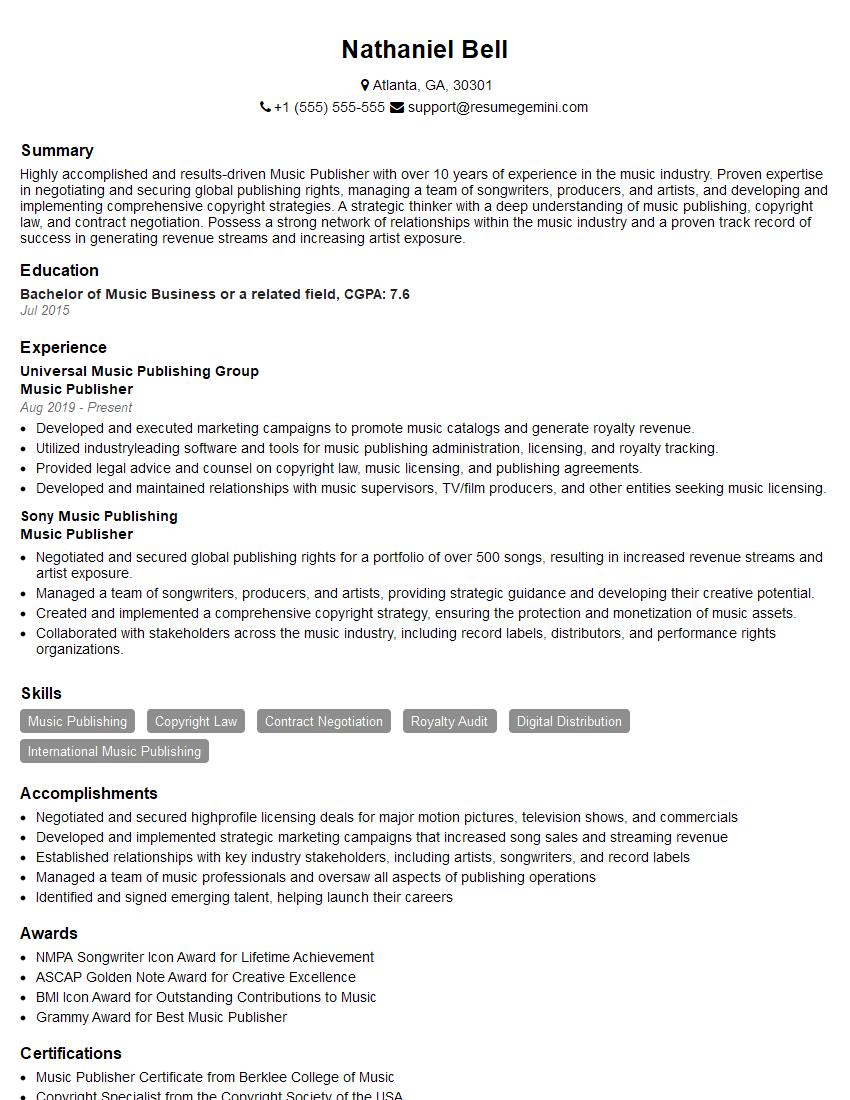
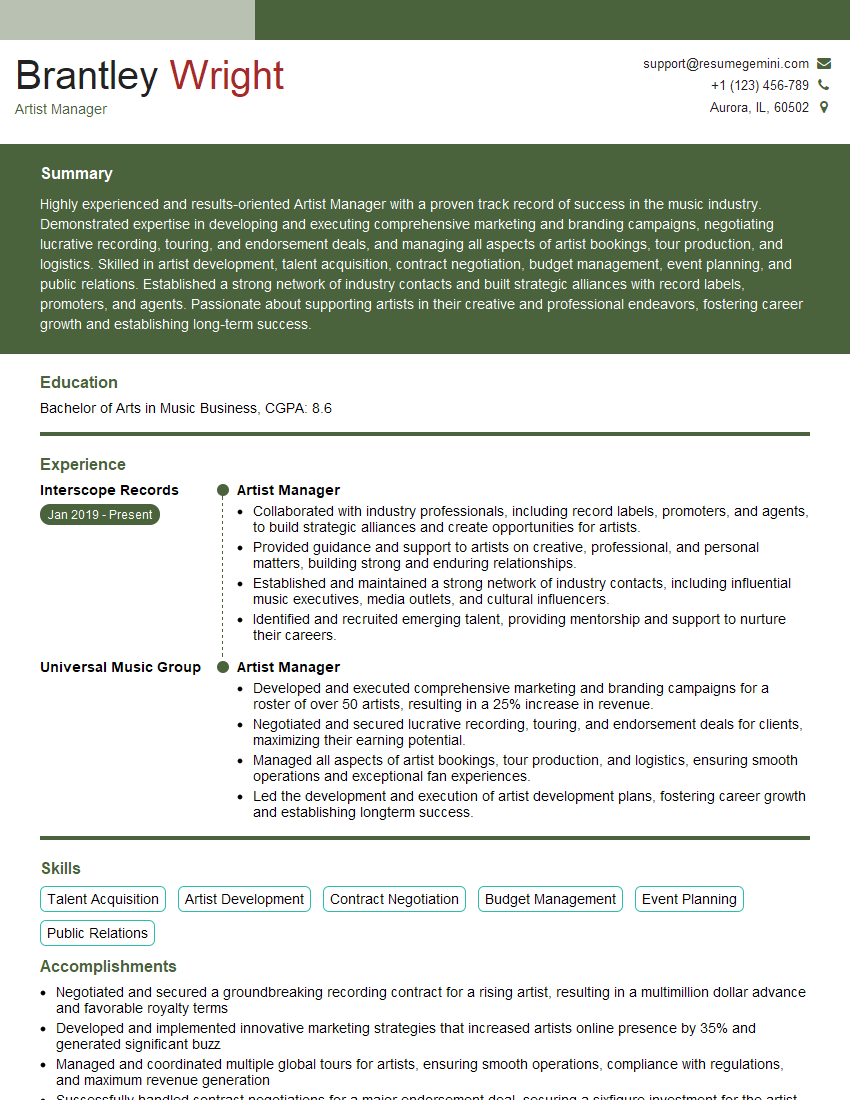
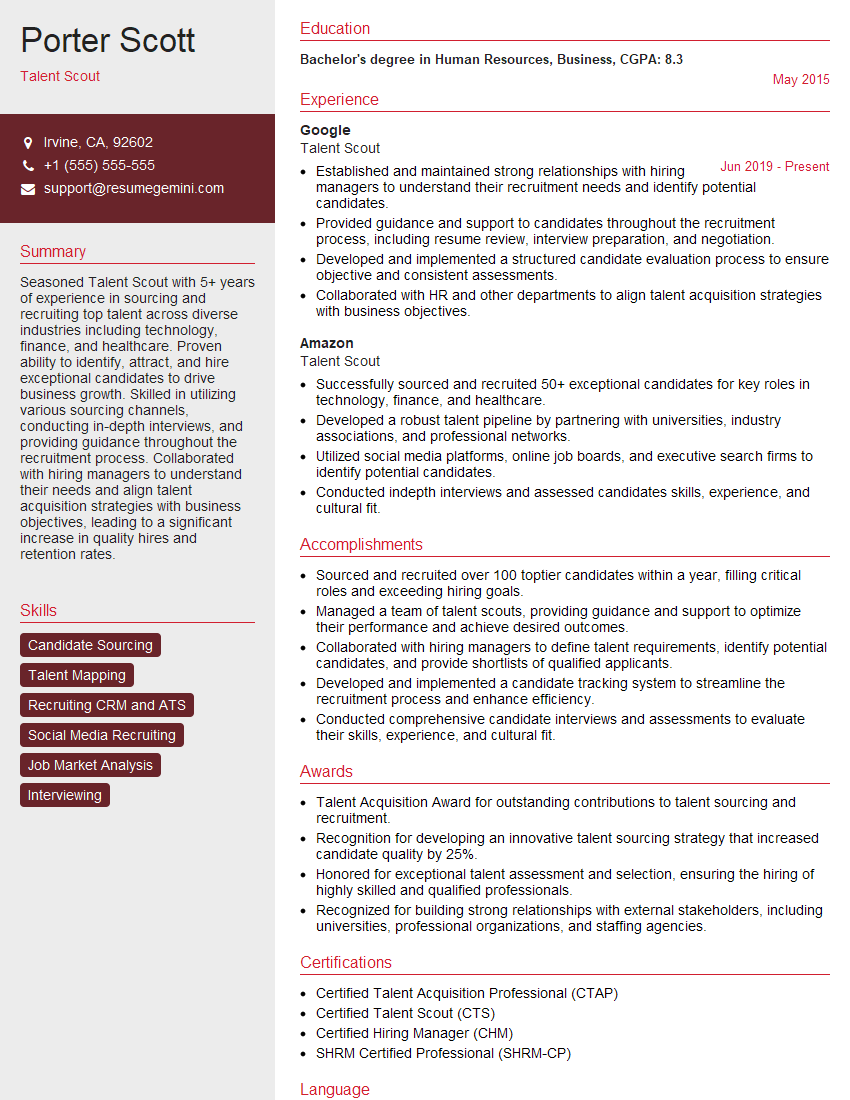
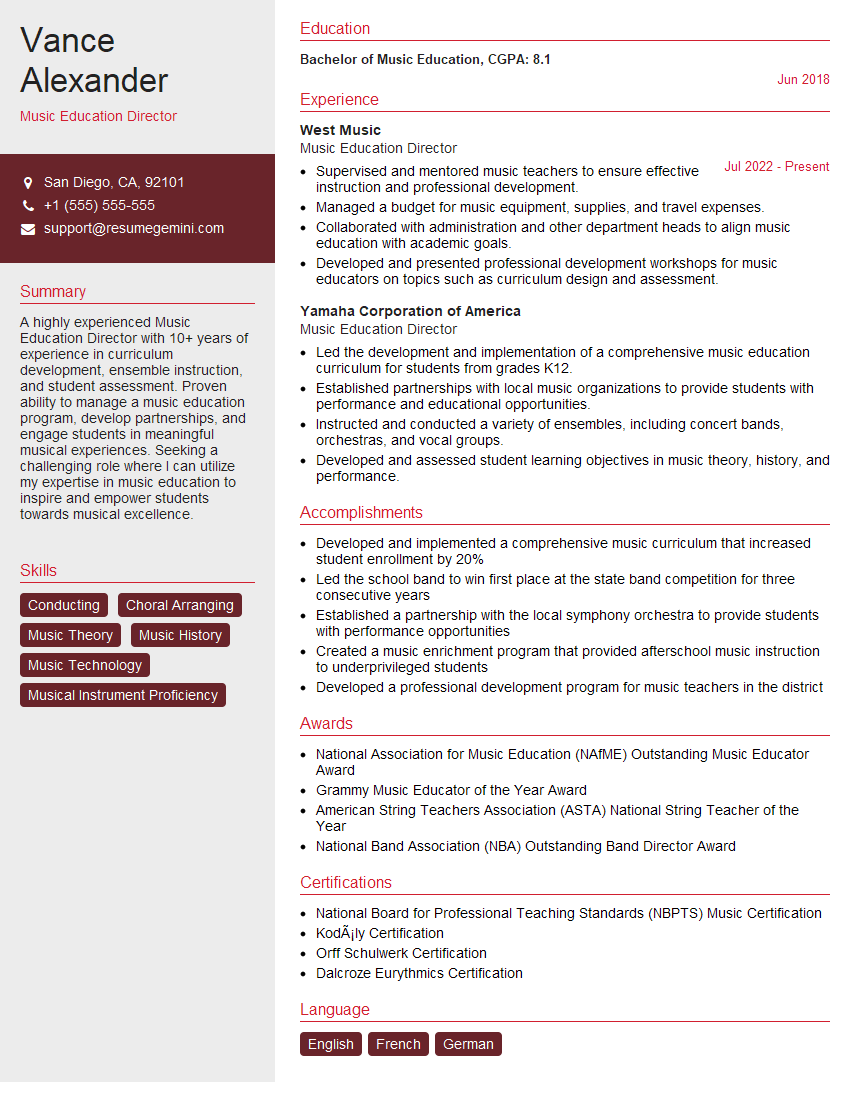
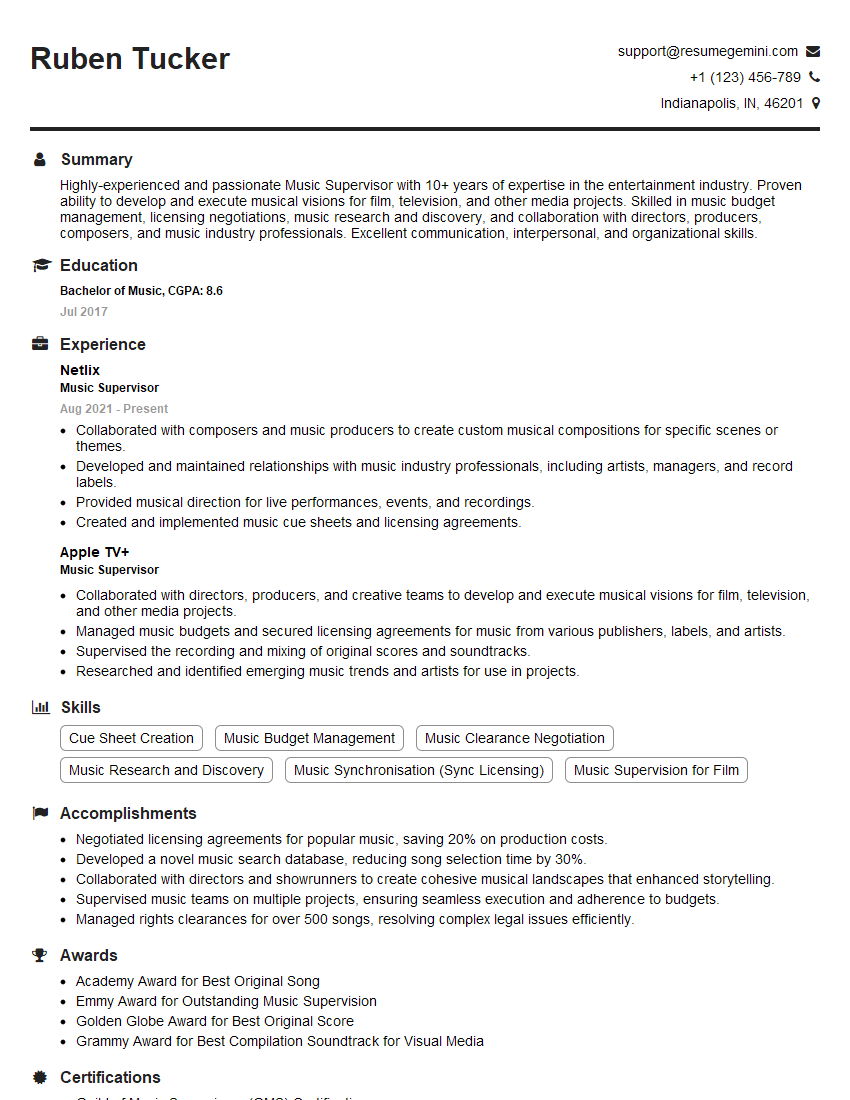
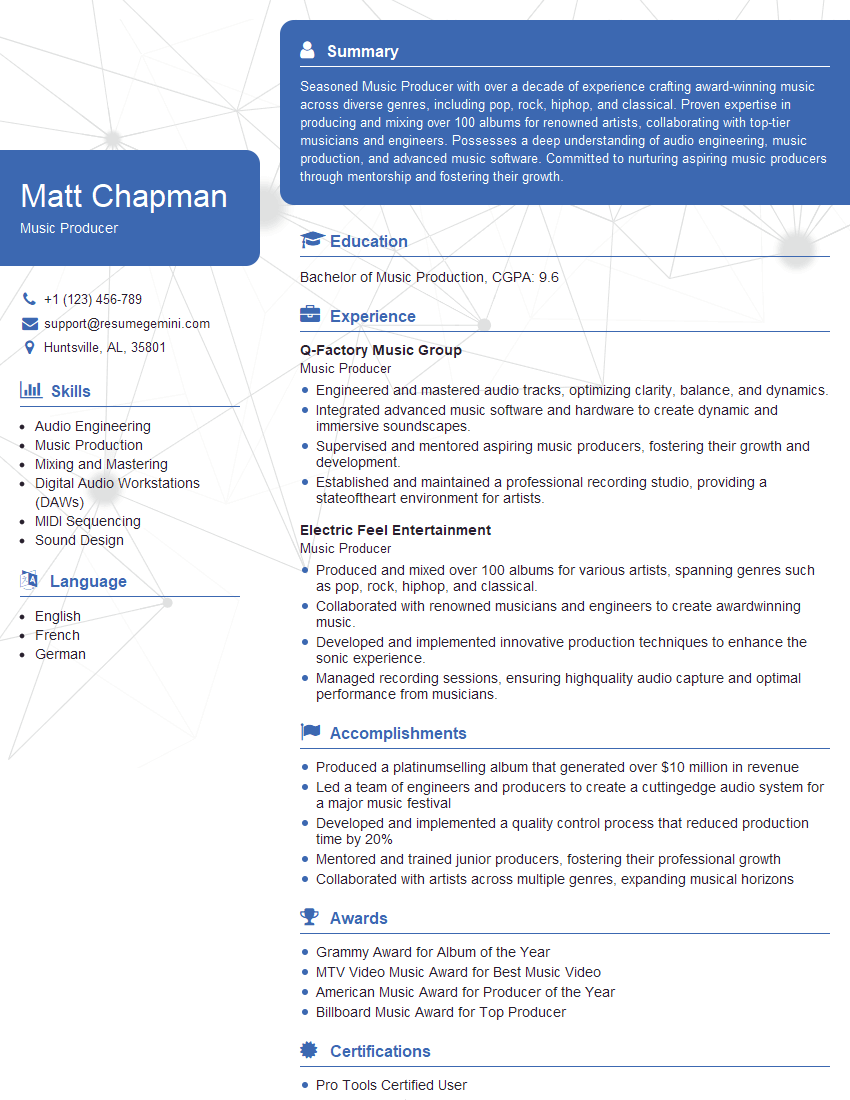
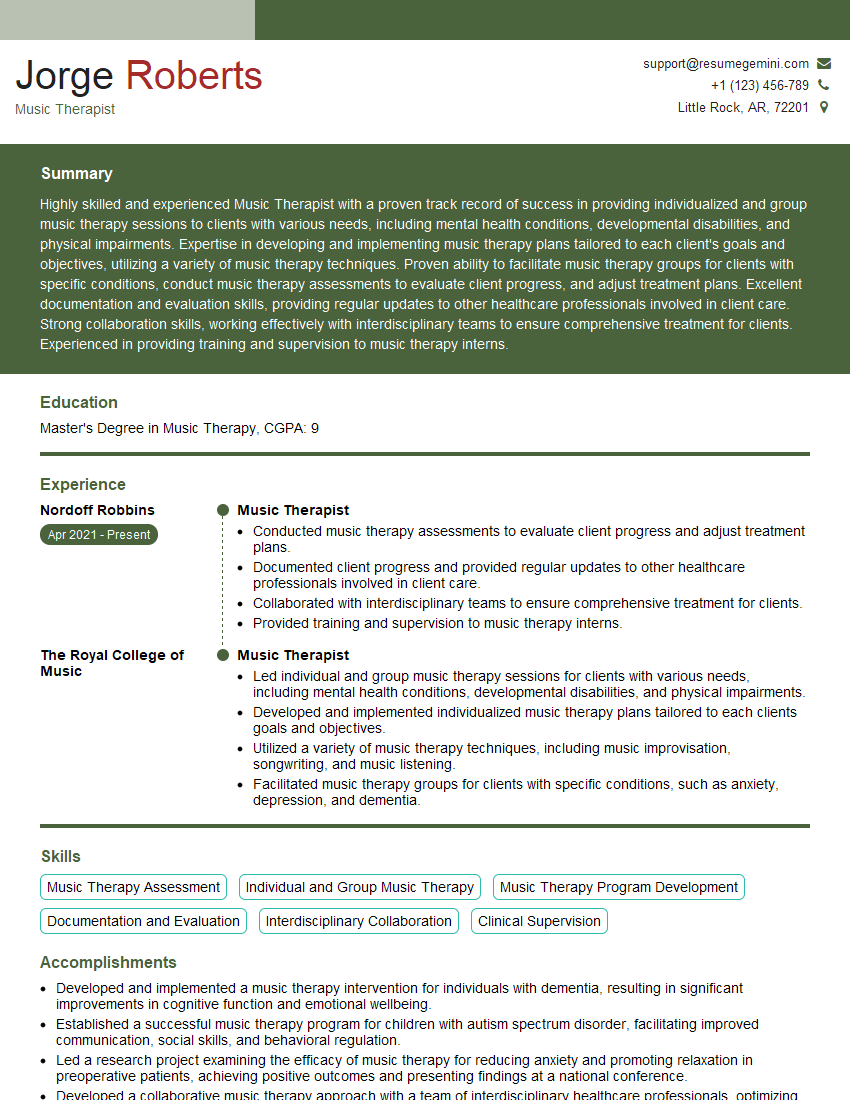
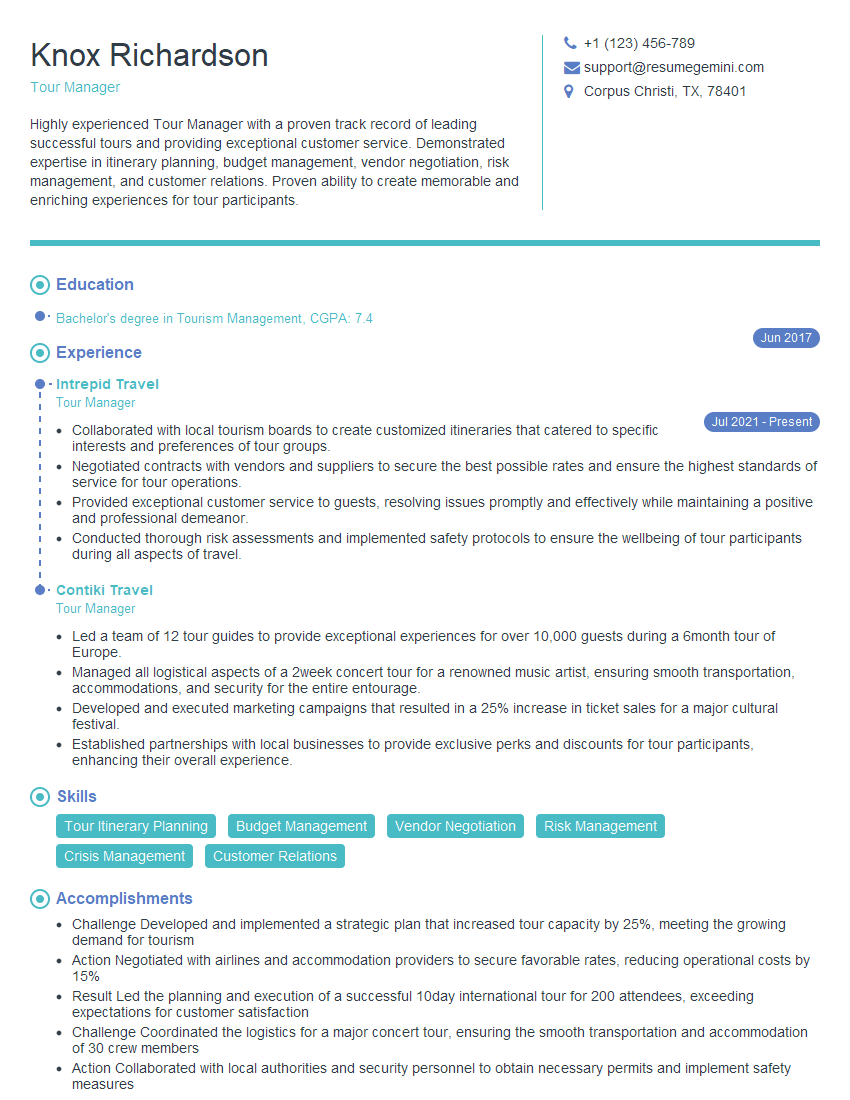
Mastering Musician Development is crucial for a thriving career in the dynamic music industry. It’s not just about musical talent; it’s about strategic planning, effective communication, and a deep understanding of the business side of music. To maximize your job prospects, create an ATS-friendly resume that highlights your skills and experience effectively. ResumeGemini is a trusted resource to help you build a professional and impactful resume. Examples of resumes tailored to Musician Development are available to guide you.
Explore more articles
Users Rating of Our Blogs
Share Your Experience
We value your feedback! Please rate our content and share your thoughts (optional).
What Readers Say About Our Blog
Very informative content, great job.
good