Interviews are more than just a Q&A session—they’re a chance to prove your worth. This blog dives into essential MUTCD and ITE Standards interview questions and expert tips to help you align your answers with what hiring managers are looking for. Start preparing to shine!
Questions Asked in MUTCD and ITE Standards Interview
Q 1. Define the purpose and scope of the MUTCD.
The Manual on Uniform Traffic Control Devices (MUTCD) is the standard for installing and maintaining traffic control devices on all public roads in the United States. Its purpose is to ensure uniformity and consistency in traffic control, improving safety and efficiency for all road users. The scope encompasses all aspects of traffic control, including signs, signals, pavement markings, and work zone traffic control.
Think of it as a comprehensive rulebook for creating a safe and understandable road environment. It covers everything from the design and placement of a simple stop sign to the complex coordination of traffic signals in a busy city intersection. Compliance is crucial for maintaining liability and ensuring public safety.
Q 2. Explain the hierarchy of traffic control devices according to MUTCD.
The MUTCD establishes a clear hierarchy of traffic control devices, meaning some devices take precedence over others. This hierarchy ensures drivers receive clear and consistent guidance, preventing confusion and conflicts. The hierarchy generally follows this order (from highest to lowest):
- Traffic Signals: These are the most dominant devices, providing precise control over traffic movements.
- Police Officers/Flaggers: Human control always overrides any other device. Their directions must be followed immediately.
- Signs: Signs provide advance warning, guidance, or regulatory information. Different types of signs (regulatory, warning, guide) have different weights within this category.
- Pavement Markings: These supplement signs and signals, providing visual guidance and reinforcing control measures. They are usually less authoritative than signs.
For example, a driver must obey a police officer directing traffic, even if it contradicts a traffic signal or sign. Similarly, a red traffic signal always supersedes any other device.
Q 3. Describe the different types of warning signs and their applications.
Warning signs alert drivers to potential hazards ahead, allowing them to adjust their speed and driving behavior accordingly. They use a distinctive yellow and black color scheme. Common types include:
- Curve Warnings: Indicate the presence of a curve, often specifying the degree of curvature.
- Intersection Warnings: Alert drivers to upcoming intersections, possibly with additional warnings about uncontrolled intersections or cross traffic.
- School Zone Warnings: Indicate school zones, requiring drivers to reduce their speed and be vigilant.
- Construction/Work Zone Warnings: Warn of construction or maintenance activities along the roadway.
- Animal Crossing Warnings: Alert drivers to areas where animals frequently cross the road.
The application of each warning sign is dictated by the specific hazard present. For example, a sharp curve would necessitate a curve warning sign with a high degree of curvature indicated, while a school zone would require multiple warning signs placed well in advance of the zone.
Q 4. How do you determine the appropriate placement of traffic signals?
Determining the appropriate placement of traffic signals involves a multifaceted process relying on engineering judgment, traffic studies, and MUTCD guidelines. Key factors include:
- Traffic Volume and Speed: High traffic volumes and speeds generally necessitate signals. Studies like traffic counts and speed studies are conducted to justify signal installation.
- Pedestrian Volume and Crossing Needs: High pedestrian volumes at a particular location often warrant signals to ensure pedestrian safety.
- Crash History: A history of crashes at an intersection can be a strong indicator for signal installation.
- Sight Distance: Poor sight distance can necessitate signals to manage conflicting movements.
- MUTCD Guidelines: The MUTCD provides specific warrant criteria that must be met before a signal can be installed.
Essentially, the placement is determined by analyzing the intersection’s operational characteristics and identifying if the current control measures (e.g., stop signs, yield signs) are inadequate to ensure safety and efficiency. Often, a traffic engineer will perform a formal ‘Warrant Study’ to justify or refute the need for signals.
Q 5. What are the key differences between a stop sign and a yield sign?
Both stop and yield signs regulate traffic at intersections, but they differ significantly in their requirements:
- Stop Sign: Requires drivers to come to a complete stop before proceeding, ensuring safe intersection crossing. Drivers must yield to pedestrians and cross-traffic before proceeding.
- Yield Sign: Requires drivers to slow down and yield the right-of-way to pedestrians and cross-traffic if necessary. A complete stop is not always required. Drivers can proceed if the intersection is clear.
Imagine this: A stop sign is like a red light – you must come to a full stop. A yield sign is like a cautionary signal – slow down, look, and proceed only if it is safe. The key difference lies in the degree of control and the required driver action.
Q 6. Explain the importance of signing and pavement markings in enhancing roadway safety.
Signing and pavement markings play a crucial role in enhancing roadway safety by providing clear and consistent communication to drivers. They:
- Provide Advance Warning: Signs alert drivers to potential hazards (curves, intersections, school zones) well in advance, allowing them to react accordingly.
- Guide Drivers: Signs and pavement markings guide drivers along routes, providing directions and information.
- Regulate Traffic: Regulatory signs (stop, yield, speed limit) control the flow of traffic, ensuring safety and preventing conflicts.
- Improve Visibility: Pavement markings delineate lanes, crosswalks, and other traffic elements, improving visibility and predictability.
- Reduce Crashes: Studies have repeatedly shown that well-designed signing and pavement markings significantly reduce crashes.
For instance, clear lane markings prevent lane drifting and collisions, while adequate signage ensures drivers know speed limits and upcoming hazards.
Q 7. Describe the process of developing a traffic signal timing plan.
Developing a traffic signal timing plan is a complex process involving several steps, typically performed by a traffic engineer using specialized software.
- Data Collection: Traffic volume counts, pedestrian counts, and turning movement counts are collected to understand traffic patterns.
- Software Modeling: Specialized software packages simulate the intersection’s operation under various timing plans.
- Cycle Length Determination: The cycle length (time for one complete sequence of signal indications) is determined to accommodate the peak-hour traffic demands. A longer cycle may be needed during peak hours.
- Green Split Allocation: The green time is allocated to each approach based on traffic demands and safety considerations. This ensures efficient traffic movement while minimizing delays.
- Offset Optimization: Offsets are adjusted to coordinate signals along a corridor, creating “green waves” to improve traffic flow.
- Pedestrian Timing: Pedestrian crossing times are determined to provide sufficient crossing time for pedestrians.
- Field Verification and Adjustment: The timing plan is implemented and monitored, and adjustments are made based on field observations and performance data.
The process is iterative, meaning the initial timing plan will likely be adjusted based on real-world performance. Sophisticated algorithms are frequently used to optimize timing, ensuring the smoothest possible traffic flow and safety for all road users.
Q 8. What are some common design considerations for roundabouts based on ITE guidelines?
Designing safe and efficient roundabouts requires careful consideration of several factors based on ITE guidelines. The key is to balance capacity, safety, and aesthetics. This involves optimizing the design elements to manage traffic flow smoothly and reduce conflict points.
- Circulatory roadway design: The central island size and entry/exit radii significantly impact vehicle speeds and conflict potential. ITE guidelines provide recommendations for appropriate dimensions based on traffic volume and vehicle type. For example, a smaller central island might be suitable for lower volume roads, while larger islands are necessary for higher volumes to accommodate larger vehicles and provide better separation.
- Entry and exit design: Properly designed entry and exit lanes are crucial. Insufficient lane length can cause backups and conflicts. Conversely, excessively long lanes can lead to inefficient use of space. ITE offers guidance on appropriate lane lengths, flare angles, and sight distances. For instance, a deflective island can help guide vehicles into the roundabout smoothly, reducing the risk of conflicts.
- Pedestrian and bicycle accommodations: Roundabouts can be highly pedestrian-friendly but require dedicated design elements. Raised crossings, clearly marked crosswalks, and refuge islands within the circulatory roadway improve pedestrian safety. Similarly, dedicated bicycle lanes or paths should be incorporated, ideally separated from the vehicular traffic, to ensure the safety of cyclists.
- Sight distance and visibility: Ensuring adequate sight distance at all approaches and exits is critical for safety. Vegetation, buildings, or other obstructions should be carefully managed to prevent blind spots. The ITE guidelines provide details about the necessary sight triangles and distances to guarantee safe maneuvers.
- Drainage and surfacing: Proper drainage prevents hydroplaning and ensures safe driving conditions in wet weather. The surface materials should be chosen for skid resistance and durability.
For instance, a poorly designed roundabout with insufficient entry lanes and a too-small central island could lead to congestion and increased collision risk. A well-designed roundabout, on the other hand, can reduce collisions, improve traffic flow, and create a safer environment for all users.
Q 9. How do ITE standards contribute to pedestrian safety?
ITE standards significantly contribute to pedestrian safety through various guidelines and recommendations focused on roadway design, traffic control, and accessibility. These standards promote designing streets to prioritize pedestrian movement and safety.
- Clear sight lines and crosswalks: ITE emphasizes the importance of providing clear sight lines for both drivers and pedestrians. Standards dictate appropriate crosswalk widths, locations, and the use of high-visibility markings and pavement treatments to improve visibility and reduce conflicts. For example, using contrasting colors for crosswalks greatly improves visibility.
- Reduced speeds and traffic calming: Slower traffic speeds drastically reduce the severity of pedestrian collisions. ITE advocates for traffic calming measures like speed bumps, roundabouts, and chicanes to slow down traffic in areas with high pedestrian activity.
- Pedestrian signals and refuge islands: ITE guidelines specify the proper placement and design of pedestrian signals and refuge islands, particularly at wide intersections or high-volume roadways. Refuge islands provide safe locations for pedestrians to pause during crossing, reducing the risk of mid-block collisions.
- Accessible pedestrian facilities: ITE promotes designing sidewalks and crosswalks compliant with ADA requirements, ensuring accessibility for individuals with disabilities. This includes providing ramps, detectable warnings, and adequate space for maneuvering.
- Context-sensitive design: ITE advocates for a context-sensitive approach where pedestrian safety is integrated into the overall design of the roadway and surrounding environment, considering local conditions and pedestrian needs.
For example, a street designed according to ITE standards might include wider sidewalks, well-lit crosswalks, and raised pedestrian crossings, significantly improving pedestrian safety compared to a road lacking such features.
Q 10. What are the key elements of a comprehensive traffic management plan?
A comprehensive traffic management plan is a crucial component of any infrastructure project or event, aiming to ensure the safe and efficient movement of people and vehicles. It encompasses various aspects to mitigate congestion, accidents, and delays.
- Traffic forecasting and analysis: This involves estimating future traffic volumes and patterns based on historical data, projected growth, and the project’s impact. This informs the selection of appropriate strategies.
- Traffic control measures: This includes choosing and implementing appropriate signage, pavement markings, traffic signals, and other control devices to guide traffic safely and efficiently. This might involve temporary traffic signals during construction or permanent signals at a new intersection.
- Construction staging and traffic detour plans: For construction projects, detailed staging plans minimize traffic disruption. This includes defining clear detours, implementing lane closures strategically, and providing adequate signage.
- Emergency management and response plans: This addresses potential emergencies, such as accidents or natural disasters, providing procedures for prompt response and minimizing disruptions.
- Public involvement and communication: Effective communication with the public is critical, keeping them informed of planned changes, potential disruptions, and alternative routes. This might involve public meetings, website updates, or social media outreach.
- Monitoring and evaluation: Ongoing monitoring of traffic conditions allows for timely adjustments to the plan, ensuring its effectiveness. Data collection and analysis help identify areas for improvement.
Imagine a large-scale event like a concert; a comprehensive traffic management plan would involve managing parking, shuttle services, pedestrian flow around the venue, and emergency exits, minimizing congestion and ensuring safe egress.
Q 11. Describe the role of geometric design in improving roadway safety.
Geometric design plays a pivotal role in enhancing roadway safety by shaping the physical characteristics of the road to influence driver behavior and reduce conflict points. It involves designing the horizontal and vertical alignments, cross-sections, and intersections.
- Horizontal alignment: Curvature, superelevation (banking), and sight distance are critical aspects. Gentle curves increase driver comfort and safety, while adequate superelevation helps vehicles navigate curves safely at higher speeds. Sufficient sight distance ensures drivers can see far enough ahead to react to hazards.
- Vertical alignment: Grades (slopes), vertical curves, and sight distance are crucial. Steep grades can be challenging, so proper design manages gradients and provides adequate sight distance over crests and sags to prevent accidents.
- Cross-section design: This includes lane widths, shoulder widths, and median types. Wider lanes and shoulders provide greater driver safety, offering more room for error. Medians separate opposing traffic, reducing head-on collision risks.
- Intersection design: This is where the majority of collisions occur. Geometric design features like roundabouts, channelization, and proper signalization significantly reduce conflicts and enhance safety.
For example, a road with sharp curves and inadequate sight distance is inherently more dangerous than one with gentle curves and clear visibility. Proper geometric design helps create a forgiving road environment, reducing the severity of errors made by drivers.
Q 12. Explain the concept of Level of Service (LOS) and its significance.
Level of Service (LOS) is a qualitative measure describing operational conditions within a transportation facility, such as a roadway or intersection. It reflects the perceived quality of service experienced by users (drivers, pedestrians, cyclists). LOS is typically graded from A to F, with A representing excellent operating conditions and F representing unacceptable congestion.
Its significance lies in its ability to:
- Assess operational efficiency: LOS helps assess how efficiently a facility operates under various traffic conditions.
- Guide design decisions: It’s a crucial tool in transportation planning and design, helping engineers determine appropriate roadway capacity and design features.
- Justify improvements: Deteriorating LOS can justify investments in improvements like widening roads or adding lanes.
- Evaluate the effectiveness of interventions: LOS can assess the impact of traffic management strategies and determine if they have improved operations.
Imagine a highway with an LOS of F during peak hours; this indicates severe congestion, long delays, and frustration for drivers. Knowing this helps planners justify investing in improvements to increase capacity and improve the user experience. LOS is a critical metric for ensuring a well-functioning and safe transportation system.
Q 13. How do you conduct a traffic volume study?
Conducting a traffic volume study involves systematically collecting and analyzing data on the number and types of vehicles using a specific roadway segment or intersection over a defined period. It’s crucial for transportation planning and design.
- Define study objectives: Clearly state the purpose of the study, identifying specific areas of interest and the type of data needed (e.g., hourly volumes, peak-hour factors, vehicle classifications).
- Data collection: Several methods can be used:
- Manual counts: Observers manually record vehicle counts at specified locations and times. This is suitable for smaller studies or where detailed information is required.
- Automatic traffic recorders (ATR): These devices automatically count and classify vehicles, providing more comprehensive data over longer periods.
- Video cameras: Recording traffic flows and analyzing them later allows for detailed information gathering.
- Data analysis: After collection, data is analyzed to determine:
- Total daily volume: The sum of vehicles passing a point in a day.
- Average daily traffic (ADT): The average daily volume over a year.
- Hourly volumes: Identifying peak hours and periods of congestion.
- Peak-hour factor (PHF): The ratio of the peak 1-hour volume to the peak 4-hour volume (used for capacity analysis).
- Vehicle classification: Counting the number of cars, trucks, buses, etc. (crucial for determining pavement design and safety considerations).
- Report writing: A comprehensive report summarizes the methodology, findings, and implications for the project.
For example, a city planning a new highway would conduct a traffic volume study to determine the required number of lanes, assess capacity needs, and make informed design decisions. This data is vital for making appropriate infrastructure investments.
Q 14. What software tools are commonly used in traffic engineering?
Many software tools assist traffic engineers in their work. The choice depends on the specific task. Some popular options include:
- Synchro/SimTraffic: Widely used for traffic signal timing optimization and intersection analysis. It helps determine optimal signal timings to minimize delays and improve efficiency.
- Vissim: A microscopic traffic simulation software used for modeling complex traffic scenarios, evaluating alternative designs, and analyzing the impact of various interventions.
- TransCAD: A GIS-based software used for transportation planning and analysis, allowing integration of spatial data with traffic data for network-level analyses.
- HCS (Highway Capacity Software): Developed by the Transportation Research Board, it is used for capacity analysis of highways and intersections. This aids in determining whether roads can handle the anticipated traffic volume.
- Cube (previously known as CORSIM): A macroscopic traffic simulation software; it models traffic flow at a larger scale (network-wide simulations).
These tools streamline analyses, improve accuracy, and help engineers make data-driven decisions when planning, designing, and managing transportation systems. For example, using Vissim, engineers can simulate different roundabout designs and compare their performance, helping to choose the optimal solution for a specific location.
Q 15. Explain the significance of ADA compliance in transportation design.
ADA compliance in transportation design is paramount for ensuring accessibility and equal opportunity for people with disabilities. The Americans with Disabilities Act (ADA) mandates that transportation systems, including roadways, sidewalks, and transit facilities, be designed and constructed to be usable by individuals with disabilities. This means providing features that allow for safe and convenient access for those with mobility impairments, visual impairments, or hearing impairments.
For example, curb ramps with appropriate slopes and landings are crucial for wheelchair users. Tactile paving at intersections provides crucial wayfinding information for the visually impaired. Accessible pedestrian signals with audible cues are essential for both the visually and hearing impaired. Proper signage with clear, consistent lettering and symbols is also critical for overall accessibility. Failure to meet ADA standards can result in legal challenges, fines, and reputational damage.
A real-world example of ADA compliance is the widespread implementation of curb ramps at intersections. These ramps provide a gradual incline, eliminating barriers for wheelchair users and those with strollers or other mobility devices. Another example is the use of audible pedestrian signals at crosswalks which are crucial for safe navigation for the visually impaired.
Career Expert Tips:
- Ace those interviews! Prepare effectively by reviewing the Top 50 Most Common Interview Questions on ResumeGemini.
- Navigate your job search with confidence! Explore a wide range of Career Tips on ResumeGemini. Learn about common challenges and recommendations to overcome them.
- Craft the perfect resume! Master the Art of Resume Writing with ResumeGemini’s guide. Showcase your unique qualifications and achievements effectively.
- Don’t miss out on holiday savings! Build your dream resume with ResumeGemini’s ATS optimized templates.
Q 16. What are some strategies for managing congestion on roadways?
Managing roadway congestion requires a multifaceted approach, combining strategies aimed at reducing demand and improving the efficiency of the existing road network. Strategies can be broadly categorized into demand-management strategies and supply-management strategies.
- Demand Management: This focuses on reducing the number of vehicles on the road during peak hours. Examples include:
- High-occupancy vehicle (HOV) lanes: Encouraging carpooling by providing dedicated lanes for vehicles with multiple occupants.
- Transit-oriented development (TOD): Designing communities with high-density housing and amenities near transit stations to reduce reliance on personal vehicles.
- Congestion pricing: Charging drivers a fee for entering congested areas during peak times.
- Flexible work arrangements: Encouraging staggered work hours or remote work options to distribute traffic more evenly.
- Supply Management: This focuses on improving the flow of traffic on existing roads. Examples include:
- Signal timing optimization: Adjusting traffic signals to improve traffic flow and reduce delays.
- Ramp metering: Controlling the rate at which vehicles enter freeways from on-ramps to prevent congestion build-up.
- Adding lanes or improving road capacity: Expanding the roadway network to accommodate increased traffic volume, though this is often a costly and environmentally impactful solution.
- Intelligent Transportation Systems (ITS): Using technology like adaptive traffic control systems, variable speed limits, and traveler information systems to enhance traffic management.
The effectiveness of these strategies often depends on local conditions, the specific goals, and available resources. A well-designed strategy usually combines several of these approaches for optimal results.
Q 17. How do you assess the effectiveness of a traffic mitigation strategy?
Assessing the effectiveness of a traffic mitigation strategy requires a systematic approach that uses both quantitative and qualitative measures. Before and after data collection is essential, and the chosen metrics should align with the project goals.
- Quantitative Measures: These include measurable data points like:
- Travel time: Comparing average travel times before and after implementation of the strategy.
- Speed: Analyzing average speeds on the affected roadways.
- Delay: Measuring the total delay experienced by vehicles due to congestion.
- Vehicle kilometers traveled (VKT): Assessing changes in the overall travel volume.
- Accident rates: Tracking the number and severity of accidents.
- Level of service (LOS): Evaluating the overall performance of the traffic system based on predefined standards (often using the Highway Capacity Manual).
- Qualitative Measures: Gathering feedback from stakeholders through surveys or interviews can provide valuable insights into user perceptions and satisfaction. For example, conducting surveys among drivers and pedestrians to understand their experience of traffic flow and safety.
Comparing these before-and-after data sets allows for a comprehensive evaluation of the strategy’s effectiveness. Statistical analysis, such as t-tests or paired t-tests, may be employed to determine if observed changes are statistically significant. Furthermore, the assessment should consider both short-term and long-term impacts. It’s crucial to account for external factors that might influence the results, such as changes in land use or economic conditions.
Q 18. Describe the various types of intersection control methods.
Intersection control methods are crucial for managing the conflicting movements of vehicles and pedestrians at intersections. Several methods are available, each with its own strengths and weaknesses. The choice depends on factors like traffic volume, pedestrian activity, and safety considerations.
- Stop signs: Provides control by requiring vehicles to stop and yield to crossing traffic. Simple and inexpensive but can lead to delays at higher traffic volumes.
- Yield signs: Requires vehicles to yield to other vehicles and pedestrians, giving drivers more responsibility in managing right-of-way. Suitable for low-volume intersections.
- Traffic signals: Provides a timed sequence of green, yellow, and red lights to regulate traffic flow. Effective for high-volume intersections but can be complex to design and maintain.
- Roundabouts: Uses a circular roadway to manage traffic flow, reducing the number of conflict points. Generally improve safety and efficiency but can be unsuitable for high pedestrian volumes or in areas with poor visibility.
- All-way stops: Requires all vehicles approaching the intersection to come to a complete stop before proceeding, giving the right-of-way in a sequential manner. Best suited for low-volume, complex intersections where other control methods are unsuitable.
- Traffic circles: Similar to roundabouts but differ in their geometry and yield/right-of-way rules. Generally have less formal rules and are frequently utilized in older urban areas, though they are less efficient and less safe than modern roundabouts.
The selection of an appropriate control method should be based on a comprehensive traffic engineering study considering the existing traffic patterns, pedestrian volumes, and safety concerns. Incorrectly designed or inappropriately placed intersection control can lead to increased congestion, accidents, and delays.
Q 19. Explain the use of signal timing optimization techniques.
Signal timing optimization is a crucial aspect of traffic management, aiming to improve traffic flow, reduce delays, and enhance safety at signalized intersections. The goal is to find the optimal sequence and duration of green, yellow, and red signals to minimize overall delay and improve traffic progression through a network of intersections.
Various techniques are used for optimization, including:
- Webster’s Method: A classic method that determines cycle length and green splits based on traffic volumes and saturation flow rates.
- Actuated control: Traffic signals respond to the presence of vehicles, adjusting cycle lengths and green splits in real-time to adapt to changing traffic conditions. This method often uses detectors to sense vehicle presence and adjust the signal timing accordingly.
- Adaptive control: A more sophisticated approach that considers traffic flow patterns from multiple detectors and uses algorithms to optimize signal timing in real-time across a network of intersections. This can be more effective at reducing delays during unexpected traffic incidents or fluctuating demand.
- Optimization software: Specialized software programs use sophisticated algorithms and traffic simulation models to optimize signal timing. These programs often consider a range of factors, including traffic volumes, turning movements, pedestrian flows, and level of service targets.
Effective signal timing optimization requires a thorough understanding of the traffic characteristics at the intersection and the surrounding network. Improper optimization can lead to increased congestion and delays, even with traffic signals in place.
Software such as Synchro and Transyt are commonly used for signal timing optimization; these sophisticated tools allow engineers to model different scenarios and analyze their impact on overall network performance.
Q 20. How do you account for bicycle and pedestrian traffic in roadway design?
Accommodating bicycle and pedestrian traffic in roadway design is essential for creating a safe and multimodal transportation system. This involves incorporating dedicated facilities and ensuring sufficient space for all users.
- Separate facilities: Providing dedicated bike lanes, sidewalks, and crosswalks separated from vehicular traffic is the most effective way to ensure safety. This separation can be achieved through physical barriers, landscaping or buffer zones.
- Shared-use paths: These paths are often used by both pedestrians and cyclists, requiring careful design considerations to ensure safe separation and clear signage to indicate rules and expectations for users. These are most suitable for lower-volume situations where separation is not feasible.
- Signalized crossings: Providing appropriately timed signals, marked crosswalks, and high-visibility signage is critical for safe pedestrian and bicycle crossings, especially at intersections with high vehicular traffic.
- Reduced speeds: Implementing lower speed limits in areas with significant pedestrian and bicycle traffic is a cost-effective measure to enhance safety.
- Traffic calming: Using techniques like speed bumps, roundabouts, and narrowed roadways can slow vehicular traffic and increase safety for vulnerable road users.
Designing for all users requires considering the needs of people of all ages and abilities. This includes providing adequate sight distances, considering the needs of the elderly or people with disabilities, and using clear and consistent signage.
Q 21. What are the key factors to consider when designing bicycle lanes?
Designing bicycle lanes requires careful consideration of several key factors to ensure safety, comfort, and usability for cyclists.
- Width: Lanes should be wide enough to accommodate bicycles safely, typically at least 4 feet (1.2 meters) but wider is often recommended, especially on higher-volume roads or where there’s the possibility of passing.
- Surface: The surface should be smooth, stable, and provide good drainage to avoid hazards like potholes or slippery conditions.
- Separation from traffic: Physical separation from vehicular traffic, such as using a curb or buffer zone, significantly enhances safety. Where separation isn’t feasible, a striped buffer zone is often employed.
- Visibility: Good visibility for both cyclists and motorists is essential. This can be achieved through appropriate lighting, clear signage, and the removal of obstructions.
- Continuity: Bike lanes should be continuous and well-connected to form a network that allows cyclists to travel safely and efficiently. Avoid abrupt ends or interruptions in the lane.
- Intersection design: Proper intersection design is crucial, incorporating features such as advanced stop lines, protected left turns, and dedicated bicycle signals to ensure safe passage through intersections.
- On-street parking: If on-street parking is allowed adjacent to bicycle lanes, sufficient buffer space is required to prevent conflicts between cyclists and vehicles entering or exiting parking spaces.
Designing safe and effective bicycle lanes requires a holistic approach that considers the needs of all road users and integrates bike infrastructure seamlessly into the existing transportation network. Failure to address these factors can result in a bicycle facility that is ineffective or even dangerous for cyclists.
Q 22. Describe the process of conducting a safety audit of a roadway.
A roadway safety audit is a systematic process of identifying and evaluating potential hazards and risks on a roadway network. Think of it like a thorough health check for your road system. It involves a detailed inspection, analysis, and recommendation process to improve safety.
- Preparation: This stage involves gathering existing data like accident reports, traffic counts, and roadway design plans. We define the scope of the audit, identifying specific roadways or intersections to be assessed.
- On-site Inspection: A team of experienced professionals physically inspects the roadway, looking for issues like inadequate signage, poor pavement markings, sight distance problems, conflicts between different modes of transport (pedestrians, cyclists, vehicles), and potential crash hotspots. This is where we get our hands dirty and see the road up close.
- Data Analysis: We analyze the collected data, using tools such as crash modification factors (CMFs) from the Highway Safety Manual to quantify the risks associated with identified hazards. We’ll also look at traffic volumes, speed distributions, and conflict points.
- Recommendations: Based on the analysis, we develop a prioritized list of safety improvements. These recommendations may include changes to pavement markings, signage improvements, geometric design modifications, traffic control devices (like signals or roundabouts), or even speed limit adjustments.
- Implementation and Monitoring: The recommendations are reviewed with stakeholders, and a plan for implementation is developed. Post-implementation, monitoring is crucial to evaluate the effectiveness of the improvements and make further adjustments as needed. This feedback loop is vital for continuous improvement.
For example, during an audit, we might discover that a particular intersection has a high crash rate due to poor sight distance. Our recommendation might involve installing a new traffic signal, widening the intersection, or trimming back vegetation obstructing sightlines. The implementation and subsequent monitoring will show whether these interventions were successful in reducing crashes.
Q 23. Explain the use of traffic simulation models in transportation planning.
Traffic simulation models are powerful tools used in transportation planning to predict how traffic will behave under different scenarios. Imagine testing out a new highway design or traffic signal timing plan without actually building it – that’s what these models allow us to do. They help us to analyze traffic flow, identify congestion bottlenecks, and evaluate the effectiveness of proposed improvements before they are implemented.
These models utilize sophisticated algorithms to represent vehicles, drivers, and their interactions on a road network. They can account for various factors such as vehicle types, driver behavior, traffic demand, and incident occurrence. The output might be detailed data on delays, speeds, queue lengths, and emissions, helping planners make informed decisions. Popular examples include CORSIM, VISSIM, and SUMO.
For example, a city planning a new bus rapid transit (BRT) system might use a traffic simulation model to assess the impact of dedicated bus lanes on overall traffic flow. They could test different lane configurations and signal timing plans to find the optimal solution that minimizes congestion for both buses and general traffic. The model results would help justify the project’s cost-effectiveness and show the positive impact on travel times and bus reliability.
Q 24. How do you address the challenges of traffic data collection?
Collecting accurate and reliable traffic data is a significant challenge in transportation engineering. Data collection methods can be expensive, time-consuming, and sometimes intrusive. The challenges involve factors such as:
- Cost and Resources: Deploying loop detectors, video cameras, or conducting manual counts requires significant financial resources and personnel. The cost is magnified for large-scale projects.
- Data Accuracy and Reliability: Sensor malfunctions, data transmission errors, and variations in traffic patterns can affect data quality. Ensuring data accuracy is crucial for valid analysis and planning.
- Data Completeness: Obtaining a comprehensive picture of traffic patterns across a wide area and during different periods can be difficult. Gaps in the data can weaken the analysis.
- Privacy Concerns: Using data obtained through cameras or other technologies raises concerns regarding the privacy of individuals. Anonymization techniques and ethical considerations become critical.
We address these challenges through a multi-pronged approach: We leverage a combination of data collection techniques to provide robustness and redundancy. This might include automated traffic counters, video image processing, and crowdsourced data from smartphones. We employ rigorous quality control procedures to validate and clean the data, correcting errors and addressing missing data points. Advanced statistical methods are used to analyze data, manage uncertainty, and account for incomplete or noisy measurements. And finally, strong ethical guidelines and procedures are adhered to, prioritizing data privacy and transparency.
For instance, using a combination of loop detectors (for precise volume counts at specific locations) and video cameras (for more detailed traffic behavior analysis) provides a richer dataset than using only one method. This enhances the overall reliability and reduces the impact of any individual data source’s weaknesses.
Q 25. What are the ethical considerations in traffic engineering?
Ethical considerations in traffic engineering are paramount. Our work directly impacts public safety and well-being, and we must act responsibly and fairly. Key ethical considerations include:
- Safety and Equity: All design decisions should prioritize safety for all road users, including pedestrians, cyclists, and drivers of all ages and abilities. Our designs should strive for equity, ensuring that no group is disproportionately affected by traffic-related risks.
- Data Privacy: We must protect the privacy of individuals whose data is used in our analyses. This means implementing robust data anonymization and security measures.
- Transparency and Accountability: Our decisions and analyses should be transparent and accountable to the public. This includes clearly communicating the rationale behind our recommendations and the potential impacts of our designs.
- Environmental Impact: We need to consider the environmental effects of our designs, such as air quality, noise pollution, and greenhouse gas emissions. Promoting sustainable transportation solutions is vital.
- Conflicts of Interest: We must avoid situations that could lead to conflicts of interest, ensuring impartiality in our decision-making.
For example, when designing an intersection, we must consider the needs of all users—pedestrians, cyclists, and motorists. We can’t prioritize one group at the expense of another. Similarly, when using traffic camera data, we must ensure that images are properly anonymized to safeguard individuals’ privacy. Ethical considerations are deeply interwoven into every aspect of our profession.
Q 26. Explain the principles of sustainable transportation design.
Sustainable transportation design aims to create transportation systems that are environmentally friendly, economically viable, and socially equitable. It moves beyond simply building roads and bridges; it’s about creating a system that considers the long-term impact on the environment and society.
- Reduced Environmental Impact: This involves minimizing greenhouse gas emissions through the promotion of active transportation (walking and cycling), public transit, and electric vehicles. Designing for reduced energy consumption and efficient material use are also critical.
- Improved Air and Noise Quality: Sustainable designs should aim to decrease air and noise pollution levels, protecting public health. This might involve traffic calming measures, efficient road networks, and green infrastructure integration.
- Enhanced Accessibility and Equity: The system should be accessible to all members of society, regardless of income, age, or ability. This necessitates the inclusion of safe and convenient pedestrian and cycling infrastructure.
- Economic Viability: Sustainable designs should be economically sound, considering lifecycle costs and the long-term benefits of reduced pollution, improved health, and increased productivity.
- Community Engagement: Engaging communities in the design process is crucial, leading to designs better suited to the needs of the people they serve.
An example of sustainable transportation design is a mixed-use development project incorporating pedestrian-friendly streets, dedicated bike lanes, convenient public transit access, and efficient traffic management systems, resulting in a reduction in private vehicle use and associated emissions.
Q 27. How do you stay up-to-date on changes and advancements in MUTCD and ITE Standards?
Keeping up-to-date with the ever-evolving MUTCD (Manual on Uniform Traffic Control Devices) and ITE (Institute of Transportation Engineers) Standards is crucial for any traffic engineer. This involves a multifaceted approach:
- Regularly Review Updates: I actively monitor the websites of the Federal Highway Administration (FHWA) for MUTCD updates and the ITE website for new publications and standards revisions. Both organizations provide regular alerts and announcements about changes.
- Professional Development: I regularly attend conferences, workshops, and seminars organized by ITE and other relevant organizations. These events provide valuable updates on best practices and recent research findings.
- Networking: Staying connected with other professionals in the field is essential. Through professional organizations and industry events, I can learn about new techniques, challenges, and solutions from colleagues.
- Subscription to Journals and Publications: I subscribe to professional journals and publications that focus on transportation engineering. These journals provide valuable insights into the latest research and technological advancements.
- Online Resources: I leverage online resources like the FHWA’s website, the ITE’s website, and other reputable sources to access information about updates and changes.
This continuous learning ensures my practice is compliant with the latest standards and incorporates the most current research. It’s an ongoing process, vital to maintaining professional competency and delivering effective and safe transportation solutions.
Key Topics to Learn for MUTCD and ITE Standards Interview
- Understanding the MUTCD Hierarchy: Mastering the structure and application of the Manual on Uniform Traffic Control Devices (MUTCD), including its various sections and their interrelation. This includes understanding the legal ramifications of non-compliance.
- ITE Standards and Traffic Engineering Design: Applying Institute of Transportation Engineers (ITE) standards in practical design scenarios, such as intersection design, signal timing, and pedestrian safety improvements. Focus on understanding the rationale behind these standards.
- Regulatory Sign Applications: Gain a thorough understanding of different sign types, placement, and design considerations as outlined in the MUTCD. Be prepared to discuss specific scenarios requiring different sign applications.
- Pavement Markings and Their Significance: Know the various types of pavement markings, their purpose, and how they relate to overall traffic flow and safety. Understand best practices for design and implementation.
- Intersection Design Principles: Apply ITE standards to optimize intersection design for safety and efficiency. Be prepared to discuss different intersection types and their suitability for various traffic conditions.
- Traffic Signal Timing and Optimization: Understand the principles of traffic signal timing and optimization techniques. Be ready to explain how signal timing affects traffic flow, delays, and safety.
- Data Analysis and Interpretation: Demonstrate the ability to analyze traffic data (e.g., speed studies, accident data) to identify trends and inform design decisions. This includes understanding the limitations of different data collection methods.
- Pedestrian and Bicycle Safety Considerations: Showcase your knowledge of designing infrastructure that prioritizes pedestrian and bicycle safety, aligning with both MUTCD and ITE guidelines.
- Accessibility Considerations: Understand and apply accessibility standards to ensure inclusive designs for all users, including people with disabilities.
- Problem-solving and Critical Thinking: Be prepared to discuss real-world challenges related to traffic engineering and how you would approach them using your knowledge of MUTCD and ITE standards.
Next Steps
Mastering MUTCD and ITE standards is crucial for career advancement in transportation engineering. A strong understanding of these standards sets you apart and demonstrates your commitment to safety and efficiency. To maximize your job prospects, it’s vital to create an ATS-friendly resume that highlights your skills and experience effectively. ResumeGemini is a trusted resource to help you build a professional and impactful resume. We provide examples of resumes tailored to MUTCD and ITE Standards to guide you through the process, ensuring your qualifications shine through to potential employers.
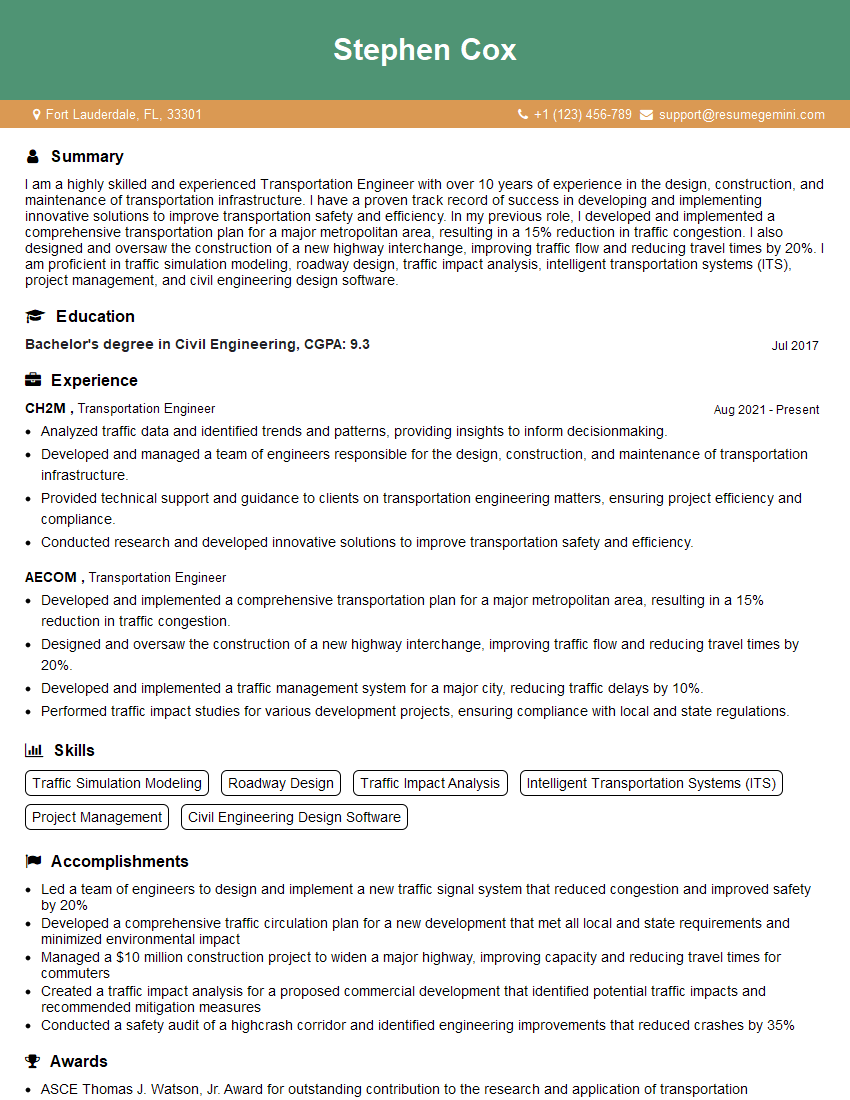
Transportation Engineer Resume Sample

Civil Engineer Resume Sample
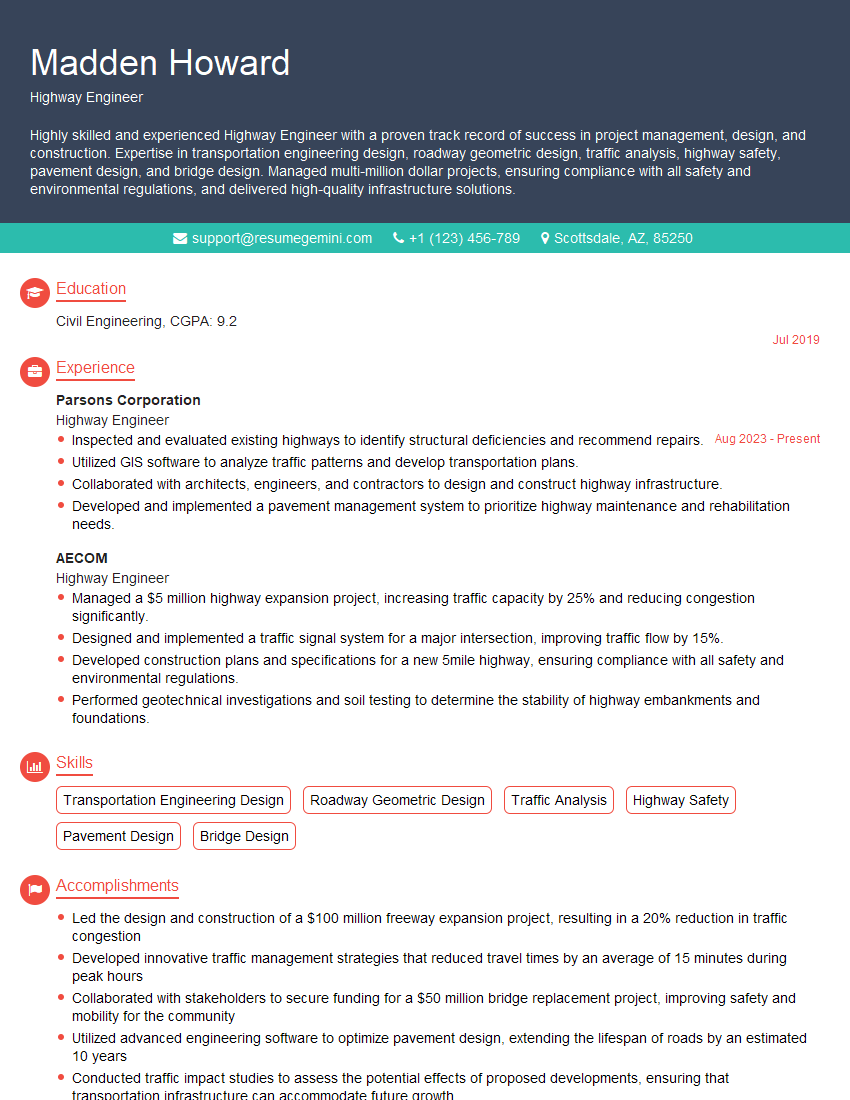
Highway Engineer Resume Sample

Traffic Engineer Resume Sample
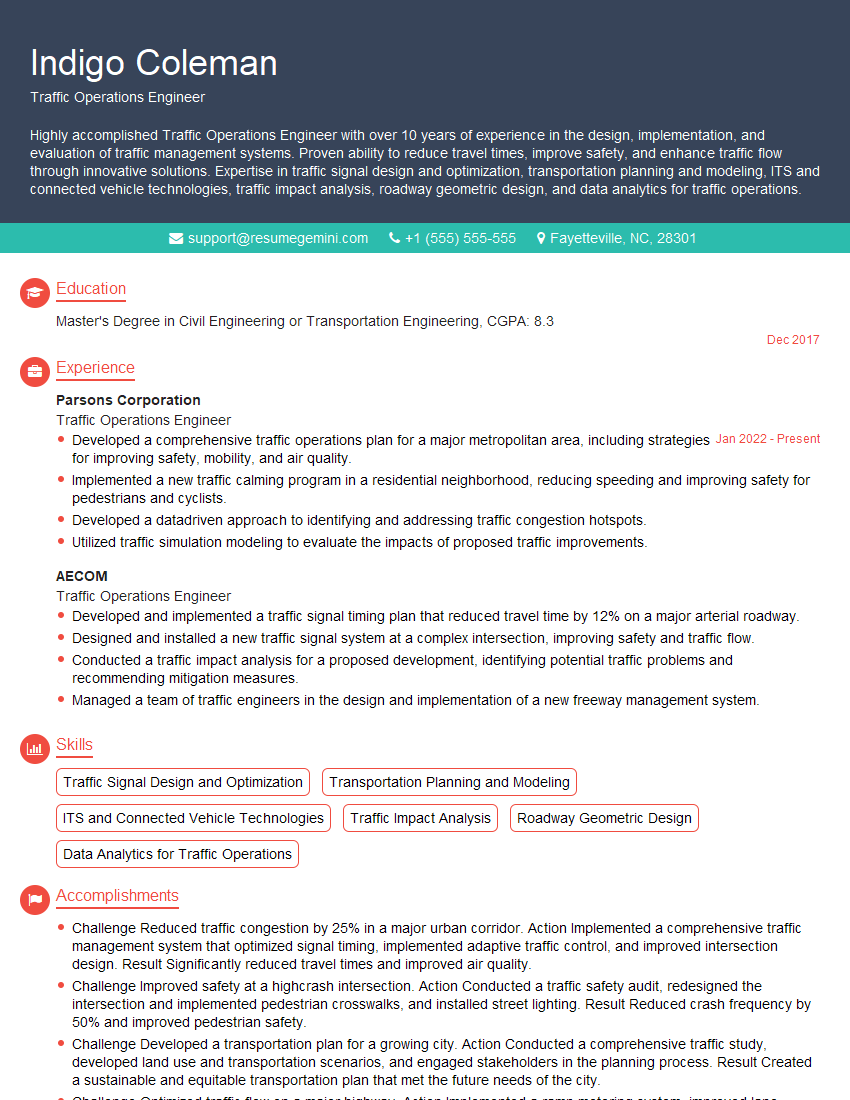
Traffic Operations Engineer Resume Sample

Transportation Design Engineer Resume Sample
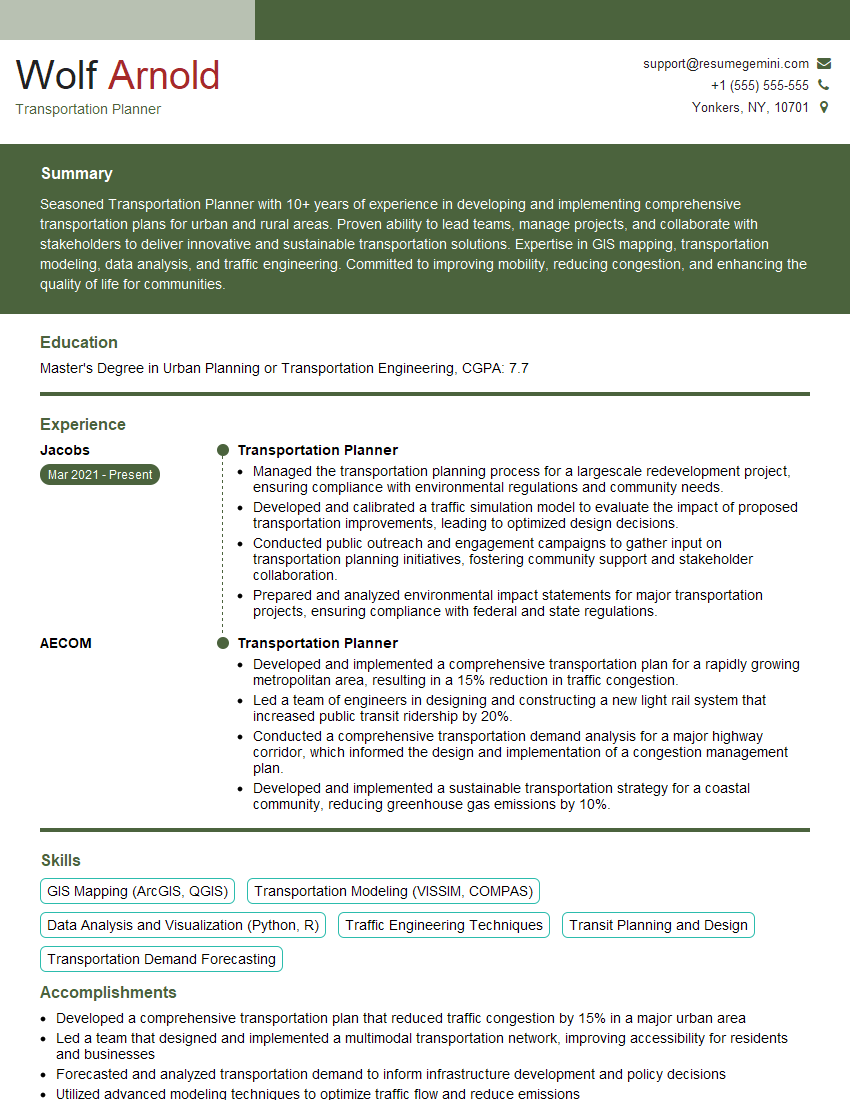
Transportation Planner Resume Sample
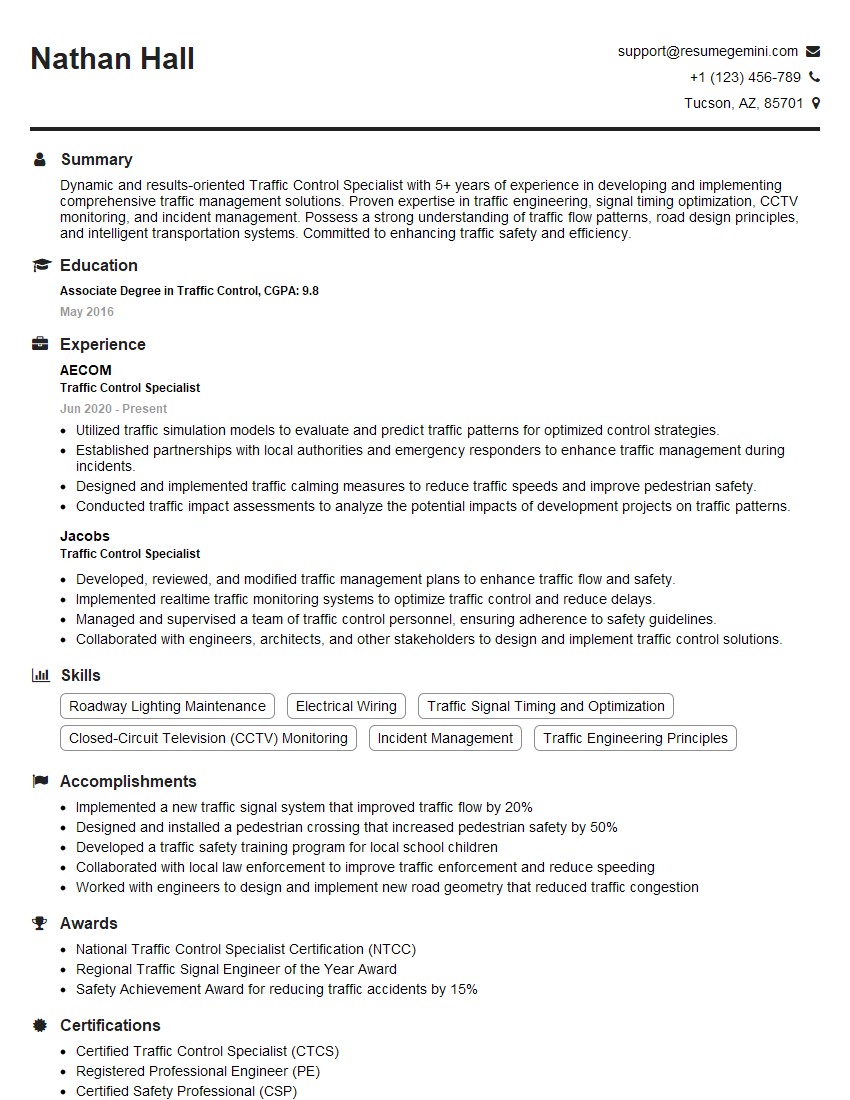
Traffic Control Specialist Resume Sample
Explore more articles
Users Rating of Our Blogs
Share Your Experience
We value your feedback! Please rate our content and share your thoughts (optional).
What Readers Say About Our Blog
Very informative content, great job.
good