Unlock your full potential by mastering the most common Naval Warfare Tactics interview questions. This blog offers a deep dive into the critical topics, ensuring you’re not only prepared to answer but to excel. With these insights, you’ll approach your interview with clarity and confidence.
Questions Asked in Naval Warfare Tactics Interview
Q 1. Describe the key principles of naval warfare tactics.
Naval warfare tactics hinge on several core principles, all aiming to achieve decisive victory with minimal losses. These include:
- Maintaining the Initiative: The side that dictates the tempo and location of engagement often holds a significant advantage. Think of it like chess – the player who controls the board generally has a better chance of winning.
- Concentration of Force: Focusing combat power on a specific point to overwhelm the enemy. This doesn’t mean throwing everything blindly; it’s about intelligently massing firepower where it will have the greatest impact.
- Economy of Force: Using the minimum necessary force to achieve a given objective. Unnecessary risks and resource expenditure are to be avoided. Think of it as surgical precision, not a blunt instrument.
- Maneuverability: The ability to rapidly shift position and adapt to changing circumstances is crucial. A fleet that can outmaneuver its opponent can dictate engagement terms and exploit weaknesses.
- Surprise: Launching unexpected attacks can severely disrupt enemy plans and inflict heavy damage. This could involve stealth, deception, or exploiting unforeseen vulnerabilities.
- Security: Protecting your own forces from enemy attack is paramount. This includes maintaining situational awareness, effective anti-submarine warfare (ASW), and air defense.
These principles are interconnected and must be considered holistically when planning naval operations. For example, achieving surprise often relies on effective intelligence and maneuverability.
Q 2. Explain the difference between offensive and defensive naval strategies.
Offensive and defensive naval strategies represent contrasting approaches to warfare. Offensive strategies aim to actively seek out and engage the enemy, aiming to inflict maximum damage and seize control of key areas. Examples include a preemptive strike against an enemy base or a major fleet engagement to cripple enemy naval power. The goal is to dictate the terms of conflict and achieve a decisive victory.
Defensive strategies prioritize the protection of one’s own forces and assets. This might involve establishing strong defensive perimeters, utilizing anti-ship and anti-air defenses, or employing deception tactics to mislead the enemy. A defensive strategy isn’t about passivity; it’s about minimizing losses and waiting for an opportune moment to strike back or wear down the enemy.
The choice between offensive and defensive strategies depends on several factors, including the relative strengths of the opposing forces, geopolitical objectives, and the overall strategic context. Often, a successful naval campaign will involve a blend of both offensive and defensive actions.
Q 3. What are the critical factors influencing naval battle planning?
Naval battle planning is a complex process influenced by numerous critical factors:
- Intelligence: Accurate and timely intelligence about the enemy’s capabilities, deployments, and intentions is paramount.
- Geography and Environment: Water depth, currents, weather conditions, and the presence of islands or straits can significantly impact operational choices.
- Force Composition: The types and numbers of ships, aircraft, and submarines available to each side will determine the potential outcomes.
- Logistics: The availability of fuel, ammunition, and supplies can limit operational duration and range.
- Political and Strategic Goals: The overall objectives of the conflict will shape naval plans and risk tolerance.
- Technological Superiority: Advances in sensor technology, weaponry, and command and control systems can dramatically alter the balance of power.
- Enemy’s Capabilities and Doctrine: Understanding how the enemy typically fights is essential for predicting their actions and developing countermeasures.
Effective planning involves carefully weighing these factors to develop a strategy that maximizes one’s chances of success while minimizing risks. Scenario planning and wargaming are invaluable tools in this process, allowing planners to anticipate potential challenges and develop contingency plans.
Q 4. How do you assess the effectiveness of different naval weapons systems?
Assessing naval weapons systems effectiveness requires a multifaceted approach. Key metrics include:
- Range and Accuracy: How far can the weapon reach, and how precisely does it hit its target?
- Lethality: How much damage can the weapon inflict on different targets (ships, aircraft, submarines)?
- Reliability: How often does the weapon function as intended under various conditions?
- Survivability: Can the weapon withstand enemy fire and continue to operate?
- Cost-Effectiveness: What is the cost per unit of damage inflicted? This is crucial for resource allocation.
- Countermeasures: How easily can the weapon be countered by enemy defenses (e.g., electronic warfare, decoys)?
These metrics are often evaluated through simulations, wargames, and testing. Real-world combat data, when available, offers the most valuable information but can be sparse and dependent on specific circumstances. The overall assessment should consider not only technical performance but also operational practicality and integration within a larger combat system.
Q 5. Discuss the role of intelligence in naval warfare tactics.
Intelligence plays a pivotal role in naval warfare, providing the crucial information necessary for effective planning and execution. It allows commanders to:
- Assess Enemy Capabilities: Understand the enemy’s force composition, technology, and tactics.
- Predict Enemy Actions: Anticipate enemy movements and intentions, enabling preemptive strikes or defensive measures.
- Identify Vulnerabilities: Locate weak points in the enemy’s defenses that can be exploited.
- Enhance Situational Awareness: Maintain a clear picture of the operational environment and the enemy’s actions in real-time.
- Support Targeting: Provide accurate targeting data for weapons systems.
- Deception and Misinformation: Employ deceptive tactics to mislead the enemy and gain an advantage.
Intelligence gathering involves various sources, including satellites, aircraft, ships, submarines, and human intelligence (HUMINT). The effective fusion and analysis of data from multiple sources are crucial for providing actionable intelligence to commanders. Failure to accurately assess the enemy can have dire consequences, leading to tactical miscalculations and unnecessary losses.
Q 6. Explain the concept of ‘naval power projection’.
Naval power projection refers to a nation’s ability to exert influence and enforce its will beyond its immediate borders. This is achieved through the deployment of naval forces to project power across vast distances. It involves:
- Forward Deployment: Maintaining a naval presence in strategically important regions.
- Power Demonstration: Conducting exercises and maneuvers to signal resolve and deter potential adversaries.
- Intervention and Response: Responding to crises, providing humanitarian assistance, or conducting military operations in distant locations.
- Sea Control: Maintaining control of key sea lanes to ensure the free flow of commerce and the ability to project power.
- Coercive Diplomacy: Using naval power to influence the actions of other nations without resorting to direct combat.
Effective naval power projection requires a combination of military strength, logistical capabilities, and political will. It’s a critical element of national security strategy, enabling nations to protect their interests, promote their values, and shape the global security environment.
Q 7. How do you counter asymmetric naval threats?
Asymmetric naval threats, such as those posed by smaller, less technologically advanced nations or non-state actors, often employ tactics that exploit the vulnerabilities of more powerful navies. Countering these threats requires a multi-layered approach:
- Intelligence and Surveillance: Enhanced intelligence gathering to detect and track asymmetric threats, which often rely on stealth and deception.
- Mine Countermeasures (MCM): Protecting naval forces from mines, which are a cost-effective asymmetric weapon.
- Anti-Terrorism Measures: Implementing security measures to protect naval vessels and installations from terrorist attacks.
- Asymmetric Warfare Tactics: Developing tactics suitable for confronting smaller, agile threats, potentially involving smaller, faster vessels.
- International Cooperation: Working with other nations to share intelligence and coordinate responses to asymmetric threats.
- Network-Centric Warfare: Utilizing advanced communication networks to integrate intelligence, surveillance, and reconnaissance assets and share information in real time.
No single solution exists for countering all asymmetric threats. Adaptability and flexibility are crucial, with a focus on identifying the specific nature of each threat and tailoring countermeasures accordingly. This often involves a combination of high-tech solutions and more conventional tactics.
Q 8. Describe different types of naval formations and their tactical advantages.
Naval formations are crucial for optimizing a fleet’s combat effectiveness and survivability. They dictate how ships are arranged to maximize their strengths and minimize vulnerabilities. Different formations are tailored to specific missions and threats.
Line of Battle: Historically significant, this formation arranges ships in a single line, broadside to the enemy, maximizing firepower in a direct confrontation. Think of it like a medieval army line, but with cannons. Its simplicity made it effective but vulnerable to flanking maneuvers.
Column Formation: Ships are arranged in a single column, often used for high-speed transit or to navigate narrow waterways. It offers excellent maneuverability but limited firepower to the sides.
Screen Formation: Faster, more agile ships are deployed ahead of the main force to provide early warning and protect against submarines or aircraft. This is like an advanced guard, protecting the main body from surprise attacks.
Echelon Formation: Ships are arranged in a staggered manner, offering both firepower and maneuverability, adaptable to changing threats. This is a flexible formation that combines elements of both line and column formations.
Defensive Circle: Ships form a circular formation, focusing firepower inward to protect against multiple attackers. Think of it as a defensive hedgehog; extremely resistant to many attacks from many directions.
The choice of formation depends on the mission, the anticipated threat, and the capabilities of the ships involved. A carrier strike group, for instance, might utilize a screen formation during transit and shift to an echelon formation before engaging the enemy.
Q 9. What are the advantages and disadvantages of carrier-based air power?
Carrier-based air power is a cornerstone of modern naval power projection, offering unparalleled offensive reach and flexibility. However, it comes with its own set of limitations.
Advantages:
- Long Range: Aircraft carriers can deploy air power far from their home bases, significantly extending a nation’s reach.
- Flexibility: Carrier air wings can adapt to different missions—from air superiority to ground attack—with relative ease.
- Power Projection: Carriers are mobile, independent platforms capable of quickly responding to crises in distant locations.
- Surveillance: Carrier-based aircraft can provide extensive reconnaissance and surveillance over vast ocean areas.
Disadvantages:
- Vulnerability: Carriers are high-value targets and require significant protection against anti-ship missiles and submarines.
- High Cost: Building, maintaining, and operating a carrier strike group is extremely expensive.
- Limited Sustainability: Carriers rely on resupply, and extended operations far from friendly bases can be challenging.
- Weather Dependency: Aircraft operations can be severely hampered by adverse weather conditions.
The use of carrier air power requires careful consideration of its advantages and disadvantages. Its effectiveness depends heavily on effective fleet defense and robust logistics planning.
Q 10. Discuss the use of submarines in modern naval warfare.
Submarines play a critical role in modern naval warfare, primarily because of their stealth and long-range strike capabilities. Their significance stems from their ability to operate undetected in the vast expanse of the ocean.
Strategic Deterrence: Nuclear-powered ballistic missile submarines (SSBNs) form the bedrock of many nations’ nuclear deterrence strategies.
Anti-Surface Warfare: Submarines equipped with advanced weaponry can launch attacks against surface ships, including carriers and destroyers.
Anti-Submarine Warfare (ASW): Some submarines are specifically designed for hunting and neutralizing enemy submarines, adding another layer of complexity to naval warfare.
Intelligence, Surveillance, and Reconnaissance (ISR): Submarines can conduct clandestine surveillance and gather vital intelligence near enemy coastlines or within strategically important waters.
Special Operations: Submarines are vital platforms for delivering and supporting special operations forces in clandestine missions.
The development of quieter propulsion systems, advanced sensors, and precision-guided weapons has made modern submarines increasingly potent tools of naval power.
Q 11. How does anti-submarine warfare (ASW) operate?
Anti-submarine warfare (ASW) is a complex and multifaceted discipline aimed at detecting, tracking, and neutralizing enemy submarines. It’s a constant arms race, with submarines developing stealth technologies and ASW forces developing more advanced detection and countermeasures.
Passive Sonar: Detects the noise generated by submarines, like a sophisticated underwater listening device.
Active Sonar: Emits sound pulses and listens for the echoes reflected off the submarine. Think of it like sonar in a video game, but much more complex.
Magnetic Anomaly Detectors (MAD): Senses the slight magnetic disturbance created by a submarine’s hull.
Sonobuoys: These are expendable acoustic sensors dropped from aircraft or ships, forming an underwater listening network.
Anti-submarine rockets and torpedoes: The weapons systems used to eliminate the threat once detected.
ASW Helicopters: Equipped with sophisticated sonar and torpedoes.
ASW operations are complex and usually involve a coordinated effort between surface ships, submarines, and aircraft, sharing information and coordinating attacks to effectively neutralize the submarine threat.
Q 12. Explain the importance of naval logistics in successful operations.
Naval logistics are the lifeblood of any successful naval operation. Without the continuous flow of supplies, fuel, ammunition, food, spare parts, and personnel, even the most powerful fleet will eventually falter.
Replenishment at Sea (RAS): This critical process allows ships to receive fuel, ammunition, food, and other supplies while underway, extending their operational range and endurance. This is like a mobile gas station and supermarket, keeping the fleet afloat and ready.
Supply Lines: Maintaining a robust network of supply bases and transportation routes ensures the timely delivery of vital resources to forward operating areas. This involves coordinating with land-based support and transport networks.
Personnel Rotation: Rotating crews and providing necessary rest periods is critical for maintaining high morale and combat readiness.
Maintenance and Repair: Ships require regular maintenance and prompt repairs; logistics ensure the availability of spare parts and skilled personnel to address any mechanical issues.
Effective naval logistics is more than just moving supplies; it involves careful planning, coordination, and efficient management of resources to ensure the continuous operation of a fleet.
Q 13. How do you coordinate naval forces with other branches of the military?
Coordinating naval forces with other branches of the military—Army, Air Force, Marines—is essential for effective joint operations. This requires clear communication, shared objectives, and a unified command structure.
Joint Task Forces: These are temporary formations created for specific operations, with a designated commander responsible for coordinating the efforts of different branches.
Combined Arms Operations: This involves the integrated use of naval, ground, and air forces to achieve a common objective. For instance, naval gunfire support can significantly aid ground troops during an amphibious assault.
Amphibious Operations: These operations require close coordination between the Navy (providing transport and fire support), the Marines (conducting the landing), and the Army (providing follow-on forces).
Communication and Information Sharing: Real-time communication and effective information exchange are crucial for seamless joint operations. This often involves advanced communication systems and data links.
Effective joint operations require meticulous planning, regular training exercises, and well-defined roles and responsibilities for each participating branch.
Q 14. What are the challenges of naval operations in littoral environments?
Littoral environments—coastal regions and shallow waters—present unique challenges for naval operations. The proximity of land means increased threat from mines, coastal defenses, and asymmetric warfare tactics.
Mine Warfare: Mines pose a significant threat to surface ships and submarines operating in shallow waters. Sophisticated mine countermeasures are necessary.
Coastal Defense Systems: Coastal batteries, anti-ship missiles, and other defense systems can severely limit naval freedom of action.
Asymmetric Warfare: Smaller, faster, and less predictable vessels, such as fast attack crafts, can pose a significant threat to larger naval vessels in confined waters.
Navigation: Navigating shallow waters and complex coastlines requires precise charting and advanced navigation systems.
Environmental Factors: Navigational challenges are magnified by variable currents, shallow depths, and poor visibility.
Successful naval operations in littoral environments require specialized ships and equipment, detailed planning, and coordinated operations with land-based forces.
Q 15. Describe your understanding of naval command and control systems.
Naval Command and Control (C2) systems are the nervous system of a naval force, enabling coordinated action across diverse platforms and environments. They involve the processes, equipment, and personnel needed to collect, process, disseminate, and utilize information to make decisions and direct forces. Think of it like the bridge of a ship, but vastly more complex. Effective C2 relies on a robust communication network connecting everything from individual ships to high-level command centers.
- Data Fusion: Combining information from multiple sensors (radar, sonar, satellite, etc.) to create a single, unified picture of the operational environment.
- Decision Support Systems: Sophisticated software that helps commanders analyze data, predict enemy actions, and evaluate different courses of action.
- Communication Networks: Secure and reliable communication links, including satellite, radio, and underwater acoustic systems, are vital for timely information exchange.
- Platform Integration: Seamless integration of C2 systems across different platforms (ships, aircraft, submarines) is crucial for unified operations.
For example, during a large-scale exercise, a Carrier Strike Group commander uses C2 systems to track the movements of his own forces and potential threats, coordinate aircraft launches, and direct defensive maneuvers. This ensures efficient response and minimizes risk. Failures in C2 can lead to chaotic situations and loss of operational effectiveness, highlighting its critical importance.
Career Expert Tips:
- Ace those interviews! Prepare effectively by reviewing the Top 50 Most Common Interview Questions on ResumeGemini.
- Navigate your job search with confidence! Explore a wide range of Career Tips on ResumeGemini. Learn about common challenges and recommendations to overcome them.
- Craft the perfect resume! Master the Art of Resume Writing with ResumeGemini’s guide. Showcase your unique qualifications and achievements effectively.
- Don’t miss out on holiday savings! Build your dream resume with ResumeGemini’s ATS optimized templates.
Q 16. How would you respond to an unexpected enemy action during a naval operation?
Responding to unexpected enemy actions requires a calm, decisive, and layered approach. The first step is always to assess the situation: What happened? What are the potential consequences? What are my available resources?
- Immediate Response: Implement immediate defensive measures to mitigate any immediate threat. This might involve deploying countermeasures, maneuvering to a safer location, or engaging the enemy with available assets.
- Damage Control: Assess damage and initiate damage control procedures to maintain operational readiness.
- Situation Update: Report the situation up the chain of command and request further instructions or support. This involves clear and concise communication.
- Adaptive Planning: Re-evaluate the mission objectives in light of the new situation and develop a revised plan to achieve those objectives, potentially adjusting priorities.
- Lessons Learned: After the event, a thorough analysis is crucial to identify areas for improvement in planning, training, and operational procedures.
Imagine a scenario where an enemy submarine suddenly launches a torpedo at a surface combatant. The immediate response might involve deploying decoys and maneuvering to evade. Simultaneously, damage control teams prepare for potential damage, and the situation is reported up the chain of command. Further actions might include launching counterattacks or adjusting the overall operational plan to account for the enemy’s presence and capabilities. Post-event analysis would focus on refining anti-submarine warfare tactics and procedures.
Q 17. What are the key considerations when planning amphibious assault operations?
Amphibious assault operations are inherently complex, requiring meticulous planning and flawless execution. Key considerations include:
- Intelligence: Accurate and up-to-date intelligence on the enemy’s defenses, terrain, and potential reactions is paramount. This involves detailed reconnaissance of the target area.
- Force Composition: A well-balanced force of ships, aircraft, and ground troops is essential. This needs to account for the specific challenges of the target environment and anticipated enemy resistance.
- Logistics: Sustaining the operation requires careful planning of supply lines, transportation of equipment and personnel, and medical support. This includes considerations for both the pre-assault phase and the post-assault phase of the campaign.
- Weather: Adverse weather conditions can significantly impact the operation, affecting both sea and air movements. Contingency plans for various weather scenarios are essential.
- Beach Selection: Selecting appropriate landing beaches with minimal obstacles and sufficient space for landing craft and troops is critical. This needs to take into account the terrain, defenses, and predicted enemy reaction.
- Command and Control: Effective communication and coordination among all forces is essential for success. Clear and concise communication is crucial for success and must integrate across every branch of the Armed Forces involved in the operation.
The Normandy landings in World War II provide a classic example of the complexities involved. Months of planning and reconnaissance went into selecting suitable beaches, coordinating the vast force, and developing a strategy to overcome the German defenses. The operation’s success highlights the importance of detailed planning across these critical areas.
Q 18. Explain the importance of naval mine warfare.
Naval mine warfare plays a crucial role in controlling sea lanes and denying access to enemy forces. Mines are relatively inexpensive weapons that can effectively restrict maritime traffic, damage or destroy enemy vessels, and force the enemy to expend significant resources in mine countermeasures (MCM).
- Offensive Mine Warfare: Employing mines to disrupt enemy operations and restrict their freedom of movement.
- Defensive Mine Warfare: Laying mines to protect friendly harbors, ports, and other vital areas from enemy attack.
- Mine Countermeasures (MCM): Neutralizing enemy mines using a range of technologies, including sonar, remotely operated vehicles (ROVs), and specialized mine-sweeping vessels.
Mines can be moored (anchored to the seabed) or drifting (unmoored), and they can be triggered by various means, including magnetic, acoustic, and pressure sensors. The effectiveness of mine warfare depends on the proper selection and placement of mines, the density of the minefield, and the sophistication of MCM capabilities. Modern mines often incorporate sophisticated evasion countermeasures to increase the difficulty of MCM.
During the First and Second World Wars, naval mines significantly affected the course of naval battles. Many conflicts feature mines as an important part of naval strategies.
Q 19. How has the role of cyber warfare evolved in the context of naval warfare?
Cyber warfare has become an increasingly important aspect of naval warfare. It’s no longer just about kinetic engagements; it’s a domain encompassing electronic attacks, information warfare, and the disruption of vital systems.
- Disruption of C2 systems: Cyberattacks can target a navy’s command and control infrastructure, disrupting communication, data sharing, and decision-making.
- Targeting Weapon Systems: Cyberattacks can compromise weapon systems, rendering them unusable or even turning them against their own operators.
- Data theft and espionage: Cyberattacks can be used to steal sensitive information about naval operations, capabilities, and strategies.
- Sabotage of infrastructure: Critical infrastructure, such as port facilities and navigation systems, can be targeted for cyber sabotage.
For example, an adversary could use a cyberattack to disable a navy’s satellite communication system, making it difficult to coordinate fleet operations. Another example could be the disabling of a ship’s propulsion system through cyber intrusion. The role of cyber warfare in naval warfare will continue to evolve and expand as reliance on networked systems grows.
Q 20. Describe different types of naval sensors and their applications.
Naval sensors are crucial for situational awareness, providing the eyes and ears of a naval force. Different types of sensors cater to various needs and operational environments:
- Radar: Detects and tracks surface vessels and aircraft using radio waves. Different radar systems offer varying ranges and capabilities, such as air search, surface search, and fire control radar.
- Sonar: Uses sound waves to detect and track underwater objects, such as submarines and mines. Active sonar transmits sound waves and listens for echoes while passive sonar only listens to ambient sound.
- Electronic Support Measures (ESM): Detect and identify enemy radar and communication signals, providing information on enemy activities and capabilities.
- Electro-Optical/Infrared (EO/IR) sensors: Detect and track vessels and aircraft using visible light and infrared radiation. These sensors are particularly useful for detecting small targets or targets at close range.
- Satellite sensors: Provide wide-area surveillance of the operational environment. They are crucial for long-range monitoring and strategic planning.
The integration and fusion of data from multiple sensor types are key for creating a complete picture of the operational environment. This integrated view significantly enhances situational awareness and allows for informed decision-making.
Q 21. How do you evaluate the risks and opportunities in different naval operational environments?
Evaluating risks and opportunities in different naval operational environments requires a holistic approach, considering various factors:
- Geopolitical factors: The political stability and potential for conflict in the region must be assessed.
- Environmental conditions: Weather, sea state, and water depth can significantly impact operations and should be carefully considered.
- Enemy capabilities: An accurate assessment of the enemy’s forces, capabilities, and likely actions is crucial.
- Friendly force capabilities: Evaluating the readiness, capabilities, and limitations of friendly forces is essential.
- Infrastructure: The availability of ports, bases, and other infrastructure can influence operational options.
- Logistics: The ability to sustain operations in the region with regard to fuel, supplies, and personnel is key.
A structured risk assessment framework should be employed to identify potential risks, evaluate their likelihood and severity, and develop mitigation strategies. Opportunities should also be considered and evaluated alongside risks to ensure a balanced approach to decision-making. The Arctic, for example, presents unique challenges due to ice conditions, limited infrastructure, and the need for specialized vessels and equipment. A coastal environment might feature a high density of shipping traffic and the presence of submerged obstacles and minefields that present risks to naval operations.
Q 22. What is the significance of naval base defense?
Naval base defense is paramount to maintaining operational capability and projecting power. It’s not just about protecting the physical infrastructure; it encompasses safeguarding personnel, equipment, supplies, and the overall operational readiness of the fleet. A compromised naval base can severely cripple a nation’s naval capabilities, impacting its ability to respond to crises and maintain regional stability.
Effective base defense involves a multi-layered approach. This includes physical security measures like perimeter fences, surveillance systems (CCTV, radar), and access controls. Equally critical are force protection elements, such as dedicated security personnel, potentially including specialized units trained in counter-terrorism and anti-sabotage tactics. Finally, robust defensive systems, possibly incorporating anti-ship missiles, anti-aircraft weaponry, and minefields, deter potential aggressors.
Consider the example of Pearl Harbor. The lack of adequate defenses highlighted the devastating consequences of a surprise attack. Conversely, a well-defended base, such as a modern, heavily fortified naval installation, can withstand considerable assault, ensuring the continued operational readiness of the fleet.
Q 23. Explain the principles of naval damage control.
Naval damage control focuses on minimizing the impact of damage sustained by a vessel, be it from combat, accident, or natural disaster. It’s a comprehensive system encompassing preventative measures and rapid response capabilities to save the ship and its crew. Principles include damage limitation, immediate response, and casualty care. It’s akin to a highly organized and practiced emergency response within a very challenging environment.
The principles are built on several key aspects: firefighting (controlling and extinguishing fires), flooding control (stopping water ingress and pumping out flooded compartments), structural integrity (preventing further collapse and damage to the ship’s hull), and personnel safety (evacuating casualties and providing medical aid). These all work concurrently and demand exceptional training, disciplined teamwork, and the ability to think critically under immense pressure.
Imagine a scenario where a frigate is struck by an enemy missile. The damage control team would immediately spring into action, first isolating the damaged area, then tackling the fire, plugging leaks, and providing medical attention to wounded personnel. Simultaneously, the captain would assess the overall situation, determine the extent of damage, and make decisions about the ship’s immediate course of action, perhaps deciding to make for port or continue the mission with reduced capabilities.
Q 24. How do you manage information and communicate effectively during a naval operation?
Effective information management and communication are the lifelines of any naval operation. In the fast-paced, high-stakes world of naval warfare, timely and accurate information is crucial for decision-making, coordination, and overall success. This relies on a robust, redundant communication system and a well-defined information flow.
A layered communication architecture is typically employed, utilizing a combination of secure radio frequencies, satellite links, and data networks to ensure reliable transmission. Standardized procedures and protocols are essential to maintain clarity and prevent misunderstandings. Information is categorized based on its sensitivity (e.g., classified, unclassified) and disseminated accordingly. Data fusion, combining information from multiple sources (sensors, intelligence reports), provides a complete operational picture.
Consider a task force conducting an anti-submarine warfare operation. Sonar data from individual ships, satellite imagery, and intelligence reports are all integrated into a common operating picture, allowing the commander to make informed decisions about deploying assets, coordinating attacks, and maintaining situational awareness. Constant communication between ships and headquarters ensures everyone is on the same page and can react effectively to changing conditions.
Q 25. What are the ethical considerations of naval warfare?
The ethical considerations in naval warfare are complex and demanding. International humanitarian law (IHL), also known as the laws of war, forms the cornerstone of ethical conduct, aiming to minimize harm to civilians and protect combatants who surrender or are no longer participating in hostilities. Key principles include proportionality (the military advantage must outweigh the harm to civilians), distinction (differentiating between combatants and non-combatants), and precaution (taking all feasible steps to minimize civilian harm).
The use of force must be lawful, necessary, and proportionate. Unlawful actions, such as indiscriminate attacks targeting civilians or the use of prohibited weapons, are war crimes. Furthermore, the treatment of prisoners of war, respect for cultural heritage, and the protection of the environment must always be considered. Adhering to these standards upholds not only international law but also the moral integrity of naval forces.
Consider the challenges presented by asymmetric warfare. Differing interpretations of IHL can lead to moral dilemmas. For example, distinguishing between combatants and non-combatants in a situation involving civilian use of military installations creates a difficult ethical balancing act that requires careful consideration and adherence to IHL guidelines.
Q 26. How do you prioritize competing operational demands in naval warfare?
Prioritizing competing operational demands is a constant challenge in naval warfare. Decisions are often made under pressure, with limited information and constrained resources. A systematic approach is crucial to ensure the most critical tasks receive the necessary attention.
A common method involves employing a prioritization matrix, assigning tasks based on urgency and importance. Urgency reflects the immediacy of the need, while importance considers the strategic impact of the task. Tasks are categorized into four quadrants: urgent and important, important but not urgent, urgent but not important, and neither urgent nor important. This allows for a rational allocation of resources and personnel, focusing on high-impact tasks that directly support mission objectives.
For instance, during a major naval exercise, a commander might face the simultaneous need to address equipment malfunctions, maintain air superiority, conduct anti-submarine warfare, and prepare for a simulated amphibious assault. Using a matrix, they can prioritize addressing critical equipment failures (urgent and important), plan for air superiority (important but not urgent), and potentially delay less urgent tasks until the highest priority issues are resolved.
Q 27. Discuss the impact of emerging technologies on naval warfare tactics.
Emerging technologies are fundamentally reshaping naval warfare tactics. The integration of artificial intelligence (AI), unmanned systems (drones), hypersonic weapons, and advanced sensor technology is dramatically altering the battlefield. This creates opportunities for improved situational awareness, enhanced lethality, and increased operational efficiency, but also introduces new challenges.
AI-powered systems can analyze vast amounts of data from various sources, improving target identification, predicting enemy actions, and automating tasks such as navigation and weapons targeting. Unmanned systems offer greater versatility and reduce risks to human personnel. Hypersonic weapons, with their extreme speed and maneuverability, present a significant challenge to existing defensive systems. Advanced sensors provide longer-range detection and improved tracking capabilities.
However, these technologies also raise ethical concerns regarding autonomous weapons systems and the potential for miscalculation or unintended escalation. Furthermore, cyber warfare poses a serious threat to naval systems, requiring robust cybersecurity measures to protect sensitive information and maintain operational integrity. The integration of these technologies requires careful consideration of their implications for strategy, tactics, and international law.
Q 28. How do you assess the capabilities and limitations of enemy naval forces?
Assessing enemy naval capabilities and limitations requires a multifaceted approach, drawing upon various intelligence sources and analytical techniques. The goal is to build a comprehensive picture of the enemy’s strengths and weaknesses, informing strategic and tactical decision-making.
Intelligence gathering is crucial, utilizing open-source information, human intelligence (HUMINT), signals intelligence (SIGINT), and imagery intelligence (IMINT) to understand the enemy’s force structure, weaponry, operational doctrine, and command and control systems. This information is then analyzed to assess their capabilities in various warfare domains (anti-surface, anti-submarine, anti-air). Furthermore, considering their training, experience, and morale provides a more complete evaluation.
For example, when assessing a potential adversary, intelligence analysts might examine their recent naval exercises, the types of ships and weapons they possess, their deployment patterns, and any available information on their training programs and military doctrine. By combining these pieces of information, a comprehensive profile of the adversary’s capabilities and limitations can be constructed, which is critical for planning effective operations.
Key Topics to Learn for Naval Warfare Tactics Interview
- Anti-Submarine Warfare (ASW): Understand the theoretical principles of ASW, including sonar operation, weapon systems, and tactical doctrine. Consider practical applications like deploying sonobuoys effectively and coordinating actions with other units.
- Surface Warfare: Grasp the complexities of surface combat, including weapon effectiveness, fire control, and damage control. Explore scenarios involving fleet maneuvers, air defense, and close-quarters engagements. Consider the implications of different ship classes and their capabilities.
- Naval Mine Warfare: Learn about mine detection, neutralization, and avoidance techniques. Analyze the tactical implications of minefields and their impact on naval operations. Explore the role of specialized mine countermeasures vessels.
- Electronic Warfare (EW): Understand the principles of electronic attack, electronic protection, and electronic support. Consider the use of radar and communication jamming, as well as defensive measures against enemy EW capabilities.
- Command and Control (C2): Study the principles of effective C2 in a naval environment, including information sharing, decision-making under pressure, and coordination among multiple units. Explore the role of various command structures and communication systems.
- Amphibious Operations: Familiarize yourself with the planning and execution of amphibious assaults, including ship-to-shore movement, beachhead establishment, and subsequent land operations. Understand the coordination between naval and land forces.
- Maritime Interdiction Operations (MIO): Learn about the techniques and strategies employed in MIO, including vessel boarding, searching, and seizure. Understand the legal and ethical considerations associated with these operations.
Next Steps
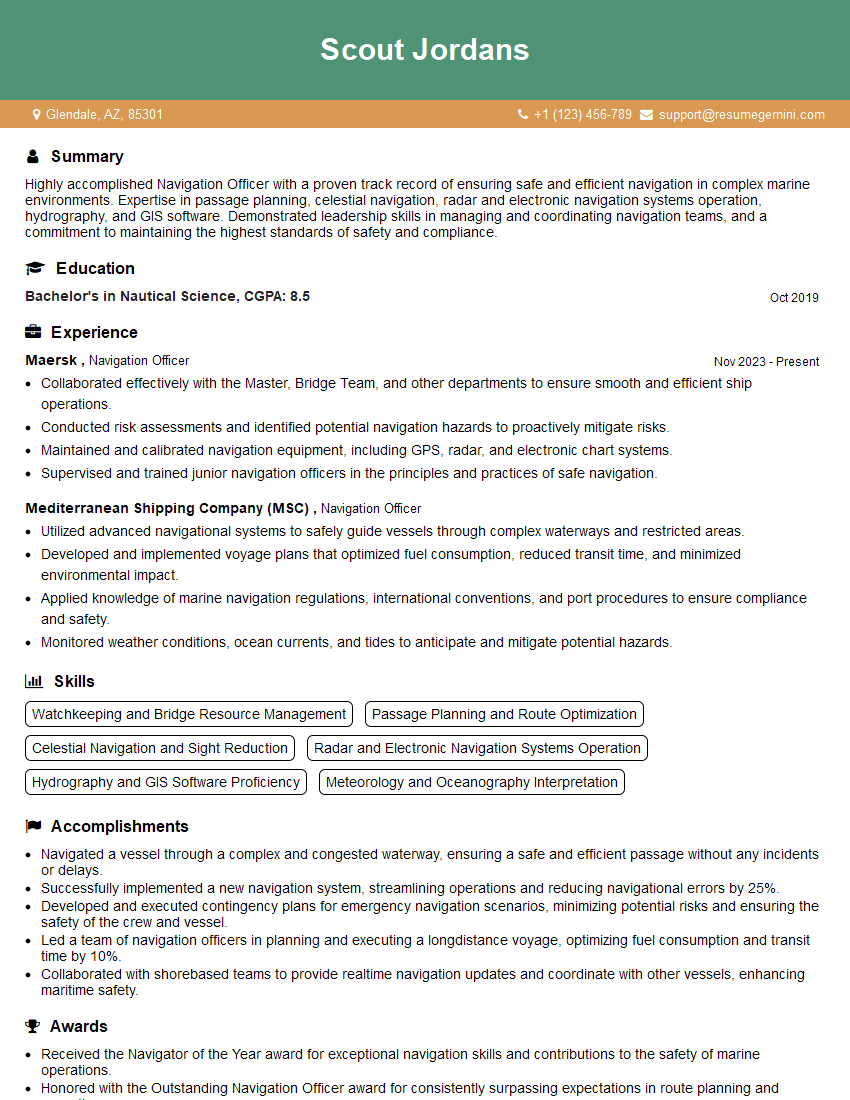
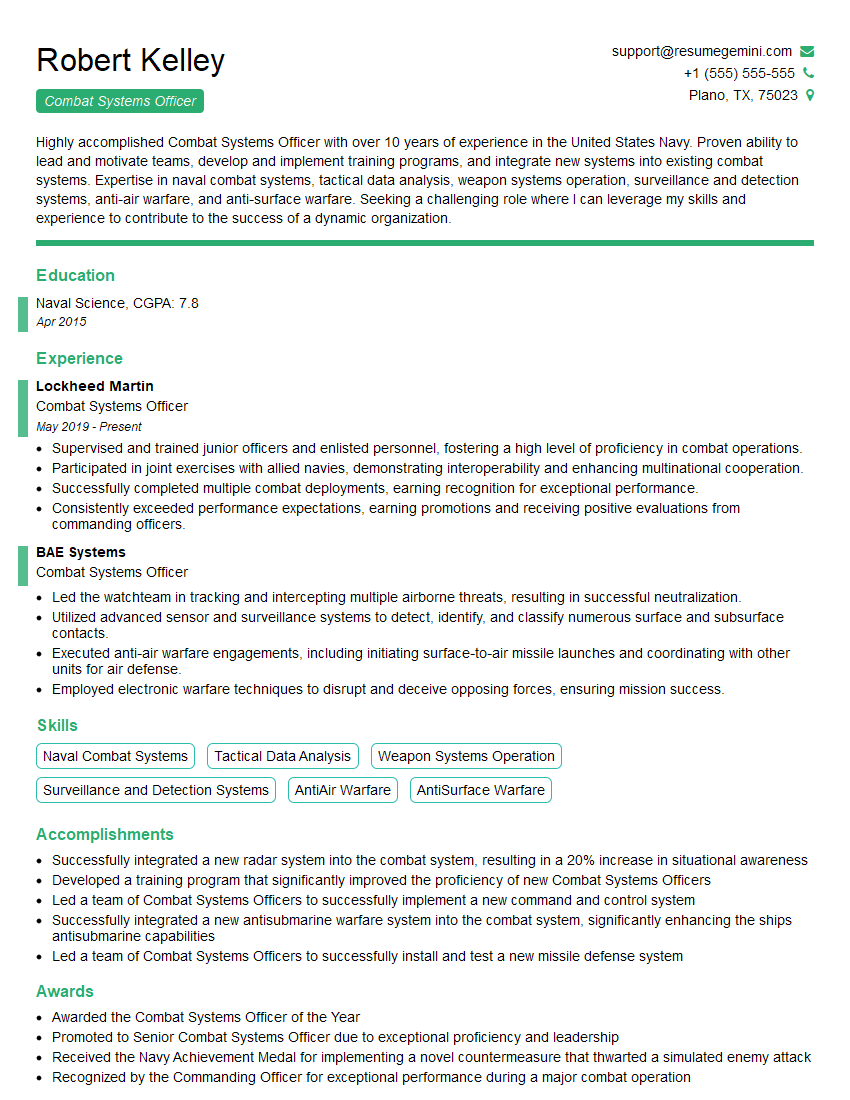
Mastering Naval Warfare Tactics is crucial for career advancement in this dynamic field. A strong understanding of these concepts demonstrates strategic thinking and operational expertise, making you a highly competitive candidate. To enhance your job prospects, focus on creating an ATS-friendly resume that highlights your skills and experience effectively. ResumeGemini is a trusted resource that can help you build a professional and impactful resume. We provide examples of resumes tailored to Naval Warfare Tactics to guide you through the process. Let us help you showcase your qualifications and land your dream job.
Explore more articles
Users Rating of Our Blogs
Share Your Experience
We value your feedback! Please rate our content and share your thoughts (optional).
What Readers Say About Our Blog
Very informative content, great job.
good