Interviews are more than just a Q&A session—they’re a chance to prove your worth. This blog dives into essential Needle and Thread Mastery interview questions and expert tips to help you align your answers with what hiring managers are looking for. Start preparing to shine!
Questions Asked in Needle and Thread Mastery Interview
Q 1. What types of needles are best suited for different fabrics?
Choosing the right needle is crucial for a smooth sewing experience. Different fabrics require needles with varying sharpness, points, and sizes to prevent damage and ensure even stitching.
- Fine Fabrics (silk, chiffon, lace): These delicate materials need a very sharp, fine needle like a Sharps needle (size 60/8 or smaller). A ballpoint needle will snag and damage these fabrics.
- Medium-weight Fabrics (cotton, linen, poplin): A Universal needle (size 70/10 or 80/12) is generally suitable. These are versatile and work well for most everyday fabrics.
- Heavyweight Fabrics (denim, canvas, upholstery): A Jeans needle (size 90/14 or larger), with a reinforced point to prevent bending, is necessary. For very heavy fabrics, a leather needle may be preferred.
- Knits (jersey, interlock): A Ballpoint needle (size 70/10 or 80/12) is essential. Its rounded point glides between the loops of the knit fabric, preventing skipped stitches or runs.
- Leather and Suede: A Leather needle, with its sharp, triangular point, is specifically designed to pierce leather without causing damage.
Think of it like choosing the right tool for the job – a delicate silk requires a delicate needle, while tough denim demands a stronger one.
Q 2. Explain the differences between various sewing machine stitches.
Sewing machine stitches offer a wide array of options for different applications and aesthetic effects. Understanding the differences is key to creating professional-looking garments.
- Straight Stitch: The basic stitch, ideal for seams, topstitching, and reinforcing areas. Adjusting stitch length controls the density and strength.
- Zigzag Stitch: Used for finishing seams (overlocking), sewing stretchy fabrics, and decorative stitching. Width and length are adjustable for different effects.
- Overlock Stitch (Serger Stitch Mimic): Often found on sewing machines with a built-in overlock function, this stitch creates a neat, finished seam edge, preventing fraying similar to a serger machine.
- Blind Hem Stitch: Creates an almost invisible hem, ideal for delicate garments and professional finishing.
- Buttonhole Stitch: Automatically creates buttonholes with varying types of buttonhole stitch settings; automatic or manual stitch settings are available.
- Satin Stitch: Creates dense, decorative stitches used for embroidery or embellishment.
Selecting the right stitch is paramount for both functionality and aesthetics. A straight stitch for a strong seam and a zigzag for preventing fraying on a loosely woven fabric would be an example.
Q 3. Describe your experience with different types of thread.
My experience encompasses a wide range of threads, each with its unique properties. The choice of thread depends heavily on the fabric and intended use.
- Cotton Thread: A versatile and affordable option for everyday sewing, suitable for cotton, linen, and other natural fabrics.
- Polyester Thread: Strong, durable, and resistant to shrinking and fading. It works well with both natural and synthetic fabrics. It is my go-to for projects requiring high durability.
- Silk Thread: Provides a luxurious sheen and is ideal for delicate fabrics like silk and satin. However, it is less durable than polyester or cotton.
- Rayon Thread: Offers a subtle sheen and drapes well, often used for heirloom sewing projects.
- Metallic Thread: Adds sparkle and shine for decorative purposes, though it can be more challenging to work with due to its tendency to break.
For instance, I’d never use a heavy-duty polyester thread on a delicate silk garment; I always prioritize a thread that complements the fabric’s weight and texture.
Q 4. How do you select the correct needle size for a particular fabric weight?
Matching needle size to fabric weight is critical. Too small a needle can cause breakage and skipped stitches, while too large a needle will pierce the fabric, leaving holes and weakening it.
A simple guide:
- Lightweight Fabrics (silk, chiffon): Use a size 60/8 or smaller needle.
- Medium-weight Fabrics (cotton, linen): Use a size 70/10 or 80/12 needle.
- Heavyweight Fabrics (denim, canvas): Use a size 90/14 or larger needle.
Always refer to the needle size chart provided by the needle manufacturer. They are usually printed on the needle packaging and readily available online, it’s best practice to consult them for more precise needle sizing in relation to different fabric weights.
Q 5. What are the common problems encountered when using a sewing machine, and how do you troubleshoot them?
Troubleshooting sewing machine issues is a common part of sewing. Here are some frequent problems and solutions:
- Skipped Stitches: This could be due to a dull needle, incorrect needle/thread combination, or improper tension. Replace the needle, check thread type, and adjust tension.
- Broken Needles: This can happen with a dull needle, improper needle insertion, sewing too fast, or hitting a pin or other object. Replace the needle and carefully check the fabric before sewing.
- Thread Jamming: Make sure the thread is threaded correctly and that bobbin is properly wound. Clear any jams from the machine. Improper tension is frequently the culprit here, check your machine’s tension settings.
- Uneven Stitch Length: Check and adjust the stitch length settings on your sewing machine.
- Machine Not Starting: Check power source and any electrical connections, ensure the machine is properly switched on.
Always refer to your machine’s manual for detailed troubleshooting steps. A systematic approach, starting with the simplest solutions, is key to effective troubleshooting.
Q 6. Describe your process for creating a professional-quality seam.
Creating a professional-quality seam involves attention to detail at every step.
- Prepare the Fabric: Ensure the fabric is cut accurately and neatly pressed, as this significantly affects the seam quality.
- Pinning: Pin the fabric pieces together precisely, using plenty of pins to prevent shifting during sewing. Use pins at frequent intervals.
- Stitching: Select the appropriate stitch type and length for the fabric. Sew with a consistent speed and avoid pulling or tugging on the fabric.
- Seam Finishing: After sewing, finish the seam to prevent fraying. Options include overlocking, zigzagging, or pinking the raw edges. Professional-quality seams incorporate seam finishes.
- Pressing: Proper pressing is essential for creating crisp, neat seams. Press the seam allowances open or to one side, depending on the type of seam.
A well-executed seam is not just about the stitching; it’s about precision in every step of the process. A consistently pressed seam contributes to a professional look.
Q 7. How do you adapt your sewing techniques for different fabric types (e.g., silk, denim, leather)?
Adapting sewing techniques to different fabric types is crucial for achieving professional results. Each fabric has unique properties that dictate the best approach.
- Silk: Use a very fine needle (size 60/8 or smaller), sharp shears, and slow stitching speed to avoid damage. Press with a pressing cloth to prevent shine.
- Denim: Use a heavy-duty needle (size 90/14 or larger) and a strong thread. A walking foot can help feed heavy fabrics smoothly. Consider using a denim specific needle.
- Leather: Use a leather needle and a specialized thread designed for leather. A walking foot or roller foot might be necessary. Test your stitching on a scrap piece of leather first.
Understanding the properties of each fabric and choosing the right tools and techniques are essential for creating high-quality garments. Each fabric has unique characteristics that should be considered and adapted to in the sewing process.
Q 8. Explain the importance of proper fabric preparation before sewing.
Proper fabric preparation is the cornerstone of successful sewing. Think of it as laying a strong foundation for a house – if the foundation is weak, the whole structure suffers. Preparing fabric correctly prevents issues later on, leading to a cleaner finish and a more professional result.
Pre-washing: This is crucial, especially for natural fibers like cotton and linen, which can shrink significantly after washing. Pre-washing ensures your garment retains its shape and size after you’ve invested the time in sewing it.
Pressing: Ironing the fabric before cutting helps to remove wrinkles and ensures accurate cutting. A crisp, smooth fabric makes a huge difference in the final outcome. Different fabrics require different ironing temperatures and techniques – always check the fabric care label.
Cutting on the grain: Cutting with the grain (parallel to the selvage edges) prevents stretching and distortion. Understanding grainlines is fundamental to getting the desired fit and drape.
Marking: Using tailor’s chalk or other marking tools to transfer pattern markings onto the fabric allows for accurate construction and helps to avoid mistakes.
For example, I once worked on a delicate silk garment. Pre-washing was essential to prevent shrinkage and maintain the luxurious drape. Without it, the beautiful silk would have easily distorted after the first wash.
Q 9. What are your preferred methods for finishing seams?
Seam finishing is crucial for durability and a professional look. It prevents fraying, adds strength, and contributes significantly to the overall quality of the garment. My preferred methods depend on the fabric and the garment’s intended use.
Serging/Overlocking: This is my go-to for most fabrics, especially knits. A serger trims and finishes the seam edge in one step, preventing fraying and creating a clean, professional finish.
Zigzag stitch: A versatile method suitable for a wide range of fabrics, particularly woven fabrics. It’s simple to execute on a standard sewing machine and effectively prevents fraying.
French seams: For delicate fabrics or when a clean, invisible seam is desired, French seams are ideal. This method encloses the raw edges, creating a beautifully finished and durable seam.
Pinked edges: A quick and simple option for lightweight fabrics where fraying is less of a concern. Pinking shears create a decorative, serrated edge that helps to minimize fraying.
Choosing the appropriate seam finish is a matter of experience and understanding the properties of the fabric. A lightweight silk blouse, for instance, calls for a delicate French seam, while a sturdy denim jacket benefits from a durable serged or zigzagged seam.
Q 10. How do you handle pattern alterations?
Pattern alteration is a fundamental skill for any serious sewer. It allows for customization and ensures a perfect fit, even when working with commercially produced patterns that may not perfectly fit the individual. I employ several techniques depending on the needed adjustment.
Full-bust adjustments: These are commonly needed for patterns that don’t account for a larger bust size. This involves adding or subtracting fabric strategically, maintaining the overall balance of the garment.
Waist adjustments: Taking in or letting out fabric at the waistline alters the garment’s fit and shape. Understanding the different parts of the bodice pattern (e.g., the princess seams or darts) is important in making the appropriate adjustment.
Length adjustments: Simply adding or removing fabric at the hemline is often straightforward. However, it may involve adjusting the seams and darts to maintain proper balance if length changes are significant.
Muslin fitting: I always recommend creating a muslin (a practice garment from a cheap fabric) to test the pattern before cutting into the expensive final fabric. This allows for adjustments to be made without wasting valuable material.
For example, I recently altered a dress pattern to accommodate a client’s full bust. Using the full-bust adjustment technique, I added fabric in strategic areas, resulting in a comfortable and well-fitting dress.
Q 11. Describe your experience with different types of sewing machine feet.
Sewing machine feet are specialized attachments that significantly impact sewing efficiency and the quality of the stitch. Each foot is designed for a specific task.
Standard presser foot: The workhorse, used for general sewing tasks.
Zipper foot: Allows for precise sewing close to the zipper teeth.
Buttonhole foot: Creates consistent, professional buttonholes.
Walking foot: Keeps both layers of fabric moving evenly, ideal for sewing multiple layers or slippery fabrics.
Blind hem foot: Creates invisible hems.
Overcast foot: Provides a decorative or functional overcast stitch.
My experience with various feet has enhanced my ability to tackle a wide range of projects efficiently. For instance, the walking foot is indispensable when sewing heavy materials like denim, while the buttonhole foot ensures perfectly consistent buttonholes every time.
Q 12. How do you maintain and clean your sewing machine?
Regular maintenance is critical for ensuring the longevity and smooth operation of your sewing machine. Neglecting this can lead to jams, skipped stitches, and ultimately, machine failure.
Dusting: Regularly remove lint and dust using a brush or compressed air, paying attention to areas around the bobbin case and feed dogs.
Lubrication: Apply sewing machine oil to the specified lubrication points according to your machine’s manual. This prevents friction and wear.
Bobbin case cleaning: Clean the bobbin case regularly to remove lint and debris, ensuring smooth bobbin winding and feeding.
Needle replacement: Replace the needle regularly, especially if sewing through heavy or abrasive fabrics. A bent or dull needle can lead to skipped stitches and broken threads.
I always clean my machine after every major project, and perform a more thorough cleaning and lubrication every few months. This proactive maintenance prevents costly repairs and ensures my machine runs like a dream.
Q 13. What are the different types of embroidery stitches, and when would you use each?
Embroidery stitches are as diverse as the fabrics they adorn. The choice depends heavily on the desired effect and the nature of the project.
Running stitch: A simple, basic stitch used for outlining or filling large areas. It’s excellent for quick work and is easily adaptable for different effects.
Backstitch: A strong, durable stitch used for outlining or creating lines. It’s less decorative but incredibly sturdy.
Satin stitch: Creates smooth, solid fills of color and is perfect for filling in shapes and designs. Requires careful execution for a professional result.
French knots: Small, decorative knots used for adding texture and details. They are perfect for adding a touch of whimsy or realism to an embroidered design.
Chain stitch: Creates a looped, flowing effect and can be used for outlining or creating decorative elements.
For example, I would use a satin stitch to fill in a flower petal, a backstitch for outlining a stem, and French knots to add texture to a central bloom.
Q 14. Describe your experience with hand-sewing techniques.
Hand-sewing, though slower than machine sewing, is invaluable for specific tasks and offers a level of precision that’s often difficult to match with a machine. It’s an essential skill for any serious sewer.
Running stitch: A basic stitch used for gathering, basting (temporary stitching), or attaching delicate trims.
Backstitch: A strong, secure stitch used for mending or creating durable seams. It’s excellent for areas that require strength and stability.
Slip stitch: An almost invisible stitch used for attaching linings or creating invisible hems.
Blanket stitch: A decorative stitch used for finishing edges and adding a nice texture.
My hand-sewing skills are particularly useful when working on fine details, delicate fabrics, or when a machine would be impractical or impossible to use. For instance, I often hand-sew linings to prevent bulkiness or hand-finish details on garments for a perfectly clean finish.
Q 15. How do you measure fabric accurately?
Accurate fabric measurement is paramount for a well-fitting garment. It’s not just about using a ruler; it’s about understanding the fabric’s drape and potential for stretch. Always measure on a flat, clean surface, avoiding wrinkles or folds. For woven fabrics, use a flexible measuring tape, pulling it taut but not stretching the fabric itself. For knit fabrics, gently stretch the fabric to simulate the garment’s fit and account for its elasticity. Remember to account for seam allowances – typically 5/8 inch (1.5cm) unless otherwise specified in your pattern.
Example: When measuring for a skirt, I’ll measure the fabric’s width and then calculate how many widths I need to achieve the desired circumference, remembering to add seam allowances for the side seams and the waistband.
Professional Tip: Before cutting into expensive fabric, always pre-wash and dry it to account for shrinkage. Then, measure your fabric after it’s been prepped to ensure you have enough to complete your project.
Career Expert Tips:
- Ace those interviews! Prepare effectively by reviewing the Top 50 Most Common Interview Questions on ResumeGemini.
- Navigate your job search with confidence! Explore a wide range of Career Tips on ResumeGemini. Learn about common challenges and recommendations to overcome them.
- Craft the perfect resume! Master the Art of Resume Writing with ResumeGemini’s guide. Showcase your unique qualifications and achievements effectively.
- Don’t miss out on holiday savings! Build your dream resume with ResumeGemini’s ATS optimized templates.
Q 16. Explain the importance of pressing and ironing in garment construction.
Pressing and ironing are not mere afterthoughts; they’re integral to garment construction. They shape the garment, reduce bulk, and create professional-looking seams and finishes. Proper pressing sets the seams, prevents puckering, and ensures a crisp, smooth final product. Think of it as sculpting with heat! Different fabrics require different heat settings and pressing techniques. A steam iron is typically used for most fabrics, but a dry iron is sometimes better for delicate materials.
Example: Pressing open seams after stitching allows for a smoother, flatter finish and prevents seam lines from creating bulk. Pressing interfacing helps it adhere properly to fabric, adding structure and support.
Professional Tip: Always test your iron’s heat setting on a scrap piece of fabric first to prevent scorching. Use a pressing cloth to protect delicate fabrics from direct heat.
Q 17. How do you troubleshoot common sewing machine malfunctions?
Troubleshooting sewing machine malfunctions requires a systematic approach. First, identify the problem: is the needle breaking? Is the machine skipping stitches? Is it jammed? Once the problem is identified, you can begin to systematically resolve it.
- Needle Breakage: Check the needle for bends, ensure it’s the correct size and type for your fabric, and make sure it’s inserted correctly.
- Skipped Stitches: Inspect the bobbin for proper winding, ensure the bobbin case is correctly inserted, and check the tension settings on both the top and bottom threads.
- Jammed Machine: Carefully inspect the needle plate area for any obstructions, such as thread or fabric scraps.
Example: If my sewing machine is skipping stitches, I’ll first check the bobbin to make sure it’s properly wound and seated. Then, I’ll inspect the tension settings, and if necessary, consult my machine’s manual for detailed troubleshooting guidance.
Professional Tip: Regular cleaning and lubrication of your machine will prevent many malfunctions. Always unplug the machine before attempting any repairs or cleaning.
Q 18. Describe your experience working with different types of sewing patterns.
My experience spans a wide range of sewing patterns, from simple beginner patterns to complex couture designs. I’m comfortable working with both commercially produced patterns and independently drafted ones. Commercial patterns offer a good starting point, providing clear instructions and pre-cut pieces. However, independent drafting requires a deeper understanding of pattern making principles such as grading and adjusting for different body types.
Example: While working with a vintage pattern, I often need to adjust the sizing to match modern standards. I’ve also successfully altered patterns to create unique designs by adding sleeves, changing necklines or hemlines, and experimenting with different fabric types.
Professional Tip: Always thoroughly read the pattern instructions before cutting into your fabric. Consider making a muslin (a test garment from inexpensive fabric) to check the fit and make adjustments before using your final fabric.
Q 19. How do you ensure consistent stitching throughout a project?
Consistent stitching is achieved through a combination of proper machine maintenance, correct tension settings, and consistent sewing technique. Maintaining a consistent speed is crucial for even stitch length. Avoid pulling or tugging on the fabric as you sew, allowing the machine to feed the fabric smoothly. Regularly clean and oil your machine to ensure its optimal functioning.
Example: Before starting a project, I’ll sew a test seam on a scrap piece of fabric to check the stitch length and tension. I’ll adjust these settings until I get a consistently even stitch before moving on to my actual fabric.
Professional Tip: Using a walking foot attachment can be particularly helpful when working with layers of fabric or difficult fabrics to maintain consistent feed and prevent slippage.
Q 20. What safety precautions do you observe while sewing?
Safety is paramount in my sewing practice. I always unplug my sewing machine before making any adjustments or cleaning it. I keep my workspace organized to prevent tripping hazards. I use a thimble to protect my fingers when hand-sewing and wear safety glasses when working with pins or needles to avoid eye injury. Properly disposing of sharp objects is crucial as well.
Example: Before starting a project, I always clear my workspace and organize my tools and materials in a way that’s both organized and safe to avoid accidental needle sticks or cuts.
Professional Tip: Never leave a running sewing machine unattended and be mindful of keeping long hair tied back to prevent it from getting caught in the machine.
Q 21. How do you handle difficult fabric behaviors?
Handling difficult fabrics requires patience, the right tools, and a good understanding of the fabric’s properties. Some fabrics, such as silk or chiffon, are very delicate and prone to slippage; others, such as leather or denim, are thick and require specific needle types. For slippery fabrics, use pins strategically to hold the layers in place, or use a walking foot. For thick fabrics, use heavier needles and adjust the machine’s stitch length and tension accordingly.
Example: When working with silk charmeuse, I use sharp pins placed strategically to avoid holes and use a very fine needle to prevent snags and breaks. For denim, I use a sturdy denim needle and adjust the machine’s settings for heavier fabrics.
Professional Tip: Pre-treating the fabric – for example, using a fabric spray – can help prevent slippage. Always test any new techniques on a scrap piece of fabric to evaluate the results before proceeding with your project.
Q 22. Explain your understanding of different seam allowances.
Seam allowances are the distance between the stitching line and the raw edge of the fabric. Choosing the right seam allowance is crucial for a well-fitting and professionally finished garment. Different patterns and projects often call for different seam allowances, and understanding these variations is key.
- 1/4 inch (6mm): This narrow allowance is often used for delicate fabrics or when minimizing bulk is important, such as in tightly fitted garments or intricate details. Think fine lingerie or bias-bound edges.
- 5/8 inch (1.5cm): This is a standard seam allowance used in many patterns, offering a good balance between strength and minimizing bulk. It’s a versatile choice for a wide variety of garments and projects.
- 1/2 inch (1.2cm): Another common allowance, slightly larger than 5/8 inch, offering extra durability. It might be preferred for heavier fabrics or areas experiencing significant stress, like seams on trousers.
- 3/4 inch (1.9cm): Often used for hems and larger seams where extra strength or fabric manipulation is required. This is a good choice for things like heavier denim garments.
Inconsistency in seam allowance can lead to ill-fitting garments. Therefore, using a seam gauge and accurately measuring is paramount. Many modern sewing machines even have settings to help maintain consistent seam allowances.
Q 23. Describe your experience with sergers or overlock machines.
Sergers, or overlock machines, are invaluable tools in my sewing process. They’re designed to stitch, trim, and finish raw edges simultaneously, preventing fraying and creating a professional, neat finish. My experience spans a variety of serger models, from basic to advanced, allowing me to adapt my techniques to different fabric types and project requirements.
I frequently use my serger for finishing seams on knits, where a traditional overcasting stitch might be too bulky. The serger’s ability to create a flexible, stretchy seam is essential for maintaining the garment’s drape and shape. I also rely on it for finishing seams in woven fabrics when a clean, professional finish is crucial, especially in areas that will be highly visible, like the neckline or armholes. Choosing the right stitch type and tension settings on the serger is key to achieving a beautiful, consistent finish – this comes with practice and attention to detail.
Q 24. How do you achieve a professional finish on the inside of a garment?
Achieving a professional finish on the inside of a garment is just as important as the outside. It reflects attention to detail and significantly impacts the garment’s durability and longevity. My approach involves a combination of techniques:
- Neat seam finishing: Using sergers, zig-zag stitching, or pinking shears to prevent fraying and secure seam allowances.
- Pressing: Precise pressing is critical for shaping and flattening seams, creating a clean and crisp interior finish. I always press seams open to minimize bulk, unless a pattern specifically dictates otherwise.
- Grading: Grading seam allowances means trimming them to different widths to reduce bulk. For example, trimming one seam allowance narrower than the other before pressing open can create a flatter seam.
- Understitching: This technique secures seam allowances to an interfacing or facing, preventing them from rolling to the outside of the garment. It’s particularly important for collars, necklines, and cuffs.
- Hand-finishing: For delicate fabrics or intricate details, hand-finishing with a slip stitch or blind stitch can provide an incredibly clean and professional finish.
I find that using these techniques in combination ensures that the inside of a garment is as aesthetically pleasing and structurally sound as the outside.
Q 25. What are your preferred methods for creating buttonholes?
My preferred methods for creating buttonholes depend on the fabric and the desired aesthetic. I utilize both machine and hand-stitching techniques.
- Machine buttonholes: My sewing machine has a built-in buttonhole function that I regularly employ for a consistent and efficient approach. I select the appropriate stitch type based on the fabric weight and button size. The key here is to carefully adjust the settings for each fabric type to prevent puckering or breakage.
- Hand-stitched buttonholes: For a more delicate or customized look, particularly on finer fabrics or heirloom garments, I opt for hand-stitched buttonholes. I employ techniques like blanket stitch or buttonhole stitch, ensuring consistent tension and spacing for a truly bespoke finish. The time investment is greater, but the result is often worth the extra effort.
Regardless of the method, precise measurements and careful execution are crucial to ensure that the buttonholes are the correct size and accurately placed.
Q 26. How do you manage your time effectively during a sewing project?
Effective time management is critical in sewing projects. My approach is based on a combination of planning and efficient workflow. I start by carefully reviewing the pattern and gathering all necessary supplies before starting. This eliminates interruptions and delays. Then, I break down the project into smaller, manageable tasks and prioritize them based on complexity and deadlines. I set realistic timeframes for each task and consistently track my progress.
I also employ techniques like batching similar tasks together. For instance, I might complete all cutting at once, or all serging before moving on to other steps. This improves efficiency and prevents unnecessary transitions between tasks. Finally, I avoid perfectionism paralysis. If a small imperfection isn’t crucial, I acknowledge it and move on to complete the project. Aiming for ‘good enough’ allows me to finish projects in a timely manner without sacrificing quality.
Q 27. How do you stay updated with current trends and techniques in sewing?
Staying updated in the ever-evolving world of sewing requires a multi-pronged approach. I regularly subscribe to sewing magazines, both print and digital, to access the latest patterns, techniques, and industry news. I actively participate in online sewing communities, forums, and social media groups, engaging with other sewers and sharing knowledge and insights. I find this provides valuable peer-to-peer learning.
I also attend workshops and classes whenever possible, to learn from experienced instructors and master new techniques. Finally, I seek out inspiration from high-end designers and brands, observing their construction techniques and innovative details in garments. This keeps my creativity and my skillset sharp.
Q 28. Describe a time you had to problem-solve a complex sewing challenge.
I once encountered a challenging project involving a complex draped neckline on a silk gown. The pattern was ambiguous, and the silk’s delicate nature made it prone to snagging. Initially, I struggled to achieve the intended drape and the neckline kept puckering.
My problem-solving strategy involved a combination of careful analysis, experimentation, and resourcefulness. I started by closely examining similar garments and online tutorials to understand the best approach for draping and stitching delicate fabrics. I experimented with various basting techniques to secure the fabric temporarily before final stitching. I also used a lightweight interfacing to give the silk some extra support and stability in the neckline. Finally, I opted to hand-stitch the final seams to avoid the potential of stretching the silk with the machine. Through a blend of patience, creative thinking, and meticulous work, I successfully completed the project with a stunning result that matched my vision.
Key Topics to Learn for Needle and Thread Mastery Interview
- Hand Sewing Techniques: Understanding various stitches (running stitch, backstitch, whip stitch, etc.), their applications, and appropriate thread selection for different fabrics.
- Machine Sewing Techniques: Familiarity with basic machine operation, different stitch types, tension adjustment, and troubleshooting common machine issues. Practical application includes understanding seam finishes and their importance.
- Fabric Knowledge: Identifying different fabric types (cotton, silk, linen, etc.), understanding their properties (drape, weight, texture), and selecting appropriate needles and threads for each.
- Pattern Reading and Interpretation: Ability to understand and follow sewing patterns, including marking, cutting, and assembling garment pieces accurately.
- Garment Construction: Understanding the principles of garment construction, including techniques like darts, pleats, zippers, buttonholes, and closures. Practical application includes constructing a simple garment from a pattern.
- Seam Finishing and Pressing: Mastering techniques for clean, professional-looking seams, including different methods of finishing raw edges and the importance of proper pressing for garment structure.
- Troubleshooting and Problem Solving: Ability to identify and resolve common sewing problems, such as skipped stitches, broken needles, and fabric puckering. This includes understanding the cause and effect relationship between various sewing techniques and the final outcome.
- Safety and Maintenance: Understanding safe sewing practices, proper machine maintenance, and the importance of using appropriate tools and equipment.
Next Steps
Mastering Needle and Thread Mastery significantly enhances your career prospects in the fashion and textile industries, opening doors to diverse roles and opportunities. A strong, ATS-friendly resume is crucial for showcasing your skills and experience to potential employers. To build a compelling and effective resume, we highly recommend using ResumeGemini, a trusted resource for creating professional resumes. ResumeGemini provides examples of resumes tailored to Needle and Thread Mastery, helping you present your qualifications in the best possible light. Take the next step towards your dream career today!
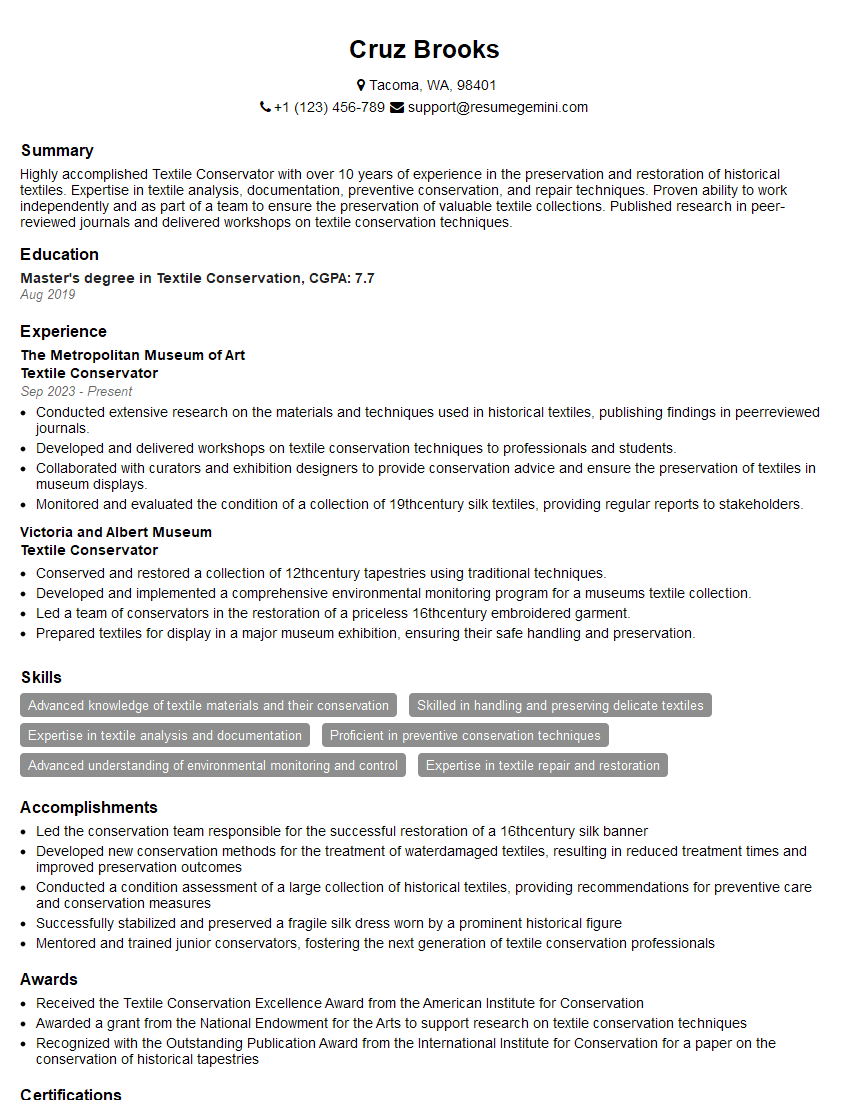
Textile Conservator Resume Sample

Quilter Resume Sample

Clothing Designer Resume Sample

Fashion Designer Resume Sample

Draper Resume Sample

Seamstress Resume Sample

Sewing Machine Operator Resume Sample
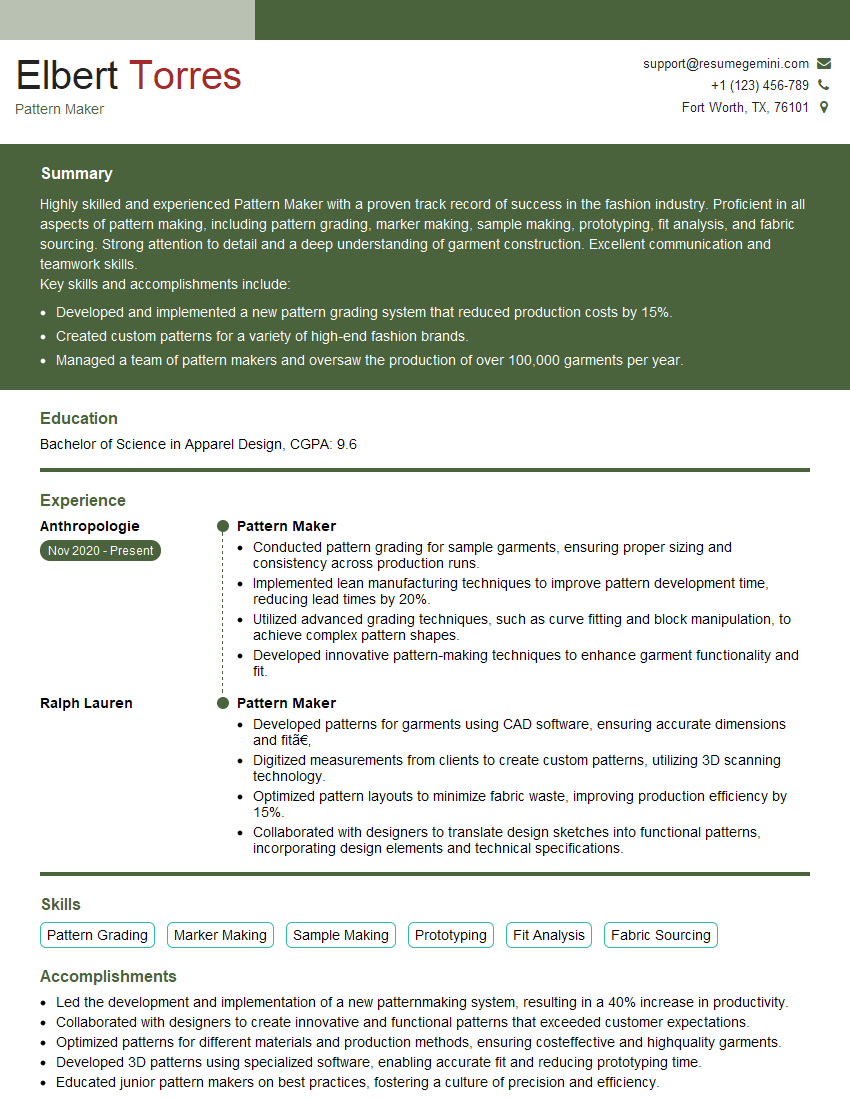
Pattern Maker Resume Sample

Embroiderer Resume Sample
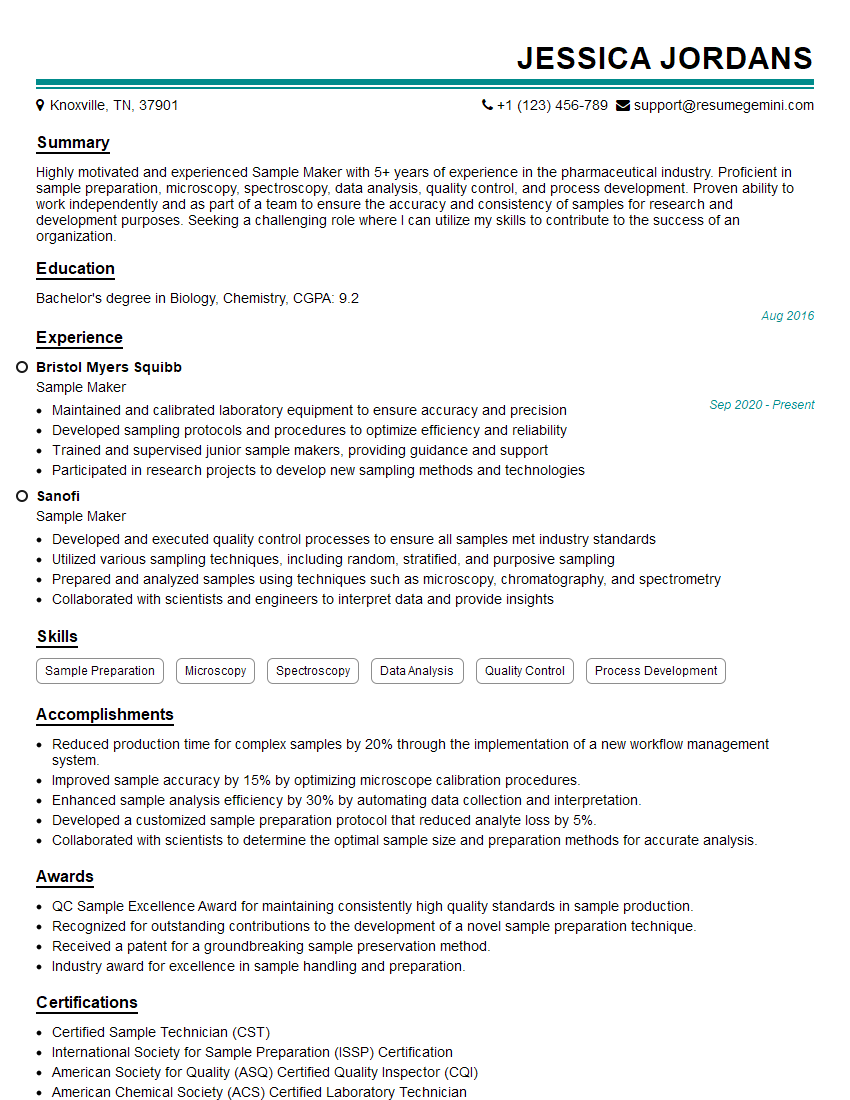
Sample Maker Resume Sample

Stitcher Resume Sample
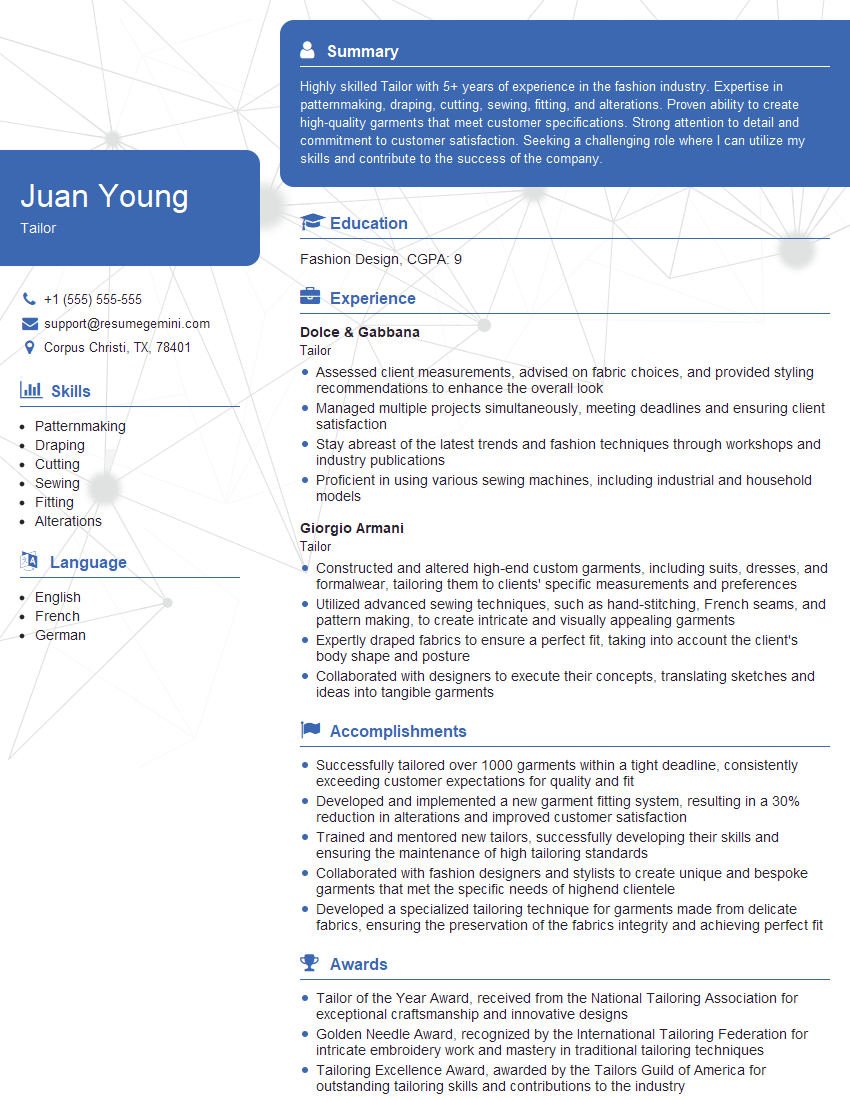
Tailor Resume Sample
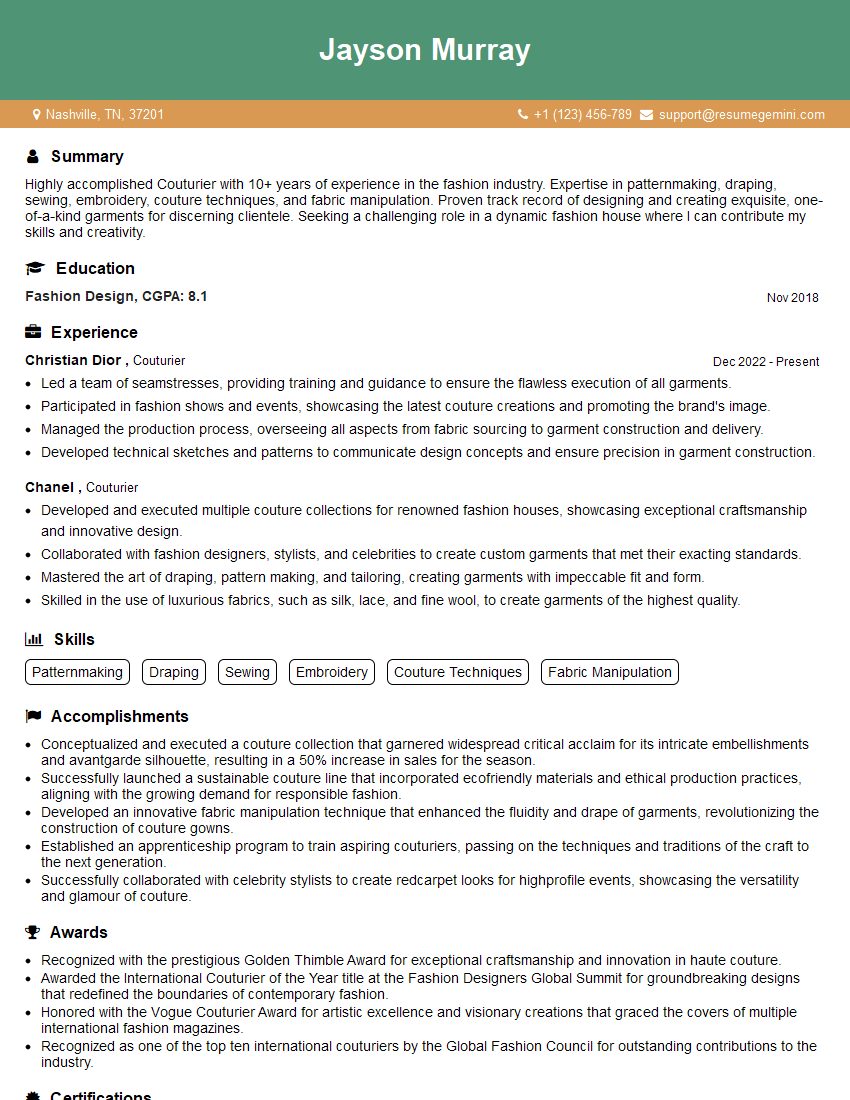
Couturier Resume Sample
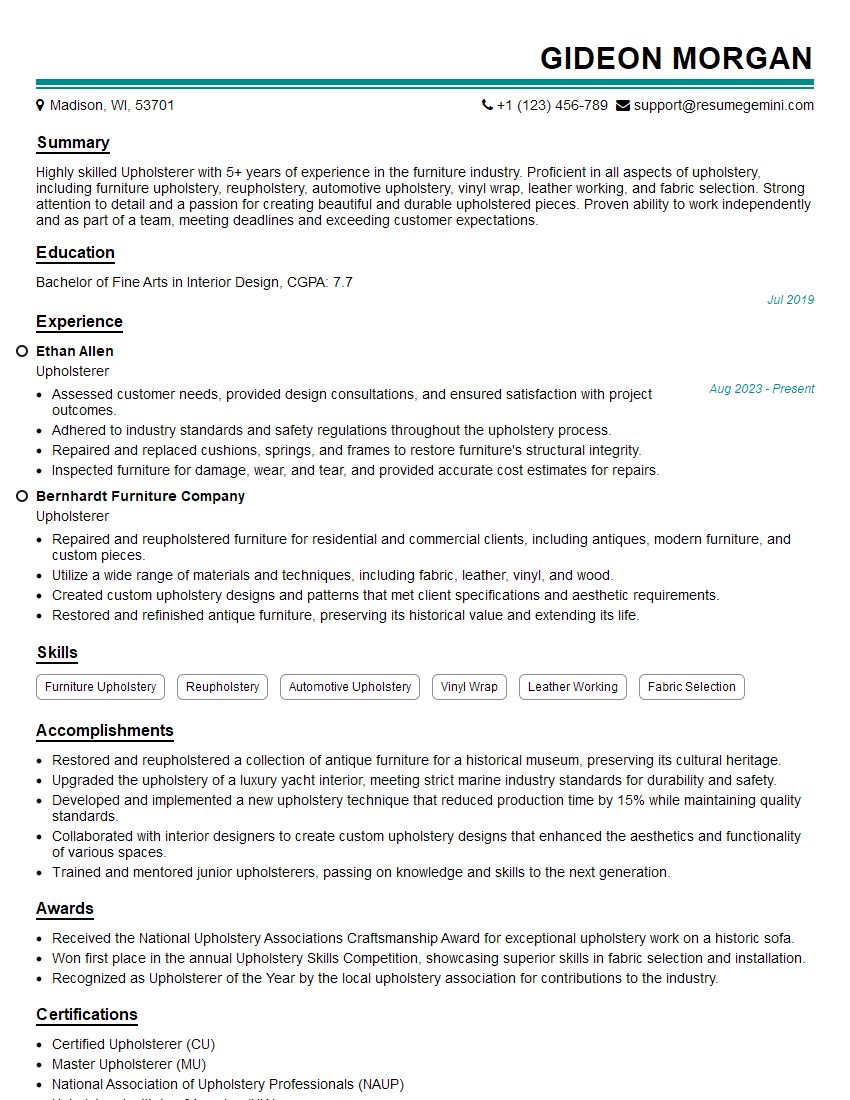
Upholsterer Resume Sample
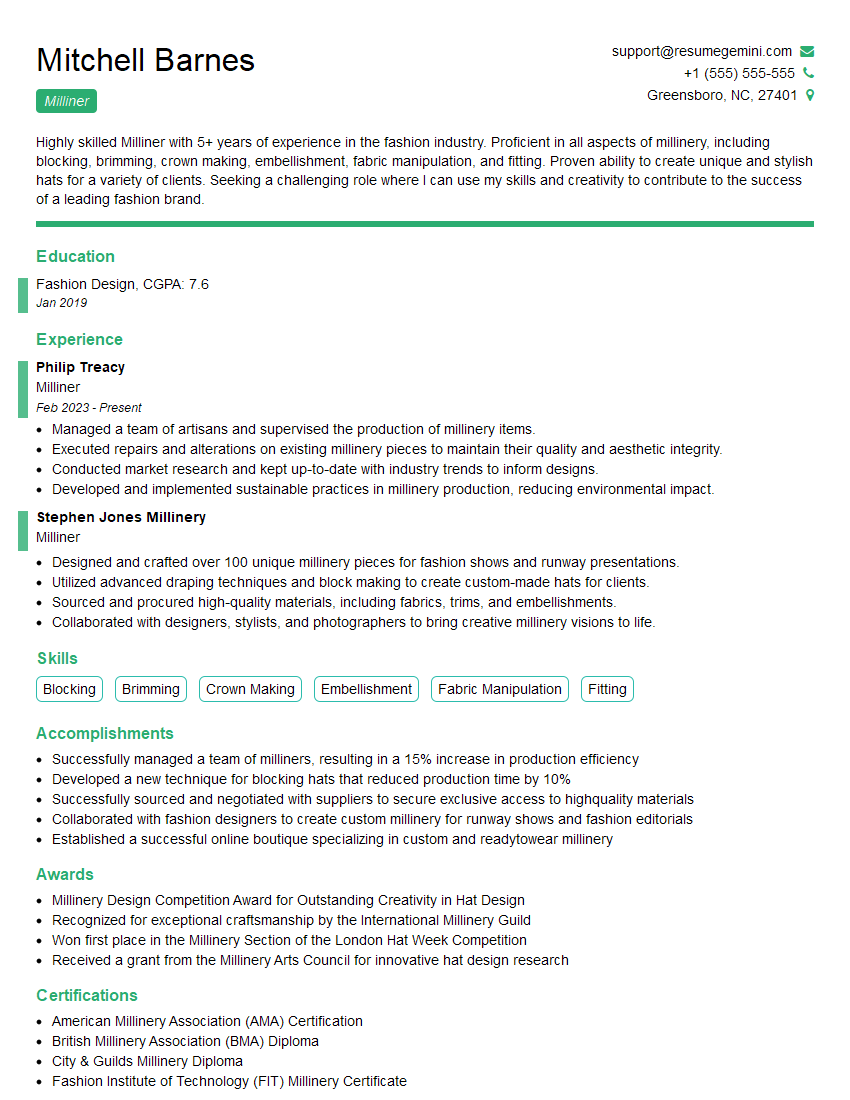
Milliner Resume Sample
Explore more articles
Users Rating of Our Blogs
Share Your Experience
We value your feedback! Please rate our content and share your thoughts (optional).
What Readers Say About Our Blog
Very informative content, great job.
good