Interviews are opportunities to demonstrate your expertise, and this guide is here to help you shine. Explore the essential Net Hauling and Repair interview questions that employers frequently ask, paired with strategies for crafting responses that set you apart from the competition.
Questions Asked in Net Hauling and Repair Interview
Q 1. Describe your experience with various net hauling techniques.
Net hauling techniques vary greatly depending on the cable type, terrain, and access limitations. My experience encompasses a range of methods, from simple hand-pulling for shorter distances in easily accessible areas, to employing sophisticated winches and pulling equipment for long spans and challenging environments. For instance, in tight urban areas, we might utilize a smaller, more maneuverable winch system, potentially combined with directional drilling to avoid disruptive road closures. In more remote locations or across large bodies of water, larger, more powerful winches and specialized equipment, including cable rollers and lubricators, become crucial for successful and safe cable deployment. I’ve also extensively used techniques involving multiple pulling points, intermediate supports, and tension control systems to handle long cable runs effectively and prevent damage.
- Hand Pulling: Suitable for short distances and lighter cables.
- Winch Pulling: Employs winches and pulling heads for longer distances and heavier cables.
- Directional Drilling: Used to install cables underground, minimizing disruption to surface areas.
- Aerial Deployment: Involves using specialized equipment to position cables along aerial pathways.
Q 2. Explain the process of identifying and repairing a damaged fiber optic cable.
Identifying and repairing a damaged fiber optic cable requires precision and specialized tools. First, we need to pinpoint the location of the damage, which often involves Optical Time-Domain Reflectometry (OTDR) testing. An OTDR sends light pulses down the fiber and analyzes the reflections to locate breaks, bends, or other impairments. Once the location is identified, excavation or access to the affected area is needed. Then, the damaged section is carefully cut out, cleaned, and spliced using fusion splicing or mechanical splicing techniques. Fusion splicing, which uses heat to fuse the fiber ends, offers superior performance and is my preferred method when possible. After splicing, the connection is tested with an OTDR to ensure minimal signal loss and proper functionality. If the damage is extensive and multiple breaks exist, we may opt for a complete cable replacement rather than repeated splicing.
For example, I once worked on a repair where a backhoe damaged an underground fiber optic cable. Using OTDR, we pinpointed the break within a few meters. Careful excavation revealed the severed fiber, and a clean fusion splice restored the network’s connectivity with minimal downtime.
Q 3. How do you troubleshoot common issues encountered during net hauling operations?
Troubleshooting net hauling operations often involves a methodical approach combining experience with technical knowledge. Common issues include cable snags, tension problems, and equipment malfunctions. My troubleshooting strategy begins with a careful assessment of the situation, followed by a systematic check of the equipment and the cable route. I use a combination of visual inspection, cable testing tools (like OTDRs for fiber), and communication with the support crew to pinpoint the source of the problem. For instance, if the cable hangs up during pulling, a potential snag might be identified by carefully reviewing the cable route using maps and field surveys. Addressing the snag often involves employing specialized tools to free the cable or rerouting the cable around the obstruction. If equipment malfunctions, we would follow the manufacturer’s troubleshooting guide and, if necessary, replace faulty components or even machines to ensure the operation can continue safely and efficiently.
Q 4. What safety precautions do you take when working with high-voltage cables?
Safety is paramount when working with high-voltage cables. We always adhere to strict safety protocols, including mandatory lockout/tagout procedures to prevent accidental energization. This involves de-energizing the lines completely and applying physical locks and tags to prevent anyone from accidentally re-energizing them. Everyone on the crew must wear appropriate personal protective equipment (PPE), including insulated gloves, safety glasses, and protective clothing. We use insulated tools and maintain a safe working distance from the cables. Before beginning any work, we conduct thorough site surveys to identify potential hazards and plan the work accordingly. Regular training and safety briefings are essential to ensure everyone understands the risks and knows how to respond to emergencies. Each crew member needs to be fully aware and familiar with the site specifics and the safety protocols.
Q 5. What are the different types of cables you have experience working with?
My experience spans a broad range of cable types, including fiber optic cables (single-mode and multi-mode), coaxial cables (various impedance levels), copper twisted-pair cables (for voice and data communication), and power cables (high-voltage and low-voltage). I’m proficient in handling both aerial and underground cable installations. I’m also familiar with specialized cables used in submarine applications, though my hands-on experience in submarine cable work is limited to onshore support roles.
Q 6. Describe your experience with aerial, underground, and submarine cable installation and repair.
I possess extensive experience with aerial, underground, and submarine cable installation and repair. Aerial cable installations often involve working at heights, requiring specialized equipment and rigorous safety protocols. Underground installations involve trenching, cable laying, and backfilling, demanding knowledge of proper grounding and protection techniques. While my direct experience with submarine cable installation is primarily limited to onshore support activities, I’m intimately familiar with the unique challenges involved in this environment, including working with specialized vessels and equipment to ensure the cable is laid precisely and protected from damage.
One project I recall involved the installation of an underground fiber optic cable through a densely populated area. Coordination with local authorities, excavation planning, and adherence to strict safety and environmental regulations were essential for the successful completion of this project. In another instance, I supported the onshore testing and preparation of a submarine cable segment before its deployment.
Q 7. How familiar are you with different splicing techniques?
I’m highly familiar with various splicing techniques for different cable types. For fiber optic cables, I’m proficient in both fusion splicing and mechanical splicing. Fusion splicing provides a superior connection with minimal signal loss, but it requires specialized equipment. Mechanical splicing is a faster method, suitable for less demanding applications, but it might introduce slightly higher signal loss. For copper cables, I’m experienced in various crimping and soldering techniques, ensuring reliable and robust connections. The choice of splicing technique always depends on factors like the cable type, required performance level, and available resources. My skill ensures the integrity of the network, minimizing signal degradation and maintaining consistent performance.
Q 8. Explain the importance of proper cable termination.
Proper cable termination is crucial for ensuring reliable network connectivity and signal integrity. A poorly terminated cable can lead to signal loss, data corruption, and even complete network outages. Think of it like plugging in a power cord – if the connection isn’t secure, the device won’t work properly.
Proper termination involves precisely preparing the cable end and connecting it to a connector (like RJ45 for copper or an SC/LC connector for fiber) according to specific standards. This includes stripping the outer jacket to the correct length, carefully separating and arranging the individual wires, crimping the connector firmly, and finally testing the connection for continuity and signal quality. Failure to follow these steps precisely can result in loose connections, short circuits, or open circuits. For example, incorrectly crimping an RJ45 connector can lead to intermittent connectivity or complete signal loss on some or all pairs. Furthermore, leaving too much or too little wire exposed before crimping can affect the connection’s stability.
Q 9. Describe your experience using specialized tools and equipment for net hauling and repair.
My experience spans a wide range of specialized tools and equipment used in net hauling and repair. I’m proficient with various cable testers, including time-domain reflectometers (TDRs) for pinpointing cable faults, and optical power meters and OTDRs for fiber optic diagnostics. I’m also skilled in using hand tools such as cable strippers, crimpers, and punch-down tools for precise cable termination. On larger projects involving aerial cable hauling, I have extensive experience operating specialized equipment such as cable pulling equipment (e.g., capstans and winches), and fiber optic fusion splicers for precise and permanent fiber connections. For example, during a recent project involving a high-rise building, we utilized a motorized cable pulling system to efficiently and safely run several hundred meters of fiber optic cable through the building’s conduit system. The precision of the equipment and the careful planning of the pull were crucial to avoid damaging the cables and the building’s infrastructure. I also have experience using various types of aerial lifts and harnesses for working at heights.
Q 10. How do you handle emergency situations during net hauling operations?
Emergency situations during net hauling can range from equipment malfunctions to unforeseen cable damage. My approach is methodical and prioritizes safety. First, I immediately assess the situation to identify the problem and any immediate dangers, such as energized cables or unstable equipment. Next, I communicate the emergency to the appropriate personnel, and if necessary, initiate emergency shutdown procedures. After that, I work to stabilize the situation, implementing appropriate safety measures to prevent further damage or injury. Depending on the emergency, this could involve isolating faulty equipment, securing loose cables, or calling for specialized assistance. For instance, if a cable breaks during a haul, I would immediately secure the ends to prevent further unraveling, alert the team, and then assess the extent of the damage to plan the necessary repairs. This includes documenting the incident and reporting it to the relevant authorities.
Q 11. Explain your experience with testing and certification of network cables.
Testing and certification of network cables are essential for ensuring network performance and reliability. I’m experienced in using various testing tools to verify cable integrity and compliance with industry standards, such as TIA/EIA-568. This includes using cable testers to check for continuity, wire map errors, and signal attenuation. For fiber optic cables, I utilize OTDRs (Optical Time-Domain Reflectometers) to identify breaks, splices, and other faults along the cable’s length. The results of these tests are documented and used to generate certification reports. For example, a recent project required certification of hundreds of Cat6A cables. I meticulously tested each cable using a qualified tester, and the generated reports were crucial for acceptance by the client. In situations where cable faults are detected, I use TDRs to identify the exact location of the fault for efficient and precise repair.
Q 12. What are the key differences between different types of fiber optic cables?
Fiber optic cables come in various types, each with different properties and applications. Key differences lie in the core material (typically single-mode or multi-mode), the cladding material, and the overall cable construction. Single-mode fiber has a smaller core diameter than multi-mode fiber, allowing for longer transmission distances with less signal attenuation. This makes single-mode fiber ideal for long-haul telecommunications networks. Multi-mode fiber, on the other hand, is suitable for shorter-distance applications like within buildings or data centers. Additionally, fiber optic cables can be jacketed with different materials to provide protection against environmental factors like moisture or UV radiation. Different connector types (like SC, LC, ST) are also used depending on the application and network requirements. Selecting the right fiber type depends heavily on the needs of the network. The bandwidth capacity, required length, and budget are some of the factors influencing this decision. For instance, a large enterprise data center might opt for multi-mode fiber for short interconnects, while a long-distance carrier will use single-mode fiber for maximum transmission distances.
Q 13. Describe your experience with documentation and reporting for net hauling and repair activities.
Thorough documentation and reporting are critical for traceability and efficient troubleshooting. I maintain detailed records of all net hauling and repair activities, including cable types, lengths, locations, testing results, and any maintenance performed. This documentation typically includes detailed as-built drawings, cable schematics, and certification reports. I use various methods for documentation, from digital databases and spreadsheets to physical labeling of cables and equipment. I strive for a clear and concise style of reporting that is easily accessible to technicians and stakeholders. For example, after completing a network cable installation, I prepare a comprehensive report that includes as-built diagrams, test results, and a summary of the work performed. This ensures that future maintenance or troubleshooting tasks can be performed efficiently and accurately. The use of consistent labeling and documentation practices is paramount for ease of use by others and for proper documentation of all completed work.
Q 14. How do you ensure compliance with safety regulations and industry standards?
Safety is my top priority. I adhere strictly to all relevant safety regulations and industry standards, including OSHA guidelines and relevant telecommunications standards. This includes using appropriate personal protective equipment (PPE) like safety glasses, gloves, and harnesses when working at heights. I follow lockout/tagout procedures when working on energized equipment. Regular safety training is crucial, and I actively participate to remain up-to-date on best practices. Before commencing any work, I perform a thorough risk assessment to identify and mitigate potential hazards. For example, while working on aerial cable installations, I always use appropriate harnesses and fall protection equipment. Furthermore, I ensure that all equipment is properly inspected and maintained before use. A commitment to safety ensures the well-being of myself and my colleagues and contributes to the efficient and successful completion of projects.
Q 15. How do you prioritize tasks and manage your time effectively during net hauling and repair operations?
Prioritizing tasks in net hauling and repair is crucial for efficiency and meeting deadlines. I use a combination of methods, starting with a clear understanding of the project scope and client priorities. This often involves reviewing network diagrams and service level agreements (SLAs) to identify critical paths and dependencies.
- Urgency and Impact: I prioritize tasks based on their urgency (immediate outage vs. scheduled maintenance) and their impact on the network (critical network segment vs. less critical). Think of it like triage in a hospital – addressing the most life-threatening issues first.
- Dependency Management: Some tasks are dependent on others. For example, I can’t splice fiber until I’ve located the fault. I use a task management system (like Trello or Asana) to visually map these dependencies and ensure a smooth workflow.
- Time Estimation and Buffering: I’m realistic about how long tasks take, adding buffer time to account for unforeseen delays (weather, equipment malfunctions). Overly optimistic scheduling is a recipe for disaster.
- Regular Communication: Frequent communication with clients and the team is key to staying on track. I provide regular updates on progress and proactively identify potential roadblocks.
For example, during a recent large-scale fiber installation, we had a critical deadline. By prioritizing the splicing and testing of the main backbone fiber first, we ensured the core network was operational on time, even while other peripheral tasks were still underway.
Career Expert Tips:
- Ace those interviews! Prepare effectively by reviewing the Top 50 Most Common Interview Questions on ResumeGemini.
- Navigate your job search with confidence! Explore a wide range of Career Tips on ResumeGemini. Learn about common challenges and recommendations to overcome them.
- Craft the perfect resume! Master the Art of Resume Writing with ResumeGemini’s guide. Showcase your unique qualifications and achievements effectively.
- Don’t miss out on holiday savings! Build your dream resume with ResumeGemini’s ATS optimized templates.
Q 16. Describe your experience with working in diverse weather conditions.
Working outdoors in diverse weather conditions is an inherent part of net hauling and repair. My experience spans everything from scorching summers to blizzard-like winters. Safety is paramount, and I’ve developed strategies to work effectively regardless of the conditions.
- Safety First: Extreme heat requires frequent hydration breaks and wearing appropriate sun protection. Cold weather necessitates layering clothing, ensuring proper hand and foot warmth, and using equipment adapted for low temperatures.
- Equipment Adaptation: Many tools and testing devices are weather-resistant, but I’m always mindful of potential issues caused by moisture or extreme temperatures. For instance, I use specialized waterproof connectors and cases to protect sensitive equipment in rain or snow.
- Planning and Flexibility: I always check weather forecasts before heading out and adjust plans accordingly. Sometimes, it’s necessary to postpone tasks until conditions improve, ensuring both safety and efficiency.
- Risk Mitigation: I identify and mitigate potential risks proactively. This includes assessing potential hazards (e.g., downed power lines, icy roads) and taking precautions to minimize the risks.
I recall one incident where a sudden thunderstorm forced us to suspend work midway through a fiber splice. By quickly securing the equipment and taking shelter, we prevented damage and avoided a potential safety incident. Understanding the limitations imposed by weather and taking appropriate precautions has saved us time, money and prevented accidents.
Q 17. How do you handle difficult or challenging situations with clients or colleagues?
Handling challenging situations with clients or colleagues requires strong communication, empathy, and problem-solving skills. I strive to maintain a professional demeanor and focus on finding mutually acceptable solutions.
- Active Listening: I actively listen to understand the other person’s perspective, even if I don’t necessarily agree with it. This is critical for defusing tensions.
- Clear and Concise Communication: I communicate clearly and concisely, ensuring that my message is understood without jargon. I use visual aids (diagrams, charts) where appropriate.
- Conflict Resolution Techniques: I employ conflict resolution techniques, such as finding common ground and exploring compromise. The goal is to find a solution that satisfies everyone’s needs as much as possible.
- Seeking Help When Needed: If a situation is beyond my expertise, I’m not afraid to escalate the issue to a senior colleague or manager.
In one instance, a client was upset about a project delay. By actively listening to their concerns, explaining the reasons for the delay, and offering a revised timeline and compensation for the inconvenience, I was able to resolve the situation amicably.
Q 18. Describe your experience with using OTDRs and other testing equipment.
OTDRs (Optical Time-Domain Reflectometers) are essential tools for testing fiber optic cables. My experience includes using various OTDR models from different manufacturers. I’m proficient in interpreting OTDR traces to identify faults such as breaks, macrobends, and connector losses.
- OTDR Operation: I understand how to set up and operate OTDRs, including selecting appropriate parameters (pulse width, wavelength) based on the type of fiber and the distance being tested.
- Trace Interpretation: I can accurately interpret OTDR traces to pinpoint the location and type of fault. This includes identifying events such as splices, connectors, and reflections.
- Other Testing Equipment: My experience also extends to other testing equipment, such as optical power meters, fiber optic visual fault locators (VFLs), and TDRs (Time Domain Reflectometers) for copper cabling.
- Data Analysis: I can analyze OTDR trace data to generate reports and document the test results. This is crucial for troubleshooting and future network maintenance.
For example, during a recent network outage, I used an OTDR to quickly identify a fiber break in a remote area. This allowed us to dispatch a repair crew to the exact location, significantly reducing downtime.
Q 19. How do you maintain and organize your tools and equipment?
Maintaining and organizing tools and equipment is crucial for efficiency and safety. I follow a systematic approach to keep my equipment in top condition and readily accessible.
- Designated Storage: All my tools and equipment are stored in clearly labeled, organized cases and compartments. This includes specialized cases for sensitive electronic equipment.
- Regular Maintenance: I regularly inspect and maintain all my tools, ensuring they are clean, functioning correctly, and properly calibrated (where applicable).
- Inventory Management: I keep a detailed inventory of my tools and equipment, tracking their condition and usage. This helps in identifying when replacement or repair is needed.
- Safety Procedures: I follow strict safety procedures when handling tools and equipment, including proper use of personal protective equipment (PPE).
A well-organized toolbox is like a well-organized mind: everything is in its place and easily retrievable. This saves time and prevents frustration during critical moments.
Q 20. Explain your understanding of network topology and its relevance to net hauling.
Network topology refers to the physical or logical layout of a network. Understanding network topology is fundamental to net hauling because it dictates the path of cables and the impact of repairs or changes to the network.
- Common Topologies: I’m familiar with various network topologies including star, ring, bus, mesh, and tree. Each topology has its own strengths and weaknesses, impacting the way we approach net hauling and repair.
- Impact on Net Hauling: Knowledge of the topology helps in planning cable routes, identifying critical paths, and minimizing disruption during repair activities. For instance, in a star topology, a central hub failure affects the entire network, whereas a mesh topology is more resilient to individual link failures.
- Network Diagrams: I can interpret network diagrams to understand the physical layout of the network, identifying the location of equipment and cables. This helps in quickly locating faults and planning repair activities.
- Troubleshooting: Understanding network topology is essential for troubleshooting network problems. By tracing the path of signals through the network, I can effectively isolate and resolve issues.
For example, when troubleshooting an internet outage in a building with a star topology, we immediately focused on the central switch, quickly identifying a faulty port as the source of the problem. Understanding the topology allowed for rapid resolution.
Q 21. Describe your experience with working on large-scale projects.
I have extensive experience working on large-scale projects, involving multiple teams, complex network architectures, and tight deadlines. My approach to these projects emphasizes collaboration, planning, and efficient execution.
- Project Planning and Management: I participate in project planning sessions, contributing to the development of detailed plans, timelines, and resource allocation strategies.
- Teamwork and Collaboration: Large projects require effective teamwork. I collaborate seamlessly with engineers, technicians, and clients, ensuring clear communication and coordinated efforts.
- Risk Management: I identify and mitigate potential risks proactively, developing contingency plans to address unforeseen challenges.
- Quality Control: I follow rigorous quality control procedures, ensuring that all work meets the required standards and specifications.
A recent project involved the installation of a new fiber optic network for a large university campus. By carefully planning the cable routes, coordinating with construction crews, and ensuring proper testing at every stage, we successfully completed the project on time and within budget. Successful large-scale projects often hinge on meticulous planning and effective teamwork.
Q 22. What is your experience with different types of cable connectors?
My experience with cable connectors spans a wide range, encompassing various types crucial for different network applications. I’m proficient with common connectors like RJ45 (used extensively in Ethernet networks), SC/FC/LC (for fiber optic cables), and BNC (often found in coaxial cable systems). Beyond the standard types, I’ve also worked with specialized connectors for underwater applications and those designed for high-bandwidth, low-latency environments. For example, I once worked on a project requiring the installation of MTP/MPO connectors for a high-density fiber optic backbone. Understanding the specific requirements of each connector, including its pinouts and termination techniques, is vital for ensuring reliable network performance. Incorrect termination can lead to signal loss or connectivity issues, emphasizing the need for precise and careful handling.
Q 23. How do you identify and solve problems related to cable signal degradation?
Identifying cable signal degradation begins with understanding the symptoms. Slow data transfer speeds, frequent connection drops, intermittent connectivity, and high error rates are all common indicators. To pinpoint the problem, I use a combination of techniques. A cable tester provides immediate feedback, measuring signal strength and attenuation. Visual inspection of the cable itself, looking for kinks, bends, or damage, is crucial. If the problem is localized to a specific segment, tracing the cable’s path helps isolate the fault. For example, during a recent troubleshooting effort at a large data center, I used a Time Domain Reflectometer (TDR) to pinpoint a break within a buried fiber optic cable, saving extensive excavation efforts. Solutions range from simple repairs (like replacing a damaged connector) to more complex interventions like replacing a section of cable or rerouting the entire line. The key is methodical investigation, combining advanced tools with basic observation skills.
Q 24. Describe your experience with working in confined spaces.
Working in confined spaces is a regular part of my job, requiring adherence to strict safety protocols. I’m certified in confined space entry and rescue, understanding the hazards associated with limited ventilation, potential for asphyxiation, and the risks of working in tight spaces. I’ve worked in manholes, crawl spaces, and cable trenches, always prioritizing safety. This includes using appropriate personal protective equipment (PPE), such as respirators and harnesses, and following established procedures for atmospheric monitoring and emergency response. One particular project involved running new cables through a narrow duct system beneath a busy city street; rigorous safety planning and communication were essential to ensure the safe completion of the job. My experience highlights the importance of meticulous planning and careful execution to prevent accidents in these challenging environments.
Q 25. Explain your understanding of the different types of cable damage and their causes.
Cable damage comes in various forms. Physical damage, such as cuts, kinks, and crushing, is often caused by accidental digging, rodent gnawing, or improper handling during installation. Environmental factors, including extreme temperatures, moisture, and UV exposure, can also degrade cables over time. This degradation can lead to signal attenuation, impedance mismatches, and ultimately, connection failures. Another common problem is crimping errors during connector installation which leads to intermittent connection. Understanding these different causes allows for preventative measures, such as proper cable routing and selection of appropriately rated cables for the specific environmental conditions. For instance, I’ve seen significant cable degradation in outdoor installations exposed to direct sunlight. Using UV-resistant jackets is crucial in these scenarios.
Q 26. How familiar are you with various types of cable pulling equipment?
My experience includes using a variety of cable pulling equipment, ranging from simple hand-pulling tools to sophisticated motorized cable pullers. I’m familiar with different types of cable lubricants to reduce friction and prevent damage during the pulling process. I’ve operated both pneumatic and hydraulic pullers, and I’m adept at selecting the appropriate equipment based on cable type, length, and the environment. I understand the importance of using pulling grips and other accessories to protect the cable from damage during the pulling process. For instance, on one project involving a long cable run in a conduit, we utilized a motorized winch system to safely and efficiently install the cable, which reduced the potential for damage and improved productivity. Incorrect usage of pulling equipment can easily damage cables or even injure personnel, so understanding the operation and limitations of each type of equipment is critical.
Q 27. What is your experience with preventative maintenance of network cables?
Preventative maintenance is key to ensuring the longevity and reliability of network cables. This includes regular visual inspections to identify any signs of damage or wear, checking connector integrity, and cleaning cables to remove dust and debris. Testing cable continuity and signal strength with appropriate tools is also vital. Implementing a schedule for preventative maintenance – based on the type of cable, its environment, and its use – is vital for proactive management. This often involves a combination of scheduled inspections and ongoing monitoring of performance metrics. For example, in a manufacturing facility, we implemented a quarterly inspection program for all critical network cables, proactively identifying and addressing minor issues before they escalated into major outages. This routine maintenance significantly improved the facility’s network uptime and reduced costly downtime.
Q 28. Describe your experience troubleshooting network connectivity issues related to cabling.
Troubleshooting network connectivity issues related to cabling often involves a systematic approach. I start by identifying the affected area and checking for obvious signs of cable damage. I then use tools like cable testers and network analyzers to pinpoint the fault. These tools help to identify breaks, shorts, or signal attenuation. A methodical approach involving isolating sections of the network and using tools to examine individual cable runs is crucial. For example, a recent issue involved intermittent connectivity on a particular floor of an office building. By methodically testing individual cables, we were able to isolate the problem to a faulty patch panel which was quickly replaced, restoring full connectivity. Addressing issues promptly prevents them from escalating into major network outages and improves the overall reliability and efficiency of the network.
Key Topics to Learn for Net Hauling and Repair Interview
- Network Topology and Design: Understanding different network topologies (star, mesh, ring, bus) and their applications in hauling and repair scenarios. Consider the implications of choosing one topology over another in terms of efficiency and redundancy.
- Troubleshooting Network Issues: Practical application of troubleshooting techniques, including the use of diagnostic tools and systematic problem-solving methodologies to identify and resolve network connectivity problems in field operations.
- Fiber Optic Cable Handling and Repair: Safe handling procedures, splicing techniques, testing methodologies for fiber optic cables. This includes understanding different types of fiber and connectors.
- Wireless Network Technologies: Knowledge of wireless protocols (Wi-Fi, cellular) and their use in remote network monitoring and data transmission during hauling and repair operations. Understanding signal propagation and interference is crucial.
- Network Security: Implementing basic security measures to protect network infrastructure and data from unauthorized access during hauling and repair operations. Understanding firewalls and basic security protocols is beneficial.
- Data Communication Protocols: Understanding common protocols like TCP/IP and their roles in data transmission and network communication. This involves recognizing common error messages and their significance.
- Network Documentation and Maintenance: Importance of maintaining accurate and up-to-date network documentation, including diagrams and troubleshooting logs. Understanding preventative maintenance strategies is essential.
Next Steps
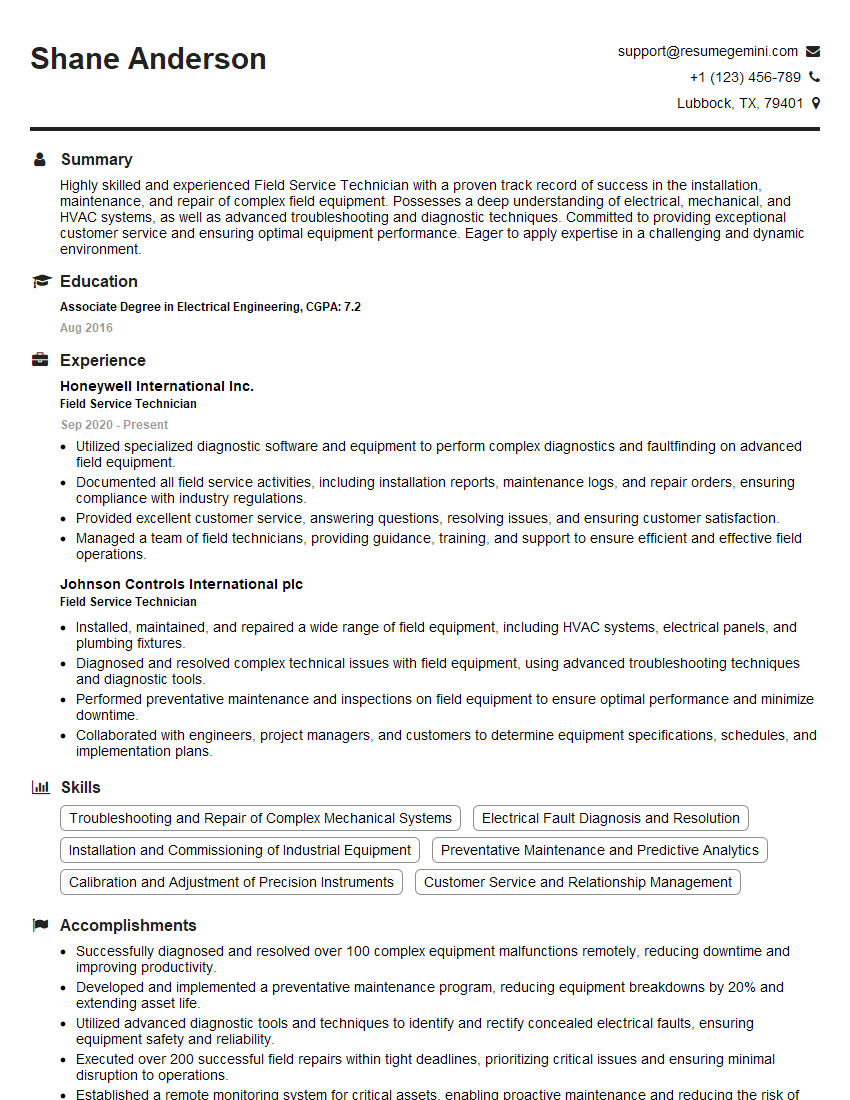
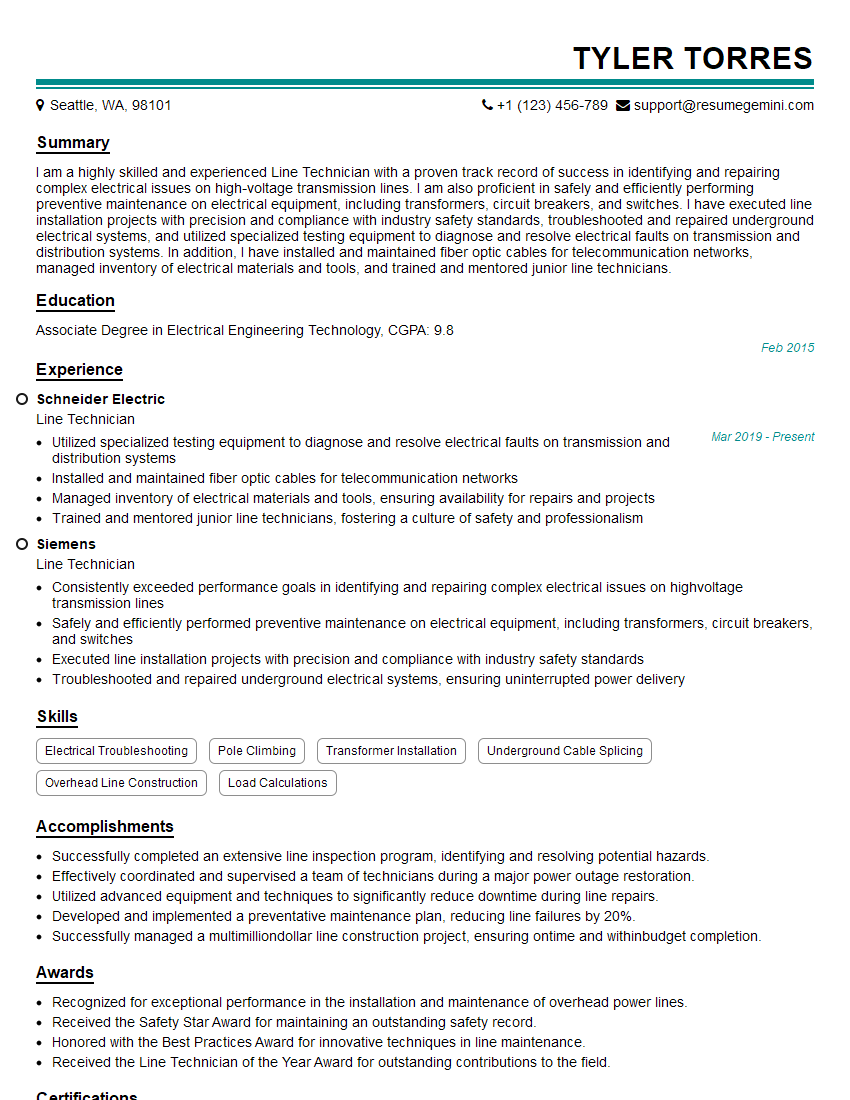
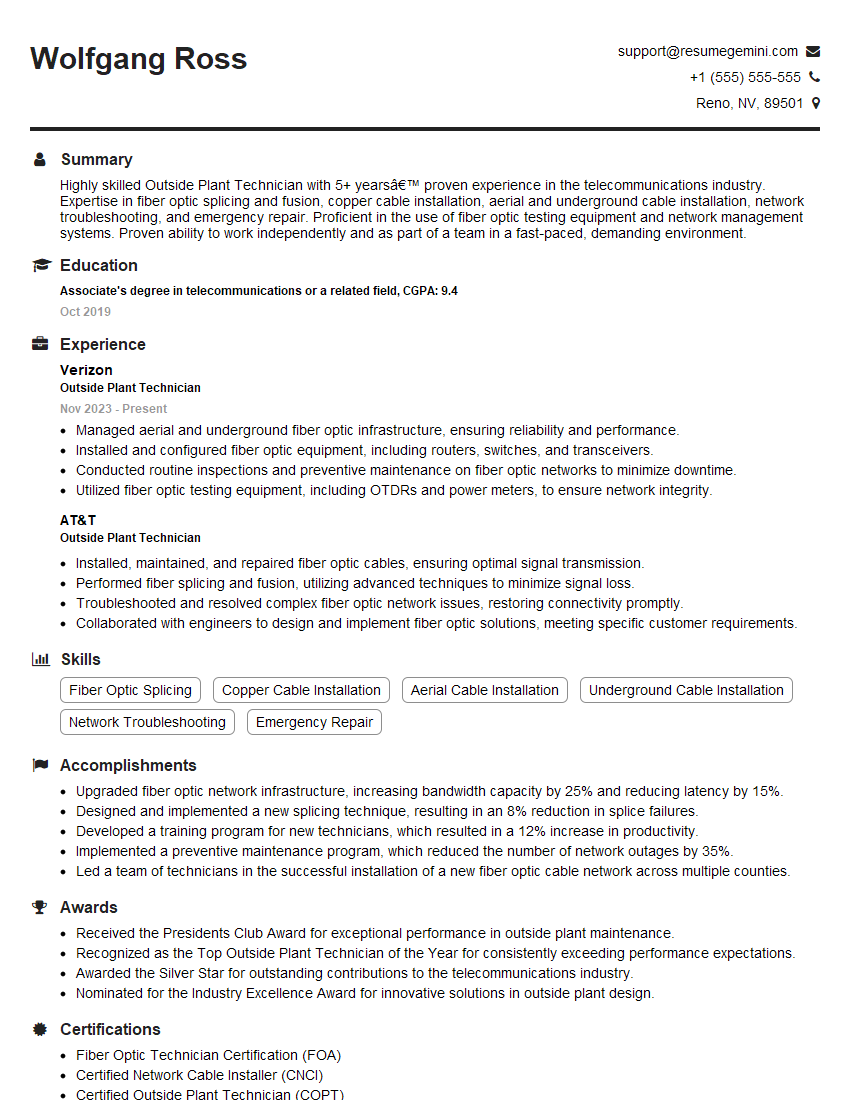
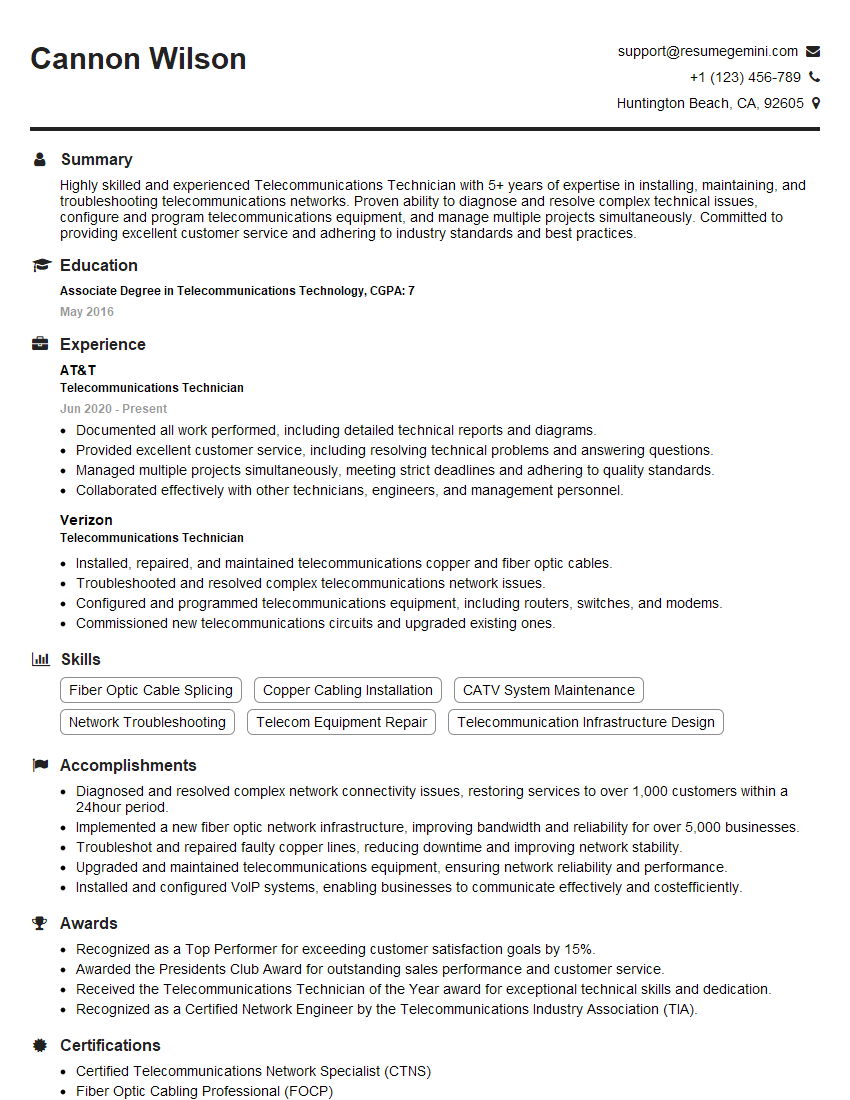
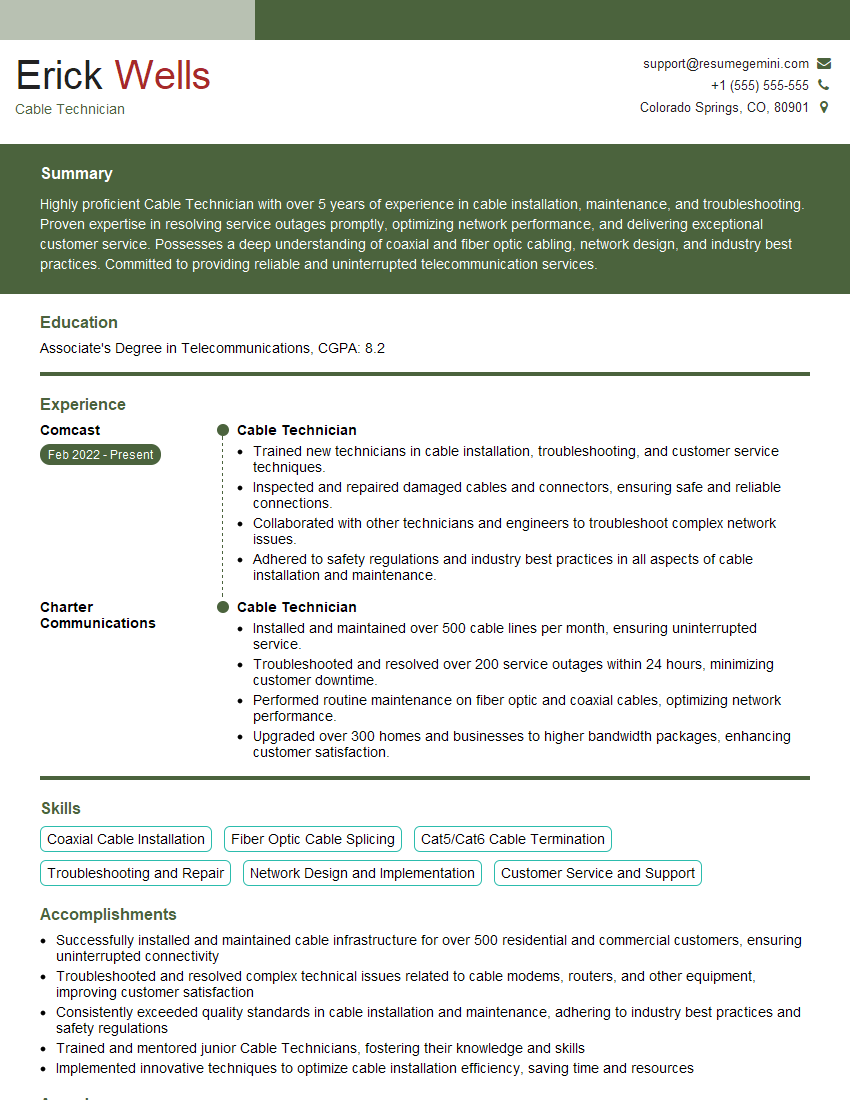
Mastering Net Hauling and Repair skills significantly enhances your career prospects in the rapidly evolving telecommunications industry. These skills are in high demand, opening doors to rewarding roles with significant growth potential. To increase your chances of landing your dream job, it’s crucial to create a compelling and ATS-friendly resume that highlights your expertise effectively. We strongly encourage you to utilize ResumeGemini, a trusted resource, to build a professional and impactful resume. ResumeGemini offers numerous templates and tools to craft a resume that showcases your skills in the best possible light. Examples of resumes tailored to Net Hauling and Repair are available to help guide you through the process.


Explore more articles
Users Rating of Our Blogs
Share Your Experience
We value your feedback! Please rate our content and share your thoughts (optional).
What Readers Say About Our Blog
Very informative content, great job.
good