Interviews are more than just a Q&A session—they’re a chance to prove your worth. This blog dives into essential Network Security and Cyber Protection interview questions and expert tips to help you align your answers with what hiring managers are looking for. Start preparing to shine!
Questions Asked in Network Security and Cyber Protection Interview
Q 1. Explain the difference between symmetric and asymmetric encryption.
Symmetric and asymmetric encryption are two fundamental approaches to securing data, differing primarily in how they handle encryption and decryption keys.
Symmetric Encryption: Uses a single secret key for both encryption and decryption. Think of it like a secret codebook shared between sender and receiver. Both parties use the same key to lock (encrypt) and unlock (decrypt) the message. Examples include AES (Advanced Encryption Standard) and DES (Data Encryption Standard).
- Advantage: Fast and efficient.
- Disadvantage: Securely distributing the shared key can be challenging. If the key is compromised, all communication is vulnerable.
Asymmetric Encryption: Employs two separate keys: a public key and a private key. The public key can be freely distributed, while the private key must remain secret. The public key encrypts the message, and only the corresponding private key can decrypt it. This is akin to a mailbox – anyone can drop a letter (encrypt with the public key), but only the person with the key to the mailbox (private key) can retrieve it.
- Advantage: Secure key distribution; ideal for digital signatures and authentication.
- Disadvantage: Computationally more intensive than symmetric encryption.
In practice: Often, hybrid approaches are used. Asymmetric encryption is used to securely exchange a symmetric key, and then symmetric encryption handles the bulk data encryption for efficiency. For example, TLS/SSL uses this hybrid approach for secure web communication.
Q 2. Describe the OSI model and its relevance to network security.
The OSI (Open Systems Interconnection) model is a conceptual framework that divides network communication into seven distinct layers, each with its specific functions. Understanding these layers is crucial for network security because vulnerabilities can exist at any layer.
- Layer 7 (Application): Handles application-specific protocols like HTTP, FTP, and SMTP. Security at this layer involves securing application-level data and preventing attacks like SQL injection or cross-site scripting (XSS).
- Layer 6 (Presentation): Deals with data formatting and translation. Security focuses on data encryption and integrity at this level.
- Layer 5 (Session): Establishes, manages, and terminates communication sessions. Security concerns include session hijacking and unauthorized access.
- Layer 4 (Transport): Provides reliable data transfer. Security measures include TCP/UDP port filtering and intrusion detection/prevention.
- Layer 3 (Network): Handles IP addressing and routing. Security measures include firewalls, network segmentation, and IPsec.
- Layer 2 (Data Link): Handles physical addressing (MAC addresses) and error detection. Security at this layer involves MAC address filtering and preventing MAC flooding attacks.
- Layer 1 (Physical): Deals with the physical transmission of data over the network medium. Security concerns relate to physical access control and preventing wiretapping.
Relevance to Network Security: The OSI model provides a structured way to understand where security mechanisms should be implemented. By examining each layer, we can identify potential vulnerabilities and deploy appropriate security controls at the most effective points.
Q 3. What are the common types of network attacks?
Network attacks come in various forms. Here are some common types:
- Denial-of-Service (DoS) and Distributed Denial-of-Service (DDoS): Overwhelm a network or server with traffic, making it unavailable to legitimate users. DDoS attacks involve multiple compromised machines (botnets).
- Man-in-the-Middle (MitM): An attacker intercepts communication between two parties, eavesdropping or modifying data. This can be mitigated with strong encryption and authentication.
- SQL Injection: Exploits vulnerabilities in database applications to gain unauthorized access to data. Input validation and parameterized queries help prevent this.
- Cross-Site Scripting (XSS): Injects malicious scripts into websites, allowing attackers to steal user data or redirect them to malicious sites. Output encoding and input validation are vital defenses.
- Phishing: Deceives users into revealing sensitive information (passwords, credit card details) through deceptive emails or websites.
- Malware: Malicious software like viruses, worms, and ransomware, which can damage systems, steal data, or encrypt files for ransom. Regular software updates and antivirus solutions are essential.
- Zero-Day Exploits: Attacks that exploit previously unknown vulnerabilities before patches are available.
Understanding these attack types allows security professionals to implement appropriate preventative measures and develop effective incident response plans.
Q 4. Explain the concept of firewalls and their different types.
Firewalls act as security barriers between a trusted internal network and an untrusted external network (like the internet). They inspect network traffic and block or allow it based on predefined rules.
Types of Firewalls:
- Packet Filtering Firewalls: Examine individual network packets based on headers (IP address, port number, protocol). They are relatively simple but can be bypassed with sophisticated attacks.
- Stateful Inspection Firewalls: Track network connections and filter packets based on the context of the entire connection. They offer better security than packet filtering.
- Application-Level Gateways (Proxy Firewalls): Inspect the contents of network traffic at the application layer, providing more granular control and security. They’re slower but provide more thorough protection.
- Next-Generation Firewalls (NGFWs): Combine the functionalities of multiple firewall types with advanced security features such as intrusion prevention, application control, and user/device identification.
Real-world example: A company uses a NGFW to control access to its internal network, blocking malicious traffic, enforcing security policies, and providing detailed logging and reporting capabilities.
Q 5. How does intrusion detection/prevention systems work?
Intrusion Detection/Prevention Systems (IDS/IPS) monitor network traffic for malicious activity, identifying and responding to intrusions.
How they work:
- IDS: Monitors network traffic for suspicious patterns and alerts administrators of potential threats. It passively observes traffic without interfering.
- IPS: Similar to IDS but actively blocks or mitigates threats. It can drop malicious packets or modify network settings to prevent attacks from succeeding.
Both IDS and IPS use various detection methods:
- Signature-based detection: Identifies known attacks based on their characteristic patterns (signatures).
- Anomaly-based detection: Detects deviations from normal network behavior, identifying potentially unknown attacks.
Example: An IPS detects a SYN flood attack (a type of DoS attack) targeting a web server. It blocks the malicious traffic, preventing the server from being overwhelmed and ensuring continued availability.
Q 6. What are the key principles of least privilege?
The principle of least privilege dictates that users and processes should only have the minimum necessary access rights to perform their tasks. This significantly limits the potential damage caused by a security breach.
Key Principles:
- Restrict Access: Grant only the necessary permissions for each user or process, minimizing the impact of compromised accounts or processes.
- Separate Privileges: Divide administrative tasks among multiple accounts to prevent a single compromised account from gaining excessive control.
- Regular Review: Periodically review and update user and process permissions to ensure they remain appropriate and up-to-date.
- Contextual Access: Grant access based on the context of the request, such as time of day or location.
Practical Application: A database administrator should only have the permissions required to manage the database, not the ability to access sensitive files or modify system configurations. This limits the potential damage from a compromised administrator account.
Q 7. Describe your experience with vulnerability scanning and penetration testing.
I have extensive experience in both vulnerability scanning and penetration testing. My experience includes using various tools like Nessus, OpenVAS, Nmap, and Metasploit.
Vulnerability Scanning: I’ve conducted numerous vulnerability scans to identify weaknesses in various systems and networks. This involves using automated tools to analyze systems for known vulnerabilities, providing detailed reports that highlight critical issues. I’m proficient in interpreting scan results, prioritizing vulnerabilities based on their severity and potential impact, and recommending remediation strategies.
Penetration Testing: I’ve performed various penetration testing engagements, simulating real-world attacks to assess the security posture of client systems. My approach follows ethical hacking methodologies and adheres to strict client agreements. This includes reconnaissance, vulnerability exploitation, privilege escalation, and reporting on findings, along with providing actionable remediation recommendations. A recent project involved a penetration test of a client’s web application, where I successfully identified and exploited an SQL injection vulnerability, demonstrating the potential for data breaches. The results led to significant improvements in the application’s security architecture.
Q 8. Explain the concept of risk assessment and its importance.
Risk assessment is the systematic process of identifying, analyzing, and prioritizing potential threats and vulnerabilities to an organization’s assets. Think of it like a home security check – you identify weak points (unlocked windows), evaluate the potential damage (burglary), and decide which to address first (install alarms on the most vulnerable windows).
Its importance stems from proactive security. By understanding potential risks, organizations can allocate resources effectively to mitigate threats before they cause significant damage. This includes financial losses, reputational damage, legal repercussions, and operational disruption. A well-executed risk assessment guides the development of a robust security posture, ensuring investments are focused where they are most needed.
For example, a bank conducting a risk assessment might identify phishing as a significant threat. They then analyze the likelihood of success and the potential impact (financial loss from fraudulent transactions). Based on this, they might prioritize security awareness training for employees and implement multi-factor authentication to mitigate the risk.
Q 9. How do you handle security incidents?
Handling security incidents requires a structured approach. My preferred framework is based on the NIST Cybersecurity Framework: Identify, Protect, Detect, Respond, and Recover.
- Identify: Quickly identify the nature and scope of the incident. Is it a malware infection? A data breach? A denial-of-service attack?
- Protect: Contain the incident to prevent further damage. This might involve isolating infected systems, blocking malicious IP addresses, or temporarily shutting down services.
- Detect: Utilize security monitoring tools and logs to identify the root cause, spread, and impact of the incident. This is crucial for effective containment and recovery.
- Respond: Take appropriate action to neutralize the threat. This may include removing malware, patching vulnerabilities, or engaging law enforcement.
- Recover: Restore systems and data to a functional state. This includes backing up data, restoring systems from backups, and implementing preventative measures to avoid future incidents.
Throughout the process, thorough documentation is vital for post-incident analysis, reporting, and continuous improvement of security practices. It’s important to communicate transparently with stakeholders – both internally and externally (e.g., customers, regulatory bodies) – keeping them informed about the situation and the steps being taken.
Q 10. What are your preferred methods for securing cloud-based infrastructure?
Securing cloud-based infrastructure requires a multi-layered approach leveraging several key strategies.
- Identity and Access Management (IAM): Implementing robust IAM solutions with strong password policies, multi-factor authentication (MFA), and least privilege access controls is paramount. This ensures only authorized users can access specific resources.
- Data Encryption: Encrypting data both in transit (using HTTPS/TLS) and at rest (using encryption services offered by cloud providers) is crucial to protecting sensitive information.
- Virtual Private Cloud (VPC): Using VPCs creates isolated networks within the cloud, enhancing security and preventing unauthorized access from other cloud tenants.
- Security Information and Event Management (SIEM): Implementing a SIEM system allows for centralized monitoring and logging of security events, enabling early detection and response to threats.
- Regular Security Audits and Penetration Testing: Regularly auditing configurations and conducting penetration testing help identify vulnerabilities and weaknesses in the cloud infrastructure.
Finally, selecting a reputable cloud provider with a strong security track record is essential. Cloud providers often invest heavily in security infrastructure and provide various security features that can be leveraged.
Q 11. Explain different authentication methods and their security implications.
Authentication methods verify the identity of a user, device, or system. Different methods offer varying levels of security.
- Password-based authentication: The simplest method, but vulnerable to brute-force attacks and phishing. Strong passwords and password managers can mitigate this risk somewhat.
- Multi-factor authentication (MFA): Combines something you know (password), something you have (phone), and/or something you are (biometrics). This significantly enhances security by requiring multiple verification factors.
- Biometric authentication: Uses biological characteristics like fingerprints or facial recognition for authentication. While convenient, it’s susceptible to spoofing if not implemented correctly.
- Token-based authentication: Uses time-limited tokens (like one-time passwords or hardware tokens) that are generated dynamically. This provides greater security compared to static passwords.
- Certificate-based authentication: Uses digital certificates to verify the identity of users and devices. Commonly used in enterprise environments and secure web communications.
The security implications depend on the method’s robustness and implementation. MFA offers stronger protection than passwords alone, while biometric methods require careful consideration of spoofing vulnerabilities. Choosing the right authentication method depends on the sensitivity of the data and the level of risk tolerance.
Q 12. What is the importance of security awareness training?
Security awareness training is crucial because the weakest link in any security chain is often the human element. Employees are frequently the target of phishing attacks, social engineering scams, and unintentional mistakes that expose sensitive data.
Training equips employees to recognize and avoid these threats. It covers topics such as:
- Recognizing phishing emails and malicious websites
- Creating strong passwords and practicing good password hygiene
- Understanding social engineering tactics
- Following data security policies and procedures
- Reporting suspicious activity
Regular and engaging training, coupled with simulated phishing campaigns to test knowledge, creates a security-conscious culture and reduces the likelihood of human error-based security incidents. A well-trained workforce is a significantly stronger defense against cyber threats.
Q 13. What are common security threats related to IoT devices?
The Internet of Things (IoT) presents unique security challenges due to the sheer number of connected devices, many of which have limited processing power and security features.
- Weak or default passwords: Many IoT devices ship with weak or default passwords, making them easy targets for attackers.
- Lack of encryption: Insufficient or absent encryption leaves data vulnerable to eavesdropping and manipulation.
- Software vulnerabilities: Outdated or poorly written firmware can contain exploitable vulnerabilities.
- Lack of update mechanisms: Many IoT devices lack mechanisms for updating their software, leaving them susceptible to known vulnerabilities.
- Data breaches: Compromised IoT devices can expose sensitive personal data or provide access to internal networks.
- Botnet participation: Attackers can commandeer large numbers of IoT devices to create botnets for launching DDoS attacks or other malicious activities.
Securing IoT devices requires a holistic approach, including using strong passwords, enabling encryption, keeping firmware updated, and implementing access controls.
Q 14. Describe different types of malware and their impact.
Malware encompasses various types of malicious software designed to damage, disrupt, or gain unauthorized access to computer systems.
- Viruses: Self-replicating programs that spread by attaching themselves to other files. They can corrupt data, damage systems, or steal information.
- Worms: Self-replicating programs that spread through networks without requiring user interaction. They can consume network bandwidth and disrupt services.
- Trojans: Malicious programs disguised as legitimate software. They can grant attackers unauthorized access to a system or steal data.
- Ransomware: Malware that encrypts a victim’s files and demands a ransom for their release. This can lead to significant data loss and financial damage.
- Spyware: Malware that secretly monitors a user’s activity, collecting sensitive information such as keystrokes, passwords, or browsing history.
- Adware: Software that displays unwanted advertisements. While less harmful than other malware, it can be disruptive and potentially lead to the installation of more dangerous malware.
The impact of malware varies depending on the type and sophistication of the malware. It can range from minor inconvenience to significant financial loss, data breaches, and reputational damage. Robust antivirus software, regular software updates, and safe browsing habits are crucial in mitigating the risks of malware infection.
Q 15. How do you ensure data integrity and confidentiality?
Data integrity ensures data remains accurate and unchanged throughout its lifecycle, while confidentiality protects sensitive data from unauthorized access. We achieve this through a multi-layered approach.
- Hashing: Cryptographic hashing algorithms, like SHA-256, generate unique fingerprints for data. Any alteration, however small, results in a different hash, immediately revealing tampering. Think of it like a digital signature for the data itself.
- Digital Signatures: These use asymmetric cryptography to verify the authenticity and integrity of data. The sender digitally signs the data using their private key; the receiver verifies it using the sender’s public key. This proves both the sender’s identity and the data’s integrity.
- Encryption: This renders data unreadable without the decryption key. Symmetric encryption (like AES) uses the same key for encryption and decryption, while asymmetric encryption (like RSA) uses separate keys. Confidentiality is paramount here; only authorized parties possessing the decryption key can access the data.
- Access Control Lists (ACLs): These meticulously define who can access specific data and what actions they can perform (read, write, execute). Implementing robust ACLs based on the principle of least privilege limits unauthorized access and enhances confidentiality.
- Data Loss Prevention (DLP) tools: These monitor data movement and prevent sensitive information from leaving the network unauthorized. Think of them as security guards for your digital data, scanning for and blocking any attempts to exfiltrate sensitive material.
For example, in a financial institution, transaction records are hashed to detect fraud. Customer details are encrypted both in transit (using TLS/SSL) and at rest (using disk encryption). Access control lists restrict access to these records based on employee roles and responsibilities.
Career Expert Tips:
- Ace those interviews! Prepare effectively by reviewing the Top 50 Most Common Interview Questions on ResumeGemini.
- Navigate your job search with confidence! Explore a wide range of Career Tips on ResumeGemini. Learn about common challenges and recommendations to overcome them.
- Craft the perfect resume! Master the Art of Resume Writing with ResumeGemini’s guide. Showcase your unique qualifications and achievements effectively.
- Don’t miss out on holiday savings! Build your dream resume with ResumeGemini’s ATS optimized templates.
Q 16. Explain the concept of zero-trust security model.
The Zero Trust model assumes no implicit trust granted to any user, device, or network, regardless of location. Every access request is verified before granting access, even within the internal network. It’s based on the principle of “never trust, always verify.”
- Microsegmentation: The network is divided into smaller, isolated segments, limiting the impact of a breach. If one segment is compromised, the attacker doesn’t automatically gain access to the entire network.
- Least Privilege Access: Users and devices are only granted the minimum necessary permissions to perform their tasks. This prevents lateral movement, should a compromise occur.
- Multi-Factor Authentication (MFA): MFA requires multiple forms of authentication (something you know, something you have, something you are) to verify identity, making it significantly harder for attackers to gain unauthorized access.
- Continuous Monitoring and Analytics: Zero Trust relies on continuous monitoring and analysis of user behavior and network activity to detect anomalies and potential threats. It’s like having a 24/7 security team observing every interaction.
- Strong Identity and Access Management (IAM): Robust IAM systems are vital for enforcing access policies and managing user credentials effectively.
Imagine a bank adopting Zero Trust. Even an employee accessing internal systems from their office computer would need MFA, and their access would be limited only to the systems and data required for their role. This significantly reduces the risk of a single compromised account leading to a wider breach.
Q 17. What are your experiences with SIEM tools?
I have extensive experience with SIEM (Security Information and Event Management) tools, including Splunk, QRadar, and LogRhythm. I’ve used them for threat detection, incident response, security monitoring, and compliance reporting.
- Log Aggregation and Correlation: SIEM tools consolidate security logs from diverse sources (firewalls, servers, endpoints) to provide a unified view of security events. They correlate these events to identify patterns and potential threats.
- Threat Detection and Alerting: SIEMs utilize rule-based and machine learning algorithms to detect malicious activity and generate alerts. These alerts help security teams quickly respond to threats.
- Incident Response: SIEMs provide crucial forensic data during incident investigations. The ability to reconstruct events is crucial for understanding the attack and remediating vulnerabilities.
- Compliance Reporting: SIEMs assist in meeting regulatory compliance requirements by providing audit trails and reports demonstrating adherence to security policies.
- Security Monitoring and Analytics: SIEMs offer continuous monitoring capabilities, providing insights into network traffic, user activity, and security posture.
In a previous role, I used Splunk to detect and respond to a sophisticated phishing attack. By analyzing logs from email servers, endpoints, and network devices, we identified the compromised accounts, the attack vector, and contained the breach quickly, limiting the damage. The data collected was also key to generating reports for regulatory compliance.
Q 18. Describe your understanding of compliance regulations (e.g., GDPR, HIPAA).
I understand the criticality of compliance regulations like GDPR (General Data Protection Regulation) and HIPAA (Health Insurance Portability and Accountability Act). These regulations mandate stringent security measures for protecting personal and health information.
- GDPR: Focuses on the processing of personal data of individuals within the European Union. It emphasizes data minimization, purpose limitation, and user consent. Key aspects include data breach notification and the right to be forgotten.
- HIPAA: Governs the security and privacy of Protected Health Information (PHI) in the US healthcare industry. It sets standards for data security, access control, and privacy practices. Violations can lead to hefty fines.
Compliance requires a holistic approach, encompassing technical safeguards (encryption, access controls), administrative measures (policies, procedures, training), and physical security. For example, meeting GDPR requires implementing technical and organizational measures to ensure data is processed lawfully, fairly, and transparently. Compliance with HIPAA necessitates comprehensive security risk assessments and implementation of appropriate security measures to safeguard PHI.
Q 19. How do you stay up-to-date with the latest cybersecurity threats and vulnerabilities?
Staying current with cybersecurity threats and vulnerabilities is crucial. My approach is multi-faceted:
- Threat Intelligence Feeds: I subscribe to reputable threat intelligence feeds (e.g., from security vendors, government agencies) that provide up-to-date information on emerging threats, vulnerabilities, and attack techniques.
- Security Newsletters and Blogs: I regularly read security newsletters and blogs from experts and organizations like SANS Institute, Krebs on Security, and various vendor security blogs.
- Vulnerability Scanners and Penetration Testing: I use vulnerability scanners and conduct regular penetration tests to identify and address weaknesses in our systems and applications. It’s like having a security checkup for your network.
- Industry Conferences and Webinars: Attending industry conferences and webinars allows me to learn from leading experts and network with peers. It’s a great opportunity for professional development and staying on top of the latest advancements.
- Certifications and Continuing Education: I actively pursue relevant certifications (e.g., CISSP, CISM) and participate in continuing education programs to enhance my knowledge and skills. It’s an investment in my professional growth and staying ahead of the curve.
For example, when a new zero-day vulnerability is discovered, I immediately check if our systems are affected and implement mitigations based on the provided security advisories. This proactive approach helps prevent exploitation.
Q 20. Explain your understanding of cryptography and its application in network security.
Cryptography is the foundation of secure communication and data protection. It involves transforming readable data (plaintext) into an unreadable format (ciphertext) using encryption algorithms, and then reversing the process with decryption. This protects data confidentiality, integrity, and authenticity.
- Symmetric Encryption: Uses the same key for both encryption and decryption. It’s faster but requires secure key exchange. Examples include AES and DES.
- Asymmetric Encryption: Uses a pair of keys – a public key for encryption and a private key for decryption. This eliminates the need for secure key exchange, making it ideal for secure communication over untrusted networks. RSA and ECC are common examples.
- Hashing Algorithms: Produce a unique fixed-size fingerprint of data. Used to ensure data integrity; any change to the data results in a different hash. SHA-256 and MD5 are examples.
- Digital Signatures: Use asymmetric cryptography to verify the authenticity and integrity of data. They ensure that the data originated from the claimed sender and hasn’t been tampered with.
In network security, cryptography is used extensively for secure communication protocols like TLS/SSL (HTTPS), VPNs, and email encryption (PGP/S/MIME). For example, HTTPS uses asymmetric encryption for initial key exchange and symmetric encryption for secure data transmission, ensuring confidentiality and integrity of web traffic. VPNs use cryptography to create secure tunnels for transmitting data over untrusted networks.
Q 21. What experience do you have with incident response planning and execution?
I have significant experience in incident response planning and execution, following a structured methodology such as NIST’s Cybersecurity Framework or similar frameworks.
- Preparation: This includes developing an incident response plan, defining roles and responsibilities, establishing communication protocols, and identifying key resources.
- Identification: This involves detecting and confirming a security incident, often using SIEM tools and threat intelligence. The goal is early identification of the breach.
- Containment: This focuses on isolating the affected systems and preventing further damage. This might involve disconnecting compromised systems from the network.
- Eradication: This involves removing the threat and restoring the affected systems to a secure state. The goal here is to clean up the effects of the attack.
- Recovery: This involves restoring systems and data to their normal operational state. It might include backing up and restoring data.
- Lessons Learned: This crucial phase involves analyzing the incident to identify root causes, weaknesses, and areas for improvement, and updating the incident response plan accordingly. The goal is to learn and improve security for the future.
In a previous incident, we responded to a ransomware attack. Following our established incident response plan, we quickly isolated the affected servers, prevented further spread, and engaged a forensic team to analyze the incident and restore data from backups. A post-incident review identified vulnerabilities in our patching process, which were promptly addressed.
Q 22. Describe your experience working with various security protocols (e.g., TLS, SSH, IPSec).
My experience with security protocols like TLS, SSH, and IPSec is extensive, encompassing both implementation and troubleshooting. Let’s break down each one:
- TLS (Transport Layer Security): I’ve worked extensively with TLS, ensuring secure communication between web servers and clients. This involves configuring certificates (both self-signed and from Certificate Authorities), understanding cipher suites to optimize security and performance, and troubleshooting connection issues. For example, I once resolved a TLS handshake failure by identifying an incompatibility between the client’s outdated OpenSSL version and the server’s configuration. We upgraded the client software to a version supporting modern TLS protocols and cipher suites, effectively resolving the issue.
- SSH (Secure Shell): I’ve used SSH for secure remote access to servers, enabling administrators to manage systems without exposing credentials over insecure channels. This involves configuring SSH servers, managing user accounts, and implementing strong authentication methods like two-factor authentication (2FA) to enhance security. In one instance, I secured a network by enforcing SSH key-based authentication, eliminating the risks associated with password-based logins.
- IPSec (Internet Protocol Security): My experience with IPSec focuses on creating secure virtual private networks (VPNs) for remote access and site-to-site connections. This includes configuring IPSec gateways, negotiating security associations (SAs), and ensuring proper key management. A challenging project involved migrating an organization to a new IPSec VPN solution with significantly improved security and performance. This required careful planning, testing, and coordination to minimize disruption.
Throughout my career, I’ve continuously stayed updated on the latest security best practices and vulnerabilities affecting these protocols. Regular security audits and penetration testing are crucial for maintaining a secure posture.
Q 23. How do you perform network security monitoring and analysis?
Network security monitoring and analysis involves proactively identifying and responding to security threats. My approach involves a multi-layered strategy:
- Implementing Security Information and Event Management (SIEM) systems: These systems collect logs from various network devices and applications, providing a centralized view of security events. I use SIEM tools to create dashboards, alerting rules, and automated responses to security incidents. For instance, I’ve configured SIEM systems to generate alerts for suspicious login attempts, data exfiltration attempts, and unusual network traffic patterns.
- Utilizing Network Intrusion Detection/Prevention Systems (NIDS/NIPS): NIDS/NIPS monitor network traffic for malicious activity, alerting administrators to potential threats and blocking malicious traffic. Properly configuring these systems and regularly updating their signature databases are crucial. I’ve used them to detect and prevent various attacks, from port scans to distributed denial-of-service attempts.
- Conducting Network Traffic Analysis: I use packet capture tools like Wireshark to analyze network traffic, identify anomalies, and pinpoint the root cause of security incidents. For example, I once identified a malware infection by analyzing network traffic and observing unusual communication patterns to a known command and control server.
- Vulnerability Scanning and Penetration Testing: Regularly scanning networks for vulnerabilities and simulating attacks helps identify and address security weaknesses proactively. I use tools such as Nessus and OpenVAS, and I design penetration tests to assess security effectiveness from an attacker’s perspective.
The data gathered from these activities is analyzed to identify trends, potential vulnerabilities, and assess the overall security posture of the network. This informs security policy updates and incident response planning.
Q 24. Explain your understanding of different types of denial-of-service (DoS) attacks.
Denial-of-service (DoS) attacks aim to disrupt network services by overwhelming the target with traffic. They come in various forms:
- Volumetric Attacks: These attacks flood the target with massive amounts of traffic, consuming bandwidth and resources. Examples include UDP floods and ICMP floods.
- Protocol Attacks: These exploit vulnerabilities in network protocols to disrupt services. SYN floods, which exploit the TCP handshake, are a common example.
- Application Layer Attacks: These target specific applications or services, often using legitimate protocols but sending malformed or excessive requests. HTTP floods are an example.
- Distributed Denial-of-Service (DDoS) Attacks: These are amplified versions of DoS attacks, utilizing a network of compromised machines (botnet) to launch the attack. They are far more powerful and harder to mitigate.
Mitigating DoS attacks requires a multi-pronged approach. This includes robust network infrastructure capable of handling high traffic volumes, using rate-limiting techniques, implementing DDoS mitigation services from cloud providers, and working closely with internet service providers (ISPs) to filter malicious traffic at the network edge.
Q 25. Describe your experience with various security frameworks (e.g., NIST, ISO 27001).
My experience with security frameworks such as NIST Cybersecurity Framework and ISO 27001 is extensive. I’ve used these frameworks to guide the development and implementation of comprehensive security programs.
- NIST Cybersecurity Framework (CSF): I’ve leveraged the NIST CSF’s five core functions (Identify, Protect, Detect, Respond, Recover) to create a structured approach to cybersecurity risk management. This involves assessing current security posture, identifying gaps, and implementing controls to improve resilience. A recent project involved mapping our organization’s security controls to the NIST CSF to demonstrate compliance and identify areas for improvement.
- ISO 27001: I have experience in implementing and maintaining ISO 27001-based Information Security Management Systems (ISMS). This includes conducting risk assessments, developing policies and procedures, establishing security controls, and performing regular audits to ensure compliance. I’ve facilitated several ISO 27001 certification audits successfully.
These frameworks provide a valuable structure for aligning security initiatives with business objectives and demonstrating compliance with regulatory requirements.
Q 26. Explain your approach to securing wireless networks.
Securing wireless networks requires a layered approach focusing on authentication, encryption, and access control. My strategy includes:
- Strong Authentication: Implementing WPA2/WPA3 encryption with strong passwords or preferably using 802.1X authentication with RADIUS servers for robust authentication and centralized management. I avoid using default passwords and enforce password complexity policies.
- Regular Firmware Updates: Keeping wireless access points and routers up-to-date with the latest firmware patches is crucial to address known vulnerabilities.
- Access Control Lists (ACLs): Configuring ACLs to restrict access to authorized devices and users. This can involve MAC address filtering or using a more sophisticated network access control (NAC) solution.
- Wireless Intrusion Detection/Prevention Systems (WIDS/WIPS): Deploying WIDS/WIPS to monitor for unauthorized access attempts, rogue access points, and other wireless threats.
- Physical Security: Protecting wireless access points from physical tampering, such as placing them in secure locations and securing network cables.
- Virtual Private Networks (VPNs): Using VPNs to encrypt traffic on public Wi-Fi networks, protecting sensitive data from eavesdropping.
Regular vulnerability scans and penetration tests are essential to assess the security of wireless networks and proactively identify and address weaknesses.
Q 27. How do you identify and mitigate phishing attacks?
Phishing attacks exploit human psychology to trick users into revealing sensitive information. My approach to identifying and mitigating these attacks focuses on both technical and user education:
- Technical Measures: Implementing email security solutions with anti-spam and anti-phishing filters. These filters analyze emails for suspicious characteristics, such as malicious links or attachments. Using Domain Name System Security Extensions (DNSSEC) to validate email domains can also help prevent spoofing.
- User Education and Awareness Training: Regular security awareness training helps users identify phishing attempts. This includes training on identifying suspicious emails (poor grammar, unexpected requests, generic greetings, suspicious URLs), practicing safe browsing habits, and understanding the importance of strong passwords. Simulating phishing attacks can also be valuable for assessing user awareness and improving their ability to detect these threats.
- Security Awareness Campaigns: Regular communication, including email and posters, highlighting current phishing trends and providing best practices for recognizing and reporting suspicious emails or websites.
- Incident Response Plan: Establishing clear procedures for handling phishing incidents, including how to report suspicious emails and how to respond if a user falls victim to a phishing attack.
A multi-layered approach, combining technical safeguards with user training, is vital to protect against phishing attacks.
Q 28. Describe your experience with implementing and managing VPNs.
My experience with VPNs encompasses both implementation and management, covering various VPN technologies and use cases.
- VPN Technologies: I’ve worked with various VPN technologies, including IPSec, OpenVPN, and SSL VPNs, selecting the appropriate technology based on the specific requirements of the project. For example, for site-to-site connections between geographically dispersed offices, IPSec is usually a preferred choice for its strong security and scalability. For remote access to corporate resources, SSL VPNs or OpenVPN might be more suitable due to their ease of deployment and compatibility with different devices.
- Implementation: This includes configuring VPN gateways, establishing secure tunnels, and implementing strong authentication mechanisms. This often involves working with network hardware (routers, firewalls) and software (VPN server software). For example, when setting up an OpenVPN solution, I configure certificates for authentication and encryption, and optimize performance through careful selection of encryption algorithms and protocols.
- Management and Monitoring: After deployment, I monitor VPN performance, log usage patterns, and enforce security policies. I also troubleshoot connection issues and ensure the VPN’s continued security and reliability. This frequently involves analyzing VPN logs to identify potential issues, including connection failures and security breaches.
- Security Best Practices: I always ensure strong authentication, proper encryption, and regular security audits of VPN infrastructure. For example, I always favor strong encryption algorithms (like AES-256) and up-to-date VPN protocols to maximize security.
Implementing and managing VPNs is critical for ensuring secure remote access and protecting sensitive data while users connect to the corporate network from outside.
Key Topics to Learn for Network Security and Cyber Protection Interview
- Network Fundamentals: Understanding TCP/IP model, subnetting, routing protocols (BGP, OSPF), and network topologies is crucial for grasping the foundation of security.
- Firewall Management: Learn about different firewall types (packet filtering, stateful inspection, application-level), their configuration, and troubleshooting techniques. Practical experience with popular firewall solutions is highly valuable.
- Intrusion Detection and Prevention Systems (IDS/IPS): Explore signature-based and anomaly-based detection methods, false positive reduction, and the integration of IDS/IPS into a security architecture. Consider hands-on experience with tools like Snort or Suricata.
- Vulnerability Management: Understand vulnerability scanning processes, risk assessment methodologies, and remediation strategies. Demonstrate knowledge of tools like Nessus or OpenVAS.
- Security Information and Event Management (SIEM): Learn about log aggregation, correlation, and analysis. Familiarize yourself with SIEM platforms and their role in threat detection and response.
- Cloud Security: Gain a strong understanding of security considerations in cloud environments (AWS, Azure, GCP), including identity and access management (IAM), data encryption, and security best practices.
- Cryptography: Understand fundamental cryptographic concepts like encryption algorithms (symmetric and asymmetric), hashing, digital signatures, and their application in securing networks and data.
- Incident Response: Familiarize yourself with the incident response lifecycle (preparation, identification, containment, eradication, recovery, and lessons learned) and common incident handling procedures.
- Security Auditing and Compliance: Understand common security frameworks (e.g., ISO 27001, NIST Cybersecurity Framework) and their implications for security practices and audits.
- Ethical Hacking and Penetration Testing: Understanding ethical hacking methodologies and penetration testing techniques will demonstrate your practical knowledge and problem-solving skills. Focus on safe and legal practices.
Next Steps
Mastering Network Security and Cyber Protection opens doors to exciting and high-demand careers, offering significant growth potential and competitive salaries. To maximize your job prospects, crafting a compelling and ATS-friendly resume is essential. ResumeGemini can help you build a professional resume that highlights your skills and experience effectively. They provide examples of resumes tailored to Network Security and Cyber Protection to guide you, ensuring your application stands out from the competition. Invest the time to create a strong resume – it’s your first impression on potential employers.
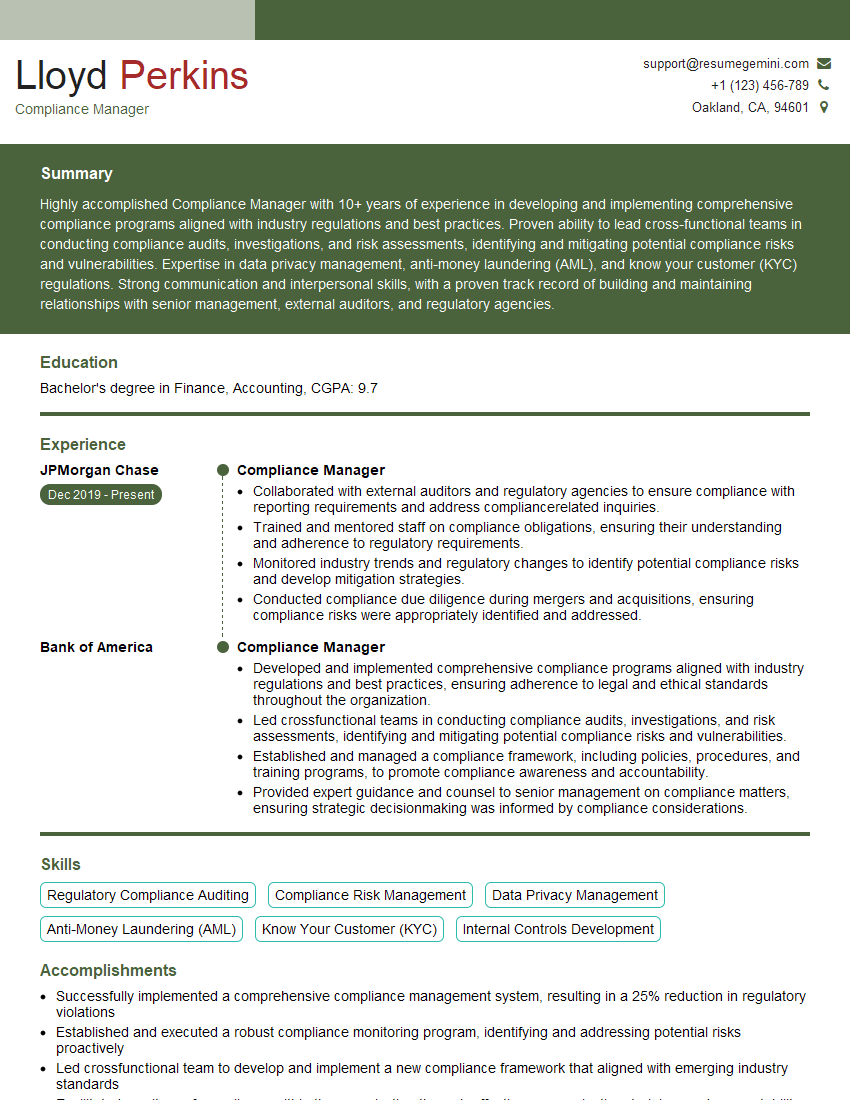
Compliance Manager Resume Sample
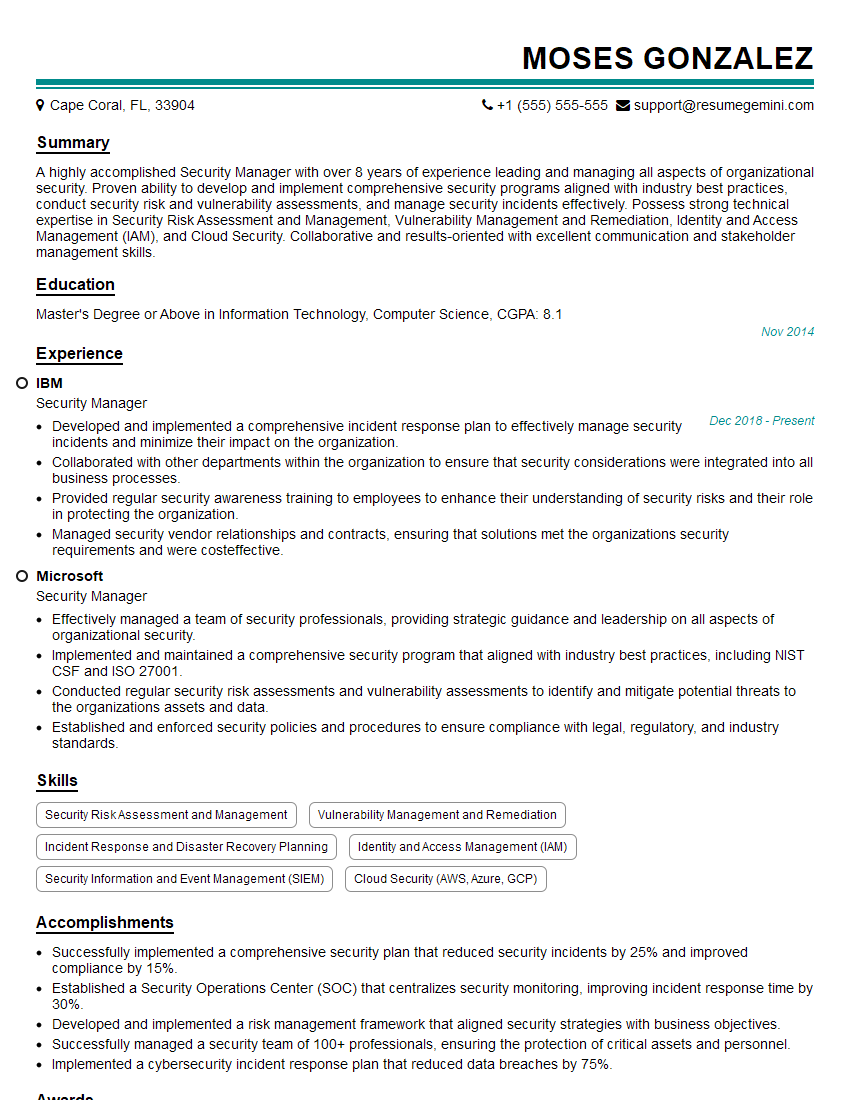
Security Manager Resume Sample

Security Administrator Resume Sample
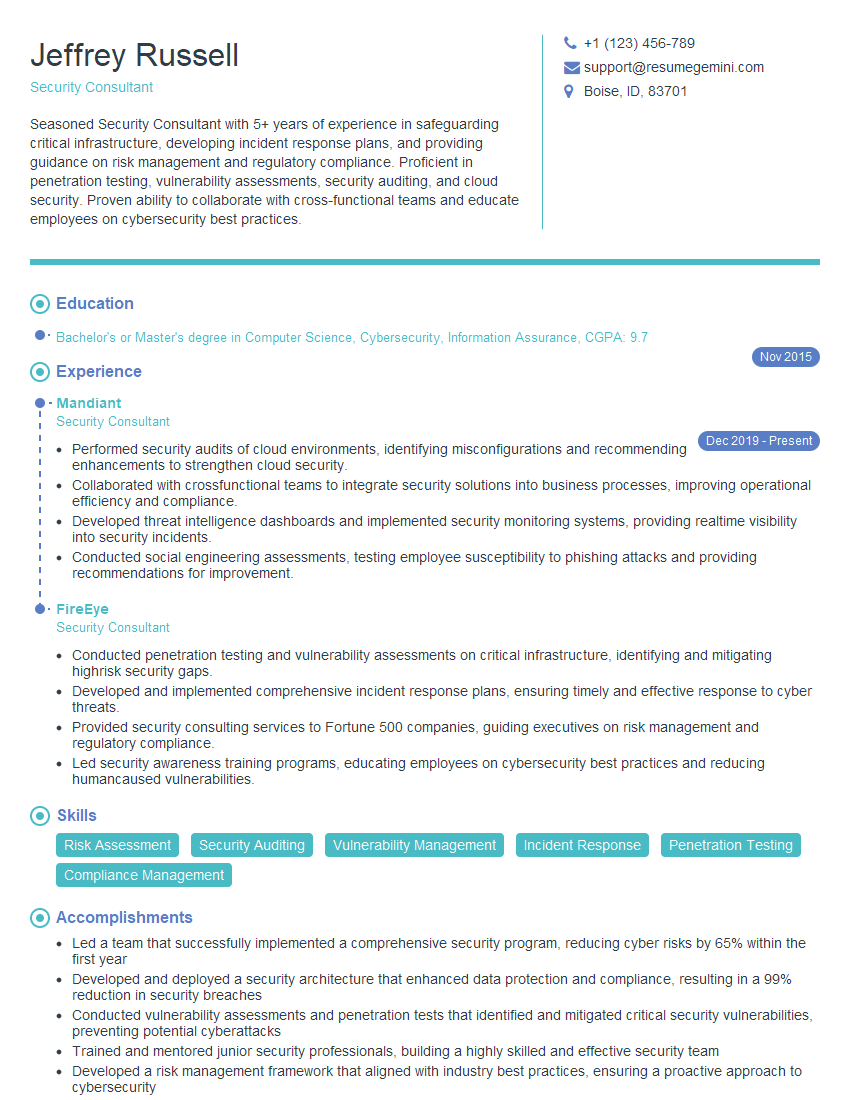
Security Consultant Resume Sample
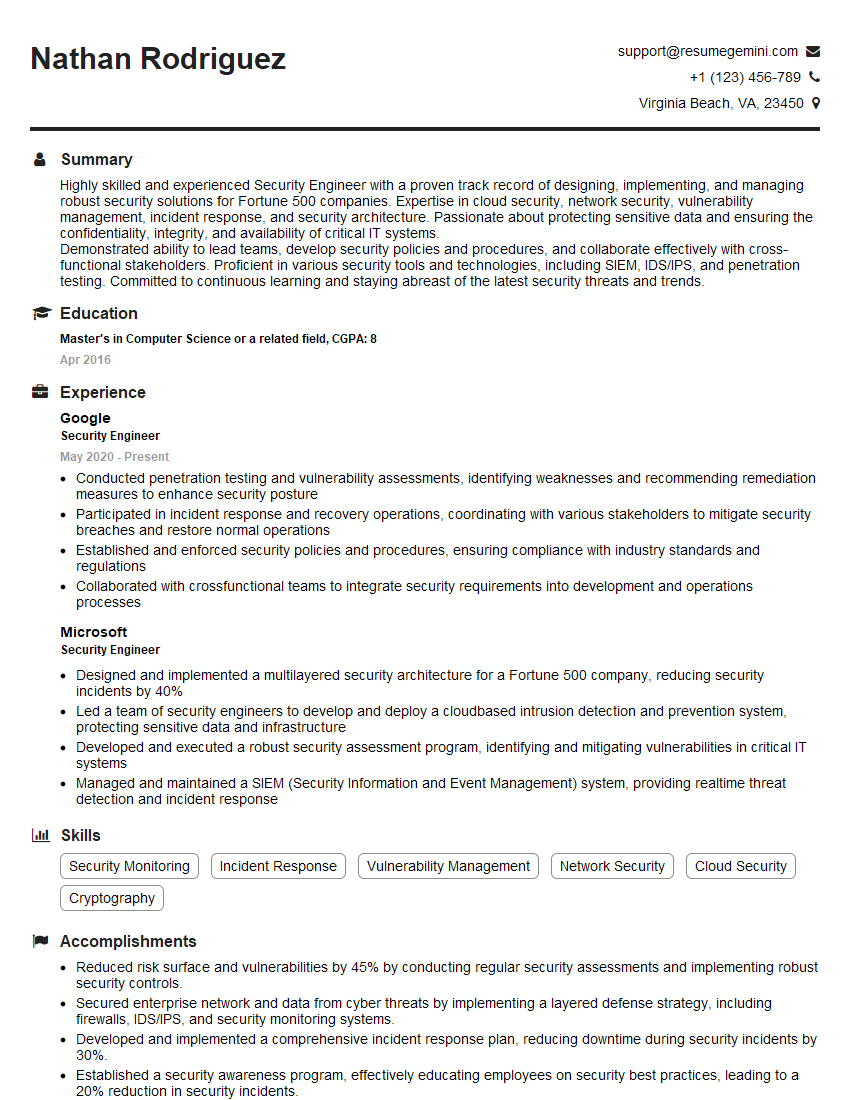
Security Engineer Resume Sample
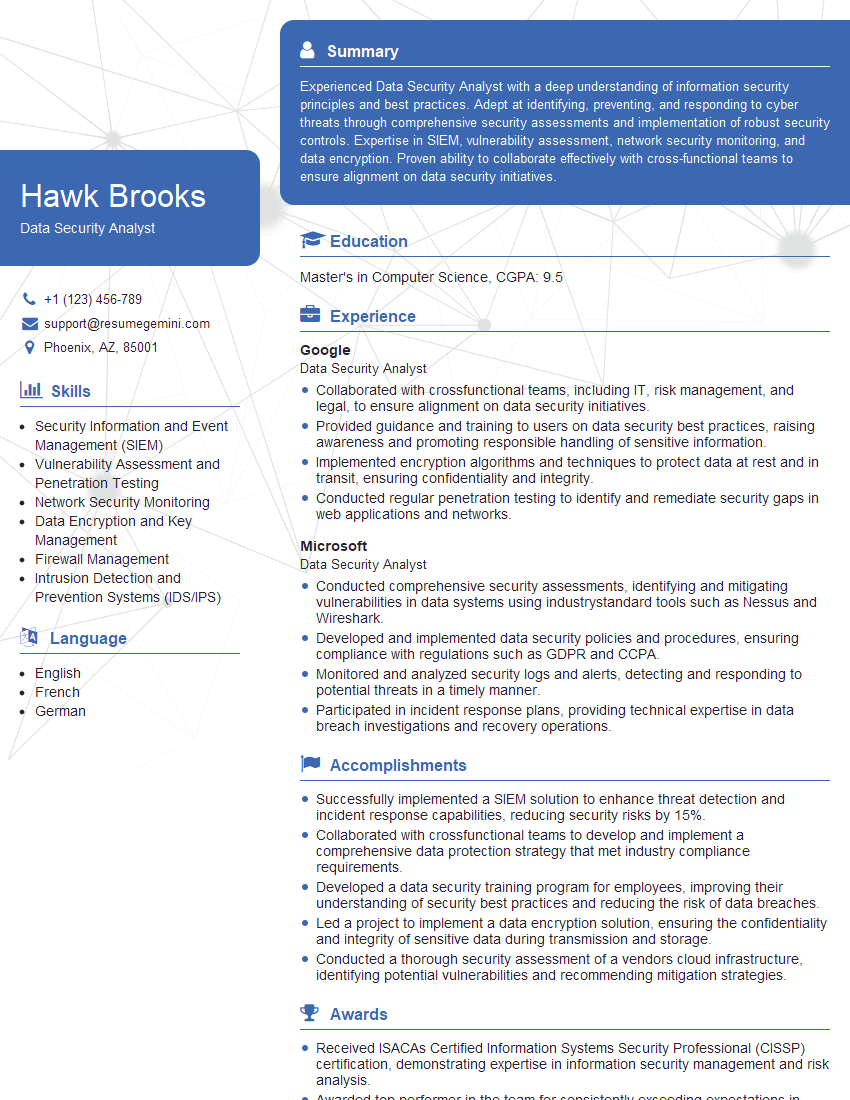
Data Security Analyst Resume Sample
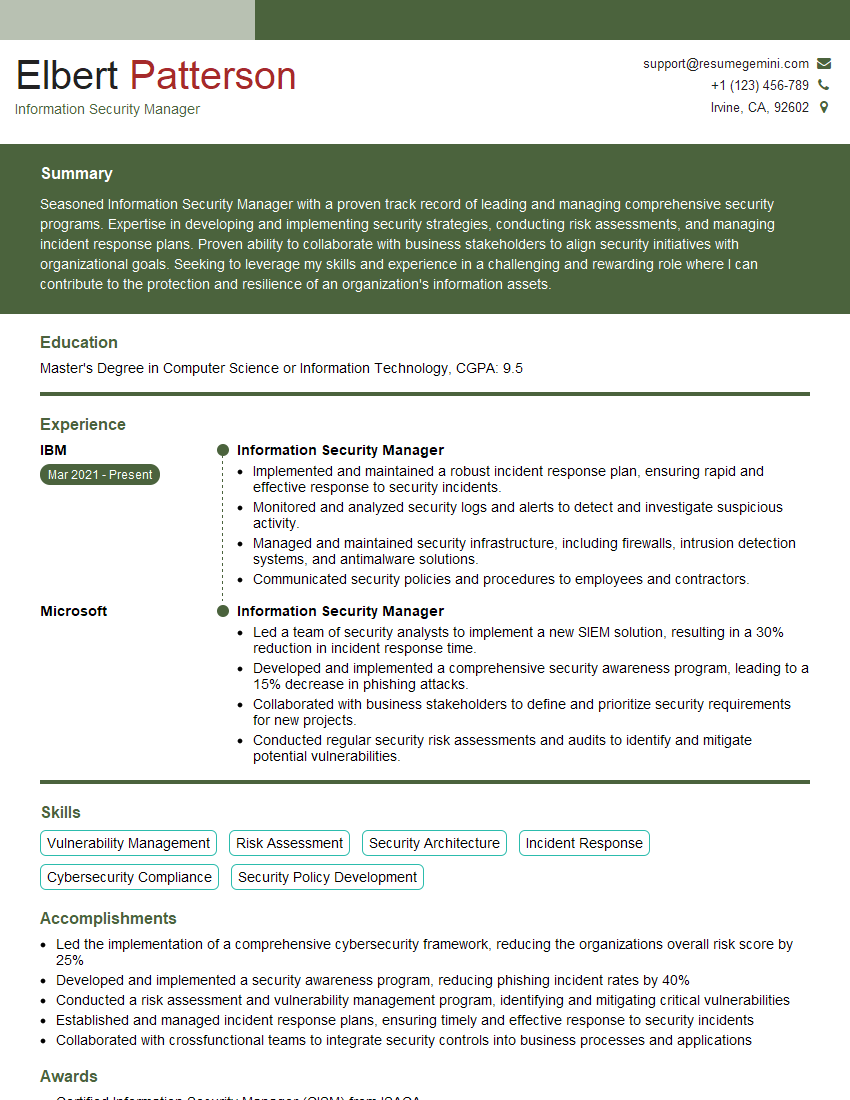
Information Security Manager Resume Sample
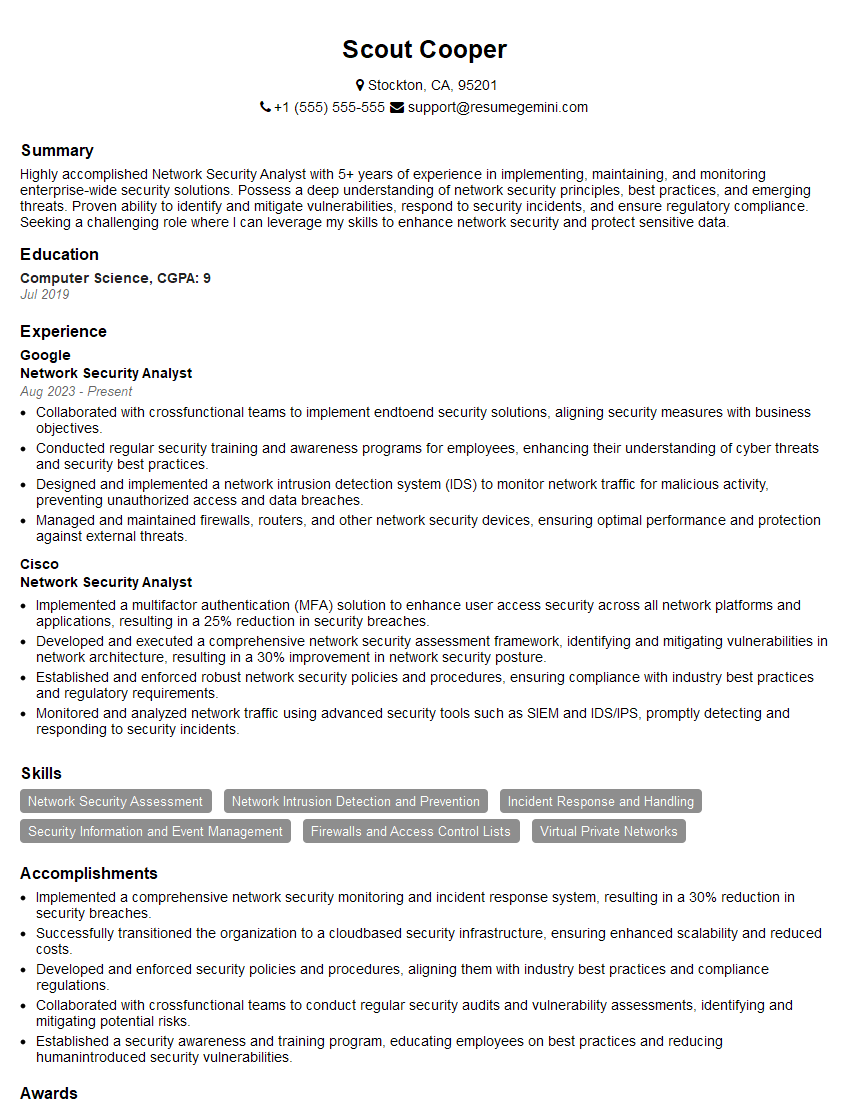
Network Security Analyst Resume Sample
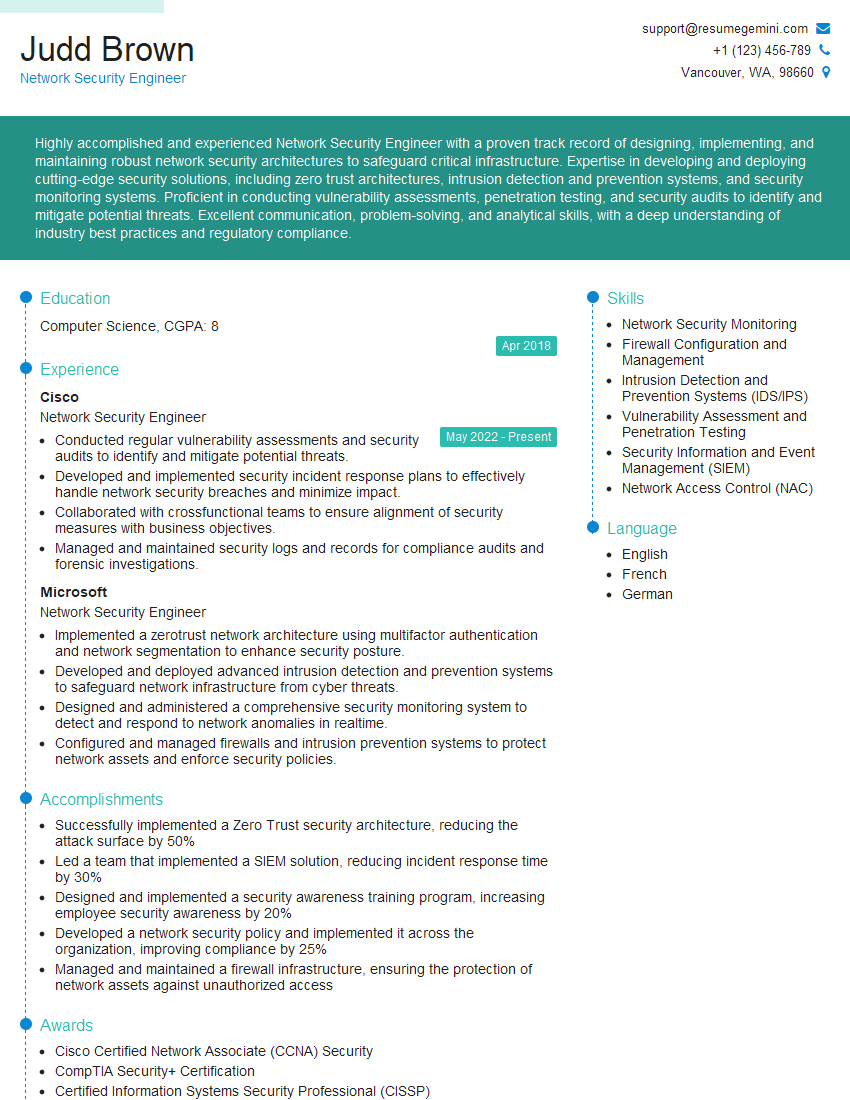
Network Security Engineer Resume Sample
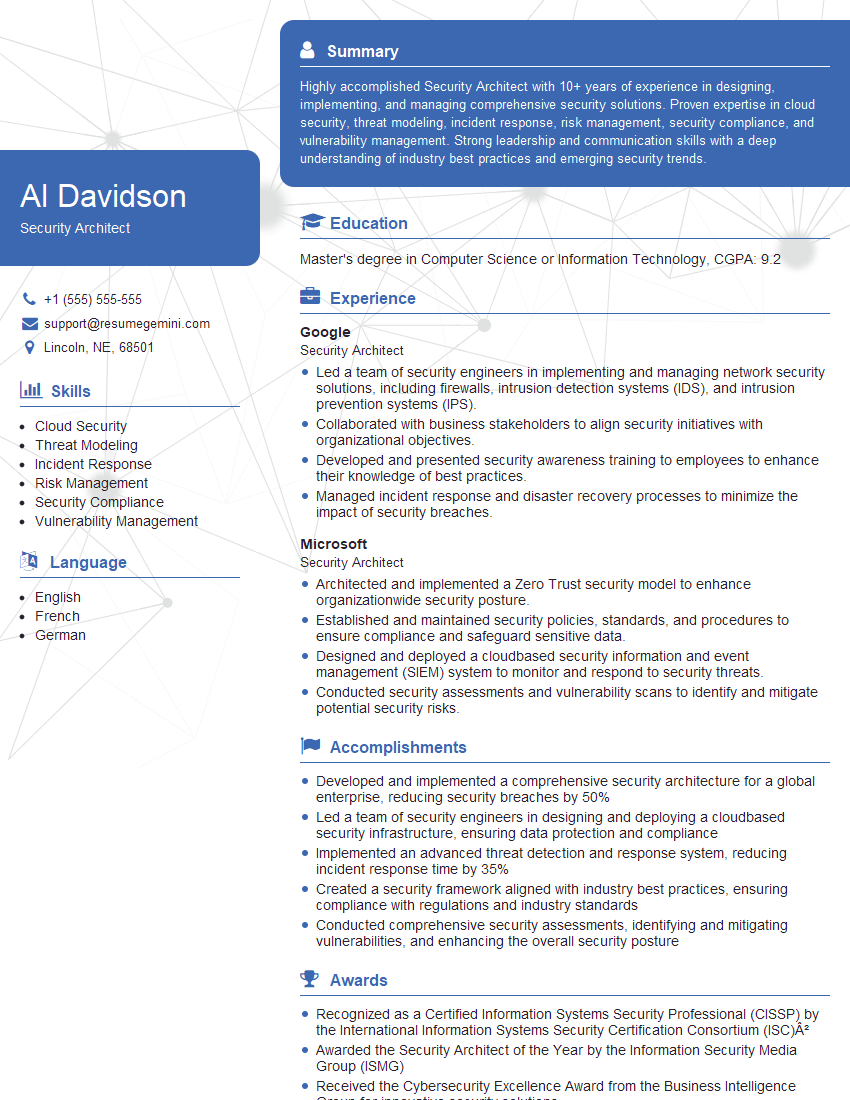
Security Architect Resume Sample
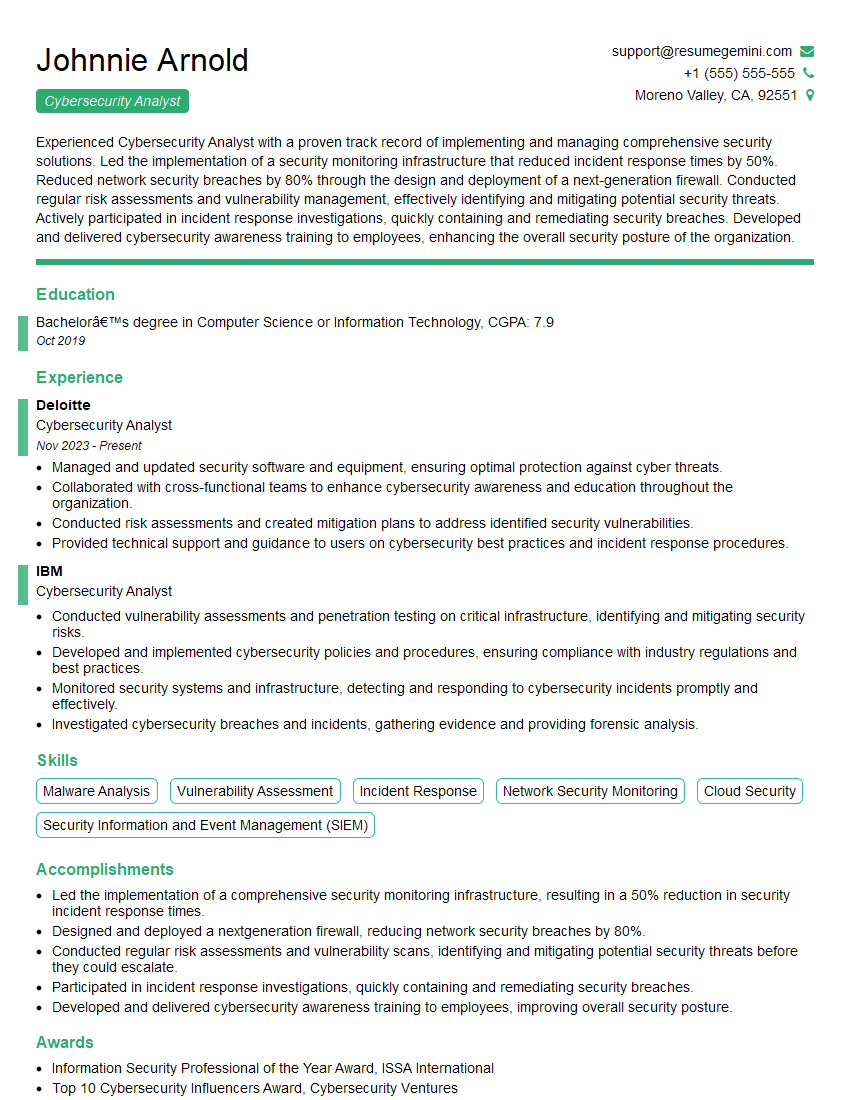
Cybersecurity Analyst Resume Sample

Cybersecurity Architect Resume Sample
Explore more articles
Users Rating of Our Blogs
Share Your Experience
We value your feedback! Please rate our content and share your thoughts (optional).
What Readers Say About Our Blog
Very informative content, great job.
good