Feeling uncertain about what to expect in your upcoming interview? We’ve got you covered! This blog highlights the most important Networking and relationship-building with coaches, agents, and players interview questions and provides actionable advice to help you stand out as the ideal candidate. Let’s pave the way for your success.
Questions Asked in Networking and relationship-building with coaches, agents, and players Interview
Q 1. Describe your experience building rapport with coaches.
Building rapport with coaches requires a genuine understanding of their needs and priorities. It’s not just about networking; it’s about building trust and demonstrating your value. I approach this by first actively listening to their concerns regarding their team’s performance, player development, and overall goals. I then tailor my communication to address those specific needs, offering solutions and insights based on my network and expertise.
For example, if a coach expresses concern about a player’s lack of confidence, I might offer to connect them with a sports psychologist or share relevant training strategies from my network. This proactive approach, focused on providing tangible value, creates a solid foundation for a lasting relationship. Regular communication, whether through informal calls, emails, or attending their games, keeps the lines of communication open and demonstrates consistent engagement.
Q 2. Explain your strategy for identifying and nurturing relationships with potential agents.
My strategy for identifying and nurturing relationships with agents involves a multi-pronged approach. Firstly, I actively attend industry events, conferences, and workshops, focusing on networking with agents representing athletes in my field. This provides opportunities for organic conversations and relationship-building.
Secondly, I leverage online platforms like LinkedIn to research agents and their clients, understanding their specializations and client profiles. This allows me to target agents with whom there’s a clear synergy and potential for collaboration. I then reach out with personalized messages, highlighting a specific area of mutual interest, rather than a generic request. Thirdly, I continuously seek to expand my knowledge of the agency landscape and consistently demonstrate my value by providing insightful market updates, and by consistently exceeding expectations in every interaction. This creates a strong foundation for long-term partnership.
Q 3. How do you maintain professional relationships with players across different levels of competition?
Maintaining professional relationships with players across different competitive levels hinges on consistent communication and personalized attention. I adapt my communication style to match the player’s individual needs and stage in their career. For example, a young, aspiring athlete may need more guidance and mentorship, while a seasoned professional might seek opportunities for strategic career development.
I maintain regular contact through a mix of channels – email, phone calls, and in-person meetings when feasible. I also prioritize understanding their personal and professional goals to offer relevant advice and support. It’s vital to treat every athlete with equal respect and professionalism, regardless of their current performance level, reinforcing my commitment to their long-term success. This approach fosters loyalty and trust across all levels.
Q 4. What methods do you use to network effectively within the sports industry?
Effective networking within the sports industry involves a strategic approach beyond simply attending events. It’s about cultivating meaningful relationships. I participate actively in industry events, but my focus is on quality interactions, building rapport with individuals who share common goals or expertise. This includes active listening, asking insightful questions, and offering support wherever possible.
Online platforms like LinkedIn are critical, allowing me to stay updated on industry trends and connect with professionals globally. I also actively contribute to discussions and share insights through professional articles or guest speaking engagements. This increases my visibility and establishes me as a valuable resource within the industry. Regularly engaging with relevant publications and attending webinars further demonstrates a commitment to continuous learning and industry involvement.
Q 5. Detail your approach to conflict resolution in relationships with coaches and players.
Conflict resolution relies heavily on open and honest communication. When disagreements arise with coaches or players, I prioritize active listening, ensuring I understand their perspective completely. I then focus on identifying the root cause of the conflict, rather than focusing on blame. This objective approach helps to de-escalate tensions.
I use a collaborative approach, working with all parties to find a mutually acceptable solution. This might involve brainstorming alternative approaches or bringing in a neutral third party to mediate if necessary. Transparency and empathy are vital throughout this process; it’s about maintaining the relationship while addressing the underlying issue constructively. For example, if a disagreement arises about a training plan, we’d jointly analyze the effectiveness of the current approach and collaboratively modify it.
Q 6. How do you leverage networking to identify sponsorship opportunities for athletes?
Leveraging my network for sponsorship opportunities involves a targeted approach. I start by understanding the athlete’s brand and target audience, aligning them with potential sponsors who share values and resonate with that audience. This requires deep research into the companies’ marketing strategies and target demographics.
I then utilize my network to connect the athlete directly with key decision-makers within relevant companies. I might facilitate introductions, prepare compelling sponsorship proposals, or offer support in negotiating favorable terms. Regularly monitoring market trends and staying updated on the sponsorship landscape allows me to remain proactive and identify opportunities before they become widely known. Building trust and a reputation for success is paramount in achieving results in this arena.
Q 7. Explain your process for assessing the compatibility between a player and a potential agent or coach.
Assessing the compatibility between a player and a potential agent or coach requires a thorough evaluation of several factors. For the player-agent dynamic, I consider the agent’s experience in representing athletes of similar profiles and their understanding of the player’s specific aspirations and market value. This includes evaluating their communication style and overall professional reputation.
For the player-coach relationship, I evaluate the coaching philosophy, training methodology, and their communication style and their alignment with the player’s personality, skills, and training requirements. A compatibility assessment might involve interviews with both parties, analyzing past performance data, and observing their interactions. This process ensures that the relationship has a strong foundation for mutual success. I always prioritize the athlete’s needs, and the long term-health of their development.
Q 8. How do you manage competing interests and priorities when multiple players or coaches require your attention?
Managing competing interests and priorities among players, coaches, and agents requires a structured approach. Think of it like air traffic control – you need a system to ensure everyone gets the attention they need, safely and efficiently. My strategy involves a combination of proactive planning and reactive adaptability.
- Prioritization Matrix: I use a prioritization matrix to rank requests based on urgency and importance. This helps me allocate my time effectively, focusing on the most critical needs first. For example, a player’s injury requiring immediate medical attention would supersede a coach’s less urgent strategic planning session.
- Time Blocking: I schedule specific blocks of time dedicated to individual players, coaches, or agents. This ensures each party gets dedicated attention without feeling neglected. This is particularly helpful when dealing with tight deadlines or crucial moments in a season.
- Communication Transparency: Open and honest communication is key. I proactively inform everyone of my schedule and potential delays, managing expectations realistically. This prevents misunderstandings and builds trust.
- Delegation (when applicable): If possible, I delegate certain tasks to trusted assistants, freeing up my time to focus on higher-level strategic issues and relationship management.
This systematic approach allows me to handle multiple demands effectively, ensuring everyone feels valued and receives the appropriate level of support.
Q 9. Describe a time you had to negotiate a difficult situation involving a player, coach, or agent.
During contract negotiations with a promising young player and his agent, a significant disagreement arose regarding image rights. The agent demanded a substantially higher percentage than the team was willing to offer. The situation was tense, threatening to derail the contract completely and negatively impact team morale.
My approach involved several steps:
- Active Listening: I spent time understanding the agent’s concerns and the player’s desires, emphasizing the importance of a collaborative solution. I listened carefully to their perspective, recognizing their motivations.
- Finding Common Ground: Instead of focusing solely on the percentage, we explored alternative ways to compensate the player, incorporating endorsements and bonus structures tied to performance milestones. This created a sense of shared success.
- Creative Solutions: We explored creative solutions, suggesting a phased approach where the image rights percentage would increase based on the player’s performance and future market value. This addressed the agent’s desire for greater long-term compensation while mitigating the team’s immediate financial risk.
- Compromise and Mutual Benefit: Ultimately, we reached an agreement that addressed both the agent’s and the team’s interests. It was a win-win situation, securing the player’s commitment and fostering strong working relationships.
This experience highlighted the importance of negotiation skills and finding mutually beneficial solutions in complex situations. It reinforced the value of strong communication and creative thinking in achieving successful outcomes.
Q 10. How do you stay updated on changes and trends within the sports industry’s professional landscape?
Staying updated in the dynamic sports industry requires a multi-faceted approach. It’s not just about reading the news; it’s about actively participating in the conversation.
- Industry Publications and Websites: I regularly read industry-specific publications, both print and online, including sports business journals and news sites. This keeps me abreast of current events, market trends, and legal changes.
- Conferences and Networking Events: Attending conferences and networking events provides invaluable opportunities to connect with peers, learn about the latest trends firsthand, and hear from industry leaders. Networking is crucial for informal knowledge sharing.
- Social Media and Online Communities: I actively engage in relevant social media groups and online forums, participating in discussions and staying informed about emerging trends and innovations within the sports industry.
- Data Analytics and Research: I use data analytics tools to track player performance, market trends, and fan engagement metrics, gaining valuable insights into the competitive landscape. This allows data-driven decision making.
This combination of active information gathering and professional networking enables me to anticipate changes, adapt my strategies, and maintain a competitive edge.
Q 11. Describe your experience with using CRM tools for relationship management in sports.
My experience with CRM tools in sports relationship management has been overwhelmingly positive. I’ve used several platforms, including Salesforce and HubSpot, to streamline communication and track interactions with players, coaches, and agents.
The benefits are significant:
- Centralized Database: A CRM provides a centralized database, storing crucial information such as contact details, communication history, contract details, and performance data. This eliminates the need to search through multiple spreadsheets or emails.
- Improved Communication: CRMs facilitate efficient communication through automated email sequences, reminders, and task assignments. This ensures timely follow-ups and reduces the risk of missed opportunities.
- Relationship Tracking: CRMs offer insights into the status of different relationships. By tracking interactions, I can identify areas for improvement and strengthen bonds with key stakeholders.
- Data Analysis: CRMs generate reports and analytics that demonstrate the ROI of networking efforts. This allows for performance assessment and strategic adjustments.
In essence, CRMs are invaluable tools for efficiently managing complex relationships within the competitive sports landscape, promoting better organization, communication, and relationship building.
Q 12. How would you handle a situation where a player’s performance significantly impacts your relationship with a coach?
A player’s underperformance can definitely strain relationships with coaches. My approach is about proactive communication and damage control.
- Understanding the Context: I begin by understanding the root cause of the player’s underperformance. Is it injury, personal issues, or a tactical mismatch? A thorough investigation is crucial.
- Open Communication with Coach and Player: I facilitate open and honest communication between the coach and the player, creating a safe space for constructive feedback and problem-solving. I act as a neutral mediator.
- Performance Improvement Plan: Working collaboratively, we develop a performance improvement plan outlining specific goals, strategies, and support systems for the player. This could involve additional training or mental conditioning support.
- Managing Expectations: I help both the coach and the player manage expectations realistically, acknowledging that setbacks can occur and focusing on continuous improvement.
- Protecting Relationships: Maintaining trust and respect is crucial. I work to preserve both the coach-player relationship and my relationships with both parties through consistent communication and support.
The key here is to be proactive, transparent, and focus on finding solutions that benefit the entire team.
Q 13. How do you measure the success of your networking efforts and relationship building in the sports industry?
Measuring the success of networking and relationship building in sports is multifaceted and goes beyond simple metrics like the number of contacts. It’s about the quality of relationships and their impact on achieving mutual goals.
- Relationship Strength: I assess the strength of relationships through qualitative measures, such as the frequency and depth of communication, the level of trust, and the willingness to collaborate on mutual projects.
- Contractual Successes: In quantifiable terms, successful contract negotiations and player placements are direct indicators of effective networking. These provide clear wins.
- Opportunities Created: The number of business opportunities generated or facilitated through strong relationships is a critical metric. This could include endorsements, sponsorships, or media appearances.
- Client Satisfaction: Regular feedback from players, coaches, and agents helps gauge the effectiveness of my efforts. Happy clients are a sign of successful relationship building.
- CRM Data Analysis: My CRM provides data on engagement levels, communication frequency, and deal closures, which offers quantifiable insights into the effectiveness of different strategies.
By using a combination of qualitative and quantitative measures, I obtain a holistic understanding of the success of my relationship-building efforts.
Q 14. What strategies do you employ to build trust and credibility with coaches, agents, and players?
Building trust and credibility with coaches, agents, and players is a gradual process built on consistent actions.
- Integrity and Honesty: I prioritize ethical conduct and transparency in all my interactions. This builds confidence and reassurance among all parties.
- Active Listening and Empathy: I genuinely listen to their needs and concerns, showing empathy and understanding. This fosters a sense of being heard and valued.
- Confidentiality and Discretion: I respect confidentiality and handle sensitive information with discretion, building trust through responsible behavior.
- Consistent Communication: I maintain regular communication, ensuring timely responses and proactive updates. This keeps everyone informed and engaged.
- Demonstrated Value: I consistently demonstrate my value through tangible results, whether it’s securing advantageous contracts, improving player performance, or facilitating successful partnerships. This builds respect and reinforces trust.
- Professionalism and Respect: I maintain a high level of professionalism in all my interactions, treating everyone with respect and courtesy regardless of their position or standing. This is foundational.
Trust and credibility are earned over time through consistent actions and a commitment to building strong, mutually beneficial relationships. It’s a marathon, not a sprint.
Q 15. How have you utilized social media to expand your professional network in sports?
Social media has become an indispensable tool for networking in the sports world. I leverage platforms like LinkedIn, Twitter, and even Instagram (depending on the target audience) to connect with coaches, agents, and players. My strategy goes beyond simply adding connections; it involves actively engaging with relevant content, sharing insightful articles or analyses, and participating in industry discussions. For example, I might comment on a coach’s recent game strategy tweet, offering a constructive perspective, or share a LinkedIn post highlighting a player’s exceptional performance, tagging both the player and their agent. This approach helps me build visibility and credibility, demonstrating my expertise and fostering organic connections.
Furthermore, I use these platforms to monitor industry news and trends, allowing me to identify potential collaborators or opportunities. Participating in relevant hashtags and groups provides further exposure and networking possibilities. Think of it as a constantly evolving online networking event, where consistent, strategic engagement is key to success.
Career Expert Tips:
- Ace those interviews! Prepare effectively by reviewing the Top 50 Most Common Interview Questions on ResumeGemini.
- Navigate your job search with confidence! Explore a wide range of Career Tips on ResumeGemini. Learn about common challenges and recommendations to overcome them.
- Craft the perfect resume! Master the Art of Resume Writing with ResumeGemini’s guide. Showcase your unique qualifications and achievements effectively.
- Don’t miss out on holiday savings! Build your dream resume with ResumeGemini’s ATS optimized templates.
Q 16. Describe your understanding of ethical considerations when building relationships in the sports world.
Ethical considerations are paramount in building relationships within the sports world. Transparency, honesty, and respect are fundamental. This means being upfront about my role, my affiliations, and my motivations. I always prioritize the best interests of the individuals I interact with, whether they are players, coaches, or agents. This involves avoiding conflicts of interest, maintaining confidentiality, and refraining from any actions that could be construed as manipulative or exploitative.
A clear example is avoiding preferential treatment. If I’m working with multiple players, I ensure all receive the same level of service and attention, regardless of their perceived potential or current standing. Furthermore, I maintain clear boundaries and professional conduct in all interactions, avoiding any behavior that could be considered unprofessional or inappropriate.
Q 17. Explain your process for identifying and addressing potential conflicts of interest.
My process for identifying and addressing potential conflicts of interest is proactive and systematic. I regularly review my professional relationships and any potential overlaps or competing interests. I maintain a detailed record of my engagements, carefully noting any potential conflict situations. When a conflict arises, I immediately address it, prioritizing transparency and fairness. This might involve disclosing the potential conflict to all parties involved, seeking their informed consent, or even recusing myself from the situation entirely if necessary. This approach ensures that my actions remain ethical and unbiased.
For instance, if I’m working with a player’s agent and am also approached by a competing agency for the same player, I’d immediately disclose this to both parties and clarify my commitment to avoiding any influence or bias. My goal is to maintain integrity and build trust.
Q 18. How do you maintain confidentiality when dealing with sensitive information about players or coaches?
Confidentiality is crucial. I treat all sensitive information shared with me—regarding players, coaches, or agents—with the utmost discretion. I only discuss such information on a need-to-know basis and always obtain consent before sharing it with anyone else. I also understand the importance of data privacy and follow all relevant regulations and best practices to protect sensitive information. This includes secure storage of documents and careful consideration of what I share online.
A common scenario might involve a player’s injury report. Unless authorized to do so, I would never disclose this information to anyone other than those directly involved in the player’s care and recovery. I am diligent in securing any documents or electronic communications containing such information.
Q 19. Describe your experience in developing long-term strategic partnerships within the sports industry.
Developing long-term strategic partnerships requires a deep understanding of the sports industry, a commitment to mutual benefit, and a long-term vision. I focus on building trust and rapport with key stakeholders, consistently delivering value and exceeding expectations. It’s not just about transactional relationships; it’s about establishing genuine partnerships built on shared goals and a mutual desire for success. For example, I worked with a sports apparel company to develop a sponsorship program for a youth sports league, leveraging my network to secure valuable brand exposure and aligning it with the league’s growth strategy. This involved coordinating branding, logistics and promotional activities over a multi-year period.
Successful long-term partnerships often stem from a shared vision and a clear understanding of each party’s strengths and contributions. It involves ongoing communication and collaboration to ensure both parties are aligned and progress towards shared objectives.
Q 20. How do you adapt your communication style to interact effectively with individuals from diverse backgrounds in the sports world?
Effective communication is key. I adapt my communication style based on the individual and the context. I understand that different cultures and backgrounds have different communication preferences. Some people prefer direct and concise communication, while others value more nuanced and indirect approaches. I pay close attention to body language, tone, and word choice, striving to create an inclusive and respectful environment for everyone involved. In practice, this means adjusting my language to avoid jargon, using active listening techniques, and being mindful of cultural differences in communication styles. For instance, when working with international athletes, I ensure clear and concise communication while respecting any cultural nuances in our interactions.
Active listening and seeking clarification are critical components of this approach. This allows me to ensure everyone is understood and that there is no miscommunication due to cultural or linguistic differences.
Q 21. What is your experience with using different communication methods (email, phone, in-person) in your networking?
I utilize various communication methods depending on the situation. Email is excellent for formal communication, sharing documents, or maintaining a record of conversations. Phone calls are more efficient for quick updates or when a more personal touch is needed. In-person meetings are invaluable for building rapport, forging deeper connections, and conducting more complex negotiations. My approach is strategic; I select the method best suited for the specific communication objective and audience. For instance, I would use email to send a formal contract, a phone call to quickly address a pressing matter, and an in-person meeting to discuss a major strategic partnership.
A balanced approach, leveraging the strengths of each method, leads to more effective networking and communication.
Q 22. How do you handle rejection when building relationships with influential figures in the sports world?
Rejection is inevitable when networking in any competitive field, especially the sports world. Instead of viewing rejection as a personal failing, I see it as a data point. It tells me more about the timing, the approach, or perhaps even a misalignment in goals. My approach is threefold:
- Analyze and Adapt: After a rejection, I reflect on the interaction. Was my pitch clear? Did I properly understand their needs and priorities? Did I offer something of value? I adjust my strategy accordingly for future interactions.
- Maintain Professionalism: Even in the face of rejection, I remain courteous and professional. Burning bridges is never a good strategy. You never know when circumstances might change, and maintaining a positive reputation is crucial.
- Diversify My Approach: I don’t put all my eggs in one basket. I maintain a diverse network, engaging with various individuals at different levels within the sports industry. This approach mitigates the impact of individual rejections.
For example, I once reached out to a renowned sports agent who politely declined a meeting. Instead of getting discouraged, I analyzed the email and realized my initial outreach lacked a compelling reason for them to engage. I then crafted a more targeted message highlighting a specific area where my expertise could benefit their clients, leading to a successful follow-up.
Q 23. Explain your approach to proactively identifying and pursuing new networking opportunities.
Proactively identifying networking opportunities requires a strategic, multi-faceted approach. It’s not about passively waiting for connections; it’s about actively creating them. My strategy combines:
- Strategic Event Attendance: I carefully select industry conferences, seminars, and sporting events based on the target audience and potential for valuable connections. This includes researching speakers, attendees, and the event’s overall focus.
- Leveraging Online Platforms: LinkedIn is invaluable. I actively engage with relevant groups, participate in discussions, and connect with individuals who share my interests and professional goals within the sports industry. I also utilize Twitter and other platforms to monitor industry news and identify potential networking opportunities.
- Informational Interviews: I reach out to individuals in my network and beyond to schedule brief informational interviews. This allows me to learn about their experiences, gain insights into the industry, and potentially identify other valuable contacts.
- Referral Networks: I cultivate strong relationships with existing contacts, encouraging referrals to expand my network organically. Word-of-mouth recommendations are incredibly powerful.
For instance, I recently attended a sports technology expo and connected with a developer working on a new athlete performance tracking system. This led to conversations with several coaches interested in implementing the technology, opening up new avenues for collaboration.
Q 24. Describe your understanding of the legal and contractual aspects of relationships within the sports industry.
Understanding the legal and contractual aspects is critical in the sports industry, which often involves complex agreements and sensitive information. My understanding encompasses:
- Agent Representation Agreements: I am familiar with the nuances of contracts between athletes and their agents, including commission structures, representation rights, and termination clauses.
- Endorsement Deals: I understand the legal framework surrounding endorsement contracts, including intellectual property rights, image usage, and performance obligations.
- Confidentiality and Non-Disclosure Agreements (NDAs): I understand the importance of confidentiality in sports, especially when dealing with sensitive player data, negotiations, or strategic information. I always adhere to relevant NDAs.
- Player Contracts (NFL, NBA, MLB, etc.): I possess a working knowledge of the standard player contracts in major professional leagues, including salary structures, bonuses, and restrictions.
- Image Rights and Licensing: I understand the legal complexities surrounding an athlete’s image and likeness and the rights associated with its commercial use.
I believe it’s crucial to consult legal professionals when necessary and always operate within the bounds of the law and ethical standards.
Q 25. What professional development activities have you undertaken to enhance your networking and relationship building skills?
Continuous professional development is crucial for maintaining a competitive edge in this dynamic industry. I’ve pursued several activities to refine my networking and relationship-building skills:
- Networking Workshops and Seminars: I regularly attend workshops focused on effective communication, negotiation skills, and relationship management strategies.
- Public Speaking Courses: Improved public speaking skills are essential for presenting myself confidently in various professional settings.
- Mentorship Programs: I actively seek mentorship opportunities from established figures in the sports industry to learn from their experiences and guidance.
- Online Courses (e.g., Coursera, edX): I supplement my learning by taking online courses on topics like sports business management and strategic communication.
- Industry Publications and Research: I regularly read industry publications and conduct research to stay updated on current trends and best practices.
This continuous learning keeps my skills sharp and ensures I’m equipped to handle the complexities of networking and relationship building in the sports industry.
Q 26. How do you prioritize your networking efforts to maximize the return on investment of your time?
Prioritizing networking efforts requires a strategic approach focused on maximizing return on investment (ROI). I utilize a system that combines qualitative and quantitative assessments:
- Defining Clear Goals: I start by defining specific, measurable, achievable, relevant, and time-bound (SMART) goals for my networking activities. This might include securing a certain number of high-value connections or achieving specific business objectives.
- Targeting High-Value Connections: I focus my efforts on connecting with individuals who align with my goals and can offer the most significant value to my career. This is a qualitative assessment based on their influence, expertise, and potential for collaboration.
- Tracking and Measuring Results: I track my networking activities and measure their impact on achieving my goals. This helps identify what’s working and what’s not, allowing me to adjust my strategy as needed.
- Utilizing a CRM System: A Customer Relationship Management (CRM) system helps manage contacts, track interactions, and schedule follow-ups, ensuring I maintain consistent engagement.
- Delegating When Necessary: For high-volume tasks like attending events or sending initial outreach messages, I leverage tools and resources to increase efficiency.
By using this systematic approach, I ensure my networking activities are intentional and deliver a significant return on the time invested.
Q 27. Describe your experience in collaborating with individuals from different functional areas within a sports organization.
Collaboration across different functional areas is crucial in the sports industry. My experience includes working with individuals from marketing, finance, legal, operations, and coaching staffs. Successful collaboration relies on:
- Effective Communication: I utilize clear, concise, and consistent communication, ensuring everyone understands their roles and responsibilities.
- Shared Goals and Objectives: Aligning on common goals is critical for ensuring everyone works towards the same outcome.
- Respect for Diverse Perspectives: Recognizing and valuing the unique expertise of each functional area is essential for building trust and fostering collaboration.
- Conflict Resolution Skills: Disagreements are inevitable. I actively work to resolve conflicts in a constructive manner, focusing on finding mutually acceptable solutions.
- Leveraging Technology: Effective project management tools and communication platforms (e.g., Slack, Microsoft Teams) facilitate seamless collaboration.
For example, in a previous role, I collaborated with marketing to develop a sponsorship package, legal to review the contracts, and operations to manage logistics, all working together to successfully launch a new athlete endorsement program.
Q 28. How do you stay abreast of the latest developments in sports technology and its impact on networking and relationships?
Staying abreast of developments in sports technology is paramount. New technologies constantly impact how we network and build relationships. My approach includes:
- Following Industry Publications and Blogs: I regularly follow publications and blogs dedicated to sports technology, analytics, and business.
- Attending Industry Events: Conferences and expos focused on sports technology provide opportunities to learn about the latest innovations and network with developers and implementers.
- Engaging with Online Communities: Online forums and social media groups dedicated to sports technology offer insights and allow for interaction with experts and peers.
- Networking with Tech Professionals: I actively network with individuals in the sports technology sector, learning from their expertise and exploring potential collaborations.
- Continuous Learning: I actively seek out online courses and webinars related to relevant sports technologies to enhance my understanding.
For example, the rise of wearable technology for athlete performance tracking has drastically altered how coaches and trainers interact with their athletes, opening up new avenues for personalized training and data-driven decision-making, which in turn impacts how I network within the coaching community.
Key Topics to Learn for Networking and Relationship-Building with Coaches, Agents, and Players Interview
- Building Rapport and Trust: Understanding the nuances of communication styles within the sports industry. Practical application: Demonstrating active listening skills and tailoring your communication to resonate with diverse personalities.
- Strategic Networking: Identifying key individuals and events for professional development. Practical application: Articulating a plan for strategically attending industry conferences and leveraging online platforms for meaningful connections.
- Understanding the Sports Ecosystem: Knowledge of the roles and responsibilities of coaches, agents, and players, and the dynamics between them. Practical application: Providing examples of how you would navigate conflicts or challenges within this ecosystem.
- Professionalism and Etiquette: Maintaining appropriate professional boundaries and demonstrating respect for all parties involved. Practical application: Describing situations where you’ve handled difficult conversations or challenging personalities with grace and professionalism.
- Long-Term Relationship Management: Cultivating and maintaining mutually beneficial relationships over time. Practical application: Explaining how you would nurture relationships with key individuals to foster continued collaboration and support.
- Conflict Resolution and Negotiation: Addressing disagreements and finding solutions collaboratively. Practical application: Demonstrating your problem-solving skills through hypothetical scenarios involving conflicting interests among coaches, agents, and players.
- Ethical Considerations: Understanding and adhering to the ethical standards and regulations within the sports industry. Practical application: Describing how you would approach a situation involving a potential conflict of interest or ethical dilemma.
Next Steps
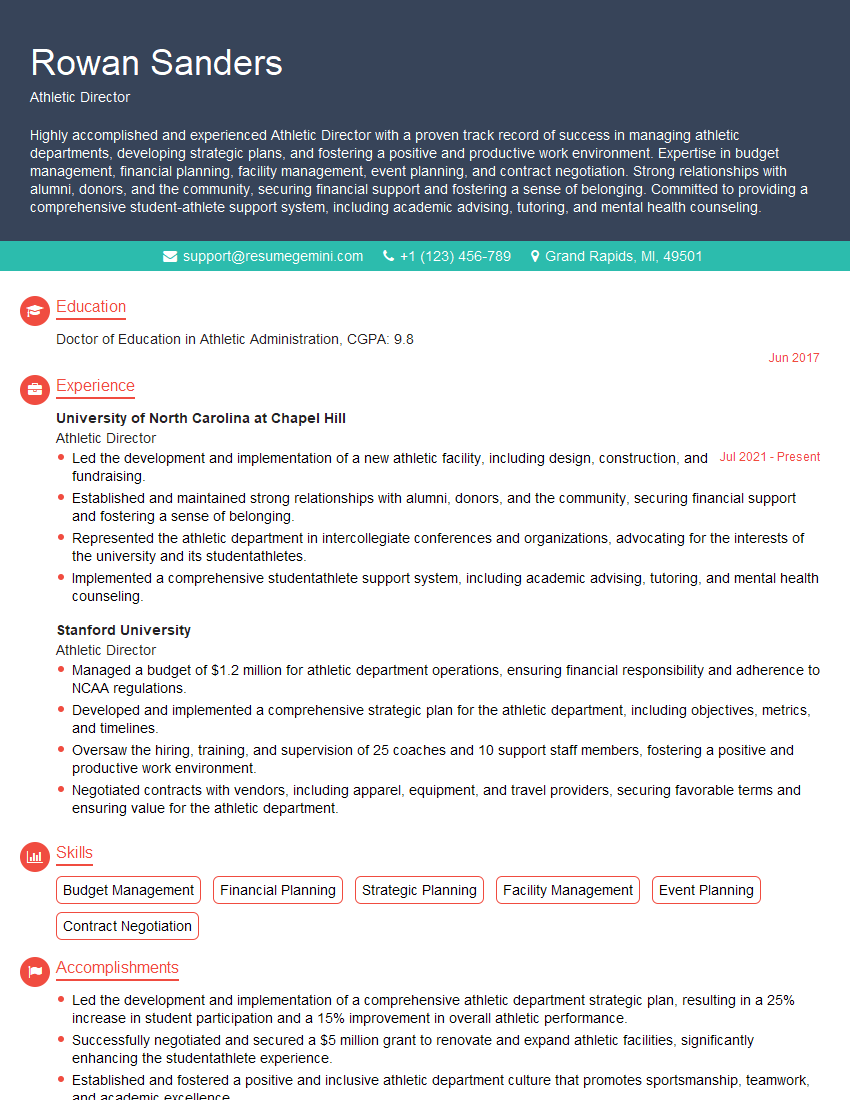
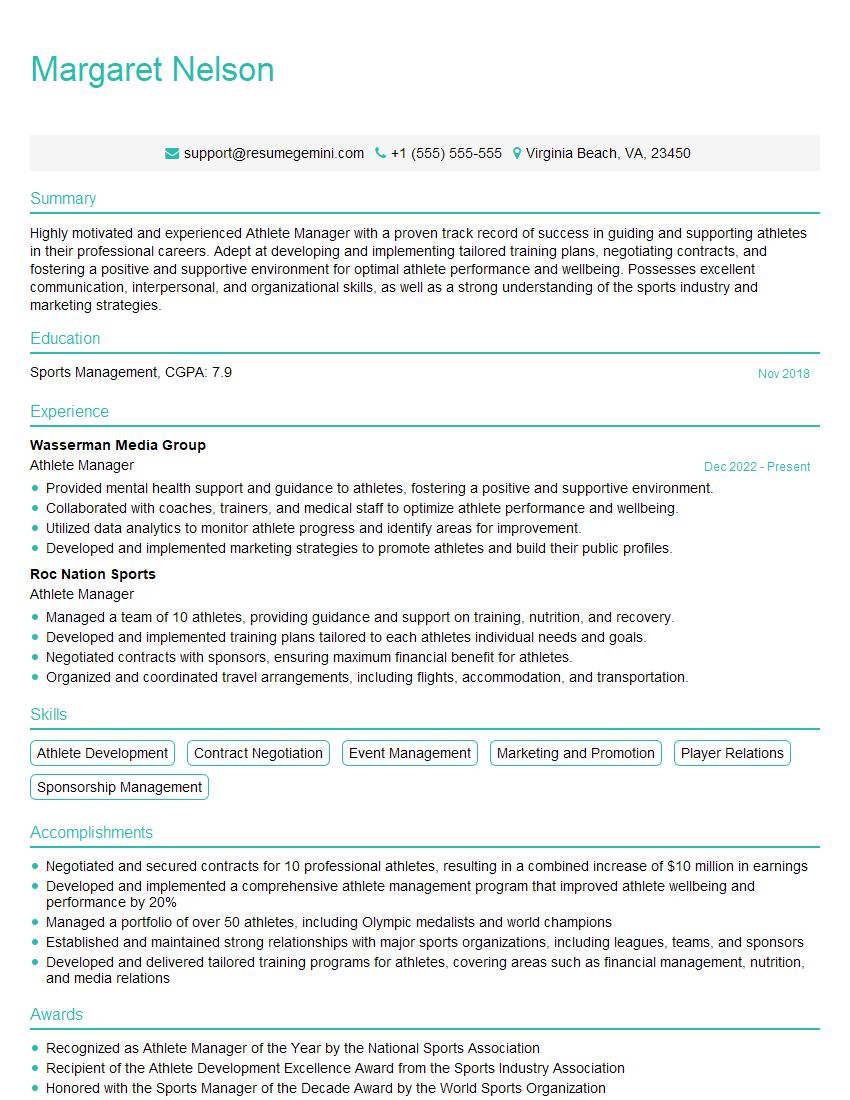
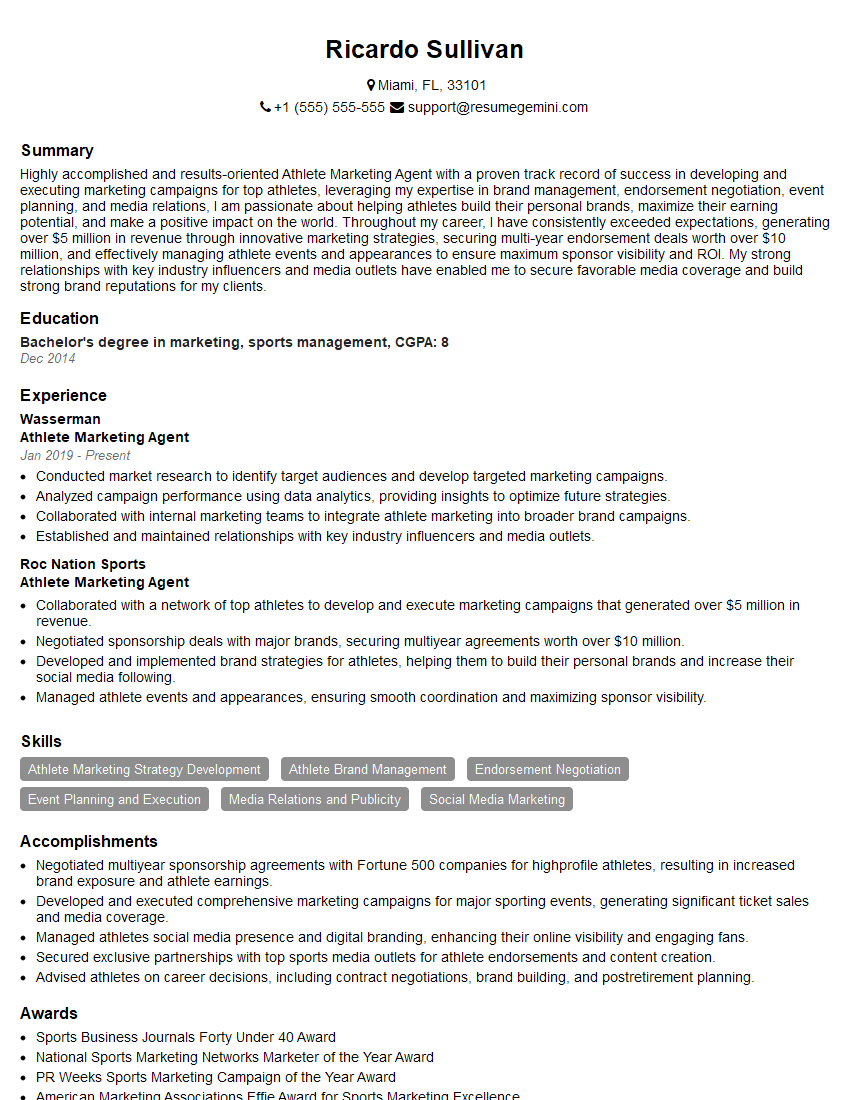
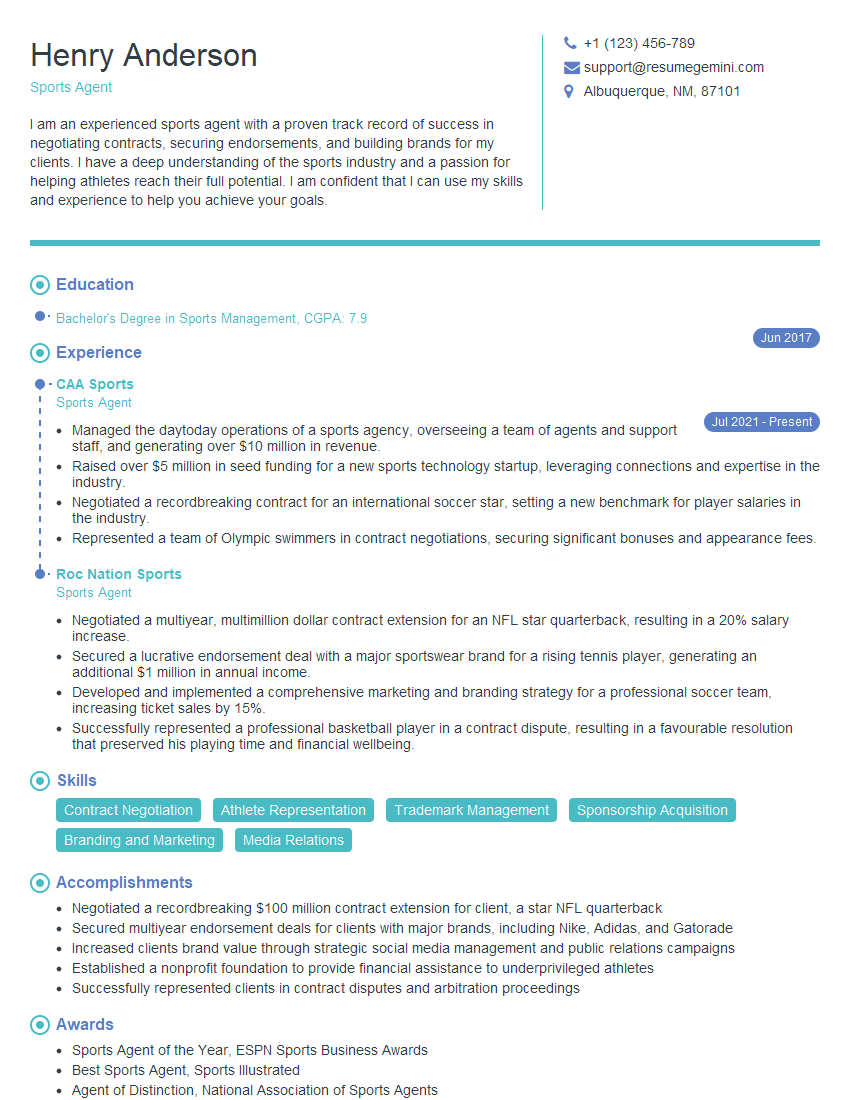
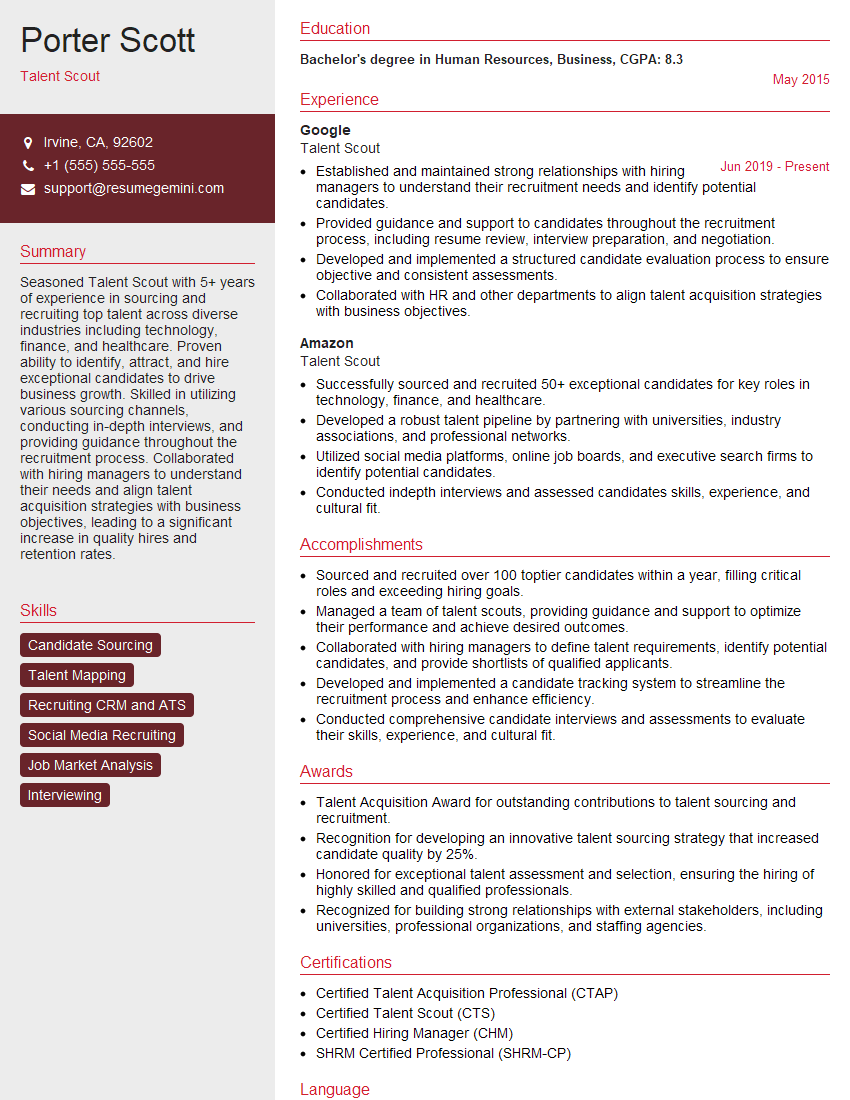
Mastering networking and relationship-building is crucial for a thriving career in sports. Strong relationships are the foundation of success in this highly competitive industry. To maximize your job prospects, create a compelling and ATS-friendly resume that highlights your relevant skills and experiences. ResumeGemini is a trusted resource to help you build a professional and impactful resume. We offer examples of resumes tailored specifically for individuals seeking roles involving networking and relationship-building with coaches, agents, and players, available for your review. Take the next step towards your dream career—start building your resume today!
Explore more articles
Users Rating of Our Blogs
Share Your Experience
We value your feedback! Please rate our content and share your thoughts (optional).
What Readers Say About Our Blog
Very informative content, great job.
good