Every successful interview starts with knowing what to expect. In this blog, we’ll take you through the top Nuclear Facility Design interview questions, breaking them down with expert tips to help you deliver impactful answers. Step into your next interview fully prepared and ready to succeed.
Questions Asked in Nuclear Facility Design Interview
Q 1. Explain the importance of shielding in nuclear facility design.
Shielding in nuclear facilities is paramount for protecting personnel and the environment from ionizing radiation emitted by radioactive materials. This radiation, including alpha, beta, gamma, and neutron radiation, can cause severe health problems. The effectiveness of shielding depends on the type and energy of the radiation, as well as the shielding material’s properties.
Different shielding materials are used depending on the type of radiation. For example, lead is highly effective against gamma rays, while concrete and water are effective against neutrons. The thickness of the shielding is crucial; thicker shielding reduces radiation intensity more effectively. Design considerations include optimizing shielding thickness to balance radiation protection with cost and space constraints. A common design strategy involves layered shielding, using different materials to maximize effectiveness against various types of radiation.
In practice, this translates to thick concrete walls, lead linings in equipment, and careful placement of radioactive materials within shielded enclosures. For instance, spent fuel pools are often lined with multiple layers of concrete and water to significantly reduce radiation leakage. The design also accounts for potential radiation streaming through gaps and joints, requiring meticulous attention to detail.
Q 2. Describe different types of nuclear reactors and their design considerations.
Nuclear reactors are categorized based on the type of fuel they use, the moderator, and the coolant. Three major types are:
- Pressurized Water Reactors (PWRs): These are the most common type, using enriched uranium as fuel and water as both moderator and coolant. The water is kept under high pressure to prevent boiling. Design considerations include robust pressure vessels, efficient heat exchangers, and sophisticated control systems to maintain stable operation. PWRs prioritize safety by incorporating multiple layers of containment and redundant systems.
- Boiling Water Reactors (BWRs): Similar to PWRs, but allow the water coolant to boil directly within the reactor core, generating steam that drives turbines. Design focuses on efficient steam separation, maintaining water purity, and managing the increased complexity of steam handling. BWRs incorporate features to prevent and mitigate the consequences of steam explosions.
- CANDU reactors (Canada Deuterium Uranium): These heavy-water reactors use natural uranium as fuel and heavy water (deuterium oxide) as both moderator and coolant. Their unique design allows for online refueling, which minimizes downtime. Design considerations involve managing the complex chemistry of heavy water, along with safe handling of the pressurized heavy water coolant.
Other reactor types, such as fast breeder reactors and gas-cooled reactors, also exist, each with distinct design features influenced by their operating principles and safety requirements.
Q 3. What are the key safety features incorporated in modern nuclear power plants?
Modern nuclear power plants incorporate numerous safety features designed to prevent accidents and mitigate their consequences. These can be broadly categorized into:
- Reactor Protection Systems (RPS): These systems automatically shut down the reactor in case of abnormal conditions, such as high temperature, pressure, or radiation levels. Multiple independent sensors and actuators ensure redundancy and prevent single-point failures. This is often achieved through the prompt insertion of control rods to stop the chain reaction.
- Containment Structures: These structures enclose the reactor core, preventing the release of radioactive materials in case of an accident. They are designed to withstand high pressures and temperatures and are usually made of reinforced concrete and steel. Multiple barriers are often incorporated.
- Emergency Core Cooling Systems (ECCS): These systems provide cooling to the reactor core in case of a loss-of-coolant accident (LOCA). Redundant and diverse cooling systems (passive and active) are crucial here. The ECCS helps prevent core meltdown.
- Safety-Related Instrumentation and Control Systems: Comprehensive monitoring and control systems provide operators with real-time information about the plant’s status and allow them to take corrective action. These systems are designed for high reliability and fail-safe operations.
Regular testing and maintenance of these safety systems are critical to ensure their effectiveness. Furthermore, the design emphasizes defense-in-depth, employing multiple layers of safety features to create a robust and resilient system.
Q 4. How do you ensure compliance with regulatory standards in nuclear facility design?
Compliance with regulatory standards is non-negotiable in nuclear facility design. This involves meticulous adherence to national and international regulations, such as those established by the Nuclear Regulatory Commission (NRC) in the United States or the IAEA (International Atomic Energy Agency) globally. The process begins with early engagement with regulatory bodies during the design phase.
This process involves:
- Detailed Design Reviews: Regulatory bodies conduct thorough reviews of design documents, including safety analyses, to ensure compliance with all applicable regulations. The process involves submitting numerous reports and undergoing rigorous inspections.
- Safety Analysis Reports (SARs): Comprehensive SARs detail the plant’s design, safety features, and potential accident scenarios, including probabilistic risk assessments. These reports are thoroughly reviewed by regulatory bodies.
- Licensing and Permits: Obtaining necessary licenses and permits from regulatory agencies is a crucial step, demonstrating compliance with all regulatory requirements before construction and operation can begin.
- Inspections and Audits: Regular inspections and audits are carried out throughout the construction and operational phases to ensure continued compliance with regulations and identify any safety deficiencies.
Failure to comply can result in significant delays, penalties, and even the halting of a project. A robust quality assurance program, along with transparent communication with regulatory agencies, is essential for successful compliance.
Q 5. Explain the process of nuclear waste management and its impact on facility design.
Nuclear waste management is a critical aspect of nuclear facility design, influencing the plant’s layout and operational processes. Spent nuclear fuel, highly radioactive materials, requires long-term storage and eventual disposal. The process includes:
- On-site Storage: Spent fuel is initially stored in spent fuel pools (water-filled pools) or dry cask storage systems on-site, awaiting long-term disposal. Facility design accounts for the storage capacity and shielding requirements of these systems.
- Transportation: Transporting spent fuel to centralized repositories requires specialized containers and transportation procedures to ensure safety and prevent accidents. The design takes into account potential transportation routes and safety protocols.
- Geological Repositories: Deep geological repositories are currently the preferred solution for long-term disposal of spent fuel. Their design involves selecting suitable geological formations, engineering the repository to isolate the waste from the biosphere, and implementing robust monitoring systems. The design needs to account for geological stability over tens of thousands of years.
The design of the facility incorporates dedicated areas for waste storage, handling, and potentially pre-treatment facilities. The layout ensures efficient waste movement and minimizes potential risks during handling and transportation. The impact on design extends to considerations like site selection (proximity to potential disposal sites), security features to prevent unauthorized access to waste, and robust safety systems during waste handling and transport.
Q 6. Describe your experience with nuclear plant layout and optimization.
My experience in nuclear plant layout and optimization involves working on several projects, ranging from new build designs to modifications of existing facilities. I’ve employed various techniques to optimize plant layout, focusing on aspects such as:
- Safety Optimization: Ensuring optimal placement of equipment to minimize radiation exposure to personnel, streamline emergency response routes, and enhance the effectiveness of safety systems. This often requires complex simulations to assess radiation exposure levels and identify optimal locations.
- Space Utilization: Efficiently using available space, particularly in densely packed facilities. This involved using sophisticated 3D modeling software to optimize equipment placement and minimize redundancy in piping and cabling.
- Maintainability and Accessibility: Designing for easy access to equipment for maintenance and repair, reducing downtime and improving operational efficiency. This often involved considering ergonomic factors and developing standardized maintenance procedures.
- Flexibility for Future Upgrades: Designing with sufficient flexibility to accommodate potential future upgrades and modifications, allowing for better adaptation to technological advancements or regulatory changes. This involved detailed forecasting and long-term planning, considering the potential for future facility expansions.
I have a strong track record of successfully optimizing plant layouts, reducing construction costs, and enhancing overall safety and efficiency. Specific examples include a project where I utilized advanced simulation software to optimize the placement of shielding materials, leading to a 15% reduction in construction costs without compromising safety.
Q 7. What are the critical considerations for designing a nuclear fuel handling system?
Designing a nuclear fuel handling system requires meticulous attention to detail, focusing on safety, reliability, and efficiency. Critical considerations include:
- Shielding and Containment: The system must incorporate sufficient shielding to protect personnel and the environment from radiation during fuel handling operations. Containment measures prevent the spread of radioactive materials in case of accidents or leaks. This is achieved through a combination of shielded casks, remote handling systems, and inert atmospheres.
- Remote Handling Systems: Nuclear fuel is highly radioactive and requires remote handling to minimize human exposure. Robotic systems and specialized tools are used for tasks like fuel transfer, inspection, and storage. These systems are designed for high precision and reliability.
- Criticality Safety: The system’s design must prevent accidental criticality, the uncontrolled chain reaction that could lead to a nuclear accident. This is achieved through careful design of fuel storage configurations, limiting the accumulation of fissile materials, and using neutron poisons.
- Reliability and Redundancy: The fuel handling system is critical to the operation of the nuclear power plant. Its design prioritizes high reliability and incorporates redundant systems and components to prevent failures and maintain safe operation. This includes backup power and control systems.
- Maintenance and Inspection: Regular maintenance and inspection are essential to ensure the system’s continued safe operation. The design facilitates easy access for maintenance personnel while mitigating radiation exposure.
Effective design requires a thorough understanding of nuclear physics, radiation protection, and robotics. It involves close collaboration with engineers, physicists, and regulatory authorities to ensure the system meets all safety and performance requirements.
Q 8. How do you manage risks associated with seismic activity in nuclear facility design?
Managing seismic risks in nuclear facility design is paramount due to the potential for catastrophic consequences. We employ a multi-layered approach, starting with thorough site selection and geological surveys to identify potential seismic hazards. This involves analyzing historical earthquake data, fault lines, and soil characteristics. The design itself incorporates seismic analysis using sophisticated software that simulates earthquake ground motions and their impact on the facility’s structures and equipment.
Next, we implement design features to mitigate seismic effects. This can include:
- Base Isolation: Employing systems that decouple the structure from the ground motion, reducing the forces transmitted to the building.
- Seismic Dampers: Adding devices to absorb seismic energy and reduce building sway.
- Ductile Design: Designing structures with the capacity to deform significantly under seismic loading without collapsing.
- Redundancy: Including backup systems and multiple pathways for critical functions, ensuring operation even if one component fails due to an earthquake.
Regular inspections and maintenance are critical for ensuring continued seismic resilience throughout the facility’s operational life. We also incorporate rigorous testing protocols, including shaking table tests on scaled models to validate the design’s performance under simulated earthquake conditions.
For example, in a recent project, we used base isolation bearings to protect a critical reactor building in a high-seismic zone. The bearings allowed the building to move independently from the ground during an earthquake, significantly reducing the stress on the structure and ensuring its integrity.
Q 9. Explain the role of thermal hydraulics in nuclear reactor design.
Thermal hydraulics is the study of heat transfer and fluid flow, a cornerstone of nuclear reactor design. It’s crucial for ensuring the reactor operates safely and efficiently. The core of a nuclear reactor generates immense heat through nuclear fission, and thermal hydraulics dictates how this heat is removed to prevent fuel damage and maintain safe operating temperatures.
The key aspects of thermal hydraulics in reactor design include:
- Coolant Flow Dynamics: Designing efficient coolant flow pathways to effectively remove heat from the reactor core. This involves modeling the flow patterns, pressure drops, and temperature distributions within the reactor.
- Heat Transfer Mechanisms: Understanding how heat transfers from the fuel rods to the coolant, considering conduction, convection, and radiation.
- Boiling and Two-Phase Flow: Analyzing the behavior of the coolant as it potentially boils, transitioning from liquid to vapor, and managing the complex two-phase flow dynamics within the reactor system.
- Emergency Core Cooling System (ECCS) Design: Designing systems to cool the reactor core in the event of an accident, ensuring safe shutdown and preventing a meltdown. This requires accurate modeling of coolant flow and heat transfer under accident scenarios.
Imagine trying to cool a powerful computer processor without proper heat sinks and fans. That’s similar to a reactor core without effective thermal hydraulics design – it would overheat and fail. Sophisticated computer simulations using codes like RELAP5 and TRACE are essential for analyzing these complex phenomena and ensuring a robust design.
Q 10. Describe your experience with Computer Aided Design (CAD) software in nuclear facility design.
My experience with CAD software in nuclear facility design spans over 15 years, working extensively with industry-standard programs such as AutoCAD, Revit, and specialized nuclear design software. I’ve used these tools for everything from initial conceptual designs to detailed construction drawings.
In my role, I’ve utilized CAD for:
- 3D Modeling: Creating realistic three-dimensional models of nuclear facilities, allowing for better visualization and analysis of spatial relationships.
- Piping and Instrumentation Diagrams (P&IDs): Developing detailed P&IDs to define the layout of piping, instrumentation, and equipment, crucial for ensuring safe and efficient operation.
- Structural Design: Modeling structural components and analyzing their response to various loads, including seismic activity and thermal stresses.
- Clash Detection: Identifying potential clashes between different systems and components before construction begins, saving time and resources.
- Documentation and Collaboration: Generating accurate and comprehensive construction drawings, specifications, and other documentation for the project team.
For example, I recently used Revit to develop a 3D model of a new spent fuel storage facility. This allowed us to optimize the layout, reduce construction costs, and ensure compliance with stringent safety regulations. The software’s collaborative features also facilitated efficient communication and coordination with other members of the design team.
Q 11. How do you ensure the structural integrity of a nuclear facility under various operating conditions?
Ensuring structural integrity under various operating conditions is critical in nuclear facility design. This requires a rigorous and multifaceted approach that considers a wide range of factors.
Our process starts with a comprehensive analysis of potential stresses, including:
- Operational Loads: The weight of components, equipment, and materials, plus forces generated during normal operation.
- Environmental Loads: Wind loads, snow loads, and seismic loads, determined through site-specific analyses.
- Accidental Loads: Forces from potential accidents, such as pipe breaks or equipment failures.
- Thermal Loads: Temperature variations and thermal stresses due to operation and environmental conditions.
We then use sophisticated Finite Element Analysis (FEA) techniques to model the facility’s response to these loads. The results of the FEA inform the design choices, ensuring the structure has sufficient strength and ductility to withstand these various scenarios. Furthermore, we rigorously test materials to verify their properties and performance under stress. Material selection is crucial – we use high-strength, radiation-resistant materials that can maintain their integrity over the facility’s lifespan. Regular inspections and maintenance programs are also implemented to monitor the structure’s condition and identify any potential degradation.
Imagine building a skyscraper. The same rigorous principles apply, but on a much larger scale and with the added complexities of radiation and extreme operating conditions.
Q 12. What are the key challenges in designing for nuclear decommissioning?
Designing for nuclear decommissioning presents unique challenges compared to designing for initial operation. It requires careful consideration of long-term effects, including material degradation, waste management, and radiological safety.
Key challenges include:
- Long-Term Material Degradation: Predicting and mitigating the effects of radiation and aging on structural materials and equipment over decades. Special materials and designs might be needed for easier dismantlement in the future.
- Waste Management: Designing for efficient and safe handling and disposal of radioactive waste, including contaminated materials, equipment, and soil.
- Radiological Safety: Minimizing radiation exposure to workers during decommissioning, requiring specific design features for shielding and remote handling.
- Decontamination and Decommissioning (D&D) Strategies: Integrating strategies into the design from the outset to simplify and streamline the D&D process and reduce overall costs.
- Regulatory Compliance: Meeting evolving regulatory requirements for decommissioning, which may involve upgrades or modifications during the facility’s lifespan.
For instance, designing for modularity can significantly simplify the decommissioning process by allowing components to be removed and disposed of in smaller, manageable sections rather than tackling the whole facility at once.
Q 13. Explain your understanding of nuclear instrumentation and control systems.
Nuclear instrumentation and control systems (I&C) are vital for safe and efficient reactor operation. They monitor numerous parameters, such as reactor power, temperature, pressure, and neutron flux, providing feedback for control and safety systems.
My understanding encompasses:
- Sensors and Transducers: The various sensors used to measure key parameters, ensuring accuracy and reliability in harsh environments.
- Data Acquisition and Processing: The systems that collect, process, and interpret sensor data, providing real-time information to operators.
- Control Systems: The automated systems that maintain reactor parameters within safe operating limits, including automatic control rods and emergency shutdown systems.
- Safety Systems: The redundant and diverse systems designed to prevent accidents and mitigate the consequences of malfunctions.
- Human-Machine Interface (HMI): The operator interfaces providing clear and concise information, allowing operators to effectively monitor and control the reactor.
These systems must be highly reliable, fault-tolerant, and rigorously tested to ensure nuclear safety. They’re designed to withstand harsh conditions, including radiation, extreme temperatures, and potential accidents. The redundancy and diversity built into these systems are crucial to preventing catastrophic failures.
Think of a pilot’s cockpit. The I&C systems are analogous, providing critical information and controls necessary for safe and efficient operation of a complex system, except with much higher safety standards and consequences.
Q 14. How do you incorporate radiation protection principles into the design process?
Incorporating radiation protection principles into the design process is not an afterthought, but a fundamental aspect of nuclear facility design. It’s about minimizing radiation exposure to workers, the public, and the environment throughout the facility’s lifecycle.
Our approach involves:
- Shielding Design: Strategically placing shielding materials (e.g., concrete, lead, steel) to attenuate radiation emitted from sources within the facility. The thickness and composition of shielding are calculated based on the type and intensity of radiation.
- Containment Design: Creating robust containment structures to prevent the release of radioactive materials into the environment in normal operation and accident scenarios.
- Ventilation Systems: Designing ventilation systems to control airborne radioactivity, filtering and diluting contaminated air before releasing it to the atmosphere.
- Remote Handling Systems: Incorporating remote handling tools and equipment to minimize direct contact with radioactive materials.
- Waste Management Systems: Designing systems for the safe handling, storage, and disposal of radioactive waste.
- Accessibility and Maintainability: Designing the facility to ensure that maintenance and repairs can be performed safely and with minimal radiation exposure.
We use sophisticated radiation transport codes to simulate radiation fields within the facility and optimize shielding design for maximum effectiveness. The design must also account for the potential accumulation of radioactive contamination over time, incorporating features for decontamination and decommissioning.
A crucial aspect is that radiation protection is not merely a matter of adding shielding; it’s integrated into every aspect of the design, from material selection to equipment layout, ensuring a holistic approach to safety.
Q 15. Describe your experience with nuclear licensing and regulatory approvals.
Nuclear licensing is a rigorous process ensuring a facility’s safety and compliance. My experience spans over 15 years, encompassing projects from initial application to final operational license. I’ve worked extensively with regulatory bodies like the NRC (Nuclear Regulatory Commission) in the US and the equivalent agencies in other countries, navigating the complex requirements for design certification, construction permits, and operating licenses. This includes preparing comprehensive safety analysis reports (SARs), responding to regulatory queries, and participating in numerous inspections and audits. For example, on a recent Advanced Reactor project, I led the team responsible for obtaining a Construction Permit, successfully addressing several significant challenges related to seismic design and emergency planning, ultimately resulting in the timely approval of the project. This involved meticulous documentation, sophisticated analysis, and effective communication with regulators.
My involvement extends to understanding and implementing the relevant codes and standards such as ASME Section III, IEC standards, and national safety regulations, which are critical for successful licensing. I am proficient in identifying and mitigating potential regulatory roadblocks early in the design phase, minimizing delays and cost overruns.
Career Expert Tips:
- Ace those interviews! Prepare effectively by reviewing the Top 50 Most Common Interview Questions on ResumeGemini.
- Navigate your job search with confidence! Explore a wide range of Career Tips on ResumeGemini. Learn about common challenges and recommendations to overcome them.
- Craft the perfect resume! Master the Art of Resume Writing with ResumeGemini’s guide. Showcase your unique qualifications and achievements effectively.
- Don’t miss out on holiday savings! Build your dream resume with ResumeGemini’s ATS optimized templates.
Q 16. Explain your approach to quality assurance and quality control in nuclear facility design.
Quality Assurance (QA) and Quality Control (QC) are the cornerstones of nuclear facility design, ensuring safety and reliability. My approach is a multi-layered one, starting with a robust QA program defining roles, responsibilities, and processes at each design stage. This includes implementing a documented quality management system (QMS) conforming to ISO 9001 and industry best practices tailored to the specific project. QC involves rigorous checks and inspections at every level, from design reviews and calculations to material procurement and construction oversight.
For example, during a spent fuel pool design, we implemented a rigorous independent verification and validation (IV&V) process. This meant independent experts reviewed critical calculations, design specifications, and safety analyses, confirming the integrity of our work before submission to the regulatory bodies. We also used advanced software tools for automatic checking of design rules compliance, such as automated code checks and finite element model validation. Our proactive approach minimizes errors, reduces rework, and ensures a high-quality, safe facility. We regularly conduct internal audits and management reviews to continuously improve our QA/QC system and maintain compliance.
Q 17. What are the critical aspects of designing for emergency response in a nuclear facility?
Designing for emergency response in a nuclear facility is paramount. It requires a multi-faceted approach encompassing prevention, preparedness, response, and recovery. This starts with inherent safety features in the design itself, minimizing the likelihood of accidents. However, contingency planning must consider various scenarios, including equipment failures, natural disasters, and acts of sabotage.
- Emergency systems design: This includes robust and redundant safety systems, such as emergency power supplies, cooling systems, and containment structures designed to withstand extreme events. For example, having multiple independent emergency power systems with diverse power sources (e.g., diesel generators and batteries) ensures the continued operation of safety functions in case of grid failure.
- Evacuation routes and shelters: Clearly marked evacuation routes and strategically located emergency shelters are essential for personnel safety. Design should account for accessibility for people with disabilities and the potential need for mass evacuation.
- Communication systems: Reliable communication systems are crucial for coordinating emergency response and disseminating information. This may involve integrating diverse communication networks to ensure redundancy and resilience.
- Emergency response procedures: Detailed, regularly practiced emergency response procedures are needed, including training programs for all personnel, clear roles and responsibilities defined, and regular drills to maintain preparedness.
The design process should actively consider the integration of all these aspects to minimize the potential impact of any emergency.
Q 18. Describe your experience with the design and analysis of nuclear piping systems.
Nuclear piping systems are critical for transporting radioactive materials and other fluids. Their design and analysis require a thorough understanding of fluid dynamics, stress analysis, and material properties, along with stringent adherence to codes and standards, such as ASME B31.1 and B31.3. My experience includes both the design of new systems and the analysis of existing systems for upgrades or modifications.
The process involves using sophisticated Computer-Aided Engineering (CAE) tools to perform stress analysis, considering various load cases (e.g., pressure, thermal, seismic). This includes finite element analysis (FEA) to evaluate stresses and strains in the piping system components under normal and abnormal operating conditions. I’ve worked on projects with different piping materials, including stainless steel, carbon steel, and special alloys, each with specific considerations for corrosion resistance, high-temperature strength, and radiation embrittlement. For example, in a recent project involving the replacement of aging piping in a nuclear power plant, we used advanced FEA techniques to optimize the design, minimizing material usage while ensuring the system’s structural integrity and compliance with stringent safety regulations.
Q 19. Explain the importance of material selection in nuclear facility design.
Material selection in nuclear facility design is critical due to the harsh operating environment and the need to ensure long-term performance and safety. Factors considered include radiation resistance, corrosion resistance, high-temperature strength, and weldability. The chosen materials must withstand high radiation fluxes, prevent leaks of radioactive materials, and maintain structural integrity for the plant’s lifespan.
For example, stainless steels like 304 and 316 are often used for their corrosion resistance, but their radiation embrittlement needs to be carefully considered at higher neutron fluxes. In some high-temperature applications, specialized alloys like Inconel may be necessary. We employ material selection based on detailed environmental considerations, including detailed chemical analysis of expected coolant chemistry, potential contaminants, and environmental conditions. This includes understanding and applying relevant codes and standards that dictate allowable material properties under specific conditions. Rigorous testing and qualification procedures are also employed to verify the materials’ performance under expected operating conditions.
Q 20. How do you address the challenges of managing radioactive materials in a nuclear facility?
Managing radioactive materials is a complex challenge requiring careful planning and execution. My approach involves a multi-pronged strategy encompassing robust design, rigorous operating procedures, and effective waste management. The design aspect focuses on incorporating features that minimize the generation and dispersion of radioactive materials. This includes shielding, containment, and remote handling systems to minimize personnel exposure.
Operational procedures must be strictly adhered to, ensuring proper handling, storage, and transportation of radioactive materials. This involves detailed training for personnel and rigorous monitoring of radiation levels. Waste management is a crucial aspect; we employ strategies for reducing, reusing, and recycling radioactive waste, along with safe and secure disposal of waste that cannot be processed. We utilize advanced simulation tools to predict radioactive material behavior and optimize the design for safety and efficient waste management. For instance, we employed computational fluid dynamics (CFD) modelling to simulate the dispersion of radioactive aerosols in the event of an accident, helping to design effective ventilation and filtration systems. This proactive approach helps maintain a safe and environmentally responsible operation.
Q 21. Describe your experience with nuclear simulation and modeling tools.
Nuclear simulation and modeling tools are indispensable for modern nuclear facility design. My experience involves extensive use of various software packages for thermal-hydraulic analysis, structural analysis, radiation transport, and reactor physics calculations. These tools allow us to predict the behavior of the facility under various operating conditions, including normal operation, transients, and accident scenarios.
For example, I’ve used codes like RELAP5 and TRACE for thermal-hydraulic analysis, ANSYS for structural analysis, and MCNP for radiation transport simulations. These simulations help optimize the design for safety, performance, and cost-effectiveness. The results from these simulations are critical for obtaining regulatory approvals and ensuring the safe and reliable operation of the facility. Furthermore, we use these tools to conduct sensitivity analyses and uncertainty quantification studies, which are vital in assessing the impact of design choices and potential uncertainties on overall facility safety and performance. The use of these advanced tools contributes significantly to a safer and more efficient design process.
Q 22. What are the key considerations for designing a nuclear security system?
Designing a robust nuclear security system demands a multi-layered approach, focusing on physical protection, cybersecurity, and personnel security. It’s like building a fortress with multiple concentric rings of defense.
Physical Protection: This involves perimeter security (fencing, intrusion detection systems, CCTV), access control (badges, biometric scanners, secured doors), and the protection of critical infrastructure (reinforced buildings, blast-resistant structures). Think of this as the outer walls and gates of our fortress.
Cybersecurity: Nuclear facilities are increasingly reliant on digital systems for control and monitoring. A strong cybersecurity strategy is vital to prevent unauthorized access and cyberattacks. This is like the inner walls and security systems within the fortress.
Personnel Security: Thorough background checks, security training, and strict access control protocols for personnel are paramount. This is about ensuring that those within the fortress are trustworthy.
Contingency Planning: A comprehensive plan must address potential threats and incidents, including emergency response procedures and communication protocols. This is our escape route and plan for any potential emergencies.
For example, a design might incorporate a layered security system with remote surveillance, multiple checkpoints, and redundancy in critical systems. Each layer adds a level of defense to deter or prevent unauthorized access and actions.
Q 23. How do you ensure the long-term sustainability of a nuclear facility design?
Long-term sustainability in nuclear facility design requires careful consideration of several factors, including material selection, waste management, decommissioning planning, and adaptability to future needs. It’s like building a house that’s not only comfortable today, but also can be adapted and maintained for generations to come.
Material Selection: Choosing durable, corrosion-resistant materials minimizes maintenance and extends the operational lifespan. We don’t want to be constantly replacing parts.
Waste Management: A comprehensive plan for handling radioactive waste, from its generation to its safe and permanent disposal, is essential. This includes storage, transportation, and ultimately the permanent disposal of the waste.
Decommissioning Planning: A detailed plan for the safe and efficient decommissioning of the facility at the end of its operational life must be developed from the initial design stages. It is like preparing a house for eventual demolition and recycling of materials.
Adaptability: The design should be flexible enough to accommodate future upgrades, technological advancements, and changes in regulatory requirements. Imagine building a house that can be easily modified to suit future needs and technologies.
In practice, this might involve using advanced materials with longer lifespans, designing for modularity to allow for easier upgrades, and incorporating provisions for future waste management strategies.
Q 24. Explain your understanding of nuclear fuel cycle and its implications on facility design.
The nuclear fuel cycle encompasses all the stages involved in the use of nuclear fuel, from uranium mining and enrichment to spent fuel management. Understanding this cycle is crucial for nuclear facility design, as each stage has specific requirements for safety and handling.
Uranium Mining and Enrichment: Facilities involved in these stages require robust safety measures to prevent environmental contamination and protect workers from radiation exposure.
Reactor Operation: Reactor buildings require specialized designs to contain radioactive materials and withstand potential accidents. This includes containment structures, cooling systems, and emergency shutdown systems.
Spent Fuel Management: Spent nuclear fuel requires safe storage and ultimately, permanent disposal. Facilities designed for this purpose need to be robust against theft or terrorist attacks.
The implications for facility design are significant. For example, the design of a nuclear power plant must accommodate the entire fuel cycle, from receiving fresh fuel to managing spent fuel. Each stage presents unique challenges related to radiation shielding, waste handling, and security.
Q 25. Describe your experience with the design and implementation of nuclear ventilation systems.
My experience with nuclear ventilation systems involves designing and implementing systems that maintain a safe and controlled environment within nuclear facilities, while simultaneously preventing the release of radioactive materials to the atmosphere. It’s like designing the respiratory system of the facility.
Containment Ventilation: This is crucial for containing airborne radioactive materials within specific areas. It involves high-efficiency particulate air (HEPA) filters, pressure differentials, and robust monitoring systems.
Building Ventilation: Ensures a comfortable and safe working environment for personnel, while minimizing the spread of airborne contaminants.
Emergency Ventilation: Designed to quickly remove contaminants from specific areas during emergencies.
For instance, I was involved in the design of a ventilation system for a spent fuel storage facility. This system incorporated multiple layers of filtration to ensure that even in the case of a filter failure, no radioactive material would be released to the atmosphere. It included redundant systems to maintain operations even during unforeseen events.
Q 26. How do you incorporate human factors considerations in nuclear facility design?
Incorporating human factors in nuclear facility design is critical for ensuring safe and efficient operation. It’s about understanding how people interact with the system and designing the facility to minimize human error and maximize performance.
Ergonomics: Designing control rooms and workspaces that are comfortable and easy to use. This can greatly reduce operator fatigue and improve accuracy.
Human-Computer Interaction (HCI): Designing clear and intuitive interfaces for control systems. This simplifies operation and reduces errors.
Training and Procedures: Developing comprehensive training programs and clear, concise procedures. This equips operators with the knowledge and skills they need to perform their tasks safely and effectively.
For example, the design of a control room might include ergonomic seating, clear displays, and easy-to-understand alarm systems. Well-designed interfaces minimize the cognitive load on operators, making it easier for them to respond to changing conditions.
Q 27. Explain your approach to risk assessment and mitigation in nuclear facility design.
My approach to risk assessment and mitigation in nuclear facility design follows a structured process, using established methodologies such as HAZOP (Hazard and Operability Study) and quantitative risk assessment techniques.
Hazard Identification: Identifying potential hazards through brainstorming sessions, checklists, and HAZOP studies. This involves systematically examining all aspects of the facility’s design and operation to pinpoint potential risks.
Risk Analysis: Analyzing the likelihood and consequences of each identified hazard. This may involve using quantitative methods to estimate the probability and severity of potential accidents.
Risk Mitigation: Developing and implementing strategies to reduce the risks to an acceptable level. This can involve incorporating safety systems, implementing procedures, and modifying the design of the facility.
Monitoring and Review: Continuously monitoring the effectiveness of risk mitigation measures and regularly reviewing the risk assessment process. This is an iterative process that requires ongoing evaluation and adjustment.
In one project, we used HAZOP to identify potential hazards in the design of a spent fuel reprocessing facility. This led to significant design modifications that improved safety and reduced the likelihood of accidents.
Q 28. Describe your experience with the use of advanced materials in nuclear applications.
My experience with advanced materials in nuclear applications focuses on materials that can withstand the harsh conditions within nuclear facilities, including high radiation levels, extreme temperatures, and corrosive environments. This is about finding materials that can endure the toughest challenges.
Radiation-Resistant Materials: Materials like silicon carbide and various ceramics are increasingly used for components that experience high neutron fluxes. These materials show exceptional stability under intense radiation exposure.
High-Temperature Materials: Materials such as advanced alloys are crucial in reactor cores and other high-temperature areas. They need to maintain structural integrity even at extreme temperatures.
Corrosion-Resistant Materials: Materials with excellent corrosion resistance are essential in managing radioactive waste and preventing corrosion in containment structures. This often involves advanced alloys with enhanced corrosion resistance.
For example, I have been involved in research into the use of advanced ceramics for nuclear fuel cladding. These materials offer superior resistance to radiation damage and can enhance the safety and efficiency of nuclear reactors. The use of advanced materials greatly extends the operational life and safety margin of various critical components.
Key Topics to Learn for Nuclear Facility Design Interview
- Reactor Design & Safety Systems: Understanding different reactor types (PWR, BWR, etc.), safety features (emergency core cooling systems, containment structures), and their operational principles. Consider practical applications like analyzing safety reports and evaluating design modifications.
- Shielding & Radiation Protection: Mastering radiation shielding calculations, material selection, and the design of shielding systems to protect personnel and the environment. Practical application might involve designing shielding for specific components or evaluating existing shielding effectiveness.
- Nuclear Fuel Cycle & Waste Management: Gain a comprehensive understanding of the nuclear fuel cycle, from enrichment to spent fuel management. Explore different waste disposal strategies and their associated safety and environmental considerations. Practical application could include analyzing the feasibility of a specific waste disposal method.
- Thermal Hydraulics & Heat Transfer: Develop a strong grasp of the principles governing heat transfer and fluid flow within nuclear reactors. This includes understanding Computational Fluid Dynamics (CFD) simulations and their application in reactor design optimization. Practical application involves analyzing reactor thermal performance and identifying potential thermal-hydraulic issues.
- Instrumentation & Control Systems: Familiarize yourself with the instrumentation and control systems used in nuclear facilities, focusing on their role in maintaining safe and efficient operation. Practical application includes understanding the design and implementation of safety-related instrumentation and control systems.
- Structural Analysis & Seismic Design: Learn how to perform structural analysis of nuclear facility components and ensure their resilience against seismic events. Practical application might involve evaluating the structural integrity of buildings and components under various loading conditions.
- Regulatory Compliance & Standards: Understand the relevant regulatory requirements and industry standards governing nuclear facility design and operation. This includes familiarity with international and national regulations and codes. Practical application focuses on ensuring designs meet all necessary safety and regulatory requirements.
Next Steps
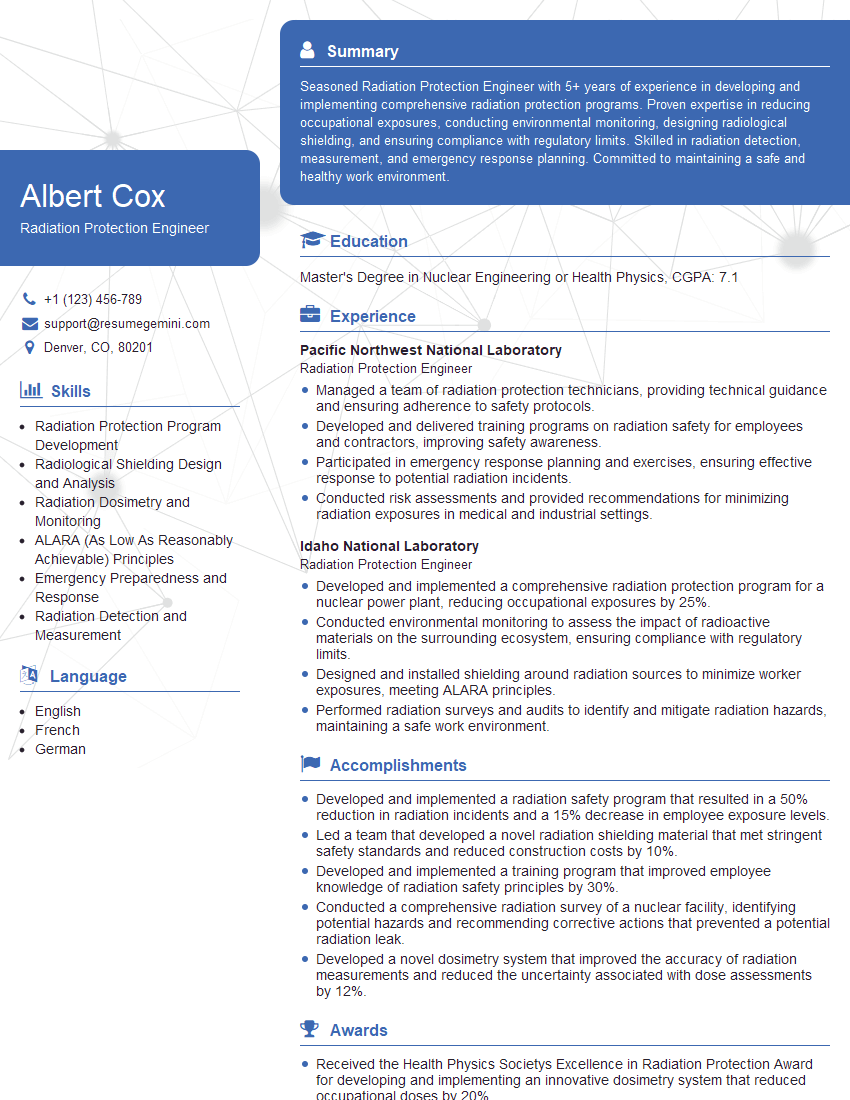
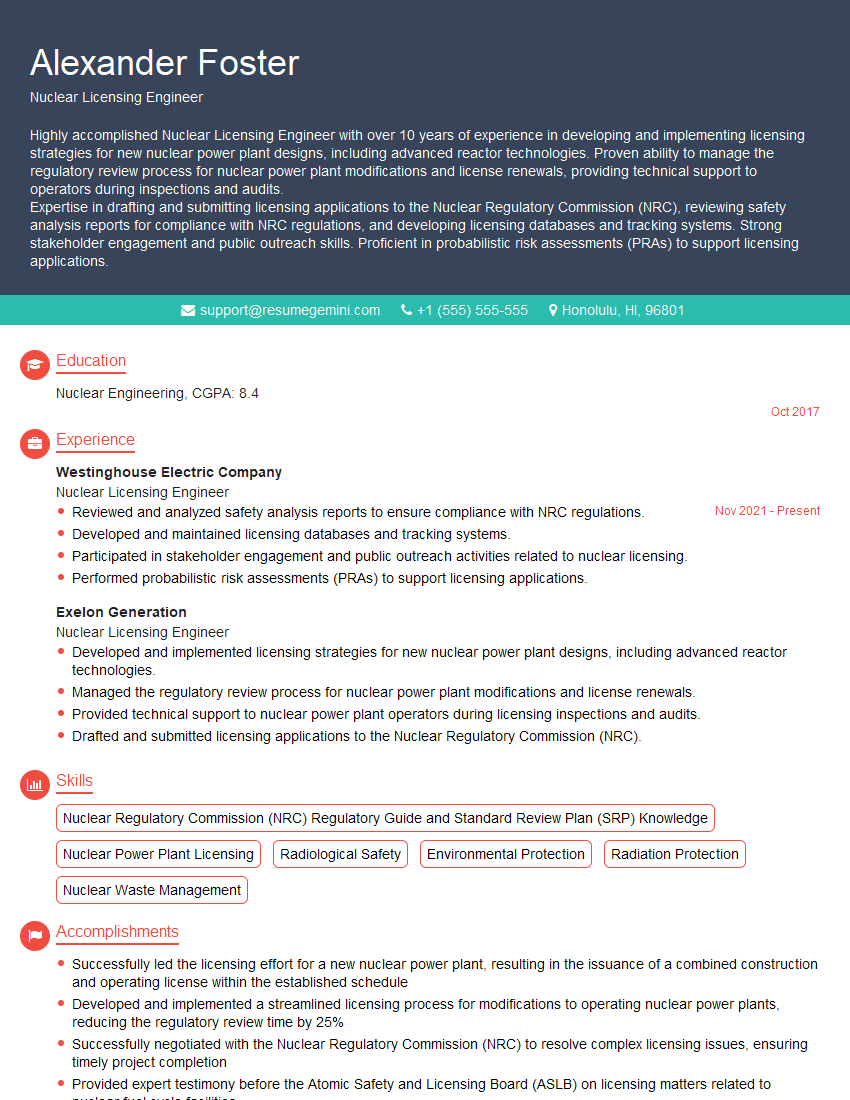
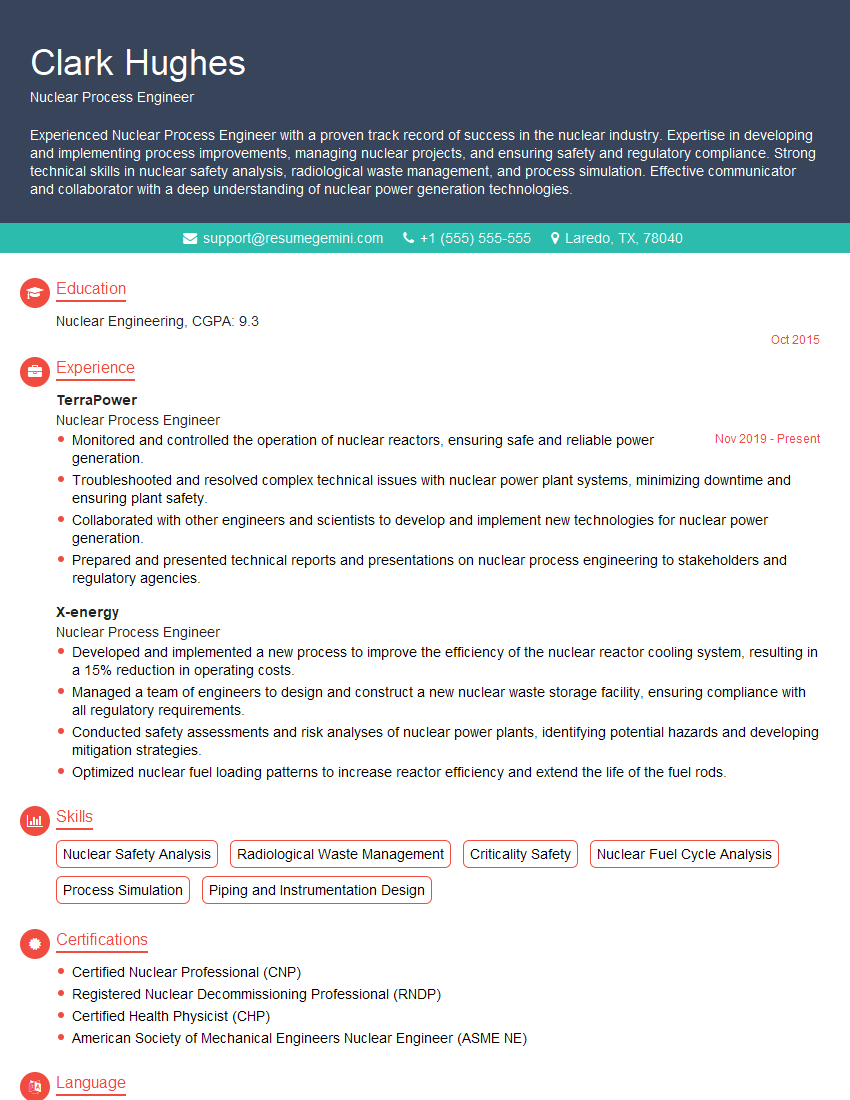
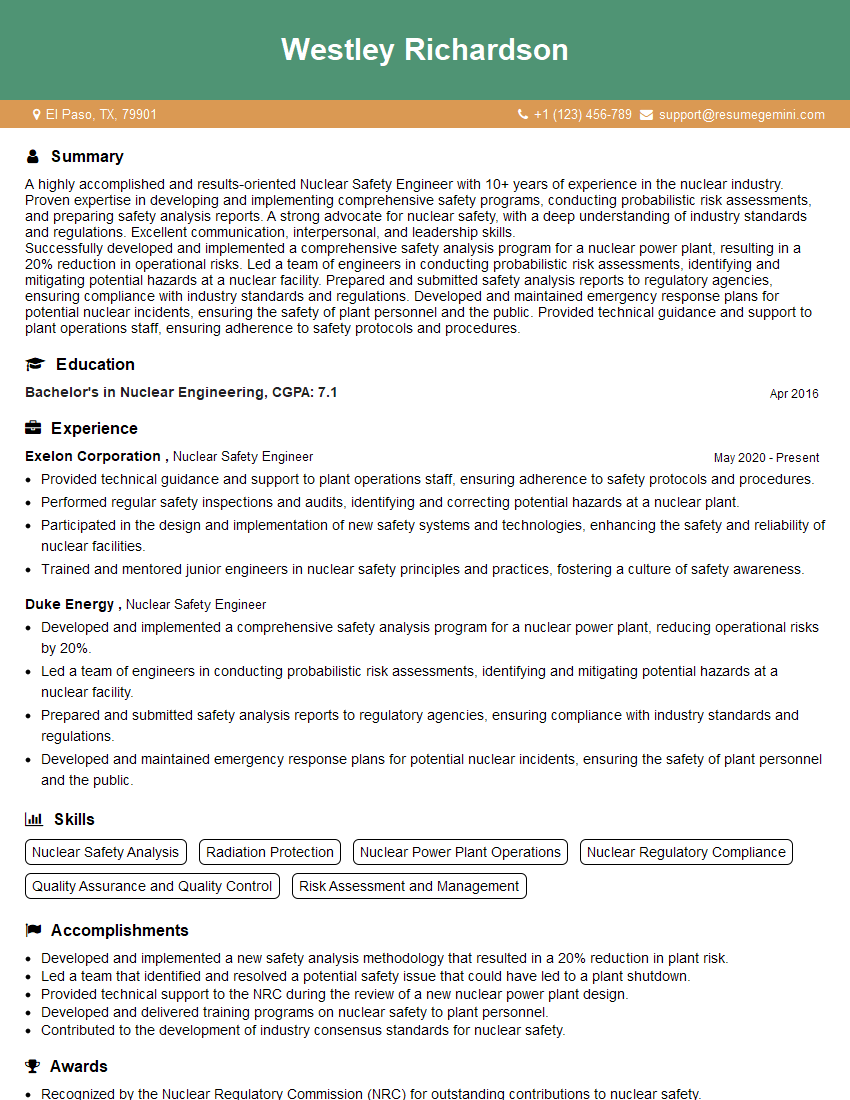
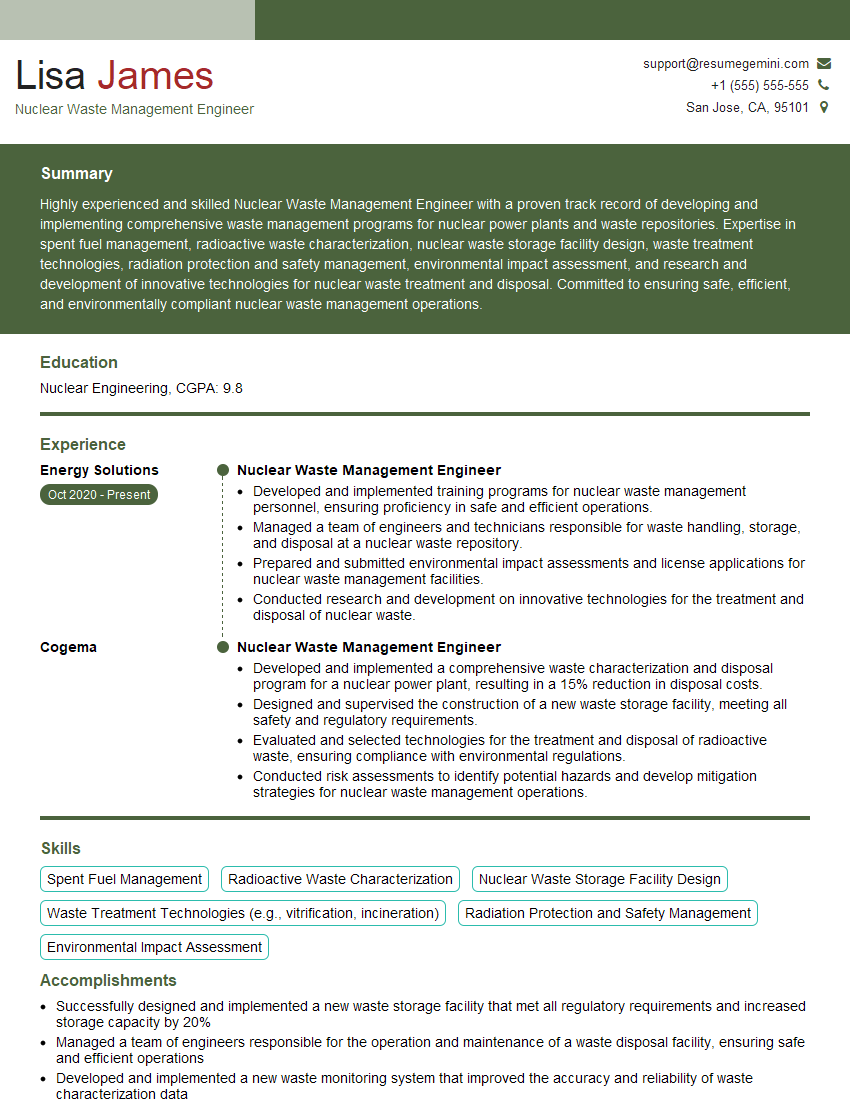
Mastering Nuclear Facility Design opens doors to a rewarding and impactful career, offering opportunities for innovation and leadership in a critical industry. To maximize your job prospects, crafting a strong, ATS-friendly resume is crucial. ResumeGemini is a trusted resource that can help you build a professional resume that effectively showcases your skills and experience. We provide examples of resumes tailored specifically to Nuclear Facility Design to guide you in crafting your own compelling application. Invest time in creating a resume that highlights your unique qualifications and sets you apart from the competition – it’s a vital step in securing your dream role.
Explore more articles
Users Rating of Our Blogs
Share Your Experience
We value your feedback! Please rate our content and share your thoughts (optional).
What Readers Say About Our Blog
Very informative content, great job.
good