Interviews are opportunities to demonstrate your expertise, and this guide is here to help you shine. Explore the essential Nuclear Power Plant Design interview questions that employers frequently ask, paired with strategies for crafting responses that set you apart from the competition.
Questions Asked in Nuclear Power Plant Design Interview
Q 1. Describe the different types of nuclear reactors and their core design differences.
Nuclear reactors are classified based on several key design features, most notably the type of fuel used, the moderator employed (to slow down neutrons), and the coolant used to transfer heat. Here are a few examples:
- Pressurized Water Reactor (PWR): This is the most common type globally. It uses enriched uranium as fuel, water as both moderator and coolant, and operates under high pressure to prevent water from boiling. The high pressure allows for a higher operating temperature, improving efficiency.
- Boiling Water Reactor (BWR): Similar to PWRs, BWRs use enriched uranium and water as a moderator. However, the water is allowed to boil in the reactor core, producing steam directly which drives the turbines. This simplifies the design, but requires careful control of steam generation.
- CANDU Reactor (CANada Deuterium Uranium): This reactor uses natural uranium (unenriched) as fuel, heavy water (D2O) as both moderator and coolant. The lower pressure operation makes it inherently safer, but requires specialized heavy water handling and maintenance.
- Gas-cooled Reactor (GCR): These reactors use graphite as a moderator and gases like carbon dioxide or helium as coolant. They are known for their high thermal efficiency, but require robust pressure vessels and gas handling systems.
- Fast Breeder Reactor (FBR): These reactors don’t use a moderator, allowing high-energy neutrons to induce fission in fertile materials like uranium-238, effectively “breeding” more fuel than they consume. This offers superior fuel utilization, but presents significant engineering challenges due to the high neutron flux and associated heat generation.
The core design differences stem from these fundamental choices. For instance, a PWR core has complex fuel assemblies designed to withstand high pressure and maintain optimal flow distribution for efficient heat transfer, while a BWR core design accommodates the boiling process and steam separation. CANDU reactors have horizontal fuel channels, allowing for online refueling, a significant operational advantage.
Q 2. Explain the principles of nuclear fission and its role in power generation.
Nuclear fission is the process of splitting a heavy atomic nucleus (like Uranium-235 or Plutonium-239) into smaller nuclei, releasing a tremendous amount of energy in the process. This energy is released primarily as kinetic energy of the fission fragments and as energy carried by neutrons and gamma rays.
In a nuclear power plant, this process is controlled within the reactor core. When a uranium-235 nucleus absorbs a neutron, it becomes unstable and splits, releasing more neutrons. These newly released neutrons can then trigger further fission events in other uranium-235 nuclei, creating a chain reaction. This chain reaction is carefully controlled using control rods (made of neutron-absorbing materials) to maintain a desired power level.
The heat generated by the fission process is used to heat a coolant (water, gas, liquid metal), which is then used to generate steam in a heat exchanger. This steam drives turbines connected to generators, producing electricity. Think of it like a very powerful boiler, but instead of burning fossil fuels, we’re harnessing the energy from nuclear fission.
Q 3. What safety systems are crucial in a nuclear power plant, and how do they function?
Nuclear power plants incorporate multiple layers of safety systems to prevent accidents and mitigate the consequences of any malfunctions. These systems are crucial because of the inherent risks associated with handling radioactive materials.
- Emergency Core Cooling System (ECCS): This system provides water to cool the reactor core in case of a loss-of-coolant accident (LOCA), preventing a meltdown.
- Reactor Protection System (RPS): This system monitors various parameters (e.g., temperature, pressure, neutron flux) and automatically shuts down the reactor if any abnormality is detected.
- Containment Building: A robust structure designed to confine radioactive materials in case of an accident. It prevents the release of radiation to the environment.
- Redundancy and Diversity: Critical safety systems are designed with multiple redundant systems and diverse technologies to ensure reliability. If one system fails, another can take over.
- Spent Fuel Pool and Dry Cask Storage: Systems for safe storage of spent nuclear fuel after its use in the reactor.
These systems work in concert. For example, if a LOCA occurs, the ECCS will automatically inject water into the reactor core, while the RPS will shut down the reactor to stop the chain reaction. The containment building will then prevent the release of radioactive materials.
Q 4. Discuss the importance of radiation shielding and its design considerations.
Radiation shielding is essential in nuclear power plants to protect workers and the public from harmful ionizing radiation emitted by the reactor core and other radioactive components. The design of shielding considers several factors:
- Type and Energy of Radiation: Different shielding materials are effective against different types of radiation. For example, lead or concrete is good for gamma radiation, while water or polyethylene is effective for neutrons.
- Distance from the Source: Radiation intensity decreases rapidly with distance from the source, so maximizing distances is a primary design consideration.
- Shielding Material Selection: The choice of shielding material depends on the type and energy of radiation, cost, availability, and physical properties.
- Shielding Thickness: The thickness of the shielding is calculated to reduce radiation levels to acceptable limits, as defined by regulations.
Examples of shielding include thick concrete walls around the reactor containment building, lead shielding around equipment containing radioactive materials, and water shielding around spent fuel pools. The design is often iterative, involving simulations and calculations to ensure adequate protection.
Q 5. How are thermal hydraulics principles applied in reactor core design?
Thermal hydraulics, the study of heat transfer and fluid flow, is fundamental to reactor core design. It focuses on ensuring efficient heat removal from the fuel and preventing overheating, which could lead to fuel damage or even a meltdown.
In reactor core design, thermal hydraulics principles are applied to:
- Coolant Flow Distribution: Ensuring uniform flow distribution through the fuel assemblies is critical to maintain even temperature across the core and prevent hot spots.
- Heat Transfer from Fuel to Coolant: The design of fuel assemblies and the choice of coolant are optimized to enhance heat transfer and minimize temperature gradients.
- Pressure Drop Analysis: Calculations are performed to determine the pressure drop across the core and ensure adequate coolant flow at all operating conditions.
- Transient Analysis: Thermal hydraulic simulations are used to predict the behavior of the core during transient events, such as power changes or loss-of-coolant accidents.
Computational Fluid Dynamics (CFD) techniques are often employed to model the complex flow and heat transfer processes within the reactor core. This helps optimize the design for safety and efficiency.
Q 6. Explain the process of nuclear fuel enrichment and its impact on reactor performance.
Nuclear fuel enrichment is the process of increasing the proportion of uranium-235 (235U) in natural uranium. Natural uranium contains only about 0.7% 235U, while most power reactors require enriched uranium with a higher concentration of 235U (typically 3-5%) to sustain a chain reaction.
The enrichment process typically involves gaseous diffusion or gas centrifuge technology. In gaseous diffusion, uranium hexafluoride gas (UF6) is passed through a series of porous membranes, separating the lighter 235UF6 from the heavier 238UF6. Gas centrifuges use centrifugal force to separate the isotopes. Higher enrichment levels require more energy and processing.
The impact on reactor performance is significant. Higher enrichment allows for a smaller reactor core size, higher power density, and improved fuel burnup. However, higher enrichment also increases the potential for weapons proliferation, so strict regulatory controls are in place globally to manage the production and use of enriched uranium.
Q 7. Describe your experience with nuclear regulatory codes and standards (e.g., ASME, IEEE).
Throughout my career, I’ve extensively worked with nuclear regulatory codes and standards, including ASME (American Society of Mechanical Engineers) and IEEE (Institute of Electrical and Electronics Engineers) standards. My experience spans various aspects of nuclear power plant design and operation.
Specifically, I have direct experience with:
- ASME Section III, Division 1: Rules for Construction of Nuclear Power Plant Components—this is the cornerstone for pressure vessel design, ensuring structural integrity and safety.
- ASME Boiler and Pressure Vessel Code Section XI: Rules for Inservice Inspection of Nuclear Power Plant Components—critical for ensuring ongoing safety and preventing degradation.
- IEEE standards for instrumentation and control systems: These standards guide the design, installation, and testing of the vital instrumentation and control systems essential for reactor operation and safety.
- Regulatory guides issued by the Nuclear Regulatory Commission (NRC) or equivalent bodies in other countries: These guides provide detailed requirements for design, operation, and safety analysis.
I’ve been involved in numerous projects applying these standards to ensure compliance and safety. My work often involved interpreting the codes, performing calculations to demonstrate compliance, and generating documentation to support regulatory reviews. A recent project involved a detailed analysis of a PWR pressure vessel using ASME Section III to validate its integrity under various operating conditions. I’m proficient in applying these standards and keeping abreast of updates and revisions.
Q 8. What are the key design considerations for nuclear waste storage and disposal?
Nuclear waste storage and disposal is a multifaceted challenge demanding careful consideration of several key factors. The overarching goal is to prevent radioactive materials from entering the environment and harming human health for extended periods – potentially thousands of years. This necessitates a layered approach encompassing safety, security, and long-term sustainability.
- Material Characterization: Understanding the specific isotopes present in the waste is crucial. Different isotopes have different half-lives and decay rates, impacting storage requirements. High-level waste (HLW), containing long-lived isotopes like plutonium and uranium, requires far more stringent containment than low-level waste (LLW).
- Containment Strategy: HLW is often vitrified (turned into glass) for stability and durability, then sealed in robust containers, often steel canisters, for interim storage. Long-term disposal strategies usually involve deep geological repositories, where the waste is placed far underground in stable geological formations, minimizing the risk of groundwater contamination.
- Geotechnical Considerations: The geological stability of the chosen site is paramount. We need to analyze factors like rock type, fault lines, groundwater flow, and the potential for seismic activity to ensure the waste remains isolated for millennia.
- Monitoring and Surveillance: Regardless of the storage method, a robust monitoring system is essential. This involves deploying sensors to detect leaks, temperature changes, or other anomalies that could indicate a breach in containment.
- Regulatory Compliance: The design and operation of any waste storage or disposal facility must comply with stringent national and international regulations, emphasizing safety and environmental protection. This includes rigorous risk assessment, licensing procedures, and independent audits.
For example, the Yucca Mountain repository project in Nevada, while ultimately abandoned, illustrates the complexity of geological site selection and the extensive research required to evaluate long-term safety.
Q 9. How do you ensure the structural integrity of a nuclear power plant under various stress conditions?
Ensuring structural integrity in a nuclear power plant under diverse stress conditions is paramount for safety. The design process incorporates multiple layers of redundancy and robust engineering principles to withstand a wide range of potential hazards.
- Seismic Design: Plants are designed to withstand earthquakes of significant magnitude. This includes base isolation systems to decouple the structure from ground motion, robust foundation designs, and reinforced structural components to absorb seismic energy.
- Extreme Weather: The structures must withstand extreme weather events like hurricanes, tornadoes, and floods. This involves designing for high winds, potential flooding, and debris impact.
- Internal Pressures and Temperatures: The reactor vessel and other primary components are designed to withstand immense internal pressures and temperatures during normal operation and potential accident scenarios. This incorporates detailed stress analysis and the use of high-strength, radiation-resistant materials.
- Material Selection: Materials must be chosen carefully, considering their strength, durability, resistance to radiation damage, and ability to maintain their properties under extreme conditions. Regular inspections and non-destructive testing (NDT) techniques like ultrasonic testing and radiography are crucial for monitoring the integrity of critical components over time.
- Redundancy and Fail-Safe Mechanisms: Redundant systems and fail-safe mechanisms are built in. For example, multiple independent cooling systems are essential for preventing reactor core meltdown in the event of a loss-of-coolant accident.
Imagine a building designed to withstand a hurricane. It’s not just about stronger walls; it involves carefully designed windbreaks, drainage systems, and reinforced foundations. Nuclear plant design takes this to a much more extreme and rigorous level.
Q 10. Explain the role of instrumentation and control systems in reactor operation and safety.
Instrumentation and control (I&C) systems are the nervous system of a nuclear power plant. They continuously monitor critical parameters, provide feedback to operators, and automate safety functions. These systems ensure safe and efficient reactor operation and play a crucial role in preventing accidents.
- Reactor Monitoring: Numerous sensors monitor parameters like neutron flux, temperature, pressure, and coolant flow rate. This data is crucial for controlling the reactor’s power level and preventing abnormal conditions.
- Safety System Actuation: I&C systems are directly involved in actuating safety systems, such as emergency core cooling systems (ECCS) and containment isolation systems. This is done automatically in response to predetermined thresholds or operator commands.
- Operator Interface: I&C provides the operator interface, allowing them to monitor the plant’s status, adjust control parameters, and respond to emergencies. The control room is designed for efficient human-machine interaction.
- Data Acquisition and Analysis: I&C systems collect vast amounts of data, providing valuable information for performance analysis, maintenance scheduling, and safety assessments. This data can also be used for post-accident investigations.
- Protection Systems: These systems are designed to automatically shut down the reactor if certain safety limits are exceeded. For example, a high-pressure trip will automatically scram the reactor if pressure rises beyond safe levels.
A simple analogy: Think of a car’s dashboard. It displays speed, fuel level, and temperature. I&C systems perform a similar function, albeit on a vastly more complex scale, providing critical information for safe and efficient operation. However, the consequences of failure are far greater in a nuclear plant.
Q 11. Discuss your understanding of nuclear plant emergency procedures and response strategies.
Nuclear plant emergency procedures and response strategies are meticulously planned and regularly practiced to mitigate the consequences of accidents. These plans are developed to ensure the safety of the public, plant personnel, and the environment.
- Emergency Classification: Events are classified based on their severity, triggering specific responses. This classification ensures a graded approach, from minor anomalies to severe accidents.
- Emergency Operating Procedures (EOPs): EOPs provide step-by-step instructions for operators to follow during emergencies. These procedures are designed to mitigate the consequences of accidents and bring the plant to a safe state.
- Offsite Emergency Plans: Offsite emergency plans coordinate the response of local, state, and federal agencies to protect the public in the event of a nuclear accident. These plans include evacuation procedures, public communication strategies, and medical response protocols.
- Training and Exercises: Regular training and exercises are essential to ensure that plant personnel and emergency responders are well-prepared to handle emergencies effectively. These exercises involve simulated scenarios to test the effectiveness of the plans and identify areas for improvement.
- Containment and Mitigation: The design of the containment structure and various engineered safety features is crucial to prevent the release of radioactive materials to the environment. Emergency response strategies focus on containing any releases and mitigating their impact.
Imagine a fire drill in a school. Nuclear plant emergency response is similarly crucial, but involves far more complex procedures and coordination across various levels of response, from plant personnel to national-level agencies.
Q 12. How do you handle potential design conflicts between safety, cost, and schedule?
Balancing safety, cost, and schedule in nuclear power plant design presents a constant challenge. It’s a classic “iron triangle” problem – improving one aspect often necessitates compromises in the others. A structured approach is needed to navigate these conflicts effectively.
- Prioritization Matrix: A prioritization matrix helps define the relative importance of safety, cost, and schedule for specific design choices. Safety is always prioritized, but cost and schedule considerations must be factored in realistically.
- Value Engineering: Value engineering techniques identify opportunities to reduce costs without compromising safety or functionality. This involves evaluating design alternatives and selecting the most cost-effective solutions that meet safety requirements.
- Risk Assessment and Management: Formal risk assessments help to identify and quantify potential safety risks associated with cost and schedule pressures. Mitigation strategies are developed to reduce the likelihood or severity of these risks.
- Phased Approach: Breaking down the project into phases allows for iterative design, allowing for adjustments to cost and schedule without jeopardizing safety. Early identification of potential problems during the design phase is crucial.
- Stakeholder Communication: Open communication among all stakeholders (regulators, designers, constructors, operators) is vital. Transparent discussion of potential trade-offs helps reach informed decisions.
Consider the choice between a more expensive but more robust component versus a cheaper alternative. The risk assessment helps determine if the cost savings justify the slightly increased risk. This requires careful consideration of safety margins and the potential consequences of failure.
Q 13. Describe your experience with nuclear plant simulation software and modeling techniques.
My experience with nuclear plant simulation software and modeling techniques is extensive. These tools are indispensable for analyzing plant behavior under various conditions, optimizing designs, and training operators. I have used various tools, including RELAP5, CATHARE, and TRACE.
- Thermal-Hydraulic Modeling: Software like RELAP5 simulates the flow of coolant, heat transfer, and pressure changes within the reactor system. This is crucial for analyzing transient events and designing safety systems.
- Reactor Physics Simulation: Codes such as MCNP and Serpent simulate neutron transport and fission reactions within the reactor core, allowing for accurate prediction of power distribution and reactivity.
- Structural Mechanics Analysis: Finite element analysis (FEA) software is used to model the structural behavior of components under various loading conditions, including seismic events.
- Operator Training Simulators: High-fidelity simulators recreate the control room environment, providing invaluable training opportunities for plant operators to handle various scenarios, from normal operation to severe accidents.
- Accident Analysis: Simulations are used to analyze the progression of potential accidents, assessing the effectiveness of safety systems and identifying vulnerabilities.
For example, I used RELAP5 to model the transient behavior of a pressurized water reactor (PWR) during a hypothetical loss-of-coolant accident (LOCA). The simulation provided detailed insights into the thermal-hydraulic response, enabling the assessment of the ECCS’s effectiveness and informing design improvements.
Q 14. What are the key challenges in designing for seismic events in a nuclear power plant?
Designing for seismic events in a nuclear power plant presents significant challenges. The plant must withstand ground motion without compromising its structural integrity or safety systems. Several factors need careful consideration.
- Seismic Hazard Analysis: The first step is a detailed seismic hazard analysis, considering historical earthquake data, fault lines, and geological conditions to determine the design basis earthquake (DBE) – the maximum earthquake the plant must withstand.
- Soil-Structure Interaction: The interaction between the soil and the plant structure during an earthquake must be carefully modeled. This involves considering soil properties, foundation design, and the transfer of seismic forces to the structure.
- Structural Design: The design must incorporate seismic design principles. This includes robust foundation designs, base isolation systems to decouple the structure from the ground motion, and reinforced structural components to absorb seismic energy.
- Component Qualification: Equipment and components must be qualified to withstand the seismic loads and accelerations. This involves rigorous testing and analysis to ensure they maintain their functionality during and after an earthquake.
- Seismic Gaps: Identifying potential gaps in seismic design and assessing their impact on safety is critical. Addressing these gaps requires detailed analysis and potentially design modifications.
Imagine building a house in an earthquake-prone zone. You wouldn’t just use stronger materials; you’d consider the foundation’s design, ensuring the house can withstand significant ground shaking. A nuclear plant takes this to a much higher level of sophistication and rigorous testing.
Q 15. Explain the importance of quality control and assurance in nuclear power plant design.
Quality control (QC) and quality assurance (QA) are the cornerstones of safe and reliable nuclear power plant design. QC focuses on the processes and procedures used during construction and operation to ensure that components and systems meet predefined specifications. QA, on the other hand, is a broader approach that encompasses the entire lifecycle of the plant, from design and procurement to construction, operation, and decommissioning, ensuring adherence to regulatory requirements and best practices. Think of it like this: QC is like inspecting each brick in a wall to make sure it’s perfect, while QA is making sure the whole wall is built according to the blueprint and stands strong against all possible challenges.
- Independent Verification and Validation (IV&V): Independent teams review design documents and software to identify potential flaws and ensure compliance.
- Material Traceability: Every component used must be traceable to its origin and certified to meet stringent specifications. This prevents the use of substandard materials that could compromise safety.
- Regular Audits and Inspections: Regular audits and inspections, both internal and external, identify weaknesses and ensure adherence to standards.
A failure in QC/QA can lead to catastrophic consequences, such as equipment malfunctions, system failures, and potentially, a nuclear accident. Therefore, a robust QC/QA program is paramount in nuclear power plant design, requiring meticulous attention to detail and unwavering commitment to safety.
Career Expert Tips:
- Ace those interviews! Prepare effectively by reviewing the Top 50 Most Common Interview Questions on ResumeGemini.
- Navigate your job search with confidence! Explore a wide range of Career Tips on ResumeGemini. Learn about common challenges and recommendations to overcome them.
- Craft the perfect resume! Master the Art of Resume Writing with ResumeGemini’s guide. Showcase your unique qualifications and achievements effectively.
- Don’t miss out on holiday savings! Build your dream resume with ResumeGemini’s ATS optimized templates.
Q 16. How do you incorporate lessons learned from past nuclear accidents into your design process?
Lessons learned from past accidents, such as Chernobyl and Fukushima, are fundamentally incorporated into modern nuclear power plant design. These events highlighted critical weaknesses in various areas, prompting significant improvements in safety features and regulatory oversight. We incorporate these lessons through:
- Enhanced Safety Systems: Designs now incorporate multiple layers of defense, including passive safety systems (which operate without external power) to mitigate the risk of core meltdowns.
- Improved Emergency Planning: Comprehensive emergency response plans are developed, regularly tested, and regularly updated based on accident scenarios and lessons learned.
- Seismic and Environmental Considerations: Plants are designed to withstand extreme environmental events, such as earthquakes, tsunamis, and floods, learned from Fukushima’s vulnerability to tsunamis.
- Robust Containment Structures: Containment structures are designed to withstand extreme pressures and temperatures and prevent the release of radioactive materials.
- Human Factors Engineering: Designing control rooms and procedures to reduce human error and improve operator performance. For example, Chernobyl highlighted the importance of operator training and clear procedural guidance.
Essentially, each accident serves as a valuable, albeit tragic, case study which improves future designs. We don’t just learn from the failures; we actively seek to understand why they occurred and design solutions to prevent them from happening again.
Q 17. Describe your experience with risk assessment methodologies in nuclear power plant design.
Risk assessment methodologies are crucial in nuclear power plant design. They involve identifying hazards, analyzing their potential consequences, and evaluating the likelihood of occurrence. This systematic approach helps prioritize safety improvements and optimize design choices. We commonly employ probabilistic risk assessment (PRA) which uses quantitative methods to estimate the probability of various accidents and their potential impact. This helps us understand which safety systems are most crucial and allocate resources efficiently.
- Fault Tree Analysis (FTA): A top-down approach used to identify the combinations of events that could lead to an undesired outcome.
- Event Tree Analysis (ETA): A bottom-up approach that examines the consequences of initiating events, such as equipment failure or human error.
- Monte Carlo Simulation: A computational technique used to model the uncertainty in the input parameters of a risk assessment.
For example, a PRA might reveal that a particular component failure is highly likely to lead to a serious accident. This allows engineers to focus on enhancing the reliability of that component, perhaps through redundancy or improved design, or to enhance the safety systems to better mitigate this risk.
Q 18. How do you ensure the effective communication and collaboration among different engineering disciplines?
Effective communication and collaboration are paramount in nuclear power plant design, given the complex interplay of various engineering disciplines (mechanical, electrical, civil, nuclear, instrumentation & control, etc.). We use several strategies to ensure seamless information flow:
- Integrated Design Teams: Establishing teams comprising engineers from different disciplines, fostering direct interaction and collaboration.
- Common Data Environment (CDE): Utilizing a central repository for all design documents, allowing each discipline to access and update information in real-time and track changes efficiently.
- Regular Meetings and Reviews: Conducting frequent design reviews and meetings to discuss progress, address issues, and ensure alignment between disciplines. This includes technical design reviews, safety reviews, and hazard and operability studies.
- Project Management Software: Utilizing software for tasks like scheduling, risk management, and document control to ensure everyone stays informed.
- Clear Communication Protocols: Implementing clear communication protocols for reporting issues, requesting information, and addressing concerns. This might involve using specific communication templates and channels.
An analogy would be building a complex puzzle – each discipline is like a piece, and collaboration ensures they fit together seamlessly to create a safe and functional power plant.
Q 19. Discuss your understanding of the nuclear fuel cycle and its environmental impacts.
The nuclear fuel cycle encompasses all the stages involved in the utilization of nuclear fuel, from uranium mining and enrichment to spent fuel management. Each stage has environmental implications that must be carefully considered.
- Uranium Mining and Milling: This process can lead to land disturbance, water pollution (through tailings ponds), and radioactive waste generation.
- Enrichment: Enrichment processes (like gaseous diffusion or centrifuge methods) consume significant energy and generate small amounts of waste.
- Reactor Operation: Nuclear reactors generate electricity but also produce spent nuclear fuel, which is highly radioactive and requires long-term storage or reprocessing.
- Spent Fuel Management: This is a critical aspect, encompassing interim storage, reprocessing (which can reduce the volume and long-term radioactivity), and eventual geological disposal, which needs careful site selection and robust engineering.
The environmental impact of the nuclear fuel cycle is significantly lower than many other energy sources in terms of greenhouse gas emissions, but careful management of radioactive waste is essential. Advanced reactor designs focus on reducing waste volume and improving fuel utilization, minimizing the overall environmental footprint.
Q 20. What are the current trends and advancements in nuclear power plant design?
Several trends are shaping the future of nuclear power plant design:
- Small Modular Reactors (SMRs): These are smaller, factory-built reactors offering advantages in terms of cost, safety, and deployment flexibility.
- Advanced Reactor Designs: New reactor designs, such as Generation IV reactors, aim to improve safety, efficiency, and waste management.
- Passive Safety Systems: Increasing reliance on passive safety systems that operate without external power sources, enhancing inherent safety.
- Digitalization and Automation: Using advanced technologies for enhanced monitoring, control, and operation, leading to increased efficiency and safety.
- Nuclear Fusion: While still in the development stage, nuclear fusion offers the potential for a virtually limitless, clean energy source.
These advancements address various challenges, including safety concerns, cost reduction, and the need for sustainable energy solutions. The future of nuclear power lies in safer, more efficient, and environmentally friendly designs.
Q 21. Explain your experience with the design and implementation of passive safety systems.
Passive safety systems are crucial in modern nuclear power plant design, relying on natural forces (gravity, convection, etc.) rather than active components (pumps, valves driven by electricity) for safety functions. My experience includes designing and implementing various passive systems, such as:
- Passive Residual Heat Removal Systems: These systems use natural circulation to remove decay heat from the reactor core in the event of a power failure, preventing core melt.
- Passive Containment Cooling Systems: These systems use natural air convection or other passive methods to cool the containment building after an accident, reducing the risk of containment failure.
- Gravity-Driven Water Injection Systems: These systems use elevated water storage tanks to inject water into the reactor core in case of an accident, maintaining core cooling.
The advantage of passive safety systems is their inherent reliability, as they do not depend on active components that could fail due to power loss or other malfunctions. They are a significant step towards enhancing the inherent safety of nuclear power plants, offering greater protection against severe accidents. For example, in a design I worked on, a gravity-driven water injection system provided a highly reliable backup core cooling system, significantly reducing the risk of a core melt scenario.
Q 22. How do you ensure the long-term operability and maintainability of a nuclear power plant?
Ensuring the long-term operability and maintainability of a nuclear power plant is paramount for safety, economic viability, and environmental protection. It’s a multifaceted process involving meticulous design, rigorous maintenance schedules, and proactive component replacement strategies.
- Design for Maintainability (DFM): From the outset, the plant’s design must prioritize accessibility for maintenance. This includes considerations such as sufficient space around equipment, standardized components for easier replacement, and the use of modular designs for quicker repairs. For example, designing pipe systems with easily accessible valves and fittings minimizes downtime during repairs.
- Predictive Maintenance: Instead of relying solely on reactive maintenance (fixing things when they break), we utilize predictive maintenance techniques. This involves using sensors and data analytics to monitor the condition of critical components, allowing us to anticipate potential failures and schedule maintenance proactively. This significantly reduces unplanned downtime and increases overall plant availability.
- Robust Quality Assurance (QA) and Quality Control (QC): Stringent QA/QC processes are crucial throughout the plant’s lifecycle, from material selection and construction to operation and maintenance. Regular inspections, testing, and documentation ensure that components meet stringent standards and that operational procedures are followed meticulously.
- Aging Management Programs (AMPs): Nuclear power plants experience age-related degradation over time. AMPs are comprehensive programs designed to monitor, assess, and mitigate the effects of aging on critical components. This might involve implementing specific inspection and maintenance procedures or replacing components before they reach the end of their useful life.
- Continuous Improvement: Lessons learned from operational experience, industry best practices, and research are continuously integrated to improve plant performance and maintainability. This involves analyzing historical data, identifying recurring issues, and implementing corrective actions.
Imagine a car – regular oil changes, tire rotations, and other preventative maintenance extend its life and reliability. A nuclear power plant is similar, but the stakes are far higher, necessitating far more rigorous and comprehensive strategies.
Q 23. Describe your experience with probabilistic risk assessment (PRA) techniques.
Probabilistic Risk Assessment (PRA) is a cornerstone of nuclear power plant safety. My experience spans various PRA applications, from Level 1 PRA (analyzing the frequency of core damage) to Level 2 PRA (evaluating the consequences of accidents), and Level 3 PRA (assessing public health impacts).
I’ve utilized various PRA techniques, including:
- Fault Tree Analysis (FTA): Used to systematically identify the combinations of events that could lead to specific undesired outcomes, such as a loss of coolant accident (LOCA).
- Event Tree Analysis (ETA): Used to model the sequence of events following an initiating event, evaluating the probability of various accident sequences.
- Monte Carlo Simulation: Used to account for uncertainties in input parameters and to propagate these uncertainties through the risk model.
In practical application, PRA helps prioritize safety improvements, evaluate the effectiveness of safety systems, and inform regulatory decision-making. For instance, a PRA might reveal a weakness in a specific safety system, leading to design modifications or enhanced maintenance procedures.
I’ve personally led several PRA studies, including one where a detailed FTA identified a previously unrecognized potential failure mode in a critical safety system. This led to the implementation of a new redundancy feature, significantly reducing the risk of a severe accident.
Q 24. How do you manage technical risks and uncertainties during the design process?
Managing technical risks and uncertainties during the design process requires a proactive and multi-layered approach.
- Robust Design Margins: We incorporate significant safety margins in the design to account for uncertainties in material properties, manufacturing tolerances, and operational conditions. This ensures that even if some unforeseen events occur, the plant will still operate safely.
- Independent Verification and Validation (IV&V): Independent teams review design calculations, analyses, and specifications to identify potential flaws or inconsistencies. This ensures that our designs are robust and reliable.
- Sensitivity Studies: These studies examine the impact of uncertainties in input parameters on design performance. For instance, we might assess how variations in material properties or operating conditions affect the stresses in a reactor vessel.
- Uncertainty Quantification (UQ): Formal UQ methods are employed to quantify and propagate uncertainties through the design process. This allows us to understand and manage the potential range of outcomes.
- Defense-in-Depth: We implement multiple, independent layers of safety features to prevent accidents and mitigate their consequences. If one safety system fails, others are in place to compensate.
For example, during the design of a new containment structure, we might conduct sensitivity studies to assess the impact of variations in soil properties on the structural integrity. This ensures that the design is robust enough to withstand various geological conditions.
Q 25. Explain the differences between pressurized water reactors (PWRs) and boiling water reactors (BWRs).
Both Pressurized Water Reactors (PWRs) and Boiling Water Reactors (BWRs) are common types of light water reactors (LWRs), but they differ significantly in their primary coolant system design.
- Primary Coolant: In a PWR, the primary coolant (water) is kept under high pressure to prevent boiling. Heat from the reactor core is transferred to a secondary coolant loop through a steam generator, producing steam to drive turbines. In a BWR, the primary coolant itself boils in the reactor core, producing steam that directly drives the turbines.
- Reactor Design: PWRs typically have a more complex design, with two separate coolant loops and a steam generator. BWRs have a simpler design with a single coolant loop.
- Coolant Recirculation: In PWRs, the primary coolant is circulated by pumps. In BWRs, recirculation pumps are used to circulate the coolant within the reactor vessel to enhance heat transfer and steam production.
- Control Systems: The control systems for PWRs and BWRs differ, reflecting the distinct characteristics of their primary coolant systems.
- Safety Systems: Both reactor types utilize a variety of safety systems, but the specific design and function of these systems can vary.
Think of it like this: a PWR is like a highly efficient double boiler, transferring heat through a second loop, while a BWR is more like a single, high-pressure kettle where the water boils directly.
Q 26. Discuss your understanding of the regulatory requirements for licensing a nuclear power plant.
The regulatory requirements for licensing a nuclear power plant are rigorous and extensive, varying by country but generally encompassing multiple stages of review and approval.
- Pre-Licensing Phase: This involves site selection, preliminary design reviews, and environmental impact assessments.
- Licensing Application: A detailed application, including safety analysis reports, design specifications, and operational procedures, is submitted to the regulatory authority.
- Regulatory Review: The regulatory authority conducts a thorough review of the application, potentially involving independent expert reviews and public hearings.
- Construction Permit: Once the application is approved, a construction permit is issued, allowing the construction of the plant.
- Operational License: After construction, a series of tests and inspections are conducted before an operational license is granted.
- Ongoing Compliance: Even after licensing, ongoing compliance with regulatory requirements is essential, including regular inspections, safety audits, and reporting.
The regulatory process aims to ensure the plant’s safety and protection of the public and the environment. Non-compliance can lead to significant penalties, including operational shutdowns or license revocation. My experience includes participating in numerous licensing reviews, meticulously documenting compliance with regulations and addressing regulatory queries effectively.
Q 27. How do you ensure the security of a nuclear power plant against potential threats?
Ensuring the security of a nuclear power plant against potential threats necessitates a multi-layered approach encompassing physical protection, cybersecurity, and emergency preparedness.
- Physical Security: This includes perimeter security (fences, cameras, intrusion detection systems), access control (identification badges, security checkpoints), and protection of critical components against sabotage or theft. This often involves multiple layers of physical barriers and security personnel.
- Cybersecurity: Modern nuclear power plants rely heavily on computer systems for monitoring and control. Robust cybersecurity measures are crucial to protect these systems from cyberattacks, which could compromise plant safety or operations. This involves implementing firewalls, intrusion detection systems, and regular security audits.
- Emergency Preparedness: Comprehensive emergency plans must be developed and regularly tested to address various potential threats, including accidents, sabotage, and acts of terrorism. This includes defining roles and responsibilities, establishing communication protocols, and practicing emergency response procedures.
- Personnel Security: Background checks, security clearances, and training are conducted for all personnel with access to sensitive areas or information.
The design and implementation of these measures require close collaboration with security experts, regulatory agencies, and law enforcement.
I’ve been involved in designing security systems for several plants, including incorporating advanced technologies like biometric access control and intelligent video surveillance systems, ensuring the ongoing protection of the plants and public safety.
Q 28. Describe your experience with the design and analysis of nuclear reactor components.
My experience in the design and analysis of nuclear reactor components is extensive, covering various aspects from structural mechanics and thermal-hydraulics to materials science and radiation effects.
- Finite Element Analysis (FEA): I’ve extensively used FEA software to perform structural analyses of components, such as reactor pressure vessels, piping systems, and fuel assemblies, ensuring they can withstand operating loads and potential accident scenarios. This includes analyzing stress, strain, and fatigue behavior under various loading conditions.
- Computational Fluid Dynamics (CFD): CFD techniques have been employed to model the flow of coolant through the reactor core and other components, analyzing parameters such as pressure drop, temperature distribution, and flow patterns. This is critical for ensuring efficient heat transfer and preventing thermal stresses.
- Materials Selection and Characterization: Understanding the behavior of materials under high temperatures, pressures, and radiation environments is crucial. I have experience selecting appropriate materials for reactor components based on their properties and resistance to radiation damage.
- Fracture Mechanics: This is vital in assessing the potential for crack propagation in critical components, particularly in aging plants. This involves using sophisticated fracture mechanics models to predict crack growth and ensure structural integrity.
For instance, I recently led a project involving the stress analysis of a reactor pressure vessel undergoing a major inspection. Using FEA, we determined the residual stresses caused by previous welding processes and confirmed that the vessel remained structurally sound.
Key Topics to Learn for Nuclear Power Plant Design Interview
- Reactor Design & Thermodynamics: Understanding reactor types (PWR, BWR, etc.), thermal hydraulics, and core physics is fundamental. Consider practical applications like analyzing reactor performance under various operating conditions.
- Nuclear Safety & Regulatory Compliance: Familiarity with safety systems (e.g., emergency core cooling systems), regulatory frameworks (e.g., NRC regulations), and risk assessment methodologies is crucial. Explore case studies of safety incidents and their impact on design improvements.
- Instrumentation & Control Systems: A deep understanding of instrumentation used for monitoring and controlling reactor parameters, as well as the design and implementation of control systems, is essential. Consider the practical challenges of maintaining system reliability and safety under demanding operating conditions.
- Structural & Civil Engineering Aspects: Knowledge of the structural design considerations specific to nuclear power plants, including seismic design, material selection, and containment structures, is vital. This includes understanding the challenges of designing for extreme conditions and long lifespans.
- Nuclear Fuel Cycle & Waste Management: Understanding the entire fuel cycle, from enrichment to spent fuel management and waste disposal, demonstrates a holistic understanding of the industry. Explore the environmental impact and regulatory challenges associated with each stage.
- Radiation Shielding & Protection: Mastering the principles of radiation shielding and the design of protective barriers is paramount. Consider practical applications like optimizing shielding designs for different radiation sources and minimizing personnel exposure.
- Project Management & Engineering Design Process: Experience with project management principles and understanding the complete engineering design process from conceptual design to commissioning is highly valuable. This includes familiarizing yourself with common design tools and software used in the industry.
Next Steps
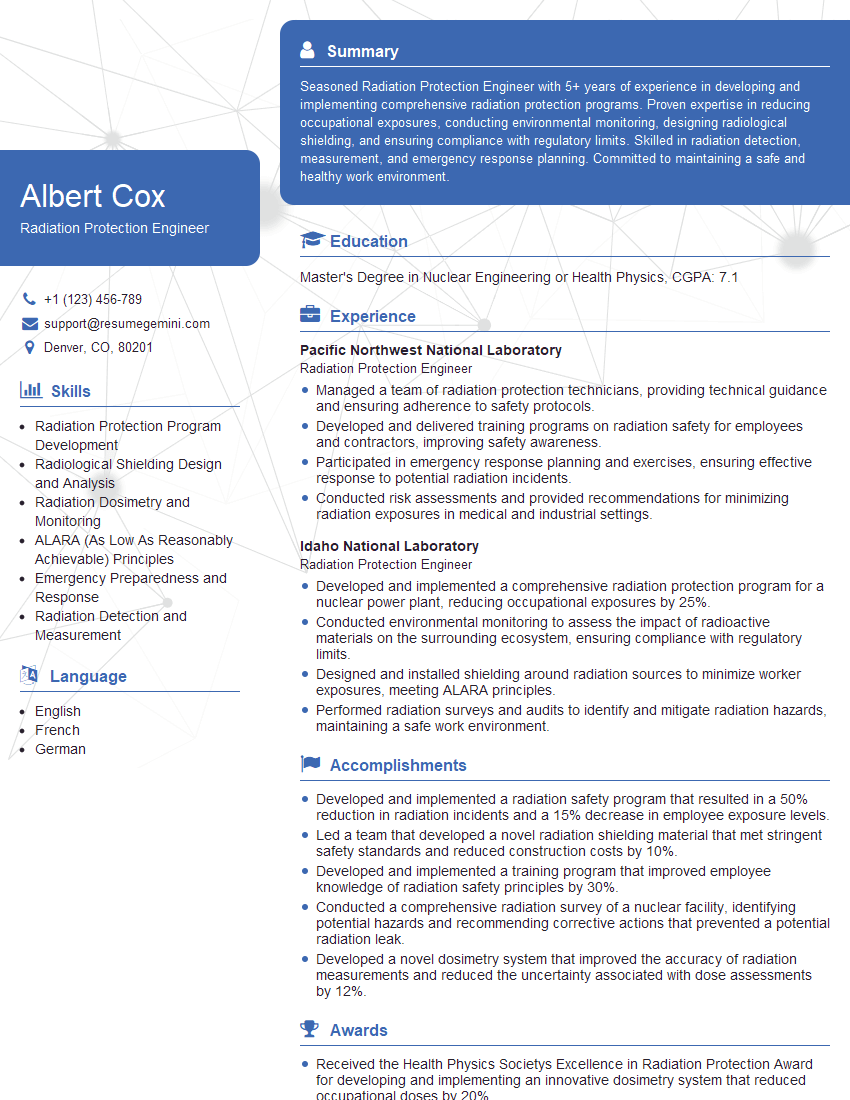
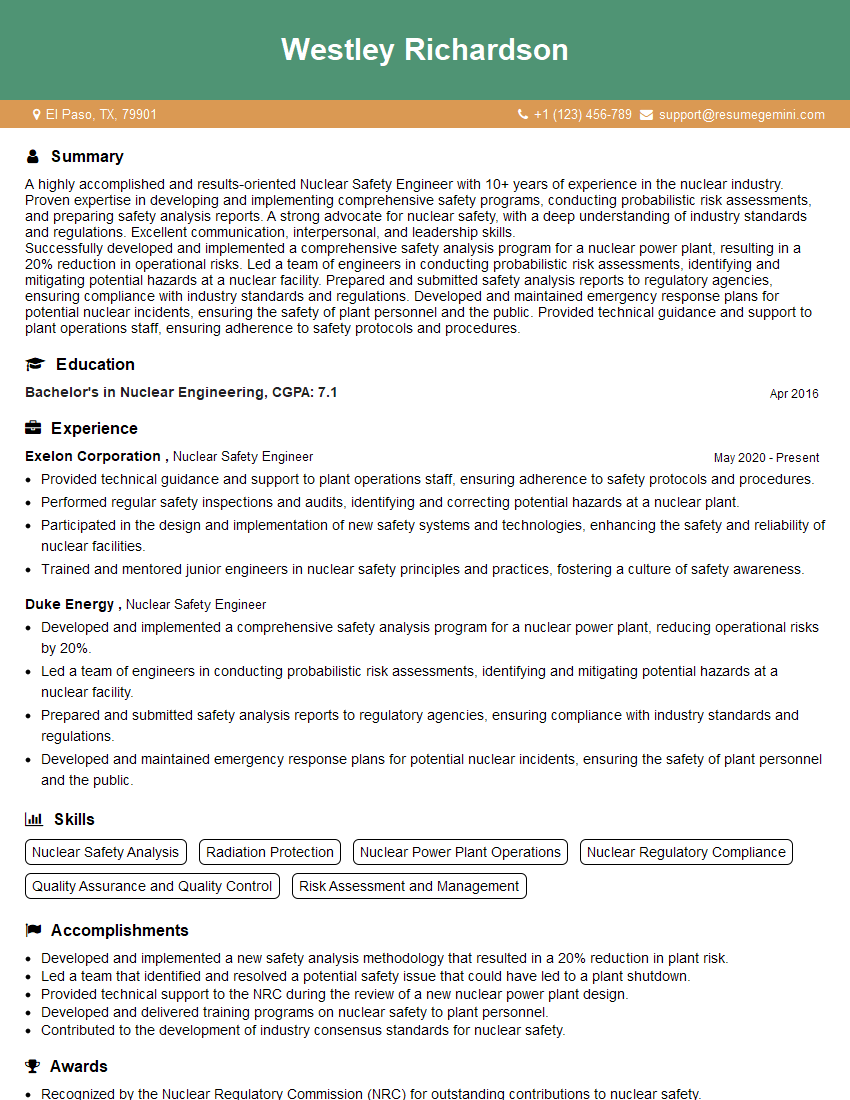
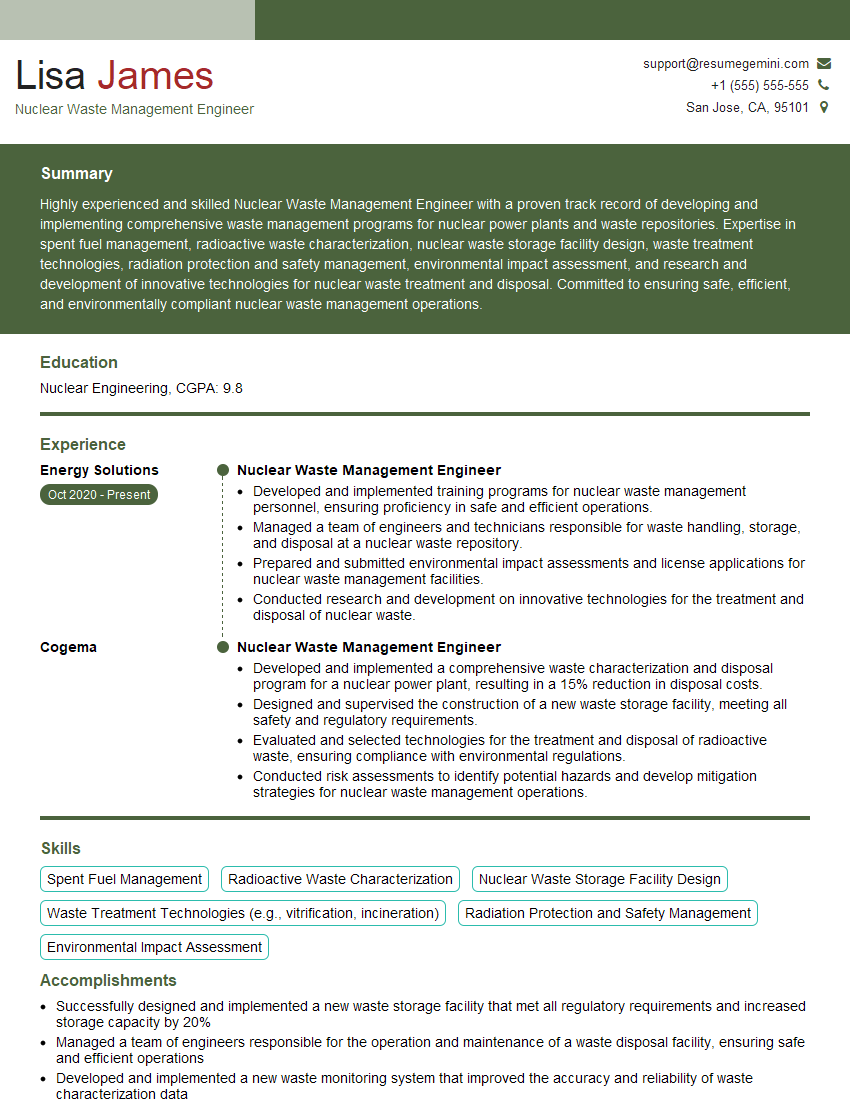
Mastering Nuclear Power Plant Design opens doors to a rewarding and impactful career in a vital industry. A strong understanding of these key concepts significantly improves your chances of success in securing your dream role. To make your application stand out, create an ATS-friendly resume that highlights your skills and experience effectively. ResumeGemini is a trusted resource that can help you build a professional and impactful resume tailored to the Nuclear Power Plant Design field. Examples of resumes tailored to this specific industry are available to help you get started.
Explore more articles
Users Rating of Our Blogs
Share Your Experience
We value your feedback! Please rate our content and share your thoughts (optional).
What Readers Say About Our Blog
Attention music lovers!
Wow, All the best Sax Summer music !!!
Spotify: https://open.spotify.com/artist/6ShcdIT7rPVVaFEpgZQbUk
Apple Music: https://music.apple.com/fr/artist/jimmy-sax-black/1530501936
YouTube: https://music.youtube.com/browse/VLOLAK5uy_noClmC7abM6YpZsnySxRqt3LoalPf88No
Other Platforms and Free Downloads : https://fanlink.tv/jimmysaxblack
on google : https://www.google.com/search?q=22+AND+22+AND+22
on ChatGPT : https://chat.openai.com?q=who20jlJimmy20Black20Sax20Producer
Get back into the groove with Jimmy sax Black
Best regards,
Jimmy sax Black
www.jimmysaxblack.com
Hi I am a troller at The aquatic interview center and I suddenly went so fast in Roblox and it was gone when I reset.
Hi,
Business owners spend hours every week worrying about their website—or avoiding it because it feels overwhelming.
We’d like to take that off your plate:
$69/month. Everything handled.
Our team will:
Design a custom website—or completely overhaul your current one
Take care of hosting as an option
Handle edits and improvements—up to 60 minutes of work included every month
No setup fees, no annual commitments. Just a site that makes a strong first impression.
Find out if it’s right for you:
https://websolutionsgenius.com/awardwinningwebsites
Hello,
we currently offer a complimentary backlink and URL indexing test for search engine optimization professionals.
You can get complimentary indexing credits to test how link discovery works in practice.
No credit card is required and there is no recurring fee.
You can find details here:
https://wikipedia-backlinks.com/indexing/
Regards
NICE RESPONSE TO Q & A
hi
The aim of this message is regarding an unclaimed deposit of a deceased nationale that bears the same name as you. You are not relate to him as there are millions of people answering the names across around the world. But i will use my position to influence the release of the deposit to you for our mutual benefit.
Respond for full details and how to claim the deposit. This is 100% risk free. Send hello to my email id: lukachachibaialuka@gmail.com
Luka Chachibaialuka
Hey interviewgemini.com, just wanted to follow up on my last email.
We just launched Call the Monster, an parenting app that lets you summon friendly ‘monsters’ kids actually listen to.
We’re also running a giveaway for everyone who downloads the app. Since it’s brand new, there aren’t many users yet, which means you’ve got a much better chance of winning some great prizes.
You can check it out here: https://bit.ly/callamonsterapp
Or follow us on Instagram: https://www.instagram.com/callamonsterapp
Thanks,
Ryan
CEO – Call the Monster App
Hey interviewgemini.com, I saw your website and love your approach.
I just want this to look like spam email, but want to share something important to you. We just launched Call the Monster, a parenting app that lets you summon friendly ‘monsters’ kids actually listen to.
Parents are loving it for calming chaos before bedtime. Thought you might want to try it: https://bit.ly/callamonsterapp or just follow our fun monster lore on Instagram: https://www.instagram.com/callamonsterapp
Thanks,
Ryan
CEO – Call A Monster APP
To the interviewgemini.com Owner.
Dear interviewgemini.com Webmaster!
Hi interviewgemini.com Webmaster!
Dear interviewgemini.com Webmaster!
excellent
Hello,
We found issues with your domain’s email setup that may be sending your messages to spam or blocking them completely. InboxShield Mini shows you how to fix it in minutes — no tech skills required.
Scan your domain now for details: https://inboxshield-mini.com/
— Adam @ InboxShield Mini
support@inboxshield-mini.com
Reply STOP to unsubscribe
Hi, are you owner of interviewgemini.com? What if I told you I could help you find extra time in your schedule, reconnect with leads you didn’t even realize you missed, and bring in more “I want to work with you” conversations, without increasing your ad spend or hiring a full-time employee?
All with a flexible, budget-friendly service that could easily pay for itself. Sounds good?
Would it be nice to jump on a quick 10-minute call so I can show you exactly how we make this work?
Best,
Hapei
Marketing Director
Hey, I know you’re the owner of interviewgemini.com. I’ll be quick.
Fundraising for your business is tough and time-consuming. We make it easier by guaranteeing two private investor meetings each month, for six months. No demos, no pitch events – just direct introductions to active investors matched to your startup.
If youR17;re raising, this could help you build real momentum. Want me to send more info?
Hi, I represent an SEO company that specialises in getting you AI citations and higher rankings on Google. I’d like to offer you a 100% free SEO audit for your website. Would you be interested?
Hi, I represent an SEO company that specialises in getting you AI citations and higher rankings on Google. I’d like to offer you a 100% free SEO audit for your website. Would you be interested?