Cracking a skill-specific interview, like one for Nuclear Reactor Design and Analysis, requires understanding the nuances of the role. In this blog, we present the questions you’re most likely to encounter, along with insights into how to answer them effectively. Let’s ensure you’re ready to make a strong impression.
Questions Asked in Nuclear Reactor Design and Analysis Interview
Q 1. Explain the difference between a pressurized water reactor (PWR) and a boiling water reactor (BWR).
Both Pressurized Water Reactors (PWRs) and Boiling Water Reactors (BWRs) are types of Light Water Reactors (LWRs), the most common type of nuclear reactor globally. The key difference lies in how they handle the water used as both coolant and moderator.
In a PWR, the water in the reactor core is kept under high pressure, preventing it from boiling. The high-pressure water transfers heat to a secondary loop, where it boils water to produce steam that drives the turbines. Think of it like a pressure cooker – the high pressure keeps the water liquid, even at high temperatures.
In a BWR, the water in the reactor core is allowed to boil. The steam generated directly drives the turbines. It’s simpler in design, having only one loop, but requires more sophisticated control systems to manage the boiling process. Imagine a whistling tea kettle – the steam is generated directly within the kettle itself.
In summary:
- PWR: High-pressure water, two loops (primary and secondary), steam generated in secondary loop.
- BWR: Lower pressure water (though still under pressure), single loop, steam generated directly in the reactor core.
Each reactor type has its own advantages and disadvantages regarding safety, efficiency, and cost. For example, PWRs are generally considered more inherently stable due to their higher operating pressure and separation between the primary and secondary loops. BWRs, on the other hand, tend to be less complex and potentially more efficient in terms of energy generation.
Q 2. Describe the role of control rods in reactor operation.
Control rods are crucial for reactor operation, acting as the primary mechanism for controlling the rate of nuclear fission and thus the power output of the reactor. They are typically made of neutron-absorbing materials like boron or cadmium.
During reactor operation, the control rods are inserted into or withdrawn from the reactor core. When inserted, they absorb neutrons, reducing the number of neutrons available to sustain the chain reaction and thus lowering the power output. Think of them as a valve controlling the flow of a reaction. When withdrawn, fewer neutrons are absorbed, leading to an increased rate of fission and higher power output.
Precise control of the control rods is essential for maintaining the reactor’s power level at a safe and stable operating point. The insertion and withdrawal of control rods is typically automated and monitored by a sophisticated computer system.
Imagine a bonfire: inserting control rods is like adding water to dampen the flames, while withdrawing them is like adding more kindling to intensify the fire. In a reactor, this control is highly precise and vital for safe and efficient operation.
Q 3. What are the key safety features of a nuclear power plant?
Nuclear power plants incorporate multiple layers of safety features designed to prevent accidents and mitigate their consequences. These features can be broadly categorized as:
- Reactor Protection Systems (RPS): These systems automatically shut down the reactor (scram) in case of abnormal conditions like high power, high temperature, or low water level. They are the first line of defense against accidents.
- Containment Structures: These robust structures are designed to confine radioactive materials released during an accident, preventing their escape to the environment. They act as a barrier against the release of radiation in case of core damage.
- Emergency Core Cooling Systems (ECCS): ECCS are designed to provide cooling to the reactor core if the normal cooling systems fail. They prevent a meltdown by maintaining adequate core cooling during a loss-of-coolant accident (LOCA).
- Multiple Safety Systems: Nuclear power plants often incorporate redundant safety systems—multiple independent systems performing the same function—to enhance safety and reduce the probability of failure. This is the concept of defense in depth.
- Operator Training and Procedures: Highly trained operators are critical for safe plant operation. Extensive training and emergency response procedures are implemented to prepare operators for various scenarios.
The design philosophy emphasizes multiple layers of safety to ensure that even if one safety system fails, others will be available to prevent accidents. This layered approach is crucial for mitigating risk and ensuring public safety.
Q 4. Explain the concept of nuclear fission and chain reaction.
Nuclear fission is the process where a heavy atomic nucleus (like Uranium-235 or Plutonium-239) splits into two or more lighter nuclei, releasing a tremendous amount of energy and several neutrons. This energy is primarily in the form of kinetic energy of the fission fragments, and heat.
A chain reaction occurs when the neutrons released during fission cause further fission events in other nuclei. If enough neutrons cause further fissions, a self-sustaining chain reaction is established, which is the basis for energy production in nuclear reactors. The number of neutrons released per fission event and the fraction of these neutrons that go on to cause further fissions determines whether the reaction is subcritical (dying out), critical (self-sustaining), or supercritical (explosive growth).
Think of it like a domino effect: one falling domino (fission event) triggers many others (subsequent fissions), releasing energy in the process. In a reactor, this chain reaction is carefully controlled to prevent an uncontrolled exponential release of energy.
Q 5. What is the importance of neutron flux in reactor design?
Neutron flux is a critical parameter in reactor design, representing the number of neutrons passing through a unit area per unit time. It directly impacts the reactor’s power output and is essential for controlling the rate of fission reactions. A higher neutron flux translates to a higher rate of fissions and greater power output.
In reactor design, the neutron flux is carefully analyzed and optimized to ensure safe and efficient operation. Factors influencing the neutron flux include the type and amount of nuclear fuel, the moderator used, the geometry of the reactor core, and the position of control rods.
Understanding and controlling the neutron flux is crucial for:
- Power Control: By adjusting the neutron flux, the reactor power can be precisely controlled.
- Fuel Management: The neutron flux distribution across the core dictates the fuel burnup and determines the fuel enrichment needed.
- Safety Analysis: The neutron flux is a key parameter in safety analyses, as it’s directly related to the rate of energy generation.
Precise calculations and simulations are used in reactor design to determine and optimize the neutron flux profile throughout the reactor core during various operating conditions.
Q 6. How is reactor power controlled?
Reactor power is controlled primarily through manipulation of the neutron flux. This is achieved mainly through the use of control rods, as described earlier. However, other methods also contribute to power control:
- Control Rods: As discussed, inserting or withdrawing control rods directly affects neutron absorption, thereby controlling the chain reaction rate and power output.
- Chemical Shim Control: This involves adjusting the concentration of soluble neutron poisons (like boric acid) in the reactor coolant. This method provides a slower, more gradual control of reactivity compared to control rods.
- Moderator Temperature Coefficient: Changes in the moderator temperature alter the neutron moderation efficiency and thereby affect reactivity. This effect is used passively in some reactor designs, but it’s not a primary control mechanism.
Modern reactors utilize a combination of these methods, often with sophisticated automated control systems to ensure stable and safe reactor operation. These systems constantly monitor various parameters like power level, temperature, and neutron flux, and adjust the control mechanisms accordingly to maintain the desired operating point.
Q 7. Describe different types of nuclear fuel and their properties.
Nuclear fuel typically consists of fissile isotopes, capable of undergoing nuclear fission, and fertile isotopes which can be converted into fissile isotopes. Several types of nuclear fuel exist:
- Uranium Dioxide (UO2): The most widely used nuclear fuel. It’s a ceramic material consisting of uranium enriched in the fissile isotope U-235. The enrichment level determines the fuel’s reactivity.
- Mixed Oxide Fuel (MOX): A fuel consisting of a mixture of uranium dioxide and plutonium dioxide (PuO2). MOX fuel can utilize plutonium recovered from spent nuclear fuel, thus reducing waste and improving fuel resource utilization.
- Uranium Metal: Although less commonly used now, uranium metal was employed as fuel in early reactors. Its high density leads to a higher fuel density but also brings challenges in terms of reactivity control and safety.
- Thorium-based Fuels: Thorium-232, though not fissile, is a fertile isotope that can be converted into the fissile isotope U-233 through neutron absorption. Thorium-based fuels are receiving increased attention due to thorium’s abundance and the potential for reduced waste generation.
The properties of each fuel type influence its performance and safety in a reactor. These properties include:
- Density: Higher density leads to a higher fuel loading in a given volume.
- Melting Point: A high melting point ensures the fuel retains its integrity at high operating temperatures.
- Thermal Conductivity: Good thermal conductivity is important for efficient heat transfer from the fuel to the coolant.
- Chemical Stability: The fuel should remain chemically stable under the operating conditions of the reactor.
The selection of appropriate nuclear fuel depends on various factors, including reactor design, economic considerations, and safety requirements. The ongoing research and development in nuclear fuel technologies are aimed at enhancing fuel performance, improving fuel utilization, and reducing waste.
Q 8. Explain the concept of burnup in nuclear fuel.
Burnup in nuclear fuel refers to the fraction of heavy metal atoms (primarily uranium) that have undergone fission within the fuel rods. It’s essentially a measure of how much energy a fuel assembly has produced. A higher burnup means more energy extracted from the fuel before it needs to be replaced. This is expressed as megawatt-days per tonne of heavy metal (MWd/MTU). Think of it like this: if you have a battery, burnup is a measure of how much charge you’ve used before it needs replacing. A higher burnup means you squeezed more energy out of the battery.
Burnup is crucial for economic and safety reasons. Higher burnup reduces the amount of fuel required for power generation, lowering fuel costs and minimizing waste. However, high burnup also leads to the buildup of fission products that absorb neutrons, potentially impacting reactor performance and safety. Careful design and control are necessary to optimize burnup while maintaining safety margins.
For example, a typical pressurized water reactor (PWR) might achieve a burnup of around 50 MWd/MTU, while advanced reactor designs aim for much higher burnups (e.g., > 80 MWd/MTU) through innovative fuel designs and operational strategies.
Q 9. What is the purpose of a reactor pressure vessel?
The reactor pressure vessel (RPV) is the primary containment structure of a nuclear reactor. It’s a thick-walled, steel vessel designed to withstand the immense pressure and temperature inside the reactor core. The RPV houses the nuclear fuel assemblies, the control rods, and the coolant (typically water). Imagine it as a massive, incredibly strong thermos that keeps the superheated water and radioactive material securely contained.
The RPV’s purpose is threefold:
- Containment: It prevents the release of radioactive materials into the environment.
- Pressure Management: It maintains the high pressure of the coolant, which is essential for efficient heat transfer.
- Structural Support: It supports the weight of the reactor core and its components.
The RPV is meticulously designed and manufactured, with rigorous quality control and regular inspections to ensure its structural integrity throughout its operational lifespan. Failures in the RPV are extremely rare but would constitute a major accident.
Q 10. Explain the principles of thermal hydraulics in reactor design.
Thermal hydraulics in reactor design focuses on the behavior of the coolant as it flows through the reactor core, absorbing heat from the fuel and transferring it to the steam generators (or directly to turbines in some designs). It’s the study of how heat is generated, transported, and removed within the reactor. Understanding thermal hydraulics is crucial for ensuring safe and efficient reactor operation.
Key aspects of thermal hydraulics include:
- Coolant Flow Distribution: Ensuring uniform cooling of all fuel assemblies to prevent overheating.
- Heat Transfer Mechanisms: Analyzing the processes of heat transfer from the fuel to the coolant, including convection, conduction, and radiation.
- Pressure Drop Calculations: Determining the pressure loss as the coolant flows through the reactor core and piping systems.
- Critical Heat Flux (CHF): Calculating the maximum heat flux before boiling crisis occurs, potentially leading to fuel damage.
- Two-Phase Flow: Modeling the behavior of the coolant when it undergoes phase transitions (liquid to vapor).
Computer codes and advanced computational fluid dynamics (CFD) techniques are employed to analyze thermal-hydraulic behavior, ensuring the design can safely handle various operating conditions and potential transients.
Q 11. How is reactor safety analyzed?
Reactor safety analysis is a complex process that involves evaluating the likelihood and consequences of potential accidents. It’s a multi-disciplinary field, combining engineering, physics, and probabilistic methods. The goal is to ensure the design and operation of the reactor minimize the risk to the public and the environment.
Key aspects of reactor safety analysis include:
- Probabilistic Risk Assessment (PRA): This involves identifying potential accident scenarios, estimating their probabilities, and assessing the potential consequences. It often utilizes fault trees and event trees to model accident sequences.
- Deterministic Safety Analysis: This focuses on analyzing the behavior of the reactor under specific accident scenarios, such as loss-of-coolant accidents (LOCAs) or reactivity excursions. Detailed computer simulations are used to predict the reactor’s response.
- Safety Systems Analysis: This evaluates the effectiveness of safety systems designed to mitigate accidents, such as emergency core cooling systems (ECCS) and containment systems.
- Human Factors Analysis: This considers the role of human error in potential accidents and evaluates the effectiveness of training programs and procedures.
Regulations and licensing requirements necessitate thorough safety analysis before a nuclear reactor can be constructed and operated.
Q 12. Describe different types of reactor accidents and their mitigation strategies.
Various reactor accidents can occur, with different mitigation strategies depending on the nature of the event. Some prominent examples include:
- Loss-of-Coolant Accident (LOCA): A breach in the primary coolant system, potentially leading to fuel overheating. Mitigation strategies involve emergency core cooling systems (ECCS) to inject coolant and prevent core damage.
- Reactivity Excursion (Power Spike): An uncontrolled increase in the reactor’s power level. Control rod systems are crucial in mitigating this; negative feedback mechanisms in the reactor design also help to limit power increases.
- Steam Generator Tube Rupture (SGTR): A leak in the steam generator tubes, leading to the loss of coolant and potential secondary side pressure increase. Safety systems manage pressure, preventing escalation.
- Station Blackout: A loss of offsite power, potentially impacting safety systems operation. Backup power sources like diesel generators and batteries are essential in mitigating the impact.
- Fuel Damage: Can range from minor cladding defects to major fuel melting. Preventative measures, such as operational limitations and careful fuel management, are crucial. In case of severe damage, containment integrity becomes paramount.
Mitigation strategies involve a combination of passive and active safety systems, operational procedures, and emergency response plans.
Q 13. What are the challenges in spent nuclear fuel management?
Spent nuclear fuel management presents significant challenges due to its radioactivity and long-term storage requirements. The major challenges include:
- Storage: Spent fuel remains highly radioactive for thousands of years, requiring robust storage solutions. Current practice involves storing the fuel in spent fuel pools at the reactor site and later in dry storage casks. Finding a long-term solution, like geological repositories, is a global challenge.
- Reprocessing: Reprocessing separates the usable uranium and plutonium from the spent fuel, reducing the long-term waste volume. However, reprocessing is complex, expensive, and raises proliferation concerns.
- Transportation: The transportation of spent fuel is complex and requires specialized transport casks to ensure safety and security.
- Waste Disposal: A permanent disposal solution for the high-level radioactive waste is yet to be implemented globally. Geological repositories are being researched and developed as a potential solution but face considerable technical and societal hurdles.
- International Cooperation: Addressing the challenges of spent fuel management requires international cooperation, given its transboundary implications.
These challenges necessitate ongoing research and development in advanced reactor designs, fuel cycle strategies, and waste management technologies.
Q 14. Explain the concept of reactor kinetics.
Reactor kinetics deals with the dynamic behavior of neutron populations within a nuclear reactor. It describes how the neutron population changes over time, which directly influences the reactor’s power level. Understanding reactor kinetics is crucial for controlling and regulating reactor operation. Think of it as the engine’s throttle in a car – it governs how much power the reactor generates.
Key concepts in reactor kinetics include:
- Neutron Generation Time: The average time between the birth of a neutron in fission and its subsequent absorption or leakage.
- Reactivity: A measure of how much the neutron production rate exceeds the neutron loss rate. Positive reactivity leads to an increase in power, while negative reactivity leads to a decrease.
- Delayed Neutrons: A small fraction of neutrons emitted during fission are delayed, allowing for more effective reactor control.
- Prompt Neutron Lifetime: The average lifetime of a prompt neutron (a neutron that’s released immediately after fission) before it’s absorbed or leaks out.
Reactor kinetics equations are used to model and predict the reactor’s transient behavior under various conditions, allowing operators to control power levels safely and efficiently. These equations are often complex and solved using numerical methods.
Q 15. What are the different methods for reactor core design optimization?
Reactor core design optimization aims to maximize power output, fuel utilization, and safety while minimizing costs and waste. This is achieved through several methods, often employing sophisticated computational tools and simulations.
Fuel Management Optimization: This involves strategically arranging fuel assemblies within the core to ensure uniform power distribution and extend fuel burnup. Algorithms are used to optimize the placement of fresh and spent fuel, considering factors like neutron flux, power peaking, and control rod effectiveness. For instance, a common technique is to load fresh fuel in the outer regions, where neutron flux is lower, gradually moving it towards the center as it burns. This allows for more complete fuel utilization.
Neutronics Calculations: Sophisticated neutron transport codes, such as MCNP or SERPENT, are employed to predict neutron flux and power distribution within the reactor core. These calculations are crucial for understanding criticality, power peaking, and burnup characteristics. Engineers use this data to design fuel assemblies and control rod arrangements for optimal performance.
Thermal-Hydraulic Analysis: These analyses, utilizing codes like RELAP or TRACE, are essential to ensure adequate cooling of the core under various operating conditions. This involves modeling the flow of coolant through the core, calculating temperatures within fuel rods and structural materials, and ensuring that safety limits are not exceeded. Optimizations focus on improving coolant flow distribution, minimizing temperature gradients, and enhancing heat transfer efficiency.
Shape Optimization: This involves altering the geometry of fuel assemblies or the overall core shape to enhance performance. For instance, different fuel pin designs or the use of burnable poisons can contribute to improved power distribution. The shape optimization is often performed with the help of evolutionary algorithms or gradient-based methods coupled with the neutronics and thermal hydraulics calculations.
Career Expert Tips:
- Ace those interviews! Prepare effectively by reviewing the Top 50 Most Common Interview Questions on ResumeGemini.
- Navigate your job search with confidence! Explore a wide range of Career Tips on ResumeGemini. Learn about common challenges and recommendations to overcome them.
- Craft the perfect resume! Master the Art of Resume Writing with ResumeGemini’s guide. Showcase your unique qualifications and achievements effectively.
- Don’t miss out on holiday savings! Build your dream resume with ResumeGemini’s ATS optimized templates.
Q 16. How do you ensure the structural integrity of a reactor?
Ensuring the structural integrity of a reactor is paramount for preventing accidents and protecting the environment. This requires a multi-faceted approach, combining robust design, stringent quality control, and rigorous inspection and testing throughout the reactor’s lifecycle.
Material Selection: Reactor components are made from materials that can withstand extreme temperatures, pressures, and radiation levels. Materials like stainless steel, zirconium alloys, and special concretes are selected based on their mechanical properties, corrosion resistance, and radiation hardness. Extensive testing is carried out to validate material performance under realistic operating conditions.
Design Codes and Standards: The design and construction of nuclear reactors are governed by stringent international codes and standards, such as ASME Boiler and Pressure Vessel Code Section III. These codes define strict requirements for material selection, fabrication, welding, and non-destructive examination procedures, aiming to ensure the safety and reliability of the reactor components.
Stress Analysis: Detailed stress analyses, often using finite element analysis (FEA) techniques, are performed to assess the stresses and strains on reactor components under various loading conditions (e.g., normal operation, seismic events, and accidents). These analyses help engineers to ensure that component stresses remain within acceptable limits, preventing failures.
Regular Inspections and Maintenance: Nuclear reactors undergo regular inspections and maintenance to detect and address any potential degradation or damage to components. This includes visual inspections, ultrasonic testing, and other non-destructive examination methods. Scheduled maintenance and component replacements are essential to maintaining structural integrity.
Q 17. Explain the concept of radiation shielding and its importance.
Radiation shielding is crucial in a nuclear reactor to protect personnel, equipment, and the environment from harmful ionizing radiation. It involves strategically placing materials between the radiation source and the area to be protected. The effectiveness of shielding depends on the type and energy of the radiation, as well as the properties of the shielding material.
Types of Radiation: Nuclear reactors produce several types of radiation, including neutrons, gamma rays, and beta particles. Each type requires different shielding strategies. Neutrons, for example, are effectively shielded by materials with high hydrogen content (like water or concrete), which slow down and absorb neutrons through scattering. Gamma rays are attenuated by high-density materials like lead or depleted uranium.
Shielding Materials: Common shielding materials include concrete (often used as the primary shield), steel, lead, and boron-containing materials (to absorb neutrons). The choice of shielding material is tailored to the specific radiation type and energy, often involving layered shielding for optimal effectiveness. For instance, a common design uses a combination of steel, concrete, and a neutron-absorbing material, with thickness carefully calculated to reduce radiation levels to safe values.
Importance: Radiation shielding is essential for ensuring the safety of plant personnel, preventing equipment damage, and protecting the environment from radioactive contamination. Without adequate shielding, radiation exposure could lead to severe health consequences and environmental hazards.
Q 18. Describe different types of nuclear instrumentation used in reactor operation.
Nuclear instrumentation is vital for monitoring and controlling reactor operation, ensuring safety, and providing data for analysis. These instruments measure various parameters, providing real-time feedback on reactor performance.
Neutron Detectors: These instruments measure neutron flux, which is a direct indication of reactor power. Examples include fission chambers, boron-lined proportional counters, and self-powered neutron detectors (SPNDs). The data from these detectors is essential for controlling reactor power and ensuring safe operation.
Gamma Detectors: These measure gamma radiation levels, which can provide information about the reactor’s condition, including fuel burnup and potential fuel damage. Examples include ionization chambers and scintillation detectors.
Temperature Sensors: These are used to monitor coolant temperature at various points within the reactor, including the core inlet and outlet. Maintaining appropriate coolant temperature is critical for preventing fuel overheating and ensuring effective heat removal.
Pressure Sensors: These monitor coolant pressure within the primary loop, providing information about system integrity and preventing pressure-related accidents.
Flow Meters: These monitor the flow rate of coolant, ensuring adequate cooling of the reactor core. Reduced flow rate could lead to overheating, potentially causing significant damage to fuel rods.
Q 19. What are the regulatory requirements for nuclear power plant operation?
Regulatory requirements for nuclear power plant operation are extremely stringent and vary somewhat by country but share common goals: ensuring safety, preventing accidents, and protecting the environment. These requirements are set by national regulatory bodies, such as the Nuclear Regulatory Commission (NRC) in the United States or the Office for Nuclear Regulation (ONR) in the UK.
Licensing and Permits: Construction and operation of nuclear power plants require extensive licensing and permits. The licensing process involves thorough review of the plant design, safety analysis reports, and emergency plans. Regular inspections and audits are conducted to ensure compliance with licensing requirements.
Safety Standards and Regulations: Operating procedures and safety systems are subject to rigorous regulatory scrutiny. Regulations cover aspects like radiation protection, waste management, security, emergency response planning, and quality assurance programs. These regulations often exceed those applied to other industrial facilities.
Emergency Planning: Detailed emergency plans are required to address potential accidents or emergencies. These plans outline procedures for evacuating personnel, containing radiation releases, and mitigating the consequences of accidents.
Personnel Training and Qualification: Operators and other personnel working at nuclear power plants must meet stringent training and qualification requirements, ensuring they possess the necessary skills and knowledge to operate and maintain the plant safely.
Independent Oversight: Independent regulatory bodies conduct regular inspections and audits to ensure compliance with safety regulations and to provide independent oversight of plant operations. This ensures that safety measures are effective and that the plant operates as designed.
Q 20. How is nuclear waste disposed of?
Nuclear waste disposal is a complex and challenging issue, requiring careful management due to the long-term radioactivity of the waste. The strategy depends on the type of waste, with different approaches for low-level, intermediate-level, and high-level waste.
Low-Level Waste: This waste has relatively low radioactivity and can be disposed of through various methods, including shallow land burial in specialized repositories or incineration to reduce volume.
Intermediate-Level Waste: This waste has higher radioactivity and often requires more robust disposal methods, such as deep geological repositories. This involves placing the waste in carefully engineered underground facilities designed to isolate it from the environment for thousands of years.
High-Level Waste: This includes spent nuclear fuel and other highly radioactive materials requiring long-term geological disposal. Solutions currently under development include deep geological repositories, where waste is encased in highly durable containers and placed deep underground in geologically stable formations. The selection of suitable geological formations is crucial to ensure long-term safety and isolation of the waste.
Research into advanced methods such as transmutation (converting long-lived radioactive isotopes into shorter-lived ones) and partitioning (separating different radioactive components) is ongoing, aiming to further reduce the long-term risks associated with nuclear waste disposal.
Q 21. What are the environmental impacts of nuclear power generation?
While nuclear power generation doesn’t produce greenhouse gases during operation, it does have environmental impacts that need careful consideration.
Nuclear Waste: The generation of radioactive waste, as discussed previously, is a major environmental concern, requiring safe and long-term management. The potential for accidents leading to environmental contamination also needs to be carefully managed.
Uranium Mining and Milling: The extraction of uranium ore can have environmental impacts, including habitat disruption, water pollution, and release of greenhouse gases. These impacts should be minimized through responsible mining practices and environmental remediation.
Thermal Pollution: Nuclear power plants release heated water into nearby water bodies. While not highly radioactive, this can cause thermal pollution, affecting aquatic ecosystems by raising water temperatures and reducing dissolved oxygen.
Land Use: Nuclear power plants require significant land area for construction and operation. This can impact natural habitats and ecosystems, depending on the specific location of the plant. However, the land use impacts are generally far lower than many other energy sources, when factoring in the large amount of electricity generated.
Life Cycle Assessments (LCAs) comparing the overall environmental impacts of different energy sources are crucial tools for understanding and mitigating the environmental footprint of nuclear power generation.
Q 22. Explain the concept of criticality safety.
Criticality safety ensures that a nuclear chain reaction remains controlled and below a level that could cause damage or a release of radioactive materials. It’s essentially about maintaining a subcritical or critical state as intended, preventing it from becoming supercritical, where the reaction rate exponentially increases. Think of it like carefully controlling a bonfire – you want a steady burn, not an uncontrolled inferno.
This is achieved through various methods, including:
- Fuel enrichment: Controlling the percentage of fissile isotopes (like U-235) in the fuel. Lower enrichment means fewer fissions, making it harder to reach criticality.
- Neutron absorbers (control rods): These rods, made of materials that readily absorb neutrons, are inserted into the reactor core to reduce the number of neutrons available for fission, thus controlling the chain reaction. They’re like dampeners on the bonfire, slowing things down.
- Geometry and spacing of fuel elements: The physical arrangement of the fuel influences the neutron distribution and, consequently, the reactivity. Incorrect spacing could unexpectedly lead to supercriticality.
- Moderator control: Moderators slow down neutrons, making them more likely to cause fission. Controlling the amount and type of moderator can significantly impact criticality.
Criticality accidents, thankfully rare, underscore the importance of these safety measures. They result from accidental accumulations of fissile material exceeding a critical mass, leading to a sudden burst of radiation. Rigorous design, operational procedures, and safety systems are paramount in preventing such incidents.
Q 23. Describe the role of Monte Carlo simulations in reactor analysis.
Monte Carlo simulations are powerful computational tools used extensively in reactor analysis. They leverage probabilistic methods to simulate the behavior of neutrons as they interact with the reactor core materials. Imagine a vast number of virtual neutrons ‘thrown’ into the reactor core; each neutron’s path is tracked as it interacts (scatters, absorbs, or causes fission) with the fuel, coolant, structural materials, etc. The cumulative results of these interactions give a statistically accurate prediction of the reactor’s behavior.
Their role includes:
- Neutron flux calculations: Determining the spatial distribution of neutrons within the reactor, critical for understanding power generation and material degradation.
- Reactivity calculations: Evaluating the reactor’s tendency to sustain a chain reaction, crucial for safety analysis.
- Burnup calculations: Predicting the depletion of fuel over time, influencing reactor performance and fuel management.
- Criticality safety analysis: Assessing the likelihood of accidental criticality under various scenarios.
- Shielding design: Optimizing the reactor shielding to protect personnel and the environment from radiation.
Software packages like MCNP and SERPENT are commonly used to conduct these sophisticated simulations, providing valuable insights for reactor design, operation, and safety.
Q 24. How are reactor transients analyzed?
Reactor transients are temporary deviations from the reactor’s steady-state operating condition. These deviations can stem from various events, like changes in coolant flow, control rod movements, or even unexpected reactivity insertions. Analyzing these transients is crucial for ensuring reactor safety and stability.
The analysis typically involves:
- Point-kinetics model: A simplified model assuming uniform neutron flux across the reactor core. Useful for preliminary assessments.
- Space-time kinetics model: A more sophisticated model that accounts for the spatial variations in neutron flux. Essential for accurate analysis of complex transients.
- System codes (e.g., RELAP, ATHENA): These simulate the entire reactor system, including the core, coolant loops, and safety systems, providing a comprehensive picture of the transient behavior.
The analysis aims to predict the reactor’s response to the transient event, ensuring that key parameters (e.g., power, temperature, pressure) remain within safe limits. This often involves designing and evaluating safety systems (like emergency core cooling systems) to mitigate the consequences of severe transients.
For example, a loss-of-coolant accident (LOCA) would be analyzed to ensure the emergency core cooling system can prevent fuel melting.
Q 25. What is the significance of the Doppler effect in reactor operation?
The Doppler effect describes the change in neutron absorption cross-section of certain isotopes, primarily U-238, due to changes in their temperature. As temperature increases, the thermal motion of the uranium nuclei broadens the energy distribution of the resonant absorption peaks. Consequently, more neutrons are absorbed within these broadened peaks, resulting in a negative reactivity feedback. This is vital for reactor stability.
Imagine it like this: the higher the temperature, the more the nuclei ‘wiggle’, making it easier for them to capture neutrons (like a wider net catching more fish). This extra neutron absorption reduces the number of neutrons available for fission, thus counteracting any power increase and helping to maintain stable operation.
The Doppler effect provides inherent negative feedback that helps to stabilize the reactor against power excursions. It’s a crucial safety mechanism, especially during rapid power changes or accidents, preventing uncontrolled chain reactions.
Q 26. Explain the concept of delayed neutrons.
Delayed neutrons are neutrons emitted after the beta decay of fission products, not directly during the fission event itself. Unlike prompt neutrons (emitted instantaneously during fission), delayed neutrons have a measurable delay before their emission. This delay is crucial for reactor control.
The majority of neutrons released during fission are prompt neutrons, causing immediate chain reactions. However, a small fraction are delayed neutrons, emitted over a period of seconds to minutes after the fission event. They provide a sort of ‘inertia’ to the chain reaction, making the reactor response slower and more controllable.
The time delay allows control systems to respond to changes in reactivity before a significant power increase occurs. Without delayed neutrons, reactors would be extremely difficult, if not impossible, to control; the prompt neutrons would lead to rapid and uncontrollable power surges.
The fraction of delayed neutrons and their emission periods are important parameters in reactor kinetics analysis and design.
Q 27. How is the core thermal power calculated?
The core thermal power is the rate at which heat is generated within the reactor core due to nuclear fission. It’s calculated by multiplying the neutron flux (number of neutrons passing through a unit area per unit time), the macroscopic fission cross-section (probability of fission per unit volume), the energy released per fission, and the reactor core volume.
Mathematically, it can be expressed as:
Thermal Power = ∫V Φ(r) Σf(r) Ef dV
where:
Φ(r)is the neutron flux at positionr.Σf(r)is the macroscopic fission cross-section at positionr.Efis the energy released per fission.Vis the volume of the reactor core.
This calculation often relies on sophisticated computational methods like Monte Carlo simulations or deterministic neutron transport codes to accurately determine the neutron flux distribution within the complex geometry of the reactor core. The thermal power is a crucial parameter in determining reactor operating conditions and thermal-hydraulic design.
Q 28. Describe the challenges in designing advanced reactor concepts.
Designing advanced reactor concepts, such as small modular reactors (SMRs) or fast reactors, presents several unique challenges:
- High temperatures and pressures: Advanced reactors often operate at significantly higher temperatures and pressures than traditional designs, demanding advanced materials and sophisticated thermal-hydraulic designs to ensure safety and efficiency.
- Material compatibility: New materials are needed to withstand these extreme conditions and resist irradiation damage over long operational lifetimes. Finding compatible materials that are cost-effective and readily available is challenging.
- Nuclear fuel management: Efficient and safe fuel management strategies are essential, especially for reactors that utilize different fuel cycles or higher burnup levels.
- Safety and licensing: Demonstrating the safety and reliability of innovative designs to regulatory bodies requires extensive testing and analysis, a lengthy and costly process.
- Cost-effectiveness: The initial investment in advanced reactor technologies is substantial. Ensuring cost-competitiveness with existing power generation options is a critical hurdle.
- Public perception and acceptance: Overcoming public concerns about nuclear safety and waste disposal is vital for widespread adoption.
Addressing these challenges demands interdisciplinary collaboration involving nuclear engineers, material scientists, physicists, chemists, and economists. Successful development requires careful planning, rigorous testing, and innovative approaches to engineering, materials science, and public engagement.
Key Topics to Learn for Nuclear Reactor Design and Analysis Interview
- Reactor Physics: Understanding neutron transport, criticality calculations, and reactor kinetics is fundamental. Practical application includes performing safety analyses and optimizing reactor core design for efficiency and safety.
- Thermal Hydraulics: Mastering heat transfer and fluid flow principles within the reactor core and associated systems is crucial. This knowledge is essential for designing efficient cooling systems and preventing overheating.
- Reactor Materials Science: A strong grasp of material properties under irradiation and high-temperature conditions is vital for selecting appropriate materials and ensuring long-term reactor integrity. Consider the effects of radiation damage and corrosion.
- Reactor Safety Analysis: Proficiency in probabilistic risk assessment (PRA) and deterministic safety analysis methods is paramount. This includes understanding accident scenarios and developing mitigation strategies.
- Nuclear Fuel Management: Knowledge of fuel cycle analysis, including enrichment, burnup calculations, and spent fuel management, is essential for optimizing reactor performance and minimizing waste.
- Instrumentation and Control: Understanding the design and function of reactor instrumentation and control systems is crucial for safe and efficient operation. This includes understanding feedback mechanisms and safety systems.
- Nuclear Codes and Standards: Familiarity with relevant industry codes and standards, such as those from the ASME or IAEA, demonstrates a commitment to safety and regulatory compliance.
- Problem-Solving and Analytical Skills: The ability to approach complex problems methodically, using both theoretical knowledge and practical experience, is highly valued. Prepare to discuss your approach to problem-solving using examples from your academic or professional experience.
Next Steps
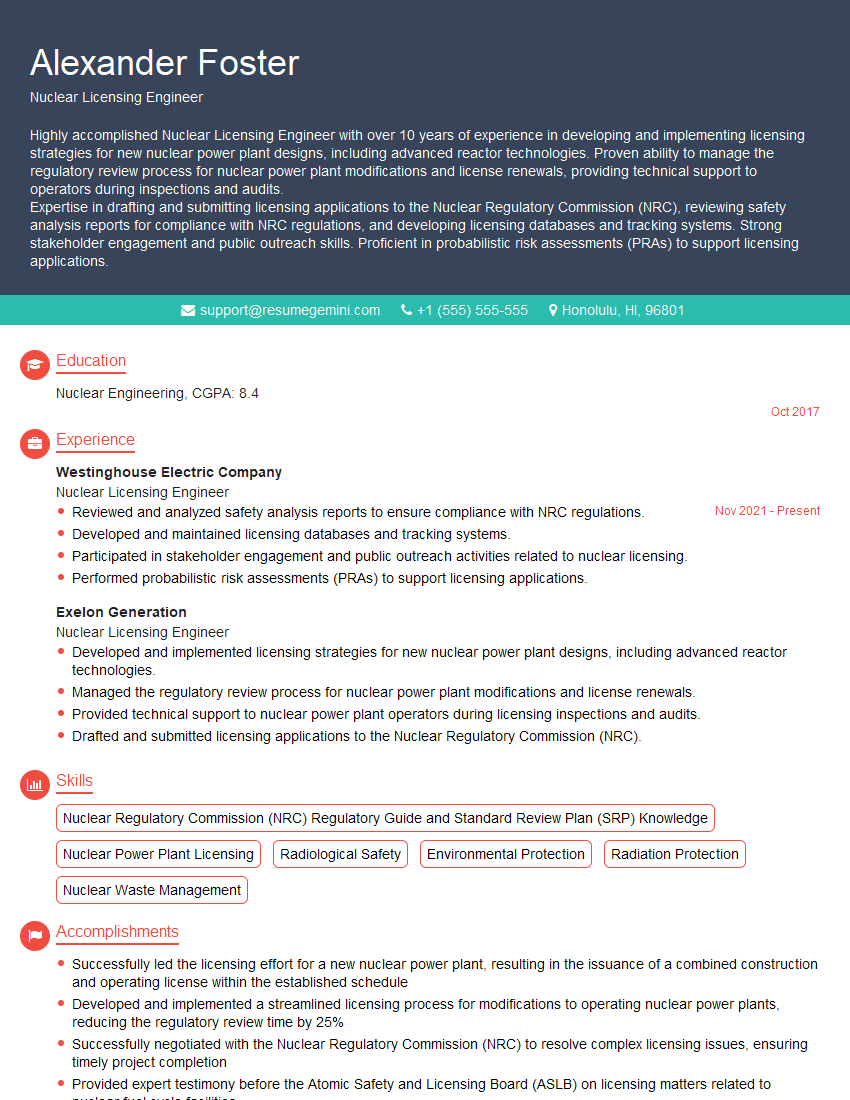
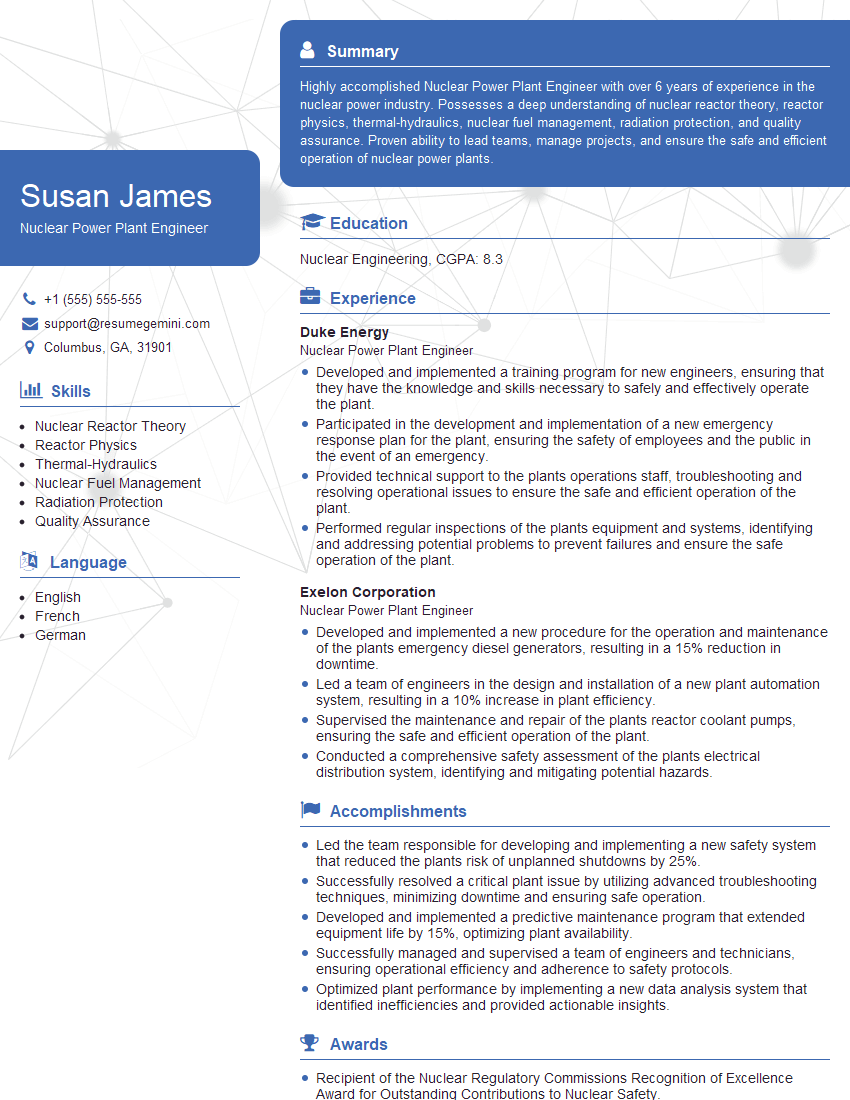
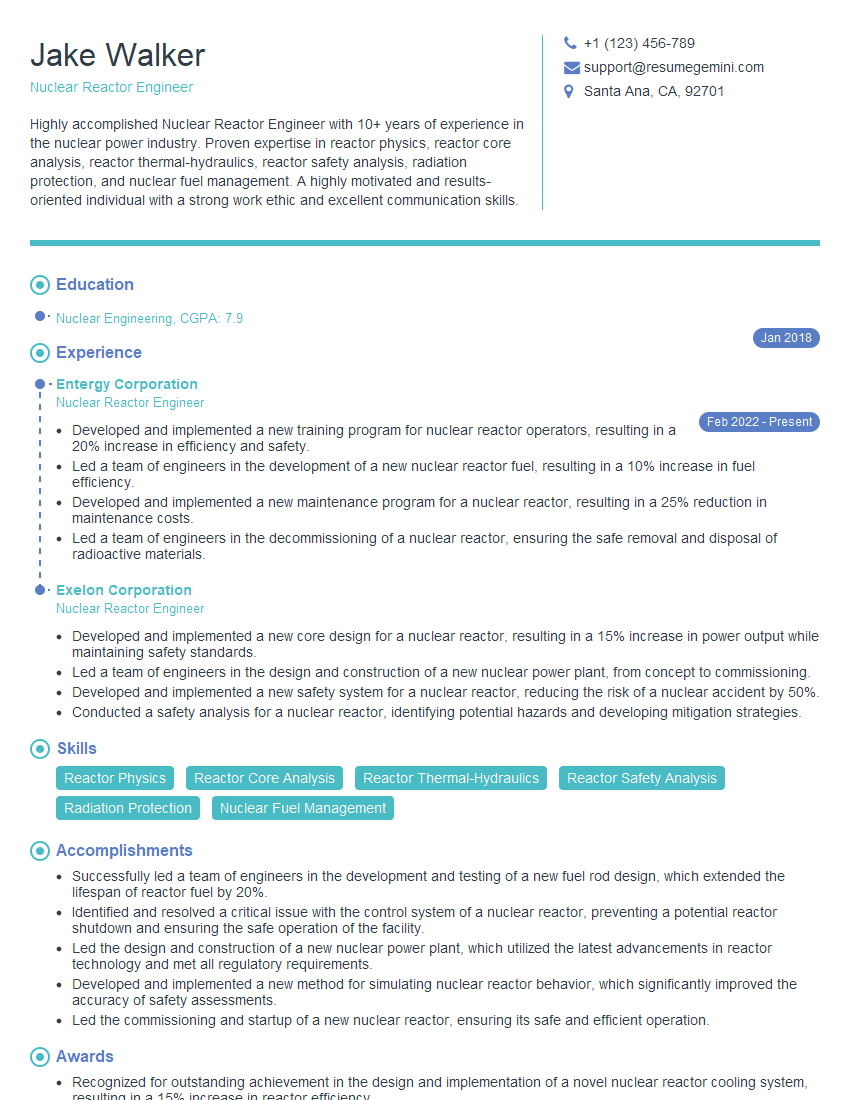
Mastering Nuclear Reactor Design and Analysis opens doors to a rewarding and impactful career, contributing to the advancement of clean energy and technological innovation. A strong resume is your key to unlocking these opportunities. Creating an ATS-friendly resume is crucial for getting your application noticed by recruiters. To significantly enhance your resume and increase your chances of landing your dream job, we highly recommend using ResumeGemini. ResumeGemini provides a streamlined process and valuable tools to help you craft a compelling narrative that showcases your skills and experience. Examples of resumes tailored to Nuclear Reactor Design and Analysis professionals are available within the ResumeGemini platform, providing inspiration and guidance.
Explore more articles
Users Rating of Our Blogs
Share Your Experience
We value your feedback! Please rate our content and share your thoughts (optional).
What Readers Say About Our Blog
Very informative content, great job.
good