Interviews are more than just a Q&A session—they’re a chance to prove your worth. This blog dives into essential Oil and Gas Facility Maintenance interview questions and expert tips to help you align your answers with what hiring managers are looking for. Start preparing to shine!
Questions Asked in Oil and Gas Facility Maintenance Interview
Q 1. Describe your experience with preventative maintenance programs.
Preventative maintenance (PM) programs are the cornerstone of reliable oil and gas facility operation. They involve systematically inspecting, lubricating, and replacing components before they fail, minimizing costly downtime and safety risks. My experience encompasses developing and implementing PM programs using computerized maintenance management systems (CMMS) like SAP PM or Maximo. This involves creating detailed work orders based on manufacturer recommendations, industry best practices, and historical data analysis. For example, I’ve developed a PM program for a large gas compressor station, scheduling lubrication, vibration analysis, and filter changes based on operating hours and environmental factors. This reduced unplanned downtime by 40% in the first year. Another example involves implementing a predictive maintenance strategy using vibration analysis to identify impending bearing failures on critical pumps, leading to proactive repairs and avoiding catastrophic equipment failures. The success of a PM program heavily relies on accurate data collection, thorough documentation, and the engagement of skilled technicians.
Q 2. Explain your troubleshooting methodology for a malfunctioning pump.
Troubleshooting a malfunctioning pump follows a systematic approach. Think of it like a detective investigating a crime scene. First, I’d ensure my own safety by following lockout/tagout procedures and assessing the immediate area for hazards. Then, I’d gather information: Is the pump completely shut down or is there reduced output? Are there any unusual noises or vibrations? Is there evidence of leakage? Next, I’d systematically check the obvious: power supply, proper lubrication, suction and discharge pressures, and valve positions. If the issue isn’t immediately apparent, I’d use a combination of diagnostic tools: pressure gauges, vibration analyzers, and thermal imaging cameras to pinpoint the problem. For instance, high vibration might indicate bearing wear, while unusual temperature readings could signal a problem with the motor windings. Finally, I’d document my findings, implement the necessary repairs, and verify the pump’s proper functionality before returning the system to operation. It’s often a process of elimination, combining practical experience with the use of diagnostic tools.
Q 3. How do you prioritize maintenance tasks in a high-pressure environment?
Prioritizing maintenance tasks in a high-pressure environment requires a risk-based approach. We use a combination of factors, including the criticality of the equipment, the potential consequences of failure, and the urgency of the repair. A framework like the Criticality-Urgency matrix is beneficial. For instance, a critical piece of equipment like a main process compressor that would cause a plant shutdown if it fails is immediately prioritized over a less critical utility system. We use CMMS software to incorporate risk assessments and automatically flag high-priority tasks. Additionally, regular safety inspections and equipment monitoring help to preemptively identify and address potential issues, minimizing the need for emergency repairs. We often employ the Pareto Principle (80/20 rule), focusing on a smaller number of critical tasks which produce the largest impact on safety and production. In high pressure situations, clear communication, collaboration, and a structured approach are key.
Q 4. What are your familiarity with various types of valves used in oil and gas facilities?
My familiarity with valves used in oil and gas facilities is extensive. I have hands-on experience with various types, including:
- Globe Valves: Used for regulating flow and shutting off pipelines. Their simple design and easy maintenance make them common in many applications.
- Gate Valves: Primarily used for on/off service, allowing for complete flow when open and almost complete shut-off when closed.
- Ball Valves: Quick-acting valves ideal for on/off service due to their simple, rotating ball mechanism. They are often preferred for their low pressure drop and compact design.
- Butterfly Valves: Similar to ball valves, they offer a quick on/off operation and are frequently used in larger diameter pipelines.
- Check Valves: Prevent reverse flow in a system and are critical for maintaining the integrity of various oil and gas processing streams.
- Safety Relief Valves (PRVs): Essential safety devices that automatically open to relieve excess pressure and prevent equipment damage or hazardous situations.
I understand the material compatibility requirements for each type of valve (e.g., carbon steel, stainless steel, special alloys) and the importance of proper selection and maintenance to ensure process safety and reliable operation.
Q 5. Describe your experience with rotating equipment maintenance (pumps, compressors, turbines).
My experience with rotating equipment maintenance (pumps, compressors, turbines) includes routine inspections, predictive maintenance techniques, and major overhauls. I’m proficient in diagnosing and repairing various issues, including bearing failures, seal leaks, and misalignment. I utilize vibration analysis, oil analysis, and thermal imaging to identify potential problems before they lead to catastrophic failure. For example, in one instance I successfully identified an impending bearing failure in a critical centrifugal pump through vibration analysis, allowing for a timely repair and preventing a costly production shutdown. I’m familiar with various types of pumps (centrifugal, positive displacement), compressors (reciprocating, centrifugal), and turbines (gas, steam), and their specific maintenance requirements. This includes understanding the importance of proper lubrication, alignment, balancing, and the use of specialized tools and equipment for disassembly, inspection, and reassembly.
Q 6. What safety protocols do you follow when performing maintenance tasks?
Safety is paramount in oil and gas maintenance. My adherence to safety protocols is unwavering. This includes:
- Permit-to-Work Systems: Following strict procedures for authorizing maintenance activities, ensuring all risks are assessed and controlled.
- Lockout/Tagout (LOTO): Implementing LOTO procedures to isolate energy sources and prevent accidental start-up during maintenance.
- Personal Protective Equipment (PPE): Consistent use of appropriate PPE, including hard hats, safety glasses, gloves, and flame-resistant clothing.
- Confined Space Entry Procedures: Following strict protocols for entering confined spaces, including atmospheric monitoring and rescue standby personnel.
- Hazard Identification and Risk Assessment (HIRA): Active participation in HIRAs to identify potential hazards and implement appropriate control measures.
- Emergency Response Plans: Familiarity with emergency response procedures and emergency shutdown systems.
I proactively identify and mitigate potential hazards before commencing any task, and always prioritize the safety of myself and my team.
Q 7. Explain your understanding of lockout/tagout procedures.
Lockout/Tagout (LOTO) procedures are critical for preventing accidental energy release during maintenance. It’s a formalized process ensuring equipment is completely de-energized and isolated before work begins. The process typically involves:
- Preparation: Identifying all energy sources (electrical, hydraulic, pneumatic, etc.) that need to be isolated.
- Notification: Informing other personnel about the planned lockout/tagout activities.
- Lockout/Tagout: Using approved lockout/tagout devices to physically isolate energy sources. Each person involved attaches their own lock and tag to clearly identify their involvement.
- Verification: Verifying that the energy source is indeed isolated and safe to work on using appropriate testing equipment (voltmeters, pressure gauges, etc.).
- Work: Performing the maintenance tasks safely and efficiently.
- Tagout Removal: Only the person who applied the lockout/tagout device removes it after verifying that the equipment is safe.
LOTO procedures are non-negotiable in the oil and gas industry, and I strictly adhere to them. Failure to do so can result in serious injuries or fatalities. Understanding the specific LOTO procedures for different equipment types is essential.
Q 8. How do you interpret and utilize P&IDs (Piping and Instrumentation Diagrams)?
P&IDs, or Piping and Instrumentation Diagrams, are the blueprints for oil and gas facilities. They’re essentially schematic drawings showing the process flow, piping systems, instrumentation, and equipment layout. Understanding them is crucial for effective maintenance.
My approach to interpreting P&IDs involves a systematic review, starting with the overall process flow. I identify key equipment, such as pumps, compressors, and heat exchangers, and trace the flow of fluids and gases through the system. I meticulously examine the instrumentation, such as valves, pressure gauges, and temperature sensors, noting their locations and functions. This detailed analysis allows me to understand the interdependencies of different components and anticipate potential issues.
For instance, if I’m tasked with maintaining a specific heat exchanger, I’d use the P&ID to identify upstream and downstream components, ensuring proper isolation procedures are followed during maintenance to avoid impacting the overall process. The diagram also helps me understand the safety systems in place, such as emergency shutdown valves (ESDs), crucial for risk mitigation during maintenance.
Utilizing P&IDs goes beyond simply reading them; it involves using them as a dynamic tool throughout the maintenance process. They’re essential for planning maintenance activities, trouble-shooting equipment malfunctions, and creating detailed work permits.
Q 9. Describe your experience with different types of welding techniques relevant to oil and gas facilities.
My experience encompasses various welding techniques crucial for oil and gas facility maintenance, each with its specific applications and safety considerations. These include:
- Shielded Metal Arc Welding (SMAW): A versatile technique suitable for various metals and field applications, especially effective in remote locations where power may be limited. I’ve used it extensively for repairs on pipelines and structural elements.
- Gas Tungsten Arc Welding (GTAW) / TIG Welding: This precision technique produces high-quality welds ideal for critical components requiring superior corrosion resistance. I’ve employed GTAW for welding stainless steel and other specialized alloys in heat exchangers and pressure vessels.
- Gas Metal Arc Welding (GMAW) / MIG Welding: A faster technique commonly used for thicker materials and large-scale projects. It’s efficient for joining carbon steel pipes in new construction and repair work.
Beyond the techniques themselves, I’m proficient in the necessary pre- and post-weld procedures, including material selection, joint preparation, weld inspection (visual and non-destructive testing), and documentation. Safety is paramount, so I always adhere to strict safety protocols, including proper personal protective equipment (PPE) and adherence to relevant industry codes and standards like ASME Section IX.
Q 10. How do you handle emergency maintenance situations?
Emergency maintenance situations demand swift, decisive action, prioritizing safety and minimizing downtime. My approach follows a structured framework:
- Assessment: Rapidly assess the situation, identifying the nature and extent of the emergency. This involves isolating the affected area if possible to prevent escalation.
- Prioritization: Determine the priority based on the potential risks, prioritizing actions to mitigate immediate safety hazards and prevent further damage. This might involve shutting down equipment or implementing emergency procedures.
- Emergency Response Team Activation: Engaging the appropriate personnel, including specialized technicians and supervisors, is crucial. Clear communication is key to ensure everyone understands their roles and responsibilities.
- Repair and Restoration: Once the immediate threat is contained, implementing temporary repairs or using workarounds to restore essential operations follows. This might involve bypasses or alternative operating procedures.
- Root Cause Analysis and Preventive Measures: After the emergency is resolved, a thorough root cause analysis is crucial to prevent similar occurrences. This involves documenting the event and identifying corrective measures to be implemented in the maintenance plan.
For example, during a pipeline leak, my immediate priority would be to isolate the affected section, call emergency response, and follow safety procedures to prevent further leak and fire hazards. Afterwards, a complete root cause analysis would be conducted to identify reasons for the failure and prevent future similar occurrences.
Q 11. What is your experience with predictive maintenance techniques?
Predictive maintenance leverages advanced technologies to anticipate equipment failures before they occur, minimizing downtime and optimizing maintenance schedules. My experience involves implementing and interpreting data from various predictive maintenance technologies:
- Vibration Analysis: Identifying wear and tear in rotating equipment (pumps, compressors) through vibration monitoring. Early detection of imbalances or bearing failures helps to prevent catastrophic breakdowns.
- Infrared Thermography: Detecting overheating components (electrical connections, motor windings) by identifying temperature anomalies. This helps prevent fires and equipment failure.
- Oil Analysis: Analyzing oil samples to detect contaminants, wear particles, and degradation in lubricants. This provides insights into the health of machinery and identifies potential problems early on.
- Acoustic Emission Monitoring: Detecting high-frequency sounds indicating leaks, cracks, or corrosion in pressure vessels and pipelines.
I’m proficient in interpreting the data collected from these techniques, using it to refine maintenance schedules, prioritize repairs, and make informed decisions about equipment replacement.
For example, identifying elevated vibration levels in a pump through vibration analysis enables proactive maintenance, such as replacing worn bearings before they cause a complete pump failure.
Q 12. Explain your knowledge of different types of corrosion and their prevention.
Corrosion is a significant threat to oil and gas facilities, leading to equipment failure and safety hazards. Understanding the various types is essential for effective prevention:
- Uniform Corrosion: Even degradation across a surface, typically caused by exposure to a uniform corrosive environment. Preventive measures include using corrosion-resistant materials or protective coatings.
- Pitting Corrosion: Localized attack resulting in small pits or holes. It’s often associated with chloride ions in water. Mitigation strategies include using corrosion inhibitors or cathodic protection.
- Crevice Corrosion: Corrosion concentrated in crevices or gaps where stagnant solutions can accumulate. Proper design to avoid stagnant areas and regular cleaning are effective preventive measures.
- Stress Corrosion Cracking (SCC): Cracking caused by the combined effect of tensile stress and a corrosive environment. Careful material selection, stress relief treatments, and controlling the environment are crucial in preventing SCC.
- Galvanic Corrosion: Corrosion resulting from the contact of two dissimilar metals in an electrolyte. Using compatible materials, electrical insulation, or cathodic protection can mitigate this type of corrosion.
My approach to corrosion prevention involves a combination of material selection, protective coatings, cathodic protection systems, and regular inspection and monitoring programs. This includes conducting regular inspections to assess the extent of corrosion and implement necessary remedial actions.
Q 13. How do you ensure compliance with environmental regulations during maintenance?
Environmental compliance is paramount in oil and gas facility maintenance. My experience includes ensuring strict adherence to all relevant local, national, and international regulations, including:
- Waste Management: Proper disposal of hazardous wastes generated during maintenance, complying with all environmental permits and guidelines. This includes using licensed waste disposal companies and ensuring proper labeling and handling of waste materials.
- Spill Prevention and Control: Implementing robust spill prevention plans and procedures, including regular inspections of containment systems, emergency response drills, and proper spill response procedures.
- Air Emissions: Controlling air emissions generated during maintenance activities, through the use of emission control equipment and ensuring compliance with air quality standards. Regular monitoring of emissions is a key part of this.
- Water Discharge: Managing water discharges to ensure compliance with water quality standards. This includes implementing water treatment systems and proper monitoring of discharge parameters.
Furthermore, I always incorporate environmental considerations into maintenance planning, ensuring that the chosen methods minimize environmental impact. Regular training on environmental regulations and best practices keeps my knowledge current and ensures our operations remain environmentally responsible.
Q 14. Describe your experience with CMMS (Computerized Maintenance Management Systems).
CMMS, or Computerized Maintenance Management Systems, are essential tools for efficient and effective maintenance management. My experience with CMMS includes utilizing systems to:
- Schedule and Track Maintenance Activities: Planning and scheduling preventative and corrective maintenance tasks, tracking work orders, and generating reports to ensure adherence to schedules.
- Manage Inventory: Tracking spare parts and consumables, optimizing inventory levels to minimize downtime and costs.
- Collect and Analyze Maintenance Data: Recording maintenance data, including work hours, material costs, and equipment downtime, allowing for analysis of maintenance effectiveness and identification of areas for improvement.
- Generate Reports: Producing customized reports on maintenance performance, equipment reliability, and costs.
My proficiency extends beyond data entry; I can configure CMMS systems to meet specific needs, customize reports, and train other personnel on their effective use. I’ve used CMMS to optimize maintenance schedules, reducing downtime and improving overall equipment effectiveness (OEE) in several projects. For example, by analyzing historical failure data from a CMMS, we were able to identify a recurring problem with a specific piece of equipment and implement corrective actions, resulting in a significant reduction in downtime.
Q 15. What are your skills in using diagnostic tools for equipment troubleshooting?
My expertise in using diagnostic tools for equipment troubleshooting spans a wide range of technologies. I’m proficient in using both handheld and computerized diagnostic devices. For example, I regularly employ vibration analyzers to detect imbalances in rotating equipment like pumps and compressors, preventing catastrophic failures. A high vibration reading might indicate bearing wear, misalignment, or resonance issues. The analyzer provides frequency spectrums, allowing me to pinpoint the problem. I also utilize infrared (IR) cameras for thermal imaging, identifying overheating components like electrical connections or leaking valves before they lead to fires or malfunctions. Think of it like having an X-ray vision for equipment; hot spots immediately highlight potential problems. Furthermore, I’m skilled in using ultrasonic leak detectors for pinpointing leaks in pressurized systems, often invisible to the naked eye, saving time and resources compared to traditional methods. Finally, I’m familiar with using data acquisition systems to monitor and analyze trends in equipment performance, allowing for proactive maintenance rather than reactive repairs. These tools, combined with my experience, allow for precise and timely diagnosis, minimizing downtime and improving operational efficiency.
Career Expert Tips:
- Ace those interviews! Prepare effectively by reviewing the Top 50 Most Common Interview Questions on ResumeGemini.
- Navigate your job search with confidence! Explore a wide range of Career Tips on ResumeGemini. Learn about common challenges and recommendations to overcome them.
- Craft the perfect resume! Master the Art of Resume Writing with ResumeGemini’s guide. Showcase your unique qualifications and achievements effectively.
- Don’t miss out on holiday savings! Build your dream resume with ResumeGemini’s ATS optimized templates.
Q 16. How familiar are you with different types of instrumentation used in oil and gas facilities?
My familiarity with instrumentation in oil and gas facilities is extensive. I have hands-on experience with a variety of instruments, including pressure transmitters, flow meters (both Coriolis and orifice plate types), level sensors (radar, ultrasonic, and hydrostatic), temperature sensors (RTDs and thermocouples), and gas analyzers. Understanding these instruments is crucial for monitoring critical process parameters and ensuring safe and efficient operation. For instance, I’ve used Coriolis flow meters to precisely measure the flow rate of liquids in pipelines, which is critical for accurate custody transfer. Similarly, I’ve utilized gas chromatographs to analyze the composition of natural gas, ensuring its quality meets pipeline specifications. In addition to these, I’m well-versed in using safety instrumented systems (SIS) which are designed to shut down the process automatically if parameters exceed their safe limits. Regular calibration and verification of these instruments are essential to maintaining their accuracy and the overall safety of the facility, something I take very seriously.
Q 17. How do you manage and track maintenance costs?
Maintenance cost management is a crucial aspect of my role. I utilize Computerized Maintenance Management Systems (CMMS) to track all maintenance activities, including parts, labor, and contractor costs. These systems provide comprehensive reporting and analysis, allowing for efficient budgeting and resource allocation. We can track trends and identify areas where cost savings can be implemented. For example, by analyzing historical data on equipment failures, we can identify potential improvements in preventive maintenance scheduling, reducing the frequency of costly emergency repairs. Moreover, I implement strategies like preventive maintenance programs to prevent costly breakdowns and extend the lifespan of equipment, significantly reducing long-term costs. This includes developing a detailed preventive maintenance schedule, training maintenance personnel, and procuring high-quality parts. We also actively pursue cost-effective procurement strategies for parts and services, negotiating favorable contracts with suppliers.
Q 18. Describe your experience with pressure testing and leak detection.
Pressure testing and leak detection are integral parts of ensuring the integrity of oil and gas facilities. I have extensive experience performing various types of pressure tests, including hydrostatic testing, pneumatic testing, and leak detection using both traditional soap-bubble methods and advanced ultrasonic leak detection systems. Hydrostatic testing involves filling a system with water under pressure to detect leaks; pneumatic testing uses compressed air. A particular challenge I tackled involved a complex pipeline network where traditional methods were proving insufficient. We deployed advanced acoustic leak detection technology, which enabled us to pinpoint the location of a small leak within a large pipeline segment, significantly reducing repair time and preventing environmental damage. I always follow strict safety protocols during these operations, ensuring proper permits, isolation procedures, and safety equipment use. Proper documentation is crucial, maintaining thorough records for both preventative maintenance and regulatory compliance purposes.
Q 19. Explain your understanding of regulatory compliance in oil and gas maintenance.
Regulatory compliance is paramount in the oil and gas industry. I possess a deep understanding of relevant regulations, including OSHA (Occupational Safety and Health Administration), EPA (Environmental Protection Agency), and specific state regulations, and I ensure all maintenance activities adhere strictly to these guidelines. This includes maintaining detailed records of inspections, repairs, and safety training. We conduct regular safety audits and implement corrective actions to address any identified deficiencies. For example, I’ve been directly involved in implementing the necessary changes to ensure that our facility meets the stringent requirements for preventing accidental releases of hazardous substances. This often involves implementing robust risk assessment processes and implementing preventative measures to mitigate potential environmental and safety issues. Staying updated on regulatory changes is critical, and continuous training ensures compliance and safe operations.
Q 20. What experience do you have with hydraulic and pneumatic systems?
I have considerable experience working with both hydraulic and pneumatic systems, common in oil and gas facilities. Hydraulic systems utilize pressurized liquids to transmit power, while pneumatic systems use compressed air. I understand the principles of fluid mechanics and pressure control related to both. I’ve worked on troubleshooting problems in hydraulic systems like pumps, valves, and actuators, and performed maintenance on pneumatic systems such as air compressors, air dryers, and pneumatic instruments. For instance, I’ve diagnosed and repaired a malfunctioning hydraulic control system on a drilling rig, effectively restoring the rig’s operational capabilities. This involved understanding the hydraulic schematics, identifying the faulty component, and replacing it while adhering to rigorous safety protocols. Understanding the differences and potential problems in each system – such as leaks, contamination, and pressure fluctuations – is crucial for efficient and safe operation.
Q 21. Describe your familiarity with various types of bearings and their maintenance.
My knowledge of bearings and their maintenance is quite extensive. I’m familiar with various bearing types, including ball bearings, roller bearings (cylindrical, tapered, spherical), and journal bearings. Each has its specific applications and maintenance requirements. For example, ball bearings are common in high-speed applications, while roller bearings are better suited for heavier loads. I can assess bearing condition using vibration analysis, temperature monitoring, and visual inspection. When replacing bearings, I follow strict procedures, ensuring proper alignment and lubrication to prevent premature failure. I’ve handled situations where bearing failures threatened significant downtime. In one instance, the timely detection of bearing wear on a critical pump using vibration analysis and subsequent proactive replacement averted a major production interruption and costly emergency repair. Proper lubrication is critical; selecting the right lubricant and adhering to the manufacturer’s recommendations extends bearing life and operational efficiency.
Q 22. How do you handle conflicting priorities during maintenance scheduling?
Conflicting priorities in maintenance scheduling are a common challenge. We address this using a prioritized scheduling system that considers several factors. First, we categorize maintenance tasks based on urgency and criticality – emergency repairs take precedence over routine maintenance. A criticality matrix, often using a combination of risk assessment and potential impact on production, helps us establish this hierarchy. Second, we utilize a robust CMMS (Computerized Maintenance Management System) which allows us to input all planned and unplanned work orders, assigning priorities based on pre-defined criteria. This system also factors in resource availability – personnel, equipment, and spare parts. Finally, we employ regular scheduling meetings with key stakeholders (operations, engineering, safety) to discuss and adjust the schedule as needed, resolving conflicts through open communication and collaborative decision-making. For example, if a routine inspection conflicts with a planned shutdown for a major repair, we would prioritize the major repair and reschedule the inspection to minimize production downtime. The CMMS provides visual dashboards to monitor progress, resource allocation and any potential scheduling conflicts, enabling proactive problem solving.
Q 23. What is your understanding of root cause analysis in maintenance?
Root Cause Analysis (RCA) is crucial for effective maintenance. It’s more than just fixing a symptom; it’s about identifying the underlying reason for a failure to prevent recurrence. We typically use a structured approach like the ‘5 Whys’ technique to systematically drill down to the root cause. Let’s say a pump fails. The first ‘why’ might be ‘because it overheated’. The second ‘why’ might be ‘because the cooling system malfunctioned’. We continue this process until we identify the fundamental cause, such as a faulty sensor leading to inadequate cooling. Other methods we employ include Fault Tree Analysis (FTA) and Fishbone diagrams (Ishikawa diagrams). These provide a visual representation of potential causes and their interrelationships, aiding in a more thorough investigation. The outcome of the RCA is documented in a detailed report, including corrective actions to prevent future occurrences, and this information feeds directly into our preventative maintenance program to improve reliability and reduce downtime.
Q 24. How do you ensure proper documentation of maintenance activities?
Proper documentation is the cornerstone of effective maintenance. We utilize a CMMS to meticulously record all maintenance activities. This includes work orders, which detail the task, assigned personnel, parts used, start and completion times, and any associated costs. All inspections, repairs, and preventative maintenance tasks are recorded with relevant details such as readings from instruments, observations made, and photographs or videos. The CMMS also maintains a comprehensive inventory of spare parts, tracking their usage and facilitating timely procurement. Furthermore, we adhere to strict safety procedures, ensuring that all maintenance work is documented in compliance with industry standards and regulatory requirements. This detailed record-keeping allows us to track maintenance history, identify trends, and optimize future maintenance strategies. It also aids in auditing, regulatory compliance, and insurance claims if needed.
Q 25. Explain your experience with different types of seals and gaskets.
My experience encompasses a wide range of seals and gaskets, each chosen based on specific application requirements. For high-pressure, high-temperature applications, we often use metallic gaskets like spiral-wound gaskets or ring-joint gaskets, providing excellent sealing capabilities under harsh conditions. For lower-pressure applications, elastomeric gaskets, such as those made from nitrile rubber (NBR) or Viton, offer good flexibility and chemical resistance. Selection criteria involve factors like operating temperature and pressure, the compatibility of the seal material with the fluids being handled, and the surface finish of the flanges. We also consider the life expectancy and ease of replacement. For example, in a refinery setting, we might use graphite gaskets for their corrosion resistance and chemical inertness, while in a gas pipeline, a specific type of elastomer might be preferred for its resistance to hydrocarbon gases. Regular inspections and timely replacement are crucial to prevent leaks and maintain operational safety.
Q 26. What is your experience with pipeline maintenance and integrity management?
My experience in pipeline maintenance and integrity management includes a wide range of activities, from routine inspections using techniques like in-line inspection (ILI) tools, to managing repairs and replacements of damaged sections. ILI technology allows for non-destructive assessment of internal pipeline condition, identifying corrosion, cracks, or other defects. We also perform regular above-ground inspections, looking for signs of external corrosion, third-party damage, or soil movement. Integrity management also encompasses leak detection systems and cathodic protection to mitigate corrosion. When critical defects are identified, we employ appropriate repair techniques, ranging from simple patching to complex excavation and replacement of pipe sections. Risk assessment plays a major role, ensuring that repairs and maintenance are prioritized based on the severity of potential consequences. This comprehensive approach aims to maintain the pipeline’s integrity, ensuring safe and reliable operation.
Q 27. Describe your experience with working at height and confined space entry.
Working at height and in confined spaces are integral parts of oil and gas facility maintenance, demanding strict adherence to safety procedures. Before any work commences, a thorough risk assessment is conducted, identifying potential hazards and implementing control measures. For work at height, this includes using appropriate fall protection equipment like harnesses, lifelines, and anchor points. Detailed training is mandatory for all personnel involved. In confined spaces, entry permits are required, outlining the hazards, safety precautions, and the presence of emergency response teams. Atmospheric monitoring is crucial to ensure the air is safe for entry, and respiratory protection is often necessary. Communication systems are vital in both situations, ensuring continuous contact between workers inside the confined space or at height and the support team on the ground. Regular safety briefings and drills reinforce safe working practices and enhance preparedness for emergencies.
Q 28. How do you stay updated with the latest advancements in oil and gas maintenance technologies?
Staying updated is critical in this rapidly evolving industry. I actively participate in industry conferences and workshops, attending seminars and training sessions on new technologies and best practices. I subscribe to industry journals and online resources, keeping abreast of the latest research and advancements. Professional organizations like SPE (Society of Petroleum Engineers) offer invaluable resources and networking opportunities. I also actively engage in online learning platforms, completing relevant courses to enhance my skills in areas such as predictive maintenance, advanced data analytics, and the use of new sensor technologies. Keeping abreast of regulatory changes and updates to industry codes is also an important part of this process, ensuring that our maintenance practices remain compliant and safe.
Key Topics to Learn for Oil and Gas Facility Maintenance Interview
- Safety Procedures and Regulations: Understanding and applying relevant safety protocols, including lockout/tagout procedures, hazard identification, and risk assessment. Practical application includes describing your experience with incident reporting and near-miss analysis.
- Preventive Maintenance (PM) Strategies: Developing and implementing effective PM schedules, including understanding predictive maintenance techniques and using CMMS software. This includes explaining your experience in optimizing maintenance routines and reducing downtime.
- Troubleshooting and Diagnostics: Identifying and resolving equipment malfunctions, utilizing diagnostic tools and interpreting data to pinpoint root causes. Practical application could involve describing a complex equipment failure you successfully resolved.
- Equipment Specific Knowledge: Demonstrating a strong understanding of the operation and maintenance of specific equipment types common in oil and gas facilities (e.g., pumps, compressors, pipelines, valves). This includes detailing your expertise in specific equipment brands or technologies.
- Corrosion Control and Mitigation: Understanding the causes and effects of corrosion and implementing strategies for prevention and remediation. This would involve showcasing your knowledge of different corrosion protection methods.
- Regulatory Compliance: Familiarity with relevant environmental regulations and industry standards (e.g., API, OSHA). Practical application includes outlining your experience ensuring compliance with environmental regulations.
- Data Analysis and Reporting: Collecting, analyzing, and interpreting maintenance data to identify trends, predict future failures, and optimize maintenance strategies. This involves showcasing skills in using data analysis software or tools for maintenance optimization.
Next Steps
Mastering Oil and Gas Facility Maintenance opens doors to a rewarding and continuously evolving career path, offering opportunities for advancement and specialization. To maximize your job prospects, a well-crafted, ATS-friendly resume is crucial. ResumeGemini is a trusted resource that can help you build a professional and impactful resume that showcases your skills and experience effectively. Examples of resumes tailored specifically to Oil and Gas Facility Maintenance are available to guide you. Take the next step towards your dream career by leveraging ResumeGemini’s resources today.
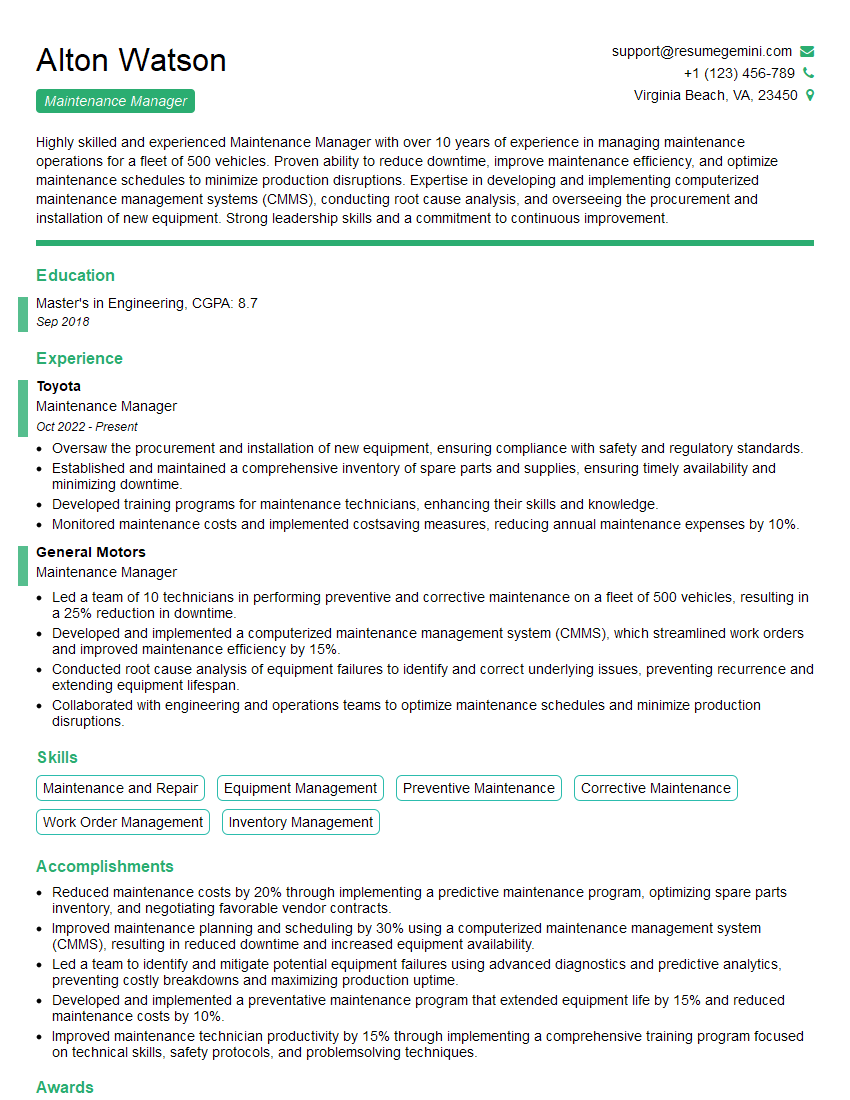
Maintenance Manager Resume Sample
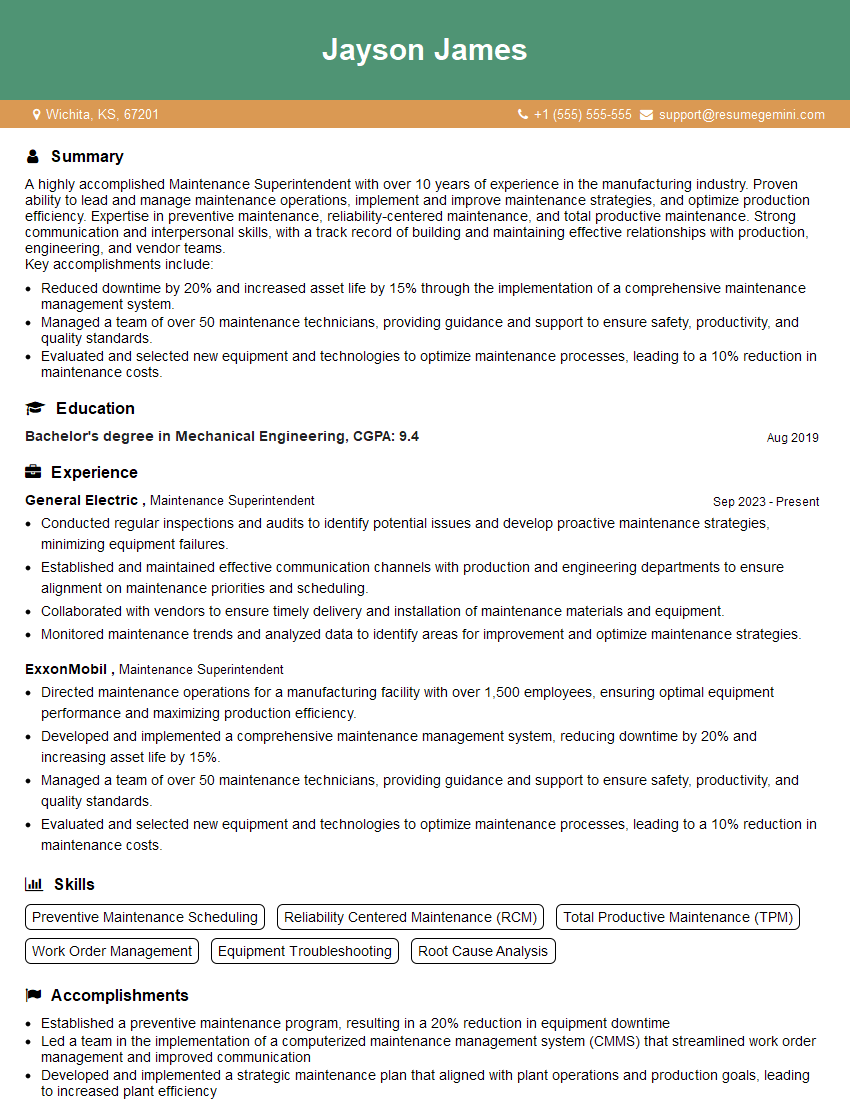
Maintenance Superintendent Resume Sample
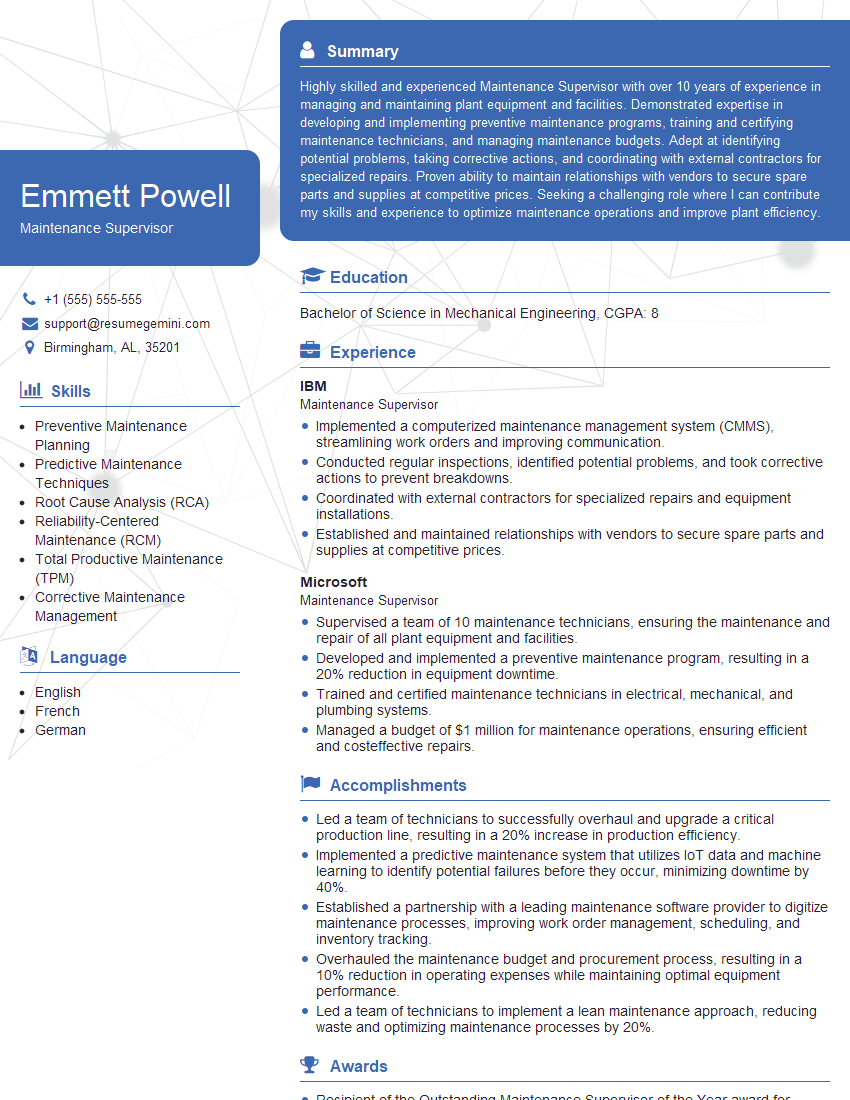
Maintenance Supervisor Resume Sample
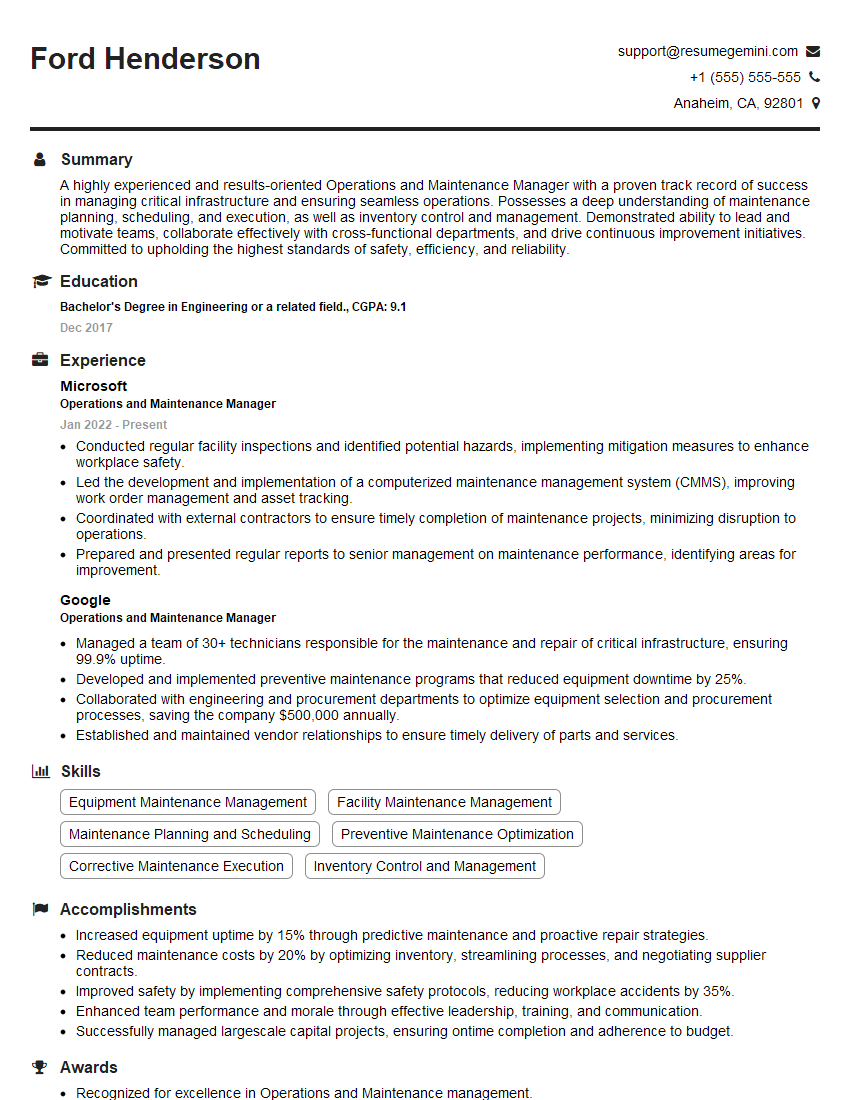
Operations and Maintenance Manager Resume Sample
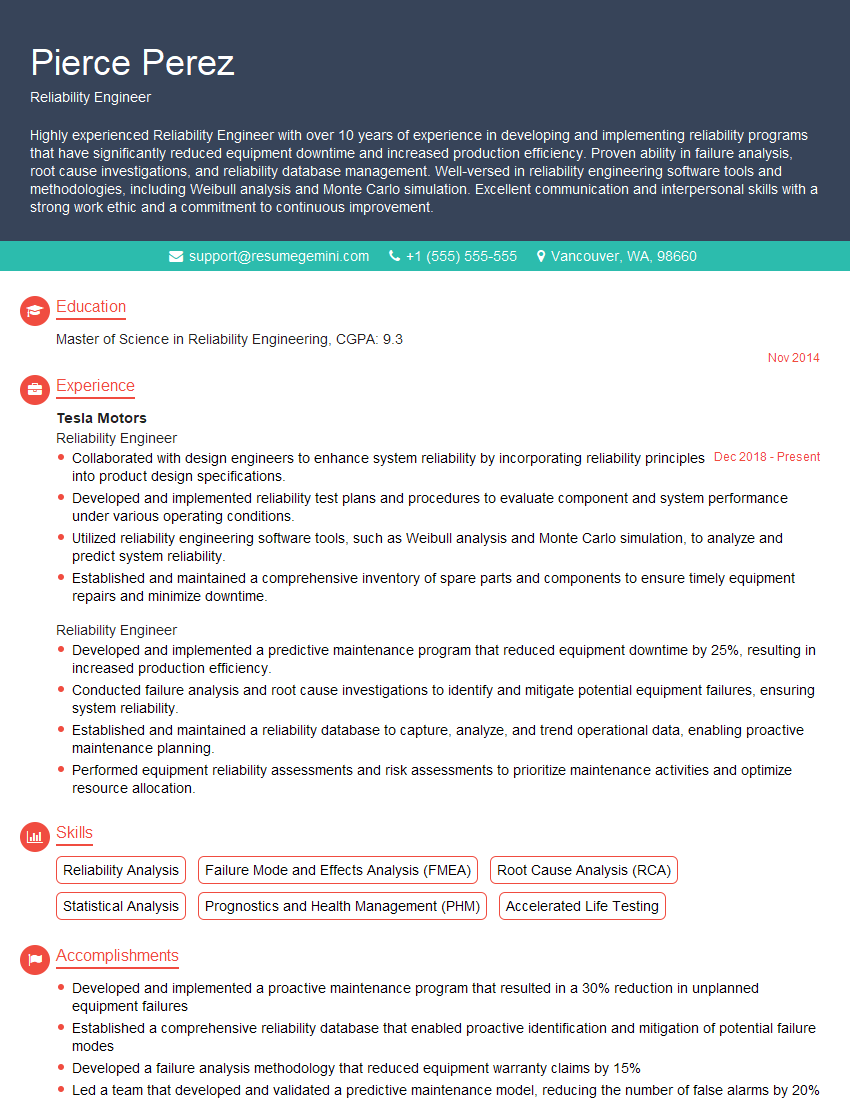
Reliability Engineer Resume Sample
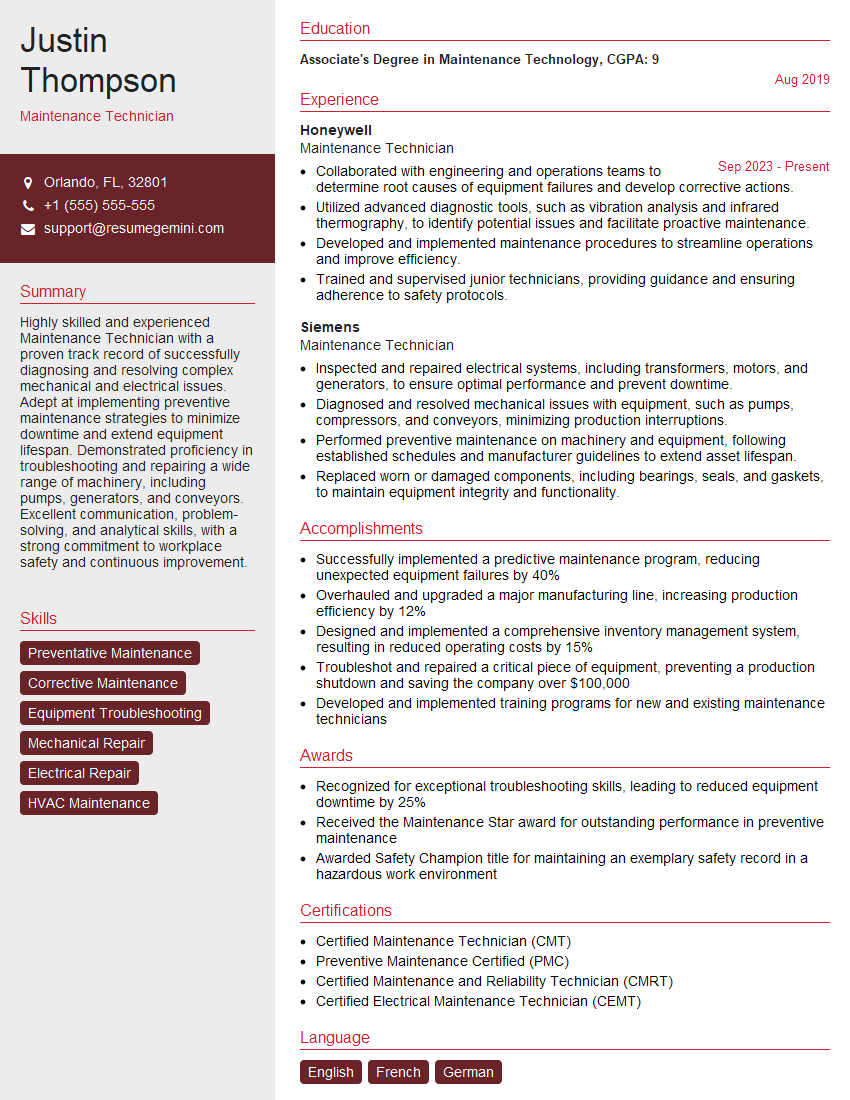
Maintenance Technician Resume Sample
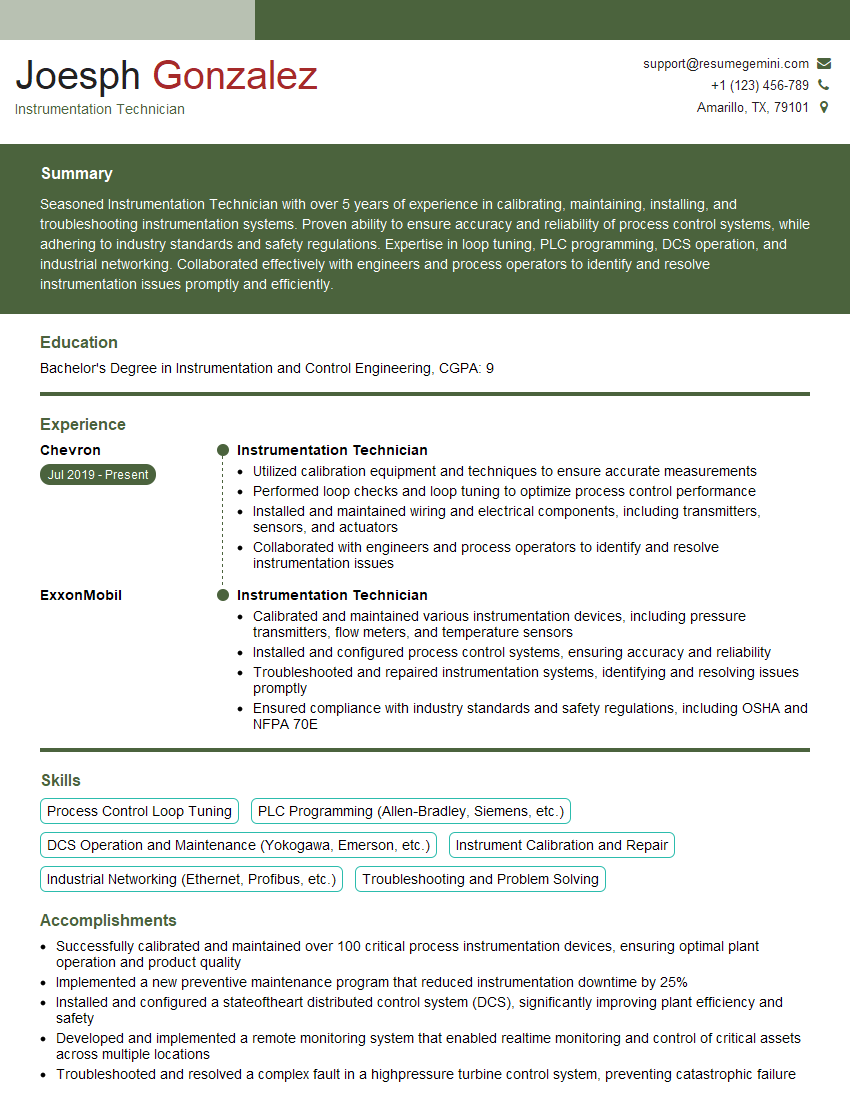
Instrumentation Technician Resume Sample
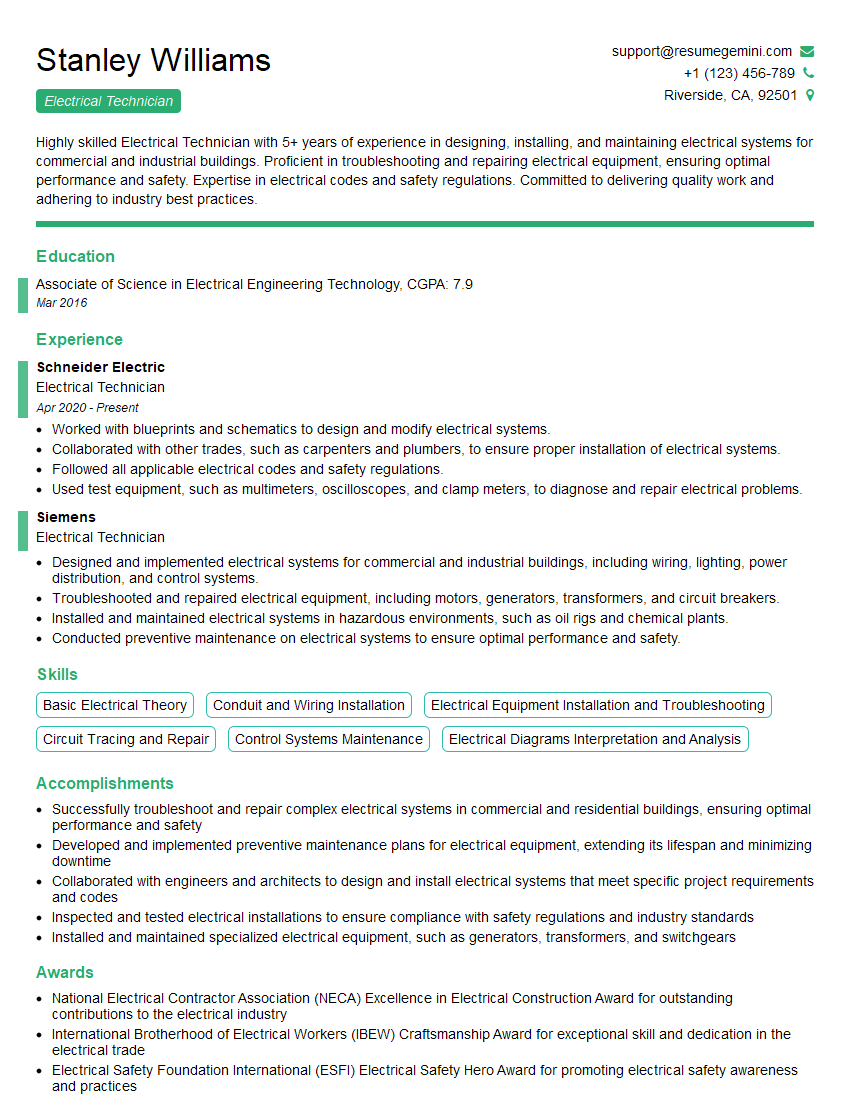
Electrical Technician Resume Sample
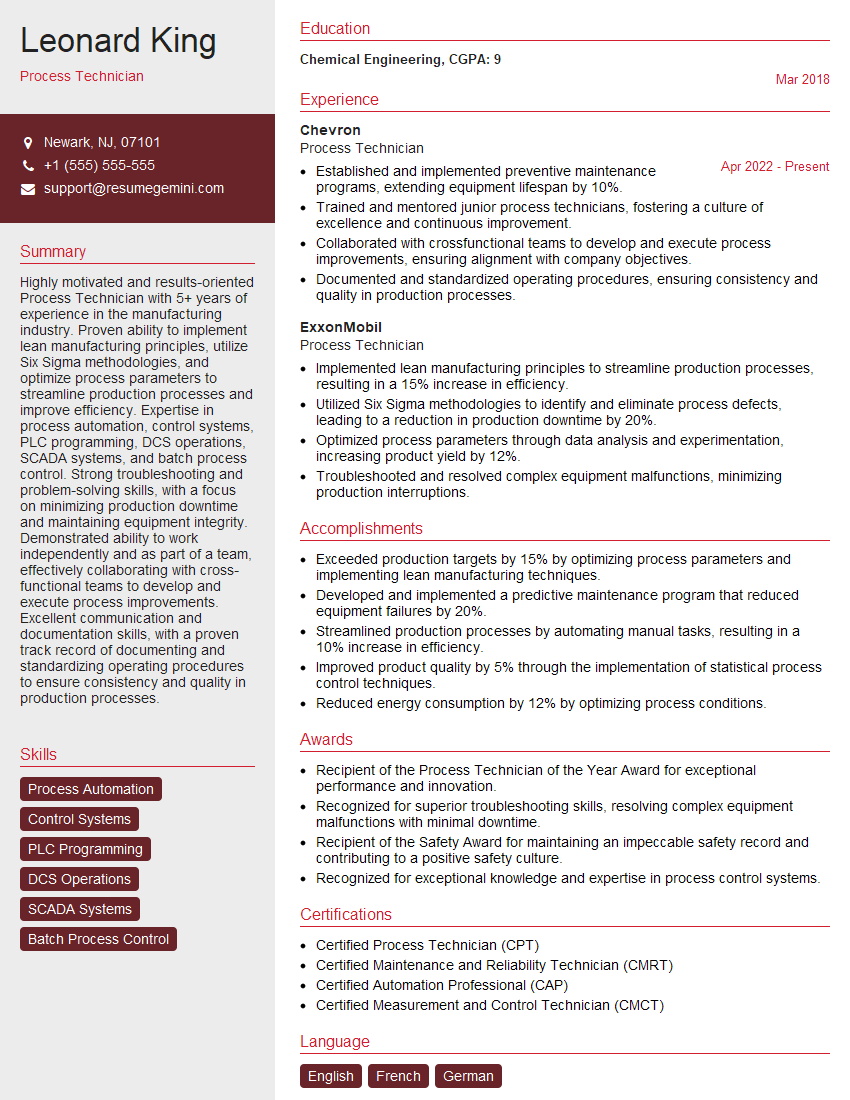
Process Technician Resume Sample
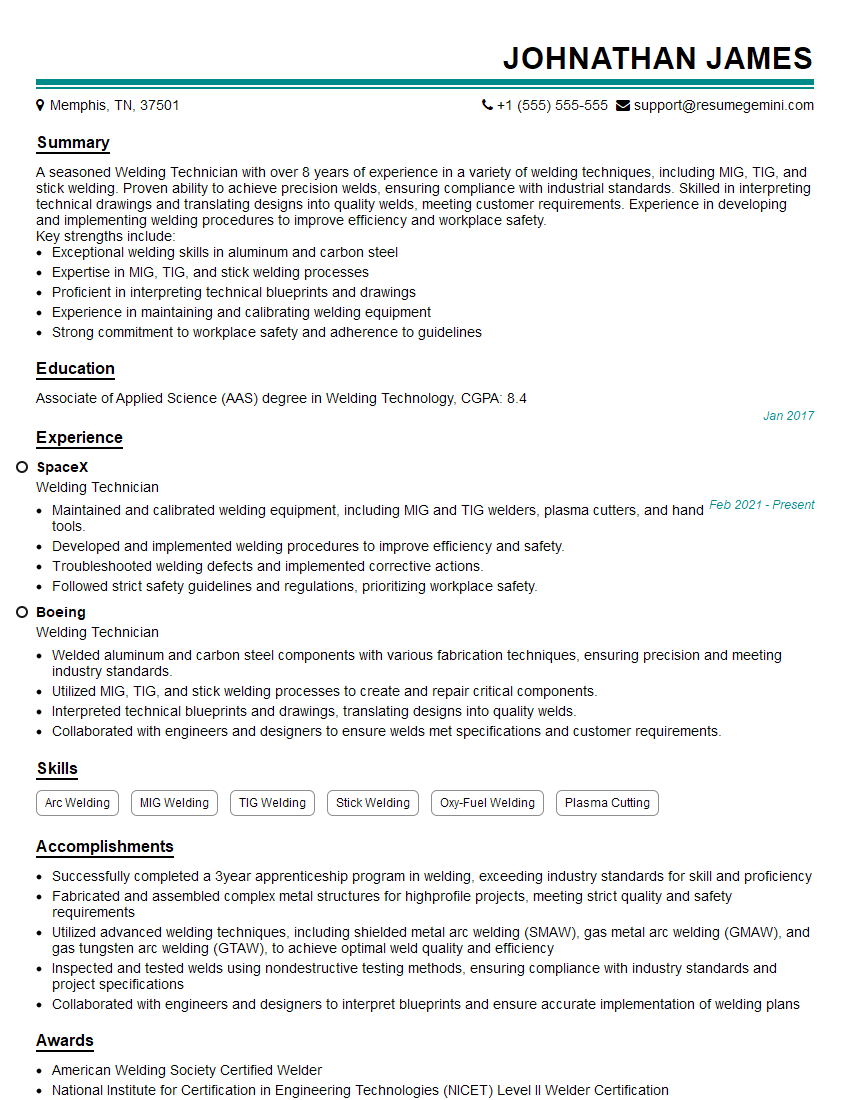
Welding Technician Resume Sample
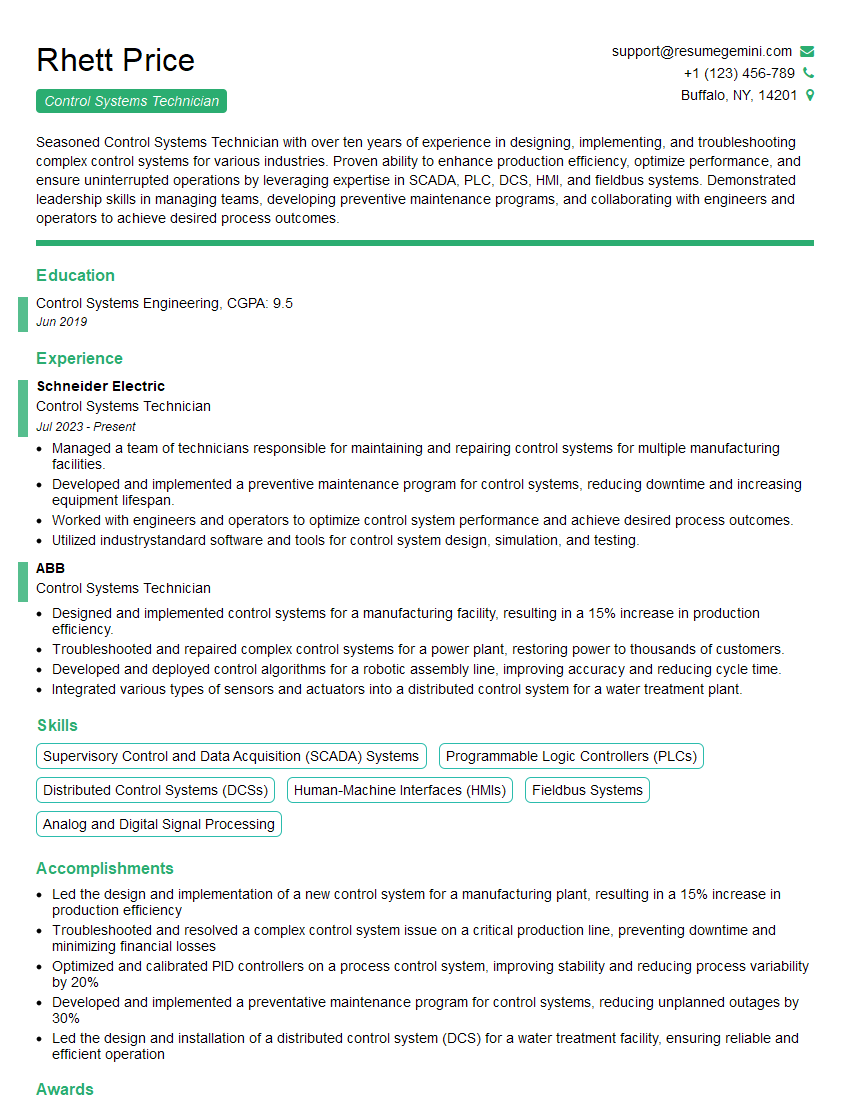
Control Systems Technician Resume Sample
Explore more articles
Users Rating of Our Blogs
Share Your Experience
We value your feedback! Please rate our content and share your thoughts (optional).
What Readers Say About Our Blog
Very informative content, great job.
good