Cracking a skill-specific interview, like one for Oil and Gas Production Principles, requires understanding the nuances of the role. In this blog, we present the questions you’re most likely to encounter, along with insights into how to answer them effectively. Let’s ensure you’re ready to make a strong impression.
Questions Asked in Oil and Gas Production Principles Interview
Q 1. Explain the concept of reservoir pressure and its impact on production.
Reservoir pressure is the pressure exerted by the fluids (oil, gas, and water) within a reservoir rock. Think of it as the natural ‘push’ that drives hydrocarbons towards the wellbore. This pressure is crucial for production because it’s the primary driving force behind the flow of oil and gas to the surface. As we extract hydrocarbons, the reservoir pressure naturally declines. This pressure depletion impacts production rates, making it increasingly difficult to extract fluids over time.
For example, a high initial reservoir pressure indicates a strong driving force, leading to high initial production rates. As the reservoir pressure declines due to production, the production rate decreases accordingly. This pressure decline can be mitigated through various techniques like water injection or gas injection, which help maintain reservoir pressure and prolong the life of the producing well.
Q 2. Describe different artificial lift methods and their applications.
Artificial lift methods are employed when the natural reservoir pressure is insufficient to bring hydrocarbons to the surface at an economical rate. Several methods exist, each with its specific applications:
- Rod Pumps: These are among the most widely used artificial lift methods, particularly in relatively shallow, low-flow-rate wells. They use a subsurface pump driven by a surface-mounted pumping unit, resembling a nodding donkey. They’re reliable but can be less efficient in high-volume or high-viscosity situations.
- ESP (Electric Submersible Pumps): ESPs are submersible pumps powered by electricity. They are more efficient than rod pumps, especially for higher flow rates and deeper wells. However, they’re more complex and costly to install and maintain, susceptible to power outages, and require specialized expertise.
- Gas Lift: This method involves injecting gas into the wellbore to reduce the hydrostatic pressure and increase the flow of hydrocarbons. It’s effective in high-volume, high-pressure wells but requires a reliable source of gas and careful management to avoid gas channeling.
- Hydraulic Lift: Similar to gas lift, hydraulic lift uses a high-pressure liquid (usually water) to reduce pressure and lift fluids to the surface. It’s particularly useful in wells with high viscosity fluids or where gas lift isn’t feasible.
The selection of an artificial lift method depends on several factors, including well depth, production rate, fluid properties, reservoir pressure, cost considerations, and available infrastructure.
Q 3. What are the key factors affecting well productivity?
Well productivity, meaning the rate at which a well produces hydrocarbons, is influenced by several key factors:
- Reservoir Properties: Permeability (the ability of the rock to allow fluids to flow), porosity (the amount of pore space in the rock), and fluid saturation (the amount of oil, gas, and water in the pores) all directly impact how easily hydrocarbons can move toward the well.
- Wellbore Conditions: The diameter of the wellbore, the presence of any restrictions (e.g., scale deposits), and the efficiency of the completion (the arrangement of perforations and casing) significantly affect flow.
- Fluid Properties: The viscosity of the oil and gas, the presence of water, and the gas-oil ratio all affect the flow characteristics.
- Reservoir Pressure: As previously discussed, a higher reservoir pressure facilitates greater production rates.
- Formation Damage: Damage to the reservoir rock near the wellbore, often caused by drilling or completion procedures, can drastically reduce productivity. This is often managed by stimulation processes.
Optimizing well productivity involves careful consideration and management of these interdependent factors. For example, stimulation techniques like hydraulic fracturing can increase permeability and improve well productivity by creating artificial fractures in the reservoir rock.
Q 4. Explain the principles of fluid flow in porous media.
Fluid flow in porous media, like reservoir rocks, is governed by Darcy’s Law, a fundamental principle in reservoir engineering. It states that the flow rate of a fluid through a porous medium is proportional to the pressure gradient and the permeability of the rock, and inversely proportional to the fluid viscosity. Imagine water flowing through a sponge; a more porous and permeable sponge will allow the water to flow more easily. Similarly, a higher pressure difference (gradient) between two points will increase the flow rate.
Mathematically, Darcy’s Law is expressed as:
q = -kA(dP/dL) / μwhere:
qis the flow ratekis the permeabilityAis the cross-sectional areadP/dLis the pressure gradientμis the fluid viscosity
Understanding Darcy’s Law is crucial for predicting and managing hydrocarbon flow in reservoirs, designing well completions, and simulating reservoir behavior.
Q 5. How do you calculate the productivity index of a well?
The productivity index (PI) is a measure of a well’s ability to produce hydrocarbons at a given pressure drawdown. It represents the flow rate per unit of pressure drop. A higher PI indicates a more productive well. The PI is calculated using the following formula:
PI = q / (Pres - Pwf)where:
PIis the productivity indexqis the flow rate (e.g., barrels of oil per day)Presis the reservoir pressurePwfis the wellbore pressure
For example, if a well produces 1000 barrels of oil per day (q) with a reservoir pressure of 3000 psi (Pres) and a wellbore pressure of 2000 psi (Pwf), the PI would be 1000/(3000-2000) = 1 bbl/day/psi. This calculation helps estimate how much the production rate will change with changes in the wellbore pressure.
Q 6. Describe different types of well testing and their objectives.
Well testing is a crucial part of reservoir characterization and well performance evaluation. Various types of well testing are employed, each serving a specific purpose:
- Pressure Buildup Tests (PBU): These tests involve shutting in a producing well and measuring the pressure increase over time. The data is used to determine reservoir properties such as permeability, porosity, and skin factor (a measure of near-wellbore damage or stimulation).
- Pressure Drawdown Tests: These are conducted by producing a well at a constant rate and monitoring the pressure decrease. They help evaluate reservoir productivity and identify potential formation damage.
- Injection Tests: These involve injecting water or gas into the wellbore to assess reservoir injectivity and examine potential pathways of fluid flow in the reservoir. This is crucial for waterflooding and gas injection projects.
- Interference Tests: These tests monitor pressure changes in one well in response to production or injection in a nearby well. This technique helps to understand reservoir connectivity and fluid flow patterns between wells.
The objectives of well testing are to determine reservoir properties, assess well performance, optimize production strategies, and identify potential problems such as formation damage or water coning. The data obtained from well tests is essential for accurate reservoir modeling and efficient field development.
Q 7. What are the challenges associated with water and gas coning?
Water and gas coning are significant challenges in oil and gas production. Coning refers to the upward movement of water or gas toward the wellbore, reducing the oil production rate and potentially leading to wellbore damage.
- Water Coning: Occurs when the pressure gradient near the wellbore causes water from below the oil zone to move upward and enter the wellbore. This reduces the oil-water ratio and the overall production of oil.
- Gas Coning: Occurs when gas from the underlying gas cap moves upward toward the wellbore, contaminating oil production and creating additional operational challenges.
These phenomena are influenced by several factors including reservoir geometry, permeability distribution, fluid densities, and production rates. Mitigation strategies include optimizing production rates, employing selective completion techniques to isolate water or gas zones, and using water or gas injection to modify the pressure gradient and prevent coning.
The challenges associated with water and gas coning are significant because they reduce well productivity, increase operational costs, and potentially lead to premature well abandonment. Careful reservoir management and well design are vital to mitigate these challenges.
Q 8. Explain the concept of reservoir simulation and its applications.
Reservoir simulation is a powerful tool in the oil and gas industry that uses mathematical models to predict the behavior of a reservoir under various operating conditions. Think of it as a sophisticated virtual replica of your underground oil field. It incorporates data from geological surveys, well tests, and production history to create a three-dimensional representation of the reservoir’s properties, such as porosity, permeability, and fluid saturation. These models then simulate the flow of oil, gas, and water within the reservoir in response to different production strategies, like varying well rates or implementing enhanced oil recovery techniques.
Applications are vast. Reservoir simulation helps optimize production strategies by predicting future performance and identifying potential bottlenecks. For example, it can help determine the optimal placement of new wells, predict the impact of waterflooding, or evaluate the economic viability of different EOR methods. Companies use simulation results to make informed decisions about capital investment, field development plans, and ultimately, maximizing hydrocarbon recovery.
Imagine trying to manage a massive underground sponge filled with oil without a simulation! You’d be flying blind. Simulation provides the crucial insight needed to effectively manage these complex systems.
Q 9. How do you optimize production from a mature reservoir?
Optimizing production from a mature reservoir, where the easy-to-recover oil is already gone, requires a multi-faceted approach. The key is to understand what’s limiting production and address those limitations strategically.
- Improved Water Management: Mature reservoirs often suffer from water coning or excessive water production. Optimizing water injection strategies, including smart water injection techniques, can help maintain reservoir pressure and improve sweep efficiency.
- Enhanced Oil Recovery (EOR): Implementing EOR techniques like polymer flooding, chemical flooding, or thermal recovery can significantly boost oil recovery. The choice depends on reservoir characteristics and economic considerations.
- Well Intervention: Interventions such as acidizing, fracturing, or re-perforating existing wells can improve well productivity by increasing permeability and improving connectivity to oil-bearing zones.
- Data Analytics: Analyzing historical production data, using advanced analytics to identify patterns and predict future performance, is crucial for making informed decisions.
- Reservoir Monitoring: Continuous monitoring of reservoir pressure, temperature, and fluid composition is essential to track the effectiveness of implemented strategies and make necessary adjustments.
For example, a mature reservoir might show declining production due to water coning. By strategically injecting water further away from the producing wells, we can improve the sweep efficiency and delay the onset of excessive water production, thus prolonging the productive life of the reservoir.
Q 10. Describe different methods for enhanced oil recovery (EOR).
Enhanced Oil Recovery (EOR) encompasses a range of techniques aimed at increasing the amount of oil that can be extracted from a reservoir beyond what’s achievable with primary and secondary recovery methods. These methods primarily focus on improving the mobility of oil and displacing it towards the production wells.
- Thermal Recovery: This involves injecting heat into the reservoir to reduce oil viscosity, making it easier to flow. Methods include steam injection, in-situ combustion, and cyclic steam stimulation.
- Chemical Flooding: This involves injecting chemicals into the reservoir to alter the properties of the oil or the formation, improving oil displacement efficiency. Examples include polymer flooding (improving sweep efficiency), surfactant flooding (reducing interfacial tension between oil and water), and alkaline flooding (lowering interfacial tension and altering wettability).
- Gas Injection: Injecting gas (like nitrogen or CO2) into the reservoir can improve oil mobility by expanding the reservoir and reducing oil viscosity. Miscible gas flooding, where the injected gas dissolves in the oil, is particularly effective.
The selection of an appropriate EOR method depends on factors such as reservoir characteristics (temperature, pressure, oil viscosity, rock type), oil price, and economic feasibility. Each method has its own advantages and disadvantages, and a thorough reservoir simulation is often needed to evaluate its effectiveness and optimize its implementation.
Q 11. What are the key components of a production facility?
A production facility is the onshore or offshore infrastructure responsible for processing the hydrocarbons produced from a reservoir. Its complexity varies drastically depending on the type of reservoir and production volume.
- Wellheads: These are the surface equipment that control the flow of hydrocarbons from the wellbore.
- Flowlines: Pipelines that transport the produced fluids from the wellheads to the processing facilities.
- Separation Equipment: Separators (three-phase, two-phase) separate the produced fluids (oil, gas, and water).
- Processing Units: Depending on the nature of the produced fluids, this could include dehydration units (removing water from gas), gas sweetening units (removing H2S and CO2), and stabilization units (removing volatile components from oil).
- Storage Tanks: Store processed oil and gas before transportation to refineries or customers.
- Utilities: Power generation, water treatment, and other supporting facilities.
- Instrumentation and Control Systems: Monitor and control the entire production process.
Imagine a production facility as a giant kitchen processing the ‘ingredients’ (oil and gas) extracted from the reservoir. Each component plays a crucial role in ensuring safe and efficient processing and transportation.
Q 12. Explain the importance of pressure maintenance in a reservoir.
Pressure maintenance in a reservoir is crucial for maximizing hydrocarbon recovery and maintaining efficient production. As oil and gas are produced, the reservoir pressure declines, leading to reduced driving forces for fluid flow and potentially causing premature water or gas coning.
Maintaining reservoir pressure helps:
- Improve Sweep Efficiency: A higher reservoir pressure ensures that the injected fluids (water or gas) can effectively sweep through the reservoir and displace the oil towards the production wells.
- Enhance Oil Mobility: Pressure maintenance reduces the viscosity of the oil, making it easier to flow towards the producing wells.
- Prevent Formation Damage: Maintaining adequate pressure helps prevent the formation of fractures or compaction, which can damage the reservoir and reduce its permeability.
- Increase Ultimate Recovery: By ensuring efficient displacement and preventing early water or gas breakthrough, pressure maintenance contributes to a higher ultimate recovery factor.
Think of it like squeezing a sponge. If you squeeze it too hard or too fast, you might not get all the water out. Similarly, if the reservoir pressure declines too much, we might not recover all the oil. Pressure maintenance strategies, such as water injection or gas injection, ensure a more controlled and efficient extraction process.
Q 13. How do you manage production from a multi-layered reservoir?
Managing production from a multi-layered reservoir requires careful planning and execution to optimize recovery from each layer. Each layer might have different properties (permeability, pressure, fluid saturation) affecting its production potential.
- Individual Layer Control: Separately controlling the production from each layer allows optimization of the flow from each zone independently. This involves using selective perforations, zonal isolation techniques, and individual well completions.
- Reservoir Simulation: Detailed reservoir simulations are essential to understand the flow dynamics and interactions between layers. This enables the prediction of pressure and fluid movement across the different layers.
- Pressure Monitoring: Close monitoring of pressure in each layer is essential to identify any imbalances or issues affecting the production performance.
- Artificial Lift Optimization: Depending on the characteristics of each layer, different artificial lift techniques (pumping systems) might be required to optimize production from individual layers.
- Water Management: Careful water injection strategies can be employed to improve sweep efficiency in each layer, maximizing oil displacement.
Imagine a layered cake where each layer has a different density. You wouldn’t try to extract all the layers at once in the same way. Similarly, producing from a multi-layered reservoir requires a tailored approach for each layer to maximize the overall recovery.
Q 14. Describe the process of well completion and its impact on production.
Well completion refers to the process of preparing a wellbore for production after drilling. It’s a crucial step impacting the long-term productivity and efficiency of a well. The completion method is tailored to the specific reservoir characteristics and production goals.
- Perforating: Creating holes in the casing to allow hydrocarbons to flow into the wellbore.
- Casing and Tubing: Installing steel pipes (casing) to protect the wellbore and control fluid flow; tubing is the inner pipe carrying fluids to the surface.
- Gravel Packing: Filling the area around the perforations with gravel to prevent the wellbore from being clogged with fine formation particles.
- Fracturing (Hydraulic Fracturing): Creating fractures in the reservoir rock to enhance permeability and improve hydrocarbon flow to the wellbore. This is often used in low-permeability formations.
- Sand Control: Implementing measures to prevent the production of sand from the reservoir, which can damage surface equipment.
- Artificial Lift Systems: Installing systems (such as pumps) to assist in bringing fluids to the surface from deep or low-pressure reservoirs.
The choice of completion method significantly impacts production. For example, hydraulic fracturing can dramatically increase the productivity of a shale gas well, while a simple perforated completion might suffice for a high-permeability sandstone reservoir. A poorly designed completion can lead to low production rates, premature water or gas coning, and ultimately reduced economic viability of the well.
Q 15. What are the environmental considerations in oil and gas production?
Environmental considerations in oil and gas production are paramount, encompassing the entire lifecycle from exploration to decommissioning. We must minimize our impact on air, water, and land.
- Greenhouse Gas Emissions: The burning of fossil fuels releases greenhouse gases (GHGs), contributing to climate change. Mitigation strategies include methane capture and reducing flaring. For example, investing in technologies that capture methane from wellheads and processing facilities significantly reduces GHG emissions.
- Water Management: Oil and gas production uses vast amounts of water for drilling, fracturing, and processing. Responsible water management includes minimizing water usage, recycling wastewater, and preventing contamination of surface and groundwater resources. This often involves deploying advanced water treatment technologies and implementing robust monitoring programs.
- Waste Management: The industry generates various waste streams, including drilling muds, produced water, and solid waste. Safe and responsible disposal or recycling is crucial. Examples of solutions include using environmentally friendly drilling fluids and implementing effective waste management plans that reduce landfill waste.
- Biodiversity and Habitat Protection: Production activities can impact ecosystems. Minimizing habitat disruption, conducting thorough environmental impact assessments (EIAs), and implementing robust mitigation measures are essential. This might involve relocating sensitive species or creating wildlife corridors to minimize habitat fragmentation.
- Soil and Groundwater Contamination: Leaks or spills can contaminate soil and groundwater. Preventing spills through robust safety protocols and implementing effective cleanup strategies is critical. Examples include regular pipeline inspections and emergency response plans.
Regulations and best practices continuously evolve to address these environmental concerns, pushing the industry towards sustainability and environmental stewardship.
Career Expert Tips:
- Ace those interviews! Prepare effectively by reviewing the Top 50 Most Common Interview Questions on ResumeGemini.
- Navigate your job search with confidence! Explore a wide range of Career Tips on ResumeGemini. Learn about common challenges and recommendations to overcome them.
- Craft the perfect resume! Master the Art of Resume Writing with ResumeGemini’s guide. Showcase your unique qualifications and achievements effectively.
- Don’t miss out on holiday savings! Build your dream resume with ResumeGemini’s ATS optimized templates.
Q 16. How do you assess the economic viability of a production project?
Assessing the economic viability of a production project involves a thorough analysis of various factors to determine its profitability and return on investment (ROI). It’s like carefully weighing the potential rewards against the risks before making a significant financial commitment.
- Reservoir Characterization: Accurate estimations of hydrocarbon reserves (oil and gas in place) and their recoverable volume are fundamental. This involves geological and geophysical studies, including seismic surveys and well testing.
- Cost Estimation: A detailed breakdown of all project costs, from exploration and drilling to production and decommissioning, is essential. This includes capital expenditures (CAPEX) and operating expenditures (OPEX).
- Revenue Projections: Forecasting future oil and gas prices, production rates, and operating costs allows us to estimate future revenue streams. This is often done using various economic models and scenario planning.
- Discount Rate and Time Value of Money: Future cash flows are discounted to their present value to account for the time value of money and risk. A higher discount rate reflects higher risk.
- Economic Indicators: Key indicators such as Net Present Value (NPV), Internal Rate of Return (IRR), and Payback Period are calculated to assess the project’s financial attractiveness. A positive NPV indicates profitability.
- Sensitivity Analysis: Testing the project’s sensitivity to changes in key parameters (e.g., oil price, production rate) provides insights into potential risks and uncertainties.
Sophisticated software and financial models are frequently used to perform these calculations and provide a comprehensive economic evaluation.
Q 17. Explain the concept of material balance in reservoir engineering.
Material balance in reservoir engineering is a fundamental concept that helps us understand and model the flow of fluids (oil, gas, and water) within a reservoir. Imagine a sealed container – the reservoir – filled with fluids. The principle states that the total amount of fluids in the reservoir remains constant (excluding external factors like injection or production).
By tracking the changes in reservoir pressure, fluid production, and other parameters, we can estimate the original hydrocarbon volume in place (OIIP), reservoir properties (e.g., porosity and permeability), and the remaining recoverable reserves. This requires integrating data from various sources, such as pressure-volume-temperature (PVT) data, production logs, and geological models.
Different material balance equations are used depending on the reservoir type (e.g., oil, gas, or gas condensate) and its fluid properties. For instance, in an oil reservoir, the material balance equation can be simplified to relate pressure decline to the cumulative oil production. Deviations from the material balance can indicate the presence of additional factors, such as aquifer influx or reservoir heterogeneity.
Q 18. How do you handle production problems such as sand production or scaling?
Production problems like sand production and scaling are common challenges in oil and gas operations that can significantly impact production efficiency and well integrity. Let’s examine how to address them.
- Sand Production: This occurs when loose sand particles from the reservoir are carried to the surface with the produced fluids. It can damage equipment and reduce production rates. Solutions include:
- Gravel packing: Installing a gravel pack around the wellbore to stabilize the formation and prevent sand from entering the well.
- Sand control screens: Using screens with small openings to filter out the sand while allowing fluids to flow.
- Optimized production rates: Reducing production rates can lessen the risk of sand production.
- Scaling: This involves the precipitation of mineral salts (e.g., calcium carbonate, barium sulfate) from the produced fluids, forming deposits that can restrict flow and damage equipment. Mitigation techniques include:
- Chemical treatments: Injecting chemicals (e.g., acids, chelating agents) to dissolve or inhibit scale formation.
- Pigging: Sending a pig (a cleaning device) through the pipeline to remove scale deposits.
- Optimized production strategies: Adjusting production parameters (e.g., temperature, pressure) to minimize scaling potential.
Proper diagnosis, often involving fluid analysis and reservoir modeling, is key to selecting the most effective solution. A combination of these methods is frequently employed for optimal control.
Q 19. Describe the different types of downhole equipment used in oil and gas production.
Downhole equipment plays a critical role in oil and gas production, enabling efficient extraction of hydrocarbons from the reservoir. It’s like the intricate machinery at the heart of the operation.
- Production Tubing: The pipe that carries produced fluids to the surface.
- Subsurface Safety Valves (SSVs): Essential safety devices that can shut off flow in case of emergencies.
- Downhole Pumps: Used to lift fluids to the surface, particularly in low-pressure reservoirs. Examples include ESPs (Electrical Submersible Pumps) and PCPs (Progressive Cavity Pumps).
- Gas Lift Valves: Used in gas lift systems to inject gas into the wellbore to lift fluids.
- Packers: Devices that isolate different zones in a wellbore, allowing for selective production or treatment.
- Sensors and Monitoring Equipment: Downhole sensors measure pressure, temperature, flow rate, and other crucial parameters, providing real-time data for production optimization.
The choice of downhole equipment depends on various factors, such as reservoir characteristics, fluid properties, and production requirements. Regular monitoring and maintenance are crucial to ensure their efficient operation and safety.
Q 20. Explain the principles of gas lift and its applications.
Gas lift is a production method where injected gas is used to reduce the pressure in the wellbore, thereby improving fluid flow to the surface. Think of it as using compressed gas to give the fluids a boost.
The principles involve injecting high-pressure gas into the wellbore, typically through a series of valves. This gas mixes with the produced fluids, reducing their density and thus hydrostatic pressure. The reduced pressure gradient allows the fluids to flow more readily to the surface.
Applications: Gas lift is particularly useful in:
- Low-pressure wells: Where natural pressure isn’t enough to lift fluids efficiently.
- High-viscosity oil reservoirs: Gas lift can help reduce the pressure required to move viscous fluids.
- Wells with high water cuts: Gas lift can improve the lifting efficiency of fluid mixtures containing high percentages of water.
Different gas lift techniques exist, including continuous gas lift and intermittent gas lift, depending on the reservoir conditions and production objectives.
Q 21. How do you monitor and control production parameters?
Monitoring and controlling production parameters are critical for optimizing production efficiency, ensuring safety, and maximizing the economic return. It’s like constantly monitoring the health and performance of a complex machine and adjusting as needed.
- Wellhead Pressure and Flow Rate: These parameters are continuously monitored using pressure gauges and flow meters, often with remote telemetry systems.
- Downhole Pressure and Temperature: Downhole sensors provide real-time data on reservoir conditions, enabling early detection of potential problems.
- Fluid Properties: Regular analysis of produced fluids helps detect changes in fluid composition (e.g., water cut, gas-oil ratio), indicating potential issues or opportunities for optimization.
- Production Allocation: If multiple wells produce into a common facility, production allocation ensures that individual wells are managed effectively and fairly.
- SCADA (Supervisory Control and Data Acquisition) Systems: Sophisticated SCADA systems provide a centralized platform for monitoring and controlling production parameters from multiple wells and facilities. These systems often include alarm systems to automatically notify operators of abnormal conditions.
Data analysis and process optimization techniques, such as artificial intelligence (AI) and machine learning (ML), are increasingly used to improve production monitoring and control, leading to more efficient and sustainable operations. The aim is always to make data-driven decisions that improve production efficiency, prevent problems, and extend the operational life of assets.
Q 22. What are the safety procedures associated with oil and gas production?
Safety in oil and gas production is paramount, encompassing a multi-layered approach. It starts with comprehensive risk assessments identifying potential hazards – from well control incidents (blowouts) and fires to chemical exposure and equipment failures. These assessments guide the development of stringent safety procedures, implemented through a combination of engineering controls, administrative controls, and personal protective equipment (PPE).
- Engineering Controls: These are physical modifications to equipment or processes to minimize risk. Examples include the use of blowout preventers (BOPs) on wellheads, automated shutdown systems, and intrinsically safe electrical equipment.
- Administrative Controls: These are procedural controls, such as lockout/tagout procedures for equipment maintenance, permit-to-work systems for high-risk activities, regular safety training, and emergency response plans. Detailed pre-job briefings are essential.
- Personal Protective Equipment (PPE): This includes items like hard hats, safety glasses, flame-resistant clothing, and respirators, protecting individuals from direct hazards. Regular inspections and maintenance of PPE are vital.
Regular safety audits and drills are crucial for maintaining a high safety culture. The goal is to foster a proactive environment where everyone feels empowered to report hazards and participate in improving safety practices. A strong safety culture often relies on open communication and a commitment to continuous improvement, learned through incident investigations and lessons learned.
For example, during a well testing operation, a detailed risk assessment might identify the potential for H2S release. The administrative controls would include a gas detection monitoring system and a robust emergency response plan outlining procedures for evacuation and rescue.
Q 23. Describe your experience with reservoir simulation software.
I have extensive experience using reservoir simulation software, primarily CMG (Computer Modelling Group) and Eclipse. My experience spans various aspects of reservoir modeling, from building static models using geological and geophysical data to running dynamic simulations to predict reservoir performance under different operating scenarios.
I’ve used these tools to perform history matching, optimizing production strategies by tweaking parameters such as well placement and injection rates, and forecasting future production. For example, I was involved in a project where we used CMG to simulate the impact of different waterflooding strategies on oil recovery in a mature field. The simulation results helped us to identify the optimal water injection rates and well locations, leading to a significant increase in oil production.
My skills extend beyond simply running simulations. I’m proficient in interpreting the results, understanding the limitations of the models, and effectively communicating the findings to both technical and non-technical audiences. I’m also adept at using various visualization tools to present simulation results effectively, such as creating maps and graphs that illustrate pressure and saturation distributions.
Q 24. Explain your understanding of different types of oil and gas flow regimes.
Oil and gas flow regimes in reservoirs are influenced by several factors, including fluid properties (viscosity, density), reservoir properties (permeability, porosity), and pressure gradients. Understanding these regimes is vital for optimizing production. Common flow regimes include:
- Single-phase flow: This is the simplest case, where only one fluid (oil, gas, or water) is flowing. It’s usually observed in early stages of production or in reservoirs with limited fluid contact.
- Two-phase flow: This involves two fluids, such as oil and water, or oil and gas. The flow patterns can be complex, varying from stratified flow (liquids at the bottom, gas on top), annular flow (liquid film around gas core) to slug flow (alternating slugs of liquid and gas). The type of flow significantly impacts pressure drop and production rates.
- Three-phase flow: This involves oil, gas, and water, and is the most common scenario in mature reservoirs. Flow patterns become even more complex, influenced by the relative amounts and properties of each phase. The flow regime is highly relevant for enhanced oil recovery techniques.
Think of it like a water pipe: single-phase flow is like water flowing smoothly; two-phase is like water and air bubbles flowing together; and three-phase is like water, air, and sand particles all moving simultaneously. Understanding the complexities in the reservoir helps predict how effectively we can extract hydrocarbons.
Q 25. How do you interpret production logs and data?
Interpreting production logs and data involves a systematic approach. It begins with a thorough understanding of the well’s history, including drilling reports, formation evaluation data, and past production performance. Production logs provide real-time information on various parameters, such as pressure, temperature, flow rate, and fluid composition.
I use this data to identify potential problems, like water or gas coning, changes in reservoir pressure, and wellbore restrictions. For example, a decline in oil production coupled with an increase in water cut may indicate water coning. Analyzing pressure build-up tests (PBU) and pressure drawdown tests (PDT) data helps in assessing reservoir characteristics and skin factor.
I utilize specialized software and analytical techniques to analyze this data. These techniques can range from simple plotting and trend analysis to advanced statistical methods and reservoir simulation. The interpretation process often involves comparing the production data against the reservoir model, refining the model if discrepancies are identified, and using the updated model to predict future performance.
Q 26. Explain the impact of fluid properties on production performance.
Fluid properties play a crucial role in production performance. Factors like oil viscosity, gas solubility, water salinity, and relative permeability significantly influence flow behavior and recovery efficiency.
High oil viscosity leads to slower flow rates and reduced production. Similarly, high gas solubility can cause excessive gas production, leading to early pressure depletion and reduced oil recovery. Water salinity affects the mobility ratio and can impact the effectiveness of waterflooding. Relative permeability describes the ability of each fluid (oil, gas, water) to flow in the porous rock. It controls the proportion of each fluid produced and its influence on recovery. For instance, a low oil relative permeability in the presence of water can lead to a rapid increase in water cut, reducing oil production.
Understanding these relationships is crucial for designing and optimizing production strategies. Techniques like gas lift and chemical injection are often employed to improve production from reservoirs with unfavorable fluid properties. For example, polymers can be injected to increase water viscosity, improving sweep efficiency in waterflooding. Gas injection can reduce oil viscosity and improve recovery in heavy oil reservoirs. Detailed laboratory measurements and simulations are used to model fluid behavior.
Q 27. Describe your experience with troubleshooting production issues.
Troubleshooting production issues often involves a systematic approach. I start by gathering relevant data, including production logs, pressure measurements, and any available field observations. The first step is to identify the specific problem. Is production declining? Is there an increase in water cut? Are there pressure anomalies?
Once the issue is identified, I systematically investigate potential causes. This might involve analyzing reservoir performance using reservoir simulation, checking for wellbore problems (such as scaling or blockages), examining surface facilities for operational problems and analyzing the properties of the produced fluids. The problem-solving approach is iterative, involving hypothesis generation, data analysis, and model refinement.
For example, in one case, we encountered a significant decline in oil production. After a thorough investigation involving pressure data analysis and a review of production logs, we discovered a severe scaling issue in the wellbore. Implementing an acid stimulation treatment resolved the issue, restoring production to near-optimal levels. The success of the solution was validated by subsequent production performance monitoring.
Q 28. What are your strengths and weaknesses in relation to oil and gas production?
My strengths lie in my deep understanding of reservoir engineering principles, my experience in using reservoir simulation software, and my ability to analyze complex production data. I also possess strong problem-solving skills and excel at teamwork, demonstrated through my past experiences of collaboratively solving complex production challenges.
One area I’m continuously working to improve is staying abreast of the latest advancements in unconventional resource extraction, particularly in shale gas and tight oil production, and to broaden my expertise in advanced analytics for production optimization. I actively seek opportunities to expand my knowledge and skillset in these areas. This proactive approach allows me to continually improve my effectiveness and stay competitive in the industry.
Key Topics to Learn for Oil and Gas Production Principles Interview
- Reservoir Engineering Fundamentals: Understanding reservoir properties (pressure, temperature, permeability), fluid flow mechanisms (Darcy’s Law), and reservoir simulation techniques. Practical application includes predicting production rates and optimizing well placement.
- Drilling and Completion Techniques: Knowledge of drilling methods (rotary, directional), well completion strategies (casing, perforating, stimulation), and well testing procedures. Practical application involves evaluating well performance and identifying potential production improvements.
- Production Operations and Optimization: Understanding artificial lift methods (pumping units, ESPs), flow assurance challenges (wax deposition, hydrate formation), and production facility operations. Practical application includes troubleshooting production issues and maximizing hydrocarbon recovery.
- Production Logging and Data Analysis: Interpreting production logs (pressure, temperature, flow rate) to assess reservoir performance and identify areas for improvement. Practical application includes optimizing production strategies based on real-time data analysis.
- Health, Safety, and Environment (HSE) in Oil and Gas Production: Familiarity with HSE regulations, risk management practices, and emergency response procedures. Practical application includes ensuring safe and environmentally responsible operations.
- Economics of Oil and Gas Production: Understanding cost analysis, production economics, and project profitability evaluation. Practical application includes making informed decisions regarding project feasibility and investment.
Next Steps
Mastering Oil and Gas Production Principles is crucial for career advancement in this dynamic industry. A strong understanding of these principles demonstrates technical proficiency and problem-solving abilities, highly valued by employers. To significantly boost your job prospects, focus on crafting an ATS-friendly resume that highlights your skills and experience effectively. ResumeGemini is a trusted resource that can help you build a professional and impactful resume tailored to the Oil and Gas industry. We provide examples of resumes specifically designed for candidates with expertise in Oil and Gas Production Principles to help you present yourself in the best possible light. Take the next step towards your dream career today!
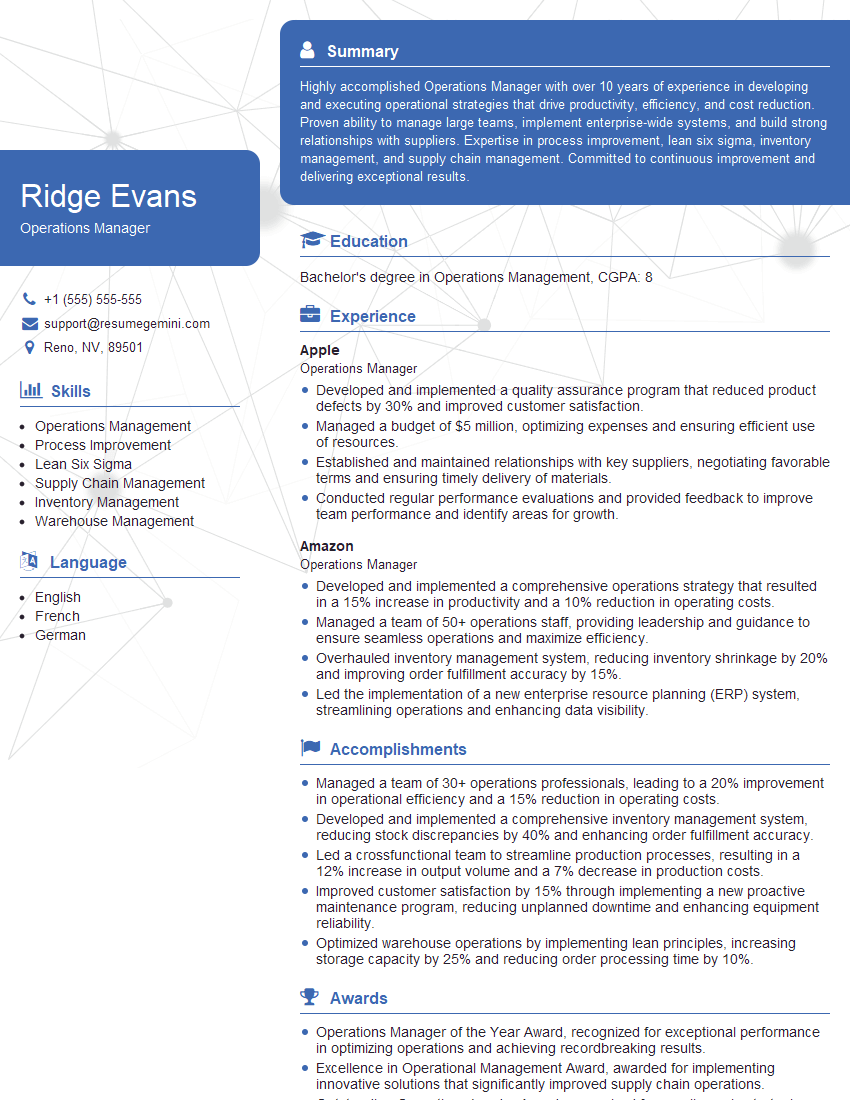
Operations Manager Resume Sample

Production Superintendent Resume Sample

Production Supervisor Resume Sample

Project Engineer Resume Sample
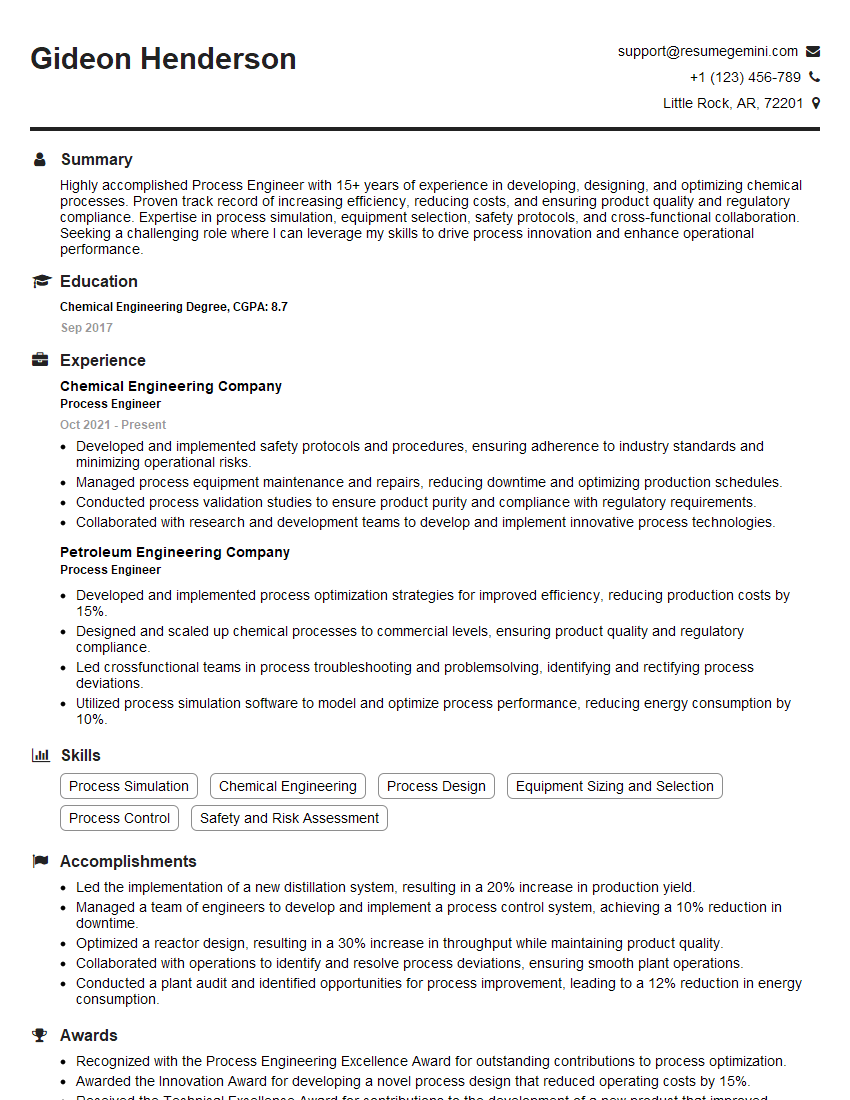
Process Engineer Resume Sample

Facilities Engineer Resume Sample

Maintenance Engineer Resume Sample

Reservoir Engineer Resume Sample

Field Engineer Resume Sample

Production Engineer Resume Sample

Completions Engineer Resume Sample

Drilling Engineer Resume Sample

Petroleum Engineer Resume Sample

Drilling Supervisor Resume Sample

Production Technologist Resume Sample
Explore more articles
Users Rating of Our Blogs
Share Your Experience
We value your feedback! Please rate our content and share your thoughts (optional).
What Readers Say About Our Blog
Very informative content, great job.
good