Interviews are opportunities to demonstrate your expertise, and this guide is here to help you shine. Explore the essential Operating Calibration Equipment interview questions that employers frequently ask, paired with strategies for crafting responses that set you apart from the competition.
Questions Asked in Operating Calibration Equipment Interview
Q 1. Explain the importance of calibration in maintaining equipment accuracy.
Calibration is the process of comparing a measuring instrument’s readings to a known standard to ensure accuracy. Think of it like checking a kitchen scale against a set of calibrated weights. Without regular calibration, instruments drift, leading to inaccurate measurements, which can have significant consequences. In a manufacturing setting, inaccurate measurements might lead to faulty products, safety hazards, or even regulatory non-compliance. In a laboratory, it could mean invalidating research results. Maintaining accuracy through calibration ensures reliability and confidence in the data generated.
For example, imagine a pressure gauge used in a chemical plant. If it’s not calibrated, it might incorrectly display the pressure in a reaction vessel, leading to a dangerous situation. Regular calibration prevents such scenarios.
Q 2. Describe the different types of calibration methods you are familiar with.
Calibration methods fall into two primary categories: direct comparison and substitution.
Direct Comparison: This involves comparing the instrument’s readings directly to a traceable standard. For example, comparing a thermometer to a calibrated reference thermometer in a temperature-controlled bath.
Substitution: This method uses a calibrated instrument to verify the accuracy of another. For instance, calibrating a digital multimeter by using a known precision voltage source and comparing the multimeter’s readings to the source.
Furthermore, calibration can be performed using various techniques, including:
On-site calibration: Calibration performed at the instrument’s location, often more convenient but potentially less accurate due to environmental factors.
Laboratory calibration: Conducted in a controlled environment, usually providing higher accuracy and traceability.
In-situ calibration: Calibration performed without removing the instrument from its operational environment.
Q 3. What is traceability in calibration, and why is it crucial?
Traceability in calibration means establishing an unbroken chain of comparisons between the instrument being calibrated, the calibration standards used, and ultimately, national or international standards. Think of it as a family tree for your measurements. It’s crucial because it provides confidence that your measurements are accurate and reliable. Without traceability, you can’t be sure that your instrument’s readings are meaningful or comparable to other measurements.
For instance, a traceable calibration certificate for a pressure gauge would show that the gauge’s calibration was performed using standards that themselves were calibrated against even higher-order standards, ultimately linked back to national standards maintained by organizations like NIST (National Institute of Standards and Technology).
Q 4. How do you identify and handle calibration discrepancies?
Calibration discrepancies, meaning deviations between the instrument’s readings and the reference standard, are identified by comparing readings during the calibration process. If a discrepancy exceeds pre-defined tolerances, it indicates a problem. Handling them involves a systematic approach:
Investigate the cause: Is it due to instrument malfunction, environmental factors, or user error? Check for damage, worn components, or improper usage.
Document the discrepancy: Record all relevant data, including the magnitude of the error, the date, and the conditions under which it occurred.
Take corrective action: This might involve repairing or adjusting the instrument, replacing faulty components, or retraining personnel.
Recalibrate: After corrective action, recalibrate the instrument to confirm that the problem is resolved.
Update calibration records: Document all actions taken and the results of the recalibration.
Q 5. Explain the concept of uncertainty in measurement.
Uncertainty in measurement reflects the doubt associated with a measured value. It’s not about mistakes, but rather the inherent limitations of the measuring process. No measurement is perfectly precise; there’s always a range of values within which the true value likely lies. Uncertainty considers factors like the instrument’s resolution, the calibration standards’ accuracy, and environmental conditions.
Imagine measuring the length of a table with a ruler marked only in centimeters. You can only get a reading to the nearest centimeter, so there’s an uncertainty of at least half a centimeter (plus or minus 0.5cm). This uncertainty needs to be reported along with the measurement to fully convey the measurement’s reliability.
Q 6. What are the common sources of error in calibration processes?
Common sources of error in calibration processes include:
Instrument drift: Changes in instrument performance over time due to aging or environmental factors.
Environmental conditions: Temperature, humidity, and pressure can significantly affect measurements.
Operator error: Incorrect handling, reading, or recording of data.
Calibration standard inaccuracy: Using outdated or poorly maintained standards.
Improper equipment maintenance: Failure to regularly clean, inspect, and maintain calibration equipment.
Minimizing these errors requires careful planning, proper equipment selection and maintenance, environmental control, and rigorous operator training.
Q 7. Describe your experience with different calibration instruments (e.g., multimeters, oscilloscopes).
I have extensive experience using various calibration instruments, including multimeters, oscilloscopes, and temperature calibrators. With multimeters, I’ve performed calibrations against precision voltage and current sources to verify accuracy across different ranges. This involves comparing the readings and calculating deviations to identify any errors exceeding the predefined tolerances. With oscilloscopes, I’ve calibrated timebase accuracy and vertical sensitivity using pulse generators and calibrated signal sources, ensuring precise time and amplitude measurements. In each case, meticulously following established procedures and recording all data is crucial for maintaining traceability and achieving accurate results. Furthermore, I have significant experience with specialized temperature calibration equipment for validating and calibrating thermometers, thermocouples, and RTDs (Resistance Temperature Detectors) in various applications.
Q 8. How do you ensure the safety and proper handling of calibration equipment?
Ensuring the safety and proper handling of calibration equipment is paramount for accurate results and personnel safety. It’s a multi-faceted approach encompassing several key areas.
- Pre-Calibration Checks: Before handling any equipment, always visually inspect it for any damage, loose parts, or signs of wear. This might include checking power cords for fraying, checking for any leaks in fluid-handling equipment, and ensuring all safety interlocks are functional.
- Following Manufacturer Instructions: Each piece of calibration equipment comes with a user manual. Adhering to the manufacturer’s instructions is crucial, especially regarding power-up sequences, operational procedures, and safety precautions. This is like following a recipe – deviating from the instructions can lead to errors or damage.
- Proper Handling Techniques: Lifting and carrying equipment correctly prevents accidents. For heavier items, use appropriate lifting aids. Always maintain a stable grip to avoid drops, which could damage the equipment or cause injury. Remember to ground yourself before handling delicate electronic devices to prevent static discharge.
- Environmental Considerations: Calibration environments must be controlled to maintain accuracy. This includes controlling temperature, humidity, and ensuring adequate ventilation to prevent overheating or condensation that might harm the equipment. Think of it like a delicate plant; it needs the right environment to thrive.
- Personal Protective Equipment (PPE): Appropriate PPE, such as safety glasses, gloves, and lab coats, should be used as required by the equipment and its operation. This is a must for protecting yourself from potential hazards like chemical spills or electrical shocks.
- Regular Maintenance: Regular cleaning and maintenance help prevent malfunctions and extend the equipment’s life. Think of it like regular car servicing – it prevents bigger issues later on.
For example, I once worked with a high-precision laser interferometer. Before each use, I meticulously checked the alignment, cleaned the optics with specialized wipes, and ensured the environmental controls were within the specified tolerances. This rigorous process is what helped ensure accurate and repeatable measurements.
Q 9. What are the key elements of a calibration certificate?
A calibration certificate is a crucial document that verifies the accuracy of a piece of equipment. Key elements include:
- Equipment Identification: This includes the manufacturer, model number, serial number, and any other relevant identifiers of the calibrated equipment.
- Calibration Date: The date the calibration was performed.
- Calibration Method: A description of the procedures and standards used during the calibration process.
- Calibration Results: This section outlines the measured values and any deviations from the reference standard. Often presented in tabular format, showing the measured values and the associated uncertainty.
- Traceability: Statement indicating that the calibration is traceable to national or international standards (like NIST or similar). This ensures that the calibration is globally recognized and consistent.
- Uncertainty of Measurement: Quantifies the uncertainty associated with the calibration results. It indicates the range within which the true value is likely to lie.
- Expiry Date: The date after which the calibration is no longer considered valid.
- Calibration Laboratory Information: This includes the name, address, and accreditation of the laboratory performing the calibration. Accreditation adds credibility and trust to the calibration certificate.
- Approvals and Signatures: Authorizing signatures from the technicians and lab managers to verify the accuracy and validity of the calibration process.
Think of it as a passport for your equipment, showing its accuracy and validity within a given time frame.
Q 10. How do you manage calibration schedules and deadlines?
Managing calibration schedules and deadlines effectively is vital to ensure equipment accuracy. I utilize a combination of methods:
- Calibration Software: I use specialized calibration management software to track equipment, schedule calibrations, and generate reports. These programs allow for automated reminders and alerts.
- Spreadsheet Management: For simpler scenarios, a well-organized spreadsheet can effectively track calibration dates, equipment information, and associated documentation. This provides a basic but effective solution.
- Prioritization: Critical equipment requiring frequent calibration (like those used for safety-critical processes) gets prioritized, ensuring minimal downtime and maximum safety.
- Visual Aids: Color-coded systems or visual dashboards provide a quick overview of the calibration status of all equipment. Green for calibrated, yellow for approaching expiry, and red for overdue.
- Regular Reviews: Regular review of the calibration schedule allows proactive identification and management of potential delays.
For example, I’ve successfully managed a calibration schedule for over 100 pieces of equipment using a dedicated calibration software package, ensuring every piece was calibrated within its recommended timeframe.
Q 11. Describe your experience with calibration software and databases.
My experience with calibration software and databases is extensive. I have worked with various systems, from simple spreadsheet-based solutions to sophisticated enterprise-level software packages. This includes experience with:
- LIMS (Laboratory Information Management Systems): These systems integrate various laboratory functions, including calibration management, sample tracking, and data analysis. I have experience with popular LIMS platforms and their calibration modules.
- CMMS (Computerized Maintenance Management Systems): These are used for managing maintenance activities, which often include calibration procedures. I’ve used CMMS solutions to schedule calibrations, track maintenance history, and generate reports.
- Dedicated Calibration Software: I have experience with specialized calibration software packages that are designed specifically for managing calibration activities, offering features like automated reminders, certificate generation, and data analysis.
- Database Management: I’m proficient in managing calibration data within relational databases (like MySQL or SQL Server) using SQL commands to query, update and analyze the data.
I am comfortable importing, exporting, and manipulating calibration data to meet reporting requirements. This proficiency ensures consistent data accuracy and allows for better analysis.
Q 12. How do you troubleshoot common issues encountered during calibration?
Troubleshooting calibration issues requires a systematic approach. I typically follow these steps:
- Identify the Problem: Start by clearly defining the issue. Is it a failure to meet specifications, inconsistent readings, or equipment malfunction?
- Review Calibration History: Examine previous calibration records to identify any patterns or trends.
- Check Calibration Setup: Ensure that the calibration setup is correct, including proper connections, reference standards, and environmental conditions.
- Inspect the Equipment: Conduct a thorough visual inspection of the equipment to identify any physical damage, loose connections, or signs of wear.
- Test with Known Standards: Use known, traceable standards to verify the equipment’s performance.
- Consult Manuals and Documentation: Refer to the manufacturer’s documentation for troubleshooting tips and potential solutions.
- Seek Expert Assistance: If the problem persists, don’t hesitate to consult with experienced technicians or the equipment manufacturer.
For example, if a pressure gauge consistently reads low, I’d first check for leaks in the system, then verify the accuracy of my reference standard, and finally, inspect the gauge itself for any damage or blockages. Using this step-by-step method ensures accurate problem resolution.
Q 13. What are the different types of calibration standards you have worked with?
I’ve worked with a wide range of calibration standards throughout my career, covering various measurement disciplines. Some examples include:
- National Institute of Standards and Technology (NIST) traceable standards: These are highly accurate standards that form the basis for many calibration processes. Their traceability to national standards ensures global consistency and reliability.
- Temperature standards: These include various types of thermometers, resistance temperature detectors (RTDs), and thermocouples, calibrated against traceable reference standards.
- Pressure standards: These cover a wide range of pressures, from low vacuum to high pressure, using deadweight testers, pressure transducers, and other specialized equipment.
- Mass standards: These standards are used for calibrating balances and scales and are often traceable to national standards.
- Electrical standards: These include standards for voltage, current, resistance, and frequency. They are crucial for calibrating multimeters, oscilloscopes, and other electrical test equipment.
- Dimensional standards: These include gauge blocks, micrometers, and other devices used for calibrating measuring tools and instruments.
The specific standards used depend heavily on the type of equipment being calibrated and the required level of accuracy. Selecting the right standard is critical for ensuring accurate and reliable calibration results.
Q 14. How do you document calibration procedures and results?
Comprehensive documentation of calibration procedures and results is critical for maintaining traceability, demonstrating compliance, and ensuring data integrity. My approach involves:
- Standard Operating Procedures (SOPs): Detailed SOPs are developed for each calibration procedure. These are step-by-step instructions, including equipment lists, setup requirements, testing procedures, and acceptance criteria.
- Calibration Records: These records meticulously document all aspects of the calibration process, including equipment details, calibration results, uncertainty estimates, and any observed anomalies. This data is typically captured digitally or in a structured format. Think of it like a lab notebook, detailed and complete.
- Calibration Certificates: Formal calibration certificates are generated, summarizing the calibration results, including the traceability to national standards and the expiry date. This provides a clear and concise summary of the calibration process.
- Data Management System: Calibration data is typically stored in a centralized data management system. This ensures easy access, retrieval, and analysis of the data, and it is essential for audits and compliance.
- Version Control: Changes to SOPs or calibration procedures are documented and version-controlled to ensure the integrity and consistency of the data.
- Electronic Signatures: Electronic signatures and digital timestamps ensure the authenticity and integrity of the records. This eliminates the need for traditional paper-based signatures and adds to the security of the documentation.
Maintaining detailed documentation allows for easy traceability of calibration data, facilitating audits and ensuring compliance with industry regulations.
Q 15. Explain your experience with different calibration techniques (e.g., comparison, substitution).
Calibration techniques are the methods used to ensure measuring instruments provide accurate readings. Two common methods are comparison and substitution. Comparison calibration involves comparing the readings of the instrument under test (IUT) against a known standard of higher accuracy. For instance, we might compare a digital thermometer to a calibrated reference thermometer at various temperature points. Substitution calibration involves replacing the standard with the IUT in a measurement setup, ensuring the same conditions and observing any discrepancies. Imagine calibrating a pressure gauge; we’d use a calibrated pressure source to apply a known pressure, then replace it with the gauge to check the reading. I have extensive experience with both methods, choosing the most appropriate technique based on the instrument’s type, accuracy requirements, and available resources. In some complex scenarios, I’ve even combined both techniques for enhanced accuracy and confidence.
Beyond comparison and substitution, I’m also proficient in other techniques like direct tracing, where the IUT’s traceability is established through a chain of calibrations to national standards. I’ve worked with various calibration software systems, managing data acquisition, analysis, and report generation, making sure the entire calibration process is well documented and transparent.
Career Expert Tips:
- Ace those interviews! Prepare effectively by reviewing the Top 50 Most Common Interview Questions on ResumeGemini.
- Navigate your job search with confidence! Explore a wide range of Career Tips on ResumeGemini. Learn about common challenges and recommendations to overcome them.
- Craft the perfect resume! Master the Art of Resume Writing with ResumeGemini’s guide. Showcase your unique qualifications and achievements effectively.
- Don’t miss out on holiday savings! Build your dream resume with ResumeGemini’s ATS optimized templates.
Q 16. How do you maintain the integrity of calibration standards?
Maintaining the integrity of calibration standards is paramount to ensuring accurate calibration results. This involves a multi-faceted approach. Firstly, standards must be stored under appropriate environmental conditions, carefully controlling temperature, humidity, and vibration, as these factors can influence accuracy. We use climate-controlled vaults and meticulously record environmental parameters. Secondly, regular checks, often termed ‘verification’, are essential. These checks help to detect potential degradation or damage to the standard before it impacts the calibration process. I use a strict schedule for these verifications, often using higher-level standards to check our working standards. Thirdly, standards have a limited lifespan, defined by their manufacturer’s specifications, after which they require recalibration or replacement. I ensure we adhere to these timeframes strictly, avoiding reliance on outdated or potentially compromised standards. This systematic approach is fundamental for maintaining the accuracy and reliability of our calibration processes.
Q 17. What are the key performance indicators (KPIs) you use to measure calibration effectiveness?
Key Performance Indicators (KPIs) for calibration effectiveness help us assess the efficiency and accuracy of our calibration processes. We monitor several key metrics, including: Calibration cycle time – tracking the time taken to complete a calibration; Calibration accuracy – evaluating how closely the IUT’s readings align with the standard; Out-of-tolerance rate – measuring the percentage of instruments failing calibration; On-time completion rate – monitoring whether calibration is done within scheduled deadlines; and Cost per calibration – tracking the resources used. By regularly analyzing these KPIs, we can identify areas for improvement, optimize our processes, and ensure high quality and efficiency in our work. For example, a high out-of-tolerance rate might highlight a need for improved instrument maintenance or more frequent calibrations.
Q 18. How do you handle out-of-tolerance calibration results?
Handling out-of-tolerance calibration results requires a systematic approach to ensure the safety and reliability of the equipment involved. The first step is to verify the result. Are the readings consistently outside the tolerance? Is there anything else that could be affecting the readings (environmental issues, incorrect setup)? If the out-of-tolerance result is confirmed, we initiate an investigation. This could include checking the instrument for any visible damage, assessing the calibration process for any errors, or testing the instrument for potential issues. Depending on the criticality of the equipment, it might be removed from service pending repair or adjustment. A detailed report is generated, documenting the findings, corrective actions taken (such as repair, adjustment, or replacement), and the subsequent recalibration results. The overall process aims to ensure that any equipment found to be out of tolerance is restored to acceptable operating condition, with the goal to prevent faulty measurements in the future and maintaining a reliable calibration system.
Q 19. Describe your experience with ISO 17025 or other relevant calibration standards.
My experience with ISO 17025 is extensive. I’ve worked in laboratories accredited to this standard, and I understand the rigorous requirements for calibration and testing laboratories. This includes the management system requirements (documentation control, corrective actions, etc.) and technical requirements (traceability to national standards, measurement uncertainty calculations, etc.). I’ve been involved in internal audits, managed the preparation for external audits by accreditation bodies, and I’m familiar with the implementation of quality management systems in the calibration field. This comprehensive understanding of ISO 17025 ensures the credibility and reliability of our calibration results, fostering trust among our clients and stakeholders. Similarly, I have experience applying other relevant calibration standards like ANSI/NCSL Z540-1, which sets the general requirements for calibration systems.
Q 20. How do you ensure compliance with regulatory requirements in calibration?
Ensuring compliance with regulatory requirements in calibration is crucial for maintaining the legal and operational integrity of any organization. This compliance is achieved by staying up-to-date on all relevant regulations, both industry-specific and those dictated by governing bodies. For example, industries like pharmaceuticals have strict regulations regarding the accuracy of measuring instruments used in manufacturing and quality control. We meticulously maintain records that demonstrate compliance with these regulations, including calibration certificates, traceability documentation, and maintenance logs. We use a documented process to track and handle non-conformances, ensuring timely resolution and corrective action. Regular internal audits and management reviews are conducted to assess compliance and identify any areas needing improvement. This rigorous attention to detail in regulatory compliance not only helps to avoid penalties but also ensures accuracy and reliability in measurements, protecting the quality of processes and products.
Q 21. Explain your experience with different types of measuring instruments.
My experience encompasses a wide range of measuring instruments, including those used in various industries such as manufacturing, healthcare, and research. This includes: Dimensional metrology instruments like calipers, micrometers, and coordinate measuring machines (CMMs); Thermometry equipment such as thermocouples, resistance temperature detectors (RTDs), and infrared thermometers; Pressure measurement devices including pressure gauges, transducers, and manometers; Electrical measurement instruments such as multimeters, oscilloscopes, and signal generators; Mass and weight instruments including balances and scales; and Flow measurement devices, like flow meters and rotameters. My expertise includes not just using these instruments but also troubleshooting their problems, diagnosing malfunctions, and determining appropriate calibration techniques for optimal performance. This breadth of experience allows me to adapt quickly to different challenges and instrument types.
Q 22. What is your experience with preventative maintenance for calibration equipment?
Preventative maintenance (PM) for calibration equipment is crucial for ensuring accuracy, reliability, and longevity. It’s about proactively addressing potential issues before they lead to costly downtime or inaccurate measurements. My approach involves a multi-faceted strategy:
- Regular Inspections: Visual inspections are performed at scheduled intervals (e.g., monthly, quarterly) to check for physical damage, loose connections, or signs of wear and tear. This is akin to regularly checking your car’s oil levels – catching a minor leak early prevents engine failure.
- Calibration Verification: Equipment is calibrated according to its manufacturer’s specifications and our internal procedures, often using traceable standards. This validates the equipment’s accuracy and ensures it’s within acceptable tolerances. Think of it as getting your bathroom scale checked against a known accurate weight.
- Cleaning and Lubrication: Depending on the equipment type, regular cleaning and lubrication are vital. Dust, debris, and lack of lubrication can affect performance and accuracy. Imagine the difference between a well-oiled machine and one that’s rusty and stiff.
- Environmental Monitoring: Maintaining a stable environment (temperature, humidity) is essential for many instruments. Fluctuations can affect readings. Just as a musician needs a stable stage, sensitive equipment needs a stable environment.
- Documentation: Meticulous record-keeping is non-negotiable. All PM activities, including dates, findings, and corrective actions, are documented in a centralized system. This provides a clear audit trail and assists in identifying trends.
By implementing this comprehensive PM program, we significantly reduce the risk of equipment failure, extend its lifespan, and guarantee consistent, reliable results.
Q 23. How do you validate calibration methods and procedures?
Validating calibration methods and procedures is paramount to ensuring the integrity of our calibration processes. This involves a rigorous approach encompassing several key steps:
- Traceability: We ensure all our calibration standards are traceable to national or international standards. This establishes a chain of custody for accuracy, ensuring our measurements are reliable and comparable globally. Imagine tracing a family tree – we’re tracing the accuracy back to its origin.
- Method Validation: This involves verifying the suitability of our chosen calibration methods. We assess their accuracy, precision, and uncertainty, often using statistical analysis to demonstrate their effectiveness. It’s like rigorously testing a new recipe before serving it to guests.
- Procedure Validation: This step ensures our calibration procedures are clear, unambiguous, and consistently followed. We use checklists, standardized forms, and training to minimize variability and human error. It’s like using a well-defined assembly manual to build a piece of furniture – everyone follows the same steps.
- Uncertainty Analysis: We meticulously analyze the uncertainty associated with our measurements, considering all potential sources of error (equipment, environment, operator). This ensures that our results are reported with an appropriate degree of confidence. It’s like acknowledging the margin of error when using a measuring tape.
- Internal Audits and Reviews: Regular internal audits and reviews ensure compliance with established procedures and identify areas for improvement. This allows for continuous improvement and enhances the overall quality of our calibration services.
Through these systematic checks and balances, we maintain confidence in the accuracy and reliability of our calibration processes.
Q 24. Describe a situation where you had to troubleshoot a complex calibration problem.
During a recent calibration of a high-precision pressure transducer, we encountered unexpected and erratic readings. Initial troubleshooting pointed towards a faulty transducer. However, after systematically checking all aspects of the calibration setup (power supply, cabling, connections to the reference standard), the problem remained. It was only after careful examination of the reference standard’s calibration certificate and subsequent verification with a second independent standard that we discovered a significant drift in the reference standard itself, not the transducer. The initial assumption was incorrect; focusing on the instrument in question led us down the wrong path. This situation reinforced the importance of:
- Systematic troubleshooting: A methodical approach, checking each component systematically, is essential.
- Verification of reference standards: The accuracy of our reference standards is paramount. Regular verification and recalibration are crucial.
- Collaboration: Seeking help and sharing insights with colleagues can prevent overlooking important factors.
We recalibrated the reference standard and then recalibrated the pressure transducer, this time with accurate results. This experience served as a valuable lesson in thoroughness and the importance of questioning assumptions.
Q 25. How do you handle calibration requests and prioritize tasks?
Managing calibration requests and prioritizing tasks requires a well-defined system to ensure efficiency and responsiveness. I typically utilize a combination of methods:
- Prioritization Matrix: We prioritize requests based on factors such as the criticality of the equipment to operations (e.g., safety-critical equipment takes precedence), calibration due dates, and the potential impact of delayed calibration. This is similar to a hospital triage system, prioritizing the most urgent cases first.
- Scheduling Software: We employ scheduling software to manage appointments, track progress, and send reminders. This provides a clear overview of the workload and helps maintain efficiency. Think of it as a well-organized calendar for all calibration activities.
- Communication: Clear communication with requesters regarding estimated turnaround times and any potential delays is critical. Keeping them informed maintains transparency and trust. Regular updates are key to customer satisfaction.
- Workflow Optimization: Continuously reviewing and optimizing our workflows helps to streamline processes and improve turnaround times. Regularly analyzing what works well and where improvements are needed is crucial to maintaining efficiency.
This structured approach ensures that calibration requests are handled efficiently and effectively, minimizing delays and ensuring the availability of accurately calibrated equipment.
Q 26. What are your preferred methods for training on new calibration equipment?
Training on new calibration equipment involves a blended learning approach, combining theoretical knowledge with hands-on practice. My preferred methods include:
- Manufacturer’s Documentation: We start with the manufacturer’s manuals and specifications. This provides a solid foundation of the equipment’s features, capabilities, and operational procedures. It’s like reading the owner’s manual before driving a new car.
- Guided Instruction: Experienced technicians provide hands-on training, guiding trainees through the calibration process step-by-step. This ensures proper technique and understanding. It’s similar to an apprenticeship program, learning by doing.
- Simulated Scenarios: We incorporate simulated scenarios and troubleshooting exercises to prepare trainees for real-world challenges. This helps them build problem-solving skills and confidence. Think of this as practice drills for a sports team.
- On-the-Job Training: Supervised on-the-job training allows trainees to apply their knowledge and skills in a real-world setting, with guidance from senior technicians. This gives practical experience and builds confidence.
- Regular Assessments and Feedback: We conduct regular assessments and provide feedback to monitor progress and identify any areas requiring further training. This ensures competency and continuous improvement.
This multi-faceted approach leads to a thorough understanding and competency in using the new equipment.
Q 27. Explain your understanding of statistical process control (SPC) in calibration.
Statistical Process Control (SPC) plays a crucial role in calibration by providing a systematic method to monitor and control the variability of the calibration process itself. It helps identify trends and potential problems early on, ensuring the accuracy and reliability of our measurements. We primarily use control charts (e.g., X-bar and R charts) to monitor key process parameters like calibration results.
For example, we might track the readings from a particular type of pressure gauge over multiple calibrations. By plotting these readings on a control chart, we can quickly identify any points outside of the established control limits, indicating potential problems with the equipment, the calibration procedure, or even environmental factors. This allows for timely intervention and prevents the generation of inaccurate calibration results.
SPC helps us:
- Identify and investigate special cause variation: Points outside the control limits often signify a special cause of variation, prompting investigation to identify and rectify the problem.
- Monitor process stability: The control chart provides a visual representation of the process’s stability over time, revealing trends and patterns.
- Improve process capability: By analyzing the data, we can identify opportunities to improve the precision and accuracy of our calibration processes.
- Demonstrate compliance: SPC data helps demonstrate compliance with quality standards and regulations.
In essence, SPC provides a proactive and data-driven approach to process control, ensuring the long-term reliability and accuracy of our calibration services.
Q 28. Describe your experience with different types of calibration reports.
We generate various types of calibration reports tailored to specific needs and requirements. These include:
- Standard Calibration Reports: These reports provide a concise summary of the calibration process, including the equipment tested, the calibration dates, results, and the uncertainty associated with the measurements. They’re like a simple receipt for a service performed.
- Detailed Calibration Reports: These reports include more comprehensive information, such as detailed calibration procedures, raw data, and statistical analysis. They’re like a comprehensive lab report.
- Non-Conformance Reports: When equipment fails to meet specified tolerances, a non-conformance report is issued, detailing the discrepancy and any recommended corrective actions. Think of this as a repair order.
- Traceable Calibration Certificates: For high-precision equipment or critical applications, traceable calibration certificates are provided, documenting the unbroken chain of traceability to national or international standards. These certificates are like a passport for your equipment, showing its lineage of accuracy.
- Custom Reports: Depending on the client’s specific needs, we can generate custom reports that include additional information or are formatted to meet particular specifications. These are tailor-made reports to specific needs.
The type of report generated is determined by the client’s requirements, the criticality of the equipment, and the specific needs of the calibration process. Maintaining clear and consistent reporting ensures accuracy, traceability, and compliance.
Key Topics to Learn for Operating Calibration Equipment Interview
- Calibration Principles and Standards: Understanding accuracy, precision, traceability, and the various calibration methods (e.g., direct comparison, substitution, interpolation).
- Types of Calibration Equipment: Familiarity with different instruments used in calibration, including their functionalities, limitations, and applications (e.g., multimeters, oscilloscopes, pressure gauges, temperature sensors).
- Calibration Procedures and Documentation: Mastering the steps involved in a complete calibration process, including pre-calibration checks, calibration execution, data recording, and report generation. Understanding regulatory compliance and documentation requirements.
- Troubleshooting and Problem-solving: Developing skills in identifying and resolving common issues encountered during calibration, such as instrument malfunctions, inaccurate readings, and environmental factors affecting measurements. This includes understanding root cause analysis techniques.
- Safety Procedures and Regulations: Demonstrating knowledge of relevant safety protocols for handling calibration equipment, including electrical safety, chemical handling, and appropriate personal protective equipment (PPE).
- Data Analysis and Interpretation: Proficiency in analyzing calibration data, identifying trends, and drawing conclusions about instrument performance. Understanding statistical concepts relevant to calibration.
- Calibration Software and Systems: Experience with calibration management software and understanding how these systems streamline calibration processes and data management.
- Specific Calibration Equipment: Deep dive into the specifics of the types of equipment most relevant to the target role (This will vary based on the job description). Research the specific brands and models mentioned.
Next Steps
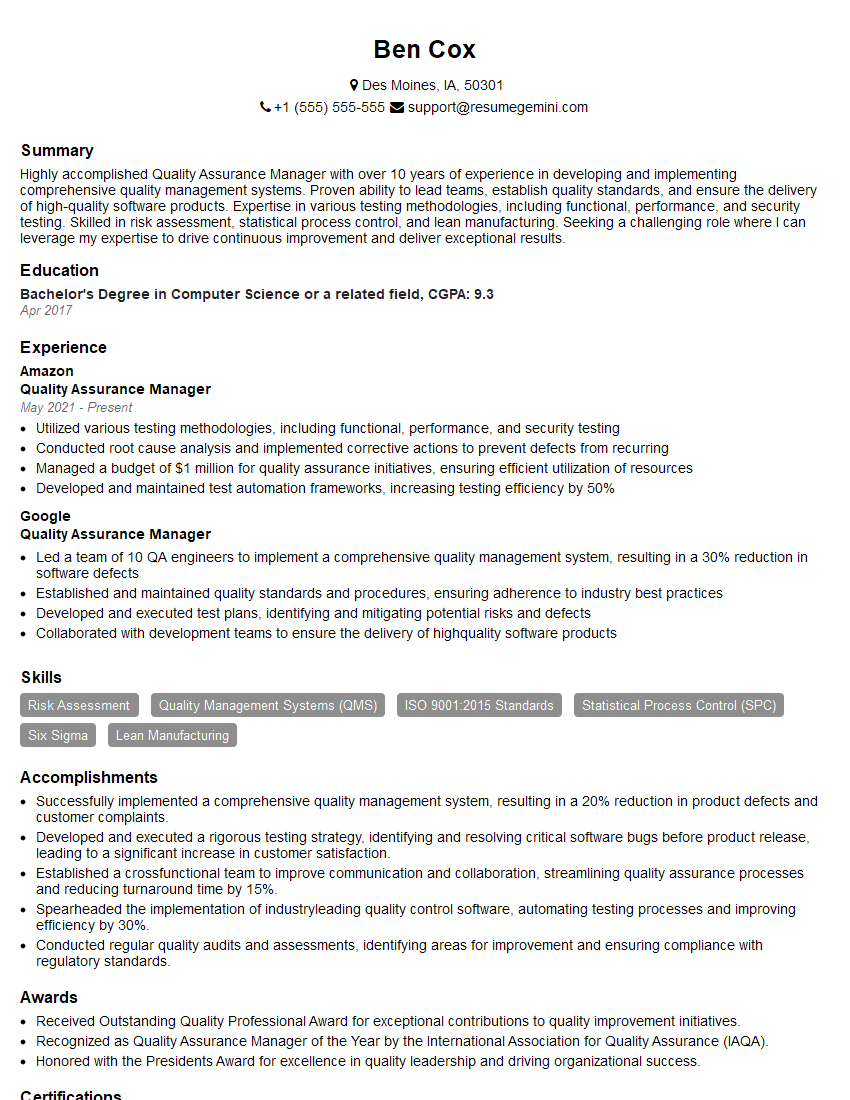
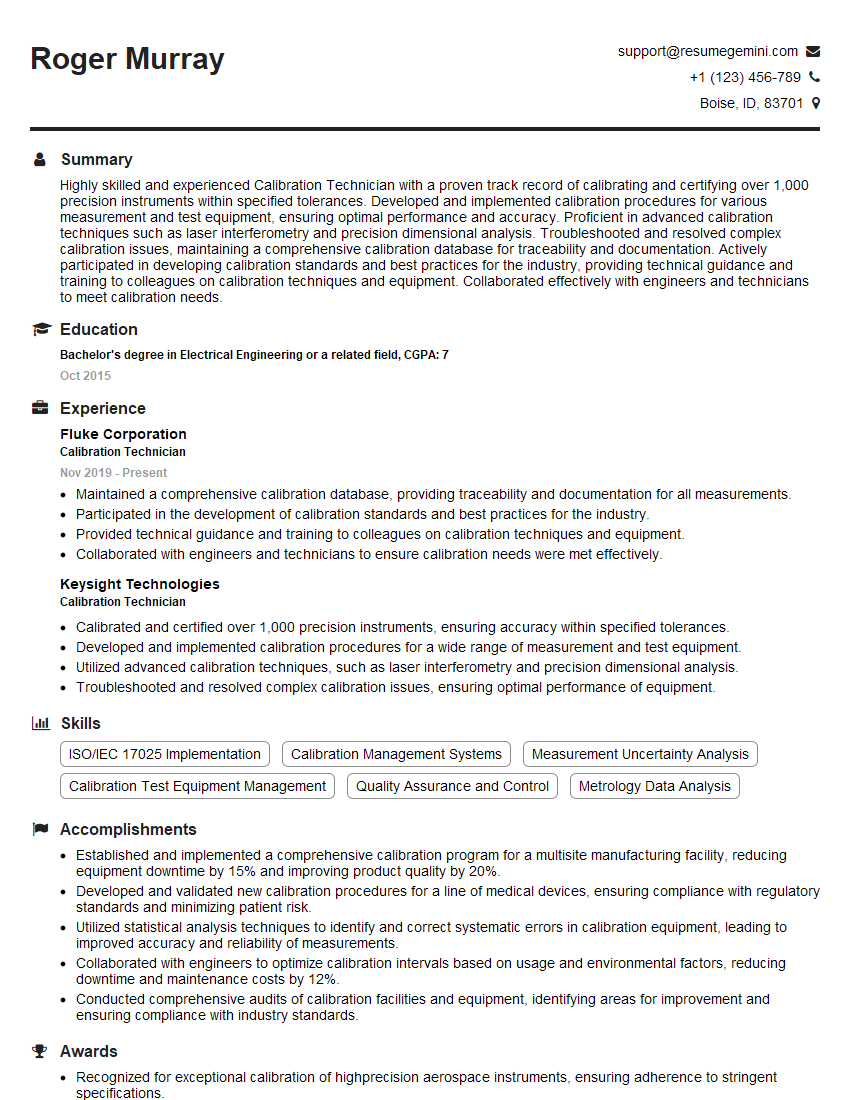
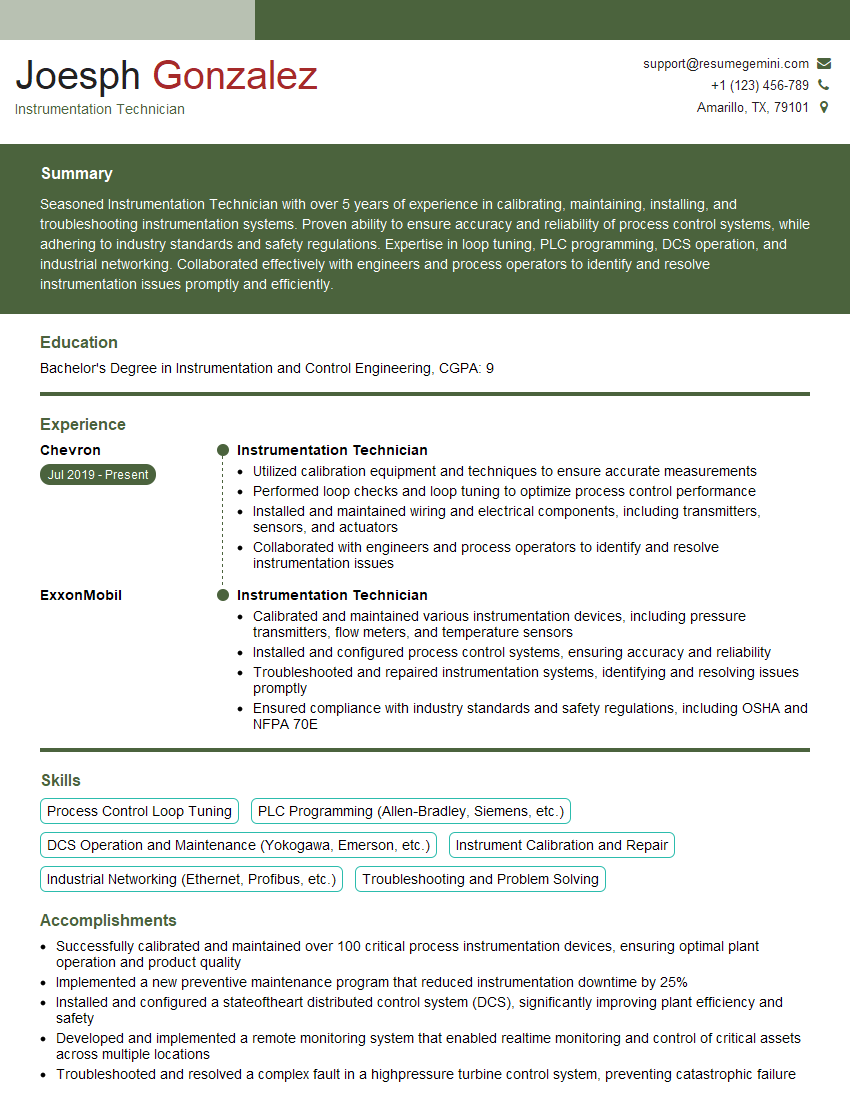
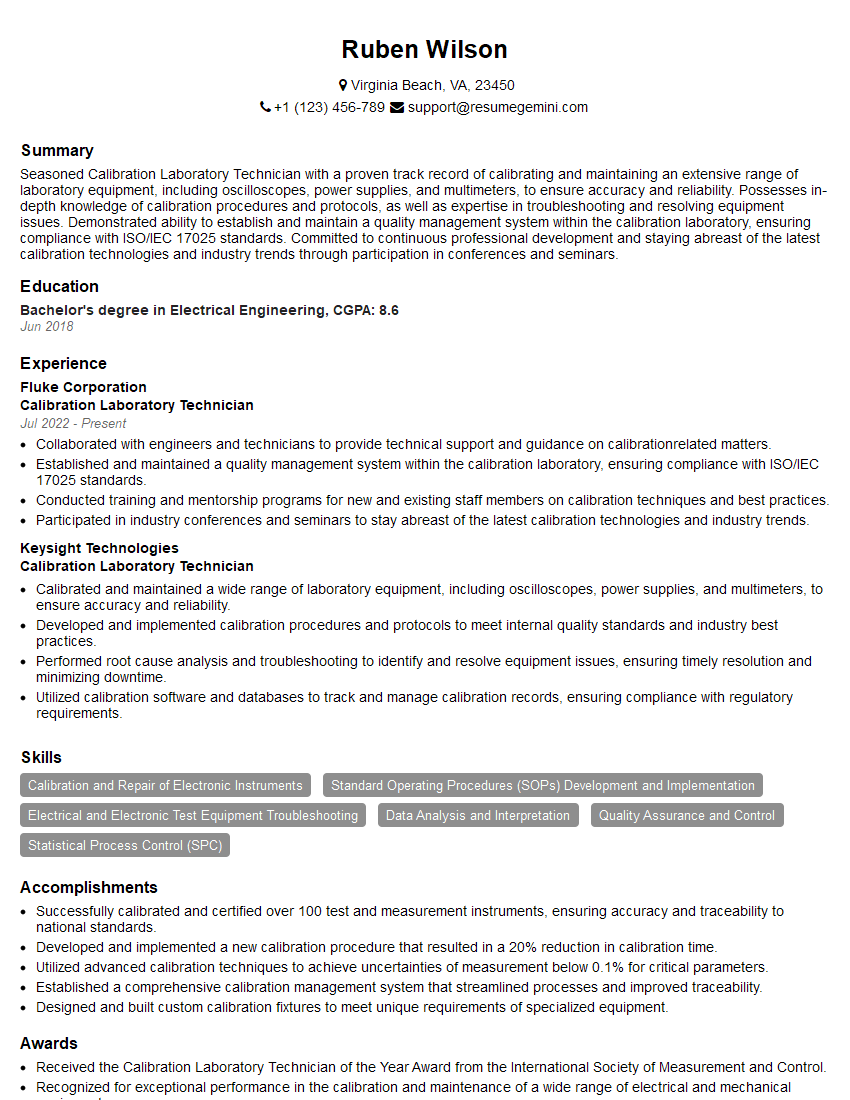
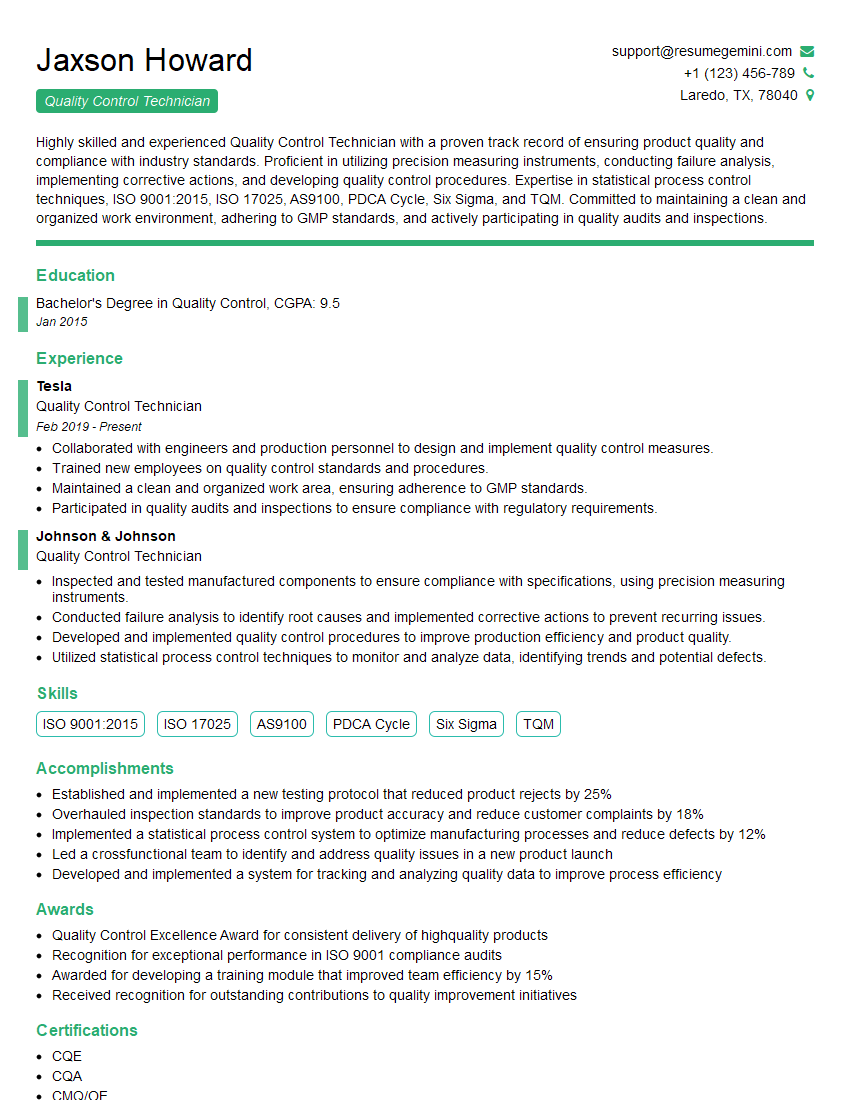
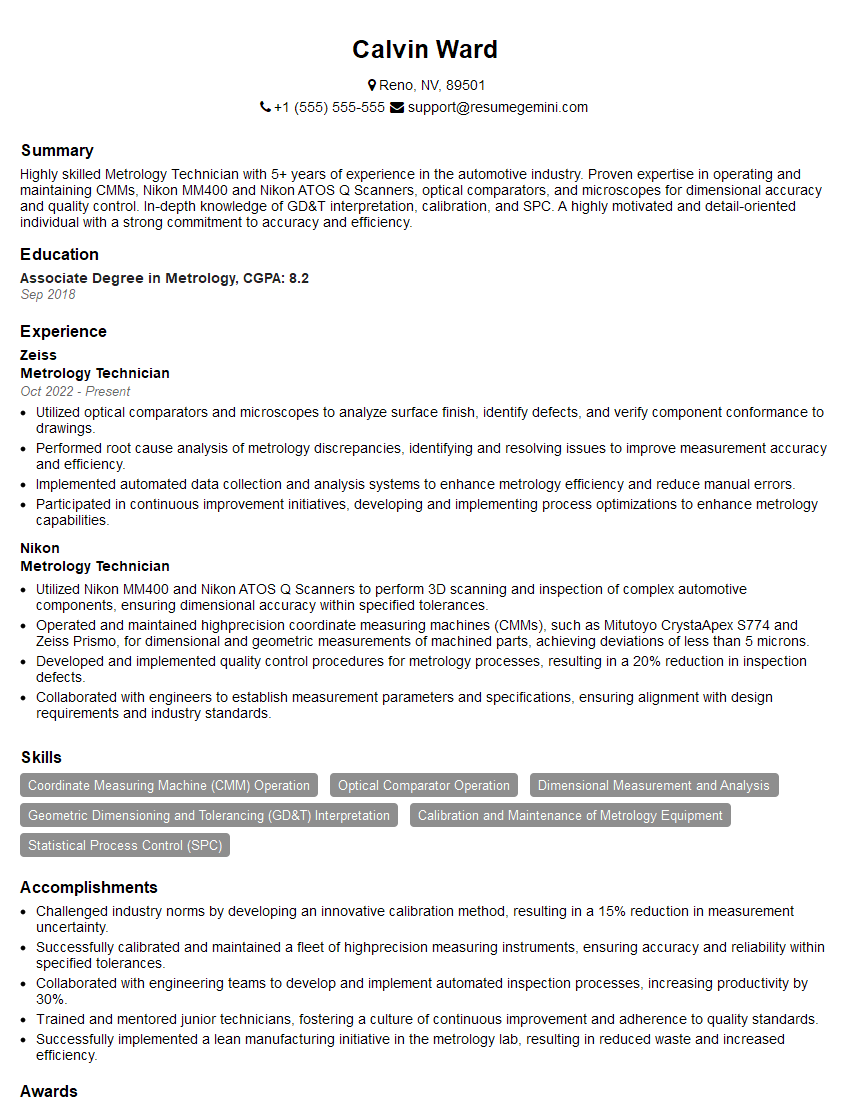
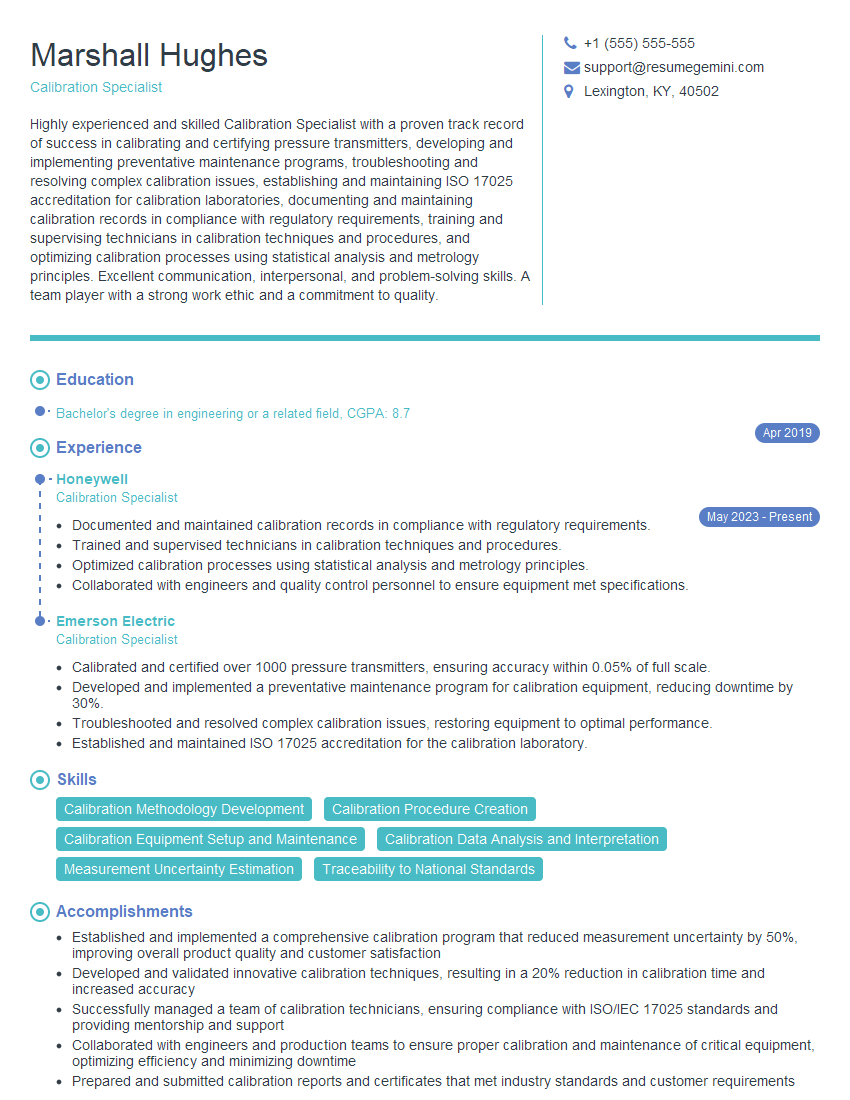
Mastering the operation and calibration of equipment is crucial for career advancement in many technical fields. It demonstrates a commitment to precision, accuracy, and adherence to standards, qualities highly valued by employers. To significantly boost your job prospects, create an ATS-friendly resume that effectively highlights your skills and experience. ResumeGemini is a trusted resource to help you build a professional and impactful resume. We offer examples of resumes tailored specifically to Operating Calibration Equipment to help you get started.
Explore more articles
Users Rating of Our Blogs
Share Your Experience
We value your feedback! Please rate our content and share your thoughts (optional).
What Readers Say About Our Blog
Very informative content, great job.
good