Feeling uncertain about what to expect in your upcoming interview? We’ve got you covered! This blog highlights the most important Operating Construction Handling Equipment interview questions and provides actionable advice to help you stand out as the ideal candidate. Let’s pave the way for your success.
Questions Asked in Operating Construction Handling Equipment Interview
Q 1. What types of construction equipment are you proficient in operating?
My expertise spans a wide range of construction equipment, encompassing excavators (both hydraulic and cable-operated), bulldozers, loaders (front-end and backhoe), graders, and cranes (both tower and mobile). I’m also proficient in operating smaller equipment such as skid steers, forklifts, and compaction rollers. My experience extends to various makes and models, giving me a broad understanding of their operational nuances.
For instance, I’ve extensively used Caterpillar excavators on large-scale earthmoving projects, showcasing my skill in precise digging and trenching. Similarly, my experience with Komatsu bulldozers involves land clearing and site preparation, demonstrating my ability to handle challenging terrain and maintain efficiency.
Q 2. Describe your experience with pre-operation equipment checks.
Pre-operation equipment checks are crucial for safety and efficiency. My routine involves a systematic approach, starting with a visual inspection for any obvious damage or leaks. I then check fluid levels (engine oil, hydraulic fluid, coolant, etc.), tire pressure, and the functionality of all controls and safety mechanisms (lights, horns, emergency stops). I carefully inspect the tracks or wheels for wear and tear and check the condition of all attachments.
For example, before operating an excavator, I would meticulously examine the bucket for any cracks or damage, ensuring the hydraulic lines are securely connected and free from leaks. If any issue is found, no matter how minor, I report it immediately to my supervisor before proceeding. This proactive approach prevents costly repairs and ensures the safe and efficient operation of the equipment.
Q 3. Explain the importance of safety regulations when operating heavy machinery.
Safety regulations are paramount when operating heavy machinery. They are designed to protect both the operator and those working nearby. These regulations cover aspects such as operator licensing, pre-operation checks, proper use of personal protective equipment (PPE), safe operating procedures, and emergency response protocols. Ignoring these regulations can lead to serious accidents, injuries, and fatalities.
For example, operating an excavator without wearing a hard hat, safety glasses, and hearing protection is a serious violation. Similarly, failing to signal intentions before making a move can cause collisions with other equipment or personnel. My commitment to safety includes strict adherence to all site-specific rules and regulations, constant awareness of my surroundings, and proactive risk assessment.
Q 4. How do you handle unexpected equipment malfunctions on a job site?
Handling unexpected equipment malfunctions requires a calm and methodical approach. The first step is to immediately stop operation and assess the situation. I would then attempt to diagnose the problem based on my experience and the machine’s warning indicators. If the issue is minor and I am qualified to fix it, I may proceed with repairs following appropriate safety protocols. However, if the malfunction is significant or beyond my expertise, I immediately report it to my supervisor and follow their instructions.
For instance, if a hydraulic leak is detected in an excavator, I would shut down the machine, secure the area, and notify the supervisor immediately, instead of attempting a repair myself unless adequately trained and equipped to do so. This prevents further damage and ensures the safety of myself and others.
Q 5. What are the different types of excavator attachments and their uses?
Excavators can be fitted with various attachments, significantly increasing their versatility. Common attachments include:
- Buckets: Used for digging, loading, and excavating. Different bucket sizes and shapes are available for various applications (e.g., narrow trenching buckets, wide ditch cleaning buckets).
- Rippers: Used to break up hard ground and rocky surfaces.
- Hydraulic Hammers: Used for demolition and breaking up concrete or rock.
- Grapples: Used for handling logs, scrap metal, or other bulky materials.
- Augers: Used for drilling holes for foundation piling or planting.
Choosing the appropriate attachment is critical for efficient and safe operation. For example, using a narrow trenching bucket for a small, deep trench is more efficient and precise than using a larger general-purpose bucket.
Q 6. Describe your experience with operating equipment in various terrain conditions.
Operating equipment in various terrain conditions requires adaptability and skill. My experience encompasses working on flat, level ground, as well as challenging terrain including slopes, uneven surfaces, and soft ground. I’m adept at adjusting operating techniques and machine settings to maintain stability and safety. Factors like ground conditions, weather, and the specific equipment being used are all considered.
For instance, operating a bulldozer on a steep slope necessitates careful maneuvering and a slower speed to avoid rollover. Working on soft, muddy ground may require wider tracks or specialized tires to prevent getting stuck. My approach always prioritizes safe operation regardless of the terrain.
Q 7. How do you ensure the stability of a crane during lifting operations?
Ensuring crane stability is crucial for preventing accidents. This involves several key factors: Proper load calculations, correct placement of outriggers (for mobile cranes), appropriate counterweight, and careful observation of wind conditions. The crane’s load chart must be consulted to ensure the load is within the crane’s safe working load limit (SWL) for the specific configuration (radius, boom length, etc.).
Before lifting, I ensure the ground is level and firm beneath the outriggers. I check the load chart to confirm the load weight and dimensions are suitable for the crane’s configuration and within safe parameters. Constant communication with the crane operator and ground crew is essential during lifting operations to ensure everyone is aware of the crane’s movements and potential hazards.
Q 8. What are the load capacity limits you’re familiar with?
Load capacity limits are crucial for safety and efficient operation of construction equipment. They vary drastically depending on the specific machine – a small excavator will have a much lower capacity than a massive crane. These limits are usually expressed in weight (e.g., kilograms or tons) and are clearly stated in the equipment’s operator’s manual and often displayed on the machine itself. For example, a compact excavator might have a lifting capacity of 2 tons, while a large crawler crane could handle loads exceeding 100 tons. I’m familiar with the load limits for various types of equipment, including excavators, loaders, forklifts, cranes, and dump trucks, and I always consult the manufacturer’s specifications before undertaking any lifting or moving operation. Exceeding these limits is extremely dangerous and can lead to equipment failure, injury, or even death. Understanding the specific load limits for each piece of equipment is non-negotiable in my line of work.
Q 9. What safety procedures do you follow when working near power lines?
Safety near power lines is paramount. My procedures always begin with a thorough site assessment to identify the location and voltage of all overhead power lines. I never operate equipment within the minimum safe distance, which varies depending on the voltage, and is always specified in the relevant safety regulations. For example, the minimum distance for working near high-voltage lines is significantly greater than for low-voltage lines. If working near power lines is unavoidable, I would ensure that the power lines are de-energized and properly grounded, with this work performed only by qualified electricians. I always maintain constant visual awareness of the power lines and the equipment’s position and movement. This includes having a spotter to provide additional visual awareness, particularly when working in challenging conditions like limited visibility or difficult terrain. Finally, proper communication with the crew is essential to ensuring that everyone understands the safety procedures and potential hazards.
Q 10. How do you maintain accurate records of equipment operation and maintenance?
Accurate record-keeping is critical for equipment maintenance and legal compliance. I utilize both digital and paper-based methods. Digital records, often kept in a dedicated software system or spreadsheet, include details on operating hours, fuel consumption, maintenance performed (including date, type of service, and parts used), and any repairs or incidents. Paper-based records typically include daily logs detailing operating hours, job sites, and any operational issues. I meticulously document every maintenance activity, no matter how small, ensuring traceability and accountability. This comprehensive system allows for proactive maintenance planning, early detection of potential problems, and easy retrieval of information for audits or insurance claims. For instance, I once used detailed records to quickly identify a recurring issue with a specific hydraulic component, allowing for timely replacement and preventing a potentially costly breakdown.
Q 11. Describe your experience with GPS-guided equipment operation.
I have significant experience operating GPS-guided equipment, primarily excavators and graders. This technology significantly improves accuracy and efficiency. For example, using GPS guidance, I can precisely grade to design specifications, minimizing rework and material waste. The GPS system provides real-time position data, allowing me to follow a digital model or plan with millimeter precision. This is particularly beneficial in large-scale projects where accuracy is critical, like road construction or earthworks. I am proficient in understanding and interpreting the GPS data displayed on the equipment’s monitor and adjusting settings as needed to optimize performance. This includes troubleshooting minor GPS issues and understanding the potential impact of signal interference on the accuracy of the guidance system. I’ve also utilized GPS-assisted machine control systems on several projects that dramatically improved our efficiency and minimized errors.
Q 12. Explain the different types of load charts and how to interpret them.
Load charts are essential for safe operation and are specific to each piece of equipment. They illustrate the safe operating limits for different boom configurations, radii, and angles. There are several types; some are simple charts showing weight limits at different radii, while others are more complex, using 3D modeling to illustrate load capacities. To interpret them, you need to identify the specific boom configuration, radius, and angle of the load before locating the corresponding weight limit. Never exceed the indicated values. For example, a crane’s load chart might show a drastically reduced lifting capacity when the boom is fully extended compared to when it is retracted. Ignoring the load chart could lead to catastrophic failure. Understanding these charts is fundamental to preventing accidents, and using a chart inappropriate to the machinery is equally risky.
Q 13. What is your experience with different types of grading techniques?
My experience encompasses various grading techniques, from basic fine grading using a grader to more complex techniques involving GPS-guided machines. Fine grading ensures a smooth, level surface, crucial for road construction or foundation work. Rough grading involves the initial removal or placement of large amounts of earth, preparing the site for more precise work. I’m also experienced with techniques like laser grading, which uses lasers to provide precise elevation data for highly accurate grading. Each technique requires a different approach, understanding of the equipment’s capabilities, and consideration of factors like soil conditions and weather. For instance, the approach to grading in rocky terrain differs significantly from grading soft soil, requiring adjustments in both equipment selection and operating technique.
Q 14. How do you communicate effectively with other crew members on a construction site?
Effective communication is essential for safety and productivity on a construction site. I utilize a combination of methods, including verbal communication, hand signals, and visual aids. Hand signals are standardized and readily understood, crucial for coordinating operations between different equipment operators. When verbal communication is necessary, I use clear and concise language, ensuring everyone understands the instructions. For complex tasks, I use visual aids, such as drawings or diagrams, clarifying instructions and enhancing understanding. Radio communication is also vital for keeping the team informed about changes in the plan or potential hazards. Building a strong rapport with crew members is also crucial to fostering effective teamwork and addressing concerns promptly. A collaborative environment ensures all tasks are completed safely and efficiently.
Q 15. Describe a time you had to troubleshoot a complex equipment issue.
One particularly challenging situation involved a malfunctioning hydraulic system on a large excavator. The problem wasn’t immediately obvious; the excavator’s arm wouldn’t extend fully, exhibiting intermittent jerking movements. Instead of immediately assuming a major component failure, I systematically checked all the usual suspects: fluid levels, leaks, and filter conditions. Everything seemed normal.
My next step involved a more detailed analysis. I used a pressure gauge to check the hydraulic pressure at different points in the system. This revealed a significant pressure drop between the pump and the cylinder controlling the arm’s extension. This pointed towards a blockage or internal leak within the hydraulic lines themselves, possibly in a less-accessible section.
After carefully tracing the lines, I discovered a small, almost invisible crack in a high-pressure hose tucked away beneath the machine. Replacing this hose completely resolved the issue. The key was my methodical approach – starting with basic checks, using diagnostic tools, and patiently tracing the problem. This prevented unnecessary replacement of expensive components.
Career Expert Tips:
- Ace those interviews! Prepare effectively by reviewing the Top 50 Most Common Interview Questions on ResumeGemini.
- Navigate your job search with confidence! Explore a wide range of Career Tips on ResumeGemini. Learn about common challenges and recommendations to overcome them.
- Craft the perfect resume! Master the Art of Resume Writing with ResumeGemini’s guide. Showcase your unique qualifications and achievements effectively.
- Don’t miss out on holiday savings! Build your dream resume with ResumeGemini’s ATS optimized templates.
Q 16. What are the limitations of different types of construction equipment?
Construction equipment limitations vary widely depending on their design and purpose. For instance, bulldozers excel at earthmoving but have limited precision and maneuverability in confined spaces. Their large size also restricts their use on uneven terrain or in areas with limited access.
Excavators, while versatile for digging and lifting, can be unstable on slopes or soft ground. Their reach is also finite, restricting their effectiveness at long distances. Similarly, cranes, though capable of lifting massive loads, are susceptible to wind and require careful planning of lifting paths and weight distribution. Their lifting capacity also diminishes with increased reach.
Finally, smaller equipment like skid steers is limited by their lower carrying capacity and power compared to larger machines, meaning larger jobs take significantly longer.
Understanding these limitations is crucial for efficient job site planning and safe operation. Choosing the right equipment for the task and working within its capabilities is paramount.
Q 17. How do you plan for challenging weather conditions during operation?
Planning for challenging weather conditions requires a proactive and multi-faceted approach. Firstly, we carefully monitor weather forecasts, adjusting schedules to avoid periods of extreme weather whenever possible. This might mean rescheduling tasks or pausing work entirely for periods of heavy rain, snow, or high winds.
For operations that can’t be delayed, we implement safety measures like reducing lifting loads for cranes during high winds. We also make sure all equipment is properly weighted and balanced and take extra precautions to prevent slips, trips, and falls on wet or icy surfaces. This includes using appropriate footwear and ensuring adequate lighting in low visibility conditions.
Furthermore, we equip operators with appropriate cold weather gear or protective rain gear depending on the situation. Regular communication among the team is critical to ensure everyone is aware of changing conditions and necessary safety adjustments.
Q 18. What measures do you take to prevent accidents when operating equipment?
Preventing accidents is the top priority. My approach incorporates multiple layers of safety measures, starting with thorough pre-operation inspections of all equipment. This includes checking fluid levels, tire pressure, brakes, lights, and all other safety systems. I always verify that safety devices, such as guards and emergency stops, are functioning correctly.
Before starting any operation, I meticulously plan the task, assessing potential hazards and establishing safe operating procedures. This includes defining clear work zones, designating spotters when necessary, and maintaining a safe distance from other equipment and personnel. Operators receive regular safety training emphasizing awareness, safe operation procedures and emergency response. We also maintain a strict policy on substance abuse, ensuring a clear and focused work environment.
Regular maintenance checks and inspections are key to identifying potential issues before they escalate into accidents. It’s a proactive approach – finding small problems before they become catastrophic failures.
Q 19. How do you ensure the proper use of personal protective equipment (PPE)?
Ensuring proper use of PPE is non-negotiable. It begins with providing each worker with the correct PPE based on their specific tasks and the potential hazards they face. This includes hard hats, safety glasses, gloves, high-visibility clothing, and hearing protection where appropriate. We emphasize that PPE is not optional, but essential for personal safety.
Before each workday, I conduct a brief inspection to verify everyone is wearing their appropriate PPE correctly. This is supplemented with regular training to refresh knowledge on proper PPE use, maintenance, and limitations. We address the correct fit of each item, teaching individuals how to adjust them to maximize protection. Damaged or worn PPE is immediately replaced to guarantee ongoing effectiveness.
I also stress the importance of inspecting PPE before each use and reporting any damage immediately. A proactive approach to PPE is not just about compliance, but about fostering a safety-conscious environment where everyone looks out for each other.
Q 20. Describe your experience with different types of soil conditions and their impact on operation.
Different soil conditions significantly affect equipment operation and require adjustments in technique and equipment selection. Clay soil, for example, can be very sticky and difficult to excavate, potentially causing the equipment to become bogged down. This necessitates slower work speeds and potentially the use of equipment with better traction.
Sandy soil, on the other hand, is usually easier to work with, but it can be prone to shifting, creating instability. This requires careful consideration of the stability of the equipment and the potential for cave-ins, especially during excavations. Rocky soil requires equipment with more robust cutting edges and greater breaking power, and operations may need to proceed more slowly to avoid damaging equipment.
Understanding soil types is critical for safe and efficient operation. Poor planning based on incorrect soil assessments can result in costly delays, equipment damage, or even accidents.
Q 21. What are the daily and routine maintenance checks you perform on equipment?
Daily and routine maintenance is crucial for equipment longevity and safety. My daily checks include verifying fluid levels (engine oil, hydraulic fluid, coolant), checking tire pressure, inspecting for leaks, and visually inspecting wear items like belts and hoses. I also test all safety mechanisms – brakes, lights, horns – to confirm proper functionality.
Routine maintenance involves more thorough inspections. This includes regular lubrication of moving parts, replacing filters, and checking for signs of wear and tear on components. Detailed records are maintained to track the history of the equipment, ensuring scheduled servicing is completed according to the manufacturer’s recommendations. This proactive approach minimizes downtime, extends equipment lifespan, and prevents unexpected failures that can lead to accidents or project delays.
Q 22. Describe your experience using different types of lifting devices.
Throughout my career, I’ve operated a wide range of lifting devices, each requiring a distinct skill set and safety protocol. My experience encompasses:
- Tower Cranes: I’m proficient in operating various tower crane models, from smaller luffing jib cranes used in urban settings to larger hammerhead cranes on massive construction sites. This includes understanding load charts, wind speed limitations, and the precise maneuvering required for placing heavy materials at significant heights. For example, on a recent high-rise project, I successfully lifted and positioned pre-fabricated concrete sections weighing over 20 tons with pinpoint accuracy.
- Mobile Cranes: I have extensive experience with various mobile cranes, including all-terrain, rough-terrain, and crawler cranes. I am familiar with their different lifting capacities, stability characteristics, and outrigger setup procedures. A crucial element here is understanding the ground conditions to ensure stability and prevent tipping, something I demonstrated when safely lifting a heavy transformer onto its foundation despite soft ground conditions.
- Forklifts: My experience extends to various forklift types, including counterbalance, reach trucks, and order pickers. Safe operation, load capacity limitations, and appropriate load securing techniques are always prioritized. I’ve worked in high-volume warehousing environments and construction settings where efficient material handling is paramount.
- Overhead Cranes: I’m skilled in operating overhead cranes, understanding their bridge and trolley movement systems. Safety checks, including inspecting hooks, chains, and load-bearing elements, are crucial before each lift. This is particularly important for precise movements in tight spaces as I demonstrated during the construction of a large industrial plant.
In each instance, safety is my top priority. I adhere to all safety regulations and procedures, conduct thorough pre-operational checks, and ensure the correct use of Personal Protective Equipment (PPE).
Q 23. How do you handle conflicts or disagreements with co-workers?
Conflicts are inevitable in a team environment. My approach to resolving disagreements with co-workers is based on open communication and collaborative problem-solving. I believe in:
- Active Listening: I start by patiently listening to understand each person’s perspective and concerns, without interruption.
- Respectful Dialogue: I maintain a respectful and professional tone, avoiding personal attacks. I focus on the issue at hand, not on personalities.
- Finding Common Ground: I look for areas of agreement to build a foundation for a solution. Even in disagreement, there’s usually some common ground that can be used to bridge the gap.
- Collaborative Solutions: I work with my colleagues to brainstorm possible solutions, aiming for one that satisfies everyone’s concerns to the greatest extent possible. If no easy solution is found, I suggest involving a supervisor for mediation.
- Documentation (If Necessary): If the issue persists, I document the situation clearly and objectively, keeping records of communications and agreements.
For instance, I once had a disagreement with a fellow operator regarding the most efficient way to lift a particularly large component. By actively listening to his concerns about crane stability, we found a common solution which ensured safe and speedy lifting operations.
Q 24. What are your salary expectations?
My salary expectations are in line with my experience and qualifications in operating construction handling equipment. I am confident that my skills and contributions to your team justify a competitive salary that reflects my expertise and the value I bring to the organization. I’m open to discussing a specific range based on the detailed job description and benefits package offered.
Q 25. Are you comfortable working long hours or overtime?
Yes, I am comfortable working long hours or overtime when necessary to meet project deadlines and ensure the successful completion of tasks. I understand that construction projects often require flexibility and extended work hours, and I’m prepared to contribute accordingly. My commitment to the project’s success always motivates me to go the extra mile. I also value my safety and will always prioritize adherence to safety regulations, even under pressure.
Q 26. What are your long-term career goals?
My long-term career goals involve continued professional development within the construction industry. I aim to advance my expertise by gaining certifications and gaining experience in managing larger teams and projects. My ideal scenario involves holding a supervisory role where I can both contribute my operational skills and mentor other equipment operators, ensuring safety and efficiency standards are maintained across the board.
Q 27. Describe your experience with working on large-scale construction projects.
I have substantial experience working on large-scale construction projects, including high-rise buildings, industrial plants, and large infrastructure projects. This involved the safe and efficient operation of various lifting devices in complex and dynamic environments. Working on these large-scale projects has honed my ability to work collaboratively within large teams, manage multiple tasks concurrently, and adhere to stringent safety protocols in often challenging conditions. For example, my work on the ‘Skyline Tower’ project involved coordinating lifts with multiple crane operators and other construction teams to deliver precise placement of precast concrete sections.
Q 28. How do you stay up-to-date with the latest industry standards and regulations?
Staying current with industry standards and regulations is crucial for safety and compliance. I utilize several methods to maintain my knowledge:
- Professional Organizations: I actively participate in and follow the guidelines of relevant professional organizations such as the Association of Equipment Manufacturers (AEM), staying updated on best practices and new regulations.
- Industry Publications: I regularly read industry journals and publications to stay informed about new technologies, safety procedures, and changes in regulations.
- Training Courses and Workshops: I attend ongoing training courses and workshops to refresh my skills and stay updated on new safety procedures and equipment operation techniques. These often involve hands-on training with new machinery or updated safety protocols.
- Online Resources: I utilize online resources, such as manufacturer websites and government safety websites, to access the latest information on safety protocols, operational manuals, and industry best practices.
Continuous learning is essential in this ever-evolving field, and I make it a priority to dedicate time to professional development.
Key Topics to Learn for Operating Construction Handling Equipment Interview
- Safety Procedures and Regulations: Understanding and adhering to OSHA regulations, pre-operational checks, and safe operating procedures for various equipment types.
- Equipment Operation and Maintenance: Practical knowledge of operating different types of construction equipment (e.g., excavators, loaders, cranes), including their functionalities, controls, and routine maintenance checks.
- Load Capacity and Stability: Calculating load capacities, understanding center of gravity principles, and recognizing potential hazards related to load instability.
- Site Conditions and Environmental Awareness: Assessing site conditions (terrain, weather), identifying potential hazards, and adapting operation techniques accordingly.
- Troubleshooting and Problem-Solving: Identifying and addressing common mechanical issues, performing basic repairs, and knowing when to seek expert assistance.
- Communication and Teamwork: Effective communication with supervisors, colleagues, and other site personnel to ensure safe and efficient operations.
- Legal and Regulatory Compliance: Familiarity with relevant permits, licenses, and reporting procedures.
- Advanced Techniques and Technologies: Understanding of GPS-guided systems, telematics, and other technologies used in modern construction equipment operation.
Next Steps
Mastering the operation of construction handling equipment opens doors to rewarding and high-demand careers in the construction industry. This expertise translates to increased earning potential and opportunities for advancement. To maximize your job prospects, crafting a strong, ATS-friendly resume is crucial. ResumeGemini can help you build a professional and effective resume that highlights your skills and experience. We provide examples of resumes tailored specifically to Operating Construction Handling Equipment to guide you in creating a compelling application.

Crane Operator Resume Sample
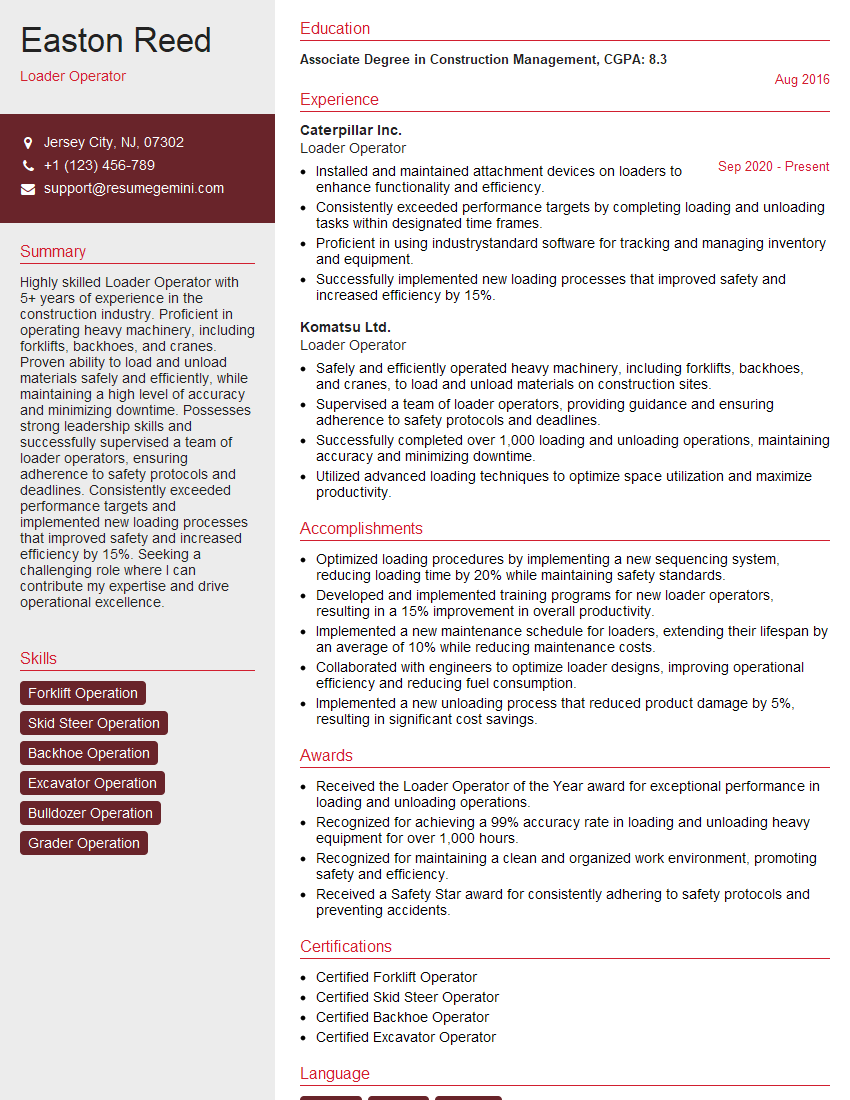
Loader Operator Resume Sample

Heavy Equipment Operator Resume Sample

Roller Operator Resume Sample
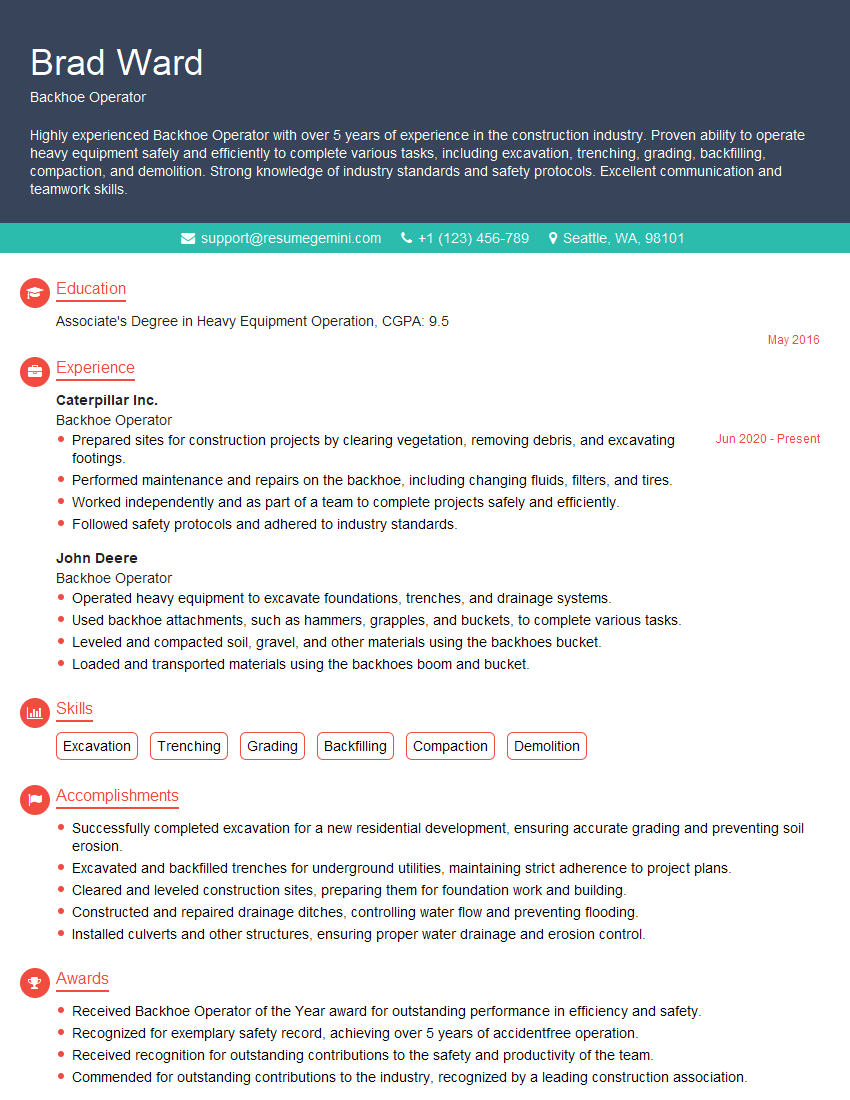
Backhoe Operator Resume Sample
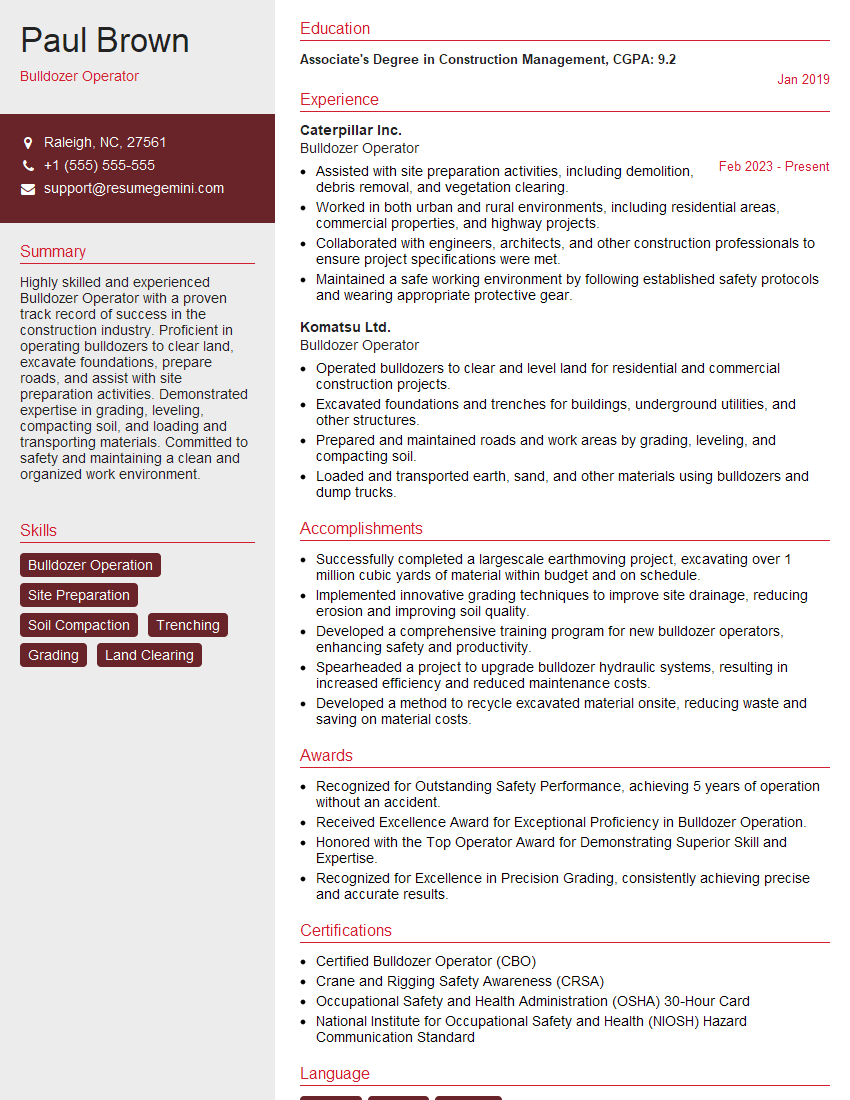
Bulldozer Operator Resume Sample
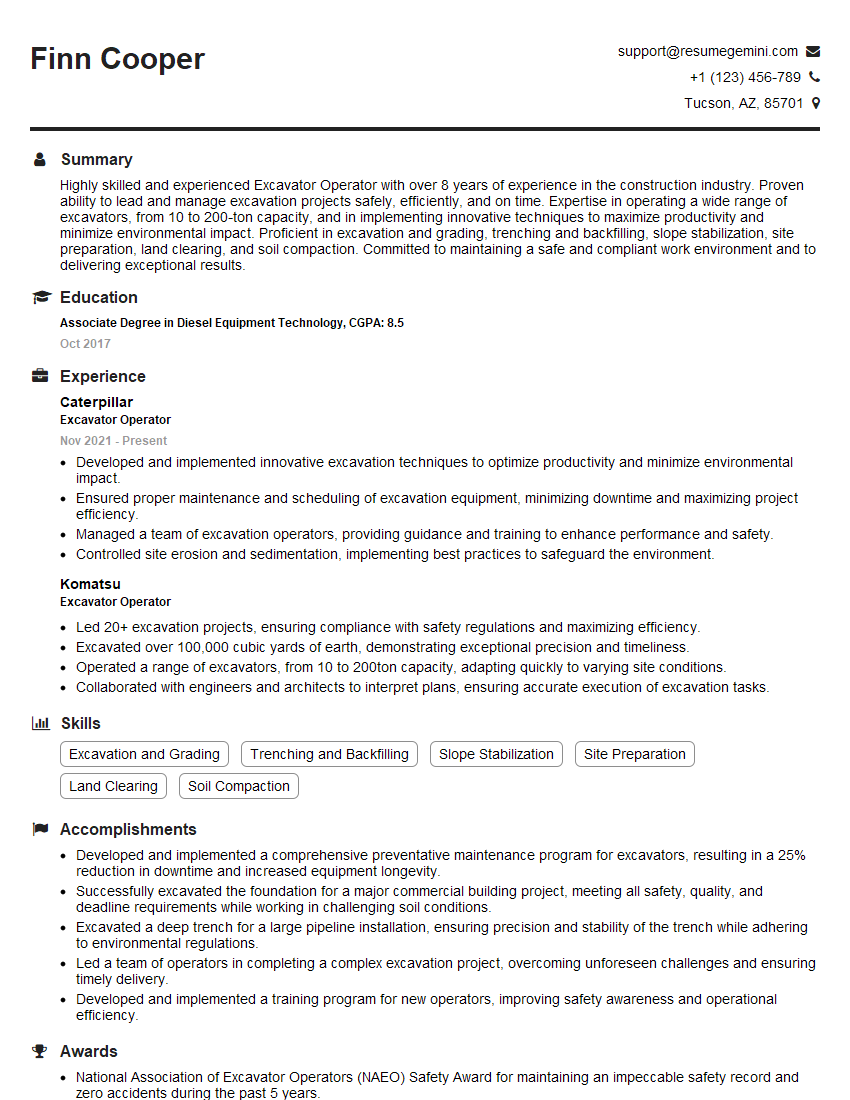
Excavator Operator Resume Sample
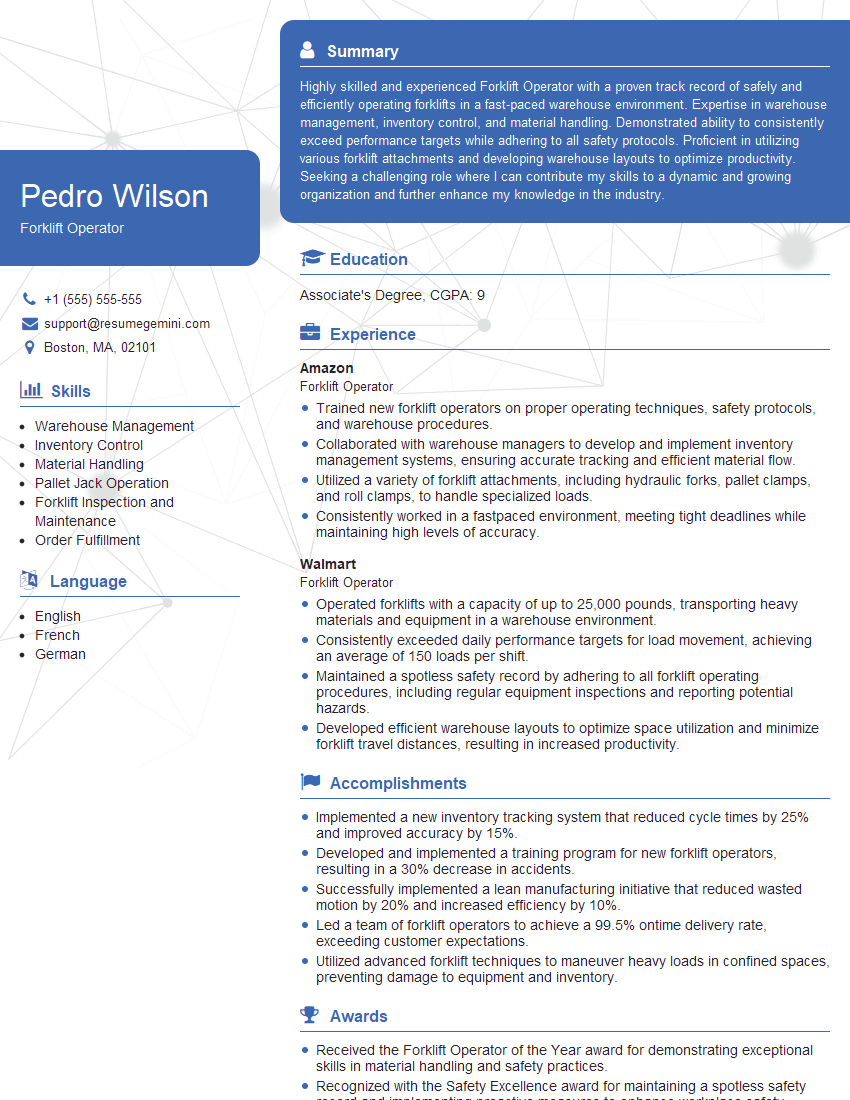
Forklift Operator Resume Sample

Grader Operator Resume Sample
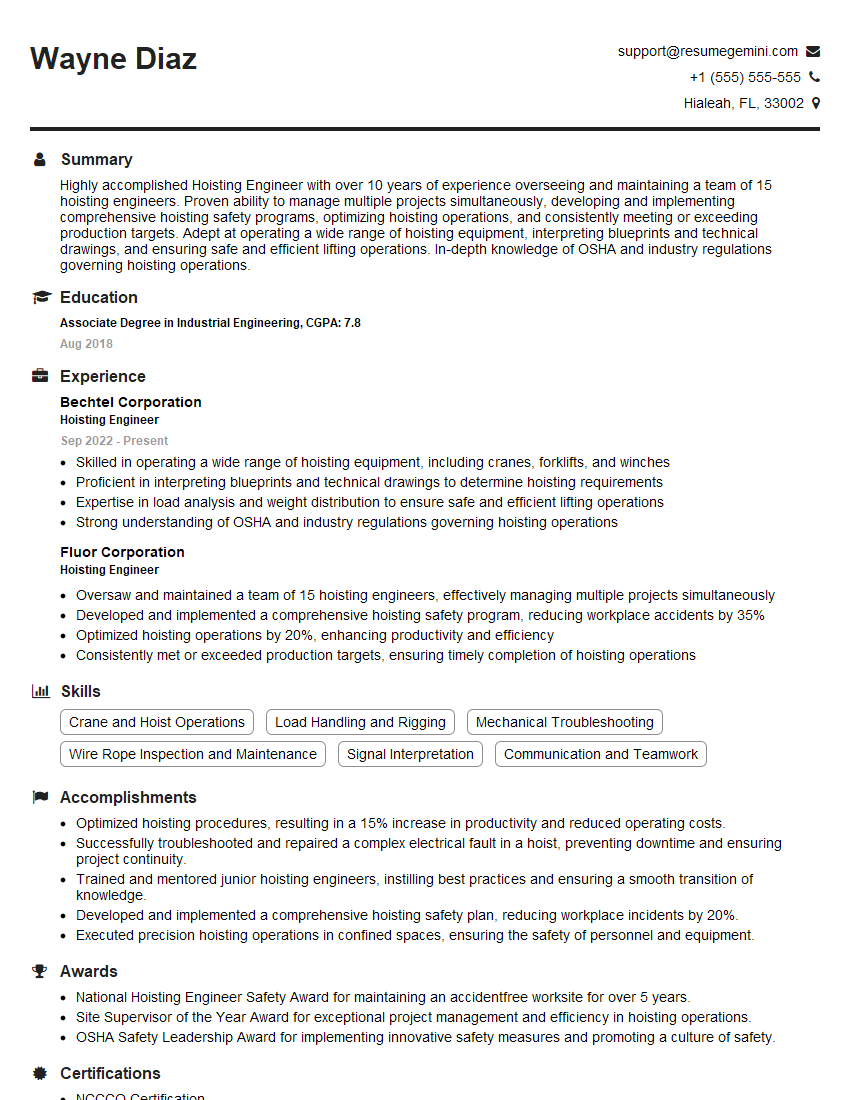
Hoisting Engineer Resume Sample

Rigger Resume Sample
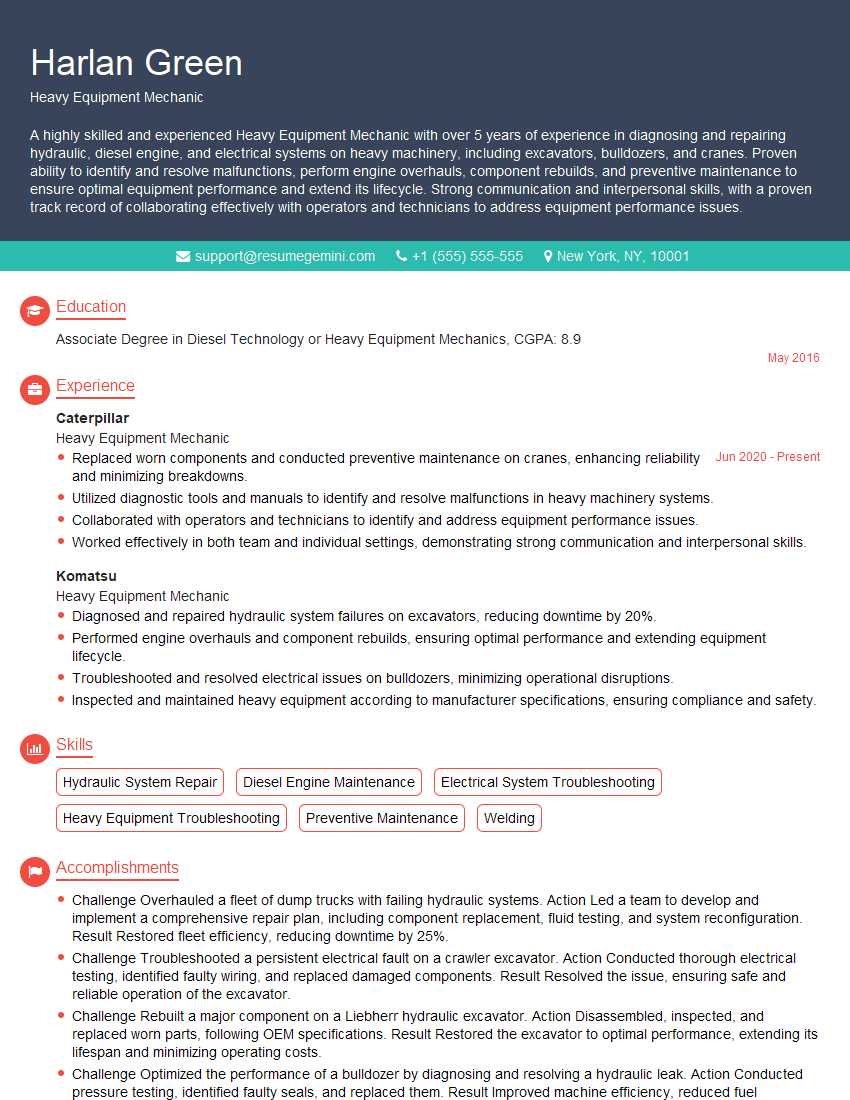
Heavy Equipment Mechanic Resume Sample

Mobile Crane Operator Resume Sample

Overhead Crane Operator Resume Sample

Tower Crane Operator Resume Sample
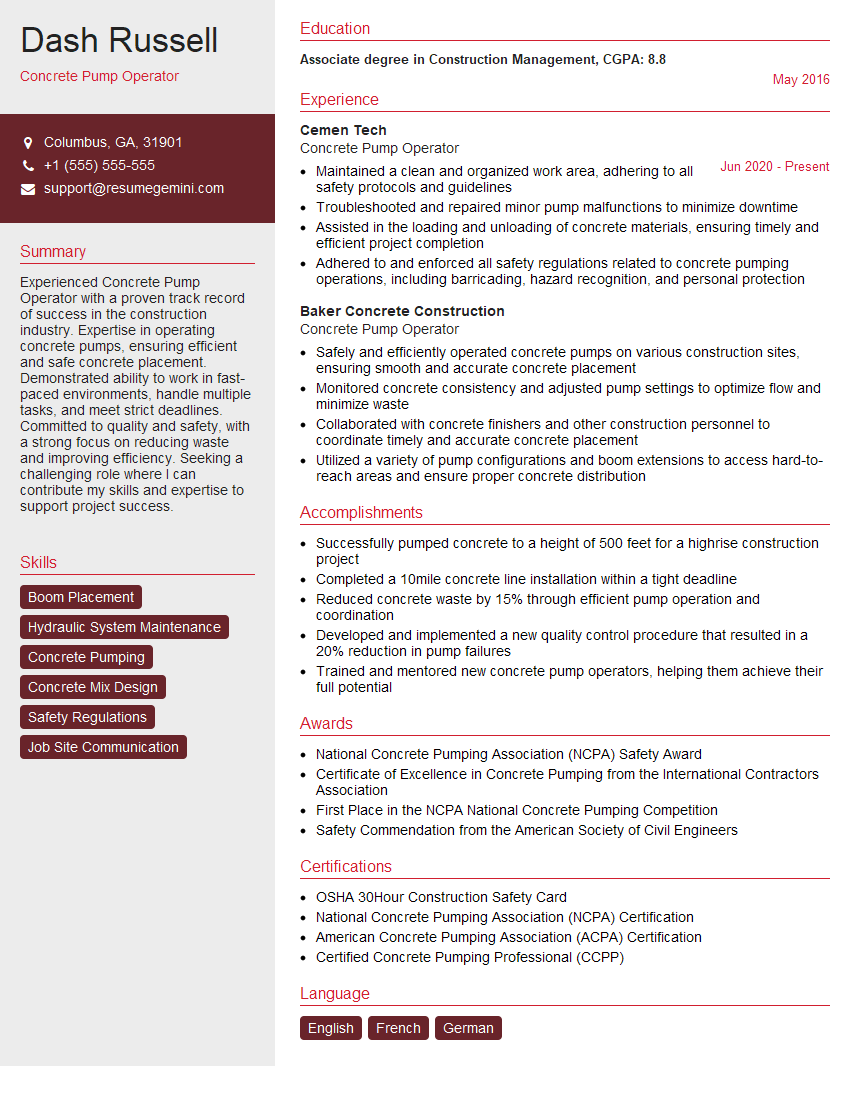
Concrete Pump Operator Resume Sample
- Crane Operator
- Loader Operator
- Heavy Equipment Operator
- Roller Operator
- Backhoe Operator
- Bulldozer Operator
- Excavator Operator
- Forklift Operator
- Grader Operator
- Hoisting Engineer
- Rigger
- Heavy Equipment Mechanic
- Mobile Crane Operator
- Overhead Crane Operator
- Tower Crane Operator
- Concrete Pump Operator
Explore more articles
Users Rating of Our Blogs
Share Your Experience
We value your feedback! Please rate our content and share your thoughts (optional).
What Readers Say About Our Blog
Very informative content, great job.
good