Cracking a skill-specific interview, like one for Operating Counterweight and Manual Fly Systems, requires understanding the nuances of the role. In this blog, we present the questions you’re most likely to encounter, along with insights into how to answer them effectively. Let’s ensure you’re ready to make a strong impression.
Questions Asked in Operating Counterweight and Manual Fly Systems Interview
Q 1. Describe the operation of a counterweight fly system.
A counterweight fly system is a sophisticated mechanism used in theaters and other performance venues to raise and lower scenery, lighting fixtures, and other equipment with ease and precision. Imagine a seesaw: one side holds the equipment you want to move (the load), and the other side holds counterweights. These counterweights balance the weight of the load, making it relatively easy to lift and lower using ropes and pulleys. The system is designed to ensure smooth and controlled movement, reducing the risk of accidents and strain on operators.
Q 2. Explain the function of each component in a counterweight system.
A counterweight system consists of several key components working in harmony:
- Batten: A long metal pipe or bar from which scenery and equipment are hung. Think of it as the ‘platform’ for your load.
- Counterweight Arbor: This is the location where the counterweights are housed, usually a metal structure within the fly tower.
- Counterweights (Iron): These are precisely weighted blocks of iron that balance the batten and its load. They’re carefully calculated to allow for smooth operation.
- Lift Lines: Strong ropes or cables that run from the batten, over sheaves (pulleys), and down to the counterweights. These lines are crucial for the actual lifting and lowering.
- Sheaves/Pulleys: These guide the lift lines, changing their direction and providing mechanical advantage.
- Locking Pins (or Brakes): Safety devices that lock the batten in place at a specific height, preventing accidental movement.
- Headblock: A system of pulleys at the top of the fly system that helps to multiply the mechanical advantage. It’s essentially a complex pulley arrangement which helps to distribute the load.
- Control Lines: These are thinner ropes that connect to the headblock system. Pulling these lines raises or lowers the batten, allowing for precise control. They’re easier to operate than the thick lift lines.
Q 3. How do you calculate the weight of a batten and its load?
Calculating the weight of a batten and its load is crucial for safe and efficient operation. The process involves several steps:
- Weigh the Batten: Use a calibrated scale to determine the weight of the empty batten itself.
- Weigh the Load: Weigh each item (lighting instruments, scenery pieces, etc.) that will hang from the batten.
- Calculate Total Load: Add the weight of the batten and all the items to get the total weight.
- Add a Safety Factor: It’s standard practice to add a safety factor (usually 10-20%) to the total weight. This accounts for unforeseen weight increases or potential errors in measurement.
- Determine Counterweight Needed: This total weight (including the safety factor) represents the amount of counterweight needed to balance the system.
Example: Let’s say a batten weighs 50 lbs, and the load (lighting and scenery) weighs 200 lbs. Adding a 10% safety factor to the 250 lbs total weight gives us 275 lbs of counterweight needed.
Q 4. What safety procedures are essential when operating a counterweight system?
Safety is paramount when operating a counterweight system. Essential procedures include:
- Proper Training: Only trained and authorized personnel should operate the system.
- Regular Inspections: The system should be regularly inspected for wear, tear, and any potential safety hazards. Look for frayed ropes, damaged pulleys, or loose bolts.
- Lockout/Tagout Procedures: When performing maintenance or repairs, a lockout/tagout procedure should be followed to prevent accidental activation of the system. This involves disabling the system’s power and locking the controls.
- Never Overload the System: Never exceed the system’s weight capacity. Overloading can lead to catastrophic failure.
- Use of Safety Lines (Secondary Safety): In many installations a secondary safety line is used which automatically engages if a lift line fails or breaks. This will prevent the batten from falling.
- Awareness of Surroundings: Operators should be aware of their surroundings and ensure that no one is in the path of the moving batten.
Q 5. How do you identify and address a weight imbalance in a counterweight system?
A weight imbalance is a serious safety issue. It can cause the system to become difficult or impossible to control, potentially leading to accidents. To identify an imbalance:
- Observe Movement: If the batten moves unexpectedly or with difficulty, an imbalance is likely.
- Check the Counterweights: Verify that the correct amount of counterweight is in place. Ensure they are securely locked in place.
- Visual Inspection: Look for any obvious signs of damage or wear on the lift lines, pulleys, and other components.
Addressing the imbalance: Carefully adjust the counterweights until the batten moves smoothly and balances effortlessly. If the problem persists, it may be necessary to seek professional help to diagnose the root cause. The addition of weight to the arbor is done via adding or subtracting counterweights; this is done by trained professionals.
Q 6. Explain the process of setting a counterweight system.
Setting a counterweight system involves carefully balancing the weight of the batten and its load with the counterweights. This process requires precision and a thorough understanding of the system’s mechanics. Here’s a breakdown of the process:
- Empty the Arbor: Remove all counterweights from the arbor.
- Weigh the Batten and Load: Accurately weigh both as described earlier, including the safety factor.
- Add Counterweights: Gradually add counterweights to the arbor, carefully monitoring the movement of the batten. The goal is to achieve a balanced state where the batten floats freely without requiring excessive force to raise or lower.
- Fine Tuning: Make small adjustments to the counterweight until the batten moves smoothly and effortlessly, even when heavily loaded.
- Locking the system: Once balanced and set, the system must be locked via its locking pins or brakes.
It’s crucial to perform this process methodically and with precision. Incorrectly setting the system can lead to safety hazards and inefficient operation.
Q 7. What are the limitations of a counterweight system?
Despite their versatility and efficiency, counterweight systems do have limitations:
- Space Requirements: These systems require significant vertical space in the fly tower to accommodate the counterweights and the mechanical components. They are not suitable for smaller venues with limited space.
- Weight Capacity: Each system has a maximum weight capacity; exceeding this limit can cause damage or failure.
- Maintenance and Inspection: Regular maintenance and inspections are necessary to ensure safety and operational reliability. Neglecting maintenance can lead to problems and safety hazards.
- Complexity: Counterweight systems are complex mechanisms that require specialized knowledge and training to operate and maintain.
- Cost: The initial cost of installing a counterweight system is substantial. For smaller venues or those with fewer needs, a manual system would be a better investment.
Q 8. Describe different types of counterweight systems.
Counterweight systems are the backbone of many stage rigging systems, balancing the weight of scenery and lighting to allow for smooth and effortless movement. Several types exist, each with its own advantages and drawbacks.
- Single Purchase System: This is the simplest type. A single rope runs from the load (e.g., a curtain) over a headblock, down to a counterweight arbor. The weight of the counterweight balances the weight of the load. Imagine a seesaw; the load is on one side, and the counterweight on the other.
- Two Purchase System (2:1): This system uses two ropes to lift the load, effectively halving the weight required on the counterweight arbor. It’s like having two people lift a heavy object instead of one.
- Three Purchase System (3:1): Similar to the two-purchase system, but uses three ropes, reducing the counterweight requirement even further. This is useful for very heavy loads.
- Multiple Purchase Systems: Systems with more than three ropes provide even greater mechanical advantage, allowing for very large loads to be controlled with relatively smaller counterweights. These are often found in large theatres.
The choice of system depends on factors like the weight of the load, the available headroom, and the desired ease of operation. A larger theatre with heavy scenery would likely use a multiple purchase system, while a smaller venue might use a simpler single or two-purchase system.
Q 9. How do you maintain a counterweight system?
Maintaining a counterweight system is crucial for safe and reliable operation. Regular maintenance includes:
- Regular Inspections: Visual checks for wear and tear on ropes, pulleys, the counterweight arbor, and the entire system’s structure. Look for frayed ropes, bent or damaged pulleys, and signs of rust or corrosion.
- Rope Lubrication: Periodically lubricate ropes to reduce friction and extend their lifespan. The type of lubricant should be appropriate for the rope material.
- Counterweight Adjustment: Ensure the counterweights are correctly balanced to the load. Improper balancing can lead to stress on the system and potential accidents.
- Pulley Alignment: Keep pulleys properly aligned to ensure smooth rope movement and prevent wear. Misalignment can cause ropes to bind or fray.
- Safety Checks: Regularly test the braking system and ensure all safety mechanisms (e.g., locks, limit switches) are functioning correctly. This often involves a qualified rigger.
A well-maintained counterweight system will operate smoothly and safely for many years. Neglecting maintenance can lead to costly repairs and potentially dangerous situations.
Q 10. What are the common problems encountered in counterweight systems, and how are they resolved?
Common problems in counterweight systems often stem from neglect or misuse:
- Rope Wear and Tear: Frayed or broken ropes are a major safety hazard. Solution: Regular inspection and timely replacement of damaged ropes.
- Pulley Misalignment: This causes extra friction and wear. Solution: Adjust pulleys to ensure proper alignment.
- Counterweight Imbalance: Incorrect counterweight settings can cause unpredictable movement. Solution: Careful recalibration and adjustment of counterweights.
- Brake Failure: A malfunctioning brake system is extremely dangerous. Solution: Regular inspection, maintenance and immediate replacement of faulty parts.
- Rust and Corrosion: Particularly a problem in damp environments. Solution: Regular cleaning and application of appropriate anti-corrosive treatments.
Addressing these problems promptly is essential. Ignoring small issues can quickly escalate into major and potentially dangerous problems. It is always best to consult a qualified rigger if you are unsure how to proceed.
Q 11. Describe the operation of a manual fly system.
Manual fly systems use hand-operated ropes and pulleys to raise and lower scenery or lighting. They’re often simpler and less expensive than counterweight systems but require more physical effort. The operation typically involves:
- Rope Handling: Manually pulling or releasing ropes to raise or lower the load.
- Sheaves and Pulleys: A series of pulleys redirects the rope to achieve the desired mechanical advantage.
- Locking Mechanisms: These mechanisms secure the load at a specific height. This could be a simple knot, a clamp, or a more sophisticated locking system.
Imagine a well on a farm. The bucket is the load, the rope is the operating mechanism, and the pulleys help raise and lower the bucket more efficiently. Manual fly systems operate on a similar principle.
Q 12. What are the advantages and disadvantages of manual fly systems compared to counterweight systems?
Manual and counterweight systems have distinct advantages and disadvantages:
| Feature | Manual Fly System | Counterweight System |
|---|---|---|
| Effort Required | High; physically demanding | Low; requires minimal effort |
| Cost | Lower initial cost | Higher initial cost |
| Maintenance | Relatively simple | More complex; requires specialized maintenance |
| Speed of Operation | Slow | Fast and precise |
| Load Capacity | Limited by human strength | High; can lift very heavy loads |
| Precision | Less precise | Very precise |
The choice between them depends on the specific needs of the production. A small theatre might opt for a manual system due to its lower cost, while a large professional theatre would typically use a counterweight system for its speed, precision, and high load capacity.
Q 13. Explain the importance of proper rope maintenance in a manual fly system.
Proper rope maintenance in a manual fly system is critical for safety and longevity. Ropes are subjected to significant stress, and neglecting maintenance can lead to breakage and potential accidents. This includes:
- Regular Inspection: Check ropes for fraying, cuts, or other damage. Replace any damaged sections immediately.
- Cleaning: Regularly clean ropes to remove dirt and debris, which can accelerate wear.
- Lubrication: Use an appropriate lubricant to reduce friction and extend the rope’s lifespan. Avoid excessive lubrication, which can attract dirt.
- Storage: Store ropes properly when not in use, away from direct sunlight and moisture.
Imagine a climbing rope; regular inspection and maintenance are crucial to ensure its strength and safety. The same applies to ropes in a manual fly system. A broken rope can lead to a dangerous situation.
Q 14. How do you ensure the safe operation of a manual fly system?
Ensuring safe operation of a manual fly system involves several key measures:
- Training: Only trained and authorized personnel should operate the system. This involves a thorough understanding of the system’s operation and safety procedures.
- Regular Inspection: Before each use, thoroughly inspect all components for damage or wear.
- Load Testing: Regularly test the system’s capacity and ensure that the load does not exceed its limits.
- Safety Devices: Use appropriate safety devices such as locking mechanisms to secure the load at the desired height. Never rely solely on human strength to hold a load.
- Emergency Procedures: Establish clear emergency procedures in case of equipment failure or accidents.
Safety should always be the top priority when operating a manual fly system. Following established safety protocols and regular maintenance are essential to preventing accidents.
Q 15. Describe the different types of ropes used in manual fly systems.
Manual fly systems utilize specialized ropes designed to withstand significant loads and repeated stress. The choice of rope depends on factors like weight capacity, system complexity, and environmental conditions. Common types include:
- Manila Rope: A natural fiber rope, relatively inexpensive, but prone to stretching and degradation with exposure to moisture and UV light. It’s rarely used in professional settings due to its limitations.
- Synthetic Fiber Ropes (e.g., Nylon, Polyester, Polypropylene): These are far more common. They offer superior strength-to-weight ratios, better resistance to rot and UV degradation, and less stretch than manila. Nylon is known for its shock absorption, while polyester boasts high tensile strength. Polypropylene offers good floatation, making it suitable for water-adjacent setups, but is less resistant to UV degradation.
- Steel Wire Rope: Used for extremely heavy loads and demanding applications. Offers exceptional strength but requires careful handling to avoid damage and injury. It’s crucial to regularly inspect wire ropes for fraying, corrosion, and broken strands.
Selecting the appropriate rope is critical for safety and efficiency. The rope’s diameter and construction must match the system’s load requirements and operating procedures. Incorrect rope selection can lead to catastrophic failure.
Career Expert Tips:
- Ace those interviews! Prepare effectively by reviewing the Top 50 Most Common Interview Questions on ResumeGemini.
- Navigate your job search with confidence! Explore a wide range of Career Tips on ResumeGemini. Learn about common challenges and recommendations to overcome them.
- Craft the perfect resume! Master the Art of Resume Writing with ResumeGemini’s guide. Showcase your unique qualifications and achievements effectively.
- Don’t miss out on holiday savings! Build your dream resume with ResumeGemini’s ATS optimized templates.
Q 16. What are the safety procedures for operating a manual fly system with multiple lines?
Operating a manual fly system with multiple lines requires meticulous teamwork and strict adherence to safety protocols. The key is clear communication and designated roles. Here’s a breakdown of essential safety procedures:
- Designated Spotters: At least one, ideally two, experienced spotters should constantly monitor all lines and warn of any potential hazards.
- Clear Communication: Use hand signals or a pre-agreed verbal system to coordinate raising, lowering, and locking lines. Miscommunication can lead to serious accidents.
- Load Testing: Before any performance, conduct a thorough load test with the appropriate weights to ensure all lines and mechanisms function correctly.
- Redundancy Checks: Verify that all lines are properly secured and that there’s enough overlap to provide redundancy. This minimizes the consequences should one line fail.
- Never Override Safety Mechanisms: Any attempt to bypass safety features is absolutely unacceptable and will result in immediate cessation of operations.
- Proper Line Management: Keep lines organized and untangled to avoid snags and accidental releases.
Remember, a well-rehearsed team is crucial. Regular training and drills are essential to prepare for unforeseen circumstances and ensure the safety of personnel and equipment.
Q 17. How do you handle emergency situations in a manual fly system?
Emergency situations in a manual fly system demand immediate and decisive action. The primary goal is to prevent injury and further damage.
- Controlled Descent: If a line fails or a load starts to fall unexpectedly, the immediate priority is to control the descent, using backup lines or other available equipment if necessary. Speed is of the essence.
- Evacuation of Personnel: Clear the area immediately to prevent injuries from falling objects.
- Secure the System: After securing the load, assess the situation to identify the cause of the emergency. Do not attempt to restart the system until the problem has been fixed and a thorough safety check is conducted.
- Report the Incident: Document the event and initiate an investigation to determine the root cause, implement corrective measures, and prevent future incidents.
- Emergency Stops: Ensure every crew member is aware of the location and function of emergency stops and how to use them.
Regular safety training and drills focusing on emergency procedures are paramount. A well-trained team can respond swiftly and effectively, mitigating potential risks and preventing accidents.
Q 18. What are the signs of a worn or damaged rope in a manual fly system?
Recognizing signs of worn or damaged rope is crucial for preventing accidents. Regular inspections are essential. Look for these indicators:
- Fraying or Broken Strands: This is a major warning sign indicating significant weakening. Replace the rope immediately.
- Cuts or Abrasions: Even small cuts can drastically reduce rope strength. Assess the damage and replace if necessary.
- Excessive Wear or Flattening: Overuse and constant friction can flatten or weaken the rope. Replace it if it shows significant signs of wear.
- Stiffness or Brittle Feeling: Aging and exposure to UV light can make ropes brittle and prone to breaking. This requires immediate replacement.
- Discoloration or Staining: Significant discoloration may indicate chemical damage or internal breakdown of the rope fibers.
- Unusual Odor: An unusual smell may indicate chemical degradation.
Remember, when in doubt, replace it. The cost of a new rope is far less than the cost of a serious injury.
Q 19. How do you inspect a manual fly system for safety issues?
Inspecting a manual fly system involves a systematic, multi-step process. It’s important to perform a comprehensive inspection regularly and before each use:
- Visual Inspection: Carefully examine all ropes, pulleys, blocks, and other components for any signs of wear, damage, or corrosion. Pay close attention to areas subject to high stress and friction.
- Load Testing: Test each line individually with a calibrated weight to ensure its strength and ability to withstand its intended load. Never exceed the working load limit.
- Mechanism Checks: Inspect all locking mechanisms, brakes, and other safety devices to ensure they function correctly and reliably. Check for smooth operation and proper engagement.
- Structural Integrity: Assess the structural integrity of the supporting framework, beams, and other load-bearing components. Ensure they are sound and free from damage or deterioration.
- Documentation: Record the inspection results thoroughly. Note any discrepancies or issues found, along with any corrective actions taken.
A thorough and documented inspection is crucial to prevent accidents and maintain the structural soundness of your manual fly system. Regular maintenance and prompt repairs are essential for the safe and efficient operation of the system.
Q 20. Explain the difference between single-purchase and double-purchase systems.
The difference between single-purchase and double-purchase systems lies in their mechanical advantage and the resulting force required to lift a load. Think of it like gears in a bicycle: more gears (purchases) mean less effort to lift the same weight.
- Single-Purchase System: This is the simplest configuration. The rope is attached directly to the load, runs through a pulley system, and is then attached to the operating mechanism. The mechanical advantage is 1:1, meaning you need to pull the rope with the same force as the weight of the load. It is simple, but physically demanding for heavy weights.
- Double-Purchase System: This utilizes two sets of pulleys and ropes, effectively increasing the mechanical advantage. For every foot of rope pulled, the load only moves half a foot. This means a 2:1 mechanical advantage, allowing you to lift twice the weight with the same amount of force compared to a single-purchase system.
The choice between systems depends on the weight being lifted and the available human power. Double-purchase systems are advantageous for heavier loads, making them less strenuous for the operator, but require more complex rigging.
Q 21. What is the purpose of a locking mechanism in a manual fly system?
Locking mechanisms are safety-critical components in manual fly systems. They prevent accidental release or slippage of the load, ensuring its secure position at any height. Several types of locking mechanisms exist:
- Cam Locks: These are mechanical devices that use cams to firmly grip the rope, preventing movement. They are commonly found in simpler systems.
- Ratchet and Pawl Mechanisms: These use a ratchet wheel and a pawl to engage and hold the rope at a specific position. They are reliable and capable of holding significant weight.
- Brake Systems: These can be manually operated or automatically engaged, using friction to control and stop the movement of the load. They are often used in larger and more complex systems.
The choice of locking mechanism depends on several factors, including the weight of the load, the complexity of the system, and the safety requirements. Regular inspection and maintenance are crucial to ensure that locking mechanisms function correctly and reliably. A malfunctioning lock can have catastrophic consequences.
Q 22. How do you calculate the mechanical advantage of a manual fly system?
Calculating the mechanical advantage of a manual fly system is crucial for safe and efficient operation. It essentially tells us how much easier the system makes lifting a load. The mechanical advantage (MA) is the ratio of the load weight to the effort required to lift it. In a simple counterweight system, this is directly related to the rope system’s arrangement.
For example, if a single-purchase system (one rope lift) is used, the MA is 1:1, meaning you need to pull with the same force as the weight of the load. However, with a two-purchase system (two ropes lifting), the MA is 2:1; you only need to pull with half the force of the load. This is because the effort is distributed across multiple ropes.
To calculate the MA, you’d determine the number of ropes supporting the load and divide the load weight by the number of ropes. For more complex systems with multiple pulleys and sheaves, the calculation becomes more involved, often requiring consideration of the pulley arrangement and frictional losses. A qualified rigger can calculate this precisely for any system.
Q 23. Describe the process of attaching and securing a load to a fly system.
Attaching and securing a load to a fly system requires meticulous attention to detail. Safety is paramount. First, the load must be correctly rigged using appropriate hardware such as shackles, strong wire rope clips, and slings—never relying on knots alone for safety-critical load-bearing. The hardware’s weight capacity must exceed the load’s weight by a significant safety factor (usually at least 5:1).
Next, the load is carefully attached to the fly system’s lifting point, usually a bridle or a single point of attachment. The weight is evenly distributed to prevent imbalances and twisting. Once attached, the load is tested by carefully raising it a few inches and checking for any signs of slippage or instability. This is called a ‘test lift’. The load should be secured with safety catches or locking mechanisms to prevent accidental release. Finally, a thorough inspection of all rigging points is done to confirm secure attachment before proceeding.
Imagine lifting a heavy lighting fixture. You wouldn’t just tie a rope around it; you’d use a properly rated chain hoist, shackles, and safety clips to ensure it remains securely fixed throughout the entire operation.
Q 24. How do you properly secure a batten to the fly system?
Securing a batten (a horizontal bar from which lighting and scenery are hung) to a fly system is a crucial part of stage rigging. Battens are typically attached using a series of specialized hardware, including:
- Pipe clamps: Securely fasten the batten to the hoisting points.
- Safety chains or cables: Provide redundant load support, crucial for safety in case of primary failure.
- Load pins: Secure the hoisting lines to the batten to ensure even weight distribution.
The batten must be carefully aligned with the hoisting points, ensuring even weight distribution and preventing twisting. Again, safety chains or cables add a crucial secondary layer of security and a weight capacity check must be performed before raising the batten. Any signs of wear or damage on the hardware must be immediately addressed.
Improperly secured battens can lead to catastrophic failures, so precise and careful attention to detail is absolutely essential. Think of it like building a bridge – every component must be correctly connected for the structure to be sound.
Q 25. What are the legal and safety regulations related to operating fly systems?
Legal and safety regulations for operating fly systems vary depending on location, but common themes emphasize rigorous training, regular inspections, and adherence to safety protocols.
These regulations often mandate:
- Competent Personnel: Only trained and certified personnel should operate fly systems.
- Regular Inspections: Fly systems and rigging hardware should be inspected regularly for wear and tear and maintained by qualified professionals.
- Load Testing: Regular load testing ensures the system can safely handle its designed load capacity.
- Emergency Procedures: Clear emergency procedures must be in place and all operators thoroughly trained on their implementation.
- Safety Equipment: Appropriate safety equipment, including harnesses and fall protection, should be used.
Failure to comply with these regulations can lead to severe penalties, including fines, suspension of operations, and even legal action in case of accidents. Adherence to these regulations is not just a legal requirement; it’s a fundamental commitment to the safety of all involved.
Q 26. How do you communicate effectively with other crew members while operating a fly system?
Effective communication is paramount in fly system operation. A clear and standardized system of hand signals, verbal cues, and pre-determined procedures minimizes the risk of miscommunication. This is especially crucial in fast-paced situations where rapid adjustments may be necessary.
Common methods include:
- Hand Signals: Universally understood hand signals indicate hoisting, lowering, stopping, and other critical actions.
- Verbal Cues: Clear and concise verbal commands, with confirmation from the receiving party, enhance precision.
- Checklists and Procedures: Detailed checklists and standardized procedures help to reduce errors and ensure consistency.
- Dedicated Communication Systems: Two-way radios provide immediate communication in situations where hand signals or shouting might be ineffective.
Clear communication avoids misunderstandings that could lead to accidents. Imagine shouting instructions during a crucial scene change – a misheard command could have dire consequences. That’s why clear communication is the cornerstone of safe and efficient operation.
Q 27. What are the common causes of accidents involving fly systems?
Accidents involving fly systems frequently stem from a combination of factors, most notably:
- Improper Rigging: Incorrectly attached loads, inadequate hardware, or improper weight distribution.
- Lack of Training: Insufficient training or experience leads to errors in judgment and operation.
- Equipment Failure: Malfunctioning equipment, such as worn cables or broken pulleys.
- Poor Communication: Misunderstandings between crew members.
- Negligence: Failure to follow safety protocols or disregarding warning signs.
- Overloading: Exceeding the system’s weight capacity.
Many accidents are preventable through proper training, regular maintenance, and strict adherence to safety regulations. Every aspect of the system – from the hardware to the people operating it – must function flawlessly for safe operation.
Q 28. Describe your experience troubleshooting problems with counterweight or manual fly systems.
In my experience, troubleshooting fly system problems often involves a systematic approach. It starts with a thorough visual inspection to identify any obvious issues like frayed cables, damaged pulleys, or loose connections. Then I carefully check the counterweight system (if applicable) for proper balance and function. I might use a load cell to verify the actual weight of the counterweight against the design specifications.
For example, if a counterweight system is failing to lift a load, I’d check for the following:
- Counterweight Balance: Is the counterweight appropriately balanced against the load?
- Rope Friction: Are there excessive friction points in the system?
- Sheave Alignment: Are the pulleys aligned correctly?
- Rope Condition: Is the rope frayed or damaged?
If the problem persists, I might consult schematics and manufacturer documentation. In cases of complex issues, contacting a specialist may be necessary. My approach always emphasizes prioritizing safety – if there is any doubt about the system’s integrity, I would always err on the side of caution and take it offline for expert evaluation.
Key Topics to Learn for Operating Counterweight and Manual Fly Systems Interview
- Understanding Counterweight Systems: Mechanics of weight distribution, balancing techniques, and safety protocols.
- Manual Fly Systems Operation: Safe and efficient operation of hand-lines, ropes, and related equipment; troubleshooting common issues.
- System Components and Maintenance: Identifying and understanding the function of each component; basic maintenance procedures and preventative measures.
- Safety Regulations and Procedures: Adherence to industry best practices and safety regulations for both counterweight and manual fly systems.
- Troubleshooting and Problem-Solving: Identifying and resolving common malfunctions, understanding the cause-and-effect relationships within the systems.
- Load Calculations and Weight Distribution: Accurate calculation of weight requirements and ensuring proper balance within the system.
- Practical Applications: Discussing real-world scenarios involving the operation and maintenance of these systems in various settings (e.g., theatre, stage production).
- Emergency Procedures: Knowing how to react to and manage emergencies related to system malfunctions or unexpected events.
Next Steps
Mastering Operating Counterweight and Manual Fly Systems opens doors to exciting career opportunities in technical theatre, stage production, and related fields. These skills are highly valued, demonstrating your technical aptitude, problem-solving abilities, and commitment to safety. To maximize your job prospects, it’s crucial to present your expertise effectively. Creating an ATS-friendly resume is key to getting your application noticed. ResumeGemini is a trusted resource that can help you build a professional resume that highlights your skills and experience. We offer examples of resumes tailored to Operating Counterweight and Manual Fly Systems to help you get started. Invest time in crafting a compelling resume – it’s your first impression and a vital step in landing your dream job.
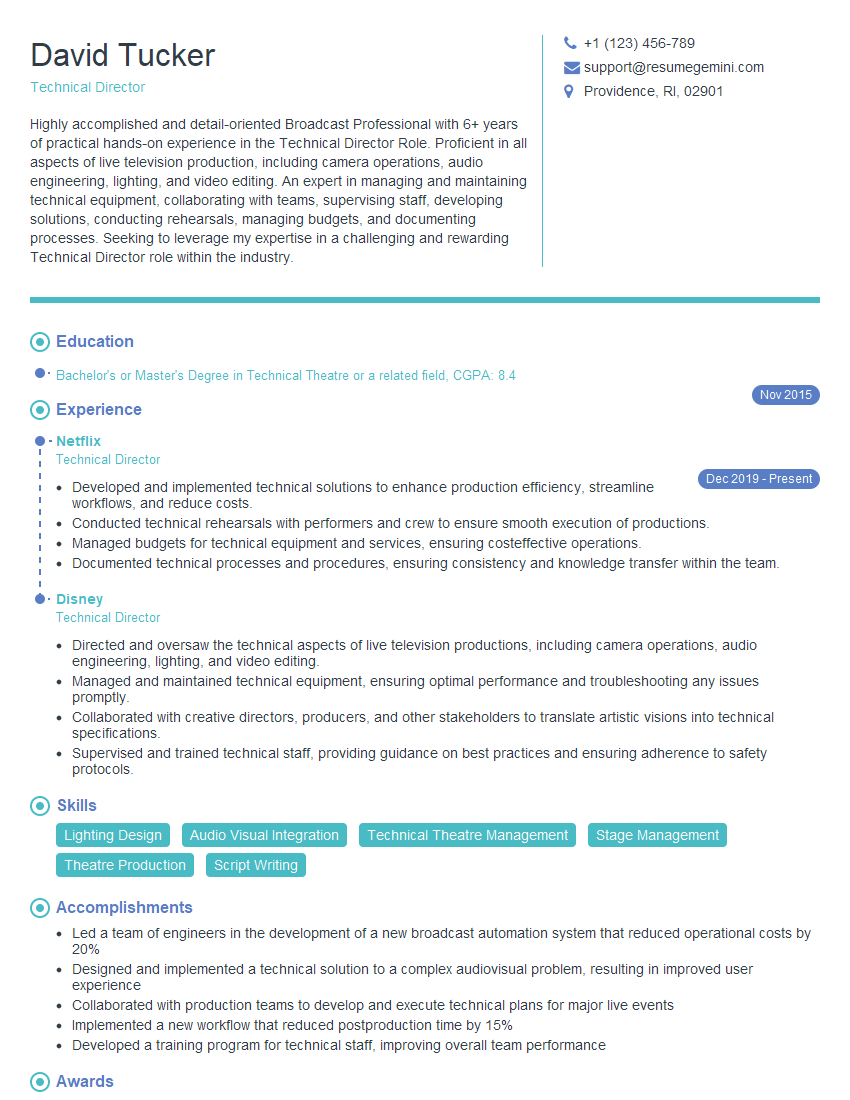
Technical Director Resume Sample
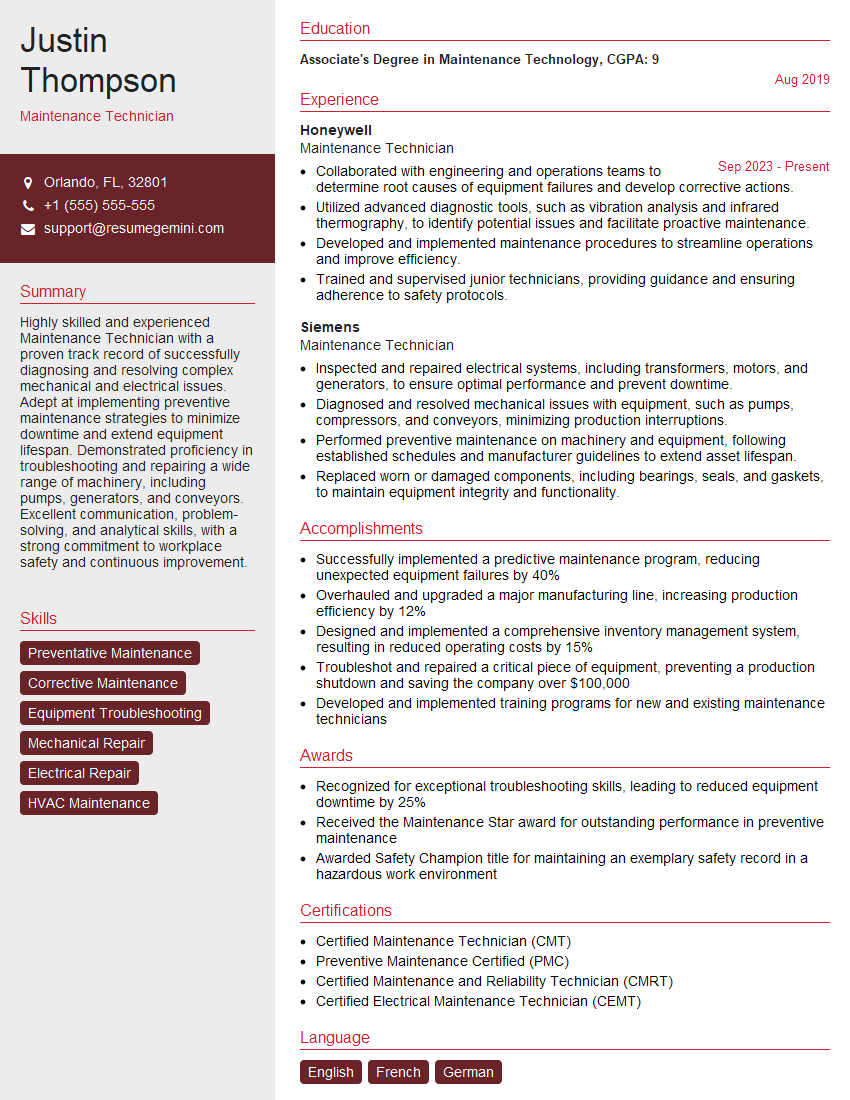
Maintenance Technician Resume Sample
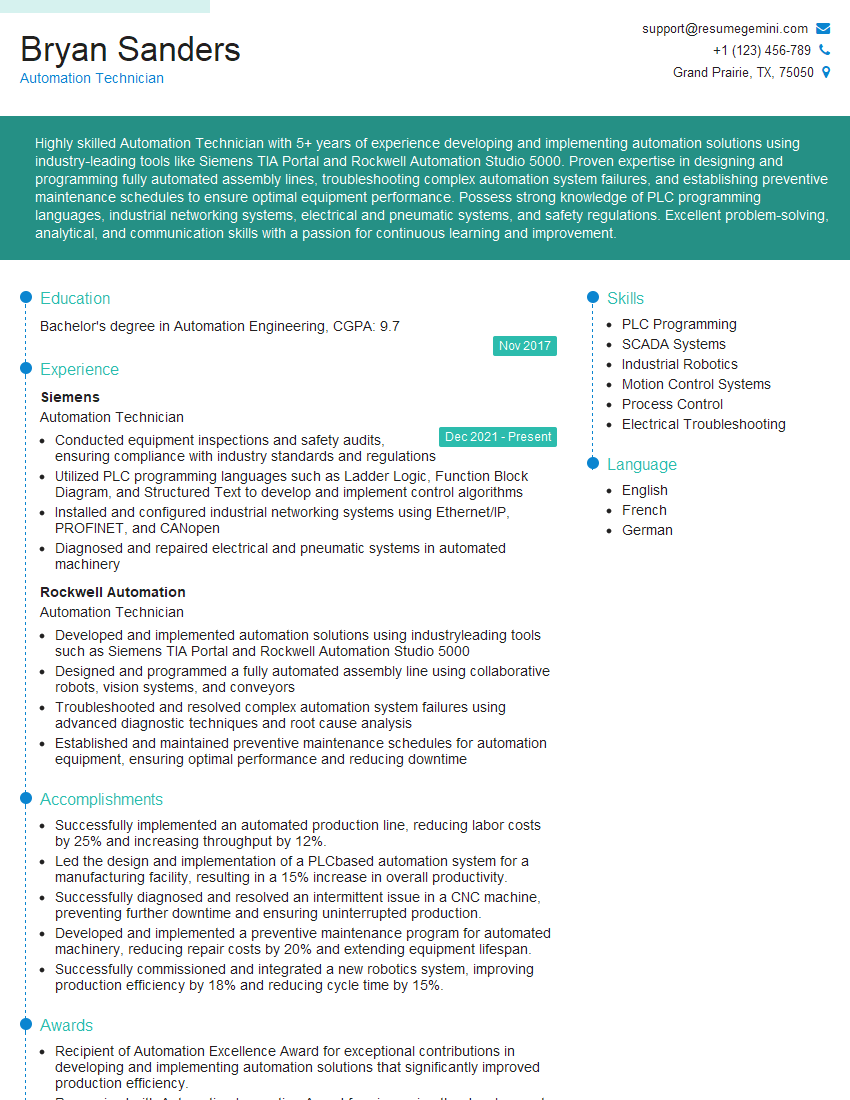
Automation Technician Resume Sample
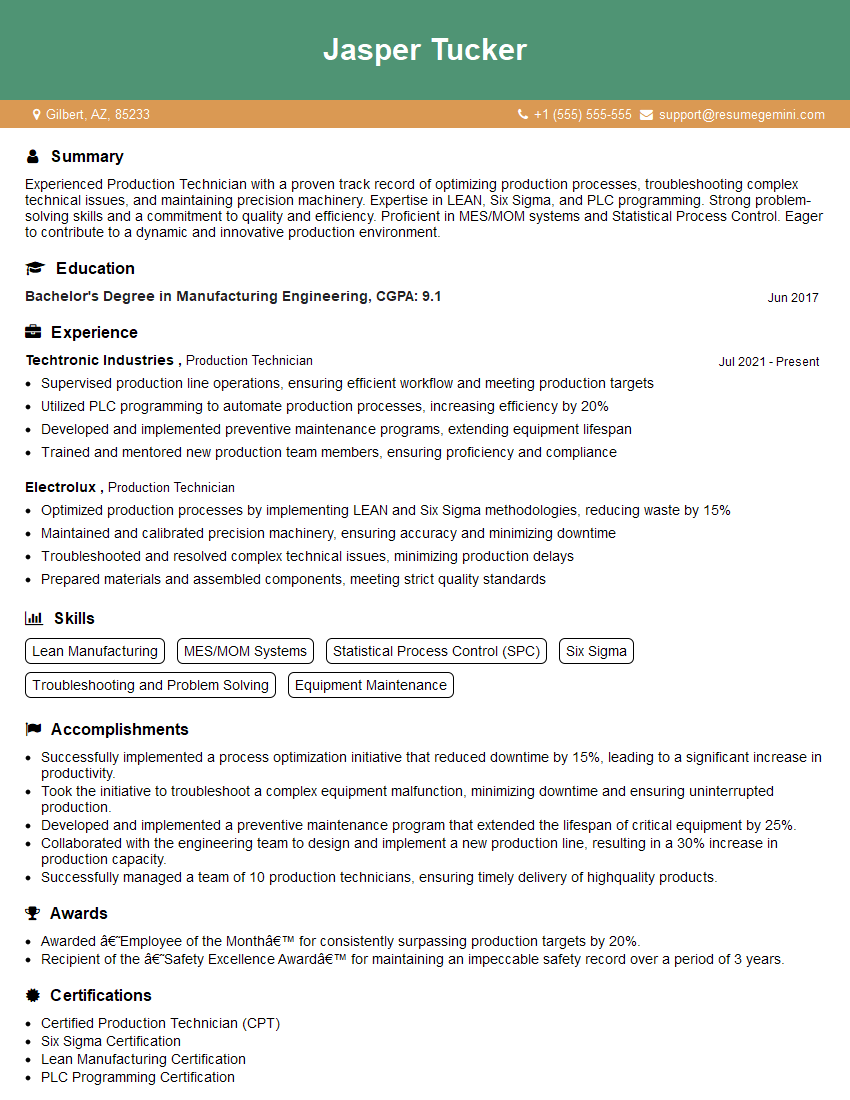
Production Technician Resume Sample
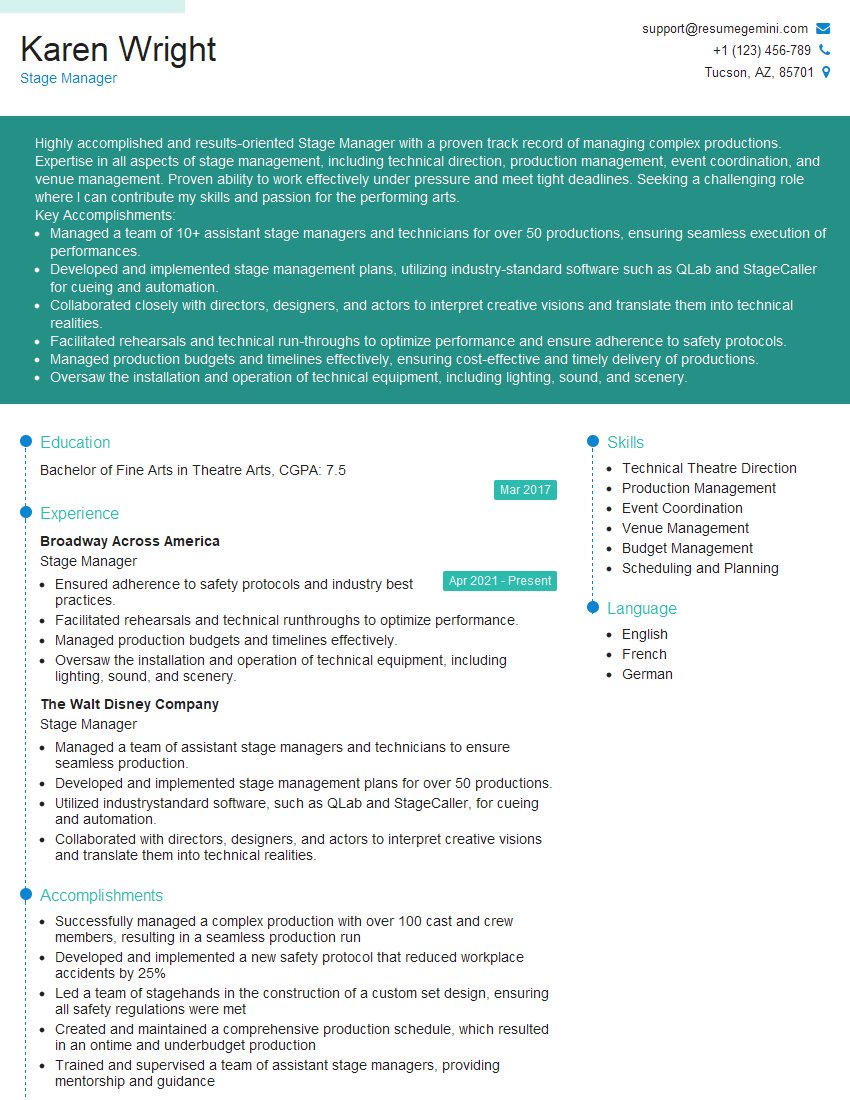
Stage Manager Resume Sample
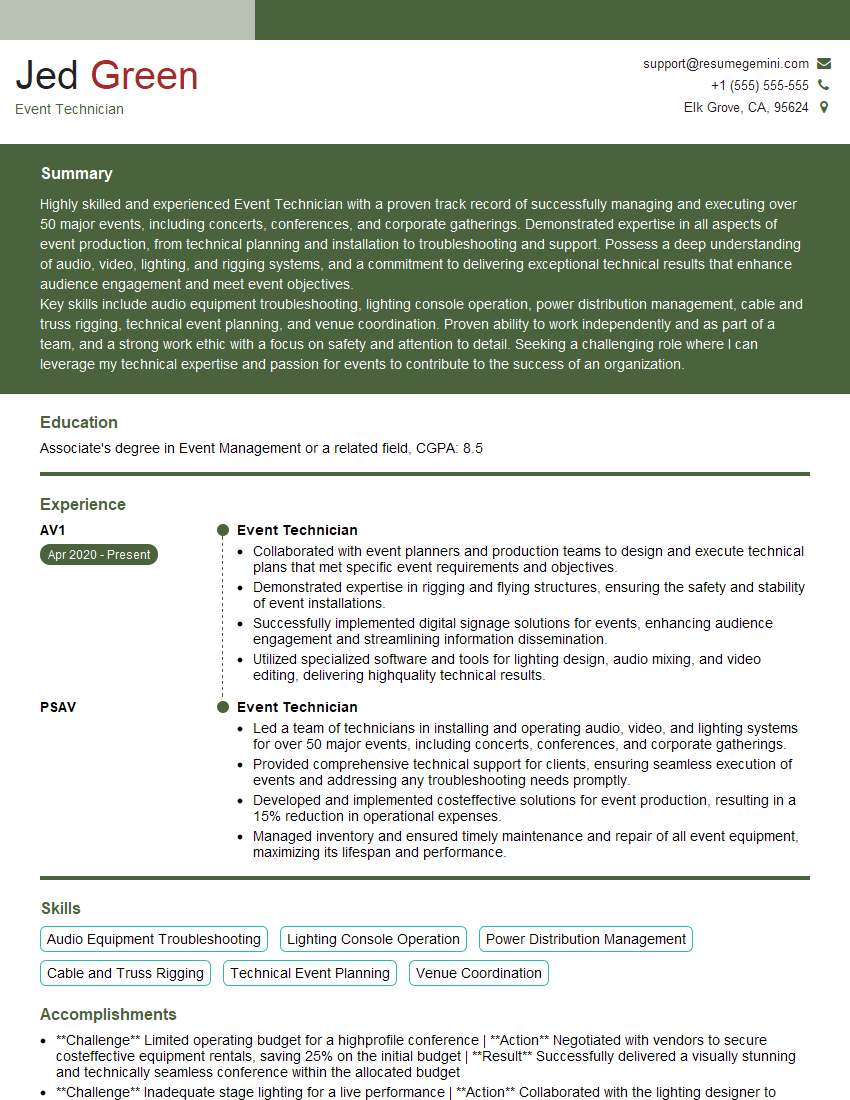
Event Technician Resume Sample

Stagehand Resume Sample
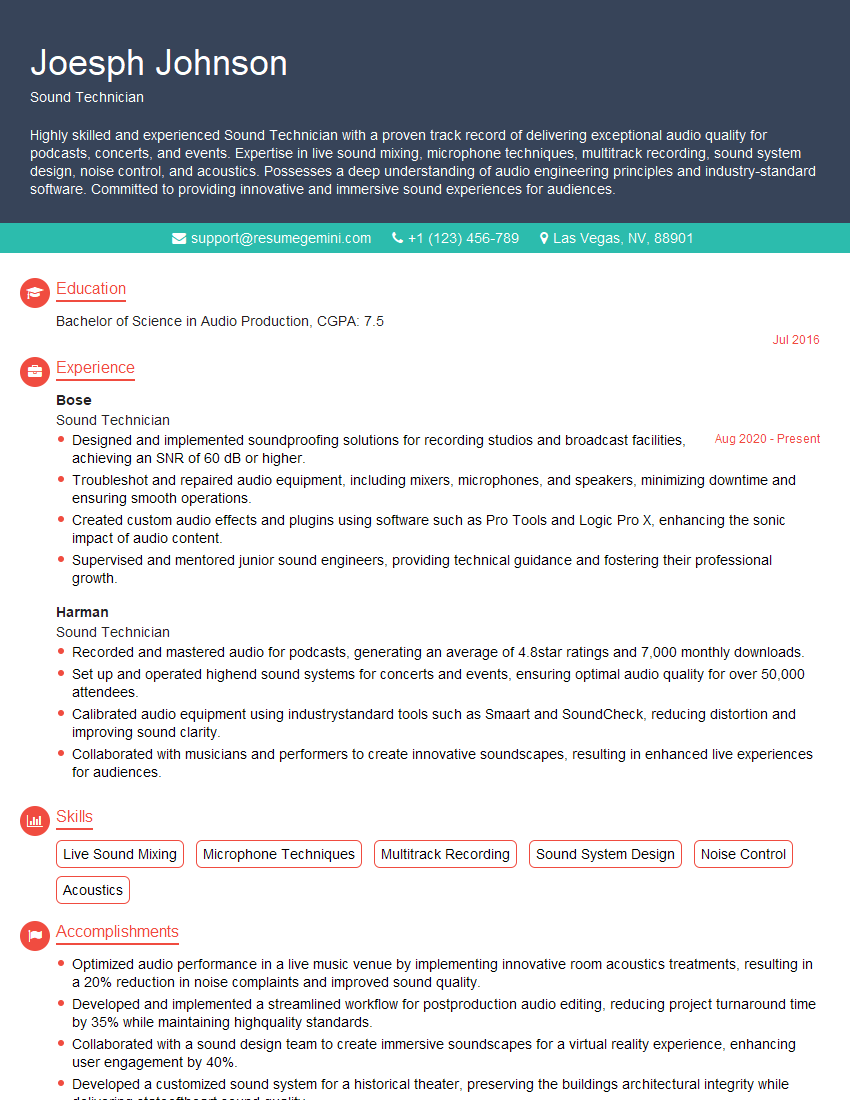
Sound Technician Resume Sample
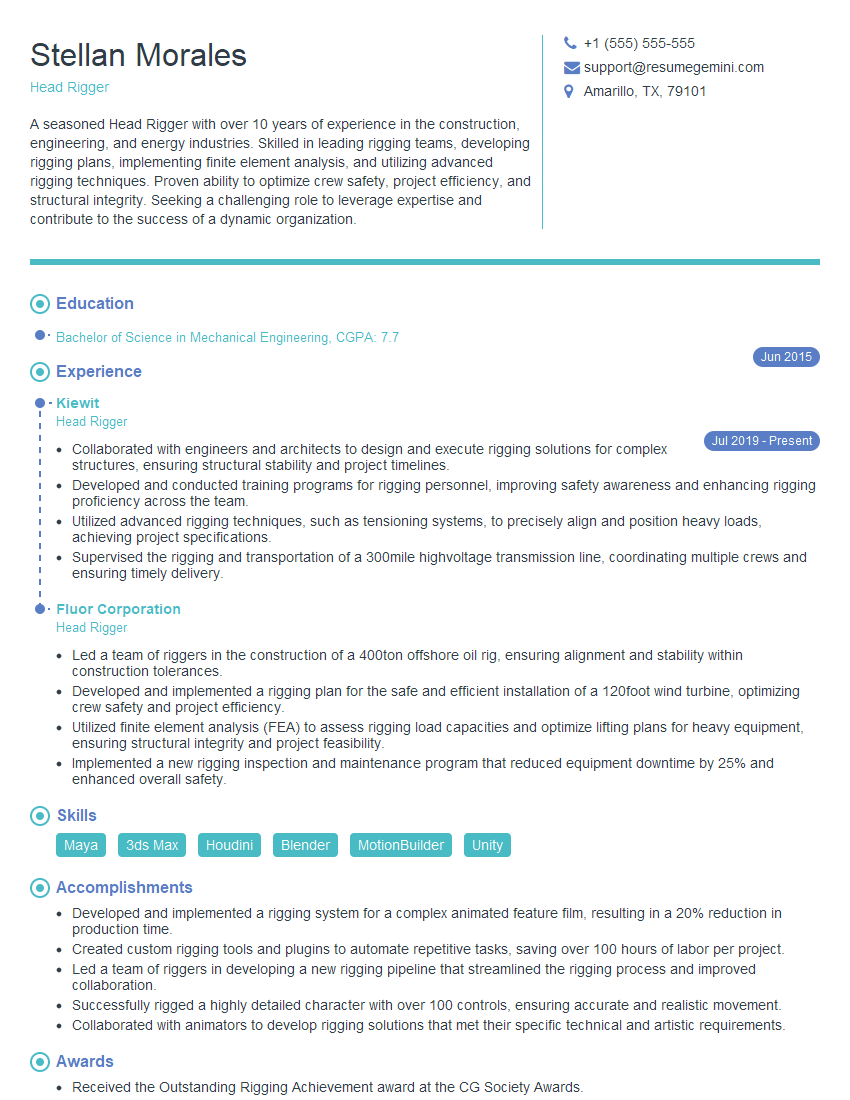
Head Rigger Resume Sample
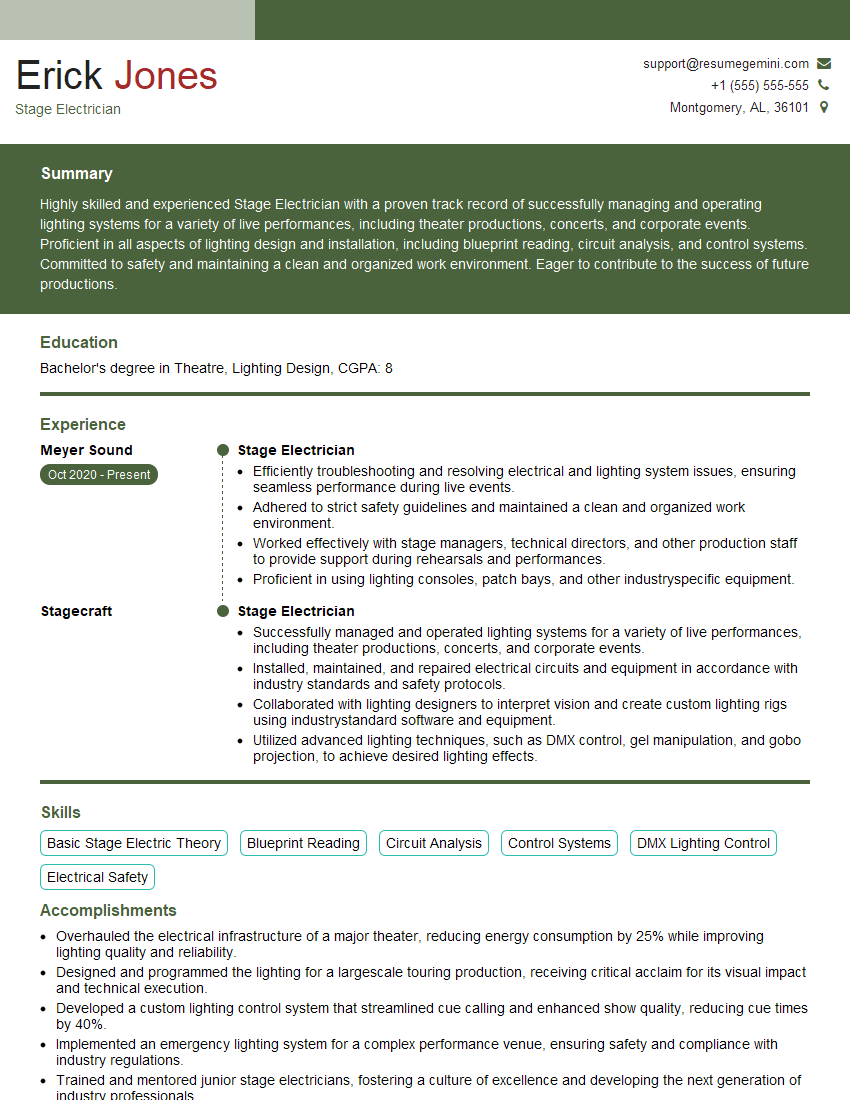
Stage Electrician Resume Sample
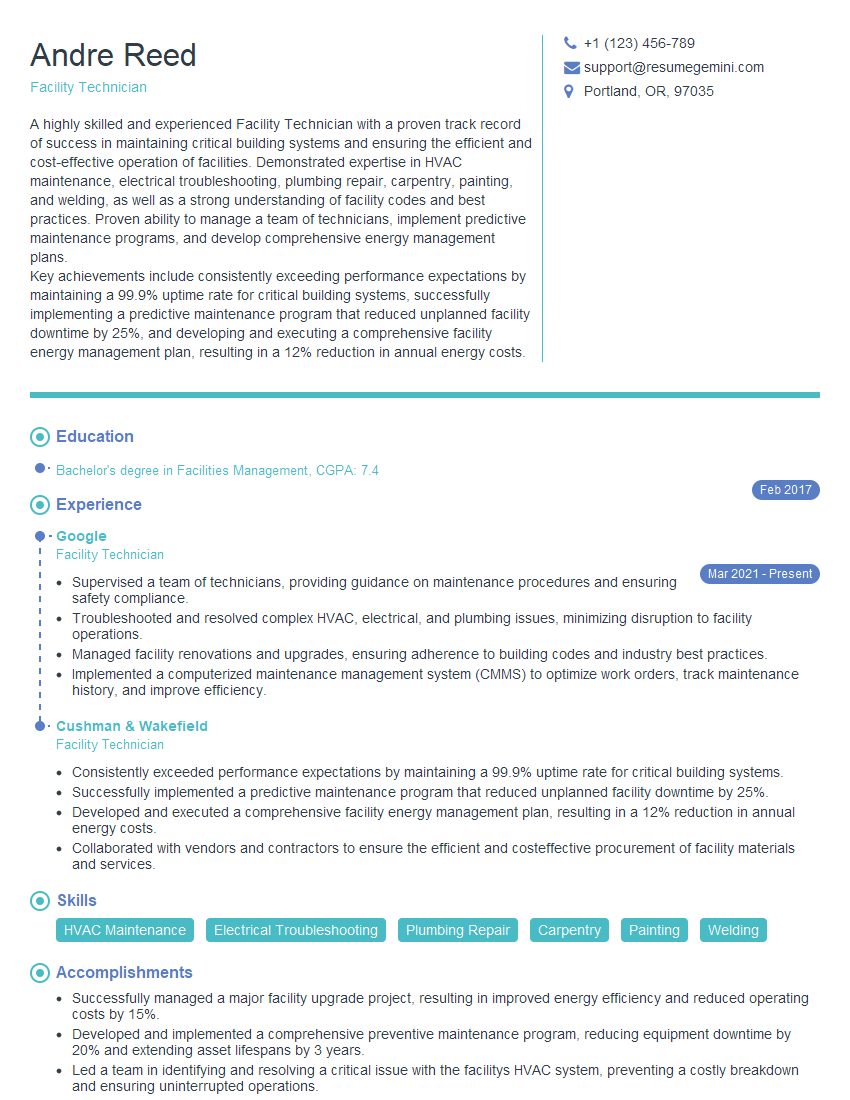
Facility Technician Resume Sample
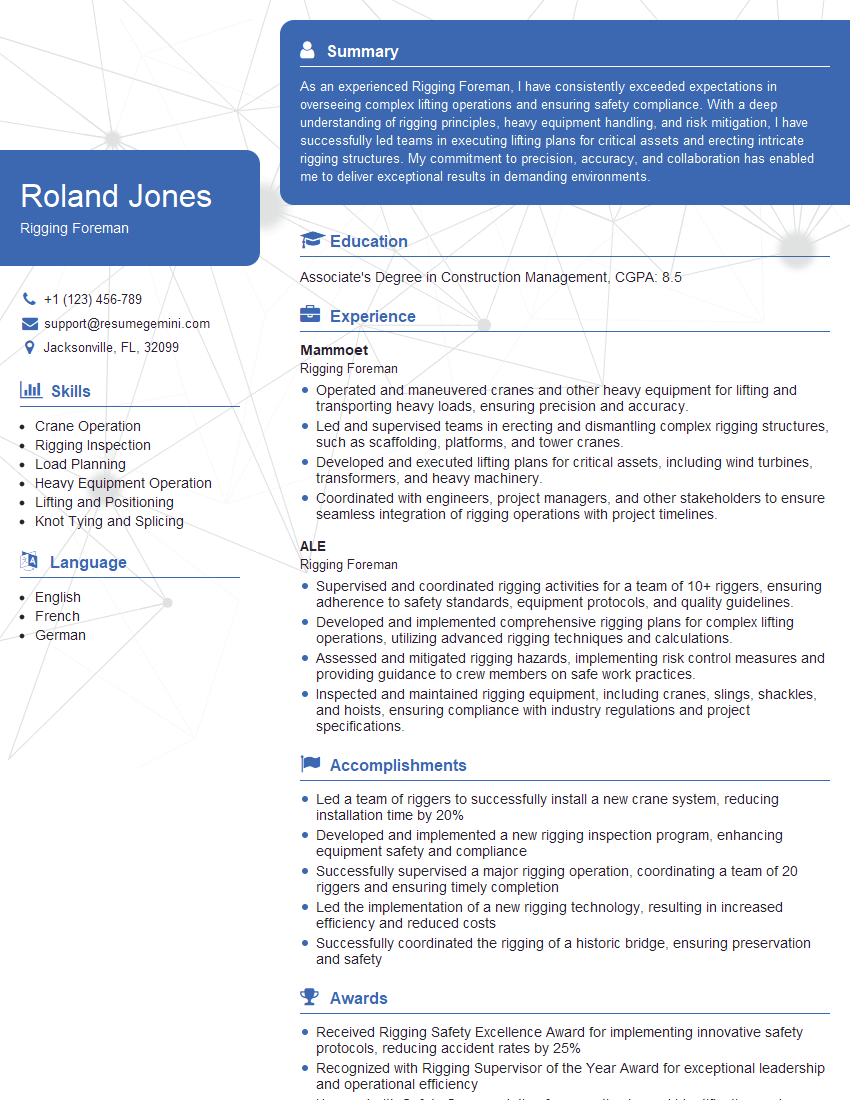
Rigging Foreman Resume Sample

Lighting Technician Resume Sample
Explore more articles
Users Rating of Our Blogs
Share Your Experience
We value your feedback! Please rate our content and share your thoughts (optional).
What Readers Say About Our Blog
Very informative content, great job.
good