Feeling uncertain about what to expect in your upcoming interview? We’ve got you covered! This blog highlights the most important Operating Livestock Handling Equipment interview questions and provides actionable advice to help you stand out as the ideal candidate. Let’s pave the way for your success.
Questions Asked in Operating Livestock Handling Equipment Interview
Q 1. Describe your experience operating various types of livestock handling equipment.
My experience encompasses a wide range of livestock handling equipment, from simple tools like cattle prods and sorting sticks to sophisticated automated systems. I’m proficient in operating hydraulic chutes, crowding gates, head gates, and various types of loading ramps and trailers. I’ve also worked extensively with electric and pneumatic systems for controlling gates and panels. For example, I’ve used hydraulic chutes to efficiently move a herd of 200 cattle for vaccination, ensuring minimal stress on the animals. Another instance involved using a curved raceway system to guide sheep through a dipping process effectively. My experience isn’t limited to a single type of livestock; I’ve adapted my techniques and equipment usage to different species, including cattle, sheep, goats, and pigs.
Q 2. What safety procedures do you follow when operating livestock handling equipment?
Safety is paramount in livestock handling. My procedures always begin with a thorough pre-operation inspection of all equipment. This includes checking hydraulic fluid levels, verifying electrical connections, ensuring gates and panels operate smoothly, and confirming the structural integrity of the entire system. I never operate equipment with any faulty parts. I also always wear appropriate personal protective equipment (PPE), including steel-toe boots, gloves, and high-visibility clothing. When working with animals, I maintain a safe distance and avoid sudden movements that could startle them. I communicate clearly with my team to coordinate movements and anticipate animal behavior. Finally, I ensure the handling area is well-lit and free from obstacles to prevent accidents.
Q 3. How do you ensure the humane treatment of animals during handling?
Humane handling is an integral part of my work ethic. I prioritize minimizing stress on the animals throughout the handling process. This involves using quiet, calm movements and avoiding any actions that might cause pain or fear. I use appropriate restraint techniques that are both safe and effective, ensuring the animals are secure but not subjected to unnecessary force. For instance, instead of using excessive force, I utilize slow, deliberate movements and gentle pressure points when guiding animals through the chutes. I also maintain a consistent pace to prevent animals from becoming agitated. Regular breaks and access to water are crucial, especially during long handling sessions. The goal is to create a positive and efficient experience for the animals, minimizing any negative impact on their welfare.
Q 4. Explain your troubleshooting skills when dealing with malfunctioning equipment.
My troubleshooting approach is systematic. If equipment malfunctions, I first identify the problem by carefully observing the symptoms. Is it a hydraulic leak? An electrical fault? A mechanical jam? Once I’ve identified the potential issue, I’ll consult the equipment’s manual and diagrams to pinpoint the cause. For example, if a hydraulic chute isn’t functioning, I would first check the fluid level and look for any leaks. If the problem persists, I would then check the hydraulic pump and control valves. If it’s an electrical issue, I’d check fuses and wiring. I always prioritize safety. If I’m unable to resolve the problem myself, I immediately call for qualified maintenance personnel. My experience enables me to diagnose most common problems and prevent downtime.
Q 5. What is your experience with different types of livestock and their specific handling needs?
I have experience handling a variety of livestock, understanding their unique behavioral characteristics and handling requirements. Cattle, for instance, require a different approach than sheep or pigs. Cattle are often more easily spooked by sudden movements, requiring a calmer and more controlled approach. Sheep tend to follow each other, making them easier to move in groups, but they can also be easily panicked. Pigs, on the other hand, are intelligent and can be easily trained, but they require careful handling to avoid injury. My experience includes working with different breeds within each species, recognizing their individual temperaments and needs. I adapt my techniques accordingly to ensure the safety and well-being of all the animals.
Q 6. Describe your knowledge of livestock restraint techniques.
My knowledge of livestock restraint techniques emphasizes both safety and animal welfare. I’m skilled in using various methods appropriate for different species and situations. This includes using head gates, squeeze chutes, and other specialized restraint devices to safely secure animals for procedures such as vaccination, tagging, or medical treatment. Proper restraint minimizes stress and allows for efficient and safe handling. I understand the importance of applying pressure points correctly to avoid causing injury or pain. For example, I know the correct pressure points to use when restraining cattle, preventing them from injuring themselves or the handlers. I continuously update my knowledge of best practices to remain proficient in humane and effective restraint techniques.
Q 7. How do you maintain and perform preventative maintenance on livestock handling equipment?
Preventative maintenance is crucial for the safe and efficient operation of livestock handling equipment. My routine maintenance includes regular inspections for wear and tear, lubrication of moving parts, checking hydraulic fluid levels and cleanliness, and ensuring electrical systems are functioning correctly. I also regularly check all gates and panels for proper operation and safety. A detailed log is kept, documenting all maintenance activities, repairs, and any potential problems identified. This preventative maintenance not only extends the lifespan of the equipment but also minimizes downtime and prevents potential accidents or injuries. I follow the manufacturer’s recommendations for specific maintenance schedules and adhere to all safety guidelines during maintenance procedures.
Q 8. What are the common causes of equipment failure and how do you address them?
Equipment failure in livestock handling can stem from several sources, broadly categorized as mechanical issues, neglect, and misuse. Mechanical failures often involve worn parts, hydraulic leaks, or electrical malfunctions. For example, a broken gate latch might be due to corrosion or simply wear and tear from frequent use. Hydraulic leaks in a squeeze chute can lead to reduced pressure and inability to restrain the animal safely. Electrical faults, such as a short circuit in a sorting gate’s motor, could cause the system to malfunction entirely. Neglect manifests as a lack of routine maintenance; this includes failing to lubricate moving parts, inspect for damage, or replace worn components. Misuse is equally problematic; overloading equipment beyond its capacity, operating it improperly, or using it for tasks it wasn’t designed for can lead to rapid deterioration and failure.
Addressing these issues requires a multi-pronged approach. Firstly, a robust preventative maintenance schedule is crucial. This includes regular inspections, lubrication of moving parts, and prompt replacement of worn components. Secondly, operator training is vital. Operators need to be thoroughly familiar with the equipment’s capabilities and limitations, and understand safe operating procedures. Thirdly, proper storage and protection from the elements is essential to extend the life of the equipment. Finally, choosing equipment appropriate for the size and species of livestock being handled is paramount to prevent overloading and premature failure.
Q 9. How do you ensure the efficient movement of livestock through different handling systems?
Efficient livestock movement hinges on understanding animal behavior and designing systems that minimize stress. The key is to create a smooth, predictable flow, guiding animals gently and naturally. This often involves using curved alleys instead of straight ones, as animals are less likely to balk or resist in curves. Appropriate lighting and a consistent, quiet environment are vital to keep animals calm and reduce the likelihood of stampedes or injuries. Proper spacing within the system is important to prevent overcrowding which can trigger aggression and stress. For example, wider alleys allow animals more space to move comfortably. Strategic use of solid panels and visual cues can also help guide animals along the desired path. Think of it like designing a calm, reassuring path for them to follow. In some designs, the use of visual cues like contrasting colors (light to dark) can direct animals in the right direction, essentially a natural funnel guiding them without physical impediments.
Different systems, such as raceways, crowding pens, and loading ramps, need to be seamlessly integrated. Each component should serve a specific function within the overall flow. Finally, employing trained personnel who understand animal behavior and handling techniques is essential for ensuring both efficient movement and animal welfare.
Q 10. Explain your understanding of animal behavior and how it impacts handling procedures.
Understanding animal behavior is fundamental to safe and efficient livestock handling. Animals are inherently reactive to their environment and to perceived threats. Their responses are driven by instinct and learned experiences. Cattle, for example, exhibit a strong flight zone—a personal space where they feel comfortable. Approaching an animal from the rear or creating sudden movements will usually trigger a flight response. Similarly, sheep are highly susceptible to flocking behavior; they tend to follow each other, which can be both beneficial (guiding them through a system) and problematic (if one animal balks, the rest might follow suit). Understanding these behavioral tendencies is essential when designing or operating handling facilities. Aggressive handling techniques or poor facility design can lead to stress, injury, or even death. Conversely, utilizing animal behavior to guide the flow can make handling easier and safer.
For example, utilizing curved chutes and alleys reduces the animals’ tendency to balk or turn back, while proper lighting can minimize shadows and prevent sudden scares. Moreover, understanding how different species react to noise and movement, and adjusting the handling methods accordingly, is essential for minimizing stress during all stages of handling, from herding to loading.
Q 11. Describe your experience with loading and unloading livestock.
My experience with loading and unloading livestock is extensive, encompassing various species and transport methods. This includes loading cattle onto trailers for long-distance transport, moving sheep into smaller vehicles for shorter distances, and even handling pigs during transfers between farms. It’s crucial to have the correct equipment for the type of animal, the size of the animal, and the destination. For example, a large livestock trailer will differ significantly from a smaller trailer used for sheep. Understanding the weight and balance is also essential to prevent accidents.
Safe and efficient loading and unloading require a methodical approach. This starts with ensuring the transport vehicle is appropriately designed and in good working order. A smooth, well-lit loading ramp is important for the safety of both the animals and handlers. Using appropriate handling equipment, such as gates, panels, and possibly even electric prods (used responsibly and cautiously), is necessary to guide animals onto and off the trailer. The process must be gradual, preventing sudden movements or overcrowding to reduce stress. Regular maintenance of loading ramps and other handling equipment is critical for safety and efficient operations. Finally, observation of animals during loading and unloading provides vital information. Signs of stress or injury require immediate attention.
Q 12. How do you manage stressful situations during livestock handling?
Stressful situations in livestock handling can arise unexpectedly – a panicked animal, a malfunctioning piece of equipment, or even sudden weather changes. The key to managing these is preparation, training, and a calm, assertive approach. Firstly, having a well-rehearsed emergency plan is essential. This plan should outline procedures for handling various scenarios, such as a stampede or an animal getting injured. The team should be trained in these procedures, ensuring everyone understands their roles and responsibilities. Secondly, maintaining a calm demeanor is crucial; animals are very sensitive to human emotions, and stress from the handlers can easily transfer to the animals.
When a problem arises, it’s vital to remain calm and systematic. Assessing the situation quickly, determining the cause of the stress, and responding appropriately is key. If it’s an equipment malfunction, shutting it down safely and proceeding with a manual alternative is vital. If it’s an animal showing signs of distress, the response depends on the specific situation. Sometimes, simply backing off and giving the animal space is the best approach. Other times, gentle, yet firm guidance may be required. It’s always best to have a secondary handling plan in place to help manage these unexpected events safely.
Q 13. What is your experience with different types of chutes, alleys, and crowding systems?
My experience encompasses a wide variety of chutes, alleys, and crowding systems. I’ve worked with everything from simple, straight chutes to more complex curved designs incorporating solid and/or slatted sides. The choice of chute design depends on several factors, including the species of livestock, the number of animals being handled, and the overall layout of the facility. For instance, curved alleys are generally preferred over straight ones, as they encourage a smoother, more natural flow. Solid-sided chutes can be helpful in reducing visual distractions and preventing animals from becoming agitated. Slatted sides offer better ventilation and allow for easier observation of the animals.
Crowding systems, often used before loading, help to gather animals and move them efficiently into the loading chute. These systems can range from simple panels to more sophisticated hydraulically operated mechanisms. The design and operation of these systems must take into account animal welfare, minimizing stress and preventing injuries. Effective crowding systems are designed so that the animals move forward naturally, reducing the need for excessive prodding or other potentially stressful interventions. The correct system is chosen based on the species, size, and number of animals and overall safety of the handling space.
Q 14. Explain your knowledge of weight scales and their operation in livestock handling.
Weight scales are an essential component of modern livestock handling, providing accurate weight measurements for marketing, animal health assessment, and overall herd management. I have experience with various types of scales, including platform scales, truck scales, and electronic scales integrated into handling systems. Platform scales are commonly used for weighing individual animals, while truck scales are essential for weighing entire loads before transport. Electronic scales offer advantages in terms of accuracy, speed, and data recording capabilities. Many systems now incorporate the weight data directly into farm management software. This allows for real-time monitoring of animal weight, improving overall herd management decisions.
The operation of weight scales requires attention to detail. It is crucial to ensure the scale is properly calibrated and maintained to ensure accuracy. Animals should be weighed calmly and methodically to avoid stress and any risk of injury. The weight data collected needs to be recorded accurately and securely, often integrated into farm management software for analysis and record keeping. Proper calibration and maintenance, combined with safe weighing techniques, ensure the accuracy and reliability of the data obtained, aiding in crucial management decisions related to animal health, productivity, and marketing.
Q 15. How familiar are you with automated livestock handling systems?
My familiarity with automated livestock handling systems is extensive. I’ve worked with a range of technologies, from automated sorting gates and weighing systems to robotic feeders and manure management systems. These systems significantly improve efficiency and reduce the physical demands on handlers. For example, I’ve used systems that automatically sort cattle based on weight or RFID tags, streamlining the process of selecting animals for specific purposes like slaughter or breeding. This automation minimizes stress on the animals and allows for more precise management of the herd.
Understanding these systems involves knowledge of their mechanical components, electrical systems, and the software that controls them. Troubleshooting issues, from sensor malfunctions to software glitches, is a crucial part of my expertise. I’m proficient in both preventative maintenance and reactive repairs, ensuring the smooth and safe operation of these automated systems.
Career Expert Tips:
- Ace those interviews! Prepare effectively by reviewing the Top 50 Most Common Interview Questions on ResumeGemini.
- Navigate your job search with confidence! Explore a wide range of Career Tips on ResumeGemini. Learn about common challenges and recommendations to overcome them.
- Craft the perfect resume! Master the Art of Resume Writing with ResumeGemini’s guide. Showcase your unique qualifications and achievements effectively.
- Don’t miss out on holiday savings! Build your dream resume with ResumeGemini’s ATS optimized templates.
Q 16. Describe your experience with electronic identification systems for livestock.
My experience with electronic identification systems is significant. I’ve extensively used RFID (Radio-Frequency Identification) tags and related readers for cattle, sheep, and pigs. These systems allow for individual animal tracking, providing valuable data on growth rates, health status, and lineage. This data is crucial for optimizing herd management and improving animal welfare. For instance, we can quickly identify animals needing medical attention or those that are underperforming.
I’m familiar with the different types of RFID tags and readers, including their strengths and limitations. Proper tag application and reader maintenance are critical for accurate data collection. I can also integrate RFID data with other management systems to create comprehensive herd records. Furthermore, I understand the importance of data security and compliance with relevant regulations regarding animal tracking and data privacy.
Q 17. How do you ensure the cleanliness and sanitation of livestock handling equipment?
Cleanliness and sanitation are paramount in livestock handling to prevent the spread of disease and maintain animal welfare. My approach involves a multi-pronged strategy. Firstly, regular cleaning is essential. This includes thorough washing of all equipment with appropriate disinfectants after each use. I use high-pressure washers for larger equipment and manual scrubbing for smaller components. Specific attention is paid to areas where manure or other contaminants accumulate. Secondly, proper disinfection is critical, selecting the right disinfectant for the specific pathogen we’re targeting. Finally, preventative measures are vital. This involves proper drainage to prevent the buildup of standing water and regular inspections for any signs of corrosion or damage to the equipment, which can harbor bacteria.
In my experience, following a strict cleaning schedule and maintaining detailed records of cleaning and disinfection procedures ensures not only animal health but also regulatory compliance.
Q 18. What are the potential hazards associated with operating livestock handling equipment?
Operating livestock handling equipment presents several potential hazards. These can be broadly classified as risks to both animal and human safety. For animals, the risk of injury from poorly maintained or improperly used equipment is significant. This includes crushing, bruising, or other physical trauma. For handlers, the hazards include being struck by moving equipment, caught in machinery, or sustaining injuries from slips, trips, and falls in potentially wet or slippery environments. Additionally, exposure to zoonotic diseases (diseases that can pass from animals to humans) is a significant concern.
Specific hazards include malfunctioning hydraulic systems, sharp edges on equipment, electrical hazards, and the risk of being kicked or gored by livestock. Implementing proper safety procedures, regular equipment inspections, and operator training are vital to mitigating these risks.
Q 19. How do you identify and address potential safety hazards in a livestock handling facility?
Identifying and addressing safety hazards in a livestock handling facility requires a proactive and systematic approach. This begins with a thorough risk assessment. I would inspect all equipment for damage, check safety guards are in place and functioning correctly, and evaluate the layout of the facility for potential pinch points or areas where animals could escape. Additionally, I would assess the training level of the staff and ensure they are familiar with safe operating procedures and emergency protocols.
Addressing hazards requires a combination of engineering controls (e.g., installing safety guards, improving lighting), administrative controls (e.g., implementing clear safety procedures, providing appropriate training), and personal protective equipment (PPE, such as steel-toe boots and high-visibility clothing). Regular inspections and maintenance, coupled with staff training and effective communication, are fundamental to maintaining a safe working environment.
Q 20. Describe your experience working with different breeds of cattle, sheep, or pigs.
My experience encompasses working with various breeds of cattle, sheep, and pigs. This includes handling different temperaments and sizes. For example, I’ve worked with docile dairy cattle and more assertive beef breeds, each requiring a slightly different approach to handling. With sheep, I’m familiar with the variations in flock behavior between different breeds. Similarly, I’ve worked with various pig breeds, understanding their individual responses to handling procedures.
This broad experience allows me to adapt my handling techniques to the specific needs and characteristics of different animal breeds, prioritizing both efficiency and animal welfare. Understanding breed-specific behaviors is key to minimizing stress and ensuring safe handling practices.
Q 21. Explain your knowledge of animal welfare regulations related to livestock handling.
My understanding of animal welfare regulations related to livestock handling is thorough. I am familiar with both national and potentially relevant international standards and guidelines concerning humane handling practices, including those related to stunning, slaughter, transportation, and general animal welfare. I know the importance of minimizing stress and pain during handling, transportation, and any procedures. This includes understanding the requirements for appropriate facility design, equipment maintenance, and staff training. Furthermore, I understand the need for documentation and record-keeping to demonstrate compliance with these regulations.
Staying updated on changes to regulations is crucial, and I actively seek out relevant training and information to maintain my knowledge and ensure all my practices comply with the latest standards.
Q 22. How do you adapt your handling techniques to different animal sizes and temperaments?
Adapting livestock handling techniques to different animal sizes and temperaments is crucial for both animal welfare and handler safety. It’s like tailoring a fishing technique to the size and species of fish – you wouldn’t use the same approach for catching a trout as you would for a marlin.
Size: Smaller animals, like lambs or piglets, require gentler handling. We use smaller chutes and equipment, avoid sudden movements, and prioritize minimizing stress. For larger animals, like bulls or adult horses, we need sturdier equipment and a more assertive but controlled approach. Appropriate restraint techniques are paramount; a poorly designed squeeze chute can injure a small animal, while an inadequate one for a large animal is unsafe for the handler.
Temperament: Each animal has a unique personality. Some are docile and easy to handle, while others are more flighty or aggressive. For skittish animals, slow, calm movements and a quiet demeanor are essential. We might use visual barriers to reduce stress. For aggressive animals, we utilize appropriate restraint techniques, ensuring both animal and handler safety. Understanding their body language is key; recognizing signs of stress or aggression allows for proactive adjustments.
Example: When handling a nervous calf, I might use a smaller, enclosed chute and speak softly to it. With a large, dominant bull, I’d ensure a secure, robust chute with proper restraint points and use assertive, but controlled movements to guide it.
Q 23. Describe your problem-solving skills in dealing with unexpected situations during livestock handling.
Problem-solving in livestock handling often involves quick thinking and adapting to unforeseen circumstances. It’s like being a firefighter – you need to assess the situation rapidly and take appropriate action. My approach involves a systematic process:
Assessment: Quickly identify the problem. Is an animal injured? Is equipment malfunctioning? Is there a safety hazard?
Prioritization: Determine the level of urgency. An injured animal needs immediate attention, while a minor equipment issue can wait.
Action: Implement the appropriate solution. This might involve administering first aid, repairing equipment, or altering the handling procedure. Communication is vital. Involving other team members when needed improves efficiency and safety.
Review: After resolving the issue, I review the situation to identify potential causes and preventative measures. This continuous improvement process helps prevent future issues.
Example: During a cattle handling operation, a gate malfunctioned. Instead of panicking, I quickly assessed the situation, diverted the cattle to a secondary route, and alerted the team to fix the gate. This minimized stress on the animals and prevented a potential escape.
Q 24. What is your experience with record-keeping and data management in relation to livestock handling?
Record-keeping and data management are essential for efficient and responsible livestock handling. Accurate records provide insights into animal health, productivity, and handling practices, enabling improvements in animal welfare and farm profitability. Think of it as a doctor keeping detailed patient records – it’s critical for effective care.
Animal health records: These track vaccinations, treatments, weights, and any health issues. This data helps monitor animal health trends and inform preventative measures.
Handling data: This includes details of handling procedures, equipment used, and any incidents. This information is valuable for identifying areas for improvement in animal welfare and handler safety.
Software & Systems: I’m proficient in utilizing various farm management software to track and analyze data, creating reports to monitor progress and identify areas needing attention.
Example: Using farm management software, I tracked the weight gain of calves over time, identifying a particular group that wasn’t performing as well as expected. This allowed me to investigate potential causes, such as diet or health issues, and implement appropriate adjustments.
Q 25. Explain your knowledge of the different types of fences used in livestock handling.
Different fence types are suited for various livestock and handling situations. Choosing the right type is essential for both animal welfare and security, much like choosing the right tool for a specific job.
Electric fences: These are effective for containing most livestock, requiring minimal physical structure. They’re often used in temporary situations or where a visual barrier is not necessary. However, they are ineffective in wet conditions and rely on a power source.
Woven wire fences: These provide a durable and visible barrier, suitable for most livestock. They require more materials and installation effort compared to electric fences.
Post and rail fences: These are strong and long-lasting but more expensive and require more maintenance. They are visually appealing and often used for boundary fences rather than detailed handling areas.
High tensile wire fences: These fences are strong and relatively inexpensive, and ideal for large areas with minimal terrain changes. They are generally used for containing larger animals such as cattle.
Combination fences: Many operations employ combinations of these types. For instance, an electric fence might be used in conjunction with a more substantial fence to create a layered security system.
Q 26. How do you ensure the proper functioning of water and feeding systems for livestock?
Ensuring proper functioning of water and feeding systems is critical for livestock health and productivity. This requires regular inspection, maintenance, and attention to detail, similar to maintaining a complex plumbing system in a building.
Water systems: I regularly inspect troughs for leaks, cleanliness, and sufficient water pressure. I ensure that water sources are accessible to all animals and that the water is clean and fresh. Automatic waterers require regular maintenance and cleaning to prevent malfunction.
Feeding systems: I check feeders for proper functioning and adequate feed supply. I monitor feed quality and ensure that animals have access to sufficient and nutritious feed. I inspect feed bunks for any signs of damage or contamination. For automated feeding systems, regular checks are crucial for proper operation and calibration.
Example: I noticed one of the water troughs was consistently low despite the system’s adequate pressure. Investigation revealed a leak that was promptly repaired, avoiding potential dehydration issues in the animals.
Q 27. Describe your experience with working in different weather conditions during livestock handling.
Working in diverse weather conditions is inherent to livestock handling. Adapting to these conditions is crucial for animal welfare and handler safety. It’s like being a seasoned sailor – you need to adjust your approach based on the changing weather.
Extreme heat: We provide ample shade and water during hot weather, adjusting handling schedules to avoid peak heat periods. Animals might require cooling measures like fans or misting systems.
Cold weather: During cold spells, animals need access to shelter and potentially supplemental feed to maintain their body temperature. Handlers need appropriate protective clothing to stay safe and comfortable.
Rain and mud: Muddy conditions can create hazards. We implement measures to improve footing, minimize animal stress, and prevent injuries.
Example: During a severe snowstorm, I ensured all animals had access to adequate shelter and adjusted their feeding schedules to account for the challenging conditions. I also ensured the team used appropriate warm clothing and equipment.
Q 28. What are your salary expectations for this position?
My salary expectations are commensurate with my experience and the responsibilities of this position. I am open to discussing a competitive salary range based on the specifics of the role and the compensation package offered.
Key Topics to Learn for Operating Livestock Handling Equipment Interview
- Equipment Operation & Maintenance: Understanding the mechanics, safety procedures, and routine maintenance of various livestock handling equipment (e.g., chutes, squeeze chutes, loading ramps, cattle prods, sorting gates).
- Livestock Behavior & Handling Techniques: Applying knowledge of animal behavior to safely and efficiently move and manage livestock. This includes understanding flight zones, pressure and release techniques, and recognizing signs of stress.
- Safety Regulations & Procedures: Demonstrating familiarity with relevant safety regulations, including OSHA standards and best practices for preventing injuries to both animals and handlers.
- Troubleshooting & Problem-Solving: Explaining how to identify and resolve common equipment malfunctions, and how to react to unexpected animal behavior.
- Record Keeping & Data Management: Understanding the importance of accurate record-keeping related to animal movements, treatments, and equipment usage.
- Animal Welfare Considerations: Highlighting the ethical responsibilities involved in handling livestock and prioritizing animal welfare throughout the process. This includes understanding stress indicators and minimizing harm.
- Specific Equipment Knowledge: Depending on the job, you may need in-depth knowledge of particular equipment types – be prepared to discuss any equipment mentioned in the job description.
Next Steps
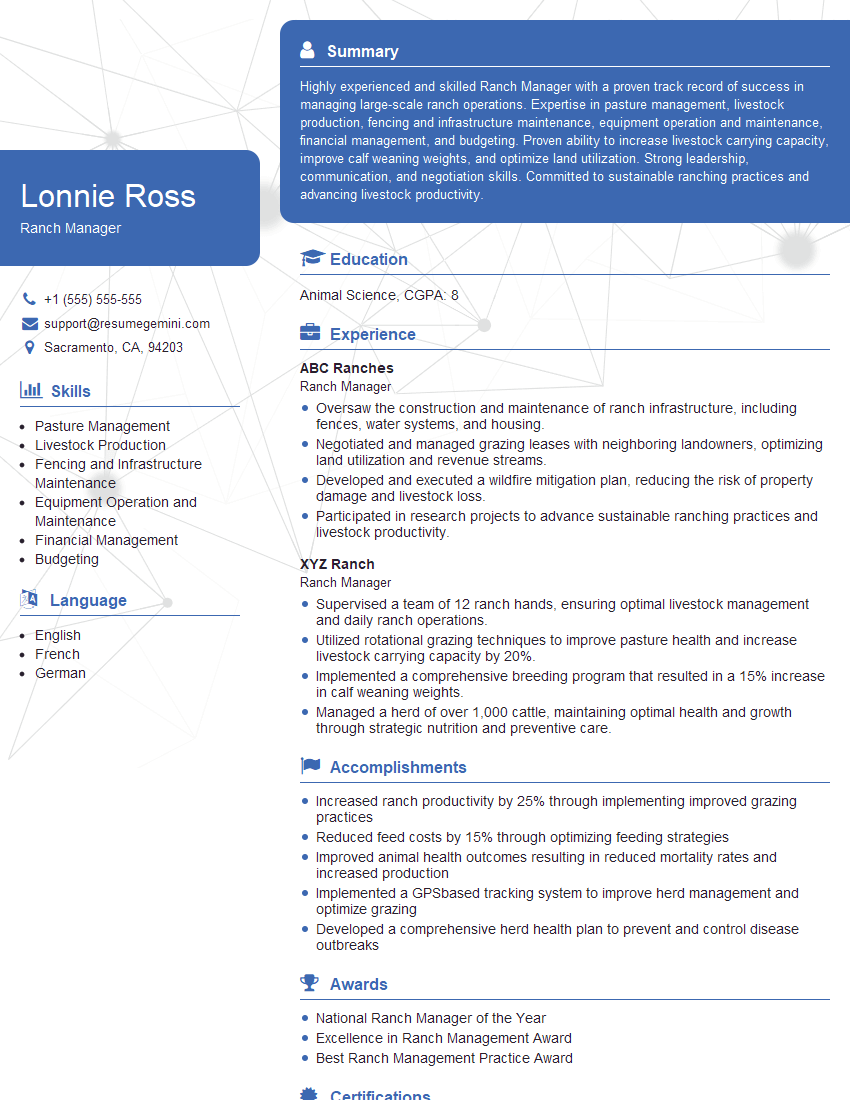
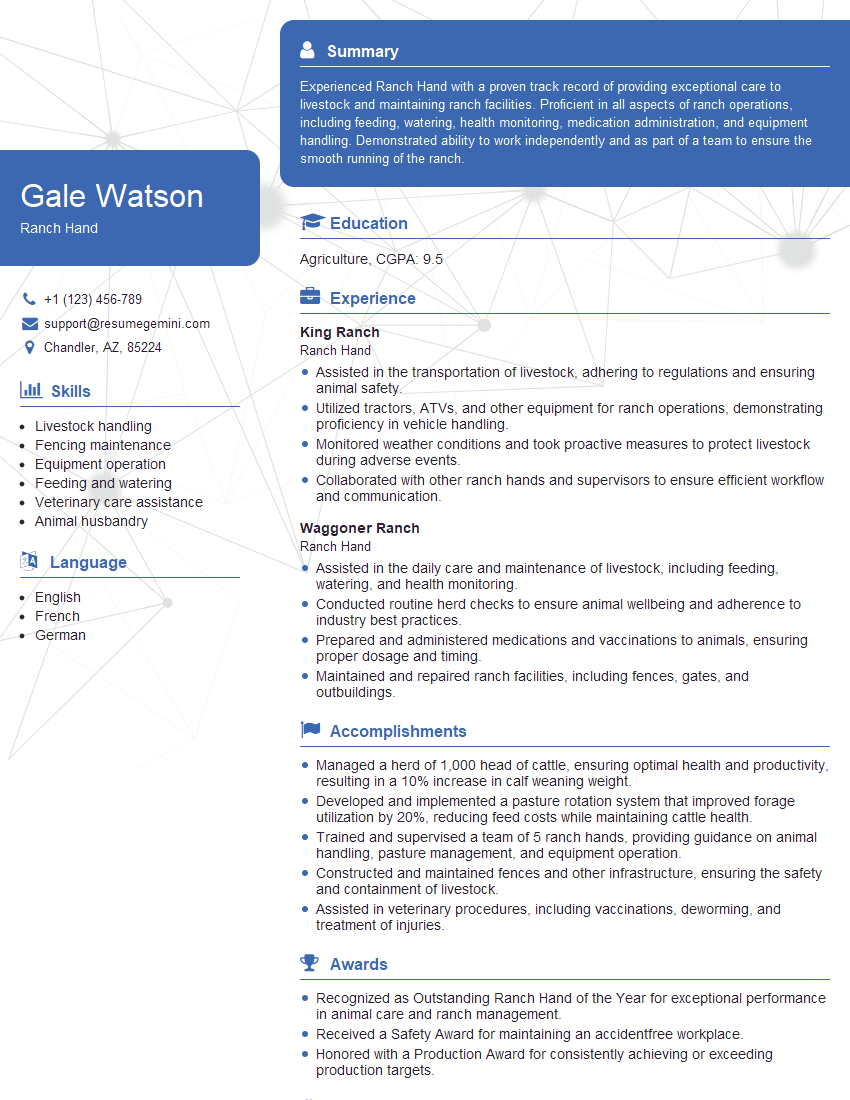
Mastering the operation of livestock handling equipment is crucial for career advancement in the agriculture and animal husbandry sectors. It demonstrates a commitment to both efficiency and animal welfare, opening doors to more skilled and responsible roles. To maximize your job prospects, crafting a professional and ATS-friendly resume is essential. ResumeGemini is a trusted resource that can help you build a powerful resume that highlights your skills and experience effectively. We provide examples of resumes tailored to Operating Livestock Handling Equipment to help you get started. Take advantage of these resources to showcase your expertise and land your dream job.






Explore more articles
Users Rating of Our Blogs
Share Your Experience
We value your feedback! Please rate our content and share your thoughts (optional).
What Readers Say About Our Blog
Very informative content, great job.
good