Every successful interview starts with knowing what to expect. In this blog, we’ll take you through the top Operating Mining Handling Equipment interview questions, breaking them down with expert tips to help you deliver impactful answers. Step into your next interview fully prepared and ready to succeed.
Questions Asked in Operating Mining Handling Equipment Interview
Q 1. Describe your experience operating heavy mining equipment.
My experience encompasses over ten years operating a wide range of heavy mining equipment, including haul trucks (ranging from 70-ton to 400-ton capacity), excavators (hydraulic and cable-operated), wheel loaders, and bulldozers. I’ve worked in both open-pit and underground mining environments, across various mining operations extracting different commodities like copper, gold, and coal. This extensive experience has provided me with a comprehensive understanding of the operational nuances of each machine, along with a keen awareness of the safety and efficiency considerations involved.
For instance, I spent three years operating a fleet of 240-ton haul trucks in a large-scale copper mine. My responsibilities included not just operating the trucks but also conducting daily pre-operational checks, communicating effectively with other operators and ground personnel, and optimizing load cycles for maximum efficiency. I also have experience with more specialized equipment such as blast hole drills and underground mining loaders, demonstrating my versatility and adaptability to diverse operational environments.
Q 2. What safety protocols do you follow when operating mining equipment?
Safety is paramount in mining operations. My adherence to safety protocols is unwavering, and it forms the foundation of my operational practices. This includes:
- Pre-operational checks: Thorough inspection of equipment before each shift, ensuring everything is functioning correctly and safely.
- Personal Protective Equipment (PPE): Consistent use of appropriate PPE, including hard hats, safety glasses, hearing protection, and high-visibility clothing.
- Communication: Maintaining clear communication with fellow operators, ground personnel, and supervisors using radios or other established communication systems.
- Awareness of surroundings: Constant vigilance and awareness of the surrounding environment, including other equipment, personnel, and potential hazards.
- Following established procedures: Strict adherence to site-specific safety regulations, procedures, and emergency response plans.
- Reporting hazards: Prompt reporting of any safety hazards or equipment malfunctions to supervisors.
I’ve personally witnessed incidents where a seemingly small oversight led to significant accidents. This reinforced the importance of strict adherence to safety procedures, preventing accidents and protecting both myself and others.
Q 3. Explain the pre-operational checks you perform before operating a haul truck.
Before operating a haul truck, a comprehensive pre-operational check is essential. This involves a systematic approach ensuring the truck is mechanically sound and safe for operation. My checklist includes:
- Visual inspection: Checking for any damage to the truck’s body, tires, lights, and other components.
- Fluid levels: Verifying engine oil, coolant, transmission fluid, brake fluid, and fuel levels.
- Tire pressure: Ensuring correct tire inflation.
- Brake system: Testing the service and parking brakes.
- Lights and signals: Checking the functionality of all lights and signals.
- Steering and controls: Testing the responsiveness of the steering, throttle, and other controls.
- Safety systems: Inspecting emergency shutdown systems and other safety features.
- Load securement: Ensuring proper securing of the load (if applicable).
I treat this pre-operational check as a non-negotiable part of my routine. Skipping even one step could potentially lead to serious consequences during operation.
Q 4. How do you handle equipment malfunctions during operation?
Equipment malfunctions can occur unexpectedly. My response always prioritizes safety. The steps I take include:
- Immediate shutdown: If the malfunction poses an immediate safety risk, I immediately shut down the equipment following the established emergency procedures.
- Assessment: I carefully assess the nature of the malfunction and its potential impact on safety and operations.
- Reporting: I promptly report the malfunction to supervisors, providing detailed information about the issue and its location.
- Emergency procedures: I follow established emergency procedures to secure the area and prevent further incidents.
- Troubleshooting (if safe): If safe and within my skillset, I may attempt basic troubleshooting. However, complex repairs are left to trained mechanics.
For example, during one operation, I experienced a sudden loss of braking power on my haul truck. I immediately activated the emergency brake, stopped the truck, and contacted the maintenance crew. This quick response prevented a potentially dangerous situation.
Q 5. What are the different types of excavators and their applications?
Excavators are essential for excavation and material handling in mining. Different types cater to specific needs:
- Hydraulic excavators: These are the most common type, using hydraulic cylinders to power the digging and lifting mechanisms. They offer versatility and are suitable for various applications, including trenching, digging foundations, and loading material into trucks. They range in size from small, compact models to massive machines capable of moving hundreds of tons of material per hour.
- Cable excavators: These are less common but still used in some mining operations, especially in challenging conditions or for specific applications where high digging forces are required. They utilize cables and drums for movement, offering high pulling power.
- Long-reach excavators: Designed to reach over obstacles or wide areas. These are commonly used in open-pit mining for efficient material handling over large distances.
- Dragline excavators: These use a large bucket suspended from a long boom, swinging it back and forth to excavate and deposit material. They are often employed in large-scale open-pit mining operations.
The choice of excavator depends heavily on the scale of the operation, the type of material being excavated, and the required reach and digging force.
Q 6. Describe your experience with different types of loaders (e.g., wheel loaders, front-end loaders).
My experience with loaders includes both wheel loaders and front-end loaders. Wheel loaders offer high maneuverability and are better suited for rough terrain. They are ideal for loading materials into trucks or stockpiles and are common in open-pit operations. I’ve used wheel loaders of various sizes, from smaller models for more confined spaces to larger ones for handling significant volumes of material. Front-end loaders, often found on smaller construction sites, are less common in large-scale mining but may be used in auxiliary roles or in smaller-scale operations.
I’ve found that understanding the specific capabilities of each type of loader and matching it to the task at hand is crucial for optimizing efficiency and safety. For example, in one instance we used a smaller wheel loader to load the trucks delivering rock for a tunnel project, while the larger ones were used to transport processed ore. This effective use of equipment minimized downtime and improved productivity.
Q 7. How do you ensure efficient fuel consumption while operating heavy machinery?
Efficient fuel consumption is vital in minimizing operational costs and reducing the environmental impact. My strategies include:
- Proper maintenance: Regularly scheduled maintenance ensures the equipment is running optimally, avoiding unnecessary fuel consumption due to mechanical issues.
- Smooth operation: Avoiding sudden accelerations and decelerations conserves fuel and reduces wear on components. Smooth operation also impacts the overall lifespan of the equipment.
- Optimal load size: Carrying the appropriate load maximizes efficiency without overloading and increasing fuel consumption. Overloading causes undue stress on the engine and the truck.
- Engine idling minimization: Minimizing engine idling time reduces fuel waste. Planning the route and efficiently organizing tasks can minimize idling periods.
- Terrain management: Careful route selection and consideration of terrain minimizes fuel usage, particularly when navigating steep inclines or challenging terrain.
For instance, by consistently optimizing my haul truck routes and load sizes, I have routinely achieved fuel efficiency rates above the industry average, resulting in significant cost savings for the mining operation.
Q 8. Explain your understanding of load capacity and weight distribution.
Load capacity refers to the maximum weight a piece of mining equipment can safely carry or handle. Weight distribution, on the other hand, is how that load is spread across the equipment’s structure. Understanding both is crucial for safety and efficiency. A poorly distributed load, even if below the total capacity, can cause instability, leading to equipment damage or accidents. For example, a haul truck with a load concentrated solely on one side is much more likely to tip over than one with evenly distributed weight. Similarly, an excavator operating with an unbalanced load could experience structural stress, affecting its longevity and leading to potential failures. I always prioritize proper weight distribution through careful loading procedures and monitoring of weight indicators on the equipment itself. This includes using load-sensing systems where applicable to ensure the machine isn’t overloaded and the weight is balanced optimally.
Q 9. Describe your experience with GPS-guided equipment operation.
I have extensive experience operating GPS-guided equipment, primarily in large-scale open-pit mining operations. This includes using systems that provide real-time positioning, allowing for precise navigation and automated control of heavy machinery like drills and excavators. For example, I’ve used GPS-guided drills to precisely place blast holes according to a pre-determined plan, optimizing fragmentation and reducing the need for manual adjustments. This not only increases accuracy but significantly improves efficiency and safety by minimizing human error. Furthermore, I’m familiar with various GPS systems and their integration with other technologies like autonomous haulage systems, allowing for better fleet management and optimized production flow.
Q 10. How do you maintain situational awareness in a mining environment?
Maintaining situational awareness in a mining environment is paramount for safety. It involves constantly scanning the surroundings, paying attention to both immediate and potential hazards. This includes monitoring other equipment, personnel, and potential environmental risks like ground instability or weather changes. I routinely use a combination of visual checks, equipment alarms, and communication systems to maintain awareness. For example, I always conduct pre-operational checks of my equipment and the immediate area, making sure that the area is clear and that all safety systems are functioning correctly. Throughout operation, regular communication with spotters and other operators via radio helps prevent collisions and coordinate movements. Also, constantly assessing potential issues like dust clouds or changing terrain conditions contributes to better preparedness and reaction time to hazardous situations.
Q 11. What are the common causes of equipment breakdowns, and how do you prevent them?
Common causes of equipment breakdowns include inadequate maintenance, operator error, harsh operating conditions, and wear and tear. Preventative maintenance is key. This includes regular inspections, lubrication, and timely replacement of worn parts. Operator training is also vital to prevent damage caused by improper operation. Addressing harsh operating conditions involves adjusting operating procedures or using specialized equipment designed for challenging environments. For instance, regular grease changes are vital in dusty environments to prevent component seizing. Timely repairs and adherence to recommended maintenance schedules are crucial to extend equipment life and minimize downtime. I believe a proactive approach, combined with meticulous record-keeping and reporting, is essential for minimizing unexpected breakdowns.
Q 12. How do you handle challenging terrain conditions while operating mining equipment?
Handling challenging terrain requires careful planning, skillful operation, and understanding of the equipment’s limitations. Different terrain demands different techniques. On steep inclines, careful speed management and proper weight distribution are crucial to prevent rollovers. Loose or unstable ground necessitates slower speeds and modified operating techniques to avoid getting stuck or causing damage. I’ve navigated through rocky areas, muddy patches, and steep slopes by adjusting speed, utilizing the machine’s various features such as differential locks, and constantly assessing the ground conditions. Prior to operating in challenging terrain, I always ensure my equipment is properly equipped for the conditions, such as using appropriate tires and taking necessary safety precautions. Regular communication with the ground crew also provides crucial situational awareness.
Q 13. Explain your experience with different types of mining drills.
My experience encompasses various types of mining drills, including rotary drills, top-hammer drills, and down-the-hole (DTH) drills. Rotary drills are excellent for soft to medium-hard rock formations, providing precise hole placement and good hole quality. Top-hammer drills are suited to tougher rock formations, offering high penetration rates, and I have worked extensively with both surface and underground versions. DTH drills are highly effective in very hard rock, maximizing drilling speed in those challenging circumstances. The choice of drill is determined by the specific rock type, required hole diameter, depth, and overall project needs. My experience includes setting up, operating, and maintaining each type, always ensuring safety protocols are followed to the letter.
Q 14. Describe your experience with different types of blasting techniques and their safety implications.
I’m familiar with several blasting techniques, including conventional blasting, pre-splitting, and smooth blasting. Conventional blasting uses a network of strategically placed boreholes filled with explosives. Pre-splitting creates a controlled fracture plane, minimizing rock damage and improving fragmentation in targeted areas. Smooth blasting focuses on limiting vibration and noise, especially valuable in urban or environmentally sensitive areas. Safety is paramount, involving meticulous planning, rigorous adherence to regulations, and the use of appropriate safety gear. This includes ensuring proper hole spacing, charge weight calculations, and blast-pattern design to minimize ground vibrations and flying debris. Pre-blast surveys are conducted to identify and mitigate potential hazards, and careful monitoring after the blast is crucial to ensure the safety of personnel and equipment.
Q 15. How do you communicate effectively with other team members on a mining site?
Effective communication on a mining site is paramount for safety and efficiency. It goes beyond just talking; it’s about clear, concise messaging, active listening, and understanding the context of the situation. I utilize several strategies. First, I ensure I’m using plain language, avoiding jargon unless absolutely necessary and explaining technical terms clearly. Second, I utilize multiple communication channels depending on the urgency and context. For instance, for urgent matters like equipment malfunctions or safety hazards, I use two-way radios for immediate communication. For routine updates or scheduling, I use email or project management software. Finally, I actively listen to my team, asking clarifying questions to ensure everyone’s on the same page. This includes daily pre-shift meetings to discuss plans and potential risks, as well as post-shift debriefs to discuss lessons learned and any issues encountered. A recent example involved a potential rockfall hazard during blasting operations. Through immediate radio communication, we were able to halt operations, relocate personnel, and mitigate the risk effectively.
Career Expert Tips:
- Ace those interviews! Prepare effectively by reviewing the Top 50 Most Common Interview Questions on ResumeGemini.
- Navigate your job search with confidence! Explore a wide range of Career Tips on ResumeGemini. Learn about common challenges and recommendations to overcome them.
- Craft the perfect resume! Master the Art of Resume Writing with ResumeGemini’s guide. Showcase your unique qualifications and achievements effectively.
- Don’t miss out on holiday savings! Build your dream resume with ResumeGemini’s ATS optimized templates.
Q 16. What is your experience with preventative maintenance procedures?
Preventative maintenance (PM) is the cornerstone of safe and efficient mining operations. My experience encompasses developing and implementing comprehensive PM schedules for a wide range of equipment, including excavators, haul trucks, and drilling rigs. This involves regular inspections, lubrication, and component replacements according to manufacturer recommendations and best practices. I’m proficient in using Computerized Maintenance Management Systems (CMMS) to track PM schedules, manage inventory, and generate reports. For example, I implemented a new PM schedule for our fleet of haul trucks, focusing on early detection of brake system wear, which significantly reduced downtime and improved safety. This involved training the mechanics on proper inspection procedures and using CMMS to track maintenance activities. The result was a 20% reduction in unplanned downtime due to brake failures within the first six months.
Q 17. Describe your experience with troubleshooting and repairing minor equipment issues.
Troubleshooting and repairing minor equipment issues is a daily part of my job. My experience spans hydraulic system leaks, electrical faults, engine diagnostics, and basic mechanical repairs. I use a systematic approach, starting with a thorough visual inspection, followed by diagnostic testing using relevant tools and manuals. I prioritize safety throughout the process. For instance, I recently resolved an issue with a loader’s hydraulic system where the bucket wouldn’t lift properly. My initial visual inspection showed a minor leak in a hydraulic line. After isolating the system, I repaired the leak, refilled the hydraulic fluid, and tested the system, restoring full functionality. I always document all repairs meticulously and adhere to safety protocols, ensuring the equipment is safe to operate before returning it to service.
Q 18. What is your experience with different types of mining haulage systems?
My experience encompasses a variety of mining haulage systems, including truck and shovel operations, conveyor systems, and rail transport. I’m familiar with the strengths and limitations of each system and their suitability for different mining environments and ore types. Truck and shovel operations are common in many open-pit mines; I have extensive experience with their operation, maintenance, and optimization. Conveyor systems offer advantages in terms of continuous material flow, especially in underground mines. I’ve worked on projects optimizing conveyor belt speeds and managing their maintenance to minimize downtime. Rail transport is crucial for large-scale mines, providing efficient long-distance haulage. I understand the complexities involved in rail operations, including track maintenance, locomotive maintenance, and train scheduling. I’ve personally been involved in the transition from truck and shovel haulage to a conveyor system in one operation, which significantly increased efficiency and reduced operating costs.
Q 19. How do you ensure compliance with environmental regulations during mining operations?
Environmental compliance is non-negotiable in mining. My experience includes implementing and monitoring procedures to minimize environmental impact. This includes dust suppression techniques, water management strategies (including water recycling and treatment), and proper disposal of waste materials. I’m familiar with relevant environmental regulations and permitting requirements. We utilize dust monitoring equipment to track dust levels and adjust our control measures accordingly. Water quality is continuously monitored, and we have implemented systems for water treatment and reuse to minimize water consumption. Waste rock is carefully managed and placed in designated areas to prevent environmental contamination. A specific example is working on a project that involved the implementation of a new tailings management system which met the strictest environmental standards and reduced water usage by 30%.
Q 20. How familiar are you with different types of mining software and their applications?
I’m proficient in several mining software applications, including mine planning software (e.g., MineSight, Deswik), fleet management systems (e.g., Wenco, Hexagon), and CMMS. Mine planning software is crucial for optimizing mine designs, scheduling production, and estimating reserves. Fleet management systems provide real-time tracking of equipment location, performance, and maintenance needs, enabling data-driven optimization of haulage operations. CMMS aids in preventative maintenance scheduling and inventory management. I use these software systems daily for tasks such as analyzing equipment performance data to identify areas for improvement, optimizing haul routes to reduce fuel consumption and cycle times, and predicting potential maintenance needs to minimize downtime. This data-driven approach allows for more informed decision-making and efficient operation.
Q 21. Describe your experience with operating equipment in various weather conditions.
Operating mining equipment in various weather conditions is a crucial aspect of the job. My experience includes operating equipment in extreme heat, cold, rain, and snow. I’m familiar with the challenges posed by each condition and the necessary safety precautions. In extreme heat, this includes ensuring adequate hydration and taking regular breaks. In cold weather, this means pre-heating equipment, wearing appropriate protective clothing, and being aware of the risks of frostbite. Rain and snow require extra caution to avoid accidents due to reduced visibility and slippery conditions. We use specialized equipment such as heated cabs, de-icing agents, and enhanced lighting systems to mitigate these challenges. For example, during a period of heavy snowfall, we implemented a system of rotating shifts and used specialized snow removal equipment to ensure continuous and safe operation.
Q 22. How do you manage time effectively to meet production targets?
Effective time management in mining operations is crucial for meeting production targets. It’s not just about working hard; it’s about working smart. My approach involves a multi-pronged strategy.
- Prioritization: I begin each shift by reviewing the day’s tasks, prioritizing those with the most significant impact on production goals. This might involve focusing on high-yield areas of the mine or addressing critical maintenance needs before they escalate.
- Planning and Scheduling: I meticulously plan my routes and operations, minimizing downtime and maximizing efficiency. This often involves coordinating with other crew members to ensure a smooth workflow. For example, if I know a blasting operation is scheduled, I’ll adjust my haulage route to avoid the blast zone during that time.
- Regular Maintenance Checks: I conduct regular, preventative maintenance checks on my equipment. This proactive approach reduces the risk of unexpected breakdowns and keeps the machinery running optimally, preventing time lost to repairs.
- Continuous Improvement: I constantly look for ways to streamline my processes. This could involve using new technologies, such as GPS-guided hauling or optimizing loading techniques. I track my performance metrics and identify areas for improvement, continually refining my methods.
For example, during a particularly challenging period with tight deadlines, I implemented a new loading technique that reduced cycle times by 15%, enabling us to exceed our production target.
Q 23. Describe your experience with operating equipment in confined spaces.
Operating equipment in confined spaces requires specialized training and a meticulous approach. My experience includes working in underground mines with narrow tunnels and low clearances. This demands a heightened awareness of potential hazards and strict adherence to safety protocols.
- Space Awareness: Constant awareness of the equipment’s dimensions and the surrounding space is critical to avoid collisions or damage.
- Communication: Effective communication with colleagues is essential, especially in areas with limited visibility. We use hand signals and two-way radios to coordinate movements and ensure safety.
- Specialized Training: I’ve completed specialized training on operating equipment in confined spaces, covering topics such as hazard recognition, emergency procedures, and the use of safety equipment, including specialized lighting and gas detection systems.
For instance, during one project, navigating a particularly tight tunnel required careful maneuvering and precise control of the haul truck to avoid damaging the tunnel walls or impacting other equipment or personnel. Utilizing my training and experience in confined space operation, this task was completed successfully and without incident.
Q 24. What safety measures do you take to prevent accidents?
Safety is paramount in mining operations. My commitment to safety is unwavering, and it’s a part of every task I undertake. My safety practices include:
- Pre-Operational Checks: Before starting any shift, I conduct thorough pre-operational checks on my equipment, verifying the functionality of brakes, lights, and safety systems. I also inspect the work area for potential hazards.
- Personal Protective Equipment (PPE): I always wear the appropriate PPE, including hard hats, safety glasses, hearing protection, and high-visibility clothing. This PPE safeguards against numerous risks inherent in the mining environment.
- Following Procedures: I strictly adhere to all company safety procedures and regulations, ensuring that I am always aware of and compliant with safety standards.
- Reporting Hazards: I immediately report any potential hazards or unsafe conditions to my supervisor, ensuring that issues are addressed before they escalate into accidents.
- Defensive Driving/Operation: I practice defensive driving and operating techniques, anticipating potential hazards and reacting proactively to maintain safety.
For example, during a routine check, I identified a faulty brake light on my excavator. I immediately reported this issue, preventing a potential accident and ensuring the safety of myself and others.
Q 25. How do you handle emergency situations while operating mining equipment?
Handling emergencies effectively is crucial for maintaining safety and minimizing damage. My training and experience have equipped me to respond efficiently to various situations.
- Emergency Procedures: I’m proficient in the emergency procedures specific to the equipment I operate, including shutdown procedures, evacuation protocols, and communication procedures.
- Communication: In an emergency, I immediately communicate the situation to my supervisor and other relevant personnel, providing clear and concise information.
- First Aid: I have current First Aid and CPR certifications and am capable of providing initial assistance if required.
- Problem-Solving: I assess the situation calmly, prioritizing safety and taking appropriate action to mitigate the emergency.
For instance, during a sudden equipment malfunction, I quickly shut down the machinery, following established procedures, and immediately contacted my supervisor to report the incident and request assistance. The quick and effective response minimized potential damage and ensured the safety of all involved.
Q 26. What is your experience with remote-controlled mining equipment?
I have significant experience operating remote-controlled mining equipment, primarily in underground and surface mining environments. This involves a different skillset compared to traditional operation, focusing on precise control and situational awareness through screens and cameras.
- Remote Operation Training: I’ve undergone extensive training in the operation of these remote systems, including simulation and hands-on experience with various types of equipment. This training covered aspects such as communication protocols, camera systems, and remote control mechanisms.
- Understanding Limitations: Operating remote equipment requires a deep understanding of its limitations, including potential communication delays and the importance of maintaining visual contact with the equipment.
- Safety Procedures: Specific safety procedures are followed for remote-controlled operations, including pre-operational checks of the remote systems and communication protocols.
For instance, I’ve operated remote-controlled drills in underground mines where physical access was restricted. The precision and control afforded by the remote system allowed for efficient drilling in challenging environments. The ability to operate remotely also enhanced safety by reducing operator exposure to hazardous conditions.
Q 27. How do you ensure the accuracy and efficiency of your work?
Accuracy and efficiency are fundamental to my work. I achieve this through a combination of techniques and technologies.
- Precise Operation: I focus on precise and controlled operation of the equipment, minimizing material loss and damage. This involves using the equipment’s features effectively to maximize output.
- Data Analysis: I analyze operational data, such as fuel consumption, cycle times, and production rates, to identify areas for improvement and optimize my performance.
- Technology: I utilize GPS-guided systems and other technologies that enhance accuracy and efficiency, such as load monitoring systems which help optimize loads for maximum efficiency.
- Continuous Learning: I continually seek ways to improve my skills and techniques, staying up-to-date on the latest technologies and best practices.
For instance, by analyzing fuel consumption data, I identified a pattern of inefficient idling that was consuming a significant amount of fuel. By adjusting my operating techniques, I was able to reduce fuel consumption by 10%.
Q 28. What are your career goals in the mining industry?
My career goals in the mining industry are driven by a desire for continuous growth and contribution. I aim to enhance my expertise in operating heavy equipment and advance my skills in new technologies, such as autonomous mining systems. I’m interested in taking on more responsibility and possibly moving into a supervisory role. Ultimately, I aspire to be a respected leader within the mining industry, ensuring safety and contributing to efficient and sustainable mining practices.
Key Topics to Learn for Operating Mining Handling Equipment Interview
- Equipment Operation & Maintenance: Understanding the mechanics, operation, and routine maintenance procedures for various types of mining handling equipment (e.g., excavators, loaders, haul trucks, conveyor systems).
- Safety Procedures & Regulations: Demonstrating knowledge of relevant safety protocols, emergency procedures, and regulatory compliance within the mining industry. This includes pre-operational checks, hazard identification, and risk mitigation strategies.
- Production & Efficiency: Explaining techniques for optimizing equipment performance, maximizing productivity, and minimizing downtime. This includes understanding factors impacting efficiency, such as load planning, fuel consumption, and preventative maintenance scheduling.
- Troubleshooting & Problem-Solving: Articulating your approach to diagnosing mechanical issues, performing basic repairs, and seeking appropriate support when necessary. Practical examples of problem-solving scenarios are highly valuable.
- Technological Integration: Familiarity with modern technologies used in mining equipment operation, such as GPS tracking systems, telematics, and automated systems. Understanding the benefits and limitations of these technologies is crucial.
- Environmental Considerations: Demonstrating awareness of environmental regulations and best practices related to mining operations, including dust control, noise reduction, and fuel efficiency measures.
- Teamwork & Communication: Highlighting your ability to effectively communicate with supervisors, colleagues, and other stakeholders, emphasizing teamwork and collaboration in a demanding environment.
Next Steps
Mastering the operation of mining handling equipment opens doors to rewarding and high-demand careers in a dynamic industry. Your expertise in this area is highly valuable, offering excellent prospects for career growth and advancement. To maximize your job search success, crafting a compelling and ATS-friendly resume is crucial. ResumeGemini is a trusted resource to help you build a professional and impactful resume that showcases your skills and experience effectively. We provide examples of resumes tailored to Operating Mining Handling Equipment to help you get started. Invest time in creating a strong resume; it’s your first impression on potential employers.

Crane Operator Resume Sample
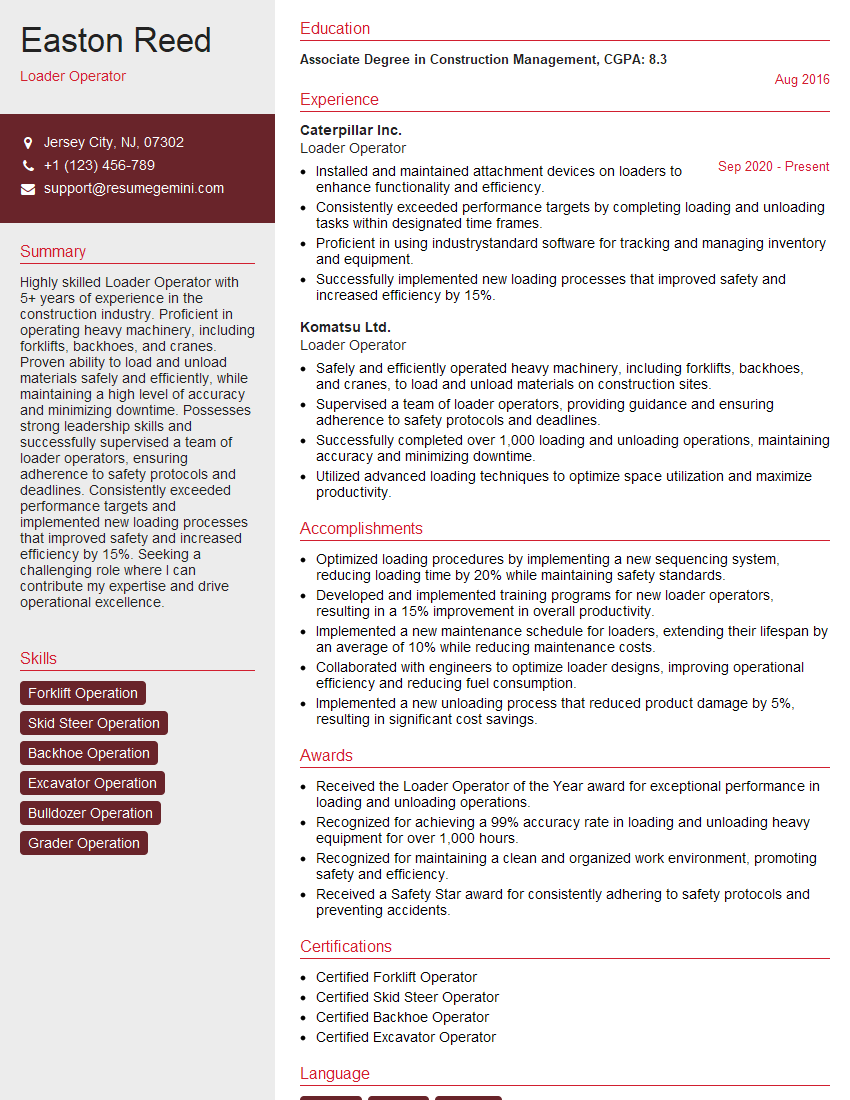
Loader Operator Resume Sample

Heavy Equipment Operator Resume Sample

Backhoe Operator Resume Sample

Bulldozer Operator Resume Sample

Excavator Operator Resume Sample

Grader Operator Resume Sample

Scraper Operator Resume Sample

Drill Operator Resume Sample

Shovel Operator Resume Sample
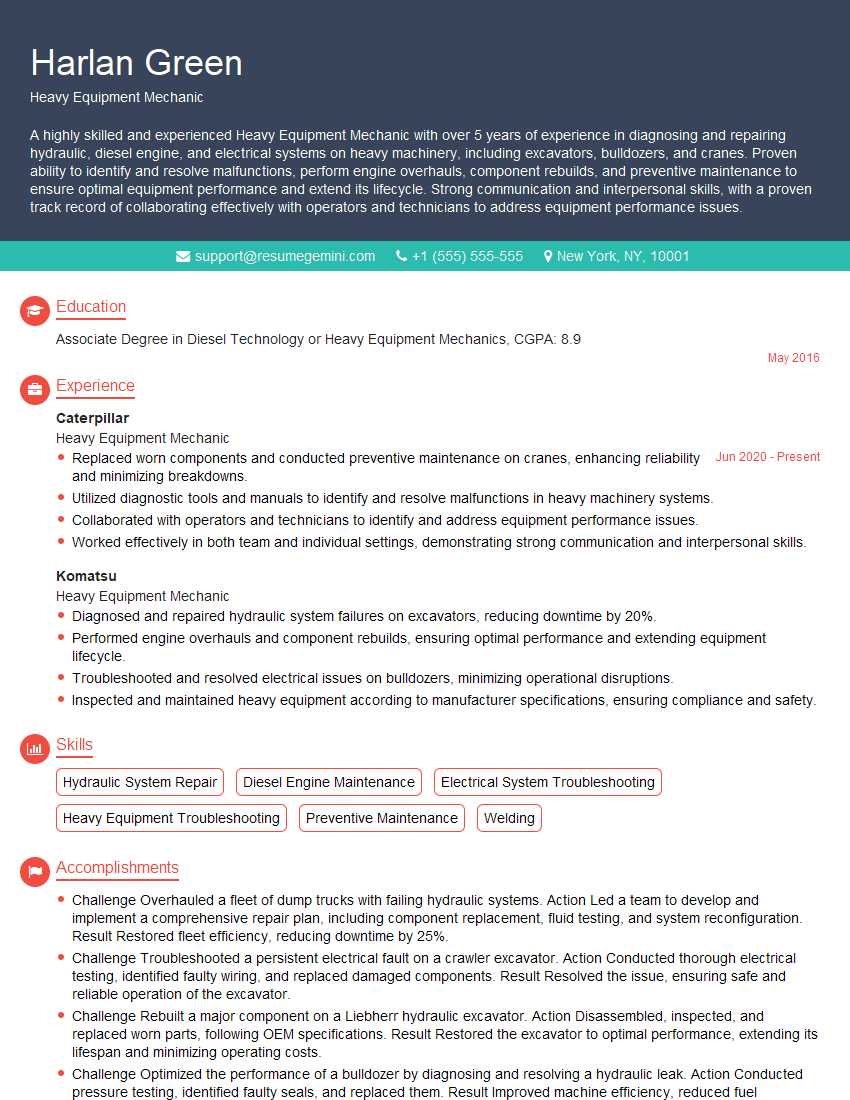
Heavy Equipment Mechanic Resume Sample

Conveyor Belt Operator Resume Sample

Mobile Crane Operator Resume Sample
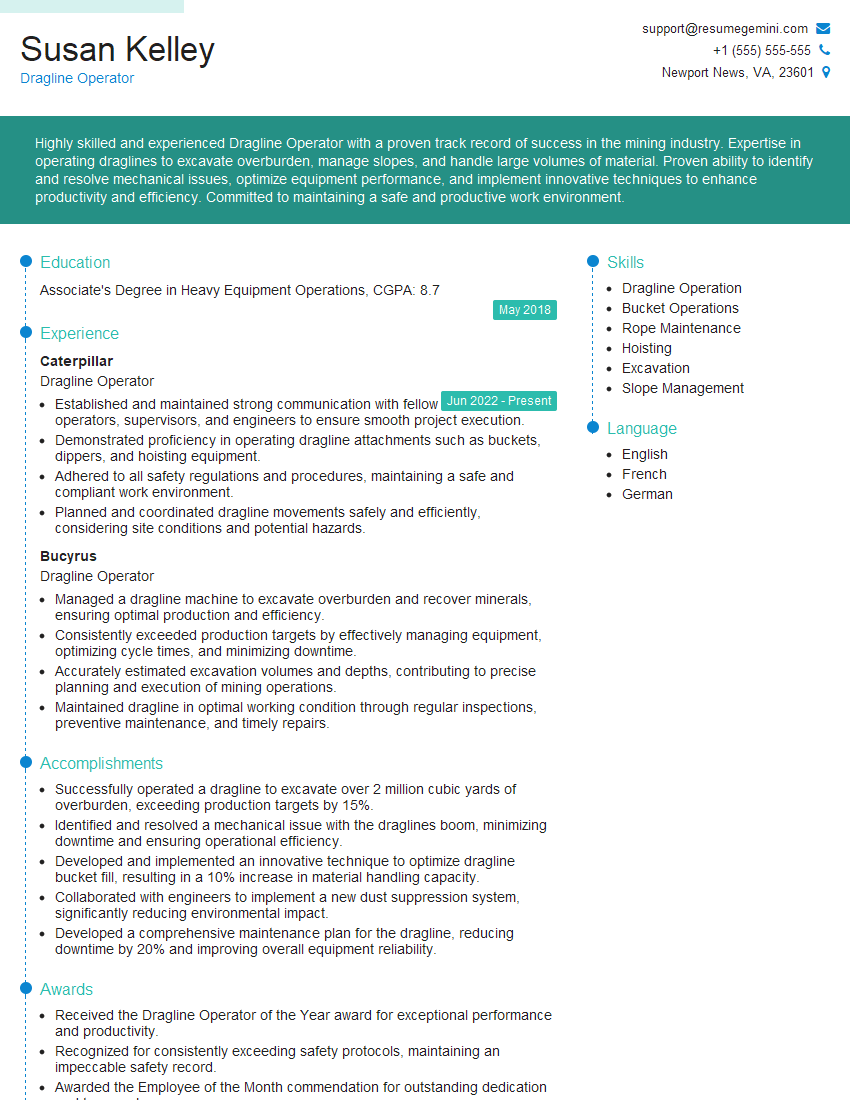
Dragline Operator Resume Sample

Front-End Loader Operator Resume Sample
Explore more articles
Users Rating of Our Blogs
Share Your Experience
We value your feedback! Please rate our content and share your thoughts (optional).
What Readers Say About Our Blog
Very informative content, great job.
good