Feeling uncertain about what to expect in your upcoming interview? We’ve got you covered! This blog highlights the most important Operating Sprayers interview questions and provides actionable advice to help you stand out as the ideal candidate. Let’s pave the way for your success.
Questions Asked in Operating Sprayers Interview
Q 1. Describe your experience with different types of sprayers.
My experience encompasses a wide range of sprayers, from hand-held knapsack sprayers ideal for small gardens and precise applications, to larger, tractor-mounted boom sprayers used in agricultural settings. I’ve also worked extensively with airless sprayers for painting and coating applications, and hydraulic nozzle sprayers for various industrial uses. Each type presents unique challenges and requires a different level of expertise in calibration, maintenance, and safety protocols. For example, a knapsack sprayer demands careful attention to pressure regulation to avoid drift, while a boom sprayer requires meticulous calibration to ensure uniform coverage across the entire field. Airless sprayers require precise control of the pressure and viscosity of the fluid, while hydraulic systems require specialized knowledge to troubleshoot pump and valve issues.
Q 2. Explain the process of calibrating a sprayer for accurate application.
Calibrating a sprayer ensures accurate pesticide application, preventing both waste and environmental damage. The process typically involves these steps:
- Determine the desired spray volume: This depends on the target area and the recommended application rate specified on the pesticide label.
- Measure the sprayer’s output: Spray a known area (e.g., 100 square feet) for a set time, carefully collecting the spray solution in a graduated container. Calculate the gallons per minute (GPM) or liters per minute (LPM) output.
- Calculate travel speed: To achieve the desired spray volume per acre (or hectare), you need to determine the appropriate speed while spraying. This typically involves using formulas considering the sprayer’s output, nozzle spacing, and swath width.
- Adjust sprayer settings: Based on the calculations, adjust the sprayer’s pressure, nozzle size, and travel speed to deliver the precise volume of spray solution per unit area.
- Verify calibration: Repeat the process in another test area to check for consistency. Adjust settings as needed to fine-tune accuracy.
For instance, if you need to apply 1 gallon of solution per 1000 sq ft, and your sprayer outputs 0.5 gallons in one minute, you need to cover 2000 sq ft in one minute to achieve the correct application rate.
Q 3. How do you ensure the safety and efficacy of pesticide application?
Ensuring safety and efficacy involves a multi-faceted approach. Firstly, always follow the label instructions meticulously, paying close attention to the recommended application rate, personal protective equipment (PPE) requirements, and environmental precautions. Secondly, proper calibration, as discussed earlier, is crucial for efficacy, preventing both under-application (ineffective control) and over-application (environmental harm and potential health risks). Thirdly, thorough understanding of weather conditions is vital; avoid spraying in windy conditions to prevent drift, and avoid spraying when rainfall is imminent to maximize the pesticide’s effectiveness. Fourthly, regular maintenance prevents equipment malfunctions that can lead to spills or uneven applications, compromising both safety and efficacy. Finally, proper disposal of leftover pesticide and cleaning solution is crucial for environmental protection. For example, I always check for wind speed and direction before starting spraying. A windy day can significantly reduce the efficacy of the pesticide and increase the risk of drift, affecting nearby areas.
Q 4. What are the common safety precautions when operating a sprayer?
Safety precautions are paramount. This includes:
- Always wear appropriate PPE: This typically includes chemical-resistant gloves, goggles, respirators, and protective clothing.
- Follow label instructions carefully: These instructions outline specific safety measures for each pesticide.
- Avoid spraying in windy conditions: To minimize drift and protect yourself and the environment.
- Avoid spraying near water sources: To prevent contamination.
- Never mix pesticides without proper training and equipment: To avoid dangerous chemical reactions.
- Wash thoroughly after spraying: To remove any pesticide residue from your skin and clothing.
- Properly store and dispose of pesticides: To prevent accidental exposure and environmental pollution.
For instance, I always conduct a pre-spray inspection to make sure the equipment is in good working order and I have all my PPE in place.
Q 5. Describe your experience with different nozzle types and their applications.
I have experience with various nozzle types, each suited for specific applications:
- Flat Fan nozzles: Provide uniform coverage over a wide swath, ideal for broadacre applications.
- Cone nozzles: Produce a cone-shaped spray pattern, useful for spot treatments or localized applications.
- Floodjet nozzles: Deliver a high volume of spray at low pressure, suitable for wetting agents or larger droplets.
- Air Induction nozzles: Mix air into the spray stream, creating smaller droplets ideal for herbicide application or where drift is a major concern.
The choice of nozzle depends heavily on the target area, application method, and the properties of the spray solution. For example, in orchards, air induction nozzles are often chosen to minimize the amount of drift that would hit the fruit.
Q 6. How do you troubleshoot common sprayer malfunctions?
Troubleshooting sprayer malfunctions involves a systematic approach:
- Identify the problem: Observe the symptoms carefully. Is the sprayer not spraying at all? Is the spray pattern uneven? Is there insufficient pressure?
- Check for simple solutions: Examine the nozzle for clogs, ensure adequate fluid supply, and inspect the pressure regulator and pump for proper functioning. Clogged filters are a very common cause.
- Inspect hoses and connections: Look for leaks, cracks, or loose fittings.
- Check the pump: If the pump is not functioning properly, you might need to troubleshoot the power source, belts, or internal components. You may need professional assistance here.
- Inspect the nozzle: Replace or clean the nozzle if necessary.
I frequently use a pressure gauge to check pump output and pressure. A sudden drop in pressure often indicates a leak somewhere in the system.
Q 7. How do you maintain and clean a sprayer to prevent corrosion and clogging?
Preventing corrosion and clogging requires diligent cleaning and maintenance:
- Rinse the sprayer thoroughly immediately after use: Flush the system with clean water, paying special attention to the tank, hoses, filters and nozzles.
- Use a cleaning solution: For stubborn residues, a specialized sprayer cleaner can be used to effectively remove pesticide residue.
- Store the sprayer properly: Store in a dry, clean location to minimize corrosion. Consider adding a corrosion inhibitor to the tank during storage.
- Regularly inspect hoses, filters, and nozzles: Replace or repair damaged components promptly.
- Inspect for corrosion: Look for signs of rust or pitting and take action if needed. Consider repainting metal parts as necessary.
I find that regular, thorough cleaning is much more cost-effective than dealing with costly repairs from corrosion and clogging later. For example, I’ve seen cases where neglected sprayers have become almost unusable due to corrosion that compromised the pump and valves.
Q 8. What is your experience with GPS-guided sprayers?
My experience with GPS-guided sprayers spans over ten years, encompassing various applications from large-scale agricultural operations to precise vineyard treatments. I’m proficient in using different GPS systems, including RTK (Real-Time Kinematic) and other differential GPS technologies for accurate application. This allows for significant improvements in spray application efficiency and minimizing overlap or gaps, which directly translates to reduced pesticide usage and improved crop yields. I am familiar with various brands and models, and I’m comfortable calibrating and troubleshooting these systems. For example, I once used a GPS-guided sprayer to apply herbicide to a field with irregular boundaries, successfully covering only the designated area and saving over 15% of herbicide compared to traditional methods.
My skills extend beyond basic operation; I can analyze spray data to identify areas needing adjustment, ensuring optimal application and minimizing environmental impact. I also understand how to integrate GPS data with other precision agriculture technologies like variable rate application for further optimization.
Q 9. How do you determine the appropriate application rate for various pesticides?
Determining the appropriate application rate for pesticides requires a multi-faceted approach. It begins with carefully reading and understanding the pesticide label instructions. The label will specify a recommended rate per unit area (e.g., gallons per acre or liters per hectare). This rate is often based on the target pest, crop type, and environmental conditions. Factors such as plant growth stage, pest pressure, and weather conditions can significantly affect the efficacy of the pesticide.
Next, I’d perform a thorough calibration of the sprayer. This involves measuring the output of the nozzles at a specific pressure to calculate the amount of spray solution being delivered per unit area per unit time. Calibration ensures that the actual application rate matches the label recommendation. Any discrepancy requires adjustments to the sprayer settings, such as nozzle size, pressure, or speed. For instance, if the calibration reveals the sprayer is delivering less than the desired rate, I might increase the spray pressure or reduce the travel speed to compensate.
Finally, I consider using variable rate technology (VRT). VRT allows for different application rates across the field based on specific zones identified using sensors or maps. This could involve higher rates in areas of high pest pressure and lower rates in areas with less infestation, optimizing pesticide use and minimizing environmental concerns.
Q 10. Explain your understanding of pesticide label instructions and regulations.
Understanding and adhering to pesticide label instructions and regulations is paramount for safe and effective spraying operations. I always treat pesticide labels as legally binding documents. The label contains crucial information, including the chemical composition, application rates, safety precautions (PPE requirements), environmental restrictions, and legal compliance details (registration number, etc.). It’s my responsibility to meticulously follow these guidelines to the letter.
Beyond the label, I’m also familiar with relevant federal, state, and local regulations regarding pesticide application. This includes understanding restricted-use pesticides, worker protection standards (WPS), and environmental protection measures. For example, I’m aware of buffer zones that may need to be maintained around sensitive areas like water bodies during spraying. I regularly update my knowledge on pesticide regulations through professional development programs and industry publications to ensure compliance.
Ignoring pesticide label instructions or regulations can lead to severe consequences – from environmental contamination and crop damage to legal penalties and health risks. My adherence to these guidelines is unwavering.
Q 11. Describe your experience with different types of spray booms and their advantages.
I have extensive experience with various spray boom types, including standard booms, air-assisted booms, and self-propelled booms, each with its own advantages. Standard booms are relatively simple and cost-effective, suitable for most applications. Air-assisted booms utilize air to improve spray droplet distribution and penetration, particularly beneficial for tall crops. Self-propelled booms offer enhanced maneuverability and control, especially in challenging terrain.
The choice of boom type depends heavily on the specific application. For example, in a large-scale grain field, a standard boom may suffice; however, for orchards or vineyards, air-assisted booms are often preferred to ensure thorough coverage. Self-propelled booms are valuable in situations with uneven topography, where precise control is needed to avoid drift.
Beyond the boom type, the selection of nozzles is equally crucial. Different nozzles produce various spray patterns and droplet sizes, influencing the uniformity of application and minimizing drift. My expertise includes selecting and maintaining the appropriate nozzles for different tasks and conditions. For instance, using low-drift nozzles can significantly reduce pesticide drift in windy conditions.
Q 12. How do you handle unexpected weather conditions during spraying operations?
Unexpected weather conditions can severely impact spraying operations. My approach involves constant weather monitoring throughout the day, utilizing forecasts and real-time data. If conditions start to deteriorate – such as increasing wind speed or the onset of rain – I immediately cease spraying operations and secure the equipment to prevent damage or accidental release of pesticides. Safety is my priority.
Wind speed and direction are critical factors. High winds can lead to significant pesticide drift, contaminating non-target areas. Therefore, spraying is only conducted when wind speed is within acceptable limits (usually below 15 mph or less, depending on nozzle type and local regulations). Rain similarly compromises the effectiveness of pesticide application and can cause runoff, potentially contaminating water sources. I also consider temperature; extreme heat can affect pesticide efficacy and sprayer operation. In these instances, the spraying schedule might need rescheduling.
I have developed detailed contingency plans to handle weather disruptions, which include secure storage of chemicals and equipment, alternative scheduling, and communication protocols with stakeholders to minimize disruption.
Q 13. What is your experience with different types of spray tanks and their capacity?
My experience encompasses various spray tank types and capacities, ranging from smaller, self-contained units for smaller applications to large-capacity tanks for high-volume spraying. The tank’s material (polyethylene, stainless steel) and capacity selection are crucial based on the application. Polyethylene tanks are generally more affordable and less susceptible to corrosion, while stainless steel tanks are more durable and better suited for specific chemicals.
I’ve worked with tanks ranging from 300 gallons to over 1000 gallons, understanding the challenges related to filling, cleaning, and maintaining different tank sizes. The choice of capacity depends on the size of the area to be sprayed, the application rate, and the logistical constraints of refilling. Larger tanks are advantageous for covering vast areas, reducing downtime for refills; however, they can also pose handling challenges. Smaller tanks are easier to manage and fill but may necessitate more frequent refills.
Proper tank cleaning and maintenance are vital to prevent contamination and ensure the longevity of the equipment. I follow rigorous procedures for rinsing and cleaning tanks after each use, using appropriate detergents and following all safety protocols.
Q 14. Describe your experience with pressure regulators and their importance.
Pressure regulators are essential components of any sprayer system, responsible for maintaining a consistent pressure at the nozzles regardless of variations in engine speed or pump output. A consistent pressure is crucial to ensure a uniform application rate and spray pattern. Fluctuations in pressure can lead to uneven coverage, reduced efficacy, or increased drift. I’m adept at troubleshooting and repairing pressure regulator issues, understanding the mechanisms that can cause malfunctions.
Pressure regulators generally use a diaphragm or piston mechanism to control the pressure. I’m familiar with adjusting these mechanisms to maintain the desired pressure, as specified by the nozzle manufacturer’s recommendations and the pesticide label requirements. For example, I might need to adjust the regulator if the pressure gauge indicates a significant drop in pressure during spraying, potentially indicating a problem with the regulator itself or a blockage in the system.
Regular inspection and maintenance of pressure regulators are vital. I inspect them for leaks, damage, and proper functioning before each spraying operation to ensure that the equipment performs optimally and safely.
Q 15. How do you monitor and maintain the sprayer’s pressure?
Maintaining the correct pressure is crucial for effective and consistent spraying. Sprayer pressure is monitored using a pressure gauge, typically located on the sprayer’s control panel. This gauge displays the pressure in pounds per square inch (psi). The desired pressure varies depending on the nozzle type, the material being sprayed, and the target application. For instance, a lower pressure might be used for delicate crops to avoid damage, while higher pressure might be needed for larger areas or to achieve better penetration.
Maintaining the pressure involves several steps. First, you must ensure that the pump is functioning correctly and is capable of reaching the desired pressure. Regular maintenance includes checking for leaks in hoses and connections, and ensuring the pump is properly lubricated. If the pressure drops, it could indicate a problem such as a clogged filter, a faulty pump, or a leak in the system. Addressing these issues promptly will avoid uneven application and wasted materials. Secondly, a pressure regulator is often used to fine-tune the pressure output, allowing for adjustments based on varying conditions. Finally, consistent monitoring of the pressure gauge during operation is key; fluctuations outside the desired range necessitate investigation and correction.
Career Expert Tips:
- Ace those interviews! Prepare effectively by reviewing the Top 50 Most Common Interview Questions on ResumeGemini.
- Navigate your job search with confidence! Explore a wide range of Career Tips on ResumeGemini. Learn about common challenges and recommendations to overcome them.
- Craft the perfect resume! Master the Art of Resume Writing with ResumeGemini’s guide. Showcase your unique qualifications and achievements effectively.
- Don’t miss out on holiday savings! Build your dream resume with ResumeGemini’s ATS optimized templates.
Q 16. Explain your understanding of different spray patterns and their effectiveness.
Sprayer nozzles produce different spray patterns crucial for targeted application and minimizing drift. Common patterns include:
- Flat Fan: Provides a wide, even spray ideal for broadleaf weed control or even coverage of large areas.
- Cone: Produces a circular spray pattern, suitable for spot treatments or applications requiring focused delivery.
- Hollow Cone: Creates a ring-shaped spray, useful for treating tree trunks or directing the spray to specific areas.
The effectiveness of each pattern depends on the application. For example, a flat fan is efficient for blanket coverage of a field, while a cone is better suited for spot-treating weeds in a garden. Choosing the correct nozzle type and pressure for the desired pattern is essential to ensure optimal efficiency and effectiveness. Incorrect nozzle selection can result in uneven spray coverage, wasted materials, and reduced efficacy of the treatment. For example, a low pressure flat fan might result in uneven coverage, while too high a pressure cone may lead to excessive drift.
Q 17. How do you ensure accurate coverage and prevent overlaps or gaps during spraying?
Accurate coverage is paramount to prevent wasted chemicals, ensure the effectiveness of the treatment, and protect the environment. Achieving this requires careful planning and execution. One method involves using GPS-guided sprayers which can accurately map out the area to be sprayed, avoiding overlaps and gaps. For instance, GPS technology allows operators to see their progress in real time and identify areas that have already been sprayed, ensuring optimal coverage. Without this technology, overlaps can be minimized by marking the area or using flags to track progress.
Visual monitoring during spraying is also essential. Maintaining a consistent speed and overlap (generally 20-30%) helps ensure complete coverage. Regularly checking the spray pattern for uniformity is vital. Any irregularities or noticeable gaps require immediate investigation. If there are significant gaps or overlaps, adjusting the nozzle settings or altering the spraying technique can remedy the issue. Regular calibration of the sprayer is also critical for accurate coverage; a properly calibrated sprayer ensures that the correct amount of spray is applied per unit area.
Q 18. How do you manage drift and minimize environmental impact?
Drift, the movement of spray droplets away from the target area, is a significant concern for environmental reasons. Several strategies minimize drift:
- Proper Nozzle Selection: Using nozzles with lower drift potential (such as air-induction nozzles) dramatically reduces drift.
- Optimal Spraying Conditions: Avoiding spraying during windy conditions or high temperatures significantly minimizes drift. Spraying in calm conditions, preferably early morning or late evening, is recommended.
- Accurate Boom Height: Maintaining the correct boom height ensures the spray droplets do not reach excessive heights and drift away from the target area.
- Adjuvants: Utilizing drift reducing agents (adjuvants) can increase droplet size and thus reduce drift potential. These adjuvants are specifically designed to improve the spray’s efficacy and decrease environmental impact.
Minimizing environmental impact also involves responsible chemical handling, proper disposal of leftover chemicals, and adherence to local regulations. For instance, always wearing the appropriate personal protective equipment (PPE) during spraying and maintaining a clean workspace are crucial steps. Accurate record-keeping of applied chemicals and treatments is also environmentally responsible.
Q 19. Describe your experience with various types of pesticides and herbicides.
My experience encompasses a wide range of pesticides and herbicides, each with unique properties and application requirements. I’m familiar with various formulations, including emulsifiable concentrates (ECs), soluble powders (SPs), water-dispersible granules (WDGs), and suspension concentrates (SCs). I understand the importance of reading and adhering to the label instructions for each product to ensure safe and effective application. Each product has specific application rates, safety precautions, and potential environmental impacts which must be carefully considered and followed to ensure responsible use.
For example, I have experience applying glyphosate-based herbicides for weed control in agricultural settings, ensuring careful calibration of the sprayer to maintain uniform application rate and avoiding drift. I have also worked with insecticides such as pyrethroids for insect pest management, understanding the importance of rotational crop strategies to minimize resistance development. I regularly consult relevant safety data sheets and government guidelines to ensure compliance with all applicable regulations. Careful selection and application of the proper product is essential for maximizing effectiveness and minimizing environmental impact.
Q 20. How do you identify and address sprayer issues related to pump performance?
Diagnosing pump performance issues requires a systematic approach. A reduction in pressure or inconsistent spraying are common symptoms. The first step involves checking the obvious: Are there any leaks in the system? Are the filters clogged? A clogged suction filter can significantly reduce the pump’s ability to draw liquid. A pressure gauge shows the overall pressure while individual nozzle check provides detailed insights on pressure variance and potential issues.
If leaks are found, repair or replace the damaged components. If the filters are clogged, clean or replace them. If the issue persists, it could be a problem with the pump itself. This might involve checking the pump’s belts for wear, examining the pump’s seals for damage, or assessing the pump’s overall condition. In some cases, more specialized knowledge and tools may be needed to diagnose complex pump issues. For instance, I’ve used pressure gauges and flow meters to measure pump output and diagnose internal pump problems that could involve worn impellers or internal blockages.
Q 21. How do you handle spills or leaks during sprayer operation?
Spills and leaks are serious incidents requiring immediate attention. The first step is to contain the spill to prevent further contamination. This might involve using absorbent materials like spill pads or diatomaceous earth to soak up the spilled liquid. The area should then be clearly marked to prevent accidental contact.
Next, the source of the leak should be identified and repaired. This could involve tightening loose connections, replacing damaged hoses, or repairing a leak in the tank. The spilled material should be properly cleaned up following all safety guidelines and local regulations, and all contaminated materials must be disposed of properly, often requiring specific waste disposal services. Accurate documentation of the incident, including the type and amount of spilled material, the location of the spill, and the steps taken to clean it up, is necessary to comply with environmental regulations and to improve safety procedures in the future.
Q 22. What is your understanding of the environmental regulations concerning sprayer operation?
Environmental regulations governing sprayer operation are crucial for minimizing the impact of pesticide application on human health and the environment. These regulations vary by location but generally cover aspects like pesticide selection, application rates, buffer zones around sensitive areas (like water bodies or residences), and proper disposal of leftover chemicals and rinse water. For instance, the EPA in the US sets standards for pesticide registration and use, while individual states often have even stricter rules. My understanding encompasses these regulations and includes staying updated on any changes through professional development courses, industry publications, and regulatory agency websites. I always prioritize adherence to all applicable local, state, and federal environmental regulations before, during, and after any spraying operation.
A specific example would be the careful consideration of wind speed and direction before commencing application. High winds increase the risk of drift, violating regulations and potentially causing harm. We use wind speed monitors and weather forecasts to ensure conditions are suitable for safe and compliant application.
Q 23. Describe your experience with sprayer maintenance logs and records.
Maintaining meticulous sprayer maintenance logs and records is non-negotiable for ensuring compliance and efficient operation. These logs document every aspect of the sprayer’s life cycle, from initial setup and calibration to regular maintenance and repairs. I meticulously record dates, procedures undertaken (cleaning, filter changes, nozzle calibrations, etc.), the type and amount of pesticide used, and any issues encountered. I use a digital system allowing for easy data access and analysis, generating reports to track maintenance trends and schedule preventative repairs. This documentation serves as proof of compliance during audits and helps to prevent costly downtime due to unexpected failures. For example, consistent tracking of filter changes can highlight if a particular filter type needs replacement more often than expected, prompting investigation into potential causes such as contamination of the pesticide supply.
Q 24. How do you ensure the safety of yourself and others during sprayer operation?
Safety is paramount in sprayer operation. My approach to ensuring the safety of myself and others involves a multi-layered strategy beginning with thorough pre-operational checks of the equipment. I always wear the appropriate personal protective equipment (PPE), which includes chemical-resistant clothing, gloves, eye protection, and a respirator. Before each operation, I check the sprayer for leaks, malfunctions, and ensure all safety mechanisms (like emergency shutoff valves) are functioning correctly. I clearly mark off the application area and post warning signs. During operation, I maintain a safe distance from others, avoid spraying near people or pets, and never operate the sprayer while fatigued or under the influence of drugs or alcohol. Finally, I follow proper procedures for cleaning and storing the sprayer to minimize any risks of accidental exposure.
I’ve had experience educating others about sprayer safety and emergency procedures, significantly reducing incidents. For instance, explaining the importance of PPE and proper decontamination procedures to my team members improved workplace safety.
Q 25. What are your strategies for preventing pesticide drift?
Preventing pesticide drift is critical for environmental protection and minimizing risks to non-target areas. My strategies include meticulous attention to weather conditions – I avoid spraying during windy conditions, high temperatures, or when inversions are likely to trap the spray. I use appropriate nozzle types and pressure settings for the specific application. Low-drift nozzles create larger droplets that are less prone to drift. I also carefully calibrate the sprayer to ensure even distribution, minimizing the need for overlapping passes that can increase drift potential. Maintaining proper boom height and travel speed is also vital. Buffer zones around sensitive areas, such as waterways, are established and adhered to religiously. In addition to operational methods, I always select pesticides that are formulated to reduce drift, opting for products with lower volatility and smaller particle sizes.
Q 26. What is your experience with different types of filters and their importance?
Different types of filters play crucial roles in maintaining sprayer performance and preventing nozzle clogging. Common filter types include screen filters (for removing larger debris), disc filters (for finer filtration), and depth filters (for removing both large and small particles). The importance of filters lies in ensuring the consistent delivery of pesticides and preventing damage to the sprayer’s pump and nozzles. Clogged nozzles lead to uneven application, reduced efficacy, and potential environmental issues. I use a range of filters, selected based on the specific pesticide being used and the level of filtration required. Regularly inspecting and changing filters is part of the maintenance log – it prevents downtime and ensures the sprayer operates optimally. For example, when spraying fine-particle suspensions, I would use a finer filter like a disc filter to prevent clogging.
Q 27. How do you prepare the sprayer for different types of applications?
Preparing the sprayer for different application types requires a systematic approach. The process begins with thorough cleaning and rinsing of the tank and system to prevent cross-contamination. Next, I carefully select the appropriate nozzles based on the target application (e.g., flat fan nozzles for broadleaf weeds, air-induction nozzles for aerial applications). I calibrate the sprayer to ensure the correct application rate for the target area and the specific pesticide, using a calibrated measuring device and following established protocols. I prepare the pesticide solution according to the manufacturer’s instructions, ensuring the correct mixing ratios and adding any necessary adjuvants. This process might vary depending on whether I am using a liquid or granular formulation. Before commencing any operation, I perform a test run to check for leaks, correct pressure, and even distribution.
Q 28. How do you clean and store the sprayer after use?
Cleaning and storing the sprayer after use is crucial for maintaining its lifespan and preventing contamination. The procedure involves triple rinsing the tank with clean water, collecting and properly disposing of the rinse water according to local regulations. Nozzles and other components are thoroughly cleaned and inspected. The sprayer is then drained completely, and all moving parts are lubricated. Finally, the sprayer is stored in a designated area, protected from the elements and pests, following all safety protocols to prevent accidental exposure.
A thorough cleaning not only protects equipment longevity but also reduces the risk of cross-contamination with subsequent applications, ensuring that different pesticides are applied correctly and in the right proportions.
Key Topics to Learn for Operating Sprayers Interview
- Sprayer Equipment Knowledge: Understanding different types of sprayers (e.g., boom sprayers, airless sprayers, knapsack sprayers), their components, and their functionalities. This includes maintenance procedures and troubleshooting common issues.
- Calibration and Application Techniques: Mastering the process of calibrating sprayers to ensure accurate application rates. This includes understanding factors influencing calibration, such as nozzle type, pressure, and travel speed. Practical experience applying different chemicals and understanding their impact is crucial.
- Safety Procedures and Regulations: Demonstrating a thorough understanding of safety protocols associated with operating sprayers, including personal protective equipment (PPE), handling chemicals safely, and adhering to environmental regulations.
- Pest and Disease Management: Knowledge of common pests and diseases, their life cycles, and the appropriate application methods for controlling them. Understanding the principles of integrated pest management (IPM) is beneficial.
- Crop Protection and Application Timing: Understanding the importance of timely application of pesticides and herbicides for optimal crop protection. This includes factors like weather conditions, growth stage of the crop, and potential impact on the environment.
- Record Keeping and Documentation: Understanding the importance of maintaining accurate records of spraying activities, including chemical used, application rates, dates, and locations. This includes familiarity with relevant reporting requirements.
- Problem-solving and Troubleshooting: Ability to diagnose and troubleshoot issues related to sprayer operation, including nozzle clogging, pressure problems, and pump malfunctions. This includes practical experience in resolving these issues efficiently.
Next Steps
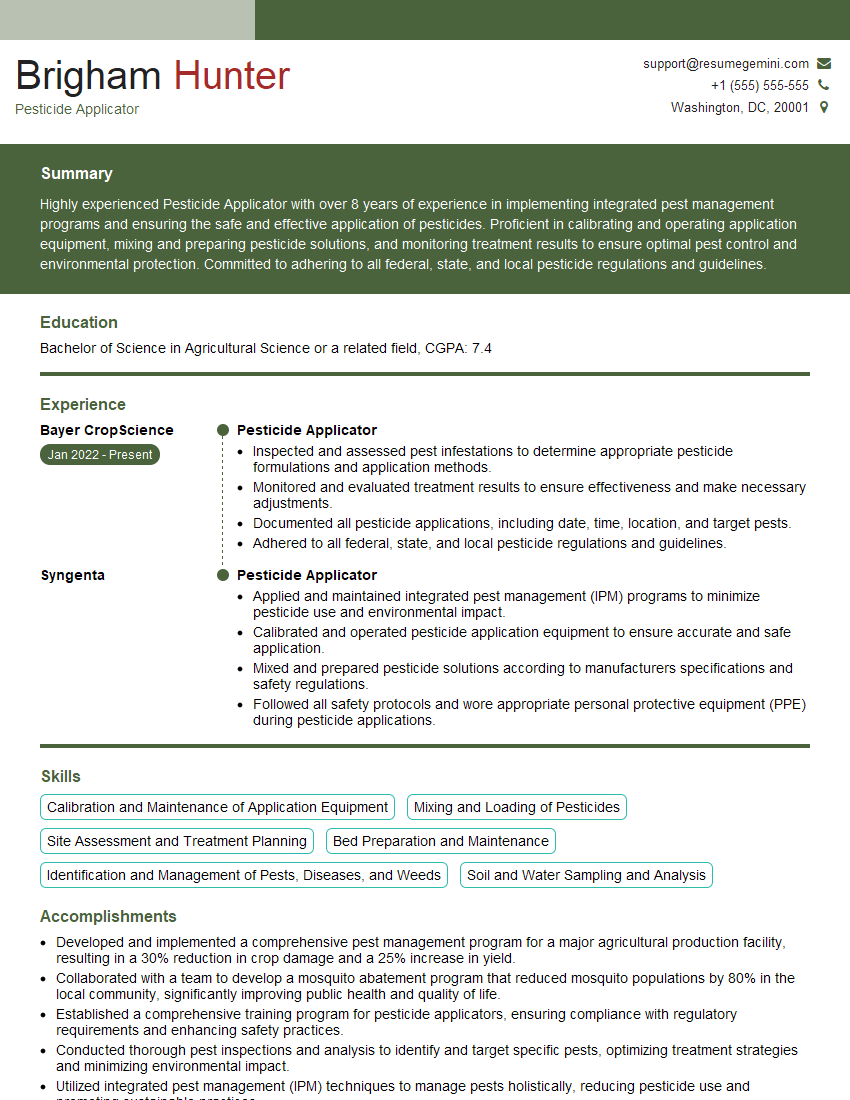
Mastering the operation of sprayers opens doors to a rewarding career in agriculture and related industries, offering opportunities for advancement and specialization. To maximize your job prospects, a well-crafted, ATS-friendly resume is essential. ResumeGemini is a trusted resource to help you build a professional resume that highlights your skills and experience effectively. Examples of resumes tailored to Operating Sprayers positions are available to help guide your creation. Take this opportunity to showcase your abilities and secure your dream role!




Explore more articles
Users Rating of Our Blogs
Share Your Experience
We value your feedback! Please rate our content and share your thoughts (optional).
What Readers Say About Our Blog
Very informative content, great job.
good