Feeling uncertain about what to expect in your upcoming interview? We’ve got you covered! This blog highlights the most important Operating Systems: Windows/Android/iOS interview questions and provides actionable advice to help you stand out as the ideal candidate. Let’s pave the way for your success.
Questions Asked in Operating Systems: Windows/Android/iOS Interview
Q 1. Explain the difference between a process and a thread.
Imagine a restaurant (your computer). A process is like a whole party – a complete, independent group of people (programs) with their own tables (memory space), orders (tasks), and waiter (operating system). A thread, on the other hand, is like a single person at that party, working on a specific task (part of the program) within that same party. Multiple threads can exist within a single process, sharing the same resources (like the same table, memory space).
Key Differences:
- Independence: Processes are independent; threads share resources within a process.
- Memory Space: Processes have their own memory space; threads share the same memory space.
- Overhead: Creating and managing processes is more resource-intensive than creating and managing threads.
- Communication: Inter-process communication (IPC) is complex; inter-thread communication is relatively simpler.
Example: A word processor might be a process. Within that process, you might have one thread handling text formatting, another handling spell checking, and yet another handling saving the document. These threads work concurrently within the same process, sharing access to the document data.
Q 2. Describe the memory management techniques used in Windows.
Windows uses a sophisticated memory management system built around virtual memory. This allows programs to access more memory than is physically available. Key techniques include:
- Paging: The system divides both physical and virtual memory into fixed-size blocks called pages. When a program needs data not in RAM, the system retrieves the necessary page from the hard drive (swap file or paging file).
- Segmentation: Memory is divided into logical segments based on program modules. Each segment has a base address and a limit, providing protection and logical organization.
- Demand Paging: Pages are loaded only when needed, saving RAM and improving performance. This is a form of lazy loading.
- Memory Mapping: Allows files to be directly mapped into a process’s address space. This is efficient for file I/O.
- Page Table: A data structure that maps virtual addresses to physical addresses, crucial for translating the addresses a program uses to the actual physical memory locations.
These techniques work together to provide a robust and efficient memory management system. For example, if a program requests more memory than is available in RAM, Windows swaps less-used pages to the hard drive, freeing up RAM for active processes.
Q 3. What are the key differences between iOS and Android architectures?
iOS and Android have fundamentally different architectures, leading to significant differences in their functionalities and ecosystems.
- Kernel: iOS uses a monolithic kernel (everything runs in the same space), while Android utilizes a hybrid kernel, merging elements of both monolithic and microkernel architectures for better modularity.
- Hardware: While both support various hardware, iOS is primarily tied to Apple’s own hardware ecosystem (Apple Silicon and A-series chips), whereas Android is designed to support a much wider range of hardware from different manufacturers.
- Development Environment: iOS development primarily uses Swift and Objective-C and Xcode (Apple’s IDE), whereas Android development leverages Java, Kotlin, and Android Studio.
- Security Model: Both utilize robust security models, but their implementations differ. iOS’s sandbox model tends to be more restrictive, while Android employs a layered security approach with multiple permission levels.
- Open Source: Android’s open-source nature contributes to its flexibility and wider adoption across a diverse hardware landscape, which contrasts with iOS’s more closed ecosystem.
The impact of these differences is felt in the overall application development process, device compatibility, software updates, and app store guidelines.
Q 4. How does virtual memory work?
Virtual memory is a memory management technique that provides an illusion of having more memory than is physically available. It does this by extending the address space beyond the limits of physical RAM by using a portion of the hard drive (the swap file or paging file) as an extension of RAM.
When a process needs to access data that isn’t currently in RAM, the operating system retrieves the necessary data from the hard drive and loads it into RAM. This process is called paging (if it’s done in fixed-size blocks) or segmentation (if it’s done in variable-sized blocks). When RAM becomes full, the operating system swaps less frequently used pages or segments to the hard drive to make space for more actively used ones.
This allows programs to use more memory than is physically available, which improves performance by avoiding frequent swapping to the hard drive and facilitates efficient multi-tasking by letting more programs run concurrently.
Think of it like a library. You only need to bring books from the shelves (hard drive) when you need to read them (access data). You don’t need all books on your desk (RAM) at once.
Q 5. Explain the concept of paging and segmentation.
Both paging and segmentation are memory management techniques, but they differ in how they divide memory:
- Paging: Divides both physical and virtual memory into fixed-size blocks called pages. This simplifies memory management and allows for efficient memory allocation. It makes it easy to swap pages in and out of RAM because they’re all the same size.
- Segmentation: Divides memory into variable-size blocks called segments. Each segment typically corresponds to a logical part of a program (code, data, stack). This approach offers better memory organization but can be more complex to manage due to the variable sizes.
Many modern operating systems, such as Windows and Linux, use a combination of paging and segmentation for a hybrid approach, combining the advantages of both. Paging handles the physical memory management, while segmentation provides a logical structure to the virtual address space.
Q 6. What are system calls and how are they used?
System calls are requests from an application program to the operating system’s kernel to perform a privileged operation. They act as the interface between user-level programs and the kernel. Without system calls, applications couldn’t access hardware directly or perform tasks like file I/O.
How they are used:
- File Operations: Creating, reading, writing, deleting files (
open(),read(),write(),close()). - Process Management: Creating, terminating, waiting for processes (
fork(),exec(),wait()). - Memory Management: Allocating and deallocating memory (
malloc(),free()). - Network Operations: Sending and receiving network data (
socket(),send(),recv()). - Device Input/Output: Interacting with hardware devices (e.g., reading from keyboard, writing to screen).
Example (Conceptual): When you open a file in a word processor, the application uses a system call to request the operating system to open the file. The kernel then handles the low-level details of accessing the file system.
Q 7. Describe the different types of scheduling algorithms.
Operating systems employ various scheduling algorithms to determine which process gets to use the CPU at any given time. The choice of algorithm impacts system responsiveness, throughput, and fairness. Common types include:
- First-Come, First-Served (FCFS): Simple but can lead to long waiting times. Processes are executed in the order they arrive.
- Shortest Job First (SJF): Minimizes average waiting time but requires knowing the execution time in advance, which is often not feasible. Processes with the shortest estimated burst times are scheduled first.
- Priority Scheduling: Each process has a priority level. Higher-priority processes are executed first, regardless of arrival time. Can lead to starvation of low-priority processes.
- Round Robin: Each process gets a small time slice (quantum) of CPU time. This provides better fairness compared to FCFS, but the quantum size is a critical parameter.
- Multilevel Queue Scheduling: Processes are divided into queues based on their characteristics (e.g., interactive vs. batch). Each queue may have its own scheduling algorithm.
- Multilevel Feedback Queue Scheduling: Processes can move between queues based on their behavior (e.g., if a process uses up its time slice, it moves to a lower-priority queue). Offers flexibility and adapts to changing workload.
The choice of scheduling algorithm depends on the specific needs of the system. For interactive systems, algorithms like Round Robin or Multilevel Feedback Queue are preferred to ensure responsiveness, whereas batch processing systems might benefit from algorithms like SJF to optimize throughput.
Q 8. What is a deadlock and how can it be prevented?
A deadlock is a situation in which two or more processes are blocked indefinitely, waiting for each other to release resources that they need. Imagine two people holding hands in a circle – neither can move forward until the other lets go. In operating systems, this happens when processes hold onto resources and simultaneously request resources held by other processes, leading to a standstill.
Preventing deadlocks involves employing strategies that break at least one of four necessary conditions for deadlock to occur:
- Mutual Exclusion: At least one resource must be non-sharable. This is often unavoidable.
- Hold and Wait: A process holding at least one resource is waiting to acquire additional resources held by other processes. To avoid this, processes can request all resources at once or use a resource allocation scheme that ensures processes get everything they need before starting.
- No Preemption: Resources cannot be forcibly removed from a process holding them. Implementing mechanisms allowing resource preemption can help.
- Circular Wait: There exists a set {P0, P1, …, Pn} of waiting processes such that P0 is waiting for a resource that is held by P1, P1 is waiting for a resource that is held by P2, …, Pn–1 is waiting for a resource that is held by Pn, and Pn is waiting for a resource that is held by P0. Careful resource ordering can prevent this.
Techniques like deadlock prevention (eliminating one of the four conditions), deadlock avoidance (using algorithms to ensure safe states), deadlock detection (periodically checking for deadlocks and recovering), and deadlock recovery (breaking the deadlock by terminating processes or preempting resources) are used to handle deadlocks.
Q 9. Explain the role of the kernel in an operating system.
The kernel is the heart of an operating system. It’s the core software that manages the computer’s hardware and software resources. Think of it as the central control room, responsible for allocating memory, managing processes, handling input/output (I/O), and ensuring the overall smooth operation of the system. It acts as an intermediary between applications and the hardware, providing an abstract layer that simplifies application development.
Key roles of the kernel include:
- Process Management: Creating, scheduling, and terminating processes.
- Memory Management: Allocating and deallocating memory to processes, managing virtual memory.
- File System Management: Providing access to files and directories, managing storage devices.
- Device Management: Communicating with hardware devices, managing their resources.
- Security: Enforcing security policies and access control.
- Networking: Managing network connections and communication.
Different operating systems (Windows, Android, iOS) have different kernel architectures (monolithic, microkernel, etc.), but the core responsibilities remain consistent. For instance, the Windows kernel (NT kernel) is a monolithic kernel, whereas the Linux kernel (used in Android) is also a monolithic kernel with some modular features.
Q 10. How does file system indexing work?
File system indexing is a technique used to create an index of file contents, allowing for faster searching. Imagine a library catalog – instead of searching through every book, you can use the catalog to quickly find a specific title. Similarly, indexing creates a searchable database of file content. Different operating systems employ different indexing strategies and technologies.
The process generally involves:
- Crawling: The indexer scans files, extracting relevant information (keywords, metadata).
- Processing: The extracted information is processed and indexed – this may involve stemming (reducing words to their root form) and stop-word removal (eliminating common words like ‘the’ and ‘a’).
- Storing: The index is stored in a structured format (often a database or inverted index) optimized for searching. When you search, the index is consulted to return relevant results quickly rather than scanning every file.
In Windows, the Windows Search service utilizes an indexing engine. macOS uses Spotlight, and Android and iOS have their own built-in search mechanisms. Note that not all file types are indexed (for privacy or performance reasons) and indexing can be customized by users.
Q 11. What are the security implications of running applications with administrator/root privileges?
Running applications with administrator/root privileges presents significant security risks. These privileges grant the application near-complete control over the system, enabling it to perform actions that a standard user cannot, including:
- System-wide changes: Modifying system files, registry settings, or installing malware.
- Data access: Accessing all files and data on the system, potentially compromising sensitive information.
- Network access: Establishing arbitrary network connections and potentially creating vulnerabilities.
- Kernel-level manipulation: Accessing and modifying core system components, which can lead to system crashes or instability.
If a malicious application is run with elevated privileges, the impact of an attack is significantly amplified. A compromised application with root or administrator rights could install malware, encrypt all your files (ransomware), or even take complete control of your computer, making it a serious security concern. The principle of least privilege dictates that applications should only be granted the minimum necessary privileges to perform their function.
Q 12. Discuss the differences between hard and soft real-time operating systems.
Real-time operating systems (RTOS) are designed to handle time-critical tasks with predictable response times. The key difference between hard and soft real-time operating systems lies in the severity of missing deadlines.
Hard real-time OS: Guarantees that tasks will complete within their deadlines. Missing a deadline can have catastrophic consequences. Examples include systems controlling aircraft navigation or medical equipment. These systems often use specialized scheduling algorithms to ensure deterministic behavior and tight control over resource allocation.
Soft real-time OS: Allows tasks to miss deadlines occasionally without causing a system failure. Missing deadlines degrades system performance but doesn’t lead to critical failures. Examples include multimedia systems, industrial control systems (with less stringent timing requirements), and some video games.
The distinction is crucial because hard real-time systems require significantly more robust and precise design to ensure dependable timing. Choosing between hard and soft RTOS depends entirely on the application’s timing constraints.
Q 13. Explain the concept of concurrency and synchronization.
Concurrency refers to the ability of multiple tasks or processes to run seemingly simultaneously. It doesn’t necessarily mean they’re running truly parallel (on multiple cores), but rather that they are interleaved in a way that creates the illusion of parallelism. Think of a chef preparing multiple dishes – they might switch between chopping vegetables, stirring a sauce, and cooking meat, creating the impression of doing several things at once.
Synchronization is the mechanism used to coordinate concurrent processes or tasks, especially when they access shared resources. Without synchronization, concurrent access to shared resources can lead to data corruption or race conditions. Returning to the chef analogy, the chef might use different cooking areas to avoid mixing ingredients accidentally.
Synchronization mechanisms manage access to shared resources, ensuring that only one process can access a resource at a time or enforcing specific access rules (e.g., using locks or semaphores).
Q 14. What are semaphores and mutexes and how are they used for process synchronization?
Semaphores and mutexes are synchronization primitives used to control access to shared resources. They are essentially signaling mechanisms that prevent race conditions and data corruption in concurrent programming.
Semaphores: A semaphore is an integer variable that can be accessed only through two atomic operations: wait() (or P()) and signal() (or V()). wait() decrements the semaphore; if the result is negative, the process is blocked. signal() increments the semaphore, potentially unblocking a waiting process. Semaphores can be used to control access to a resource (binary semaphore, where the value is 0 or 1) or to manage a pool of resources (counting semaphore).
Mutexes (Mutual Exclusion): A mutex is a special type of semaphore that can only take on the values 0 or 1. It’s primarily used to ensure mutual exclusion – only one process can hold the mutex at a time, preventing other processes from accessing the protected resource. The process holding the mutex releases it when it’s done.
Difference: The key difference is that mutexes usually have an owner (the process that acquired it), whereas semaphores don’t. Also, mutexes often have features to handle priority inversion and deadlock prevention, which are not typically built into general semaphores.
Example (Conceptual): Imagine a shared printer. A semaphore could control access, allowing only a certain number of processes to print at a time. A mutex would guarantee that only one process can print at any given moment, preventing the printer from receiving conflicting print jobs.
Q 15. Describe the different layers of the Android architecture.
Android’s architecture is a layered system, much like a cake with distinct layers, each responsible for specific tasks. Think of it as a stack, with the Linux Kernel at the bottom and applications at the top.
- Linux Kernel: This is the foundation, providing core system services like memory management, process management, and device drivers. It’s the bedrock upon which everything else rests. Imagine it as the cake’s sturdy base.
- Hardware Abstraction Layer (HAL): This layer shields higher-level components from the specifics of the underlying hardware. It provides a standardized interface, allowing the same Android code to run on diverse hardware. Think of it as a layer of frosting that smooths out the unevenness of the base.
- Android Runtime (ART): This is where your applications run. It’s responsible for executing application code and managing resources. It replaces the older Dalvik Virtual Machine (DVM). This is like the main body of the cake, containing all the delicious elements.
- Libraries: This layer offers pre-built functions and tools used by applications and the Android framework. These are your readily available ingredients, like chocolate chips or nuts.
- Android Framework: This is the core of the Android system, providing the building blocks for applications. It includes services like the window manager, content providers, and location services. This acts like the recipe that binds all the elements together.
- Applications: These are the apps you interact with daily, like your browser, email client, or games. These are the decorations on the cake, the final touch that makes it visually appealing.
Each layer relies on the ones below it, creating a well-defined hierarchy that simplifies development and maintenance. This architecture is what makes Android flexible enough to run on many different devices.
Career Expert Tips:
- Ace those interviews! Prepare effectively by reviewing the Top 50 Most Common Interview Questions on ResumeGemini.
- Navigate your job search with confidence! Explore a wide range of Career Tips on ResumeGemini. Learn about common challenges and recommendations to overcome them.
- Craft the perfect resume! Master the Art of Resume Writing with ResumeGemini’s guide. Showcase your unique qualifications and achievements effectively.
- Don’t miss out on holiday savings! Build your dream resume with ResumeGemini’s ATS optimized templates.
Q 16. Explain how the iOS sandbox works.
The iOS sandbox is a security mechanism that isolates applications from each other and from the underlying operating system. Imagine each app living in its own little apartment, with limited access to its neighbors and the building’s infrastructure. This prevents malicious apps from accessing sensitive data or interfering with other apps.
Each app runs in its own process and has limited access to system resources. Key aspects of the sandbox include:
- File system access: Apps can only access their designated storage area, preventing them from modifying files belonging to other apps or the system.
- Network access: Apps require explicit permission to access the network. This controls which apps can communicate externally.
- Inter-process communication (IPC): Communication between apps is carefully regulated. They can’t directly access each other’s memory, promoting security.
- Hardware access: Apps need permission to access hardware such as the camera or microphone.
This isolation helps protect user data and ensures system stability. If one app crashes, it won’t bring down the entire system. The sandbox enhances security by containing app behavior and limits its potential impact.
Q 17. What are the differences between FAT32, NTFS, and ext4 file systems?
FAT32, NTFS, and ext4 are all file systems—methods for organizing and storing files on a storage device. Think of them as different ways to arrange books in a library. Each has strengths and weaknesses.
- FAT32 (File Allocation Table 32): An older, simpler file system. It’s compatible with almost all operating systems, but it has a maximum file size limit of 4GB and limited support for file permissions. It’s often used in USB drives and older devices because of its broad compatibility. Think of it as a library with simple shelving, easy to understand but less organized.
- NTFS (New Technology File System): The default file system for Windows. It supports larger file sizes, robust security features (like file permissions and encryption), and journaling (which improves data integrity). Think of this as a modern, well-organized library with detailed cataloging and security features.
- ext4 (Fourth Extended File System): The standard file system for Linux distributions. It’s designed for performance and reliability, offering features like journaling, large file support, and advanced metadata management. This is similar to NTFS in terms of organization and functionality, but optimized for the Linux environment.
The best choice depends on the operating system and the needs of the user. FAT32 is great for compatibility, while NTFS and ext4 offer advanced features and better performance but might not be universally compatible.
Q 18. How does a device driver interact with the operating system?
A device driver acts as a translator between the operating system and a hardware device. Think of it as an interpreter helping two people who don’t speak the same language communicate. The OS uses standardized commands, and the driver translates those commands into the specific instructions understood by the hardware.
Interaction happens through system calls. The OS makes a system call requesting a specific action (e.g., reading data from a hard drive). The appropriate driver intercepts this call, processes it, communicates with the hardware, and then returns the result to the OS. For example, when you print a document, the OS calls the printer driver, which translates the print job into instructions understood by the printer hardware.
Drivers typically run in kernel space, giving them privileged access to hardware. This allows them to perform low-level operations, but also means errors in drivers can severely impact system stability. Properly written drivers are crucial for reliable hardware operation within the operating system.
Q 19. Explain the concept of a virtual machine (VM).
A virtual machine (VM) is a software emulation of a physical computer system. It creates a virtual environment that behaves like a real computer, running its own operating system and applications. Imagine it as a software-defined container that mimics the functionality of a physical machine.
A hypervisor (also called a virtual machine monitor) manages the VMs, allocating resources (CPU, memory, storage) from the host machine to the virtual machines. Each VM has its own isolated resources, preventing interference between them. This is like a building manager allocating resources (electricity, water) to different apartments.
VMs are widely used for various purposes including software testing, development, server consolidation, and running different operating systems on a single physical machine.
Q 20. What are the benefits and drawbacks of using a VM?
Using VMs offers several benefits, but also comes with some drawbacks:
- Benefits:
- Isolation: VMs provide a safe and isolated environment for running potentially unstable software or testing different operating systems without affecting the host machine.
- Resource Efficiency: Server virtualization using VMs can improve resource utilization, reducing the need for multiple physical servers.
- Flexibility: VMs allow users to run multiple operating systems on the same hardware.
- Ease of Management: Managing virtual machines through a hypervisor is often simpler than managing multiple physical machines.
- Drawbacks:
- Performance Overhead: Running a VM introduces some performance overhead due to the virtualization layer. Performance might be slightly slower than running on bare metal.
- Resource Requirements: Running VMs requires sufficient host hardware resources (CPU, RAM, storage).
- Complexity: Setting up and managing VMs can require some technical expertise.
Whether the benefits outweigh the drawbacks depends heavily on the specific use case. For example, VMs are great for development but might not be ideal for high-performance computing applications where maximum speed is paramount.
Q 21. Discuss common performance bottlenecks in operating systems.
Operating system performance bottlenecks can occur in various areas. Think of it like a highway system; if one section is congested, it impacts the entire flow of traffic.
- CPU Bottleneck: If the CPU is constantly at 100% utilization, applications will slow down or freeze. This can happen with demanding applications or insufficient CPU resources. The solution is to upgrade the CPU, close unnecessary applications, or optimize resource-intensive processes.
- Memory Bottleneck: Insufficient RAM forces the system to use the hard drive as virtual memory (swap space), which is significantly slower. This leads to sluggish performance and system instability. The solution involves increasing RAM, closing memory-intensive applications, or optimizing software to reduce memory usage.
- Disk I/O Bottleneck: Slow hard drives can severely impact overall system responsiveness. This is often seen when accessing large files, running many disk-intensive applications simultaneously, or when using a fragmented hard drive. The solution is to upgrade to a faster drive (SSD), defragment the hard drive, or reduce disk I/O usage.
- Network Bottleneck: Slow or congested networks will cause delays when accessing online resources or transferring data. This can be due to network hardware limitations, bandwidth constraints, or network congestion. Solutions involve upgrading network hardware, increasing bandwidth, or optimizing network usage.
Identifying the bottleneck requires monitoring system resources (CPU, memory, disk I/O, network) and using performance analysis tools. Once the bottleneck is identified, appropriate solutions can be applied to improve performance.
Q 22. How would you troubleshoot a system crash?
Troubleshooting a system crash involves a systematic approach. Think of it like diagnosing a car problem – you wouldn’t just randomly replace parts! First, we need to gather information. This includes noting the exact circumstances leading to the crash (what the user was doing, any error messages displayed, etc.), checking the system logs (Event Viewer on Windows, logcat on Android, console logs on iOS), and examining the system’s hardware status (temperature, disk space, memory usage).
Next, based on the gathered information, we can start isolating the problem. Was it a software issue (e.g., a buggy application, driver conflict, or OS update problem), or a hardware failure (e.g., failing hard drive, overheating CPU)? For software issues, we might try restarting the system, uninstalling recently installed applications, or running a system file checker (sfc /scannow on Windows). For suspected hardware issues, running memory diagnostics (Windows Memory Diagnostic, Memtest86) or hard drive checks (chkdsk on Windows) are crucial.
If the problem persists, we move towards more advanced troubleshooting. This could involve booting into safe mode (disables non-essential drivers and programs), checking for malware, or even reinstalling the operating system as a last resort. Remember, meticulous documentation of each step is crucial for both troubleshooting efficiency and for identifying potential systemic problems.
For example, I once encountered a system crash consistently during video editing. Through careful log analysis, I discovered a memory leak in the video editing software, eventually leading to a solution involving updating the software and optimizing its memory usage.
Q 23. What are some common security vulnerabilities in operating systems?
Operating systems, regardless of platform (Windows, Android, iOS), face various security vulnerabilities. These can be broadly categorized into:
- Software Bugs: Coding errors that allow unauthorized access or malicious code execution. Buffer overflows, race conditions, and use-after-free vulnerabilities are common examples.
- Privilege Escalation: Exploiting flaws to gain higher system privileges than normally allowed. This might involve gaining root access on Linux or administrator access on Windows.
- Unpatched Software: Running outdated software leaves systems vulnerable to known exploits. Regular updates are vital.
- Network Vulnerabilities: Weak network security (e.g., lack of firewalls, unencrypted communications) provides attack entry points.
- Phishing and Social Engineering: Manipulating users into revealing sensitive information or executing malicious code. This is a major security weakness in all platforms, regardless of OS.
- Hardware Vulnerabilities: While less common, flaws in hardware design or implementation can compromise system security (e.g., vulnerabilities related to CPU microcode).
For instance, the infamous Heartbleed bug (a vulnerability in OpenSSL) allowed attackers to steal sensitive information from many systems running various operating systems, highlighting the importance of timely security patches and secure coding practices.
Q 24. Explain your experience with debugging operating system issues.
My experience in debugging OS issues is extensive. I’ve utilized various debugging techniques, including:
- System Logging: Analyzing system logs to pinpoint the cause of errors (using tools like Event Viewer on Windows, logcat on Android, and Xcode’s instruments on iOS).
- Kernel Debugging: Using kernel debuggers (WinDbg, LLDB) to analyze the system’s state at the kernel level, which allows for investigating problems at a much deeper level.
- Memory Dump Analysis: Examining memory dumps (snapshots of system memory) to identify memory leaks, crashes, or other memory-related issues.
- System Call Tracing: Tracing system calls (calls from applications to the OS) to understand how the applications interact with the OS and find the root cause of application crashes.
- Code Review: Examining code to identify potential sources of errors or vulnerabilities.
One memorable debugging experience involved a seemingly random system freeze on an embedded Android device. By analyzing kernel logs and meticulously reconstructing the sequence of events, I traced the issue to a driver conflict. The resolution involved updating the conflicting driver and thoroughly testing the updated system.
Q 25. Describe your experience with different versions of Windows, Android, and iOS.
My experience spans several versions of Windows, Android, and iOS. With Windows, I’ve worked extensively with Windows 7, 8, 10, and 11, experiencing the evolution of the kernel, the shift towards a more touch-friendly interface, and the increasing focus on security features. I’ve observed the transition from traditional desktop management to the cloud-integrated ecosystem of Windows 10 and 11.
On the Android side, my experience includes various versions from Android 4.x (Ice Cream Sandwich) to the latest Android 13, witnessing the evolution of the Android framework, the introduction of new APIs, and changes in security architectures. This includes a deep understanding of the Android runtime (ART) and its significance.
For iOS, my experience covers iOS 8 to iOS 16, noting the increasing importance of security and privacy and the transition from older architectures to the more powerful and efficient 64-bit architecture. The focus on app sandboxing and App Store approval processes is something I have direct experience working with.
Q 26. How do you ensure data integrity in an operating system?
Ensuring data integrity within an operating system requires a multi-layered approach. Think of it like protecting a valuable document – you wouldn’t just leave it lying around!
- File System Integrity Checks: Operating systems employ file system journaling (e.g., NTFS on Windows, ext4 on Linux) to ensure data consistency and recover from crashes. Regular checks (like
chkdskon Windows) verify the file system’s structure and fix errors. - Data Redundancy: Techniques like RAID (Redundant Array of Independent Disks) protect against data loss due to hardware failures. Data is replicated across multiple disks, providing fault tolerance.
- Checksums and Hashing: Algorithms like MD5 or SHA-256 generate unique fingerprints for files. If the checksum changes, it indicates data corruption.
- Data Encryption: Encrypting data at rest (on disks) and in transit (over networks) protects against unauthorized access and modification. Full Disk Encryption (FDE) is an example of a strong security measure.
- Version Control: For critical system files or configurations, keeping version history allows reverting to previous states if necessary.
Real-world examples include the use of RAID in servers to maintain high availability and data protection, and the use of checksums to verify the integrity of software downloads.
Q 27. Explain your experience with different operating system APIs.
My experience with different operating system APIs is extensive and covers various levels of abstraction.
- Windows API (Win32 API): I have experience developing applications using the Win32 API, leveraging its capabilities for creating windows, handling events, and interacting with hardware. This includes familiarity with concepts like message pumps and window handles.
- Android APIs: I’m proficient in Android application development, utilizing the Android SDK, including the Activity lifecycle, services, intents, and various other components. I have worked extensively with different Android versions and API levels, keeping up with changes and new features.
- iOS APIs (Cocoa Touch): My iOS development experience includes using Objective-C and Swift to interact with various frameworks, such as UIKit for user interface development, Core Data for database management, and Core Location for GPS functionality. I understand the iOS app development lifecycle and guidelines.
- Kernel APIs: My experience extends to working at lower levels, including kernel-level programming in certain projects. This involves using kernel APIs to interact directly with hardware and manage system resources.
For example, during a project, I used the Android location API to create a location-based application that required real-time tracking capabilities; using these APIs efficiently requires a deep understanding of resource management and application architecture.
Q 28. What are your preferred methods for testing operating system software?
My preferred methods for testing operating system software incorporate a multi-pronged approach that includes:
- Unit Testing: Testing individual components or modules in isolation. This involves using mocking techniques to simulate dependencies and ensure that each part functions correctly.
- Integration Testing: Testing the interaction between different components or modules. This helps ensure that all parts work together harmoniously.
- System Testing: Testing the entire system as a whole to verify that it meets all requirements and performs as expected. This includes stress testing and load testing.
- Regression Testing: Testing the system after changes (updates, bug fixes) to ensure that existing functionality hasn’t been broken. This is incredibly important to maintain stability.
- Automated Testing: Using automated testing frameworks (e.g., Selenium, Appium) to speed up the testing process and improve test coverage. Automation is key to efficiency and rapid development cycles.
- User Acceptance Testing (UAT): Having actual users test the system to provide feedback and identify usability issues. Getting user input is a crucial part of making a great OS.
I would leverage the advantages of each testing method depending on the specific phase of development. For example, unit testing is critical in the early stages to catch issues quickly, whereas system testing is crucial towards the end to ensure the overall integrity and performance of the operating system.
Key Topics to Learn for Operating Systems: Windows/Android/iOS Interview
- Architecture and Design: Understand the fundamental architecture of each OS (kernel, processes, memory management). Explore the differences and similarities between the three systems.
- Process Management: Learn about process creation, scheduling algorithms, inter-process communication (IPC), and process synchronization. Be prepared to discuss real-world implications of these concepts.
- Memory Management: Study virtual memory, paging, segmentation, and swapping. Understand how each OS handles memory allocation and garbage collection.
- File Systems: Familiarize yourself with the file systems used by each OS (e.g., NTFS, ext4, APFS). Understand file access methods and permissions.
- Security: Discuss security features, vulnerabilities, and common attack vectors for each OS. Understand user authentication and authorization mechanisms.
- Networking: Explore how each OS interacts with networks, including TCP/IP, sockets, and network protocols. Consider the differences in network management across platforms.
- Device Drivers: Understand the role and function of device drivers and how they interact with the OS kernel. This is especially relevant for Windows and potentially Android/iOS development roles.
- Practical Applications: Be prepared to discuss how your theoretical knowledge translates into practical problem-solving scenarios. Consider examples from personal projects or past experiences.
- Troubleshooting: Develop your ability to diagnose and solve common OS-related issues. This demonstrates practical skills highly valued by employers.
Next Steps
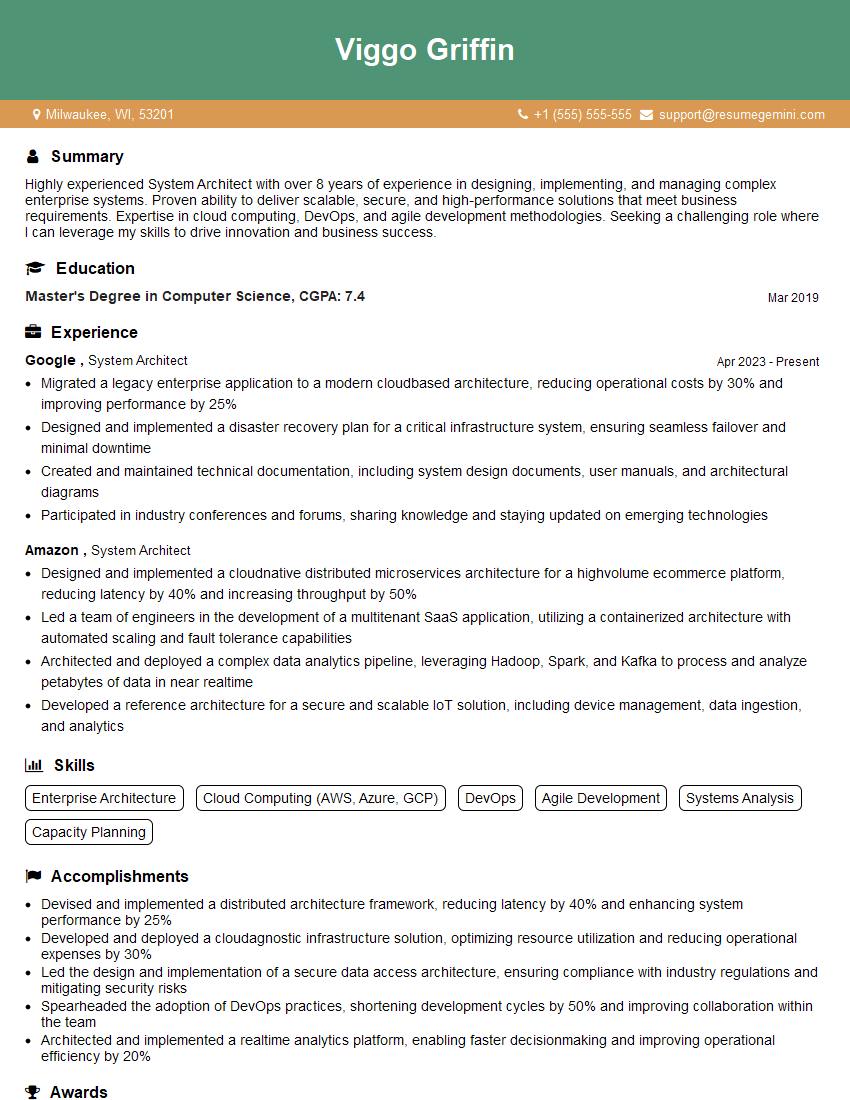
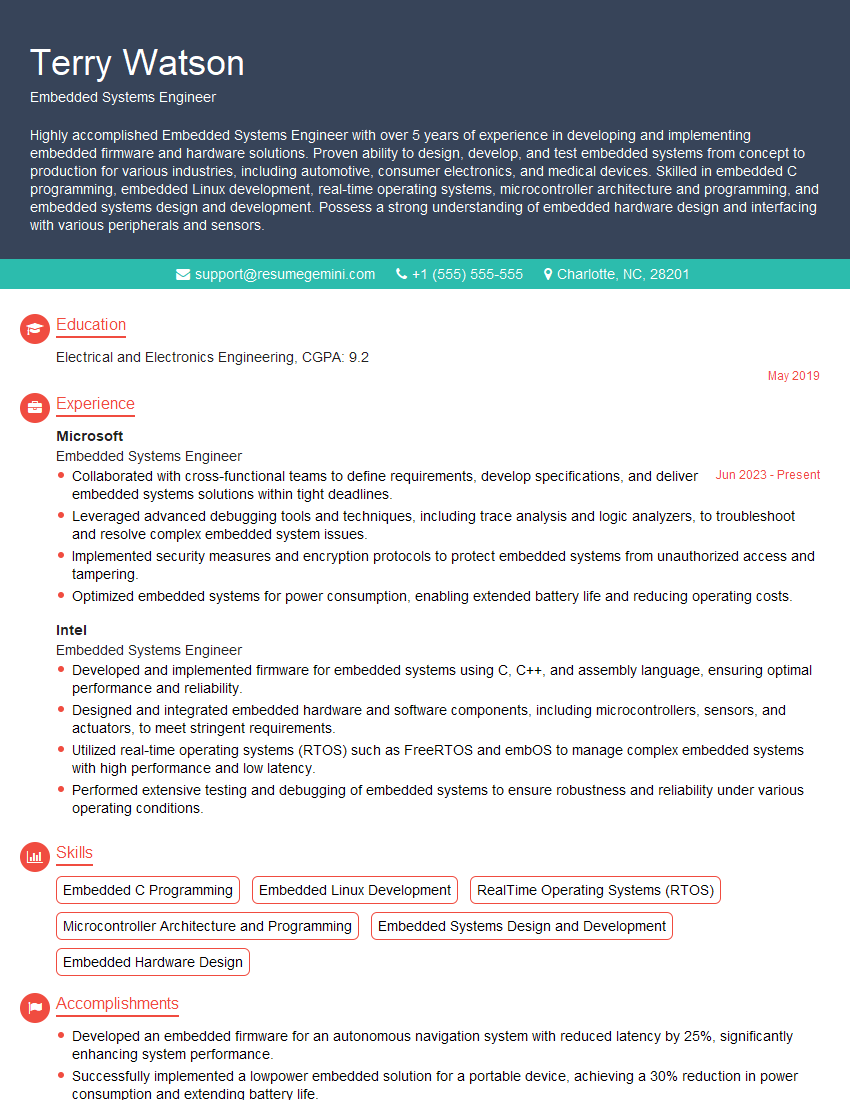
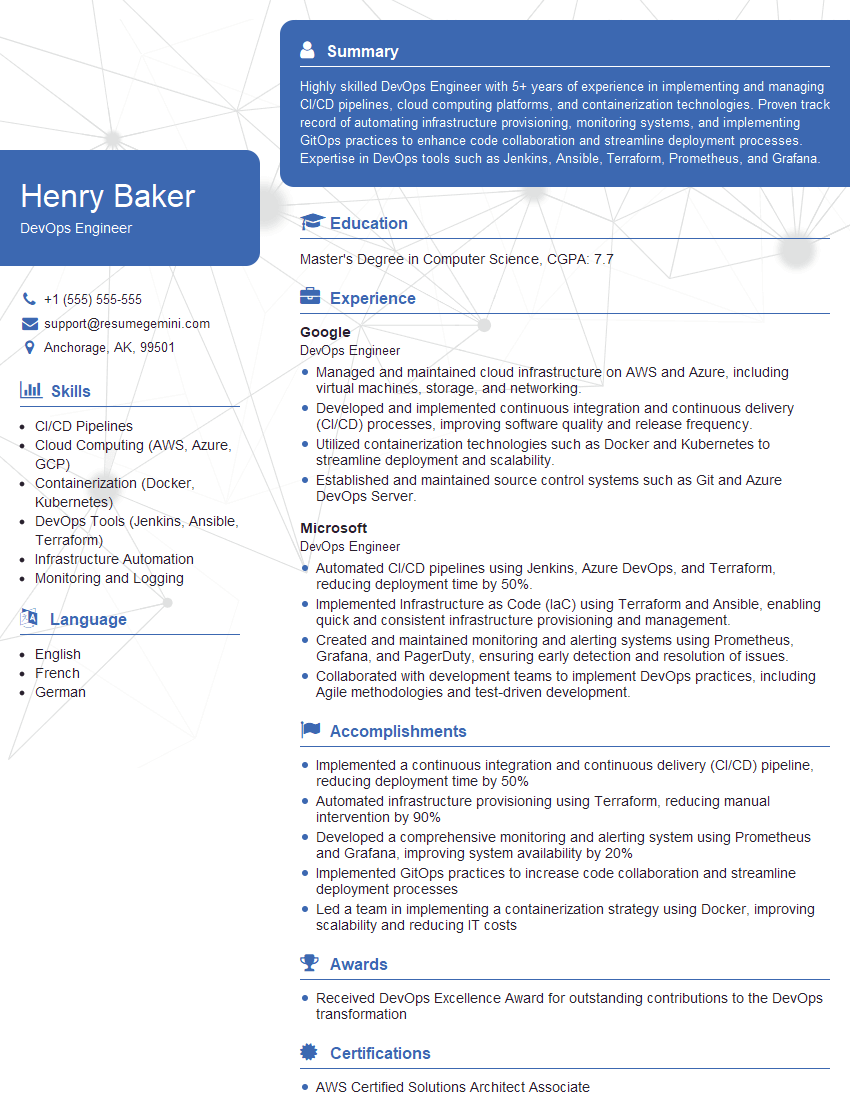
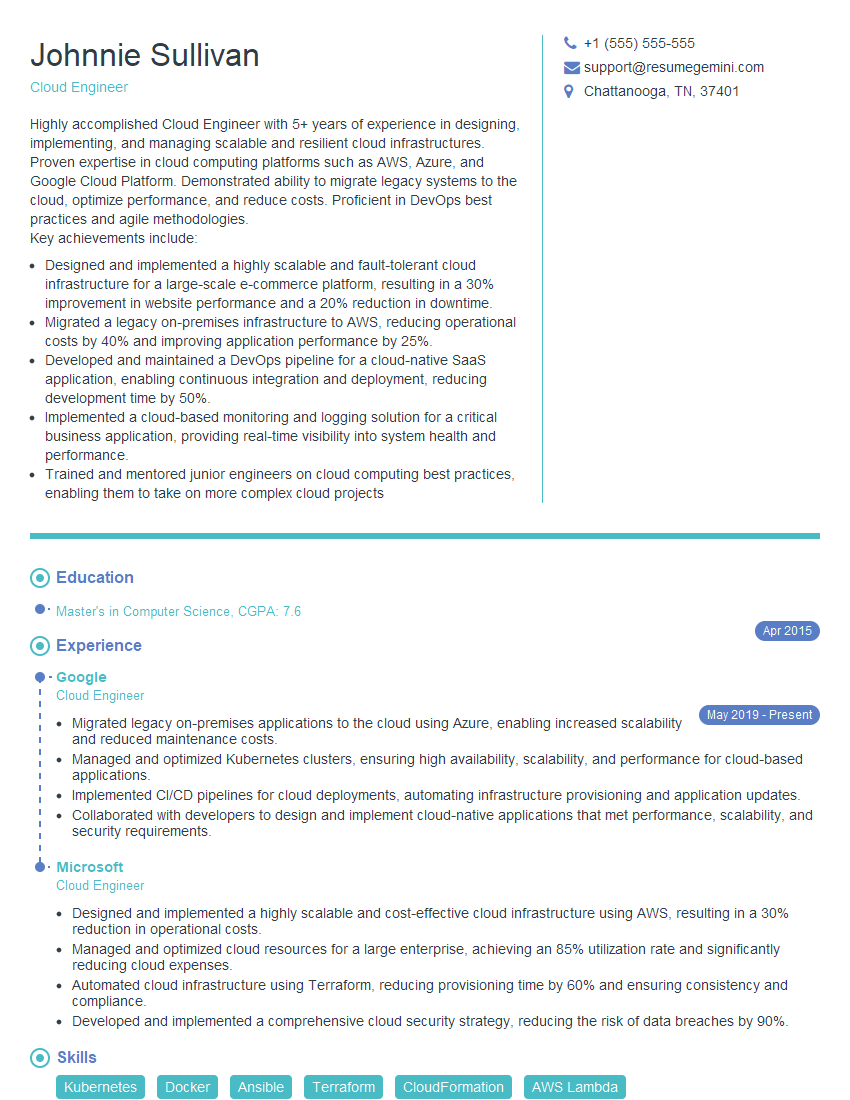
Mastering Operating Systems – Windows, Android, and iOS – is crucial for a successful career in software development, systems administration, or related fields. A strong understanding of these platforms demonstrates valuable technical skills and adaptability. To maximize your job prospects, invest time in creating an ATS-friendly resume that highlights your skills and experience effectively. ResumeGemini is a trusted resource for building professional, impactful resumes. They offer examples of resumes tailored to Operating Systems: Windows/Android/iOS roles to help you create a compelling application that grabs the attention of recruiters.
Explore more articles
Users Rating of Our Blogs
Share Your Experience
We value your feedback! Please rate our content and share your thoughts (optional).
What Readers Say About Our Blog
Very informative content, great job.
good