Preparation is the key to success in any interview. In this post, we’ll explore crucial Operation of Various Press Types interview questions and equip you with strategies to craft impactful answers. Whether you’re a beginner or a pro, these tips will elevate your preparation.
Questions Asked in Operation of Various Press Types Interview
Q 1. Describe your experience operating different types of printing presses (offset, flexographic, digital, etc.).
My experience encompasses a wide range of printing press technologies, including sheetfed and web offset, flexographic, and digital printing. I’ve worked extensively with Heidelberg Speedmaster sheetfed offset presses, various flexographic presses for packaging applications (both narrow and wide web), and several high-volume digital presses like the Xerox iGen and HP Indigo. Each technology presents unique challenges and opportunities. For instance, offset printing excels in high-volume, high-quality color work, while flexography is ideal for flexible packaging materials. Digital printing offers unparalleled versatility and speed for shorter runs and personalized pieces. This diverse background has allowed me to develop a strong understanding of the strengths and limitations of each process, enabling me to select the optimal technology for any given project.
Q 2. Explain the setup and operation of a sheetfed offset press.
Setting up a sheetfed offset press involves a meticulous process. First, the plates—thin, metal sheets with the image to be printed—are mounted onto the press cylinders. This needs to be done with precision, ensuring accurate registration (perfect alignment of colors). Then, the inks are loaded into the ink fountains, and the dampening system (which controls the water/alcohol balance) is carefully adjusted. This is crucial for achieving the correct ink-water balance that prevents smudging and ensures crisp, clean prints. The paper stock is then loaded, usually via a feeder, and the press is brought to a slow speed to test the initial print quality. We monitor color accuracy, registration, and overall print sharpness closely. Adjustments to ink density, water balance, and impression pressure are made as necessary to fine-tune the print. Once the first few sheets meet quality standards, we increase the speed to the optimal production rate.
Q 3. How do you ensure consistent color accuracy across a large print run?
Maintaining consistent color accuracy across a large print run requires a multi-pronged approach. First, we use color management systems (CMS) throughout the pre-press and press workflows. This involves standardizing color profiles for all devices involved, from the digital artwork to the printing plates and press itself. We also perform regular color calibrations, using spectrophotometers to measure and adjust ink densities on the press throughout the run. This process often involves creating and maintaining color charts, which serve as reference points. Furthermore, careful selection of inks, regular cleaning of rollers and ink fountains, and monitoring the press’s environmental conditions (temperature and humidity) are crucial. Finally, experienced press operators play a key role in making subtle adjustments to maintain consistent color throughout the run. Think of it like a conductor guiding an orchestra—it takes expertise and attention to detail.
Q 4. What are the common causes of press downtime, and how do you troubleshoot them?
Press downtime can be caused by a variety of factors. Common culprits include paper jams, ink problems (clogging, incorrect viscosity), mechanical issues (worn rollers, faulty sensors), and plate problems (damage, poor mounting). Troubleshooting involves a systematic approach. We start by identifying the symptoms (e.g., no impression, misregistration, streaks). Then we check the obvious – Is there a paper jam? Is there enough ink? Are the plates correctly mounted? Are all sensors functioning correctly? Often a simple adjustment, such as cleaning a roller or adjusting a pressure setting, can resolve the problem. If not, we may need to consult the press’s maintenance manuals or seek assistance from a qualified technician. Preventive maintenance, including regular cleaning and lubrication, is key in minimizing downtime.
Q 5. Describe your experience with pre-press procedures, including platemaking and imposition.
My experience in pre-press procedures is extensive. I am proficient in platemaking, using both computer-to-plate (CTP) and conventional methods. CTP is efficient and accurate, allowing for quick turnaround. I also have a deep understanding of imposition—the arrangement of pages on a printing sheet to optimize paper usage and minimize waste. For instance, I can expertly create imposition schemes for various sheet sizes and printing configurations. My knowledge extends to digital workflow management, including trapping (overprinting to prevent gaps between colors), color separation, and file preparation to ensure optimal print quality. Effective pre-press preparation is the foundation of successful printing; getting it right here avoids major issues later on.
Q 6. How do you maintain the cleanliness and optimal performance of a printing press?
Maintaining a clean and optimally performing press is crucial for quality and efficiency. This involves daily cleaning of the ink fountains, rollers, and blankets. Regular maintenance schedules include changing blankets and rollers periodically, and lubricating moving parts according to manufacturer recommendations. We also monitor and regularly clean the dampening system to ensure proper ink-water balance. The press environment needs to be controlled as well—maintaining a stable temperature and humidity minimizes issues with paper and ink. Proactive maintenance is more cost-effective and avoids potential breakdowns later on. Think of it like car maintenance; regular servicing prevents major issues down the line.
Q 7. What safety procedures do you follow when operating printing equipment?
Safety is paramount in a printing environment. I always follow the manufacturer’s safety guidelines for each press type, including wearing appropriate personal protective equipment (PPE) like safety glasses and gloves. I’m trained on lockout/tagout procedures to prevent accidental start-up during maintenance. I’m very aware of moving parts, and I carefully follow the press’s emergency stop procedures. Regular safety training keeps me abreast of best practices and keeps everyone safe. Safety is not an option, it’s a fundamental requirement in this profession.
Q 8. Explain the differences between offset lithography and flexography.
Offset lithography and flexography are both printing processes that transfer ink to a substrate, but they differ significantly in their methods. Think of it like this: offset is like using a stamp, while flexography is like using a sponge.
- Offset Lithography: Uses a flat printing plate with ink-receptive and ink-repellent areas. The image is transferred from the plate to a rubber blanket, then to the substrate (paper, cardboard, etc.). This indirect transfer allows for high-quality printing with fine details and sharp images, ideal for magazines and books. It’s known for its crispness and color fidelity.
- Flexography: Employs a flexible, raised-image printing plate made of photopolymer. Ink is transferred directly from the raised areas of the plate to the substrate. It’s a versatile process used for packaging, labels, and flexible materials, often requiring quick turnaround times. Flexo excels in printing on non-porous materials and is adaptable to various substrate thicknesses.
In short, offset lithography is better suited for high-quality, detailed printing on paper, while flexography is more versatile for various substrates and faster production needs, though often with slightly less fine detail.
Q 9. How do you handle paper jams and other common press malfunctions?
Handling paper jams and malfunctions requires a systematic approach. My experience involves first identifying the problem and then implementing the correct solution.
- Paper Jams: I start by turning the press off and carefully removing the jammed paper, ensuring no damage to rollers or other components. The cause, be it a misfeed, wrinkled paper, or a sensor issue, is then investigated and addressed—maybe a paper adjustment, a sensor cleaning, or a simple roll change is needed.
- Ink Problems: Problems like poor ink transfer might involve adjusting the ink fountain keys, checking ink viscosity, or cleaning the rollers. A color imbalance might require adjusting the ink density or replacing a worn-out ink duct.
- Register Issues: Misregistration – where colors don’t align – can be due to improper plate mounting, wear on the impression cylinders, or incorrect press settings. I meticulously check each component and make the necessary adjustments, often using micro-adjustments to achieve precise registration.
I always prioritize safety and follow the manufacturer’s recommended procedures for troubleshooting. Detailed logging of issues and solutions helps in preventing similar problems in the future. A proactive maintenance schedule is crucial for minimizing downtime and maximizing press efficiency.
Q 10. What is your experience with different types of inks and coatings?
My experience encompasses a wide range of inks and coatings, each with its unique properties and applications.
- Ink Types: I’m proficient with UV-cured, water-based, solvent-based, and vegetable-based inks, understanding their respective curing mechanisms, drying times, and suitability for different substrates. For example, UV inks provide instant curing and vibrant colors, ideal for high-speed production, whereas water-based inks are environmentally friendly but require longer drying times.
- Coatings: My experience includes working with various coatings such as aqueous, UV, and varnish coatings, each offering different levels of protection, gloss, and tactile effects. Aqueous coatings are environmentally friendly, while UV coatings provide exceptional durability and scratch resistance. Varnish can significantly enhance the aesthetics and feel of the printed piece.
Choosing the right ink and coating is crucial for achieving the desired print quality, durability, and aesthetic appeal, and I always consider the specific requirements of the project and the substrate before making a selection.
Q 11. Describe your experience with quality control procedures in a pressroom environment.
Quality control in a pressroom environment is paramount. My experience involves a multi-stage process, from initial setup to final inspection.
- Pre-Press Checks: I meticulously check the proofs, plates, and substrates before printing, ensuring everything aligns with specifications.
- On-Press Monitoring: During the print run, I continuously monitor color, register, and ink density, making adjustments as needed using densitometers and other quality control tools.
- Post-Press Inspection: After printing, I conduct a thorough inspection of the finished product, checking for defects like misregistration, smudging, and color variations, ensuring that every print meets the client’s requirements and industry standards.
- Data Tracking: I maintain detailed records of the press run, including ink usage, press speed, and any adjustments made, providing valuable data for process optimization and future reference.
My commitment to quality control ensures consistent, high-quality prints, satisfying client expectations and enhancing the reputation of the print shop.
Q 12. How familiar are you with different paper stocks and their properties?
Understanding different paper stocks and their properties is essential for successful printing. I have extensive knowledge of various paper types, including their weight, texture, finish, and suitability for different printing techniques.
- Paper Weight (GSM): I understand how GSM (grams per square meter) impacts print quality and durability. Heavier papers are more durable but can affect press speeds.
- Paper Finish: I’m familiar with different finishes like coated, uncoated, matte, gloss, and textured papers, knowing how each finish interacts with ink and affects the final appearance.
- Paper Properties: I recognize the differences between various paper types, such as offset, book, newsprint, and card stock, and understand how their unique characteristics influence printing results.
Choosing the right paper stock is critical for achieving the desired aesthetic and functional qualities, and my expertise ensures that the chosen paper enhances the overall quality and impact of the printed material.
Q 13. Explain your understanding of color management and profile creation.
Color management is crucial for consistent and accurate color reproduction across different devices and print processes. My understanding encompasses the entire workflow, from digital design to final print output.
- Color Profiles: I’m proficient in creating and using ICC (International Color Consortium) profiles for monitors, printers, and presses. These profiles ensure color accuracy by translating digital color data into the specific color space of the output device.
- Color Spaces: I understand different color spaces such as RGB (Red, Green, Blue) for screens and CMYK (Cyan, Magenta, Yellow, Key/Black) for printing, and I know how to convert between them accurately.
- Color Calibration: I know how to calibrate and profile monitors and printers using colorimeters and spectrophotometers, ensuring color consistency throughout the production process.
Proper color management is essential for matching the colors on screen to the printed output, and my experience ensures accurate color reproduction, avoiding costly reprints and client dissatisfaction.
Q 14. How do you monitor and adjust ink density and register?
Monitoring and adjusting ink density and register is a continuous process during a print run. Precision is key to achieving high-quality results.
- Ink Density: I use a densitometer to measure the density of each ink color, ensuring it meets the specified targets. Adjustments are made to the ink fountain keys to increase or decrease ink flow. The goal is consistent density across the entire print run.
- Register: Precise register is crucial for sharp, aligned images. I continuously monitor registration throughout the run, making micro-adjustments to the press using the register controls. I may also adjust the plate mounting or impression cylinders if needed.
My experience enables me to quickly identify and correct deviations from the target values, maintaining consistent quality and minimizing waste. Regular calibration of measuring instruments is essential for accurate readings.
Q 15. What is your experience with automated press controls and systems?
My experience with automated press controls and systems is extensive. I’ve worked with a variety of systems, from older PLC-controlled presses to the latest digitally-integrated models. This includes experience with sophisticated color management systems, automated register controls, and pre-press automation software. For example, on a recent job involving a six-color Heidelberg press, I became proficient in using the Prinect workflow system, optimizing settings for consistent color reproduction and minimizing makeready waste. This involved configuring the automated features to precisely control ink density, register, and cut-off, leading to significant improvements in efficiency and print quality. I also have experience troubleshooting and maintaining these systems, understanding their intricacies and how various components interact.
I’m comfortable working with various control panels, interpreting data from sensors and diagnostic tools, and adjusting parameters to optimize press performance. My skills extend to preventative maintenance, ensuring the longevity and reliability of these critical systems, minimizing downtime and maximizing productivity.
Career Expert Tips:
- Ace those interviews! Prepare effectively by reviewing the Top 50 Most Common Interview Questions on ResumeGemini.
- Navigate your job search with confidence! Explore a wide range of Career Tips on ResumeGemini. Learn about common challenges and recommendations to overcome them.
- Craft the perfect resume! Master the Art of Resume Writing with ResumeGemini’s guide. Showcase your unique qualifications and achievements effectively.
- Don’t miss out on holiday savings! Build your dream resume with ResumeGemini’s ATS optimized templates.
Q 16. Describe your experience with troubleshooting and resolving makeready issues.
Troubleshooting makeready issues requires a systematic approach. I begin by carefully analyzing the problem. Is it a registration issue? An ink problem? A paper problem? I use a checklist approach, systematically eliminating possibilities. For instance, if I’m facing registration problems, I’ll first check the impression cylinder, then the plate cylinders, looking for any damage or misalignment. I’ll then inspect the grippers and sidelays to ensure proper sheet handling. I might even check the dampening system, which can affect registration indirectly.
If it’s an ink problem, I’ll analyze ink viscosity, fountain roller settings, and ductor roller condition. I’ll also check for ink trapping issues or other factors affecting color consistency. Documentation is key – I always record my observations and actions, including measurements and adjustments made, creating a clear history for future reference. This method is much like solving a puzzle, piecing together the clues to pinpoint the root cause, and ultimately resolving the issue quickly and efficiently. One time, a seemingly simple registration problem turned out to be caused by a slightly warped impression cylinder, a problem easily missed without a thorough inspection.
Q 17. How do you maintain accurate press records and documentation?
Maintaining accurate press records and documentation is crucial for efficiency and accountability. I use a combination of digital and physical methods. For each job, I maintain detailed records, including job tickets, press sheets, ink formulations, and quality control reports. Digital record-keeping often involves using the press’s built-in software to track run lengths, speeds, and waste, and then uploading this data into a central database. These reports provide valuable data for future analysis and process improvement. For instance, we might analyze the data to identify recurring issues and then implement preventative measures.
Physical records, such as press sheets demonstrating color consistency and registration, are kept as a reference and for quality control audits. This dual approach ensures both easy access to information and a robust backup system. This meticulous record-keeping is essential for analyzing press performance, tracking costs, and demonstrating compliance with quality standards. A well-maintained system helps prevent issues and facilitates smooth operations.
Q 18. What is your experience with waste reduction strategies in a pressroom?
Waste reduction is a critical focus in any modern pressroom. My experience encompasses various strategies, from optimizing makeready procedures to implementing sophisticated waste-tracking systems. Makeready waste reduction involves techniques such as using pre-set makeready settings, carefully planning the job sequence to minimize color changes, and using efficient plate mounting and cleaning methods. Careful planning reduces the amount of paper wasted during the setup process.
We also leverage waste-tracking software to identify areas of high waste and implement targeted improvements. For example, we might monitor waste per job, identifying recurring patterns that indicate problems such as poor sheet feeding, incorrect settings, or plate issues. This data-driven approach allows us to implement corrective actions, which can significantly improve efficiency and reduce overall costs. Continuous improvement is a key part of this approach – we constantly look for better ways to refine our processes.
Q 19. How do you prioritize tasks and manage your time effectively in a fast-paced pressroom?
Prioritizing tasks and managing time effectively in a fast-paced pressroom is essential for success. I use a combination of planning tools and techniques. I start by reviewing the job schedule and prioritizing tasks based on deadlines and urgency. This includes considering factors such as job complexity, material availability, and equipment availability. I then break down complex tasks into smaller, more manageable steps.
I often utilize visual aids like Kanban boards or digital task management software to maintain a clear overview of ongoing projects and their progress. I also proactively communicate with colleagues to ensure seamless workflow and to address potential bottlenecks promptly. In a busy environment, clear communication and proactive problem-solving are critical to ensure timely completion of all tasks. A good analogy is conducting an orchestra – each musician needs to be coordinated to achieve a harmonious result, and the conductor needs to know who to prioritize.
Q 20. Describe your experience working with a team in a pressroom setting.
Working effectively in a team is crucial in a pressroom environment. I’ve always valued collaboration and open communication. I believe in contributing my expertise while respecting the skills and contributions of my team members. This includes actively participating in team meetings, sharing my knowledge, and offering support to colleagues. My experience includes working with pre-press operators, press assistants, and finishing department personnel, ensuring a smooth and efficient workflow across different stages of the printing process.
Successful teamwork also means being able to listen to others’ ideas, constructively addressing differences, and reaching consensus on the best course of action. Open communication and mutual respect are key to building a positive and productive team environment. I firmly believe that teamwork is essential for efficiently solving complex problems and achieving high-quality results in a high-pressure environment.
Q 21. How do you handle pressure and meet deadlines in a demanding environment?
Handling pressure and meeting deadlines in a demanding environment requires a combination of skills and strategies. First, I remain calm and focus on the tasks at hand. I break down large tasks into smaller, more manageable steps, making them less overwhelming. Proactive planning and meticulous preparation reduce the likelihood of unexpected issues. Effective communication with the team is crucial to anticipate and solve problems efficiently.
I prioritize tasks based on urgency and deadlines. Multitasking efficiently, while maintaining focus and precision, is another key aspect. And finally, I regularly review my progress to ensure I’m on track to meet deadlines. Time management and effective communication strategies help me stay organized, prioritize effectively, and ultimately deliver high-quality results under pressure. Staying calm under stress is a skill I’ve developed over time – knowing that panic is rarely helpful in resolving a problem.
Q 22. What is your experience with different types of printing plates?
My experience encompasses a wide range of printing plates, from traditional letterpress plates to modern digital plates. I’m proficient with various materials, including aluminum, polymer, and photopolymer plates. Each type has its strengths and weaknesses. For example, aluminum plates are durable and cost-effective for long runs, while polymer plates are excellent for shorter runs and quicker turnaround times. Photopolymer plates, often used in flexography, offer high resolution and are versatile for various substrates. I’ve worked extensively with different platemaking techniques, including direct-to-plate imaging, computer-to-plate (CTP), and traditional film-based methods. My experience allows me to select the optimal plate type and imaging method based on the specific printing job requirements, ensuring optimal print quality and efficiency.
- Aluminum plates: Ideal for high-volume printing due to durability and cost-effectiveness.
- Polymer plates: Best suited for shorter runs, offering quick turnaround and ease of use.
- Photopolymer plates: Excellent for high-resolution flexographic printing on diverse substrates.
Q 23. How do you perform preventative maintenance on printing equipment?
Preventative maintenance is crucial for maximizing the lifespan and efficiency of printing equipment. My approach is proactive and systematic. It involves daily, weekly, and monthly checks, depending on the specific machine. Daily checks might include inspecting for ink buildup, checking rollers for wear, and ensuring proper paper feeding. Weekly maintenance could involve cleaning the dampening system, lubricating moving parts, and checking for any loose screws or connections. Monthly maintenance involves more thorough cleaning, potential roller changes, and a more detailed inspection of critical components. I also adhere strictly to the manufacturer’s recommended maintenance schedules and use appropriate cleaning agents to avoid damaging delicate parts. Think of it like regular car maintenance – small, consistent efforts prevent major breakdowns and costly repairs down the line.
For example, neglecting routine cleaning on a Heidelberg press can lead to ink build-up, affecting print quality and eventually causing mechanical issues. A consistent, documented maintenance plan significantly reduces downtime and production costs.
Q 24. What are the key differences between web and sheetfed presses?
The key difference between web and sheetfed presses lies in how they handle the printing substrate. Sheetfed presses print on individual sheets of paper, while web presses print on a continuous roll of paper (the web). This fundamental difference impacts several aspects of the printing process. Sheetfed presses offer greater flexibility in terms of paper stock and finishing options, making them ideal for jobs requiring specialized papers or complex finishing processes. They typically produce higher quality prints due to tighter registration and better ink control. Web presses, on the other hand, are significantly faster and more cost-effective for large-volume jobs, such as newspapers or magazines. Their continuous printing process results in higher speeds but less flexibility in terms of paper type and finishing options. Think of it like the difference between painting individual canvases (sheetfed) versus painting a long mural (web). Each has its advantages depending on the project’s scope and requirements.
Q 25. Explain your understanding of the relationship between press speed and print quality.
There’s an inverse relationship between press speed and print quality. While increasing press speed boosts productivity, it often compromises print quality. Higher speeds can lead to issues like poor ink transfer, misregistration, and streaking. This happens because at faster speeds, the ink may not have enough time to dry or properly adhere to the substrate. The timing of various press mechanisms becomes more critical at higher speeds, affecting the precision of print registration. Finding the optimal balance between speed and quality requires careful adjustments to ink viscosity, dampening, and press settings. Experienced press operators know how to fine-tune the press to maintain acceptable quality even at higher speeds, but there’s always a point of diminishing returns. Each press has its own optimal speed range for a given print job, and exceeding this often leads to significant quality degradation.
Q 26. Describe your experience with various finishing techniques (e.g., cutting, folding, binding).
My experience with finishing techniques is extensive and includes a wide range of processes. I’m proficient in various cutting techniques, from simple guillotine cutting to more complex die-cutting for intricate shapes. I’m adept at various folding methods, including letter folds, parallel folds, and gate folds. My binding experience ranges from simple saddle-stitch binding to more complex techniques like perfect binding, wire-o binding, and case binding. I understand the nuances of each technique and can select the most appropriate method based on the job’s specifications and the desired aesthetic outcome. For example, perfect binding is excellent for books with a larger page count, while saddle-stitch binding is best for smaller brochures. Understanding these choices is crucial for delivering a high-quality final product that meets the client’s expectations.
Q 27. How do you identify and resolve print defects?
Identifying and resolving print defects requires a systematic approach. I begin by carefully examining the printed output, noting the type, location, and frequency of the defects. This involves using magnification tools and comparing the printed result to the original artwork. Common defects include misregistration (incorrect alignment of colors), slurring (blurred print), hickeys (small spots of debris), and mottle (uneven ink distribution). Once the defect is identified, I systematically troubleshoot the potential causes. For example, misregistration could be due to issues with the printing plates, press settings, or paper feed. Slurring might result from worn rollers or incorrect ink viscosity. I utilize my knowledge of the press and printing process to systematically eliminate potential causes until the root problem is identified and corrected. A detailed record of each defect and its resolution is crucial for preventing future occurrences.
Q 28. What are your salary expectations?
My salary expectations are commensurate with my experience and skills in the field. Considering my extensive knowledge of various press types, platemaking techniques, preventative maintenance, and finishing processes, I am confident that my compensation should reflect my ability to contribute significantly to your company’s success and efficiency. I am open to discussing a specific salary range based on the details of the position and the company’s compensation structure. I’m more interested in finding a challenging and rewarding position that allows me to utilize my skills and experience to their fullest potential.
Key Topics to Learn for Operation of Various Press Types Interview
- Understanding Press Mechanisms: Explore the fundamental mechanical principles behind different press types (e.g., hydraulic, pneumatic, mechanical). This includes understanding force transmission, pressure regulation, and safety mechanisms.
- Types of Presses and Their Applications: Gain a comprehensive understanding of various press types – stamping presses, forging presses, bending presses, etc. – and their specific industrial applications. Be prepared to discuss their strengths and limitations in different scenarios.
- Press Setup and Operation: Master the procedures for setting up different presses, including die setup, material handling, and safety protocols. This also includes understanding and applying preventative maintenance procedures.
- Troubleshooting and Maintenance: Develop problem-solving skills related to common press malfunctions. Be ready to discuss troubleshooting techniques, preventative maintenance schedules, and the importance of regular inspections.
- Safety Procedures and Regulations: Demonstrate a thorough understanding of all relevant safety regulations and procedures related to press operation, including lockout/tagout procedures and personal protective equipment (PPE) requirements.
- Material Properties and Selection: Understand how different material properties (strength, ductility, etc.) affect press operation and the selection of appropriate tooling.
- Die Design and Functionality: Familiarize yourself with basic die design principles and their impact on press performance. Understand concepts like progressive dies and compound dies.
- Quality Control and Process Optimization: Discuss methods for ensuring consistent product quality and optimizing press operation for efficiency and reduced waste.
Next Steps
Mastering the operation of various press types is crucial for career advancement in manufacturing and related industries. It demonstrates a valuable skillset highly sought after by employers. To maximize your job prospects, it’s essential to create an ATS-friendly resume that highlights your expertise. ResumeGemini is a trusted resource to help you build a professional and impactful resume. Examples of resumes tailored to Operation of Various Press Types are available, showcasing how to effectively present your skills and experience to potential employers. Take the next step in your career journey by crafting a compelling resume that captures your abilities and makes you stand out.
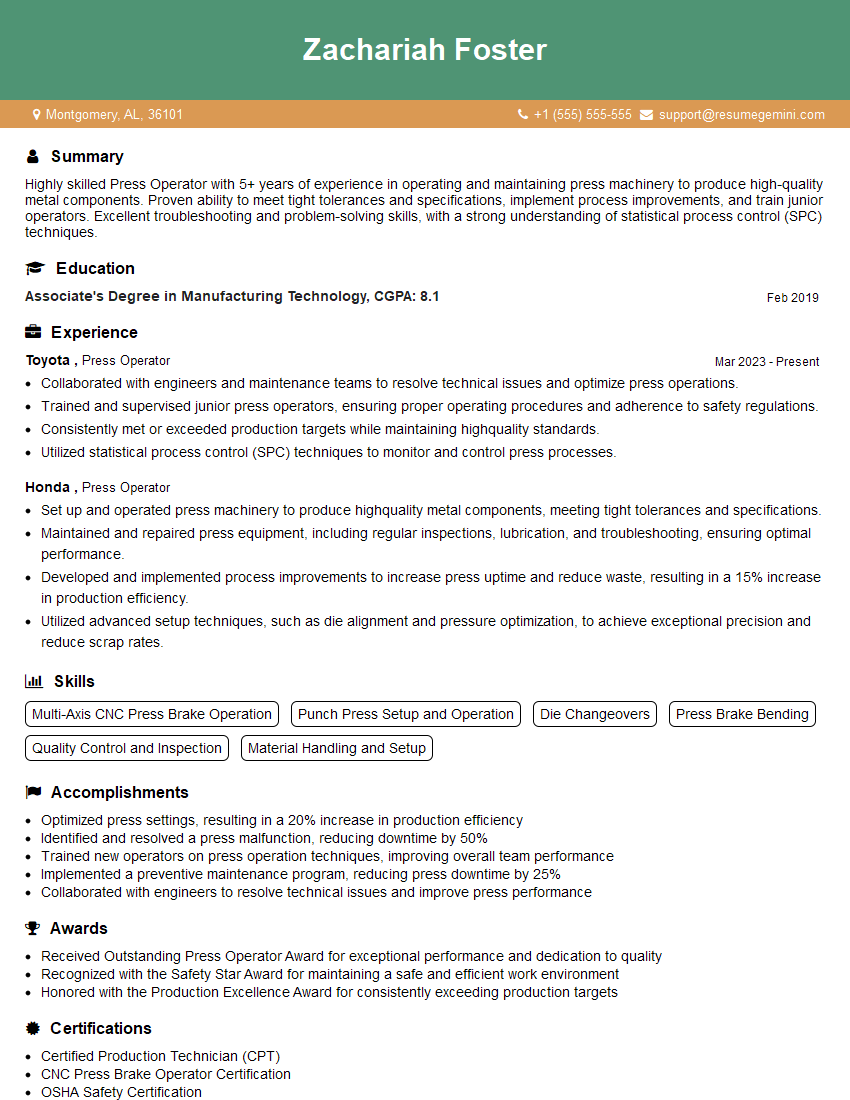
Press Operator Resume Sample

Pressroom Supervisor Resume Sample
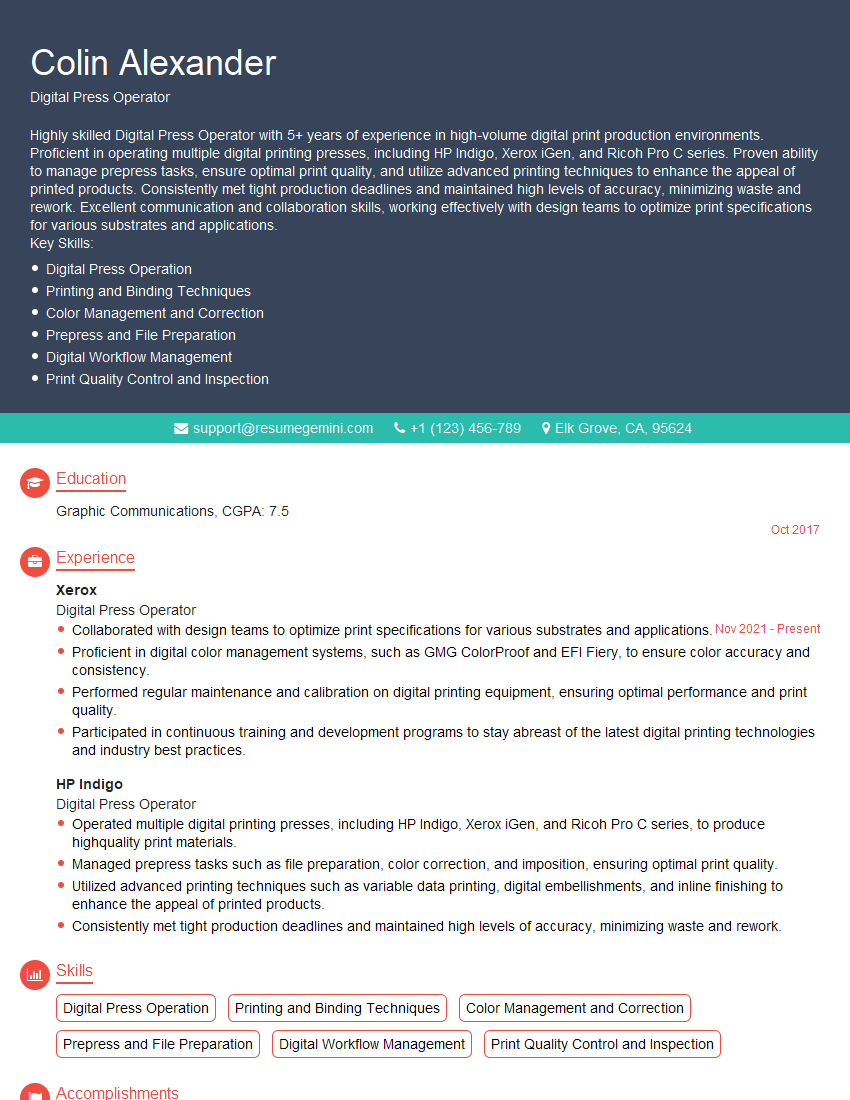
Digital Press Operator Resume Sample
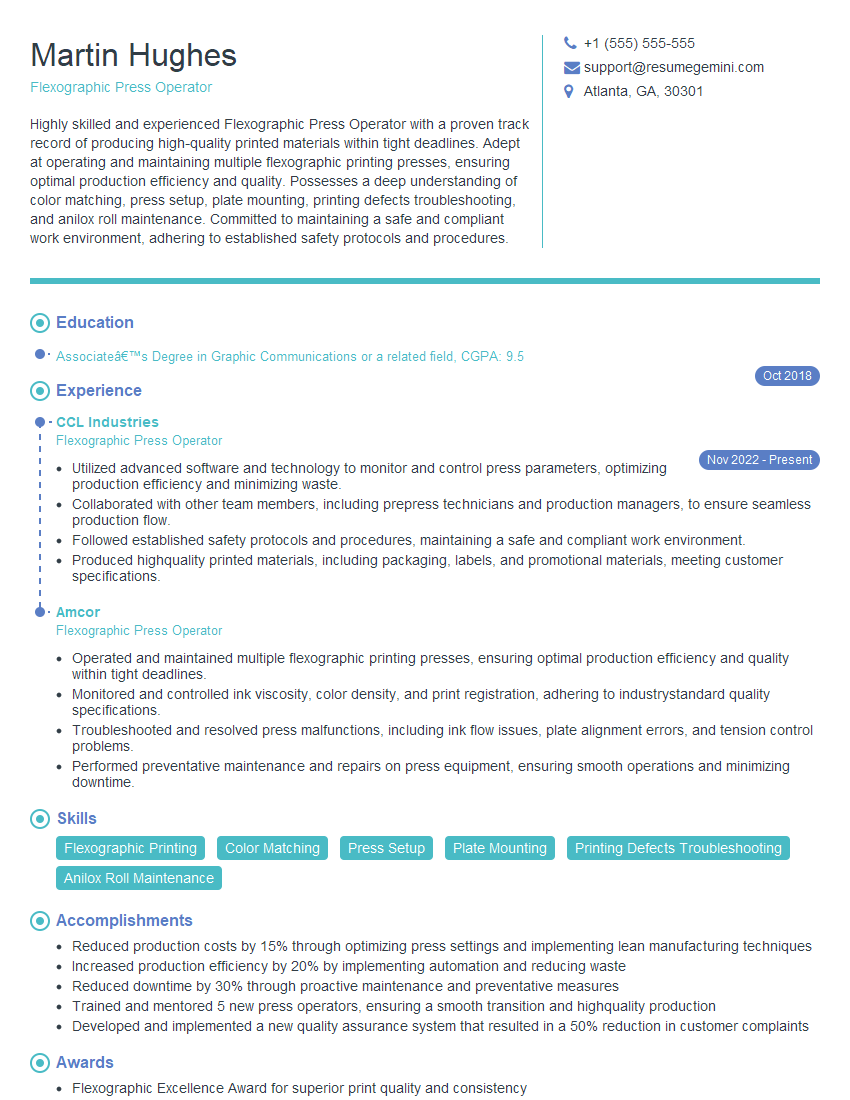
Flexographic Press Operator Resume Sample
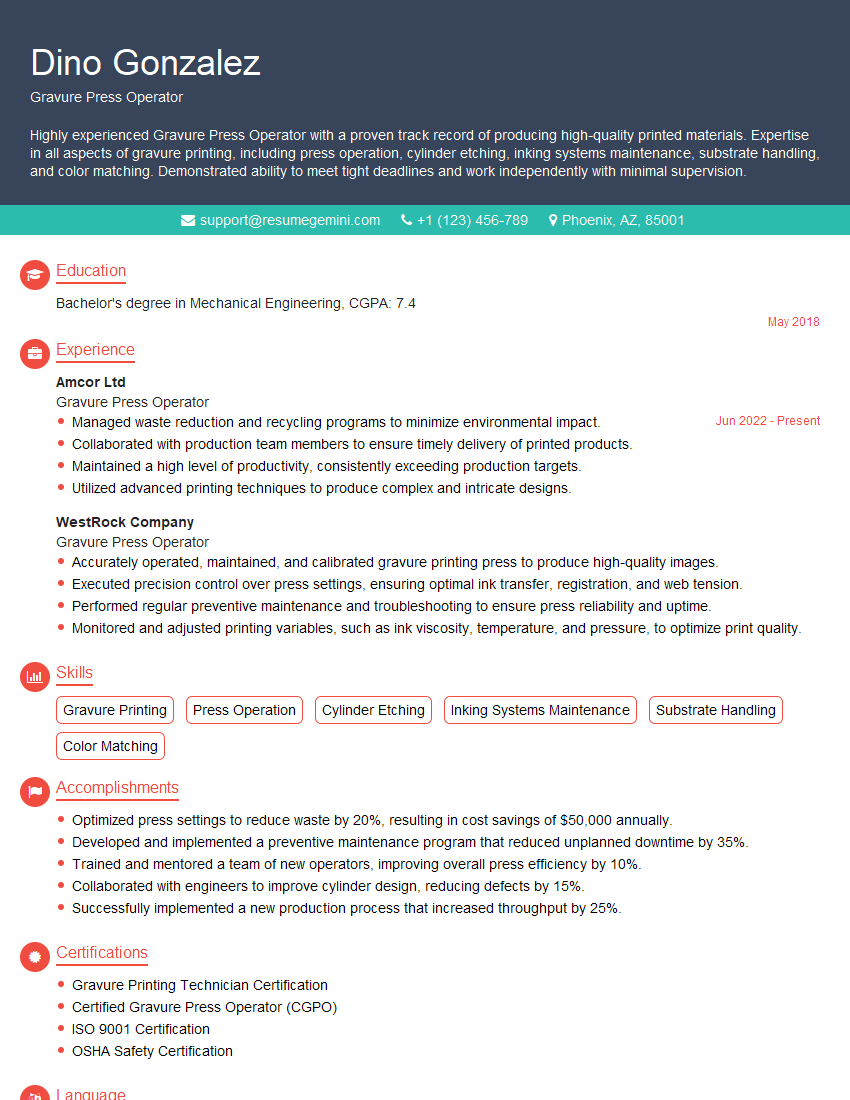
Gravure Press Operator Resume Sample
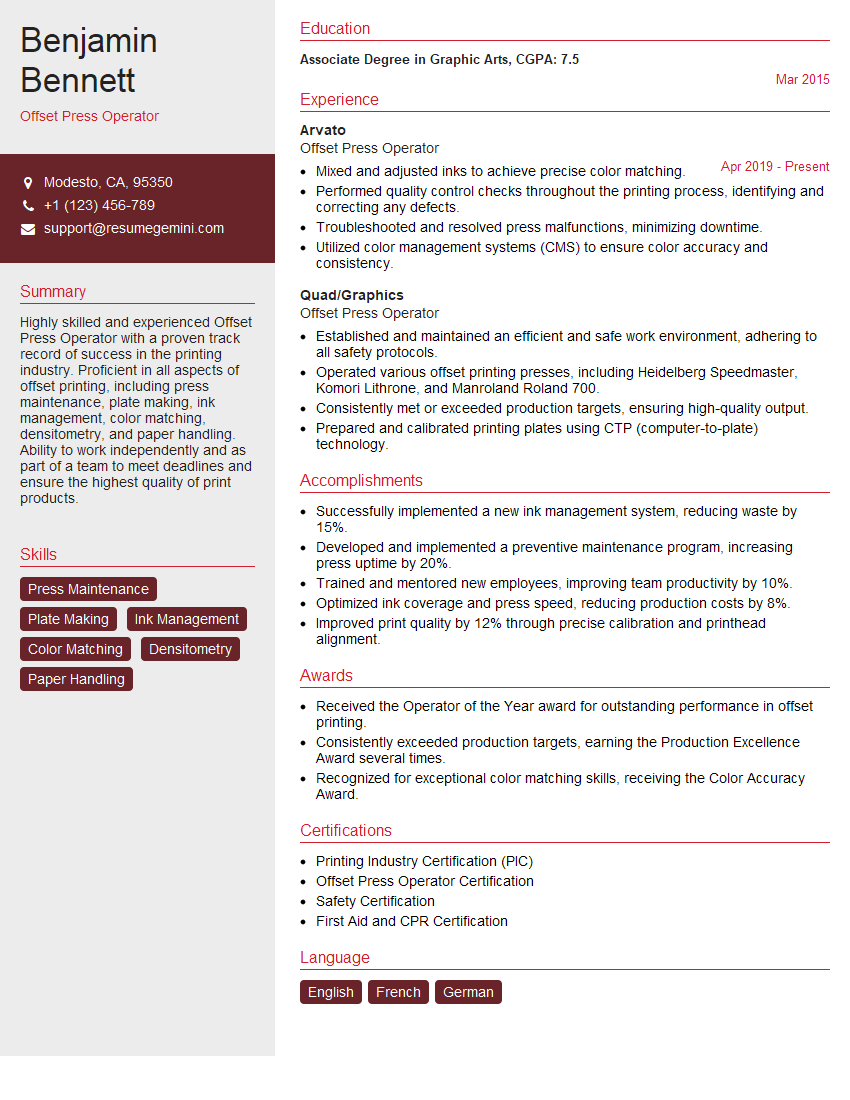
Offset Press Operator Resume Sample
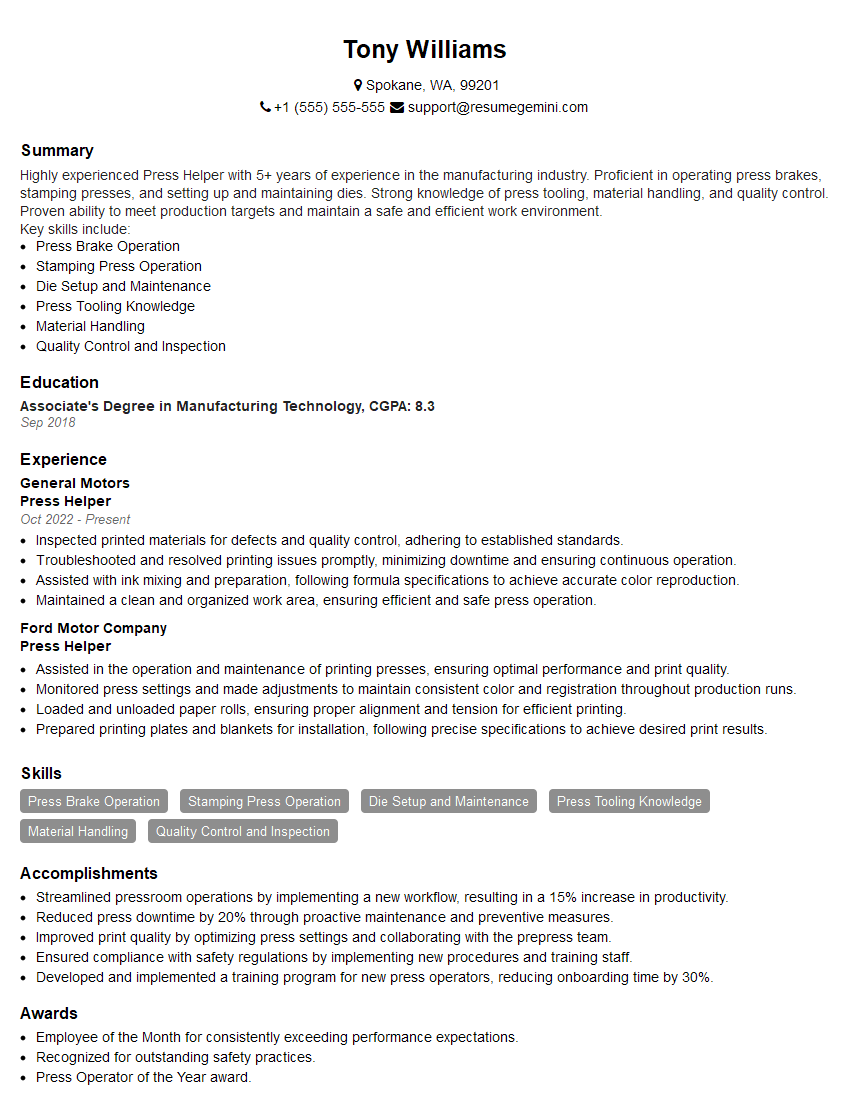
Press Helper Resume Sample
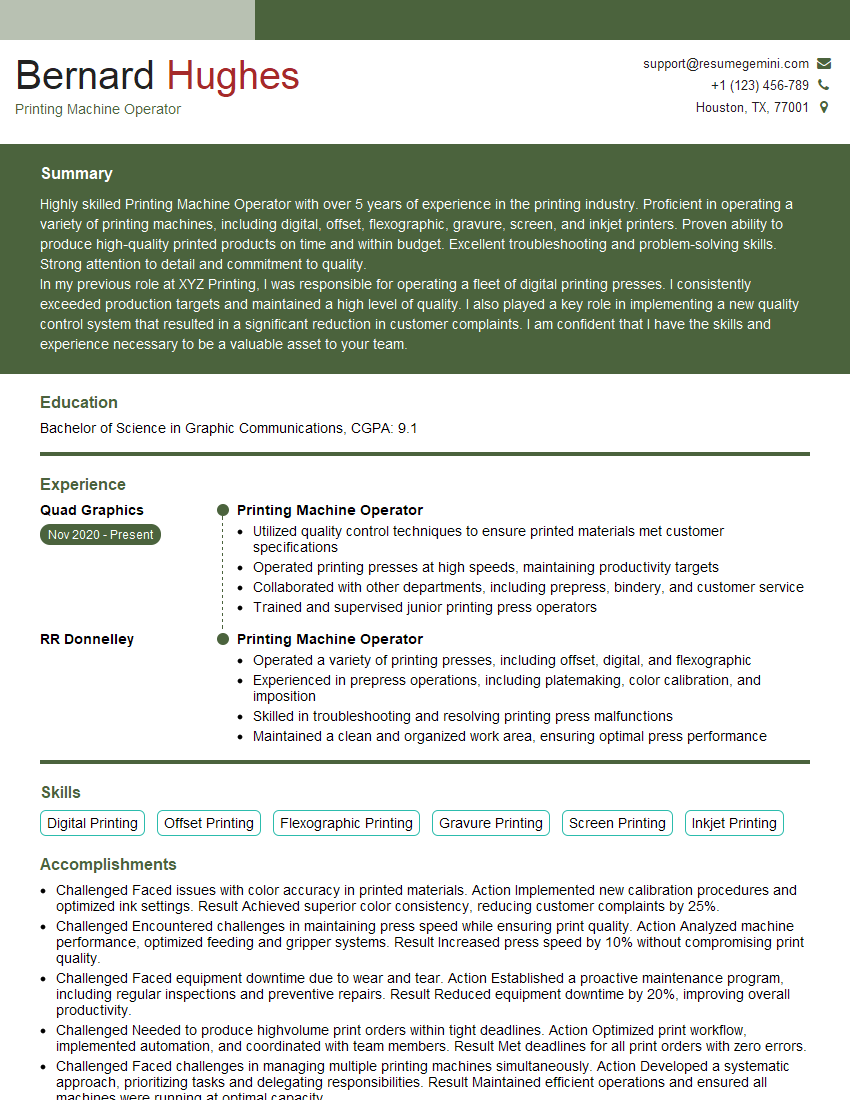
Printing Machine Operator Resume Sample
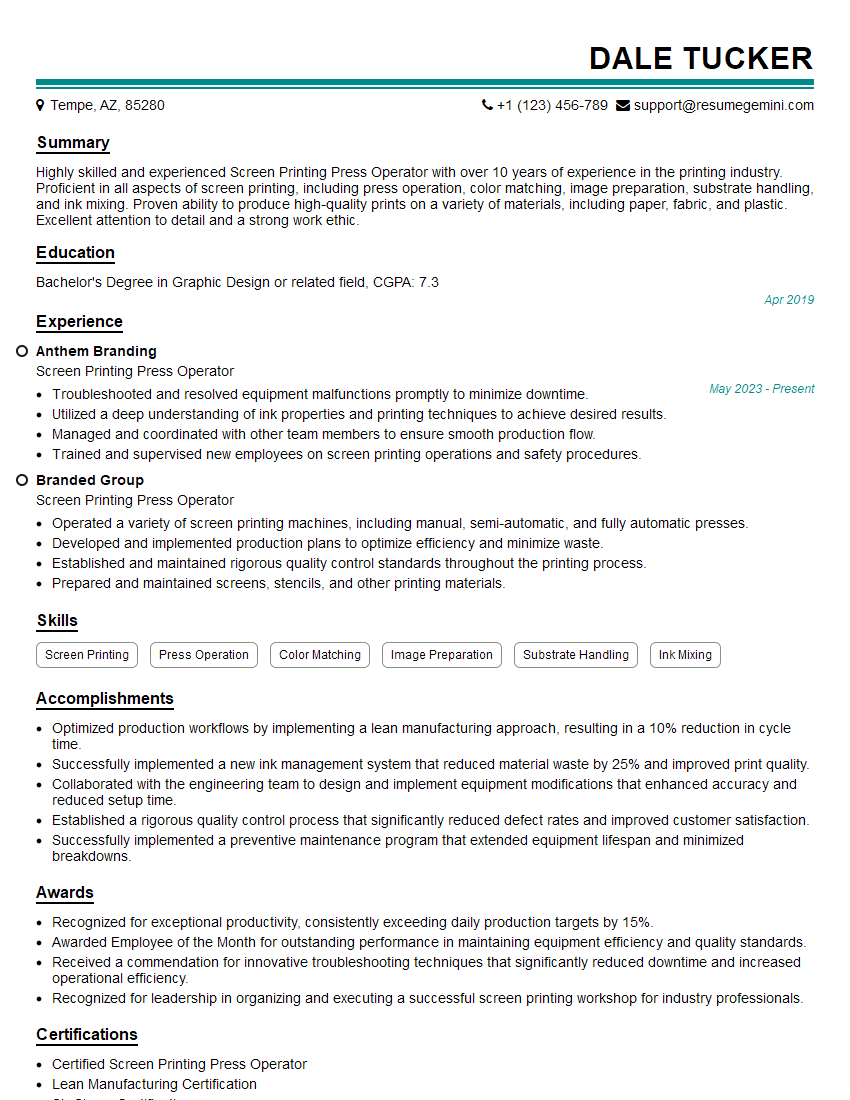
Screen Printing Press Operator Resume Sample
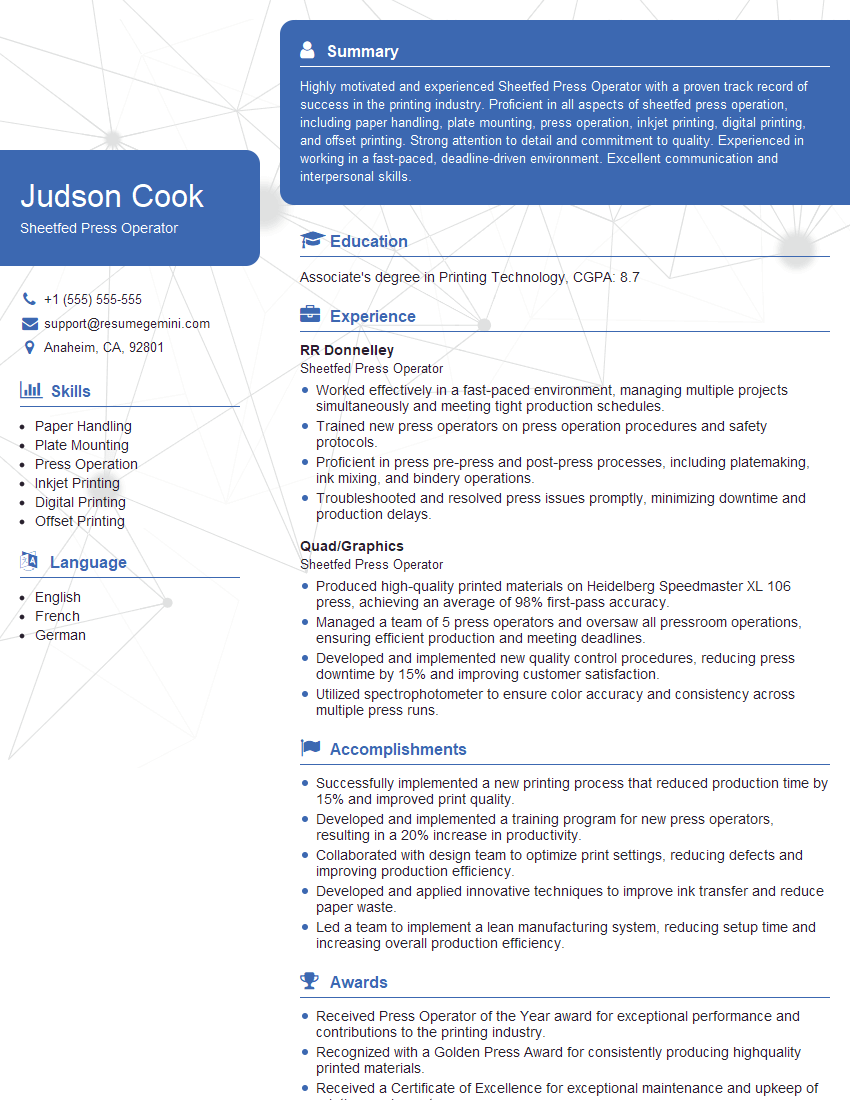
Sheetfed Press Operator Resume Sample
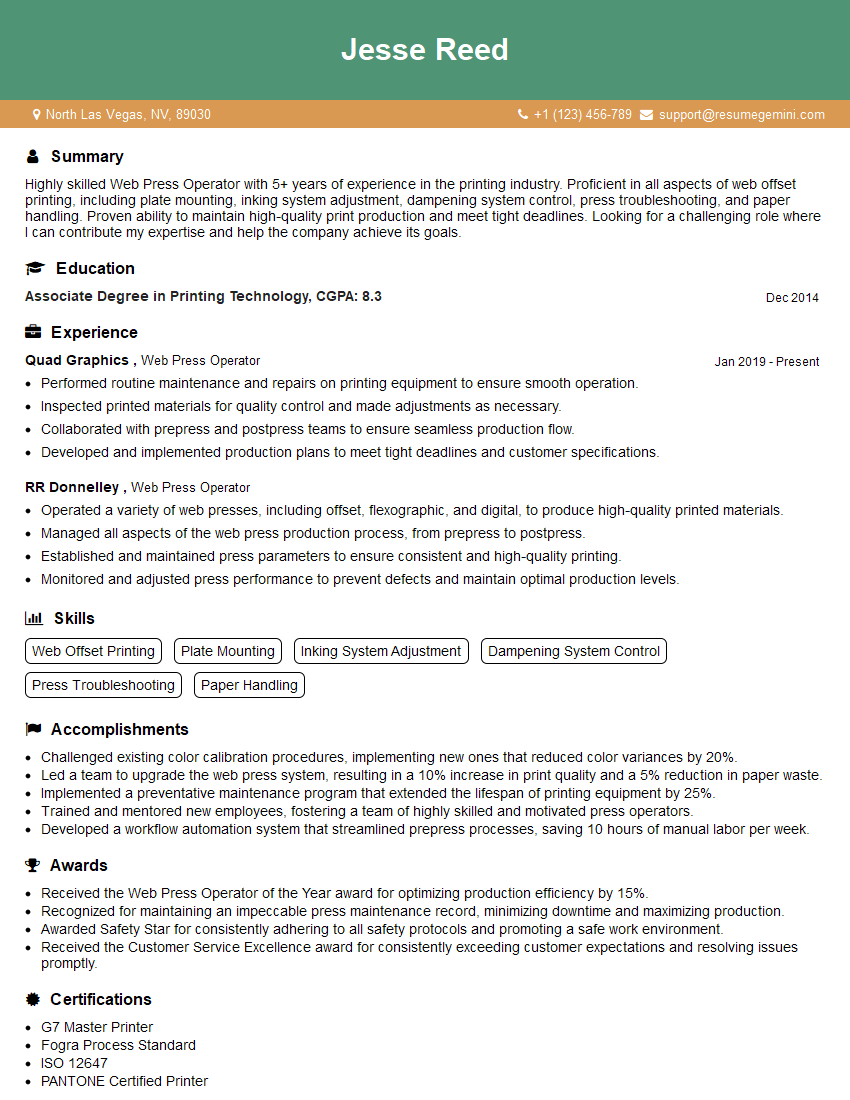
Web Press Operator Resume Sample
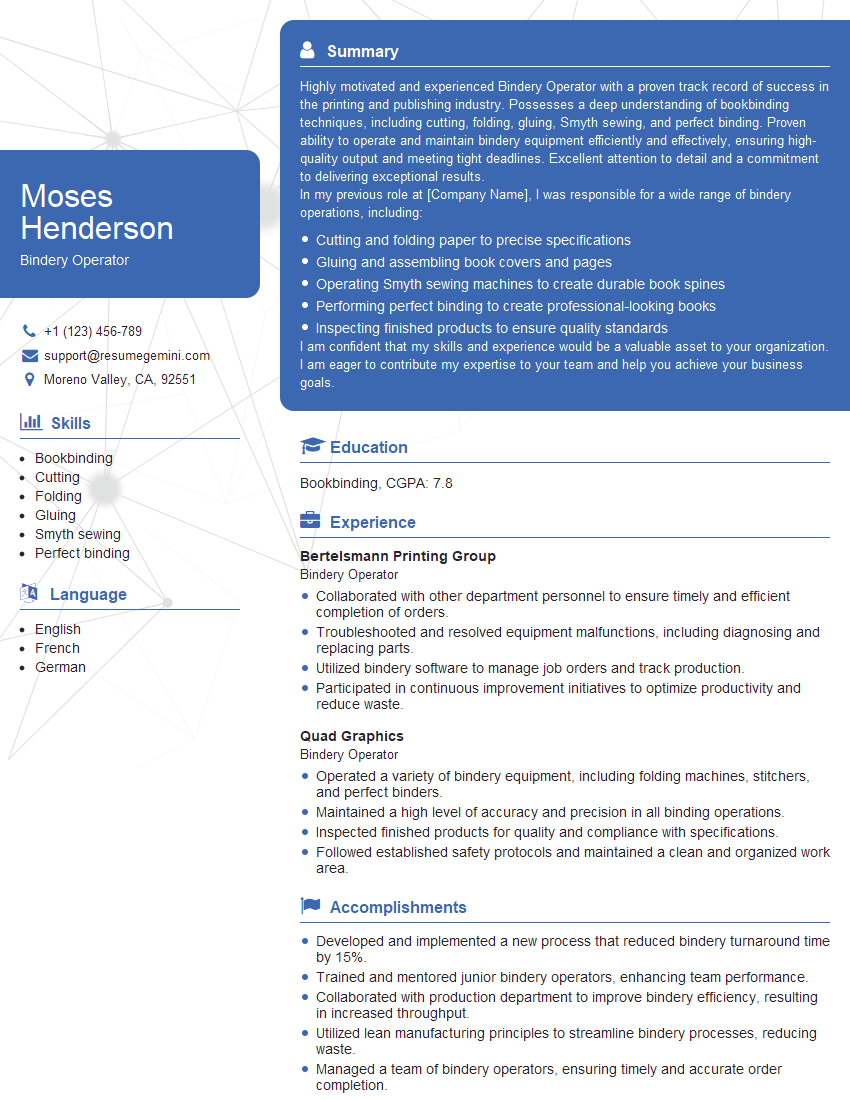
Bindery Operator Resume Sample
Explore more articles
Users Rating of Our Blogs
Share Your Experience
We value your feedback! Please rate our content and share your thoughts (optional).
What Readers Say About Our Blog
Very informative content, great job.
good