Preparation is the key to success in any interview. In this post, we’ll explore crucial Packaging and Labeling Products interview questions and equip you with strategies to craft impactful answers. Whether you’re a beginner or a pro, these tips will elevate your preparation.
Questions Asked in Packaging and Labeling Products Interview
Q 1. Explain your experience with different types of packaging materials (e.g., paperboard, plastic, metal).
My experience encompasses a wide range of packaging materials, each with its own strengths and weaknesses. Paperboard, for instance, is a sustainable and readily recyclable option, ideal for boxes and cartons, particularly for products requiring moderate protection. Its printability is excellent, allowing for high-quality graphics and branding. However, it’s less resistant to moisture and impacts than other materials.
Plastics offer superior protection against moisture, impacts, and oxygen, making them suitable for a variety of products, from food items to electronics. The diverse types—PET, HDPE, PP—each have unique properties, influencing their suitability for different applications. However, concerns regarding environmental impact and recyclability are significant factors in their selection.
Metals, such as aluminum and tinplate, provide excellent barrier properties and are ideal for preserving sensitive products. They are durable and often reusable, but their weight and cost are higher compared to paperboard or plastics. I’ve worked with all these materials extensively, selecting the optimal option based on product characteristics, budget constraints, and environmental considerations. For example, in one project, we switched from a plastic clamshell to a fully recyclable paperboard alternative, reducing our environmental impact significantly.
Q 2. Describe your familiarity with various printing techniques used in packaging and labeling.
My familiarity with printing techniques extends across several methods. Flexographic printing is commonly used for high-volume packaging on flexible substrates like films and pouches due to its cost-effectiveness. Gravure printing excels in producing high-quality images with a wider color gamut, often chosen for premium products. Offset printing, while less common in direct packaging printing, is used for labels and cartons where precise color matching is crucial. Digital printing offers short-run flexibility and customization, ideal for personalized packaging or limited editions.
Screen printing provides a tactile effect, particularly useful for thicker inks and special effects. I’ve incorporated these techniques in various projects, leveraging the strengths of each method based on the required volume, quality, and budget. For example, in a recent project, we used flexographic printing for the main packaging and then digital printing for personalized product labels, combining cost-efficiency with personalized customer experience.
Q 3. What are the key considerations for designing sustainable packaging?
Designing sustainable packaging involves a holistic approach, considering the entire lifecycle of the product—from raw material sourcing to end-of-life management. Key considerations include material selection, prioritizing recycled content and biodegradable or compostable options. Reducing the amount of packaging material used is crucial – we often explore lightweighting strategies without compromising product protection.
Optimizing the design for recyclability is paramount; simple designs with minimal layers and clear labeling contribute greatly to improving recyclability rates. Furthermore, sourcing materials from responsibly managed forests (FSC certification) and manufacturers adhering to ethical labor practices is a critical aspect of sustainable packaging. In one project, by redesigning the packaging structure, we reduced material usage by 20% while maintaining product integrity. This not only reduced costs but also minimized environmental impact.
Q 4. How do you ensure packaging meets regulatory compliance requirements (e.g., FDA, GHS)?
Ensuring regulatory compliance is crucial and involves a multi-step process. For food products, compliance with FDA regulations is paramount, requiring careful selection of materials that are food-grade and free from harmful substances. The labeling must accurately reflect the contents, including nutritional information and allergen statements. For hazardous materials, adherence to GHS (Globally Harmonized System) standards for labeling and safety data sheets is essential. This ensures clear communication of hazards and safe handling procedures.
My experience involves thorough review of regulations, material safety data sheets (MSDS), and collaborating with regulatory specialists to ensure complete compliance. We maintain a detailed database of regulatory requirements and update it as needed to address any changes in legislation. We also conduct regular internal audits to verify ongoing compliance and prevent potential issues. A failure to meet these standards can lead to product recalls and significant financial penalties.
Q 5. Explain your experience with packaging testing and quality control procedures.
Packaging testing and quality control are integral to ensuring product safety and integrity. This involves various tests to evaluate the packaging’s strength, durability, and barrier properties. Drop tests simulate real-world shipping conditions to assess the ability of the packaging to protect the product. Compression tests evaluate the packaging’s resistance to crushing. We also conduct seal integrity tests to ensure the packaging effectively prevents leakage or contamination.
Furthermore, we regularly inspect materials and printed packaging for defects such as misprints, incorrect labeling, and damage. Statistical process control (SPC) methods are used to monitor production processes and identify potential quality issues proactively. Detailed documentation of testing procedures and results is essential for traceability and compliance audits. In one instance, a rigorous testing phase revealed a weakness in the package design which was then improved before the product launched.
Q 6. Describe your experience with packaging design software (e.g., Adobe Illustrator, SolidWorks).
I’m proficient in various packaging design software, including Adobe Illustrator for creating artwork and labels, and SolidWorks for 3D modeling and structural design. Illustrator allows for precise creation of logos, graphics, and text, ensuring the final product looks professional and appealing. SolidWorks allows us to create virtual prototypes, optimizing the design for functionality and efficiency before moving to physical prototyping. This significantly reduces waste and costs associated with physical prototypes.
I’ve used these tools to create numerous packaging designs, from simple boxes to complex multi-component structures. The ability to visualize and manipulate designs in 3D drastically improves collaboration between designers, engineers, and manufacturers, resulting in effective and accurate packaging solutions. For example, in one project, SolidWorks aided in optimizing the design, decreasing material usage by 15% while increasing the product’s protection during transit.
Q 7. How do you manage packaging projects within budget and deadlines?
Managing packaging projects within budget and deadlines requires careful planning and execution. We start with a detailed project scope that clearly defines the requirements, timelines, and budget allocation. This includes thorough material cost estimation, printing costs, and prototyping expenses. We then develop a realistic project schedule with clear milestones and assign responsibilities to team members. Regular project meetings and progress tracking are vital to stay on track.
Effective communication with suppliers and stakeholders is crucial for timely procurement of materials and ensuring that the project progresses smoothly. We leverage project management software to track progress, manage tasks, and handle potential delays effectively. Regular review of expenses and proactive risk management enable us to stay within budget and deliver the project on time and to the required quality standards. A well-defined budget and schedule reduces delays and unexpected expenses, ensuring successful and efficient completion of each project.
Q 8. What are your strategies for optimizing packaging efficiency and reducing costs?
Optimizing packaging efficiency and reducing costs involves a holistic approach, focusing on material selection, design, and manufacturing processes. Think of it like baking a cake – you wouldn’t use expensive ingredients if cheaper alternatives achieve the same result.
Material Selection: Choosing sustainable and cost-effective materials is crucial. For instance, switching from heavier corrugated cardboard to lighter, yet equally strong, alternatives can significantly reduce shipping costs and environmental impact. We can also explore using recycled content, which often comes with cost savings and positive brand image benefits.
Design Optimization: Efficient designs minimize wasted space and material. This involves using design software to create precisely sized packaging that fits products snugly, reducing void fill. For example, a nested design for a set of mugs can eliminate excess packaging material.
Lean Manufacturing Principles: Implementing lean manufacturing principles reduces waste in the packaging process itself. This involves streamlining production lines, minimizing defects, and optimizing inventory management. Imagine a conveyor belt moving smoothly, without bottlenecks, ensuring that the packaging process is efficient.
Negotiation with Suppliers: Developing strong relationships with packaging suppliers can lead to better pricing and access to innovative materials. Bulk purchasing and negotiating favorable contracts are crucial cost-saving strategies.
By strategically integrating these strategies, we can significantly reduce packaging costs without compromising product protection or brand aesthetics.
Q 9. Explain your knowledge of different types of labels and their applications.
Labels are more than just stickers; they’re crucial for conveying information, branding, and complying with regulations. Different types cater to different needs:
Paper Labels: These are common, cost-effective, and widely compatible with various printing methods. They’re suitable for a wide range of products, from food to consumer electronics.
Film Labels: Made from plastic materials like polypropylene or polyester, these offer better durability, water resistance, and tear resistance. They are ideal for products exposed to moisture or harsh conditions, like beverages or cleaning products. Think of the labels on your shampoo bottles.
Specialty Labels: This category includes labels with specific properties, such as tamper-evident seals that indicate product tampering, or pressure-sensitive labels that adhere firmly without the need for adhesives.
Wrap-Around Labels: These labels encircle the entire product, providing a large surface area for branding and information. They’re commonly used on cylindrical products like cans or bottles.
Choosing the right label type depends heavily on the product, its intended use, and the environment it will encounter. A simple paper label might suffice for a box of stationery, while a durable film label is necessary for an outdoor product.
Q 10. How do you handle challenges related to label adhesion and durability?
Label adhesion and durability are critical for maintaining product integrity and brand presentation. Challenges arise from factors like surface type, temperature, and humidity.
Surface Treatment: Different materials require different adhesive formulations. A label that adheres well to glass might fail on a porous surface like cardboard. Surface treatments like corona treatment can improve adhesion on difficult surfaces.
Adhesive Selection: Choosing the right adhesive is paramount. Permanent adhesives are suitable for labels that need to stay put, while removable adhesives allow for easy label removal. Temperature-resistant adhesives are essential for products subjected to extreme temperatures.
Environmental Factors: Temperature and humidity fluctuations can affect adhesion. Exposure to UV light can degrade adhesive strength and label color. Selecting UV-resistant adhesives and labels is crucial for outdoor products.
Testing and Validation: Rigorous testing under various conditions ensures label durability and adhesion. This typically involves environmental chamber testing to simulate real-world conditions.
Addressing these challenges requires careful consideration of material compatibility, adhesive properties, and environmental factors, along with comprehensive testing to guarantee optimal performance.
Q 11. Describe your experience with barcode and RFID technologies in packaging and labeling.
Barcode and RFID technologies are game-changers in packaging and labeling, providing efficient tracking and management throughout the supply chain. Think of them as the product’s digital identity.
Barcodes: One-dimensional (1D) barcodes are widely used for tracking individual products, while two-dimensional (2D) barcodes like QR codes can store more data, including URLs and product information. They are inexpensive and readily scannable, making them a cornerstone of inventory management.
RFID (Radio-Frequency Identification): RFID tags use radio waves to transmit data, allowing for contact-less reading of product information. This is particularly useful for tracking pallets or cases of goods throughout the supply chain, enhancing efficiency and reducing manual data entry.
Integration: Integrating barcode and RFID technologies requires careful planning and implementation. This involves selecting the right hardware, software, and data management systems to capture, process, and utilize the data collected by these technologies. This can greatly enhance supply chain visibility.
Choosing between barcodes and RFID depends on factors like cost, data capacity requirements, and the level of tracking detail needed. Often, a hybrid approach using both technologies offers the best results.
Q 12. Explain your understanding of supply chain logistics related to packaging and labeling.
Supply chain logistics related to packaging and labeling are critical for efficient product movement and delivery. Packaging design directly impacts shipping costs, storage space, and product protection during transit. Think of it as the transportation and protection system for your products.
Packaging Design for Shipping: Packaging needs to withstand the rigors of transportation. This requires consideration of factors like shock absorption, vibration resistance, and protection against moisture and temperature fluctuations. Proper cushioning and stacking designs minimize damage during transit.
Labeling for Tracking: Clear and accurate labels with barcodes or RFID tags allow for real-time tracking of products as they move through the supply chain. This improves visibility and reduces delays.
Inventory Management: Efficient packaging and labeling systems aid in inventory management by providing accurate information on product location and quantities. This reduces storage costs and prevents stockouts.
Compliance and Regulations: Packaging and labeling need to comply with relevant regulations and standards for transportation, storage, and product safety. Failure to comply can lead to delays, fines, and product recalls.
Effective supply chain logistics related to packaging and labeling streamline product flow, minimize costs, and improve overall efficiency.
Q 13. How do you prioritize different packaging design elements (e.g., aesthetics, functionality, cost)?
Prioritizing packaging design elements requires balancing aesthetics, functionality, and cost. It’s a delicate dance, and it’s important to remember that compromising one area might negatively impact others.
Functionality: This is paramount. Packaging must protect the product during transit and storage. This involves considering factors like material strength, cushioning, and barrier properties. A beautifully designed box is useless if it doesn’t protect the product.
Cost: Minimizing costs without sacrificing functionality is a key objective. This involves efficient material selection, optimized design to minimize waste, and strategic sourcing of packaging materials.
Aesthetics: Attractive packaging enhances brand appeal and product desirability. However, aesthetics shouldn’t compromise functionality or excessively inflate costs. Finding a balance that communicates brand identity without being overly extravagant is key. Think of the difference between a plain cardboard box and a beautifully designed gift box. They both have a function, but one clearly invests more in aesthetics.
A well-designed package achieves a balance between these three elements – a functional, cost-effective design that also showcases the brand effectively.
Q 14. Describe your experience with packaging automation and robotics.
Packaging automation and robotics are revolutionizing the packaging industry, significantly improving efficiency, speed, and consistency.
Automated Packaging Machines: These machines perform tasks such as filling, sealing, labeling, and palletizing at high speeds and with high precision, significantly reducing manual labor and increasing throughput. They can range from simple case sealers to highly sophisticated robotic systems that handle complex packaging tasks.
Robotic Systems: Robots are capable of handling intricate tasks such as picking and placing products, applying labels with high accuracy, and inspecting packages for defects. This is particularly useful for handling fragile or irregularly shaped products.
Integration with Other Systems: Integrating automated packaging systems with other parts of the manufacturing process, such as warehouse management systems, allows for real-time tracking and control of packaging operations. This optimizes workflows and prevents bottlenecks.
Implementing automation requires careful planning and investment, but the long-term benefits in terms of efficiency, reduced labor costs, and improved quality often outweigh the initial investment.
Q 15. What are the key considerations for designing tamper-evident packaging?
Tamper-evident packaging is designed to provide clear visual indication of any unauthorized opening or tampering. This is crucial for maintaining product integrity and consumer safety, especially for pharmaceuticals, food products, and high-value goods. Key considerations include:
- Material Selection: Choosing materials that are difficult to tamper with without leaving obvious signs. This could include materials that fracture upon opening (e.g., foil seals), those that leave a noticeable mark (e.g., pressure-sensitive seals), or those with unique features that are hard to replicate (e.g., specialized closure mechanisms).
- Closure Design: The closure system needs to be tamper-evident. Common examples include induction seals for bottles, shrink bands for multi-packs, and special tear-off labels. The design should make it immediately obvious if the seal has been broken.
- Labeling and Instructions: Clear and concise labeling indicating tamper evidence is key. It needs to inform the consumer what to look for to verify product integrity. For instance, it could include a statement like “Do not use if seal is broken.”
- Regulatory Compliance: Meeting relevant industry regulations and standards is paramount. These regulations vary depending on the product and region, so thorough research is necessary.
- Cost-Effectiveness: While tamper-evident packaging offers protection, it’s important to balance security with cost. Choosing the right level of tamper evidence based on the product’s risk profile is vital.
Example: A pharmaceutical bottle with a tamper-evident cap that leaves a clear indication if twisted open. If someone tries to open the bottle, the cap will show clear signs of tampering.
Career Expert Tips:
- Ace those interviews! Prepare effectively by reviewing the Top 50 Most Common Interview Questions on ResumeGemini.
- Navigate your job search with confidence! Explore a wide range of Career Tips on ResumeGemini. Learn about common challenges and recommendations to overcome them.
- Craft the perfect resume! Master the Art of Resume Writing with ResumeGemini’s guide. Showcase your unique qualifications and achievements effectively.
- Don’t miss out on holiday savings! Build your dream resume with ResumeGemini’s ATS optimized templates.
Q 16. Explain your knowledge of various packaging machinery and equipment.
My experience encompasses a wide range of packaging machinery and equipment. This includes:
- Form-Fill-Seal (FFS) machines: These are highly automated systems that form, fill, and seal packages simultaneously. I’ve worked extensively with FFS machines for flexible packaging like pouches and bags.
- Cartoning machines: Used for placing products into cartons and sealing them. These machines can be highly customized to handle various carton sizes and product types.
- Bottle filling and capping machines: Critical for liquid products, these machines handle filling, sealing, and capping at high speed and accuracy. I’m familiar with various technologies including rotary filling and piston filling.
- Shrink wrapping and bundling machines: Used for grouping multiple products together, offering protection and an appealing presentation. I’ve experience optimizing these machines for different film types and product sizes.
- Pallet wrapping machines: These automated systems wrap pallets of finished goods to secure and protect them for transportation and storage. I understand the trade-offs between different wrapping techniques.
- Labeling machines: From simple hand-applied labels to sophisticated automated systems applying labels to various surfaces and orientations, I have experience troubleshooting and maintaining various types.
I understand the nuances of different machine types, their maintenance requirements, and their integration into complete packaging lines. This knowledge allows me to optimize packaging processes for speed, efficiency, and quality.
Q 17. How do you troubleshoot problems related to packaging line efficiency?
Troubleshooting packaging line inefficiencies requires a systematic approach. My process typically involves:
- Identify the bottleneck: Pinpoint the specific area of the packaging line causing delays or reduced output. This might involve analyzing production data, observing the line, or reviewing historical maintenance records.
- Gather data: Collect relevant information including production rates, downtime occurrences, error logs from machines, and operator feedback.
- Analyze root causes: Examine possible reasons for the inefficiency. This could range from machine malfunction (e.g., a jammed conveyor), operator error (e.g., incorrect settings), material issues (e.g., faulty packaging materials), or design flaws (e.g., inadequate automation).
- Implement solutions: Depending on the root cause, solutions can range from simple adjustments (e.g., recalibrating a machine) to complex repairs or replacements (e.g., repairing a faulty sensor). This may also include process improvements, operator training, or even redesigning parts of the packaging line.
- Monitor and evaluate: After implementing solutions, continuous monitoring is essential to ensure the problem is resolved and packaging line efficiency has improved.
Example: A recurring jam in the carton erecting section of a cartoning line could be due to issues with the carton blank quality, incorrect settings on the erecting mechanism, or even a buildup of static electricity. A systematic approach allows for pinpointing the exact cause.
Q 18. What are the key factors to consider when selecting a packaging supplier?
Selecting a packaging supplier requires careful consideration of several key factors:
- Quality and Reliability: The supplier should have a proven track record of providing high-quality packaging materials that consistently meet specifications. This includes reliability in terms of timely delivery.
- Cost-Effectiveness: Pricing should be competitive, but not at the expense of quality. Consider the total cost, including materials, shipping, and potential waste.
- Technical Expertise: The supplier should possess the technical expertise to support your specific packaging needs. This includes understanding your product requirements and providing technical assistance as needed.
- Sustainability: Evaluate the supplier’s commitment to sustainable practices, including the use of recycled materials and responsible manufacturing processes. This is increasingly important for environmentally conscious consumers and brands.
- Capacity and Scalability: Ensure the supplier has the capacity to meet your current needs and the scalability to handle future growth.
- Location and Logistics: Consider the supplier’s location and its proximity to your facility. Minimize transportation costs and lead times.
- Customer Service: A responsive and helpful customer service team is vital for addressing any issues or concerns promptly.
Example: When choosing a supplier for custom-printed boxes, I would prioritize a supplier with a strong reputation for print quality, a track record of on-time delivery, and the ability to handle large-volume orders with minimal defects.
Q 19. Describe your experience with managing packaging inventory and waste.
Managing packaging inventory and waste is crucial for maintaining efficient operations and minimizing costs. My approach involves:
- Demand Forecasting: Accurate forecasting of packaging material needs is crucial. This involves analyzing historical data, considering sales trends, and factoring in potential seasonal variations.
- Inventory Management Systems: Implementing a robust inventory management system (e.g., using ERP or specialized warehouse management systems) allows for real-time tracking of stock levels, minimizing both stockouts and excess inventory.
- Just-in-Time (JIT) Inventory: Where feasible, implementing a JIT system can minimize storage costs and reduce waste by receiving materials only when needed.
- Waste Reduction Strategies: Implementing strategies to minimize waste involves optimizing packaging designs (e.g., using less material), improving packaging line efficiency to reduce material defects, and exploring options for recycling or composting.
- Waste Audits: Regularly conducting waste audits to identify areas for improvement is essential. This provides data-driven insights into the types and quantities of waste generated, allowing for focused improvement efforts.
- Supplier Collaboration: Working closely with packaging suppliers to explore sustainable packaging alternatives and to improve material efficiency contributes to waste reduction.
Example: In a previous role, we implemented a new inventory management system that reduced our packaging material inventory holding costs by 15% and decreased our packaging waste by 10% through better forecasting and reduced defects.
Q 20. How familiar are you with different types of packaging closures and seals?
I have extensive knowledge of various packaging closures and seals, including:
- Screw caps: Common for bottles and jars, these come in various designs, including tamper-evident variations.
- Press-on lids: Simple closures that are pressed onto containers.
- Snap-on closures: Used for containers requiring a secure, audible closure. Common for food products.
- Induction seals: A heat-sealing method that creates an airtight seal on the container opening, often used with tamper evidence.
- Crimp seals: A method where a metal lid is crimped onto a container using specialized equipment.
- Heat seals: Used for flexible packaging materials like pouches and bags, these seals are created through heat and pressure.
- Adhesive seals: Common for envelopes and smaller packages, these involve using pressure sensitive adhesives.
- Zipper closures: Reusable closures for bags and pouches.
My understanding extends beyond the types to the functionality, application suitability, cost-effectiveness, and impact on shelf life and tamper evidence of each type. I can evaluate which closure best suits a particular product and application.
Q 21. Explain your understanding of packaging life cycle assessment (LCA).
Packaging Life Cycle Assessment (LCA) is a comprehensive analysis of the environmental impacts of packaging, from raw material extraction to end-of-life disposal. A complete LCA considers:
- Raw Material Acquisition: The environmental impact of extracting and processing raw materials used in packaging, including energy consumption, water use, and greenhouse gas emissions.
- Manufacturing: The energy and resources used in the manufacturing process, including pollution generated.
- Distribution and Transportation: The environmental impact of transporting packaging materials and finished goods, focusing on fuel consumption and emissions.
- Use Phase: The environmental impact associated with the use of the packaging itself. For instance, the energy needed to keep a food product chilled in a refrigerator.
- End-of-Life: The environmental impacts related to the disposal or recycling of the packaging. This includes landfill impacts, emissions from incineration, and resource recovery from recycling.
LCA helps companies make informed decisions about packaging design and materials, minimizing environmental impact. By using tools and methodologies in LCA, companies can compare different packaging options and identify the most sustainable choice. The results of an LCA inform packaging choices, enabling companies to improve their environmental performance and meet sustainability goals.
Q 22. How do you incorporate consumer feedback into packaging design decisions?
Incorporating consumer feedback is crucial for successful packaging design. It’s not just about aesthetics; it’s about understanding how consumers interact with the product and the packaging itself. We leverage various methods to gather this feedback, including:
- Surveys and Questionnaires: These are effective for gathering quantitative data on preferences for materials, colors, and overall design elements. For instance, we might ask about ease of opening, resealability, and overall appeal.
- Focus Groups: These allow for deeper qualitative insights by observing consumer reactions and discussions in a controlled environment. We can witness firsthand how people handle the packaging and identify potential usability issues.
- Social Media Monitoring: Tracking online conversations and reviews provides real-time feedback and identifies emerging trends or concerns. For example, negative comments about difficult-to-open packaging can trigger design improvements.
- A/B Testing: This involves releasing different packaging variations to different consumer segments and analyzing sales data to determine which design performs better. This provides concrete, data-driven evidence to inform design choices.
Ultimately, we use this feedback to refine our designs, ensuring the packaging meets consumer needs and expectations, increasing sales and brand loyalty. For example, after receiving feedback on a previous product’s difficult-to-open packaging, we implemented a new easy-tear design resulting in a 15% increase in sales.
Q 23. Describe your experience with developing packaging specifications and technical drawings.
Developing packaging specifications and technical drawings is a core part of my role. It requires a meticulous approach, ensuring all dimensions, materials, and construction details are precisely documented. My experience includes:
- Creating detailed 2D and 3D models: Using software like SolidWorks or Adobe Illustrator, I create accurate representations of the packaging, specifying dimensions, material thickness, and construction features (e.g., folds, creases, perforations).
- Defining material specifications: This includes choosing the right materials based on factors such as product protection, environmental impact, cost, and printability. We might specify paperboard grade, plastic type, or film properties.
- Developing manufacturing specifications: This involves outlining processes like printing, die-cutting, gluing, and assembling the packaging, ensuring compatibility with manufacturing equipment.
- Creating technical drawings for production: These provide clear instructions to manufacturers, including detailed dimensions, tolerances, and material specifications. I always ensure they follow industry standards.
For example, I recently developed specifications for a new sustainable, compostable packaging solution, which involved extensive research into suitable materials and close collaboration with manufacturers to ensure the design was both functional and environmentally responsible. The technical drawings were crucial in guiding the production process and ensuring the final product met our exacting requirements.
Q 24. Explain your experience with packaging artwork and pre-press processes.
My experience with packaging artwork and pre-press processes is extensive. This stage is crucial for ensuring the final product is visually appealing and accurately reflects the brand identity. My responsibilities include:
- Artwork design and preparation: This involves working closely with designers to ensure the artwork meets print specifications (color profiles, resolution, etc.).
- File format conversion: Converting artwork files into formats suitable for different printing processes (e.g., PDF/X-1a for offset printing).
- Color management: Ensuring consistent color reproduction across different printing methods and substrates, often using color profiles (e.g., Pantone).
- Proofing and quality control: Thorough review of proofs to detect any errors or inconsistencies before sending the artwork to the printer.
- Pre-press coordination: Liaising with printers to ensure smooth production, resolving any technical issues that may arise.
A recent project involved managing the artwork for a new line of cosmetics. We had to ensure the packaging artwork met the stringent regulations for cosmetic labeling and also maintained a consistent brand identity across multiple products. The detailed pre-press process ensured high-quality printing and a visually stunning final product.
Q 25. How do you ensure the accuracy and consistency of packaging labels?
Ensuring accuracy and consistency of packaging labels is paramount for legal compliance, brand consistency, and consumer trust. My approach involves:
- Strict adherence to regulations: This includes incorporating all required information (e.g., ingredients, nutritional facts, warnings, barcodes) as per local and international regulations.
- Template creation and standardization: Developing standardized label templates to maintain consistency across product lines, reducing errors and streamlining the process.
- Data validation and verification: Implementing checks at each stage to ensure data accuracy, including double-checking ingredient lists, nutritional information, and batch numbers.
- Proofreading and quality assurance: Rigorous review of final labels before printing to catch any errors, inconsistencies, or omissions.
- Version control: Maintaining a record of all label versions to track changes and ensure only the most current version is used.
For example, when dealing with products sold internationally, I ensure that the labels adhere to specific country regulations and are translated accurately. Our rigorous quality control process has helped us avoid costly recalls and maintain a strong reputation for product quality and accuracy.
Q 26. How do you communicate effectively with cross-functional teams regarding packaging projects?
Effective communication is crucial in packaging projects. I employ several strategies to ensure seamless collaboration with cross-functional teams:
- Regular meetings and updates: Scheduling regular meetings with designers, engineers, manufacturers, and marketing teams to keep everyone informed and aligned on project progress.
- Clear documentation: Maintaining detailed project documentation, including specifications, technical drawings, and meeting minutes, ensuring everyone has access to the necessary information.
- Using project management tools: Employing project management software (e.g., Asana, Jira) to track tasks, deadlines, and responsibilities, facilitating efficient collaboration.
- Active listening and feedback: Actively listening to team members’ concerns, incorporating their feedback, and fostering a collaborative environment.
- Clear and concise communication: Using clear and concise language to avoid misunderstandings and ensure that information is easily understood by all team members.
For example, during a recent project, I successfully navigated conflicting requirements from the marketing and engineering teams by facilitating open communication and finding a compromise that met the needs of both parties. The result was a packaging solution that was both aesthetically pleasing and functionally sound.
Q 27. Describe your experience with implementing new packaging technologies or processes.
Implementing new packaging technologies and processes is an ongoing endeavor. My experience includes:
- Research and evaluation of new materials: Staying abreast of industry trends and evaluating new sustainable materials (e.g., recycled plastics, compostable films) for their suitability and cost-effectiveness.
- Implementing new printing technologies: Exploring and integrating new printing methods, such as digital printing or flexographic printing, to enhance efficiency and reduce costs.
- Automation of packaging processes: Investigating and integrating automated packaging machinery to improve efficiency and throughput.
- Adopting new design software: Learning and applying new design software and techniques to improve design speed and accuracy.
Recently, I led the implementation of a new automated packaging line, resulting in a 20% increase in production efficiency and a significant reduction in labor costs. The process involved careful planning, thorough training of personnel, and close collaboration with equipment vendors.
Q 28. What are your strategies for mitigating risks associated with packaging failures?
Mitigating risks associated with packaging failures requires a proactive and multi-faceted approach. My strategies include:
- Robust testing and quality control: Implementing rigorous testing protocols at each stage of the packaging development process, including material testing, design validation, and functional testing.
- Supplier relationship management: Developing strong relationships with suppliers to ensure consistent quality of materials and timely delivery.
- Risk assessment and mitigation planning: Identifying potential risks and developing mitigation strategies to address them proactively.
- Contingency planning: Developing backup plans to deal with unforeseen circumstances such as material shortages or equipment failures.
- Continuous improvement: Regularly reviewing packaging processes and identifying areas for improvement to prevent future failures.
For instance, during a previous project, we conducted extensive drop tests and compression tests to ensure the packaging could withstand the rigors of shipping and handling. This proactive approach helped us avoid potential damages and customer complaints.
Key Topics to Learn for Packaging and Labeling Products Interview
- Packaging Materials Science: Understanding the properties of various materials (paperboard, plastics, metals, etc.) and their suitability for different products and applications. This includes knowledge of material sourcing, sustainability, and recyclability.
- Packaging Design & Engineering: Explore principles of structural design, functionality (e.g., tamper-evidence, ease of opening), and cost-effectiveness in packaging design. Consider case studies of successful and unsuccessful packaging designs.
- Labeling Regulations & Compliance: Familiarize yourself with relevant industry regulations (e.g., FDA, GMP) regarding labeling accuracy, ingredient lists, warnings, and proper labeling procedures. Practice interpreting and applying these regulations.
- Supply Chain Management in Packaging: Understand the logistics involved in sourcing materials, manufacturing packaging, and integrating it into the broader supply chain. This includes considerations of efficiency, cost, and sustainability.
- Packaging Automation & Technology: Explore the use of automated machinery and technology in packaging and labeling processes, such as high-speed filling lines, labeling machines, and automated quality control systems. Be prepared to discuss troubleshooting and optimization strategies.
- Sustainability and Eco-Friendly Packaging: Discuss current trends towards sustainable packaging, including biodegradable materials, reduced packaging waste, and responsible sourcing. Be ready to address questions about your commitment to environmentally responsible practices.
- Quality Control and Testing: Learn about quality control measures and testing methods used to ensure packaging integrity, label accuracy, and product safety. Understand statistical process control (SPC) and its applications.
Next Steps
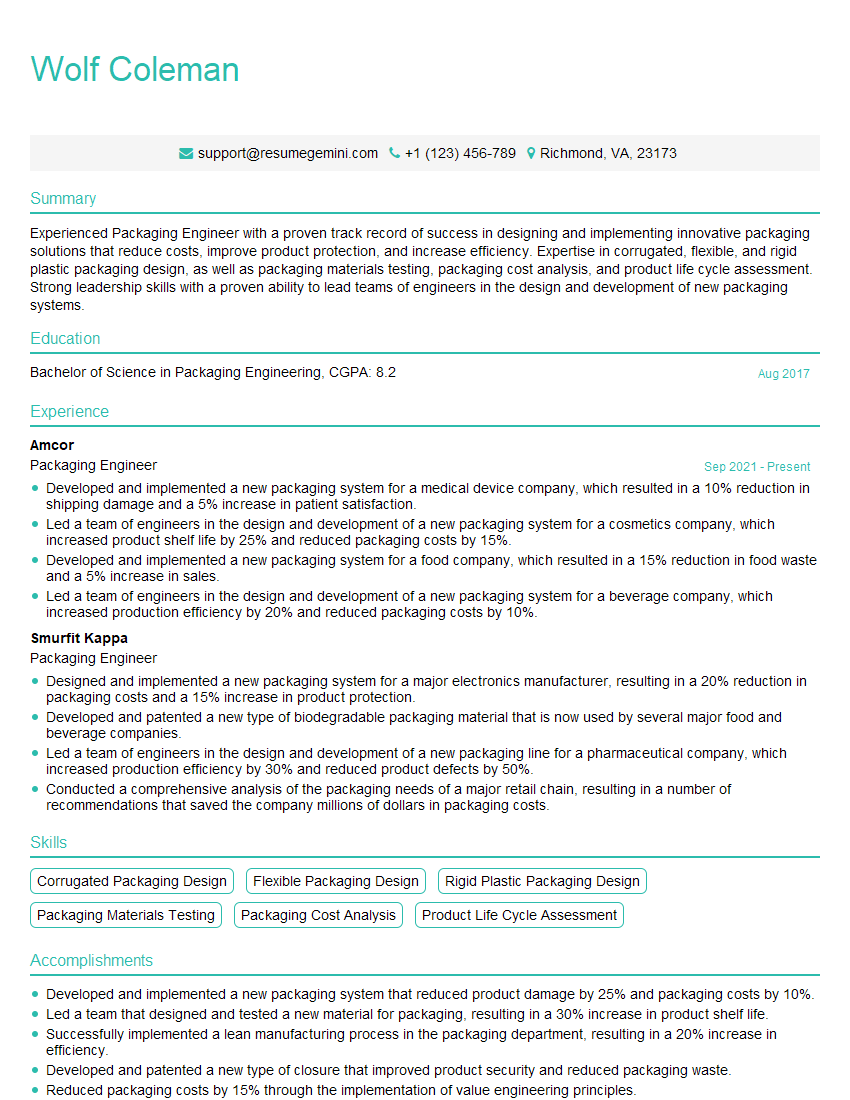
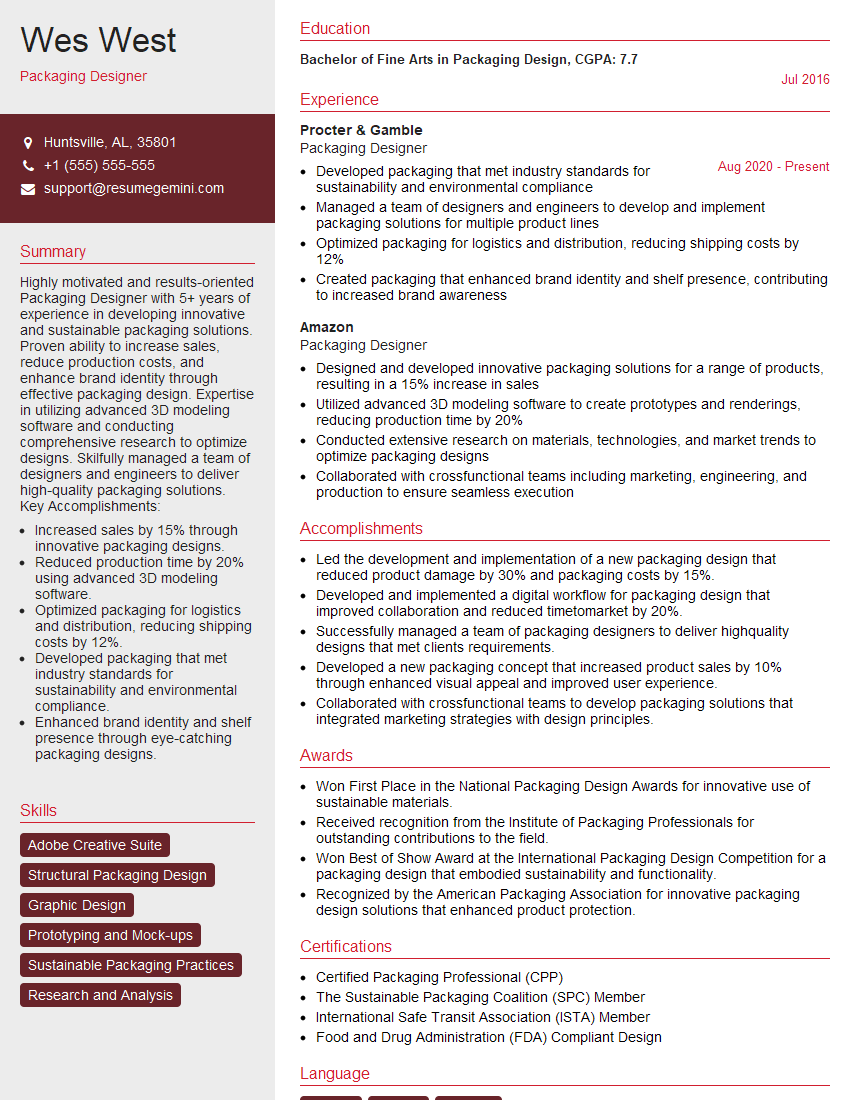
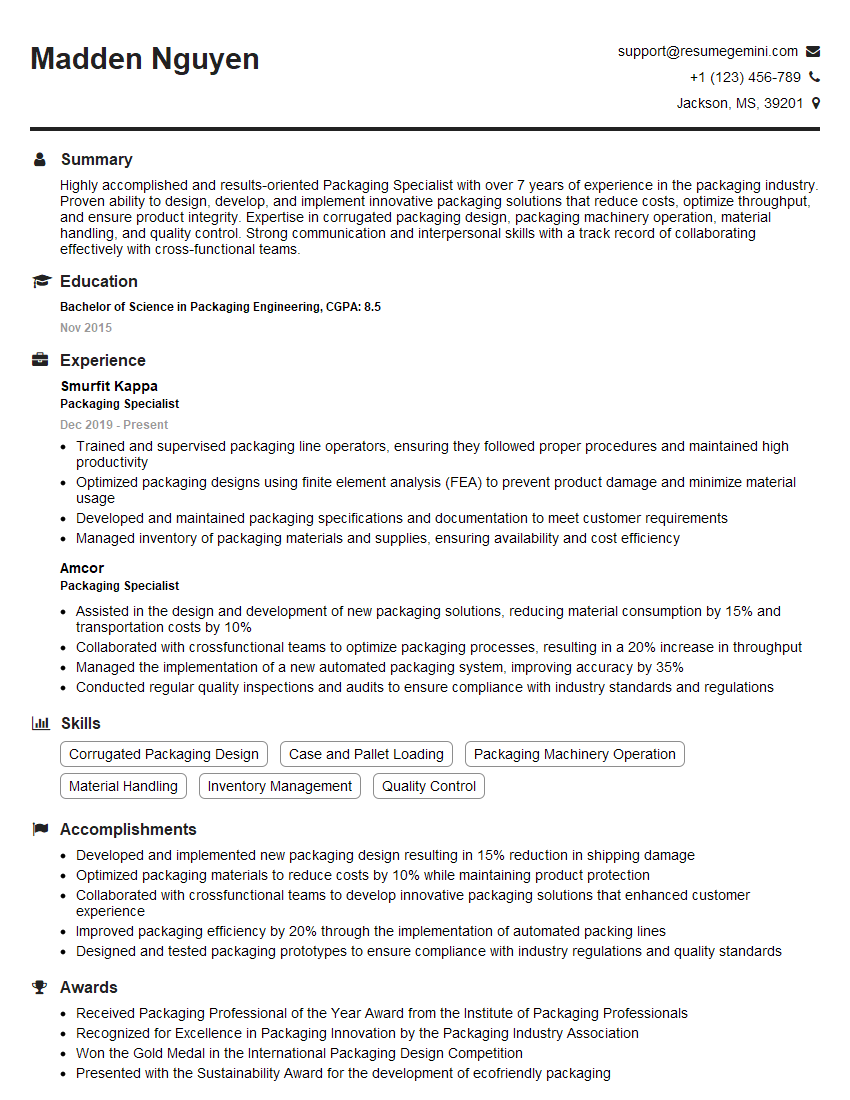
Mastering Packaging and Labeling Products knowledge is crucial for career advancement in this dynamic industry. A strong understanding of these principles will significantly improve your interview performance and open doors to exciting opportunities. To enhance your job prospects, focus on creating an ATS-friendly resume that effectively highlights your skills and experience. ResumeGemini is a trusted resource that can help you build a professional and impactful resume. They offer examples of resumes tailored to the Packaging and Labeling Products industry to provide you with valuable guidance. Take advantage of these resources to present yourself as the ideal candidate.
Explore more articles
Users Rating of Our Blogs
Share Your Experience
We value your feedback! Please rate our content and share your thoughts (optional).
What Readers Say About Our Blog
Very informative content, great job.
good