Interviews are opportunities to demonstrate your expertise, and this guide is here to help you shine. Explore the essential Packaging Food interview questions that employers frequently ask, paired with strategies for crafting responses that set you apart from the competition.
Questions Asked in Packaging Food Interview
Q 1. Explain the different types of food packaging materials and their properties.
Food packaging materials are chosen based on their interaction with the food product and environmental conditions. The selection process considers factors like barrier properties, cost-effectiveness, sustainability, and ease of processing.
- Plastics: These are ubiquitous, offering versatility in properties and forming techniques. Examples include Polyethylene (PE) – often used for flexible films due to its low cost and good flexibility; Polypropylene (PP) – known for its strength and heat resistance, frequently used for containers; and Polyvinyl Chloride (PVC) – though less common now due to environmental concerns, it offers good clarity and barrier properties.
- Metals: Aluminum and tinplate (steel coated with tin) provide excellent barrier properties against oxygen and moisture, protecting sensitive foods. They are typically used for cans and pouches. Aluminum’s lightweight nature makes it a popular choice for flexible packaging.
- Glass: Provides an excellent barrier and is inert, meaning it doesn’t react with food. It’s often used for preserving quality and extending shelf life, particularly for beverages and jars of preserves. However, it is breakable and heavy.
- Paper and Paperboard: Used extensively for cartons, boxes, and labels. They are often coated or laminated with other materials to improve barrier properties and printability. They are renewable and recyclable, making them an environmentally friendly option, but they offer limited barrier properties on their own.
- Bioplastics: Derived from renewable biomass sources, they offer a sustainable alternative to traditional plastics. However, their properties and availability are still developing. Examples include PLA (polylactic acid) and PHA (polyhydroxyalkanoates).
The choice of material is always a balancing act. For instance, while glass offers superior barrier properties, its fragility and weight can be detrimental to transportation costs. Plastics are often preferred for their cost-effectiveness and ease of processing, but sustainability concerns are driving innovation in bioplastics and improved recycling.
Q 2. Describe your experience with barrier properties in food packaging.
Barrier properties are crucial in food packaging, determining how effectively the packaging prevents the transfer of gases (oxygen, carbon dioxide, nitrogen), moisture, and aromas into or out of the package. My experience includes working with various materials and testing methodologies to evaluate and enhance barrier properties. This involves selecting materials with inherent barrier characteristics, using multi-layer constructions, and employing specialized coatings. For example, I’ve worked extensively with EVOH (ethylene-vinyl alcohol) and SiOx (silicon oxide) coatings to improve oxygen barriers in flexible films for extending the shelf life of sensitive products like coffee or snacks. I’ve also used permeation testing to quantitatively assess barrier performance, measuring the rate of gas or moisture transmission through the packaging. The results of these tests directly influence material selection and design modifications to optimize product protection and quality.
In one project, we needed to improve the shelf life of a ready-to-eat meal. Initial packaging, a single-layer polyethylene film, allowed excessive oxygen permeation, leading to rapid oxidation and rancidity. By switching to a multilayer structure incorporating an EVOH barrier layer, we reduced oxygen transmission significantly, extending the shelf life by several weeks. This required careful consideration of the cost implications of different materials and optimization of the layer thicknesses to achieve the desired balance between performance and cost.
Q 3. What are the key considerations for designing packaging for shelf-stable products?
Designing shelf-stable packaging centers around maximizing the protection of the product from environmental factors that could lead to spoilage or degradation. Key considerations include:
- Barrier properties: Preventing oxygen, moisture, and light penetration is paramount. This involves selecting appropriate materials and/or coatings to provide an effective barrier against these environmental factors.
- Aseptic processing: Sterilization of the product and package before filling ensures microbial stability. This often necessitates specialized packaging materials that can withstand high temperatures or sterilization processes.
- Packaging material selection: The choice of materials should consider their barrier properties, recyclability, compatibility with the product, and cost.
- Package design: The structural design should be robust enough to withstand distribution and handling while maintaining its integrity. This may involve using rigid containers or incorporating features like reinforced corners or tamper-evident seals.
- Shelf-life prediction and testing: Accelerated shelf-life studies are crucial to predict the packaging’s performance under various storage conditions and ensure the product meets its intended shelf life.
For example, designing packaging for shelf-stable milk necessitates a material with an excellent oxygen barrier to prevent oxidation and a seal that prevents microbial contamination. Aseptic processing techniques would typically be employed to ensure product sterility prior to packaging.
Q 4. How do you ensure food packaging complies with FDA regulations?
Ensuring FDA compliance is a critical aspect of food packaging. This involves adhering to regulations on food contact substances, labeling requirements, and good manufacturing practices (GMP). This includes:
- Material selection: Utilizing only FDA-approved materials for food contact is essential. This requires reviewing the FDA’s list of approved substances and ensuring that all components of the packaging, including inks, adhesives, and coatings, meet the regulatory requirements.
- Testing and certification: Testing and documentation often are necessary to verify the safety of food contact materials and meet regulatory requirements. This might involve migration testing to determine the potential leaching of substances from the packaging into the food.
- Labeling: Accurate and complete labeling is critical, including ingredient declarations, nutritional information, allergen information, and any required warnings or instructions.
- GMP compliance: Maintaining clean and controlled manufacturing processes to prevent contamination throughout packaging production is paramount.
Failure to comply with FDA regulations can lead to product recalls, legal action, and reputational damage. A thorough understanding of the regulations and proactive implementation of compliance measures are crucial.
Q 5. Explain your experience with modified atmosphere packaging (MAP).
Modified Atmosphere Packaging (MAP) involves altering the gas composition within the package to extend the shelf life and maintain the quality of the food. My experience includes designing and implementing MAP systems for a variety of products. This involves selecting appropriate gas mixtures (typically nitrogen, carbon dioxide, and sometimes oxygen) and packaging materials that offer the required gas barrier properties. The gas mixture is chosen to inhibit microbial growth and oxidation, while also maintaining the desirable sensory qualities of the food. I’ve worked on projects where we optimized gas mixtures and packaging materials to extend the shelf life of fresh produce, meat, and baked goods.
For example, in one project, we used a high-nitrogen atmosphere for packaged leafy greens to reduce oxygen levels and slow down respiration, which extended its shelf life significantly. Accurate measurement of the gas composition inside the packaging during development and distribution is crucial for MAP success. Specialized equipment is often used to create and control the atmosphere within the package.
Q 6. What are the challenges of designing packaging for frozen foods?
Designing packaging for frozen foods presents unique challenges due to the low temperatures and potential for ice crystal formation. Key considerations include:
- Material selection: The materials must remain flexible and strong at low temperatures, preventing cracking or breakage. Materials like polyethylene and polypropylene are commonly used. The material must also be resistant to moisture and vapor transmission to prevent freezer burn.
- Seal integrity: The seals must maintain their integrity at freezing temperatures to prevent moisture loss and contamination. This often requires specialized sealing techniques and materials that are compatible with low-temperature sealing.
- Protection against freezer burn: Freezer burn occurs when moisture loss causes dehydration and affects product quality. Minimizing air pockets within the package and using barrier materials with minimal moisture vapor transmission is crucial. This can involve using vacuum packaging or MAP techniques.
- Structural integrity: The package must be able to withstand the stress of freezing, storage, and handling. This often involves using rigid containers or designing flexible packages that retain their shape at low temperatures.
For instance, packaging frozen vegetables necessitates materials that remain flexible at sub-zero temperatures to avoid cracking during the freezing process. This requires careful material selection and testing to ensure package integrity throughout the cold chain.
Q 7. Discuss your knowledge of different types of closures and their applications.
Closures are an essential part of food packaging, influencing the product’s shelf life, protection, and ease of use. Different closure types cater to various packaging formats and product requirements.
- Screw caps: Common for bottles and jars, they provide a secure seal and are readily available in various sizes and materials. They can be tamper-evident, offering added security and consumer confidence.
- Press-on lids: Simple and cost-effective for containers, offering easy opening and closing, but may not always offer the same level of tamper evidence as screw caps.
- Snap-on lids: Similar to press-on lids but with a more secure fit and improved tamper evidence.
- Pull-tab closures: Provide easy opening for pouches and containers without needing tools, making them convenient for consumers. However, they are generally not resealable.
- Zipper closures: Allow repeated opening and closing, ideal for flexible packaging where resealability is desired, such as snack bags.
- Heat seals: Used for flexible packaging, they provide a strong and airtight seal achieved through heat application. This offers excellent barrier properties and tamper evidence.
The choice of closure depends on the product, packaging type, cost considerations, and desired convenience features. For example, a heat seal is crucial for maintaining the shelf life of a vacuum-packed food, while a simple press-on lid might suffice for a short-shelf life item that isn’t susceptible to contamination.
Q 8. How do you evaluate the sustainability of different packaging materials?
Evaluating the sustainability of packaging materials requires a holistic approach, considering the entire lifecycle – from raw material sourcing to end-of-life management. We use a framework that assesses several key factors:
- Material Source and Production: We analyze the origin of materials, prioritizing renewable resources (e.g., recycled paperboard, plant-based plastics) and assessing the energy consumption and emissions associated with their production. For example, using recycled PET plastic significantly reduces the environmental impact compared to virgin plastic.
- Manufacturing Process: We examine the manufacturing processes for their energy efficiency, water usage, and waste generation. Processes with lower carbon footprints and minimal waste are preferred.
- Packaging Design: Lightweighting designs, using less material while maintaining functionality and product protection, is crucial. Optimized designs also reduce transportation costs and emissions.
- Product Protection and Shelf Life: Effective packaging minimizes food waste by extending shelf life. This reduces the environmental impact of discarded food.
- Recyclability and Compostability: We prioritize materials with high recyclability rates or compostability, ensuring they can be easily processed at the end of their life. This reduces landfill waste and promotes circular economy principles. For instance, choosing compostable packaging for short-shelf-life products is a great way to reduce plastic waste.
- Transportation and Logistics: The transportation of materials and finished goods significantly impacts sustainability. We consider the distance materials travel, mode of transportation, and the optimization of packaging dimensions for efficient shipping.
Ultimately, we employ a Life Cycle Assessment (LCA) to quantify the overall environmental impact of different packaging options, allowing for data-driven decision-making.
Q 9. Explain your experience with packaging testing methods (e.g., drop tests, seal strength).
My experience encompasses a wide range of packaging testing methods, crucial for ensuring product safety and quality. These tests are conducted at various stages of development and production.
- Drop Tests: We conduct drop tests from varying heights to assess the packaging’s ability to withstand impacts during transportation and handling. This involves measuring the force of the impact, the resulting damage to the packaging and, most importantly, the damage to the product itself. We use specialized equipment to record the impact forces and damage metrics.
- Seal Strength: We use techniques like tensile testing to measure the strength of various seals (e.g., heat seals, adhesive bonds) on packaging materials. This is critical for ensuring product integrity and preventing leakage or contamination. We vary the parameters of the sealing process to find optimal settings for maximum seal strength.
- Compression Tests: These tests assess the packaging’s ability to withstand pressure from stacking during storage and transportation. They’re important for preventing product damage due to crushing or deformation.
- Puncture Resistance: We assess the resistance of the packaging to punctures and tears to ensure it can protect the product from damage during transit.
- Climate Testing: We expose packaging samples to various temperature and humidity levels to mimic different climatic conditions during shipping and storage, ensuring the product is protected from damage and spoilage.
The results of these tests inform material selection, design improvements, and production adjustments to optimize packaging performance and safety.
Q 10. How do you ensure the integrity of packaging throughout the supply chain?
Maintaining packaging integrity throughout the supply chain is paramount for preventing product damage, spoilage, and contamination. We employ several strategies:
- Robust Packaging Design: Designing strong, protective packaging that can withstand the stresses of transportation and handling is the first line of defense. This involves appropriate material selection, structural design, and the use of protective inserts or cushioning materials.
- Proper Handling Procedures: Clear and concise handling guidelines and employee training are essential to minimize damage during warehousing, transportation, and distribution. This includes standardized procedures for stacking, loading, and unloading.
- Monitoring and Tracking: We use tracking systems to monitor the location and condition of shipments. This allows us to identify potential problems early and take corrective actions before significant damage occurs.
- Temperature Control: For temperature-sensitive products, we use temperature-controlled containers and transportation methods to maintain optimal storage conditions throughout the supply chain. Real-time temperature monitoring devices ensure the product stays within the specified temperature range.
- Supplier Partnerships: Close collaboration with our transportation and logistics partners is essential to ensure adherence to best practices throughout the supply chain. Regular audits of our partners’ facilities and procedures are a part of our quality control.
By implementing these methods, we significantly reduce product damage, maintain quality, and safeguard our brand reputation.
Q 11. Describe your experience with packaging labeling and regulations.
Packaging labeling and regulations are incredibly complex and vary by region and product type. My experience covers several key aspects:
- Accurate Labeling Information: Ensuring all required information—product name, ingredients, nutritional facts, weight, allergen warnings, best-before dates, and country of origin—is accurately and clearly displayed on the label, conforming to local and international regulations.
- Regulatory Compliance: We stay up-to-date on evolving food labeling regulations (e.g., FDA, EU regulations) and ensure our labels fully comply with all relevant legal requirements. This includes understanding and adhering to specific labeling rules for organic products, genetically modified organisms (GMOs), and other specialized categories.
- Language Requirements: We adapt our labels to meet the language requirements of different target markets, using accurate translations and ensuring clarity for consumers.
- Barcode and Tracking Information: We include barcodes and other tracking information on labels for inventory management, supply chain traceability, and anti-counterfeiting measures.
- Label Design and Printing: We manage the entire label design and printing process, ensuring high-quality printing and durable labels that withstand various environmental conditions.
Non-compliance with labeling regulations can result in significant financial penalties, product recalls, and reputational damage. Therefore, maintaining strict adherence to regulatory standards is critical.
Q 12. What is your experience with high-barrier films and their applications?
High-barrier films are crucial for extending the shelf life of sensitive food products by protecting them from oxygen, moisture, and aroma loss. My experience involves selecting and utilizing these films in various applications.
- Types of High-Barrier Films: I’m familiar with various high-barrier film types, including those incorporating EVOH (Ethylene Vinyl Alcohol), metallized films, and multilayer structures combining different barrier polymers. Each has unique properties and cost considerations.
- Applications: High-barrier films are essential for packaging products like coffee, snacks, meat, cheese, and other items susceptible to oxidation, moisture absorption, or aroma degradation. They are often used in flexible packaging formats like pouches and flow wraps.
- Film Selection: Choosing the right film involves considering several factors, including the product’s oxygen sensitivity, moisture sensitivity, desired shelf life, required packaging machinery compatibility, and cost-effectiveness.
- Packaging Design: Designing packages with high-barrier films often requires expertise in sealing techniques, preventing pinholes, and ensuring effective barrier performance.
For example, a premium coffee brand might use a multilayer film with EVOH as a high oxygen barrier to maintain the freshness and aroma of the coffee beans over an extended period. Incorrect film selection could lead to stale coffee and dissatisfied customers.
Q 13. How do you manage packaging costs effectively?
Managing packaging costs effectively is crucial for maintaining profitability without compromising product quality or sustainability. We employ several strategies:
- Material Selection: Selecting cost-effective materials without compromising product protection or sustainability is critical. This involves exploring alternative materials, sourcing options, and negotiating favorable prices with suppliers.
- Packaging Design Optimization: Optimizing packaging design for efficient material usage is key to reducing costs. Lightweighting designs, reducing material waste, and employing efficient structural designs are important considerations.
- Negotiating with Suppliers: Establishing strong relationships with packaging material and equipment suppliers helps secure competitive pricing and favorable terms.
- Inventory Management: Efficient inventory management minimizes storage costs and prevents material spoilage or obsolescence.
- Waste Reduction: Implementing strategies to reduce packaging waste minimizes disposal costs and contributes to sustainability efforts.
- Process Optimization: Optimizing packaging processes, such as improving efficiency in the packaging line, helps reduce labor costs and material waste.
A balanced approach involving material selection, design optimization, and efficient processes is essential for effective cost management.
Q 14. Discuss your familiarity with different types of packaging machinery.
My familiarity with packaging machinery spans a variety of types used in different packaging applications.
- Form-Fill-Seal (FFS) Machines: These machines are widely used for producing flexible packaging formats, such as pouches and flow wraps, often used for food products. I have experience operating and troubleshooting various FFS machines for different packaging materials and formats.
- Vertical Form-Fill-Seal (VFFS) Machines: These are commonly used for creating stand-up pouches, pillow pouches, and other flexible packaging styles. My experience includes configuring parameters such as film speed, seal temperature, and product fill volume.
- Horizontal Form-Fill-Seal (HFFS) Machines: These machines are used for creating packaging styles like flow wraps, often used for confectionery and baked goods. My experience encompasses adapting them for different product sizes and shapes.
- Cartoning Machines: I have experience with various cartoning machines that automatically place products into cartons and seal them, offering efficiency in secondary packaging.
- Case Packing Machines: I’m also familiar with case packing machines, which automatically pack cartons or other packaging units into cases for bulk shipping. This includes systems capable of handling varying case sizes and product configurations.
- Labeling Machines: I understand the function and operation of different labeling machines used to apply labels to various package formats, ensuring that the proper labels are affixed with precision.
Understanding the capabilities and limitations of various packaging machines is crucial for designing efficient and cost-effective packaging processes. I can trouble shoot these machines and optimize their settings to produce high quality packages effectively.
Q 15. Explain your experience with packaging line troubleshooting.
Troubleshooting a packaging line requires a systematic approach. I begin by identifying the specific issue – is it a jam, a malfunctioning machine component, incorrect sealing, or a problem with the packaging material itself? My process involves:
- Visual Inspection: Carefully observing the entire line to pinpoint the source of the problem. This often reveals obvious issues like a clogged feed system or a damaged part.
- Data Analysis: Reviewing production data, such as machine speed, downtime logs, and reject rates, helps to identify recurring problems or trends.
- Systematic Elimination: Working through potential causes one by one, eliminating them until the root cause is identified. This might involve checking sensors, power supplies, or the settings of individual machines.
- Testing and Verification: After implementing a solution, I meticulously test to ensure the problem is resolved and the line is operating optimally.
- Documentation: Thoroughly documenting the problem, troubleshooting steps, and solution ensures future issues can be addressed efficiently. I also update preventative maintenance schedules as needed.
For example, I once solved a recurring jam in a filling machine by identifying a slight misalignment in the conveyor belt causing product buildup. A simple adjustment resolved the issue and significantly improved line efficiency.
Career Expert Tips:
- Ace those interviews! Prepare effectively by reviewing the Top 50 Most Common Interview Questions on ResumeGemini.
- Navigate your job search with confidence! Explore a wide range of Career Tips on ResumeGemini. Learn about common challenges and recommendations to overcome them.
- Craft the perfect resume! Master the Art of Resume Writing with ResumeGemini’s guide. Showcase your unique qualifications and achievements effectively.
- Don’t miss out on holiday savings! Build your dream resume with ResumeGemini’s ATS optimized templates.
Q 16. Describe your process for selecting appropriate packaging materials for a new product.
Selecting appropriate packaging materials for a new product involves considering several key factors. It’s a balance between product protection, cost-effectiveness, and sustainability. My process includes:
- Product Characteristics: Understanding the product’s physical properties (weight, size, fragility), its shelf life requirements, and any special handling needs (e.g., temperature sensitivity).
- Environmental Conditions: Considering factors such as storage and transportation conditions – temperature fluctuations, humidity, and potential exposure to sunlight.
- Regulatory Compliance: Ensuring the chosen materials comply with all relevant food safety regulations and labeling requirements (e.g., FDA, EU regulations).
- Cost Analysis: Comparing the cost of different materials considering factors such as material cost, manufacturing cost, and potential waste.
- Sustainability: Evaluating the environmental impact of different materials, considering recyclability, compostability, and the use of recycled content.
- Consumer Appeal: Considering the aesthetic appeal of the packaging – how it will enhance the product’s brand image and attract consumers.
For a new line of organic granola bars, for instance, I would prioritize sustainable materials like recyclable paperboard or compostable bags, potentially incorporating recycled content. The packaging would be designed to be shelf-stable, protect the product from breakage, and appeal to the environmentally conscious consumer.
Q 17. How do you incorporate sustainability principles into packaging design?
Sustainability is paramount in modern packaging design. My approach focuses on reducing environmental impact across the entire product lifecycle. This involves:
- Material Selection: Prioritizing materials with high recycled content, those that are readily recyclable or compostable (e.g., PCR plastics, paperboard from responsibly managed forests).
- Lightweighting: Optimizing packaging designs to minimize material usage without compromising product protection. This reduces transportation costs and carbon emissions.
- Minimalist Design: Reducing the use of unnecessary features and embellishments, such as excessive ink or coatings.
- Post-Consumer Recycled Content: Using packaging made with materials from recycled sources, diverting waste from landfills.
- Life Cycle Assessment (LCA): Conducting a comprehensive analysis of the environmental impact of the packaging, from material sourcing to disposal, to identify areas for improvement.
- Collaboration with Suppliers: Working with suppliers committed to sustainable sourcing and manufacturing practices.
For example, I recently redesigned a snack food package, reducing its weight by 15% using lightweighting techniques, which resulted in significant cost savings and reduced carbon footprint.
Q 18. What are the key considerations for designing packaging for international shipping?
Designing packaging for international shipping requires careful consideration of several factors that go beyond domestic shipping. These include:
- Robustness: The packaging needs to withstand the rigors of international transport, including multiple handling stages, temperature fluctuations, and potential rough handling.
- Climate Control: If the product is temperature sensitive, the packaging must ensure that it maintains optimal temperature during transit. This might involve insulated packaging or the use of refrigerants.
- Compliance: Packaging must meet international standards and regulations, including customs regulations and labeling requirements in different countries.
- Language: Labels and instructions need to be in the language of the destination country.
- Security: Packaging should be designed to prevent tampering and theft. This might involve tamper-evident seals or security labels.
- Shipping Regulations: Adherence to the specific regulations concerning hazardous materials, if applicable, is crucial.
For instance, when shipping perishable goods internationally, we need to use insulated containers with temperature monitoring devices to ensure the product arrives in perfect condition. This often necessitates collaborating with specialized logistics providers.
Q 19. How do you ensure the food safety and hygiene of packaging materials?
Ensuring food safety and hygiene in packaging materials is critical to prevent contamination and maintain product quality. My approach incorporates:
- Material Selection: Choosing materials that are inert, non-toxic, and do not leach harmful chemicals into the food product. This involves selecting FDA-approved materials and adhering to relevant food safety standards.
- Barrier Properties: Selecting materials that provide effective barriers against moisture, oxygen, and microorganisms to maintain product freshness and extend shelf life.
- Cleanliness: Maintaining a clean and sanitary production environment to prevent contamination of the packaging materials during manufacturing.
- Testing and Certification: Undergoing rigorous testing to ensure that the packaging materials meet food safety standards and are free of contaminants. This often includes obtaining relevant certifications.
- Proper Handling and Storage: Ensuring that packaging materials are handled and stored appropriately to prevent contamination and damage.
For example, I worked with a client on a new line of ready-to-eat meals. We selected a modified atmosphere packaging (MAP) system to extend shelf life and prevent microbial growth. This involves using a specific film that creates a modified atmosphere inside the package, inhibiting bacterial growth.
Q 20. Explain your experience with different types of printing techniques for packaging.
I have extensive experience with various printing techniques for packaging, each with its own advantages and disadvantages. These include:
- Flexography: A cost-effective method for high-volume printing, ideal for flexible materials like films and pouches. It uses flexible rubber plates, providing good quality for designs with large areas of solid color.
- Offset Lithography: Offers high-quality, detailed printing, particularly suitable for sophisticated designs and fine details. It’s a good choice for cartons and labels.
- Gravure Printing: Best suited for very high-volume printing on flexible materials, delivering consistent print quality. It’s particularly effective for detailed images and continuous tones.
- Digital Printing: Ideal for short runs, personalized packaging, and variable data printing. It offers quick turnaround times and design flexibility, making it well-suited for small-batch production or promotional campaigns.
- Screen Printing: Used for simpler designs, often with thicker inks, suitable for adding textures or special effects. It can also be utilized on a variety of materials, including corrugated cardboard.
The choice of printing technique depends on factors such as design complexity, volume requirements, budget constraints, and substrate type. For a high-volume product with a simple design, flexography might be the most cost-effective. A small batch of luxury chocolates might benefit from offset lithography for a high-quality image.
Q 21. Discuss your knowledge of packaging waste reduction strategies.
Packaging waste reduction is a crucial aspect of sustainable packaging design. Strategies I employ include:
- Design for Recyclability: Designing packaging that is easily recyclable using common recycling streams. This often involves avoiding mixed materials and using readily recyclable materials such as paperboard or PET.
- Reduce, Reuse, Recycle: Applying the three Rs – reducing material usage through design optimization, reusing packaging components where feasible, and maximizing recycling rates.
- Lightweighting: Optimizing packaging weight without compromising product protection, reducing the amount of material used and transportation costs.
- Sustainable Materials: Incorporating post-consumer recycled content, biodegradable or compostable materials where appropriate.
- Closed-Loop Systems: Exploring the use of closed-loop recycling systems, where the packaging is collected and reprocessed, minimizing material waste.
- Collaboration and Innovation: Working with suppliers and industry partners to develop and implement innovative solutions for waste reduction and recycling.
For instance, I helped a client transition from a multi-material package to a fully recyclable mono-material option, significantly increasing their recycling rate and reducing their environmental impact.
Q 22. How do you balance functionality, cost, and sustainability in packaging design?
Balancing functionality, cost, and sustainability in packaging design is a crucial aspect of creating successful food packaging. It’s essentially a three-legged stool – if one leg is weak, the whole thing collapses. We achieve this balance through a multi-step process.
- Functionality: This involves ensuring the packaging protects the product from damage, spoilage, and contamination throughout its journey from production to consumption. Factors include barrier properties against oxygen, moisture, and light; strength and durability to withstand transport and handling; and ease of opening and use for the consumer. For example, a robust corrugated box for transporting fragile glass jars is crucial for functionality.
- Cost: Material selection, manufacturing processes, and printing significantly impact the cost. We use lifecycle cost analysis, evaluating not just the initial material cost but also transportation, storage, and disposal. Choosing cost-effective materials without compromising functionality is key. For instance, switching from glass to a lighter-weight plastic might reduce transport costs.
- Sustainability: This encompasses the environmental impact of the packaging throughout its entire life cycle. We explore using recycled or renewable materials, designing for recyclability or compostability, reducing material usage, and minimizing waste. For example, we might use plant-based bioplastics or optimize package design to reduce material waste.
- The Balancing Act: Finding the optimal balance often involves trade-offs. For example, a fully compostable package might be more expensive than a conventional plastic package. We use sophisticated software and simulations to model different scenarios and determine the most cost-effective and sustainable option while still ensuring proper product protection.
Q 23. Describe your experience with different types of aseptic packaging.
Aseptic packaging is a game-changer for extending shelf life without refrigeration. My experience encompasses several types:
- Tetra Pak and similar carton packaging: These are incredibly common, using a multi-layer carton structure (paperboard, polyethylene, aluminum foil) to create a sterile environment. The product is sterilized separately and then aseptically filled into the pre-sterilized packages. I’ve worked extensively with optimizing designs for different product viscosities and improving the ease of opening for consumers.
- Flexible pouches: These use a laminated film structure, often including aluminum for barrier properties. The filling process is aseptic, often using specialized machinery to maintain sterility. I’ve contributed to projects developing pouches for extended shelf-life juices and dairy products, focusing on improving seal integrity and reducing material thickness.
- Bottles: Aseptic filling of bottles is also possible, often for products like milk and juice. This requires specialized filling equipment and stringent cleaning and sterilization protocols. I’ve worked on projects comparing the cost-effectiveness of aseptic bottles versus cartons for a specific client’s product line.
My experience goes beyond simply selecting a package type. It includes troubleshooting issues like seal integrity, ensuring the aseptic process is maintained throughout the production line, and improving the overall efficiency of the packaging process.
Q 24. What are the key challenges in designing packaging for fresh produce?
Designing packaging for fresh produce presents unique challenges because it’s highly perishable. The key challenges revolve around:
- Maintaining Freshness: The packaging must control respiration rates and minimize ethylene buildup (a natural plant hormone that accelerates ripening and spoilage). Modified atmosphere packaging (MAP), using specific gas mixtures, is crucial here. For example, reducing oxygen levels and increasing nitrogen or carbon dioxide can significantly extend shelf life.
- Preventing Damage: Fresh produce is easily bruised and damaged during transport and handling. Packaging needs to provide adequate cushioning and protection, often using specialized inserts or trays. I’ve worked on projects using honeycomb cardboard structures for delicate fruits.
- Maintaining Quality: Packaging needs to prevent moisture loss or gain, which can affect the texture and appearance of the produce. Proper ventilation can be critical to balance moisture control and prevent fungal growth. I’ve focused on designing breathable films that allow for gas exchange while protecting against moisture loss.
- Sustainability: Consumers are increasingly concerned about the environmental impact of packaging, and finding sustainable materials that meet the stringent requirements for fresh produce is a challenge. I’ve explored using biodegradable materials and recyclable films for produce packaging.
Q 25. Explain your experience with retort pouches and their applications.
Retort pouches are flexible pouches capable of withstanding high-temperature and high-pressure sterilization (retorting). This process makes them ideal for extending the shelf life of many food products.
- Applications: Retort pouches are widely used for ready-to-eat meals, sauces, soups, stews, and pet food. They offer a lightweight, cost-effective, and convenient alternative to cans.
- Materials: The structure usually involves multiple layers: an inner layer that provides a barrier against moisture and oxygen, a middle layer (often aluminum foil) to block light, and an outer layer for strength and sealability. The specific materials depend on the product and its requirements.
- My Experience: I have extensively worked on projects involving the selection and optimization of retort pouch materials. This includes evaluating different barrier properties, determining the appropriate heat resistance, and ensuring the pouches can withstand the retorting process without leakage or deformation. I’ve also worked on optimizing the design of the pouch for efficient filling and sealing.
- Challenges: Some challenges include ensuring the pouch materials are compatible with the retort process, ensuring the seals maintain integrity under pressure and high temperatures, and maintaining the quality and appearance of the product after retorting.
Q 26. Discuss your understanding of packaging’s role in extending shelf life.
Packaging plays a pivotal role in extending shelf life by acting as a barrier against factors that cause spoilage.
- Barrier Properties: Packaging materials must effectively block or minimize the transmission of oxygen, moisture, light, and microorganisms. This helps to slow down oxidation, microbial growth, and enzymatic reactions that contribute to spoilage.
- Modified Atmosphere Packaging (MAP): This technique involves replacing the air inside the package with a specific gas mixture (e.g., high nitrogen, reduced oxygen) that inhibits microbial growth and slows down respiration in fresh produce. This is a key strategy in extending shelf life.
- Aseptic Packaging: As discussed earlier, this completely eliminates microorganisms from the package and the product before filling, which is a highly effective method of ensuring a long shelf life without refrigeration.
- Vacuum Packaging: Removing air from the package reduces oxygen availability, slowing down oxidation and microbial growth. This is often used for meat, cheese, and other perishable products.
- Other Factors: Beyond the material properties, factors such as package design and storage conditions also play a role in shelf-life extension. For example, proper sealing, and minimizing temperature fluctuations during storage are essential.
Q 27. How do you assess the efficiency of a packaging line?
Assessing the efficiency of a packaging line involves considering several key performance indicators (KPIs).
- Overall Equipment Effectiveness (OEE): This is a crucial metric that combines availability (uptime), performance (speed), and quality (defect rate). A high OEE indicates a well-performing and efficient line.
- Throughput: This measures the number of units packaged per unit of time. We aim to maximize throughput while maintaining quality standards.
- Downtime: Analyzing downtime helps identify bottlenecks and areas for improvement. Understanding the causes of downtime (e.g., equipment malfunction, material shortages) is critical.
- Waste: Minimizing waste (material, product, energy) is a key indicator of efficiency. Tracking waste generation and identifying sources of waste are important.
- Labor Costs: Efficient lines minimize labor requirements, leading to lower costs. Analyzing labor productivity and optimizing workflows helps improve efficiency.
- Cost per Unit: This combines material costs, labor, energy and equipment costs to determine the cost of packaging each unit of product. Lowering this metric indicates increased efficiency.
I utilize data analysis techniques and lean manufacturing principles to identify areas for improvement and optimize the packaging line’s efficiency. This often involves using process mapping tools, data visualization dashboards, and continuous improvement methodologies.
Q 28. Explain your experience with implementing new packaging technologies.
Implementing new packaging technologies requires careful planning and execution. My experience includes several steps:
- Needs Assessment: We begin by thoroughly assessing the need for new technology. This involves evaluating current packaging limitations, exploring new market trends, and identifying potential benefits of new technologies.
- Technology Selection: This stage involves researching and evaluating different technologies based on factors such as cost, efficiency, sustainability, and compatibility with existing infrastructure. I’ve worked extensively on comparing different types of packaging machinery and materials.
- Pilot Testing: Before full-scale implementation, we conduct pilot tests to assess the new technology’s performance in a real-world setting. This allows us to identify potential problems and fine-tune the process before full-scale rollout.
- Training and Support: Proper training of personnel is vital for successful implementation. We provide comprehensive training programs to ensure that employees are well-equipped to operate and maintain the new technology.
- Monitoring and Evaluation: After implementation, ongoing monitoring and evaluation are crucial to track performance, identify areas for improvement, and ensure that the new technology meets its intended goals. We use KPIs to assess the success of the implementation.
For example, I recently led a project implementing a new high-speed automated packaging line for a client. The project involved thorough planning, supplier selection, pilot testing, employee training, and ongoing performance monitoring, ultimately resulting in significant improvements in efficiency and reduced costs.
Key Topics to Learn for Packaging Food Interview
- Food Safety and Preservation: Understanding principles of food preservation, shelf-life extension, and contamination prevention within packaging contexts. Consider practical applications like modified atmosphere packaging (MAP) and hurdle technology.
- Material Science and Selection: Knowledge of different packaging materials (plastics, paperboard, metal, etc.), their properties (barrier properties, strength, recyclability), and suitability for various food types. Explore case studies of material choices based on food characteristics and environmental considerations.
- Packaging Design and Engineering: Principles of package design for functionality (protection, ease of use, stacking), aesthetics (branding, consumer appeal), and sustainability. Consider practical applications like designing packages for specific distribution channels (e.g., e-commerce vs. retail).
- Regulations and Compliance: Familiarity with relevant food safety regulations (e.g., FDA, USDA) and labeling requirements. Explore how these regulations impact packaging choices and design.
- Sustainability and Environmental Impact: Understanding the environmental footprint of packaging materials and exploring sustainable packaging solutions (e.g., biodegradable materials, reduced packaging waste). Analyze life cycle assessments and their role in sustainable packaging choices.
- Cost Optimization and Supply Chain Management: Analyzing the cost-effectiveness of different packaging options, considering material costs, production efficiency, and supply chain logistics. Explore strategies for optimizing packaging costs without compromising quality or safety.
- Packaging Technology and Innovation: Awareness of emerging technologies in food packaging, such as active and intelligent packaging. Consider discussing innovative packaging solutions addressing specific food preservation or consumer experience challenges.
Next Steps
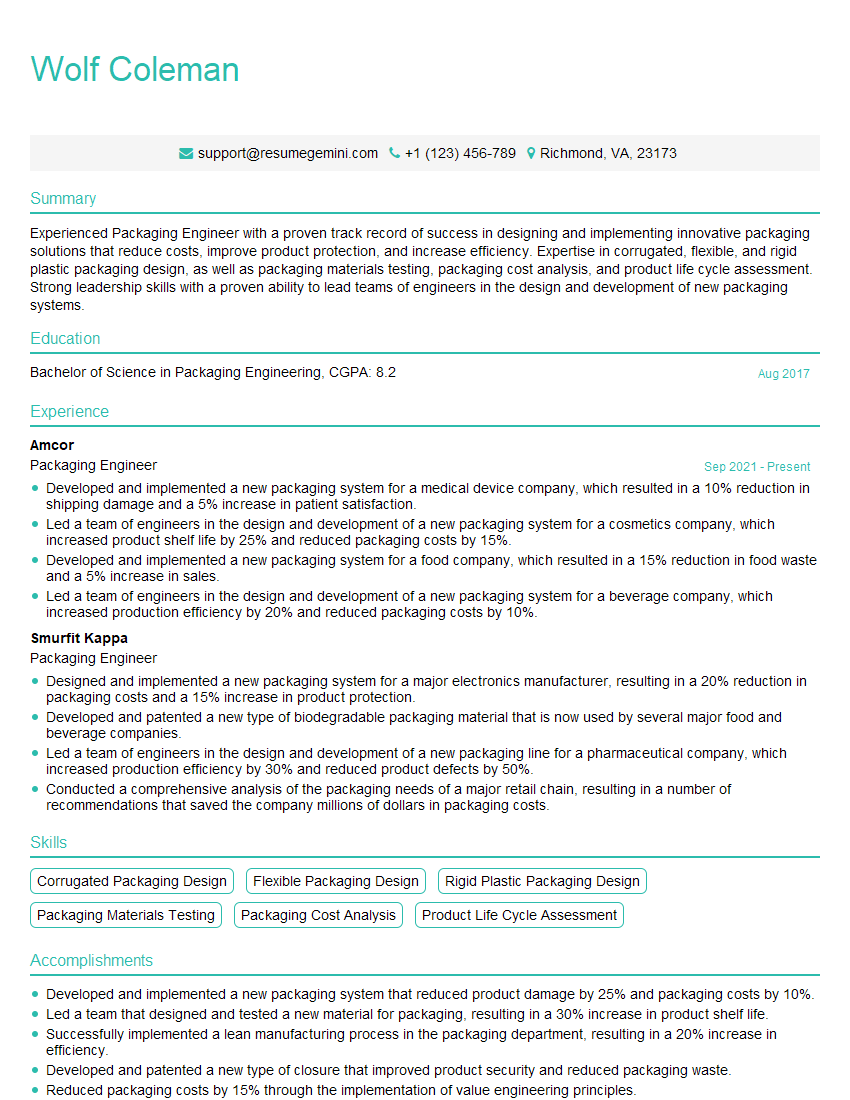
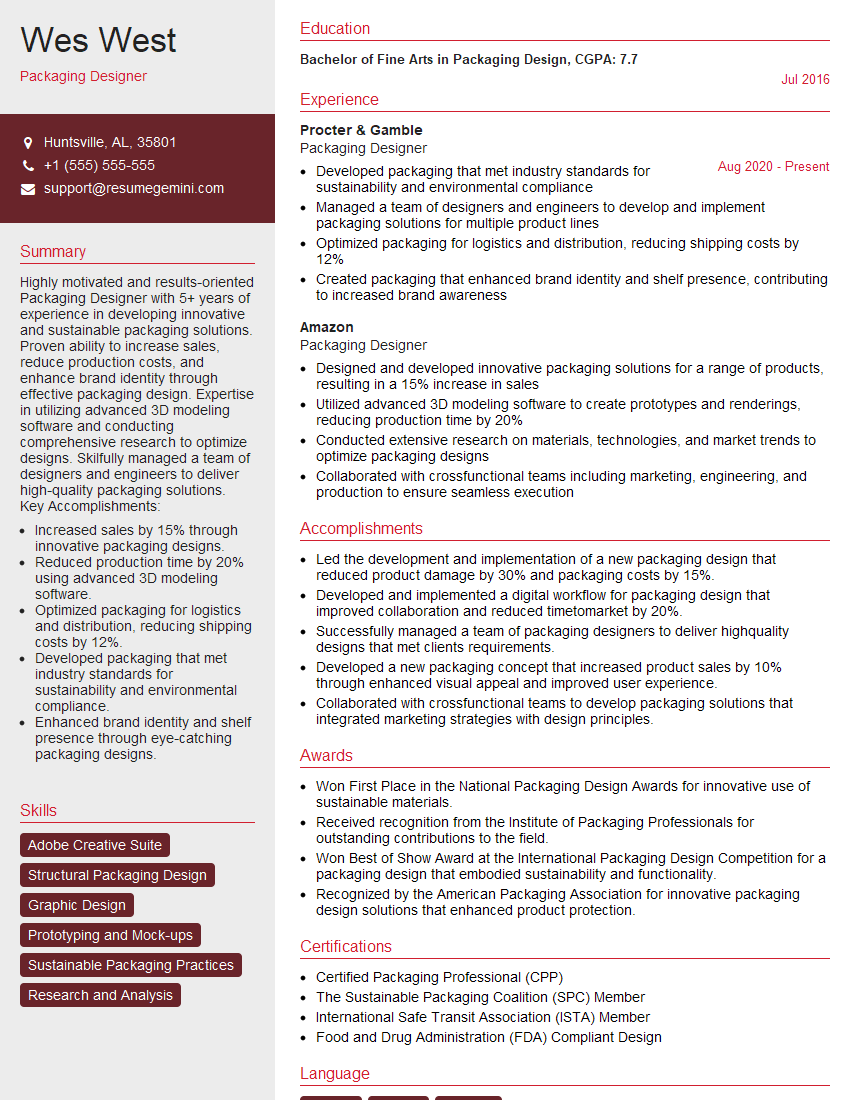
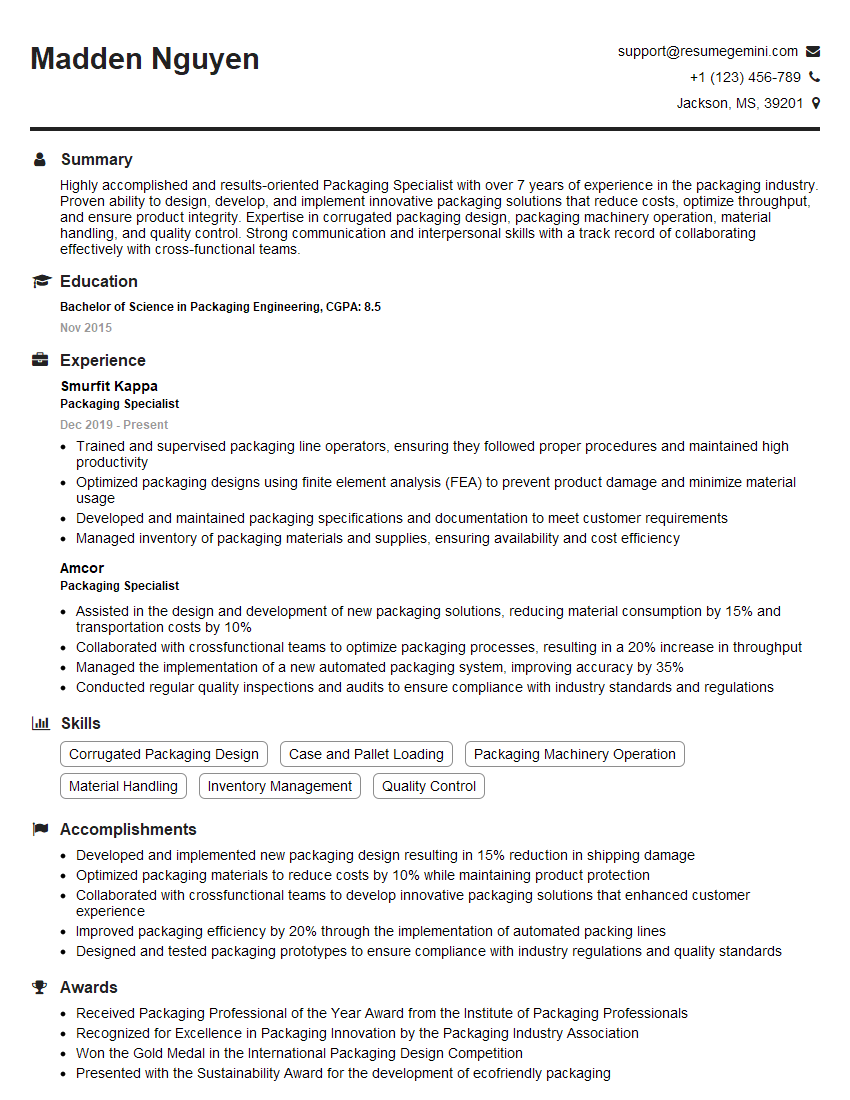
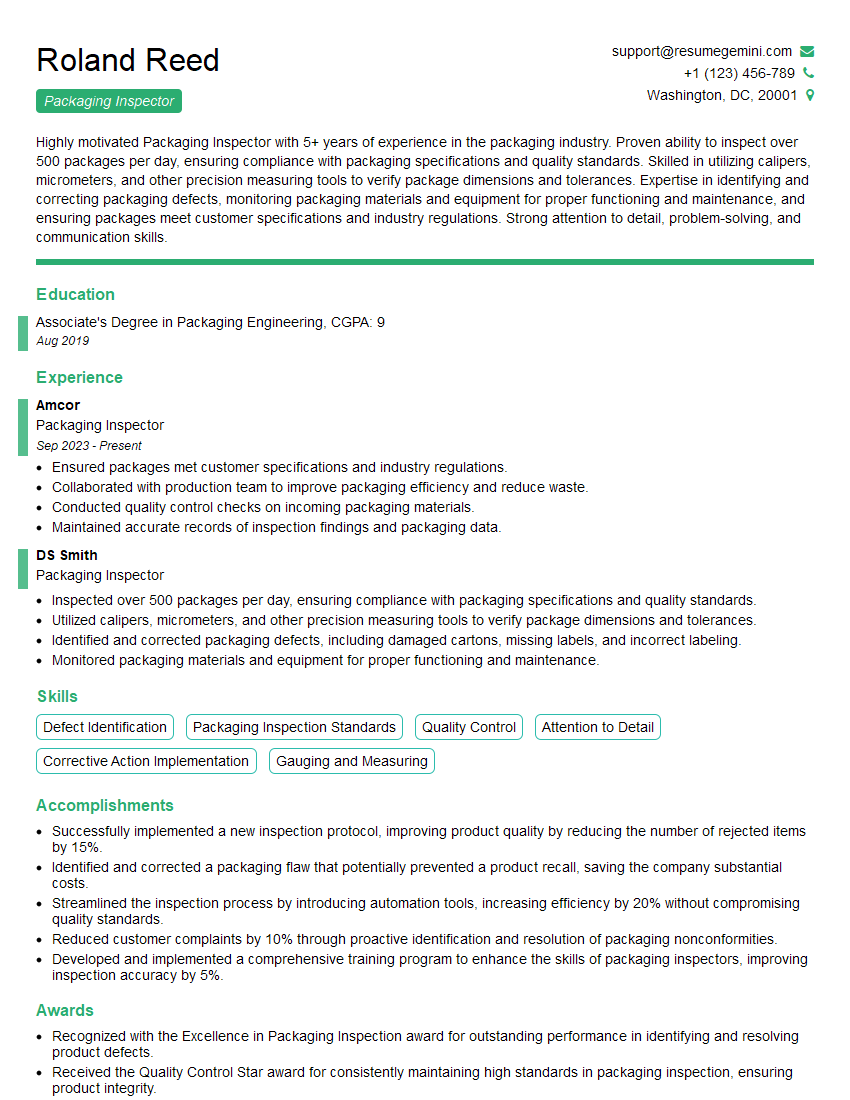
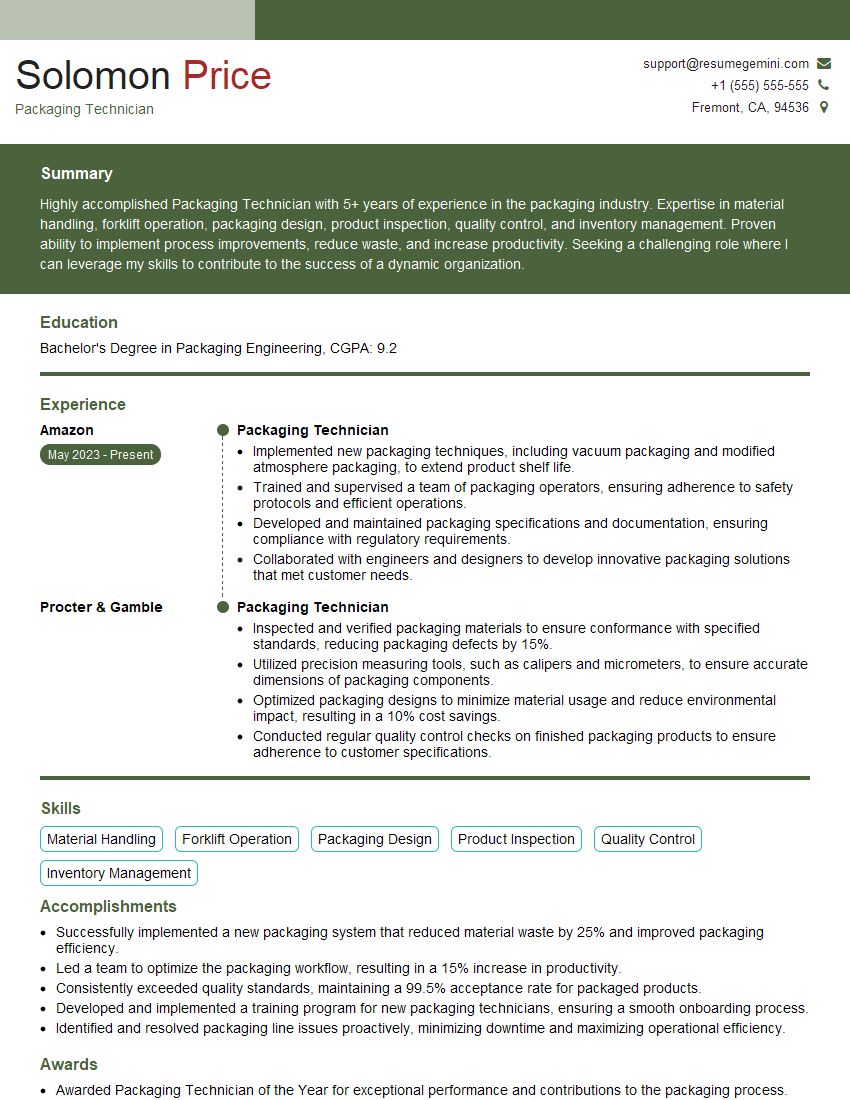
Mastering the principles of Packaging Food is crucial for a successful and rewarding career in this dynamic field. It opens doors to diverse roles with increasing responsibility and compensation. To maximize your job prospects, create an ATS-friendly resume that effectively highlights your skills and experience. We highly recommend using ResumeGemini to build a professional and impactful resume. ResumeGemini provides you with the tools and resources to craft a compelling document, and we offer examples of resumes tailored specifically to the Packaging Food industry.
Explore more articles
Users Rating of Our Blogs
Share Your Experience
We value your feedback! Please rate our content and share your thoughts (optional).
What Readers Say About Our Blog
Very informative content, great job.
good