Interviews are more than just a Q&A session—they’re a chance to prove your worth. This blog dives into essential Packing Efficiency interview questions and expert tips to help you align your answers with what hiring managers are looking for. Start preparing to shine!
Questions Asked in Packing Efficiency Interview
Q 1. Define packing efficiency and its key metrics.
Packing efficiency is the measure of how effectively space is utilized within a package or during transportation. It’s a crucial metric for minimizing costs and maximizing resource use. Key metrics include:
- Cube Utilization: The percentage of available volume occupied by the product itself within the packaging. A higher percentage indicates better efficiency.
- Weight Utilization: The ratio of product weight to the total weight of the packaged item (including packaging materials). High weight utilization means less packaging material is used relative to the product weight.
- Void Fill Ratio: The percentage of empty space within the package filled with void fill materials (e.g., air pillows, foam peanuts). Minimizing this ratio improves efficiency.
- Overall Packing Efficiency: A holistic measure incorporating cube and weight utilization, considering factors like package dimensions and product shape. This is often expressed as a percentage.
For example, a perfectly cubed product fitting snugly into a box would achieve 100% cube utilization, while a loosely packed box with excessive void fill would have a low cube utilization and a high void fill ratio.
Q 2. Explain the difference between cube utilization and weight utilization.
Cube utilization focuses solely on the volume occupied by the product relative to the total package volume. It’s about maximizing space and minimizing wasted cubic area. Weight utilization, on the other hand, is concerned with the weight ratio – how much of the total weight is the actual product versus packaging. A product might have high cube utilization (perfectly fitting box) but low weight utilization if the packaging is disproportionately heavy.
Imagine shipping fragile glass figurines. You might use a large, protective box resulting in lower cube utilization but higher weight utilization (the glass is heavier than the packaging). Conversely, shipping lightweight styrofoam balls might involve a smaller box with high cube utilization but potentially lower weight utilization due to the bulky nature of the styrofoam balls themselves. Both metrics provide different insights into packaging optimization.
Q 3. How do you calculate the ideal pack density for a given product?
Calculating ideal pack density requires considering the product’s dimensions, weight, and desired packaging type. There’s no single formula as it’s highly context-dependent, but a process could be:
- Determine Product Dimensions: Measure the length, width, and height of the product in its basic unit.
- Calculate Product Volume:
Volume = Length x Width x Height - Choose Packaging Type: Select the type of packaging (box, cylinder, etc.) and its dimensions.
- Calculate Package Volume: Use the formula appropriate for the chosen packaging shape.
- Calculate Pack Density:
Pack Density = (Product Volume / Package Volume) x 100% - Optimize: Experiment with different packaging sizes and configurations to achieve the highest pack density while maintaining product protection and considering other factors like shipping costs and handling. This often involves iterative design and testing.
For instance, if a product has dimensions of 10cm x 5cm x 2cm and is packaged in a 12cm x 6cm x 3cm box, the pack density would be (10 x 5 x 2) / (12 x 6 x 3) x 100% = 46.3%. This indicates significant room for improvement.
Q 4. Describe different types of packaging materials and their suitability for various products.
Packaging materials vary widely depending on product fragility, environmental concerns, cost, and aesthetic requirements. Examples include:
- Corrugated Cardboard: Cost-effective, widely used for a variety of products, offering good protection and cushioning.
- Plastic Film: (e.g., shrink wrap, bubble wrap) Provides protection from moisture and minor impacts. Suitable for many products, particularly those needing moisture protection. Environmental concerns exist due to plastic waste.
- Expanded Polystyrene (EPS): Offers excellent cushioning, but has significant environmental impacts. Used for fragile items requiring substantial protection.
- Paperboard: Used for boxes and inserts; offers a more sustainable alternative compared to EPS.
- Wood: Used for heavy or large products that need extra protection; more expensive and not environmentally friendly.
The choice depends heavily on the product. Fragile electronics often utilize foam inserts in cardboard boxes, while food products might necessitate plastic film and tamper-evident seals.
Q 5. What are the common challenges in achieving high packing efficiency?
Achieving high packing efficiency presents several challenges:
- Irregular Product Shapes: Non-cuboidal products leave significant void spaces within packaging.
- Product Fragility: Requiring extra padding and cushioning reduces packing efficiency.
- Weight Considerations: Balancing product weight, packaging weight, and shipping costs is crucial.
- Transportation Constraints: Packaging must conform to shipping regulations and fit on pallets or in containers efficiently.
- Sustainability Concerns: Minimizing packaging material while ensuring product protection is a balancing act.
- Cost Optimization: Balancing material costs, labor costs, and shipping costs requires careful consideration.
Overcoming these challenges often requires creative packaging design, optimized layout algorithms, and advanced material selection.
Q 6. How does automation improve packing efficiency?
Automation significantly improves packing efficiency through:
- Automated Packaging Machines: These machines quickly and consistently create packages, applying the right amount of packaging materials.
- Robotics: Robots can handle fragile items more carefully and efficiently than humans, reducing damage and improving packing density.
- Warehouse Management Systems (WMS): WMS helps optimize warehouse layouts, storage locations, and order fulfillment, reducing the distances items need to travel and improving overall efficiency.
- 3D Packing Software: This software simulates various packing configurations, finding the optimal arrangements to minimize wasted space and improve cube utilization.
The result is faster packing times, reduced labor costs, improved product protection, and greater accuracy, leading to substantial improvements in overall packing efficiency.
Q 7. Explain the concept of nesting in packaging.
Nesting, in packaging, is the practice of placing smaller items inside larger ones to maximize space and improve packing efficiency. This is especially beneficial for products with irregular shapes or various sizes. Think of Russian nesting dolls; each doll fits perfectly inside the next larger one, eliminating wasted space. This strategy helps reduce void fill, lower transportation costs, and increase the overall utilization of both volume and weight.
For example, a manufacturer of small plastic parts might nest multiple smaller components within a larger container before placing it into a shipping box. This minimizes wasted space and protects the smaller items during transit. Careful consideration of shapes and sizes is necessary for effective nesting strategies.
Q 8. How do you optimize packing for fragile items?
Optimizing packing for fragile items requires a multi-pronged approach focusing on protection, cushioning, and secure containment. Think of it like building a miniature, custom-designed fortress around each delicate item.
Firstly, individual item protection is crucial. This involves using appropriate materials like bubble wrap, foam peanuts, or air pillows to completely surround each fragile item. For particularly sensitive items, custom-fit inserts or molded foam can provide superior protection. Imagine wrapping a delicate glass vase individually before placing it in a box – that’s the level of care needed.
Secondly, proper cushioning within the shipping container is essential to absorb shocks and vibrations during transit. Filling all void space is key; otherwise, items can shift and collide. Loose fill materials should be used generously, ensuring the items don’t touch each other directly. Using corrugated cardboard dividers between layers adds further stability.
Finally, secure containment involves selecting a sturdy container that fits the contents snugly. Oversized boxes allow for excessive movement. The box should be properly sealed with sufficient tape, and clear labeling should indicate its fragile contents to handlers.
For example, when shipping a set of fine china, each plate would be individually wrapped in bubble wrap, then layered in a box with corrugated cardboard dividers, surrounded by packing peanuts, and finally placed in a sturdy double-walled carton clearly marked ‘FRAGILE’.
Q 9. Describe your experience with different packing techniques (e.g., layer packing, block packing).
My experience encompasses a variety of packing techniques, each suited to different needs and product characteristics. Layer packing is a common method, especially for items of similar size and shape. Imagine stacking pancakes – each layer is carefully placed to maximize space utilization. This technique is efficient for items that can withstand some compression. It’s cost-effective as it often minimizes the use of void-fill materials.
Block packing, on the other hand, is ideal for irregularly shaped items or those requiring individual protection. Think of building with Lego bricks – each item is treated as a distinct unit, carefully arranged within the container to minimize wasted space. This method might involve custom-made inserts to create a snug fit for each item, improving protection and efficiency but increasing cost.
I’ve also worked extensively with mixed packing strategies that combine aspects of both layer and block packing. This tailored approach allows for optimization based on the specific characteristics of the items being packed, balancing protection, efficiency, and cost.
Q 10. How do you balance packing efficiency with cost-effectiveness?
Balancing packing efficiency with cost-effectiveness is a constant challenge, requiring a careful analysis of various factors. The goal is to minimize packaging materials while ensuring product safety and efficient use of shipping space. This often involves a trade-off; using less material may compromise protection, while using excessive material increases costs.
One strategy is to meticulously assess the dimensions and fragility of the items to choose appropriately sized containers. Oversized boxes lead to wasted space and increased shipping costs, while undersized boxes risk damage. Optimizing the packing arrangement to minimize void space is equally crucial. Using cost-effective void-fill materials, like recycled paper or air pillows, can help. The selection of packing materials should prioritize strength and protection while balancing cost. For instance, using recycled cardboard for less fragile items is a cost-effective and environmentally friendly alternative to expensive custom-fit inserts.
Ultimately, achieving this balance often involves using sophisticated packing software (discussed in question 4) that simulates different packing configurations to identify the most efficient and cost-effective solutions.
Q 11. What software or tools have you used to optimize packing processes?
I have extensive experience with various software solutions designed to optimize packing processes. These tools employ algorithms to determine the best arrangement of items within a given container, considering factors like item dimensions, weight, fragility, and available space. This significantly reduces manual labor, improves efficiency, and minimizes waste. Some examples include:
Packsize: A popular software that simulates different packing arrangements to find the most efficient solution.EasyPack: This software helps users visualize packing scenarios and optimize space utilization.FlexiPack: This program allows for the generation of packing lists and shipping labels, streamlining the entire process.
These software solutions often integrate with warehouse management systems (WMS) and order management systems (OMS) for seamless data flow and improved workflow. In my experience, the use of such software has led to significant reductions in packaging material costs, shipping costs, and overall labor expenses.
Q 12. How do you handle irregular-shaped items in a packing process?
Handling irregularly shaped items requires creative packing strategies that prioritize both space optimization and product protection. Simply throwing them in a box is usually not sufficient. The key is to adapt to the unique form of each item and find a way to integrate it efficiently into the larger packing scheme.
One approach involves using custom-fit inserts or partitions. Think of the compartments in a tackle box – each section is molded or cut to accommodate a specific item. These inserts provide stability and prevent shifting. However, creating custom inserts can be costly, so this approach is often reserved for high-value or fragile irregular items.
Alternatively, void fill materials like crumpled paper, foam peanuts, or air pillows can be used to surround and secure irregularly shaped items, filling any gaps and preventing movement. Careful placement is essential to maximize space utilization. Combining this with layer packing, where possible, is another effective strategy.
In practice, a combination of these methods is often the most practical solution, ensuring both efficiency and protection. For example, a project involving irregularly shaped furniture components would combine custom cardboard inserts for larger, delicate items with void-fill materials to cushion and secure smaller components within the same container.
Q 13. How do you minimize void space in a package?
Minimizing void space is paramount for efficient packing, reducing shipping costs and improving product protection. Empty space allows items to shift during transit, increasing the risk of damage. Consider this analogy: imagine shaking a box filled with loosely packed items versus a tightly packed one – the latter is far less likely to result in breakage.
Several strategies are employed to reduce void space: Firstly, optimized packing algorithms, as discussed in question 4, are crucial. These algorithms meticulously arrange items to maximize space utilization. Secondly, custom-fit inserts create snug compartments, preventing items from shifting and effectively eliminating void space. Thirdly, various types of void-fill materials are used to fill gaps and cushion items. The choice depends on the fragility of the items and budget constraints; options range from inexpensive crumpled paper to more expensive air pillows or foam peanuts.
A crucial aspect is selecting the right size box for the contents. Oversized boxes drastically increase void space and lead to wasted shipping costs. The entire packing strategy should be approached systematically, and multiple options should be considered to achieve minimal void space and optimal protection.
Q 14. What is your experience with different types of packaging equipment?
My experience with packaging equipment spans various technologies, from manual to automated systems. This experience allows me to select the most appropriate equipment based on the project requirements and scale of operations.
I’ve worked with various manual packing tools such as tape dispensers, box cutters, and hand-held void-fill dispensers for smaller-scale operations. However, for larger-volume projects, I have extensive experience with automated packaging equipment. This includes:
- Automated box formers and sealers that significantly speed up the box-making and sealing process.
- Automatic void-fill systems that dispense air pillows, foam peanuts, or other loose-fill materials efficiently.
- Conveyor systems that transport packages through the packing line, improving workflow.
- Automated palletizers that stack packaged items onto pallets for efficient storage and shipping.
Selecting the right equipment depends on factors such as volume, budget, and required automation level. For example, a small e-commerce business might rely primarily on manual packing, while a large distribution center would likely employ automated systems for optimal throughput.
Q 15. Explain your approach to managing damaged goods during packing.
Managing damaged goods starts with prevention. We implement a robust system of quality checks at every stage, from material selection to final packaging. This includes regular inspections of packing materials for defects and ensuring that our packing procedures are strictly followed.
When damage does occur, we meticulously document it, noting the type of damage, the affected product, and the likely cause. This data is crucial for identifying and addressing weaknesses in our packing process. For example, if we see a recurring pattern of crushed boxes, we might investigate whether we need stronger cardboard or more robust internal cushioning. Damaged goods are segregated, and depending on the severity of the damage and the product’s nature, they might be repaired, salvaged for parts, or responsibly discarded, adhering to all relevant environmental regulations. We maintain detailed records of all damaged goods and the actions taken, allowing us to track trends and continuously improve our processes.
Career Expert Tips:
- Ace those interviews! Prepare effectively by reviewing the Top 50 Most Common Interview Questions on ResumeGemini.
- Navigate your job search with confidence! Explore a wide range of Career Tips on ResumeGemini. Learn about common challenges and recommendations to overcome them.
- Craft the perfect resume! Master the Art of Resume Writing with ResumeGemini’s guide. Showcase your unique qualifications and achievements effectively.
- Don’t miss out on holiday savings! Build your dream resume with ResumeGemini’s ATS optimized templates.
Q 16. Describe your experience with implementing new packing techniques or technologies.
I’ve been involved in implementing several new packing techniques, most notably the transition to void-fill systems using recycled paper instead of polystyrene peanuts. This not only improved the environmental profile of our operation but also enhanced product protection. We saw a significant reduction in damaged goods after this change. Another example is the introduction of automated packaging machinery. This increased our packing speed considerably while also enhancing consistency and reducing labor costs. The learning curve involved training our staff on the new equipment and optimizing its settings for various product sizes and weights. To assess its impact, we tracked metrics such as units packed per hour, labor costs, and damage rates before and after implementation.
Q 17. How do you measure and track the success of packing efficiency improvements?
Measuring and tracking packing efficiency improvements involves a multi-faceted approach. We use Key Performance Indicators (KPIs) such as:
- Damage rate: Percentage of damaged goods out of the total shipped.
- Packing time per unit: Time taken to pack a single unit or order.
- Material cost per unit: Cost of packaging materials used per unit.
- Labor cost per unit: Labor costs associated with packing per unit.
- Space utilization: Percentage of available space utilized in shipping containers or pallets.
We track these KPIs regularly, comparing them to baseline metrics established before any improvement initiatives. We use data visualization tools to easily identify trends and measure the impact of changes. For instance, we might create charts showing the reduction in damage rate or the improvement in packing time after implementing a new technique. This data helps justify future investments in technology or training programs.
Q 18. How do you ensure compliance with regulations (e.g., safety, environmental) during packing?
Compliance with regulations is paramount. We maintain a comprehensive compliance program that covers all aspects of packing, including:
- Safety: We ensure that all packing materials are non-toxic and safe for handling, and that our employees receive appropriate safety training. We adhere to all workplace safety standards and regulations.
- Environmental: We prioritize sustainable packaging, using recycled materials whenever possible and minimizing waste. We are compliant with all regulations regarding hazardous materials packaging and disposal.
- Shipping regulations: We comply with all relevant shipping regulations, ensuring proper labeling, documentation, and handling of goods to prevent delays or penalties.
Regular audits and training sessions reinforce compliance. We maintain detailed records of our compliance efforts, readily available for regulatory inspections.
Q 19. Describe a situation where you had to improve packing efficiency in a challenging environment.
We once faced a significant challenge when a major client introduced a new product line with highly fragile components. Their existing packaging was inadequate, resulting in high damage rates. The challenge was to quickly design and implement a new packing solution that met their stringent requirements within a tight timeframe and budget. We formed a cross-functional team comprising packaging engineers, supply chain managers, and representatives from the client. We experimented with different types of cushioning materials and container designs, testing each iteration rigorously. Ultimately, we developed a customized solution using a combination of foam inserts and corrugated cardboard that significantly reduced damage and met the client’s expectations. This project highlighted the importance of collaboration and agile problem-solving in optimizing packing efficiency, even under pressure.
Q 20. What are the key considerations for designing packaging for transportation?
Designing packaging for transportation requires considering several crucial factors:
- Product protection: The packaging must adequately protect the product from damage during transit, considering factors like shock, vibration, and compression. This may involve using appropriate cushioning materials, robust containers, and secure closures.
- Stackability: Packages should be designed for efficient stacking to optimize space utilization in trucks and warehouses. Consider dimensions and weight distribution to avoid collapse.
- Weight and size: Minimizing weight and size reduces shipping costs and improves handling efficiency. Optimization is key to balance protection and space efficiency.
- Environmental impact: Using sustainable, recyclable materials is essential. Regulations and corporate social responsibility must be factored in.
- Cost-effectiveness: The packaging should be cost-effective while meeting all the other criteria. This requires finding a balance between protection, efficiency, and material cost.
Often, it involves iterative testing and refinement of designs to find the optimal balance.
Q 21. How do you handle variations in product sizes or shapes during packing?
Handling variations in product sizes and shapes requires flexible packing solutions. We use a combination of strategies:
- Modular packaging: Using adjustable inserts or dividers allows us to adapt packaging to different product dimensions. This approach is particularly useful for items of varying sizes shipped in the same box.
- Customizable packaging: For products with very unusual shapes or sizes, we might use custom-designed packaging solutions, balancing cost and efficiency.
- Void-fill systems: Using materials like bubble wrap, air pillows, or shredded paper fills empty spaces, preventing product movement and damage.
- Automated systems with adjustable settings: Advanced packing machines often allow adjustment of parameters to accommodate varying product sizes.
Careful planning and selection of the right techniques ensure efficient packing even with a varied product range.
Q 22. Explain the importance of proper labeling in packing efficiency.
Proper labeling is paramount to packing efficiency. It’s the cornerstone of a smooth, error-free process, preventing costly mistakes and delays down the line. Think of it as the instruction manual for your shipment. Without clear, accurate labels, products can be misidentified, missorted, or even lost entirely.
- Clear Identification: Labels must clearly identify the contents of the package, including product name, quantity, and any relevant SKU (Stock Keeping Unit) numbers. This allows for quick identification and sorting in warehouses and distribution centers.
- Destination Address: Precise and complete shipping addresses, including postal codes and any special delivery instructions, are crucial for efficient delivery. Ambiguous or incomplete addresses lead to delays and returns.
- Handling Instructions: Fragile items require specific handling instructions on the label, such as ‘Handle with Care’ or ‘Fragile—This Side Up’. This helps prevent damage during transit.
- Barcode Integration: Integrating barcodes into the labeling process streamlines inventory management and tracking throughout the supply chain. Scannable barcodes enable automated sorting and tracking, improving efficiency significantly.
For example, imagine a warehouse handling thousands of packages daily. Without clear and consistent labeling, finding a specific order becomes a time-consuming and frustrating process. Proper labeling, however, enables workers to quickly locate and process orders, improving overall efficiency and reducing errors.
Q 23. What are some common causes of inefficient packing processes?
Inefficient packing processes often stem from several interconnected issues. Let’s explore some common culprits:
- Poor Space Utilization: Failing to optimize space within packages or on pallets leads to wasted space and increased shipping costs. This often results from a lack of standardized packing procedures or improper use of void fill.
- Lack of Standardization: Inconsistent packing procedures across a team or organization lead to errors and delays. Standardizing procedures, including package size selection and void fill techniques, is key to efficiency.
- Inadequate Training: Insufficient training for packing personnel can result in slow packing speeds, improper handling of materials, and damaged goods. Regular training and updates on best practices are essential.
- Suboptimal Packaging Materials: Using the wrong type or size of packaging materials can lead to wasted space and increased costs. Choosing appropriate materials for product protection and efficient space utilization is crucial.
- Inefficient Workflow: A poorly designed packing workflow can create bottlenecks and delays. Optimizing the flow of materials and minimizing movement for workers is key.
- Lack of Technology: Not leveraging technology like automated packing systems or inventory management software can severely hamper efficiency. Implementing appropriate technology can significantly improve speed and accuracy.
For instance, a company failing to properly train employees might experience high rates of damaged goods or slow packing speeds, leading to significant losses. Similarly, using oversized boxes when smaller ones would suffice leads to higher shipping costs and environmental impact.
Q 24. How do you incorporate sustainability into packing strategies?
Sustainability is no longer optional; it’s a crucial aspect of modern packing strategies. It involves minimizing environmental impact throughout the packing lifecycle. This can be achieved through several key approaches:
- Sustainable Packaging Materials: Using recycled and recyclable materials such as cardboard made from recycled fibers, biodegradable plastics (where appropriate), and compostable fillers significantly reduces waste and environmental impact. Choosing materials with minimal processing and transportation needs is also beneficial.
- Reduced Packaging Volume: Optimizing package sizes to minimize void space and using right-sized boxes reduces material consumption and transportation needs.
- Efficient Packaging Design: Designing packages that are easily recyclable and require minimal unpacking steps reduces waste and simplifies the recycling process.
- Carbon Footprint Reduction: Choosing local suppliers for packaging materials reduces transportation distances and associated carbon emissions. Considering the lifecycle carbon footprint of different materials is crucial.
- Waste Reduction Programs: Implementing robust waste management programs within the packing process, including efficient sorting and recycling systems, minimizes landfill waste.
For example, a company could switch from using plastic bubble wrap to biodegradable alternatives like paper-based void fill, while simultaneously optimizing box sizes to minimize excess packaging. This reduces environmental impact without compromising product protection.
Q 25. How would you address a sudden increase in order volume while maintaining packing efficiency?
Addressing a sudden increase in order volume while maintaining packing efficiency requires a multi-pronged approach that focuses on scalability and adaptability. Here’s a structured strategy:
- Assess Current Capacity: Begin by analyzing your existing packing capacity, identifying bottlenecks and areas for improvement. This includes evaluating personnel, equipment, and space constraints.
- Temporary Staffing: Consider hiring temporary staff to augment your existing workforce. Ensure adequate training is provided to maintain quality and efficiency.
- Optimize Workflow: Refine your packing process to eliminate redundancies and streamline operations. This might involve re-organizing your workspace or implementing lean methodologies.
- Leverage Technology: Explore using automated packing solutions, like automated box formers or robotic palletizers, to increase throughput. Inventory management software can also help streamline order processing.
- Prioritize Orders: If capacity is truly constrained, prioritize orders based on urgency and customer importance. Clearly communicate any potential delays to customers.
- Flexible Packaging: Explore using flexible packaging options where appropriate to increase packaging speed and reduce waste.
- Overtime & Shift Management: Consider offering overtime pay to existing staff or implementing additional shifts to increase capacity short-term.
For instance, a company experiencing a holiday surge in orders might temporarily hire additional packers, implement overtime shifts, and optimize their packing line layout to better handle the increased volume. Post-holiday, they can reassess their needs and adjust accordingly.
Q 26. Describe your experience with different types of pallet configurations.
My experience encompasses a wide range of pallet configurations, each with its own strengths and limitations, depending on the product, transportation method, and storage space. Key considerations include stability, weight distribution, and space optimization.
- Standard Pallet Configurations: I’m proficient in standard configurations like the block stacking pattern for uniform products and the interleaving pattern for varying sizes and shapes. This involves understanding the weight limitations of the pallet and using appropriate stretch wrap or strapping to ensure stability.
- Mixed Pallet Configurations: I have extensive experience creating mixed pallet configurations, efficiently combining different sized products or SKUs on a single pallet, maximizing space utilization while maintaining structural integrity. Careful planning and labeling are crucial in this case.
- Tiering and Nesting: I am familiar with stacking strategies such as tiering (placing layers of pallets atop each other) and nesting (placing smaller boxes or containers within larger ones) to make best use of vertical space, especially in high-bay storage facilities.
- Pallet Types: I have worked with various pallet types including wood, plastic, and even custom-designed pallets. Understanding the structural capabilities of each pallet type is essential for choosing the right one for specific products and applications.
For example, fragile items might require more careful placement and void fill, often needing specific separation techniques to prevent damage during transit. Heavy items demand a stable base and potentially reinforced pallet structures. Understanding these nuances ensures efficient and safe transportation.
Q 27. How do you ensure accurate inventory tracking in a high-volume packing environment?
Accurate inventory tracking in a high-volume packing environment is critical for efficiency and profitability. It relies on a combination of robust systems and procedures:
- Real-time Inventory Management System: Implementing a real-time inventory management system (IMS) is essential. This system should track inventory levels, movements, and location, providing up-to-the-minute visibility.
- Barcode/RFID Integration: Integrating barcode or RFID (Radio-Frequency Identification) scanning throughout the packing process enables automated tracking and minimizes manual data entry errors.
- Regular Cycle Counting: Conducting regular cycle counts, a subset of the full inventory count process, helps identify discrepancies early on and maintain accuracy. Cycle counting targets areas of higher activity or high-value goods.
- Automated Data Capture: Automated data capture tools and software reduce the possibility of human error in recording inventory movements. This might involve automated weighing systems or integration with warehouse management systems (WMS).
- Cross-Verification Procedures: Establishing cross-verification processes, where data from different sources is checked against each other, helps catch discrepancies and improve accuracy.
For example, a system might use barcode scanners at each packing station to register item removal from inventory, updating the system in real time. This eliminates manual counting and reduces errors, while providing data for performance analysis and optimization.
Q 28. What are your strategies for managing and reducing packing material waste?
Managing and reducing packing material waste requires a holistic approach focusing on prevention, optimization, and responsible disposal. Here are some key strategies:
- Right-Sizing Packaging: Minimize void space by carefully selecting the right-sized boxes and inserts for products. Avoid oversized packaging whenever possible.
- Reusable Packaging: Explore using reusable containers or pallets wherever feasible. This reduces the need for single-use materials and minimizes waste.
- Sustainable Materials: Opt for recycled and recyclable packaging materials whenever possible. Prioritize materials with a low environmental impact throughout their lifecycle.
- Waste Audits: Conduct regular waste audits to identify the types and quantities of packing materials being wasted. This data allows for targeted improvements.
- Employee Training: Train employees on proper packing techniques to minimize material waste and maximize efficiency. Encourage them to be mindful of resource consumption.
- Recycling Programs: Establish efficient recycling programs to capture and recycle as much packaging material as possible. Partner with recycling facilities if necessary.
- Negotiate with Suppliers: Negotiate with suppliers to ensure you’re getting the best prices for recycled materials and that they adhere to sustainable sourcing practices.
For instance, a company could implement a program to collect and recycle cardboard boxes, reducing landfill waste and potentially even generating revenue through the sale of recycled materials. Similarly, using void fill made from recycled paper or biodegradable materials demonstrates a commitment to sustainability and reduced waste.
Key Topics to Learn for Packing Efficiency Interview
- Space Optimization Techniques: Understanding and applying various algorithms and methods to maximize space utilization within packaging, considering both volume and weight constraints. Practical application includes designing custom packaging solutions or optimizing existing ones for reduced waste and improved efficiency.
- Material Selection and Cost Analysis: Evaluating different packaging materials based on their properties (strength, durability, cost, sustainability), and calculating the overall cost-effectiveness of various packaging options. This includes considering factors like material sourcing, transportation, and disposal.
- Packaging Line Efficiency and Workflow: Analyzing and improving the efficiency of the entire packaging process, from material handling to final product packaging. This involves understanding bottlenecks, optimizing processes, and implementing lean manufacturing principles.
- Automation and Technology in Packing: Familiarity with automated packaging systems, robotics, and software used in optimizing packing efficiency. This includes understanding the integration of these technologies into existing workflows and their impact on productivity.
- Inventory Management and Forecasting: Understanding the relationship between packaging efficiency and inventory management. This includes accurate forecasting of demand to avoid overstocking or shortages of packaging materials.
- Safety and Regulatory Compliance: Knowledge of safety regulations and best practices related to packaging, including proper handling of materials and adherence to industry standards. This also involves understanding the environmental impact of packaging choices.
- Data Analysis and Reporting: Using data to track and analyze key performance indicators (KPIs) related to packing efficiency. This includes identifying areas for improvement and presenting findings to stakeholders.
Next Steps
Mastering packing efficiency is crucial for career advancement in logistics, supply chain management, and manufacturing. A strong understanding of these principles demonstrates valuable problem-solving skills and a commitment to optimizing operational processes. To significantly boost your job prospects, it’s vital to create a resume that effectively highlights your skills and experience to Applicant Tracking Systems (ATS). We strongly encourage you to use ResumeGemini to build a professional, ATS-friendly resume that showcases your expertise in Packing Efficiency. Examples of resumes tailored to this field are available to help you create a compelling application.

Operations Manager Resume Sample
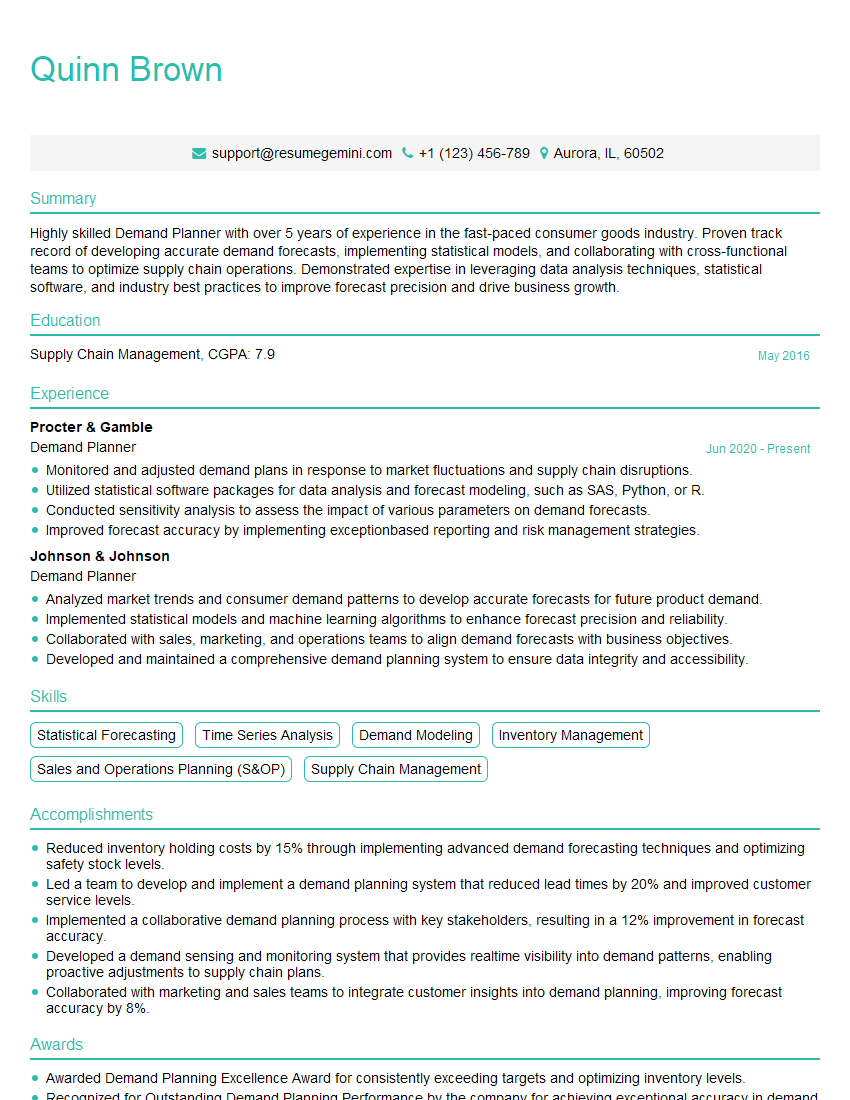
Demand Planner Resume Sample

Production Supervisor Resume Sample
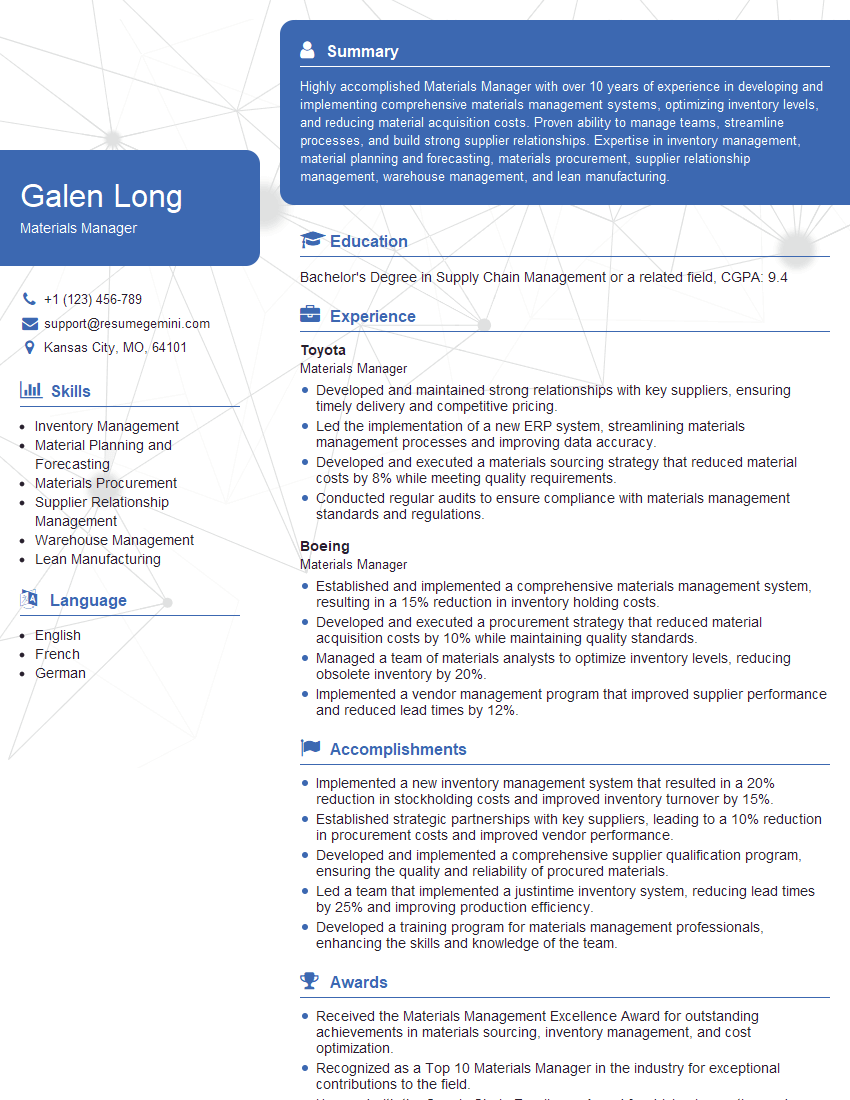
Materials Manager Resume Sample
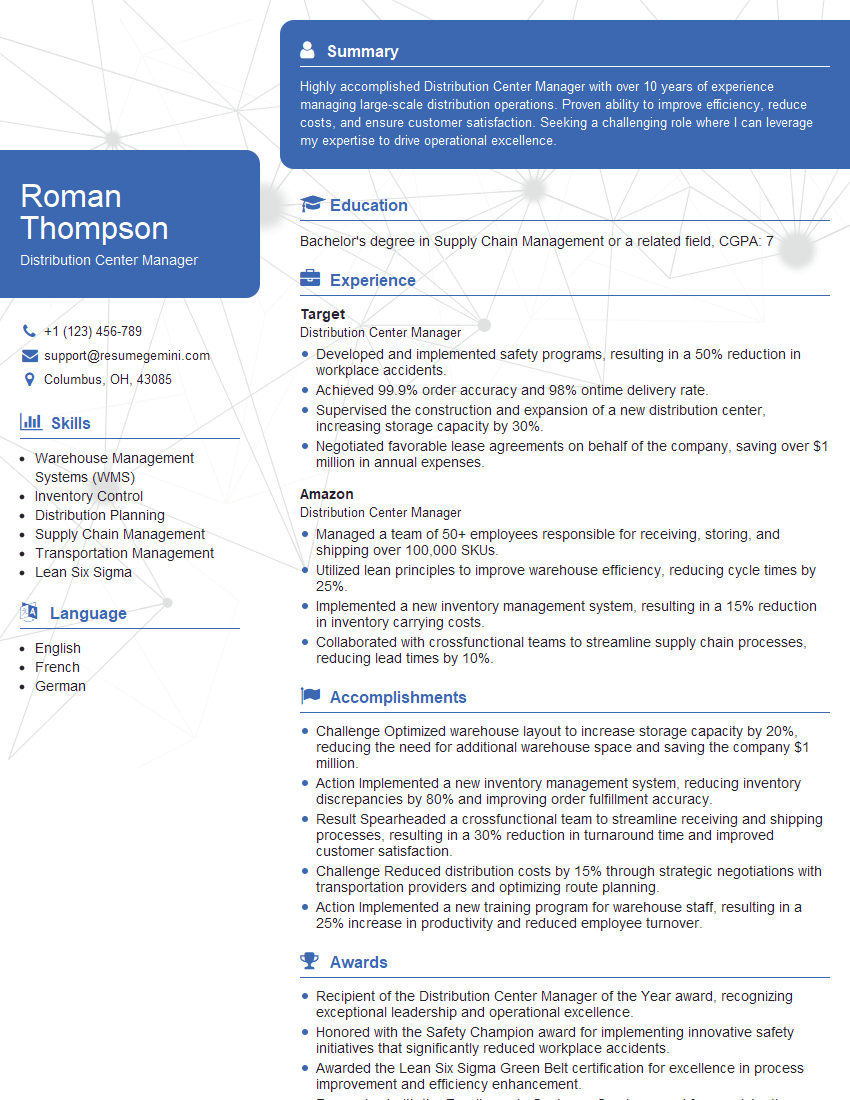
Distribution Center Manager Resume Sample
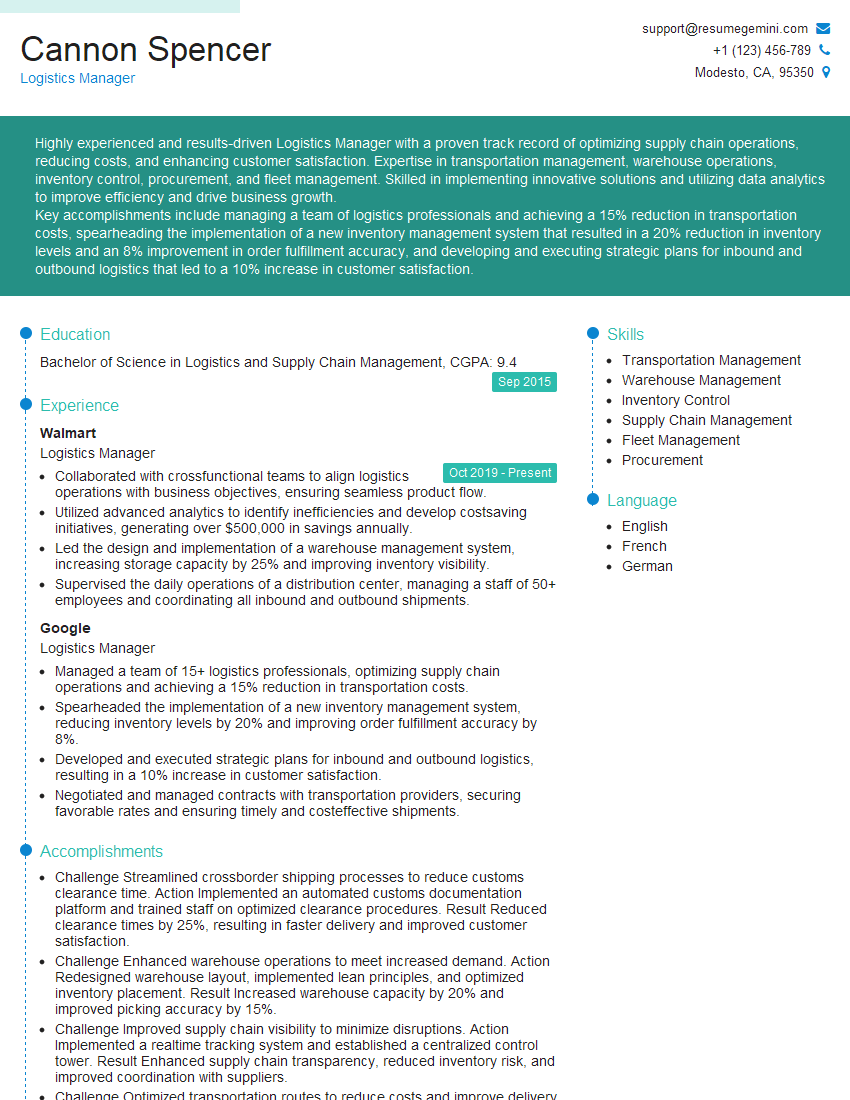
Logistics Manager Resume Sample
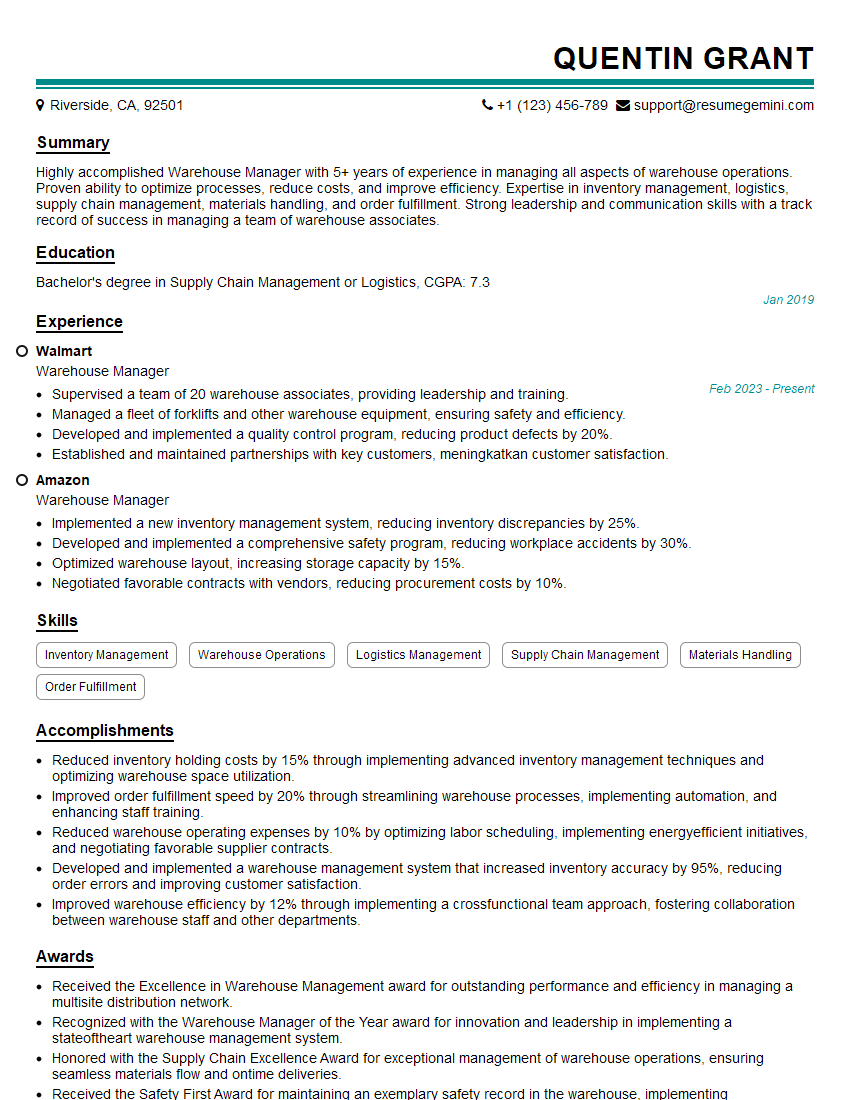
Warehouse Manager Resume Sample
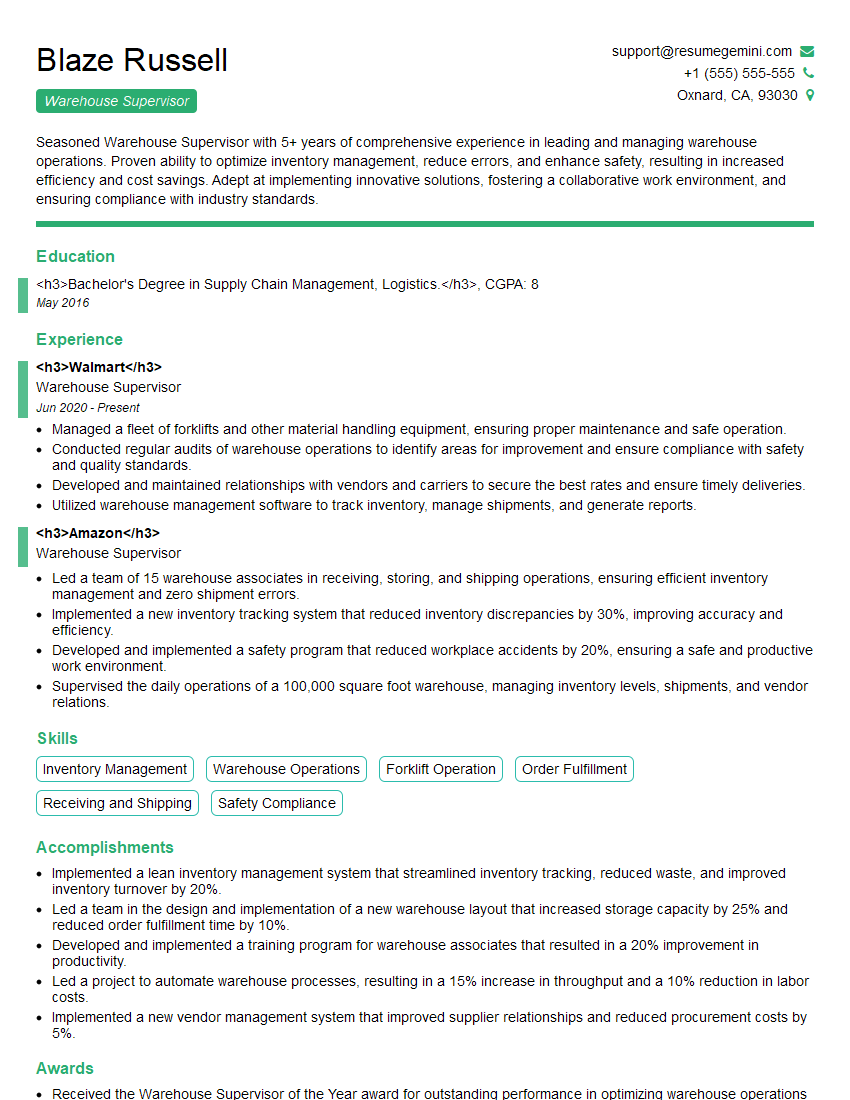
Warehouse Supervisor Resume Sample
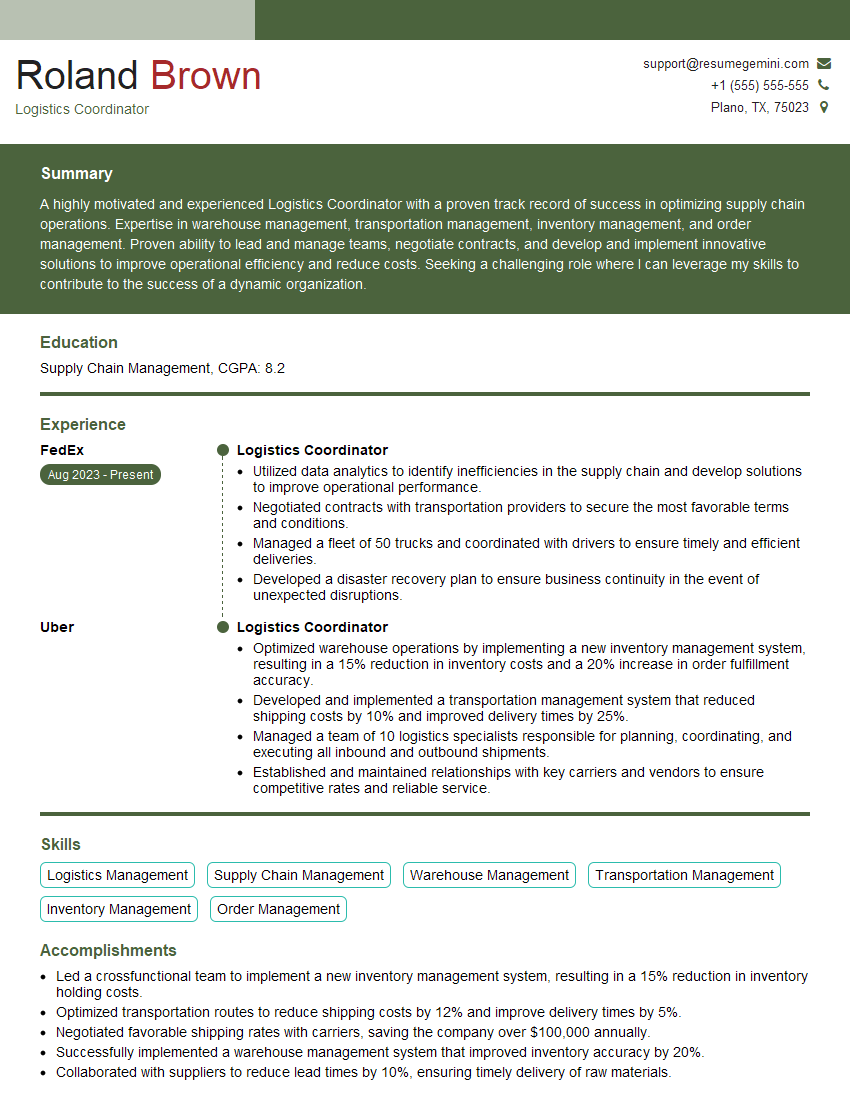
Logistics Coordinator Resume Sample
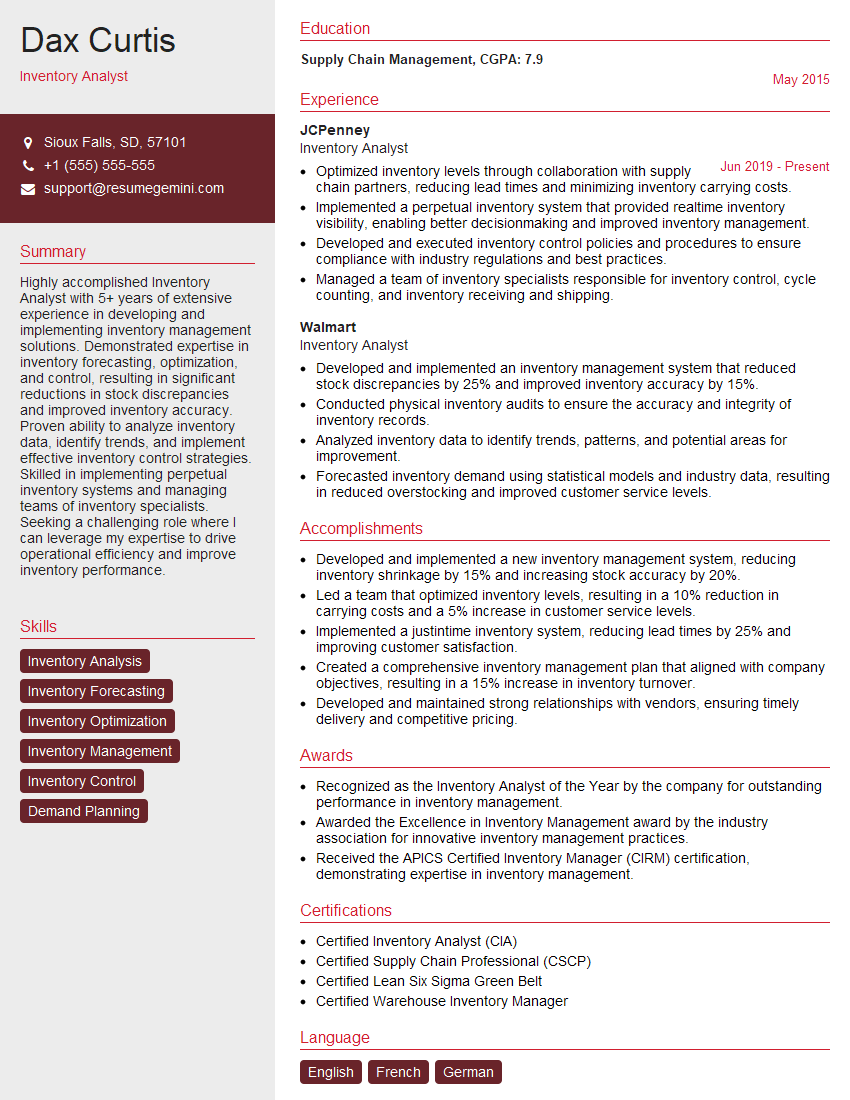
Inventory Analyst Resume Sample
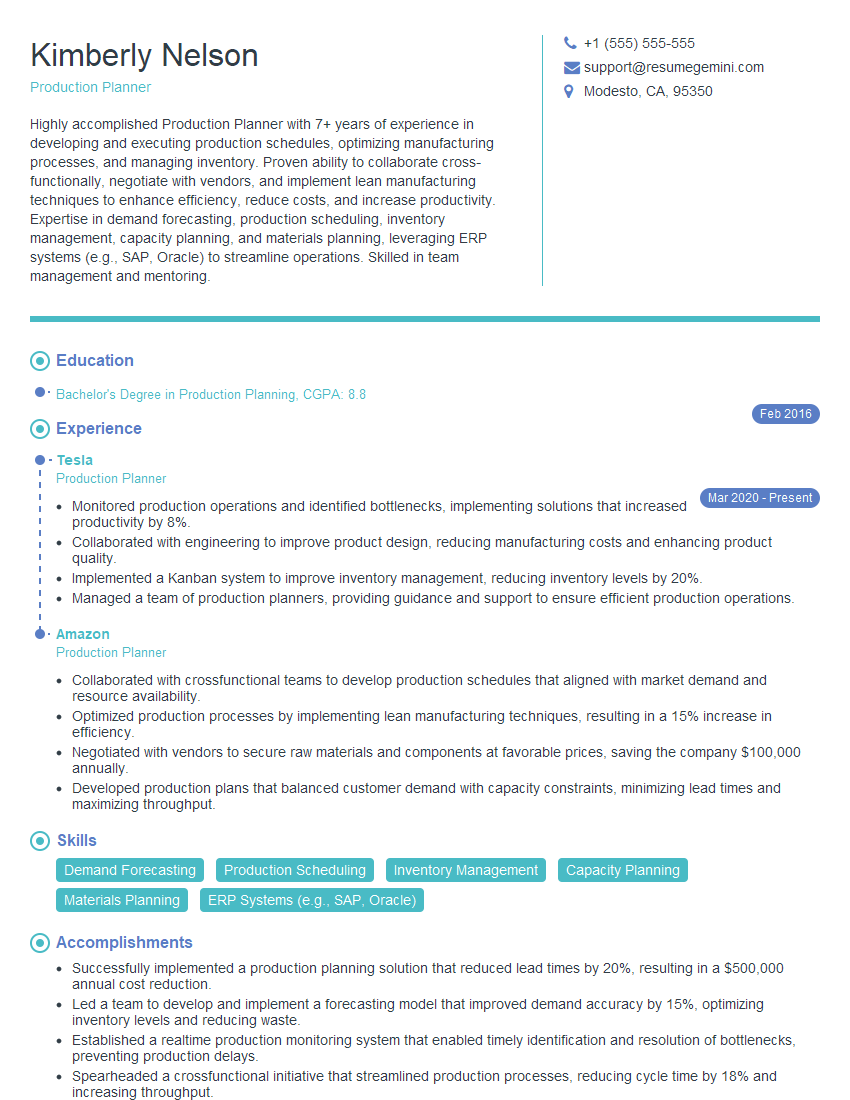
Production Planner Resume Sample
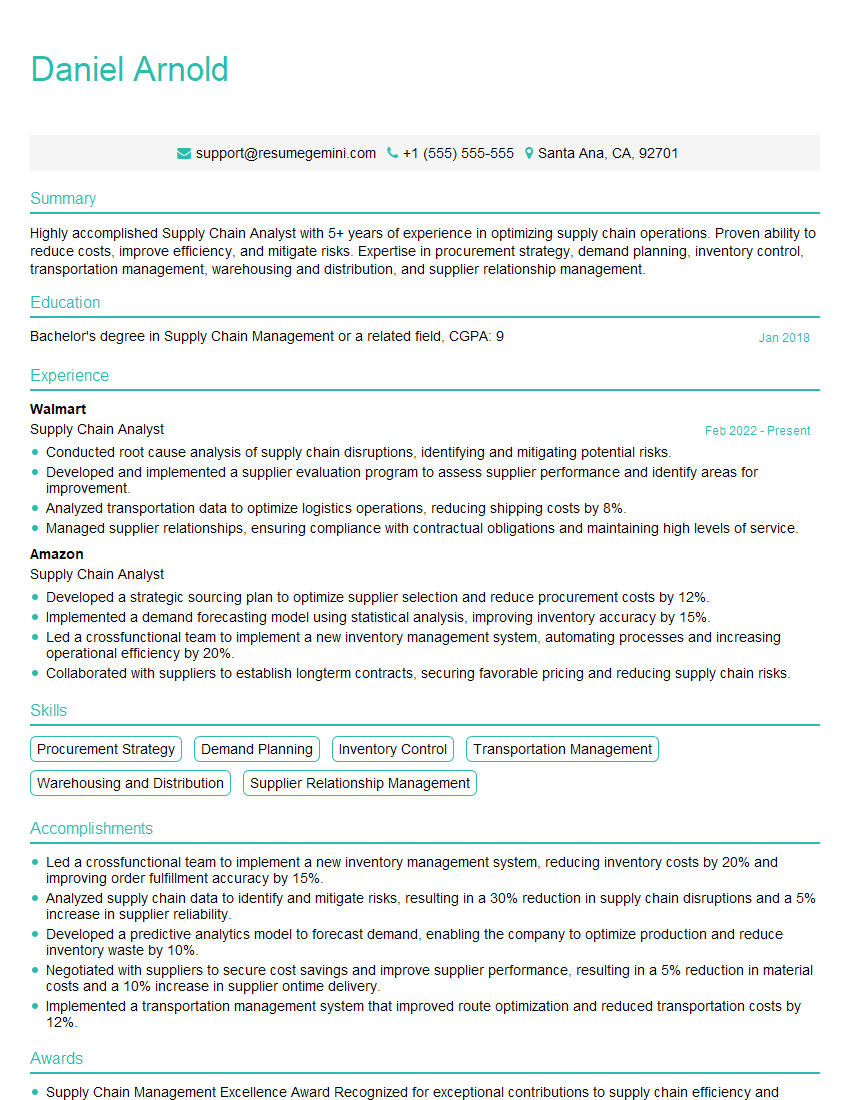
Supply Chain Analyst Resume Sample
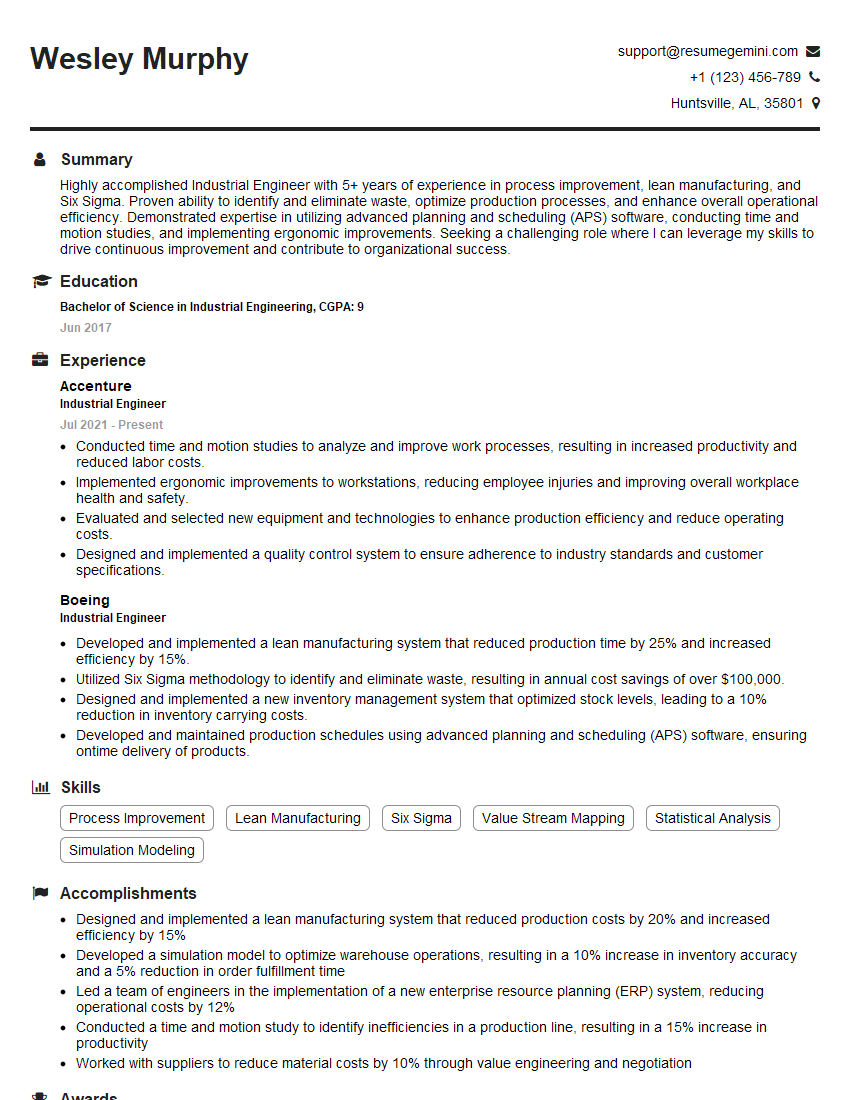
Industrial Engineer Resume Sample
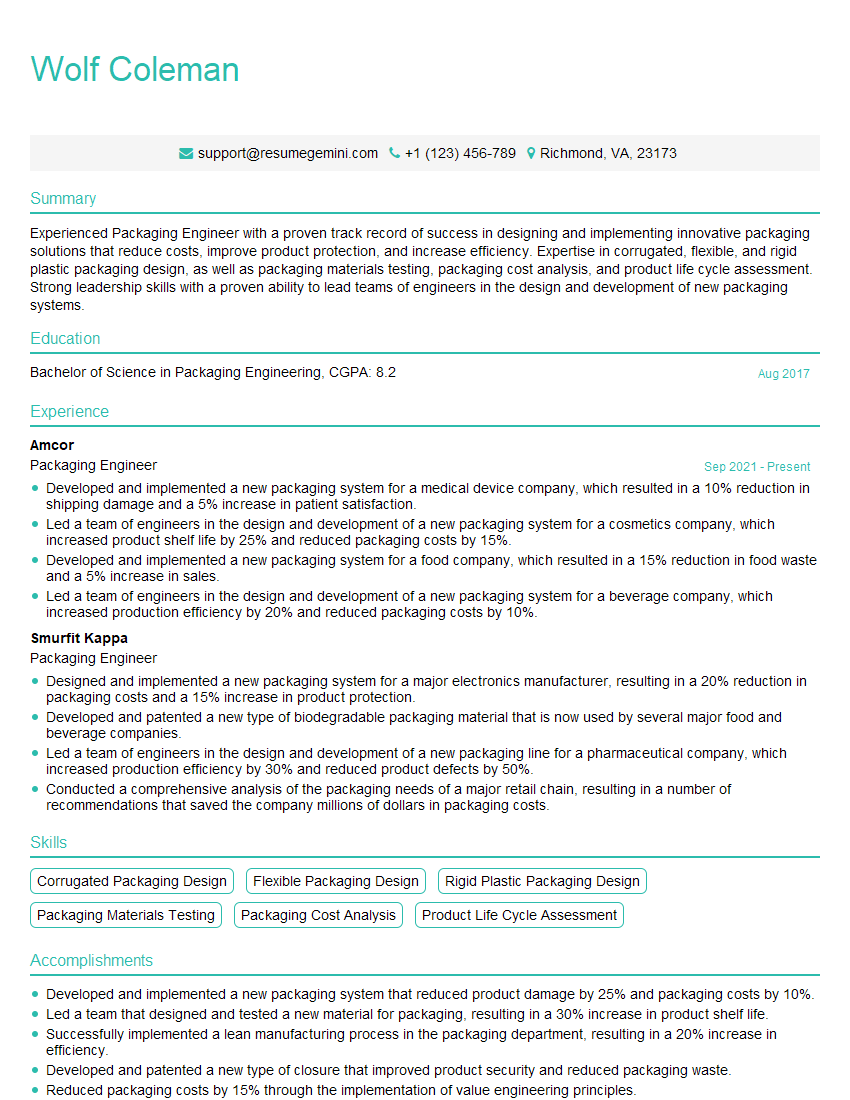
Packaging Engineer Resume Sample
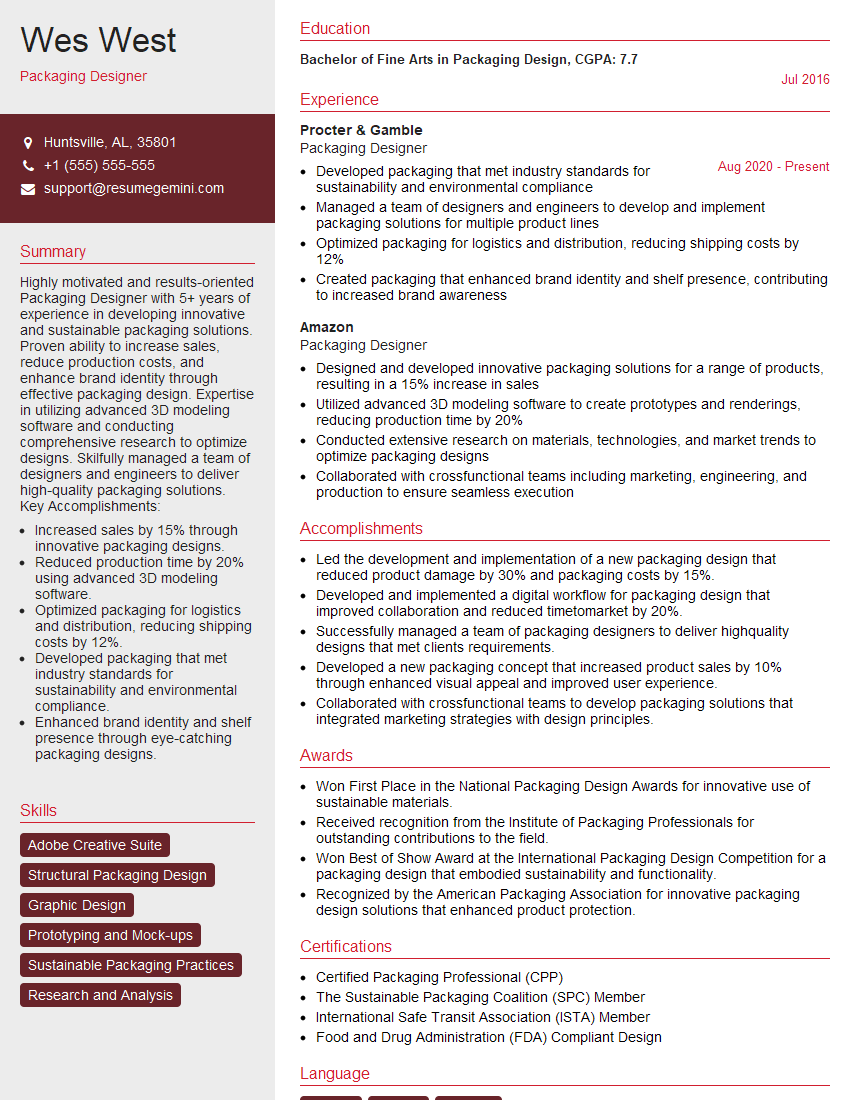
Packaging Designer Resume Sample
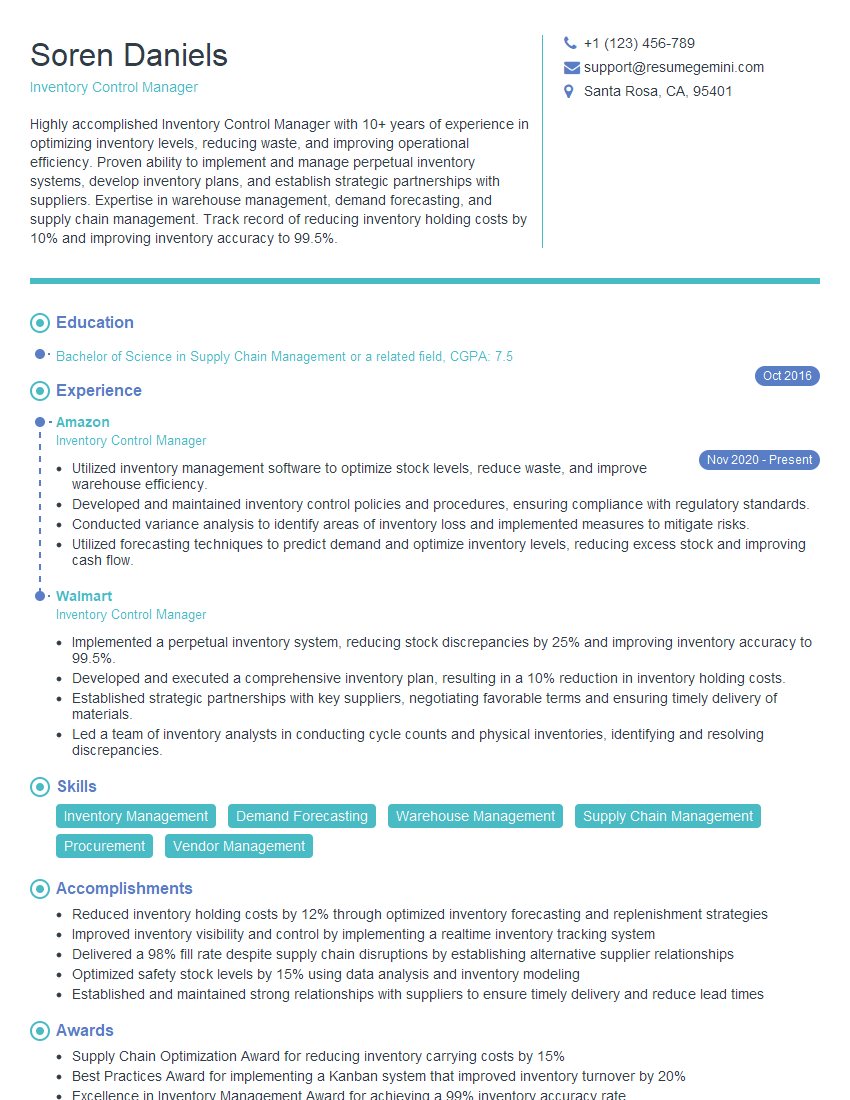
Inventory Control Manager Resume Sample
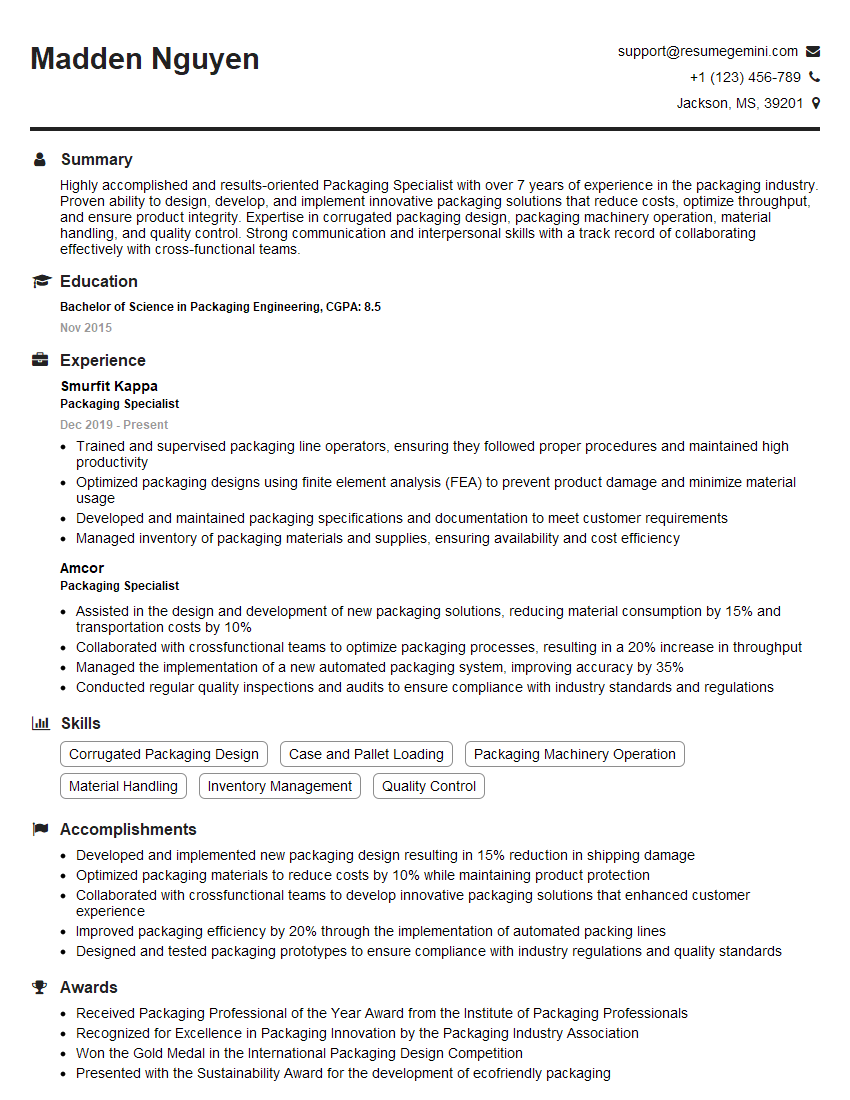
Packaging Specialist Resume Sample
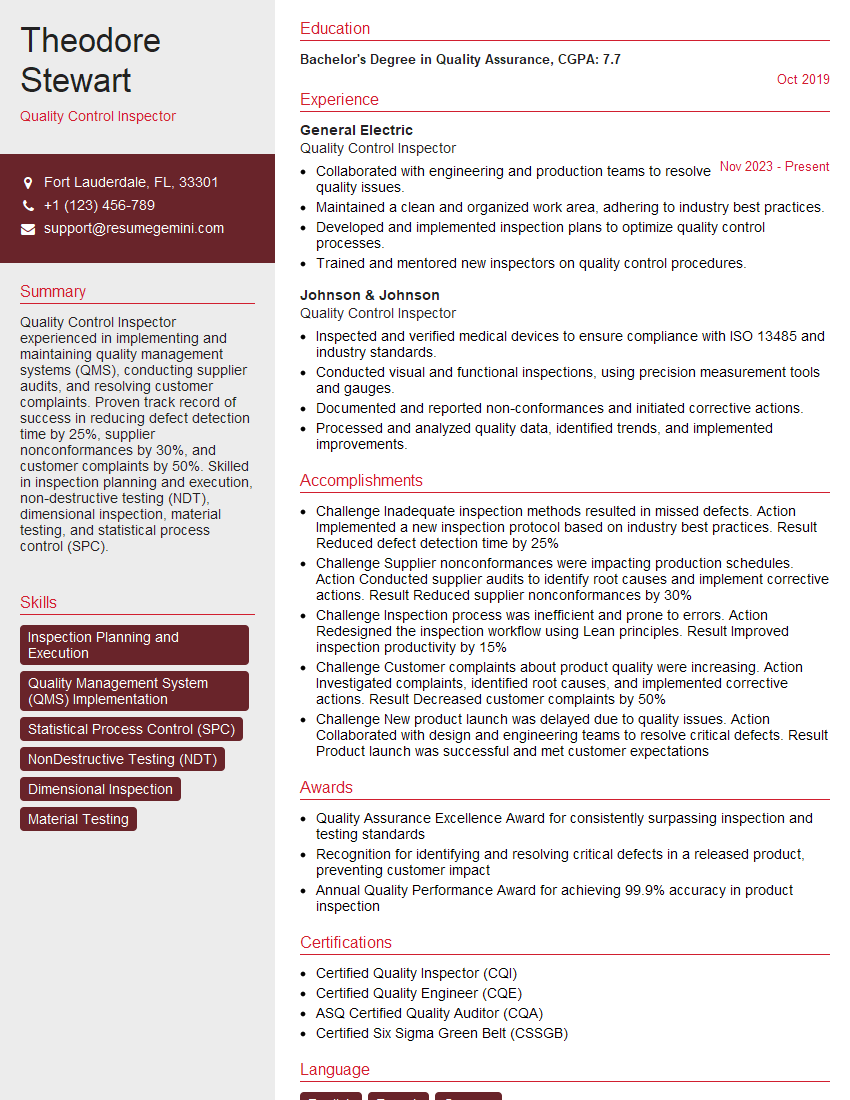
Quality Control Inspector Resume Sample
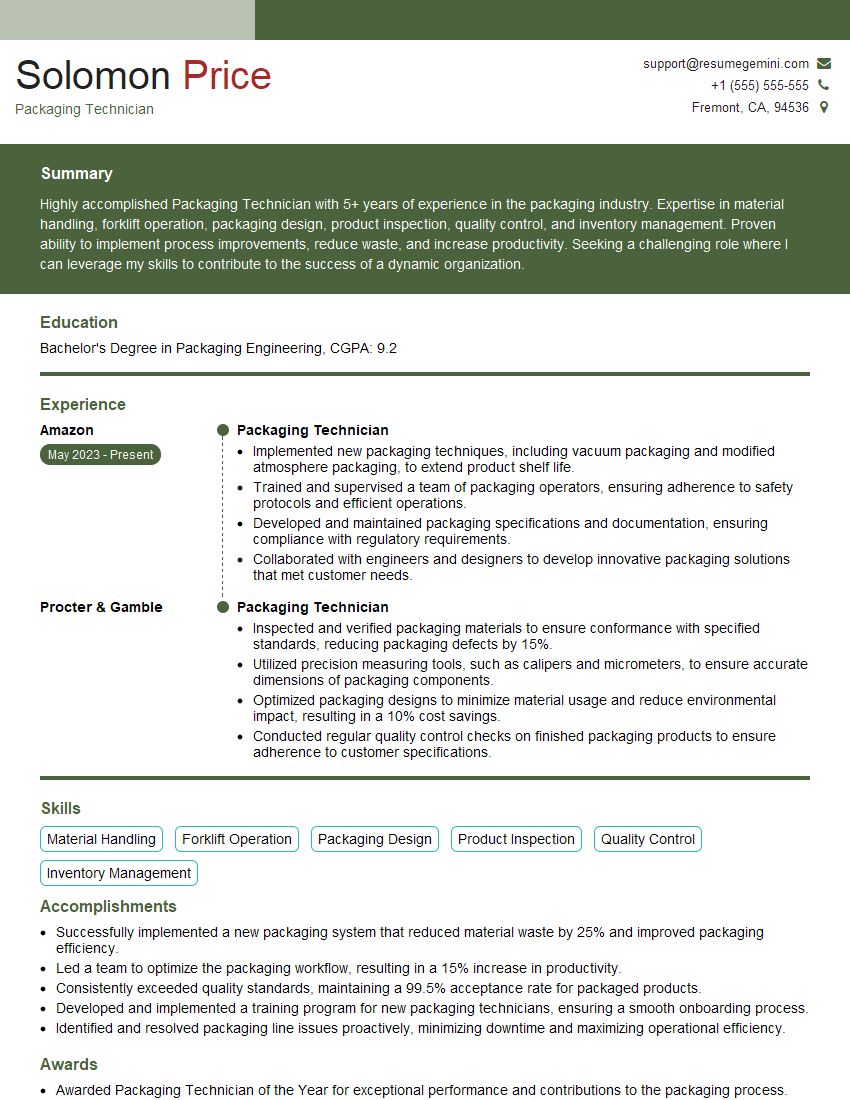
Packaging Technician Resume Sample
- Operations Manager
- Demand Planner
- Production Supervisor
- Materials Manager
- Distribution Center Manager
- Logistics Manager
- Warehouse Manager
- Warehouse Supervisor
- Logistics Coordinator
- Inventory Analyst
- Production Planner
- Supply Chain Analyst
- Industrial Engineer
- Packaging Engineer
- Packaging Designer
- Inventory Control Manager
- Packaging Specialist
- Quality Control Inspector
- Packaging Technician
Explore more articles
Users Rating of Our Blogs
Share Your Experience
We value your feedback! Please rate our content and share your thoughts (optional).
What Readers Say About Our Blog
Very informative content, great job.
good