The thought of an interview can be nerve-wracking, but the right preparation can make all the difference. Explore this comprehensive guide to Panel Pressing interview questions and gain the confidence you need to showcase your abilities and secure the role.
Questions Asked in Panel Pressing Interview
Q 1. Explain the different types of panel pressing machines you’re familiar with.
Panel pressing machines come in various types, each suited for specific applications and production volumes. The most common are:
- Hydraulic Panel Presses: These are workhorses of the industry, utilizing hydraulic cylinders to generate immense pressing force. They are known for their versatility and ability to handle large and complex panels. Think of them as the strong, reliable workhorses of the panel pressing world.
- Pneumatic Panel Presses: Using compressed air, these are generally smaller and more affordable than hydraulic presses. They’re well-suited for lighter-duty applications and smaller production runs. They’re like the nimble, efficient helpers in a workshop.
- Automatic Panel Presses: These are highly automated systems incorporating PLC (Programmable Logic Controller) control for precise settings and automated cycles. They significantly boost productivity in high-volume environments. Picture these as the high-tech, assembly-line stars.
- Membrane Presses: These use a flexible membrane to apply pressure evenly across the panel surface, ideal for pressing complex shapes and delicate materials. They’re like the artists of the panel pressing world, creating perfectly smooth and even surfaces.
The choice of machine depends heavily on factors such as production volume, panel size, material type, and budget.
Q 2. Describe the process of setting up a panel press for a specific job.
Setting up a panel press involves several crucial steps, and precision is key. It’s like preparing a fine dish – every step needs to be followed meticulously:
- Job Review: Carefully examine the job specifications, including panel dimensions, material type (e.g., wood, composite), desired finish, and required pressure and temperature profiles.
- Die Selection: Choose the appropriate dies (metal molds) to match the panel dimensions and shape. Incorrect dies lead to imperfect panels.
- Material Placement: Accurately position the core material and veneers (or other facing materials) within the dies, ensuring proper alignment and avoiding any gaps or overlaps. Think of this like perfectly layering ingredients in a cake.
- Temperature and Pressure Setting: Configure the press parameters based on the material and the desired final product characteristics. This often involves consulting pre-determined settings or conducting small tests. Getting the temperature and pressure just right is essential for a perfect result.
- Press Cycle Initiation: Once everything is set, initiate the pressing cycle. Monitor the process to ensure everything runs smoothly. This is the moment of truth, where all your preparation culminates.
- Post-Press Inspection: Once the cycle is complete, carefully inspect the pressed panel for any defects or imperfections before moving on to the next cycle.
The whole process demands a thorough understanding of material properties and the machine’s capabilities to ensure a quality end product.
Q 3. How do you ensure the quality of the pressed panels?
Quality control in panel pressing is paramount. It’s like being a quality control chef – ensuring every dish meets the highest standards. This involves:
- Regular Calibration: Periodic calibration of the press ensures that pressure and temperature readings are accurate. We use calibrated gauges and regularly check these settings to make sure they’re producing the results we expect.
- Visual Inspection: Thorough visual inspection of the finished panels for defects such as delamination (layers separating), uneven surface finish, or glue squeeze-out.
- Dimensional Accuracy: Checking the dimensions of the pressed panel against the specifications using precision measuring tools. The panel should be exactly the size and shape specified.
- Material Testing: Testing the pressed panels’ strength and durability using methods like bending tests or shear tests to ensure they meet performance requirements.
- Statistical Process Control (SPC): Implementing SPC charts to track key parameters like temperature, pressure, and cycle time, enabling early detection of potential problems.
A robust quality control system ensures consistent production of high-quality panels.
Q 4. What are the common causes of defects in panel pressing, and how do you troubleshoot them?
Several factors can lead to defects in panel pressing. Troubleshooting involves systematically investigating these possibilities.
- Delamination: This occurs when layers of the panel separate. Causes include insufficient glue, improper temperature/pressure, or moisture content variations in the core material. Troubleshooting involves adjusting glue application, press settings, and material pre-treatment.
- Uneven Surface Finish: Uneven pressure distribution, insufficient pressing time, or the presence of foreign objects in the die can lead to an uneven surface. Solutions involve checking for die defects, adjusting pressure settings and potentially replacing the faulty press components.
- Glue Squeeze-out: Excessive glue application or excessive pressure causes glue to seep out from the edges. Troubleshooting might involve adjusting the amount of glue applied or reducing the pressing pressure.
- Blistering or Voiding: Trapped air or moisture in the core material causes blisters or voids in the finished panel. Solutions include better material preparation to reduce moisture and use of vacuum systems to remove air pockets.
Troubleshooting often involves a combination of process adjustments, material modifications, and machine maintenance. It requires a systematic approach and attention to detail.
Q 5. Explain the importance of proper temperature and pressure control in panel pressing.
Precise temperature and pressure control are absolutely critical in panel pressing. It’s like baking a cake – the exact temperature and time are essential for the perfect outcome.
Temperature: The correct temperature ensures proper glue activation and curing, influencing the bond strength and overall panel quality. Too low a temperature results in weak bonds; too high a temperature can scorch or damage the materials.
Pressure: Sufficient pressure is necessary to achieve a tight bond between layers and ensure a smooth, flat surface. Insufficient pressure results in weak bonds or air pockets, while excessive pressure can lead to damage or glue squeeze-out.
Accurate monitoring and control of both temperature and pressure using appropriate sensors and feedback mechanisms are essential for consistent and high-quality panel pressing.
Q 6. How do you maintain and troubleshoot panel pressing equipment?
Regular maintenance and prompt troubleshooting are crucial for keeping panel pressing equipment functioning optimally. It’s like regularly servicing a car – preventative maintenance keeps it running smoothly and avoids major problems.
- Regular Inspections: Daily checks of hydraulic fluid levels, pneumatic pressure, heating elements, and electrical connections. This is like the daily check-up of your equipment.
- Preventive Maintenance: Scheduled maintenance includes cleaning dies, lubricating moving parts, and replacing worn components as needed. This prevents small issues from becoming big problems.
- Troubleshooting: When problems arise, systematically investigate the cause, using diagnostic tools and potentially seeking expert advice. This might involve checking hydraulic systems, electricals or pneumatic controls.
- Calibration: Regularly calibrate pressure gauges, temperature sensors, and other measuring instruments to maintain accuracy. Calibration ensures that the machine is operating within its specified parameters.
A well-maintained press ensures consistent performance, minimizes downtime, and prolongs the equipment’s lifespan.
Q 7. What safety procedures do you follow while operating panel pressing machinery?
Safety is paramount when operating panel pressing machinery. It’s never worth cutting corners when it comes to your safety and the safety of those around you.
- Lockout/Tagout Procedures: Always follow lockout/tagout procedures before performing any maintenance or repair work on the press to prevent accidental activation.
- Personal Protective Equipment (PPE): Always wear appropriate PPE, including safety glasses, hearing protection, and gloves.
- Machine Guards: Ensure that all machine guards are in place and functioning correctly to prevent accidental contact with moving parts.
- Emergency Stop Button: Familiarize yourself with the location and operation of the emergency stop button.
- Training and Supervision: Only trained and authorized personnel should operate the panel press. Adequate supervision is required, especially for new operators.
Adhering to strict safety procedures is essential to prevent accidents and ensure a safe working environment.
Q 8. Describe your experience with different types of panel materials (e.g., MDF, plywood, particleboard).
My experience encompasses a wide range of panel materials commonly used in the industry. Each material presents unique characteristics impacting the pressing process.
- MDF (Medium-Density Fiberboard): MDF is incredibly versatile, offering a smooth, consistent surface ideal for painting and finishing. Its density allows for precise machining and intricate designs. However, it’s less durable than plywood when exposed to moisture. I’ve worked extensively with MDF in high-volume furniture production, achieving excellent surface quality and dimensional stability through careful control of pressing parameters.
- Plywood: Plywood, with its layered construction, boasts superior strength and dimensional stability compared to MDF. The grain orientation of the layers contributes to its resilience against warping and cracking. I’ve used plywood extensively in projects demanding structural integrity, such as cabinetry and flooring, adjusting pressing parameters to accommodate the varied thicknesses and species of veneers.
- Particleboard: Particleboard, while cost-effective, requires careful handling during pressing to achieve uniform density and avoid internal voids. It is susceptible to moisture damage and is typically less suitable for applications demanding high strength or refined aesthetics. My experience with particleboard primarily involves optimizing the pressing process to maximize its strength within its inherent limitations, often for less demanding applications like shelving or backing boards.
Understanding the specific properties of each material – their density, moisture content, and inherent strength – is crucial for achieving optimal results in panel pressing.
Q 9. How do you calculate the required pressure and temperature for different panel materials and thicknesses?
Calculating the ideal pressure and temperature for panel pressing is a critical aspect that involves considering several factors. There isn’t a single formula; rather, it’s an iterative process informed by experience and material specifications.
- Material Type: MDF, plywood, and particleboard each require different pressure and temperature settings due to their varying densities and compositions. MDF generally requires higher pressure for a dense, uniform finish. Plywood needs less pressure to avoid damaging the veneer layers. Particleboard requires a balance to ensure adequate bonding without excessive crushing.
- Thickness: Thicker panels require more time under pressure and potentially higher temperatures to ensure complete bonding and curing of the adhesive. Thinner panels are pressed quicker at lower temperatures to avoid burning or degrading the material.
- Adhesive Type: The adhesive’s manufacturer’s recommendations provide crucial guidance on the ideal temperature and open time. Some adhesives require higher temperatures for complete curing.
- Press Type: Different presses (cold, hot, or hydraulic) operate at varying pressure and temperature ranges. Adjustments are needed to compensate for the press capabilities and ensure consistent results.
In practice, I begin with the manufacturer’s recommendations for the chosen material and adhesive and then fine-tune the parameters through trial and error, carefully monitoring the resulting panels for quality and consistency. Data logging and process monitoring are essential for optimizing pressing parameters over time.
Q 10. What are the key performance indicators (KPIs) for panel pressing operations?
Key Performance Indicators (KPIs) in panel pressing are vital for maintaining efficiency and quality. They allow us to track performance and identify areas for improvement. Some crucial KPIs include:
- Production Rate (Panels per hour/day): This measures the overall efficiency of the process. Low production rates indicate potential bottlenecks.
- Panel Yield (Percentage of acceptable panels): This KPI reflects the quality of the process. A low yield highlights issues with material, process parameters, or equipment.
- Defect Rate (Percentage of defective panels): This tracks specific issues like delamination, voids, or surface imperfections. Analyzing defect types helps pinpoint and resolve root causes.
- Machine Uptime (Percentage of time the press is operational): This measures the equipment’s reliability and identifies opportunities for preventative maintenance.
- Adhesive Consumption (Amount of adhesive per panel): Monitoring this helps control costs and ensures efficient adhesive usage.
- Energy Consumption (Energy used per panel): Tracks energy efficiency and identifies areas for energy savings.
Regular monitoring and analysis of these KPIs enable data-driven decision-making and continuous improvement in the panel pressing process.
Q 11. How do you manage production schedules and meet deadlines in panel pressing?
Managing production schedules and meeting deadlines in panel pressing involves meticulous planning and execution. It’s a juggling act of balancing resources and anticipating potential delays.
- Production Planning: We use sophisticated software to create detailed production schedules based on orders, material availability, and press capacity. This often involves prioritizing urgent orders while optimizing resource allocation.
- Material Management: Ensuring sufficient raw materials (wood panels, adhesives) are readily available is crucial. We use inventory management systems to track stock levels and anticipate potential shortages.
- Press Optimization: Regular maintenance and optimization of the presses are key to ensuring uninterrupted production. We have a preventative maintenance schedule to minimize downtime.
- Real-time Monitoring: Constant monitoring of the production line allows us to identify and address potential delays promptly. This may involve adjusting the schedule or re-prioritizing tasks.
- Communication: Effective communication across all departments, including procurement, production, and quality control, ensures everyone is aligned and any issues are addressed swiftly.
I’ve successfully navigated numerous tight deadlines through proactive planning, efficient resource management, and a commitment to maintaining a smooth, well-coordinated operation.
Q 12. Describe your experience with quality control procedures in panel pressing.
Quality control is paramount in panel pressing. My experience involves a multi-stage approach, starting from raw material inspection to final product verification.
- Incoming Material Inspection: We meticulously inspect all incoming wood panels and adhesives for defects, moisture content, and conformity to specifications. This ensures that only suitable materials enter the production process.
- Process Monitoring: Continuous monitoring of the pressing parameters (temperature, pressure, time) is vital for consistency. Data logging provides a record for analysis and troubleshooting.
- In-process Inspection: Regular checks during the production process identify potential issues early, minimizing waste and rework. This might involve visual inspection for defects or random sampling for quality tests.
- Final Product Inspection: Each panel undergoes a final inspection to check for defects like delamination, uneven surfaces, or dimensional inaccuracies. This often involves visual inspection and dimensional measurements.
- Statistical Process Control (SPC): We employ SPC techniques to monitor process variability and identify trends that could lead to defects. This ensures that the process remains within acceptable control limits.
A robust quality control system is not just about finding defects; it’s about proactively preventing them through careful planning and continuous improvement.
Q 13. How do you handle production issues or machine malfunctions?
Handling production issues or machine malfunctions requires a structured approach that prioritizes safety, efficiency, and minimizing downtime.
- Immediate Actions: In case of a machine malfunction, the first priority is to ensure operator safety and secure the equipment. Then, we follow established safety procedures for shutting down the press.
- Troubleshooting: We have detailed troubleshooting guides and experienced technicians to diagnose and resolve common issues. This may involve checking electrical connections, hydraulic systems, or mechanical components.
- Preventative Maintenance: A robust preventative maintenance schedule is vital for minimizing unexpected breakdowns. This includes regular inspections, lubrication, and component replacements.
- External Support: If the issue is complex or requires specialized expertise, we engage external maintenance providers or the manufacturer’s technical support.
- Production Rescheduling: Depending on the severity of the malfunction and downtime, the production schedule may need to be adjusted. This involves prioritizing urgent orders and reassigning resources as needed.
My experience involves effectively resolving various production issues, from minor electrical faults to more significant mechanical problems, always prioritizing safety and minimizing production disruption.
Q 14. What are your experience levels with different types of adhesives used in panel pressing?
My experience spans various adhesives used in panel pressing, each offering unique characteristics and requiring specific handling.
- Polyurethane Adhesives: These are widely used for their excellent bonding strength and moisture resistance. They require precise temperature control during pressing to avoid premature curing or insufficient bonding.
- Melamine Adhesives: These are commonly used in particleboard manufacturing for their cost-effectiveness. They require careful control of the pressing parameters to ensure optimal curing and avoid emissions.
- Phenolic Adhesives: These are known for their high durability and heat resistance, often used in high-stress applications. They require high-temperature pressing and precise control.
- Polyvinyl Acetate (PVAc) Adhesives: These are generally less expensive and easier to handle but might offer lower moisture resistance compared to other options.
Understanding the properties of each adhesive, including their open time, curing temperature, and bonding strength, is crucial for selecting the right adhesive for the application and optimizing the pressing process. Choosing the right adhesive also depends on factors such as the panel material, desired panel properties, and cost considerations.
Q 15. Explain your understanding of the curing process in panel pressing.
The curing process in panel pressing is crucial for achieving the desired properties of the finished panel, primarily its strength and dimensional stability. It involves applying heat and pressure to a layered assembly of wood veneers, particleboard, MDF, or other materials, bound together with an adhesive. The heat activates the adhesive, causing it to cure or harden, creating a strong bond between the layers. The pressure ensures proper contact and eliminates voids.
There are two primary types: hot pressing and cold pressing. Hot pressing involves significantly higher temperatures (often exceeding 100°C) and shorter press times, resulting in rapid curing and faster production. Cold pressing uses lower temperatures and longer press times, suitable for certain adhesives and materials that may be sensitive to high heat. The exact parameters – temperature, pressure, and time – are crucial and depend heavily on the specific adhesive, core material, and desired final product properties. For example, a high-pressure laminate (HPL) panel will require different curing parameters than a melamine-faced particleboard panel.
Think of it like baking a cake: the heat (temperature) and time in the oven (press) are carefully controlled to ensure the cake (panel) is cooked through (cured) and has the desired texture and consistency. Incorrect curing can lead to weak bonds, delamination (layers separating), or uneven surface finishes.
Career Expert Tips:
- Ace those interviews! Prepare effectively by reviewing the Top 50 Most Common Interview Questions on ResumeGemini.
- Navigate your job search with confidence! Explore a wide range of Career Tips on ResumeGemini. Learn about common challenges and recommendations to overcome them.
- Craft the perfect resume! Master the Art of Resume Writing with ResumeGemini’s guide. Showcase your unique qualifications and achievements effectively.
- Don’t miss out on holiday savings! Build your dream resume with ResumeGemini’s ATS optimized templates.
Q 16. How do you ensure the consistency of the finished product?
Ensuring consistency in panel pressing is a multi-faceted process, demanding meticulous control over several key variables. First, we need precise control of the raw materials: the quality, thickness, and moisture content of the core material (e.g., MDF, particleboard) and the facing materials (e.g., veneers, laminates) must be consistently monitored. Any variation here can directly affect the final product.
Second, the adhesive application must be uniform and precise. Too much adhesive can lead to bleed-through or surface imperfections, while too little can result in weak bonding. Consistent adhesive spread and accurate dispensing equipment are vital. Third, the pressing parameters—temperature, pressure, and time—must be carefully controlled and monitored using calibrated sensors and automated control systems. We use regular calibration checks to ensure the accuracy of these systems. Finally, regular quality checks throughout the process, including visual inspection and dimensional measurements, are essential for early detection of any deviations from the desired standards.
For instance, I once worked on a project where we noticed inconsistencies in the final panel thickness. After investigation, we traced the problem to slight variations in the moisture content of the core material. By implementing tighter quality control on incoming materials and introducing a humidity-controlled storage area, we successfully resolved the issue.
Q 17. What is your experience with preventative maintenance on panel pressing equipment?
Preventative maintenance is paramount for optimizing equipment uptime and ensuring consistent product quality in panel pressing. My experience includes a comprehensive program incorporating regular inspections, lubrication, and component replacements. This involves checking hydraulic systems for leaks, ensuring proper functioning of heating elements and temperature sensors, inspecting rollers and platens for wear and tear, and regularly cleaning and lubricating moving parts. We maintain detailed logs of all maintenance activities, allowing us to track performance trends and predict potential failures.
For example, I’ve developed a checklist for daily, weekly, and monthly maintenance tasks, customized to the specific equipment in use. This checklist covers everything from visually inspecting the press for any signs of damage to performing more involved tasks like changing hydraulic fluid. We also incorporate predictive maintenance techniques, utilizing sensors to monitor vibration and temperature levels, allowing for early detection of potential problems before they cause downtime.
Ignoring preventative maintenance can lead to costly breakdowns, production delays, and potentially unsafe working conditions. A proactive approach is crucial for maintaining efficient operations and producing high-quality panels.
Q 18. Describe your experience using computerized numerical control (CNC) panel presses.
My experience with CNC panel presses is extensive. I’m proficient in programming and operating these advanced machines, which offer unparalleled precision and automation in panel pressing. They are capable of handling complex shapes and designs, allowing for the creation of customized panels with intricate details. I am familiar with various CNC programming languages and software packages, able to create and modify programs to meet specific project requirements.
The precision of CNC presses minimizes material waste and ensures consistent product quality. I have experience working with different types of CNC presses, including those utilizing various control systems and featuring different clamping mechanisms. My expertise encompasses troubleshooting and maintenance of these complex machines. This includes understanding error codes, conducting diagnostic checks, and performing minor repairs. I’m also experienced in optimizing CNC programs for maximum efficiency, minimizing cycle times and maximizing production output.
In one project, we used a CNC press to manufacture custom-shaped panels for a high-end furniture project. The CNC’s precision was crucial for achieving the intricate design details, and the automation significantly reduced production time compared to manual methods.
Q 19. How do you manage waste and optimize material usage in panel pressing?
Waste management and material optimization are critical aspects of sustainable panel pressing. We implement several strategies to minimize waste and maximize material utilization. This includes careful planning and design to minimize off-cuts and optimize panel layout. We employ advanced software for nesting, which maximizes the number of panels that can be cut from a single sheet of material, reducing waste significantly. The offcuts and scraps are then used in secondary applications whenever possible, such as creating smaller components or used as fuel for the boiler system.
Furthermore, we continuously monitor material usage and track waste generation to identify areas for improvement. Regular training for operators emphasizes efficient material handling and waste reduction techniques. We also explore and implement new technologies and processes that contribute to further waste minimization. For example, we’ve recently invested in a new trimming system that precisely removes excess material, reducing waste by about 15%. Through a combination of careful planning, efficient processes, and responsible waste management, we’ve reduced our material waste by over 20% in the last year.
Q 20. What are your skills with using measuring tools and gauges related to panel pressing?
My skills in using measuring tools and gauges in panel pressing are highly developed. I am proficient in using various instruments for precise measurements of thickness, width, length, and squareness of panels. These include calipers, micrometers, rulers, squares, and specialized gauges for measuring panel flatness and surface defects. I am also familiar with the use of electronic measuring systems for automated and highly accurate measurements.
Accurate measurements are crucial for ensuring that the finished panels meet the required specifications and quality standards. I use these tools not only for quality control but also for troubleshooting process issues. For example, if panels are consistently coming out of the press with inconsistent thickness, I can use these measuring instruments to pinpoint the source of the problem (e.g., uneven pressure distribution, variations in core material thickness).
I understand the importance of proper calibration of measuring instruments and follow strict procedures to ensure the accuracy of all measurements. This includes regularly checking and calibrating our equipment against certified standards.
Q 21. Describe your experience working with different types of presses (e.g., cold press, hot press).
I have extensive experience working with various types of presses, including cold presses and hot presses, each with its own applications and advantages. Cold presses utilize pressure without significant heat, often employed for materials that are sensitive to high temperatures or when using certain types of adhesives. They’re generally slower but can be gentler on sensitive materials. Hot presses, on the other hand, use high temperatures and pressure for faster curing and enhanced bonding. They are well-suited for materials that benefit from high-temperature curing, resulting in superior strength and dimensional stability.
The choice of press depends heavily on the materials used and the desired final product properties. For example, cold pressing is often used for veneer pressing where high temperatures could damage the wood. Hot pressing is ideal for creating high-pressure laminates (HPL) panels, where the high temperature is crucial for the curing of the resin-impregnated paper layers. I understand the operational parameters, maintenance requirements, and safety protocols for both types of presses and can effectively troubleshoot issues that may arise during operation. My experience spans across various press sizes and configurations, allowing me to adapt to different production environments and project requirements.
Q 22. Explain your experience with different types of finishes applied after pressing (e.g., laminates, veneers).
My experience encompasses a wide range of post-pressing finishes, primarily focusing on laminates and veneers. Laminates, essentially thin plastic sheets, offer durability, a variety of colors and textures, and cost-effectiveness. I’ve worked extensively with high-pressure laminates (HPL), which provide superior resistance to scratches and wear, ideal for high-traffic applications like kitchen countertops. I’m also proficient in applying various types of laminates, including melamine, which is more budget-friendly, and thermofoil, offering a softer, more textured feel.
Veneers, on the other hand, are thin slices of natural wood glued onto the panel’s surface. They provide a luxurious, natural look and feel, significantly enhancing the aesthetic appeal of the final product. My experience includes working with various veneer species, from the classic oak and cherry to more exotic options like mahogany and zebrawood. The application process requires precision and attention to detail to ensure seamless adhesion and a high-quality finish. A crucial aspect is understanding the grain direction and matching veneers for a visually pleasing result. I’m familiar with various adhesive systems and the importance of maintaining optimal environmental conditions (temperature and humidity) during application and curing.
In both cases, the application process relies on carefully controlled pressure and temperature to ensure a strong, long-lasting bond. I meticulously monitor these parameters to prevent issues like delamination or bubbling. Furthermore, my expertise extends to troubleshooting common finish defects and implementing corrective actions to maintain consistent quality.
Q 23. How do you ensure the safety and well-being of your team in a panel pressing environment?
Safety is paramount in a panel pressing environment. My approach to ensuring team well-being is multifaceted and proactive. It begins with comprehensive safety training, covering all aspects of operating machinery, handling materials, and adhering to personal protective equipment (PPE) protocols. This training is ongoing, incorporating regular refresher courses and updates on best practices. We employ a robust system of lockout/tagout procedures to prevent accidental activation of machinery during maintenance or repairs.
Regular safety inspections are crucial, focusing on machine functionality, environmental hazards (e.g., dust, noise levels), and proper use of safety equipment. We utilize a ‘near-miss’ reporting system, encouraging employees to report potential hazards without fear of reprisal. This information is used for continuous improvement in safety protocols. Furthermore, a clean and organized workspace drastically reduces the risk of accidents. We implement a 5S methodology to maintain order and efficiency, minimizing trip hazards and ensuring easy access to safety equipment. Finally, open communication is key—employees are empowered to voice concerns and contribute to improving safety procedures.
Q 24. What is your understanding of different panel pressing techniques?
Panel pressing techniques vary depending on factors like panel material, desired density, and final product requirements. I’m experienced with several techniques:
- Cold Pressing: This is a simpler method using lower pressure and no heat, suitable for certain materials and applications where high density isn’t necessary.
- Hot Pressing: This is the most common method, involving high pressure and temperature, leading to a more compact and durable final product. This requires precise control over temperature and pressure to achieve optimal results.
- Vacuum Pressing: Used for creating panels with complex shapes or incorporating intricate designs, this method uses vacuum pressure to eliminate air pockets and ensure uniform density.
- Membrane Pressing: This is often used for applying high-pressure laminates, where a flexible membrane transmits pressure evenly across the panel’s surface, resulting in a flawless finish.
Choosing the appropriate technique depends on the specific project requirements and involves careful consideration of factors like material properties, desired panel density, and production time constraints. The selection is critical to achieving the desired physical and aesthetic properties of the final panel.
Q 25. Describe your experience with automated panel handling systems.
My experience with automated panel handling systems includes both the operation and maintenance of conveyor systems, robotic arms, and automated stacking units. These systems significantly improve efficiency and reduce manual labor. I’ve worked with systems utilizing various technologies, including PLC-based control systems for coordinating the movement of panels and sensors for detecting and correcting errors. My role involves overseeing the efficient integration of these systems into the production line, minimizing downtime, and ensuring the smooth flow of panels through the various processing stages.
Troubleshooting these systems requires a systematic approach. For instance, I might use diagnostic software to pinpoint problems within the PLC’s logic or investigate sensor malfunctions using specialized testing equipment. Experience with preventive maintenance is crucial in maximizing uptime and preventing costly breakdowns. Regular inspections, lubrication, and calibrations are key aspects of ensuring long-term reliability and safety of the automated systems.
Q 26. Explain your experience troubleshooting electrical or hydraulic issues in panel presses.
Troubleshooting electrical or hydraulic issues in panel presses requires a combination of practical skills and theoretical understanding. Starting with safety precautions (locking out power and hydraulic lines), my approach is systematic:
- Identify the problem: Carefully observe the malfunction. Is it a complete failure, or a reduced performance issue? Gather data—what are the error codes, if any? Listen for unusual sounds (e.g., grinding, hissing).
- Systematic diagnosis: For electrical issues, I’ll use multimeters to check voltage, current, and continuity in circuits. For hydraulic problems, I’ll inspect for leaks, check fluid levels, and assess the condition of hoses and seals. Inspecting pressure gauges is also crucial.
- Component testing: If necessary, individual components might be tested using specialized equipment.
- Repair/Replacement: After identifying the faulty component, I’ll either repair it (if feasible) or replace it with a suitable part. Always refer to maintenance manuals and follow manufacturer guidelines.
- Testing and verification: After repairs, thoroughly test the machine to ensure the problem is resolved and the system is operating safely and efficiently.
Regular preventative maintenance greatly reduces the occurrence of these issues. This includes tasks such as checking fluid levels, inspecting hoses and seals, and cleaning electrical components to prevent premature failure.
Q 27. How do you interpret and understand engineering drawings related to panel pressing?
Interpreting engineering drawings is a fundamental skill in panel pressing. I’m proficient in reading and understanding various types of drawings, including orthographic projections, isometric views, and detailed assembly drawings. Understanding these drawings is crucial to accurately setting up the press, selecting the correct materials, and configuring the tooling.
For example, orthographic projections show different views (front, side, top) of the panel, providing accurate dimensions and tolerances. Detailed assembly drawings showcase how the different components of the panel (cores, veneers, laminates) fit together. Tolerances are critically important as deviations can result in poor quality panels or malfunctions in automated systems. I can confidently use dimensional annotations, material specifications, and tooling details to ensure accurate setup and execution of the pressing process. This ensures that the final product conforms precisely to the design specifications.
Q 28. Describe your experience with process optimization in panel pressing.
Process optimization in panel pressing focuses on improving efficiency, reducing waste, and enhancing product quality. My approach uses a data-driven strategy combining experience with process monitoring data. I analyze key metrics like cycle times, material usage, defect rates, and energy consumption to identify bottlenecks and areas for improvement.
For example, by monitoring cycle times, we may identify issues with the pressing cycle parameters (pressure, temperature, time) or with material handling efficiency. Analyzing defect rates allows identifying patterns related to specific processes or materials. We might use statistical process control (SPC) techniques to monitor and control variation in the process. Implementing lean manufacturing principles such as eliminating waste and streamlining workflows are key. This may involve optimizing the arrangement of equipment in the production line, improving material flow, or utilizing advanced automation technology. Continuous improvement is an iterative process—monitoring, adjusting, and refining the process to achieve greater efficiency and consistent quality.
Key Topics to Learn for Panel Pressing Interview
- Die Design and Selection: Understanding different die geometries, material selection based on application requirements, and the impact of die design on the final product quality and production efficiency.
- Pressing Parameters: Mastering the relationship between pressure, temperature, time, and ram speed; knowing how to optimize these parameters for specific materials and desired outcomes; troubleshooting issues arising from incorrect parameter settings.
- Material Science and Properties: A thorough understanding of the mechanical and thermal properties of various materials used in panel pressing, including their behavior under pressure and temperature.
- Quality Control and Inspection: Implementing effective quality control measures during and after the pressing process, including techniques for detecting defects and ensuring dimensional accuracy. Proficiency in using various inspection tools and methods.
- Process Optimization and Troubleshooting: Identifying bottlenecks and inefficiencies in the panel pressing process, applying problem-solving techniques to resolve issues, and implementing strategies for continuous improvement. This includes understanding root cause analysis.
- Safety Procedures and Regulations: Adherence to safety protocols and regulations within the panel pressing environment; demonstrating a commitment to workplace safety and hazard prevention.
- Automation and Robotics in Panel Pressing: Familiarity with automated panel pressing systems, robotic integration, and the advantages of automation in terms of efficiency and quality control.
- Maintenance and Repair: Understanding preventative maintenance procedures, troubleshooting common equipment malfunctions, and performing basic repairs on panel pressing machinery.
Next Steps
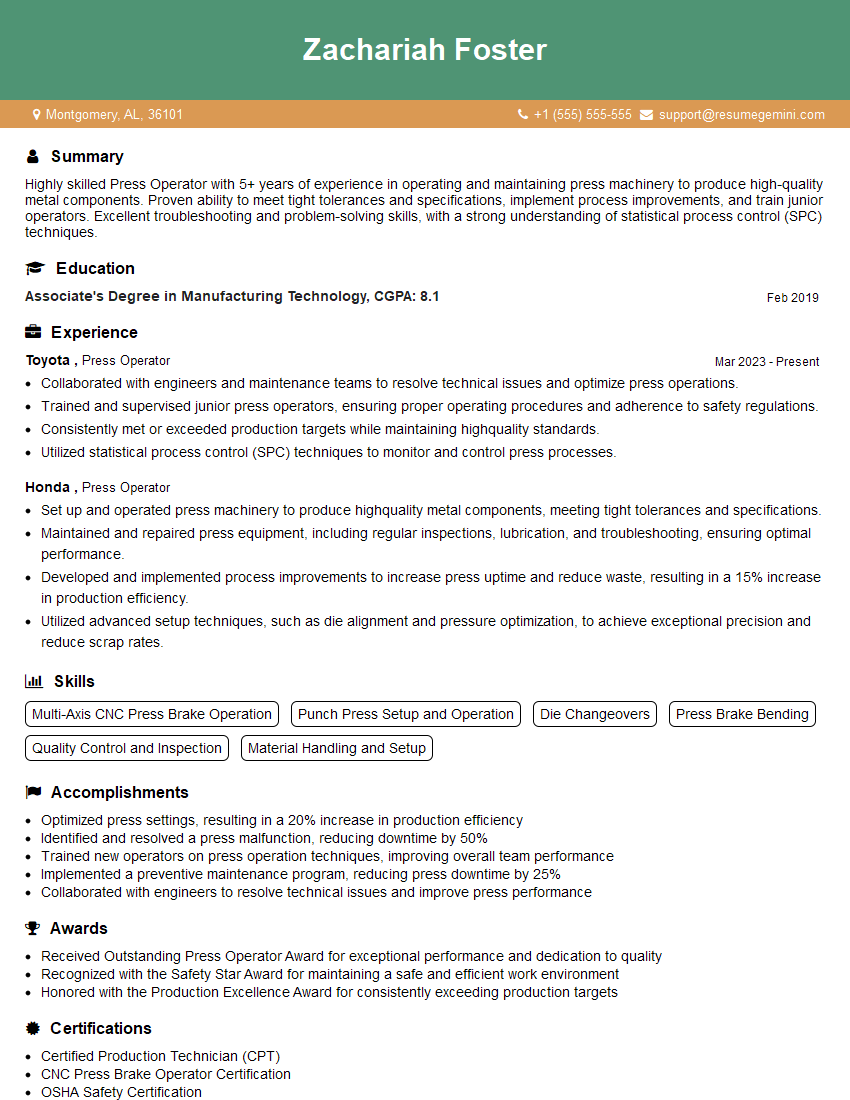
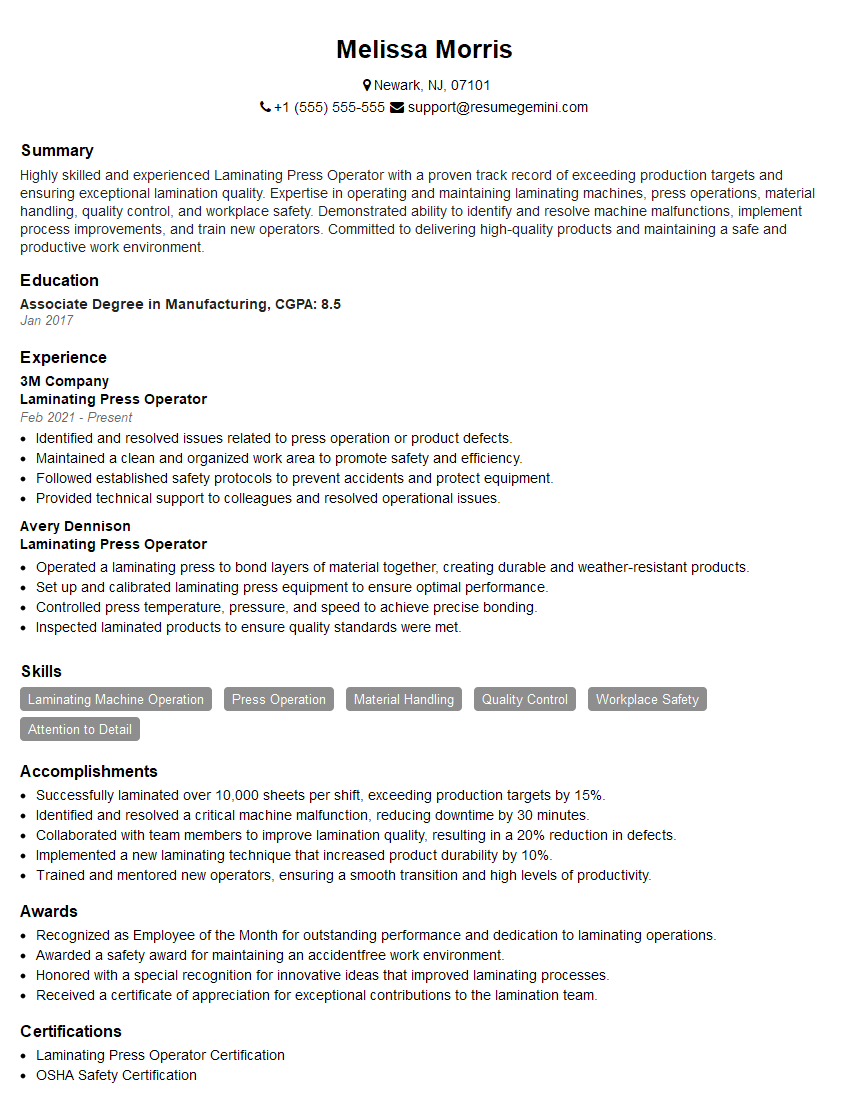
Mastering panel pressing techniques is crucial for career advancement in manufacturing and engineering. A strong understanding of this process opens doors to specialized roles and higher-level responsibilities. To significantly improve your job prospects, create an ATS-friendly resume that highlights your skills and experience effectively. We recommend using ResumeGemini, a trusted resource for building professional resumes. Examples of resumes tailored to Panel Pressing are available to help you showcase your expertise. A well-crafted resume is your first impression – make it count!
Explore more articles
Users Rating of Our Blogs
Share Your Experience
We value your feedback! Please rate our content and share your thoughts (optional).
What Readers Say About Our Blog
Very informative content, great job.
good