Unlock your full potential by mastering the most common Pantone Color Matching System (PMS) interview questions. This blog offers a deep dive into the critical topics, ensuring you’re not only prepared to answer but to excel. With these insights, you’ll approach your interview with clarity and confidence.
Questions Asked in Pantone Color Matching System (PMS) Interview
Q 1. Explain the difference between Pantone Matching System (PMS) and CMYK color models.
The Pantone Matching System (PMS) and CMYK are fundamentally different approaches to color reproduction. CMYK, or Cyan, Magenta, Yellow, and Key (Black), is a subtractive color model used in printing. It works by layering colored inks on a white substrate; the more ink, the darker the resulting color. Think of it like mixing paints – you start with white and add color to darken it. PMS, on the other hand, is a spot color system. Each Pantone color is a premixed ink with a specific formula, ensuring consistent color across different print runs and materials. It’s like using a specific tube of paint that has already been mixed to the perfect shade. The key difference is that CMYK relies on the combination of four inks to approximate a color, while PMS uses pre-mixed, specific inks for each color, leading to potentially more vibrant and accurate results, but at a higher cost.
For example, trying to achieve Pantone 18-1664 (Classic Blue) using CMYK might result in a slight variation depending on the printer and paper used, whereas using the PMS 18-1664 ink guarantees consistency.
Q 2. Describe the structure and organization of the Pantone Color Bridge.
The Pantone Color Bridge is a guide that shows the Pantone spot colors alongside their CMYK and RGB equivalents. It’s structured by the Pantone color libraries (like Fashion, Home + Interiors, etc.), with each color displayed as a numbered swatch. Each swatch usually has several representations: the Pantone spot color, the closest CMYK approximation, and often a corresponding RGB value for digital displays. This allows designers to select a color in one system (PMS) and get a close approximation in other systems (CMYK for print or RGB for screen) to maintain visual consistency across different platforms. Think of it as a translator between different color languages.
The organization is generally sequential by color family (e.g., blues, greens, yellows), making it easy to browse and compare colors. The Color Bridge also usually shows the differences between coated (glossy) and uncoated (matte) paper stock, highlighting how colors can vary based on the paper type.
Q 3. How do you ensure color accuracy when working with Pantone colors in different printing methods?
Ensuring color accuracy across different printing methods when using Pantone colors requires careful attention to detail and communication. First, always specify the exact Pantone color number (e.g., PMS 18-1664) including the coating type (coated or uncoated). Second, provide the printer with a physical Pantone swatch or a digital Pantone color specification. Third, consider using a Pantone-certified printer, as they have calibrated equipment to better match the Pantone colors. Fourth, perform a proof check – a test print on the same materials and settings as the final job to ensure the color matches expectations. Finally, account for potential variations in different substrates (paper, fabric, etc.) as the color may appear slightly different depending on its absorbency and texture.
For example, if printing a logo on both a glossy brochure and a matte business card, it’s crucial to specify the appropriate Pantone numbers for each paper type (PMS 18-1664 C for coated and PMS 18-1664 U for uncoated) to avoid color discrepancies.
Q 4. What are the limitations of the Pantone Matching System?
While the Pantone Matching System is a valuable tool, it has some limitations. Firstly, it’s a spot color system, which means printing with PMS colors is often more expensive than using CMYK, due to the need for extra ink setups. Secondly, PMS colors might not perfectly match on different printing processes or substrates – minor variations may still occur despite using the same PMS number. Thirdly, PMS only offers a limited range of colors compared to the much wider gamut achievable with the continuous tones of CMYK. Lastly, digital display screens use RGB, which has an even larger gamut; achieving perfect color matching between PMS and a digital screen is often challenging.
For example, achieving a specific shade of metallic gold might be very difficult using a standard Pantone formula, and a custom PMS ink may be required.
Q 5. How do you handle color discrepancies between Pantone specifications and printed output?
Handling color discrepancies between Pantone specifications and printed output begins with a thorough investigation. First, verify the accuracy of the Pantone number used and check if the correct coating (coated or uncoated) is specified. Then, examine the printing process: were the correct inks and paper used? Are the printer’s calibration settings correct? A color measurement device (spectrophotometer) can objectively quantify the color difference. This data can be compared to the Pantone specification to pinpoint the issue. If the discrepancies are minor, they might be acceptable. However, significant deviations require a collaborative effort with the printer to adjust the ink settings, paper selection, or perhaps even necessitate a slight alteration of the Pantone specification to obtain a closer match on the chosen substrate.
A common solution is to create a press proof, a test print made under production conditions, to identify potential discrepancies before the full print job begins. This allows time for adjustments to prevent wasted materials.
Q 6. Explain the concept of color gamut and its relevance to Pantone.
Color gamut refers to the range of colors that a particular device or system can reproduce. In the context of Pantone, its gamut is the total range of colors available within the Pantone color libraries. It’s important to understand that this gamut is limited. While Pantone offers thousands of colors, it doesn’t encompass every conceivable color. This limitation is especially apparent when comparing Pantone to CMYK or RGB, both of which have significantly broader gamuts but can suffer from inconsistencies. Choosing colors within the Pantone gamut helps ensure that the colors are achievable in print using the Pantone system, avoiding the disappointment of colors being unobtainable. Understanding the limitations of the Pantone gamut is crucial to setting realistic expectations for color matching and reproduction across different media.
For example, a vibrant, highly saturated neon pink might not have a direct equivalent in the Pantone system, requiring a compromise or the use of an alternative color system.
Q 7. Describe your experience with Pantone Connect software.
I have extensive experience using Pantone Connect, a software platform that streamlines the color management workflow. I’ve utilized it to manage and share Pantone colors digitally across teams and projects. The ability to store and organize libraries, create palettes, and easily export color specifications in various formats is invaluable. Pantone Connect’s integration with Adobe Creative Cloud applications and other design software is seamless, which significantly speeds up the workflow by eliminating the need for manual color searches and conversions. For example, I’ve used the software to create custom palettes for multiple projects, easily sharing these palettes with clients and printers to maintain consistent brand colors throughout various marketing materials.
The collaborative aspects are key. It’s efficient to be able to share color palettes within teams, which reduces the risk of miscommunication. The color libraries are always up-to-date, meaning I always have access to the most current Pantone color standards.
Q 8. How do you communicate Pantone color specifications effectively to printers and clients?
Communicating Pantone color specifications effectively is crucial for achieving consistent results. I always ensure that the Pantone number (e.g., PMS 186 C) is clearly stated in all design documents and communicated directly to the printer and client. This is best done using a dedicated color specification sheet that also includes important details like the substrate (paper type) and ink type. For clients, I often provide a printed color swatch from the Pantone Formula Guide to visualize the exact color.
Furthermore, I provide clear instructions regarding color management profiles (e.g., ICC profiles) to ensure the color is rendered accurately throughout the workflow. Open communication is key; I frequently check in with the printer throughout the process to answer any questions and resolve potential discrepancies before they become major problems. Think of it like a recipe – I am providing all the essential ingredients and instructions to ensure success.
Q 9. What strategies do you employ to maintain color consistency across various projects?
Maintaining color consistency across projects involves a multi-faceted approach. First, I always specify Pantone colors, not relying on RGB or CMYK values alone, as these can vary drastically depending on the device displaying or printing them. For digital projects, I meticulously set up the color profiles to match the Pantone specifications. This is vital for digital files that might be viewed on numerous screens.
Secondly, I utilize color proofing. This is a critical step that allows me to review the printed color against the specified Pantone color, identifying and addressing any deviations early on. A standardized process and careful record-keeping are paramount to maintain consistency across different projects and time periods. I also keep a physical library of Pantone color swatches in my working space to offer immediate visual reference.
Q 10. Explain the importance of color proofing in Pantone-based projects.
Color proofing in Pantone-based projects is indispensable. It’s like a trial run before the final production. A physical proof allows for a visual comparison of the printed color against the intended Pantone color, verifying its accuracy. This prevents costly reprints and ensures client satisfaction. Different proofing methods exist, from simple inkjet proofs to more accurate contract proofs using the same printing process as the final job. The choice of proofing method depends on the project’s budget and criticality.
During the proofing stage, any color deviations can be identified and corrected before mass production. It’s much easier and cheaper to address minor color shifts in a test run than to deal with an entire batch of printed materials that are off-color. I always involve the client in the proofing process, ensuring they approve the color before proceeding. Without color proofing, you are essentially printing blind, potentially leading to significant financial and reputational loss.
Q 11. How do you handle color deviations caused by different substrates or printing processes?
Different substrates (materials like paper or fabrics) and printing processes (offset, digital, screen printing) significantly affect color reproduction. To handle these deviations, I start by specifying the substrate and printing process in my color specifications. I then use the appropriate Pantone Formula Guide – Solid Coated or Uncoated – corresponding to the selected substrate. I communicate these details extensively to the printer to ensure they are using the correct settings for accurate color matching.
Moreover, I incorporate a tolerance range for acceptable color variation in my specifications. This allows for minor inconsistencies that are inherent to the printing process. If significant deviations occur, I work closely with the printer to adjust press settings or ink formulations to minimize the differences. It’s important to remember that perfect color matching across all substrates and printing methods is often unattainable, but minimizing the discrepancy is achievable through careful planning and collaboration.
Q 12. Describe your process for selecting appropriate Pantone colors for a given design brief.
My process for selecting appropriate Pantone colors starts with a thorough understanding of the design brief. I analyze the client’s brand guidelines, target audience, and the desired mood or message. Then, I consult the Pantone Formula Guide, often using both the Solid Coated and Uncoated guides, to explore color options that align with the brief’s requirements. I may use the Pantone Connect digital tool for more efficient color exploration and communication.
Sometimes, I create mood boards with various Pantone color swatches to visually explore different combinations and see how they interact. Client involvement is critical during this stage. I present my initial color selections, explaining my rationale, and discuss modifications based on their feedback. The goal is to find the perfect color that not only looks great but also meets the client’s expectations and reflects the brand’s identity effectively. It’s a collaborative process resulting in the optimal color choice.
Q 13. How familiar are you with Pantone Formula Guide Solid Coated & Uncoated?
I am very familiar with the Pantone Formula Guide Solid Coated & Uncoated. These guides are my essential tools. The ‘Solid Coated’ guide presents a range of Pantone colors printed on coated stock (glossy paper), while ‘Solid Uncoated’ shows the same colors on uncoated stock (matte paper). The difference in color appearance on these two substrates is often significant, highlighting the importance of selecting the right guide for a specific project. I use these guides to select colors, create color palettes, and compare them physically for different projects.
Beyond simply choosing colors, I understand how the lighting conditions while using these guides influence the perceived color. I’m aware of the potential for slight variations in color due to ink formulations and printing techniques, and thus, factor that into my decision-making process. These guides are far more than just color charts; they are critical references that support accurate color communication throughout the entire project lifecycle.
Q 14. What is your experience with Pantone Fashion, Home + Interiors?
My experience with Pantone Fashion, Home + Interiors is extensive. This system is tailored specifically for textile and interior design projects and uses a different color palette and numbering system than the traditional PMS system. I’m proficient in selecting colors from this guide, understanding the nuances of color reproduction on various fabrics and materials, and communicating these selections to manufacturers and suppliers. It often involves understanding the intricacies of fabric types and their effect on the appearance of the color.
For example, a color might appear subtly different on cotton versus silk, requiring adjustments to the initial selection to achieve the desired visual outcome. I’m adept at addressing these material-specific challenges and ensuring consistent color across various production runs. I regularly utilize the digital tools associated with Pantone Fashion, Home + Interiors to ensure accurate color communication and collaboration with clients and manufacturers.
Q 15. How do you identify and correct color mismatches?
Identifying and correcting color mismatches involves a systematic approach. First, I’d use a spectrophotometer to obtain objective color measurements of the problematic print against the Pantone standard. This provides numerical data (L*a*b* values) that leaves no room for subjective interpretation. Discrepancies are immediately apparent in the numerical difference between the two.
Next, I analyze the discrepancy. Is it a consistent shift across the entire print, or localized? A consistent shift might indicate issues with the printing press calibration (ink density, dot gain) or the monitor profile used for proofing. Localized mismatches could point to problems with specific ink cartridges or substrate inconsistencies.
To correct the mismatch, I work closely with the printer, providing them with the spectrophotometer data. We might adjust the ink densities, recalibrate the press, or even switch to a different paper stock. Sometimes, minor adjustments to the Pantone formula itself within a tolerance range might be necessary to achieve a visually acceptable match given the limitations of the printing process. Continuous monitoring and adjustment throughout the print run are crucial for maintaining color consistency.
Career Expert Tips:
- Ace those interviews! Prepare effectively by reviewing the Top 50 Most Common Interview Questions on ResumeGemini.
- Navigate your job search with confidence! Explore a wide range of Career Tips on ResumeGemini. Learn about common challenges and recommendations to overcome them.
- Craft the perfect resume! Master the Art of Resume Writing with ResumeGemini’s guide. Showcase your unique qualifications and achievements effectively.
- Don’t miss out on holiday savings! Build your dream resume with ResumeGemini’s ATS optimized templates.
Q 16. Explain the difference between spot color and process color printing.
Spot color and process color printing differ fundamentally in how colors are achieved. Spot color, like using a Pantone color, involves mixing a specific pre-mixed ink to achieve a precise color. Think of it like using a specific shade of paint directly from a can – the color is defined by the ink formula itself. The result is a richer, more vibrant color, but it’s limited to the exact Pantone shade.
Process color printing, on the other hand, uses a combination of four standard inks – Cyan, Magenta, Yellow, and Black (CMYK) – to create a wider range of colors. This is akin to mixing your own paint color using a limited palette. While it offers flexibility and a wider color gamut, it cannot perfectly reproduce all colors, especially vivid shades, resulting in some color compromise.
An analogy: Spot color is like using a specific colored marker; the color is precisely defined. Process color is like mixing colors with crayons; you can achieve many shades, but they might not be as vibrant or exact.
Q 17. Describe your experience with color management software (e.g., Adobe Color, X-Rite i1Profiler).
I have extensive experience with color management software, including Adobe Color and X-Rite i1Profiler. Adobe Color helps in creating and managing color palettes, ensuring consistency across different projects and platforms. I use it primarily for the initial design phase, creating accurate digital representations of Pantone colors intended for print.
X-Rite i1Profiler is indispensable for calibrating my monitors and profiling printers. Accurate screen calibration is paramount for ensuring that what I see on screen closely matches the final printed output. By generating accurate profiles, I minimize the discrepancies between digital design and the final printed product, specifically with Pantone colors.
I leverage these tools to create accurate color profiles that translate Pantone colors consistently between digital and physical formats. This minimizes surprises during the print phase, leading to significant cost and time savings by reducing print revisions.
Q 18. What are some common challenges you have faced while working with Pantone colors, and how did you resolve them?
One common challenge is achieving consistent Pantone color reproduction across different printing presses or printing facilities. Variations in press calibration, ink quality, and paper stock can lead to noticeable color shifts. To overcome this, I emphasize using calibrated spectrophotometers and creating detailed color specifications including ink densities for each Pantone color used. I also request color proofs from the printer before initiating large print runs. This allows me to detect and address discrepancies early on.
Another challenge is dealing with Pantone color limitations in process color printing. Certain Pantone colors simply cannot be accurately replicated using CMYK. In these cases, careful selection of the closest CMYK approximation is crucial. Sometimes, using a combination of spot and process colors is the optimal solution. To account for these limitations, I thoroughly communicate with clients regarding expectations of color reproduction, educating them on the possibilities and limitations of various print processes.
Q 19. How do you stay updated with the latest Pantone color trends and updates?
Staying updated on Pantone trends is a continuous process. I regularly consult the Pantone website for new color releases and trend reports, particularly the annual Fashion Color Report and Color of the Year announcement. These resources provide valuable insights into upcoming color palettes and preferences across various industries.
I also attend industry conferences and webinars, network with other designers and printers, and subscribe to relevant design publications and blogs. Staying abreast of these developments allows me to leverage the latest color trends in my design projects and adapt my approach to maintain industry standards.
Q 20. Can you explain the concept of color temperature and its influence on Pantone color reproduction?
Color temperature, measured in Kelvin (K), describes the relative warmth or coolness of a light source. It significantly affects how Pantone colors are perceived and reproduced. A warmer light source (lower Kelvin, like incandescent light) makes colors appear richer and more saturated, while cooler light (higher Kelvin, like daylight) can make colors appear duller or less vibrant.
This is crucial in print production because different lighting conditions in the printing facility, proofing, or client review processes can lead to variations in color perception. To mitigate this, I always specify the viewing conditions (light source and illuminant type) during the color proofing and approval stages. This ensures consistent color assessment throughout the workflow, minimizing discrepancies related to color temperature.
Q 21. Describe your experience with Pantone color libraries and their applications.
My experience with Pantone color libraries is extensive. I use both physical and digital versions of the Pantone Formula Guides, including the Fashion, Home + Interiors, and Plastics libraries, depending on the project. The physical guides allow for tactile assessment of colors and quick reference. Digital libraries streamline color selection, particularly in design software workflows.
Applications are wide-ranging. From selecting colors for branding and marketing materials to specifying colors for textiles, packaging, and industrial design projects. The consistency and precision provided by Pantone ensure clients receive the exact color they envision, regardless of the material or manufacturing process.
In practice, I use these libraries extensively during the initial design phase to create color palettes and establish consistency. I also provide clients with the exact Pantone numbers to ensure accurate color matching during production.
Q 22. How do you ensure color accuracy when working with Pantone colors in digital media?
Ensuring color accuracy with Pantone in digital media requires a multi-step approach. It’s crucial to understand that Pantone colors are defined for print, not inherently for screens. Digital displays use additive color (RGB), while print uses subtractive color (CMYK). Therefore, a direct, perfect match is impossible. However, we can strive for a close visual approximation.
- Use Pantone Connect or similar software: These tools offer digital libraries of Pantone colors, allowing you to select the closest RGB approximation for your screen. While not a perfect match, this is the best starting point.
- Profile your monitor: Color calibration is key. A properly profiled monitor ensures your screen accurately displays colors as close as possible to the Pantone standard.
- Work in a color-managed workflow: This involves ensuring all your software (Photoshop, InDesign, etc.) is configured to manage color profiles correctly. This helps maintain consistency between your screen and the final print output.
- Specify Pantone references clearly in your design files: Always explicitly note the Pantone color number (e.g., 18-1664 TPX) directly in your design files, so the printer can accurately match it to the physical Pantone swatch.
- Proofs: Request digital and, ideally, hard copy proofs from your printer before the final run to verify color accuracy.
For example, if I’m designing a logo in Pantone 294 C, I’ll use Pantone Connect to find the closest RGB equivalent for screen display. However, the printed version, using the actual Pantone 294 C ink, will always be the definitive color.
Q 23. What are the considerations for selecting Pantone colors for different applications, such as print, web, and packaging?
Pantone color selection varies greatly depending on the application. The same Pantone number can appear different across various mediums due to differences in substrates, inks, and printing processes.
- Print: For print, Pantone provides a vast library of coated and uncoated inks. The choice between coated (glossy) and uncoated (matte) paper significantly affects color appearance. The specific paper stock, along with its weight and texture, also influences the final color.
- Web: Pantone colors don’t directly translate to web (RGB). Approximations are necessary. The Pantone Connect software assists in finding RGB equivalents, but understanding that the result will be an interpretation, not a perfect match, is vital. Consider browser variations and device screen differences; a color looking perfect on one monitor might appear different on another.
- Packaging: Packaging presents additional considerations. The substrate (cardboard, plastic film, etc.) and the type of printing (flexography, offset, etc.) influence color reproduction. Often, Pantone Matching System (PMS) colors are used in conjunction with process colors (CMYK) to achieve specific effects and cost-effectiveness.
Imagine designing a product label: For high-end packaging, you might choose Pantone colors for premium feel. But for mass production, using spot Pantone colors for key brand elements and CMYK for less critical areas is a cost-effective strategy.
Q 24. Explain the impact of substrate and ink type on Pantone color reproduction.
Substrate and ink type have a profound impact on Pantone color reproduction. The substrate’s properties (such as absorption, texture, and brightness) affect how ink is absorbed and reflected, influencing the perceived color.
- Substrate: Coated paper reflects more light than uncoated, making colors appear brighter and more saturated on coated paper. Different paper types (e.g., newsprint, cardstock) will also yield varying results. Even the slight variations in paper finish (smooth, textured) influences final color.
- Ink type: Pantone offers various ink types (e.g., solid ink, metallic, neon). These inks differ chemically, impacting the color’s vibrancy and opacity. The quality of ink also plays a significant role: cheaper inks can lead to color inconsistencies. The ink application method (offset lithography, screen printing) also affects color accuracy.
For example, Pantone 18-1664 TPX (a specific shade of Living Coral) will appear significantly different printed on a matte business card versus a glossy magazine cover due to the different substrates and their interaction with the ink.
Q 25. How do you troubleshoot color inconsistencies between different print runs?
Troubleshooting color inconsistencies across print runs requires a systematic approach. The first step is to identify the source of the problem.
- Compare color proofs: Start by comparing the proofs from different print runs to visually assess the discrepancies.
- Check press settings: Inquire about the press settings (ink density, dot gain, etc.) used in each run. Variations in these parameters can significantly impact color.
- Examine ink consistency: Ensure the ink used in each run is from the same batch and meets Pantone’s specifications. Older inks can degrade and change color.
- Evaluate substrate variations: Slight differences in paper stock, even within the same batch, can lead to color variations. Check if the substrate used is consistent across runs.
- Use spectrophotometer data: A spectrophotometer provides objective color data, enabling numerical comparisons between the print runs and the original Pantone standard.
In a real-world scenario, I once encountered a color shift in a large print project. By analyzing the spectrophotometer data and comparing press settings, we discovered a variation in ink density. Adjusting the settings in subsequent runs resolved the issue.
Q 26. What are the key factors that contribute to accurate Pantone color matching?
Accurate Pantone color matching relies on several key factors working in harmony.
- Using calibrated equipment: Accurate color measurement requires calibrated spectrophotometers and colorimeters. Regular calibration ensures consistent and reliable readings.
- Color management system (CMS): Implementing a robust CMS across all stages of the workflow (design, proofing, printing) is vital. A well-managed system maintains color consistency from screen to press.
- Proper ink selection and mixing: Selecting the correct Pantone ink (coated or uncoated) and ensuring its correct mixing is paramount for achieving desired shades.
- Consistent substrate: Employing the same paper stock or substrate across different print runs minimizes variations in color appearance.
- Experienced personnel: Experienced printers and color technicians play a crucial role. Their expertise in understanding the nuances of color reproduction is critical for accurate matching.
Think of it like baking a cake: you need the right ingredients (inks and substrate), the correct recipe (Pantone specifications), and experienced hands to execute it (printer expertise) to get consistent results.
Q 27. Describe your experience with using spectrophotometers for color measurement.
Spectrophotometers are indispensable tools for objective color measurement. My experience involves using them to measure the color of printed samples and comparing them against Pantone standards.
- Measuring printed samples: I use a spectrophotometer to obtain precise colorimetric data (L*a*b*, ΔE) from printed samples. This data allows quantitative evaluation of color differences.
- Comparing against Pantone standards: The spectrophotometer’s readings are compared against the known Pantone standard values. This comparison helps determine the degree of color accuracy (Delta E). A lower ΔE value indicates a better match.
- Troubleshooting color issues: In cases of color inconsistencies, spectrophotometer data objectively quantifies the differences, leading to faster diagnosis and resolution of issues.
- Calibration and maintenance: I ensure my spectrophotometer is regularly calibrated and maintained to guarantee accuracy and reliability.
For instance, I used a spectrophotometer to identify a slight color shift in a recent print job. The ΔE value indicated a minor variation, allowing me to adjust ink density to correct the issue before mass production.
Q 28. How do you interpret and utilize colorimetric data for Pantone color matching?
Colorimetric data, typically expressed as L*a*b* values or ΔE, provides a quantitative measure of color. I interpret and use this data to ensure accurate Pantone matching.
- L*a*b* values: These values represent the lightness (L*), red-green (a*), and yellow-blue (b*) components of a color. They offer a device-independent way to compare colors.
- ΔE (Delta E): This represents the difference between two colors. A smaller ΔE value indicates a closer match. The acceptable ΔE value depends on the application; a ΔE of 1 or less is generally considered a good match for most applications.
- Color difference analysis: I analyze ΔE values to determine the magnitude and nature of color discrepancies between a printed sample and the Pantone standard. This analysis helps guide adjustments in ink formulation or printing parameters.
- Quality control: Colorimetric data is crucial for maintaining consistent color across multiple print runs. By tracking ΔE values, I ensure that color stays within acceptable tolerances.
For example, if a printed sample has a ΔE of 2 against the Pantone standard, I know there’s a noticeable color difference. I would then investigate the cause (ink, substrate, press settings) and make appropriate corrections to minimize the ΔE in subsequent runs.
Key Topics to Learn for Pantone Color Matching System (PMS) Interview
- Understanding the PMS System: Learn the history and purpose of the Pantone Matching System, including its structure and how it differs from other color systems (e.g., RGB, CMYK).
- Color Accuracy and Consistency: Grasp the importance of accurate color reproduction across different media (print, digital) and understand the challenges involved in achieving consistency.
- Practical Applications: Explore real-world applications of PMS in various industries like graphic design, printing, fashion, and packaging. Consider case studies showcasing successful color management.
- Color Specification and Communication: Master the ability to accurately identify, specify, and communicate Pantone colors using the appropriate notation and terminology.
- Color Separation and Reproduction Techniques: Understand the process of separating and reproducing Pantone colors using various printing methods, including offset printing and digital printing.
- Troubleshooting Color Discrepancies: Develop problem-solving skills to diagnose and resolve color inconsistencies between digital files and printed outputs. This includes understanding common color-related issues.
- Software Applications: Familiarize yourself with industry-standard software that utilizes and manages Pantone colors. This could include Adobe Creative Suite applications.
- Color Theory Fundamentals: A strong understanding of color theory (hue, saturation, value, etc.) is essential for effective color management and communication.
Next Steps
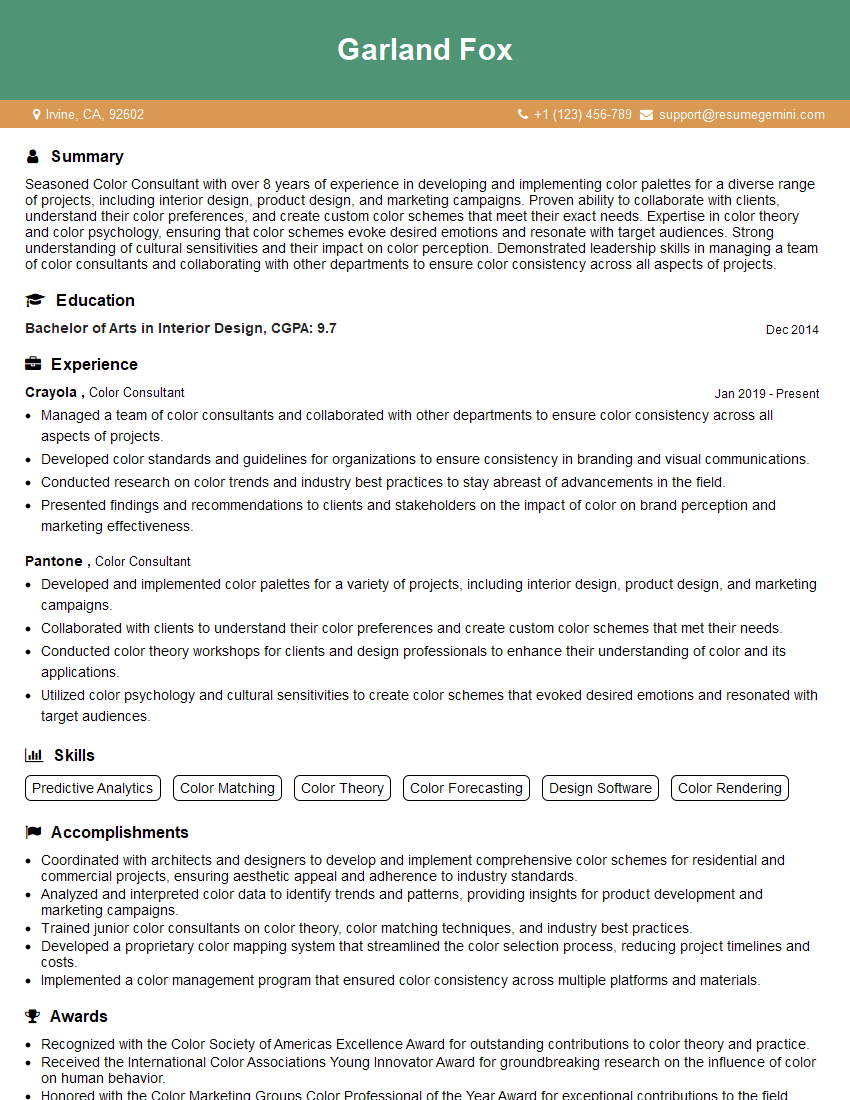
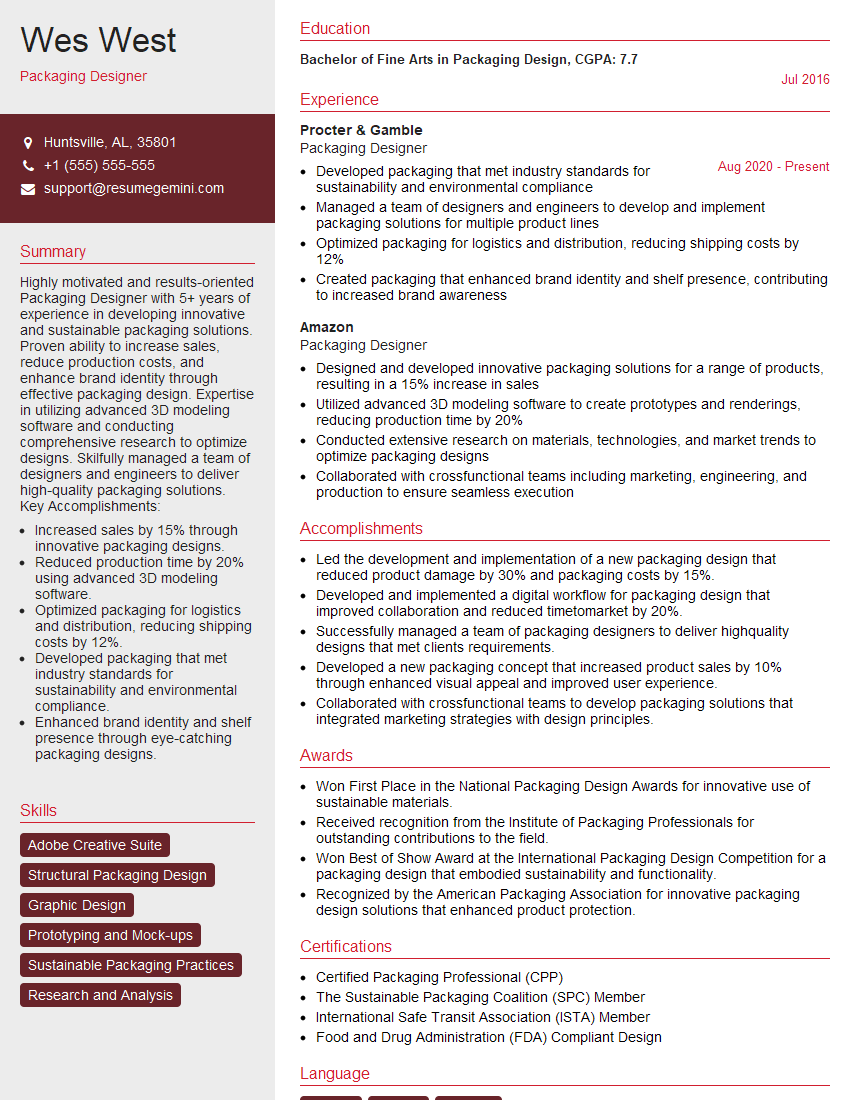
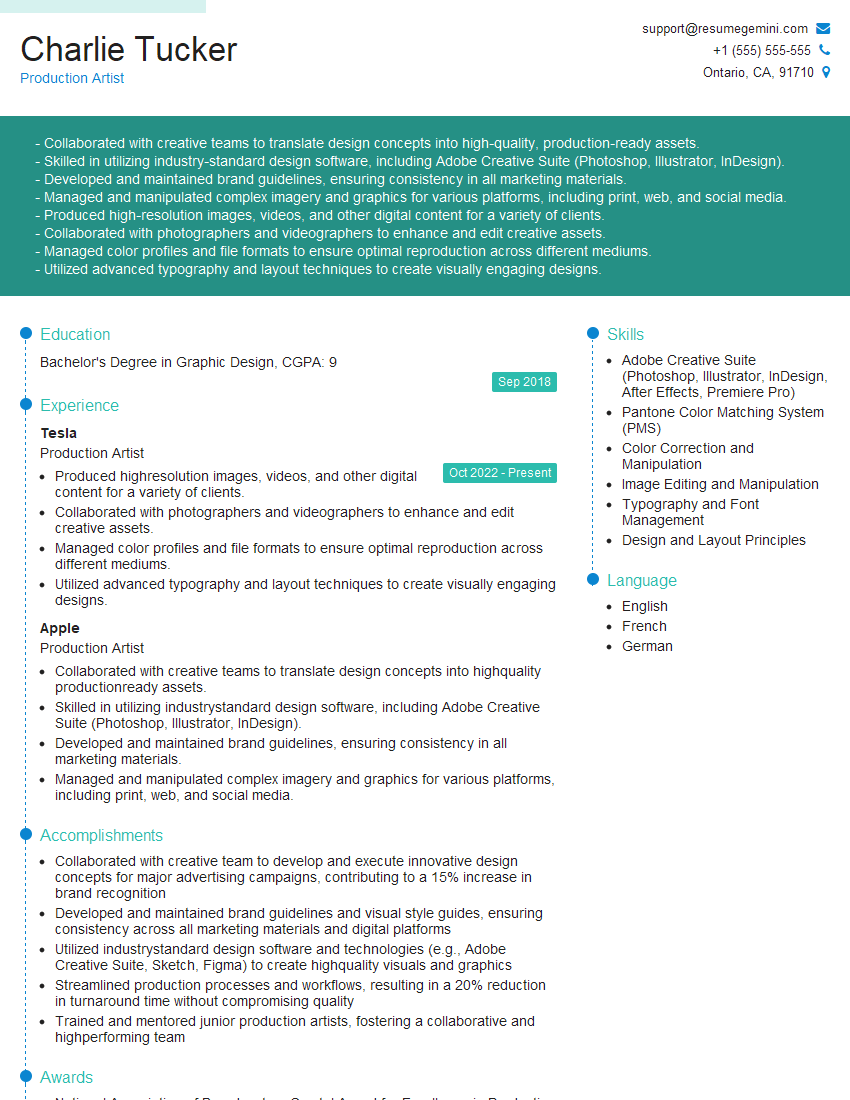
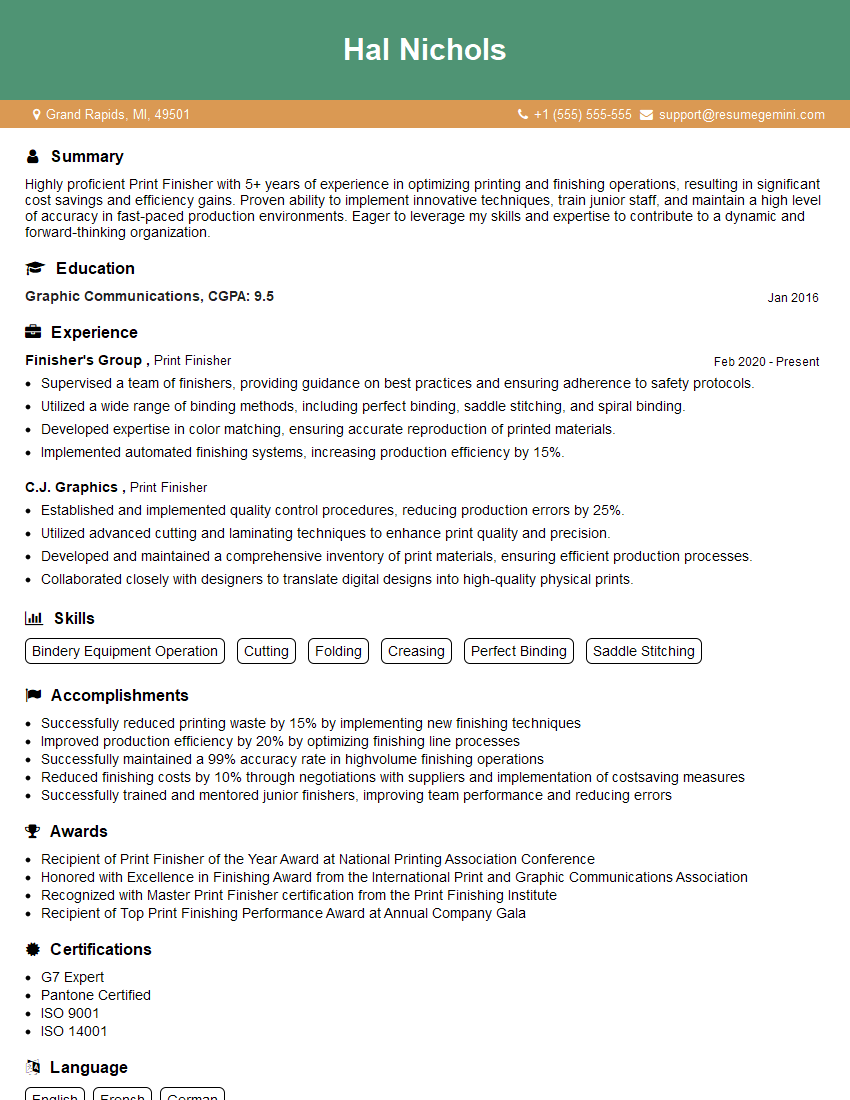
Mastering the Pantone Color Matching System is crucial for career advancement in design, printing, and related fields. A deep understanding of PMS demonstrates professionalism and technical expertise, opening doors to higher-paying roles and more challenging projects. To increase your chances of landing your dream job, focus on creating a compelling and ATS-friendly resume that highlights your PMS skills and experience. ResumeGemini is a trusted resource to help you build a professional and impactful resume. Examples of resumes tailored to Pantone Color Matching System (PMS) roles are available to provide inspiration and guidance.

Explore more articles
Users Rating of Our Blogs
Share Your Experience
We value your feedback! Please rate our content and share your thoughts (optional).
What Readers Say About Our Blog
Very informative content, great job.
good