Interviews are more than just a Q&A session—they’re a chance to prove your worth. This blog dives into essential Parasite Control interview questions and expert tips to help you align your answers with what hiring managers are looking for. Start preparing to shine!
Questions Asked in Parasite Control Interview
Q 1. Explain the life cycle of a common parasite.
Parasite life cycles vary greatly depending on the species, but many follow a general pattern involving multiple stages. Let’s consider the life cycle of a common intestinal nematode, like Ascaris lumbricoides (roundworm), as an example. It begins with the ingestion of infective eggs by a host (human). These eggs hatch in the intestines, releasing larvae which penetrate the intestinal wall. The larvae then travel through the bloodstream to the lungs, mature, and migrate back to the intestines where they develop into adult worms, reproduce, and produce more eggs, which are then passed out in the feces, completing the cycle.
- Egg Stage: The cycle begins with a resistant egg passed in feces.
- Larval Stage: After ingestion, eggs hatch and larvae migrate through the body.
- Adult Stage: Mature worms reside in the intestines and reproduce.
- Egg Production: Adult worms produce thousands of eggs which are passed in feces.
Understanding these stages is crucial for effective control, as targeting specific stages can disrupt the cycle.
Q 2. Describe different methods for diagnosing parasitic infections.
Diagnosing parasitic infections requires a multi-faceted approach, often combining several techniques. The most common methods include:
- Microscopic Examination: This involves examining fecal samples, blood smears, or tissue biopsies under a microscope to identify parasite eggs, larvae, or adult forms. This is a cornerstone of parasitic diagnosis and remains highly effective for many parasites.
- Serological Tests: These tests detect antibodies produced by the host’s immune system in response to a parasitic infection. Enzyme-linked immunosorbent assays (ELISAs) are frequently used, providing a sensitive way to detect exposure, even in early stages of infection.
- Molecular Diagnostics: Techniques like PCR (Polymerase Chain Reaction) amplify parasite DNA from samples, offering high sensitivity and specificity, especially for difficult-to-detect parasites or infections with low parasite burden. This approach is particularly useful for identifying species of parasites.
- Imaging Techniques: Ultrasound, X-rays, or CT scans can sometimes reveal the presence of parasites, particularly large ones, within the body. This method helps locate the parasites within the body.
The choice of diagnostic method depends on the suspected parasite, the stage of infection, and the available resources. A combination of techniques is often employed for accurate and comprehensive diagnosis.
Q 3. What are the common parasitic infections in [Specific geographic location/animal type]?
To answer this question accurately, I need a specific geographic location or animal type. For example, common parasitic infections in dogs in rural areas of the United States might include heartworm (Dirofilaria immitis), hookworms (Ancylostoma caninum), and whipworms (Trichuris vulpis). In contrast, human parasitic infections in tropical regions might commonly involve malaria (Plasmodium spp.), schistosomiasis (Schistosoma spp.), and intestinal nematodes like hookworm and roundworm. Please specify the location or animal type to provide a more targeted and relevant answer.
Q 4. Discuss various parasite control strategies, including chemical and non-chemical methods.
Parasite control strategies encompass a range of chemical and non-chemical methods. The best approach often involves an integrated strategy.
- Chemical Methods: These include anthelmintics (for internal parasites), insecticides (for external parasites like fleas and ticks), and acaricides (specifically for mites and ticks). Examples include ivermectin for heartworm in dogs, praziquantel for tapeworms, and fipronil for fleas. Appropriate dosage and administration are crucial for efficacy and safety.
- Non-Chemical Methods: These methods focus on preventing parasite transmission and infestation. They include:
- Sanitation: Regular cleaning and sanitation of animal housing and waste disposal to minimize parasite exposure.
- Vector Control: Controlling vectors like mosquitoes (for malaria) or fleas (for tapeworms) through insecticides or environmental modifications.
- Resistant Host Breeding: In livestock, breeding programs that select for parasites resistance can reduce parasite burden in the population.
- Quarantine: Isolating infected individuals to prevent further transmission.
- Vaccination: In some cases, vaccines are available to provide protection against parasitic infections (e.g., coccidiosis in poultry).
Chemical methods provide quick and effective parasite control, but their overuse can lead to resistance. Non-chemical methods are essential for long-term sustainable control and minimizing environmental impact.
Q 5. How do you choose appropriate control methods based on the target parasite and environment?
Selecting appropriate parasite control methods requires a careful assessment of several factors:
- Target Parasite: Different parasites respond differently to various control measures. For example, a broad-spectrum anthelmintic might be effective against multiple intestinal parasites but ineffective against an external parasite like a tick. Identification of the parasite species is crucial.
- Host Species: The safety and efficacy of chemical controls vary significantly across host species. A drug safe for dogs may be toxic to cats. The health status of the host also needs to be considered.
- Environment: Environmental factors influence parasite survival and transmission. Control methods should be tailored to the specific environment – a damp environment might require different strategies than a dry environment.
- Life Cycle Stage: The stage of the parasite’s life cycle dictates the most effective control method. Targeting the egg stage, for example, might prevent infection compared to treating adults after they have already caused harm.
- Economic Considerations: Cost and availability of different control methods are also important factors.
Often a combination of methods is the most effective. For example, using a broad-spectrum anthelmintic alongside improved sanitation can improve control significantly.
Q 6. Explain the principles of integrated pest management (IPM) in relation to parasites.
Integrated Pest Management (IPM) for parasites is a holistic approach that emphasizes preventing parasite infestations and minimizing reliance on chemical control. It involves:
- Monitoring: Regular surveillance to detect parasite presence and assess infestation levels.
- Prevention: Implementing preventive measures like sanitation, vector control, and quarantine.
- Thresholds: Defining acceptable levels of parasite infestation before implementing control actions.
- Control Strategies: Selecting the most appropriate control methods based on the parasite, host, and environment. This may involve a combination of chemical and non-chemical methods.
- Evaluation: Assessing the effectiveness of implemented control strategies and making adjustments as needed.
The goal of IPM is to achieve long-term, sustainable parasite control while minimizing the risks associated with chemical treatments, protecting the environment, and ensuring animal and human health.
Q 7. What are the potential risks associated with using chemical parasite control agents?
Using chemical parasite control agents carries several potential risks:
- Toxicity: Chemical agents can be toxic to the host animal, particularly if misused or administered incorrectly. This can lead to adverse reactions, ranging from mild discomfort to organ damage or death. Careful dosage and administration are crucial.
- Resistance Development: Overuse of chemical agents can lead to the development of resistance in parasites, reducing their effectiveness over time. This necessitates the use of alternative or integrated strategies.
- Environmental Contamination: Chemical agents can contaminate soil, water, and air, potentially harming non-target organisms and affecting ecosystems. Proper disposal and responsible use are important.
- Residue in Food Products: In livestock, chemical residues can accumulate in animal products, posing potential health risks to consumers. Strict regulations govern the use of chemicals in food animals.
- Human Health Risks: Exposure to chemical agents can pose risks to humans, particularly those handling the chemicals or consuming treated animal products. Proper safety precautions are essential.
Careful risk assessment and responsible use of chemical agents are crucial for minimizing potential harm while achieving effective parasite control. This emphasizes the importance of considering non-chemical methods and the principles of IPM.
Q 8. How do you ensure safe handling and disposal of chemicals used in parasite control?
Safe handling and disposal of chemicals used in parasite control are paramount for both human and environmental safety. This involves meticulous adherence to the manufacturer’s instructions, including wearing appropriate personal protective equipment (PPE) like gloves, masks, and eye protection.
Storage: Chemicals should be stored in their original containers in a cool, dry, well-ventilated area, away from food and other potentially incompatible substances. They should be securely locked to prevent unauthorized access, especially from children and pets.
Application: During application, follow label instructions precisely regarding dilution rates and application methods. Avoid over-application, which can be detrimental to the environment and potentially harmful to humans and animals. Consider using less-toxic, environmentally friendly alternatives when available.
Disposal: Never pour chemicals down drains or into waterways. Contact your local waste management authority or a licensed hazardous waste disposal company for proper disposal instructions. They can guide you on the appropriate methods for handling and disposal, often involving specialized containers and collection services.
Example: Imagine using a broad-spectrum insecticide to control fleas in a pet’s environment. Following the label instructions diligently, I would wear gloves and a mask while applying the product, then dispose of any remaining insecticide responsibly through the designated channels.
Q 9. Describe your experience with different diagnostic techniques used in parasite identification.
My experience encompasses a wide array of diagnostic techniques for parasite identification. This includes microscopic examination of fecal samples, blood smears, skin scrapings, and tissue biopsies.
- Microscopy: This is a cornerstone of parasite diagnostics. I am proficient in identifying various parasites based on their morphology (size, shape, and features) under both light and occasionally, specialized microscopes (e.g., fluorescent microscopy).
- Fecal examination: This involves using various techniques such as direct wet mounts, sedimentation, and flotation to concentrate parasite eggs, larvae, or oocysts for identification. The choice of method depends on the suspected parasite.
- Blood smears: These are crucial for detecting blood-borne parasites like malaria, trypanosomes, and babesiosis. I am adept at identifying parasites within red blood cells or circulating freely in the bloodstream.
- Molecular diagnostic techniques: I am familiar with advanced techniques like PCR (Polymerase Chain Reaction) and ELISA (Enzyme-Linked Immunosorbent Assay), which offer higher sensitivity and specificity than microscopy, particularly for detecting low parasite loads or identifying difficult-to-detect species.
For example, in identifying hookworm infection, I would typically use a fecal flotation technique to concentrate the hookworm eggs for microscopic examination. If dealing with suspected malaria, I would examine a blood smear to look for the presence of Plasmodium parasites within red blood cells.
Q 10. What are the limitations of different diagnostic methods used to identify parasites?
Diagnostic methods, while valuable, have inherent limitations.
- Microscopy’s limitations: Sensitivity can be low, especially with low parasite burdens. Accurate identification requires significant expertise and can be challenging with morphologically similar species. Some parasites may be present in only small numbers or in a stage that is difficult to identify microscopically.
- Molecular diagnostics’ limitations: These techniques are expensive and require specialized equipment. They are also prone to false positives or negatives due to factors such as sample degradation or primer specificity issues. Moreover, they might not cover all potential parasites.
- Other limitations: Factors such as the quality of the sample, the time elapsed since collection, and even the experience and skill of the laboratory personnel can all impact the accuracy of results.
Example: A fecal sample might not contain any parasite eggs or cysts even if an individual has a low-intensity infection. Similarly, a PCR assay might fail to detect a parasite if the DNA is degraded. It’s also important to note that a negative test result doesn’t always mean the absence of parasites.
Q 11. How do you interpret the results of a parasite diagnostic test?
Interpreting parasite diagnostic test results requires careful consideration of several factors. A positive result confirms the presence of a specific parasite. The quantity of parasites or parasite products detected (e.g., egg count) indicates the intensity of the infection.
Context is Crucial: The clinical picture, including the patient’s symptoms, travel history, and exposure to potential sources of infection, is essential for accurate interpretation. For instance, a high egg count of a certain intestinal parasite combined with gastrointestinal symptoms would clearly indicate a significant infection.
Negative Results: A negative result doesn’t always equate to the absence of parasites. It may indicate a low parasite load, a problem with the test methodology, or the parasite’s stage isn’t detectable with the method used.
Follow-up Actions: Based on the interpretation of test results, appropriate treatment and preventive measures are determined. Further investigations may be needed to identify the specific parasite species or clarify doubtful results.
Example: A positive fecal exam showing numerous Giardia cysts along with the patient’s reported diarrhea would indicate a Giardia infection requiring treatment. Conversely, a negative test for malaria in an individual with malaria-like symptoms would prompt further investigation, perhaps employing more sensitive molecular techniques.
Q 12. Explain the importance of preventative measures in parasite control.
Preventative measures are the cornerstone of effective parasite control. They are far more cost-effective and humane than treating established infections. These measures aim to reduce or eliminate parasite exposure and transmission.
- Sanitation and Hygiene: Proper sanitation, including access to clean water and improved sewage disposal, significantly reduces the risk of parasitic infections spread through fecal-oral routes.
- Vector Control: Controlling vectors like mosquitoes, ticks, and fleas, which transmit many parasites, involves using insecticides, eliminating breeding sites, and personal protective measures.
- Animal Health: Regular deworming of livestock and pets prevents the spread of zoonotic parasites (those transmissible from animals to humans).
- Food Safety: Thoroughly cooking meat and washing fruits and vegetables helps eliminate or reduce parasite cysts or larvae.
- Education and Awareness: Educating communities about parasite transmission routes and preventive measures is critical in changing behaviors and attitudes.
Example: Implementing effective mosquito control programs reduces the incidence of malaria, while promoting handwashing practices limits the spread of intestinal parasites. Regular deworming of livestock significantly reduces human exposure to zoonotic parasites.
Q 13. What are the key factors influencing the effectiveness of parasite control programs?
Several key factors influence the effectiveness of parasite control programs:
- Accuracy of Diagnosis: Reliable diagnostic methods are crucial for identifying the parasite species and determining the appropriate treatment.
- Treatment Efficacy: Using effective drugs and ensuring compliance with treatment regimens are crucial for eliminating parasites.
- Environmental Factors: Factors like climate, humidity, and sanitation greatly affect parasite survival and transmission.
- Host Factors: The host’s immune status, nutritional status, and overall health impact susceptibility to parasitic infections.
- Community Participation: Engaging local communities and building trust are essential for ensuring the success of programs.
- Resources: Adequate funding, trained personnel, and appropriate resources are all crucial for effective implementation.
- Monitoring and Evaluation: Regular monitoring and evaluation of the program’s impact are essential for making adjustments and ensuring long-term success.
Example: A parasite control program aiming to reduce malaria transmission in a region might fail if mosquito control measures are inadequate, if the community doesn’t participate, or if the antimalarial drugs used are ineffective or access to them is limited.
Q 14. Discuss the role of legislation and regulations in parasite control.
Legislation and regulations play a vital role in parasite control by establishing minimum standards for sanitation, food safety, and vector control.
National and International Regulations: These laws set guidelines for the safe use of pesticides, the treatment of infected individuals, and the prevention of parasite spread through food and water. They also often regulate the import and export of animals and agricultural products to minimize the risk of introducing new parasites.
Enforcement: Effective enforcement is crucial for ensuring compliance and achieving the goals of these regulations. This often involves inspections, monitoring, and sanctions against those who violate the rules.
Example: Regulations concerning food safety might mandate proper cooking temperatures to kill parasites in meat products. Similarly, laws might govern the use of pesticides for controlling vectors of disease like mosquitoes. International treaties can facilitate collaborative efforts to control the spread of parasites across borders.
Challenges: Even with strong legislation, effective parasite control requires community participation, adequate funding, and the development and implementation of effective control strategies.
Q 15. How do you manage resistance to parasite control agents?
Managing resistance to parasite control agents is crucial for the long-term effectiveness of any parasite control program. Parasites, like bacteria and viruses, can evolve and develop resistance to the very chemicals designed to kill them. This is a significant challenge in public health and veterinary medicine. We employ several strategies to mitigate this:
- Strategic use of multiple drugs: Instead of relying on a single agent, we often use a combination of drugs with different mechanisms of action. This makes it harder for parasites to develop resistance to all of them simultaneously. Think of it like using a combination lock – it’s much harder to crack than a single-digit lock.
- Rotation of drugs: Alternating between different classes of antiparasitic drugs prevents the selection of resistant strains. Imagine a farmer rotating crops – this prevents soil depletion and similarly, rotating drugs prevents parasite resistance.
- Integrated Pest Management (IPM): IPM goes beyond chemical control and incorporates various methods like sanitation, habitat modification, and biological control. This reduces reliance on chemical agents and minimizes the selective pressure leading to resistance. For example, improving sanitation in a community can reduce breeding grounds for disease-carrying insects.
- Monitoring resistance: Regular monitoring of parasite populations for resistance is essential. This involves laboratory testing to identify resistant strains and adjust control strategies accordingly. It’s like regularly checking your car’s engine – early detection of problems saves you from bigger issues later.
- Development of new drugs and control methods: Research and development of new drugs and alternative control methods are vital in the fight against resistance. This is an ongoing effort that requires significant investment in research.
Career Expert Tips:
- Ace those interviews! Prepare effectively by reviewing the Top 50 Most Common Interview Questions on ResumeGemini.
- Navigate your job search with confidence! Explore a wide range of Career Tips on ResumeGemini. Learn about common challenges and recommendations to overcome them.
- Craft the perfect resume! Master the Art of Resume Writing with ResumeGemini’s guide. Showcase your unique qualifications and achievements effectively.
- Don’t miss out on holiday savings! Build your dream resume with ResumeGemini’s ATS optimized templates.
Q 16. What are the ethical considerations in parasite control?
Ethical considerations in parasite control are multifaceted and require careful consideration. We must balance the need to control parasites with the potential impact on animal welfare, environmental health, and human safety.
- Animal welfare: The use of antiparasitic drugs should always prioritize animal welfare. This includes using humane methods of administration, minimizing pain and stress, and avoiding unnecessary treatment. For instance, we need to carefully assess the risk-benefit ratio before treating a pet with a strong antiparasitic drug.
- Environmental impact: Many antiparasitic drugs can have adverse effects on the environment, potentially harming non-target organisms. We must choose environmentally friendly options where possible and manage disposal of waste products responsibly. Consider the impact of pesticides on pollinators, for example.
- Human health: The use of antiparasitic drugs should be carefully managed to minimize the risk of human exposure and adverse effects. We must follow strict guidelines regarding drug use, personal protective equipment (PPE), and disposal methods.
- Resistance management: The responsible use of antiparasitic drugs is crucial to prevent the development of drug resistance. Using drugs unnecessarily or incorrectly can accelerate resistance, compromising future treatment options.
- Socioeconomic factors: Access to parasite control methods should be equitable and affordable for all populations. Lack of access can disproportionately affect vulnerable populations.
Q 17. How do you monitor the effectiveness of a parasite control program?
Monitoring the effectiveness of a parasite control program requires a multi-pronged approach that combines various methods to assess the program’s impact. It’s not just about checking if the parasites are gone, but also understanding the program’s effectiveness in the long run.
- Pre- and post-intervention surveys: Assessing parasite prevalence before and after the intervention provides a quantitative measure of the program’s impact. This might involve fecal examinations, blood tests, or skin scrapes, depending on the parasite type.
- Regular monitoring of parasite populations: Continuous monitoring through regular sampling provides a dynamic understanding of parasite prevalence and helps detect any resurgence or resistance development. This helps us to fine-tune our strategies over time.
- Clinical signs: Observing the animals or humans for clinical signs of parasitism can offer immediate insights into the program’s effectiveness. For instance, reduced anemia in animals treated for blood parasites would indicate successful treatment.
- Economic indicators: Measuring changes in productivity (e.g., milk yield, weight gain) or economic losses due to parasitism can indicate the program’s overall success. This helps demonstrate the financial benefits of the control program.
- Data analysis and reporting: Regular data analysis and reporting are essential for evaluating the program’s progress, identifying areas for improvement, and making informed decisions. This involves statistical analysis and data visualization to understand trends and patterns.
Q 18. Describe your experience working with different types of parasites.
My experience spans a broad range of parasites affecting various hosts. I’ve worked extensively with:
- Endoparasites (internal parasites): These include various species of nematodes (roundworms), cestodes (tapeworms), and trematodes (flukes) affecting livestock such as cattle, sheep, goats, and pigs, and companion animals like dogs and cats. For instance, I’ve been involved in controlling gastrointestinal nematode infections in sheep using a combination of pasture management and anthelmintic drugs.
- Ectoparasites (external parasites): This includes a wide array of insects and arachnids such as ticks, fleas, lice, and mites that affect both animals and humans. I have experience in managing tick populations through strategies like acaricide application and habitat modification.
- Protozoan parasites: I’ve dealt with protozoan infections like coccidiosis in poultry and giardiasis in humans. Control strategies vary from medication to improved sanitation and hygiene.
- Hemoparasites (blood parasites): These include various species of Babesia and Anaplasma, which can cause significant disease in animals. I have expertise in diagnosing and managing these infections through appropriate medications and vector control.
Each parasite presents unique challenges in terms of diagnosis, treatment, and control, necessitating a tailored approach based on the specific parasite, host, and environmental factors.
Q 19. How do you assess the risks of parasitic infections to human and animal health?
Assessing the risks of parasitic infections requires a comprehensive approach considering several factors. The severity of the risk depends on several factors.
- Parasite virulence: The inherent ability of a parasite to cause disease varies greatly. Some parasites are relatively benign, while others can be highly pathogenic and cause significant morbidity and mortality.
- Host susceptibility: The health status, age, and immune competence of the host influence susceptibility to infection and the severity of the disease. Young animals, for example, are often more susceptible to parasitic infections.
- Exposure level: The intensity of exposure to parasites significantly affects the risk of infection. Factors like environmental conditions, host behavior, and parasite density influence exposure levels.
- Environmental factors: Climate, rainfall, humidity, and sanitation levels significantly impact parasite survival and transmission. Warm and humid climates, for example, often favor the survival and spread of many parasites.
- Co-infections: The presence of multiple parasitic infections can worsen the overall health status of the host and increase the risk of severe complications.
Risk assessment involves evaluating these factors to determine the likelihood and severity of parasitic infections. It allows for targeted interventions, such as vaccination, improved sanitation, or treatment to minimize the risk.
Q 20. What are the economic impacts of parasitic infections?
Parasitic infections have significant economic impacts across various sectors. The costs are often substantial and far-reaching.
- Agriculture: Parasites in livestock cause reduced productivity (milk yield, weight gain), increased mortality, and increased veterinary costs, leading to significant economic losses for farmers. The cost of treating and preventing parasitic infections in livestock is a significant burden on the agricultural sector.
- Human health: Parasitic infections in humans can lead to lost productivity due to illness, increased healthcare costs, and reduced quality of life. Treatment and control of parasitic infections can place a significant strain on public health budgets.
- Tourism: Parasitic diseases can impact tourism by affecting human health and the health of domestic animals. This can negatively impact local economies and revenue streams that depend on tourism.
- Wildlife: Parasitic infections can impact wildlife populations, leading to decreased reproductive success and increased mortality. This can have cascading effects on entire ecosystems.
- Trade: The presence of parasitic diseases can create trade restrictions and barriers, impacting the export and import of agricultural products and animals.
A comprehensive economic assessment of parasitic infections is crucial for justifying investments in control programs and promoting sustainable development.
Q 21. How do climate change and environmental factors influence parasite prevalence?
Climate change and environmental factors significantly influence parasite prevalence. Changes in temperature, rainfall patterns, and humidity can alter parasite life cycles, vector distribution, and host susceptibility.
- Temperature: Higher temperatures can accelerate parasite development and reproduction, leading to increased transmission rates. Conversely, extreme cold temperatures can limit parasite survival.
- Rainfall: Changes in rainfall patterns can affect breeding sites for insect vectors, influencing the distribution and abundance of vector-borne parasites. Increased rainfall can create more breeding grounds for mosquitoes and other disease vectors.
- Humidity: High humidity favors the survival and development of many parasites. Changes in humidity patterns can alter parasite prevalence and distribution.
- Sea level rise: Sea level rise can expand the habitats of certain parasites and vectors, leading to the spread of diseases to new areas.
- Habitat alteration: Deforestation, urbanization, and other forms of habitat alteration can change the interactions between parasites, vectors, and hosts, potentially increasing or decreasing parasite transmission.
Understanding the complex interplay between climate change, environmental factors, and parasite prevalence is crucial for developing effective and climate-resilient parasite control strategies.
Q 22. Explain the role of vector control in parasite prevention.
Vector control is paramount in parasite prevention because it targets the organisms that transmit parasites between hosts. Think of it like this: parasites often need an intermediary – a vector – to get from one host (like a human) to another. This intermediary could be a mosquito (transmitting malaria), a tick (transmitting Lyme disease), or a flea (transmitting plague). By controlling the vector population, we significantly reduce the chances of parasite transmission.
- Controlling Mosquito Breeding Sites: Eliminating stagnant water sources, where mosquitoes breed, is a crucial step. This might involve draining puddles, cleaning gutters, and properly maintaining swimming pools.
- Using Insecticides: Insecticides, applied strategically and responsibly, can target adult mosquito, tick, or flea populations. It’s crucial to use environmentally friendly options and follow application instructions carefully.
- Personal Protective Measures: Encouraging the use of insect repellents, bed nets, and protective clothing can drastically reduce exposure to vectors and thus parasites.
Effective vector control requires a multi-pronged approach, combining environmental management, chemical control, and individual protective behaviours. A successful program integrates all these elements tailored to the specific parasite and its vector in a particular region.
Q 23. How do you communicate effectively about parasite risks and control strategies to different audiences?
Communicating about parasite risks and control effectively hinges on tailoring the message to the audience. I use a layered approach:
- Lay Audience: For the general public, I focus on simple, clear language, avoiding technical jargon. I use relatable analogies and visuals, emphasizing the consequences of infection and the simple steps for prevention. For example, for tick-borne diseases, I might show images of ticks and their habitats alongside simple instructions on checking for ticks after outdoor activities.
- Healthcare Professionals: With healthcare providers, I use more technical language, detailing the latest research findings, epidemiological data, and recommended treatment protocols. I might present data on disease incidence and prevalence, discuss the efficacy of various control strategies, and highlight emerging drug resistance.
- Policy Makers: When communicating with policymakers, I emphasize the economic burden of parasitic diseases, the public health implications, and the cost-effectiveness of various control measures. I present data-driven arguments, demonstrating the impact of different interventions and supporting calls for resource allocation.
Regardless of the audience, I always prioritize active listening, ensuring the message is understood and addressing any concerns or questions. Open communication is key to effective parasite control.
Q 24. Describe a time you had to troubleshoot a problem related to a failed parasite control strategy.
In a rural community battling a high incidence of schistosomiasis (a parasitic disease spread through contaminated water), we implemented a community-based sanitation program focused on improved latrine construction and hygiene education. Initially, the program showed limited success. We meticulously investigated the reasons for the failure.
- Step 1: Data Analysis: We re-analyzed parasitological data and conducted household surveys to assess sanitation practices. We identified a significant discrepancy between self-reported latrine use and actual usage.
- Step 2: Community Engagement: We held community meetings to understand the cultural and social barriers to latrine use. We learned that traditional practices and perceived inconvenience were significant obstacles.
- Step 3: Program Modification: We modified the program by incorporating culturally sensitive educational materials, providing incentives for latrine use, and offering subsidized construction assistance. We involved community leaders in promoting the program, emphasizing the long-term benefits for public health.
This revised strategy significantly improved the program’s effectiveness, demonstrating the critical importance of community participation and culturally sensitive approaches in parasite control.
Q 25. What are the latest advancements in parasite control technology?
Recent advancements in parasite control technology are revolutionizing our approaches. Some key developments include:
- Next-Generation Sequencing (NGS): This technology allows for rapid and accurate identification of parasites, improving diagnostic capabilities and informing targeted control strategies.
- Advanced Diagnostics: Point-of-care diagnostic tools provide rapid results in resource-limited settings, enabling timely intervention. These tools are particularly useful for rapid detection in outbreak situations.
- Gene Editing Technologies (CRISPR): This technology holds promise for developing novel control methods targeting parasites directly, such as modifying the parasite’s genome to reduce its virulence or transmissibility.
- Improved Insecticides and Repellents: Research is constantly focusing on developing more effective and environmentally friendly insecticides and repellents to manage vector populations.
- Vaccine Development: While challenging, considerable progress is being made in the development of vaccines against various parasitic diseases.
These advancements, alongside better data management and modeling techniques, are contributing to a more comprehensive and effective approach to parasite control.
Q 26. Describe your experience with data analysis and reporting in relation to parasite control projects.
Data analysis and reporting are integral to my work. I use a variety of statistical software packages (e.g., R, SPSS) to analyze epidemiological data, assess the impact of control interventions, and monitor disease trends. This includes:
- Prevalence and Incidence Mapping: Using geographic information systems (GIS) to map parasite prevalence and identify high-risk areas, guiding targeted interventions.
- Impact Evaluation: Analyzing data before and after interventions to assess their effectiveness, allowing for program refinement and optimization.
- Cost-Effectiveness Analysis: Comparing the costs and benefits of different interventions to help allocate resources efficiently.
- Surveillance Data Analysis: Analyzing surveillance data to detect disease outbreaks early and prevent their spread.
My reports incorporate clear visualizations, concise summaries, and actionable recommendations. I ensure that the findings are presented in a format understandable to both technical and non-technical audiences, contributing to informed decision-making.
Q 27. What are some emerging challenges in parasite control?
Several emerging challenges threaten effective parasite control:
- Antimicrobial Resistance: The increasing resistance of parasites to drugs poses a significant threat, rendering existing treatments ineffective. This necessitates the development of new drugs and control strategies.
- Climate Change: Changes in temperature and rainfall patterns can alter vector distribution and parasite life cycles, increasing the risk of infections in new geographical areas.
- Globalization and Travel: Increased international travel and trade can facilitate the rapid spread of parasitic diseases across borders, making containment challenging.
- Poverty and Inequality: Poverty and lack of access to sanitation and healthcare contribute to the high burden of parasitic infections in many parts of the world. Addressing these social determinants is crucial for effective control.
- Limited Resources: Many regions lack adequate resources for effective parasite control programs, hindering implementation and monitoring efforts.
Addressing these challenges requires a collaborative, multidisciplinary approach involving researchers, healthcare providers, policymakers, and communities.
Q 28. How do you stay up-to-date with the latest research and developments in parasitology?
Staying abreast of the latest research is crucial. I utilize various methods:
- Peer-Reviewed Journals: Regularly reviewing publications in leading parasitology journals, such as the American Journal of Tropical Medicine and Hygiene and the Parasitology journal.
- Conferences and Workshops: Attending international conferences and workshops to network with colleagues and learn about the latest findings.
- Professional Organizations: Active membership in professional organizations like the American Society of Tropical Medicine and Hygiene (ASTMH) and the Society of Parasitologists provides access to resources and updates.
- Online Databases: Utilizing online databases like PubMed and Web of Science to access research articles and abstracts.
- Collaboration: Engaging in collaborative research projects with other experts in the field.
This multifaceted approach ensures that my knowledge and practice remain current, allowing me to implement the most effective and up-to-date parasite control strategies.
Key Topics to Learn for Your Parasite Control Interview
- Parasite Biology and Life Cycles: Understanding the life cycles of common parasites (e.g., nematodes, arthropods, protozoa) is crucial for effective control strategies. Consider the impact of environmental factors on their development.
- Integrated Pest Management (IPM) Strategies: Explore the principles of IPM, including preventative measures, monitoring techniques, and the judicious use of chemical and biological controls. Be prepared to discuss the benefits and limitations of each approach.
- Chemical Control Methods: Familiarize yourself with various pesticide classes, their modes of action, and their application methods. Understand the importance of safety precautions and responsible pesticide use.
- Biological Control Methods: Learn about the use of natural enemies (e.g., predators, parasitoids, pathogens) to suppress parasite populations. Understand the challenges and considerations involved in implementing biological control programs.
- Resistance Management: Discuss strategies for preventing and managing pesticide resistance in parasites. This includes rotating chemistries, using integrated approaches, and monitoring resistance levels.
- Environmental Impact Assessment: Be ready to discuss the environmental consequences of different parasite control methods and the importance of minimizing negative impacts.
- Regulatory Compliance: Understand relevant regulations and guidelines related to parasite control, including pesticide registration and application procedures.
- Data Analysis and Interpretation: Develop your skills in analyzing data from parasite monitoring programs and interpreting results to inform control decisions. This includes understanding statistical methods relevant to the field.
- Problem-Solving and Critical Thinking: Prepare to discuss how you would approach real-world parasite control challenges, showcasing your problem-solving skills and critical thinking abilities.
Next Steps
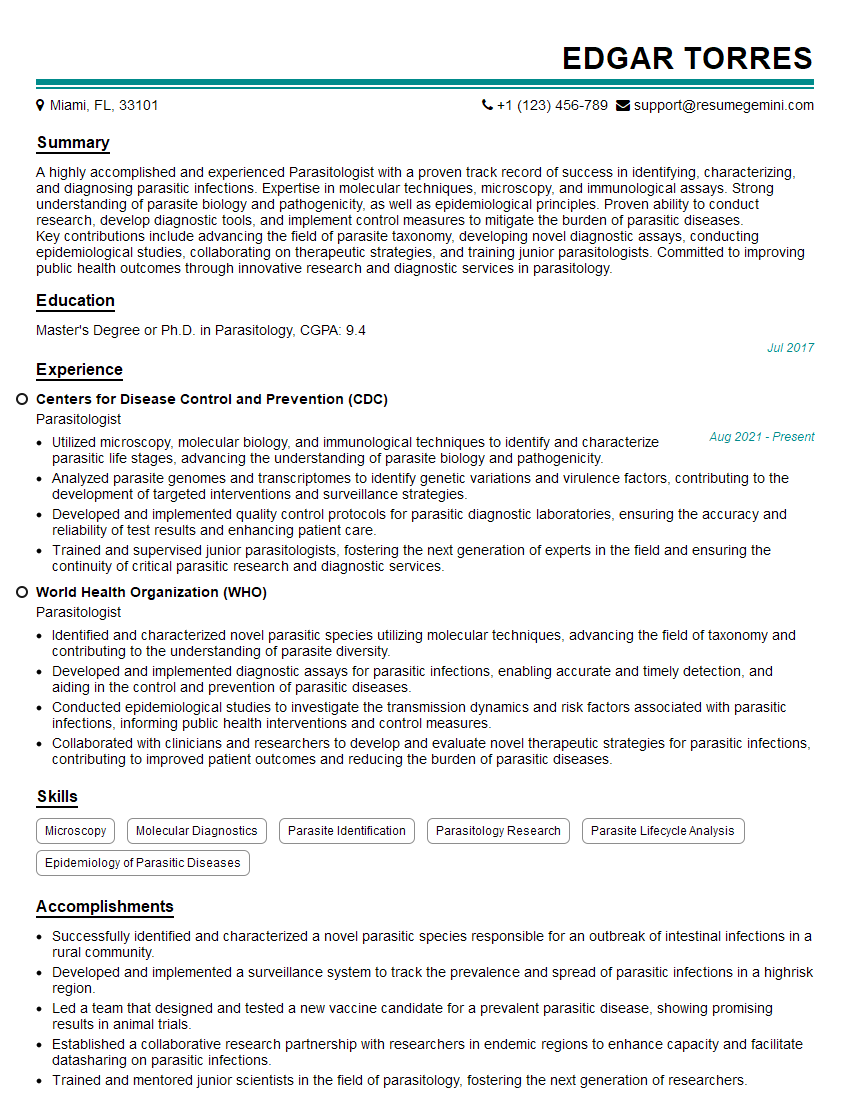
Mastering parasite control opens doors to exciting and impactful careers in agriculture, public health, and environmental science. To maximize your job prospects, create an ATS-friendly resume that highlights your skills and experience effectively. ResumeGemini is a trusted resource that can help you build a professional and impactful resume, ensuring your application stands out. Examples of resumes tailored to the Parasite Control field are available to guide you.

Explore more articles
Users Rating of Our Blogs
Share Your Experience
We value your feedback! Please rate our content and share your thoughts (optional).
What Readers Say About Our Blog
Very informative content, great job.
good