The thought of an interview can be nerve-wracking, but the right preparation can make all the difference. Explore this comprehensive guide to Part Design interview questions and gain the confidence you need to showcase your abilities and secure the role.
Questions Asked in Part Design Interview
Q 1. Explain the difference between feature-based and direct modeling.
Feature-based modeling and direct modeling represent two fundamentally different approaches to 3D CAD design. Think of it like building with LEGOs versus sculpting with clay.
Feature-based modeling is a subtractive or additive process. You start with a base feature (like a block or extrusion) and then add or subtract features (like holes, cuts, fillets, etc.) sequentially. Each feature is defined by parameters like dimensions and location, creating a history tree that tracks all modifications. This allows for easy design changes; modifying a parameter in one feature automatically updates downstream features. SolidWorks, Inventor, and Creo are examples of software using this method.
Direct modeling, on the other hand, is more like free-form sculpting. You directly manipulate the geometry of the model without a feature history tree. This offers greater flexibility for complex organic shapes and rapid prototyping but makes it harder to track changes and manage design iterations. Software like Blender and some advanced modules within other CAD systems offer direct modeling capabilities. It’s commonly used for organic shapes that defy traditional feature-based modeling.
In short: Feature-based modeling is structured, parametric, and history-driven, while direct modeling is freeform, intuitive, and history-less.
Q 2. Describe your experience with different CAD software (e.g., SolidWorks, AutoCAD, Inventor).
My experience spans several leading CAD platforms. I’ve extensively used SolidWorks for its robust feature-based modeling capabilities, particularly in designing complex mechanical assemblies. Its strong simulation tools are invaluable for validating designs before manufacturing. I’ve also worked with AutoCAD, primarily for 2D drafting and detailed drawings, leveraging its precision and annotation features. While less feature-rich in 3D modeling compared to SolidWorks, its strength lies in producing highly accurate manufacturing drawings. Finally, I have experience using Inventor, particularly appreciating its integrated design and simulation environment, and found it beneficial for managing large assemblies and design collaboration.
My expertise extends beyond just the software interface; I understand the underlying principles of geometric modeling and can effectively leverage the strengths of each platform to tackle diverse design challenges. For instance, I’d use SolidWorks for a complex mechanical part, AutoCAD for producing a detailed shop drawing, and Inventor for managing a large assembly project requiring close collaboration with other engineers.
Q 3. How do you ensure the manufacturability of your designs?
Ensuring manufacturability is paramount. My process starts at the design stage, not as an afterthought. I consider manufacturing processes early on, incorporating DFM (Design for Manufacturing) and DFA (Design for Assembly) principles from the outset.
- Material Selection: Choosing the right material is crucial. I consider factors like material strength, cost, machinability, and environmental impact. For example, selecting aluminum for lightweight applications or steel for high-strength components.
- Tolerance Analysis: I carefully define manufacturing tolerances to ensure parts fit together correctly and function as intended. Overly tight tolerances can drive up costs while overly loose tolerances could lead to functional issues.
- Feature Simplification: I avoid unnecessary features or complex geometries. Simpler shapes are easier and cheaper to manufacture. For example, replacing an undercut with a more easily manufactured design.
- Simulation and Analysis: Finite Element Analysis (FEA) and Computational Fluid Dynamics (CFD) help predict part behavior under stress and other environmental factors, leading to robust, reliable designs.
- Collaboration with Manufacturers: Engaging with manufacturers early in the design process is essential for feedback and ensuring that the design is realistically manufacturable. This often leads to design improvements and cost reductions.
Q 4. Explain your understanding of Design for Manufacturing (DFM) principles.
DFM is a crucial design philosophy that focuses on optimizing the design for efficient and cost-effective manufacturing. It’s about integrating manufacturing considerations into the design process from the start. Instead of designing a part first and then figuring out how to make it, DFM prioritizes manufacturability.
- Minimize Part Count: Fewer parts mean less assembly time and lower costs. For example, integrating multiple parts into one through clever design.
- Simplify Geometry: Complex shapes are more expensive and time-consuming to manufacture. Simple, streamlined designs are preferred. A classic example is replacing a complex curve with a series of simpler arcs.
- Standardize Components: Using standard components whenever possible reduces costs and lead times.
- Consider Material Selection: Choosing the right material based on manufacturability (e.g., ease of machining, casting, molding).
- Choose Appropriate Manufacturing Processes: Selecting the best manufacturing process (e.g., CNC machining, injection molding, casting) based on part design and volume.
Q 5. Explain your understanding of Design for Assembly (DFA) principles.
DFA focuses on designing products that are easy and inexpensive to assemble. This often leads to reduced assembly time, fewer errors, and lower manufacturing costs. The key is to simplify the assembly process while ensuring the product functions reliably.
- Modular Design: Breaking down the product into smaller, independent modules simplifies assembly.
- Snap-fits and other Joining Methods: Using self-fastening features like snap-fits, press-fits, and clips eliminates the need for screws or other fasteners, thereby speeding up assembly and reducing costs.
- Simplified Part Orientation: Designing parts so that they can only be assembled in the correct orientation avoids errors.
- Gravity Assist: Designing parts to fall into place during assembly can save time and effort.
- Accessibility of Fasteners: Ensuring that fasteners are easily accessible during assembly simplifies the process.
A classic example is a modular furniture system. Each component is designed for simple assembly using techniques such as snap-fits, requiring no specialized tools.
Q 6. How do you handle design changes and revisions?
Handling design changes and revisions requires a systematic approach. I rely on version control within the CAD software, meticulously documenting all changes and revisions using a change management system. A change log is critical, clearly documenting the reason for the change, the date, the person making the change, and a description of the modification.
For larger projects, we typically use a formal change request process, where design changes are reviewed and approved by a team before being implemented. This ensures that the changes are consistent with the overall design goals and do not negatively impact other parts of the product.
Using a revision control system allows for easy comparison of different versions and facilitates a smooth rollback if necessary. This is vital in maintaining design integrity and traceability throughout the product lifecycle.
Q 7. Describe your process for creating detailed part drawings.
Creating detailed part drawings is essential for communication with manufacturers and ensuring accurate production. My process involves several key steps:
- Geometry Verification: Ensuring the 3D model is complete and accurate before generating the drawing.
- View Selection: Creating multiple orthographic views (front, top, side) and section views as needed to fully define the part geometry.
- Dimensioning and Tolerancing: Applying appropriate dimensions, tolerances (using GD&T where necessary), and surface finish specifications to ensure the part meets the required standards.
- Material Specification: Clearly indicating the material and its properties.
- Bill of Materials (BOM): If applicable, generating a BOM listing all components required for the part’s manufacture.
- Annotations and Notes: Adding any necessary annotations or notes to clarify features or manufacturing processes.
- Title Block: Including a title block with essential information such as part number, revision level, date, and company information.
- Review and Approval: Having the drawing reviewed by colleagues and/or manufacturing personnel to ensure accuracy and clarity before final release.
The goal is to create a drawing that is unambiguous, complete, and easily understood by those responsible for producing the part. This reduces the risk of manufacturing errors and ensures consistency.
Q 8. How do you manage large assemblies and complex parts?
Managing large assemblies and complex parts effectively requires a structured approach. Think of it like conducting a symphony orchestra – each instrument (part) needs to be in harmony with the others to produce a beautiful sound (functional assembly). I utilize several key strategies:
- Modular Design: Breaking down the assembly into smaller, manageable modules reduces complexity. Each module can be designed, tested, and optimized independently before integration. For example, in designing a car, the engine, chassis, and interior could be separate modules.
- Top-Down Assembly: I start with the overall assembly and progressively break it down into sub-assemblies and individual parts. This ensures all parts are designed with the overall function in mind. Imagine building a house – you start with the foundation, then the walls, and finally the interior.
- Component Libraries: Creating and maintaining a library of reusable components speeds up design and ensures consistency. This is like having a toolbox full of pre-made parts ready to use for various projects.
- Parameterization: Using design parameters allows for easy modification and optimization. Changing a single parameter can automatically update related parts, saving significant time and effort. This is analogous to using a template for a document, where changes in one section automatically propagate.
- Data Management: Employing a robust Product Data Management (PDM) system is crucial for tracking revisions, managing design data, and ensuring collaboration amongst team members. Think of it as a central library for all design files, ensuring everyone works with the latest version.
By combining these techniques, I can efficiently handle even the most complex assemblies, ensuring design integrity and minimizing errors.
Q 9. What are your preferred techniques for tolerance analysis?
Tolerance analysis is critical for ensuring parts fit together correctly and function as intended. My preferred techniques involve a combination of approaches:
- Worst-Case Stack-Up Analysis: This method considers the extreme limits of each tolerance to determine the maximum possible deviation. It’s a conservative approach, ensuring the design can withstand the most adverse conditions. Imagine fitting a square peg in a square hole – worst-case analysis accounts for the largest possible peg and the smallest possible hole.
- Statistical Tolerance Analysis: This method uses statistical distributions to model tolerance variations. It provides a more realistic assessment of the assembly’s performance by considering the probability of different combinations of tolerances. This is like estimating the likelihood of rain based on historical weather data.
- Monte Carlo Simulation: This is a powerful technique involving running numerous simulations with randomly generated tolerance values to determine the probability of assembly success or failure. Think of it as a thousand virtual tests for reliability.
The choice of technique depends on the complexity of the assembly and the required level of accuracy. Often, I use a combination of these methods for a comprehensive assessment. For example, worst-case analysis might be used for critical components, while statistical methods might suffice for less critical ones.
Q 10. Explain your experience with GD&T (Geometric Dimensioning and Tolerancing).
Geometric Dimensioning and Tolerancing (GD&T) is the language of precision engineering. I have extensive experience applying GD&T to ensure proper part functionality and interchangeability. My experience includes:
- Applying GD&T symbols: I proficiently use symbols such as position, perpendicularity, flatness, and runout to clearly define the acceptable variations in part geometry.
- Creating and interpreting GD&T drawings: I can create clear and concise GD&T drawings and readily understand existing ones, translating them into practical manufacturing specifications.
- Understanding Datum References: I’m adept at establishing datum references and understanding their impact on tolerance zones. Proper datum referencing is crucial for part functionality and ensures consistent assembly.
- Communicating with Manufacturers: I effectively communicate GD&T requirements to manufacturers, ensuring they understand and meet the specified tolerances. This involves clear communication and collaboration.
Using GD&T avoids ambiguity in design specifications, leading to more accurate manufacturing and reduced rework. I consider GD&T not just as a set of symbols, but as a communication tool essential for high-precision manufacturing.
Q 11. How do you use simulation tools in your design process?
Simulation tools are integral to my design process, allowing me to test and refine designs virtually before physical prototyping. I commonly use:
- Finite Element Analysis (FEA): To analyze stress, strain, and deformation under various loading conditions. This is crucial for ensuring the structural integrity of parts, particularly under extreme conditions. For example, FEA can be used to simulate the stress on a car bumper in a collision.
- Computational Fluid Dynamics (CFD): To analyze fluid flow and heat transfer. This is vital for designing efficient cooling systems or aerodynamic components. CFD can simulate airflow over an airplane wing to improve its efficiency.
- Motion Simulation: To analyze the movement and interaction of parts within an assembly. This helps to identify potential interference or kinematic issues early in the design process. Motion simulation is vital in robotics design to avoid collisions.
By integrating simulation results into my design iterations, I can optimize performance, reduce manufacturing costs, and ensure product reliability.
Q 12. How do you incorporate sustainability considerations into your designs?
Sustainability is no longer an optional consideration; it’s a fundamental aspect of responsible design. I incorporate sustainability through:
- Material Selection: Prioritizing recycled, renewable, or biodegradable materials whenever feasible. For example, using recycled aluminum in automotive parts or bamboo in construction.
- Design for Manufacturing (DFM): Optimizing designs for minimal material usage and efficient manufacturing processes to reduce waste. This includes minimizing machining operations and using standard parts where possible.
- Design for Disassembly (DFD): Designing products for easy disassembly and recycling at the end of their life cycle. This makes recycling easier and reduces landfill waste. This is similar to the concept of modular furniture.
- Lifecycle Assessment (LCA): Conducting LCAs to assess the environmental impact of materials and manufacturing processes throughout the entire product lifecycle. This provides a holistic view of a product’s environmental footprint.
By integrating these principles, I strive to create products that are both functional and environmentally responsible, contributing to a more sustainable future.
Q 13. Describe your experience with material selection for part design.
Material selection is a critical aspect of part design, directly influencing functionality, cost, and sustainability. My process considers several key factors:
- Mechanical Properties: Strength, stiffness, hardness, ductility, and fatigue resistance are crucial depending on the application. For example, high-strength steel for structural components or flexible plastics for housings.
- Thermal Properties: Thermal conductivity, expansion coefficient, and melting point are crucial in thermal management and high-temperature applications. For example, aluminum for heat sinks or ceramics for high-temperature applications.
- Chemical Properties: Corrosion resistance, chemical compatibility, and biocompatibility are essential when considering environmental factors or exposure to specific chemicals. For instance, stainless steel for chemical tanks or biocompatible polymers for medical implants.
- Manufacturing Considerations: Machinability, castability, weldability, and formability influence the manufacturing process and cost. For example, easy-to-machine aluminum alloys for complex parts or easily castable materials for intricate designs.
- Cost Analysis: Material cost, processing cost, and availability are vital factors influencing the overall product cost.
I use material selection databases and software tools to assess material properties and make informed decisions, often involving trade-off analysis between competing factors. For instance, a lightweight material might be preferred for aerospace applications to reduce fuel consumption, even if it is more expensive.
Q 14. How do you handle conflicting design requirements?
Conflicting design requirements are common in engineering. Resolving them necessitates a structured and collaborative approach. My strategy typically involves:
- Clearly Define Requirements: The first step is to clearly define all requirements, including functional, aesthetic, and manufacturing constraints. This often involves discussions with stakeholders to ensure a shared understanding.
- Prioritize Requirements: Prioritize requirements based on their criticality to the product’s function and success. This often involves using a weighted scoring system or decision matrix.
- Trade-off Analysis: Explore the trade-offs between conflicting requirements. This involves analyzing the impact of compromising one requirement to meet another. For example, improving strength might require increasing weight, impacting performance.
- Iterative Design: Iterate on the design, making incremental changes and evaluating their impact on conflicting requirements. This is like a feedback loop, continuously improving the design.
- Compromise and Negotiation: Sometimes, compromises are unavoidable. This involves negotiation and collaboration with stakeholders to reach mutually acceptable solutions.
- Documentation: Carefully document all decisions and justifications for resolving conflicting requirements. This is vital for traceability and future reference.
Effective communication and collaboration are crucial throughout this process. Resolving conflicts often involves finding creative solutions that balance competing demands. The goal is to achieve an optimal design that meets the most critical requirements while minimizing compromises.
Q 15. Explain your approach to problem-solving in part design.
My approach to problem-solving in part design is systematic and iterative. I begin by thoroughly understanding the design requirements, including functionality, performance targets, material constraints, and manufacturing limitations. This often involves discussions with stakeholders to clarify ambiguities and ensure alignment on goals. Then, I generate multiple conceptual designs, sketching and brainstorming various approaches. These concepts are then evaluated based on feasibility, cost-effectiveness, and manufacturability. I leverage CAD software to create 3D models and perform simulations to validate the designs and identify potential weaknesses. Finally, the selected design undergoes iterative refinement, incorporating feedback from analysis and testing, until it meets all specified requirements. Think of it like building with LEGOs – you start with a general idea, experiment with different combinations, and refine your build based on how it performs.
For example, when designing a lightweight yet strong bracket for a robotic arm, I might initially explore different materials (aluminum, carbon fiber, etc.), geometries (lattice structures, solid forms, etc.), and joining methods (welding, adhesive bonding, etc.). Through simulations, I’d assess stress distribution and deflection under load, optimizing the design to minimize weight while ensuring sufficient strength and rigidity.
Career Expert Tips:
- Ace those interviews! Prepare effectively by reviewing the Top 50 Most Common Interview Questions on ResumeGemini.
- Navigate your job search with confidence! Explore a wide range of Career Tips on ResumeGemini. Learn about common challenges and recommendations to overcome them.
- Craft the perfect resume! Master the Art of Resume Writing with ResumeGemini’s guide. Showcase your unique qualifications and achievements effectively.
- Don’t miss out on holiday savings! Build your dream resume with ResumeGemini’s ATS optimized templates.
Q 16. How do you ensure design accuracy and precision?
Ensuring design accuracy and precision is paramount. I employ several strategies to achieve this. Firstly, I utilize high-precision CAD software with robust constraint-based modeling, ensuring dimensional accuracy and consistency throughout the design process. Secondly, I meticulously define tolerances for all critical dimensions, reflecting manufacturing capabilities and assembly requirements. Thirdly, I perform rigorous design reviews, involving colleagues and subject matter experts, to identify and address potential errors or inconsistencies. Finally, I employ Finite Element Analysis (FEA) and Computational Fluid Dynamics (CFD) simulations, where appropriate, to verify the structural integrity and performance of the design under various operating conditions. This allows for early identification of potential issues and facilitates design optimization. Think of it like a surgeon meticulously planning and executing a procedure; precision is non-negotiable.
Example: Specifying a tolerance of ±0.01mm for a critical shaft diameter ensures a proper fit within its housing, preventing failure.Q 17. Describe your experience with creating and managing BOMs (Bills of Materials).
I have extensive experience creating and managing BOMs (Bills of Materials). My approach involves utilizing a structured system, typically integrated within the CAD software or a dedicated PLM (Product Lifecycle Management) system. The BOM includes detailed information on each component, such as part number, description, quantity, material, manufacturer, and cost. I ensure the BOM is accurate and up-to-date throughout the design process, reflecting any revisions or changes made to the part design. I also collaborate with procurement to ensure the availability and cost-effectiveness of the components listed in the BOM. A well-managed BOM is essential for efficient manufacturing and accurate cost estimation. Think of it as a recipe for a complex dish – each ingredient (part) must be accurately listed and in the correct quantity for the final product to be successful.
For instance, I’ve used software like Teamcenter to manage complex BOMs for large assemblies, ensuring traceability and change management throughout the entire product lifecycle.
Q 18. What are some common challenges you encounter in part design, and how do you overcome them?
Common challenges in part design include balancing performance requirements with manufacturing constraints (cost, material availability, manufacturing processes), optimizing designs for manufacturability, and managing design changes effectively. For example, a design might be optimal from a performance standpoint but impossible or prohibitively expensive to manufacture using available techniques. To overcome these challenges, I leverage design for manufacturing (DFM) principles, using tools and techniques to ensure designs are easily and cost-effectively manufactured. Collaboration with manufacturing engineers is crucial in identifying and resolving these issues early in the design process. I also use iterative design and prototyping to validate design concepts and refine the design based on feedback from analysis and testing. Furthermore, a robust change management process is essential to keep track of revisions and maintain design integrity.
For example, a complex geometry might require significant post-processing, increasing the manufacturing cost. A DFM analysis would identify this and lead to a redesign with simplified geometry or using a different manufacturing process (e.g., casting instead of machining).
Q 19. How do you stay updated on the latest trends and technologies in part design?
Staying updated on the latest trends and technologies in part design requires a proactive approach. I regularly attend industry conferences, workshops, and webinars to learn about new materials, manufacturing processes, and design tools. I actively participate in professional organizations and online communities to network with peers and share knowledge. I also subscribe to industry publications and journals and follow leading experts in the field. Continuous learning through online courses and self-study is also critical to stay ahead of the curve. Think of it as constantly upgrading your toolkit to remain competitive and efficient.
For example, I recently completed a course on additive manufacturing (3D printing) to expand my knowledge of this rapidly developing technology and its application in part design.
Q 20. Describe a time you had to redesign a part due to manufacturing constraints.
In one project, I designed a complex injection-molded plastic housing for an electronic device. The initial design, while aesthetically pleasing, proved challenging and expensive to manufacture due to intricate undercuts and thin wall sections. The manufacturing team identified these issues during the prototyping phase. To address the constraints, I redesigned the part using simplified geometry, eliminating undercuts and increasing wall thickness where possible. This required a trade-off in aesthetics, but it significantly improved manufacturability, reduced cost, and improved robustness. The revised design still met the functional requirements and ultimately resulted in a successful product launch. This experience reinforced the importance of close collaboration between design and manufacturing engineers throughout the entire product development cycle.
Q 21. How do you collaborate with other engineers and stakeholders in a design project?
Collaboration is vital in part design. I employ a multidisciplinary approach, working closely with manufacturing engineers, materials scientists, testing engineers, and other stakeholders throughout the design process. This collaboration often takes place through regular meetings, design reviews, and the use of collaborative design tools and platforms. Open communication and clear documentation are critical to ensure everyone is informed and aligned on the design goals and progress. I actively listen to diverse perspectives and incorporate feedback to optimize the design and address potential challenges proactively. Effective communication ensures that everyone is on the same page, which minimizes conflicts and maximizes efficiency.
For instance, in one project, daily stand-up meetings with the manufacturing team allowed us to identify and address potential production issues in real time, leading to a smoother transition from design to production.
Q 22. What are your preferred methods for quality control in part design?
Quality control in part design is paramount. My approach is multifaceted and begins even before the design process starts. It involves a rigorous combination of preventative measures and proactive checks throughout the design lifecycle.
- Design Reviews: Regular peer reviews are crucial. We discuss design choices, potential weaknesses, and manufacturability early on. This collaborative approach catches issues before they become expensive problems. For example, a simple oversight in the initial sketch could lead to a costly mold redesign in injection molding.
- Tolerance Analysis: Understanding and managing tolerances (the allowable variation in dimensions) is essential. Using GD&T (Geometric Dimensioning and Tolerancing) standards helps to clearly communicate these tolerances to manufacturing, reducing ambiguity and scrap. I always consider the manufacturing process and material when setting tolerances. A tighter tolerance might be acceptable for machining but prohibitively expensive for casting.
- 3D Modeling Verification: I thoroughly verify the 3D model for any geometrical errors, interference issues, and manufacturability challenges using software tools. This includes checking for undercuts in injection molding designs or ensuring sufficient wall thickness for structural integrity.
- Simulation and Analysis: Before prototyping, I frequently utilize Finite Element Analysis (FEA) and Computational Fluid Dynamics (CFD) to simulate real-world conditions. This helps predict performance, identify potential failures, and optimize the design. A specific example would be simulating stress on a bracket to ensure it can withstand expected loads.
- Prototyping and Testing: Creating and testing physical prototypes is indispensable. This allows for hands-on evaluation, revealing issues not apparent in simulations. For example, I might create a rapid prototype using 3D printing to verify assembly fit or functionality.
This multi-layered approach ensures the final design meets all specifications and is ready for manufacturing without major setbacks.
Q 23. Describe your understanding of different manufacturing processes (e.g., injection molding, machining).
My experience encompasses various manufacturing processes, each with its own strengths and limitations. Understanding these is crucial for effective part design.
- Injection Molding: Ideal for high-volume production of plastic parts. Design considerations include draft angles (for easy part removal), parting lines (where the mold halves meet), and minimizing undercuts. For example, designing a bottle requires careful attention to the parting line and wall thickness to ensure the bottle doesn’t warp during molding.
- Machining (CNC Machining): Offers flexibility for complex geometries and small batch sizes. Designing for machining requires awareness of tool paths and accessibility. Features like deep pockets or internal cavities might necessitate specialized machining strategies, potentially impacting cost and lead time. An example might be designing a complex aluminum part for aerospace applications where precision is paramount.
- Casting (e.g., Die Casting, Investment Casting): Suitable for intricate metal parts, but the design needs to account for shrinkage and surface finish limitations. Draft angles and sufficient wall thickness are crucial. Imagine designing a decorative metal component; we would consider the casting process to minimize defects and ensure a smooth surface finish.
- Additive Manufacturing (3D Printing): Great for rapid prototyping and low-volume production. Design freedoms are greater, but there are still limitations regarding material properties and surface finish. This method is particularly useful for creating complex internal geometries or customized parts.
Choosing the right process depends on factors such as part complexity, material requirements, production volume, and budget constraints. I select the manufacturing process early on, informing the design choices and ensuring manufacturability from the outset.
Q 24. How do you use version control systems (e.g., Git) in part design projects?
Version control, using Git in my case, is fundamental for managing part design projects, especially collaborative ones. It ensures traceability, facilitates teamwork, and avoids data loss.
- Branching and Merging: I use branches to develop new features or revisions without affecting the main design. This allows for parallel work and easier integration of changes. For instance, I might create a branch for exploring design modifications while maintaining a stable main branch reflecting the current version.
- Committing Regularly: Frequent commits with clear and concise messages document every change. This provides a history of the design’s evolution and makes it easier to revert to previous versions if needed. For example, a commit message might be ‘Updated the bracket dimensions to accommodate new motor size’.
- Collaboration and Conflict Resolution: Git facilitates seamless collaboration. Multiple designers can work on different parts of the design simultaneously. Git’s merge tools help resolve any conflicts that arise, ensuring a consistent design.
- File Management: Git tracks all design files, including CAD models, drawings, and supporting documents, providing a centralized and secure repository.
Git’s features ensure a structured and collaborative design process, minimizing risks and improving efficiency.
Q 25. Explain your experience with parametric modeling.
Parametric modeling is the cornerstone of my design process. It’s a powerful technique that allows me to define parts using parameters (variables) rather than fixed dimensions. This significantly boosts design flexibility and efficiency.
- Design Changes: Modifying a single parameter automatically updates the entire design, saving considerable time and reducing errors. For example, if I need to increase the length of a part, changing one parameter automatically adjusts all related dimensions, ensuring consistency.
- Design Exploration: I can easily explore different design variations by changing parameter values, quickly assessing their impact on the design. This allows for optimized designs within constraints.
- Automation and Repeatability: Parametric models enable automation of design tasks. Repetitive components can be created easily with minimal effort, maintaining consistency across the design.
- Software Familiarity: I am proficient in various CAD software packages that support parametric modeling, including SolidWorks, Fusion 360, and Autodesk Inventor.
Parametric modeling is not simply about changing numbers; it’s about building a structured and intelligent model that adapts to changes elegantly.
Q 26. How do you optimize part designs for weight and cost?
Optimizing part designs for weight and cost is a critical aspect of engineering design. This involves a careful balance of material selection, design simplification, and manufacturing process considerations.
- Material Selection: Choosing the right material significantly impacts both weight and cost. Lightweight materials like aluminum alloys or composites might be more expensive but offer substantial weight savings. For instance, I might use carbon fiber for a high-performance automotive part where weight reduction is prioritized.
- Design Simplification: Reducing complexity generally reduces material usage and manufacturing time. This involves simplifying shapes, consolidating parts, and eliminating unnecessary features. A good example is using a single, optimized part instead of multiple parts connected by fasteners.
- Manufacturing Process Optimization: Selecting the appropriate manufacturing process is crucial. Processes like injection molding are cost-effective for high-volume production, while machining might be better suited for low-volume, complex parts. This requires an in-depth understanding of manufacturing capabilities and limitations.
- Topology Optimization: Advanced techniques like topology optimization leverage software algorithms to remove material from the design while maintaining structural integrity. This produces lightweight and structurally efficient parts.
- Design for Manufacturing (DFM): This process involves considering the manufacturing process during the design phase to minimize waste and costs. For example, selecting standard sizes of fasteners will reduce cost compared to custom-designed ones.
The optimal balance between weight and cost is highly context-dependent, necessitating careful consideration of the application and its requirements.
Q 27. Explain your understanding of finite element analysis (FEA).
Finite Element Analysis (FEA) is a powerful computational method used to predict how a product reacts to real-world forces, vibration, heat, fluid flow, and other physical effects. It’s an essential tool in my design process.
- Stress Analysis: FEA helps determine the stresses and strains within a part under various load conditions. This is crucial for ensuring the design can withstand expected forces and avoid failure. A practical example is analyzing the stress on a car chassis to ensure it can handle impacts.
- Modal Analysis: This determines the natural frequencies and mode shapes of a structure. This information is vital for avoiding resonance and ensuring the design’s vibration characteristics are within acceptable limits. For instance, I use modal analysis to design a vibrating component to avoid unwanted noises or damage.
- Heat Transfer Analysis: FEA can simulate heat flow within a part, crucial for designing heat sinks, electronics packaging, or other applications where thermal management is critical. An example would be modeling the heat transfer of a computer processor to ensure efficient cooling.
- Software Proficiency: I’m experienced using various FEA software packages such as ANSYS, Abaqus, and Nastran.
FEA provides invaluable insights into a design’s performance, allowing me to identify potential weaknesses and refine the design for optimal robustness and reliability.
Q 28. Describe your experience with reverse engineering processes.
Reverse engineering involves analyzing an existing product to understand its design and functionality. This is often employed to replicate a part, improve upon an existing design, or understand the design choices of a competitor.
- Scanning and Measurement: This usually starts with 3D scanning using techniques like laser scanning or computed tomography (CT) scanning to create a point cloud of the existing part. Accurate measurements of critical dimensions are also taken.
- CAD Model Creation: The point cloud data is then processed and used to create a 3D CAD model. This often involves substantial manual cleanup and reconstruction using CAD software.
- Analysis and Interpretation: The CAD model is analyzed to understand the design’s features, tolerances, and manufacturing processes. This requires a keen eye for detail and a solid understanding of manufacturing techniques.
- Material Identification: Determining the material of the original part is crucial. Methods like spectrographic analysis may be used to determine its composition and properties.
Reverse engineering can be a complex and time-consuming process but offers valuable insights into existing designs and manufacturing techniques, aiding in design improvement, cost reduction, or intellectual property protection.
Key Topics to Learn for Part Design Interview
- Fundamental Design Principles: Understanding concepts like form, function, and aesthetics as they relate to part design. Explore how these principles impact manufacturability and cost.
- Material Selection: Learn the properties of various materials (plastics, metals, composites) and their suitability for different applications. Practice selecting materials based on performance requirements and cost considerations.
- Tolerance Analysis and GD&T: Mastering Geometric Dimensioning and Tolerancing (GD&T) is crucial. Understand how tolerances affect part functionality and assembly. Practice interpreting and applying GD&T symbols.
- Manufacturing Processes: Familiarize yourself with common manufacturing processes like injection molding, machining, casting, and 3D printing. Understand the design considerations for each process to ensure manufacturability.
- Design for Manufacturing (DFM) and Assembly (DFA): Learn how to design parts for efficient and cost-effective manufacturing and assembly. Consider factors like ease of assembly, minimizing part count, and simplifying tooling.
- Finite Element Analysis (FEA): Develop a basic understanding of FEA and its application in validating designs. Learn how to interpret FEA results and use them to improve part performance and durability.
- Computer-Aided Design (CAD) Software Proficiency: Showcase your expertise in relevant CAD software (SolidWorks, AutoCAD, Creo, etc.). Be prepared to discuss your experience with modeling, assembly, and detailing.
- Problem-Solving and Design Iteration: Demonstrate your ability to identify and solve design challenges. Highlight your experience iterating on designs based on feedback and testing.
Next Steps
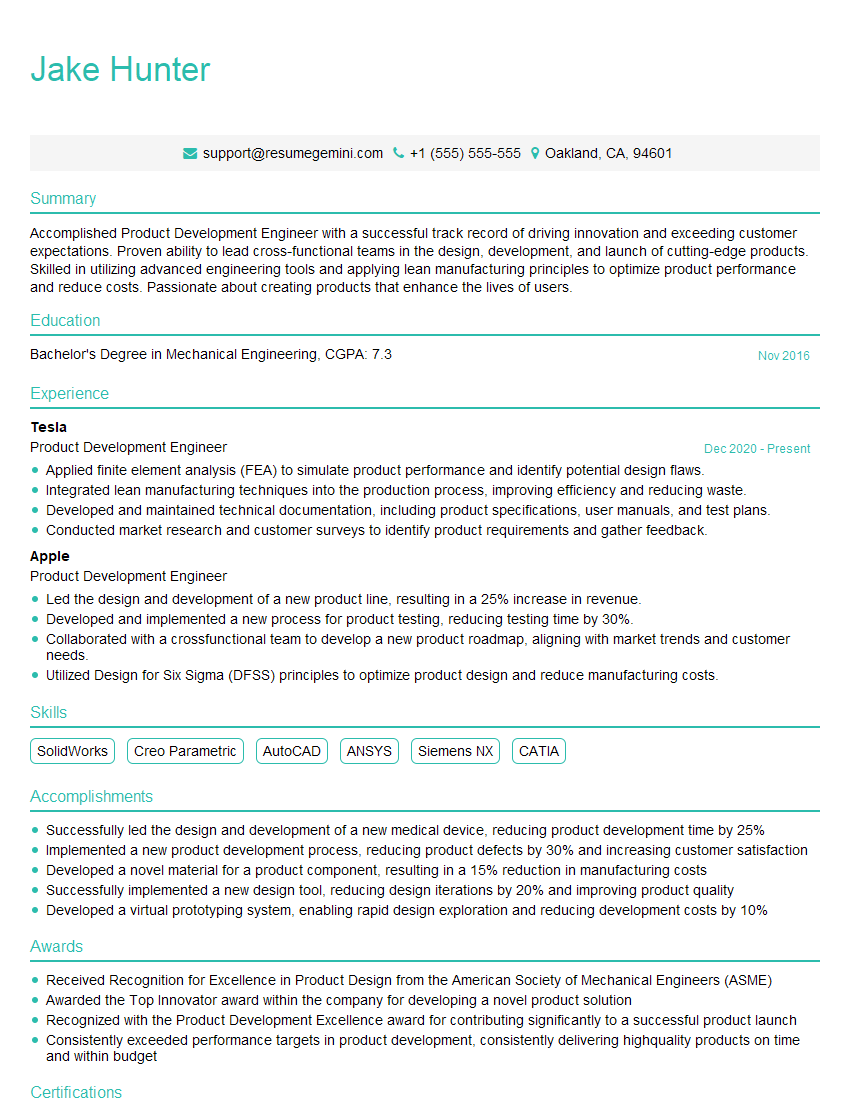
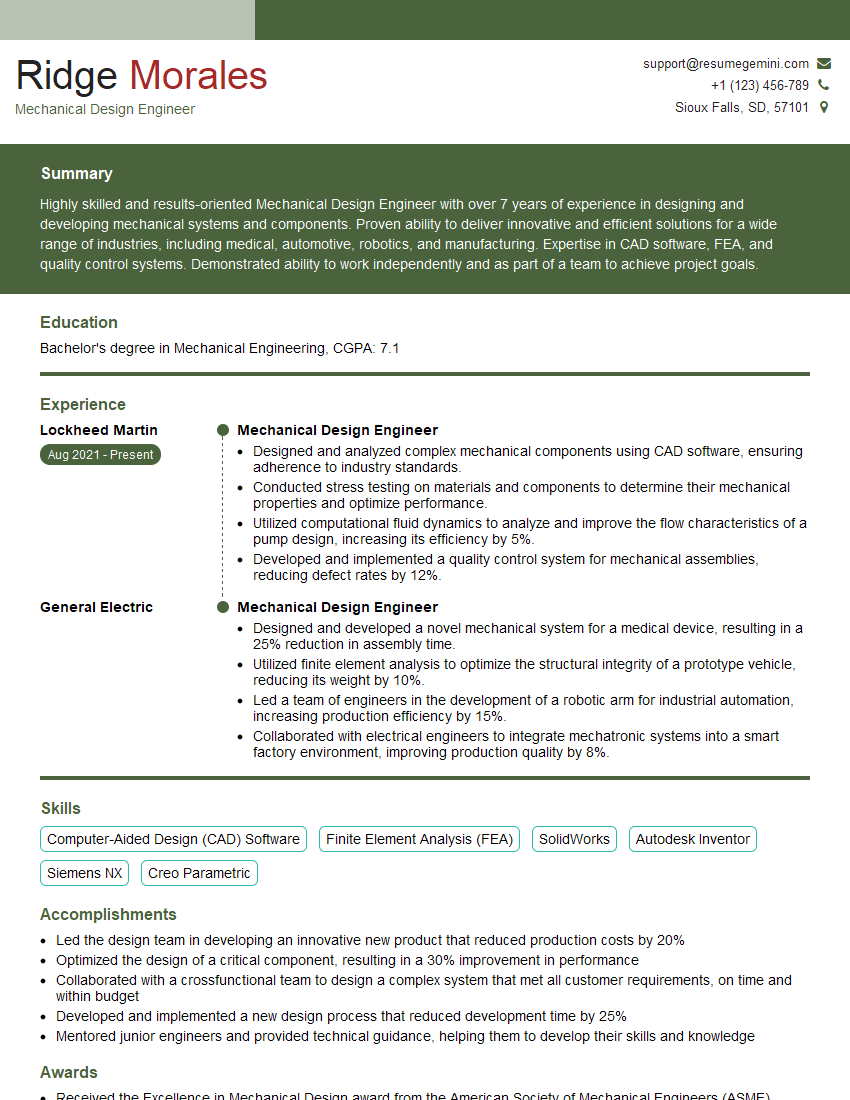
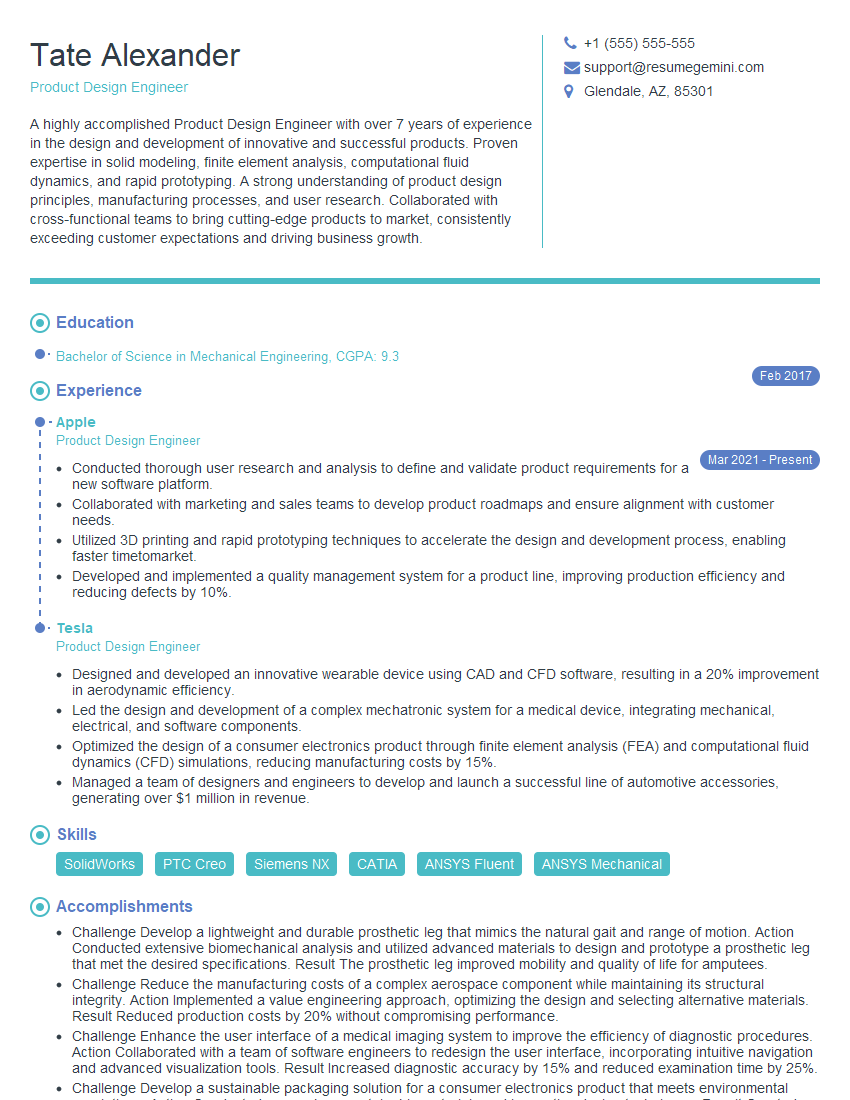
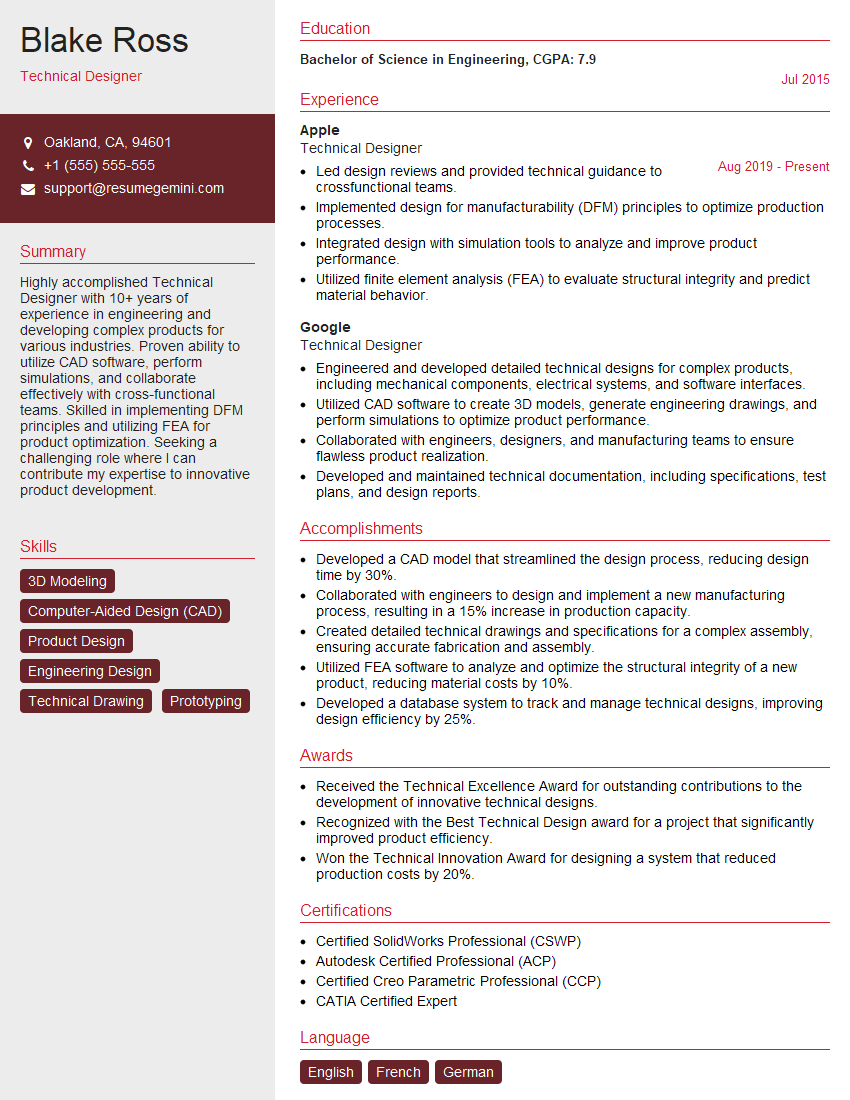
Mastering Part Design is key to a successful and rewarding career in engineering. It opens doors to exciting projects and opportunities for professional growth. To maximize your job prospects, create an ATS-friendly resume that highlights your skills and experience effectively. ResumeGemini is a trusted resource that can help you build a professional and impactful resume. We provide examples of resumes tailored specifically to Part Design to help you get started.
Explore more articles
Users Rating of Our Blogs
Share Your Experience
We value your feedback! Please rate our content and share your thoughts (optional).
What Readers Say About Our Blog
Hello,
we currently offer a complimentary backlink and URL indexing test for search engine optimization professionals.
You can get complimentary indexing credits to test how link discovery works in practice.
No credit card is required and there is no recurring fee.
You can find details here:
https://wikipedia-backlinks.com/indexing/
Regards
NICE RESPONSE TO Q & A
hi
The aim of this message is regarding an unclaimed deposit of a deceased nationale that bears the same name as you. You are not relate to him as there are millions of people answering the names across around the world. But i will use my position to influence the release of the deposit to you for our mutual benefit.
Respond for full details and how to claim the deposit. This is 100% risk free. Send hello to my email id: [email protected]
Luka Chachibaialuka
Hey interviewgemini.com, just wanted to follow up on my last email.
We just launched Call the Monster, an parenting app that lets you summon friendly ‘monsters’ kids actually listen to.
We’re also running a giveaway for everyone who downloads the app. Since it’s brand new, there aren’t many users yet, which means you’ve got a much better chance of winning some great prizes.
You can check it out here: https://bit.ly/callamonsterapp
Or follow us on Instagram: https://www.instagram.com/callamonsterapp
Thanks,
Ryan
CEO – Call the Monster App
Hey interviewgemini.com, I saw your website and love your approach.
I just want this to look like spam email, but want to share something important to you. We just launched Call the Monster, a parenting app that lets you summon friendly ‘monsters’ kids actually listen to.
Parents are loving it for calming chaos before bedtime. Thought you might want to try it: https://bit.ly/callamonsterapp or just follow our fun monster lore on Instagram: https://www.instagram.com/callamonsterapp
Thanks,
Ryan
CEO – Call A Monster APP
To the interviewgemini.com Owner.
Dear interviewgemini.com Webmaster!
Hi interviewgemini.com Webmaster!
Dear interviewgemini.com Webmaster!
excellent
Hello,
We found issues with your domain’s email setup that may be sending your messages to spam or blocking them completely. InboxShield Mini shows you how to fix it in minutes — no tech skills required.
Scan your domain now for details: https://inboxshield-mini.com/
— Adam @ InboxShield Mini
Reply STOP to unsubscribe
Hi, are you owner of interviewgemini.com? What if I told you I could help you find extra time in your schedule, reconnect with leads you didn’t even realize you missed, and bring in more “I want to work with you” conversations, without increasing your ad spend or hiring a full-time employee?
All with a flexible, budget-friendly service that could easily pay for itself. Sounds good?
Would it be nice to jump on a quick 10-minute call so I can show you exactly how we make this work?
Best,
Hapei
Marketing Director
Hey, I know you’re the owner of interviewgemini.com. I’ll be quick.
Fundraising for your business is tough and time-consuming. We make it easier by guaranteeing two private investor meetings each month, for six months. No demos, no pitch events – just direct introductions to active investors matched to your startup.
If youR17;re raising, this could help you build real momentum. Want me to send more info?
Hi, I represent an SEO company that specialises in getting you AI citations and higher rankings on Google. I’d like to offer you a 100% free SEO audit for your website. Would you be interested?
Hi, I represent an SEO company that specialises in getting you AI citations and higher rankings on Google. I’d like to offer you a 100% free SEO audit for your website. Would you be interested?
good