The right preparation can turn an interview into an opportunity to showcase your expertise. This guide to Part Tolerancing and Assembly Analysis interview questions is your ultimate resource, providing key insights and tips to help you ace your responses and stand out as a top candidate.
Questions Asked in Part Tolerancing and Assembly Analysis Interview
Q 1. Explain the concept of GD&T and its importance in manufacturing.
Geometric Dimensioning and Tolerancing (GD&T) is a symbolic language used on engineering drawings to precisely define the size, form, orientation, location, and runout of features. It goes beyond simple plus/minus tolerances by specifying permissible variations in a more comprehensive and unambiguous way. This is crucial in manufacturing because it ensures parts fit together correctly, function as intended, and meet quality standards. Imagine building a car engine – if each part’s tolerances are loosely defined, you might end up with components that don’t align properly, leading to poor performance or even failure.
The importance of GD&T lies in its ability to:
- Reduce ambiguity: GD&T provides clear, unambiguous specifications, minimizing misunderstandings between designers and manufacturers.
- Improve quality: By precisely defining acceptable variations, GD&T leads to higher quality products with improved functionality and reliability.
- Reduce costs: Clearer specifications reduce rework, scrap, and assembly problems, ultimately saving money.
- Facilitate global collaboration: GD&T uses a standardized system understood worldwide, enabling seamless collaboration on international projects.
Q 2. Describe different types of tolerances and their applications.
Different types of tolerances address specific aspects of a part’s geometry:
- Size Tolerances: Define the permissible variation in a part’s dimensions (length, width, diameter). Represented by a plus/minus value (e.g., 10 ± 0.1 mm). These are fundamental to ensuring parts are the right size.
- Form Tolerances: Control the shape deviations of a single feature (e.g., straightness, flatness, circularity, cylindricity). These ensure the feature’s shape conforms to the ideal geometry.
- Orientation Tolerances: Define the permissible angular variation between features (e.g., parallelism, perpendicularity, angularity). These guarantee correct alignment of features.
- Location Tolerances: Specify the allowable deviation of a feature’s position relative to a datum (e.g., position, concentricity, symmetry). Crucial for assembly, as it ensures parts fit together correctly.
- Runout Tolerances: Control the variation of a feature’s circularity as it rotates around an axis (e.g., circular runout, total runout). Important for features that rotate.
For example, a shaft’s diameter (size tolerance) might be specified with a tolerance of ±0.05 mm, but its straightness (form tolerance) might be limited to 0.1 mm over its entire length to ensure it rotates smoothly within a bearing.
Q 3. How do you perform a tolerance stack-up analysis?
Tolerance stack-up analysis determines the cumulative effect of individual part tolerances on the overall assembly dimensions. It’s like a chain—if one link is weak, the entire chain can fail. Similarly, if individual part tolerances are too large, the final assembly might not function correctly.
Performing a tolerance stack-up analysis involves:
- Identify critical dimensions: Determine the key dimensions affecting the assembly’s functionality.
- Define individual part tolerances: Gather tolerance data for each relevant part.
- Determine the relationship between dimensions: Analyze how individual part tolerances influence the overall assembly dimension. This often involves understanding whether tolerances add up (worst-case scenario) or partially cancel each other out (statistical approach).
- Calculate the cumulative tolerance: Use appropriate calculation methods (worst-case, RSS, etc.) to determine the total tolerance on the critical assembly dimension.
- Evaluate the result: Compare the cumulative tolerance to the required assembly tolerance to see if the design meets specifications. If not, redesign is needed.
For example, consider an assembly with three parts. Part A has a length of 10 ± 0.1 mm, Part B has a length of 15 ± 0.2 mm, and Part C has a length of 5 ± 0.1 mm. If these parts are assembled end-to-end, a simple worst-case stack-up would be 30 ± 0.4 mm.
Q 4. What are the common methods for tolerance stack-up calculation?
Several methods exist for tolerance stack-up calculation, each with its own assumptions and level of conservatism:
- Worst-Case Stack-Up: This method assumes all individual tolerances add up in the worst-possible direction. It’s the most conservative approach, guaranteeing the assembly will always meet specifications, but it can lead to overly tight tolerances and increased costs. It’s calculated by simply summing the maximum possible deviations.
- Root Sum Square (RSS) Method: This statistical approach considers the probability distribution of individual tolerances. It assumes tolerances are randomly distributed, meaning some will compensate for others. This method is less conservative than the worst-case approach, allowing for looser individual tolerances while still ensuring a high probability of meeting assembly requirements. Calculated using the formula: √(Σ(Ti²) ), where Ti is the individual tolerance.
- Monte Carlo Simulation: This sophisticated method uses computer simulation to model the probability distribution of the assembly dimension, considering a large number of random variations of individual part tolerances. This allows for a more accurate prediction of the assembly tolerance and its probability of meeting specifications.
Q 5. Explain the difference between unilateral and bilateral tolerances.
The difference lies in how the tolerance is distributed around the nominal dimension:
- Unilateral Tolerance: Allows variation only in one direction from the nominal dimension. For example, a unilateral tolerance of 10 +0.1 mm allows the dimension to vary from 10.0 mm to 10.1 mm, but not below 10.0 mm. This is useful when only one direction of variation is critical.
- Bilateral Tolerance: Allows variation in both directions from the nominal dimension. For example, a bilateral tolerance of 10 ± 0.1 mm allows the dimension to vary from 9.9 mm to 10.1 mm. This is more common and provides flexibility.
Choosing between unilateral and bilateral tolerances depends on the specific application. If a dimension needs to be at least a certain minimum value (e.g., wall thickness), a unilateral tolerance may be more appropriate.
Q 6. How do you interpret GD&T symbols on engineering drawings?
Interpreting GD&T symbols requires understanding the different features and modifiers used. Each symbol represents a specific geometric characteristic and its tolerance zone. For example:
- Position Symbol (⌀): Indicates the permissible deviation of a feature’s location from a theoretical perfect position. The tolerance zone is a circular area around the nominal location.
- Perpendicularity Symbol (⊥): Specifies the allowed angular variation of a feature relative to a datum plane or axis. The tolerance zone is a parallel zone around the datum.
- Flatness Symbol (⋪): Indicates the allowed deviation from a perfectly flat surface. The tolerance zone is a zone between two parallel planes.
Datums (usually indicated with A, B, C etc.) are fundamental references points or surfaces on the part. The location and orientation of features are defined relative to these datums. Modifiers like material conditions modifiers (MMC, LMC) specify whether the tolerance is applied to the maximum or least material condition of the feature. Understanding the interplay between symbols, tolerances, datums, and modifiers is essential for correct interpretation.
For instance, a position tolerance specified at Maximum Material Condition (MMC) means that the tolerance is largest when the feature is at its maximum size. This allows for more variation when the feature is smaller.
Q 7. What software tools are you familiar with for tolerance analysis?
I’m familiar with several software tools for tolerance analysis, including:
- 3DCS (3D Coordinate Dimensioning and Simulation): A powerful software for advanced tolerance analysis and simulation, allowing for Monte Carlo simulation and visualization of tolerance stack-up effects.
- MATLAB with specialized toolboxes: MATLAB’s statistical and simulation capabilities are used for tolerance analysis, often coupled with custom scripts for specific applications.
- Specialized CAD Software Features: Many modern CAD software packages, such as Creo and SolidWorks, incorporate tolerance analysis tools directly within their environment. These can provide automated stack-up calculations based on the CAD model.
- Spreadsheet Software (Excel): For simpler tolerance analyses, spreadsheets can be used for manual calculations using worst-case or RSS methods.
The choice of software depends on the complexity of the analysis and the required level of detail. For simple assemblies, spreadsheet software might suffice. However, for complex assemblies with numerous interacting tolerances, dedicated tolerance analysis software provides a more robust and reliable approach.
Q 8. How do you handle variations in material properties during tolerance analysis?
Material property variations, like Young’s modulus or yield strength, significantly impact part dimensions and assembly performance. We can’t ignore them in tolerance analysis. Instead, we account for these variations using statistical methods. For example, if we know the yield strength of a material follows a normal distribution, we can incorporate that distribution into our tolerance analysis model. This is typically done by defining a range of material properties with associated probabilities, often drawn from material datasheets or testing results.
One approach is to perform multiple simulations using different material property values within their defined range. Imagine designing a plastic part. The material’s stiffness might vary slightly between batches. We can run our analysis with the minimum stiffness, maximum stiffness, and a nominal stiffness to observe the impact on overall tolerances. This helps understand the worst-case scenario and how likely it is to occur.
Another method involves using a statistical distribution for the material property itself within the tolerance calculations. For instance, instead of using a single value for Young’s modulus, we’d use the mean and standard deviation of the modulus, allowing the model to account for the probabilistic nature of the material variation. This allows for a more realistic and robust tolerance analysis.
Q 9. Explain the concept of statistical tolerance analysis.
Statistical tolerance analysis moves beyond simple worst-case stack-up. Instead of adding the maximum tolerances of all parts, it uses statistical distributions to represent the variation in each part’s dimensions. This approach is much more realistic, reflecting the fact that dimensions aren’t always at their extreme limits. Imagine measuring the length of 100 identical parts – you’ll likely find a range of lengths, clustering around a mean value. Statistical tolerance analysis models this behavior.
Common statistical distributions used include normal, uniform, and triangular distributions. The choice depends on the available data and the nature of the manufacturing process. We often use Monte Carlo simulations to evaluate statistical tolerances (as discussed in Question 4). This helps determine the probability that the assembly will meet its functional requirements. This is a huge advantage over worst-case scenarios, which are often overly conservative and lead to unnecessary cost increases.
Q 10. What are the key considerations when designing for manufacturability?
Designing for manufacturability (DFM) is critical for avoiding costly rework and delays. Key considerations include:
- Manufacturing Process Capabilities: Understanding the capabilities and limitations of the chosen manufacturing processes is paramount. For instance, injection molding has different precision limits than machining. Selecting appropriate tolerances based on the process capabilities prevents unrealistic expectations.
- Part Geometry: Complex geometries might require more complex and expensive manufacturing processes. Simplifying the design whenever possible reduces manufacturing costs and improves consistency.
- Material Selection: Material choice impacts both manufacturing feasibility and part performance. A material that’s easy to machine might not have the required strength or durability. The balance between these factors must be considered.
- Tooling: Tooling design and cost should be carefully evaluated. Complex tools can be expensive, and their accuracy will influence final part dimensions. Early collaboration with manufacturing engineers is key.
- Assembly Considerations: Parts must be designed for efficient and reliable assembly. This includes things like tolerances allowing for easy mating, appropriate clearances, and methods for part handling.
A real-world example is designing a plastic enclosure for electronics. If you design it with extremely tight tolerances, the injection molding process might be very difficult and expensive, potentially resulting in defects or high scrap rates. DFM emphasizes finding the optimal balance between design intent and achievable manufacturing processes.
Q 11. Describe your experience with Monte Carlo simulation in tolerance analysis.
Monte Carlo simulation is a powerful tool for tolerance analysis, particularly in statistical analysis. It involves running numerous simulations, each using randomly sampled values from the defined tolerance distributions for each part. For instance, if a part’s length has a normal distribution with a mean of 10mm and a standard deviation of 0.1mm, the simulation would randomly select a length from this distribution for each run.
By performing thousands of these simulations, we build a statistical distribution of the assembly’s overall performance parameter. This allows us to determine the probability of the assembly functioning correctly, calculate the probability of exceeding certain critical limits, and identify the most influential parts. I’ve used Monte Carlo simulation extensively in several projects, including the design of a precision robotic arm and an aircraft engine component. The results were crucial for optimizing designs and minimizing manufacturing costs, ensuring the assemblies met specified performance criteria with high confidence.
Software packages like Matlab, Python with specialized libraries, and dedicated tolerance analysis software are commonly used to perform these simulations. The output usually includes histograms, probability density functions, and other statistical summaries to visualize the results and understand the risk associated with the chosen tolerances.
Q 12. How do you determine the critical tolerances in an assembly?
Identifying critical tolerances requires a systematic approach. We often start by performing a tolerance stack-up analysis, either worst-case or statistical, to see how individual part tolerances contribute to the overall assembly variation. This helps pinpoint parts where even small variations have a significant impact on the assembly’s functionality. The next steps include:
- Sensitivity Analysis: We systematically vary each tolerance by a certain amount to see how it changes the overall assembly performance. This helps prioritize tolerances based on their impact.
- Design of Experiments (DOE): DOE techniques can be used to efficiently explore the design space and identify the most influential tolerances. These methods often involve running a smaller number of simulations strategically selected to provide the most information.
- Tolerance Charts/Graphs: These visual aids can help quickly identify tolerances with the largest impact.
- Functional Requirements: Identifying the assembly’s key functional requirements is crucial. We need to understand which tolerances are most directly connected to these requirements, allowing us to focus our efforts where they’re most needed.
For example, in a gear assembly, the critical tolerance would likely be the distance between the gears, which dictates proper meshing and function. A small variation here can significantly affect performance, making it a higher priority for control.
Q 13. How do you communicate tolerance requirements to manufacturing teams?
Clear communication is crucial to ensure manufacturing teams understand and can meet tolerance requirements. We use a multi-faceted approach:
- Detailed Drawings: Drawings must include clear GD&T (Geometric Dimensioning and Tolerancing) annotations, specifying tolerances according to industry standards (ASME Y14.5, ISO 1101).
- Tolerance Tables: A separate table summarizing all tolerances can be very helpful for quick reference.
- Process Capability Studies: Providing data on the manufacturing process capabilities helps the team understand the feasibility of meeting the specifications.
- Collaborative Meetings: Regular meetings allow for discussion and clarification of any ambiguities. We discuss the rationale behind the tolerance choices to foster understanding and buy-in.
- Tolerance Analysis Reports: Sharing the results of the tolerance analysis, including sensitivity studies and Monte Carlo simulations, adds transparency and strengthens the justification for the chosen tolerances.
Using visual aids, such as 3D models showing tolerance zones, and providing examples of acceptable and unacceptable parts further enhances comprehension. This proactive approach minimizes misunderstandings and ensures everyone is on the same page, preventing errors and delays.
Q 14. What are the potential consequences of insufficient tolerancing?
Insufficient tolerancing can have significant and costly consequences:
- Assembly Failures: Parts might not fit together properly, resulting in malfunctions or complete assembly failure.
- Reduced Performance: Even if the assembly functions, inadequate tolerances can lead to poor performance or reduced lifespan.
- Increased Manufacturing Costs: Overly tight tolerances can increase manufacturing complexity, material waste, and labor costs.
- Rework and Scrap: Parts that don’t meet specifications require rework or might be scrapped entirely, adding considerable expense.
- Product Recalls: In severe cases, insufficient tolerancing can lead to product recalls if the resulting defects pose a safety hazard or significantly impact product functionality.
- Warranty Claims: Frequent failures due to insufficient tolerancing can increase warranty claims, further impacting the company’s financial performance.
For example, if the tolerances for a critical dimension in a medical device are too loose, it could lead to malfunctions during surgery, potentially causing serious harm to the patient. Proper tolerancing is not just about cost; it’s also about ensuring product safety and reliability.
Q 15. Explain the relationship between design tolerances and manufacturing processes.
Design tolerances and manufacturing processes are intrinsically linked. Tolerances define the acceptable range of variation for a part’s dimensions, form, and orientation. The manufacturing process dictates the achievable level of precision and consistency. Choosing a tolerance that’s too tight for the selected manufacturing method will lead to high rejection rates and increased costs, while tolerances that are too loose might compromise the functionality and assembly of the product. Think of it like baking a cake: the recipe (design) specifies the amount of each ingredient (dimensions), but the baker’s skill (manufacturing process) determines how closely the final product matches the recipe. A skilled baker with precision tools can achieve tighter tolerances than someone less experienced using less precise equipment. For example, a tolerance of ±0.1mm might be easily achievable with CNC machining but incredibly challenging with casting.
In practice, we select manufacturing methods that are capable of consistently meeting the specified tolerances. This involves careful consideration of factors such as material properties, machine capabilities, and process variability. We often use statistical process control (SPC) techniques to monitor manufacturing processes and ensure tolerances are being maintained.
Career Expert Tips:
- Ace those interviews! Prepare effectively by reviewing the Top 50 Most Common Interview Questions on ResumeGemini.
- Navigate your job search with confidence! Explore a wide range of Career Tips on ResumeGemini. Learn about common challenges and recommendations to overcome them.
- Craft the perfect resume! Master the Art of Resume Writing with ResumeGemini’s guide. Showcase your unique qualifications and achievements effectively.
- Don’t miss out on holiday savings! Build your dream resume with ResumeGemini’s ATS optimized templates.
Q 16. How do you manage conflicting tolerance requirements?
Conflicting tolerance requirements arise when the tolerances of individual parts, when combined in an assembly, don’t allow for the successful mating of those parts. For instance, a shaft might need to have a tight tolerance for its diameter to ensure smooth rotation within a bearing, while the bearing itself might have tolerances that, when combined with shaft tolerances, result in an interference fit or a loose fit outside of the acceptable range. This is a common challenge in engineering design. We address this through several methods:
- Tolerance Stack-Up Analysis: This is the most crucial step. We use various methods like worst-case analysis, statistical analysis (e.g., Monte Carlo simulation), and root sum square (RSS) methods to determine the combined effect of individual part tolerances on the overall assembly. This helps identify the source of the conflict.
- Tolerance Allocation: After identifying the conflict, we redistribute tolerances among different parts, allowing tighter tolerances on critical features and looser tolerances on less critical ones. This requires a deep understanding of which dimensions have the greatest impact on assembly and product functionality.
- Design Modification: In some cases, it might be necessary to modify the design itself to reduce the sensitivity to tolerance variations. This could involve using features like compliant mechanisms or changing the assembly sequence. For example, adding a clearance feature or using a different type of fastener.
- Negotiation: Sometimes, constraints from different design teams or departments must be balanced. Clear communication and negotiation are key to finding a compromise that satisfies all stakeholders and maintains functionality.
For example, I once worked on a project with conflicting tolerances between a gear and its housing. By using tolerance stack-up analysis, we identified that the gear’s axial positioning was the main culprit. We modified the design by adding a locating pin, which significantly reduced the tolerance sensitivity and resolved the conflict.
Q 17. Describe your experience using tolerance analysis software (e.g., Tolerance Analysis, CETOL)
I have extensive experience using tolerance analysis software, including CETOL 6σ and Tolerance Analysis software from various CAD packages. These tools are invaluable for performing comprehensive stack-up analysis and for simulating the effects of different tolerance combinations on assemblies. CETOL, for example, allows for sophisticated statistical analysis to predict assembly capability and identify critical tolerances. I’ve used it to:
- Perform worst-case and statistical tolerance analysis: This provides a range of possible outcomes, helping us to determine the robustness of our designs.
- Optimize tolerance allocations: By iteratively changing tolerances, the software helps identify the most cost-effective allocation that still ensures functionality.
- Visualize tolerance stack-ups: Graphical representations help communicate the analysis results effectively to stakeholders.
- Generate tolerance reports: These provide detailed documentation for manufacturing and quality control.
One project where tolerance analysis software proved invaluable involved a complex optical assembly. The software helped us to identify a subtle interaction between multiple components that would have led to misalignment and performance degradation. By adjusting tolerances and manufacturing processes, we were able to prevent these problems.
Q 18. How do you verify the accuracy of tolerance analysis results?
Verifying the accuracy of tolerance analysis results involves a multi-faceted approach. We can’t solely rely on software; we need empirical evidence. My verification strategy typically includes:
- Comparing simulation results with physical measurements: Building and measuring prototypes allows us to validate the accuracy of our simulations. Discrepancies help refine the model and identify potential errors.
- Using multiple analysis methods: Employing various approaches like worst-case, statistical, and Monte Carlo methods allows us to cross-check our results and build confidence in their accuracy.
- Sensitivity analysis: Assessing the sensitivity of the results to changes in input parameters (tolerances, material properties) helps identify uncertainties and their impact.
- Reviewing assumptions and limitations: Tolerance analysis relies on assumptions about manufacturing processes, material properties, and assembly methods. Carefully reviewing these assumptions is essential to ensure the results are valid.
- Comparing simulation results with historical data (if available): If similar designs exist with known manufacturing data, we can compare simulated results to see if the model accurately predicts the real-world outcome.
For example, in a recent project involving a precision robotic arm, we built three prototypes with different tolerance combinations. The measurements validated our simulation results, giving us confidence in our design’s robustness. Any discrepancies highlighted areas requiring process improvements or design refinements.
Q 19. Explain the impact of tolerances on product functionality and performance.
Tolerances significantly impact product functionality and performance. Too loose tolerances can lead to:
- Interference or looseness: Parts may not fit together properly, resulting in poor performance or even failure.
- Reduced precision: The overall accuracy of the product may be compromised, especially in precision instruments or machinery.
- Increased noise and vibration: Loose fits can result in unwanted vibrations or noise.
- Reduced durability: Loose tolerances can lead to early wear and tear.
Conversely, tolerances that are too tight may result in:
- High manufacturing costs: Achieving tight tolerances often requires more sophisticated and expensive manufacturing processes.
- High rejection rates: A large percentage of parts may not meet the tight tolerance requirements.
- Increased assembly difficulties: Tight tolerances can make assembly more challenging and time-consuming.
- Potential for part damage: Forcibly assembling parts with tight tolerances can lead to part damage.
The optimal tolerance is a balance between achieving adequate functionality and minimizing manufacturing costs. This requires a thorough understanding of the product’s performance requirements and the capabilities of the manufacturing processes.
Q 20. Describe your experience with different types of assembly methods.
My experience encompasses a wide range of assembly methods, including:
- Press fits: Used for permanent joining of parts with tight tolerances, requiring precise force control during assembly.
- Screw fasteners: A common method, providing flexibility and ease of disassembly, but sensitivity to variations in screw length and thread pitch.
- Snap fits: A cost-effective method using elastic deformation for joining, susceptible to variations in part thickness and material properties.
- Welding and brazing: Permanent joining methods requiring precise control of heat input and material compatibility. Tolerance considerations are crucial to prevent distortion.
- Adhesive bonding: Versatile but requires precise control of adhesive application and curing conditions.
- Interference fits: Require a strong understanding of tolerance stack up to ensure parts are assembled properly without causing damage.
The choice of assembly method significantly influences the tolerance requirements for the individual components. For instance, a press fit requires much tighter tolerances than a screw fastener. I always consider the implications of each method on the tolerance stack-up during the design phase.
Q 21. How do you account for thermal effects in tolerance analysis?
Thermal effects can significantly impact part dimensions and assembly performance. Temperature changes cause materials to expand or contract, altering the dimensions of individual components and potentially leading to interference or looseness in the assembly. We account for thermal effects in tolerance analysis through several methods:
- Temperature-dependent material properties: We use material properties data that takes into account the temperature range of operation. This is crucial for accurate simulation.
- Thermal expansion coefficients: These coefficients represent the rate of expansion or contraction with temperature changes. We incorporate these into the tolerance analysis to predict the changes in part dimensions.
- Worst-case temperature scenarios: We consider the extreme temperature conditions that the assembly might experience to determine the maximum potential dimensional changes.
- Finite Element Analysis (FEA): For complex assemblies, FEA can be used to simulate the thermal stresses and strains within the assembly, providing a more detailed understanding of the thermal effects.
- Design modifications to mitigate thermal effects: We might incorporate design changes such as thermal compensation mechanisms or materials with low thermal expansion coefficients.
For example, in an aerospace application, I had to account for the significant temperature variations during flight. By incorporating thermal expansion coefficients and worst-case temperature scenarios into our tolerance analysis, we ensured that the assembly would function reliably under all operating conditions.
Q 22. How do you address tolerance issues during the design review process?
Addressing tolerance issues during design review requires a proactive and collaborative approach. It’s not just about finding problems; it’s about preventing them. We begin by reviewing the tolerance stack-up analysis, which shows how individual component tolerances accumulate to affect the overall assembly functionality. This analysis, often performed using software like Tolerance Analysis and Synthesis (TAS) programs, highlights critical dimensions and potential interference.
During the review, we visually inspect the assembly drawings and 3D models, looking for areas of tight clearances or potential conflicts. We engage manufacturing engineers to discuss the feasibility of achieving specified tolerances given their production capabilities. We also consider the impact on cost and lead time. If issues are identified, we collaboratively brainstorm solutions, which may include:
- Relaxing tolerances: This is often the simplest solution, but it needs careful consideration of the functional impact. We need to determine the acceptable range of variation that still ensures proper assembly and function.
- Design modifications: This might involve changing the design to reduce the sensitivity to tolerance variations. For example, changing a tight-fitting interference fit to a clearance fit with a smaller tolerance range.
- Improved manufacturing processes: We might explore more precise manufacturing methods, such as using tighter tooling or advanced machining techniques. This is a costlier option but essential for critical tolerances.
- Statistical process control (SPC): This helps monitor the manufacturing process to minimize variation and ensure that parts stay within the specified tolerances. This often leads to greater long-term cost efficiency.
The review concludes with a documented action plan, assigning responsibilities and deadlines for addressing identified tolerance issues.
Q 23. What is your experience with root cause analysis of tolerance-related problems?
Root cause analysis of tolerance-related problems is crucial to prevent recurrence. My approach follows a structured methodology, often using tools like fishbone diagrams (Ishikawa diagrams) and 5 Whys. I start by clearly defining the problem: What is the actual deviation from the specified tolerance? What functional impact does it have?
Then, I gather data from various sources: manufacturing process records, quality control reports, inspection data, and even conversations with shop floor personnel. I analyze this data to identify potential causes, categorized into categories like:
- Material variations: Changes in material properties (strength, dimensional stability) can affect the final dimensions.
- Manufacturing process variations: Inconsistent machining, tooling wear, improper setup, or variations in environmental factors can impact tolerances.
- Design deficiencies: Overly tight tolerances or poor design features that are difficult to manufacture.
- Measurement errors: Inaccurate or improper measurement techniques can lead to misinterpretations.
After identifying the potential causes, I use techniques like the 5 Whys to drill down to the root cause. For example, “Why is the dimension out of tolerance? Because the machine was not calibrated. Why wasn’t it calibrated? Because maintenance was overdue.” Once the root cause is identified, I recommend corrective actions, which might include process improvements, equipment upgrades, or design changes. Finally, I implement these solutions and monitor the process to ensure effectiveness and prevent recurrence.
Q 24. Describe your process for creating and managing a tolerance specification.
Creating and managing tolerance specifications is a systematic process that starts at the design stage and continues throughout the product lifecycle. I begin with a thorough understanding of the functional requirements. What precision is needed to ensure the product works as intended? This analysis influences the choice of tolerance standards (e.g., ISO 286, ASME Y14.5).
Then, I use appropriate tolerance analysis methods (e.g., worst-case analysis, statistical analysis) to determine suitable tolerances for each component. We often leverage tolerance analysis software to simulate assembly variations and assess the impact on critical dimensions. The specifications are clearly documented using industry-standard symbols and notations on engineering drawings and in a dedicated tolerance analysis report. This report should clearly outline the methodology used, assumptions made, and the results of the analysis. It’s important to keep track of all revisions and changes, maintaining the traceability of each tolerance through various design iterations.
Throughout the manufacturing process, we use Statistical Process Control (SPC) to continuously monitor adherence to tolerances. We regularly review the data to identify trends and take corrective actions as needed. This continuous monitoring helps to prevent unexpected deviations from specifications and early detection of problems.
Q 25. How do you balance the cost of manufacturing with the required tolerances?
Balancing the cost of manufacturing with required tolerances is a critical aspect of design engineering. It’s a trade-off; tighter tolerances generally lead to higher manufacturing costs. My approach involves a cost-benefit analysis. We start by defining the functional requirements and the acceptable level of performance. Then, we analyze the cost implications of various tolerance levels.
This analysis often involves collaboration with manufacturing engineers to understand the cost of different manufacturing processes. For example, achieving tight tolerances might require more precise tooling, specialized equipment, or more skilled labor. We evaluate the trade-off between the additional manufacturing costs and the potential benefits of tighter tolerances (e.g., improved performance, reduced warranty claims). Sometimes, a slightly relaxed tolerance can significantly reduce costs without significantly compromising performance. In critical applications, where performance is paramount, we may accept the higher cost associated with tighter tolerances.
We might explore alternative manufacturing methods: Could additive manufacturing (3D printing) provide the desired precision at a lower cost? Can we redesign the component to reduce its sensitivity to tolerances? Continuous improvement and innovation are also key – can a new machining strategy or a different material yield the same tolerances at a lower price point?
Q 26. What are the limitations of different tolerance analysis methods?
Various tolerance analysis methods, such as worst-case analysis and statistical analysis, each have limitations. Worst-case analysis is simple and conservative; it assumes all tolerances stack up in the worst possible combination. While easy to understand and implement, this approach can be overly pessimistic, leading to unnecessarily tight (and expensive) tolerances. It often overestimates the variation and may result in overly cautious designs that increase costs.
Statistical tolerance analysis offers a more realistic approach by considering the statistical distribution of manufacturing variations. This method is more accurate but requires more data and a deeper understanding of statistical concepts. Its accuracy depends heavily on the quality and quantity of the data used. Improper data, incorrect statistical assumptions, or poor estimations can lead to inaccurate results. Additionally, statistical methods may not be suitable for all applications, especially those involving safety-critical systems where a conservative approach is preferred.
Monte Carlo simulation is a powerful method that can handle complex tolerance stacks, but it requires significant computational resources and expertise to interpret the results. It can also struggle with non-normal distributions of tolerance data. Ultimately, the choice of method depends on the specific application, the available data, and the level of accuracy required. We need to choose the most suitable method based on these factors, being mindful of the inherent limitations of each.
Q 27. How do you ensure the traceability of tolerance requirements throughout the product lifecycle?
Ensuring traceability of tolerance requirements throughout the product lifecycle is crucial for maintaining product quality and minimizing errors. This involves creating a comprehensive system that documents all tolerance specifications and their associated requirements from the initial design phase to production and beyond. This necessitates establishing a robust system that effectively links tolerance data across different stages of product development and manufacturing.
We use a combination of methods:
- Digital documentation: Employing a Product Lifecycle Management (PLM) system allows for central storage and tracking of all relevant documentation, including design specifications, tolerance analysis reports, manufacturing process parameters, and quality control data. This central repository ensures that everyone involved has access to the most up-to-date information.
- Version control: Each revision of the tolerance specifications and related documentation is carefully controlled and tracked, maintaining a clear audit trail. This helps identify any changes made to the tolerances and provides accountability for these changes.
- Direct links in drawings and specifications: Detailed annotations and references on the engineering drawings and assembly specifications explicitly identify tolerance requirements and their respective sources. These links guarantee that all parties involved have a clear understanding of the tolerance criteria throughout the design and manufacturing process.
- Regular reviews and audits: Periodic audits ensure compliance with the established tolerance requirements and identify potential inconsistencies or gaps. This ongoing monitoring helps to maintain the integrity of the tolerance system and ensures consistent quality and adherence to regulations.
This integrated approach guarantees complete traceability, helping to prevent discrepancies and maintain consistency across all stages of the product lifecycle.
Q 28. Describe a challenging tolerance analysis project you’ve worked on and how you overcame the challenges.
One challenging project involved the design of a high-precision optical assembly. The assembly consisted of multiple components with extremely tight tolerances, requiring sub-micron precision. The initial tolerance analysis, using a worst-case approach, indicated a high probability of assembly failure. The costs associated with achieving the initially specified tolerances were prohibitively high.
The challenge was to find a solution that satisfied the functional requirements without escalating costs. Our team investigated various alternatives:
- Statistical Tolerance Analysis: We switched from a worst-case to a statistical approach, leveraging Monte Carlo simulations to model the probability distribution of assembly variations. This revealed that the initial worst-case analysis was overly conservative.
- Design Optimization: We re-evaluated the design, identifying key components where tolerance relaxation was possible without impacting functionality. This involved using finite element analysis (FEA) to assess the impact of tolerance variations on stress and strain within the assembly.
- Improved Manufacturing Processes: We collaborated with the manufacturing team to explore more advanced manufacturing methods, such as precision machining techniques and specialized assembly fixtures. This helped to reduce manufacturing variation, thereby allowing for relaxation of some tolerances.
By combining these methods, we successfully reduced manufacturing costs while maintaining the required assembly performance. The key was a collaborative approach, combining engineering expertise with a thorough understanding of manufacturing capabilities and statistical analysis techniques.
Key Topics to Learn for Part Tolerancing and Assembly Analysis Interview
- Geometric Dimensioning and Tolerancing (GD&T): Understand fundamental GD&T symbols, their application in defining part features, and how to interpret tolerance zones. Practice applying GD&T to various engineering drawings.
- Statistical Tolerance Analysis: Learn how to use statistical methods to predict the overall assembly tolerance based on individual part tolerances. Explore different distribution models and their implications.
- Tolerance Stack-up Analysis: Master techniques for calculating tolerance stack-up, including worst-case, root-sum-square (RSS), and Monte Carlo methods. Be prepared to discuss the advantages and disadvantages of each method.
- Assembly Simulation and Modeling: Gain proficiency in using software tools (mentioning specific software is optional here, keep it general) to simulate assembly processes and analyze potential interference or fit issues. Understand the role of tolerance in these simulations.
- Design for Manufacturing (DFM) Considerations: Discuss how tolerance choices impact manufacturing processes, costs, and assembly efficiency. Understand the relationship between design, manufacturing capabilities, and tolerance allocation.
- Problem-Solving in Tolerance Analysis: Practice identifying and resolving tolerance-related issues in assembly designs. Be prepared to discuss troubleshooting strategies and optimization techniques.
- Material Properties and their Influence on Tolerances: Understand how material characteristics (e.g., thermal expansion, elasticity) affect part tolerances and assembly behavior.
Next Steps
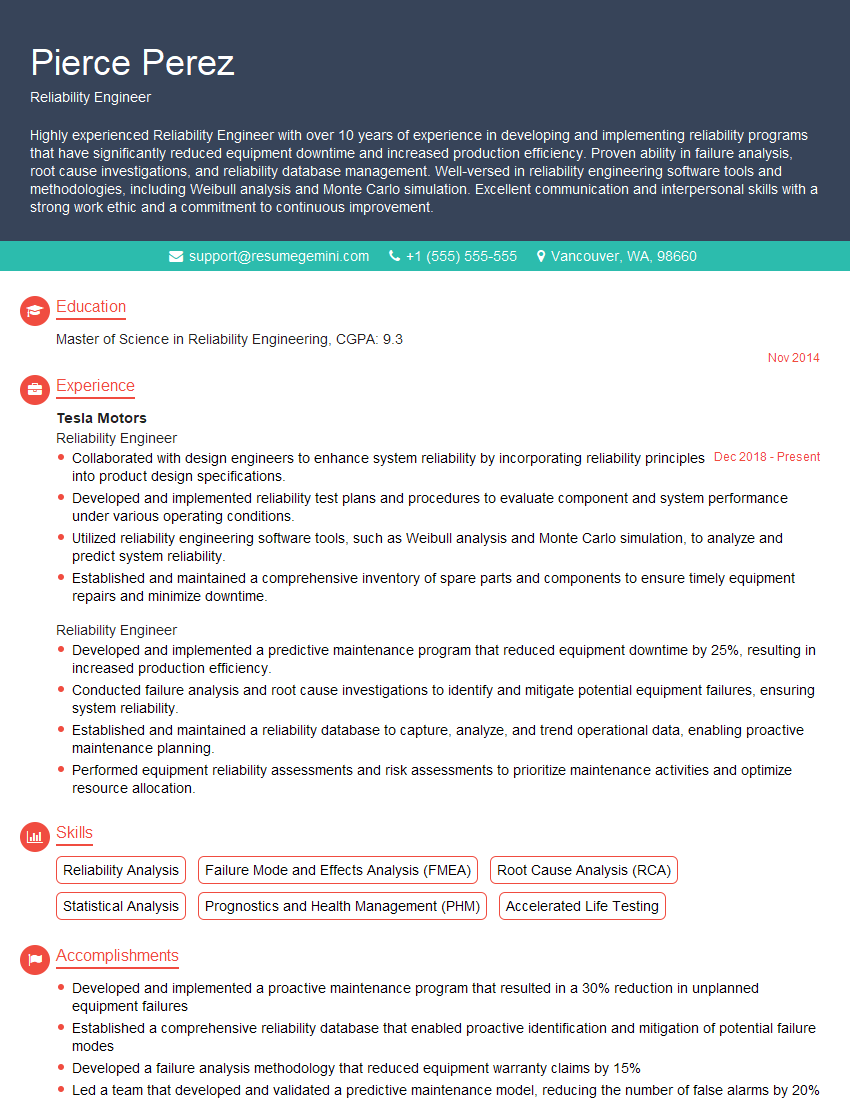
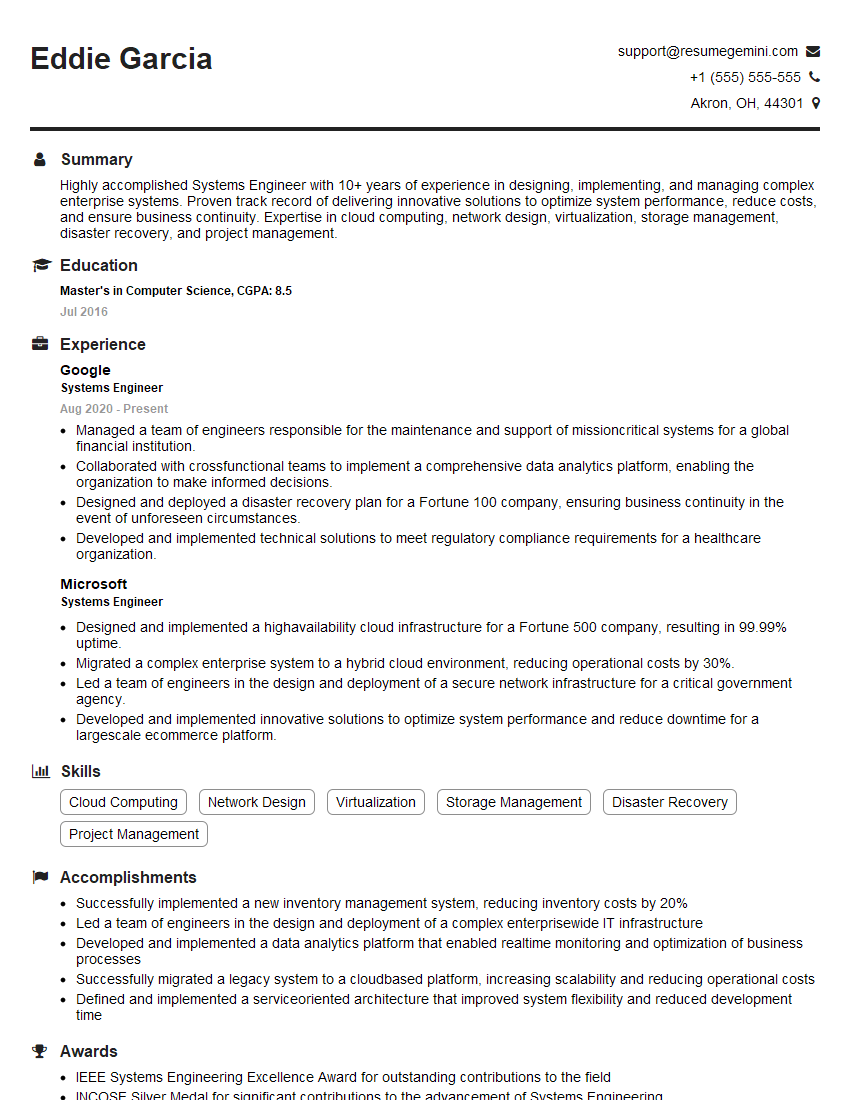
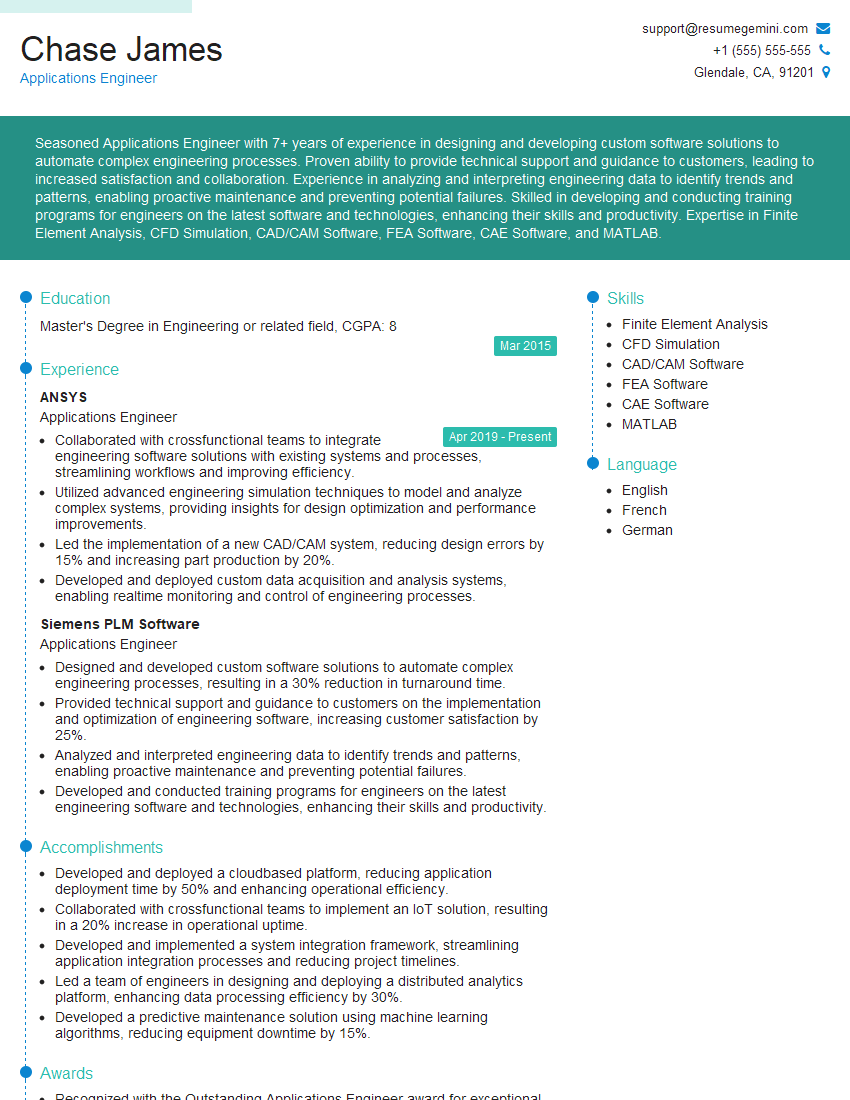
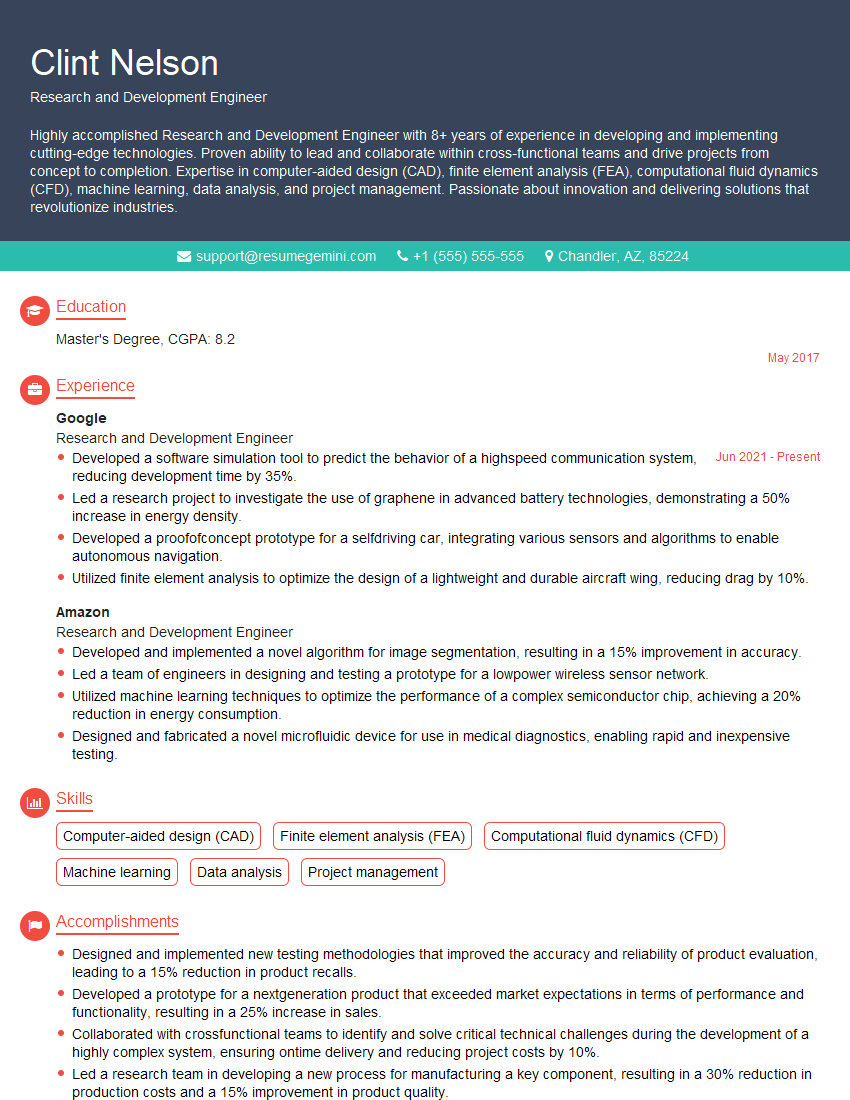
Mastering Part Tolerancing and Assembly Analysis is crucial for advancing your career in engineering and manufacturing. A strong understanding of these concepts demonstrates valuable problem-solving skills and a commitment to precision in design and production. To significantly boost your job prospects, create a compelling and ATS-friendly resume that highlights your expertise. We strongly recommend using ResumeGemini to craft a professional and impactful resume tailored to your skills and experience. ResumeGemini provides examples of resumes specifically designed for professionals in Part Tolerancing and Assembly Analysis, helping you present your qualifications effectively.

Explore more articles
Users Rating of Our Blogs
Share Your Experience
We value your feedback! Please rate our content and share your thoughts (optional).
What Readers Say About Our Blog
Very informative content, great job.
good